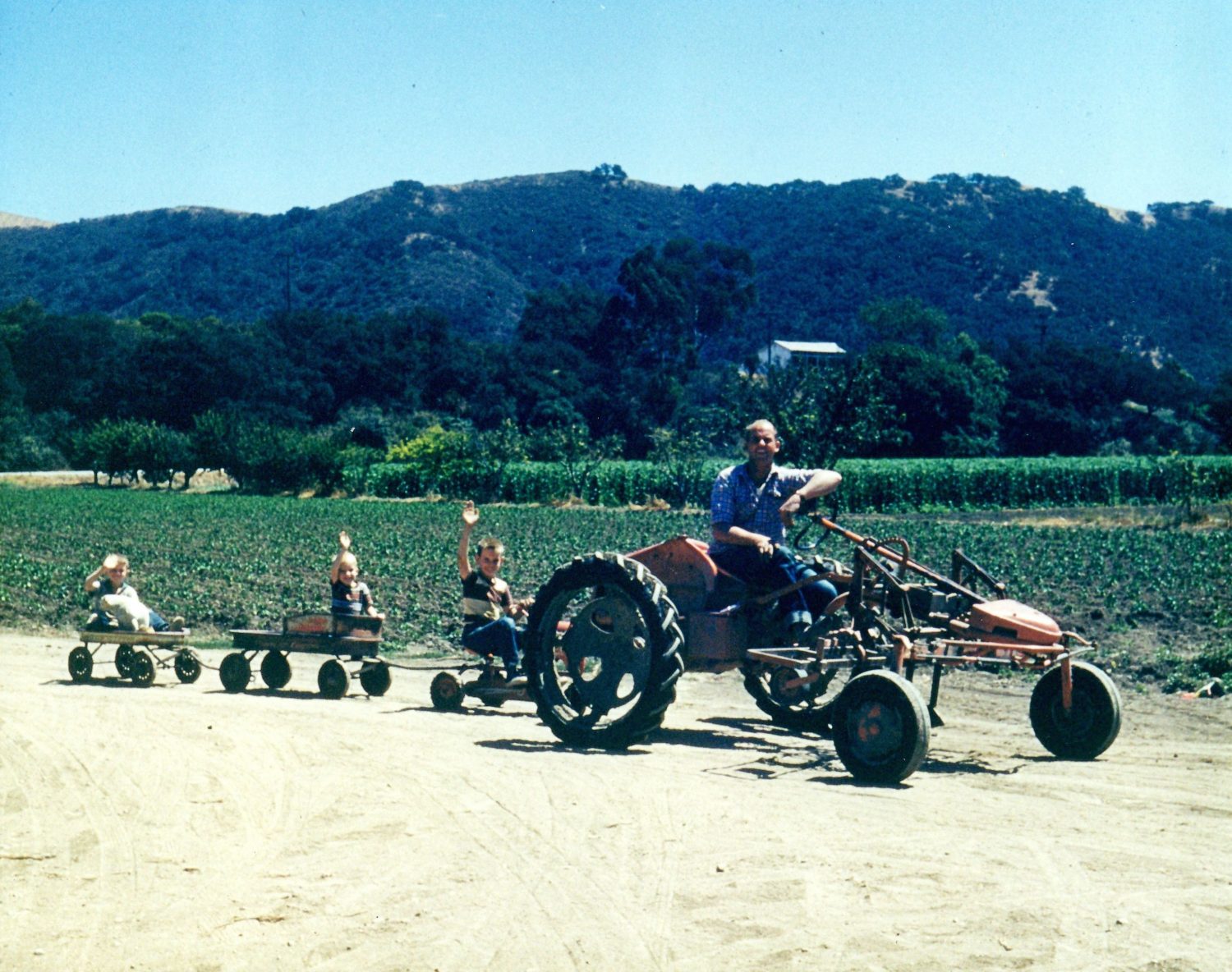
By Michael Shannon
A hilarious look at how kids spent their nights in the days before play dates, day camp, and structured activities, “Whacha Wanna Do?” This story captures a world gone by that will be a revelation to younger readers and an affectionate look back for those families who remember the old stories.
He was a twelve o’clock kid in a nine o’clock world. He was a teen aged boy at the last gasp of the nineteenth century. His name was Jack. He ran the dirt streets of Arroyo Grande with his boys, Ace Porter, Matt Swall, and Arch Beckett, whose flaming red hair could be seen from a mile off.
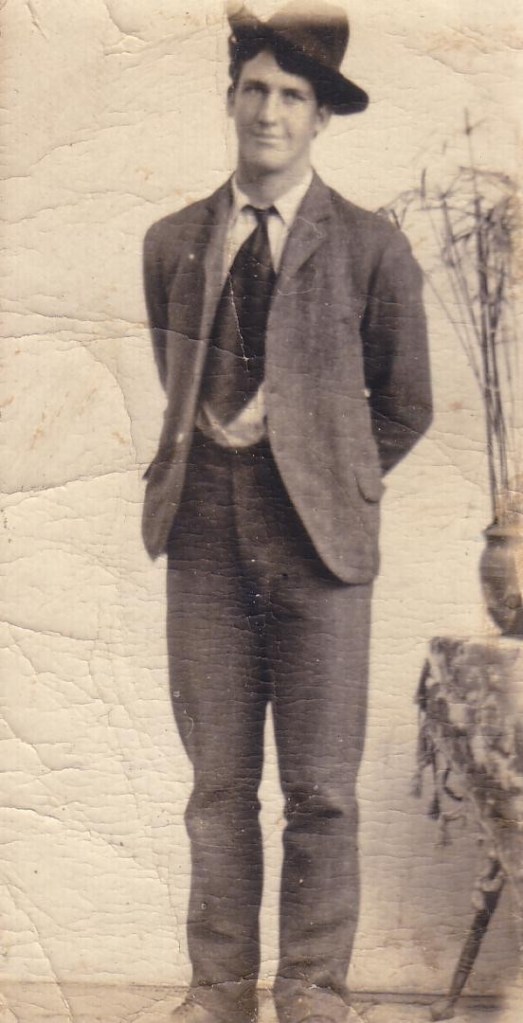
A little farm town, Arroyo Grande was named for the narrow valley that runs from the Santa Lucia mountains to the Pacific ocean. In the 1890’s there weren’t many of the things we consider necessities today. No sidewalks, street lights, or pavement. The horse was king. No automobile had yet to show itself up in the Cow Counties. There was a tiny Railroad, the Pacific Coast but it ended at both ends without really going anywhere. The stagecoach still made regular stops in front of Ryan’s Hotel on Branch Street. It was lights out at nine o’clock.
Whatever you wanted had to come by wagon, coastal steamer or sail ships which regularly docked at the wharf in Port Harford. By road it came from the South, over the San Marcos road at Slippery Rock or very carefully down the old toll road over La Cuesta from the north.
In those old days there was a lot of time to fill. Early to bed, early to rise, neither one particularly appealing to teen boys. As always the best deeds are done at night.
Jack was thirteen in 1895. He was on the cusp of manhood. His country was too. It was about to go from a century of rather slow progress to one moving at almost blinding speed. Eighteen ninety-five was quite a year to be alive in the world. It was a time in history when the era that was passing and the era beginning were locked together like the cogs in two wheels, ready to transfer the energy of one to the other. In England Queen Victoria was entering the final stretch of her 63 year reign. Oscar Wilde was at the start of his two year sentence for “gross indecency” in Reading Gaol. The first professional football game was played in Latrobe, Pennsylvania. In the fall, George B. Selden is granted the first U.S. patent for an automobile. Meanwhile, William Randolph Hearst, the young heir to his fathers silver-mining fortune whose father, a United States Senator had recently given him a small San Francisco newspaper to run, made the seemingly foolish move of buying a failing New York newspaper, the New York Morning Journal. It was the start of multimedia empire that would expand to over thirty papers and change the face of journalism.
This was the year that Guglielmo Marconi, a twenty one year old Italian and scientific hobbyist first succeeded in transmitting radio waves over a considerable distance. It would soon make possible wireless telegraph and eventually, broadcast radio and the internet. In Charlestown Massachusetts the first black man to earn a PhD graduated from Harvard. He was W. E. B. Du Bois. A Neurologist in Vienna woke from a strange dream about a patient and decided to develop a method of analysis of the interpretation of dreams including his own.
In that year, almost every segment of American life was on the brink of a disorienting transformation. Technology, Entertainment, Transportation, Education,Labor practices, Social and sexual behavior, Race relations and Parenting all entering a time of profound change. The way people spent time with one another and interacted with the world around them was about to be overrun by a series of dizzying events.
Few people in America could have been further removed from the social, technological and cultural change than the citizens of little Arroyo Grande, it’s population, less than four hundred people and isolated in a corner of California much as it had been for the six decades since its founding as a Mexican land grant in 1835.
Jack and his parents, John and Catherine had made the slide west from Reno Nevada where they operated the Toronto house restaurant and a boarding house called the Ohio House. Located near the river on Virginia Street is was a busy and popular place and why they sold out and moved west has been lost, although court records may indicate a certain reluctance to pay their bills.
John Edward Shannon, known in the family as Dad Shannon always listed himself on census forms as a Capitalist, a common term at the time for a promoter and investor. His mother Elizabeth, a widow with seven children ran a tavern in Lackawaxen, Pike County Pennsylvania. John himself worked as a brakeman on the New York Central railroad by the time he was twenty and then spent a year in Sing Sing prison for breaking into and stealing from the boxcars he was working atop. Capitalism at it’s finest, illegal, but what capitalist won’t take a risk.
He dealt in real estate and property and the move to Arroyo Grande included a home and property just east of town where they was in the fruit and egg business. The old house on the slopes of Carpenter Canyon still stands. Jack could simply walk down hill cross the usually dry Becketts Lake and be in town which was just a short diatnace away.
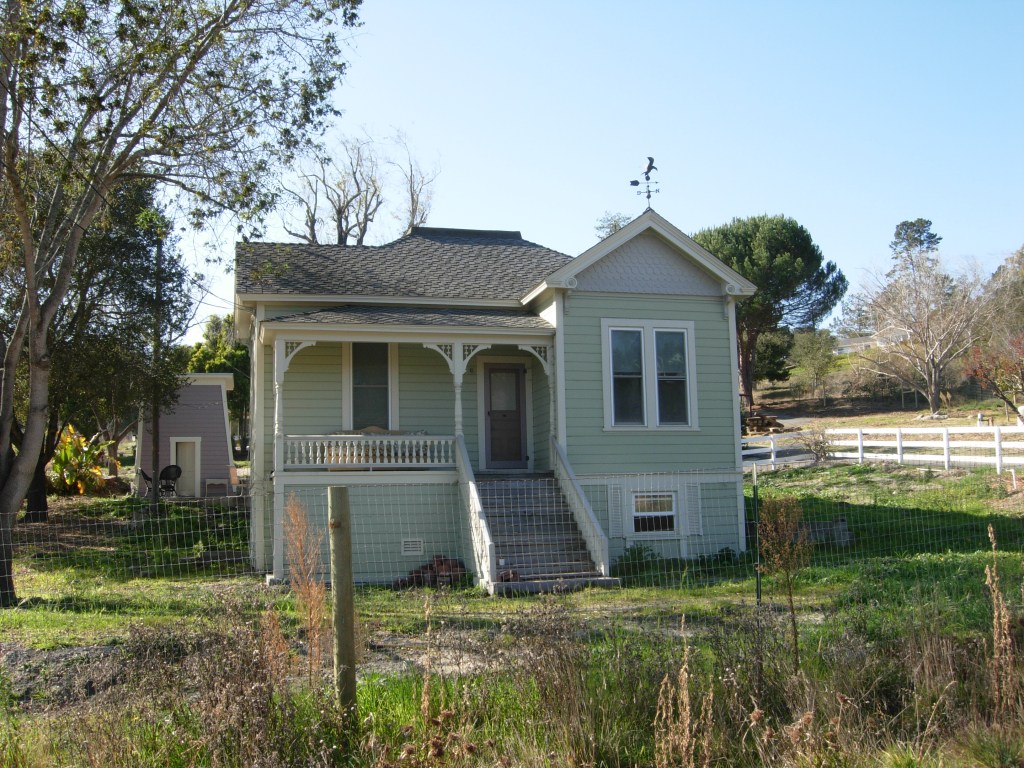
The old house on Printz Road.
Young Jack grew up there in comfortable surroundings, his mother Catherine was a women of some drive and means. Originally from Toronto, Canada and New York, She had owned the Craig house on the waterfront in Oakland and later a hotel in Berkeley. She was a widow when she met Dad Shannon in Reno, the site of her latest endeavor the, Toronto House restaurant and boarding house on Virginia Street, the future site of the famous Mapes Hotel. After the 1875 marriage, he bought the Ohio House, another boarding house so they weren’t poor. They ran the three businesses until 1890 when they sold out and moved to Arroyo Grande. She was 52 and they had decided to retire from their businesses. At 52 she should would have been elderly by the standards of the late nineteenth century.
Jack was the product of her second marriage. She had four other children who were grown and scattered arount the country in San Francisco, Berkeley and in New York. She married Jack’s father when she was already 40 years old and was 47 when he was born. A pretty advanced age to be having children in the eighteen eighties. An afterthought, the bonus child or the accident, we don’t know. The family story is that he wasn’t exactly considered a gift from above. With four grown children she had the experience of motherhood but perhaps not the tender desire if you will. She has come down in family lore as the “Meanest women in the world.” My dad could never explain exactly why as he was just a little boy when she passed away. He did say they were both pretty heavy handed with punishment. Jack was very well acquainted with his father’s razor strop.
Strops are unusual today but back in Jack’s day men used a straight razor to shave and after honing the edge on a wet stone a leather strop, usually made of heavy tanned cowhide with a hook or ring on one end and a leather handle on the other. The ring would be placed on a wall mounted hook and the strop pulled taut by the handle. The razor was then dragged back across the two foot long strop which removed any burrs on the edge of the sharpened razor’s blade putting on a very fine edge. The strop was also very useful in tanning a boys hide. Jack and his father were both very familiar with this use, one on each end. Jack never seemed to hold corporal punishment against his father. It’s difficult to complain against that which is richly deserved. Didn’t slow him down, just reinforced his desire to “Get Outta Dodge” as the old saying goes. In his teens Jack put a lot of thought and energy into running away from home though he was never really successful.
Growing up in Arroyo Grande it didn’t take Jack long to display his rambunctious spirit. Boys in the 80’s and 90’s lived a quite different world than we did just two generations later. The idea that children were essentially owned by their parents was still the norm. As a form of legal property, they had no real rights as we know them today. Parents could put them to work at almost any age and they did. Boys delivered newspapers, cleaned spittoons in the many saloons on Branch street. The yworked in the butcher shops, they delivered groceries from Bennett’s store. The mucked out the stalls at the Harloe stables and tended the forge at Miller’s blacksmith shop down on the creek. If you needed windows cleaned there was a boy. Because most boys, rarely if ever were required to go to school there was always one handy.
Kids were allowed to roam freely, a circumstance that still applied when I was young. There were no tresspassing signs as property owners knew which kids belonged to which family so someone almost always had an eye on you. Fishing or swimming in the creek, riding your bicycle to San Luis Obispo, going varmint hunting with your .22 or simply disappearing for hours at a time were common activities. A boys time was his own, at least when he had some.
My grandfather when I knew him was always quick with a joke and loved to tell stories about his young life. It wasn’t hard to see the rambunctious mischief maker in the man. He wasn’t afraid to be the butt of the story either which game him a certain verisimilitude which was charming for for us kids. He could laugh at himself.
If you asked Jack if he was ready he’d say. ” When I get up every morning.”
That “Always Ready” was for a time a bit of a problem. The term “Lets Go” never found a more willing participant. His running mate Ace Porter, he of the cheeky grin were best friends for life.They met as altar boys you know. They were the quintessential example of the scapegrace’s who got into the sacramental wine, switched Holy Water with water from the tap and tied knots in the bell rope.
Saint Patricks Catholic Church 1890. Photo: Marshalek Family
They were well known for their pranks by Father Michael Francis Lynch, the pastor of Saint Patrick’s Church. Father Lynch, bless his heart, must have been a good soul. Both of them had earned their reputations for being mischievous tricksters. It didn’t end in church either.
On All Hallows Eve, Jack climbed over the window sill after his parents had gone to bed and met his cohorts down to Miller’s blacksmith shop right along the creek. Just behind the Meherin store, it was right up against the willows which lined the Arroyo Grande creek. The willows, Sycamore trees and the huge stands of late season Poison Oak provided cover from the town constable Thomas “Tom” Whitely, who was prowling the little town looking for scapegraces up to no good.
Whitely would have know about scapegraces. He had been roundly criticized for doing nothing to stop the lynching of the two Hemmi men from the railroad bridge in 1886. One of the men was actually a fifteen year old boy. Newspapers around California were scathing in their criticism of Whitely and the uncivilized citizens of Arroyo Grande who did the deed. They being the town’s most prominent men. No one was ever named nor arrested for what amounted to pre-meditated murder. In a small town where there were many family ties and everyone knew everyones business, silence on the matter stated the consensus verdict.
Whitely was also called before the Grand Jury to explain why he had continuously failed to remit the entire amount of the fines he leveled and the bail collected to the county treasurer. He fought the case and lost. In 1900 the voting citizens of Arroyo Grande sent him packing in favor of Frank Swigert.
Hunting boys intent on mischief must have been a lark for him as it likely entailed no risk. In fact, people whose gates were lifted and hidden or outhouse pushed back just a few feet exposing the cess pit to the unwary man stumbling through the dark half asleep would be thankful for the constables diligence.
This didn’t deter Jack and his gang for on this night, they had bigger things in mind. A notable prank that would give early risers a start as they came up Branch Street to begin the day.
They quietly took a spring wagon parked behind F E Bennett’s store and pulled it up to the Union Hall. Using wrenches and screwdrivers purloined from their fathers sheds the quickly reduced the wagon to its constituent parts. Boosting Jack up to the roof, they began handing up the pieces, the box, seat, springs, dashboard and the wheels. Climbing up, they just as quickly reassembled the wagon astride the ridge of the roof. When the job was complete they shinnied down and headed for home.

The old Union Hall built by Judge Beder Wood, 1880’s. Historical Society.
The next morning Ma Shannon was surprised to see Jack headed out the door much earlier than usual. When she called out . “Where are you going? he answered over his shoulder, “Goin’ fishing.” Not likely, he was headed down to Branch street to meet his fellow outlaws in front of the Commercial Company building to spy out the reaction of folks to their handiwork. Across the street the Hall sported the Studebaker wagon proudly astride the center of the roof. They watched as the early morning crowd gathered. Boys on the way to school larked about laughing, nearly overcome by the audacity of the deed, Beder Wood, the owner of the building talked to the Constable and some other prominent citizens, growling about delinquent youth and how he’d like to take a wack at them. Maybe put them under, he being the towns undertaker. The little boys cast their eyes surreptitiously across the street at Jack and his friends. Knowing looks were exchanged. Someone fetched a ladder and the men began the task of reversing the nights work. Jack and his friends quietly disappeared and the little boy dashed of to school to report the big news.
As the old saying goes, “Success Breeds Success.” The boys went about their regular business while they plotted their next foray into the world of crime. They laid low over the Christmas holidays and the early spring of 1899 but with the coming of All Fools Day the put their next plan of action into play. That year it fell on a Friday which suited the gang perfectly.
They all snuck out of their houses and met behind the Cumberland Presbyterian Church on Bridge Street. There they spied out the vicinity making sure the Constable wasn’t anywhere around. The figured he was likely tossing back a beer at the Capitol Saloon anyway and wasn’t going to be any trouble. They dashed across Bridge Street to the big and imposing Grammar school directly opposite the church. They scouted the building to see if they could find a way inside. They found a conveniently unlatched window on the first floor and quickly boosted each other up, scooted and over the sill. Miss Young, whose room had the unlatched window, suspicious as that in was itself, fit with the plan to do no damage. Once inside they carried out the mischief they had been plotting for weeks.
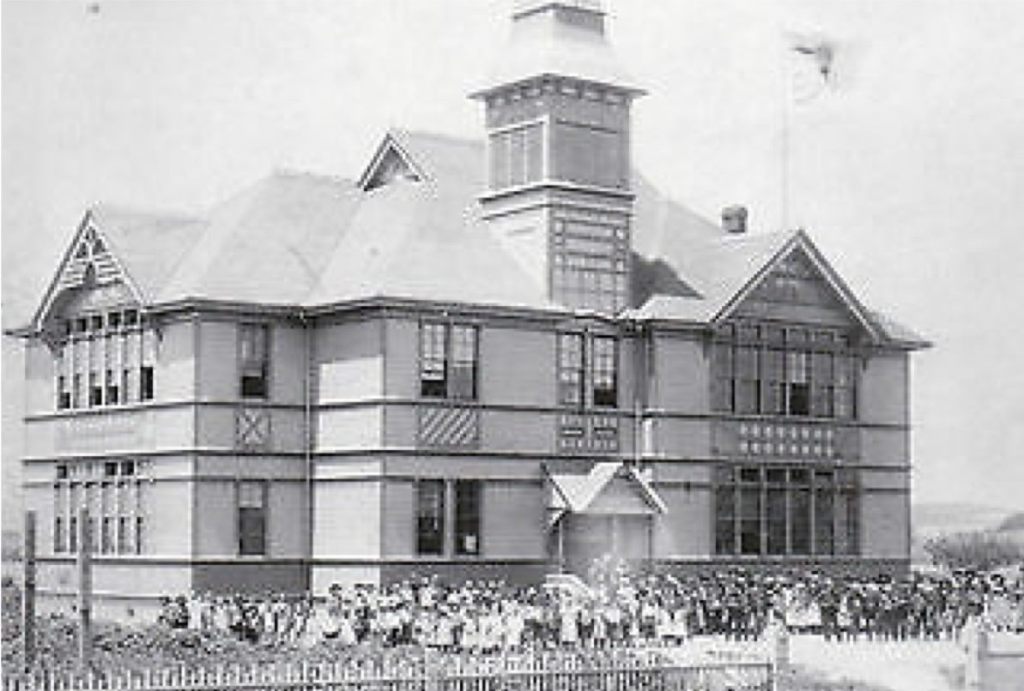
Arroyo Grande School, Bridge Street, 1899.
They quickly ran up the stairs to the second floor where the upper grades and the high school held their classes. Mrs. Watson’s book shelves were emptied and all the books mixed up and piled at the head of the stairs. Her desk was moved to the opposite end of the room and the desks reversed. Mr.Huston’s room suffered the same fate. His books were piled on the top of the stove, his desk and the floor. The school organ which Mr. Huston played for school presentations was hefted and then slid out to the hallway and placed at the top of the stairs. The organ and the books made a wall blocking the upper stories.
The midnight vandals disappeared the same way they came leaving nary a clue to their identities. Nothing was discovered until the following Monday when the front door was unlocked by the custodian. Frank Parsons, the principal, galvanized every teacher as they came through the door in the clean-up effort. The sound of cast iron school desk legs scraping the floor, books quickly tossed onto shelves and the swish swish of brooms rang out through the building. Frank’s idea was to reverse the joke by having everything in order before students arrived. He figured the vandals would get no satisfaction if the students never found out what had happened.
He was mistaken. The children’s telegraph was operating at full throttle. After the bell they sat in their desks and sniggered when ever they thought the teachers weren’t looking or listening. The teachers knew of course because every one had elephant ears and eyes in the back of their heads. It might have passed unknown, the school wanted to keep the joke quiet but the kids couldn’t wait to get home and share. Because one of those student’s father just happened to publish the town paper the story was memorialized in print. Though Stephen Clevenger may have used a little tongue in check in writing about the great event, I mean how many notable events go on in a small farm town at the turn of the century?
Clevenger wrote, “It was probably funny for the boys engaged in the performance but trustees, teachers and scholars will require the funny part to be pointed out to them before they can see it.” Oh, I don’t think so.
Clevenger wrote, “The boys incurred the grave risk of entering the school building and tampering with its contents.” As a crime it didn’t amount to much and no one was ever brought to task for it by the law.
My grandfather said that punishment was a liberal laying on of the strop, again. Though there was no proof any of the boys was involved, Dad Shannon evidently though that an ounce of prevention is worth a pound of cure.
It never slowed any of them at all. I mean, whats the use of never taking a chance.
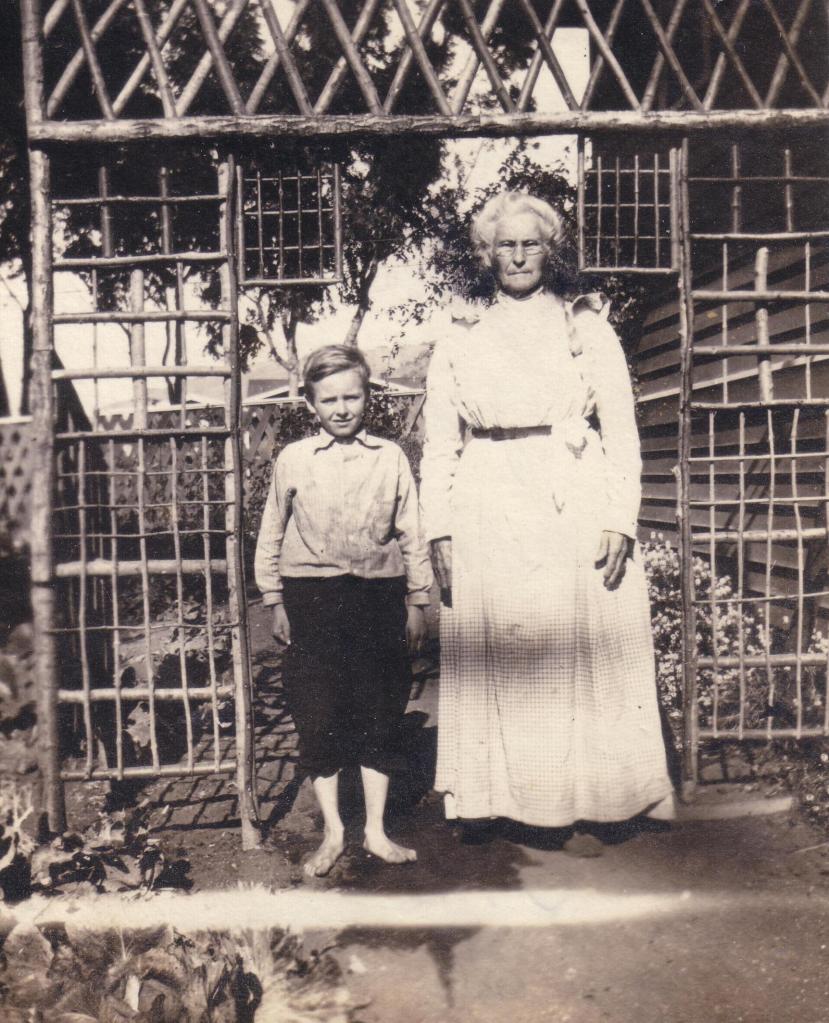
The Meanest Woman in the World, Catherine Brennan Shannon with my uncle Jackie, 1917. Berkeley, Califonia.
He figured he could solve the problem by running away. They caught him pretty quickly. After all the distance between towns in the cow counties is pretty large and what do you do with little or no money, so no stagecoach or railroad, it had to be shanks mare and that was slow going. He tried again though and then again. He finally made it when he turned eighteen because they couldn’t legally stop him. He didn’t fool around either. He headed straight across the country and ended up in New York City. His adventures made for many funny family stories.

The thing was, he never did anything half way. I never heard him say he regretted any of the things he did in life, successful or not. When I was in high school he showed once again who he was. After his eightieth birthday party our family was preparing to leave for home, standing on the front lawn making our goodbyes when someone of the kids had a question for him about his time in New York at the turn of the century. He had worked as an athletic trainer for the MacLevy company in Manhattan. He met many notable people there, Lillian Russell, the scandalous actress and singer who was known to cycle around Central Park on her golden bicycle given to her by her lover “Diamond Jim ” Brady. Grandpa said she was a corker.
He was a friend of Jimmy Swinnerton who practically invented newspaper comic strips and became a successful painter of southwest scenes in later life and best of all, the former heavyweight champion of the world, John L. Sullivan, something he talked about often. When my brothers and I visited with them in their home he would shake hands with you and say, “Shake the hand of the man who shook the hand of John L. Sullivan.” We all got a kick out of that but not as big as he did. Little rituals.
He explained what a gymnast was to my little brother Cayce and then did something that left dad, mother, uncle and grandmother gasping. He stepped out on the lawn and executed a perfect somersault to the delight of us kids. Grandma Annie gave him that look and scolded him for being silly, but she smiled a little smile too. Still that kid at eighty.
-30-
Michael Shannon is a writer and dedicated admirer of his grandfather and gymnasts everywhere.
 atthetable2015