By Michael Shannon
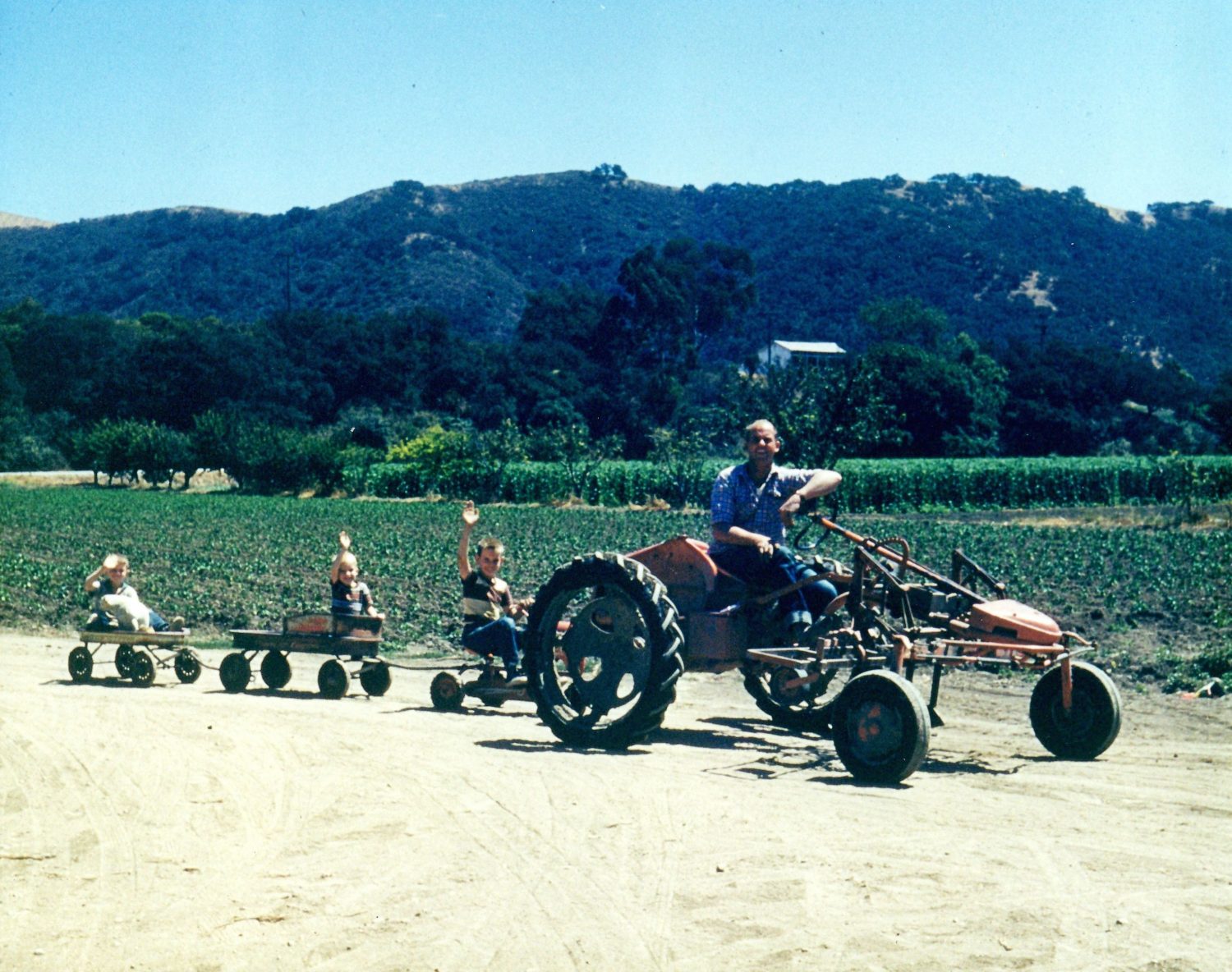
Mundane things. Sitting on the kitchen table, arranged and seemingly haphazardly set. Salt and pepper shakers, the old milk glass kind with the screw on top, the salt perpetually stuck to the top. There is a sugar bowl with no top. The top wasn’t necessary because my father in particular was very partial to a good coating of white sugar on all kinds of things. Sliced tomatoes received a liberal coat of sugar as did his already sweetened cereal. Habits from his childhood when nothing you might eat was sweetened. He told me once that a real treat in late teens was to slice a piece of bread, there was no sliced bread in 1920’s Arroyo Grande, you had to do it yourself. You then spooned whipped cream over it. When your parents own a dairy you soon learn that there is nothing that cannot be improved by a liberal coating of cream. In our house, Pumpkin pie must be completely covered and invisible. If not, it’s simply inedible.
Old copies of the Los Angeles Times, and the San Francisco papers held sway in our household, conservative to the core he said. The news was mixed with the occasion Redbook or Ladies Home Journal and sat haphazardly near the corner of the table where nobody ever sits. At my mom’s end is an old Signal Oil ash tray courtesy of her fathers long career as an oilman. You may remember the kind with bag of buckshot to keep it in place. I know it was shot because I made a hole in it one day when know one was looking. My dad just uses a handy plate or if nothing else, the turned up cuff of his Levi’s.
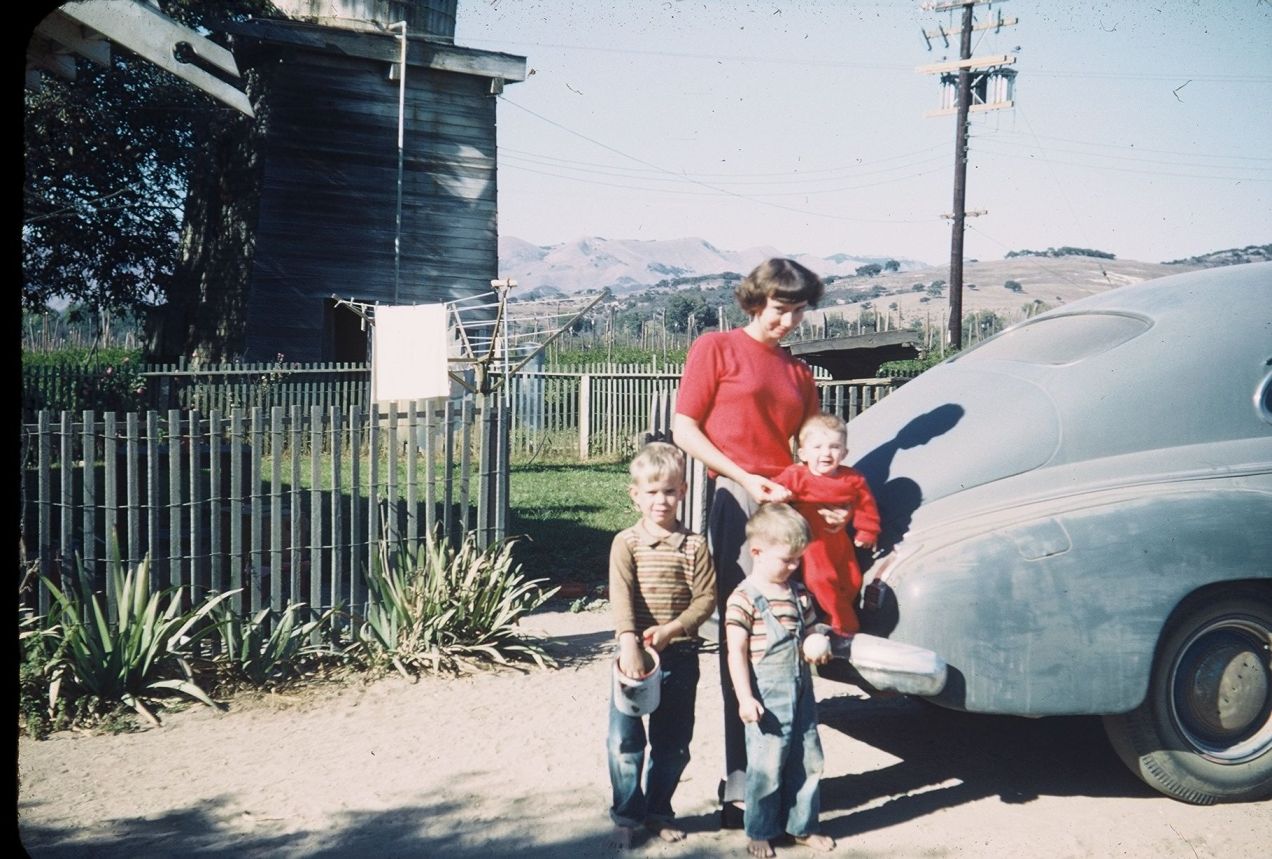
This place of honor, pride of place thing, was reserved for a book. Over the years there was a succession of them, one after another. They were always dog eared with the ubiquitous coffee ring and the occasional petrified Cheerio courtesy of my little brother Cayce who ranked amongst the worlds fastest eaters. Mornings he could be seen surrounded by a halo of Rice Krispies or Cheerios carried on a mist of milk drops. He had the digestive tract of a buzz saw. He needed that because he was chronically late. Dad always said he needed that because he could leave the house at 7:05 and be at work in Pismo Beach at 6:50. It was a unique talent, not many people can make time run backwards. The only documented person other than my brother was Emmett “Doc” Brown.
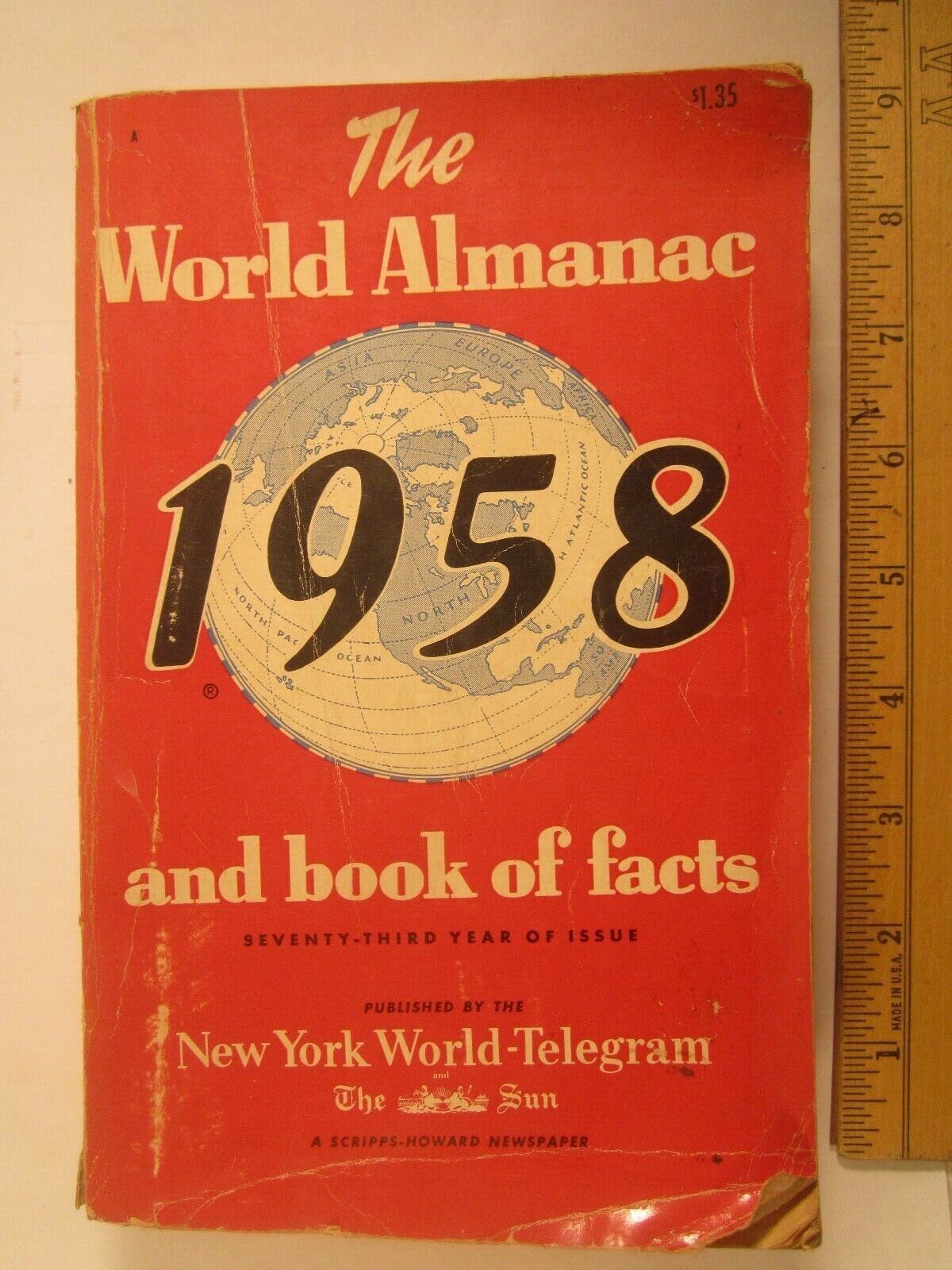
The book, which sat at my fathers right elbow was the World Almanac. More of our basic education came out of that book than our textbooks. The number one thing was the satisfaction that came from knowing a fact. The things our teachers taught us at school were in great part just things to memorize. Nearly any disagreement or argument on almost any topic could be settled by thumbing those tissue thin pages until the correct answer appeared. As a child it seemed simply magical.
Today an actual Almanac is hard to find. The local library has one in the reference section but you cannot check it out. There are many search engines but they are fraught with misinformation. You can’t step into the jaws of Google unless you’re armed with the skills necessary to dig through that pile of trash in order to find the nugget at the bottom. The totality of Google is simply unknowable. With a book you can see every part, turn that page and read facts that have been researched, checked and rechecked. Gird your loins with a good education and enter the fray if you will.
Dad would pose random questions about almost any subject and the kids would make wild guesses about the probable answer. Out would come the Almanac. He opened a courucopia of questions because we soon learned that there is never a simple answer. Behind every answer there is still another question.
So, how far west can you go in the United States? Well there is Port Orford, Oregon (Port Awful if you are an Oregonian) is the westernmost incorporated city in the contiguous US. Ok, but is it the actual westernmost point? No it’s not, that honor goes to Cape Alava, Washington. But, there’s more. What about Alaska and Hawaii? Honolulu is 7.954 degrees of Longitude farther west than Anchorage. With one degree being 69 miles that equals about 550 miles. Surprise, surprise as Gomer would say.
It gets even more mind boggling. Point Udall, Santa Rita, Guam is the westernmost point of all in the United States and it’s territories. But wait, it gets even better, Point Udall, St. Croix, US Virgin Islands is the easternmost point. They are 9,541 miles apart. How does that make any sense? The two different Point Udalls are named for two different men: Morris, “Mo,” Udall (Guam) and Stewart Udall (Virgin Islands). They were brothers from the Udall family of Arizona. They both served as U.S. Congressmen, both liberal Democrats and environmentalists in the 60’s and 70’s. Perhaps the names indicate the distance from conservative Republican Washington politicians as you could get. Look them up in the almanac, they were interesting men.
We looked up populations. How big was New York in 1880? How about now? What is California measured in Square miles? (163.695 ) We were surprised to learn that our state is larger than Italy, Germany, England and Japan. Our home county is only a few square miles smaller than Rhode Island and Delaware combined.
Like a reverse telescope you could look back and find countries that no longer existed or had changed their names. Kind of like Grover City which is now Grover Beach though there is no beach in Grover. My dad made sure we knew that real estate people can be pretty good at pulling the wool over your eyes. The actual source of that phrase is unknown. The expression was first recorded in America in 1839, it’s thought to be of much older, English origin. ‘Wool’ here is the hair of the wigs men wore. In the 19th century, the status of a man was often indicated by the size of their wigs – hence the word ‘bigwig’ to indicate someones importance. Judges often wore poor-fitting wigs, low pay, which frequently slipped over the eyes, and it may have been that a clever lawyer who had tricked a judge on a point of law bragged about his deception by saying that he pulled the wool over the judge’s eyes. ‘Bigwigs’ were worth robbing too. Highwaymen and street thugs would pull the wig down over the victims eyes in order to confuse him.
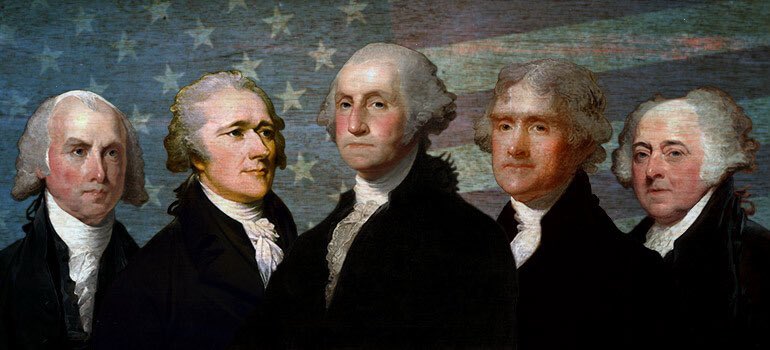
Our Flounders, the original Bigwigs.
Wigs were used to cover syphilis sores, lice infections and hair loss. However, wigs became fashionable when the stylish King Louis XIV, the “Sun King” of France began to lose his hair. The image-conscious monarch began wearing long, elaborately curled wigs to maintain his appearance, turning it into a fashion trend. Wigs also conveyed social status and wealth. The style of a wig also indicated a persons profession, such as a lawyer or judge.
All kinds of words and phrases could be found in the book. The English language has roughly 170,000 words though basic communication can be achieved with less than a thousand. It’s not the wordiest of languages that would be Arabic with about 12,000,000 recorded. Arabic is far older though. English in some form dates to about 400 AD but Arabic goes back to at least 800 BCE, a difference of 12 centuries or 60 generations. More time to make up and add more words I guess.
I don’t know if dad had any particular plan for education at the table but he came from a generation that had to have books. It was reading or nothing. The first commercial radio station didn’t come along until about 1920 and his parents got their first one in 1924; he was twelve. Reading for information or facts was something he had to do. His experience led him to teach us that we shouldn’t believe half of what we read and little of what we heard. He told us to beware what we saw especially if we weren’t present at the event.
The old Almanac itself was a lesson. The term almanac is of uncertain medieval Arabic origin; in modern Arabic, al-manākh is the word for climate. The first printed almanac appeared in Europe in 1457, but almanacs have existed in some form since the beginnings of astronomy, and the study of astronomy predates any kind of written history. The earliest known almanac in the modern sense is the Almanac of Azarqueil written in 1088 by Abū Ishāq Ibrāhīm al-Zarqālī in Toledo, al-Andalus. Al-Andalus comprised most of what is now most of modern Spain. The Muslim people of northern Africa, mainly Moors, ruled Iberia for almost eight centuries.
If the idea was to create curious children it certainly worked. Presented as a game of sorts we learned to dig for answers. We could never figure out if he already knew the answers or wanted us to do the research. It didn’t really matter in the end which it was.
The one thing we all still remember that we couldn’t find in our almanac was a phrase, the old adage “Red sky at night, sailors delight; red sky in morning, sailors take warning.” Dad believed that the red sky meant good weather to come but my brother and I heard just the opposite. Why he stuck to his guns in arguing his position I don’t know but he was like a dog with a bone that you couldn’t take away. No matter how much logic or evidence we could come up with he never changed his mind. We’ve agreed that this was our best chance at winning an argument with him we ever had. The thing is he was just absolutely unsinkable.
We all added High School, a decent college education and life experience to our attempts to change his mind but he never gave in. We kind of liked that kind of stubbornness. I used to tell him I was going to put it on his headstone, but of course I didn’t.
Here lies George Gray Shannon
February 1st, 1912—–May 9th, 2000
He sailed into a typhoon because he was too stubborn for his own good.
Rest in Peace Dad….and thanks for everything
Michael Shannon a is product of Almanacs, Encyclopedias, the Thesaurus and dictionaries. He lives in Arroyo Grande California.

 atthetable2015