Twelve Hour Tour

Chapter 13

Down In The Dumps

Michael Shannon

They pulled out of Goleta, the two 1927 model T’s loaded with whatever they could fit in around the kids the rest tied on the trunk platform at the rear. North from Goleta. The road, not by any means a highway yet wandered along the coast, a fine view of the Pacific Ocean until they entered the little valley at Gaviota where they would turn inland.
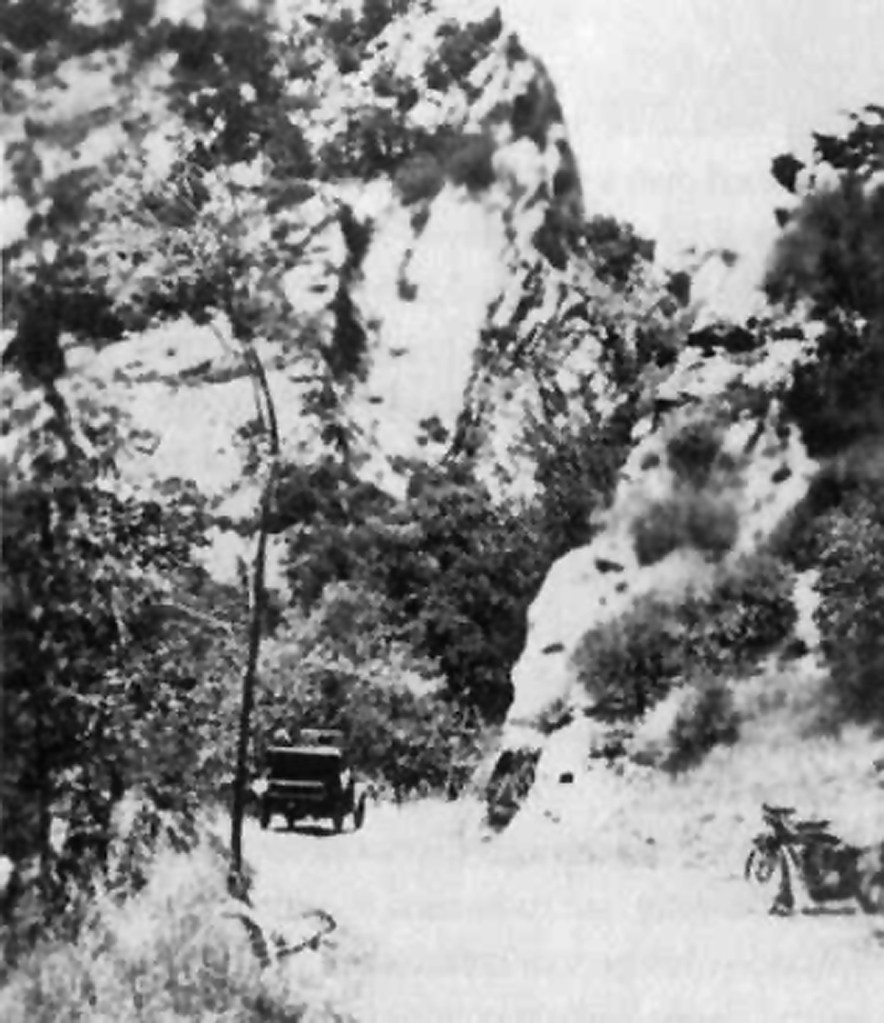
Entering Gaviota pass. Goleta Historical Society

The sharp little valley named by the Portola expedition for the unfortunate seagull it’s hungry soldiers killed and ate there in 1769 was little changed. The narrow break in the Santa Lucia mountains, the only one for a hundred miles in any direction was now wide enough for vehicles but just barely. Bruce and Eilleen were slowed by road work through the narrow pass because the old rusty steel bridge over Gaviota creek was being replaced by a modern one and contractors had begun laying asphalt north from Santa Barbara but once they were north of Refugio canyon where the hide droughers had once loaded Richard Henry Dana’s Bark Pilgrim with dried cow hide, there was only a graveled road for the next 45 miles.

They drove under the Indian Head rock at Gaviota which my mother didn’t like, she though it might fall down on their car, something she never got over. Then up the hill to Nojoqui pass and down to Buell’s, from there on it was going to be a dusty trip and they wouldn’t see another paved road until Santa Maria. They stopped at the tiny town on Rufus Buell’s Ranch where ate they lunch at the only cafe in town, Anton and Juliette Andersen’s Electric Cafe, featuring Juliette’s soon to be famous pea soup recipe.

The two cars burdened with most all they had, two couples and four kids passed by the Pacific Coast Rail road warehouse in Los Alamos where Bruce had once worked humping 90 pound sacks of grain from the ranches nearby and then they turned up the Los Alamos valley headed for Santa Maria. On the way they rolled through the old Graciosa townsite, Casmalia, and Orcutt where the men had their first jobs in the oil fields more than ten years before. The little company town where they had lived was still up on the hill above Orcutt but was falling into ruin as nearby towns with rented houses had sprung up where you could live in a little more comfort than the old Shebangs they had first lived in. There were still wells but many were shut down because oil was too cheap to pump. Oil Companies had not followed their own advice or any warnings about the financial crush that had already started in the early twenties. Casmalia oil companies were lucky to get 0.65 cents a barrel for crude at the wellhead. Compared to $3.07 in the early twenties this was a disaster for oil companies and Marion and Bruce and their families knew it well. It was the reason for this trip after all.

The price of oil meant gasoline was cheap, about .20 cents a gallon but money itself was losing it’s value. You could buy gasoline for pennies but you couldn’t afford to go anywhere either. The worst time was coming like a fast freight and the price of oil was going to fall even more as the depression deepened. No one can see into the future. My grandparents couldn’t have imagined what they and the country were in for.

They rolled through Santa Maria, crossed the Santa Maria river, dry at this time of year, and over the wooden bridge and the flats of the old Rancho Nipomo onto the mesa planted with, it seemed an endless forest of Eucalyptus trees marching in their perfect straight military rows all the way to the western horizon then down to the sea at Guadalupe beach. Finally cresting the edge of the mesa they rolled down Shannon Hill past the little house where the Shannon’s lived and where my father, future husband of Barbara Hall was finishing up his senior year of High School. They wouldn’t meet for another 13 years.*
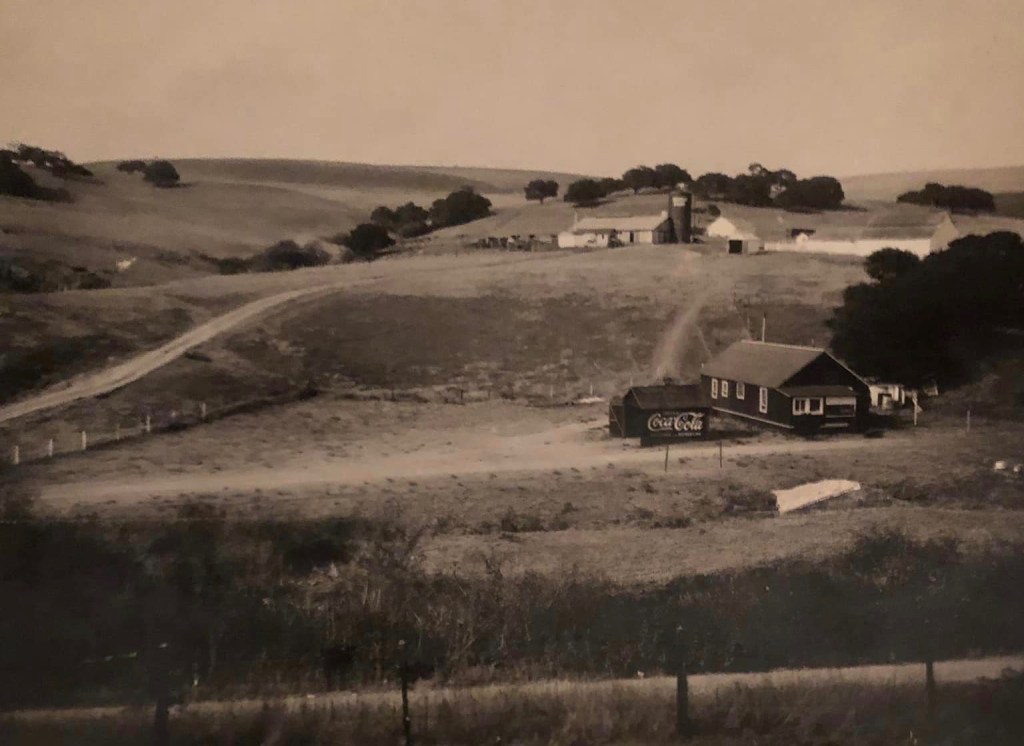
Shannon’s 1928. Family Photo

It was a long long trip for the time but because the cars were loaded with what was left of their belongings Grandma and aunt Grace insisted they stay the night at Bruce’s father Sam Hall’s lot on Short street right in Arroyo Grande town. The motor court was just short distance away but money could be saved. There was no house on the lot yet but they said at least staying there no one would think they were “Tractored Out Okies.” In truth they were hardly better off but appearances were important. They had passed the pea pickers camps in Nipomo where Dorthea Lange’s photo of the migrant mother would be taken in a couple years and before they got to Madera they would see many squatters camps and desperate peopled camped on the roadside. You and your neighbor may be equally destitute but al least you have pretense and thats something people hold onto.

Today no one thinks much about traveling in Model T’s. Just another old car, right? Old yes but at the time of this story a modern form of transportation. In old photographs they look pretty large, certainly taller than the average man but compared to your nice SUV pretty small inside. The front seat could barely hold two adults and the rear not much larger. Mechanically they were pretty robust. They were built of steel and could take a great deal of exterior punishment. Someone like my grandfather could fix nearly any part of it. It came with a tool box with a couple of wrenches and you could add a hammer, some baling wire, clevis pins and cotter keys, a piece of leather for the fuel pump if it failed and the odd nail. A tire patching kit which you would definitely need, spare tire(s) jack and a can of lubricating oil. Those things were about all you needed to solve most problems.

Most importantly they didn’t have brakes as we know them. Breaking was done by shifting into low gear. A Model T Ford had only two gears high and low. When got off the gas you shifted into to low gear to slow the car The clutch was actually the primary braking system strange as it may seem today and without too much ado suffice it to say braking was a sort of multi-tasking operation which involved three pedals, the handbrake which was also a gear shifter and two levers on the steering column, one which slowed the motor electrically and the other the throttle. I’ll let you imagine how all this was done simultaneously. It was akin to a circus act and was very dangerous especially on a downgrade. Add some mud or rain and you could become just a large roller skate sliding faster and faster no matter what you did at the wheel.

Shannon hill, on the down hill side was well known in the Arroyo Grande area for the number of deadly wrecks that occurred at the bottom. It’s still there today and is no problem for a modern car. My father who grew up in the little house at the foot of it was well acquainted with racing to the wrecks and pulling damaged people out of those smashed up old cars.**

They chose to travel up the State Highway 1, today’s 101 because the road through Cuyama was still just a two track dirt, unimproved road. There were no gas stations along the way and though it led directly to Taft where he could perhaps find work it was decided to go around by way of the the highway leading east from Paso Robles, today’s Hwy 46. At the time it had no official name. It was a gravel road east of Shandon al the way through the Lost Hills to Blackwells Corners and then due south to Taft where there might be work. Blackwells Corner is, of course famous for the last place James Dean put gas in his little race car. A dubious distinction to say the least. Dean had less than a hour to live until Mister Turnipseed ended him.

The entire trip was notable for the fact that there was nothing that wasn’t tan or brown and usually covered with a fine sandy dust that came from the incessant blast furnace wind so hot that every living thing was in a state of perpetual dryness. The wooden window frames on houses would dry and shrink until it seemed there wasn’t enough newspaper on earth to stuff all the cracks. There was no paint that could stand the heat in the summer and the cold of winter. Dreary isn’t a good enough word to describe those wishful oasis, the end result of a man’s ambition.
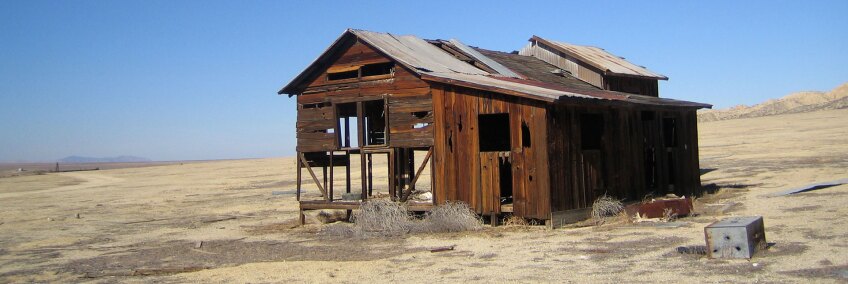
Traveling by night out there you might as well have been on Mars. It was so dark out that there was nothing to be seen but the occasional tiny light in the far distance that marked one of the few ranch houses where cattleman desperately tried to scratch out a living on huge ranches which had little water, shade or permanent pasture. Droughts were frequent and devastating and as the depression advanced even those lights would disappear. Sheepherder’s abandoned wagons along the road would be one of the few pieces of evidence that anyone had ever lived among the Russian Thistle.

All along the Kettleman, Lost and Elk Hills from Avenal to McKittrick you could feel the desperation of those that lived there in hard times. Wives ended their own lives by suicide, so desperate for company that taking your own life seemed almost necessary. You could travel fifty miles and see nary a soul. At the end of the twenties it was still a two day trip to buy groceries.

There was no AC of course. You could push the bottom half of the windshield up and lock it if you were desperate for a little cooling breeze but you had to face forward into the blast furnace of wind. No wind wings and the rear windows didn’t roll down. Mom said they would soak a towel in water and wear it around their necks to cool off. Grandpa and uncle Marion were they only drivers and both had bad backs from heavy labor so once in a while Bruce would ask Eileen to hold the wheel and he would get out and walk. The cars were only able to make walking speed going uphill anyway. Mom and aunt Mariel would squeeze out in the space behind the front seats and ride the running boards or lay out over the fenders. Kids weren’t so precious then and could mostly fend for themselves.

Grandpa and grandpa and their children knew it well though for as bad as it was, it was filthy with oil. It was the only reason to live out there and as grandpa once said the whole region was nothing but a “Hellhole.” They had moved from one to another for twenty years and with the coming of hard times in the oil patch perhaps there was some hope that life back on a ranch would be better.

Mom said bouncing along in the back seat with the dust and noise and temperature spiking the thermometer made it the most miserable trip she ever took. She said that while stopped to let the cars cool she was sweating so much, the heat made her dizzy and she put her hands behind her head as girls will do and was fluffing her hair trying to get her neck to cool when she got a look from grandpa who grinned at her, lifted his cap and ran his handkerchief over his shiny bald head and said, “You should have a bald head like me.” That made them both laugh. She surely loved her father.

Give some thought to how it was to ride along on the trip which lasted three days in a car that could only do about 25 MPH on the dirt and gravel roads of the time. Crossing the Kettleman and Lost Hills, speeds were just 4 or 5 miles an hour on the many grades and hang on for dear life on the down hill and all with many stops to top off the radiators and let the motor cool and perhaps add a little oil.

It was all taken in stride though because to my grandparents who were both born before the automobile it was all quite modern and needed no comment or complaint.

Like all siblings the two girls who were barely a year apart fought. “Don’t touch meee, mom he touched me” was a frequent refrain. the girls were sneaky enough but they said the worst was uncle Bob who wasn’t ten yet and liked setting off his sisters. Bruce and Eileen treated this with good humor. Neither one was inclined to fight with their kids and all their children later said their parents never laid a hand on any of them.

When they could they stopped for sodas or fresh fruit from stands along the highways. There is nothing like opening the cooler on the service station porch and dipping your arm into the ice water and fishing around for just the right soda pop. Might stick your face in too. There is also the great pleasure of slipping an ice cube down the back of your brothers shirt.

They were a tight knit little family. They followed the wells and sometimes changed houses or towns as oftenas a month or two. The depended on each other to get by and they remained that way all their lives.***

There was no work in Taft, Maricopa or any of the other fields around what was known as the “Westside.” There were forests of rigs simply sitting idle so they turned east around Buena Vista lake* and headed for Bakersfield and the Kern River fields around Kerndon and Oildale. When you’re on the road headed for a new place spirits rise, things seemed possible, grandpa had worked those fields and knew practically everyone there but again his hopes were dashed. More idle wells, the people he knew had moved on just as he was, scrabbling for a job, families to feed, following the inevitable ups and downs of hope.

Bruce and Marion wheeled the two Fords out onto highway 99 and headed north up the valley. Money dwindling, hope lying exhausted on the floors of the cars and the kids tired and cranky the families rolled up the finest highway in California. Completely paved, the 99 was easy driving as they passed through all those little towns that sing a song of Californias agricultural heritage, Famoso, Delano, Tipton to Tulare, Kingsburg and Fowler to Fresno, click, clack the hard rubber tires tapping out a tune of the road as they bumped over the joints in the concrete roadway. After Fresno it was back to the old home, The house where my mother was born in 1918, just 23 miles more.

* This link below will take you to the story of how Barbara met George. The Milkman in four parts.

https://atthetable2015.wordpress.com/wp-admin/post.php?post=5632&action=edit

**Family letters, link below.

**File under Grief, link Below

***Family letters, link below.

Michael Shannon is busy telling the story of his California family.
Standard

Four Men

The long polished Mahogany table as seen through the little nook off the living room, an opening on the left where the swinging door to the kitchen stood propped open with a fold of newspaper and at the end of the room a window with its Venetian blinds open looked out to the side of Mrs Lake’s home stuccoed in beige and with a little imagination you could see a long stretch of featureless desert sand. Before the glass, sat four grown men.

I could watch them at a distance and have always wondered what it was of which they spoke. Hand on fist I would sit on the little brick hearth of my grandparents home in Lakewood and try to listen.

Gathered together around the every day tablecloth that would be changed for Thanksgiving dinner later that day sat my Grandfather Bruce Hall. A man who had labored nearly four decades in the oilfields of California. He was now the superintendant of drilling for the state of California. From oilfield roustabout to the top of the heap at Signal Oil and Gas. He wore his rumpled, baggy khakis and a white long sleeve shirt with the collar open and the sleeves rolled halfway. Spectacles over the lower half of the nose, his bald head encircled by a fringe of hair smelling of Wildroot. He seemed to me to be perpetually tired. He’d already had the first of the heart attacks that would in a couple of years kill him. A lifetime of filterless Chesterfields, one of which, smoldering he held with three fingers, idly scraping the ash from on the edge of the ashtray, a green baize bag filled with bird shot and a shallow brass bowl. He leaned forward on his elbows a half smile on his face.

My Dad sat next to him in his ever present flannel shirt and blue Levi’s his uniform of sorts the mark of a farmer. He was forty three. He sat in his customary pose, elbows braced on the table a half smoked cigarette in his right hand pinched behind his upper knuckles, I can’t remember ever seeing him sitting any other way. At his elbow a half filled bottle of bourbon being occasionally lifted with the comment, “Another drop?” No ice either, whiskey straight no frills, or as my dad told me, “Ice dilutes and pollutes the Bourbon. Bartender puts it in to short the pour.”

There was a glass at each mans hand, no fancy fat little crystal glasses, grandma had them but they mostly sat in the sideboard gathering dust. No, these man drank from kitchen glasses and in those days it was likely a jelly jar, not the canning Mason or Kerr but the old fashioned one that came from the Jewel Tea truck, full of, and always in that household, blackberry jelly, the kind that you had to pry the lid off with a church key. Practical men they were but at the same time would never drink straight from a bottle. Class of a sort.

Uncle Ray sat at grandpa’s other hand. His dark blue shirt with the mother of pearl buttons marked him as a cowman. In his late forties he was a little on the portly side, the shirt held in with a plain leather belt and a small not so fancy buckle. His old fashioned black levi’s turned up at the cuff a good four or five inches covered most of what were hand-tooled cowboy boots for thats what he was, a dyed in the wool, genuine cowman who could fork a horse as good as any. Better than most really for he was known through the Sierra Nevada as “Powerhouse” after, on a bet, put his horse Brownie over the side of the hill at the Kings river penstocks and rode her almost straight down as if it was nothing. A feat of horsemanship that gave him the name. If you ever get up there you’ll see what I mean.

I remember him most for his laugh, a sort of lung deep basso cackle, really indescribable but still one of the greatest laughs I have ever heard. He didn’t hog it either it was as if it was just idling down in his throat ready to spring to the surface on any occasion.

Ray Long was such an original cowman, at that time already a vanishing breed that he had taken on the characteristics of the horses he rode. He was missing the molars on one side of his jaw and when he tipped his head back to laugh he looked just like a horse did. Horse laugh my dad called it.

The fourth that made up the quartet was my uncle Bob, Robert Preston Hall. At thirty five just a youngster. My mother’s youngest sibling, the only boy of that generation. He grew up with two older sisters and one younger who adored him. My aunt Patsy always said he was as caring as any parent.

He leaned back in his chair right arm hooked over the back with an elbow, his legs crossed at the knee. His white shirt collar unbuttoned had short sleeves, something I never saw the other three wear, ever. Cigerette pack in the pocket, he held one in is right hand. His jet black hair, slicked back shone in the light and sitting on his nose, old-fashioned steel rim, round spectacles. Topping it all off, he wore a thin mustache, the kind we used to call the “Boston Blackie.” He had an elegant long straight nose and a family trait inherited from grandpas’ family, Jug Handle ears. Mom said they were like airplane flaps and would slow you down when you came in for a landing.

Uncle Ray loved to tease and used the family ears as nicknames for one of his sons and me. Ears like that, guess they didn’t hurt Clark Gable none. He was an oil man too in his younger days. They had that in common.

They were different looking men really, no two looked alike but they had things in common. They could be absurdly funny and the well jest turned earned high praise in our family. The were men of the land all of them farmers and ranchers at heart with deep roots in the ground. Practical and pragmatic, they wasted no energy on frills. None of them liked to wear suits if they could avoid it and they did at all costs. The best you could get out of my dad was a sports coat and slacks.

They were all good with kids. I have friends I grew up with who still remember my dad handing out quarters at gatherings which meant something in those days. Uncle Ray made you feel like you were a grownup but wasn’t above squirting you with milk while milking either. Uncle Bob had the salesman gift and told me very first dirty joke though it barely made the grade as such.

The thing I most remember is they were grownups who stood for something. Kids were great but still kids. They shared very little about adult life. They did their best to keep all that at a distance to keep you safe. Your were a kid and they were adults, it was important that they kept it that way. They taught much more by example and were pretty content for their children to find their own way with as little guidance as possible.

Once my oldest cousin who was about fourteen and though pretty well of himself sauntered in and pulled out a chair and sat. He interjected some comment into the conversation and they all turned to look at him. No one answered. A moment or two passed as they sat silent until it occurred to him that maybe he wasn’t as old or important as he though and he soundlessly slithered out of the chair and beat a retreat.

They bookended an entire generation from one end to the other. They had seen two world wars, the greatest depression, the Korean War, the atomic bomb and each had weathered severe up and downs in the family.

That thanksgiving saw a dozen kids and five families shoehorned into that little house on Pepperwood Avenue in Long Beach, just about the last time we would all be together. Other than seeing them I really didn’t know what they talked about. I wish I had been older so I could really listen but I wasn’t.

Years have past and the questions were never asked. I had other interests and they were famously recalcitrant anyway in the way men of that generation could be. “Oh, you don’t want to know about that,” my uncle Jackie Shannon once said. I did but he just changed the subject. Every person you will ever know dies with secrets and stories you will never hear. It’s a shame.

Michael Shannon is a writer. He lives in Arroyo Grande, California.

Standard

The Good Man

Michael Shannon.

He went to the old sideboard, stained as it was, a few wood chips missing here and there and leaning on it momentarily, he slipped into his right front pants pocket and he drew a key. Fumbling a little with the little piece of brass on the faded purple ribbon he inserted it and slipped the lock and from inside he retrieved the small brassbound wooden box graven with its vague mystical symbols and carefully set it on the cabinet top. With trembling hands, not by age but by emotion, he reverently untied the ribbon that held it shut and with care beyond care he opened it and released, the wonderful soul within that rose and floated as dainty as a butterfly above and for all to see. It shimmered in the light and was God.

For a friend.

Standard

Twelve Hour Tour

Chapter 14

Oct 24th 1929

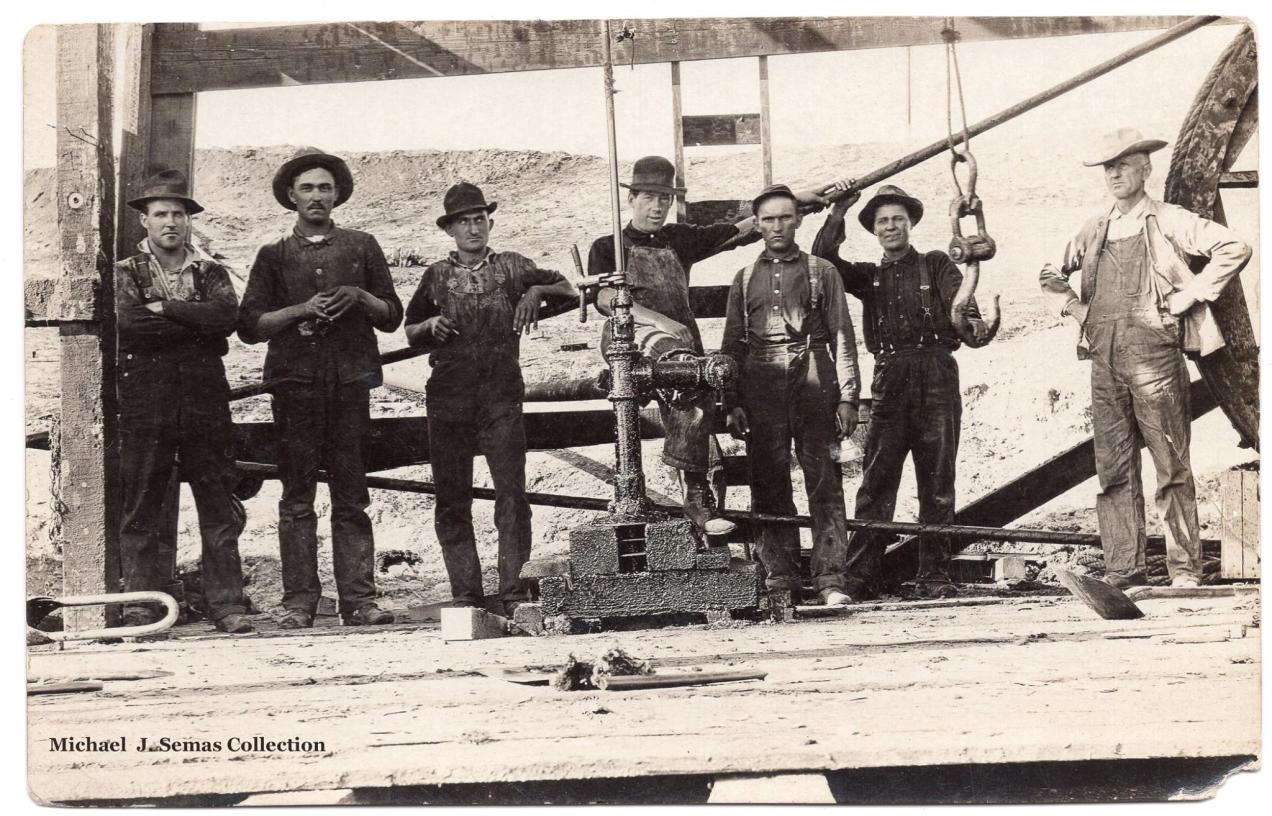
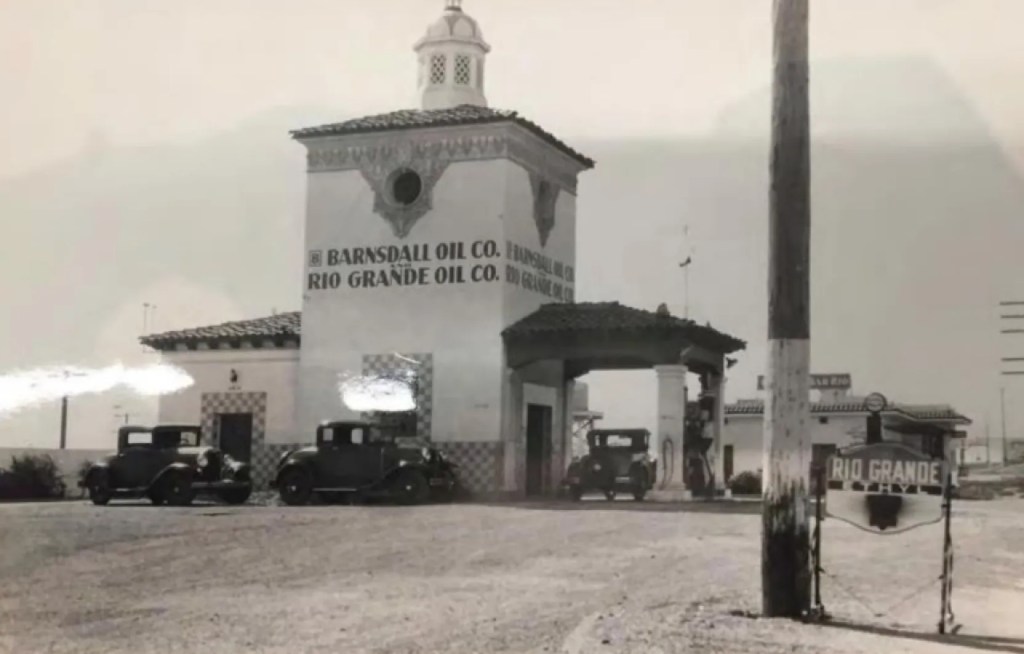
In ’29 Bruce was transferred to the new field up at Elwood. Barnsdall-Rio Grande gave him a raise and he became a field supervisor. The Mesa and Ellwood fields needed men who could whipstock as the wells were being pushed out into deeper water. Bruce was good at that.

Elwood. Goleta Historical Society photo.

Bruce and Eileen moved up to a little wide spot in the road called Goleta. Sometime after the De Anza expeditions, a sailing ship (“goleta”) was wrecked at the mouth of the lagoon, and remained visible for many years, giving the area its current name. After Mexico became independent of Spain in 1821, most of the former mission ranch lands were divided up into large grants. Nicholas Den was granted this 16,500 acre rancho in 1842. The Rancho was named Dos Pueblos for the two Barbarino Chumash rancherias which were on the bluffs above the beaches. Below that was what would become one of the largest oil producing fields in California.

Barnsdall-Rio Grande added the Elwood field to Bruces territory. His skill with whipstock was doubly important because at Elwood there were no actual wells onshore. Every well was turned out into the oil sand under the Santa Barbara Channel.

Goleta wan’t much of a town in the late 20’s but they decided to move closer to the wells because exploration in Summerland was nearly done and his chief job there was to monitor production.

Bruce’s half-brother Marion who originally got him in the job in Casmalia was giving the oilfields another go. Marion and his wife Grace with their son Bill moved in with Bruce and Eileen. The kids were attending Goleta Elementary school. Mariel the oldest was just thirteen, my mother, a year younger and uncle Bob was nine. In the old photos you can see that they are better dressed surely as the result of Bruce’s promotions.

That same year Bruce and Eillen gave my mother a piano. It is, we still have it by the way an upright Gulbranson, it cost the princely sum of $300.00, and I do mean princely. The equivalent sum today would be over five grand. The original receipt calls for ten monthly payments of $30.00 each. As a Tool Pusher or Farm Boss Bruce would have been making as much as ten dollars a day. That was a very high wage for men employed in the oil fields and good pay for any man who worked with his hands.

Derrick and wells, Tecolote Canyon, 1930.

Below the horizon though a financial wave was slowly gathering and like the music played in the movie Jaws, it was building quietly but would soon turn their entire world upside down.

In November the entire house of cards came crashing down. Out of control oil companies who pumped more oil than the public could use. Banks which loaned far more money than they actually had, 650 failed in 1929 and over thirteen hundred by then end of the next year. There was no FDIC to protect your money. Millions of people lost their life savings. Wall street’s frenzy of buying and selling on margin,* the residual cancellations of industrial war equipment and the end of farm price supports put the economy in the tank where it would stay for nearly ten long years. Money that vanishes is not easily replaced. Within a year, 25% of the population was unemployed and completely adrift. Men were desperate for work and just the rumor of a job put them on the road. Children too, they were forced out of families or left on their own because feeding them was a burden to their parents.**

In 1930 Bruce reported to work at Elwood where he was abruptly fired along with his entire crew. Barnsdahll-Rio Grande had pulled in their horns, declared bankruptcy in order to escape their creditors, the banks and private investors. Then they simply walked away from California. It’s leases in Summerland and Santa Barbara were sold, it equipment simply abandoned. Oil companies, finally accepting their fate fell like dominoes. Thousands and thousands of roustabouts, worms, toolies and farm boss jobs evaporated almost over night. Your hard won skills were useless. This pull back on labor was across the board, factories, big farms, the shipping industries all pulled back.

After ten years of continuous employment Bruce’s career was simply yanked out from under him. He called in favors, got on the phone, calling everywhere, every company he had ever worked for, Associated, Standard Oil, Union and every operator from Huntington Beach, Los Alamitos and Signal Hill to the coastal companies and east to the San Joaquin valley, drillers in Oildale, Kern River and the West side and the Elk Hills; Maricopa, McKittrick, Reward and Fellows. There was nothing moving. Drilling for new oil was dead, only maintenance and pumpers had any hope of a job.

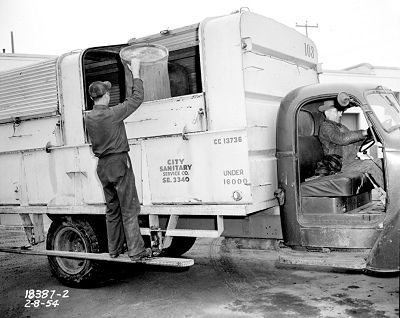
Thirty four years old, wife and three children and desperate. He was lucky to land a job with Santa Barbara Garbage Company, slinging ash cans. He rode the trucks standing on the foot plate, jumping off at every stop and hefting the loaded bins onto his shoulder and tossing them up on to the back of the truck as it idled up and down the streets of Santa Barbara and Montecito, two of the richest towns in California. A self-made man humping the garbage of the rich. It must have been galling. His brother Henry said Bruce worked like a mad man. Twelve hours a day, six days a week, sun up to sun down for $16.00 dollars a week, roughly .22 cents an hour. The cut in pay by more than three quarters put them on a collision course with poverty. It came pretty soon.

Eileen finally took the desperate measure and I mean desperate measure of going to the government office in downtown Santa Barbara and applying for relief. Under President Roosevelt’s series of assistance programs, established by the New Deal, provided federal funds to state and local governments for direct relief to the unemployed, including cash payments and food assistance. These programs aimed to provide immediate assistance to those who were unemployed, impoverished, or facing economic hardship. Like any good idea it was soon run by petty bureaucrats who wielded absolute authority over people who were guilty of nothing except being poor. They didn’t want to be poor and were shamed by the very thought of asking for help.

Just as today, those better off considered thee programs as a “Giveaway.” Relief had strict guidelines for eligibility. To meet qualifications the applicant had to fill out a questionnaire and be evaluated as to need. The Halls had the need alright. Three kids, a wife and a husband with a very low paying job which he could lose at any time. There were thousands of others who would gladly take it if they could. They stood on the steps of the company office every day, smoking, nervously, hoping for the smallest break. Mostly they would get none.

For a proud family, which we still are it was agonizing for my grandma to sit in the chair and “Beg” for help. Beg, a word that was loathed by my grandparents. Grandpa Bruce had pulled himself up by his bootstraps and was rightfully a prideful man. There is no adjective strong enough to describe how it must have felt to sit in that straight back, hard bottom chair, in front of the desk where the woman who would decide your family’s fate sat.

The conversation was short. “You qualify for food and rent assistance with just one stipulation,” she said. “Your husband will have to sell the car.” My grandmother couldn’t believe her ears. “But he needs the car to go to work,” she said. The woman looked up from her paperwork and said, “Thems the rules. He has to sell the car.”

When grandma Hall told that story it cinched a hatred for the government that still exists in our family. It’s not that it can’t help people in need but the way they do it.

My mother remembers them talking in quiet tones at the kitchen table that night. They’d sent the kids out of the room for they lived in a time when children were seen but not heard. Mom was scared because she didn’t understand what was happening. Her parents were as kind as they had always been but she said the kids knew something scary was happening. Bruce and Eileen were tense and very quiet. After ten years on the road with oil this was brand new territory. Grandpa had the assurance of a man who labors at his trade but the thought of losing all of that, though never said out loud had changed the dynamic of the family. Grandma and grandpa never had a harsh word for one another but to see her mother with tears was something she never forgot.

The only thing they thought possible was to join the family in Madera on grandpa Sam Hall’s ranch where they could at least eat and live under a dry roof.

So, they packed up what they could fit in and on the car, arranged for a friend to haul the piano and simply left the rest, furniture, dishes and all and pulled out for Madera.

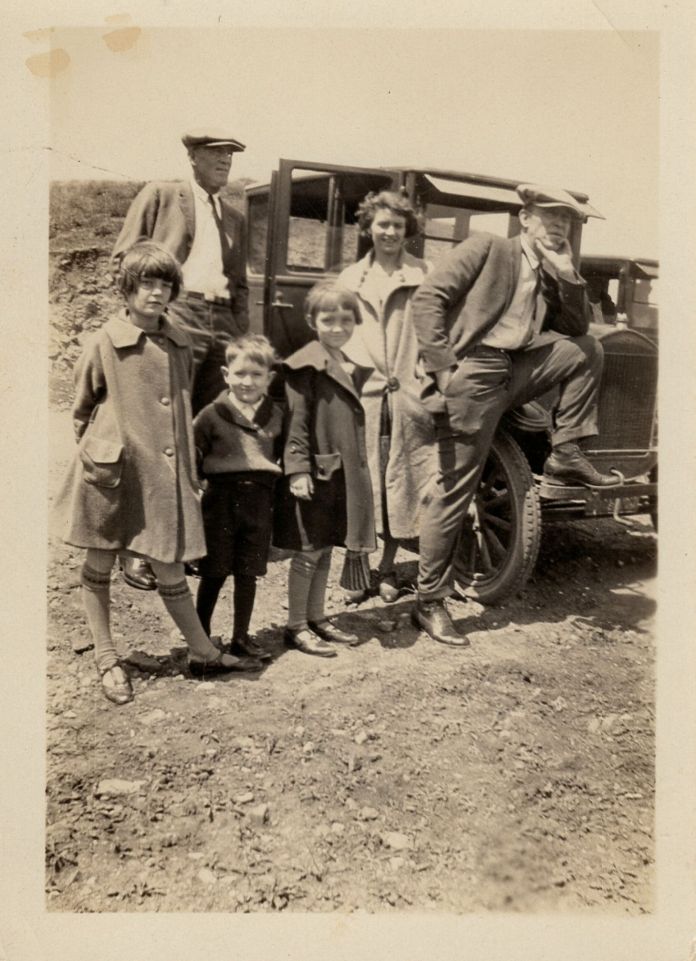
The Halls on the road to Madera. From left to right, Mariel, Robert, Barbara, Eileen, and Bruce. In the rear uncle Marion. 1930 Photo Grace Williams. These old photo make people look older than they were. Bruce and Eileen are both thirty four. Grandpa has his foot on the bumper to relieve his back, a problem he had all his working life.

*In the 1920s, buying on margin meant investors could purchase stocks by paying only a small portion of the stock price with their own money, and borrowing the rest from a broker. This allowed them to control a larger investment than they could otherwise afford, potentially magnifying profits. However, it also significantly increased the risk, as losses could exceed the initial investment if the stock price declined. When the broker called the margin the buyer had to make up the difference between the money spent and the difference owed the broker. It was a dangerous investment strategy if the buyer was unable to make up the difference. In 1929 it was a financial disaster.

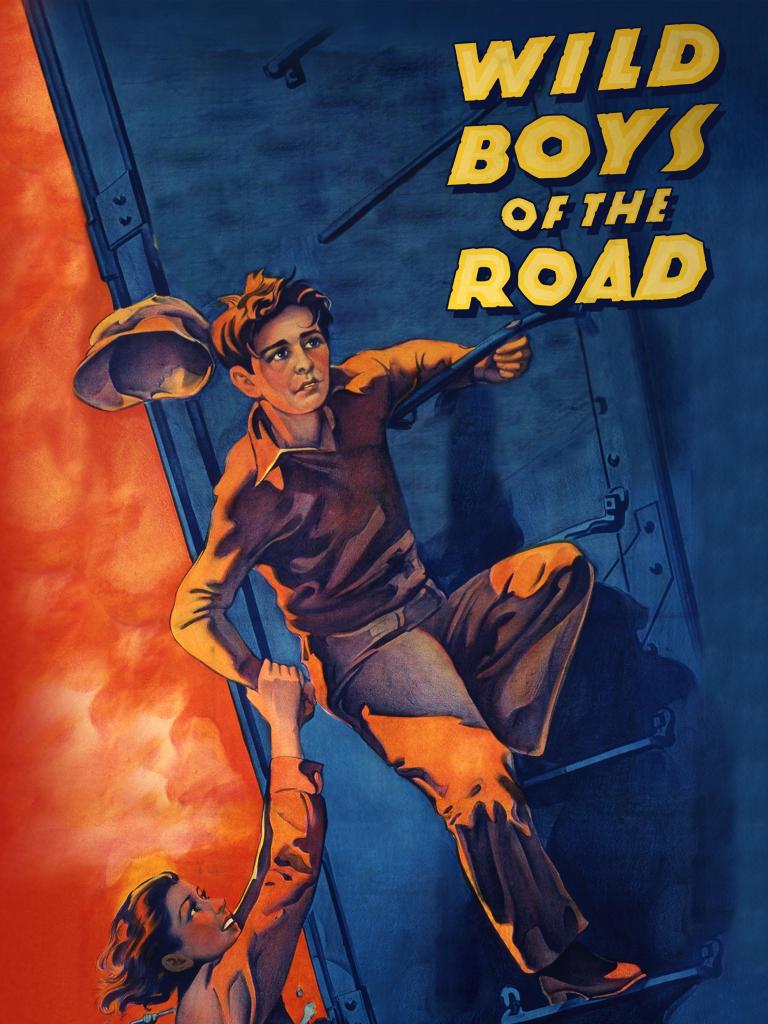
**Wild Boys of the Road is a 1933 pre-Code Depression-era American drama film directed by William Wellman and starring Frankie Darro, Rochelle Hudson, and Grant Mitchell. It tells the story of several teens forced into becoming hobos. The screenplay by Earl Baldwin is based on the story Desperate Youth by Daniel Ahern. In 2013, the film was selected for preservation in the United States National Film Registry by the Library of Congress as being “culturally, historically, or aesthetically. Available on Apple TV.

Michael Shannon is a writer and former teacher. He writes so his children will know their history.

Standard

Whats’s in a Name.

By William E. Lye

The Secretary of defense has ordered the renaming of United States Naval ships as follows.

  1. The USNS Medgar Evers. The Evers will be recommissioned as the USNS Theophilus Eugene Connor (1897-1973) Eugene “Bull” Connor gained infamy during the spring of 1963 as the heavy-handed Birmingham police commissioner who turned power hoses and police dogs on the black demonstrators led by Martin Luther King, Jr. Bull Connor and Birmingham symbolized hard-line Southern racism. Connor’s actions received national and international media coverage, which dramatized the plight of black people in segregated areas, giving the civil rights movement much-needed attention. After viewing television reports of the fire-hose and police-dogs episode, President John Kennedy said, “The civil rights movement should thank God for Bull Connor. He helped as much as Abraham Lincoln.”
  2. USNS Thurgood Marshall. The Marshall will be renamed the USNS J. Robert Elliot. Elliott criticized his own party’s president, Harry S. Truman, and federal legislation to ban lynching and eliminate the poll tax, and he had opposed creation of a Fair Employment Practices Commission. Elliot criticized Democrats of southern states who opposed the civil rights act. In his 1952 Georgia House campaign, he expressed dissatisfaction with attempts to end the all-white primary: “I don’t want those pinks, radicals and black voters to outvote those who are trying to preserve our own segregation laws and our sacred Southern traditions.”
  3. USNS Harriet Tubman. She will be named the USNS Thomas McCreary. McCreary, a slave catcher from Cecil County, Maryland. Proclaimed a hero, he first drew public attention in the late 1840s for a career that peaked a few years after passage of the Fugitive Slave Act of 1850. Living and working as he did at the midpoint between Philadelphia, an important center for assisting fugitive slaves, and Baltimore, a major port in the slave trade, his story illustrates in raw detail the tensions that arose along the border between slavery and freedom just prior to the Civil War.
  4. USNS Ruth Bader Ginsberg. The proposed ship will have its name changed to the USNS Roger B. Taney. Taney, an American lawyer and politician who served as the fifth chief justice of the United States, holding that office from 1836 until his death in 1864. In the Dred-Scott decision, Taney’s court declared that all blacks — slaves as well as free — were not and could never become citizens of the United States. The court also declared the 1820 Missouri Compromise unconstitutional, thus permitting slavery in all of the country’s territories. The case before the court was that of Dred Scott v. Sanford
  5. Other proposed names to be deleted, Dolores Huerta, Cesar Chavez and Lucy Stone.
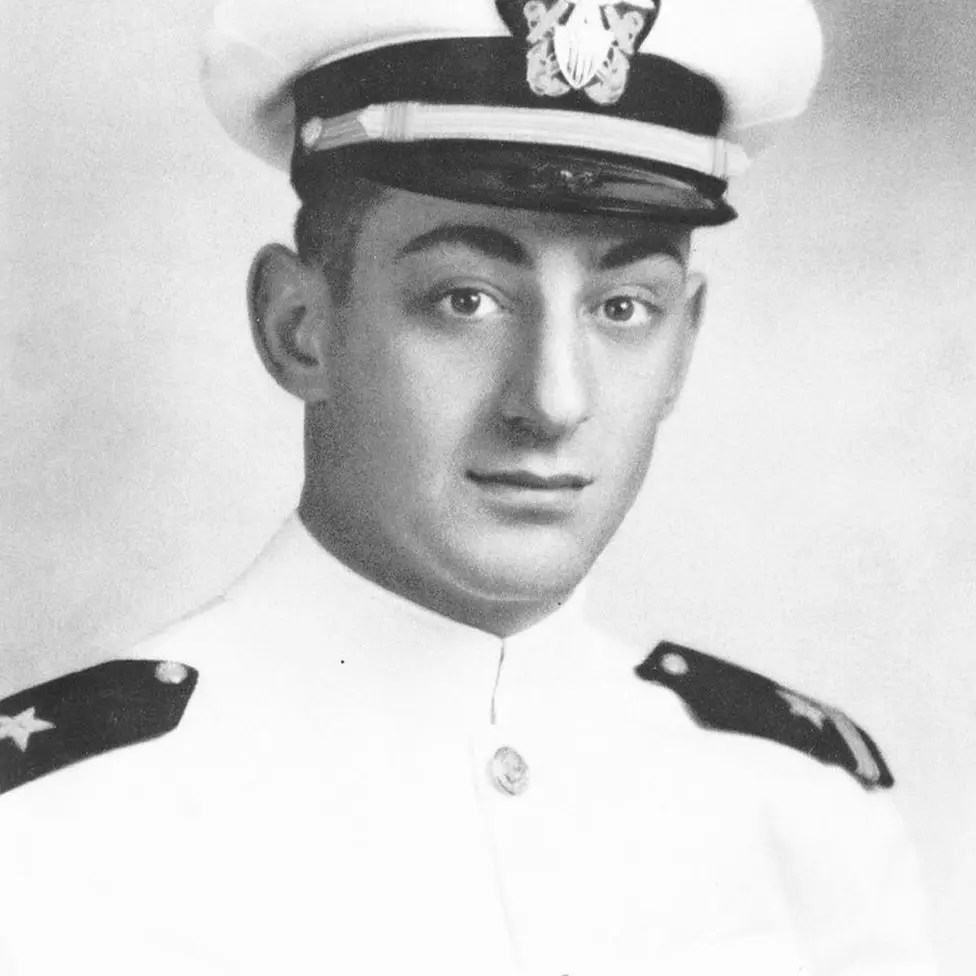
  6. The Congressman John Lewis class of ships one of which was the USNS Harvey Milk. The class to be renamed for James Oliver Eastland who was a segregationist Senator and led the Southern resistance against racial integration during the civil rights movement, often speaking of African Americans as “A degraded and inferior race”. Eastland has been called the “Voice of the White South” and the “Godfather of Mississippi Politics”. His famous quote on politics in answer to a reporters question was. “I run on two things, bridges and “n*****s, ahm for one and agin t’other.”

Chief Pentagon spokesman Sean Parnell said in a statement that Hegseth “is committed to ensuring that the names attached to all DOD installations and assets are reflective of the Commander-in-Chief’s priorities, our nation’s new history, and the warrior ethos.”

“Our military is the most powerful in the world – but this spiteful move does not strengthen our national security or the ‘warrior’ ethos. Instead, it is a surrender of a fundamental American value: to honor the legacy of those who worked to build a better country.”

Although the Navy has renamed ships for various reasons, name changes are an exceptionally rare occurrence, especially after the ships have entered service.

The Navy is made up of sailors from every state, political party, ethnicity, sex and religion. Navy men and women represent the diversity of all Americans and for the sea going contingent particularly treasure the traditions and affection for the ships they serve on.

You could have a long and serious discussion on the “Whys” of military bases and ships but politics intrudes for all kinds of nefarious reasons having to do with who votes for you the political office holder. Traitorous Confederate Generals get a name though they and their political class fostered a war that killed nearly eight hundred thousand American boys and men. The first black associate justice of the Supreme Court, a highly praised legal scholar, Thurgood Marshall is erased over what should be the motto of this country, the most diverse on earth since the Romans. DEI, Diversity, Equity and Inclusion which perfectly describes the goals this country has pursued since it’s very beginnings. This is someones personal fever dream of hate and divisiveness. Some times we stumble as a people and fall down but the idea that the pipsqueak in the Pentagon can erase, not just a paragraph in a history book but the lives of people who changed this country for the better because he thinks that his Moral Superiority derives from the color of his skin or his belief in a vengeful God.

The writers point is to demonstrate the utter absurdity of the administrations goal of canceling all of whom they don’t like. Remember the minority, in the end, rarely prevails.

The names of the propose ships are a fiction used to prove a point.

Willian E. Lye is a writer who cherishes the title of Iconoclast given to him by Janine Plassard one of the worlds greatest educators.

Standard

The Old Cow

Requiem for old Cancer Eye

George sent the boy out to his brothers cattle ranch because he needed help. At thirteen he could do most of a man’s work.

After morning coffee with his grandparents he climbed in the old Chevy pickup with his uncle Jack and drove down the hill from the house and over to the barnyard, the old milking barn and ice house, the big hay barn, the tractor sheds and the calf shed where the business would be done.

The big cow was in the corral next to the old squeeze, for these ancient corrals and buildings dated back more than a hundred years. The fence posts marked those decades, some railroad ties from the old narrow gauge railroad, some from the wrecked steam ship SS Elg which went aground on the sandy beach south of Oceano. To lighten the ship, the crew had thrown thousands of board feet of fresh cut lumber shipped from Vancouver, Canada, over the side. There was scarcely a ranch in the valley which didn’t have some.

The boy opened the gate and backed the truck into the corral while his uncle fitted the handmade manila halter around the cows head. A rope was led to a tie-down hook and attached with a double half hitch.

Driving at walking speed they proceeded up the rock hard and dusty adobe road. The went past the gulley where all the abandoned farm equipment lay, The old Model T which had brought the family down from Berkeley in 1918, The first of the Chevrolet milk trucks slowly rusting away, hemmed in by miles of rusty Bob wire, dented five gallon milk cans with rusted out bottoms, all of it shining with the dusty red color of death.

At the top of the hill a slow right turn east towards Pat William’s ranch and just short of the fence line, the bone yard. To the boy, his imagination active in the way that boys of no particular serious education works, it seemed as if they had stumbled on what was left of Custer’s 7th. The troopers bones lying adrift, aglow with mornings sunlight. Scattered, each one a sign of change.

Stopped at just the edge of the field, they got out of the truck and the boy turned off the hitches while Uncle Jack pulled a couple of flakes of hay out of the back, tossing them to the side. He said, “Lead her over there and let her eat.”

He went to the open door of the truck and reached behind the seat for the old J C Higgins .22 he had traded for when he was just a boy. Long since relegated to just this duty, he pulled the bolt and inserted the single Long Rifle Cartridge.

The red and white Hereford cow, her hide still beautiful the way cattle are when they are taken care of and loved. Her dusky deep red hide with its little white bib and four pure white socks all special to her breed was topped off with the curls adorning her forehead, beautiful as if she had just come from Rae Langenbeck’s beauty parlor. The one behind her husband Buzz’s barber shop, hidden behind the pink curtain where the boys mother and grandmother went for their curls.

With purpose uncle Jack walked to the cow. raised the rifle to her forehead and pulled the trigger. Without a shudder she collapsed on the ground her body giving a little sigh, faint. One of her hind legs shivered a moment but she was already gone. Uncle Jack stood a moment looking down at her and then softly gave her the only benediction he could. He turned slightly, looked at the boy and said, “She was a good cow.”

Michael Shannon writes of his family’s life. A family which lived on the ground.

Standard