The long polished Mahogany table as seen through the little nook off the living room, an opening on the left where the swinging door to the kitchen stood propped open with a fold of newspaper and at the end of the room a window with its Venetian blinds open looked out to the side of Mrs Lake’s home stuccoed in beige and with a little imagination you could see a long stretch of featureless desert sand. Before the glass, sat four grown men.
I could watch them at a distance and have always wondered what it was of which they spoke. Hand on fist I would sit on the little brick hearth of my grandparents home in Lakewood and try to listen.
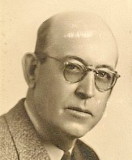
Gathered together around the every day tablecloth that would be changed for Thanksgiving dinner later that day sat my Grandfather Bruce Hall. A man who had labored nearly four decades in the oilfields of California. He was now the superintendant of drilling for the state of California. From oilfield roustabout to the top of the heap at Signal Oil and Gas. He wore his rumpled, baggy khakis and a white long sleeve shirt with the collar open and the sleeves rolled halfway. Spectacles over the lower half of the nose, his bald head encircled by a fringe of hair smelling of Wildroot. He seemed to me to be perpetually tired. He’d already had the first of the heart attacks that would in a couple of years kill him. A lifetime of filterless Chesterfields, one of which, smoldering he held with three fingers, idly scraping the ash from on the edge of the ashtray, a green baize bag filled with bird shot and a shallow brass bowl. He leaned forward on his elbows a half smile on his face.
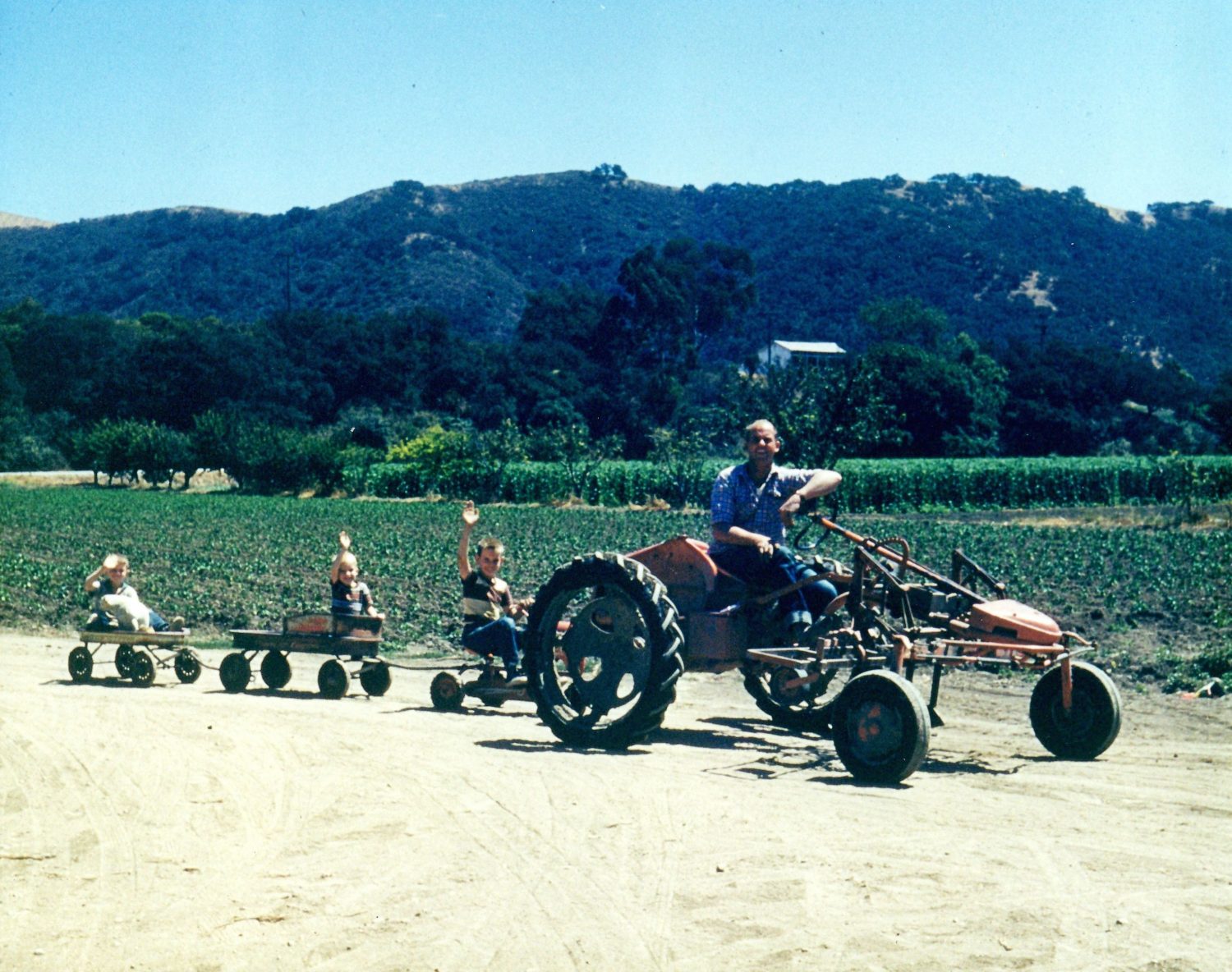
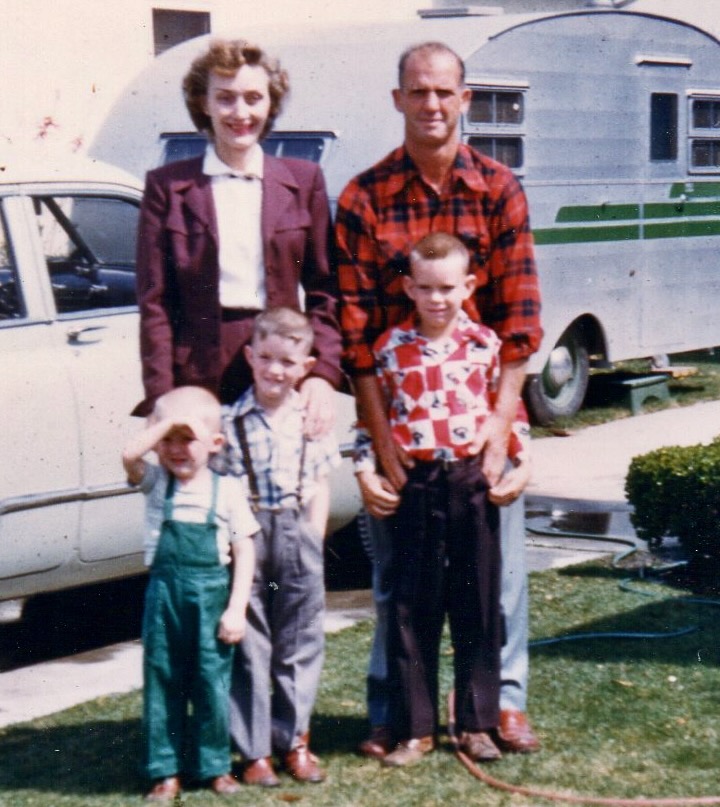
My Dad sat next to him in his ever present flannel shirt and blue Levi’s his uniform of sorts the mark of a farmer. He was forty three. He sat in his customary pose, elbows braced on the table a half smoked cigarette in his right hand pinched behind his upper knuckles, I can’t remember ever seeing him sitting any other way. At his elbow a half filled bottle of bourbon being occasionally lifted with the comment, “Another drop?” No ice either, whiskey straight no frills, or as my dad told me, “Ice dilutes and pollutes the Bourbon. Bartender puts it in to short the pour.”
There was a glass at each mans hand, no fancy fat little crystal glasses, grandma had them but they mostly sat in the sideboard gathering dust. No, these man drank from kitchen glasses and in those days it was likely a jelly jar, not the canning Mason or Kerr but the old fashioned one that came from the Jewel Tea truck, full of, and always in that household, blackberry jelly, the kind that you had to pry the lid off with a church key. Practical men they were but at the same time would never drink straight from a bottle. Class of a sort.
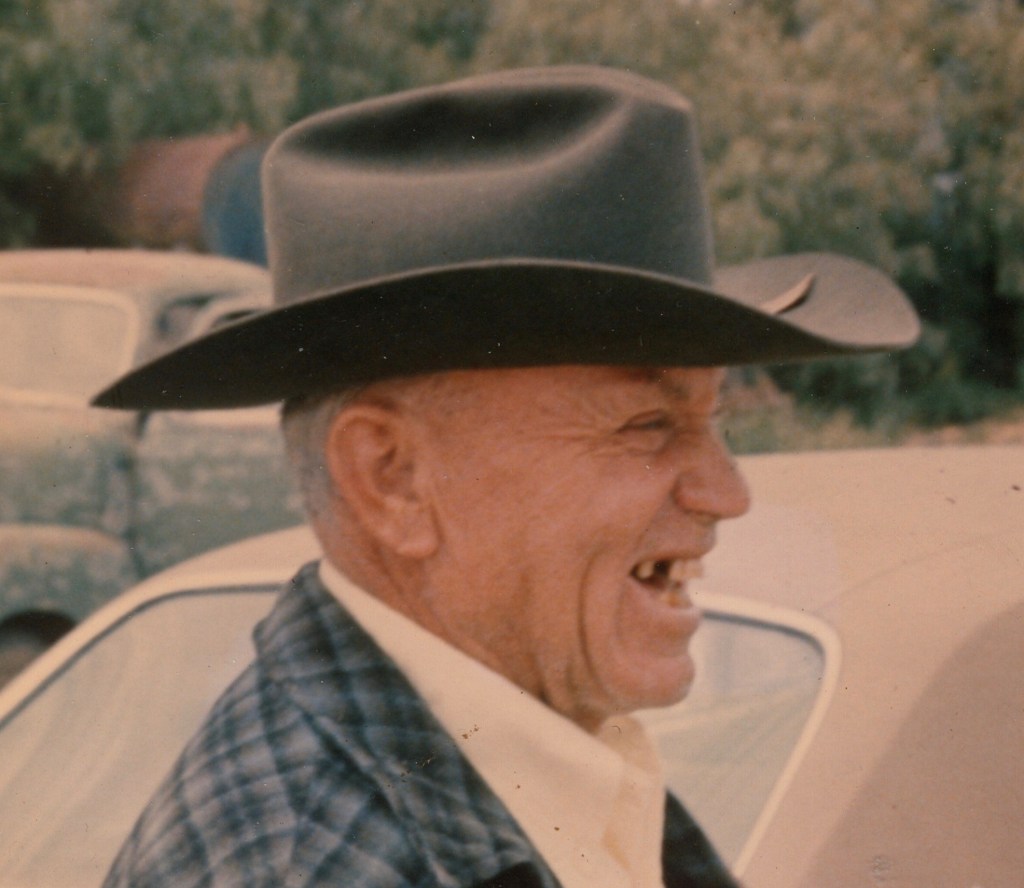
Uncle Ray sat at grandpa’s other hand. His dark blue shirt with the mother of pearl buttons marked him as a cowman. In his late forties he was a little on the portly side, the shirt held in with a plain leather belt and a small not so fancy buckle. His old fashioned black levi’s turned up at the cuff a good four or five inches covered most of what were hand-tooled cowboy boots for thats what he was, a dyed in the wool, genuine cowman who could fork a horse as good as any. Better than most really for he was known through the Sierra Nevada as “Powerhouse” after, on a bet, put his horse Brownie over the side of the hill at the Kings river penstocks and rode her almost straight down as if it was nothing. A feat of horsemanship that gave him the name. If you ever get up there you’ll see what I mean.
I remember him most for his laugh, a sort of lung deep basso cackle, really indescribable but still one of the greatest laughs I have ever heard. He didn’t hog it either it was as if it was just idling down in his throat ready to spring to the surface on any occasion.
Ray Long was such an original cowman, at that time already a vanishing breed that he had taken on the characteristics of the horses he rode. He was missing the molars on one side of his jaw and when he tipped his head back to laugh he looked just like a horse did. Horse laugh my dad called it.
The fourth that made up the quartet was my uncle Bob, Robert Preston Hall. At thirty five just a youngster. My mother’s youngest sibling, the only boy of that generation. He grew up with two older sisters and one younger who adored him. My aunt Patsy always said he was as caring as any parent.
He leaned back in his chair right arm hooked over the back with an elbow, his legs crossed at the knee. His white shirt collar unbuttoned had short sleeves, something I never saw the other three wear, ever. Cigerette pack in the pocket, he held one in is right hand. His jet black hair, slicked back shone in the light and sitting on his nose, old-fashioned steel rim, round spectacles. Topping it all off, he wore a thin mustache, the kind we used to call the “Boston Blackie.” He had an elegant long straight nose and a family trait inherited from grandpas’ family, Jug Handle ears. Mom said they were like airplane flaps and would slow you down when you came in for a landing.

Uncle Ray loved to tease and used the family ears as nicknames for one of his sons and me. Ears like that, guess they didn’t hurt Clark Gable none. He was an oil man too in his younger days. They had that in common.
They were different looking men really, no two looked alike but they had things in common. They could be absurdly funny and the well jest turned earned high praise in our family. The were men of the land all of them farmers and ranchers at heart with deep roots in the ground. Practical and pragmatic, they wasted no energy on frills. None of them liked to wear suits if they could avoid it and they did at all costs. The best you could get out of my dad was a sports coat and slacks.
They were all good with kids. I have friends I grew up with who still remember my dad handing out quarters at gatherings which meant something in those days. Uncle Ray made you feel like you were a grownup but wasn’t above squirting you with milk while milking either. Uncle Bob had the salesman gift and told me very first dirty joke though it barely made the grade as such.
The thing I most remember is they were grownups who stood for something. Kids were great but still kids. They shared very little about adult life. They did their best to keep all that at a distance to keep you safe. Your were a kid and they were adults, it was important that they kept it that way. They taught much more by example and were pretty content for their children to find their own way with as little guidance as possible.
Once my oldest cousin who was about fourteen and though pretty well of himself sauntered in and pulled out a chair and sat. He interjected some comment into the conversation and they all turned to look at him. No one answered. A moment or two passed as they sat silent until it occurred to him that maybe he wasn’t as old or important as he though and he soundlessly slithered out of the chair and beat a retreat.
They bookended an entire generation from one end to the other. They had seen two world wars, the greatest depression, the Korean War, the atomic bomb and each had weathered severe up and downs in the family.
That thanksgiving saw a dozen kids and five families shoehorned into that little house on Pepperwood Avenue in Long Beach, just about the last time we would all be together. Other than seeing them I really didn’t know what they talked about. I wish I had been older so I could really listen but I wasn’t.
Years have past and the questions were never asked. I had other interests and they were famously recalcitrant anyway in the way men of that generation could be. “Oh, you don’t want to know about that,” my uncle Jackie Shannon once said. I did but he just changed the subject. Every person you will ever know dies with secrets and stories you will never hear. It’s a shame.
Michael Shannon is a writer. He lives in Arroyo Grande, California.
 atthetable2015