The Twelve Hour tour

Chapter 18

The Big Shake

Michael Shannon

“Whole Lotta Shakin’ Goin’ On.” Out in California shakin’ is a fact of life. If you live here long enough your going to be in one. People can date their lives, just like reading a clock. Which one did you ride out. Was it the Great Fort Tejon in 1857, the Hayward in 1868, or Santa Barbara in 1927. California recorded 9 severe to catastrophic quakes between 1900 and 1933. My grandfather Shannon and his wife to be Annie Gray rode out the San Francisco in 1906 which they never forgot and over time they generated dozens of stories. It went, in the telling, from a catastrophe to legendary status in our family.

Family histories are bookmarked with these. Time, day and place vividly recalled.
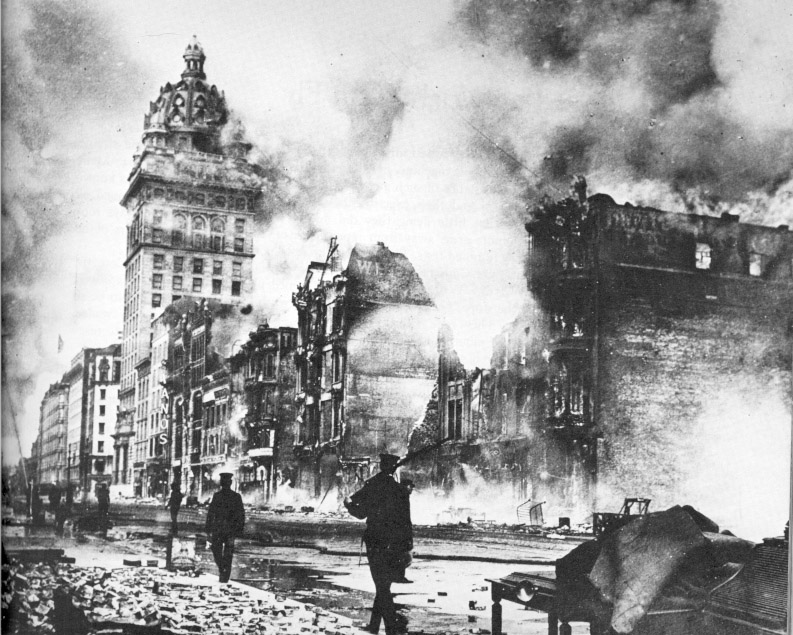
Call Newspaper tower on Market Street in flames, April 18, 1906. Hearst photo.

In 1933 Eileen was nearing her term. In a mark of the times she would deliver in a hospital. This child would be the first in the family not born at home. No midwife, no husband or sister-in-law, no mother-in-law. What could be safer or more modern?

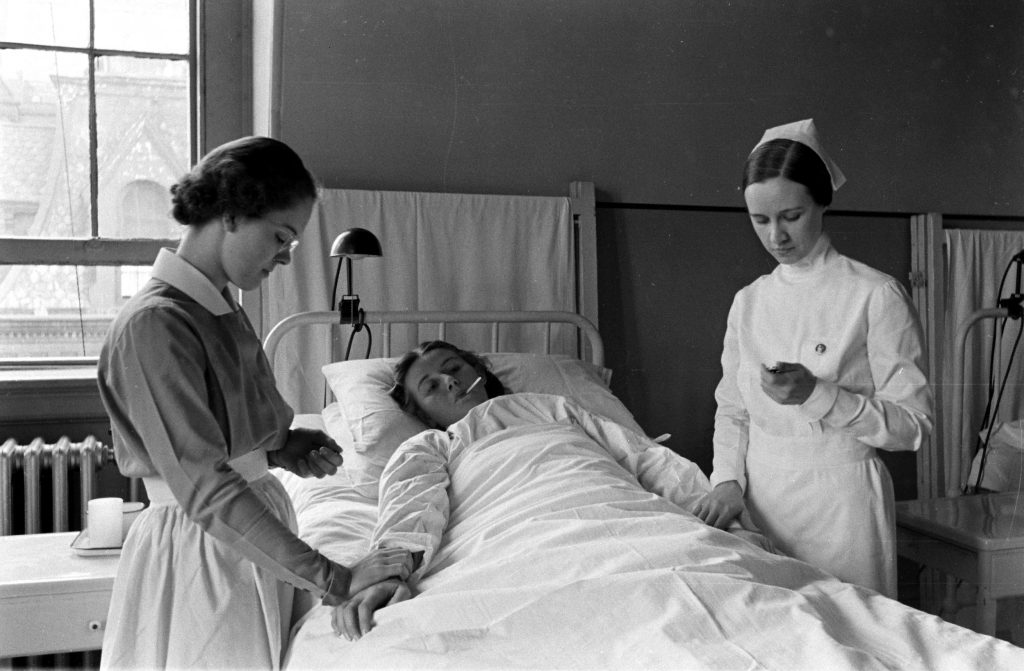
Eileen was checked in Cottage Hospital in Santa Barbara. Built in the Spanish Colonial style it was to be a new and unique experience for Bruce and Eileen and baby to be.

Santa Barbaras Cottage Hospital, 1930. News Press photo.

Delivering a baby at 38 was a dicey proposition in 1933. There had been many improvements in in pre-natal care in Eileens lifetime, infant death rates had dropped significantly since 1900. The diminished numbers of home births was a major contributor along with the acceptance of theories on anti-sepsis and the rise of hospital culture.

In 1888, a group of 50 prominent Santa Barbara women recognized it was time for the growing community to have a hospital — a not-for-profit facility dedicated to the well-being and good health of all residents, regardless of one’s ability to pay or ethnic background. It was a major milestone in the communities history as the population was just five thousand people when the little 25 bed facility opened its doors in 1891.

In ’33 Bruce had a steady job but his pay could barely cover expenses. The depression had reached its lowest point for American people. March 1933 saw the highest number of unemployed, estimated at around 15.5 million. Those numbers represented just under 25% of the workforce. New Mexico jobless numbers were pushing 40%, the highest in the nation. For those who were lucky enough to keep their jobs, wage income had fallen 42.5% between 1929 and 1933. The country had no social security system, no unemployment insurance the unemployed had to rely on themselves and the overwhelmed relief agencies. People resorted to desperate measures to find work or earn money, such as waiting for a day’s wage or selling goods on the street. Children were turned out of their homes to fend for themselves. There was a great deal of unrest across the country.

In San Francisco, the hiring of day laborers called a “Shape up” in which those chosen from a crowd of the hopeful were employed for just a day rather than long term led to the violence of the 1934 West Coast Waterfront Strike, particularly the events of “Bloody Thursday” on July 5, 1934. During Bloody Thursday, San Francisco police open fire on striking longshoremen, resulting in the deaths of two strikers and hundreds of injuries. This escalated the strike into a citywide general strike, where over 100,000 workers in solidarity with the longshoremen walked out and shut the city down.

The majority of the population in the country were bordering on frantic, not knowing where the next meal would come from or how and where they might live.

The Halls had three teenaged children who needed to be clothed and fed. They lived in a small rented house and were by some slight miracle were just getting by. Timing for the new baby couldn’t have been worse.

Not just bad timing either. Eileen had nearly bled to death when Bob was born in 1920. Only aunt Grace’s sprint into Orcutt for the doctor had saved her life. She was very weak for months afterword. Bruce and Eileen told each other that there could not be anymore babies. It was much much too dangerous. The thing is, nature will find a way and it did.

Though the first human to human transfusion was successfully done in 1818 the classification of blood types was only codified in 1900. WWI led to the first mass use of the life saving procedure. Like most things the ability to do a transfusion became routine but the underlying structure which provided the actual blood was not. Blood could not be stored for long periods of time, just days in the best of circumstances. It wasn’t until that the first blood bank was established in a Leningrad, Russia hospital. National organizations did not exist. The first was by Bernard Fantus, director of therapeutics at the Cook County Hospital in Chicago, established the first hospital blood bank in the United States in 1937. In creating a hospital laboratory that can preserve and store donor blood, Fantus originates the term “blood bank.” Within a few years, hospital and community blood banks begin to be established across the United States. It was much too late for Eileen as Santa Barbara had only a very small supply of whole blood on hand in March of ’33 .

Not only is childbirth for most women life threatening but in 1920 when Bob was born the chances of finding blood for a transfusion were unlikely. The doctor ran his small practice in an office above a little shoemakers shop in Orcutt and had no way to store blood of any type. The fact that he was able to get to the lease and find and tie off the bleeder in time was a miracle. The lack of transfusion was the main reason for her long recovery.

If Eileen were to hemorrhage she could well die and her doctor in Santa Barbara insisted she deliver at Cottage. They had no money to pay so Eileen went down to the welfare, they called it relief then and applied for help to pay the hospital. They gave her such a hard time that she felt ashamed that they though she was just another chiseler. She went home in tears and told Bruce that in order to qualify they would have to sell the car which he needed to go to work.*

She told the doctor that they had decided that the baby would be born at home just as the others were. The doctor was adamant and said, he and some other doctors had gotten together and agreed to get together and take care of people who were in need and that the hospital had established a fund for the same reason.

“Eileen, you will be treated the same as if you lived in Montecito with the rich folks.” He said, “No one will ever know.”

Perhaps the sun was about to break out.

They were in Santa Barbara after the layoff and then bankruptcy of Barnsdhal oil. There were no oil field jobs in the Los Angeles basin, absolutely none. They had bought a small house in Wilmington near Bruce’s brother Bill and his wife Anna. When Bruce lost his job and couldn’t find a new one they called Eileen’s brother Henry Cayce who lived with his wife Martha and their three kids in Goleta. Henry had a good job as a mechanic and in the way of family they said come on up, we’ll find room for you all.

So the house in Wilmington was lost, the first they ever owned but they couldn’t make the payments so they turned in the keys and just walked away as so many others did during the depression. By late 1932 it was being called the great depression because there was no doubt that it was the one.

They closed and locked the door for the last time, loaded their suitcases and whatever they could carry, drove to the filling station, gassed her up and they still had .50 cents left. Always responsible and money conscious but with nothing to lose, they said “To hell with it and went to the movies.” They saw “Tarzan the Ape Man” with Johnny Weissmuller and Maureen O’Hara. When it was over they took their popcorn and dead broke, hopped in the car and headed to Santa Barbara. They had this way about them where they looked on life as if it was a big adventure. They would do their best, come what may.

At Henry and Martha’s Bruce got up the next day and went looking for work. There wasn’t any possible way that he would find work in the oil fields so anything would do. At thirty eight half of his working life had been in oil and though it was rough it was all highly technical and built almost entirely on experience. He could not read a book on how to do the work. It was learn by doing. All of that seemed out the window now.

Steinbeck’s story about the Joad family would not be published until 1939 but the reality of it was being played out across America every day. The novel explores themes of social injustice, economic hardship, the loss of the American Dream. The power of community and collective action in the face of suffering was for the Hall’s, the way out.

Henry Cayce was Eileen’s uncle and by coincidence an oil worker. He had worked for Barnsdal in Elwood as a mechanic but had also lost his job. He now worked as a garage mechanic in Santa Barbara. They rented a big house in Hope Ranch and had three kids of their own which made six at home. Eileen ran the house and took care of the kids and Martha worked in her mother’s little grocery store. The house was in a walnut grove so Eileen and the six kids shucked walnuts and sold them downtown for extra money. They did whatever they could find.

Bruce took any kind of job he could find mostly doing day labor. A few hours here and a few there most not lasting very long and bringing in a little money to keep them going. He finally got on a a garbage man, humping trash all day. His bad back was murder, but it was life or death, up at four and home at four. He continued looking for oil field work. Call after call hoping that something would turn up. My mother said, she was going on fourteen, at the time that she really didn’t know much about that part of her life just that it was fun to be with her family and cousins and that it was a happy home. Such is how parents shield their kids from harm.

Finally in late February 1933 Bruce got the call from Signal and both he and uncle Henry went back up to Elwood. They would both stay with Signal for the rest of their working lives.

Eileen had been in the hospital for a couple of days. She had intermittent contractions but nothing too serious until later in the day Tuesday the tenth of March. Bruce arrived at the maternity ward just after four o’clock. It was a fine day, one of those familiar California winters near the end of the rainy season. No fog in Santa Barbara, a riffling breeze drifting out of the desert to the east bringing a promise of warmer temperatures and springtime. A fortunate time to bring a new life into the world.
There was no sound. Six miles below the surface of the Pacific Ocean, rock stirred. Billions of tons of the earths crusts, caught along a crack, Jerked, lurched as they slid by one another at around a sixteenth of an inch a year. The immensity of caught forces gave way at 5:54 pm.

While her parents were at the hospital Barbara, Bob and Mariel and the Cayce cousins had just sat down to dinner, forks clinking against plates, the girls dicing up some boy at school, Bob rolling his eyes, trapped in a world of girls, when suddenly the table was gone, plates forks, knives and the stew Eileen had made just for the occasion splattered across the floor peppered with flakes of china. Too stunned to act they froze as the old wooden house began to shake and sway to a rhythm of its own. They were fortunate. Old wooden structures might skip and jump about in a quake but most survived with little damage.

At the hospital, as Eileen went into labor. Bruce paced the waiting room. In 1933 no man was allowed anywhere near the birthing room. He chained smoked Chesterfields and he waited. He’d heard nothing from upstairs and at 5:50 he decided enough was enough and he would go see what was going on. He was a few steps up the stairs when the Long Beach Quake of 1933 slammed into Santa Barbara. Bruce was staggered in mid-step, fell to his knees and tumbled back down the steps.

Eileen was in bed and had just delivered a baby girl. She was lying on her mothers belly as the doctor reached to cut the umbilical cord when the quake roared in. The bed skidded one way and the other with the nurses and the doctor desperately holding on, trying to keep the new mother and her child in it. The Long Beach quake** which was a terrible event shook Santa Barbara in a gentile way but that little girl who grew up to be my aunt Patsy was always ever after referred to by her father as an earth shaking event.

And that she was.

Coming: Chapter 19. The Depression

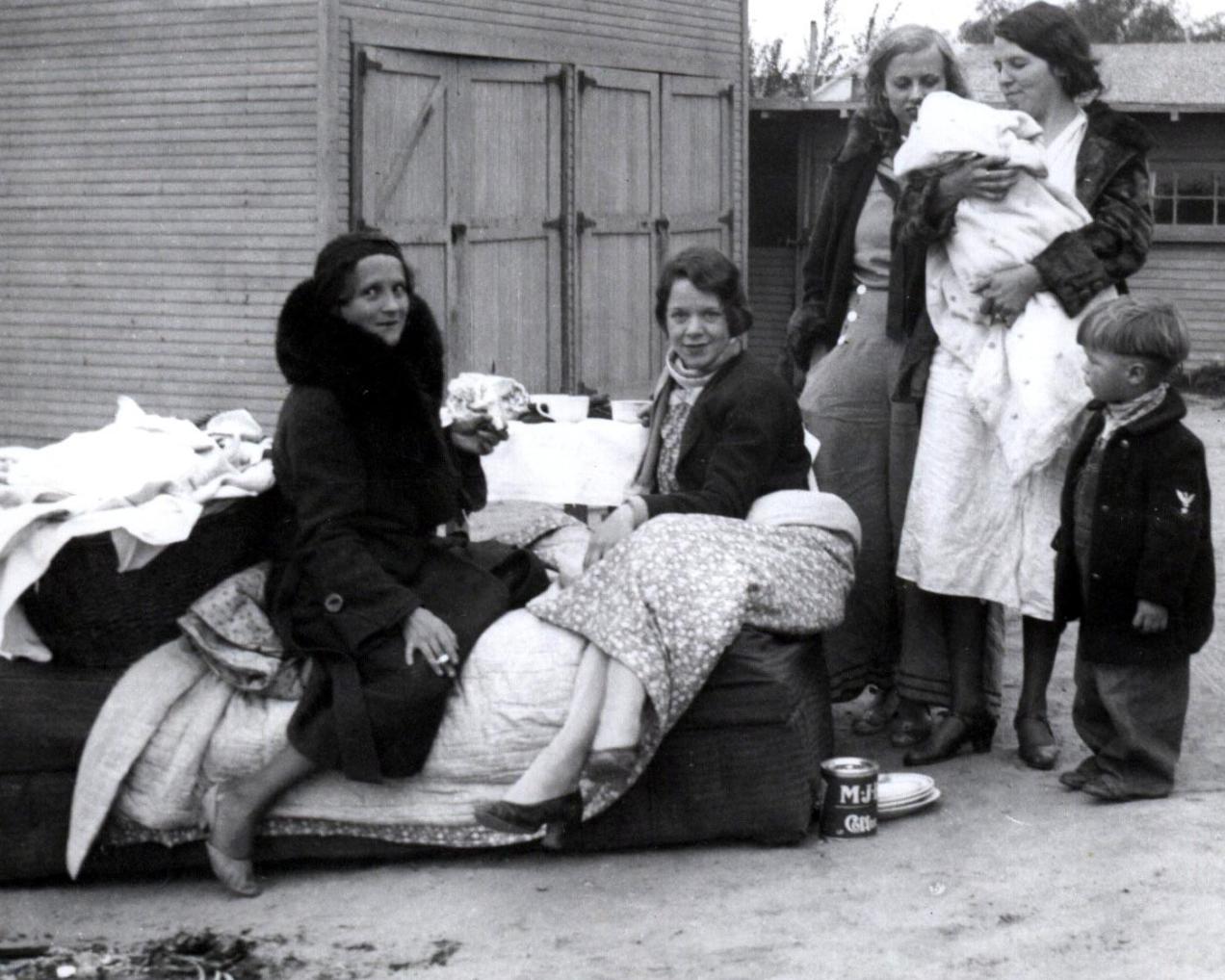
Cover Photo: Living outside, post earthquake, Santa Barbara California 1933.

*This is one of the events in our family history which has caused us to be pretty qualified government haters.

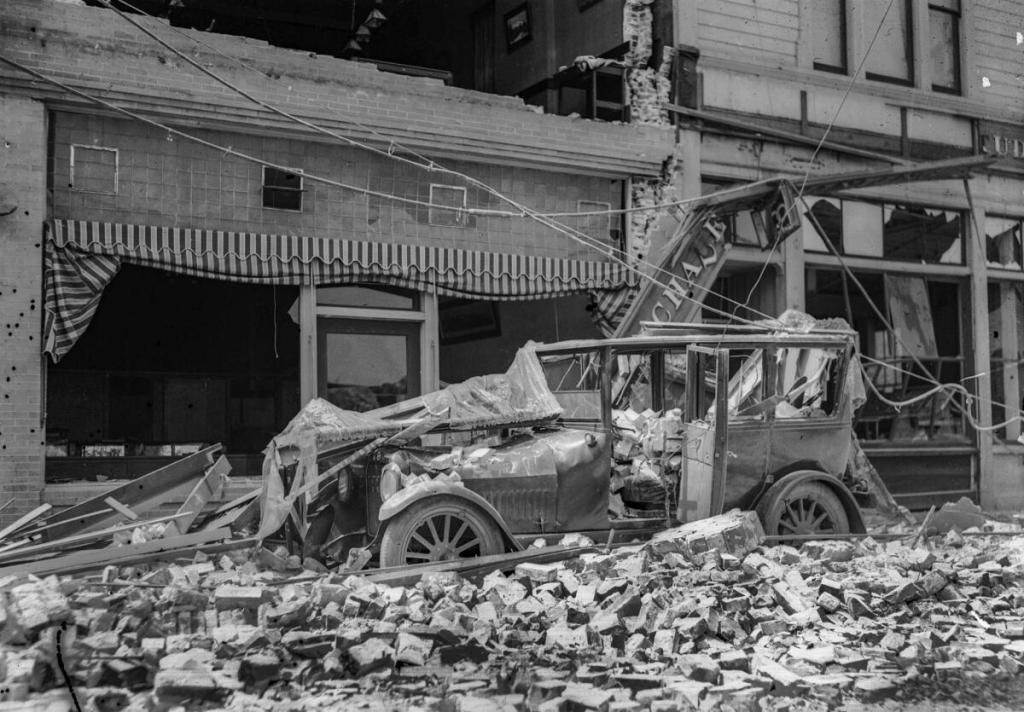
**In the early evening hours on March 10, 1933, the treacherous Newport-Inglewood fault ruptured, jolting the local citizenry just as the evening meals were being prepared. The Magnitude 6.4 earthquake caused extensive damage (approximately $50 million in 1933 dollars) throughout the City of Long Beach and surrounding communities. Damage was most significant to poorly designed and unreinforced brick structures. Sadly, the earthquake caused 120 fatalities.

Within a few seconds, 120 schools in and around the Long Beach area were damaged, of which 70 were destroyed. Experts concluded that if children and their teachers were in school at the time of the earthquake, casualties would have been in the thousands.

Michael Shannon is a writer, former teacher and a surfer. He write so his children will know where they came from.
Standard

Twelve Hour Tour

Page 17

Big Surprise!

Michael Shannon

Eileen stood in the kitchen of the little rented house in Compton.* Her right hand still held the receiver, silent. She didn’t move for the longest time. She stared at the yellow wall where the telephone hung. Softly she said to herself, Oh God, Oh God, Oh God. Heaven was silent on the matter.

When her three children bundled in the back door fresh from school their mother was nowhere to be found.

Bruce was working some Signal wells on the east side of the hill. Mosher had bought six leases that hadn’t paid off but his engineers thought that if they went a little deeper there were provable amounts of crude.

Compton was one of the older little towns that dotted the Los Angeles area. There were numbers of them. Carson, Torrance, Monrovia, South Pasadena, Santa Monica and Whittier. Compton established by a migrant group of farmers in 1888 predated its larger neighbor Long Beach. When Bruce and Eileen moved there in 1931 the population was around 15 thousand and was surrounded by family farms. It was an entirely agricultural community.

Aerial View of Compton in 1930.

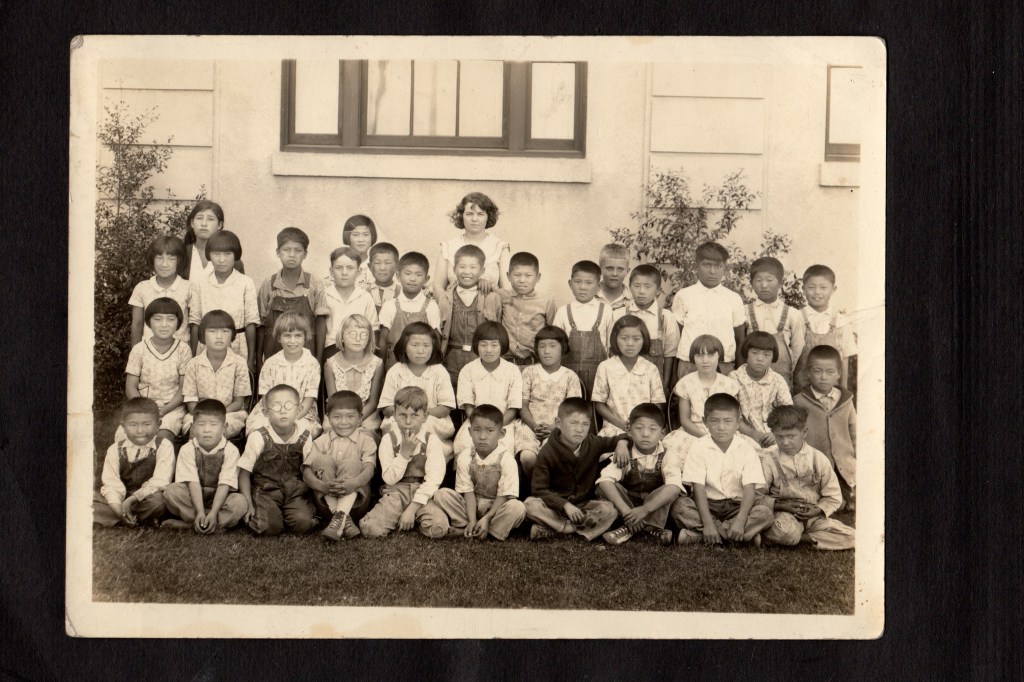
In those days it was supposedly almost entirely white. In the 1930 census, only one African American was listed. There is no doubt that census takers skewed the results as photos of elementary and high school classes taken at the time indicate otherwise. Both my mother and her sister Mariel spoke of this. Their classes were full of Japanese American and Hispanic kids, all of them certainly citizens particularly the Hispanic kids whose families for the most part had lived on this land for at least a century and some much longer.

McKinley school, 3rd grade. Compton Ca 1930 Calisphere photo

The City of Los Angeles predated the establishment of the United States by a decade. The Spanish had arrived in the LA basin on September 4, 1781. A group of settlers consisting of 14 families numbering 44 individuals of Native American, African and European heritage journeyed more than one-thousand miles across the desert from present-day northern Mexico and established a farming community in the area naming it “El Pueblo de Nuestra Señora la Reina de los Ángeles”.

Even though we tend to think only in modern terms, most of Los Angeles County was still rural. LA’s population had just topped 1.2 million but the second largest city, Long Beach was ten times smaller. Signal Hill stood by itself in the last stages of the pastoral land it had been in the time of the great Ranchos which were no longer things but only names.

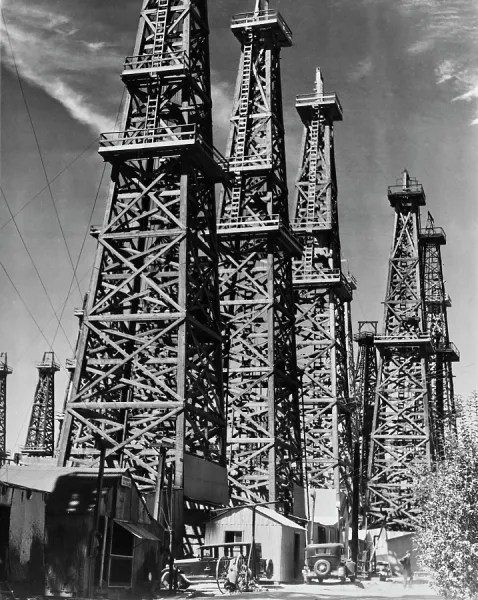
Signal Oil derricks, Eastside. 1932

The sense of anticipation. Not the emotional side of anticipation which is the wishing and hoping, no, the nuts and bolts of it. It is a gift that when its amplified by experience, of the hands on job that lets a person see beyond the immediate thing at hand. It’s the ability to look at something, a job, a technical problem and make a reasonable prediction as to what might happen down the road. Success at any job that requires a positive result is less about what is going on in the “right now” and what is likely going to happen if you continue. This is the path that every successful workman pursues.

Here is what I mean. When I worked my first “Real” job and by that, I mean I was paid for it, I bucked hay for a man named Dinny Sheehy, I was just turning fifteen. Loading flat bed trucks with hay bales is a rough way to start. Baled hay come in many forms. My uncle Jack used a baler that pumped out hay that was tied with two loops of twine. Dinny had one that produced 3-wire. The difference, you might ask is in the weight. Uncle Jackies were around 50 plus pounds, the 3-wire topped 90 lbs. The problem for me was that I weighed about 120 pounds myself and was being told to hump a 90 pound bale of hay from the ground up onto the bed of a flat bed truck that was at my chest. You can’t deadlift one. I had to figure out how to do it by myself. The old timer driving the truck had nothing to say. He looked straight ahead, smoked, sipped from a pint and drove. If he had a secret he kept it. Solving the problem is the anticipatory you see? If I couldn’t figure it out by lunch time I’d be gone.

Bruce Hall. On the rotary rig, Ellwood ,California 1930**

The secret of Bruce’s success was the ability to see ahead, plan for and manage the work. The thinking goes like this, how can I produce more, how can we be more efficient, how can we cut costs and still increase production? Believe it or not that ability isn’t that common. “Getting in your own way” is the phrase we might use to describe the someone who cannot and there are many of those.

Bruce drove into the little dirt driveway, shut of the engine of the Cheverolet and for a moment sat quietly while the cooling engine banged and sputtered as it cooled while he put aside any workplace blues and replaced it with anticipation of seeing his wife and kids. There was homework at the kitchen table, dinner simmering on the stove.

The kids were indeed at the table. “Where is your mother?”

In the way teenagers think, my mother simply answered, “She’s in the closet.”

“Why is she in the closet?”

All three looked up. My aunt Mariel, being the oldest at fifteen spoke with the wisdom of her age, “Don’t know.”

Bruce strode quickly to the hall closet and pulled at the knob. It didn’t budge. Eileen was holding it tight with both hands. Bruce asked her to please let him open the door and eventually she did. There she sat, arms crossed across her knees. She lifted her face toward him, it was streaked with the tracks of tears.

“Oh Bruce,” she sobbed, “I’m pregnant.”

He got down on his knees and held her. Eileen was 37. She already had three half grown children. It was all too much to bear.

So much for careful planning and the anticipatory abilities of Bruce and Eileen.

Chapter 18, The Big Shake

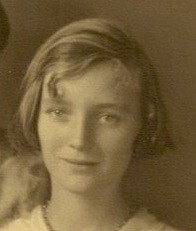
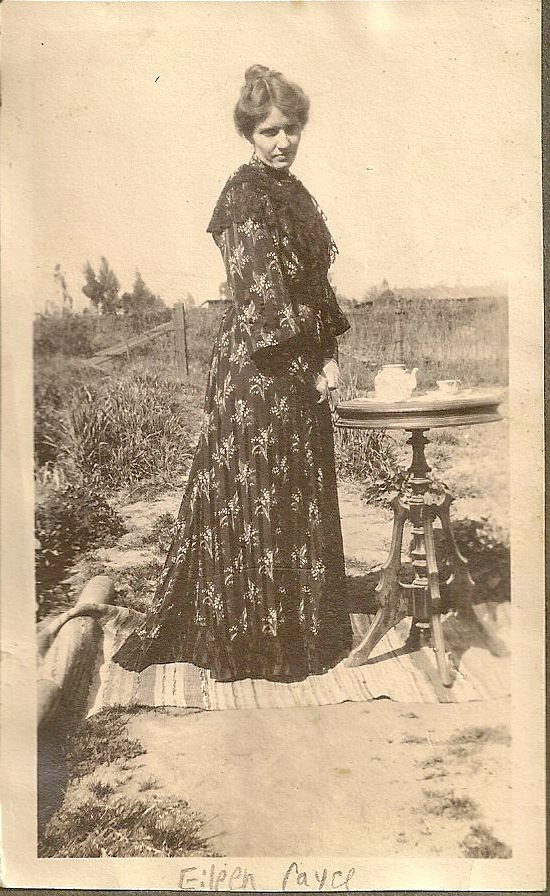
Cover Photo: No one in the family knows exactly what this photo means. It was taken the year she was married, likely on the ranch Eileen’s mother managed near Creston, California. Eileen is just 20. The antique table, doilies, tea set and the little rug set the stage. She is dressed in a style soon to be gone. She wrote on the back “An old lady.” She’s using her maiden name so she’s not yet married. Maybe he’s worried that people will call her a spinster. It’s a mystery but it captures the mood of this story. In the way of genetics both her granddaughter and great-grandaughter are dead ringers for her. They both have the same spirit and “the forge ahead no matter what genius.”

*The house on Western Avenue still exists.

**Bruce is just 34 but the toll on his body is already showing. The stance is that of a man who has back problems. The hands on the back of his hips and the slight arch are visible signs of a bad back that will plague him all the rest of his life. The blackened coveralls, soaked with oil and the unfiltered Chesterfield habit are going to have very serious consequences. Heavy labor is called back-breaking for good reason.

Standard

How To Live Forever

Michael Shannon.

For a good start, be sure to be born on Easter Sunday. You might want to be the only child, a boy child at that, born that day. You should be born at Our Lady of Perpetual Help Hospital, better known as Sisters Hospital.

Staffed with The Poor Clares an austere Roman Catholic religious order of nuns, co-founded in 1212 by Saint Clare of Assisi and Saint Francis of Assisi. The order is dedicated to a contemplative life of prayer, and poverty. They were all good Irish girls. Many of them spent their entire working lives in Santa Maria and when they retired they returned to Ireland from whence they came.

They delivered the newborn to my mother with a blue bow tied in my blond locks. They told my mother it was an omen from God. It must have been because Dr. Case had given my parents some very bad news the year before, he said, “Barbara you will never be able to conceive.”

Born on Easter Sunday? Perhaps a subtle message to Harold Case. Who knows.

So thats a good start.

Now be sure your parents are from Farm and Ranch families. There are scads of reasons for this. The first is general health. To build a child’s immune system it’s important for them to drink from the irrigation ditch and the hose. In my case we drank from the kitchen faucet too, even when the water tank had dead Screech Owl chicks floating in it. The hard water in the valley had coated the inside of irrigation and all the other water pipe with a whitish hard scale that eventually caused the kitchen faucets to close up to the point where you could not stick a pencil in them. A soupcon of fertilizer in the irrigation pipe was good for kids too.

We learned that planting Roly-poly bugs does not grow snapdragons but that Nasturtiums are pretty tasty. We had oodles because they grew insanely lush over the septic pit behind the house. Leaves of three. let them be, we learned that the hard way and that Horse Nettles could be touched in the center of the leaf but not on the edge. We learned to remove our socks in the presence of foxtails and cockle burrs, that is if we happened to be wearing them and that there was only one kind of bad snake. If we saw one in the yard we just told mom, the woman whoo was terrified of spiders and she would come out and dispatch it with a shovel something she learned growing up in the oil fields. Mice in the house were pretty OK; Dad said they didn’t eat much anyway.

Kitties were tolerated for their mouser abilities but seldom coddled, dogs were loved beyond any reasonable amount. Dogs went everywhere we did, showing us the way.

I learned to swim in the creek and the watering ponds on the cattle ranches. I could throw tomatoes, bell peppers and dirt clods with deadly accuracy. It was a mile walk through the fields and a dirt clod fight could and did last the whole way. My friend Kenny and I stalked Old Man Parrish’s apple orchards with our Red Ryders. Everything we did was a made up game of the imagination.

Every old building, corn crib, horse barn, tractor shed harbored an army of spiders. The dark places were home to Black Widows. There were Tarantulas living in holes in the ground, The Daddy Long Legs, so delicate and harmless, the Orb Weaver who weaves those delicate circular webs that can be so striking in the morning when dripping with the morning dew that are so striking that we used to duck under them so as not to harm them. Besides they were natural born fly killers. The nasty brown recluse which, if it bit you it was a sure trip to Doctor Cookson’s office.

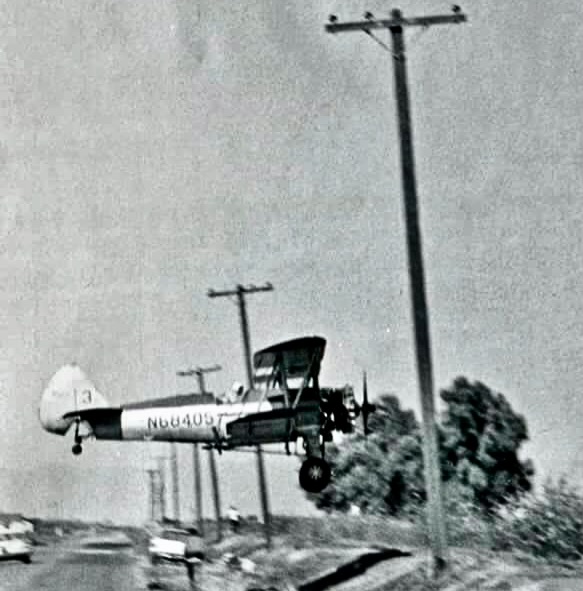
When Warners came to dust the crops with clouds of sulphur and DDT filled the air. Not unpleasant odors went you sniffed it floating on the breeze. Sulphur was sprayed on Tomatoes and peas to fight mildew and DDT. It just killed everything but kids. We could imgine WWI watching those old Stearman biplanes zooming ten feet off the ground and then pulling nearly straight up after flying under Lester Sullivan’s power lines. He flew a Chandell and came right back the way he came and did it again. Dad said he was WWII fighter pilot and wishes he still was. He would call the kitchen phone to say when he was leaving Santa Maria so we knew when to rush out and get as close as possible to the crop he was dusting.

When we were big enough we stood on the cultivator bars of my dads tractors to hitch a ride into the fields. This wasn’t thought of as any great danger. Two of us would jump up and down on the bars to make the tractor buck a little which dad never seemed to mind much. Falling, losing your grip or footing and being dragged to death seemed a small price for some adventure.

We dug in the dirt, wallowed in the good rich mud of our adobe fields. Mom said the clogged pores in our skin prevented germs from entering. Being hosed of on the front lawn wasn’t such a bad thing in the summer.

The families ranches introduced us to livestock, “Bob” wire fences, the wonderful cow flop, cows must have the biggest bladders on earth. Have you ever seen a steer pee? My goodness! We knew what a salt block tasted like. The smell of new mown hay, used all the time in poetry but I think seldom experienced by most, the feel of the curly hair on a Hereford calf’s head and the rough feel of a cows tongue when she gives you a kiss.

My mother made sure we had a good clean shirt every day but Levi’s were worn until they were dirty and greasy enough to stand on their own. I mean, she had an old Westinghouse tub style washer with a wringer on the top which we were warned about but that hardly mattered and the occasional fingertip was squshed, carefully, so just to see how it felt. No one minded hanging out the wash because the clothsline was a great place to run through when the clothes were till wet. Had to be careful though, that was a switching offense. If you ran though and made good your escape mom soon pardoned you with a hug and a promise not to do it again.

Kids did get sick though. We got infected from the other kids at Branch school. In the winter. Mrs Brown’s lower grade classroom could at times be fogged with microscopic beads of snotty goo and desk tops were glazed with phlegm from sticky fingers.

Mom and dad took disease very seriously. We had all the modern doctor mom tools, the humidifier that chuffed a fog of Vicks Vapo-Rub mist, A bottle of Iodine, Aspirin and band-Aids. She kept a handy rubber hot water bottle and if it was serious you might repose in their bed during the day and simply be cured by that treat and the smell of them as you slipped in and out of your fever dreams.

Our parents grew up in an age where the death of children was an omnipresent occurrence. When my father was born, one in five children died before their fifth birthday. Smallpox still wasn’t eradicated though the vaccine had been around for more than a century. My dad nearly died from Scarlett fever when he was seven. There was no cure. Children died from Whooping Cough, Measles, Influenza, Pneumonia, and infections from ordinary cuts and scrapes. A broken bone could become septic and a child would be lost. If you lived in the country there was little access to medical care, schools did not have nurses in attendance. The life of a child was precious but there were few ways to protect them. My own aunt was infected with polio when she was just nineteen. She survived but had a game leg for the rest of her life. Did I mention he was married with two small children and pregnant with a third when it happened.

Today we seem to have lost the institutional mamory of what pre-antibiotic medicine was like. My parents never did and neither have I.

No one asked me if I wanted to be stabbed by the nurse from the County Schools Office as we lined up at the schools gate and waited in line to go up the steps of the little school van and be stuck. Nope, any squawking would have been completely ignored. Parents knew the cost, nobody complained.

We learned from our parents that most things were not crying offenses. Dad never complained about anything, neither did my mother who if she sniped about her friends she didn’t do it around us. We lived in the kids world, all of us. Adventure was something homemade. You polished your imagination with no help from television because in the very beginning it wasn’t made for you. Reading was the drug of choice. We had all the Hardy Boys adventures, The Three Musketeers, Mark Twain, Jack London, Franklin W. Dixons Frank Merriwell’s adventures which in and of itself made us want to go to college. We knew little or nothing of war or politics. Those were of the adult world.

Looking back you can see that we were free to make our own adventures. We had little supervision. We knew the rules laid out for us but they were few. We were expected to have a good time, explore, learn to swim in the creek, fish for our dinner and follow the dogs wherever they went.

It was in many ways a simpler time for kids. You had time to learn and form yourself. To put on some the armor of self before you had to inevitably step over the threshold of young adulthood. It took me a long time to catch up with the town kids when I went to high school. I wasn’t prepared for smoking, fighting, sex or any of the other thing that can bring kids to grief.

A friend once told me that he found it admirable that I went my own way. Growing up on the farm had vaccinated me so to speak. Thoughtfulness was simply ground in you by experience. We were vaccinated by the tenet that you should “Look before you leap.”

Growing up on the land and understanding that the most wonderful thing was that my parents were alway there. My dad in our fields and mom in the kitchen. We were safe and secure in the knowledge that we were loved and cared for.

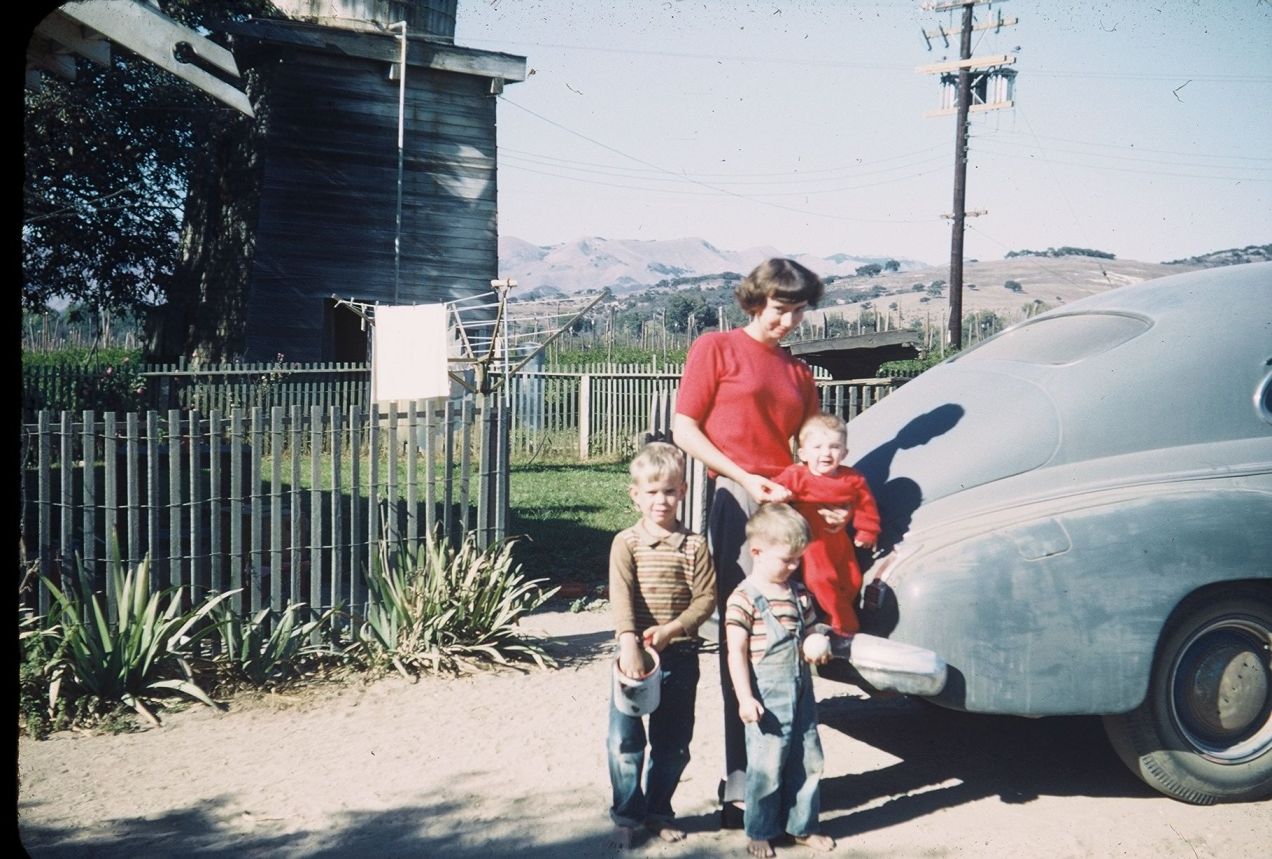
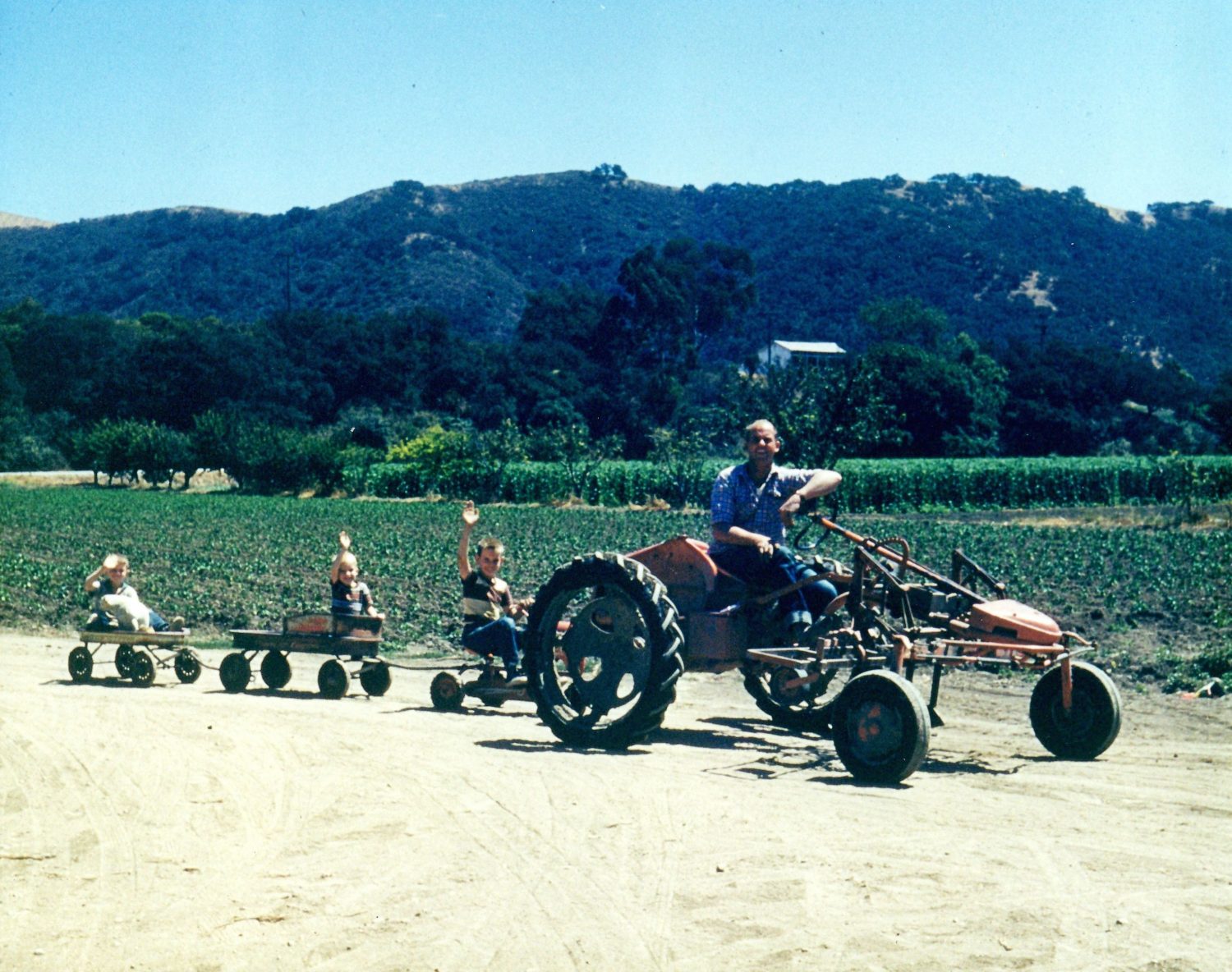
Cover Photo: My aunt Patsy at 17, she of the polio. My two brothers and myself. We were one, four and six. Shannon family photo

Michael Shannon is at heart, still a farm boy. He writes so his children will know where they come from.

Standard

The Twelve Hour Tour

Chapter 16

Michael Shannon

The Twelve Hour Tour was over. As the old saying goes don’t buy a Pig in a Poke sack. Except of course you’ll end up doing it anyway.

Bruce accepted the job as a superintendant of drilling and went to work on the Signal piers at Hydrocarbon Gulch. After they had cleared a platform to build a small and shaky derrick on the edge of the Pacific ocean the cable tool bit was dropped a few times which qualified as spudding in a well and the terms of the one year contract were fulfilled. They made it by the skin of their teeth.

Because Bruce was a whipstock expert he was busy at the Gulch. No derrick could be erected on the beach because of the tidal shifts so a pier was begun immediately in order to begin drilling out in the Santa Barbara channel. The oil pool was offshore and in order to reach it they would need to slant drill.

A pile driver building the piers for the validation well. The validation well, Appleford No. 1, October 1929.

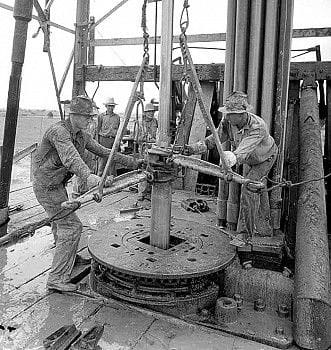
Bruce’s new position came with a raise and lots more responsibility. After nearly twelve years the twelve hour tour was a thing of the past. The twelve hour was now 24 hour and then some. Supervising more than one well could take a great deal of time. If his crews were lucky they had a shack or small shed where they could wrap themselves around boxes and equipment and sleep the sleep of exhaustion between tripping pipe. Pulling all the pipe in the casing, “Making a round trip” or simply “Making a trip” is the physical act of pulling the drill string out of the well-bore and then running it back in. This is done by physically breaking out or disconnecting the drill string when pulling out of the hole every other 2 or 3 joints of drill pipe at a time. The pipe pulled, called a stand is then racked vertically in the derrick. Up on a small platform near the top of the derrick called a “Monkey Board” is the The Derrick-man. the derrick-man walks the board to guide, stack, and secure drill pipe as it is lowered into or pulled from the bore hole.

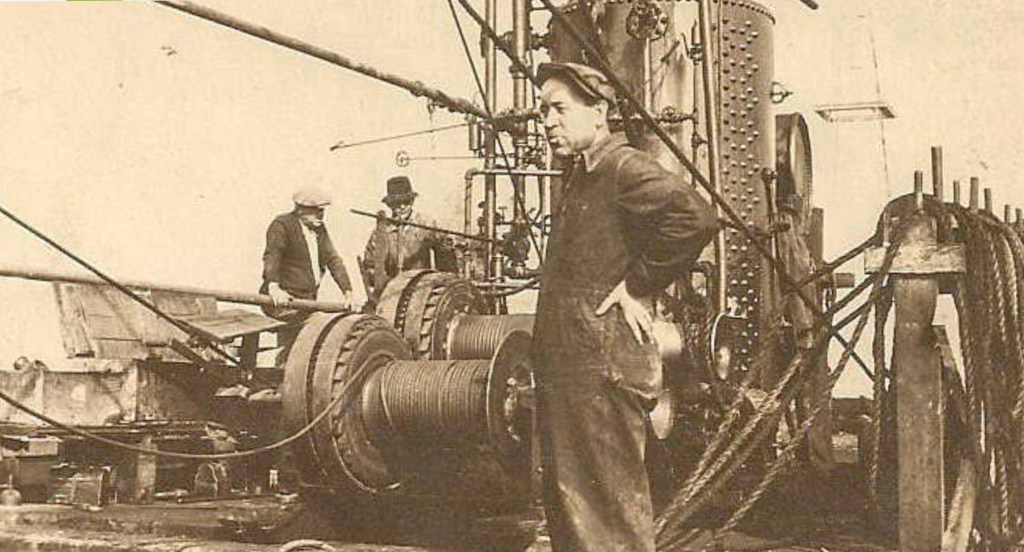
Tripping pipe in the early 1930’s. The stack is behind the man on the right. Calisphere

A typical reason for tripping pipe is to replace a worn-out drill bit. Another common reason for tripping is to replace damaged drill pipe. It is important to get the pipe out of the well-bore quickly and safely before it can snap. My grandfather could place his gloved hand on the rotating pipe and tell you what was going on deep underground. In the thirties there was little in the way of scientific measurement. No electronics were yet available for measuring hole. The drillers still relied on taste, feel and smell to understand what was happening deep underground.

The drilling floor was a dangerous place to work, slippery with drilling mud, oil and water. Ninety feet above the floor hung all kinds of equipment that could fall and kill a man. Hands were crushed by heavy machinery, steam boilers could rupture and cook a man. Heavy chains could snap and take your legs off. No one wore a hard hat. They were not in common use yet. No self-respecting work man would were one anyway out of pure cussedness. Men were careful enough, within reason, but idiots were not tolerated and would be quickly run off lucky to just get a beating on the way. Avoiding death caused by an idiot is in itself likely to make a crew furious. It was every man for himself.

When Bruce left for work Eileen never knew when she would see him again. It could could be days. Raising the girls was mostly her job. House wifing was a different job in the thirties. There were no labor saving devices in the home. Few had a washing machines, only 8% of American homes had a refrigerator in 1930. If your house was electrified, about 90% were in urban areas, you had an opportunity to buy home appliances if you could afford it but if you lived out of town, if you lived on a farm or out in the country that dropped to roughly 10%. A woman lived little different than her grandmother had before the civil war. Things were still done by hand. Itinerant oil workers, because they moved so much weren’t likely to be moving with heavy appliances. It was by this time jusy normal life for grandma Hall. My mom talked about taking the rugs out to beat the dust out of them. She said she could really wrangle the floor sweeper around. She remembered that she was twelve when her mom retired the old Sad Iron. Mom also was the carwash, something she did until she married. Grandpa had a car which he liked to keep clean. Muddy roads meant a lot of washing. The car meant you could get to work and back and was an important as any other tool.

School was within walking distance. The old Benjamin Franklin grammar school had just been rebuilt and served the central section of Santa Barbara. Opened in 1899 it added to the legacy of education in Santa Barbara begun by the holding of formal classes in the home of Don Domingo Carrillo who had used local Chumash Indians labor to build his home in 1807. He built the house for his wife Concepción Pico Carrillo who established the school.*

Mom said she loved Santa Barbara and like every time they moved she hoped they would stay. Her reality was they were oil nomads. Grandpa went where the work was because he loved the work I guess. Thats thing not uncommon amongst those that work with their hands. Trapped by experience and the need to provide you’d better make the most of it. The rest of the family is along for the ride.

Barbara Hall. She carried that winsome look her entire life. Santa Barbara California 1931

Both my parents told me that when the were in the depression they didn’t really know it. No one called it that, It was just hard times and most people got by as best they could. They said ordinary people, which they were, took care of their money. Savings banks were a pretty new concept and most people didn’t use them anyway even if they had cash to spare. Because my dad was a farmer and dairyman they grew and made things people needed and saw as necessities. They were lucky in that way.

In the rest of the country one in four people were out of a job, over five thousand banks across the country closed forever taking peoples life saving with them, suicides increased by 30% and there were more than two million people homeless. Thirteen billion dollars of the American economy had absolutely evaporated in 1929 with the stock market crash. No one knew that the recovery would take a decade and with help from Adolf Hitler and the fascists governments of Europe.

Mom knew how to run a sewing machine and read patterns so she made her own clothes. So did her sister. Bob, her brother couldn’t sew but more than adequately filled the role of general all around pest which they both said he was pretty good at. They owned a car, which was a little bit of luxury but was necessary for Bruce to get to work. Mostly the kids walked to school, downtown or to shop. The Santa Barbara street railway had closed in 1929 killed off by car ownership but it wasn’t a large town, just 33 thousand in 1930 and especially for kids Shanks Mare got them around just fine. The most luxurious thing they owned was a radio. Radios were a new phenomenon that “Do you own a radio?” was a question on the 1930 census. The Hall’s said they did.

In addition to the music, news, and sports programming that present-day listeners are familiar with, radio during this period included scripted dramas, action-adventure series such as The Lone Ranger, science fiction shows such as Flash Gordon, soap operas, comedies, and live reads of movie scripts. Major film stars including Orson Welles got their start in radio Welles became a household name in the wake of the infamous panic sparked by his 1938 broadcast of The War of the Worlds. Both my parents said he didn’t really fool anybody.

Music filled many hours of programming, singers of all kinds, radio orchestras played popular music and symphonies. Popular 1930s radio shows included dramas and comedies like The Shadow, Little Orphan Annie, and Fibber McGee and Molly, variety and music shows like The Chase and Sanborn Hour and Kraft Music Hall, and children’s programs such as The Adventures of Superman. Radio was a booming entertainment medium during the decade.

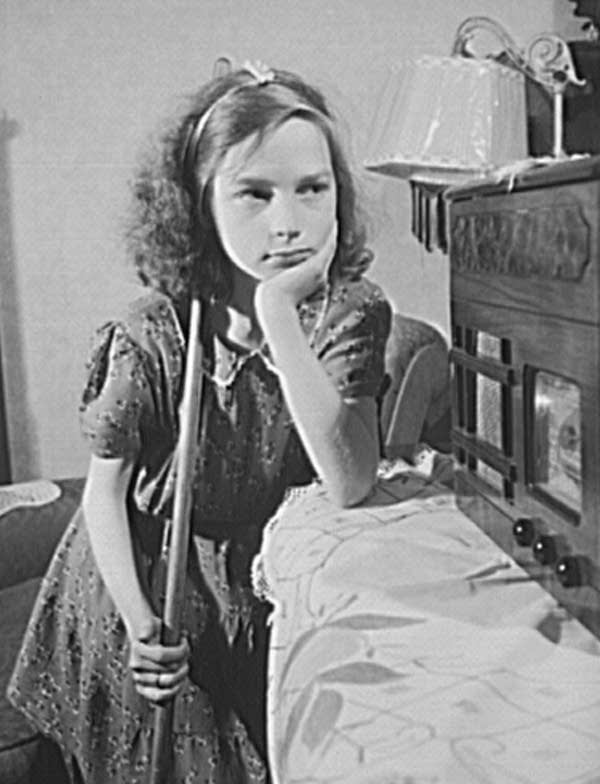
Taking a break to listen.

The future of the Hall family wasn’t all that rosy though. Grandpa had a good job near the top of the earnings curve but life in oil was still tenuous. Crude oil price were through the floor. Some independant companies were dumping oil on the ground. It cost more to pump it than it was worth. New exploratory wells were at a standstill. If there is no hope of profit, don’t invest.

Signal had made up it’s mind that the only hope for the company now that their sales of gasoline to the big producers had been cut off was to plow ahead with the Elwood field hoping to strike enough crude to at least break even so that a hoped for upturn would still find the company afloat.

Like pirates fleeing the law, they pressed on, mortgaging what they owned, makeing frantic rounds of private investors and sending a steady stream of executives to what banks were still in business hoping to find at least a dribble of cash. They began selling their crude at a loss. It was an enormous bet on the company and Sam Mosher’s “Varsity Team” of engineers, superintendents and drillers to innovate, cut the fat and and walk the knife edge of safety to survive another day.

As fast as the piles for the piers at Hydrocarbon gulch were driven, derricks were thrown up, spudded in and the turntables began to whirl. Sometimes the drillers worked over parts of the pier that had almost no planking such was the rush. They wasted no time on guardrails. If you fell, it was in the water if you were lucky and you would simply be fished out. “Joining the Birds” was how they put it.”

From the small field in Maricopa, Chief Engineer R W Heath organized the teardown and loading of the refinery and processing plant which was moved by truck to Tecolote canyon where it was reassembled in just eighteen days. Eighteen, think of that, all moved by truck. There was no Hwy 166 in those days, it all came by 41 and down the Cuesta Grade in tired oil field trucks whose brakes were always suspect. That kind of job that could not be done today. Everyone who worked on the crew did whatever job was required. There was no specialization, if you could turn a wrench, you did. If sweat and grit could move tanks and towers it was done. In it’s early days Signal was like a team working to a common goal. A Varsity Team Sam Mosher liked to call it. Grandpa was one.

Signal had one toe over the line into bankruptcy. If they didn’t find a well which produced marketable quantities of crude they would be unable to meet their contracts and would be forced into receivership. Working overtime to keep the comany in business was the source of heart attacks. If the company failed no one had anywhere to turn. No jobs were available anywhere in oil. Mosher had nowhere to go except to work every day and trying to dream up a way out while sleeping.

Appleford number two did not bring in a heavy enough flow to be profitable. The head field engineer Walt Greenfield was sure that there was plenty of oil just a little farther offshore and said if he was able to whipstock a well he knew he could find it. Whipstocking used a heavy iron device shaped like a shoehorn that when lowered into the drill casing at about a hundred feet could guide the drill bit and its pipe in a lateral direction. They would be able to send the drill spinning out below the sea bed ahead of the pier into deeper water offshore. The problem for the front office is that the cost was thought prohibitive, as much as $35,000 instead of a typical $25,000 for a vertical hole. Management slammed the hammer down and said no, too expensive.

Bruce was a master of the Whipstock and drill bits were moving in all directions underground just like worms in the compost. Signal engineers believed that there was an ever larger pool just a little bit farther from shore. They believed that if they could just go a little bit farther out there was a fortune there for sure. They just had to find it.

The pile driver at work, Mahoney’s pier, 1930.

The family was pretty settled in those two years, Grandpa had steady work. The kids who were about to be teenagers and were happy in school, one of the few times where they stayed long enough make friends. Santa Barbara city was at it’s finest. Because of the generational wealth which was mostly depression proof stores stayed open, the streets were clean and safe. What was euphemistically called Riff Raff was quickly showed the way out of town.

Any minorities persevered in the face of direct and indirect discrimination. People who served in wealthy homes or worked the many fashionable hotels were allowed north to work but not to live.

The descendants of the original Spanish/Mexican and Barbareno Chumash were pushed down into the lower eastside south of Cabrillo street and east of State. Over the middle part of the twentieth century discrimination concentrated the non-white population into the area of temporary shacks, cheap houses** and a service area that held the laundries, shoe repair shops, blacksmiths and auto repair garages. In the depression there was a literal line at Cabrillo Street where people who dwelled in the lower east where most definitely not encouraged to cross.The Eastside neighborhood, was for the marginalized racial and ethnic minorities.

In an interesting twist the school my mother attended was fully integrated though it was outside those neighborhoods entirely.

Born at the end of the 19th century my grandparent’s had that sort of mild racist mindset common at the time. On a simple scale they felt that somehow they were better than the marginalized. In her old age, my grandmother occasionally referred to African Americans as “Coons” which set my teeth on edge. The thing about it was that she had no evil intent. She might have been just referring to the fact that African Americans were undereducated and had less opportunity or lived in poorer neighborhoods. It seemed to be just as if she was describing any object of note. It certainly goes to the complexity of experience. It would be decades before African Americans or Hispanics started showing up in the oilfields. In their married life that had lived in more than one “Sundowner” town.***

State street, Santa Barbara, California June 29th, 1925. Calisphere


In a fortunate piece of timing after the devastating earthquake of 1925 it was decided to rebuild the city in a quasi-California Mission Style. Helen Hunt Jackson’s novel Ramona written in the late nineteenth century had kindled and polished a romantic version of old California. Though the novel became popular and did, for some, shine a light on injustices toward Indigenous peoples, the fact remains that the novel, rather than initiating a movement of change, romanticized a tragic story where the ones who lost the most were those of Indigenous descent. The largest impact the novel had was in tourism—creating a road map of California that the characters traveled, thus making these locations popular and lucrative. The Rancho life has endured until today as a visible symbol of old California which never truly existed. The fantasy, the connection between the novel Ramona and Lummis’s Sunset Magazine is through tourism: the book became so popular it inspired a wave of travel in Southern California, which Sunset Magazine later helped promote and document. Focusing on the region’s “Old California” romantic image led to design requirements for rebuilding the downtown. Santa Barbara remade itself into a popular vision and because the country was postwar prosperous it became the best example of a Hollywood style fantasy of any California city.

Construction of the nearly destroyed Mission had been completed just two years before my mothers family moved there. The harbor was completed in 1929 and was family inaugurated the following year when my Aunt Mariel pushed my mother off the breakwater onto the boulders below and knocked out her front teeth. Never found they are still there as a sort of family talisman.

As a child I was fascinated that she could detach her bridge, take out her teeth which she scrubbed in the kitchen sink. I knew of no other mother who could do such a marvelous thing. Such are the connections that make a life I suppose.

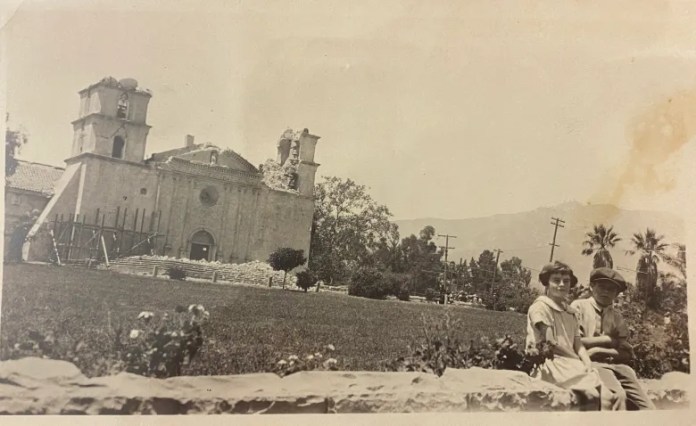
Mission Santa Barbara 1925 after the quake.

The company could at least make payroll and service all it’s notes. Sam was busy looking around for more possibilities. He found some on Signal Hill.

The driller’s had no choice but to wait until things became absolutely desperate. Holding on by the skin of his teeth, Mosher operated a grand total of eighteen wells in the Los Angeles basin, the Midway-Sunset in the southern San Jaoquin and the Elwood field Mosher decided to slow exploration in Ellwood and buy more leases in and around Long Beach. So in late 1931 the Halls rolled up the carpets and trekked south.

Chapter 17 Next:. A year of ups and downs with a major surprise

NOTES

*Leopoldo Antonio Carrillo August 6, 1880 – September 10, 1961) was an American actor, vaudevillian, political cartoonist, and conservationist. He was notable for playing Pancho in the television series The Cisco Kid (1950–1956) and in several films. His signature line was “Cisco, lets went.” His character has since been memorialized and the catch phrase Lets Went” taken its place as a bit of California iconography. We will meet him again later in the story.

**My oldest son rented a studio apartment in an old house which had been divided into apartments in the old eastside neighborhood. This was when he was working in management at a beachside hotel in the early 2000s. Rent was nine hundred a months which was a very substantial sum for a bedroom that had a toilet in it. The house should have been condemned long ago but ghettos are not torn down in one night.

***A sundown town was an all-white community that intentionally excluded people of color, typically African Americans, using discriminatory laws, harassment, threats, or violence. The term comes from signs posted at town borders that warned non-white people to leave before sundown or face consequences. Many California oilfield towns had active KKK chapters until after WWII and later. My grandparents would have been familiar with the term and life in them.

Michael Shannon writes and lives in Arroyo Grande California. He tells these stories so his children will know where they came from.
Standard