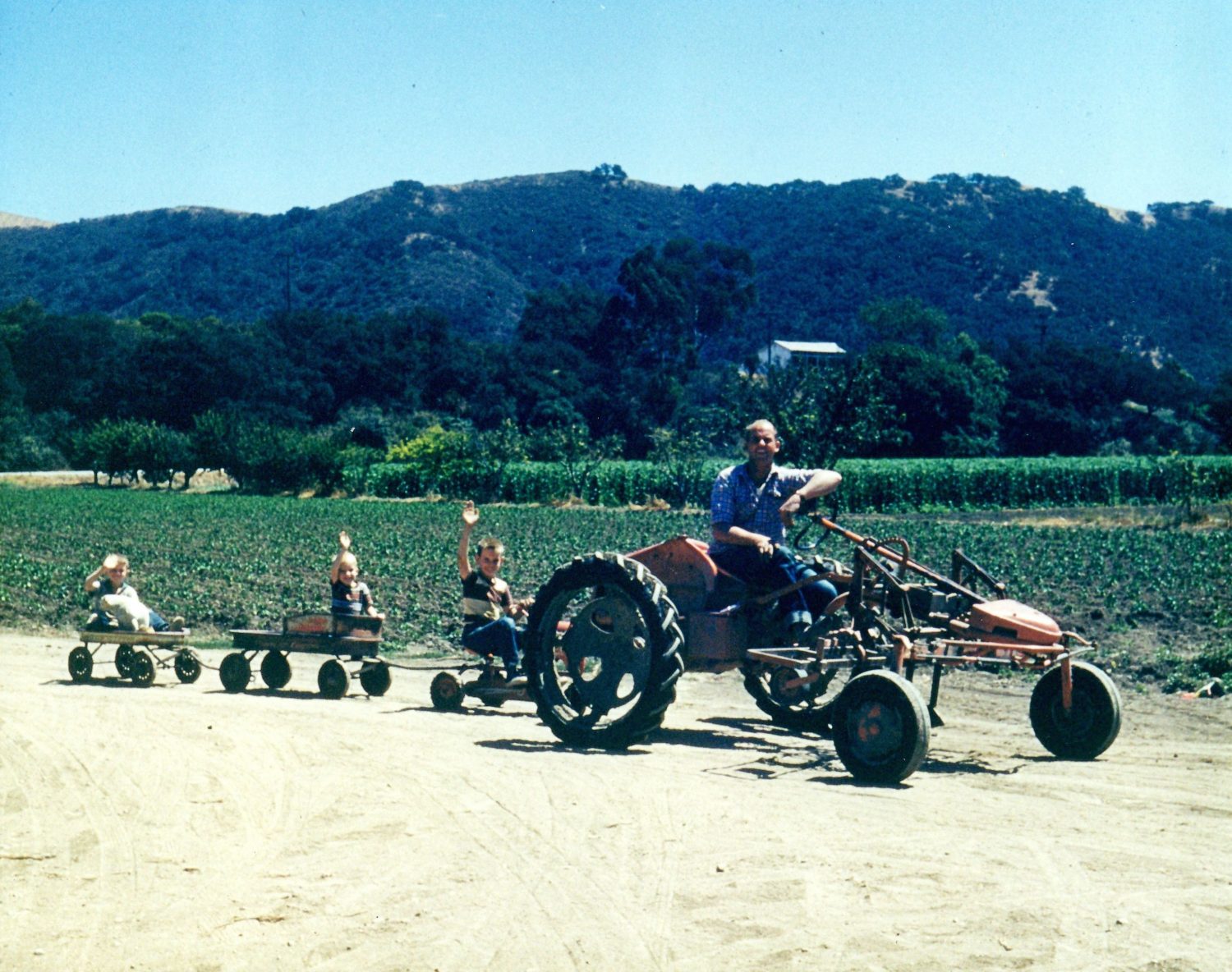
Michael Shannon
So which is it , maynaze or mayonnaise? There’s nothing better than the smooth, creamy texture and one-of-a-kind flavor of Duke’s Mayonnaise, made with Eugenia Duke’s original recipe since 1917. Duke’s notably containing no sugar and using apple cider vinegar for a tart, more “vinegary” flavor, while Hellmann’s has a balanced, neutral, and somewhat sweeter profile due to its sugar content and white vinegar. You can use them interchangeably in many recipes, but their different tastes will subtly alter the final dish.
They can also alter relationships. Now say you’re a southern boy or girl from one of the old secessionist Confederate states, right? Well, we gonna disagree.
At our kitchen table we had a girl, my mother whose family dated back to the beginnings of America, not the United State, understand, but the older one. She had an ancestor who signed the Declaration, Another ancestor, actually a whole passel* of ’em took up arms against their brothers in the north. Nearly finished the family right there. Three of them four boys give their lives for that “monstrous system”. The family came down from the one soldier survivor and another’s daughter born eight months after her father was kilt at Malvern Hill in the Seven Days fight in Virginia with the 43rd North Carolinas. In his final letter from the hospital in Richmond he echoed every soldier, ever, “I want to go home.”
At the opposite end sat my Pop. He came from an indentured Irishman, a indentured transport sent across after the battle of the Boyne which finally crushed the Irish kings and turned Ireland into a vassal state. They were farmers mostly, those people who essentially invented conservatism. Before this was a country they latched onto a good deal when they farmed just outside Lower Mount Bethel Township, Pennsylvania. They bought a tavern and inn from the King’s colonial courts because the previous man who tended the bar and rented the rooms was convicted of counterfeiting and strung up by the neck until dead, dead, dead. When the Kings Magistrate puts his little black hankie over his powdered curls you’re in trouble. It worked out for us though. To show their gratitude Atlanta Shannon and his son William enlisted in the 1st Pennsylvania regiment, company F from Northampton County and fought with George’s Continental Army.
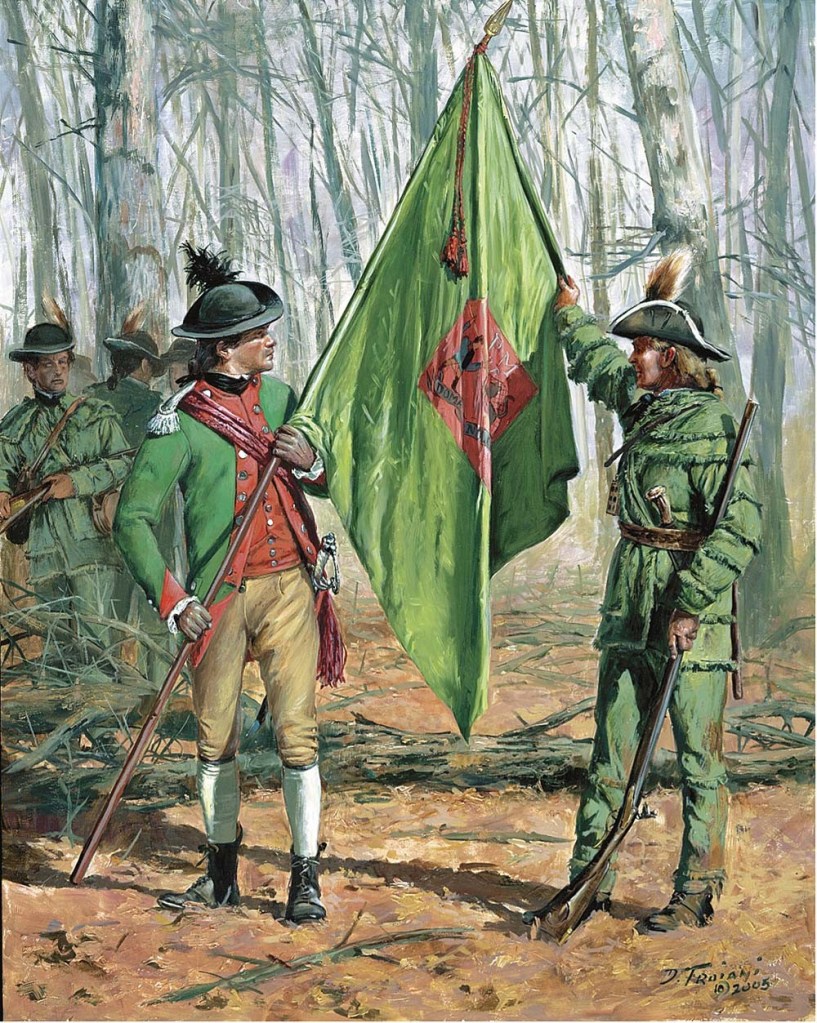
1st Regiment of the Pennsylvania Line. 1776-1783
Like most family’s they hatched the occasional scoundrel. My great grandfather Shannon served a spell in Sing Sing for stealing from the boxcars of the railroad he worked for, the New York Central. They never recovered the goods but they got even. He spent a year inside.
My other great grandfather Ernest Stone Cayce was a swell. He often traveled in a private rail car and dressed to the nines. He sat at the Bridge table with Bill Vanderbilt and lived in the same hotel. He lost it all and ended up busted, a transient who died in a flophouse in Fort Worth and is buried in an unmarked grave in Paupers Field there. The Texas Transient Bureau sent a telegram to my grandmother asking if she wanted the body sent to California for burial she replied with one word, No.
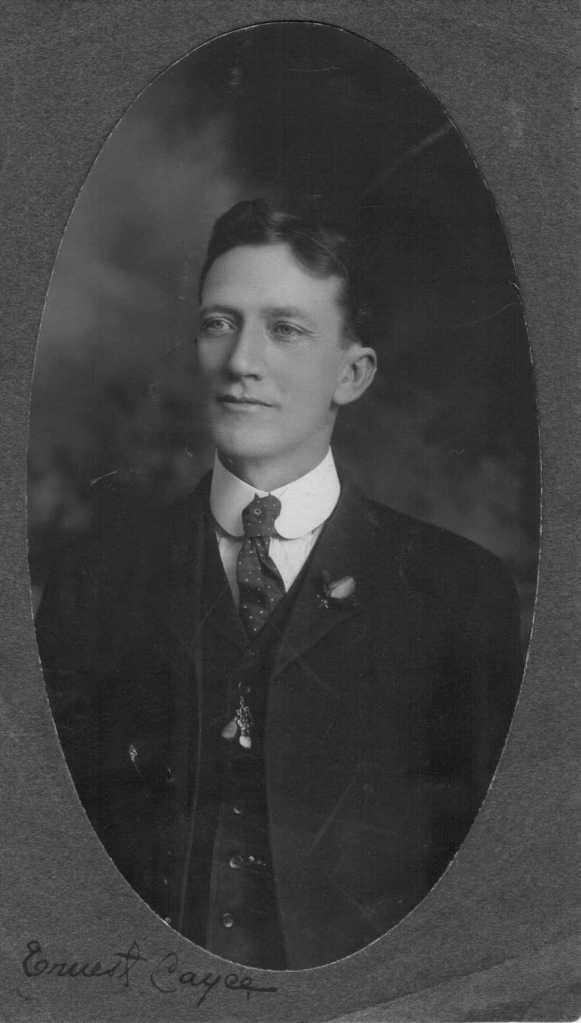
Dapper Robert Ernest Stone Cayce 1866-1935
We were just kids having dinner at our kitchen table and didn’t know any of that but we did witness the culture difference. A family from northern Pennsylvania versus a Mississippi family.
Take Cornbread for example. My Pop liked it hot, sliced in half and slathered and I do mean slathered in real butter not the oily, slimy margarine made from the grease leftover from Tanks used in WWII. He being a child of dairy farmers liked the real stuff. He would carefully slice the cornbread lengthwise and top it with enough butter to stop an unhealthy heart. Shannons drank whole milk, not the pig swill called skim. Whipped cream must cover all of the pumpkin pie, no visible pie and you must add an extra dollop for good luck. In our house all cornbread was made from scratch. Mom didn’t use cook books for such a fundamental thing. Dashes, a pinch, palms full of flour which we kids had to sift by hand and cornmeal, a teensy bit of sugar and Crisco. Never ever came out the same way twice. Hence my dad’s care in the cutting. Just on the edge of crumbling, ahh perfect. Drop on a quarter inch slab of real butter and he’d be ready to go. A spoon full of beans in one hand and the bread in the other.
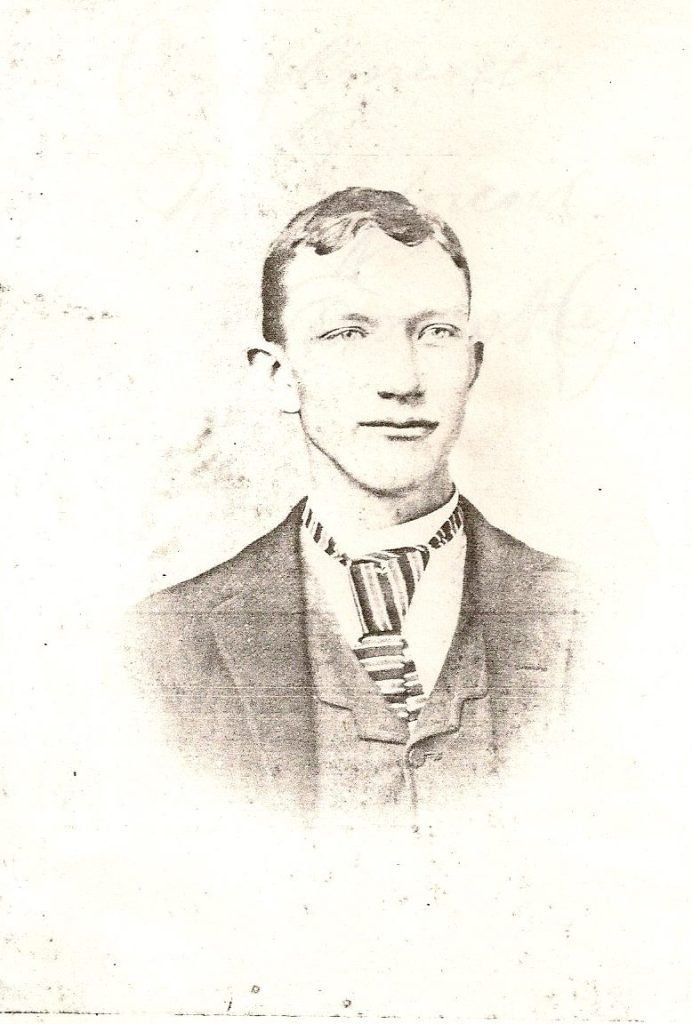
James M Cayce, Quartermaster Sergeant Co E 2nd Mississippi Regiment Army of northern Virginia. Served in nearly every battle in the eastern theater of operation. Captured at Gettysburg, paroled, returned to duty and surrendered at Appomattox, one of only 19 2nd Mississippi soldiers remaining. He died in Robertson Texas in 1904. His granddaughter, my grandmother was born in Santa Barbara in 1895.
At the opposite end of the table, the unreconstructed Confederate took hers, and giving my dad the fish eye, ripped hers to pieces and threw them in a tall glass. She did it like her ancestor Cpl. James Cayce of the 2nd Mississippi did to the Yanks at Spotsylvania Court House, “tore ’em up.” She’d pour in a spoonful of sugar, add whole milk, stir it to the right consistency and then use her spoon to ladle it into her mouth with the same care with which she did everything. When we were up at aunt Mariels ranch she used fresh buttermilk which she claimed was much superior to whole milk. She picked the odd fly off the buttermilk because the fresh buttermilk went into the ice box straight from the cow. No homogenizing or Pasteurizing for my aunt and uncle, no sir. Uncle Ray was the real deal and didn’t put on any airs or fuss about things like science or flys. He likely ran more flys on his ranch than cows anyway.
When I’d grown some many of those little quirks in the family were explained. I joined the Navy in 1966 and all of this was brought to a boil and hammered home when I spent twelve weeks in a boot camp company with almost all of our companies recruits were from the deep south, the Bible belt and Texas. It was a master class in regional language, food and histories. It’s when I learned that there is always another version of everything.
If nothing else it explained corned bread preferences. I’ll tell you about it sometime.
*Passel is a nineteenth century invention, a U.S. dialect version of parcel, Also a group of opossums is called a “passel.” Say: “Dagnab it, there’s that Passel O’ Possums rat now!”
Michael Shannon is a writer and writes just what he wants to no matter what the English teacher says. He also writes for his sons so they will know where they came from.
 atthetable2015