THE WAYBACK MACHINE

By Michael Shannon

Chapter One

THE OLD SCHOOL

Set the dial for late spring 1898, Arroyo Grande, San Luis Obispo County California. Deep in the center of the old Cow Counties.

We got our news from the local papers, the saloon, the cafe and the poker table. Wheels (Bicycles) are all the rage. It’s a small world in the Bloody Fourth. The fourth supervisors district had a well deserved bad reputation as does the rest of San Luis County. The last armed holdup of a stagecoach occurred on the Cuesta grade in 1888. Arroyo Grande men lynched a fifteen year old boy and his father in 1886. They left them hanging from the Pacific Coast Railroad bridge for all to see, including children on their way to school. The illegal lynchings far outnumbered the legal ones. (Just one legal ) Nearly the entire male population of Arroyo Grand had descended on its little Chinatown and sent the 25 residence running. They burned it to the ground. Saloons, Arroyo had eleven, were frequent scenes of gunplay. The town constable of Arroyo Grande was gunned down in the Capitol Saloon and the shooter got off on self-defense. Soiled Doves thrived in all of our the counties little towns and San Luis Obispo’s was reportedly first class. My great grandfather John Shannon still occasionally carried his Smith and Wesson .41, left over from his days as a Santa Clara County sheriffs deputy. My great, great uncle Patrick Moore, a native of Cavan, Ireland, sits in the fourth’s seat at the Board of Supervisors.

The Arroyo Grande Herald: publishes a report by the U S Navy recognizing the existence of Sea Serpents. We’re glad this vexatious matter is closed.

As it is, it has ever been. Styles change, Technology does too, people don’t. In 1900, San Luis Obispo counted over a hundred schools. Names like, Liberty, Banning, Freedom, Cienega, Nipomo, and Branch. There was Allaince and Eagle in Shandon, Edna and Freedom, York Mountain and La Paloma in the upper Los Berros Canyon. Each one served children who lived within short distances. Some had enrollments where almost every child had same the last name. Oak Park school was full of Patchetts, Nipomo sported Dana’s, some were filled with children of almost every ethic or immigrant group you could imagine. Most saw the importance of education for their children. Some citizens saw waste and fraud and were determined to set things “Right.”

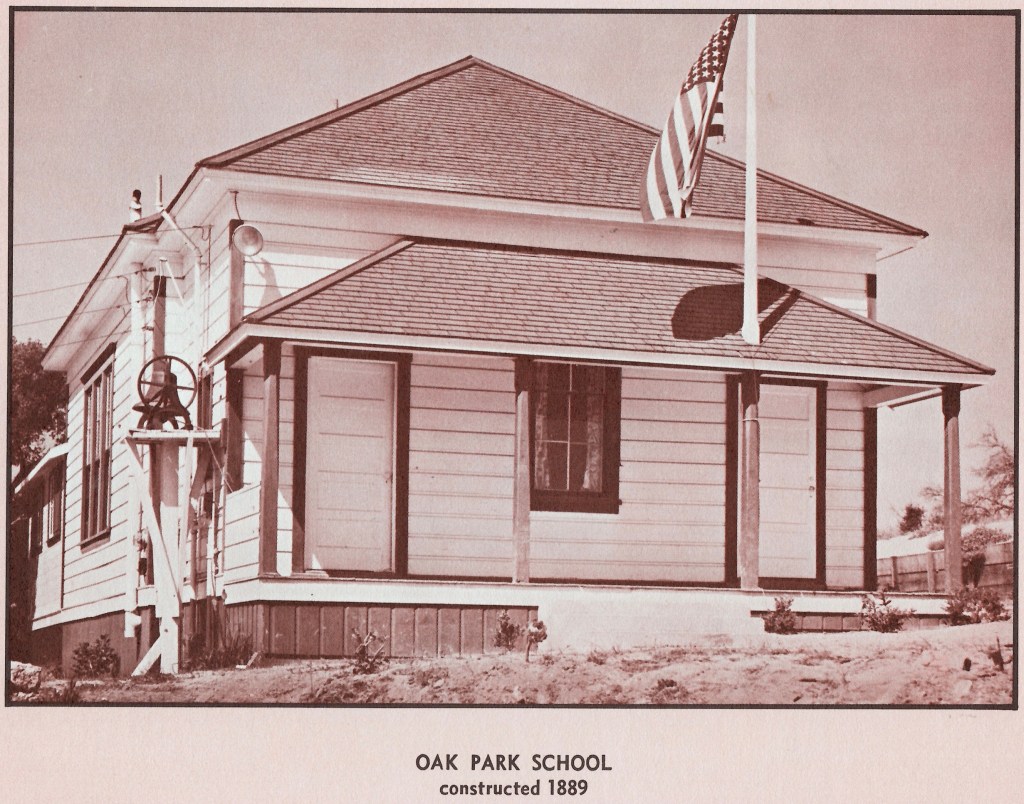
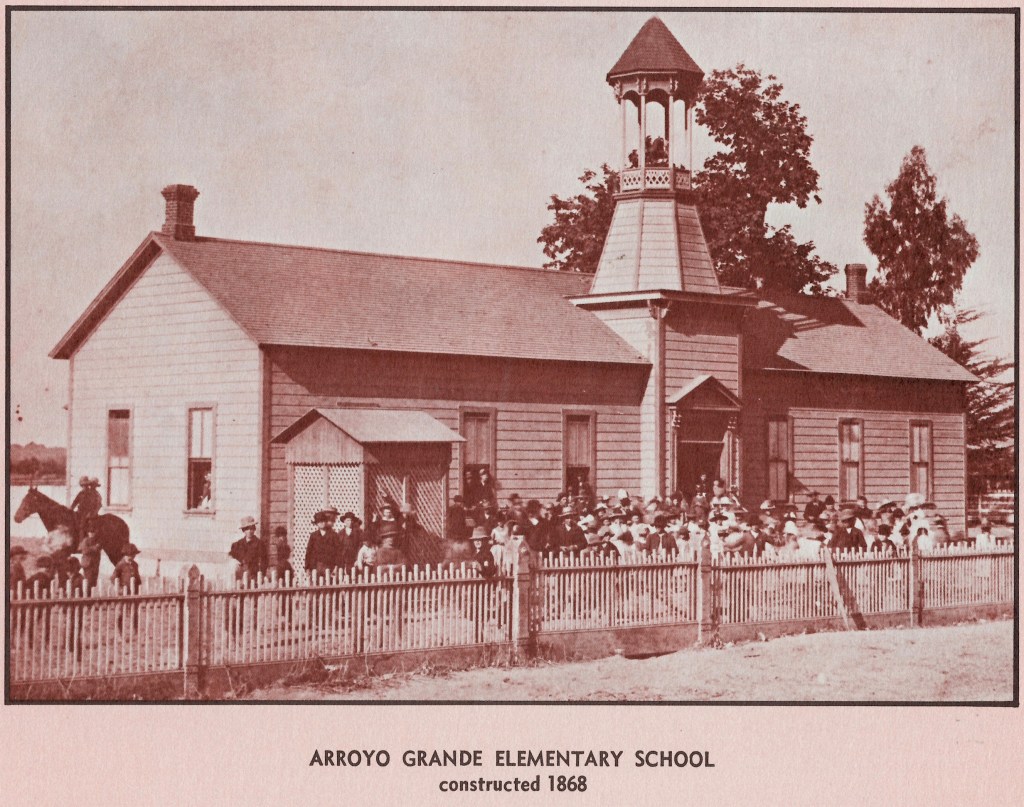
Built at a cost of $ 793.50 by B F Stewart of Arroyo Grande. “26 x 40 feet and of a pretty design.” SLO County Schools photo.

It’s a drought year and warnings of reduced water use are rampant. In those days there were no dams or state water projects to take up the slack. Periodic droughts had devastated the cattle ranches over the previous two decades and led to the economy diversifying. Farming, particularly orchards and dairy had picked up the slack. Dried fruits shipped from Port Harford and dairy from Spooners landing on the Pecho Rancho were thriving business’s. Hopes for the Southern Pacific’s completion of its line between San Francisco and Los Angeles was rampant but “The Gap,” as it was referred to was still in the future. Freight could only travel by wagon north from tracks end at the tiny town of Surf in the Lompoc Valley.

The Evening Breeze: County supervisors pass an ordinance restricting the harvest of Abalone in the north county.

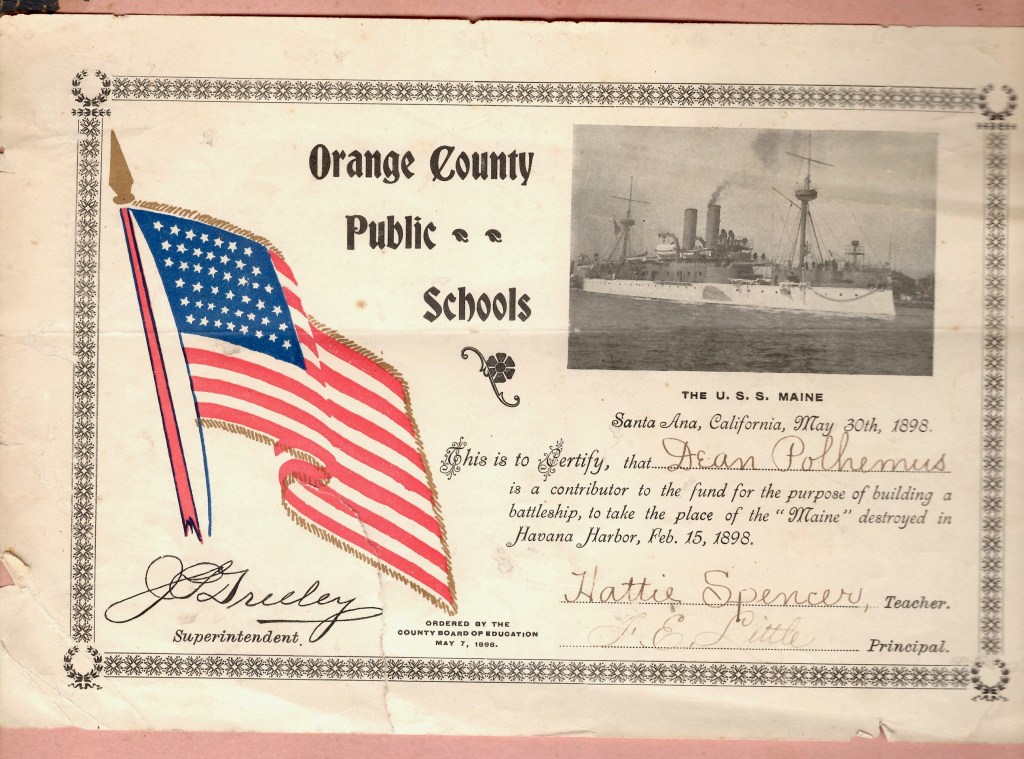
The Spanish American War had begun on April 21st after the American battleship main blew itself up in Havana Cuba. The California National Guards Rangers, Company “G” was actively recruiting in the county. As usual Patriotic Fever was driving young men to sign up in order to go punish the dastardly Spaniards. “How dare they spit on our noble flag.” Thats an actual quote from our own Arroyo Grande Herald newspaper, the Democratic voice of our community. The Republican newspaper, the Recorder published by a local saloonkeeper and brick maker was equally strident. Peter”Pete” Olohan, what bartender was ever called Peter, was a very successful saloon keeper and ran the towns first brick kiln behind his business along Arroyo Grande creek. His bricks made from clay silt deposited on Tallyho creek just below Becketts lake. His bricks transformed the town as merchants quickly replaced many of the old western style buildings with new brick structures.

San Luis Obispo Tribune:The news of Arroyo Grande states that a firewood famine is imminent. Most of the dry wood has been shipped to San Francisco and due to the over cutting of Oak trees, little will be available for winter.

Little Dean Polhemus gave five cents to build a new battleship Maine. 1898. His son would die at sea in WWII. Patriotism takes many forms. Shannon Family Photo

Every paper in the county was beating The Long Roll as hard as they could, war fever was everywhere. Flags and red, white and Blue bunting were on sale at Wardens store in San Luis and at Aron and Alexanders in Arroyo Grande.

The Arroyo Grande Recorder: The nefarious Spanish overlords of Cuba have used and infernal Device to blow up the battle ship Maine and school children are sending their pennies to build a new one.

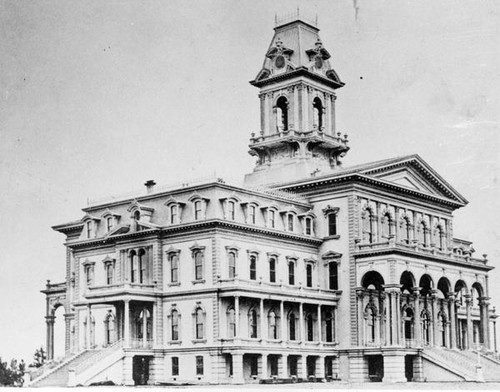
Young men like Joe Bristol, George and Frank Dana, Joe Dominguez who, along with Ed and Burnett Knotts, a cafe owner from Nipomo drove up to the courthouse and took out enlistment papers. Shipping out for Cuba would end Nipomo’s superb local baseball team as the players, in a fever pitch for war made their way north to volunteer.

Arroyo Grande Herald: Mrs J.D. Skidmore grew a tremendous Strawberry more than ten inches in diameter. We think it would take a couple big bites.

A June 1998 notice in the Herald listed the names of the graduates from the Arroyo Grande Elementary School. Annie Grey and John “Jack” Shannon are among the eighth graders. My future grandparents. If you look at their birthdates, his being three years before hers, you might wonder why they are in the same class of graduates at all.

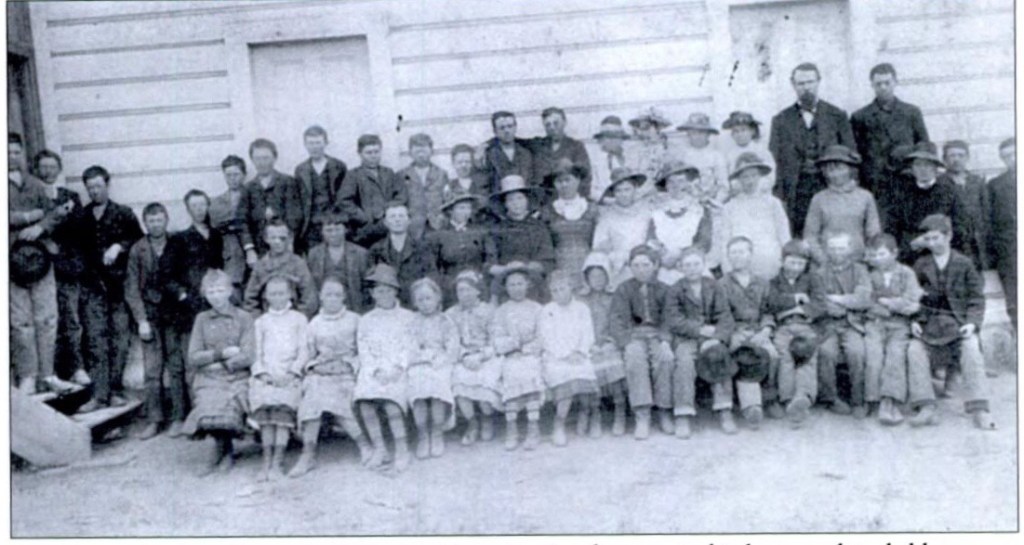
Arroyo Grande Elementary school. Annie Gray in all white, 1st row, . Jack Shannon 2nd from right back row.

If you are counting there are 27 girls and only six boys. Not uncommon for the time, education not being entirely necessary for boys and what did you do with a girl until she married and had children anyway?

My grandfather, like many boys at the time was considered grownup and able to do a mans work. He knew this. His parents did too. They owned an orchard and raced chickens for eggs and meat and 14 year old boys were essentially free labor. There is a family story that illustrates this to a tee. My grandfather once asked my father if he would rather go to church with mommy or stay home and milk cows with his father. He chose cows. He was eight. That was 1920. The idea still persisted that if you were old enough to do work; you did.

Arroyo Grande Recorder: Hunting season has opened and the boys are determined to make the Quail and Ducks less numerous.

My grandfather wasn’t resistant to education, after all my he sent my father to Cal, Class of 1934, it’s just that the times didn’t require that most men be able to do more than read, write and do arithmetic. “The lack of education didn’t hurt me none”.* Jack Shannon didn’t have the patience to read the law or be a professor of anything though he certainly could have. He just couldn’t sit still. Dad once said of him; “When your grandfather cut hay, he cut hay,” meaning he was all in on anything he did.

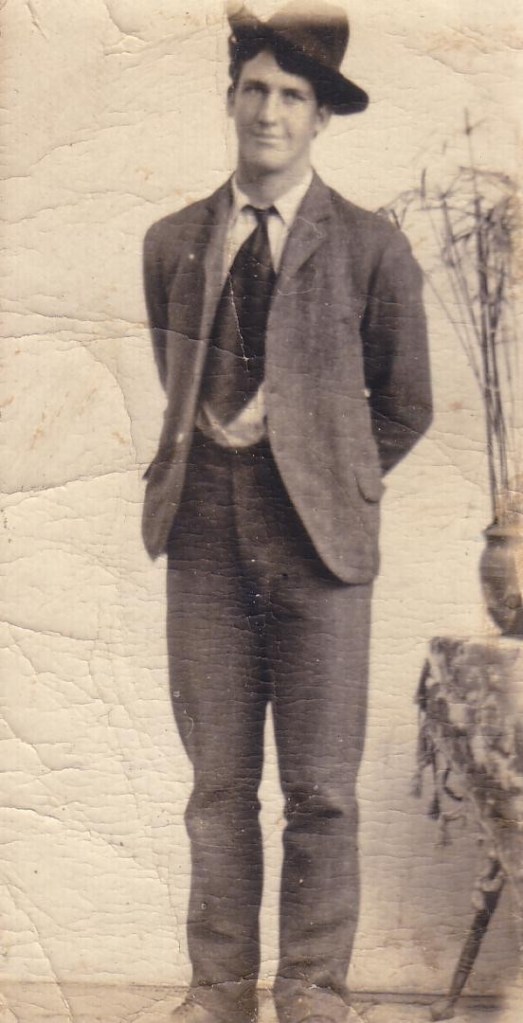
John William “Jack” Shannon about 1897. Shannon Family photo.

It wouldn’t have made any difference to him anyway because that same year the Arroyo Grande High School was savagely disenfranchised and closed and it looked like it was for good. San Luis Obispo High School had just recently barely survived the vote to close it. Education for children past fourteen was under attack.

San Luis Obispo Breeze: The board of Supervisors has voted to allow the purchase of a typewriter for the office of education.

Somehow the past always seems be much more idyllic than the present. Not as messy. A Norman Rockwell dream, a Horatio Alger, poor but noble boy pulling himself up by his bootstraps to run a railroad kind of story. Certainly not the Sinclair Lewis “Hey, lets go work in the Chicago slaughter houses” kind. Think of the plowboys wiping their brows, attached to the nether ends of horses, trudging through the fields for hours and days on end. You don’t need much education for that.

Boys from wealth should be educated because, after all, someone had to run the country. Working class kids were needed for other things. Hard rows needed hoeing.

Arroyo Grande Weekly Herald: The citizens of Arroyo Grande have subscribed money to buy leg irons to be used on vagrants who refuse to move on. The miscreants will be sentenced to work at hard labor on the roads

The local newspapers tell the story. In the style of the late 19th and early 20th century features and opinion pieces chronicle the story of how all this destruction of education happened. In the snarky, joking writing style of the day in which papers didn’t try to hide their politics behind professed fairness, after all they needed advertising revenue to stay profitable and news was crafted to satisfy the politics of men. To wit; in Arroyo Grande there were two newspapers, The Herald, a Democratically inclined publishing house and The Recorder owned by brick maker and saloon keeper Pete Olohan a staunch Republican. From opposite ends of Branch Street they hurled barbs at each other, a distance of three blocks, the entire length of the little town. Both papers were read and discussed in the saloons and mens fraternal associations like the Odd Fellows and Masons. The talked in the dining houses and with other men leaning on their buggies of a Saturday morning as they waited for the little woman to do the shopping. Chewing on five cent cigars they tossed their opinions about like baseballs, some lobbed, some fired like bullets. If women had any opinions they weren’t listened to for it would still be a decade before they were able to vote. Political power was still out of reach unless it came from the kitchen or bedroom.

San Luis Obispo Tribune: Mrs M. T’ Runels of Nipomo made a hasty trip to north yesterday to attend to the affairs of her son, Harry T Talmadge who was crushed to death by the wheels of a train in the Santa Clara yards while making a hasty escape from the attendants of the St Agnew Insane Asylum.

It is an historical fact that the first state in the union which gave women the right to vote, Wyoming in 1869, believed that suffrage would attract women to move there. Men outnumbered women six to one at the time and it was exceedingly lonely out on the big ranches. That may be so but it should be noted that the wives of the state put their feet down; “Clem if you don’t vote for suffrage, its going to be a long, lean and very cold winter for you out here on the ranch.”

In fact it was the farm and ranch vote that put it over the top. The movers and shakers in the towns didn’t want women meddling in their affairs but they were beaten by ranchers wives. It would be another fifty years after Wyoming that the woman of Arroyo Grande were legally able to vote.

Arroyo Grande Oracle: Two young men named Scott and Foster were arrested yesterday and fined ten dollars each for using rough language to Mrs Donovan who was in her yard as they passed her house in Los Berros. The fine likely hurt less than the horsewhipping administered by the town constable.

So it was money that did the school in. The Cow Counties of Central California were still a farm and ranch economy. The days of the Rancheros was a decade or two in the past but many of the old Ranchos were still operating. New owners in the cattle, dairy or orchard business were being assessed by the school district in order to fund the schools. They didn’t like it. At fifteen dollars per hundred acres it was considered a terrible burden to carry and the whining and screeching was carried on in the papers of the day.

Several years of drought and crop failures had ranchers and farmers on edge. The thought that the county might raise taxes to support schools some though were useless set their teeth on edge. A ground swell to close down the Arroyo high school was growing with prominent men leading the charge. If a man was wealthy enough he could send his children to private high school in San Francisco or closer to home in San Luis Obispo’s Mission school. It wasn’t long before battle lines were clearly drawn.

The Arroyo. Grande Herald noted in February 1898 that a petition has gone before School Superintendent Meese asking for a special election on the question of disincorporating the Arroyo Grande High School District. The law requires that a petition can only be signed by the heads of families but that many who signed the papers were were not. Many signatures were by men who, no women of course, were in favor of continuing the schools operation. It can be assumed that these men wish the matter brought to a vote and bring this vexing matter before the people of the district and settle the matter once and for all. A few ignorant screechers have been howling against the school for some time and would have succeeded in closing the high school if it wasn’t for the determined fight put up by the Herald last fall, the institution would not now be running. The opponents are proceeding in proper form this time and the Herald gladly accepts the gage of battle and will abide by the will of the people.

The town of Arroyo Grande was a prosperous community and had a thriving downtown. Three blocks of businesses lined Branch Street where you could purchase almost everything you needed. The Pacific Coast narrow gauge railroad connected it to the harbor at Port Harfod, to San Luis Obispo and points south and east. Oil drilling, quarries and agricultural produce were its main cargo. A person could take a steamer from Port Harford to San Francisco which was California’s largest city. Los Angeles was still a dusty pueblo of no particular note. From the Southern Pacific railroads terminal at San Luis Obispo you could travel north to any place in the country you wished.

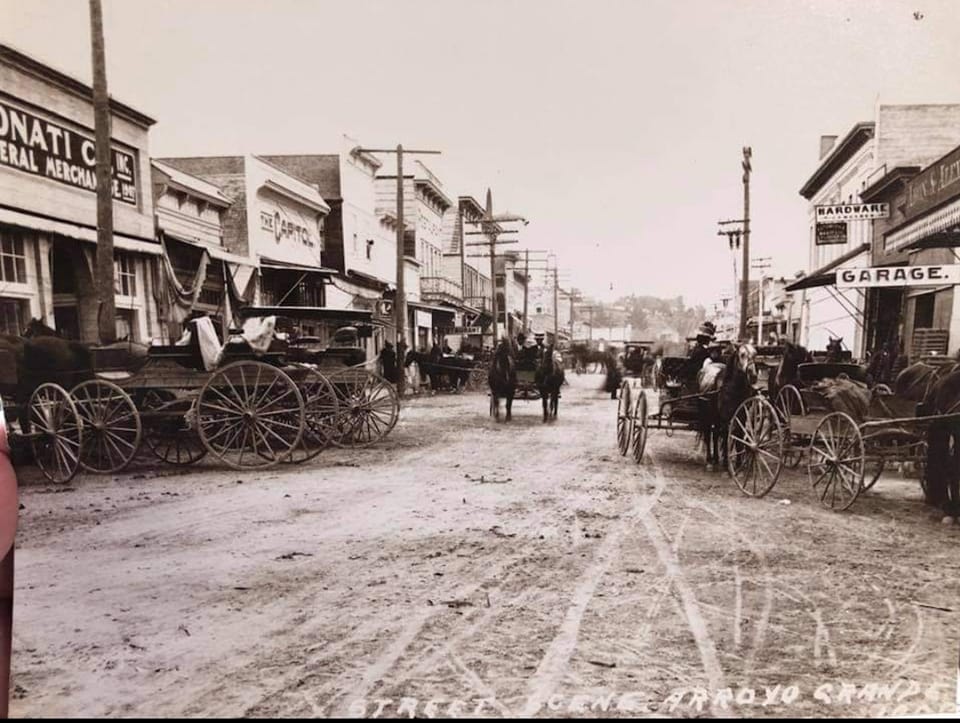
Arroyo Grande was a wooden, false fronted frontier town with more saloons than you could shake a stick at. There were small hotels, two hardware stores, a pair of blacksmiths and a bakery. At Aaron and Alexander’s store you could buy just about anything. Today it would be called a department store. The idea that you could do all your shopping in one place was still a novel idea in the little town.

Arroyo Grande Herald: A charge of battery is being held against two toughs for hitting a young Portuguese boy with their whip. There was not the slightest provocation for the offense.

Though the streets were still dirt with a sprinkling of gravel or covered with hay in the winter because the wet adobe soil was a thick as peanut butter and your buggy could sink up to its hubs after a rain storm. A water wagon patrolled the town in the summer sprinkling to keep the dust down. Most houses had running water supplied by the water companies who pumped it from the creek but most were without indoor bathrooms and the tin tub and outhouse were still behind nearly every house.

Martin Fly’s Arroyo Grande Water Wagon on Bridge St. Photographer unknown, about 1900

The highway to the south called the Nipomo Road, which began at Bridge Street was corduroyed with cottonwood logs and covered with gravel from the creek until it passed Supervisor Moore’s home which overlooked the east side of the valley. Not that many years before, most of the valley was an almost impenetrable marsh, dense with Encino and Alamo trees stitched together with wild blackberry. Horse nettle and the long branches of Poison Oak, it’s glossy dark green leaves inviting the unwary to touch. The Penstemon, Coyote Bush and Monkey Flower so thick that it was impassable for a horseman. The thick mass of vegetation was, until the 1860’s patrolled by the Grizzly Bear, Ursus Horribillus. (Horrible Bear) who might find you and your horse a tasty meal.

San Luis Obispo Tribune: John Barenburg jr. returned home last Saturday evening after an absence of over a year, during which time he has visited the Klondike and worked the mines of the frozen north. His friends are glad to see him again.

The valley was alive with a riot of color in the spring, with yellows, purples, red, dusty white and best of all the golden California Poppy. Don Francisco Branch and his 23 year old bride Manuela were stunned when they came over the low hill at the back of our ranch and first saw it in flower in late February of 1837.

The original maps of the three Ranchos on which Arroyo Grande was built were the Bolsa de Chamisal, Corral de Piedra and the Santa Manuela which all listed nearly the entire valley as a Cienega. The Cienega, or marshy bog had to be cleared for farming and at the turn of the century during the school crisis, the clearing was still incomplete. Remnants of this Cienega still remain along the upper Pismo lake preserve which is along North 4th Street today.

Cayucos Vigilent: The Swiss- Italian Hotel has been renamed the Cottage Hotel. It will be repainted and will soon look as pretty as the spring millenary.

When the county board of supervisors was formed and met for the first time on December 13,1852, the very first order of business was to form a county school system. The vote was unanimous with supervisors Francisco Branch, Captain William Dana, Joaquin Estrada and Samuel Adams Pollard all voting aye. The first three were rancheros holding considerable lands and Sam Pollard was married to Captain Dana’s daughter Maria Josefa Antonia Sirila. Though from widely distant places and having little to no formal education themselves they knew the value of schools and they meant to provide for a good education for their families. Initially children were taught in the home because the population was very small and distances between the isolated ranches was so great. The entire county population was just 360 souls though the census forms list only property owners, their families and servants. Rough and ready, the county was thick with bandidos, murderers and other criminals on the run from gold fields and cities and towns farther north. For years after establishing a school system few school houses were actually built. Isolated school houses weren’t safe for children for another decade until the trash had been taken out or hung up; by the neck.

San Luis Obispo Tribune: The Hon: C.H. Johnson has closed a deal with Ah Luis for all the brick owned by the latter at his kiln north of the city. The towns first mayor intends to build a magnificent two story building on Higuera Street at Chorro.

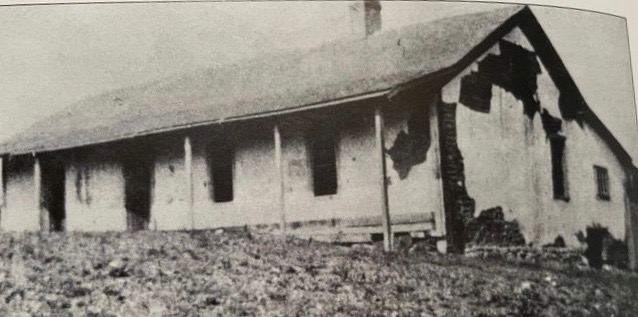
Arroyo Grande’s school district dated back to the famous Oak Tree school, the areas first. In 1860 a young man was hired to teach the children of the Rancheros. Don Francisco Branch who owned David Mallaghs old adobe house, which was on the hillside below Crown Hill, donated the house for the first school building in the valley. The decrepit old building, built in the 1840’s, was swept, rats, bats and owls expelled and resident raccoons and possum beat a hasty retreat down to the creek. Rough made furniture for desks and chairs were donated by the families who wanted their kids to be educated. Somehow a slate board was found and hung from a wall. Hitching posts were built for the children who came on horseback, for many lived more than walking distance away. When school was in session the old adobe was ringed about with horses and a buggy or two, horses chewing on corn from their feedbags or standing hipshot, dozing while they patiently waited for the kids.

The David Mallagh Adobe, 1880’s San Luis Historical Society photo

Thirty years later the town of Arroyo Grande had been established and was now ringed with one and two roomed grade schools. A one room school in upper Verde Canyon, A two room in the Oak Park district, Santa Manuela at the entrance to Lopez Canyon, a school in the upper Lopez, Branch school near the old Francisco Branch adobe; up the Huasna, a one room in Los Berros Canyon and La Cienega along the lower Arroyo Grande creek. Pismo and Oso Flaco schools rounded out the district. If there were enough children living within an eight or so mile diameter there was a school. Most residents saw a necessity in educating their children.

Arroyo Grande Herald: Aron and Alexander announce the Grand Midsummer Display in cotton dress goods. See the new Ebilenes, Eolines, Gaze de Soie, and Figured Lawns, Roidered Waist Patterns, Ladies and Children’s tan shoes and lace hosiery to match.Ask for prices.

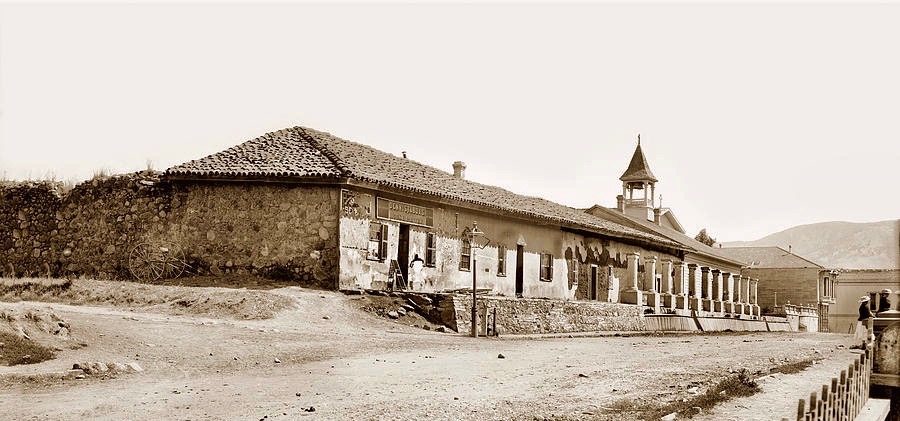
Frank Newsom opened the first official school in district one and taught classes at the old mission. In a dusty room, children sat with chalk and slate on wooden benches made by the Indian neophytes for the padres, decades old. Newsom taught in Spanish with a little English thrown in because almost all the children were descendants of marriages between the Ranchero’s and their Californio wives. The occasional Indian child was almost always a Spanish speaker. There was no such thing as a textbook and reading material were limited to a few donated books. Any kind of book would have had to come by ship from the east coast so there weren’t many.

Old San Luis Obispo Mission in 1865. Photo: Calisphere

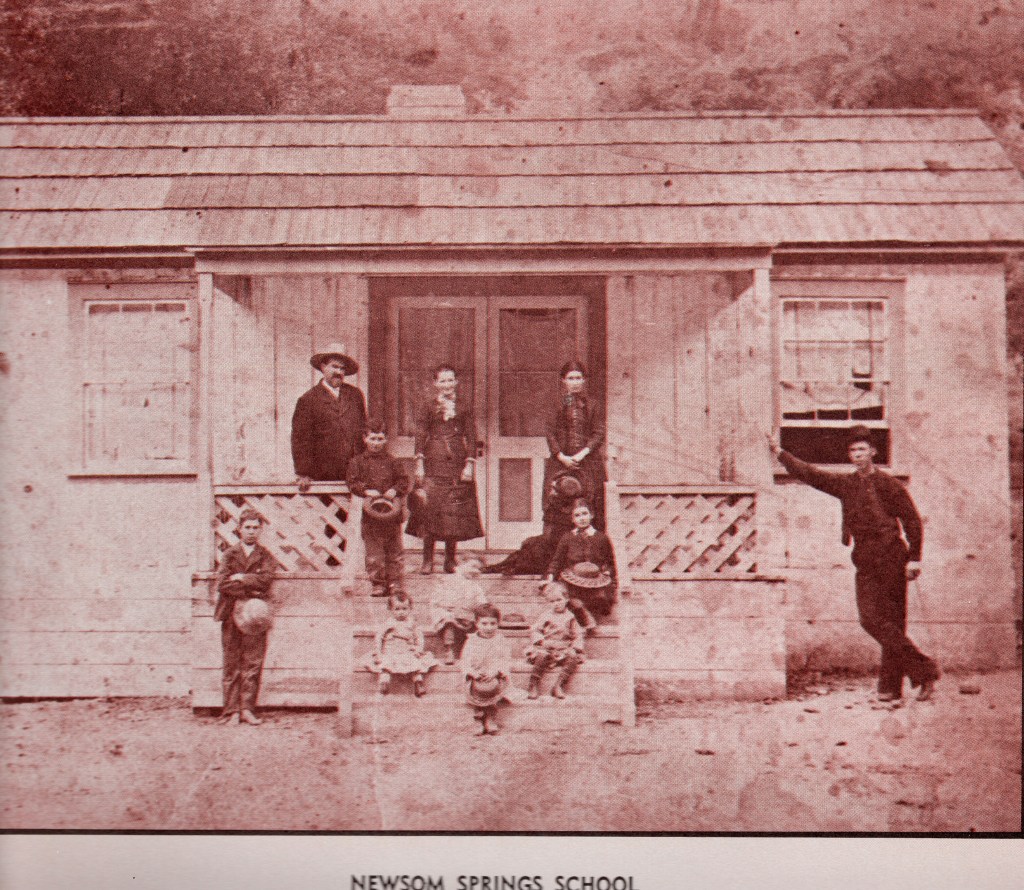
Born in Petersburg, Virginia, Newsom was all of 18 years old. He arrived in old San Luis Obispo and being a literate man and nearly penniless he gladly took the teaching job. Three years later he was teaching school at the Branch family’s Mallagh adobe just downhill from todays Paulding Middle School. In 1863 he married Francisco Branch’s daughter Anna and by 1870 was running a farming operation on the lands that had been deeded to his wife by her father. He established a small school there for his own children which eventually numbered eleven; poor Anna. He also taught the children of his neighbors. They were still taught in Spanish. In the 1880 census he listed himself as a hotel keeper because with the discovery of the hot sulphur springs in the upper Guayal canyon he had built a small hotel where people could come and “Take the waters.” No longer a poor man his politics had changed concerning schools, especially High Schools.

Newsom Springs school, Frank Newsom in the big hat. 1870’s. Historical Society Photo.

Newspapers began reporting in 1898 dissatisfaction with the high school. Bernardo Miossi, a farmer and rancher and owner of the Sycamore Springs ranch near Pismo Beach and a member of the board of control, school board in todays terms, who represented the Pismo Area, Frank Newsom, former pioneer teacher, Dan Donovan of the Los Berros district and Willis B Buck who farmed in the Oak Park section of south county were all vocally opposed to the continuation of the Arroyo Grande high school. “A waste of time and money,” Dan Donovan said, quoted in the Herald.

They were out to get rid of it, By hook or by crook. Very quickly, the gloves were off.

Arroyo Grande Herald: The board of Supervisors today granted 84 liquor licenses countywide. They expect to continue the review tomorrow as there are many more applications. At this place, License for Frank Babcock, Frank Cochran, Knotts brothers. E. Knotts, Bernardino Souza, and Peter Olohan. (2)**

Coming, Chapter two.

Arroyo Grande Herald: September 16, 1898. There are a number of citizens who are anxious on one ground or another that the educational facilities of the Arroyo Grande region should be continued….

(*Paul Simon, “Kodachrome”)

(**Arroyo Grande Valley Districts population, 1900 was 3,399. At the time it boasted over a dozen places to get a drink.)
Michael Shannon is a world citizen, teacher, and surfer. He attended a two room Grammar school himself. He write so his children will know where they came from.

The link to chapter two: https://atthetable2015.com/2024/01/14/the-wayback-machine-2/?fbclid=IwAR1jRdvlqfAUoXq_zNMR5sP5Zhf9MxErqcSDMaPkFP5gAcPMqjwzYRZBlJQ

Standard

Nita

The Third Part

THE GRADUATION TRIP

By Michael Shannon

Family relationships can be so hard to untangle even when you’re part of the family. Being a “Borrowed” child, Nita lived with her maternal aunt and uncle from the time she was eight. She moved up to Arroyo Grande in 1893 to live with Uncle Patrick Moore and his wife Sarah. After seven years there and at the age of fifteen, Nita saw her aunt Sarah die of Stomach Cancer. For much of the early 20th century, stomach cancer was the leading cause of cancer death in the United States, particularly amongst women. Heavily salted and smoked foods and the lack of refrigeration were thought to be the leading causes.

The San Luis Obispo Tribune wrote that, “The sad news reached this city yesterday of the death of Mrs. Patrick Moore, wife of Supervisor Moore, in San Francisco where she went from her home in Arroyo Grande for treatment of cancer of the stomach. She was a good woman and her death will be mourned by many.” *

Nita was just about to enter high school. At fourteen it was a tragedy for her and though Sarah was not her mother she ran a very close second. Nita had come live with the Moores when she was about to turn eight, just at the age where serious long lasting memory begins. Nita knew her mother Jeannie Grey well enough and saw her family regularly, but her daily life marched to Sarah Moore’s heartbeat.

Sarah Moore, left, with Annie “Nita” Grey in the white shirtwaist 1899. Shannon Family Photo

As the big house was always full of her friends and the family servants she stayed with uncle Pat rather than returning home to the ranch in Santa Maria with her parents, brothers and sisters. Part of the families agreement was that Nita be educated and receive a substantial property upon Pat Moore’s passing.

Just two years later Uncle Patrick remarried. He chose a popular local schoolteacher, Miss Mollie O’Conner. The papers made a great joke about this by slyly stating that it was a May December romance and it may have been though in family lore the they were happy together.

The following is from the Salinas Index of July 15, 1903. “It needs no particular explanation to residents of SLO County except that perhaps some would like to know why the genial supervisor did not face the music at home instead of going away to Salinas to get married. “Today at 10 o’clock Judge J H Brown performed a marriage ceremony which united the hearts and lives of Patrick R Moore of Arroyo Grande and Mary “Mollie” O’Conner of Washington. The ceremony was performed in the parlors of the Abbott house and the host and John Lavery and were witnesses to the ceremony.


The groom is a prominent resident and supervisor of SLO county and the bride is a schoolteacher. Although well advanced in years at 73, the happy couple boarded yesterday’s southbound train with a happy smile and sprightly step of a couple who might have been just old enough to procure a license. Mollie “O” was all of 42.

Annie “Nita” Grey, Patrick Moore and Mollie “O” 1904. Shannon Family Photo

Nita had lived her entire life except for the four years in Berkeley and she was very familiar with the beauty of the sand of Pismo Beach. Smooth, satiny; fine as snow drifts turned to gold, carved into wavelets by the wind racing in from the Pacific, polishing each grain to a satiny sheen. The gently rolling hills dusted with yellow mustard and dense clumps of coastal sage, called Chamiso by the Spaniards, covered the north slopes. Dotted on the south and west by groves of ancient Oak trees, this was the land she grew up in. It was the land of Ramona, Zorro, Jacquin Murrieta and was not long ago the pride of the Rancheros; Californios whose Vaqueros rode the slopes and canyons moving the cattle which formed the backbone of their economy. Their heyday just a decade before her birth. She was born on Rancho Guadalupe, she grew up on the old Bolsa de Chamisal Rancho of Francisco Quijada, a large portion of which was then owned by Patrick Moore her maternal uncle in whose home she was raised. She would spent most of her life right there, just a stones throw from the house she grew up in.

In a letter to her childhood friend Mamie, she wrote of her excitement at graduation and the extraordinary gift that Mollie “O” had planned for her. Nita and three of her friends were going to go up to the Yosemite Valley, a place she knew was completely unlike her home in San Luis Obispo county. She was to see the National Park which had just been designated as such by President Teddy Roosevelt four years earlier.

They all went down to the depot and took the Southern Pacific passenger train down to Merced. As early as 1908, the city of Merced, California adopted “Gateway to Yosemite” as its tourism slogan. It was a time when a trip from the coast to the Sierra Nevada took days instead of hours.

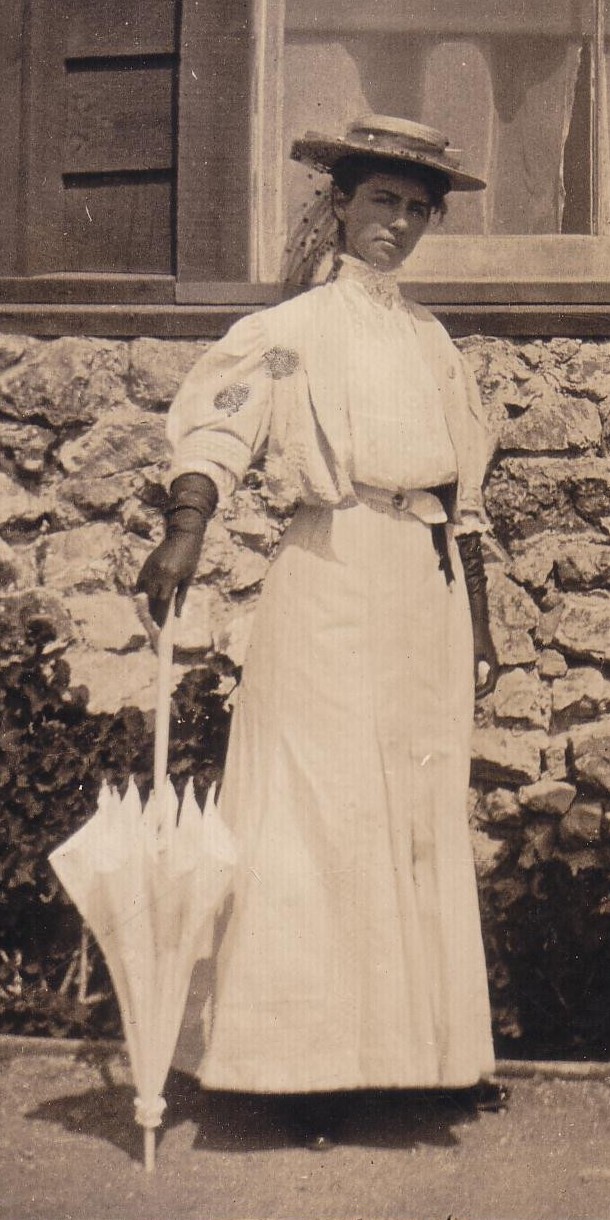
It was a nine hour trip because the train was what was known as a local. That meant it stopped at every town on the way. From Oakland, the old phrase “You can’t get there from here” was close to being true. They took the train south to Niles where they changed cars to head east on a spur through Livermore and Tracy to Lathrop and changed again to the local heading down through Turlock, Modesto the Merced where they would detrain again, wait for their luggage to be transferred, and there was a pile of that. Well off women did not travel lightly in 1908. They would need to dress for dinner at the hotels which required fine clothes and all the trimmings which would be unsuitable for adventuring. They packed dresses and sensible low heels. The hiking clothes would have been light canvas or sturdy cotton duck to combat the shrubbery, trees and the ever present dust. The dust, or duff as it’s called is everywhere when the weather was dry. Straw hats, kerchiefs and a vail to keep the insects away. And gloves, certainly, to keep delicate hands free from stickers and nettles.

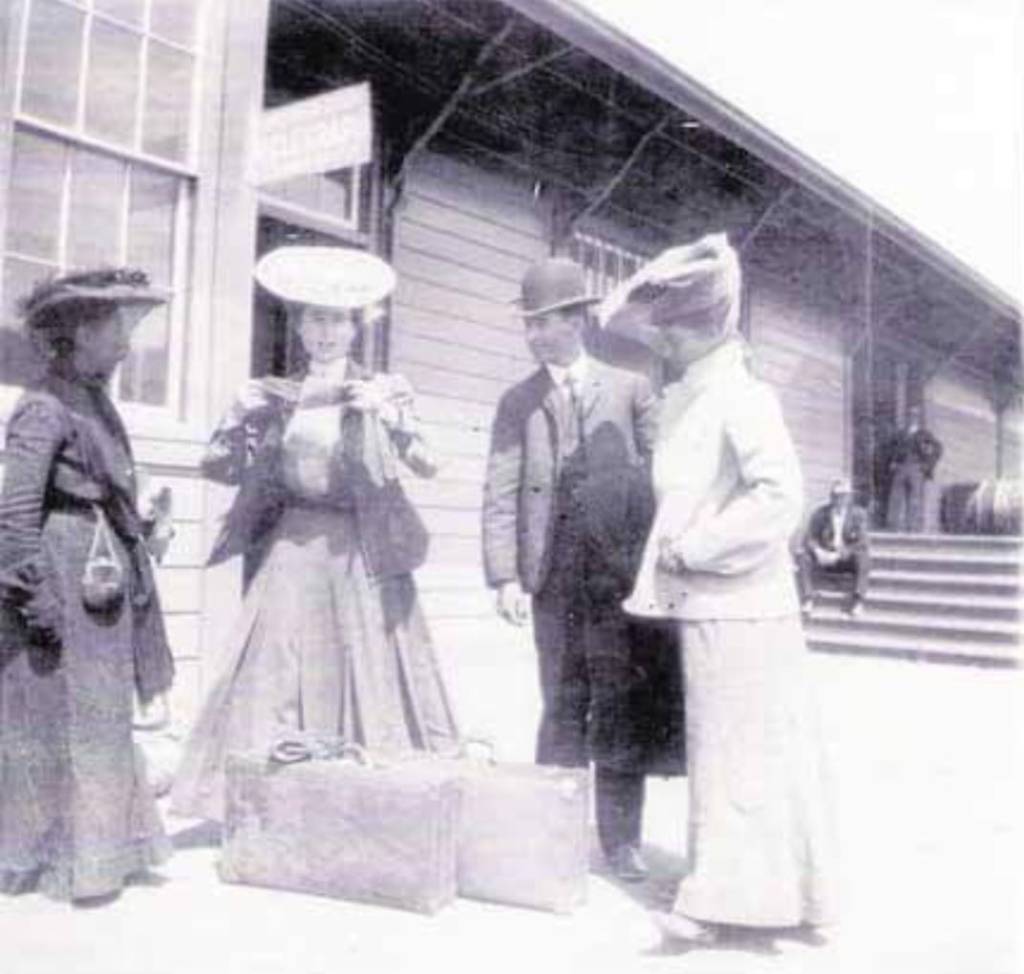
Merced Depot, Nita in the light colored straw hat. Excitement on her face. 1908 Shannon Family Photo.

They stepped down from the cars and had supper at the cafe in the depot while the suitcases and trunks were unloaded and then placed in the baggage car of the short line Yosemite Valley Railroad for the trip up to El Portal where they would spend the night. The little train pulled out of the depot at 2 pm headed up the tracks for the eighty mile trip to tracks end at El Portal. She waddled along at about twenty miles an hour and made fourteen stops along the way arriving at the end of the line around 6 pm.

Del Portal Hotel, El Portal CA. Terminus, Yosemite Valley Railroad at the gateway to Yosemite. NPS Photo

Hotel Del Portal was one of the early first-class hotels established by the Yosemite Valley Railroad to accommodate passengers coming up from Merced to the terminus at El Portal, California, just outside of Yosemite National Park. The hotel set the standard for elegance in the Yosemite area. A trip up to the park was expensive and the formal hotels were built to serve those with the means to come and tour the valley.

The four-story Hotel Del Portal at the eastern terminus attracted celebrities and politicians alike, including William Randolph Hearst of the newspaper game. J.B. Duke head of the American Tobacco Company who introduced “Taylor Made” cigarettes in the 1880’s was one of the wealthiest men in America. Introducing what were originally called pre-rolled cigarettes in the late 1880’s made him. Strangely enough “Taylor Mades” reduced the use of plug or chaw tobacco and the constant spitting it required and is credited with a vast reduction in the transmission of Tuberculosis a disease which is airborne. People could now swap one form of death for another.

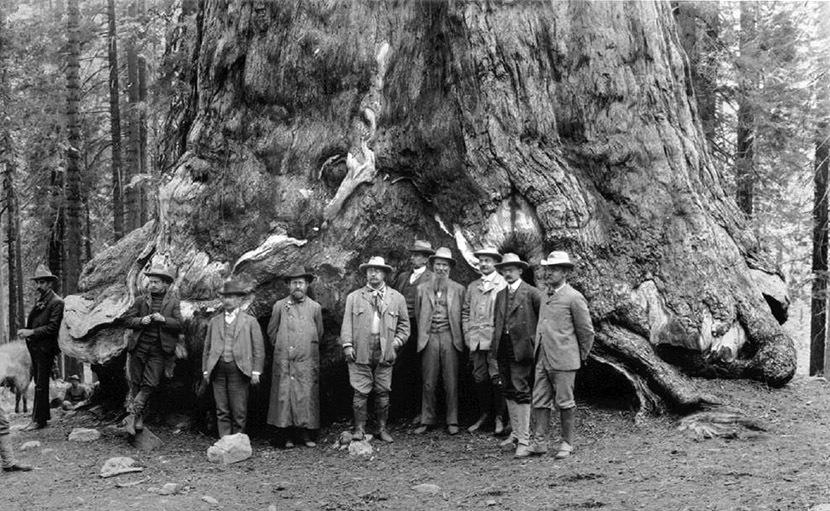
Another frequent traveler was John Muir. Muir spent as much time in the park as possible. In 1903, President Theodore Roosevelt visited Yosemite. He was guided by the naturalist. Roosevelt came up to the Wawona Hotel by stage. Rather than checking in to the elegant new hotel he insisted on camping under the “Grizzly Giant” Redwood tree where he slept comfortably on a pile of forty wool blankets. The two men spent three memorable nights camping, first under the outstretched arms of the Grizzly Giant in the Mariposa Grove of Giant Sequoias, then in a snowstorm atop five feet of snow near Sentinel Dome, and finally in a meadow near the base of Bridal Veil Fall. Their conversations and shared joy with the beauty and magnificence of Yosemite led Roosevelt to expand federal protection of Yosemite, and it inspired him to sign into existence five national parks, 18 national monuments, 55 national bird sanctuaries and wildlife refuges, and 150 national forests. Muir’s guided tour for Theodore Roosevelt was the catalysts for the president to declare the valley a National Park in 1906.

President Teddy Roosevelt and party standing at the base of the Grizzly Giant tree in the Mariposa Grove of Giant Sequoias, Yosemite, 1903. Left to right, two secret service agents; William H. Moody, Secretary of Navy; George Pardee, California Governor; Teddy Roosevelt, U.S. President; Dr. Presley N. Rixey, Surgeon General; John Muir; Nicholas Murray Butler, President Columbia University; William Loeb, Jr., Private Secretary; Benjamin Ide Wheeler, President University of California. Photo Joseph LeConte, Collection of the San Joaquin Library system, Mariposa Library

Muir declared in an article in the Sacramento Record-Union in 1876 “In God’s First Temples: How Shall We Preserve Our Forests?” The articles he wrote began to draw attention to the destruction of California forests. Muir who had worked as a cattle herder in the valley and later the sawmill at the base of Yosemite Falls was a first hand witness to the evolution from wilderness to exploitation at any cost.

Roosevelt himself wrote that, “It is vandalism to wantonly destroy or to permit the destruction of what is beautiful in nature, whether it be a cliff, a forest, or a species of mammal or bird. Here in the United States we turn our rivers and streams into sewers and dumping-grounds, we pollute the air, we destroy forests, and exterminate fishes, birds and mammals — not to speak of vulgarizing charming landscapes with hideous advertisements. But at last it looks as if our people are awakening.” or so he wished. More than one hundred years have passed and if my grandmother was here to read the news she would say that little has changed.

Nita and her California University friends were unwitting witnesses to the almost total destruction of the Oaks that gave Oakland its name. The original Ranchero family, the Peraltas referred to the area as “”El Encinal” for its dense stand of California live oaks which are the dominant tree of the coast live oak woodland habitat.This was translated more loosely as “Oakland” in the subsequent naming of the town, as recounted by Horace Carpentier in his first address as mayor: “The chief ornament and attraction of this city consists, doubtless, in the magnificent grove of evergreen oaks which covers its present site and from which it takes both its former name of ‘Encinal’ and its present one of ‘Oakland.” By Nitas time the forest had been completely logged off, as was the five square mile Redwood grove, once considered as most dense in the state, which had occupied the area which was now the Berkeley campus.

Nita, Mollie “O” and Blanche were part of a constant parade of well known and wealthy people who could arrive at the entrance of the valley by train instead of the twelve to fourteen hour stagecoach ride up from Merced as had been done until the previous year. The coaches were taken out of service in 1907 when the Yosemite ran its first trains to the edge of the park.

The following morning Nita breakfasted at the Del Portal and then saw her luggage loaded aboard the coach which would take her party up through the entrance to the park and the Sentinel Hotel where they would stay. After the turn of the century, The Sentinel was the only operating hotel in the valley. Because it was not winterized it remained closed during the winter season and only operated during summer.. This made little difference since the valleys total attendance was fairly low somewhere between two and five thousand a year before the railroad opened in 1907. The Yosemite RR made the trip up much easier. After the railroad arrived, along with the opening of the Del Portal Hotel, visitor numbers grew significantly . From 1908 to 1909 attendance grew to over 13,000, a leap of 5,000 from the year before. It doubled in attendance in 1915 to over 33,000 . Numbers would rise dramatically when automobiles were first let into the park beginning in 1913. In 1919 at the end of The Great War attendance jumped to over 58,000. Last year, 2022 the number was over 3.5 million.

Nita saw the park in the last days before automobiles, high numbers of people and a proliferation of new hotels, camps, paved roads, restaurants and visitor centers began the clogging the valley floor.

Risng earlyNita and her party took breakfast and then watched the loading of their luggage in the boot of the Mahta Wagon on which they would travel the rest of the way to the valley.

Manufactured in Merced, the Mahta was an 11-passenger stagecoach. Manufactured by Schofield & Alvord, it was a type of coach known as a Mud Wagon. Lighter than a Concord coach which is the coach featured in western movies, the Mud Wagon was the most common stagecoach seen in California. The Mahta was specifically designed for the Yosemite run. With comfortable upholstered seats it made several daily trips between El Portal and the valley. The road along the river was fairly level and the seventeen mile trip could be made in a day.

With picnic lunches supplied by the hotel, Blanche, Molly “O” and Nita settled into their seats excited by the day to come. They had dressed for the trip in sturdy side button shoes and skirts made of duck designed for the outdoors. Bonnets secured by hat pins and veiled against the dust and flies they laughed with anticipation as the coachmen shook the ribbons and clicked his tongue to set the four horse team in motion.

Traditionally coachmen who drove the California stages were called whips, and some, Jehu’s. In the Bible, it is noted of King Jehu that “he drives furiously” (II Kings 9:20). In the 17th century, English speakers began using jehu as a generic term meaning “coachman” or, specifically, “a fast or reckless coachman.” California had its share too. Charley Parkhurst known as “Six Horse” or one eye, for he’d lost his left eye to a horses hoof, drove his stage horses hard and like Hank Monk’s drive with Horace Greeley across the Sierra on the old Overland stage which was chronicled in Mark Twain’s “Roughing It.” For Sam Clemens, that was Twains real name, wrote, “I can tell you a most laughable thing indeed, if you would like to listen to it. Horace Greeley went over this road once. When he was leaving Carson City he told the driver, Hank Monk, that he had an engagement to lecture in Placerville, and was very anxious to go through quick. Hank Monk cracked his whip and started off at an awful pace. The coach bounced up and down in such a terrific way that it jolted the buttons all off of Horace’s coat, and finally shot his head clean through the roof of the stage, and then he yelled at Hank Monk and begged him to go easier–said he warn’t in as much of a hurry as he was awhile ago. But Hank Monk said, ‘Keep your seat, Horace, and I’ll get you there on time!’–and you bet, you bet you he did, too, what was left of him!”

By Nita’s time coaches no longer carried the mail or Wells Fargo strongboxes. The last stage robbers were long gone as were the Jehu’s. Her coach traveled at a sedate pace, bumping and rattling up the road. Any jostling was done by the seat-mates craning their necks to see the increasingly spectacular scenery as the canyon cut by the Merced River, which they were following began to narrow, nearly sheer cliffs rising high above them.

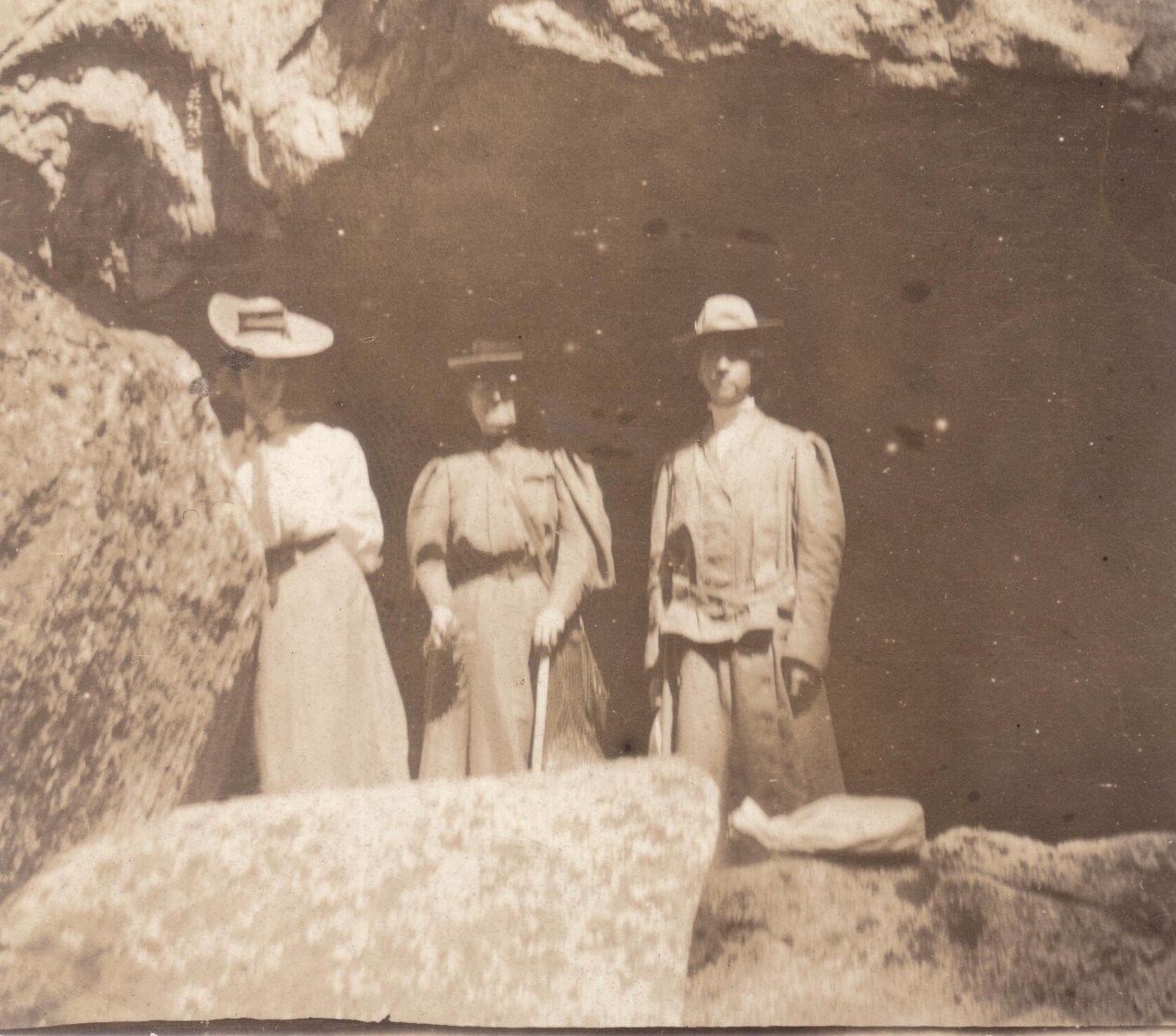
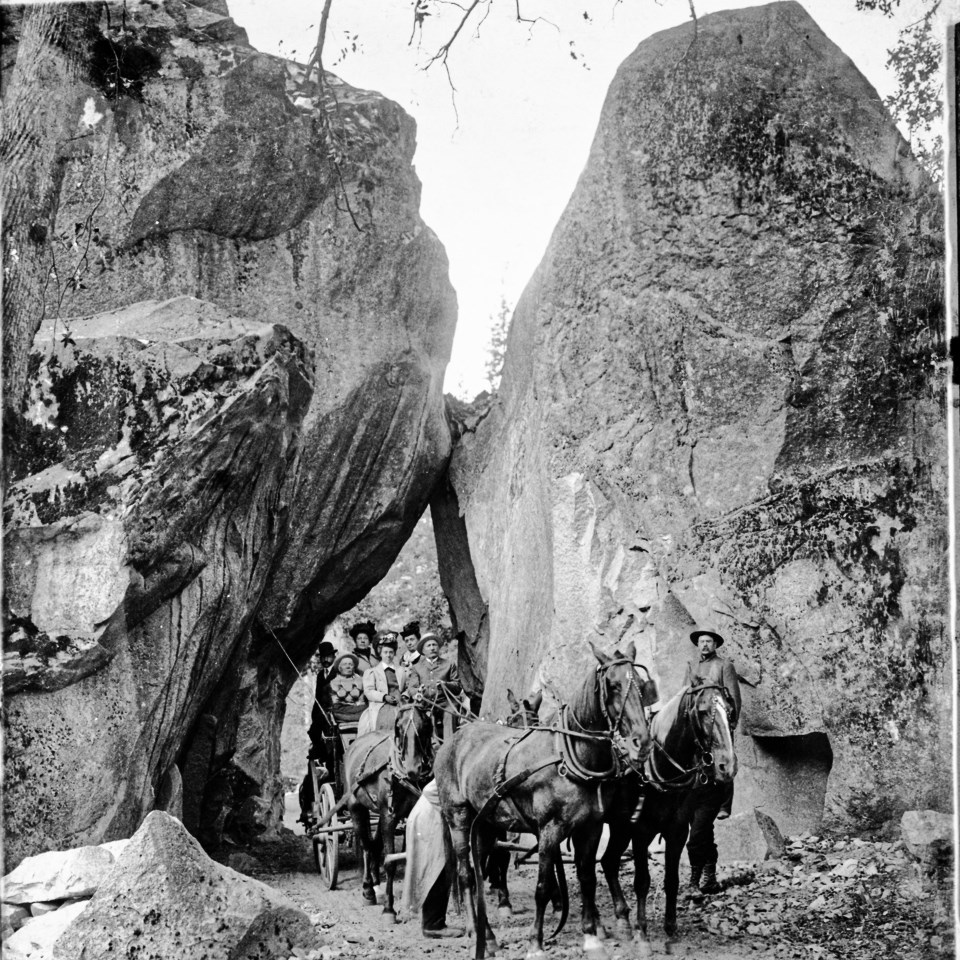
Stepping down from the mud wagon, the party took a quick lunch break sitting on fallen logs with the rivers chuckling in the background. The scent of pines filled the air, so different than the smells and sounds of the city of Oakland. Boarding the coach and settling down they continued towards Arch Rock, the entry to the valley. Two huge granite boulders had tumbled down and formed an arch through which the road traveled. A quick photo stop and then they moved on. The very tall trees closing in on the road created a vibrant green tunnel dappled by sunlight.

They traveled the road for a couple of miles when suddenly after a slight turn to the right, in an opening directly ahead, Bridal Veil Falls appeared as if by magic. Falling in a graceful sweep and wreathed by sunlight and sprays of water, it took their breath away. The gasps of his passengers caused the driver to smile, he himself felt the same awe each day as he entered the valley.

Soon the valley began to open up and on their left, El Capitan rose nearly a mile and one half straight up, towering over the valley, it sent a shiver of dread through the women. None of them had ever experienced anything like it. Off in the distance, Half Dome, rose more than a thousand feet higher than El Capitan. Nestled in the valley below sat the Sentinel Hotel, their destination.

The Sentinel Hotel and the Merced River. Library of Congress

The stage pulled to a stop in front of the verandah, the driver stepped down and helped the ladies alight. He then opened the boot for the bell boys to begin hauling luggage up the steps and into the hotel. Molly “O” was excited because she had a surprise for the girls, she had reserved the most spectacular room in the hotel for the princely sum of $ 5.00 a night.

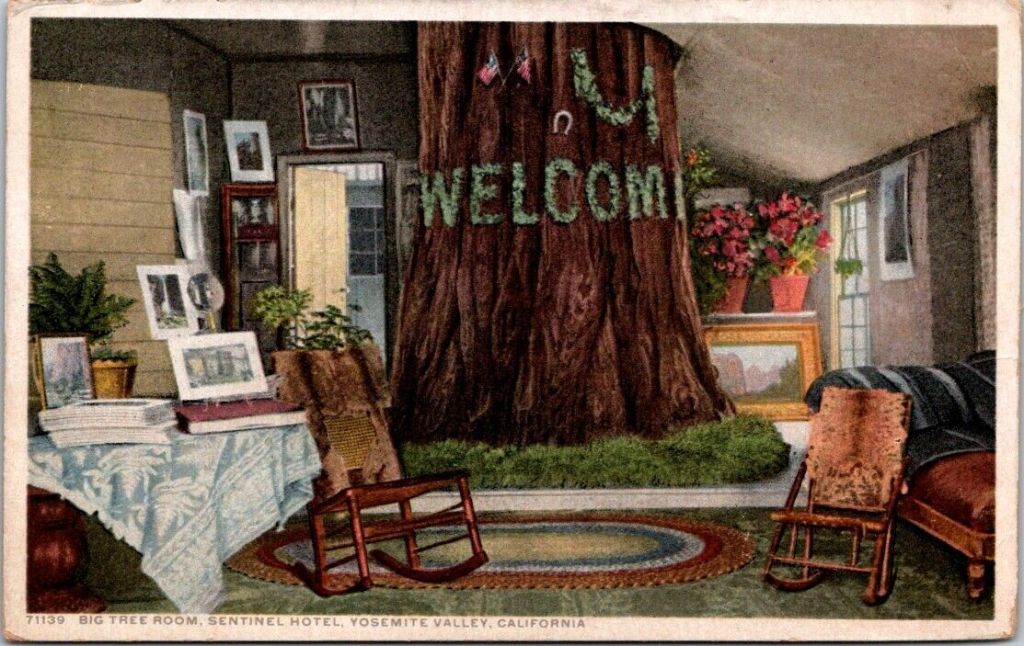
The Big Tree Room, Sentinel Hotel postcard addressed to Mr. and Mrs. Samuel Grey, Nita’s parents. Shannon Family Collection.

The room was built around a 175 foot Incense Cedar tree. Not a piece of a dead tree but a live one. When they settled down after dinner the smell of cedar lulled them off to sleep.

When they came in to breakfast they saw on the wall of the dining room the famous photo of two girls standing on the overhanging rock at Glacier Point. They stopped to take a closer look and were thrilled that they would be going there to see it for themselves.

Miss Kittie Tatsch, a maid and for a time head waitress at the Sentinel hotel in the late 1890s and early 1900s, obviously a young woman with a cool head and; apparently, entirely destitute of nerves went up to Glacier Point and did a high kick on this perilous perch with her friend Katherine Hazelston. Dressed in long wide skirts identifying them clearly as women, they danced and did high kicks at Overhanging Rock, 3,000 feet above the Valley floor at Glacier Point The photo known as the two Kitties was on sale at the hotel when Nita arrived. She could look up from the verandah and see the point high above her. She was eager to go and see it for herself. She wondered, did she want to go out on the Rock? Would she?

The Two Kitties on Glacier Point. Photo: George Fiske, Collection, Library of Congress

The Four Mile Trail, linked Yosemite Valley to McCauley’s Mountain House at Glacier Point. Helen Hunt Jackson, author of “A Century of Dishonor” (1881) which chronicled the injustices perpetrated against American Indians, described the trail as “broad, smooth, and well protected on the outer edge, at all the dangerous places, by large rocks forming a low wall. Although it is the steepest trail out of the Valley, zigzagging back and forth on a sheer granite wall, one rides up it with little alarm or giddiness, and with such a sense of gratitude to the builder that the one dollar toll seems much too small.”

All aboard for Glacier Point. Library of Congress

The coach left the Sentinel, everyone aboard anticipating an adventure. Turning left onto the Glacier Point road the passengers were aware that on one hand the granite cliffs rose almost vertically and dropped off into sheer cliff on the other. Helen Hunt Jackson’s description of the road notwithstanding, The women shared a little alarm and a lot of giddiness. Nita knew they were safe and she shared later that the quakes and fears were simply delicious. Soon enough the coach rolled onto the granite terrace behind the point and came to a stop. Stepping down, the whip pointed out the way to Overhanging Rock and they walked toward it.

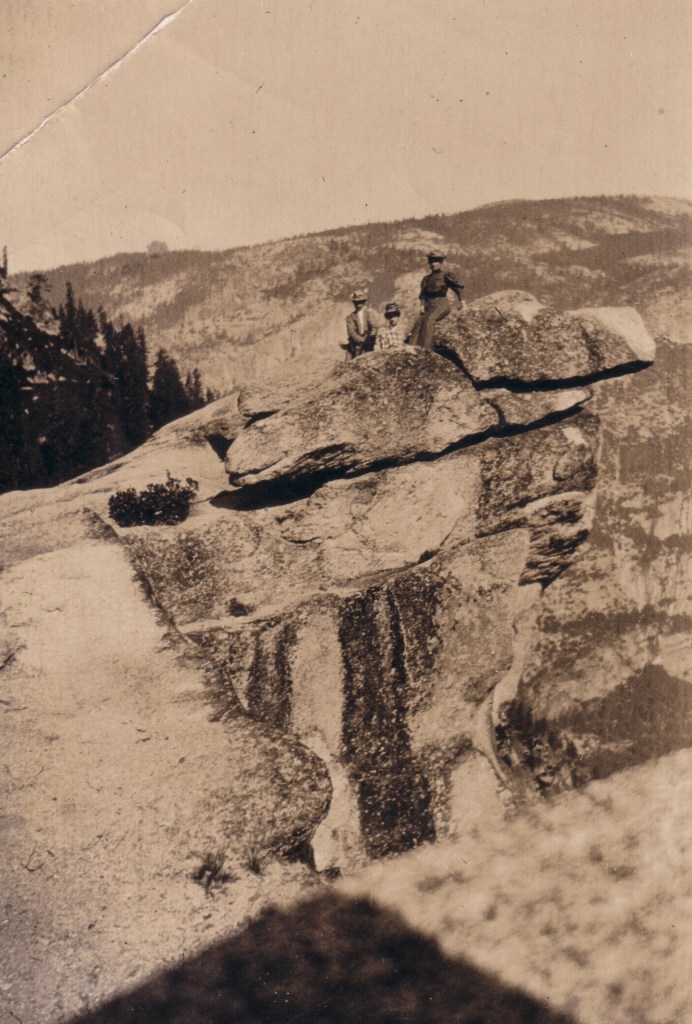
As they neared the edge they began craning their necks and had begun to sidle like crabs as the drop off neared. Chins up and weight on the back foot they stopped at the base of the rock trying to see without leaning too far over. It was a long, long way down. Finally by clustering together and screwing up their courage they they began to sidle sideways out onto the rock, not daring to lift their feet, carefully sliding their feet until they finally got as far as they could bear and holding hands for balance, they sat down. They felt so brave. And why not.

Blanche, Nita and Molly “O” on Overhanging Rock, Glacier Point. June 1908. Shannon Family Photo

The next three days were spent walking about and exploring. Mirror lake was astonishing in the morning light when it lived up to it’s name and reflected both North Dome and Half Dome in its polished surface.

They walked across the Merced River on the old log bridge holding onto the single handrail as the river, still running high in early June speckled their clothes with droplets of water come from the highest ridges of the Sierra where the ice never melted.

Yosemite Falls was magnificent, tons of numbingly cold water pitched from the ledge at the top and falling in waves of lace shimmering in the midday sunlight, rainbows dancing in and about like a kaleidoscope.

Molly “O,” Nita and Blanche, Merced River crossing June 1908. Shannon Family Photo.

When they returned to Berkeley Nita rejoined her husband Jack whom she had married in April, just six weeks before graduation. They moved into their home at 1927 Dwight Way, just off campus. The singular adventure of University life and her trip to Yosemite were the capstone of her single life. As was common, then, she surrendered half her life to her husband and just ten months later to her first born, my uncle Jackie, she gave up the other half. As my father was wont to say, a first class education and the opportunities it brought, limited as they were for a late Victorian girl were set aside and a long life as a housewife began. She put her memories away in a white cardboard box kept in the cupboard for the rest of her life. Nita became Annie Gray Shannon again.

She was born 75 years too soon.

A bemused Annie “Nita” Shannon and her new husband, April 10th, 1908 in the pretend car. Shannon Family Photo

Epilogue:

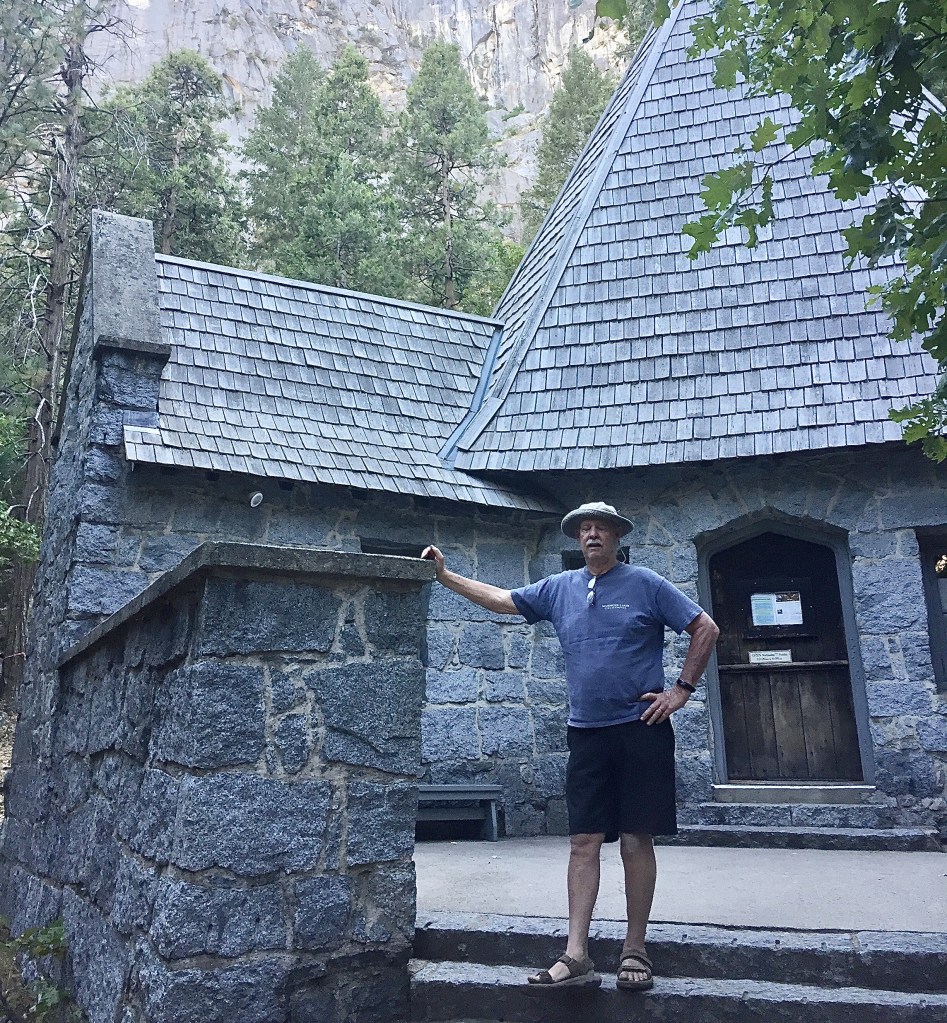
Yosemite is a place the family has returned too again and again. It has a mystic power that causes the mind to soar. As children we stayed at camp Curry and walked out into the meadow, sat on the grass and saw the Fire Fall. We marveled at mirror lake and inched closer to the edge of Glacier Point just as our grandmother had. I held my mothers hand to peek over the edge. So delicious for a kid. My wife and I honeymooned there in the old Ahwahnee. We’ve been to the old LaConte Lodge which is now a museum and skied the pass in winter. We’ve been to the chapel where the first non-denominational services were held in 1879. We introduced our own children to its wonders. Such a marvelous place.

Grandmother and grandson at the Le Conte Lodge, 1908 and 2019

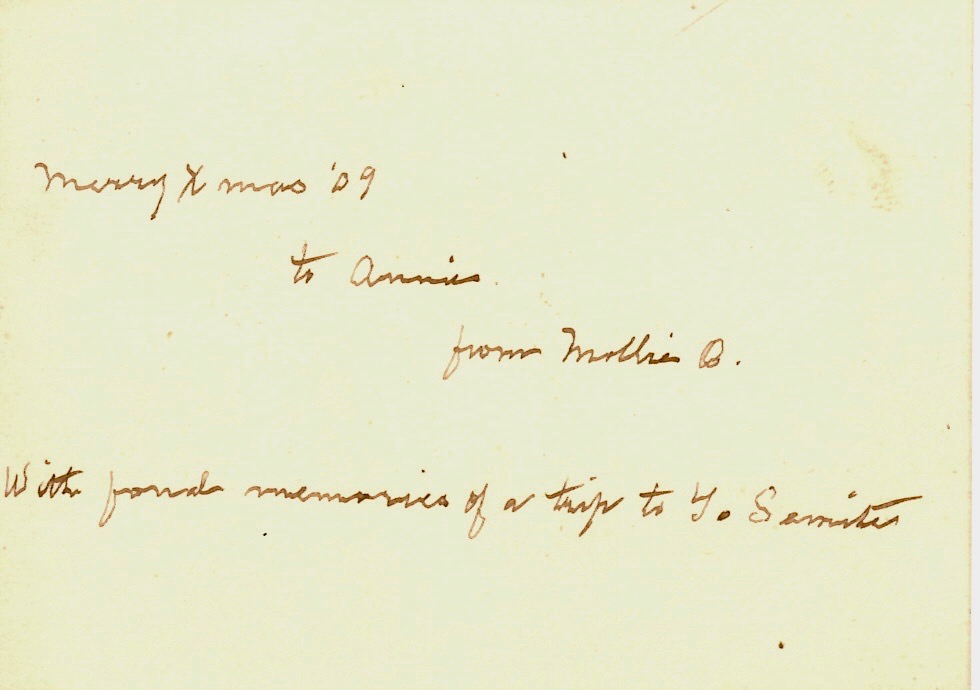
Many, many years later I found this little card in a box of my grandmothers things. The photos and postcards and letters all together tell the story. The fact that she kept these things for her entire life, moving them from home to home gives them a special significance. The are the foundation of this story.

Michael Shannon is a World Citizen, Surfer, Teacher and a writer. He writes so his children will remember the good family they come from.

Standard

TRUTHS I KNOW

By Michael Shannon

I know this to be true. Have you ever heard a truth, not shaded, parsed, paraphrased, but something that you know is clearly, purely, a truth?  They’re rare, to be cherished and recalled time and again. Something heard which is clear and polished to brightness; something so clear as to be marveled at, precisely because they are so rare.

Lou Gehrig:       

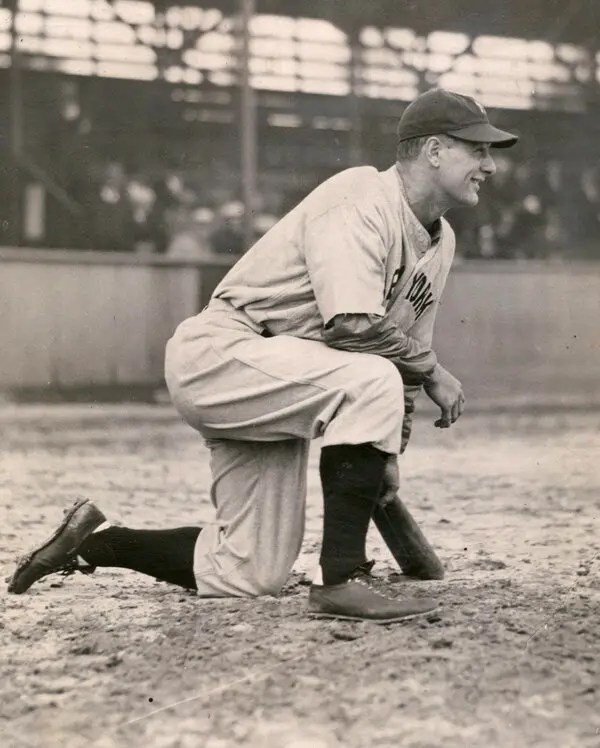
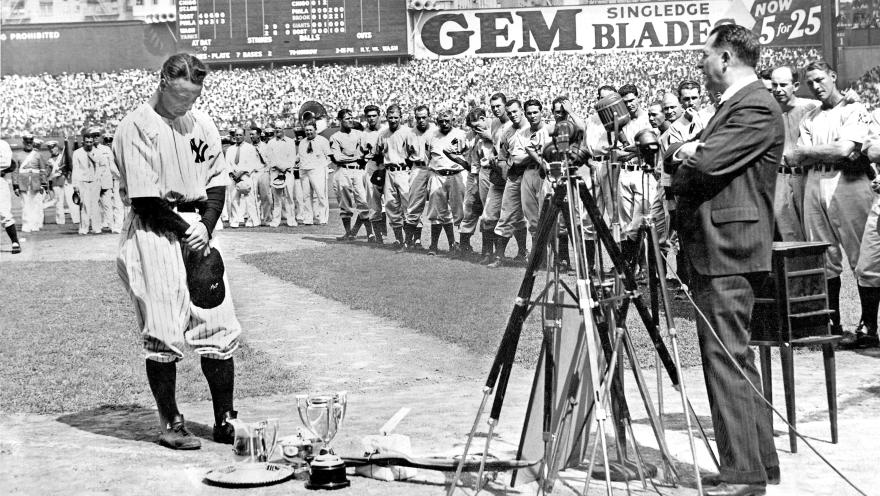
A tall man. Sloped shoulders, a baseball uniform of grey wool; pinstriped, his cap held before him as if in prayer, lifts his head and steps to the microphone planted on an impossibly green, manicured grass field, lowers his head and says softly, “Today, I consider myself the luckiest man on the face of the earth.” Despite his wonderful achievements as a Yankee first baseman, he will forever be remembered by the thing that killed him, “Lou Gehrigs Disease.” On June 2nd, 1941, Lou Gehrig died of ALS, still believing himself to be that lucky man. A truth.

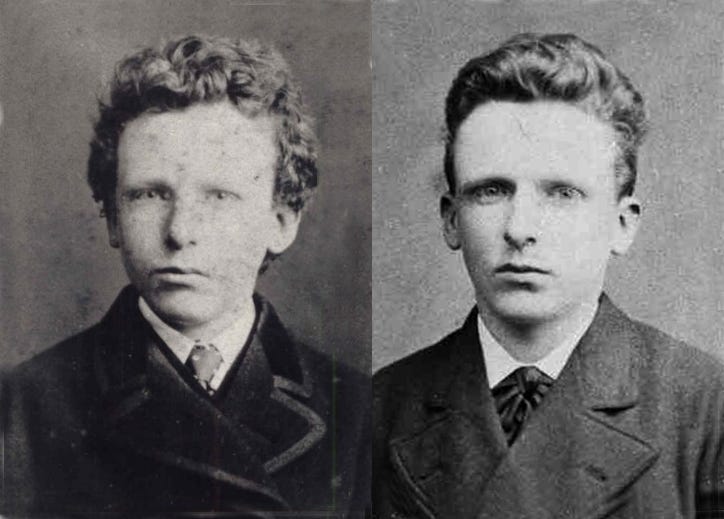
The  Brothers Van Gogh:       

Theodorus loved his brother so much.  They were, the two sides of the same coin. One successful, one not, one driven by ambition, one with none. Theo, self confident, the other without. Different worlds entirely but connected by brotherly love. One supported the other and was paid in useless paintings. Vincent wrote on the day he took his own life,

Well, my work to me, I risk my life on it, and my reason has half foundered – all right – but you are not one of those dealers in men, as far as I know, and you can take sides, I find, truly acting with humanity, but what is the use? 

Vincent Van Gogh had one human thing, a brother who loved him. A truth.

Captain Henry T. Waskow:“       

‘This one is Captain Waskow,’” one of them said quietly.

“Two men unleashed his body from the mule and lifted it off and laid it in the shadow beside the stone wall. Other men took the other bodies off. Finally, there were five lying end to end in a long row. You don’t cover up dead men in the combat zones. They just lie there in the shadows until someone comes after them.

“The unburdened mules moved off to their olive grove. The men in the road seemed reluctant to leave. They stood around, and gradually I could sense them moving, one by one, close to Captain Waskow’s body. Not so much to look, I think, as to say something in finality to him and to themselves. I stood close by and I could hear.”

“One soldier came and looked down, and he said out loud, ‘God…damn, it!’

“That’s all he said, and then he walked away.

“Another one came, and he said, ‘God damn it to hell anyway!’ He looked down for a few last moments and then turned and left.

“Another man came. I think he was an officer. It was hard to tell officers from men in the dim light, for everybody was bearded and grimy. The man looked down into the dead captain’s face and then spoke directly to him, as though he were alive, ‘I’m sorry, old man.’

“Then a soldier came and stood beside the officer and bent over, and he too spoke to his dead captain, not in a whisper but awfully tenderly, and he said, ‘I sure am sorry, sir.’

“Then the first man squatted down, and he reached down and took the captain’s hand, and he sat there for a full five minutes holding the dead hand in his own and looking intently into the dead face. And he never uttered a sound all the time he sat there.

“Finally he put the hand down. He reached over and gently straightened the points of the captain’s shirt collar, and then he sort of rearranged the tattered edges of the uniform around the wound, and then he got up and walked away down the road in the moonlight, all alone.”*   

Written on the field at the Battle of San Pietro during the Italian campaign in December, 1943 by Ernie Pyle, war correspondent. A Truth.

Barbara Shannon:   

“Life is but a breath,” the Good Book says, and that is surely true. In the end, if you count money, houses and land, then she was poor. But if you count wealth as the love and affection of your family and friends then she was rich beyond counting.

She loved her husband, she loved her sons, she loved her son’s wives as the daughters she never had, and her grandchildren were the crown she wore in her old age.

Suddenly one day, she was used up and worn out and just as suddenly gone from our lives. Mom was not born in this valley, but for over fifty years this is where she lived and moved and had her being and here is where she died.

It is not such a sad thing really, to contemplate her laid to rest in our green and peaceful cemetery in the midst of her friends, neighbors and family whom she loved and who loved her. It is not such a sad thing, perhaps, to think of her lying in the shadows of the everlasting hills of this green and golden valley that we love so well.

The first time dad went to see her in the hospital, she was in a coma and was terribly ravaged by that awful, awful disease. When he walked into the room and saw her he said,

“No Mike, thats not my wife. Barbara is beautiful. I don’t want to remember her like this. Please take me home son.”

Now dad lies beside her, as one day, her sons will too.    A truth.

Ray and Mariel Long

He was a cowman, she was an oilfield girl. They were two of the most naturally funny people I have ever known. They lived in an ancient ranch house in Watt’s Valley California. The house was so old it resembled an old drunk leaning on a lamp post. Only faith held it up.**

In the summers of the fifties it was overrun with their kids and heaps of cousins who came up to the ranch for the summer. There were horses, dogs, chickens, turkeys and cattle. There were kitties in the barn where the milking was done. In the early ‘morn they had little beards of milk, uncle Ray was partial to cats you know.

He saddled every kid with a nickname. He spared not one of us. There was Jughead, Festus, Shebang, Jeb and knothead. My mom was “Sis.” He meant nothin’ by it except to say he loved us and we knew it.

Mariel, our aunt Mickie was no kind of cook, her mother turned her nose up at the housewife life and her girls were on their own growing up. Uncle Ray rustled the big old iron stove in the corner of the kitchen. Dough God biscuits, tall and flaked, rashers of bacon and fresh eggs gathered that morning. The kids set at the long table with the oilcloth cover devoured his breakfasts washed down with fresh milk, pored from an old tin pitcher. That’s fresh milk straight from the cow, gobs of yellow cream floating on top with an occasional dead fly as a garnish. No one was afraid of fresh cream then, still warm from the cow, no.

It’s hotter than Hades up there come summer and each morning the kids would suit up and walk down in the pasture to the little dam where the water was about a foot deep. We would pretend twe could swim, occasionally rising out to lie on the grass pasture to dry off in the dappled sunlight poking through the willow leaves. We ate sandwiches made with wonder bread, mustard and baloney, store bought sugar cookies and dreamed of growing up to be cowboys.

Like uncle Ray.

Ray Clarence Long with his firstborn, my cousin Bruce, better known as Jughead. Shannon Family photo.

He rode the Sierra his whole life long. Pushing cattle up to the high meadows in the spring, bringing them down in the fall. He worked the stockyards in the valley when times were lean; which was almost always. Dad said he knew every trail, crick, and cow camp from Mexico to Oregon and I never doubted it. There is a scene in the book Monte Walsh where the Stud Duck turns to his friend when they see a puncher ridin’ their way and says. “That’s Monte Walsh, nobody sits a horse like Monte Walsh.” He might as well have been talking about my uncle Ray.

Ray Long up on Charm, Watts Valley 1952. Shannon Family Photo.

He hand rolled his smokes with the one hand and drank his bourbon straight. He was honest as the day is long and the good God has surely made no one like him since. He rode horseback ’til the day he died.

A Truth.

*Ernie Pyle seldom wrote about generals, he wrote about the ordinary people he cared for, the dirty shirt dollar sixty a day Dogface who marched from Tunisia to Germany.

**Surprisingly, that old house still stands under the Sycamore trees some some seventy years gone.

Micheal Shannon is a World Citizen, Surfer, teacher and writer. He writes so his kids will know their story..

Standard

NITA

By Michael Shannon

Part The Second

Graduation came in May of 1908. After four years of study, the death of her uncle Patrick Moore in 1905 and the following year the great San Francisco Earthquake, Nita walked onto the stage at the Greek theater, accepted her diploma from Benjamin Ide Wheele

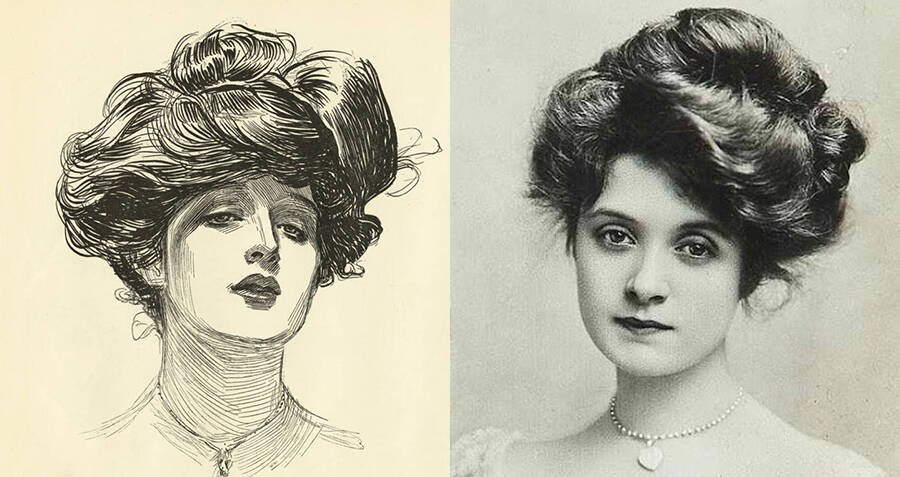
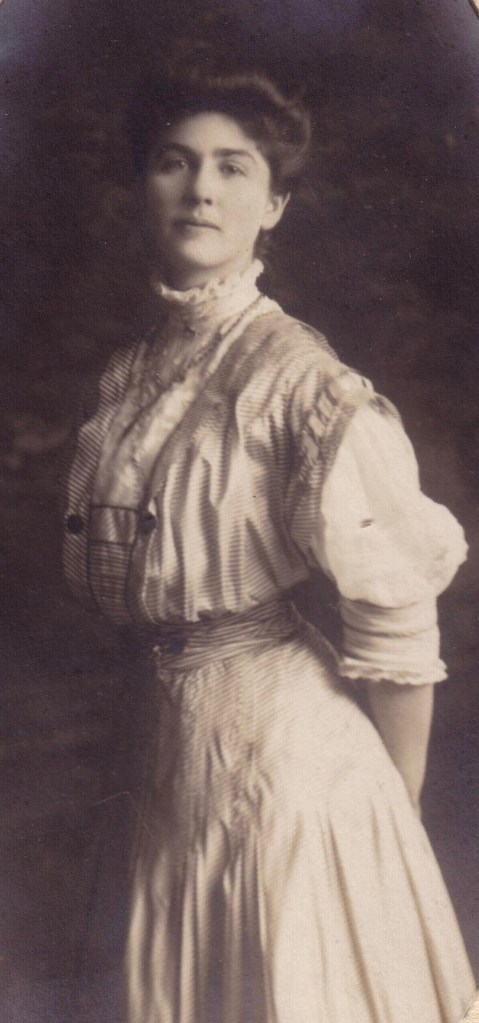
Commencement week, a round of celebrations, fraternity and club open houses, receptions and Class Day concluded on Wednesday with graduation. Faculty, regents, honored guests and alumni met at North Hall and the Library.led the graduating class up to the Greek Theatre. Dressed in their finest, the boys in high starched collars, the girls in their finest formal gowns. Their chin high lace collars stitched with traceries done by hand with initials worked as was Nita’s. The silk and chiffon fabrics used for the long narrow skirt ended three or four inches above the waist line and was held by a belt of stiff Petersham Cotton tied with a large bow in the back. The girls wore their hair up in the style of the Gibson Girl. Rolled and fluffed held by pins exposing the neck, the style was considered the height of elegance for young women.

The Gibson Girl had an exaggerated S-curve torso shape achieved by wearing a swan-bill corset. Images of her epitomized the late 19th- and early 20th-century Western preoccupation with youthful features and ephemeral beauty. Her neck was thin and her hair piled high upon her head in the contemporary bouffant, pompadour, and chignon, the “waterfall of curls” fashion. The statuesque, narrow-waisted ideal feminine figure was portrayed as being at ease and stylish.

The illustrator Charle Dana Gibson is credited for popularizing the standard look of the girl. Many women posed for Gibson Girl-style illustrations, including Gibson’s wife, Irene Langhorne, who may have been the original model. Irene was a sister of Viscountess Nancy (Langhorne) Astor. Mrs Astor besides being the first female member of Britain’s parliament was equally famous for her sharp tongue and took great pleasure in skewering Winston Churchill with it on every possible occasion. During a dinner party she informed Churchill that, “If you were my husband I would poison you,” to which he replied, “If you did madam, I would take it”. He could give as good as he got.

The Langhorne girls were immensely rich and two bought husbands with titles, Viscount Lord Waldorf Astor son of the richest man in the world at the time and Robert, the first Baron Brand. Wealthy American girls who married poor but titled Englishmen were titled by the American press as the “Dollar Princesses.”

The most famous Gibson Girl was probably the American-British stage actress, Camille Clifford, whose high coiffure and long, elegant gowns that wrapped around her hourglass figure and tightly corseted wasp waist defined the style. Miss Clifford also made popular the oversize woman’s hat known at the “Merry Widow.”

Irene Langhorne Gibson. The Original Gibson Girl. Public Domain print.

In Gibson’s drawings there was no hint at pushing the boundaries of women’s roles; instead they often cemented the long-standing beliefs held by many from the old social orders, rarely depicting the Gibson Girl as taking part in any activity that could be seen as out of the ordinary for a woman.

Nita and her friends certainly were aware of these trendsetters as any young woman of today would be. Women’s magazines, films and books held them up as ideals and in the old family photos of her at this time of her life she epitomized the look. Popular culture was alive and well in 1908, even in tiny Arroyo Grande where she was from.

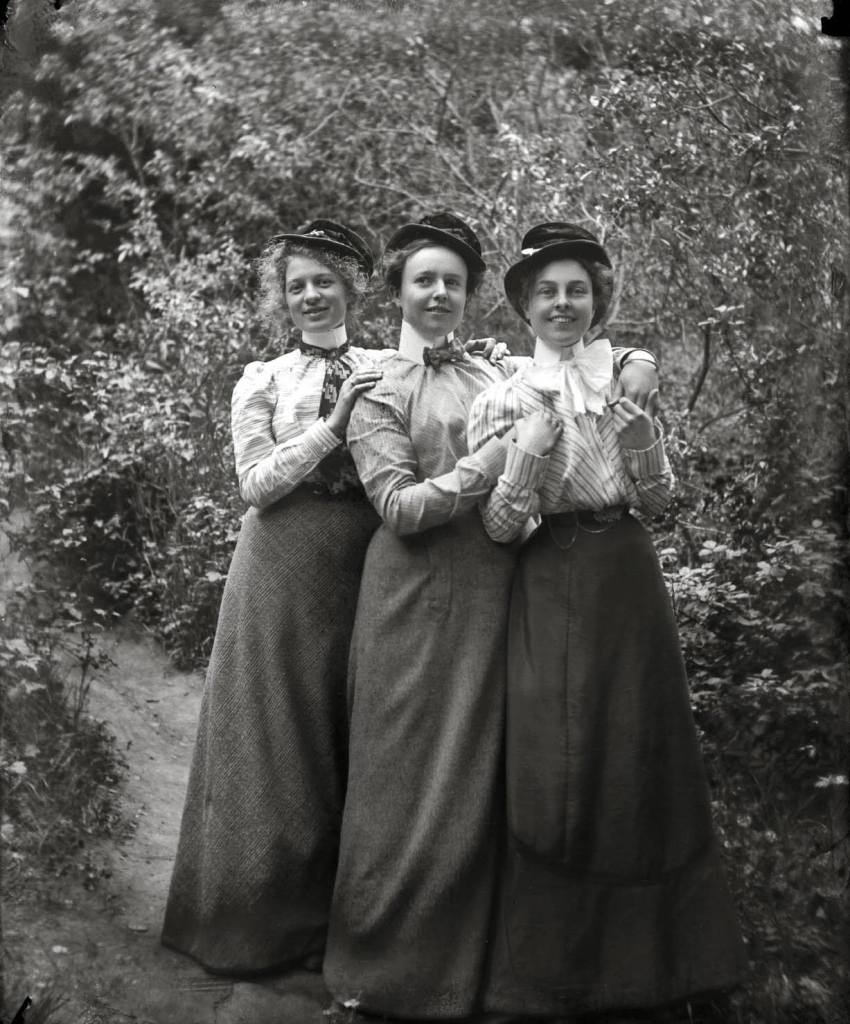
Nita always seemed to me a serious woman but once she explained to me why she had a thoroughly beat up plug hat hanging on the hatrack in her office. You see, it was the fancy of students who attended the University of California, Berkeley at the dawning of the twentieth century to wear them. Upperclassmen and women, of which my grandmother was one, wore the old beaten up hats as a fashion accessory, much as my father wore his beanie when he was a student at Cal in the 1930’s. They must have found them on trash heaps or second hand stores, useless to anyone but college students who delight in being contrarians. My grandmother and her friends would walk around campus, from the North Hall to the Bacon Library Hall, or gather at the Charter Oak, dressed in the style of 1908, wearing shirtwaists, high collars and long dresses over high button shoes. The stately look we imagine today as being their nature. It’s too easy to forget that they were twenty year old girls. Just as they are in college today, full of high spirits and dreams of a life yet to be lived.

Photo, Calisphere

Each senior draped in a blue university gown, the mortar board with its golden tassel swaying in time with the march as they made their way to their seats for the ceremony. The sound of sibilant silk and cotton dresses, the soft clack of shoes on pavement accompanied the students like an orchestra. In the gentle breeze coming up from the bay, the mingled scents of cologne and perfume heralded the coming of the graduates. Nita sat between Laurence Herbert Grant, his winged collar and cravat complete with stickpin marking him as a bit old fashioned. He would move up to Fort Bragg and join the clergy. He looks a serious young man with his earnest expression, his thick wavy hair ruffling in the breeze. On her other side, Sydney Baldwin Gray, She of the small round glasses. She has the competent straight forward look of a teacher which she went on to be. Next in line, Ruth Van Kampen Green, married right after graduation. Her husband worked for United Fruit as a packer and she ultimately bore him eight children and spent a good deal of her life in Mexico and Brazil. They followed the banana trade. Next to Ruth was Edith Montgomery Grey who became a third grade teacher at Oak Park primary school in Folsom California. She resigned in 1920 in order to marry. Expectations were such that women should not have a career other than be a homemaker. She died soon after childbirth in 1920

A large majority of the women became teachers. Superbly educated, graduates of Cal were a hot commodity. California was growing rapidly and desperately needed more educators. Just as today, they found their way to the Normal School, Santa Barbara College , todays UCSB where they took a course of study to prep for the state teachers qualifying exam. These women were not the one room schoolhouse teachers of popular fiction. The California State Teachers exam of 1910 was brutal and was the equal of modern teachers requirements. Just as today, it took a five year course of study to qualify for a credential.

The college of Social Sciences at Berkeley, Nita’s school, was the largest at Cal in 1908, numbering over one thousand students. A student was promised a first class education just as they are today. She was required to have taken Latin at Santa Maria High School though Cal did not insist on Greek for the College of Social Sciences. She had a wide choice of classes in humanistic studies. She could choose classes in the great field of literature, linguistics, history and economics. Geography and education were also requirements and from the list of women graduates it can be seen that the most likely career was education.

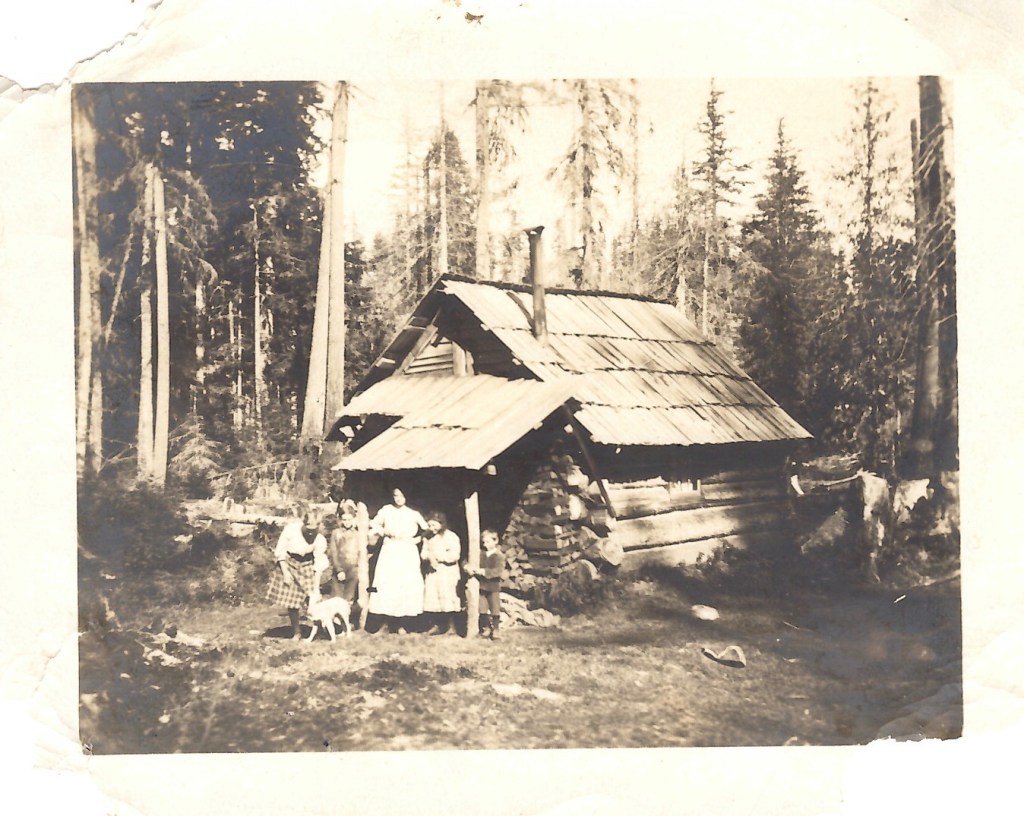
Her curriculum shatters the old saw about the schoolmarm and the one room schoolhouse. One of the orphan girls Nita was raised with who was also schooled by uncle Patrick Moore, Mamie Tyler took her degree at a school founded as a private institution, ‘Minns’ Evening Normal School founded in 1857. That school became a public institution by act of the State Legislature on May 2, 1862. In 1868 the board of trustees took up the matter of permanent location, and Washington Square in San Jose was chosen. Mamie graduated in 1900 and taught much of her career in a log cabin near Port Angeles, Washington State.

Martha “Mamie” Tyler Kolloch and her students at the log cabin school in the Olympic forest Washington State, 1921 Shannon Family Photo

The first in California was originally founded as a private institution, ‘Minns’ Evening Normal School,’ in 1857, the school became a public institution by act of the State Legislature on May 2, 1862. In 1868 the board of trustees took up the matter of permanent location, and Washington Square in San Jose was chosen. San Jose State Teachers College was born. The Normal Schools were changed to state colleges in 1935 which allowed them to offer degrees in subjects other than education. Those schools make up the majority of the original California State Colleges including UCLA, San Diego State, UCSB and San Jose.

Normal Schools derive their name from the French phrase ecole normale. These teacher-training institutions, the first of which was established in France by the Brothers of the Christian Schools in 1685, were intended to set a pattern, establish a “norm” after which all other schools would be modeled, a pattern which has remained in effect until the present day.

Wether Nita’s goal was to teach we don’t know but many of the girls sponsored by Patrick Moore did become teachers. Education was important to the Moore’s and Nita’s parents, the Grays. Her entire extended family was made up of Irish immigrants for which education was the most cherished goal. A goal still shared by immigrants from all over the world.

Nita’s parents, her siblings, and friends had arrived in Oakland by train from home and waited anxiously in the tiered seats around the Theatre where the folding chairs awaited the arrival of the dignitaries and expectant graduates.

Baccalaureate, also in the Greek had been on Sunday in which Bishop Nichols sermon had emphasized the opportunity for “Men” of character and worth to make their stamp on the great state of California. No mention of women in 1908.

Class day on Monday saw seniors meeting at Senior Oak. A speech by class president Hartley followed by the progression of “Plugs and Parasols” which wound through the campus where they halted for speeches by fellow classmates who spoke on subjects they were most interested. Hardly anyone listened of course. Excitement was building to a fever pitch. Tuesday afternoon they sat for the final Symphony Concert of the year. Finally the last senior assembly in Harmon Gymnasium on Tuesday evening. Parasols were folded and Nita and her roommates went home a tried to get some sleep. Wednesday would be an early start. Gowns to be pressed, hair done up, shoes polished and then the process of dressing, the girls helping each other, pushing pulling and primping making everything “Just so.”

Wednesday, the graduates to be met and organized themselves for the procession up to the Greek. Waiting for the ceremony to begin was almost more than they could stand. Nervous chatter rose above the crowd, the occasional group of boys hooped and hollered to let of steam but finally, lined up in proper order they stepped out to the sound of the University Band and began to walk.

At the Greek they filed into the rows of chairs, carefully arranged in alphabetical order. The murmur of the crowd was underplayed by the chairs creaking as the soon to be graduates took their seats. The rise and fall of low voices marked the expectant crowd. For many this ceremony would be one of the highlights of their lives.

After the always interminable speeches, after four years of University life, Nita rose and joined the parade up the steps onto the stage at the Greek Theatre and received her diploma from the hand of President Benjamin Wheeler himself. Then polite congratulations from Mrs Hearst and the other regents and with that her book of education closed.

The “S” curve is still the mode for women in 1908 and the cut of Nita’s clothes emphasize that. Shannon Family Photo

And here’s to the ‘Naught eight co-eds, Our prettiest, sweetest and best.

Whose eyes laugh back with our laughter, Whose hearts glow warm with our zest.

To the girls who were women at entrance, But who will be girls ’til they die.

A toast! For we know they are loyal.

A toast! With our glasses held high.

For a final deep pledge to our class, boys

O a fig would we care for fate!

In the same old way we would drink to our class,

In a toast to old “Naught-eight.

From the Blue and Gold Yearbook, University of California Berkeley class of 1908 by Sheldon Chaney, ’08

Coming next: Nita, the third. Senior trip to Yosemite Valley.

Please Like and Follow.

Many thanks to my researcher Shirley Bennet Gibson from another old time local family. Couldn’t do it without her.

Michael Shannon is a surfer, traveler, teacher and writer.

Standard

NITA

The first part.

By Michael Shannon

She was a woman of sturdy shoes when I knew her. I cannot remember her without her apron, a sensible utilitarian piece of apparel worn by women of the early twentieth century to protect their clothes, a leftover from the days when, if you weren’t wealthy enough to have a laundress, you washed and ironed your own garments.

My grandmother was 60 years old when I was born. By the time I was old enough to know her she was well into her seventies. We never, ever talked about her life. Like many people she must have though it wasn’t very interesting which is how it must have looked from inside her head. The only things she ever shared with me came when she was in her nineties. I would sit on her sofa, the one with the pink roses pattern and from the space where she had retreated at the end of her life she would, with enough prompting, dispense snippets of it.

How the hired girl got “Knocked Up,” how uncle Pat would have to spend the night in the barn when he came home three sheets to the wind after a night at Ryan’s bar with his friends Daniel Rice and Patrick Donovan. The most interesting thing wasn’t that these things happened, both are pretty common in the human experience but for her use of the phrase which she would have consider extremely vulgar in her younger days or the story about Patrick Moore drinking which was something she had also disapproved off. She had reason to.

So I sat there with her, she in her bathrobe, something which would have horrified her when she was younger, she basking in the sun coming through the big picture window overlooking the places she had lived nearly all her life. Being ninety is being cold and the afternoon heat nearly put her to sleep, perhaps her guard was down.

When she was younger, every morning she would get up, start breakfast and then retire to her bedroom to complete her Toilette. Carefully combing her hair with the silver plated boars bristle brushes she had used since she was a girl, dusting herself lightly with White Shoulders and applying just a kiss of rouge to her lips with the tip of her Pinky. Girls who grew up at the end of the nineteenth century used almost no makeup; that would have been seen as vulgar in her circle. She had never changed.

Holding her little hand, the skin velvety soft and nearly translucent, having seldom ever seen the sun during her nine plus decades, for her complexion was her treasure. I cannot recall her ever going anywhere without gloves, long sleeves and a hat. Now she sat wrapped in her old pink terrycloth robe with the little embroidered roses on the collar, me listening carefully and giving her the a little spoken nudge to keep her talking, fascinated by what she told me.

My life was as different from hers as if I’d lived on the moon. Though we weren’t considered poor, the family had come down some financially since my grandmother was a girl. Families grow and money has to go farther. She was born to a moderately wealthy farming and ranching family from the Santa Maria area of California. Midwife delivered in a little house just off Division road and the old coast highway in Oso Flaco. She was the second of seven children of Irish immigrants Samuel and Jeannie Gray. Sam Gray and Jennie McKeen were married on May 12th, 1881 at the Orange Hall in Bailie Riobaird Doagh, county Antrim. They traveled to Belfast and boarded the States Line ship, SS State of Alabama and sailed to America on their honeymoon. Boarding at Belfast, they came ashore at Manhattan’s Castle Gardens. The State of Alabama was no Coffin ship like the vessels that delivered the first wave of famine Irish forty years earlier but she was no cruise ship either. Sam and his bride traveled third class, just a step above steerage. They never returned to Kilbride Parish, Upper Antrim, County Antrim, ever again. Like most Irish immigrants the family left behind was forever lost.

Like many they made the long hop across the country to California very quickly. Immigrant families followed a chain of family migration as they still do. Jeannie Gray’s Aunt Sarah, married to Patrick Moore of Cavan, Ireland, todays Cork, had come to America in 1850 when he was just 18. He moved west to Ohio from New York, became a naturalized citizen in 1868 and by Annies birth was living with his extended family in the Guadalupe and the Arroyo Grande Areas of central California.

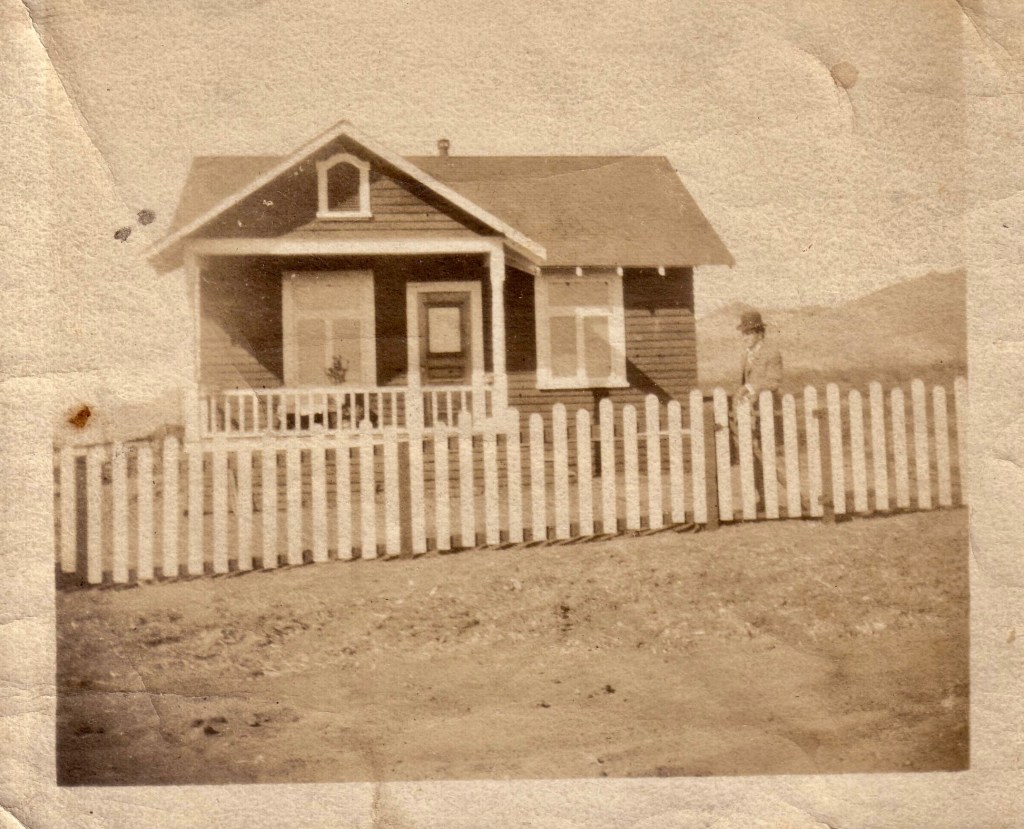
Annies House, Guadalupe Road. 1907 Family photo ©

The Moores by the eighties were a wealthy family, Patrick being what he called a capitalist had acquired thousands of acres of the old Mexican Land Grant Rancho’s. He had also invested in the nascent Oil business in Casmalia and the Orcutt area. He was a principle of the Pinal Oil Company and by the turn of the century had become not only a land owner but a private banker. Banks of the sort we are familiar with today didn’t exist then and most loans were made with a handshake. Uncle Pat was good at his work and scrupulously honest.

Pat and Sarah Moore had only one great sadness in their lives, they were childless and they loved children. Because Jennie Gray was Sarah Moore’s niece and by 1895 had seven living children, the Moore’s proposed that little Annie Gray, the second child come to live with them in Arroyo Grande. After some discussion a deal was worked out whereas the Moore’s would feed and cloth her, pay for her education at the California University at Berkeley, and upon passing, deed her a Quarter section of land and gift her a number of shares in the oil company. The custom of “Loaning” children out to relatives isn’t common anymore but was not unusual for the time.

Eight Year Old Annie Gray next to the Hired Girl. 1893. Family Photo.©

In 1893 Annie came to live with the Moores. In the big house. On the Hill. She had, for the first time her own room on the second floor and servants to take care of her needs, It was quite a change. In the picture above, the two older girls on the left are the Tyler sisters. They lived with the Moore’s also. Their parents had both died within a year of each other and Sarah and Pat took it upon themselves to raise them too. It was always said by those who knew that the big house was always filled with the children of the town.

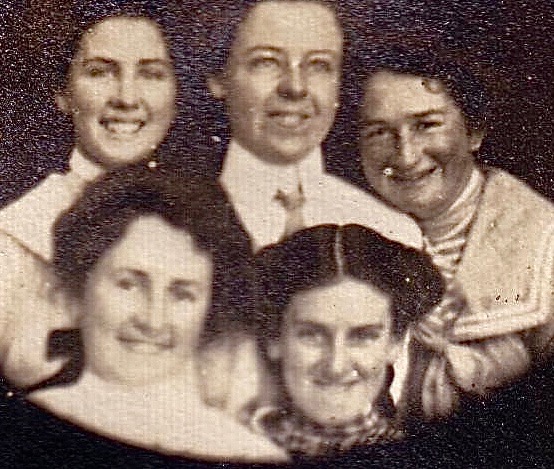
As Annie grew, these many friends shared their lives together as children and teenagers. The Kodak Box camera was invented just in time to chronicle much of their lives growing up. Annie was fifteen when the camera came on the market and we have albums of photos taken with what must have been, a marvelous new thing. They took pictures the way girls use their I-Phones today.

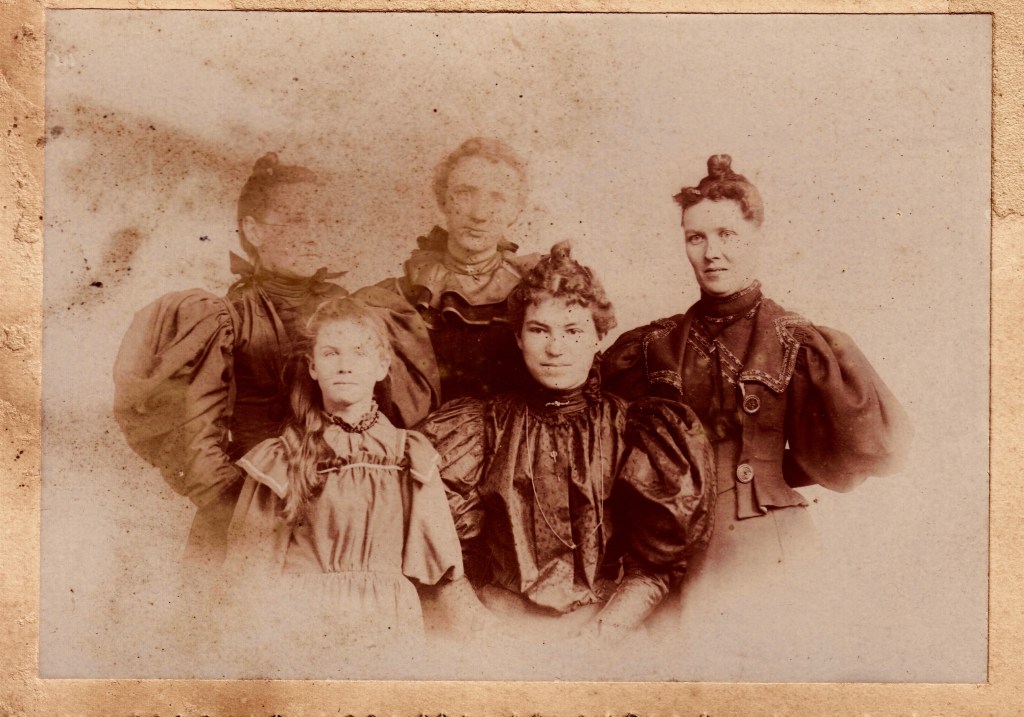
Annie Gray upper left., Mamie and Hattie Tyler, Lower Tootsie Lierly, Maggie Phoenix. 1902. Family Photo ©

They chronicled all kinds of events, birthday parties, holidays or even any excuse to get together. Arroyo Grande was such a small town that you could walk across it in just a few minutes and like little places, everyone, they knew each other. One hundred and twenty years later most of the family names in her autograph books still reside here including my future grandfather whose beautiful copperplate signature is scattered throughout the pages of that little book.

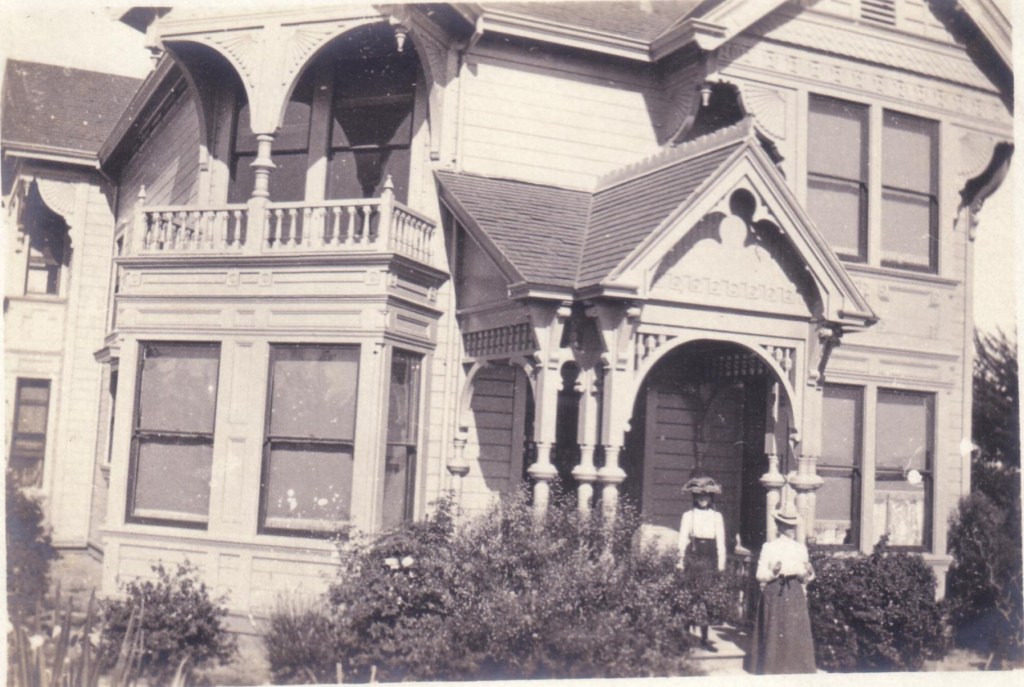
The Big House, “Grandview”, 1899, Family Photo. ©

As promised, Annie was off to Berkeley in 1904. She graduated from Santa Maria High School in 1904 in the same class with her oldest brother Robert Gray. Though she lived in Arroyo Grande with the Moore’s she would spend the week with her parents on their ranch on Guadalupe road, taking the narrow gauge railroad down on Monday morning and returning for the weekend. The high school in Arroyo Grande was not accredited for the university. It had a somewhat sketchy history and had ceased to exist for a few years as a group of wealthy ranchers refused to pay taxes to support a high school, deeming it an unnecessary level of education. “Boys need to go to work, not school, and girls need to marry and keep house,” said Harold Miossi. one of the ringleaders in the anti-school delegation. Daniel Donovan, big landowner and friend of Pat Moore was leader in defunding the school. The conversations between these and the other town leaders in the bar at the Ryan Hotel on Branch Street must have been interesting. According to family lore, uncle Pat and his crony’s could put it away in vast quantities and the arguments were detailed in the local papers. My grandfather Jack Shannon and his friends including “Ace” Porter, George Clevenger and Frank Bardin all ended their formal education at eighth grade. They all prospered in spite of going to do a grownups work at fourteen.

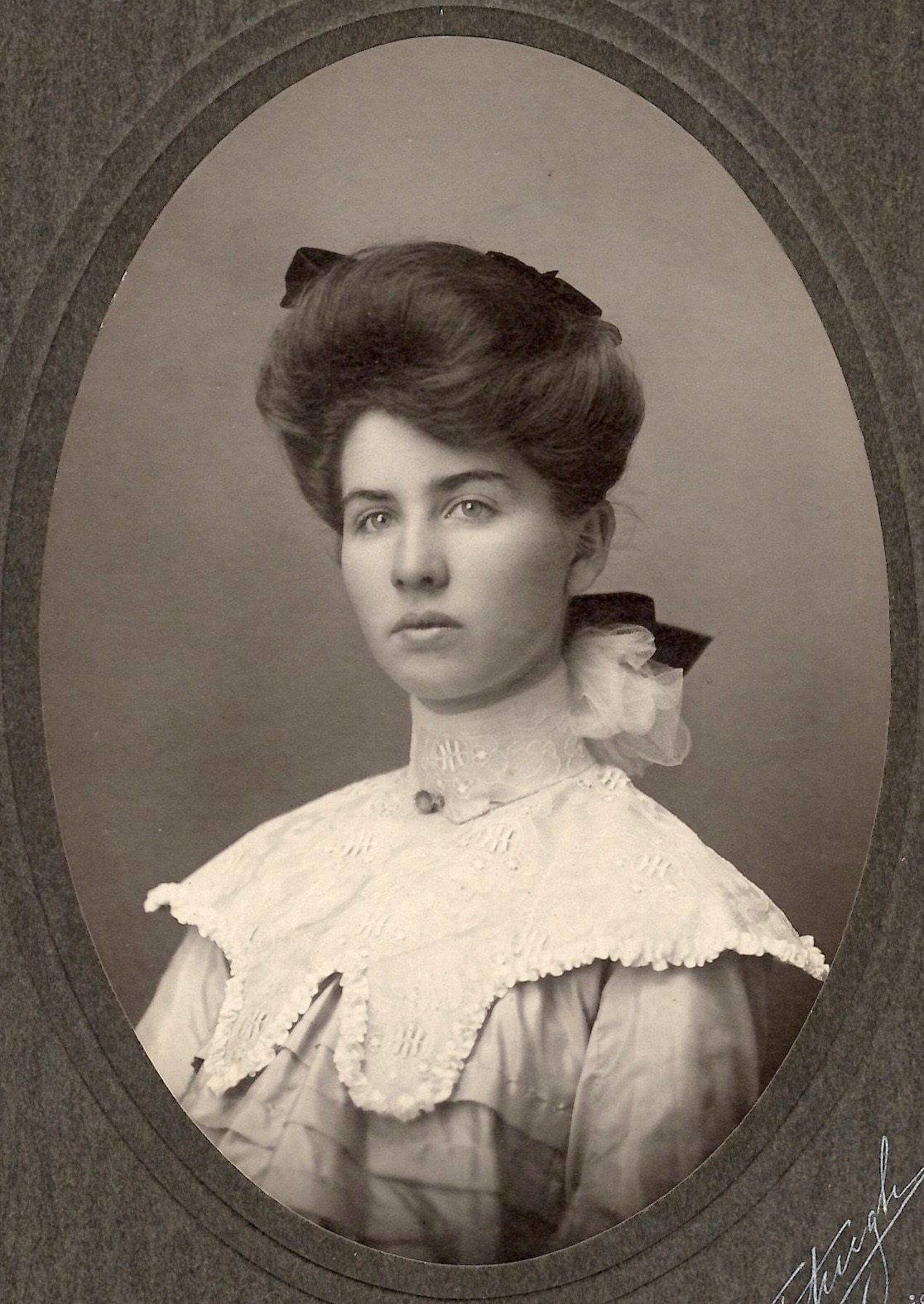
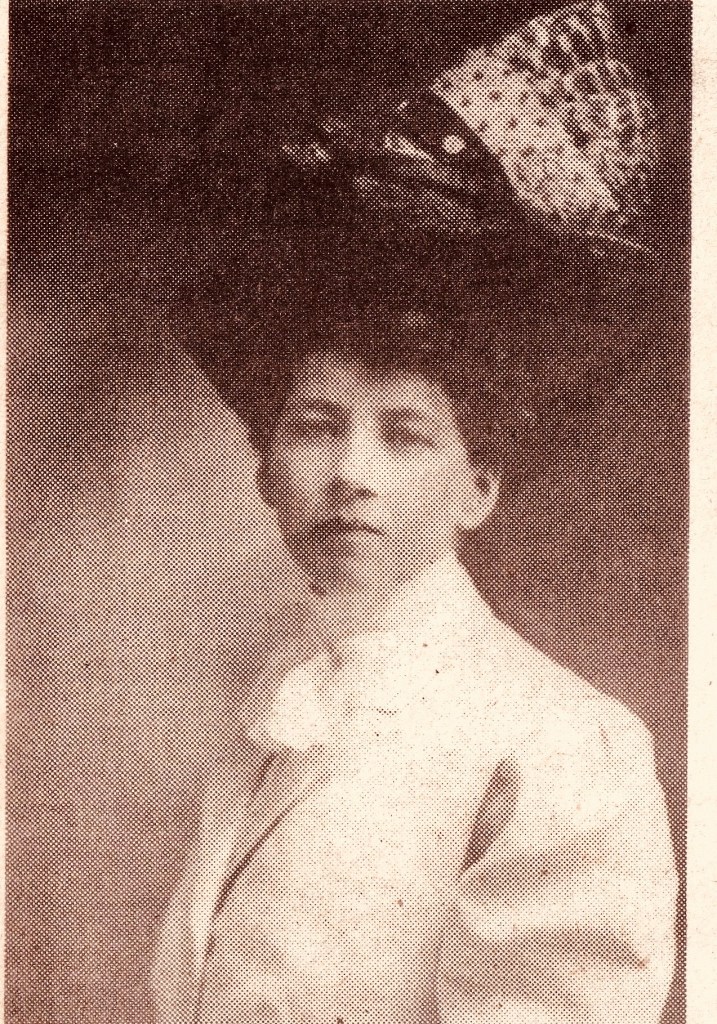
Pat and Sarah Moore were decidedly against the no-school crowd and not only sent Annie of to college but paid for the schooling of several of her friends including the girl below pictured in her high school graduation picture. She returned to Arroyo Grande and taught school. She was so well liked that a grammar school was named for her. She was my grandmother good friend and spent many hours in the big house just up the hill from her own next to Pig Tail Alley on old Bridge Street..

Margaret Phoenix Harloe. 1901. HS graduation photo.

Berkeley was a far different school in 1904 than it is today. Girls had only a limited series of choices in which to study and like my grandmother, most would graduate with a Baccalaureate degree in Liberal Arts. There were few careers open to educated woman. The School of Architecture was founded only in 1903 by an endowment from Phoebe Apperson Hearst who was already championing women’s education, particularly women in Architecture. Mrs Hearst was a supporter of Julia Morgan, famously the architect of Hearst Castle. Morgan, herself was a woman of many firsts. She was one of the very first female graduates of the Engineering School at Berkeley and the very first woman to graduate from the prestigious French Ecole Nacionale Superiuere des Beaux-Artes. She was also the first licensed woman architect in California in 1903. In Annies sophomore year, The world famous Bancroft Library was added to the Universities collection that year and in 1905, Elizabeth Josselyn Boalt endowed the school with funds to build a permanent building for the School of Jurisprudence.

The famous “Big C” was built in march of 1905, Annies 2nd year at Cal. Her classmates of ’07 and ’08 formed a human chain to haul the blocks of sandstone uphill in a heavy rain. The “C” represents the peaceful end of the Charter Hill Rush held between the freshman and sophomores. It is a symbol of peace and unity. The Sophs were in charge of keeping it in good repair and each year, “The Deed to the C” was transferred to the next years sophomore class in a ceremony each spring.

The “Big C” was and is considered legitimate game for opponents of California Athletics, particularly the private school boys of Stanford. Each year before the Cal/Stanford football game it is lit and guarded through the night by members of the Sophomore class.

Waiting for the train to Berkeley 1905. Oceano Depot. Annie center. Family photo ©

During the time Annie was a Cal there were no dorms or sororities for women. Girls boarded in homes around campus and she was no exception. She had a room in the home of Doctor Arvan Meeks and his wife Minna, a well-to-do dentist practicing in Berkeley. He and his wife took in a number of boarders from the school each year.

Annie “Nita” Gray, class of 1908. far left. Family Photo. ©

As young girls still do, she chose her nickname or it was chosen for her by friends. Why Nita, no one ever said but she carried it from early girlhood until she finished at the University. A short name or nickname is a sign of intimacy, trust, and friendship. We see Nita in her autograph book which dates back to the 1890’s and even in a letter written to her by her friend Mamie, another nickname, from her old folks home in Washington state when they were both in their early nineties. It had staying power. Likely because they were childhood friends and raised together they never called each other anything else. Nita is a diminutive for Anita or Ana if you speak Spanish. It could have been either one or as is sometimes the case just a way to distance themselves from names they didn’t themselves choose. I never heard anyone call her anything but Annie, not Anne or Anita. Annie was her given name. Perhaps they though Annie was too much like a servants name or something she would say all of her life; “Thats Shanty Irish”, styling herself as the Lace Curtain kind. They were raised in style.

Whatever the reason it set the tone for the early part of her life. Born to a wealthy first generation Irish family, raised by a rich first generation Irish family. A good start.

Annie and Hattie Tyler, 1903. Shannon Family Photo ©

Michael Shannon is a writer, teacher, surfer, and world traveler. He resides in Arroyo Grande California.

Coming next, Nita the second part.

Standard

NAQT Epilogue

During WWII, ships of the US Navy were named according to their type. There was no fixed and fast rule but aircraft carriers typically had the names of famous Navy ships of the past or battles. Names like Cowpens (CVL-25), Lexington (CV-2), Yorktown (CV-5) and Saratoga (CV-3) came from the Revolutionary war. Other carriers such as the Wasp (CV-7, Hornet (CV-8), and the Ranger (CV-4) were early ships of the first US Navy.

Battleships were named for state, Arizona and West Virginia are examples. Heavy cruisers were named for state capitols like the Baltimore (CA-68) and light cruisers for principle cities like USS Brooklyn (CL-40).

Submarines were named for fish like the USS Wahoo (SS-238) and oil tankers for rivers such as the USS Kaskaskia (AO-27) which had the name of that river in Illinois. The USS Markab (AD-21), a destroyer tender was named for the third brightest star in the constellation Pegasus.

By the end of the war the US Navy manned and operated over 6,000 ships, a monumental feat of organization.

The Secretary of the Navy named Destroyers and Destroyer Escorts in honor of distinguished leaders and heroes from each of the services. By 1942, the convention had been modified several times to read: “Deceased American Naval, Marine Corps and Coast Guard Officers and enlisted personnel who have rendered distinguished service to their country above and beyond the call of duty; former Secretaries and Assistant Secretaries of the Navy; members of Congress who have been closely identified with Naval affairs; and inventors.”

An example of this process was the naming of the USS Harmon (DE-678). Leonard Roy Harmon (January 21, 1917 – November 13, 1942) was an American sailor who died in action during World War II and was posthumously awarded the Navy Cross for his valor. He is the first African-American man to have a US warship named after him. He was a mess attendant on the USS San Francisco (CA-38) His citation reads in part; With persistent disregard for his own personal safety, Mess Attendant First Class Harmon rendered invaluable assistance in caring for the wounded and assisting them to a dressing station. In addition to displaying unusual loyalty in behalf of the injured Executive Officer, he deliberately exposed himself to hostile gunfire in order to protect a shipmate and, as a result of this courageous deed, was killed in action. His heroic spirit of self-sacrifice, maintained above and beyond the call of duty, was in keeping with the highest traditions of the United States Naval Service. He gallantly gave his life for his country.

USS Spence (DD-512) The ship was named for Robert T. Spence, superintendent of construction of USS Ontario (1813), and captain of USS Cyane (1815).

USS Aaron Ward (DD-483) Aaron Ward was sponsored by Miss Hilda Ward, the daughter of the late Admiral Ward. The ship was commissioned on 4 March 1942.

USS Charles Ausburne (DD-570), a Fletcher-class destroyer, was the second ship of the United States Navy to be named for Charles L. Ausburne, a sailor in World War I who was posthumously awarded the Navy Cross.

USS Abner Read (DD-526) was named after Lieutenant Commander Abner Read (1821 – 1863), who fought in the American Civil War. The Abner Read was sunk by a Kamikaze on 1 Nov, 1944 with the loss of 22 young men.

USS Balch (DD-363) was a Porter-class destroyer in the United States Navy. She is named for Admiral George Beall Balch.

USS Cassin Young (DD-793) is a Fletcher-class destroyer of the U.S. Navy named for Captain Cassin Young (1894–1942), who was awarded the Medal of Honor for his heroism at the Japanese attack on Pearl Harbor and killed in the Naval Battle of Guadalcanal in the fall of 1942.

USS Converse (DD-509), a Fletcher-class destroyer, was the second ship of the United States Navy to be named for George A. Converse (1844–1909).

USS Dyson (DD-572) was a Fletcher-class destroyer of the United States Navy. She was named for Rear Admiral Charles W. Dyson (1861–1930).

USS Foote (DD-511), a Fletcher-class destroyer, was the third ship of the United States Navy to be named for Rear Admiral Andrew Hull Foote (1806–1863), who served during the Civil War.

USS Isherwood (DD-520), a Fletcher-class destroyer, was the second ship of the United States Navy to be named for Rear Admiral Benjamin F. Isherwood (1822–1915).

USS J. Fred Talbott (DD-156), named for Joshua Frederick Cockey Talbott (1843–1918), Representative from Maryland Second District from 1879 to 1885, from 1893 to 1895 and again from 1903 to 1918, was a Wickes-class destroyer.

USS Johnston (DD-557) was a Fletcher-class destroyer built for the United States Navy during World War II. She was named after Lieutenant John V. Johnston, an officer of the US Navy during the American Civil War. Sunk in the battle of Samar 25 October, 1944

USS Kidd (DD-661), a Fletcher-class destroyer, was the first ship of the United States Navy to be named after Rear Admiral Isaac C. Kidd, who died on the bridge of his flagship USS Arizona during the 1941 Japanese attack on Pearl Harbor. Admiral Kidd was the first US flag officer to die during World War II and the first American admiral ever to be killed in action. A National Historic Landmark, she is now a museum ship, berthed on the Mississippi River in Baton Rouge, Louisiana, and is the only surviving US destroyer still in her World War II configuration.

USS La Vallette (DD-448) was a World War II-era Fletcher-class destroyer in the service of the United States Navy. She was the second Navy ship named after Rear Admiral Elie A. F. La Vallette.

USS Reuben James (DD-245) was a four-funnel Clemson-class destroyer made after World War I that was the first US Navy ship to be named for Boatswain’s Mate Reuben James (circa 1776–1838), who had distinguished himself fighting in the First Barbary War, and was the first to be sunk by hostile action in the European Theater of World War II. Woody Guthrie wrote a song about the death of this ship.

USS Runels (DE-793) Named for Donald Steven Runels who was born on 8 July 1904 at Santa Maria, California. He enlisted in the United States Navy on 19 March 1926; was appointed machinist on 14 September 1938; warranted machinist (to rank from 10 September 1938) on 25 November 1939; and commissioned Ensign on 23 June 1942. He was killed when his ship, the USS Northampton (CA-21) was torpedoed and sunk during the Battle of Tassafaronga on 30 November 1942. His family still lives and farms in Arroyo Grande, California. The author went to school with his nephew John.

USS Thatcher (DD-514), a Fletcher-class destroyer, was the second ship of the United States Navy to be named for Rear Admiral Henry K. Thatcher (1806–1880).

A final note. As Facebook becomes less relevant and inclusive the average readership of this blog has dropped by a great deal. Personal politics have caused it to be dropped from some pages as irrelevant or some other opinion of a particular administrator. If you are a confirmed reader beware that you could lose access if any particular FB page js closed or restricted. To guarantee access click on the follow button on this page and each post will be delivered directly to your E-Mail. For search engines, type in atthetable2015.com and the page will come up. Thanks for your consideration, Michael Shannon

Michael Shannon is a World Citizen, Surfer, Sailor, Teacher, Builder and Story Teller. He lives in Arroyo Grande, California, USA. He writes for his children.

E-Mail: chinaplate@charter.net

Standard

The Thing About Unca’ Jerry.

atthetable2015's avataratthetable2015

Garrison Keillor used to tell stories about the bachelor farmers up in Minnesota. He did it in the News from Lake Wobegon segment of his radio show. I particularly liked that part because I’m familiar with the type. My uncles and for a time my brother Jerry filled the role in my family.

Gerald George “Jerry” Shannon. Family Photo©

Actually there were lots of uncles. No two were the same. There was uncle Ray, Ray Clarence Long was his entire name. He was a dyed in the wool gen-u-wine cowboy. Can’t have a better uncle than that. I mean, how many kids are blessed with one of those. He rode, roped, forked hay, milked cows, always a squirt for the kitties and the occasional nephew. Consider that once a chicken waddled into their old kitchen, hopped up on the table and laid and egg. My aunt Mariel calmly shooed the…

View original post 1,032 more words

Standard

YOU TUBE

…or stumbled onto history

Written by Michael Shannon

“The past is never dead, it’s not even past.” William Faulkner said that. He had every reason to believe it. Considered America’s premier Southern writer, he came by his craft honestly. He sat at the kitchen table and listened to his family talk. A common American theme for many of us.

Faulkner’s grandfather served in the same 2nd Mississippi regiment as my great-great grandfather and though that isn’t a connection cemented by DNA, it counts in our family.

Faulkner brought a fierce intelligence to his work. He was a keen observer of the life around him.

I suppose I could be accused of looking in the rear view mirror, after all life is made stable by what we know and learn about the past. The black and white past of pictures. There is another past though.

Old photographs and illustrations in long forgotten newspaper and magazines are always in black and white. People almost never smile. That can be because they had to sit very still for cameras whose exposure time was so long or perhaps they simply had bad teeth. My own grandfather had all his teeth pulled by the barber when he was in his thirties, so that could be true. He didn’t smile for the camera until he had those nice, shiny false teeth. After that he made up for all those frowns. Anyway, who really knows.

So much of our communal history is in black and white. Great-grandma Shannon’s picture portrait was so stern and scowling that no one in the family wanted to hang it. Was she really like that? My father always called her the meanest woman in the world. Was it her or was it the photograph?

Catherine Shannon and my uncle Jackie, Pismo Beach,1919. The meanest woman in the world. Shannon Family photo.

A recent development, the advent of colorized film has shone an entirely different light on those old, staid, ash colored pictures. Somehow the simple act of broadening the color pallet has made them seem much more real; interesting and alive.

Picture this. A colorized film shot around 1905 in New York city is posted on You Tube, shots of the line of pushcarts lined up along Hester street. The fishmonger, butcher, apple peddler and a cart with a hand cranked sewing machine for those in need of timely clothing repair are all there. Derby’s, hardboiled, everywhere. Soft felt hats on the poorer working man, women in shirtwaists and long floor length skirts; nearly every one with an apron. We take a ride on the elevated train as it crosses the Brooklyn Bridge. The train passes the Hippodrome which took up an entire block between 43rd and 44th streets along 6th avenue where entertainment included entire circuses, musical revues, Harry Houdini’s disappearing elephant act and vaudeville shows. Silent movies such as Neptune’s Daughter (1914) were shown before packed houses.

Harry Houdini and the disappearing elephant, Hippodrome, New York.

In what was meant to be a typical sidewalk scene the camera remains rooted while foot traffic passes up and down the broad walk. In the background the clip clop of shod horses, the metallic grinding of iron wheels, in the distance the clanging of a brass trolley bell announcing its coming. Typical people coming and going, a newspaper stand aligned along the curb in the middle background. A stout matron lumbers across the walk, her Merry Widow hat topped by a long ostrich plume, seemingly indifferent to anyone nearby; a young man in an early spring boater skipped out of her way the way a sailboat flees from an ocean liner intent on it’s destination. In the way people do, no one smiles or takes any direct notice of the camera. None of my business; places to go, things to do.

In the distance a pair of young people walk towards the lens. By their clothes they could be dressed up for a stroll towards the Hippodrome or to Delmonico’s for lunch. He in fawn colored trousers, polished shoes with toe caps, a jaunty straw boater atop; dark blue coat, sky blue shirt with a starched collar and cravat as ties were called then. She wears a white skirt over her matching petticoat and a pink shirtwaist adorned with ribbons. all tied at the waist with a velvet ribbon. Her summer straw hat has a big black and white bow.

There is no doubt they are a couple. In a time when displays of public affection were frowned upon it is clear by how closely they walk, an occasional brush of the hand, a smiling glance aside says that this is love indeed. There is a certain sweetness on display.

They walk towards the lens oblivious to the goings on around them. Not paying attention she walks directly over a steam grate set in the sidewalk and ala Marilyn Monroe, it blows her skirt up waist high before she can get her hands out to hold it down. High button shoes and silk stockings on display, a man crossing the street casts a sly sidelong glance. The young man turns to help, his hands reaching out towards her but embarrassed enough not to touch. Flustered she pushes her skirt back down, takes a step and turns to look at the young man, he grins. Has he seen them before? Suddenly with a smile of pure delight, she throws back her head and laughs; out loud.

What a glimpse into the living past. Not some posed, rigid mysterious photograph that leaves you guessing it’s meaning, but a look at how people really were. Just like now. Just like today. Just like always.

If you can get past the speculation, the rigid historical writings and like this flash of truth from New York 1905, you can see a beautiful young couple whose lives are ahead of them. If you can do that, then you know history is not some dry and dusty photo album in grandma’s attic nor a textbook sitting on your desk, it’s alive and it lives. Every day.

Michael Shannon is a World Citizen, Surfer, Sailor, Teacher, Builder and Story Teller. He lives in Arroyo Grande, California, USA. He writes for his children.

E-Mail: Michaelshannonstable@Gmail.com

Standard

THE KODAK GIRL

Written by Michael Shannon

Annie Grey, the Kodak Girl, 1904. Fitz Hugh Studio portrait. 1904. Shannon Family Photo.

Know that life goes on in a never ending circle, never reaching an end. What we do today has been done before. Human nature abides.

I was once a teacher. I taught in high school classrooms at the dawn of the I-Phone. The experience was seminal. We saw a transformation in the way people communicate. Literally overnight my kids created a new dimension for sharing information.

History has many examples of these technical or social transformations, the radio, the telephone, television, etc. which we are familiar with. Others are very old. The earliest known writing was invented around 3400 B.C. in an area called Sumer near the Persian Gulf, todays modern Iraq. Because many of these changes happen outside personal experience they are not so obvious.

In 1954, my grandparents retired from the dairy business after 41 years of serving cattle. They were happy with that. For the first time in nearly their entire married life they didn’t have to get up at four am. It as like being released from a long prison sentence and it changed their lives.

To reward themselves they decided to build a new home. My grandmother Annie picked a plan from a home and garden plan book, they called Howard Sharps, a contractor whose father C C had built their barns and outbuildings and he came out to the house they had lived in for thirty years, sat down at the kitchen table and Annie put her finger on the house she wanted. Over coffee they talked about what she wanted, shook hands on it as they used to do, and the project was underway. No contract because you didn’t do that. It was a small town, after all Howards father had worked as an apprentice for Annie’s brother-in-law and my father and uncle had gone to school with his boys. I went to school with Howards kids. You could trust them.

The New House 1963 and The Old House, 1930. Family Photos

In due time the family pickups were loaded at the old house on El Campo Road and driven up the hill and unloaded at the new house. They kept my grandmothers piano, which you may have read about, my uncles roll top desk from the original Bank of Arroyo Grande, and the solid Maple bedroom set which they had brought down from Berkeley in 1918. The White treadle sewing machine which was their first purchase as a married couple in 1908 went in the guest bedroom where we slept as little boys when we stayed over and the mahogany rocker in which my grandmother had rocked her little boys, my dad and my uncle Jackie.

That was about it. The old family were not big savers. In those days things were used, repaired and taken up to the dump at the back of the ranch when they wore out. Besides, grandma wanted new things, a washer, a dryer, refrigerator; living room and dining room furniture and those floor length white gray draperies with the rose pattern. New, it had to be new. Do you blame them? They lived through a twenty year depression, two World Wars and it had been a hard life.

I was just nine when they moved and I don’t remember much about the old house my great-grandpa Shannon built in 1920, where they lived all those years, but I do remember the new one. It was so different than the farmhouse we grew up in which was more than eighty years old. It didn’t smell like an old house. It smelled fresh, the walls were clean, it had new wallpaper and my grandma had Mae Ketchum, her old friend come once a week to clean it. My dad always said they drank more coffee than any cleaning he could see, but they had known each other since they were girls before the turn of the century so who’s to blame them.

I’ve always been a snoopy kind of guy. I want to know whats behind everything; what make it tick, what does it look like? You might be like that too. In the new guest bathroom grandma had a long row of floor to ceiling cabinets. She kept her linens there. Taking a hand towel out one day when I was washing up before lunch, I was hauling hay for my uncle Jack in the summer when I was thirteen and anyone who has done that knows how filthy dirty you get. Unloading the hay truck in the barn where it’s hotter than the dickens is not a labor of love. So, as I pulled the towel out I saw for the first time the three shoe boxes she kept in the back of the cabinet.

Curious, I pulled one out and removed the lid. Inside were stacks of very old photographs. Some printed on stiff cardboard, bearing the stamp of the photo studios where the family used to go when the it was only way to be photographed. You had to go down to Stonehart’s studio in Santa Maria or the Gainsborough studio or Fitz Hough’s in San Luis Obispo. It was a train ride on the old Pacific Coast Railway either way. Dressed in your best clothes, they would pose you against a backdrop where you had to sit very still while the film was exposed. It’s why you see so few candid photographs from that time. So serious. Or so it seemed.

We have a red velvet covered photo album full of these portraits, none I believe taken after 1900. Every one is a studio portrait. Serious, sober looking people dressed in their best. Sadly we only know the names of two. Below is one. I takes some serious imagination to breath any real life into them.

Mister John Corbit. Prominent Arroyo Grande Resident. Born Ireland 1846, Died Arroyo Grande 1893, Studio Portrait. About 1888.

Of course, they were no more serious than we are today. My grandfather and his boys used to tease my grandmother unmercifully, just to see her laugh. They lived lives just like ours, full of humor strife and sadness, it just doesn’t show in those old pictures. When I was young I thought, gee, they were so serious back then, not like now. Of course I was wrong. I just needed to look deeper into those boxes.

That didn’t happen though. It took another forty years, the passing of my grandparents, father and mother before those old boxes showed up again. In 1999, my uncle Jack living by himself on his cattle ranch up in Creston fell and cracked his head against the fireplace. He lay on the floor with a very nasty head wound, bleeding and just semi-conscious. A neighbor who used to come around to visit and check on him, found him, called the family and the ambulance. He’d spent his whole life chasing cows and he finally just wore out. He was ninety.

The ranch needed to be rented so cleaning up was a necessity. Uncle Jack was never one for maintenance so it turned out to be a big job. The boxes of photos turned up though. He must have taken them when he and my dad sold the Arroyo Grande Ranch and he bought the new one on Huer Huero creek.

I’ve been through them time and again. The sad thing is that almost none of the old photos has a caption or any information written on them. It’s been an adventure just trying to figure out who’s who. I wouldn’t say it’s been a chore; more like a treasure hunt. There are studio photos, pictures in old autograph books, school pictures and stacks of candid pictures taken when my grandmother Annie was a girl living in her uncle’s big house, Farview, with it’s panorama of the entire valley from it’s place on top of the hill.

Annie came up to live in Arroyo Grande when she was just eight. That was 1893. Soon after she must have asked for a Kodak. For the next few years until she graduated from college she took stacks of photos of her friends and family. I still have the old camera and actually used it when I was a kid. I Finally stopped when Kodak no longer made film for it. I kept it though.

Patrick Moore’s Farview House with nearly all of Arroyo Grande in attendance. 1890. Shannon Family Photo.

By far the most significant event in the history of amateur photography was the introduction of the Kodak #1 camera in 1888. Invented and marketed by George Eastman, a former bank clerk from Rochester, New York. The Kodak was a simple box camera that came loaded with a 100-exposure roll of film. When the roll was finished, the entire machine was sent back to the factory in Rochester, where it was reloaded and returned to the customer while the first roll was being processed. The Kodak was made possible by technical advances in the development of roll film and small, fixed-focus cameras. Eastman’s real genius lay in his marketing strategy though. By simplifying the apparatus and even processing the film for the consumer, he made photography accessible to millions of casual amateurs with no particular professional training to make their own photographs. To underscore the ease of the Kodak system, Eastman launched an advertising campaign featuring women and children operating the camera, and coined the memorable slogan: “You press the button, we do the rest.”

Within a few years of the Kodak’s introduction, snapshot photography became a national craze. Various forms of the word “Kodak” entered common American speech and amateur “camera fiends” formed clubs and by 1898, just ten years after the first Kodak was introduced, one photography journal estimated that over 1.5 million roll-film cameras had reached the hands of amateur shutterbugs.

The great majority of early snapshots were made for personal reasons: to commemorate important events weddings, graduations, parades; to document travels and to record parties, picnics, or simple family get-togethers; to capture the appearance of children, pets, cars, and houses.The earliest Kodak photographs were printed in a circular form, but later models produced a rectangular image, usually printed small enough to be held in the palm of the hand. These are what I have.

My grandmother and her friends, 1903. Kodak circular print. From top. Hattie , Myrtle, Annie, Maggie, Mamie and Tootsie at bottom. The original is just palm sized, about the size of an egg. Shannon Family Photo.

That little camera was a turning point in her life. She recorded all of those things. She documented for me a period of her life when she was young, just a girl really. Her friends and family shown in a way not possible before the little camera. She kept it up until she married in 1908 and then she slowed down. By the 1920’s she was finished. I suppose life got in the way. She was a dairyman’s wife, raising two boys and other than occasional shots of her growing children she did little after those years.

Playing dress-up at Farview, Annie Shannon, Tootsie Lierly. 1900. Shannon Family Photo.

Like the cell phone today, the hand held, owner operated camera shed a new light on the history of her time. Before the Kodak you had the stereopticon with its two identical images that gave you the illusion of three dimension and There were postcards of far off places. Paintings and drawings illustrated the time and place. Stiff, formal and unforgiving, the visual history of the time left much to the imagination.

Annie with Uncle Pat Moore and Molly “O”. Shannon Family Photo.

Suddenly pictures of everyday life were possible. Grandmas little photo albums laid her life as a young woman, smart, playful, full of the gaiety of life before the gates to grown up opened.

A Day at the Beach, Harrie Tyler and Annie Shannon 1898, Pismo Beach, California. Shannon Family Photo.

Cellphones, Tik-Tok, Instagram, SnapChat, it’s all been done before. Society becomes more inclusive and at the same time less focused. Did the Kodak let me see a little ways into my grandmothers life? It sure did. Did it erase some imagination. It did that too. But look how much history the Kodak gave us.

At the beach in Pismo on a Sunday double date. Left to right, Annie Gray, Margaret “Maggie” Phoenix and Archie “Arch” Harloe. Taken at the foot of Main Street in 1904. Photo: Jack Shannon. Shannon Family Photo.

A note on the last photo, Both couples ultimately married. Annie Grey married Jack Shannon, they were my grandparents and Maggie Phoenix married Arch Harloe. Maggie taught school for forty years and has an elementary school named for her. Margaret Harloe Elementary School in Arroyo Grande, California.

Michael Shannon is a World Citizen, Surfer, Sailor, Teacher, Builder and Story Teller. He lives in Arroyo Grande, California, USA. He writes for his children.

E-Mail: Michaelshannonstable@Gmail.com

Standard

The Night They Drove Old Dixie Down

The night they drove old Dixie down. Written by Michael Shannon

“They’s hardly a family lived in this country for two centuries didn’t have a boy who served in the War Between the States as it’s called, particularly here in the south.” Marvelous Marv Huff, Hillsville, Virginia, my friend.

Now you can get yourself elected and say all you want about that horrible war, it’s a free county after all, but likely you don’t have the slightest idea why those boys went off.

We had a bunch in our family, both sides too. Eight. The 23rd New Jersey volunteers, 116th Pennsylvania, Company E, Virginia 27th Infantry Regiment, 4th North Carolina regiment and the 2nd Mississippi which fought in nearly every battle in the east.

Corporal Henry Dean Polhemus, 23rd Regiment New Jersey Volunteers. Army of the Potomac.19 years old, 1862. Shannon Family photo ©*

In the south, the vast majority of soldiers were from what used to be called subsistence farms. A farm that supported a single family. Most southern soldiers did not own slaves, they couldn’t afford them nor were they needed to work smallholdings.

The average Confederate soldier did not own other men and never thought to. That required far more money and capital and, for that matter, need than the average southerner had in the first place. Not all southerners were in favor of slavery and many objected it on moral principles, in the second place. In light of the journals and letters of those that lived it there were as many opinions as there were writers. In fact, only about three percent of all southerners owned any slaves at all; and while the majority of southerners of all classes did at least tacitly support slavery as an institution, they probably would not have been willing to fight and die for it as a single idea or to preserve it as a permanent state of affairs. What they feared more was the freedom of millions of slaves, who they saw as their inferiors. They also regarded slavery as a way of life in the society they and their parents and their parents before them, had been born into. Millions of black slaves had been born into it and accepted their bonded role in the world as a painful but quite natural reality. Abolition of slavery was for most Americans, including and especially southerners, especially slaves, an abstract idea, almost unimaginable.

The seeds of the conflict were sown in 1797 when the constitution was written. The impossible task of balancing power in the government between the less populated southern states and the larger populations in the north, when representation was predicated on population as it still is set in motion an inevitable confrontation between the cotton, rice and tobacco growers, which formed a monolithic economy and the growing, diversified industrial north. An economist will teach you that all wars are fought over economics, or to put it simply, money. Money leads to power and power starts wars.

Barely any education or none at all didn’t lead to introspection for the young man volunteering to go fight. Didn’t then, doesn’t now.

What many of the Confederate soldiers believed they were fighting for was to defend what they believed to be their Constitutional Right to secede from the Union of the United States. This question had been born during the Constitutional Convention eighty years previous; it had been argued and debated, often violently, on the floor of the Congress; compromises had been reached, but agreement on the question remained elusive. From the beginning, those southern leaders who were involved in the framing of the Republic contended that no federalist or centralized government should have powers to impose laws or other regulations on the states without the individual permission and will of the states.

If you think that idea has changed you’re not paying attention. The states of the confederacy, because of their absolute belief in states rights. Agreed on practically nothing. History in high school did not teach me that some states didn’t send soldiers to fight with Lee, but kept them home to defend the state itself. Railroads made no effort to have their rolling stock and rails match at the border. Trains had to be unload and reloaded every time they crossed from Georgia to Tennessee or into South Carolina. Jefferson Davis could not force any state to co-operate with the central government. He could suggest but the governors could and did ignore him.

On a more fundamental level, though, the average Confederate soldier enlisted, fought, and often died or suffered in battle because of an innate loyalty to his home, community or town. He was often pressured into volunteering by family, or by friends, and often joined up and fought to support friends and family, terrified more of shirking his duty or of coming home in disgrace than of dying in battle. For the most part, the average soldier was minimally educated, minimally literate, generally devout, and committed to his hearth and home first, to his state second, and to the federal government and flag, if at all, third. Most had never ventured more than a few hours’ travel from the place where he was born. Outsiders of any kind were viewed with a suspicious eye. They felt they were taking a stand to protect their own freedom; they also believed that God was on their side, because they firmly believed they had the moral high ground.

You people speak so lightly of war; you don’t know what you’re talking about. War is a terrible thing! You mistake, too, the people of the North. They are a peaceable people but an earnest people, and they will fight, too. They are not going to let this country be destroyed without a mighty effort to save it

Besides, where are your men and tools of war to contend? The North can make a steam engine, a locomotive, or railway car; hardly a yard of cloth or pair of shoes can you make. You are rushing into war with one of the most powerful, ingeniously mechanical, and determined people on Earth living right at your side.

You are bound to fail. Only in your spirit and determination are you prepared for war. In all else you are totally unprepared, with a bad cause to start with. At first you will make headway, but as your limited resources begin to fail, shut out from the markets of Europe as you will be, your cause will begin to wane. If your people will but stop and think, they must see in the end that you will surely fail.”
William T. Sherman, superintendent of the Louisiana State Seminary of Learning & Military Academy (now Louisiana State University) 1860.

After the war, General Ulysses S. Grant was to write:

“. . . No foe fought so long and valiantly, and had suffered so much for a cause, though that cause was, I believe, one of the worst for which a people ever fought . . .”

Put those two together, and you pretty much have it.

“Meanwhile, perhaps no soldier in either army gave a better answer — one more readily understandable to his fellow soldiers, at any rate—than a ragged Virginia private, pounced on by the Northerners during a Confederate retreat.

Lean as wolves, photographer unknown. National Archives.

“What are you fighting for anyhow?” his captors asked, looking at him. They were genuinely puzzled, for he obviously owned no slaves and seemingly could have little interest in States Rights or even Independence.

“’I’m fighting because you’re down here,’ he said.” That’s the answer a Southerner would give you as to “why are you are fighting?” if you were a Northerner, he would say: to you “I’m fighting because you’re down here.” He was being invaded and he thought … to defend his home.

An unnamed citizen of Frederick, Maryland noted watching the regiments march north toward Sharpsburg in September of 1862. “I have never seen a mass of such filthy strong-smelling men. Three in a room would make it unbearable, and when marching in column along the street the smell from them was most offensive… The filth that pervades them is most remarkable… They have no uniforms, but are all well armed and equipped, and have become so inured to hardships that they care but little for any of the comforts of civilization… They are the roughest looking set of creatures I ever saw, their features, hair and clothing matted with dirt and filth, and the scratching they kept up gave warrant of vermin in abundance.” Another observer described the Confederates simply as “a lean and hungry set of wolves.”

They would inflict terrible casualties on the union army. With less than half their numbers, Lee’s regiments fought the union to a draw. They were hard and they knew it, they wore there toughness as a badge of honor. Boys can endure under the worst circumstances. Pride does that.

“Lean and hungry as wolves.” Confederates captured at Gettysburg, 1863. Matthew Brady photo.

As the civil war stumbled to it’s forgone conclusion in the spring of 1865 only one of my eight ancestors who enlisted in 1861 remained with the army. One had his enlistment expire, one was sent home for being only fifteen and four had been killed in battle. Sadly the three of the four were the brothers Hooper from Iredell County, North Carolina. Private Nelson Hooper, married with a pregnant wife was shot at Malvern Hill. He died in Richmond two days later. In his last letter home written in the hospital he said how he hated the war and just wanted to go home.

The country settled nothing. The politics are still alive. Human Bondage is gone but not in the least forgotten in this country. The war created devastated families and a world of widows. A family hangs by a thread, for Nelson Hooper’s daughter, born after his death in Virginia, was my great-grandmother.

James Martin Cayce, Company C, Calhouns Rifles, 2nd Mississippi Regiment. 1861, Army of Northern Virginia. Shannon Family Photo ©*

Sergeant James M. Cayce who served with the 2nd Mississippi Regiment and who was present at 1st Manassas, Seven Pines, Mechanicsville, Cold Harbor, Malvern Hill at which two of the Hooper brothers were killed. He was at South Mountain, 2nd Mannassas and Sharpsburg, the single deadliest day in American Military history.

Five of the ancestors fought at Malvern Hill, during the seven days battles, two died there. That’s how closely held is our history.

The second Mississippi went in with the North Carolinians on the first day at Gettysburg, losing heavily at the Railroad Cut fight. Two days later, the nearly destroyed regiment went up Cemetery Hill against the Union right with Pickett’s Virginians. They anchored the Confederate left with the the other Mississippi regiments. They suffered horribly. Those that returned; those who walked and tumbled back down that hill were 91 officers and men, out of 492 which came down the Chambersburg Pike with Colonel Joe Davis on July 1st. Scarcely ten were unscathed. They were so proud that they walked backward so not to shame themselves by being shot in the back. Grandpa James Cayce was one.

Confederate prisoners Fort Delaware New York. National Archives.

A day later he was captured and sent to the Fort Delaware military prison in New York where his chance of survival was less than on the battlefield. Treatment of prisoners by both governments was terrible and some prisons in both the north and south had well deserved reputations for bad treatment, bad food and high death rates. Nevertheless Jim Cayce hung on and was paroled in a prisoner exchange in 1864. Paroled meant he was not to return to the army but of course he did just that.


He returned in time for the Battles in the Wilderness and Spotsylvania Courthouse. Two battles, over the course of ten days that caused nearly sixty thousand casualties. Sixty thousand. Say it again, sixty thousand men and boys slaughtering each other for reasons that by this time in the war have ceased to have any real meaning to those in the middle of it. It had become just murder.

Confederate prisoners fort Douglas, 1863. National Archives.

I am tired and sick of this war. It’s glory is all moonshine. It is only those who have never fired a shot or heard the shrieks and groans of the wounded who cry aloud for blood, for vengeance. War is hell.”

General William Tecumseh Sherman, Army of the United States.

At the end, in the final weeks of the war the remains of Lee’s starving army stumbled southwest trying to escape General Grant’s onrushing Yankee army. Barefoot, clad in rags, with nothing to eat, tens of dozens of soldiers simply walked away and headed home. With only about 24,000 soldiers under arms, Lee faced more than 114,000 under Grant. Hoping to catch up with a trainload of food parked at the railroad on the Danville Line. General Stoneman’s union cavalry had shut them off, pulling up the rails and burning the ties. They were cut off and falling back were attacked and heavily defeated at Sailors Creek. The Army of Virginia lost almost 9,000 killed, wounded and captured that day. Three days later on April 9th, 1865, it was all over.

They sat down in Wilbur McClean’s house, crowded into the parlor. Terms of surrender were agreed upon, Grant and Lee shook and it was over. Just like that.


My grandfather, Jim Cayce was one of only 18 Mississippians of the 2nd left to surrender. He hung on to the bitter end. As they paraded on the last day, no one hung their head. Beaten but not defeated.

Rolling the Regimental Flags for surrender, April 1865. Richard Norris Brooke painting, A McCook Craighead Collection.***

As one old soldier said, “Well, my great grandfather walked up to his 78-year old father who was behind a plow in the field and said, “Go on to the house, Daddy, I’ll finish the plowing.” I imagine that most others got back into their old lives in the same way.

There are no letters or journals stating what Jim Cayce thought about why he served. He had gone “To See the Elephant.” He saw it and he came home. Nearly seven hundred miles from home he began to walk. What he though we don’t know.

His must have been the same way it is today. Veterans come home. They say nothing. Combat is too horrible and when they say you wouldn’t understand, you won’t. Put it in a box in your head and close the lid.

2nd Mississippi Regiment reunion with General Robert E Lee. Sgt. James Cayce, 9th from left, back row. Shannon Family photo.

If you pay attention, you can see that they are still unbeaten. For what does a poor man have? He has his pride which he holds in a clenched fist. Would you make him give it up? What does that accomplish?

Since the end of the Civil War the former Confederate states have provided nearly half of our military, more than their share. The same sense of duty still sends them of to defend their country.

So why? Their home, their family, their neighbors families, their state and their friends. If you don’t believe these things are worth fighting for, you are not a Southerner.

Sometimes history can be boiled down until one single thing can represent the angst and the despair that the defeated must hold in their hearts. It’s not history, it’s personal. Always was, always will be.

Levon Helm said this better than any historian ever could; in a song. Listen to it. See what I mean.

Notes:

*Front Piece, Itawamba County veterans of the 2nd Mississippi Regiment, reunion.

**I’ve written about his great-grandson Donald Polhemus in the series about the destroyer war in WWII. NAQT is the title.

***The captured and surrendered regimental flags were returned to the states after forty years in 1905. Some still remain in Northern museums.

The Ancestors:

James Martin Cayce, Company C, 2nd Mississippi Infantry Regiment. Guntown, Mississippi. Age at enlistment, 24. Married

Shadrick N. Cayce, Company K, 2nd Mississippi Infantry Regiment. Guntown, Mississippi. Age at enlistment, 15

William R Hall, Company E, Virginia 27th Infantry Regiment. Rockbridge, Virginia. Age at enlistment, 41, married w/ 7 children

Thaddeus Hooper, 4th North Carolina Infantry Regiment, KIA Seven Pines, VA 1862. Iredell, North Carolina. Age at enlistment, 18

McKamie Hooper, 4th North Carolina Infantry Regiment, KIA 1st Bull Run, VA 1861 Iredell, North Carolina, Age at enlistment, 16

Nelson P Hooper, 4th North Carolina Infantry Regiment, KIA Malvern Hill ,VA 1862. Iredell, North Carolina, Age at enlistment, 24. Married

Henry Dean Polhemus, 23rd New Jersey Volunteers. Age at enlistment, 18. Northhampton, New Jersey

David Shannon, 116th Pennsylvania Infantry, KIA Petersburg, VA 1864. Lackawaxan, Pennsylvania. Age at Enlistment. 20

Michael Shannon is a World Citizen, Surfer, Sailor, Teacher, Builder and Story Teller. He lives in Arroyo Grande, California, USA. He writes for his children.

E-Mail: Michaelshannonstable@Gmail.com

Standard