So this is kind of an acknowledgment. There was something my father did in casual conversation that I found mystifying. He used to do this thing when talking to my mother or people he knew that were of his own generation and that thing was to refer to women by their maiden names.
He would say things to my mother, like,”I saw Georgie Hendrixs at Bennett’s grocery today and she said to say hello.” Thats all well and good, my mother understood who he meant but I didn’t. Now I knew only one Georgie and that was Georgie O’Conner. Bills’ wife. As I grew up and began to learn the ins and outs of social life in my hometown it finally occurred to me that the two Georgie’s were the same person.
One of these two women I knew well, she had a son my age, they lived on what once was Leedham Lane on the west side of town. The family still lives there, you know, the old house with the pair of big Fig trees in front. My dad knew that too. Then why did he call her Georgie Hendricks?
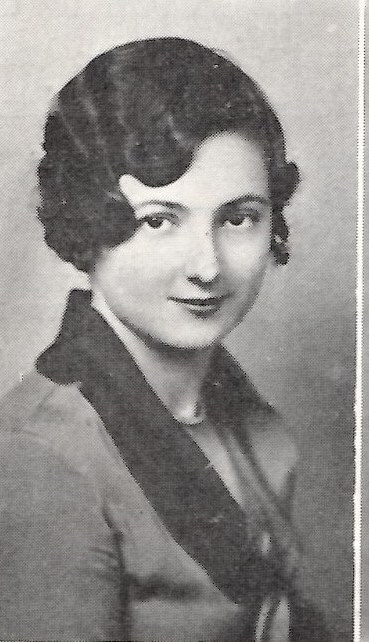
Georgia “Georgie” Hendrix, 17 Arroyo Grande HS yearbook 1943.
The mystery deepened when my mother always referred to her as Georgie O’Conner. Now it’s hard to be two people unless you are a criminal or a politician. Actors must count too, but here in the neighborhood it doesn’t happen. The mystery deepened.
When I was a teenager I asked him. We were at the table eating dinner and I said, Dad, why do you call your woman friends by the wrong name? It was always pretty hard to stump my father. I can count the times in my life when I did. I was probably around fourteen or so and he was forty seven, roughly. Dad was a college graduate and well read. He had a lifetime of experience in business so it was nearly impossible to confuse him which delighted me because like all the young I somehow thought we were equal in education and experience. I know better now.
He looked at me for a bit and you could practically see the marbles rolling around in his head as he tried to find an answer to my question. It was kind of a ridiculous question anyway, I mean what name he used was simply normal to him and I don’t think he had given it much thought one way or the other. Georgie had a name and it was Hendrix just like Marylee Baxter was Marylee Zeyen or Mrs Fuchiwaki was Iso Kobara. Make any sense to you? Me neither.
Rather than come up with a credible answer he gave me the usual, “You wouldn’t understand, or That’s just the way it is” or especially, “Those are their names.”
So there I was ignorant about something I heard my dad do all the time.
So here’s an example, when I was twelve or thirteen my parents took me to a party up on Sierra Drive. It was my father’s friend Cyril Phelan and his wife Kathryn’s home. It was a nervous experience because my mother had been sure to let me know that these people had daughters my age which made me a, twelve year old nervous wreck because it meant she had something sneaky in mind. The girls mother who I was meeting for the first time was called Kay, not Kathryn and my dad jokingly said something to her and called her Routzhan which made her laugh. Made no sense to me. Besides I was doing my best to avoid strange girls and was puzzling over this thing about the names. So, if you can follow, this Gus guy was really Cyril which seemed at the time a very unfamiliar and strange sort of name. He was married to Katherine or Kay whose last name was Phelan or was it Routzhan. See what I mean?
There was another woman there who was married to my dad’s poker playing buddy J. Vard, another strange name, who was apparently married to my mother’s friend “Happy Bottom” which I assumed was not her real name but…*
I guess it hadn’t yet occurred to me that adults did what we did in school. I had friends named Squeaky, Dumbo, big ears of course, and Woody. Tookie, his mom said he had just the cutest little Fanny when he was a babe. That one has stuck and it’s become practically his only name more than seventy years later.
All of course was explained by my mother. She told me my dad did it for several reasons. First of all many of the people he knew he had grown up with. The women who were once in school with him or he knew when they were just maids had married his friends or a stranger to our town and their married names were not the same as he remembered them and he just unconsciously recalled their maiden names and used them.
I guess these are things that make small towns special. Think of this. When I was sixteen I traded my job at Mattie’s restaurant for a better one at Baxter’s service station in Pismo Beach. It was owned by Walter Baxter and his sons. WA Baxter and sons Chevron where the bookeeper was “Granny” who had no other name that I knew of and her sons Bill and Tom. Take a breath and try and follow this. Tom Baxter’s wife was Mary Lee but her maiden name was Zeyen which is the name my dad used. Her father owned a clothing store on Branch street for eighty years and my mother worked there. Tom called my parents by their last names, Shannon and because when I went to work for him he apparently couldn’t remember my first name, though I have always believed that it was a compliment to my father, called me “George.” He called me George until the day he died.
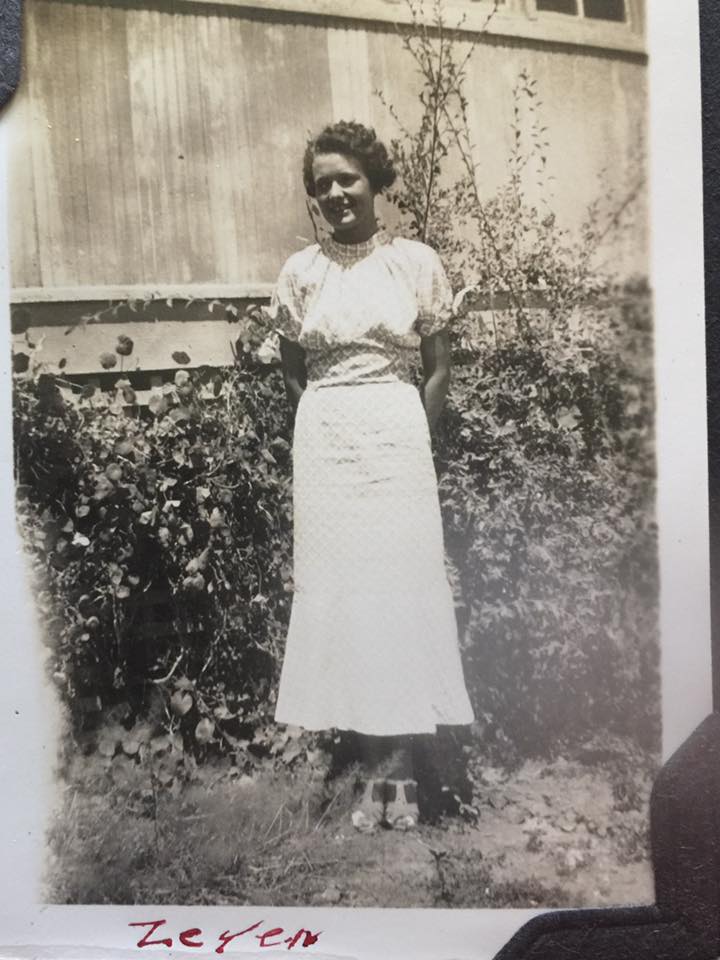
Marylee Zeyen Baxter, Arroyo Grande High School, 1944.
It finally occurred to me that he did it because he considered it a marker that divided his young life from his older. He also did it because he really could not remembered some of their married names. He did it from affection too.
Kathryn Routzhan and my father went all the way through school together, first grade through Junior College and would have attended Berkeley together until Gus came along. He knew her for nearly thirty years of the most impressionable time of their lives. Routzhan was the correct name for him.
Kathryn Routzhan, Santa Maria Junior College, 1931
Eventually after enough questions were asked some semblance of order was established, at least by me. Apparently these women existed in parallel universes, the before and after. I can understand it now. In memory people exist in block of time and we recognize that.
I suppose, in a bookend, the same thing has happened to me. At school reunions I see the women of today as the girl of yesterday. Just like my dad did. Thats the name I use, the real one.
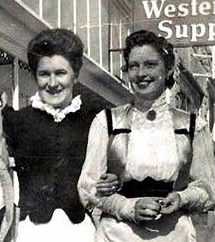
Cover: Georgia “Georgie Hendrix and Agness “Billie” Records who you may have known as Georgie O’Conner and Billie Swigert..
I once lived in a place at the end of a long dusty red road surrounded by cane fields that reached twelve feet into the air. Seen from my window towering Mount Ka’ala soared into the painfully blue sky. Often wreathed in towering cumulous clouds that could turn angry at the end of the day, flashing lightning above the rugged canyon that made up the fragment of the once immense Wai’anae volcano. Lightning was sometimes accompanied by the contrapuntal booming of 155mm cannon from the upper reaches of Schofield barracks near Kole Kole pass where the Japanese Imperial Navy’s aircraft flew on their way to Pearl Harbor on that Infamous day. The old stuccoed barracks at Hickam Field still bore the scars of Japanese machine guns.
The little collection of five army surplus Quonset huts standing in a row each one with it’s front porch, all in a line like the dusty boots of the soldiers who once lived in them. They faced a dirt road lined with long thorn Kiawe bush which defined the hidden enclave. It was surfer heaven and had been occupied by itinerant surfers for years. Behind them an orchard of Papaya trees surrounded by ponds where Mister Domingo grew Taro in a large pond which with the right light shimmered like Edouard Manet’s lillies.
Painted a dusty olive green, faded from thirty years of Hawaiian winters and summers they were perfect living for young people who didn’t require much. My house had two bedrooms a bath, kitchen and living room. Windows down each side from which the glass had been removed and replaced with screen. When it was hot in the summer it doubled the ventilation and when it was simply too hot a lawn sprinkler on the metal roof cooled things down.
Except for one thing. The rampart of the Wai’anae rose above us like a looming wave blocking television and AM radio signals beamed from Honolulu. The only radio, the only radio was FM and the only FM was NPR. Hawai’i Public Radio.
Somehow the long waves of the FM signal crested the mountains and the great saddle where the road came down from the Dole pineapple fields and Wahiawa town to Haleiwa.
It might seem like this lack of entertainment was a burden but in fact for me a veteran of long sailing voyages where the main entertainment was reading it provide no great burden. A good turntable and stacks of albums to listen to and a valid library card hours were filled with a sort of self education uninterrupted by images of Thomas Magnum driving his red car the wrong way on local roads. I didn’t know Archie Bunker though if I had I might have considered that a loss, the same for MASH* but I’d grown up in a family where there were several Archies and a couple of Batchelor farmers who could have given Garrison Keillor’s a run for their money so that base was pretty much covered. Chief petty officers and crusty old Bosu’ns mates served as part of the cynics education.
With a mind undisturbed by television it left radio as the only real outside over the air entertainment. Think of what you could do with just a couple hours of the day not occupied with essentially mindless TV shows which were and are nearly identical to one another. Perhaps not exactly carbon copies but they certainly rhyme.
Think about how different your life might be without those kinds of entertainments. I moved away from my hometown when I was 19 and never owned a television until 18 years later. How might your education have be different.
Fiona Ritchie, yes that Fiona Ritchie. Growing up in an American Irish family I rarely ever heard anything about the actual Irish. My grandfather would stand by the old piano that was my grandmothers* and sing of Mother Machree, a song from 1910. The song lyrics contain the words “I kiss the dear fingers so toil worn for me. Oh God bless you and keep you Mother Machree”. “Machree” is an Anglicization of the Irish mo chroí, an exclamation meaning “my heart.”
Fiona Ritchie hosted a program on NPR for 40 years which highlighted Celtic music and history. What other Radio station can say that?
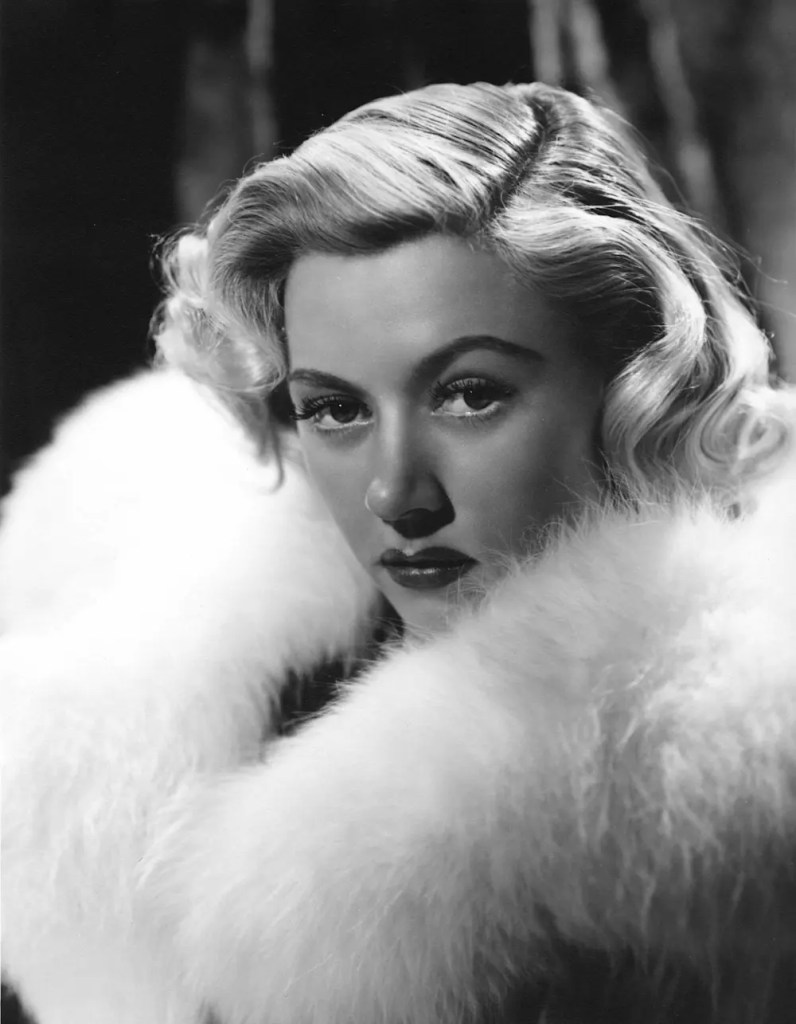
Nights in the “Country” as it was called, that rural stretch of homes and villages along Oahu’s north shore were on Saturday night, was highlighted by Garrison Keillor’s “Prairie Home Companion.” It could only be called a variety radio show patterned in the old style by musical guests, skits, there was Guy Noir, private eye, where Guy dodged bullets, defeated the villain and escaped the clutches of fallen women reminiscent of the fabulous Gloria Grahame at the hight of her evil powers.
Gloria Grahame, Hard Luck Woman.
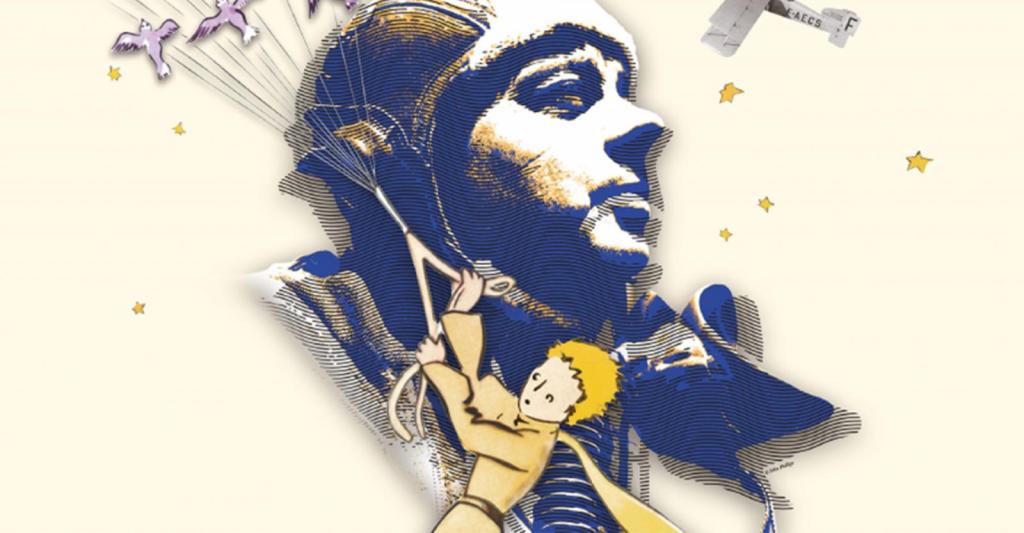
Birthdays were celebrated on NP. Such as the birthday of French aviator and writer Antoine de Saint-Exupéry , born in Lyons in 1900. He joined the French army in 1921, and that’s where he flew his first plane. He left the military five yearsR later and began flying airmail routes into the Sahara Desert, eventually becoming the director of a remote airfield in Rio de Oro. Living conditions were Spartan, but he said, “I have never loved my house more than when I lived in the desert.” He wrote his first novel, Southern Mail (1929), in the Sahara and never lost his love for the desert.
In 1929, he moved to South America to fly the mail through the Andes, and he later returned to carry the post between Casablanca and Port-Étienne. He worked as a test pilot and a journalist throughout the 1930s, and survived several plane crashes. He also got married in 1931, to Consuelo Gómez Carrillo. She wrote of him in her memoir, “He wasn’t like other people, but like a child or an angel who has fallen down from the sky.”
He rejoined the French army upon the outbreak of World War II, but when the Nazis invaded France in 1940, he fled to the United States, hoping to serve the U.S. forces as a fighter pilot. He was turned down because of his age, and, homesick and discouraged, he began his best-known book, The Little Prince (1943). The following year, he returned to North Africa to fly a warplane for France. He took off on a mission on July 31, 1944, and was never heard from again.
Both the event and the dream are the same.
The thing about NPR programs is how esoteric the subjects could be. Who in the world today ever thinks about Maud Gonne, well someone at National Public Radio did.
They celebrated the birthday of the Irish revolutionary Maud Gonne, the lifelong muse of poet W.B. Yeats, born in Surrey, England (1865). She and Yeats first met when they were both 25 years old. He fell in love with her immediately and remained in love for the rest of his life. William Butler Yeats introduced me to the saying “Education is not the filling of a pail, but the lighting of a fire,” something which has stuck with me all my life. I first heard it read over NPR.
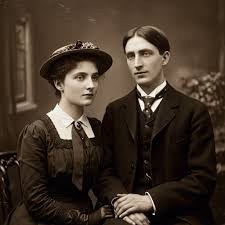
Maud and W B.
Yeats, one of the finest poets who has ever written in the English language said of her, Maud was tall and exquisitely beautiful. He wrote, “I had never thought to see in a living woman such great beauty. A complexion like the blossom of apples. Her movements were worthy of her form.”
NPR was divided into blocks of time. Disc Jockeys, though they never seemed to me to be exactly that because they seemingly invited youu into their homes where you could relax on the couch, close your eyes and feast on music from all across the globe. Mexican Corridos, traditional Mexican narrative ballads, essentially story-songs that chronicle heroic deeds, historical events, outlaws, love, or current affairs, acting as an oral history of Mexican and Mexican-American culture. Radio is where I first heard the Corridos de la Revolución Mexicana.** Victor Jara’s haunting ballad of the life of Francisco Villa.
There I first heard the hauntingly beautiful ballads of Edith Piaf and the Gypsy guitarist Django Reinhardt, both of whom sat at a cafe table outside Les Duex Magots with the likes of Simone de Beauvoir and Jean-Paul Sartre, as well as Ernest Hemingway, Cole Porter and the exquisitely beautiful and brilliant Martha Gellhorn who was the only woman to have sense enough to divorce Ernest.
I drifted in dreams of West African music. Fela Kuti, Niwel Tsumbu, and Habib Koite,*** both from central west Africa. Music from Turkiye, Egypt and the ancient kingdoms of Persia. North African Taureg ballads made your hair stand on end. Japanese recordings of western music played on traditional instruments include the Koto (zither), Shamisen (lute), Shakuhachi (bamboo flute), and the Taiko (drums). Imagine John Lennon’s music and Handel played that way.
Sunday afternoon opera, wow, wow, wow. Bertold Brecht and his modern day, 1931 mind you, “Three Penny opera.” My introduction to lotte Lenya, Lucy Brown and Macheath with his blood slippery blade. Bobby Darin can’t hold a candle to the original. “The Threepenny Opera” was banned by Hitler’s propaganda office because of its socialist themes. This was an attack on Bertolt Brecht’s writing but also an attack on performing actors and the audiences attending musical theatre.
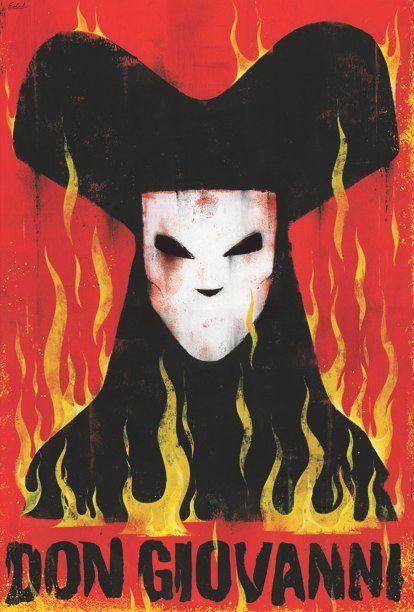
Mozarts Don Giovanni, Its subject is a centuries-old Spanish legend about a the Libertine as told by playwright Tirso de Molina in his 1630 play El burlador de Sevilla y convidado de piedra. The opera lives in popular culture with the pejorative “He’s acting like he thinks he’s a Don Juan.” I was prompted to actually go see it at the HIC, the Honolulu International Concert Hall. I didn’t own a suit, being a surfer and all. I wore my best silky shirt and a pair of long pants, you live in Hawaii, you don’t need much of a wardrobe. They let me in anyway. That concert is on my list of life changing events.
Hawai’i Public Radio also gets some credit for exposing the wonderful blend of musical styles personified by Gabby Pahinui and his extended family and friends who helped kick start a resurgence of Hawai’ian culture amongst the residents of the islands.*****
Talk show, documentaries, history and music from every corner of the globe. No; no commercials or advertisements of any kind.
Signed into law by President Lyndon Johnson in 1967 the Corporation for Public Broadcasting, “A Private Corporation Funded by the American People for the American people” the Corporation for Public Broadcasting helped to turn a public good into public media that informs, educates, and connects all Americans.
It’s not just NPR radio either, Mister Rogers, Sesame Street and the fabulous Miss Frizzle and her magic School Bus on which kids explored the universe. Reading Rainbow, Bill Nye the Science Guy, Arthur, Barney & Friends, Where in the World is Carmen San Diego?, and 3-2-1 Contact, alongside This Old House, and Wall $treet Week, offering a blend of entertainment and learning for all ages. Oh my goodness, Newton’s Apple. This pioneering PBS family science series answered basic science questions from viewers with hands-on experiments and field trips.
All of Ken Burns, Lucy Worsley where you could hear the background story of Henry 8 and his doomed bride Ann. How about Nova and the American Experience, Finding Your Roots and Call the Midwife?
As an individual I have supported local public radio for nearly fifty years and have been amply rewarded. Think about the Live Oak festival. What for profit station would do something like that. Music festivals all over the country are used as fund raisers to keep Public Radio stations alive. In the big western states NPR is quite possibly the only radio station where people can get the local news, disaster information or any radio programming at all.
As you may know public broadcasting is now on its own financially. The Corporation for Public Broadcasting has been killed by a government who has no interest in any communication that isn’t owned by corporate interests and filtered through the White House. Fox can send a very big check to a politician’s re-election fund but you can bet that KCBX in San Luis Obispo cannot, it’s not allowed. Getting rid of CPB is a national disgrace. The idea is to shut them up. Intelligent programming might cause the voting public to stop and think, “What is going on here?” Children’s minds might be set aflame as my old friend Bill Donovan once said. Every thing else is targeted, censured information controlled by special interests. You are going to know what those interests want you to know.
Newton Minow a member of JFK’s FCC became one of the best-known and respected—if sometimes controversial—political figures of the early 1960s because of his criticism of commercial television. In a speech given to the National Association of Broadcasters convention on May 9, 1961, he was extremely critical of television broadcasters for not doing more, in Minow’s view, to serve the public interest. His phrase “vast wasteland” is remembered years after the speech.
Nevertheless he was instrumental in crafting the law that became the Corporation for Public Broadcasting which I believe has served this country will for over half a century. It has certainly brought my family a great deal.
Two last things, the current president didn’t bother with congressional debate he simply took it upon himself to strip away it’s budget. The White House does not care. The idea is to stifle dissent in order to get it’s way. You can bet on that if you study history. It’s not the first or last time something like this has been done.
A group of people in Hawai’i who felt the need for an independant voice decided to launch a station to carry National Public Radio’s programming. In 1976, they incorporated, calling themselves Hawaii Islands Public Radio. “We were an enthusiastic bunch,” “Plenty of enthusiasm … not much accomplished.” Business leaders and cultural groups stepped up and in 1976, flipped a switch in a jury-rigged studio on the University of Hawaii’s Manoa’s wrestling room and Mahler’s “Das Lied von der Erde”*** streamed out on Hawaii Public Radio’s first broadcast. That was our station on the North Shore.
I will certainly be reminded by people I know that any fidelity to NPR makes me Liberal Scum, there are those I know who love to “Own the Libs” and will take any opportunity to do so. To them I say dig a little deeper and don’t just parrot the company line.
And by the way, turn off Downton Abbey. You won’t get it for free anymore. Commercial, commercial commercial.
Send in a pledge at Pledge time, please.
-30-
Dedicated to my friends Andrew Harp and Steve Dorsey, people who made it happen.
**https://www.facebook.com/watch/?v=699604152486917 Jara was brutally tortured in the Estadio Nacional and died on September 15, 1973. His lifeless body was found in a pile of corpses, his hands and wrists broken, and his body riddled with 44 bullet wounds. He was 40 years old at the time of his execution.
Happenstance accounts for some things in my life but most were things I thought I might want to do or to be. No matter, whatever it was the one constant was the feeling was that I would be safe at home.
I figured out pretty early that it wasn’t the same for all kids.
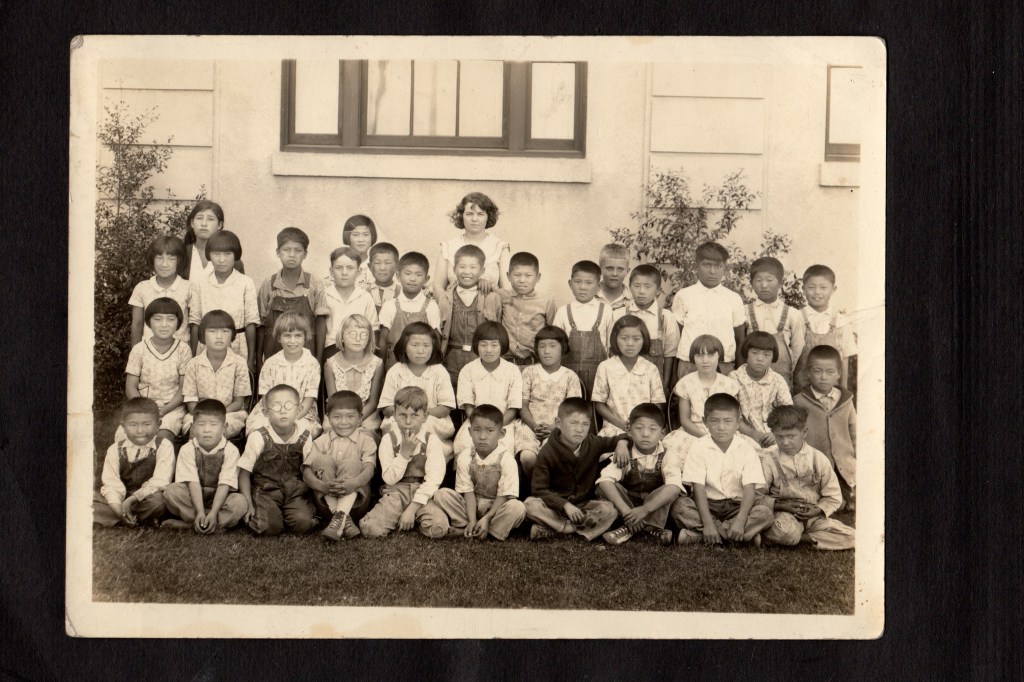
In our little two room school tucked into a hillside named for and not too far from the nearly forgotten home of the pioneer family that put Arroyo Grande on the map the homogenous group of children, six to fourteen lived in a kind of time warp where we all felt safe. We knew little of each others home life. The parents of our classmates were ciphers, tall figures who were nice to kids, mother images who steered us in the direction that adults believed we should go. How they were at home only their own children knew.
We were a school of the children of immigrants. some recent some dating back to the shadowy beginnings of the country. Indentured servants from Ireland, Chumash kids that predated those. There were children whose ancestors built the Mexican ranchos. The children’s family’s whose parents or grandparents were from Japan, the Phillipines, the Azores, Brazil, Poland, Europe and Scandinavia, maybe too many to count.
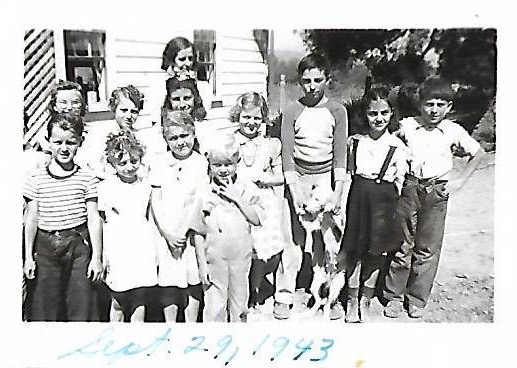
Branch Grade School 1943. Miss Elizabeth Holland Principal. The single graduate that year was Bill Quaresma the boy withthe puppy.
Believe it or not there was no child who attended school with us that could call themselves rich.
Some families owned wide swaths of land but that didn’t make the rich by any means. “Land Poor” was the term. You might have a ranch which numbered its size in acres by the thousand but still live in a house nearly a hundred years old. Dad drove an old pick up truck, mother not at all. The family sedan used only for shopping and Sunday churching. Parents in our district almost always worked the land. Dirt farmers, cattlemen and the folks who worked for them. None of us growing up knew that it was the last gasp of the family farm. Nearly every family lived and worked on their own acreage. Few understood that within a decade most of those families would be pushed out by consolidation as the business was changing from supplying locally to shipping produce nationally. The cattle ranches were under assault by the feedlots who could fatten faster and more efficiently.
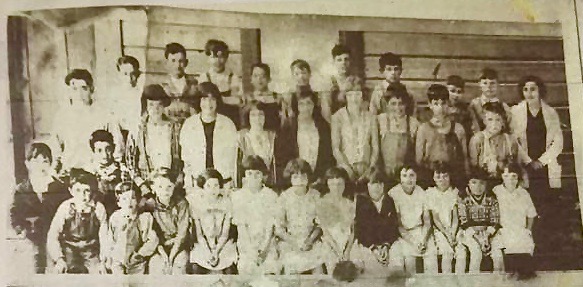
Grade School 1926. Miss Elizabeth Holland principal, the only teacher. Graduates that year were Miss Marry Donovan, Olivia Reis and Charles Fink. Next years grads are Carl Quaresma and Manuel Silva.
There was little about our farms and ranches that was idyllic. We were not Norman Rockwell people. Kids in my grammar school had parents who were desperate, the kids undereducated, poorly dressed, ate paste for breakfast when they could. Some were lucky to have a single pair of shoes. They could come to school with the bruises gifted by angry parents who were up against it and understood that there was no way out.
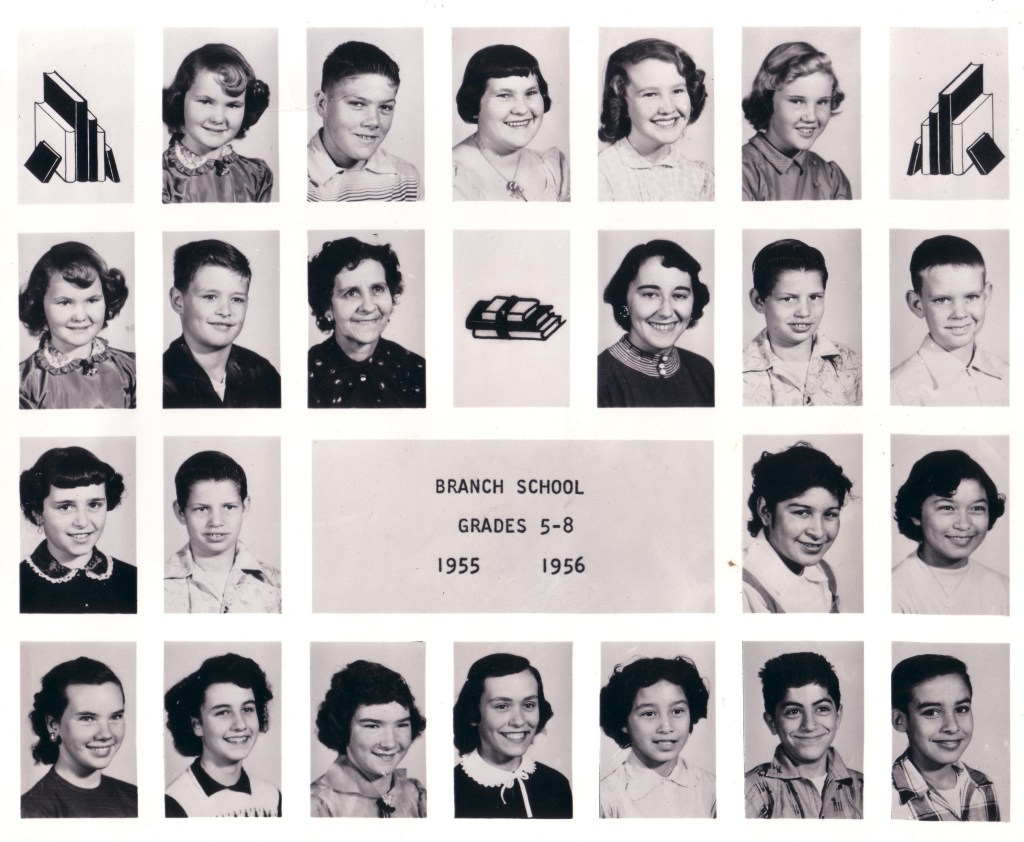
Branch Grade School. Miss Elizabeth Holland, the year she retired.*
For all of that we were a remarkably homogenous group. I recall no teasing or meanness amongst us. Isolated in a small community before television we had nowhere to learn about race hatred or were we typically exposed to the differences in wealth.
Of course, in all sadness that all changed when we got to high school and lessons about inequalities, race, money and power have never ceased.
Those children still bound by a shared experience have grown in every direction. Our little school produced mechanics, scholars, housewives, teachers and truck drivers. We even had a murderer. As with all people, we were divergent into adulthood.
A kid was a kid was a kid was a kid. The nastiness of life was not yet before us.
That part of our lives in which we felt safe is a gift which we hold dear. We can never hold it in our hands again or get it back but on a cold darkling night, slip into your cotton jammies, crawl deep under the covers with only your nose exposed and if you concentrate you can touch it in memory and once again you can, for a brief time be safe at home.
*Authors class. Far right 2nd row down.
Michael Shannon is an alumnus of the old Branch Grade School. He writes so hi boys will know where they came from.
So which is it , maynaze or mayonnaise? There’s nothing better than the smooth, creamy texture and one-of-a-kind flavor of Duke’s Mayonnaise, made with Eugenia Duke’s original recipe since 1917. Duke’s notably containing no sugar and using apple cider vinegar for a tart, more “vinegary” flavor, while Hellmann’s has a balanced, neutral, and somewhat sweeter profile due to its sugar content and white vinegar. You can use them interchangeably in many recipes, but their different tastes will subtly alter the final dish.
They can also alter relationships. Now say you’re a southern boy or girl from one of the old secessionist Confederate states, right? Well, we gonna disagree.
At our kitchen table we had a girl, my mother whose family dated back to the beginnings of America, not the United State, understand, but the older one. She had an ancestor who signed the Declaration, Another ancestor, actually a whole passel* of ’em took up arms against their brothers in the north. Nearly finished the family right there. Three of them four boys give their lives for that “monstrous system”. The family came down from the one soldier survivor and another’s daughter born eight months after her father was kilt at Malvern Hill in the Seven Days fight in Virginia with the 43rd North Carolinas. In his final letter from the hospital in Richmond he echoed every soldier, ever, “I want to go home.”
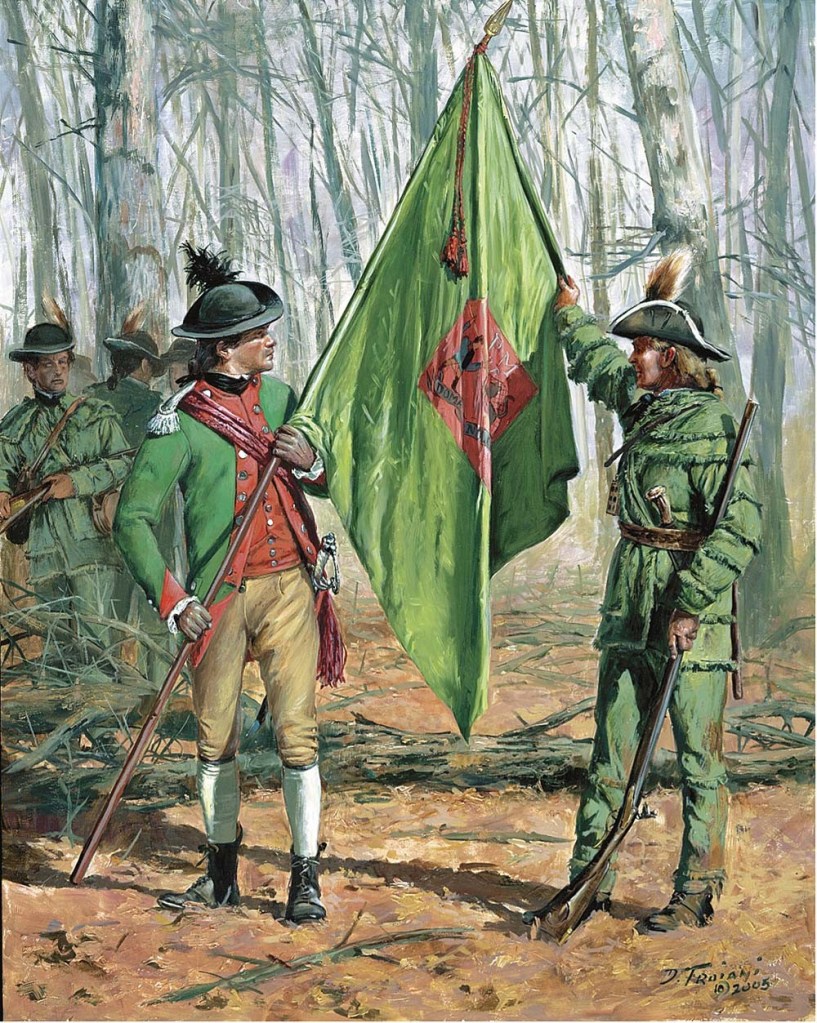
At the opposite end sat my Pop. He came from an indentured Irishman, a indentured transport sent across after the battle of the Boyne which finally crushed the Irish kings and turned Ireland into a vassal state. They were farmers mostly, those people who essentially invented conservatism. Before this was a country they latched onto a good deal when they farmed just outside Lower Mount Bethel Township, Pennsylvania. They bought a tavern and inn from the King’s colonial courts because the previous man who tended the bar and rented the rooms was convicted of counterfeiting and strung up by the neck until dead, dead, dead. When the Kings Magistrate puts his little black hankie over his powdered curls you’re in trouble. It worked out for us though. To show their gratitude Atlanta Shannon and his son William enlisted in the 1st Pennsylvania regiment, company F from Northampton County and fought with George’s Continental Army.
1st Regiment of the Pennsylvania Line. 1776-1783
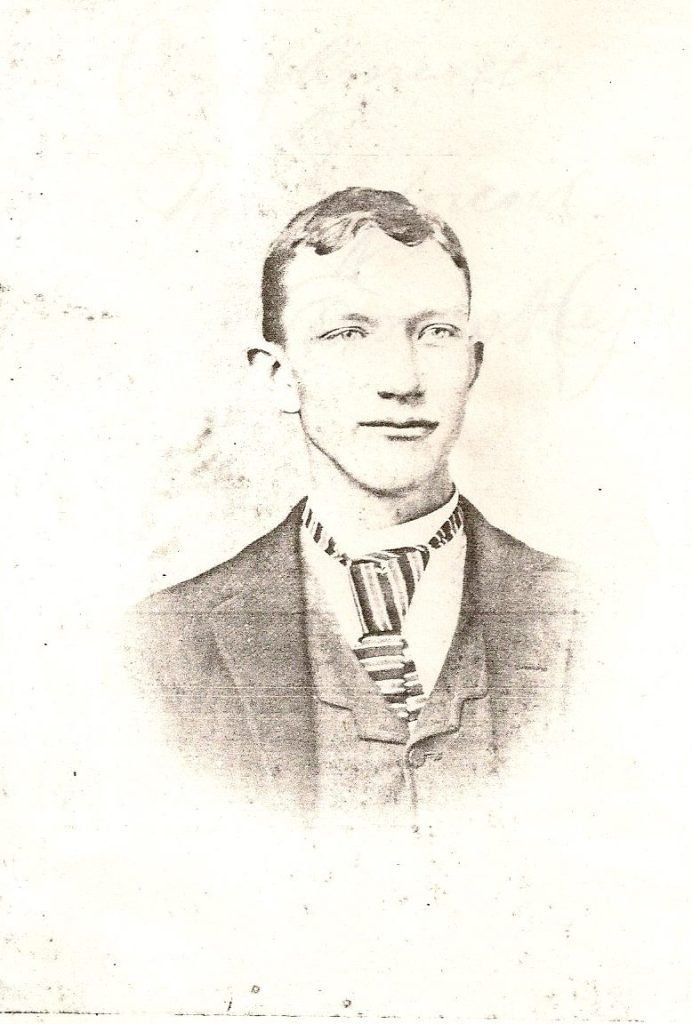
Like most family’s they hatched the occasional scoundrel. My great grandfather Shannon served a spell in Sing Sing for stealing from the boxcars of the railroad he worked for, the New York Central. They never recovered the goods but they got even. He spent a year inside.
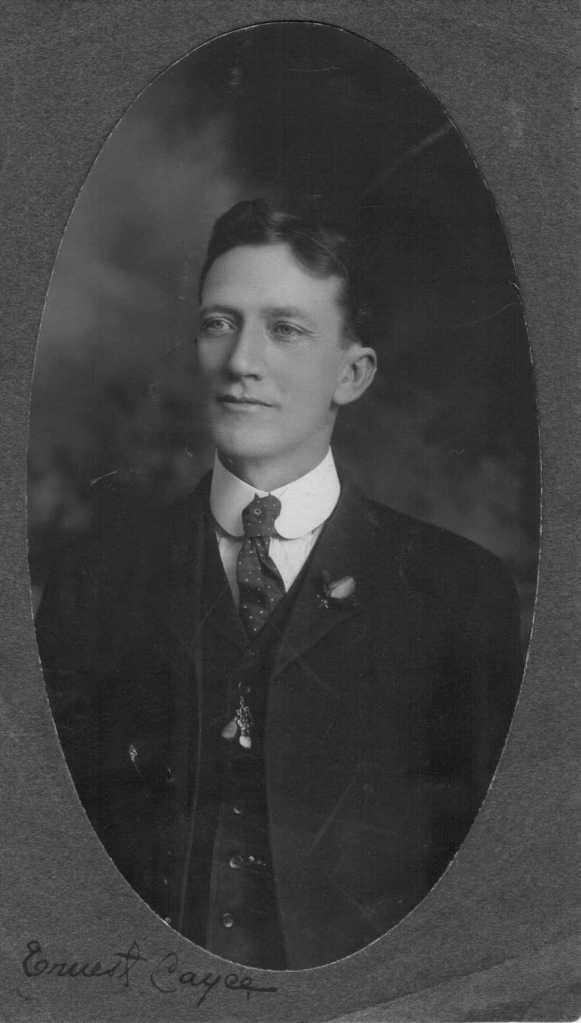
My other great grandfather Ernest Stone Cayce was a swell. He often traveled in a private rail car and dressed to the nines. He sat at the Bridge table with Bill Vanderbilt and lived in the same hotel. He lost it all and ended up busted, a transient who died in a flophouse in Fort Worth and is buried in an unmarked grave in Paupers Field there. The Texas Transient Bureau sent a telegram to my grandmother asking if she wanted the body sent to California for burial she replied with one word, No.
Dapper Robert Ernest Stone Cayce 1866-1935
We were just kids having dinner at our kitchen table and didn’t know any of that but we did witness the culture difference. A family from northern Pennsylvania versus a Mississippi family.
Take Cornbread for example. My Pop liked it hot, sliced in half and slathered and I do mean slathered in real butter not the oily, slimy margarine made from the grease leftover from Tanks used in WWII. He being a child of dairy farmers liked the real stuff. He would carefully slice the cornbread lengthwise and top it with enough butter to stop an unhealthy heart. Shannons drank whole milk, not the pig swill called skim. Whipped cream must cover all of the pumpkin pie, no visible pie and you must add an extra dollop for good luck. In our house all cornbread was made from scratch. Mom didn’t use cook books for such a fundamental thing. Dashes, a pinch, palms full of flour which we kids had to sift by hand and cornmeal, a teensy bit of sugar and Crisco. Never ever came out the same way twice. Hence my dad’s care in the cutting. Just on the edge of crumbling, ahh perfect. Drop on a quarter inch slab of real butter and he’d be ready to go. A spoon full of beans in one hand and the bread in the other.
James M Cayce, Quartermaster Sergeant Co E 2nd Mississippi Regiment Army of northern Virginia. Served in nearly every battle in the eastern theater of operation. Captured at Gettysburg, paroled, returned to duty and surrendered at Appomattox, one of only 19 2nd Mississippi soldiers remaining. He died in Robertson Texas in 1904. His granddaughter, my grandmother was born in Santa Barbara in 1895.
At the opposite end of the table, the unreconstructed Confederate took hers, and giving my dad the fish eye, ripped hers to pieces and threw them in a tall glass. She did it like her ancestor Cpl. James Cayce of the 2nd Mississippi did to the Yanks at Spotsylvania Court House, “tore ’em up.” She’d pour in a spoonful of sugar, add whole milk, stir it to the right consistency and then use her spoon to ladle it into her mouth with the same care with which she did everything. When we were up at aunt Mariels ranch she used fresh buttermilk which she claimed was much superior to whole milk. She picked the odd fly off the buttermilk because the fresh buttermilk went into the ice box straight from the cow. No homogenizing or Pasteurizing for my aunt and uncle, no sir. Uncle Ray was the real deal and didn’t put on any airs or fuss about things like science or flys. He likely ran more flys on his ranch than cows anyway.
When I’d grown some many of those little quirks in the family were explained. I joined the Navy in 1966 and all of this was brought to a boil and hammered home when I spent twelve weeks in a boot camp company with almost all of our companies recruits were from the deep south, the Bible belt and Texas. It was a master class in regional language, food and histories. It’s when I learned that there is always another version of everything.
If nothing else it explained corned bread preferences. I’ll tell you about it sometime.
*Passel is a nineteenth century invention, a U.S. dialect version of parcel, Also a group of opossums is called a “passel.” Say: “Dagnab it, there’s that Passel O’ Possums rat now!”
Michael Shannon is a writer and writes just what he wants to no matter what the English teacher says. He also writes for his sons so they will know where they came from.
Mans need to organize everything leads one to think that events you study are one off, a single illustration of consequential events. The events of the day, be they champagne cocktails at the round table in the Algonquin hotel, opening the package that came in the mail with the new Bennett Cerf book, fresh off the press, sitting at the radio and listening to the Amos and Andy the decades most popular show, or Tom Joad changing one worn out tire for another along the roadside between Oklahoma and California’s San Jaoquin valley. Life’s events for all for all of us are as diverse in experience as a flock of starlings twisting and turning in flight, each bird on it’s own yet part of the whole. History is like that.
Two weeks on the job with Signal Oil and he was down at the Ellwood pier using whipstocks to send the drill string out under the Santa Barbara channel like blind worms looking for food.
Soon after Bruce was promoted to assistant drill superintendant and he began to spend most of his time racing around California keeping an eye on production and solving problems at the wells.
Most have forgotten in the days of eight lane freeways what that mean in the thirties to drive in southern California. Most of the roads we are familiar with either didn’t exist. Those that did were barely improved. Highway 99 was the main highway connecting southern and northern California. Entire section of it were still just crushed gravel, a few sections were asphalt and the section from Los Angeles over the Grapevine to Bakersfield had been paved with concrete in 1932. It was the finest road in the state except for the Grapevine part.
As with most roads the highway was originally a game trail. Wild game always seeks the easiest route and the first people to settle here simply followed those trails. the Spanish and Mexicans widened the trails for wagons and our original roads simply did the same. That didn’t make it easy. Many cars built in the twenties and before didn’t have things we take for granted today. Brakes were mechanical and had little serious braking power. Older models still used wooden spoked wheels and narrow tires. Radiators and cooling systems couldn’t keep up with serious heat. You will notice old photos of cars that have a water bag hanging on the radiator as an extra precaution. Steep hills were a big job for underpowered engines.
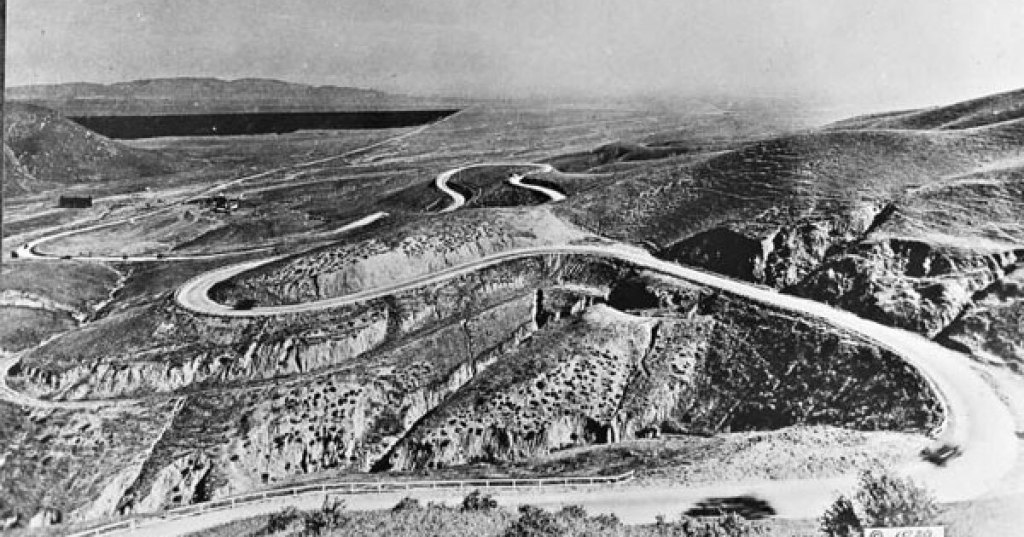
The Grapevine looking down towards the Elk hills in the left background. The dark area is Tule Lake which no longer exists but was once the largest lake in the west. The oil fields are at the foot of and up the sides of those hills. The Oildale rigs outside Bakersfield are on the Kern river 57 miles to the right.
Near the Elk Hills and the Temblor range are Avenal, Coalinga, Maricopa, McKittrick, Fellows, Reward and Ford City. The Halls lived in them all. The Maricopa/Sunset fields the third largest fields in the US are still in operation today nearly 150 years after the initial discovery of the famous Lakeview gusher.
Variously called the Grapevine or the Ridge Route as it passed out of the San Fernando valley was a nasty twisted and turning road. Grapevine precisely described it. Twisting and turning back on it self as it navigated the mountains that divided Los Angeles county and the southern end of the San Jaoquin valley it was a road to be very wary of. Bruce Hall was familiar with every inch of it. It was nothing for him to get a phone call in the middle of the night and upon answering be ordered to go trouble shoot a well in the Sunset. Gassing up near the house in Compton, Artesia, Wilmington or Long Beach, they lived in all of those too, he would grab the lunch and thermos that Eileen made for him and drive straight through. It was a four hour trip in those days of the depression. He’d meet with the crews, figure out how to fix or solve the problem then turn around and drive right straight back. Sometimes he would cross over to the coast through Cuyama and down the Cuyama river through the old ranchos on all dirt roads to see his parents in the Verde district of Arroyo Grande. He could check Signals wells in the Arroyo Grande field out Price Canyon way then head home by the Santa Maria/Orcutt fields where Sam Mosher held some leases. Going back by the coast took him by Ellwood where he could stop in Hope Ranch to see Eileens brother Henry and his sister-in-law Martha. Henry also worked for Signal. He was a mechanic so the Cayce’s stayed put for most of his career.
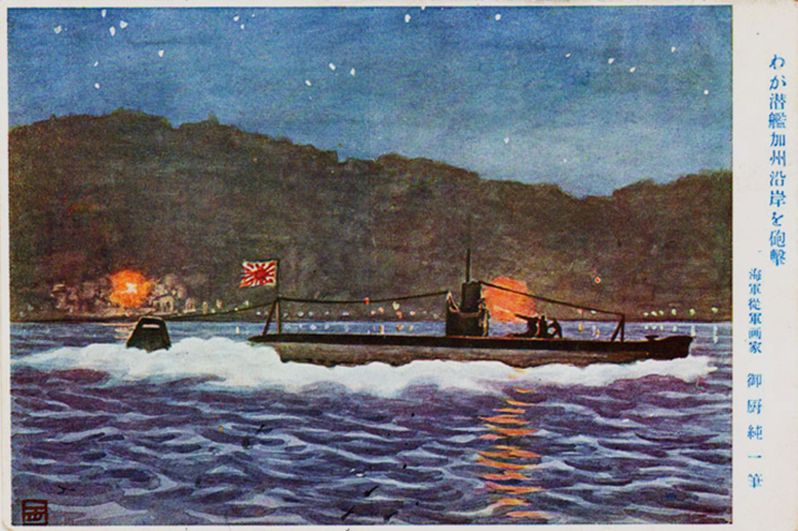
Uncle Henry was famously at work when at around 7:00 pm on February 23, 1942, the Japanese submarine I-17 came to a stop opposite the Ellwood field on the Gaviota Coast. Captain Nishino ordered the deck gun readied for action. Its crew took aim at a Richfield aviation fuel tank just beyond the beach and opened fire about 15 minutes later with the first rounds landing near a storage facility. The oil field’s workmen had mostly left for the day, but a skeleton crew on duty heard the rounds hit. They took it to be an internal explosion until one man spotted the I-17 off the coast. An oiler named G. Brown later told reporters that the enemy submarine looked so big to him he thought it must be a cruiser or a destroyer until he realized that only one gun was firing.
Firing in the dark from a submarine rolling in the waves, it was inevitable that the rounds would miss their target. The 5.5 inch Japanese shells destroyed a derrick and a pump house, while the Ellwood Pier and a catwalk suffered minor damage. In a kind of cosmic joke they also obliterated an outhouse which after the bombardment uncle Henry said he sorely needed. After 20 minutes, the gunners ceased fire and the submarine sailed away. The workers did the only sensible thing, they called the police.
A funny little story at the beginning of a savage war. Santa Barbarans raised money to dedicate a P-51 fighter plane to the war effort, They called it the “Ellwood Avenger.” The Avenger went to a training base in Florida and never left the states. For the Japanese, they issued a postcard to raise war fervor at home. It was all a little silly and made an oft told story in the Hall and Cayce families.
Though Bruce’s job was pretty secure, Signal Oil had to continue to scramble to produce enough crude to satisfy the demands of its contracts with Standard. Not a minute nor a drop of oil could be wasted. The crews could not make a mistake so constant vigilance was the order of the day. Bruce’s company car was seldom home for very long and typically spent most of the time parked at a well site.
When he and Eileen sat down at the table the most important part of the conversation was liklely to be their kids. The constant worry for their children was the same then as it is now. They were very aware that with Mariel and Barbara entering high school and Bob right behind the constant moving was getting hard to bear for the kids. Moving seven times in just four years there was bound to be trouble or at least a great strain on education especially for the girls. Santa Barbara, Taft, Compton, and Wilmington high schools varied widely in quality and the kids couldn’t help but feeling apprehensive about what was coming next.
What they decided to do was to make every effort to somehow stay in Santa Barbara until both girls graduated high school. It was a choice my mother applauded.
Chapter 20 is next.
Surviving the depression.
Cover Photo: Taken in Anaheim California in 1934. L – R, Dean Polhemus,* Donald Polhemus jr, Mariel Hall, 16, Evelyn Polhemus, Aunt Christine Polhemus, Eileen Hall and Barbara Hall, 14. The Polhemus kids were first cousins. The Halll’s were spending two weeks with the family, down from Santa Barbara.
*Dean Polhemus figures in the story NAQT which is about his service aboard the USS Spence in WWII. You can follow the link below.
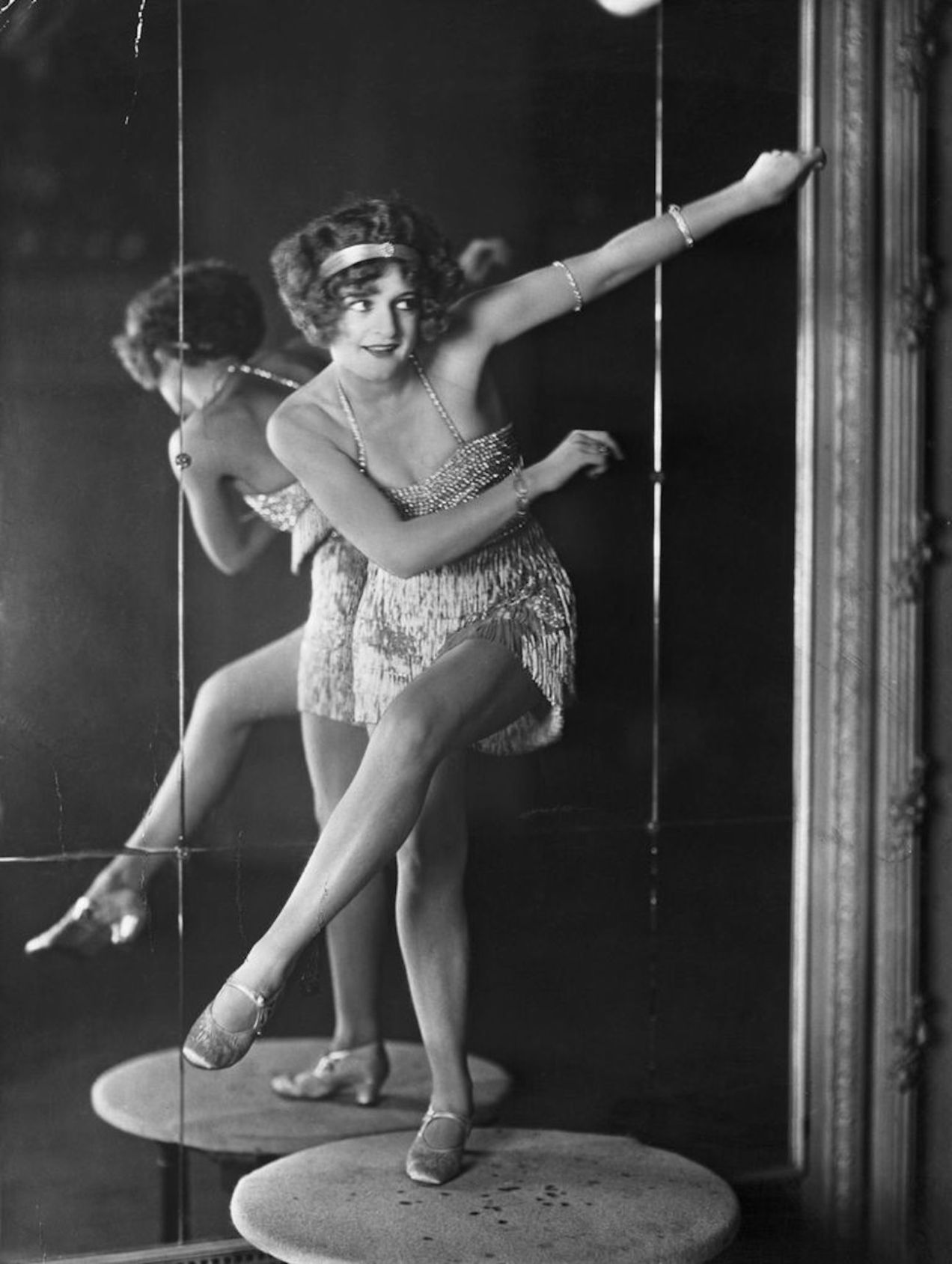
“Bee Jackson was a honey. The Bee’s knees, the original. She was the Berries…..an ankling Baby, the Cat’s pajamas.”
The photo, Beatrice “Bee” Jackson (1903 – 1933) was an actress and dancer. She was born in Brooklyn, New York and grew up in Bound Brook, New Jersey. Her mother was a former actress. As a child, Jackson loved to make up dances to the music of her toy phonograph.
She was known as the Charleston Queen, and while she didn’t invent the dance (some believe the dance originated from an African-American dance called the Juba), she was one of the dance’s most prominent advocates. Blonde and vivacious, Bee Jackson had the world in the palm of her hand. At fifteen years old, she was a chorus dancer in the Zeigfield Follies. Eventually, she toured Europe, had royalty chasing after her, and was a member of high society. A celebrity of the highest degree, Jackson’s legs were insured for $100,000, almost 25 years before Betty Grable did it.
She danced through her early years with her favorite toy, a phonograph. ‘I danced because I loved it’ she said and simply worked out steps to her favorite tunes even though she had no conception of routine; that intricate pattern that is weaved into a dance.
Bee’s mother, Grace Jackson, a former actress, acted as her manager and influenced her decision to focus on the exciting new steps. The popularity of the “Charleston” dance was taking off like a skyrocket in 1924. At that moment, Bee was at, or at least very near, the epicenter of the phenomenon and was equipped with the right skills to capitalize on its success. She was just one average dancer among a herd of competitors, however, and she needed a clever angle to carve out a path to fame and fortune. Their solution was to strike out as touring act and show the dance to audiences far beyond the Big Apple. To increase Bee’s marketing appeal, she began presenting herself in 1925 as the originator of the “Charleston” dance, or at least the person responsible for transferring it from South Carolina migrant former slaves to New York and the white community.
She might not be a household name any more, but images of Miss Jackson have been reproduced in hundreds-perhaps thousands-of books, magazines, and webpages devoted to the effervescent “Roaring Twenties.”
My mom and her sister Mariel were right on time. The best of pals, born just a year apart. They were oil patch kids and moved from place to place in California depending on where there father, a Driller happened to be sent. My grandfather said they lived in every God forsaken town in southern California. The oil business was populated by some pretty rough characters. Out on the lease you never knew what you were going to get. There were pistols carried, a sheath knife was de riguer both for the work and perhaps to settle a dispute. Most roughnecks, a perfect name for the men who traveled looking for work, mostly single, not much education and half exhausted most of the time. Add the booze and the hootchie coothie girls and things were ripe for trouble. My grandparents never liked living on the leases mostly to protect their three kids.
They were pretty lucky when the girls were entering their teens, most of the work of my grandfather stretched from Huntington Beach north to San Luis Obispo county. They bounced around a lot, Compton, Long Beach, Belmont Shores, Artesia, Signal Hills, Bolsa Chic and Wilmington , wherever there was a rig, they were.
In those days Los Angeles had a street railroad mock lovingly dubbed the Red Cars. The red may have been flashy when they were new but that had long since faded to the color of a red shirt too long washed and worn.The electric street cars were everywhere and for small change you could ride from Balboa out to Redlands or up as far as San Fernando, a thousand miles of track that covered all of Los Angeles county.
Pacific Railway was a private company originally built by the company to promote new suburbs in the outer reaches of the city. It was a boon to property developers and served it’s purpose for many years. The rise of the automobile eventually drove the line into bankruptcy.
LA is the quintessential car city. This is ironic, given that LA was built around the largest electric railway system in the world. The suburbs that you see all over greater LA, the 1920s copy-pasted bungalows which are everywhere, were designed to function in tandem with the old Pacific Electric Railway. You can still see the traces today. For example, if something is named “Huntington”, like Huntington Park, Huntington Beach, the Huntington Library and so on, it’s pretty likely named after Henry Huntington, the Pacific Electric Railway’s owner.*
In my mothers teenage years most kids did not own cars. It was the Red Cars or nothing; or you could walk. It was only 33 miles from Long Beach to downtown.
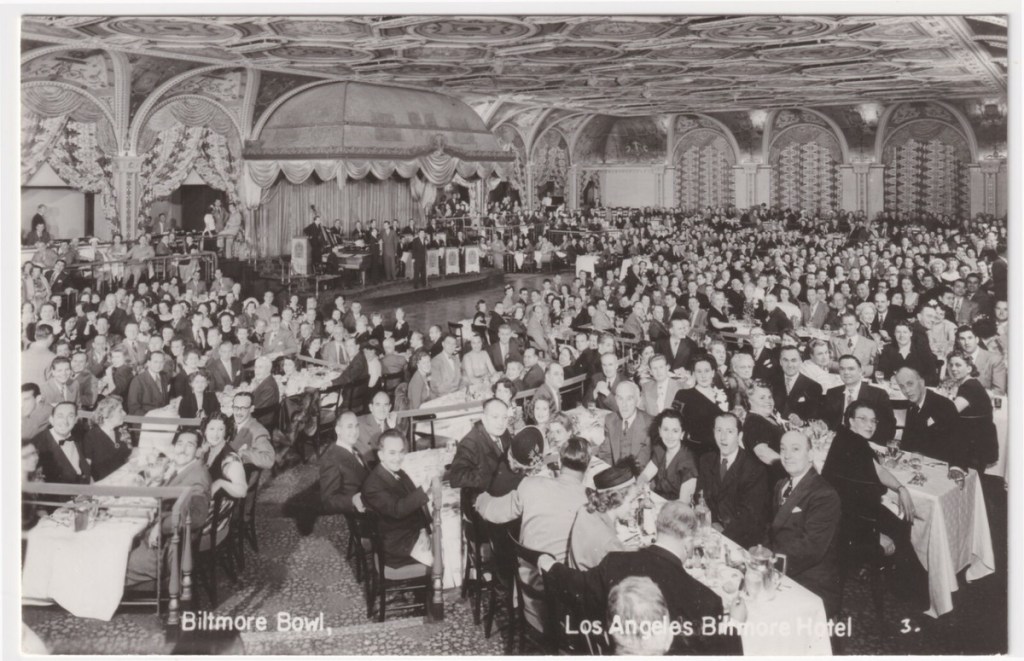
So my aunt Mariel, my mother and their friends like to hop the cars and rattle around all the hot spots of the time. On weekends they would go dancing at Santa Monica or Ocean Park or best of all all the way to the Biltmore. In downtown LA the Biltmore Hotel was the largest hotel west of Chicago. Built in 1923 it was considered the finest in California. With more than a thousand rooms it was located opposite Pershing Square in the heart of downtown.**
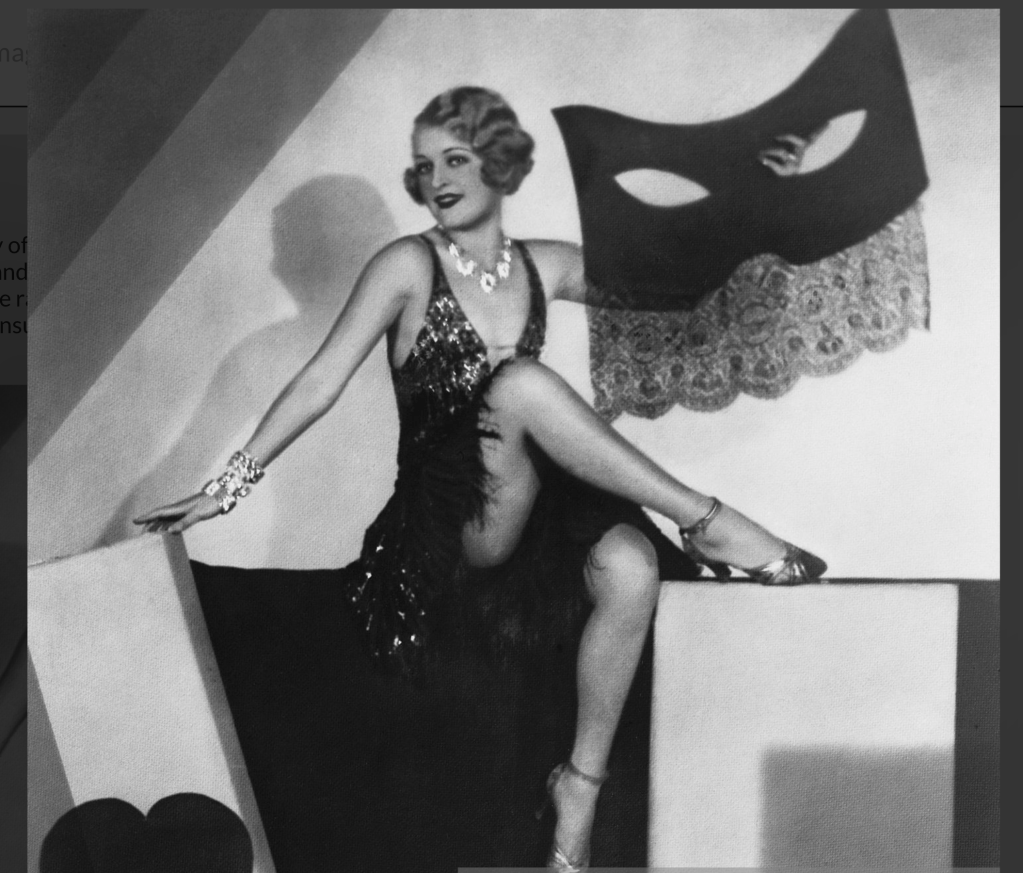
Most importantly for my mother and her friends was the basement nightclub known as the Biltmore Bowl. With it’s two story ceiling and with a size that would accomodate 2,000 dancers and guests, it had hosted 8 Academy Awards ceremonies since its opening. Saturday nights it would be standing room only. The girls played dress up trying to look like stars themselves. Oh so suave, smoking in the days fashion, mom said they were swivel necks looking to see if any famous Hollywood stars were to be seen. The saw Olivia De Havilland and Lucy and Ricky Ricardo on occasion.
Dancing was the point though. Dressed in their best they nursed their Ginger Ales, mom said that the Shirley Temples were too sweet and “Icky” a sentiment echoed by Shirley herself.
The depression was the heyday of the big bands, Artie Shaw, Benny Goodman or the Glen Miller touring orchestra belting out the hits of the day. Artie Shaw’s Begin the Beguine*** just as smooth as velvet, begging you for a dance. My mother spinning across the floor, ankle length skirt swirling, hem clutched in one hand her low heeled pumps gliding over the corn starched floors, head flung. back hair flying and smiling to beat the band.
Exhausted girls sleeping in the Red Car, piled like tired puppies dreaming of future glamorous nights.
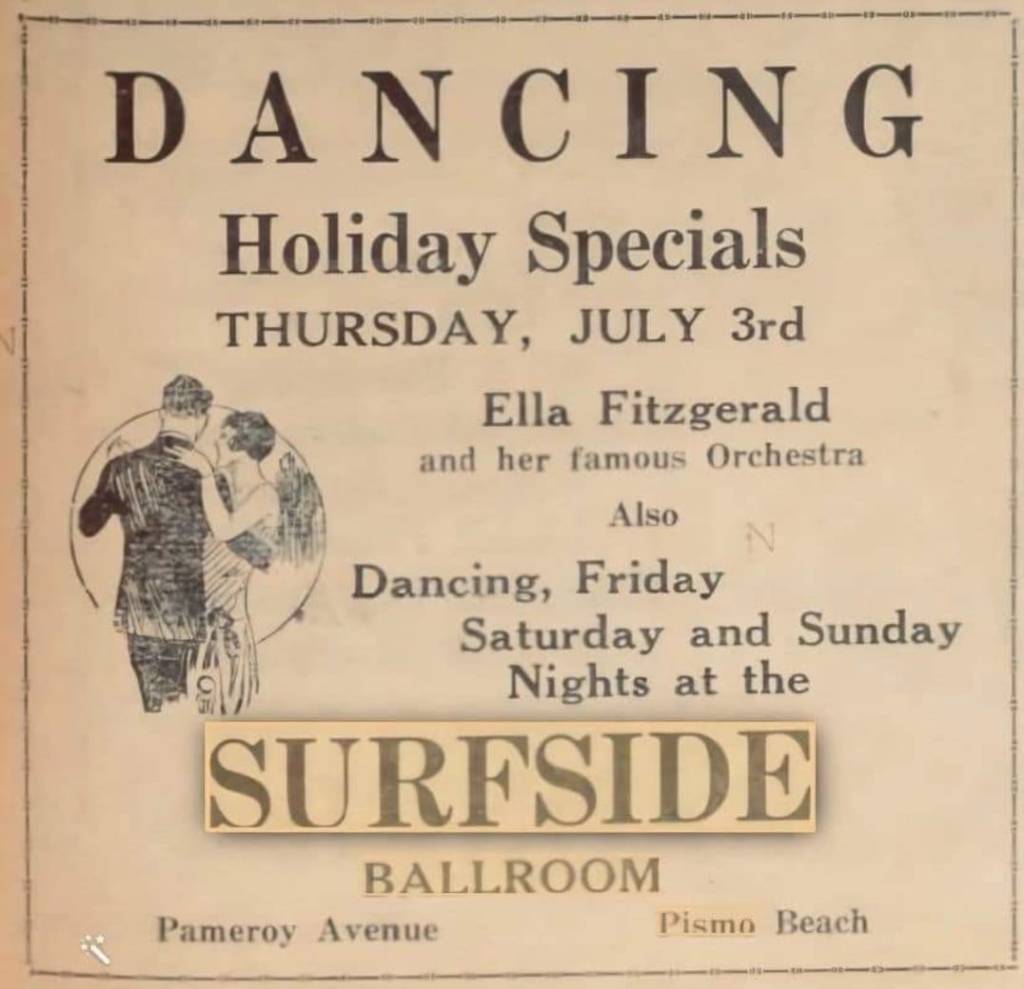
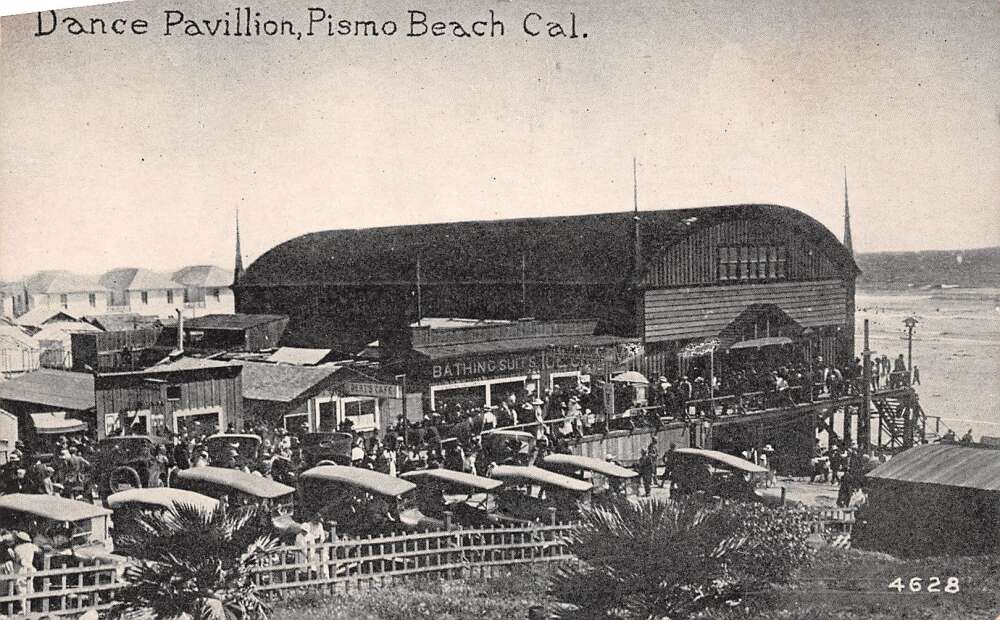
When my grandfather was transferred to Arroyo Grande in 1940 she met my father. While they were courting they used to take his little grey Plymouth coupe down to Pismo Beach to go dancing at the Pavilion. Though Pismo was a tiny little town it had it’s full compliment of Saloons, bars and dance halls. A soupcon of titillating danger hung over it all, especially at the beginning of the war when herds of soldiers from all the military bases flocked to the place. My Dad always said was where the “Debris meets the sea.” There was anything a young man from the sticks could imagine. Pool halls filled with slickers, the filipino gambling halls with, convenient cribs out back and the Beer bars like Mattie’s where, dressed in a silk blouse and velvet trousers. she would hustle those boys by buyin’ the first round for free and pointing out her apartment building down by the pavilion where her Taxi dancers dwelled.****
During the war masses of soldiers in training meant that the ballrooms and dance halls did a booming business. There was no slackening of business for the big touring bands like the Dorsey Brothers and Benny Goodman who swung through town on their way to the big cities. Every forty miles or so there was a stop on the railroad as they traveled around the country, from Tijuana to Seattle and points east.
It’s hard to imagine my Dad trippin’ across the floor but he was a young man in his prime, loved to write music and was captivated by this glamorous girl from the big city. If she wanted to go dancing, they would.
Barbara Hall and husband to be George Shannon 1943.
Fast forward to 1960 and as Kevin Bacon so aptly said, “lets dance.” Boys entering teengedom needed to learn to shake a leg. Mom was right there. She put on an old vinyl record that she kept in the huge piece of furniture, the squatting beast of Cherry wood the television lived in, along with it’s companion the radio and phonograph. In the cabinet below were records kept and carried for decades. Dance tunes, crooners like Der Bingle, Bing Crosby whose hot buttered voice poured like chocolate syrup when he sang. As music went he was the be all and end all of music for my dad who looked on Sinatra and Elvis fwith suspicion. Not so for my mother.
She had me help her roll the hooked rug in our living room. She mopped the wooden floor boards underneath and when they dried she sprinkled cornstarch across it.
She turned to the cabinet, swung the needle arm, set it on an old, old record so brittle it might crack at a hard look. A quick move to the toggle to start and the high pitched tone of clarinets sprang from the speakers clothed with that nubbly brownish fabric sprinkled with flecks of gold spun music like the notes in a Disney cartoon.
Bum bump, bum bump, bum bumpa bump bump bump, the beginning notes of the Charleston jumped from the beast with the beat that moved the feets. I stood facing her as she danced, stopping every so often to explain what to do.
She taught the Lindy Hop, named for Charles Lindbergh’s hop across the Atlantic, the Black Bottom, the Fox Trot and how to Waltz. She could even Twist.
“Shake it, shake it, Baby, let’s do the twist,” yeah, a forty two year old farm wife, a woman with her hair in rollers, dressed in peddle pushers, apron swaying with the beat, shoes slippin” across those old hardwood floors of the house I grew up in. I can still see her. Close your eyes and you can too.
*Henry Edwards Huntington (February 27, 1850 – May 23, 1927) was an American railroad magnate and collector of art and rare books. He settled in Los Angeles, where he owned the Pacific Electric Railway and substantial real estate interests. He was a major booster for Los Angeles in the late 19th and early 20th centuries, and many places in California are named after him. His uncle Collis P. Huntington became one of The Big Four who built the Central Pacific Railroad, one of the two railroads that built the transcontinental railway in 1869. His greatest legacy is the world famous Huntington Library Museum in San Marino California. He is buried in the gardens there. https://www.huntington.org/
**Pershing Square is a small public park in Downtown Los Angeles, California, one square block in size, bounded by 5th Street to the north, 6th to the south, Hill to the east, and Olive to the west. Originally dedicated in 1866 by Mayor Cristóbal Aguilar as La Plaza Abaja, the square has had numerous names over the years until it was finally dedicated in honor of General John J. Pershing in 1918.
****Taxi Dancers is a term applied to young women who danced for a dime at dance halls. “Dime a Dance.” It was a flexible world if you know what I mean.
Cover Photo: Beatrice “Bee” Jackson
Michael Shannon is a writer, surfer and traveler. He writes so his children will know where they came from.
“Whole Lotta Shakin’ Goin’ On.” Out in California shakin’ is a fact of life. If you live here long enough your going to be in one. People can date their lives, just like reading a clock. Which one did you ride out. Was it the Great Fort Tejon in 1857, the Hayward in 1868, or Santa Barbara in 1927. California recorded 9 severe to catastrophic quakes between 1900 and 1933. My grandfather Shannon and his wife to be Annie Gray rode out the San Francisco in 1906 which they never forgot and over time they generated dozens of stories. It went, in the telling, from a catastrophe to legendary status in our family.
Family histories are bookmarked with these. Time, day and place vividly recalled.
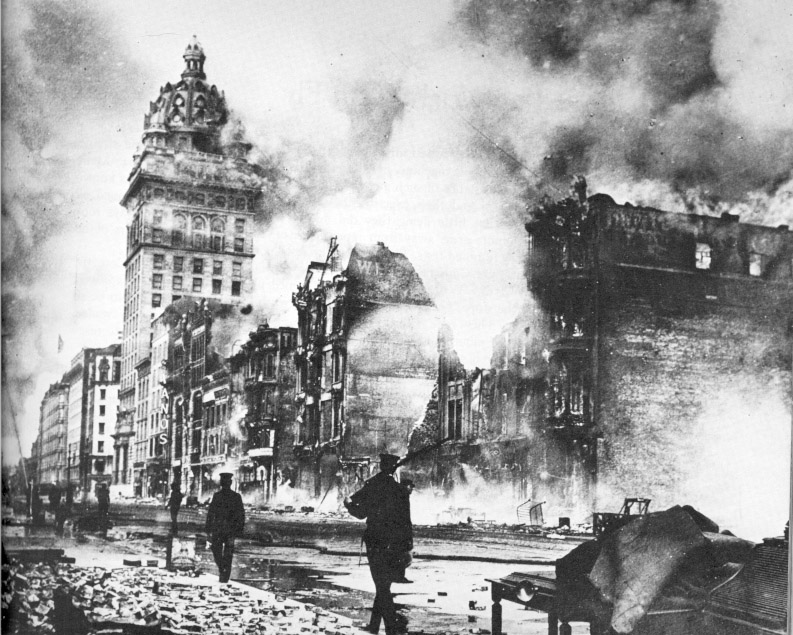
Call Newspaper tower on Market Street in flames, April 18, 1906. Hearst photo.
In 1933 Eileen was nearing her term. In a mark of the times she would deliver in a hospital. This child would be the first in the family not born at home. No midwife, no husband or sister-in-law, no mother-in-law. What could be safer or more modern?
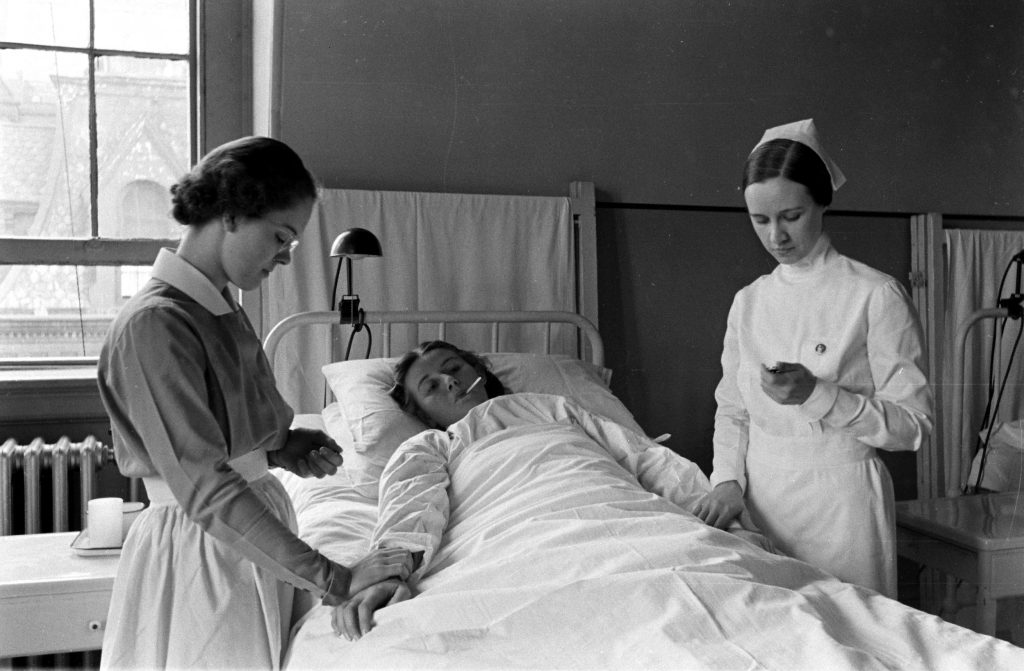
Eileen was checked in Cottage Hospital in Santa Barbara. Built in the Spanish Colonial style it was to be a new and unique experience for Bruce and Eileen and baby to be.
Santa Barbaras Cottage Hospital, 1930. News Press photo.
Delivering a baby at 38 was a dicey proposition in 1933. There had been many improvements in in pre-natal care in Eileens lifetime, infant death rates had dropped significantly since 1900. The diminished numbers of home births was a major contributor along with the acceptance of theories on anti-sepsis and the rise of hospital culture.
In 1888, a group of 50 prominent Santa Barbara women recognized it was time for the growing community to have a hospital — a not-for-profit facility dedicated to the well-being and good health of all residents, regardless of one’s ability to pay or ethnic background. It was a major milestone in the communities history as the population was just five thousand people when the little 25 bed facility opened its doors in 1891.
In ’33 Bruce had a steady job but his pay could barely cover expenses. The depression had reached its lowest point for American people. March 1933 saw the highest number of unemployed, estimated at around 15.5 million. Those numbers represented just under 25% of the workforce. New Mexico jobless numbers were pushing 40%, the highest in the nation. For those who were lucky enough to keep their jobs, wage income had fallen 42.5% between 1929 and 1933. The country had no social security system, no unemployment insurance the unemployed had to rely on themselves and the overwhelmed relief agencies. People resorted to desperate measures to find work or earn money, such as waiting for a day’s wage or selling goods on the street. Children were turned out of their homes to fend for themselves. There was a great deal of unrest across the country.
In San Francisco, the hiring of day laborers called a “Shape up” in which those chosen from a crowd of the hopeful were employed for just a day rather than long term led to the violence of the 1934 West Coast Waterfront Strike, particularly the events of “Bloody Thursday” on July 5, 1934. During Bloody Thursday, San Francisco police open fire on striking longshoremen, resulting in the deaths of two strikers and hundreds of injuries. This escalated the strike into a citywide general strike, where over 100,000 workers in solidarity with the longshoremen walked out and shut the city down.
The majority of the population in the country were bordering on frantic, not knowing where the next meal would come from or how and where they might live.
The Halls had three teenaged children who needed to be clothed and fed. They lived in a small rented house and were by some slight miracle were just getting by. Timing for the new baby couldn’t have been worse.
Not just bad timing either. Eileen had nearly bled to death when Bob was born in 1920. Only aunt Grace’s sprint into Orcutt for the doctor had saved her life. She was very weak for months afterword. Bruce and Eileen told each other that there could not be anymore babies. It was much much too dangerous. The thing is, nature will find a way and it did.
Though the first human to human transfusion was successfully done in 1818 the classification of blood types was only codified in 1900. WWI led to the first mass use of the life saving procedure. Like most things the ability to do a transfusion became routine but the underlying structure which provided the actual blood was not. Blood could not be stored for long periods of time, just days in the best of circumstances. It wasn’t until that the first blood bank was established in a Leningrad, Russia hospital. National organizations did not exist. The first was by Bernard Fantus, director of therapeutics at the Cook County Hospital in Chicago, established the first hospital blood bank in the United States in 1937. In creating a hospital laboratory that can preserve and store donor blood, Fantus originates the term “blood bank.” Within a few years, hospital and community blood banks begin to be established across the United States. It was much too late for Eileen as Santa Barbara had only a very small supply of whole blood on hand in March of ’33 .
Not only is childbirth for most women life threatening but in 1920 when Bob was born the chances of finding blood for a transfusion were unlikely. The doctor ran his small practice in an office above a little shoemakers shop in Orcutt and had no way to store blood of any type. The fact that he was able to get to the lease and find and tie off the bleeder in time was a miracle. The lack of transfusion was the main reason for her long recovery.
If Eileen were to hemorrhage she could well die and her doctor in Santa Barbara insisted she deliver at Cottage. They had no money to pay so Eileen went down to the welfare, they called it relief then and applied for help to pay the hospital. They gave her such a hard time that she felt ashamed that they though she was just another chiseler. She went home in tears and told Bruce that in order to qualify they would have to sell the car which he needed to go to work.*
She told the doctor that they had decided that the baby would be born at home just as the others were. The doctor was adamant and said, he and some other doctors had gotten together and agreed to get together and take care of people who were in need and that the hospital had established a fund for the same reason.
“Eileen, you will be treated the same as if you lived in Montecito with the rich folks.” He said, “No one will ever know.”
Perhaps the sun was about to break out.
They were in Santa Barbara after the layoff and then bankruptcy of Barnsdhal oil. There were no oil field jobs in the Los Angeles basin, absolutely none. They had bought a small house in Wilmington near Bruce’s brother Bill and his wife Anna. When Bruce lost his job and couldn’t find a new one they called Eileen’s brother Henry Cayce who lived with his wife Martha and their three kids in Goleta. Henry had a good job as a mechanic and in the way of family they said come on up, we’ll find room for you all.
So the house in Wilmington was lost, the first they ever owned but they couldn’t make the payments so they turned in the keys and just walked away as so many others did during the depression. By late 1932 it was being called the great depression because there was no doubt that it was the one.
They closed and locked the door for the last time, loaded their suitcases and whatever they could carry, drove to the filling station, gassed her up and they still had .50 cents left. Always responsible and money conscious but with nothing to lose, they said “To hell with it and went to the movies.” They saw “Tarzan the Ape Man” with Johnny Weissmuller and Maureen O’Hara. When it was over they took their popcorn and dead broke, hopped in the car and headed to Santa Barbara. They had this way about them where they looked on life as if it was a big adventure. They would do their best, come what may.
At Henry and Martha’s Bruce got up the next day and went looking for work. There wasn’t any possible way that he would find work in the oil fields so anything would do. At thirty eight half of his working life had been in oil and though it was rough it was all highly technical and built almost entirely on experience. He could not read a book on how to do the work. It was learn by doing. All of that seemed out the window now.
Steinbeck’s story about the Joad family would not be published until 1939 but the reality of it was being played out across America every day. The novel explores themes of social injustice, economic hardship, the loss of the American Dream. The power of community and collective action in the face of suffering was for the Hall’s, the way out.
Henry Cayce was Eileen’s uncle and by coincidence an oil worker. He had worked for Barnsdal in Elwood as a mechanic but had also lost his job. He now worked as a garage mechanic in Santa Barbara. They rented a big house in Hope Ranch and had three kids of their own which made six at home. Eileen ran the house and took care of the kids and Martha worked in her mother’s little grocery store. The house was in a walnut grove so Eileen and the six kids shucked walnuts and sold them downtown for extra money. They did whatever they could find.
Bruce took any kind of job he could find mostly doing day labor. A few hours here and a few there most not lasting very long and bringing in a little money to keep them going. He finally got on a a garbage man, humping trash all day. His bad back was murder, but it was life or death, up at four and home at four. He continued looking for oil field work. Call after call hoping that something would turn up. My mother said, she was going on fourteen, at the time that she really didn’t know much about that part of her life just that it was fun to be with her family and cousins and that it was a happy home. Such is how parents shield their kids from harm.
Finally in late February 1933 Bruce got the call from Signal and both he and uncle Henry went back up to Elwood. They would both stay with Signal for the rest of their working lives.
Eileen had been in the hospital for a couple of days. She had intermittent contractions but nothing too serious until later in the day Tuesday the tenth of March. Bruce arrived at the maternity ward just after four o’clock. It was a fine day, one of those familiar California winters near the end of the rainy season. No fog in Santa Barbara, a riffling breeze drifting out of the desert to the east bringing a promise of warmer temperatures and springtime. A fortunate time to bring a new life into the world.
There was no sound. Six miles below the surface of the Pacific Ocean, rock stirred. Billions of tons of the earths crusts, caught along a crack, Jerked, lurched as they slid by one another at around a sixteenth of an inch a year. The immensity of caught forces gave way at 5:54 pm.
While her parents were at the hospital Barbara, Bob and Mariel and the Cayce cousins had just sat down to dinner, forks clinking against plates, the girls dicing up some boy at school, Bob rolling his eyes, trapped in a world of girls, when suddenly the table was gone, plates forks, knives and the stew Eileen had made just for the occasion splattered across the floor peppered with flakes of china. Too stunned to act they froze as the old wooden house began to shake and sway to a rhythm of its own. They were fortunate. Old wooden structures might skip and jump about in a quake but most survived with little damage.
At the hospital, as Eileen went into labor. Bruce paced the waiting room. In 1933 no man was allowed anywhere near the birthing room. He chained smoked Chesterfields and he waited. He’d heard nothing from upstairs and at 5:50 he decided enough was enough and he would go see what was going on. He was a few steps up the stairs when the Long Beach Quake of 1933 slammed into Santa Barbara. Bruce was staggered in mid-step, fell to his knees and tumbled back down the steps.
Eileen was in bed and had just delivered a baby girl. She was lying on her mothers belly as the doctor reached to cut the umbilical cord when the quake roared in. The bed skidded one way and the other with the nurses and the doctor desperately holding on, trying to keep the new mother and her child in it. The Long Beach quake** which was a terrible event shook Santa Barbara in a gentile way but that little girl who grew up to be my aunt Patsy was always ever after referred to by her father as an earth shaking event.
And that she was.
Coming: Chapter 19. The Depression
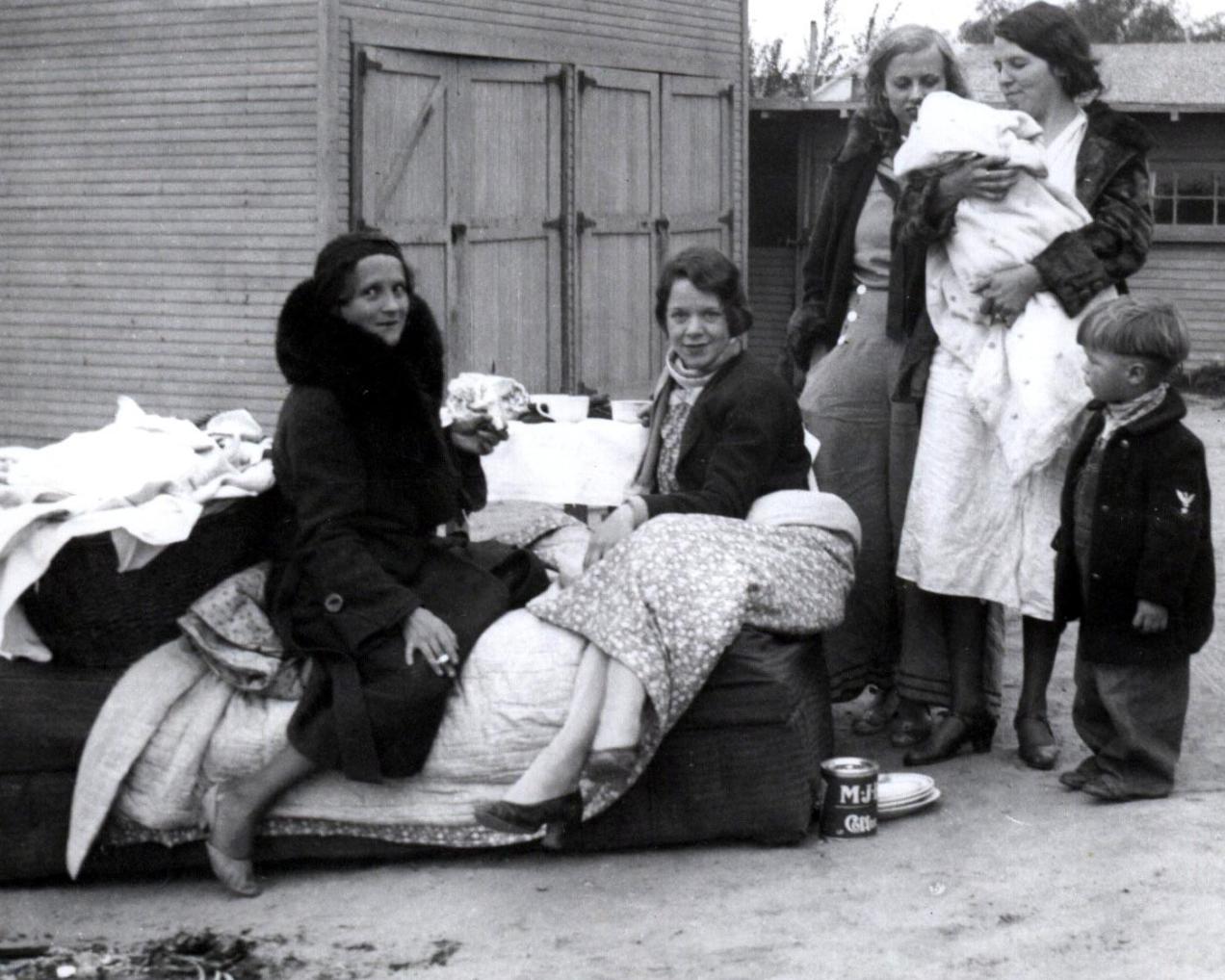
Cover Photo: Living outside, post earthquake, Santa Barbara California 1933.
*This is one of the events in our family history which has caused us to be pretty qualified government haters.
**In the early evening hours on March 10, 1933, the treacherous Newport-Inglewood fault ruptured, jolting the local citizenry just as the evening meals were being prepared. The Magnitude 6.4 earthquake caused extensive damage (approximately $50 million in 1933 dollars) throughout the City of Long Beach and surrounding communities. Damage was most significant to poorly designed and unreinforced brick structures. Sadly, the earthquake caused 120 fatalities.
Within a few seconds, 120 schools in and around the Long Beach area were damaged, of which 70 were destroyed. Experts concluded that if children and their teachers were in school at the time of the earthquake, casualties would have been in the thousands.
Michael Shannon is a writer, former teacher and a surfer. He write so his children will know where they came from.
Eileen stood in the kitchen of the little rented house in Compton.* Her right hand still held the receiver, silent. She didn’t move for the longest time. She stared at the yellow wall where the telephone hung. Softly she said to herself, Oh God, Oh God, Oh God. Heaven was silent on the matter.
When her three children bundled in the back door fresh from school their mother was nowhere to be found.
Bruce was working some Signal wells on the east side of the hill. Mosher had bought six leases that hadn’t paid off but his engineers thought that if they went a little deeper there were provable amounts of crude.
Compton was one of the older little towns that dotted the Los Angeles area. There were numbers of them. Carson, Torrance, Monrovia, South Pasadena, Santa Monica and Whittier. Compton established by a migrant group of farmers in 1888 predated its larger neighbor Long Beach. When Bruce and Eileen moved there in 1931 the population was around 15 thousand and was surrounded by family farms. It was an entirely agricultural community.
Aerial View of Compton in 1930.
In those days it was supposedly almost entirely white. In the 1930 census, only one African American was listed. There is no doubt that census takers skewed the results as photos of elementary and high school classes taken at the time indicate otherwise. Both my mother and her sister Mariel spoke of this. Their classes were full of Japanese American and Hispanic kids, all of them certainly citizens particularly the Hispanic kids whose families for the most part had lived on this land for at least a century and some much longer.
McKinley school, 3rd grade. Compton Ca 1930 Calisphere photo
The City of Los Angeles predated the establishment of the United States by a decade. The Spanish had arrived in the LA basin on September 4, 1781. A group of settlers consisting of 14 families numbering 44 individuals of Native American, African and European heritage journeyed more than one-thousand miles across the desert from present-day northern Mexico and established a farming community in the area naming it “El Pueblo de Nuestra Señora la Reina de los Ángeles”.
Even though we tend to think only in modern terms, most of Los Angeles County was still rural. LA’s population had just topped 1.2 million but the second largest city, Long Beach was ten times smaller. Signal Hill stood by itself in the last stages of the pastoral land it had been in the time of the great Ranchos which were no longer things but only names.
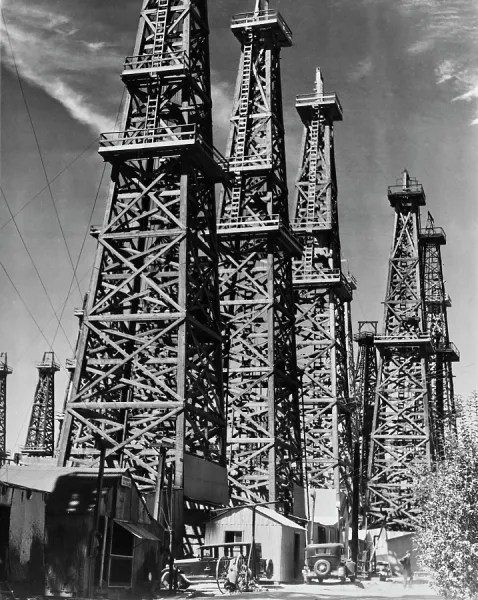
Signal Oil derricks, Eastside. 1932
The sense of anticipation. Not the emotional side of anticipation which is the wishing and hoping, no, the nuts and bolts of it. It is a gift that when its amplified by experience, of the hands on job that lets a person see beyond the immediate thing at hand. It’s the ability to look at something, a job, a technical problem and make a reasonable prediction as to what might happen down the road. Success at any job that requires a positive result is less about what is going on in the “right now” and what is likely going to happen if you continue. This is the path that every successful workman pursues.
Here is what I mean. When I worked my first “Real” job and by that, I mean I was paid for it, I bucked hay for a man named Dinny Sheehy, I was just turning fifteen. Loading flat bed trucks with hay bales is a rough way to start. Baled hay come in many forms. My uncle Jack used a baler that pumped out hay that was tied with two loops of twine. Dinny had one that produced 3-wire. The difference, you might ask is in the weight. Uncle Jackies were around 50 plus pounds, the 3-wire topped 90 lbs. The problem for me was that I weighed about 120 pounds myself and was being told to hump a 90 pound bale of hay from the ground up onto the bed of a flat bed truck that was at my chest. You can’t deadlift one. I had to figure out how to do it by myself. The old timer driving the truck had nothing to say. He looked straight ahead, smoked, sipped from a pint and drove. If he had a secret he kept it. Solving the problem is the anticipatory you see? If I couldn’t figure it out by lunch time I’d be gone.
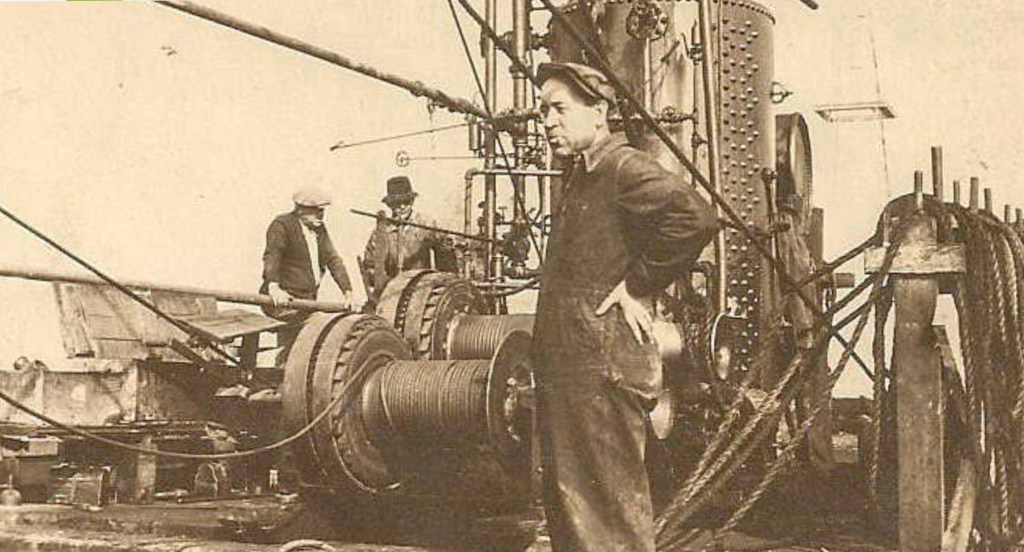
Bruce Hall. On the rotary rig, Ellwood ,California 1930**
The secret of Bruce’s success was the ability to see ahead, plan for and manage the work. The thinking goes like this, how can I produce more, how can we be more efficient, how can we cut costs and still increase production? Believe it or not that ability isn’t that common. “Getting in your own way” is the phrase we might use to describe the someone who cannot and there are many of those.
Bruce drove into the little dirt driveway, shut of the engine of the Cheverolet and for a moment sat quietly while the cooling engine banged and sputtered as it cooled while he put aside any workplace blues and replaced it with anticipation of seeing his wife and kids. There was homework at the kitchen table, dinner simmering on the stove.
The kids were indeed at the table. “Where is your mother?”
In the way teenagers think, my mother simply answered, “She’s in the closet.”
“Why is she in the closet?”
All three looked up. My aunt Mariel, being the oldest at fifteen spoke with the wisdom of her age, “Don’t know.”
Bruce strode quickly to the hall closet and pulled at the knob. It didn’t budge. Eileen was holding it tight with both hands. Bruce asked her to please let him open the door and eventually she did. There she sat, arms crossed across her knees. She lifted her face toward him, it was streaked with the tracks of tears.
“Oh Bruce,” she sobbed, “I’m pregnant.”
He got down on his knees and held her. Eileen was 37. She already had three half grown children. It was all too much to bear.
So much for careful planning and the anticipatory abilities of Bruce and Eileen.
Chapter 18, The Big Shake
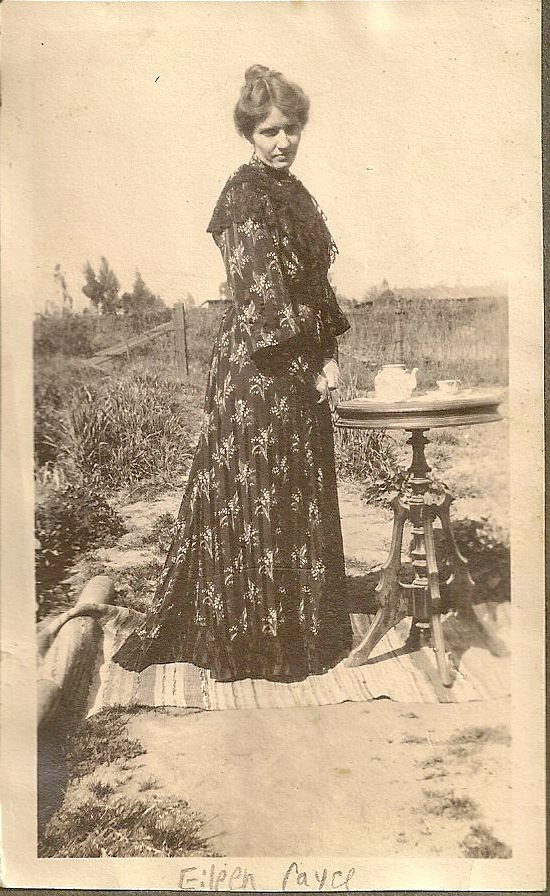
Cover Photo: No one in the family knows exactly what this photo means. It was taken the year she was married, likely on the ranch Eileen’s mother managed near Creston, California. Eileen is just 20. The antique table, doilies, tea set and the little rug set the stage. She is dressed in a style soon to be gone. She wrote on the back “An old lady.” She’s using her maiden name so she’s not yet married. Maybe he’s worried that people will call her a spinster. It’s a mystery but it captures the mood of this story. In the way of genetics both her granddaughter and great-grandaughter are dead ringers for her. They both have the same spirit and “the forge ahead no matter what genius.”
*The house on Western Avenue still exists.
**Bruce is just 34 but the toll on his body is already showing. The stance is that of a man who has back problems. The hands on the back of his hips and the slight arch are visible signs of a bad back that will plague him all the rest of his life. The blackened coveralls, soaked with oil and the unfiltered Chesterfield habit are going to have very serious consequences. Heavy labor is called back-breaking for good reason.





 atthetable2015