George sent the boy out to his brothers cattle ranch because he needed help. At thirteen he could do most of a man’s work.
After morning coffee with his grandparents he climbed in the old Chevy pickup with his uncle Jack and drove down the hill from the house and over to the barnyard, the old milking barn and ice house, the big hay barn, the tractor sheds and the calf shed where the business would be done.
The big cow was in the corral next to the old squeeze, for these ancient corrals and buildings dated back more than a hundred years. The fence posts marked those decades, some railroad ties from the old narrow gauge railroad, some from the wrecked steam ship SS Elg which went aground on the sandy beach south of Oceano. To lighten the ship, the crew had thrown thousands of board feet of fresh cut lumber shipped from Vancouver, Canada, over the side. There was scarcely a ranch in the valley which didn’t have some.
The boy opened the gate and backed the truck into the corral while his uncle fitted the handmade manila halter around the cows head. A rope was led to a tie-down hook and attached with a double half hitch.
Driving at walking speed they proceeded up the rock hard and dusty adobe road. The went past the gulley where all the abandoned farm equipment lay, The old Model T which had brought the family down from Berkeley in 1918, The first of the Chevrolet milk trucks slowly rusting away, hemmed in by miles of rusty Bob wire, dented five gallon milk cans with rusted out bottoms, all of it shining with the dusty red color of death.
At the top of the hill a slow right turn east towards Pat William’s ranch and just short of the fence line, the bone yard. To the boy, his imagination active in the way that boys of no particular serious education works, it seemed as if they had stumbled on what was left of Custer’s 7th. The troopers bones lying adrift, aglow with mornings sunlight. Scattered, each one a sign of change.
Stopped at just the edge of the field, they got out of the truck and the boy turned off the hitches while Uncle Jack pulled a couple of flakes of hay out of the back, tossing them to the side. He said, “Lead her over there and let her eat.”
He went to the open door of the truck and reached behind the seat for the old J C Higgins .22 he had traded for when he was just a boy. Long since relegated to just this duty, he pulled the bolt and inserted the single Long Rifle Cartridge.
The red and white Hereford cow, her hide still beautiful the way cattle are when they are taken care of and loved. Her dusky deep red hide with its little white bib and four pure white socks all special to her breed was topped off with the curls adorning her forehead, beautiful as if she had just come from Rae Langenbeck’s beauty parlor. The one behind her husband Buzz’s barber shop, hidden behind the pink curtain where the boys mother and grandmother went for their curls.
With purpose uncle Jack walked to the cow. raised the rifle to her forehead and pulled the trigger. Without a shudder she collapsed on the ground her body giving a little sigh, faint. One of her hind legs shivered a moment but she was already gone. Uncle Jack stood a moment looking down at her and then softly gave her the only benediction he could. He turned slightly, looked at the boy and said, “She was a good cow.”
Michael Shannon writes of his family’s life. A family which lived on the ground.
Cool enough. Just on the edge of too cold. The spring sunlight not quite blue but the translucent curtain filtered gray of a not quite foggy day. All quiet. Just myself and Roy Brower, the dog from Labrador. Both in our outdoor chairs watching. Me the birds, the deep Blue Jays coming in looking for bread crumbs or peanuts. Deigning the bird feeder, the old dinner plate mounted on a post amongst the blood red geraniums, it’s too low for them. They never touch the ground. No, the old plate is for the perching birds. The tiny Towhees and the Crested Tits dainty in their habits. The Western sparrows with their little black and white caps if they are males, the dun colored female only coming down when they hear the “All Safe.”
In the red blossomed Trumpet Vine the married pair of Mocking birds flutter around keeping a sharp eye for the Crow, the Thief of Eggs. The Crows drift along in a stately manner like WWII B-17’s until like Focke-Wolfs, the Mocking birds swoop down to attack.
Down in the lower garden a trio of Ameruacana hens drift in convoy, scratching and rooting for bugs and assorted insects or grubs. From the rear their heads down their tails looking like the high pitched roofs of Balinese Temples I have seen.
Roy lifts his head. Swinging his nose around about, gently sniffing the breeze. Does he smell the delicate perfume of the yellow Angel’s Trumpet blossom, perhaps. The slightly sour odor of Rabbits’ Bush is also on the breeze.
By some quirk of atmosphere there isn’t a sound, not even the usual clapping sound of the big oak tree scraping its leaves.
Roy an I mused about lunch but thought better of it. I stayed in my chair for a good half hour gazing absently at the garden and its parade of birds. The gift of Reverie is a blessing divine, and it is conferred most abundantly on those who lie in Hammocks or drive alone in cars. Or sit in backyard chairs. The mind swims, binding itself to whatever flotsam comes along. To old driftwood faces and voices of the past, to places and scenes once visited, to things not seen or done, perhaps only dreamed.
Elwood, his name was Elwood Cooper and he owned the large Elwood Ranch in what is now Goleta and the adjacent hills. His first name lingers in several local place names including the oil fields. There are Elwood Canyon, Elwood School, Elwood Station Road, and a Goleta neighborhood. He ran cattle. He was a horticulturist and was best known for importing millions of Ladybugs from China to California which wiped out the black fungus that was killing walnut trees and saving that industry. He also imported the first Blue Gum tree which he though might be a good source of lumber. There are still thousands of Eucalyptus planted in wind breaks all over Southern California. This turned out not to be a wise choice.
After the death of his wife in 1909 he sold out and lived the rest of his life at Santa Barbara’s Arlington hotel. The ranch was sold to the Doty family who kept the business until 1921 when it was foreclosed, auctioned off and was essentially dormant until 1927 when an exploratory oil well was drilled there by a company from Texas.
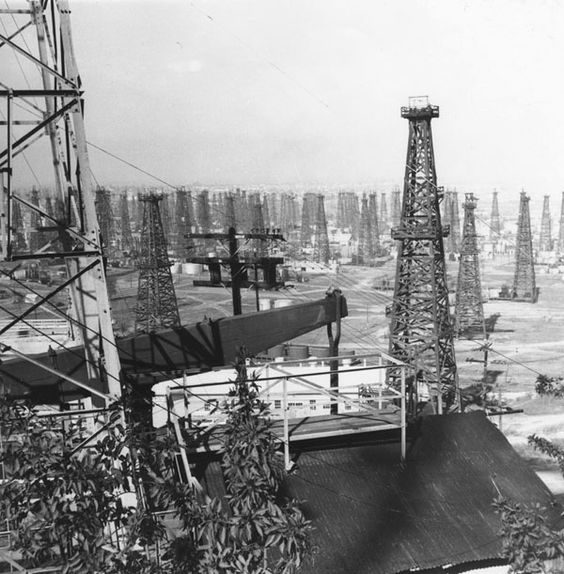
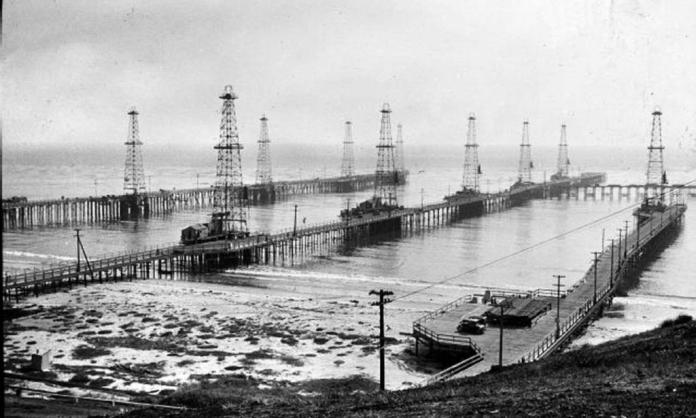
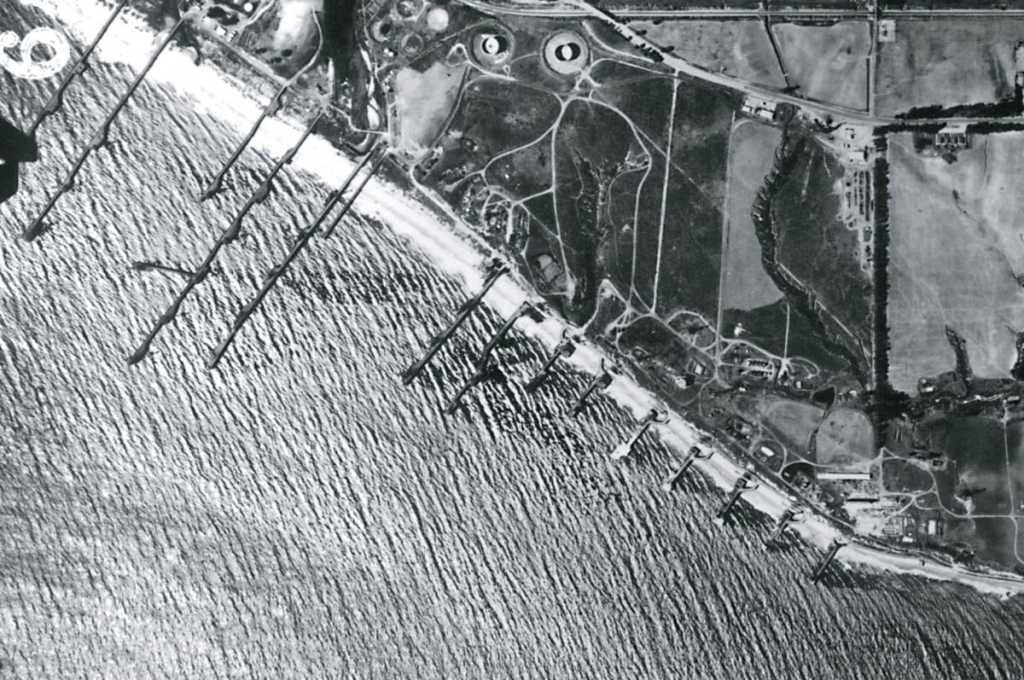
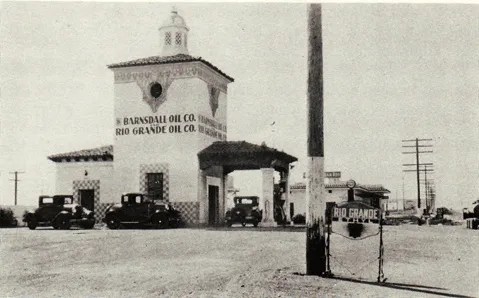
The first oil discovery in the area was in July 1928, by Barnsdall Oil and the Rio Grande Company, who drilled their Luton-Bell Well No. 1 to a depth of 3,208 feet into the Vaqueros Sandstone. After almost giving up they not only struck oil, but had a significant gusher, initially producing 1,316 barrels per day. This discovery touched off a period of oil leasing and wildcat well drilling on the Santa Barbara south coast, from Carpinteria to Gaviota. During this period, the Mesa Oil Field was discovered within the Santa Barbara city limits, about 12 miles east of the Elwood field. The Elwood Field contained approximately 106 million barrels of oil, almost all of which has now been removed. The field has been abandoned.
Elwood piers and wells. Elwood Field, Goleta, CA
Barnsdall moved Bruce up to Elwood in early 1929. Almost all the wells were being whipstocked trying to reach the oil sands covered by hundreds of feet of seawater in the Santa Barbara channel. His expertise was in high demand. The drill strings were boring diagonally down in to the field like the tentacles of a squid. The whipstocks themselves never saw the light of day, snuck in at night because no one wanted the competing oil company on the neighbor’s lease to know just what was going on.
The business was still the wild wild west. There was no government control on production. Small producers took no prisoners they just drilled and drilled. Since wells typically produced the greatest amount of oil when they were still new, the impetus was to never stop drilling. The big companies were no better. Over production was taking its toll at the gas pump but no one in the business cared. Neither did the Hoover government. The public liked the idea of .22 cent gasoline.
Times were still pretty flush during the postwar boom. Car companies were turning out automobiles as fast as they could and Ford, especially Ford with its emphasis on utility and low price was driving car production at a breakneck pace. In 1929 Henry Ford raised wages to $7.00 a day. The other auto makers promptly sued him citing unfair labor practices.
Wages in the oil fields were also high, seven to eight dollars a day. The length of a tour was now just 8 hours down from twelve. Things were better for Bruce and Eileen because he was able to spend a little more time at home though it also meant that the rigs now required two crews a day to make hole. As a tool pusher he was now required to supervise both crews not one.
It was rough work. Bruce wasn’t out of danger yet. In 1930, 67 oil workers were killed on the job. Blowouts, falling rigging, toppling derricks, explosions and fire were always a danger. There was rarely at time when there wasn’t something burning in the fields. Barnsdall, operating all over California sent them back to Oildale. a place where they lived for nearly a year. Bruce came home one day with the skin ripped from his fingertips to nearly his elbow peeled back. At the rig they had smeared some grease on the open wound, laid the skin back down and wrapped it in a dirty undershirt and sent him home. My grandmother opened it up, cleaned the dirt and stickers off, slathered it with Vaseline and wrapped in in a clean bandage which she cut from a sheet. He went back to work the same day. They were both tough people.
In 1929/30 they lived in Bakersfield in a house for the first time that was big enough for the whole family, Bruce Eileen and the three kids. It had enough bedrooms for each kid which was the first time that had happened. It was considered a luxury by the children because no one had to sleep on the couch or the screened porch. Wonder of wonder it had indoor plumbing. A faucet in the kitchen and a bathtub. No toilet though, you still had to use the “Backhouse” to do your business.
Robert Mariel and Barbara Hall, 1930. Hall Family photo
Bruce was getting a reputation for knowing what a well was doing. He could tell by smell and taste what was happening a thousand feet down. He could hear in the creaks and groans, what she was thinking. He had the drillers sense of where she was going. Kneeling on the platform you would have seen him sniffing at the casing head, taking a finger and tasting the liquid mud used to lubricate the drill string. How hot was the mud flooding up out of the well? What did it smell like, was that hint of rotten eggs? When traces of crude came up getting a little on the fingertips and touching it with the tongue to help predict its gravity, was in light and sweet or thicker, could it be chewed. There was even a difference when you wiped your hand on a rag, did it soak right in or stick to the surface. Was there gas coming up, how much pressure was pushing it? There were a thousand indicators, the well was telling you its story. It had to be read on the spot for there was little scientific measurement in the oil patch just yet.
He always said that the kind of things you see in a movie, wells blowing up or a gusher blowing vast amounts of oil skyward could and would get your fired. Crude was money and the big men in the office wouldn’t be happy if a well got out of control. If you’re senses told you what was coming next you were a valued worker and grandpa was that. He had eleven years on the job and the experience was paying off. There were just a few thousand men working the rigs and people as good as Bruce were worth their weight in gold, or oil as the case may be. Word gets around.
Everything was looking pretty rosy. All three kids doing well in school, Mariel would be in high school in a year, Barbara in seventh grade and Bobbie in fourth. The kids were old enough now that their constant moving about had taught them how to quickly make friends. How to spot the popular kids who were school leaders and elbow there way into the group. Their parents sat them down and counseled them on the best way to survive as the constant new kid. Moving two or three times a year from school to school strengthened their social skills. I remember my mother, Barbara, the second child could make a friend in about two seconds.
Something bad was lurking in the United States and the world though. On the surface was the gloss of good times shown brightly but they masked something sinister. By the end of the decade cracks would begin to show though no one seemed to understand the why or what of it just yet. Let the good times roll.
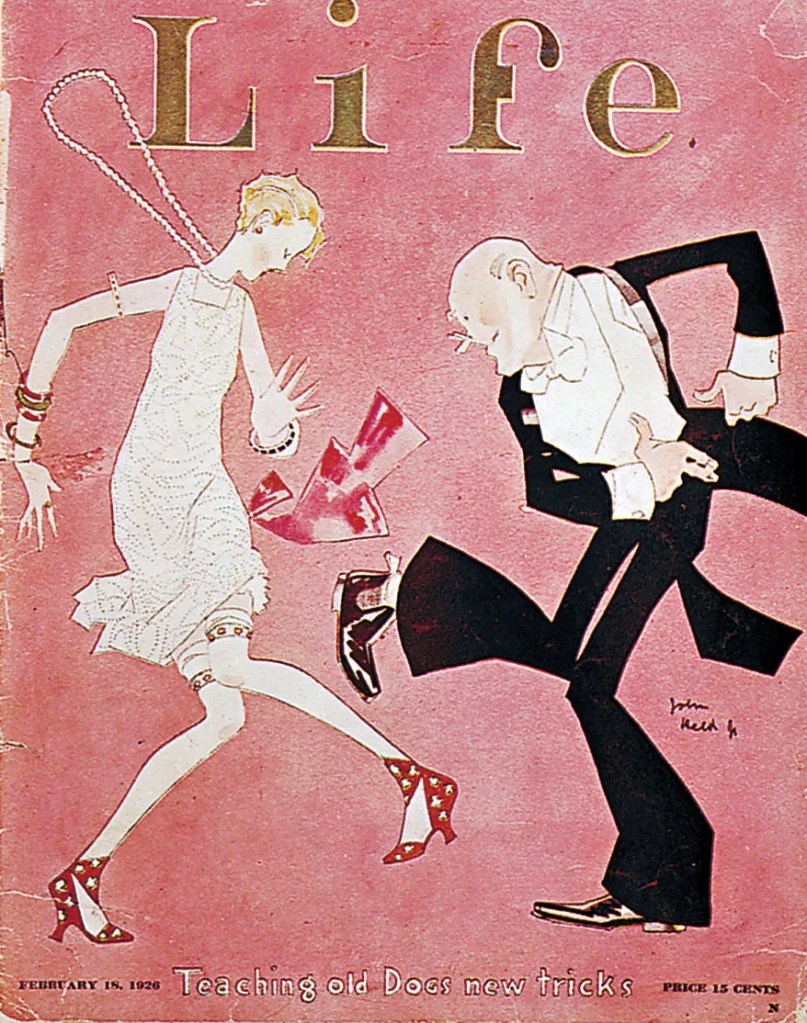
Life magazine cover. Art, John Held JR. November 1926
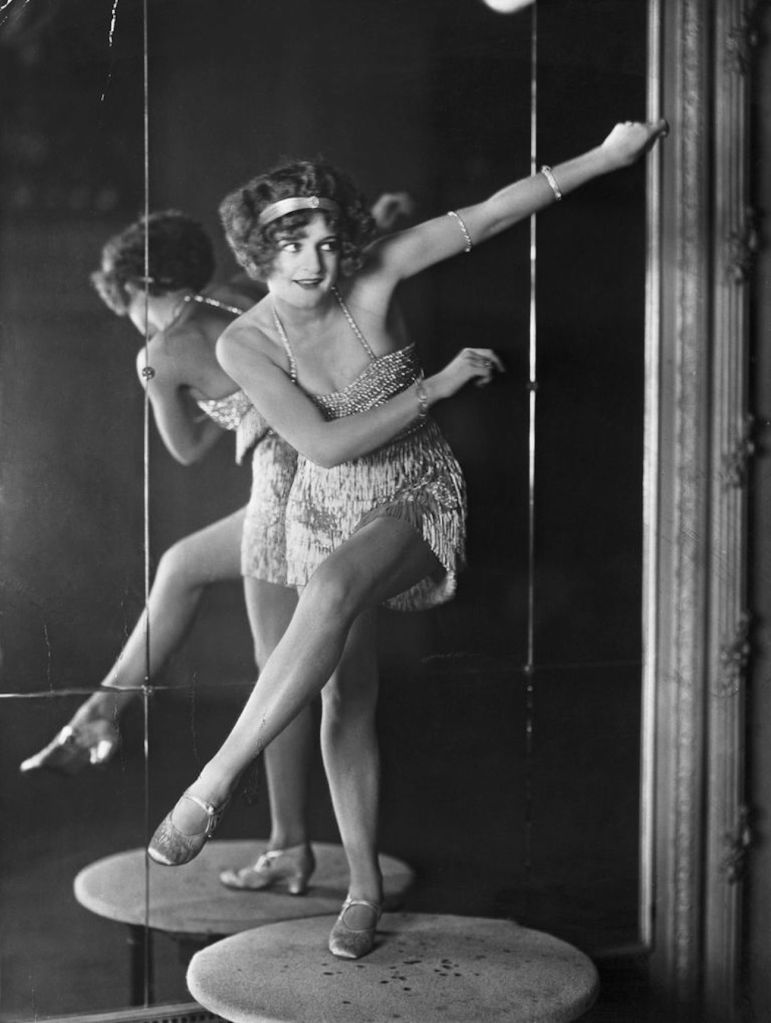
All during the twenties in the aftermath of the war the times were good, very good. Society had rapidly changed. The old song which opined that soldier boys who had seen gay Paree wouldn’t want to go back to the farm was true. Young people saw skirts go up, way up. Flappers wore silk stockings. They rolled them over a rubber band just below the knee slipped a flask of bootleg whiskey under their garters and shimmied like their sister Kate. Hair was bobbed. Silk undies, just a chemise and a pair of step-ins, let’s party like 1929.
Miss Bee Jackson 1925, The Charleston Girl. British Pathe photo. Youtube.
Henry Ford was turning out the Flivver by the millions, they cost just over two hundred dollars and the kids soon discovered that petting on the back seat was a delight. They wanted to go and party with Jay Gatsby on long Island. F Scott Fitzgerald helped open the door.
It Wouldn’t last.
Chapter 14, coming soon. Disaster.
Michael Shannon is a writer. These stories come from his mothers side of the family many of who spent more than sixty years in the oil patch.
…or how scribblers turn a joke, a phrase, a story.
When newspapers were the only mass communication in the country they reached nearly every home. My dad drove down to Kirk’s Liquor every morning after his men went to work and bought the LA Times and the Wall Street Journal. The big boys dominated and some said “Made” the news. The term Fake news is neither Fake nor new. Reading the papers at the kitchen table in our home was a part of my education. Guided by my fathers exhortation that most of what you read was suspect and how you might find a way to validate that was how I was instructed. He said, “Always remember that newspapers are always owned by an individual with an agenda.” He advised that you do your home work, read a conservative view then a liberal view and that the answer lies some where in the middle. Maybe.
About the only place you see a newsstand anymore is in the old asphalt jungle, New Yawk, New Yawk. Once the center of the news world, publishing as many as sixteen dailies and uncounted numbers of weeklies. Hearst built his temple of journalism to Saint Francis de Sales patron Saint of newspaper scribes and never looked back. He fought a circulation war in the late eighteen nineties with Joseph Pulitzer of the NY World while Alfred Ochs was busily, quietly making the NY Times the most trusted paper in the country.
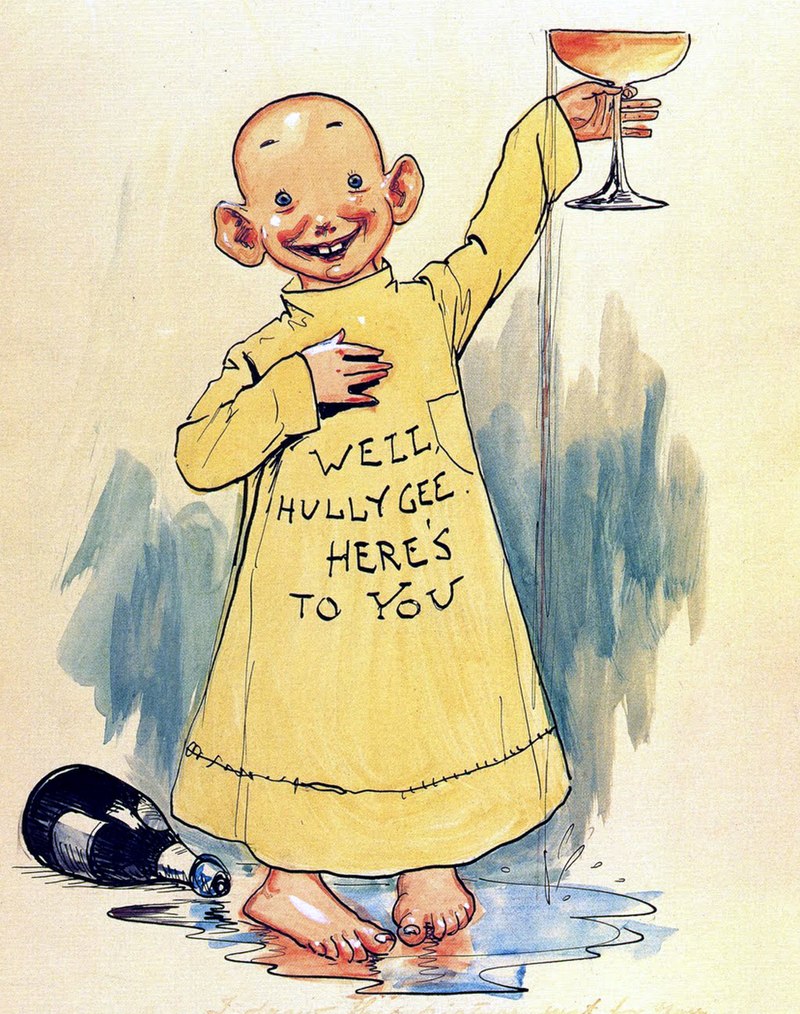
Hearst and Pultitzer invented Yellow Journalism in the 1890’s, a term that is a sensationalized style of news reporting characterized by exaggeration, vivid illustrations, and a focus on sensational stories like scandal and crime, rather than factual accuracy. The term is believed to have originated from a comic strip character called the Yellow Kid written by Richard Outcault. The Kid is considered to be the seminal comic strip for those we know today. My grandfather Shannon who palled around with Outcault said he never refused a drink which was his way of saying he was a “Hale fellow well met.” Jack Shannon could spin a tale pretty well himself.
The rival newspapers of Hearst and Pulitzer competed for readership by printing sensational news stories pitched at the lowest common denominator, thus inaugurating the modern conception of journalism for a mass audience and gullible one too.
There were sporting papers for the Punters, guys like Nathan Detroit* who speculated on the ponies. Their were ethnics too. Papers in Yiddish, Polish, Italian and Rooshin for the reds to read. Lest the reader thinks newsmen are just hacks who couldn’t write books consider American writers like Bret Harte, Mark Twain, Jack London, Ambrose Bierce, Stephen Crane, and Damon Runyon. The original Rush Limbaugh, Westbrook Pegler had a Hearst column in which he preached hate and division and even Hearst eventually fired him. There were Walter Winchell, Dorothy Kilgallen, and Bob Considine too. Adolf Hitler, Benito Mussolini, and Winston Churchill, climactic figures of the twentieth century were contributors. Karl Marx, Einstein, Susan Sontag and the critic HL Mencken as well as James Baldwin wrote the news.
The greatest of sports writers, Ring Lardner, Red Smith, Frank Deford, George Will, Roger Angell and Dick Young dispensed real insight into popular culture cloaked in sporting news. Jim Murray of the los Angeles Times and E B White of Vanity Fair didn’t write the nuts and bolts of games but looked to the humanity contained in it.
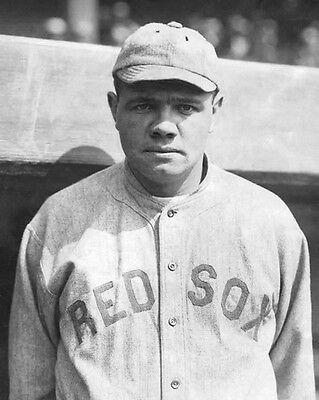
“The sports editor stuck is head out the office door, green eyeshade pulled down low, a chewed, five cent seegar clenched between his teeth. Swinging his head around he looked a human version of a snapping turtle. Hooking his index finger around the stump of rolled tobacco leaf he spotted Lardner. He sent a stream of tobacco juice in the general direction of the spittoon and bellowed, “Hey Lardner, gimme five hunert on dat busher from Balmer. (Baltimore) They call ‘Im Baby or Babe, sumpin’ like that. He licked the Yankees taday. Need it for the extra edition at five .”
BABE LICKS CUBBIES
BOSTON TWIRLER BLANKS CUBS, SOX IN SIX.
Beantown takes ’17 World Series.
For the scribbler in the newsroom, the idea…set the hook with an eye catching headline. Something to catch the eye of the Rubes. Something the newsboy could screech. Something simple, catchy, suck the penny right outta their vest pockets.
Newsboys with Morning Telegraph, New York City. 1899. The original Toughnuts.
Below are actual headlines which were carefully crafted to get attention from the buyer. Believe it or not there are archives and collections of the best and most amusing ever written.
OXYGEN KEY TO STAYING ALIVE.
CONFIRMED BY TOP SCIENTISTS
Breathing Found Necessary
Princess Kate all A-Titter
Princess and the Frog
Frog Photog, No Top Pix Draws Suit.
Princess Kate of Great Britain was filmed topless on a friends yacht. She sued a French tabloid and won.
I’M A CHEETAH
WOOD’S WIFE BONKS HUBBY WITH WEDGE
Tiger Woods, serial Tomcat Bogies out of his marriage. Lock up the waitresses!
CLOAK AND SHAG HER
CIA BOSS ADMITS AFFAIR
General David Petraeus resigns over the outing of his affair with his biographer. Headline, considered tasteless at the time would barely be news today.
‘Headless body in topless bar’ was voted as one of the greatest newspaper headlines of all time by New York magazine. It was written by the Post’s larger-than-life managing editor Vincent Musetto. Murder by Wife always gets the lead..
No More Mister Wiseguy
MOB RAT BLASTS YAPPER DON
Gabby Gotti Ruined the Mob says GambinoCapo
State Population to double by 2040
Babies to Blame
OFFICIALS CONCERNED, SAY NIX TO SEX
I was thinking about papers today after reading an essay by Steve Rushkin, a writer for Sports Illustrated. In it he quotes Bobby Knight once the basketball coach at Indiana University who famously said of writers, “Everybody learns to write by the second grade, most of us move on to better things.” Most of us stop calling ourselves Bobby and quit throwing chairs by then too, but I get his point.
Don’t take yourself too seriously, have some fun. Also remember that what we know of our history we know because SOMEONE WROTE IT DOWN. There’s that Bobby.
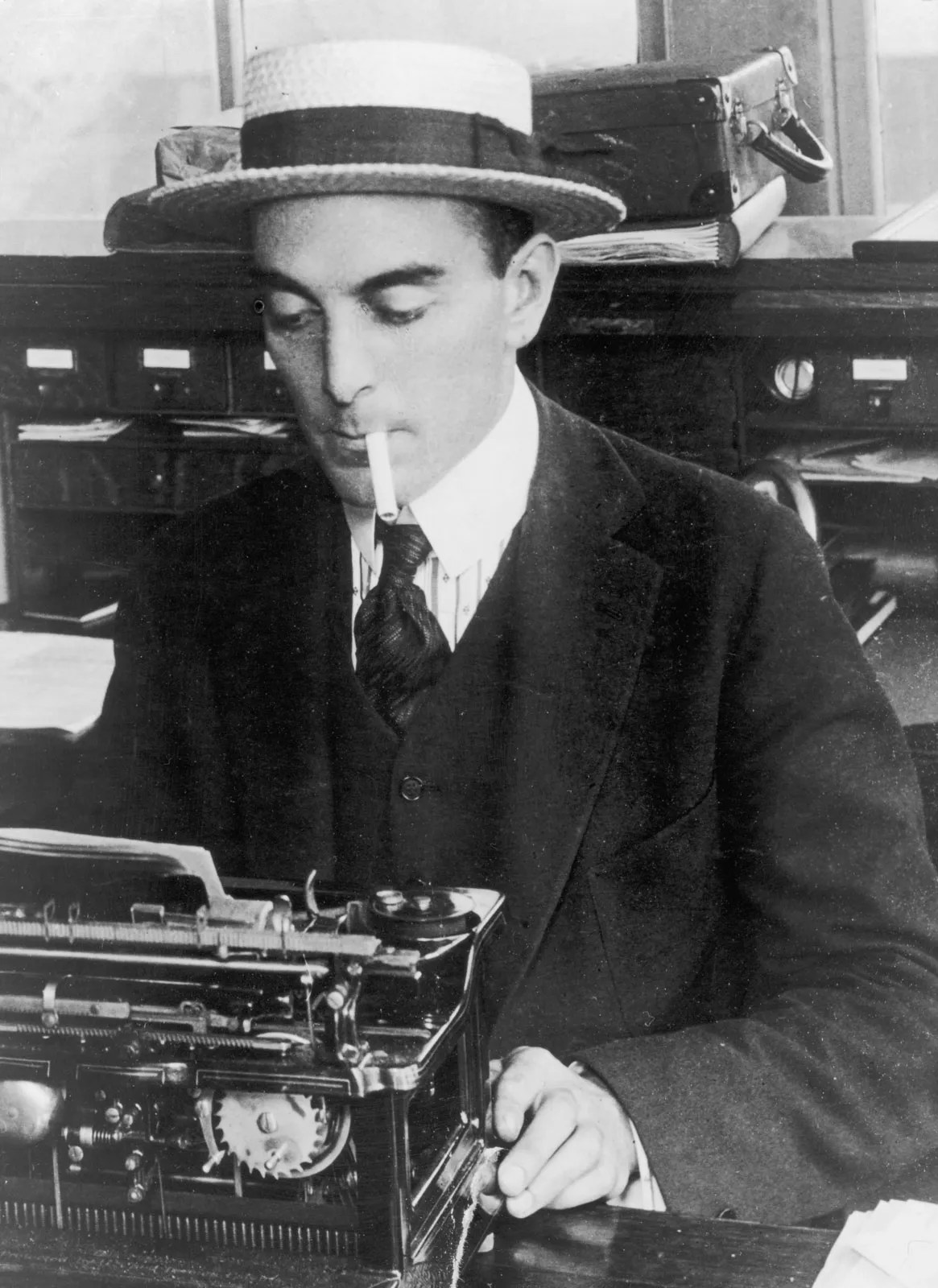
Cover Photo: Ring Lardner at work for the Sporting News. Considered one of America greatest satirists he was a contemporary of Ernest Hemingway, Virginia Woolf and F. Scott-Fitzgerald. In 1916, Lardner published his first successful book, “You Know Me Al,” an epistolary novel written in the form of letters by “Jack Keefe”, a bush-league baseball player, to a friend back home. The letters made much use of the fictional author’s idiosyncratic vernacular. Lardner is well worth the read.
Nathan Detroit: A fictional rogue and gambler from the Play “Guys and Dolls.” Guys and Dolls is a musical with music and lyrics by Frank Loesser and book by Jo Swerling and Abe Burrows. It is based on “The Idyll of Miss Sarah Brown” .
Michael Shannon lives in California and writes for the heck of it.
Texas oil sprouted big personalities. Theodore Newton Barnsdall whose daddy started in the Pennsylvania fields, drilled the second well ever and built the first refinery taught him the business the way a butcher sharpens a knife. “Tede” as he liked to be called started out working for his father as a pumper annd when his dad died he inherited the company. Ambitious, a hale fellow well met, he also had the three things an oilman must have. He was fearless, supremely lucky and had a nose for oil. Not in barrels, oh no, a nose for oil underground. He was doing ok in Pennsylvania but thought he should go west and his case that was Indian Territory. The home of the Choctaw and Osage. With his gift of gab he made a friend of Chief James Bigheart of the Osage. Bigheart was instrumental in Barnsdall buying a stake in the Osage oil company, ILIO in 1903 which covered all of the Osage reservation, some 1,470,938 acres of what is now Osage county Oklahoma.*
Barnsdall became wealthy by bringing in well after well. Immensely rich he sold his company in 1912 and took stock from the new company, Cities Service. Though Theodore Barnsdall died in 1916 his company survived.
The oil business is and always has been a labyrinth of connections, co-ownerships, subsidiaries, wholly owned or leased. Oil companies owned and were owned by railroads, refiners, conglomerates and even companies who had no connection to production at all. Production was sold to refiners, refiners to banks and then bought back by the producers. Companies were deliberately bankrupted in order to not only clear debt but sometimes to assume debt by the buyer of the defunct company. Sometimes defunct companies were not actually defunct. Names lived on.
Though “Tede” was long buried away., his company lived on but now owned by Cities Services a refiner and major lender to the business, Cities kept the name and the Barnsdall Company continued to operate. It partnered with the Philllip’s company, now Conoco-Phillips and Socony, Standard Oil of New York and in 1927 decided to move some operations to California under the name Barnsdall-Rio Grande**
How does this effect the man who laborers on the rig. No need to ask him because he likely has no idea. It’s affect on my grandparents though, easy to understand.
Grandpa Hall in the course of following the work ended up in Summerland and Santa Barbara by 1927. They rented a little house on Mission street and Bruce began working as a Farm Boss down in Summerland. Today it is a hip little town but in 1927 it was very small cluster of small houses just north of the section of beach which would become famous for the oil rigs there.
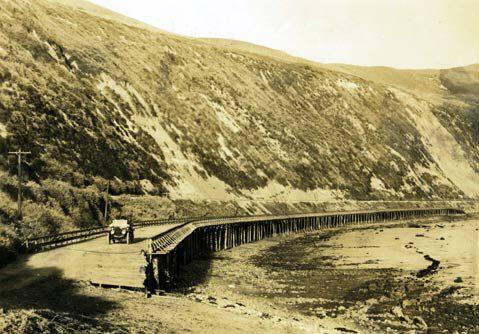
The road south from Summerland at the Rincon. SB Historical Society Collection. 1920’s
A former Treasury agent, Henry Lafayette Williams, initially intended to raise pigs there when he bought this land in 1885. But when the Southern Pacific Railroad announced it was laying tracks north from Los Angeles that would cross his pig ranch, he decided to sell off lots and build a town next to the rails.
What made this act of entrepreneurship unusual was that Williams and his wife were Spiritualists. A popular religion at the time its practitioners believed that mediums connected the living to the dead. Williams and his wife persuaded fellow Spiritualists to move to their town. Lots of 60 feet by 25 feet sold for $25 each. In 1889, the early settlers named the town Summerland which was the name of the Spiritualists’ heaven.
Town lore has it that many of the homes that the Spiritualists built had hidden rooms from which the spirit of a dead relative would enter during seances. People from neighboring towns nicknamed Summerland “Spookville” because of all the strange happenings they thought were going on.
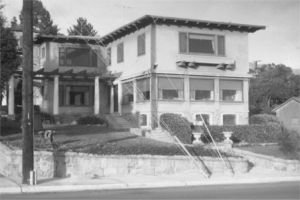
The Williams home, The Big Yellow House.
The Williams’ own home, rumored to still have ghosts today is the Big Yellow House Restaurant, a Summerland landmark.
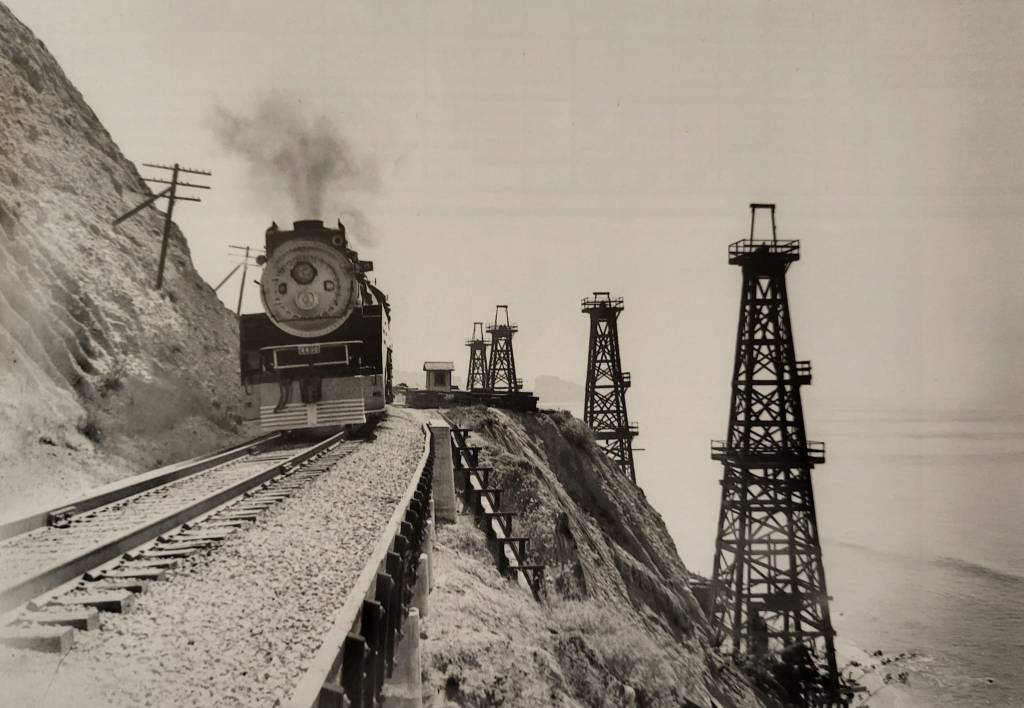
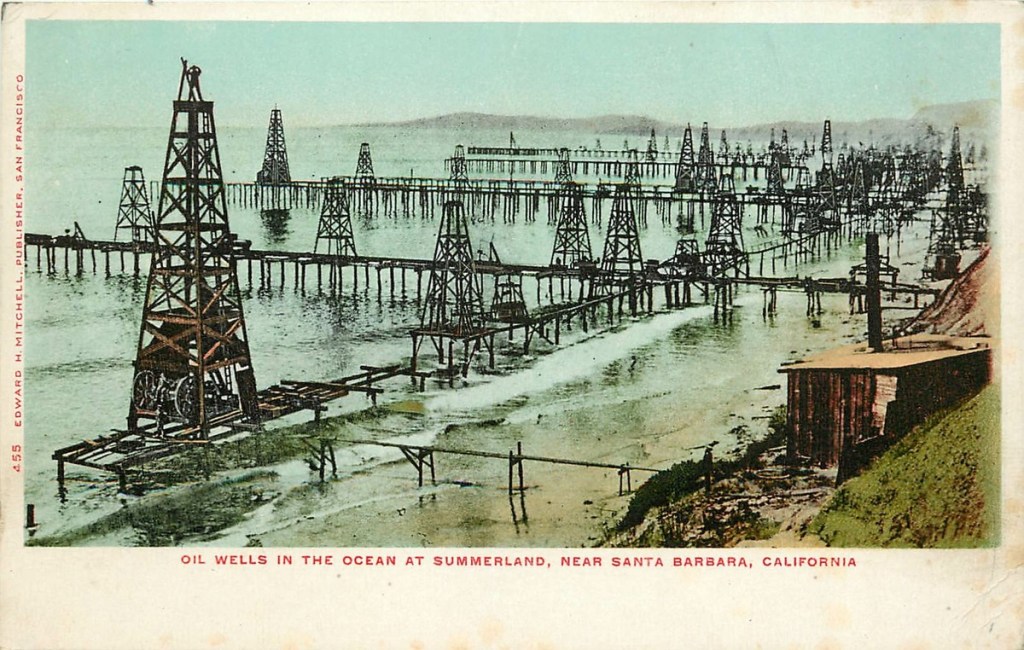
In 1894 the accidental discovery by a man drilling for water who struck oil instead. Oil fever and the boom was on. The bluffs along the coast came right down to the waters edge. As the field expanded piers were built into the ocean, derricks erected and Summerland had what is considered the first offshore oil field in the Western Hemisphere.
The Ortega curve, Southern Pacific RR above the Summerland field. SP Photo.
Both things played to Bruce’s skills. The wells were very shallow, some at only 400 feet which favored cable tool rigs. Shallow wells and sandstone formations were made for cable rigs. The other thing he knew was the whipstock and how to use it.
Grandpa Bruce did not whip my grandmother. He wouldn’t have dared. She was a farm girl and raised by a fierce independant woman. She would have been a handful. No, the whipstock was a tool used to direct the path of a drill bit. it seems a bit need only go straight down but there might be a reason why you wouldn’t want it too.
Here is where we might want to return to “Tede” Barnsdall and his like. You see, experimental oil drilling, as was practiced in the early days required a man who was a gambler and a risk taker like ‘Tede. “Perhaps a little “Shifty” a man who mght just bend the rules.
Oilfield history is rife with legendary fields and the Wildcatters who risked everything on an all chips in the pot hand, high card wins the gamble.***
Spindletop, Wink and Burkburnett in Texas, Sunset on the Midway in the West Kern, Old Maude in the Casmalia field, Alamitos no.1 on Signal Hill, Doheny’s first well at La Brea, each field drilled by one of those elite gamblers with which the old boys begin their tales of adventure.
When old time oilmen circle their Eldorados for the night and hunker down around the campfire at the Petroleum Club to talk about the good old days, sooner or later one name always pops up.
Mister Glenn McCarthy. Not sure about the mister though, he never seemed like the kind of guy who needed a mister.
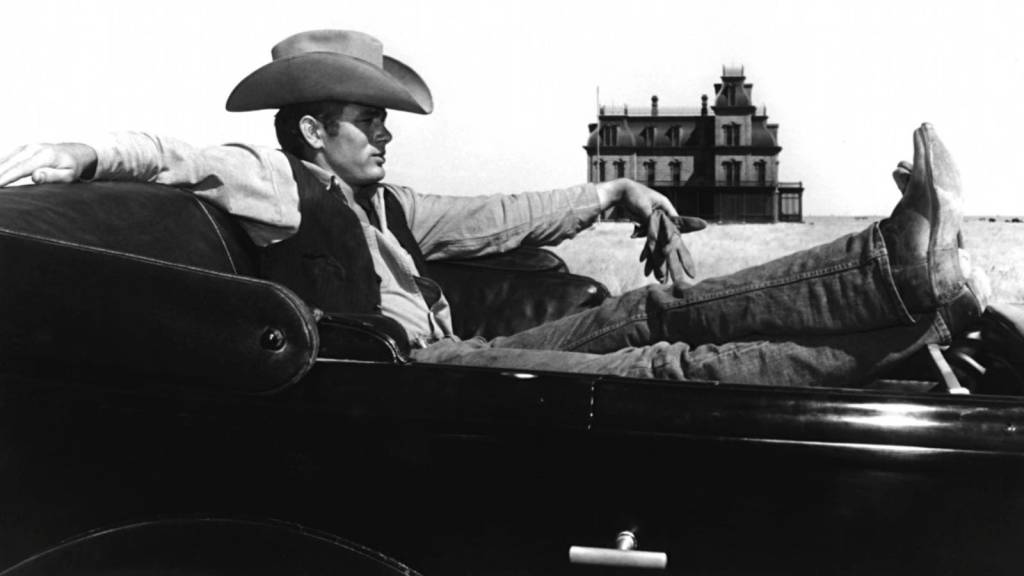
The loner. The poor boy who made good. The rich boy who made bad. The Wildcatter. The model for Jett Rink in the movie Giant.
Jett Rink, Wildcatter. Warner Brother, 1956.
Remember the time Glenn made a half-million from a field that all the oil companies said was dry? That’s nothing, once he was a million and a half in debt, so he built a $700,000 house just for the hell of it.
He said the banks would think he was rich. “Buy a new Cadillac and let them see you drivin’ it. Put ’em off the scent. And the time the Houston Country Club wrote him a letter saying that, all in all, they’d rather not have him around the place?
Yeah, those were the days, when—at least to the outside world—he was the personification of Houston, Texas, USA. Feast and famine, gusher and duster, whenever two people got together to fight or wheel or deal or all of the above, one of them was a smiling Irishman with curly brown hair and a dark mustache—Glenn Herbert McCarthy, the Wildcatter.
He came from Beaumont originally, the son of an itinerant oilfield worker, William McCarthy, who was a driller at Spindletop. Young Glenn was eight then, and carried a water bucket from the pump to the sweating workers. When he was 23, McCarthy wooed and wed Faustine Lee, the 16-year-old daughter of T. P. Lee, a rich Texas oilman. Lee was upset, since Faustine had run away from high school to marry, but by then, Glenn could hold his own. After all, he was an oilman too and soon he proved it. It’s been up and down, cold Brut Champagne and hot Bud. Time had him on its cover, the King of the Wildcatters. One of many.
“So what if some oilmen were flamboyant and boisterous and loud? They were the men who worked their tails off, rain or shine, winter or summer.” They risked everything and sometimes they won.
It took a man with an idea. A man like my grandfather who could solve a problem. Drilling wasn’t as straight forward as you might think. Bits did no always go straight down, they could wander all over the place. Drilling in sand or punching through rock can bend the drill string every which-a- away.
Since the business of punching holes in the ground was made up on the fly and there were very few engineers on the drill floor things had to be figured out by the dirty, sweaty roughnecks and Toolies. And by God they did.
The first slant well was successfully drilled in 1929 in Texon, Texas. Sidetracking a well can solve some unexpected problems such as bypassing damaged sections of the well or going around broken tools at the bottom that can’t be retrieved by fishing. Lateral deflection of the well bore has been achieved by placing a wedge or whipstock in the well. The whipstock is, essentially, a wedge that crowds the bit to the side of the hole, causing it to drill at an angle off the vertical. The angle of the hole was measured, in the days before high technology by the simple expedient of lowering a glass jar half filled with Sulphuric acid down the casing until it hit bottom. Left there for a time the acid would etch the inside of the jar and when pulled up a line indicating the angle would be clearly visible. The difference between this line and top of the jar indicated the angle of the bore. Very simple. Workman who solve problems rarely have any time to figure out something sophisticated like an engineer does.
When Bruce was working on the West side, as the fields around Maricopa, Reward and the Elk Hills were called, the depth of the wells was such that Rotaries were needed to make hole. A rotary rig with a Hughes Tool bit was able to drill nearly 9,000 feet**** No Cable tool rig could go much over 1200 feet. The Cable Tool method which he had nearly ten years of experience with were in the minority. Learning the rotary bit system wasn’t difficult and he soon became an excellent Tool Pusher for both types.
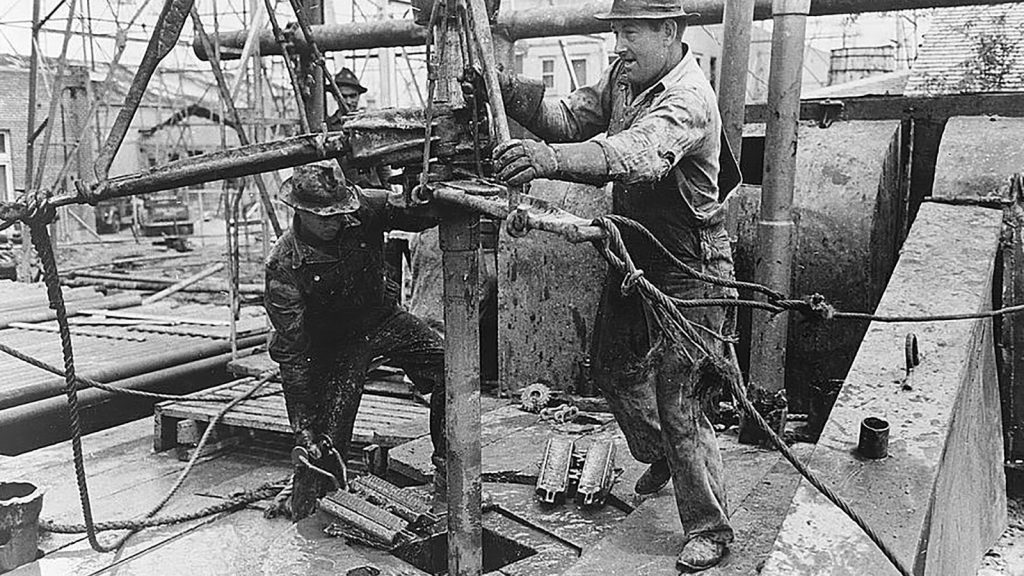
Tripping pipe on a rotary rig, Elk Hills. Near Taft Ca.
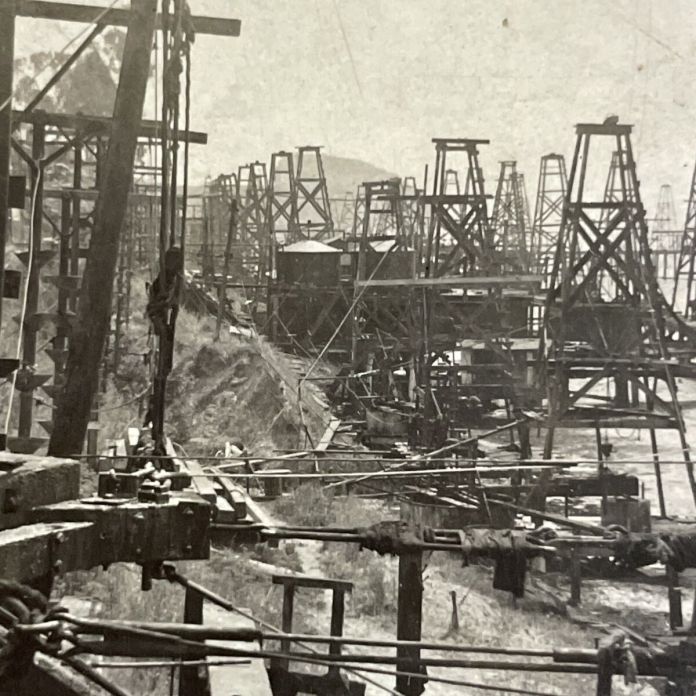
In Summerland it took just a few years to drill along the foreshore. The wells crowded together so close you could literally spit on your neighbor. The oil sands were shallow and the old walking beams of the cable rigs were everywhere. When they ran out of room the drillers simply built piers out into the ocean and kept on going. At about 1,200 feet the Rotary Rigs were set up on the piers and they moved farther out. When it got too deep for piers they brought in the whipstock and began slant drilling.
Summerland. 1928. Not a square foot wasted. and insanely dangerous. SB Historical
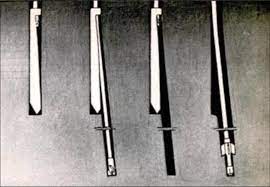
What they did was to take a large chunk of wood and shape it into a wedge, thinner at the top and thick and heavy at the bottom. Then all the pipe in the well casing was tripped out, the wedge lowered to the bottom of the hole. The drill string was then tripped back in and when the bit hit the whipstock it followed the angle of the wedge and began drilling at an angle.
Whipstocking. Baker-Hughes company illustration.
Now a driller could go around cave ins, or difficult strata reorienting the bit in the right direction. They quickly figured out that they could now drill more than one hole off the same rig. And of course, in the still wild and wooly oil business it took about two seconds for some sharp operator to figure out that he could drill under someone else’s lease and steal their oil. Bruce knew the technology and working for Seaside Oil they soon had a literal bowl of spaghetti of pipe with holes going every which-away. It was near impossible in those early days to figure out where any one’s string actually went. In a day when roustabouts still carried revolvers you had to be careful about what you said and to whom. A man had a family to feed after all and it was common custom to pay a man in shares of production once the well came in. Instead of cash, which was paid at the end of the job, a percentage of the payout on a barrel of oil was your wage. Contractors made their own rules and the big Companies looked the other way. Why they practically encouraged it by ignoring it. You couldn’t find a Toolie who knew anything about it. It was a mystery. It was highway robbery best kept quiet.
*The Osage county seat is in the small town of Pawhuska which you may be familiar with from watching Ree Drummond, the Pioneer Woman’s cooking show. Her husband Ladd Drummond owns the family ranch which covers 433,000 acres in Osage County. Oil rights obtained from the Osage has immensely increased the family’s wealth. The Drummonds were actively complicit in the Osage oil scandal of the 1920’s buying up “headrights” and foreclosed or bankrupt ranches from members of the Osage tribe. Not illegal exactly but certainly the result of “Sharp.” practice. Since Ladd’s cousin is the states attorney general, they are covered.
**The genealogical timeline for Barnsdall goes as such. Bigheart Oil Company-Barnsdall-Cities Services-Phillips-Rio Grande Oil-Standard Oil of New York, (Socony)-Richfield-Atlantic Richfield, (Arco)-Sinclair-Continental- Marathon oil and in 1999 British Petroleum, (BP Amoco)
***Boomtown 1940. A film starring Clark Gable, who actually worked for Barnsdall oil in Oklahoma when he still had big ears and bad teeth. Old timers will tell you its the best film ever made about boom and bust wildcatters and is largely true to life. From Kilgore Texas to the Kettleman Hills in California.
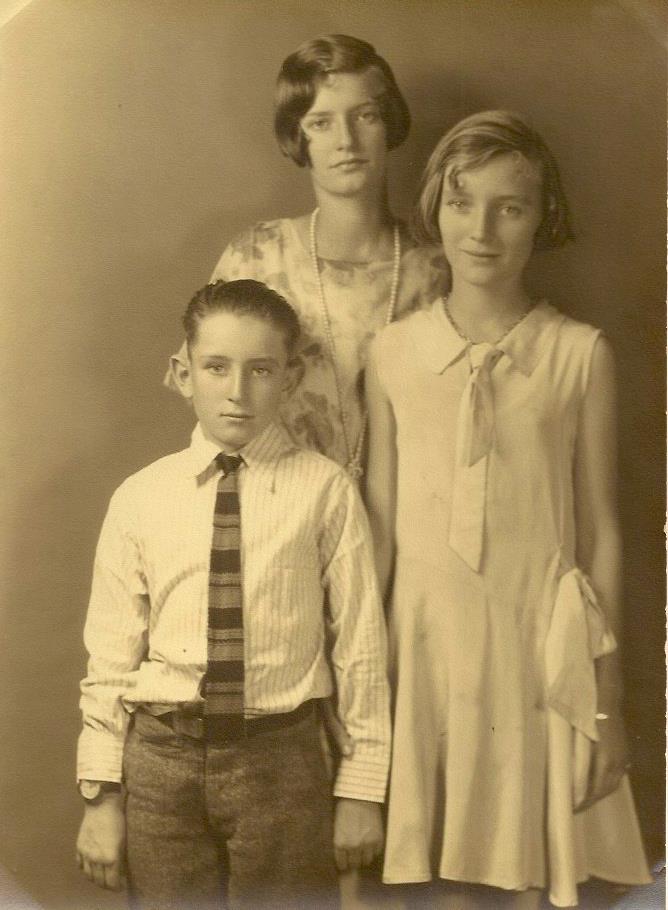
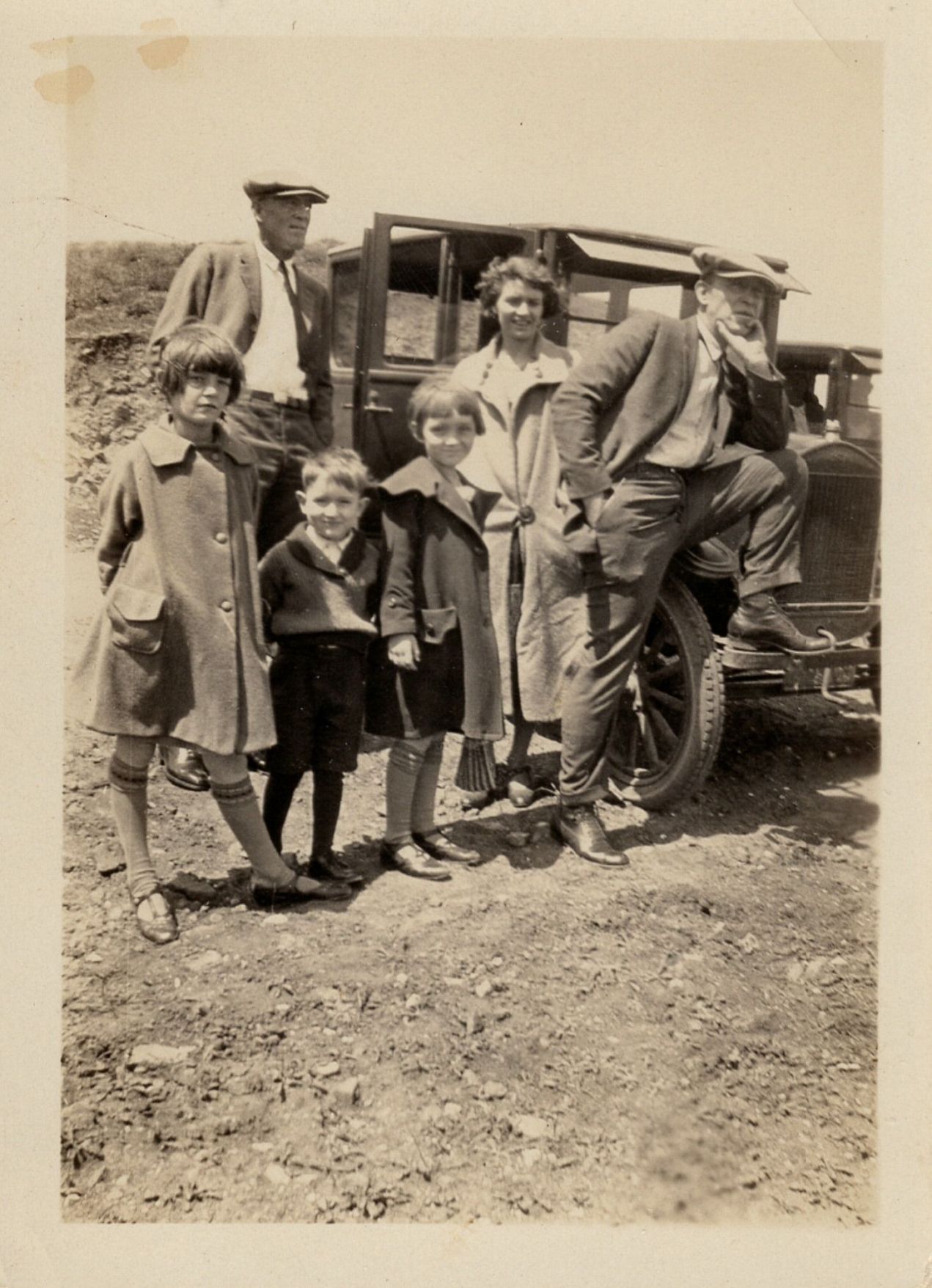
Cover Photo: The Hall Family Mariel, Bob, Barbara, my mother, Eileen and Bruce. Uncle Marion in the rear. 1928.
Michael Shannon’s mother was on the ride with his grandparents. Her memories form a great part of this story.
The Shooter arrived in his Studebaker truck. His Torpedos rolling back and forth as he bounced up the road from Bakersfield. The wooden boxes which held the twenty, ten quart cans of Glycerine, all packed tightly in a wads of excelsior, held securely in place by the sideboards, strapped down. Roped in tight. His was a job that allowed no mistakes. A job for a calm and very careful man. Perhaps a man who liked to blow things up. The boy who blew up coffee cans with firecracker was a natural.
The Shooter and his Torpedos.
Oil isn’t easy to find. Sometimes when you find it its impossible to get to it. When Bruce’s well got down into the oil sands he knew from the debris in the bailer. Sometimes, though the presence of oil in the samples was small and the decision was made to send a torpedo down the hole and try and fracture the formation by setting of a blast and setting the oil in the mineral free. Oil flow could be increased many times over if they were successful.
Contractors that did the “Shooting” were a highly evolved trade. Sending a hollow tube packed with a couple hundreds pounds of jellied Nitroglycerine down a well took some nerve and a great deal of skill. Men who made a career of shooting were few.
In 1867 the chemist Alfred Nobel found that by taking Nitroglycerine, an extremely unstable compound and combining it with diatomaceous earth in order to make it safer and more convenient to handle, and this mixture he patented in 1867 as “dynamite”. Nobel later combined nitroglycerin with various nitrocellulose compounds, similar to, Collodion, but settled on a more efficient recipe combining another nitrate explosive, and obtained a transparent, jelly-like substance, which was a more powerful explosive than dynamite. Gelignite, or blasting Gelignite, as it was named, was patented in 1876. Gelignite was more stable, transportable and conveniently formed to fit into bored holes, like those used in oil drilling.
The Shooter, Bruce and the other rig workers knew that even after all the improvements of the previous 60 years things could still go wrong. Bruce would clear his rig of all personnel, making sure that they moved as far away as they could from the rig to be “Shot.” No one argued.
Bruce was fortunate to work for companies who took this part of rig operations seriously. You had two choices, hire experienced outfits and pay the freight or independents who were cheap but had little experience and could be hazardous to the health of everyone around them, including themselves.
If your rig was down a bad road, they would send the drivers out, tell’ em to be careful, load the soup in the back of those old trucks and send ’em off. The trucks didn’t have any shock absorbers or padding or anything to give them protection, so those guys got more money than the Toolie and earned every cent. They could be driving down an old dirt road, headed to the well and the truck would fall in a chuck hole and that would be the last of them. Every once in a while if your ear was tuned to it you could hear one take off. Nothing to do for it but to hire a new driver.
Up at the north end a Wildcat well, Arnold No 3 hit oil sands but estimated production would not reach profitable levels so the decision was made to call in a Shooter and crack the formation at the bottom of the well in order to increase flow. It was well known that Wildcatters always hung from a shoestring financially and instead of hiring out to a reputable company the looked, instead for a Cheapo outfit. They soon found one, a father and son set-up who guaranteed they could bring Arnold No 3 in. They showed up on a Sunday, hauling their dope in an old cut down Cadillac car. They packed the torpedos with two hundred pounds each of Glycerine. Now, being either too inexperienced or too stupid and lazy to do the job right they hauled all their gear up onto the drilling floor. They used the sand line to hook up the first torpedo and lifted her up ready to send her down the hole. Too lazy to pull the Key from the rotary table, figuring the torpedo would just fit they lowered her down into the Key where she just barely fit. As they lowered away, the torpedo squeaking and scraping the sides of the Key. the drilling crew seeing what was going on backed away until they were a hundred yards away for safety’s sake.
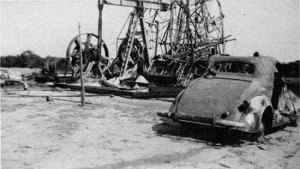
Sure as shootin’ the torpedo stuck in the key with about a foot showing and after some kicking an shoving the father took up a section of small 3/4 inch pipe and commenced to banging away, trying to get it to move. The drill rig boys saw that and turned and began to hotfoot it as fast as they could, putting some distance between themselves and the fools on the rig. The boy took another piece of pipe and started hitting the other side of the torpedo from the father, banging and banging. The slowest, youngest roughneck got behind a small pepper tree and leaned against it hoping for the best. After a minute or two the Nitroglycerin in the torpedo got tired of being abused and lit up with a roar. Father, son, rig and the Caddie vaporized. The roughneck, more than a hundred yard away was killed by the Cadillac’s door slicing right through the tree and the boys neck.
The Blast Site, Oildale, California. 1936 Note the missing passenger door.
When the dust cleared, there was nothing left of the rig or the men on it, just a huge crater nearly thirty feet deep. No part of the father and son was ever found, not a finger or foot, though they looked all around wanting to find something the poor wife and mother could bury.
The next morning, driving to work along the Valley Road, now north Chester Avenue a pusher for Standard Oil found a wheel from the Cadillac lying in the road, more than two mile from the blast site.
With a little common sense and an abundance of caution Bruce had now survived in this dangerous business for nearly a decade. The danger you can see is avoidable but the danger you can’t is not. Looming on the horizon was something that would throw the family into crisis.
The price for barrel topped $ 3.00 in nineteen and twenty and had, because of massive over production, been sliding downward. By the 1920s the automobile became the lifeblood of the petroleum industry, one of the chief customers of the steel industry, and the biggest consumer of many other industrial products. The technologies of these ancillary industries, particularly steel and petroleum, were revolutionized by its demands. With no industry organization or government oversight established corporations led by the ever hopeful wildcatters drilled and drilled and drilled.
Henry Ford’s River Rouge plant had geared up for the new Model A in fall 1927 and by 1928 was rolling them off the assembly line at 9,000 cars a day. Mass produced and marketed you could get a snazzy Ford Roadster for $385.00. Didn’t have to be black either, unlike the venerable old Model T which came, as Henry said, “In any color as long as its black. By comparison. Douglas Fairbanks and Mary Pickford, owners of their own studio and without a doubt the best known film stars in the world really tooled around in a Duesenberg Model J which retailed for $8,700.00 dollars or about the cost of five average homes. It’s not likely they actually owned the Model A they are standing with. If they did, the cook and the maid used it to run errands.
Doug and Mary, 1928, with the Model A Ford.
Bruce and Eileen were doing well enough. By 1928 the two girls, Barbara and Mariel were twelve and eleven about to enter high school and little brother Bob, nine. High school beckoned. They had moved from the fields in the valley where Bruce had worked for Barnsdall Oil Company wells on both the east and west side.
It was a good time to get out of the valley. Oil workers were staging strikes on the Westside in Taft, Maricopa, Coalinga. The oil companies countered by trying to bring in “Scabs” from the bay area. Southern Pacific was happy to help as they had a major stake in production. Since the end of the war when wages rose the big companies decided they would put the squeeze on their labor and had gradually driven pay down. Strikebreakers, “Scabs” were protected by armed men, paid gunsels. county sheriffs and the police who knew where their butter was. The Southern Pacific RR was happy to provide trainloads of strikebreakers to the producers. There was some nasty businewss that took place at the SP depot when these trains arrived. Bruce was always concerned about things like this and after Casmalia never lived in the housing provided by the oil companies. They rented houses away from the central retail and housing districts. Oil towns were rough as they continue to be today. Gunplay, knives, drunkenness, prostitution and the company store with it’s outrageous prices were to be avoided, especially with three young children.
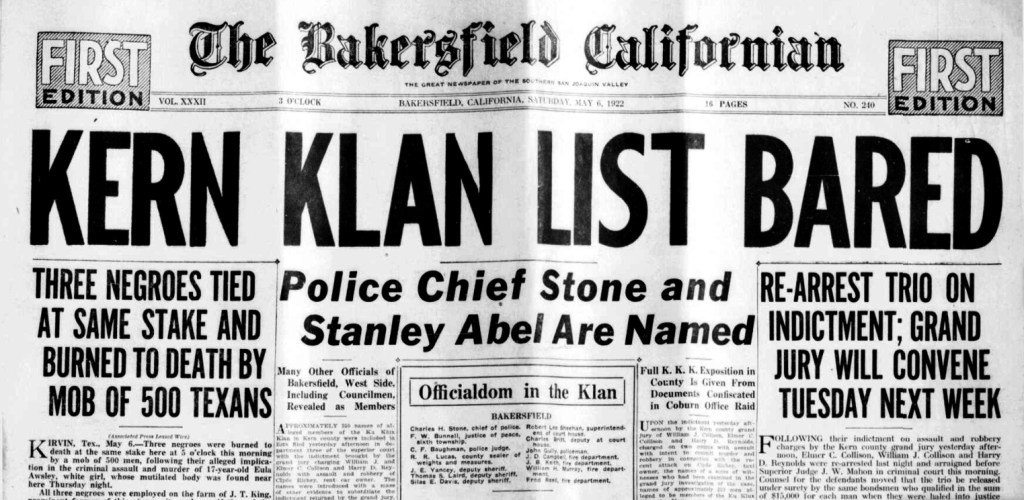
Taft was a “sundowner” town, which meant that if you were black or Mexican you’d better be out of town by sundown. The Ku Klux Klan was well organized and made sure that everyone knew Taft was a White Man’s town. A Kern County Supervisor, a certain Republican named Stanley Abel even had a mountain in the Los Pinos Wilderness area nearby named after him. It still is.
The Bakersfield Californian May 6, 1922
When confronted with this revelation, Stanley Abel was unapologetic to say the least. He said in a statement the day after the Bakersfield Californian published their report: “Yes, I belong to the Knights of the Ku Klux Klan, and I am proud to be associated with many of the best citizens of Taft and vicinity in the good work they are doing….I make no apology for the Klan. It needs none.”
Many in Kern county were not impressed. They started recall campaigns for Abel and others in city and county governments. Local newspaper the Bakersfield Morning Echo was staunch support of the supervisor, stating: “Those liberal Democrats promoting the recall of Stanley Abel are the enemies of good society and of the best interests of Kern County. A vote for the recall of Stanley Abel is a vote for the return of the vicious element and the vicious conditions which existed in years gone by.” Sound familiar? History allows the name to change but the song remains the same no matter the age.
The writer is the grandson of Bruce and Eileen, He and his cousins grew up with stories from the Oil Patch.
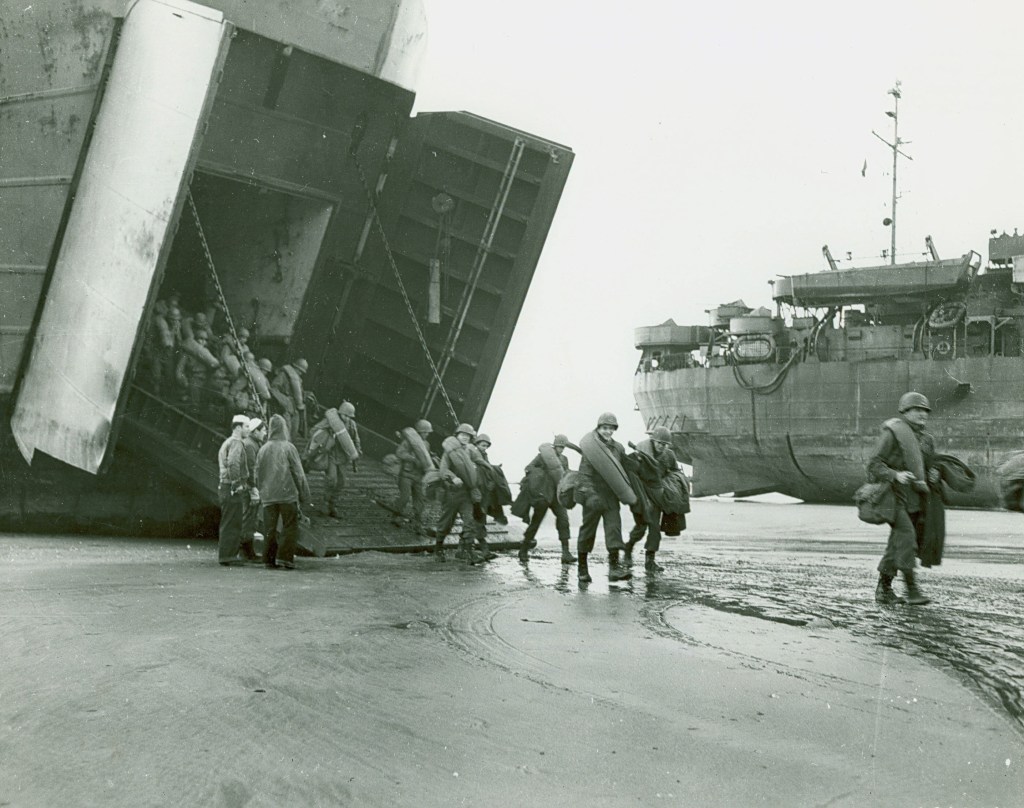
Landing Ship Tank was the official designation for the ship your dad traveled on to Luzon. The Navy thought that the name was adequate, they didn’t believe they deserved an official name such as those given to “Real” fighting ships. Sailors of course, being very young and with a patented sense of irreverence simply called them Large Slow Targets. Nearly forty were lost during the war so the swabs were right on the mark.
Disembarking from a large slow target, Lingayen Gulf Phillipines. US Navy Photo.
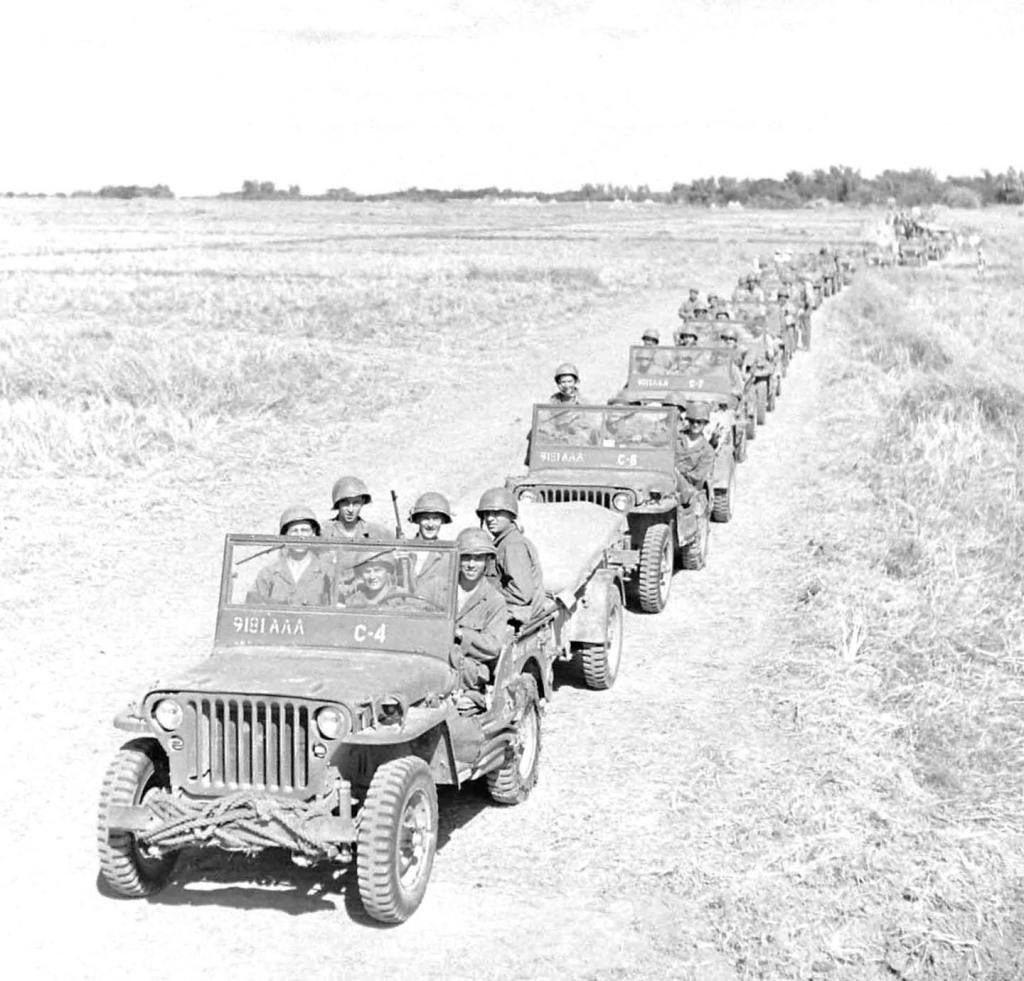
MacArthurs army charged down highway 55 towards the City of Manila. General Sasaki had chosen to leave only a few units along the 224 miles of the fertile Cagayan valley that runs down the center of Luzon. They convoys of American troops sped past Tarlac City, Angeles, San Fernando to Valenzuela on the outskirts of Manila proper. Though the allies had declared Manila an open city and had planned to bypass it. The Japanese were determined to defend it.
In the run down the valley, Some of the major guerrilla groups materialized out of the Corderillas and joined the regular tropps of the Eleventh and sixth corps. Groups led by Ramon Mafsaysay, future president of the Phillipine Republic, Russell Volckmann who was a West Point Graduate and had escaped into the mountains in December 1941 and led a guerrilla force of over 22,000 men*. Robert Lapham was a reserve Lieutenant in the 45th Regiment, Philippine Scouts and escaped into the jungle just before the fall of Bataan in 1942. Considered the most disciplined and successful of the guerrilla groups he moved into the Zimbales mountains where his 13,000 fighters fought with General Walter Kruegers sixth army.**
MacArthur ordered your dad’s team to Zimbales province where they were to be stationed in Olongapo City on Subic Bay. Subic was to be one of the prime the anchorages for the Navy as the Allies prepared for the invasion of Japan. By early 1945 the Navy operated over 6.700 ships of all types and Harbors like Subic and Manila Bay were essential to provisioning and maintenance.
Arriving at a large permanent base the team would have had the opportunity for the first time since landing on Luzon to strip off their filthy uniforms, shave and be relatively safe. For the first time in a long while the chances of being killed or wounded by artillery, Japanese bombers or snipers was behind them. For perhaps the first time your dad could stand up straight without fear of being killed. One MIS soldier said that when he moved into the Quonset hut he was to live in he was reminded that the slamming of the screen doors caused him to stand there and repeatedly open and close it because it reminded him of home so. He said it made him literally weak in the knees.
Hilo must have looked out at the country they were traveling and been reminded of his home in California. The land was gentle and planted in crops tended by families who lived on it. The feral and disturbingly inhospitable jungle, the Green Hell he and his friends had lived in for two years was replaced by a land more familiar to the farm boy from Arroyo Grande.
The island was such that a war of maneuver, where overwhelming numbers of troops and war machinery such as tanks an aircraft gave the allies a great advantage. American industry helped to turn the tide. I read of a German soldier captured in France asking his captors. “Where are your horses?” The Germans moved by horse drawn vehicles and had never dreamed of the American ability to produce. The Japanese Imperial army was equally amazed.
Highway South to Manila. War Department 1945.
The job of the MIS was to put together as much information as they could for the planners of the coming invasion of Japan proper. Captured documents, radio intercepts, military orders, maps and personal letters were to be collated in order to locate as precisely as possible every installation, road, railroad, landing strip In the islands. They even knew the home addresses of individual officers and enlisted men. It was a monumental task.
No longer suspect, Military Intelligence had long proved its worth. The battle of Midway, Guadalcanal, the island hoping campaign, MacArthurs drive up the southwest Pacific, The ambush of Admiral Yamamoto, Merrills Marauders, The mission in China supporting the armies of American General Stillwell and Chiang Kai-Chek, The battleship encounter in the Surigao Straits of the Phillipines along with the organization of the vast amounts of information obtained through all sources gave the allies an impressive view of the Japanes forces everywhere.
Housed in Quonset huts, hundreds of MIS translators worked around the clock preparing the information that would be need for what was planned as the largest invasion in history. The planning assumed multiple invasion beaches scattered around the Japanese homeland. In the coming invasion of Japan, the US navy planners favored the blockade and bombardment of Japan to instigate its collapse. General Douglas MacArthur and the army urged an early assault on Kyushu followed by an invasion of the main island of Honshu. Admiral Chester Nimitz agreed with MacArthur. The ensuing Operation Downfall envisaged two main assaults – Operation Olympic on Kyushu, planned for early November 1945 and Operation Coronet, the invasion of Honshu in March 1946. The casualty rate on Okinawa was to be 35% of all troops and with 767,000 men scheduled to participate in taking Kyushu, it was estimated that there would be 268,000 casualties. The Japanese High Command instigated a massive defensive plan, Ketsu Go (Operation Decisive) beginning with Kyushu that would eventually amount to almost 3 million men with the aim of breaking American morale with ferocious resistance. All men of any age, women and children were to be drilled for the effort. Thousands were issued sharpened stakes for use. The plan was for a resistance that would cause the ultimate collapse of the empire and the end of the Japanese nation. Resistance would be suicidal. Some estimates of American casualties ran as high as a million killed and wounded.
It’s impossible today to imagine what the military leaders and planners struggled with. Ordinary soldiers who were involved in the planning must have simply been sick at the thought. No one knew about the bomb. He wasn’t told about it until after President Roosevelt died on April 12th, 1945. From President Truman on down the inevitability of the holocaust in Japan for all countries must have been horrific. America was already exhausted. Too many dead boys to bear. Casualties in other allied countries were much higher than ours. In Great Britian there were literally nl boys left. Generals waited impatiently for 17 and 18 year old boys to graduate and be eligible for conscription. As in WWI these children were referred to as “The class of 1917” or “The class of 1944.” Back home in Arroyo Grande, class of 44′ boys included Gordon Bennett, John Loomis, Tommy Baxter and Don Gullickson who would all be in the Pacific by wars end. It must have seemed a universe of war with no ending. Most soldiers and sailors never made it home for a visit. From 1941 you father had spent over fourteen hundred days without seeing his family. There must have many nights lying on his cot in the steaming tropics unable to sleep thinking about his family, not knowing precisely where they were, how they were being treated; would he ever see them again. There was no answer to be had.
Exhaustion would have been written on the face of your father by the beginning of 1945. He had been overseas for over three long years. He hadn’t seen his family, surrounded by barbed wire and guard towers with machine guns pointed inward for going on five years. Corralled in the Southwest Arizona desert, winter and summer it must have been agony for Hirokini and Ito. Until 1943 theirs could not visit them. The fact that the boys had volunteered to serve the only country they knew meant little to military administrators.
The agony of mothers is compounded by the fact that though grandparents knew he was somewhere in the Pacific they never knew exactly where or what he was doing. Headlines in the Newspaper blared massive headlines praising the military for the carnage they caused and were exposed to. Casualty figures, though not typically released to the press didn’t stop the reporters on the wartime beat from happily publishing the butchers bill.
There is a scene in Saving Private Ryan where, in the distance a small farmhouse and barn somewhere in the wheat-fields of mid-America you see an automobile being driven along a dirt road. It’s a drab green color with a white star on its door. It’s rolling through a cloud of dust of its own making. A middle aged woman in the kitchen goes about her business, rinsing the lunch dishes, her hair styled in the rolls worn by mothers and grandmothers of the time. As she moves about dressed in a red print housedress and an apron exactly like your grandmother wore, she begins rinsing the dishes in the sink. A little movement in the distance catches her eye and she looks up to see the car as it turns up the road to the house. The woman, who you know immediately is the mother of the four Ryan boys because there is a small banner hung, almost without notice by the camera, on the kitchen wall. Framed in red with four blue stars on a white background indicating four children, boys, just boys in the service. Mrs Ryan looks up, sees the car, goes back to the dishes, with her head still down it registers. Why the car is here. She looks up again and grows absolutely still, She knows. The heart goes still, scarcely breathing, she sleepwalks to the screen door and stands, her slippered feet spread, very still as the car pulls up. She does not move. Everything in the scene is in suspended animation and when the doors open, first an officer in uniform from the front then her pastor from the back door, she loses control of her legs, staggers and then slowly, agonizingly collapses on the floor boards. It goes to the heart of every mother who sent a son off to war. It’s the finest scene Spielberg has ever made.
Mrs Margaret Ryan at the window, sees the car, in that instant she knows. Note the white picket fence reflected on the glass in a way that suggests white crosses. Superb imagery. Spielberg is a master artist. Screen capture. Amblin Entertainment, Mutual Film Company. 1998
The battle for Manila was to be the most destructive operation in the war outside of Stalingrad and the final apocalypse of Berlin. In the movie, “The Pianist”* the final scene is Adrian Brodie standing in the ruins of Warsaw, Poland. Though it’s a movie set, the scale of destruction is enormous, it borders on insanity, hopelessness and utter destruction. Such was Manila.
Your father had a ringside seat working at Subic Bay. MacArthur himself had a personal attachment to the city, he had lived there for many years. His son had been born in a Manila hospital and when he was serving in the Filipino Constabulary he was often quoted that it was his favorite city. An ancient city with wide avenues and scores of beautiful old buildings shaded by tens of thousands of trees, the dignified Narra with its gorgeous yellow flowers underlayed by the fallen blossoms carpeting the walks below, the unfurling Dapdap known as the Coral Tree with it’s diamond shaped, fiery red blossom, and the huge and ominous Balete, trees renowned for their expansive, sprawling roots and branches which are said to be home for sorcerers.
Gracing the ancient streets deep in the city, “Old Manila” refers to the historic walled city of Intramuros. Manila was known for its Spanish colonial architecture and historical landmarks like Fort Santiago and the San Agustin Church. Fort Santiago (Saint James, the patron Saint of Spain) was built between 1590 and 1593 by the first governor of the Spanish Phillipines and anchored the city center.
Your dad never saw it. By the time he left the Phillipines it was a graveyard of buildings, people and culture.
When the Japanese attacked the islands in 1941 MacArthur declared Manila an open city and withdrew his troops to save it from destruction. This was not to be the case in 1945 when your father was there. General Tomoyuki Yamashita, he commander of the army withdrew his forces from the city into the mountains of the northeast portion of the island leaving Yamashita decided not to declare Manila an open city as MacArthur had done but that Gen. Shizuo Yokoyama, destroy all bridges and other vital installations in the area and then evacuate his men from the city as soon as American troops arrived in force.
In spite of these orders, Rear Admiral Sanji Iwabuchi, commander of the Imperial Japanese Navy’s 31st Naval Special Base Force, was determined to fight a last-ditch battle in Manila. Iwabuchi repeatedly ignored orders to withdraw from the city. From the beginning of February 1945 until march, some of the most vicious street fighting of the war took place. Artillery and air strikes reduced the beautiful old city to a vast landscape of roofless shells. The Japanese forces resorted to a suicidal defense, refusing to surrender and murdering tens of thousands of Filipinos, men, women and children. Accounts from US soldiers tell of rape and systematic execution of the civilian populace. For the remainder of March 1945, American forces and Filipino guerrillas mopped up Japanese resistance throughout the city. With Intramuros secured on 4 March, Manila was officially liberated, although the city was almost completely destroyed and large areas had been demolished by American artillery fire. American forces suffered 1,010 dead and 5,565 wounded during the battle. At least 100,000 Filipino civilians had been killed, both deliberately by the Japanese in the various massacres, and from artillery and aerial bombardment by U.S. and Japanese forces. 16,665 Japanese military dead were counted within the Intramuros alone.
Afterwards, City of Manila, April 1945. War Department photo.
From Subic Bay where your father was, the sound of fighting would have heard. Flashes on the horizon coming from fires and exploding bombs would have illuminated the night sky. He heard the rolling thunder of the defenders being crushed. No one really knows the number of Japanese troops and civilian Filipinos died there. At the end the Imperial Army simply executed any Filipino they could find. They burned them with flame throwers, lined them up against walls and move them down like wheat stalks, they locked them in churches and burned them alive. Women were brutally raped and then shot. It was Hell on earth. It simply cannot be imagined except by those who lived through it and those, especially the soldiers, sailors and nurses to save their sanity simply locked it away. PTSD as it is known today is not a recent phenomenon but has been known by all veterans since Thermopylae and the Phalanx’s of Alexander and the Emperor Xerxes.
Dear Dona
Chapter 13
Coming Next
The Final Blow.
Cover Photo: The Fort Santiago Gate after the battle for Manila. War Dept. Photo.
*Brigadier Russell W. Volckmann was one of the founders of the Army’s Special Forces units after the war. His experience as a partisan commander was highly valuable in the formation of that elite force
**In 1947, Lapham returned to the Philippines for five months as a consultant to the U.S. on the subject of compensation to Filipinos who had served as guerrillas during the war. He recognized 79 squadrons of guerrillas under his command with a total of 809 officers and 13,382 men. His command suffered 813 recognized casualties. However, sorting out the deserving from the fraudulent was difficult. Of more than a million claims for compensation in all the Philippines, only 260,000 were approved. Lapham believed that most of his men were treated fairly, but was critical of U.S. policy toward the Philippines after the war. “If ever there was an ally of American whom we ought to have treated with generosity after the war, it was the Philippines.” He said the U.S. Congress was “niggardly” with the Philippines, providing less money for rebuilding than that spent in many other countries, putting conditions on Philippine independence that favored U.S. business and military interests, and backing corrupt Filipino politicians who protected American, rather than Filipino, interests.
***The nurse, LT. Sandy Davys from the film “They Were Expendable” by John Ford surrendered with the other 86 nurses on Bataan and spent the war years in the Los Banos and Santo Tomas internment camp in Manila. They all survived.
“The Angels of Bataan” War Department Photo. 1945
****”The Pianist,” the Oscar-winning film, is based on the real-life story of Władysław Szpilman, a Polish Jewish pianist who survived the Holocaust. Szpilman’s memoir, also titled “The Pianist,” details his extraordinary survival in Warsaw during World WarII.















 atthetable2015