
Philadelphia
Michael Shannon.
Friday the Philadelphia Phillies were out west playing the Los Angeles Dodgers at Chavez Ravine. Philadelphia brings not only coaches and ballplayers to your park but a well deserved reputation for hard-nosed baseball. Actually, hard nosed period.
Philadelphians are known for their distinctive affinity for their home sports teams. Philadelphia sports fans have quite the reputation. From “burning down the city” to dragging down opposing team’s enthusiasts, fans of the city’s national sports teams are constantly criticized for their ornery nature. There is something to be said about “throwing all your hopes and dreams” into something that you have no impact on.

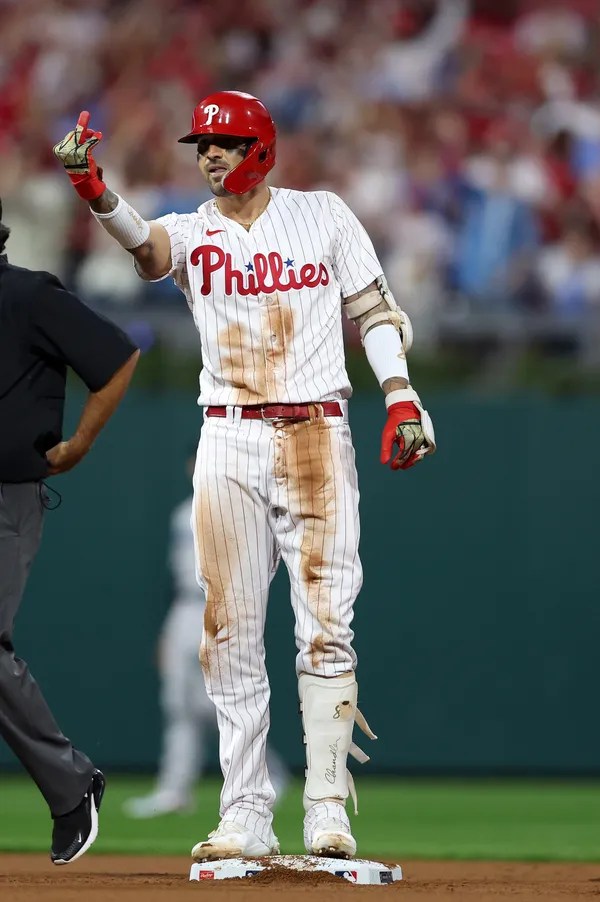
Don’t tread on me. Nick Castellanos. ESPN
Founded in 1883, the Phillies are the oldest, continuous, one-name, one-city franchise in all of professional sports and one of the most storied teams in Major League Baseball. Since their founding, the Phillies have won two World Series championships (against the Kansas City Royals in 1980 and the Tampa Bay Rays in 2008), eight National League pennants (the first of which came in 1915), and made playoff appearances in 15 seasons. The team has played 120 consecutive seasons and 140 seasons since its 1883 establishment.
The sports website Bleacher Report ranked Phillies fans as having the “most insufferable fan base” in sports. A tough blue collar city Phillies fans revel in that particularly the “Insufferable” part. My friend Jim, who’s from Philly says no one in Philadelphia has ever used that word in a sentence. Just more ammunition to hate highfalutin, self satisfied fans from other cities. Letting the air out of other teams balloons is the Philadelphia national sport.

My son and I watched the game and saw, perhaps the application of a little Voodoo. Gris-Gris personified. A Doctor John example of a talisman, amulet, voodoo charm, spell, or incantation capable of warding off evil and bringing good luck to ones team while bringing misfortune to another, the Dodgers in this case.
The outfield camera was looking in towards home plate and just to the left of the catcher a middle aged blonde woman carefully lifted a small box with a glassine cover. She deliberately turned the transparent part towards the camera and if you looked closely you could see that inside was bobblehead doll, a Chase Utley bobblehead in a Dodger uniform. Yes, that Chase Utley, the one that played 12 years at second base for the Phillies, a perennial all-star and quiet team leader. He was perhaps the steadiest leader of the Phils since Hall of Famer Mike Schmidt. A man you could build on, a man you could admire, a man who upheld the fans notion of a true Philadelphia Phillie, tragically traded away for money to those wretched old Trolley Dodgers who now resided in that west coast city, den of iniquity, land of the Lotus Eaters, Lost Angeles. Phil’s fans were surprised, hurt and then angry. Really angry, really, really angry.
Take that. SSI photo
Fast forward to 2024. As the woman, her face twisted with a kind of glee you might see on the face of a righteous believer waggled her little box timing it to the time the camera waited for the pitcher to deliver the ball to home plate. Her companion monitored the TV feed on her Cell phone so she knew when the camera man was focused on her antics.
With a demonic look she stared straight into the camera and slowly puled the little doll out of the box, holding it so its little painted eyes looked straight into the lens and then reached up with her right hand and slowly, ever so slowly twisted poor Chases’s little head clean off. Getting to her feet she turned back to the crowd and raised the headless doll up high and the turning back to the camera, slam dunked the poor little deceased thing to the concrete. With an obviously demonic laugh she sat back down and shared a high five with her companion, the spell complete.
Phillies 6, Dodgers 2.
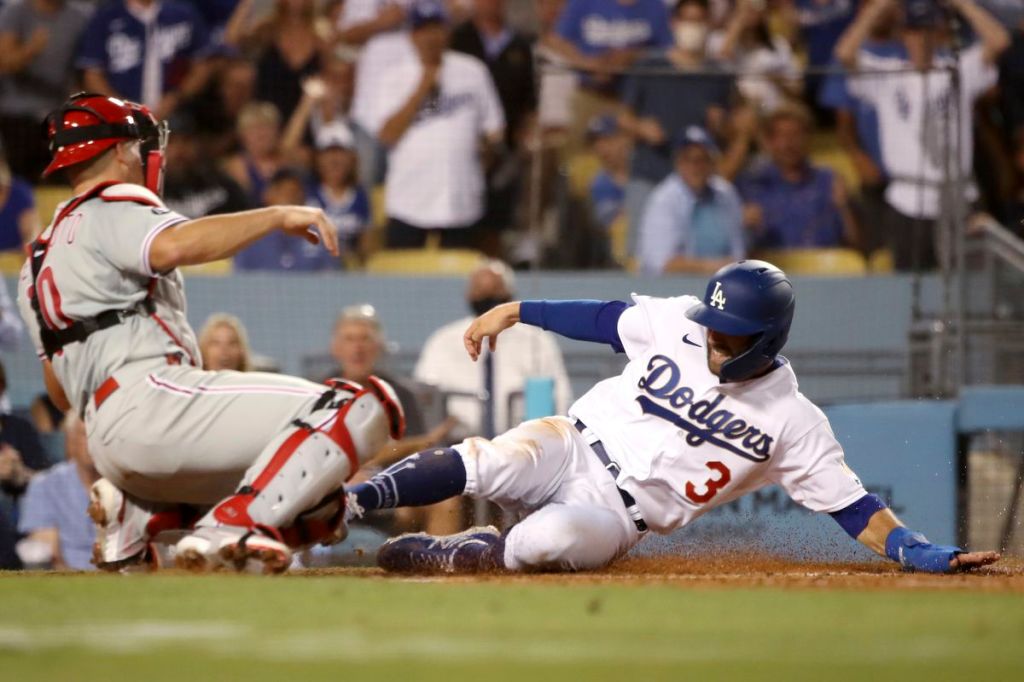
J T Realmuto vs Chris Taylor. AP
Dodger management needs to find that woman, she is quite clearly the reason the Dodgers have more players on the injured list than in the dugout.
Gonna have to go through this guy first, seriously.
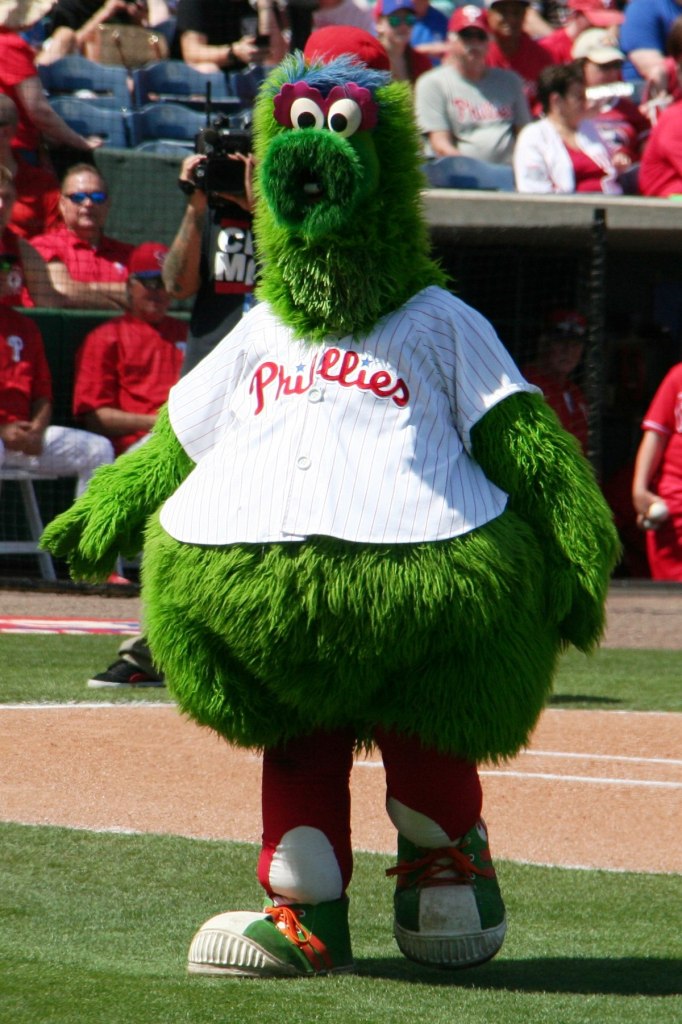
As you can see the writer is a fan.
Michael Shannon is what was once known as a baseball Crank. Baseball can save your sanity. Try it.
ON THE TABLE
By Michael Shannon
Mundane things. Sitting on the kitchen table, arranged and seemingly haphazardly set. Salt and pepper shakers, the old milk glass kind with the screw on top, the salt perpetually stuck to the top. There is a sugar bowl with no top. The top wasn’t necessary because my father in particular was very partial to a good coating of white sugar on all kinds of things. Sliced tomatoes received a liberal coat of sugar as did his already sweetened cereal. Habits from his childhood when nothing you might eat was sweetened. He told me once that a real treat in late teens was to slice a piece of bread, there was no sliced bread in 1920’s Arroyo Grande, you had to do it yourself. You then spooned whipped cream over it. When your parents own a dairy you soon learn that there is nothing that cannot be improved by a liberal coating of cream. In our house, Pumpkin pie must be completely covered and invisible. If not, it’s simply inedible.
Old copies of the Los Angeles Times, and the San Francisco papers held sway in our household, conservative to the core he said. The news was mixed with the occasion Redbook or Ladies Home Journal and sat haphazardly near the corner of the table where nobody ever sits. At my mom’s end is an old Signal Oil ash tray courtesy of her fathers long career as an oilman. You may remember the kind with bag of buckshot to keep it in place. I know it was shot because I made a hole in it one day when know one was looking. My dad just uses a handy plate or if nothing else, the turned up cuff of his Levi’s.
This place of honor, pride of place thing, was reserved for a book. Over the years there was a succession of them, one after another. They were always dog eared with the ubiquitous coffee ring and the occasional petrified Cheerio courtesy of my little brother Cayce who ranked amongst the worlds fastest eaters. Mornings he could be seen surrounded by a halo of Rice Krispies or Cheerios carried on a mist of milk drops. He had the digestive tract of a buzz saw. He needed that because he was chronically late. Dad always said he needed that because he could leave the house at 7:05 and be at work in Pismo Beach at 6:50. It was a unique talent, not many people can make time run backwards. The only documented person other than my brother was Emmett “Doc” Brown.
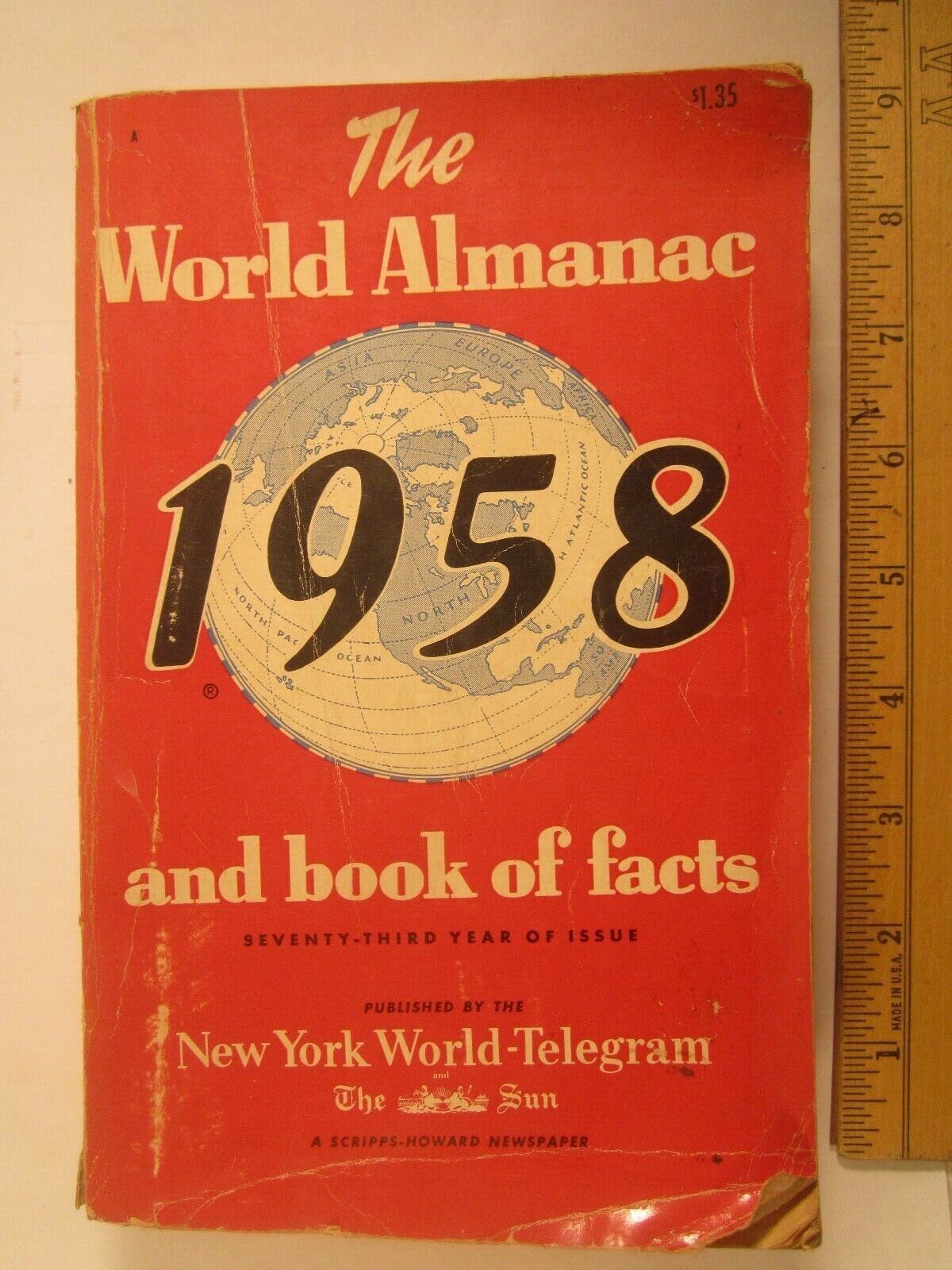
The book, which sat at my fathers right elbow was the World Almanac. More of our basic education came out of that book than our textbooks. The number one thing was the satisfaction that came from knowing a fact. The things our teachers taught us at school were in great part just things to memorize. Nearly any disagreement or argument on almost any topic could be settled by thumbing those tissue thin pages until the correct answer appeared. As a child it seemed simply magical.
Today an actual Almanac is hard to find. The local library has one in the reference section but you cannot check it out. There are many search engines but they are fraught with misinformation. You can’t step into the jaws of Google unless you’re armed with the skills necessary to dig through that pile of trash in order to find the nugget at the bottom. The totality of Google is simply unknowable. With a book you can see every part, turn that page and read facts that have been researched, checked and rechecked. Gird your loins with a good education and enter the fray if you will.
Dad would pose random questions about almost any subject and the kids would make wild guesses about the probable answer. Out would come the Almanac. He opened a courucopia of questions because we soon learned that there is never a simple answer. Behind every answer there is still another question.
So, how far west can you go in the United States? Well there is Port Orford, Oregon (Port Awful if you are an Oregonian) is the westernmost incorporated city in the contiguous US. Ok, but is it the actual westernmost point? No it’s not, that honor goes to Cape Alava, Washington. But, there’s more. What about Alaska and Hawaii? Honolulu is 7.954 degrees of Longitude farther west than Anchorage. With one degree being 69 miles that equals about 550 miles. Surprise, surprise as Gomer would say.
It gets even more mind boggling. Point Udall, Santa Rita, Guam is the westernmost point of all in the United States and it’s territories. But wait, it gets even better, Point Udall, St. Croix, US Virgin Islands is the easternmost point. They are 9,541 miles apart. How does that make any sense? The two different Point Udalls are named for two different men: Morris, “Mo,” Udall (Guam) and Stewart Udall (Virgin Islands). They were brothers from the Udall family of Arizona. They both served as U.S. Congressmen, both liberal Democrats and environmentalists in the 60’s and 70’s. Perhaps the names indicate the distance from conservative Republican Washington politicians as you could get. Look them up in the almanac, they were interesting men.
We looked up populations. How big was New York in 1880? How about now? What is California measured in Square miles? (163.695 ) We were surprised to learn that our state is larger than Italy, Germany, England and Japan. Our home county is only a few square miles smaller than Rhode Island and Delaware combined.
Like a reverse telescope you could look back and find countries that no longer existed or had changed their names. Kind of like Grover City which is now Grover Beach though there is no beach in Grover. My dad made sure we knew that real estate people can be pretty good at pulling the wool over your eyes. The actual source of that phrase is unknown. The expression was first recorded in America in 1839, it’s thought to be of much older, English origin. ‘Wool’ here is the hair of the wigs men wore. In the 19th century, the status of a man was often indicated by the size of their wigs – hence the word ‘bigwig’ to indicate someones importance. Judges often wore poor-fitting wigs, low pay, which frequently slipped over the eyes, and it may have been that a clever lawyer who had tricked a judge on a point of law bragged about his deception by saying that he pulled the wool over the judge’s eyes. ‘Bigwigs’ were worth robbing too. Highwaymen and street thugs would pull the wig down over the victims eyes in order to confuse him.
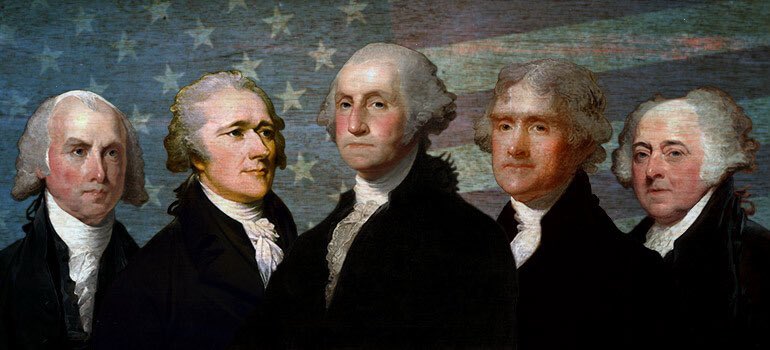
Our Flounders, the original Bigwigs.
Wigs were used to cover syphilis sores, lice infections and hair loss. However, wigs became fashionable when the stylish King Louis XIV, the “Sun King” of France began to lose his hair. The image-conscious monarch began wearing long, elaborately curled wigs to maintain his appearance, turning it into a fashion trend. Wigs also conveyed social status and wealth. The style of a wig also indicated a persons profession, such as a lawyer or judge.
All kinds of words and phrases could be found in the book. The English language has roughly 170,000 words though basic communication can be achieved with less than a thousand. It’s not the wordiest of languages that would be Arabic with about 12,000,000 recorded. Arabic is far older though. English in some form dates to about 400 AD but Arabic goes back to at least 800 BCE, a difference of 12 centuries or 60 generations. More time to make up and add more words I guess.
I don’t know if dad had any particular plan for education at the table but he came from a generation that had to have books. It was reading or nothing. The first commercial radio station didn’t come along until about 1920 and his parents got their first one in 1924; he was twelve. Reading for information or facts was something he had to do. His experience led him to teach us that we shouldn’t believe half of what we read and little of what we heard. He told us to beware what we saw especially if we weren’t present at the event.
The old Almanac itself was a lesson. The term almanac is of uncertain medieval Arabic origin; in modern Arabic, al-manākh is the word for climate. The first printed almanac appeared in Europe in 1457, but almanacs have existed in some form since the beginnings of astronomy, and the study of astronomy predates any kind of written history. The earliest known almanac in the modern sense is the Almanac of Azarqueil written in 1088 by Abū Ishāq Ibrāhīm al-Zarqālī in Toledo, al-Andalus. Al-Andalus comprised most of what is now most of modern Spain. The Muslim people of northern Africa, mainly Moors, ruled Iberia for almost eight centuries.
If the idea was to create curious children it certainly worked. Presented as a game of sorts we learned to dig for answers. We could never figure out if he already knew the answers or wanted us to do the research. It didn’t really matter in the end which it was.
The one thing we all still remember that we couldn’t find in our almanac was a phrase, the old adage “Red sky at night, sailors delight; red sky in morning, sailors take warning.” Dad believed that the red sky meant good weather to come but my brother and I heard just the opposite. Why he stuck to his guns in arguing his position I don’t know but he was like a dog with a bone that you couldn’t take away. No matter how much logic or evidence we could come up with he never changed his mind. We’ve agreed that this was our best chance at winning an argument with him we ever had. The thing is he was just absolutely unsinkable.
We all added High School, a decent college education and life experience to our attempts to change his mind but he never gave in. We kind of liked that kind of stubbornness. I used to tell him I was going to put it on his headstone, but of course I didn’t.
Here lies George Gray Shannon
February 1st, 1912—–May 9th, 2000
He sailed into a typhoon because he was too stubborn for his own good.
Rest in Peace Dad….and thanks for everything
Michael Shannon a is product of Almanacs, Encyclopedias, the Thesaurus and dictionaries. He lives in Arroyo Grande California.
The Irrigation Ditch
By Michael Shannon
Kids that grow up on farms and ranches are like the pups. They are always on the lookout for Dad coming out of the house and headed for the pickup truck. They know that he will lead them towards adventure. It doesn’t matter what that is, it’s just the opportunity to go somewhere with him. The dogs think the same way. The front seat of the old truck with it’s torn upholstery, and sagging springs, even the broken one which lies in wait like a rattlesnake has room for all. Over on dad’s side the viper, it’s one fang hiding just below the tattered hole where his butt slides when he’s getting out, he misses it most of the time but once he’s worn those Levis long enough they will bear the mark of the just missed.
Bumping down the farm roads, still rutted from last winter kids hold on swaying left or right depending on how many holes and ridges dad can miss.
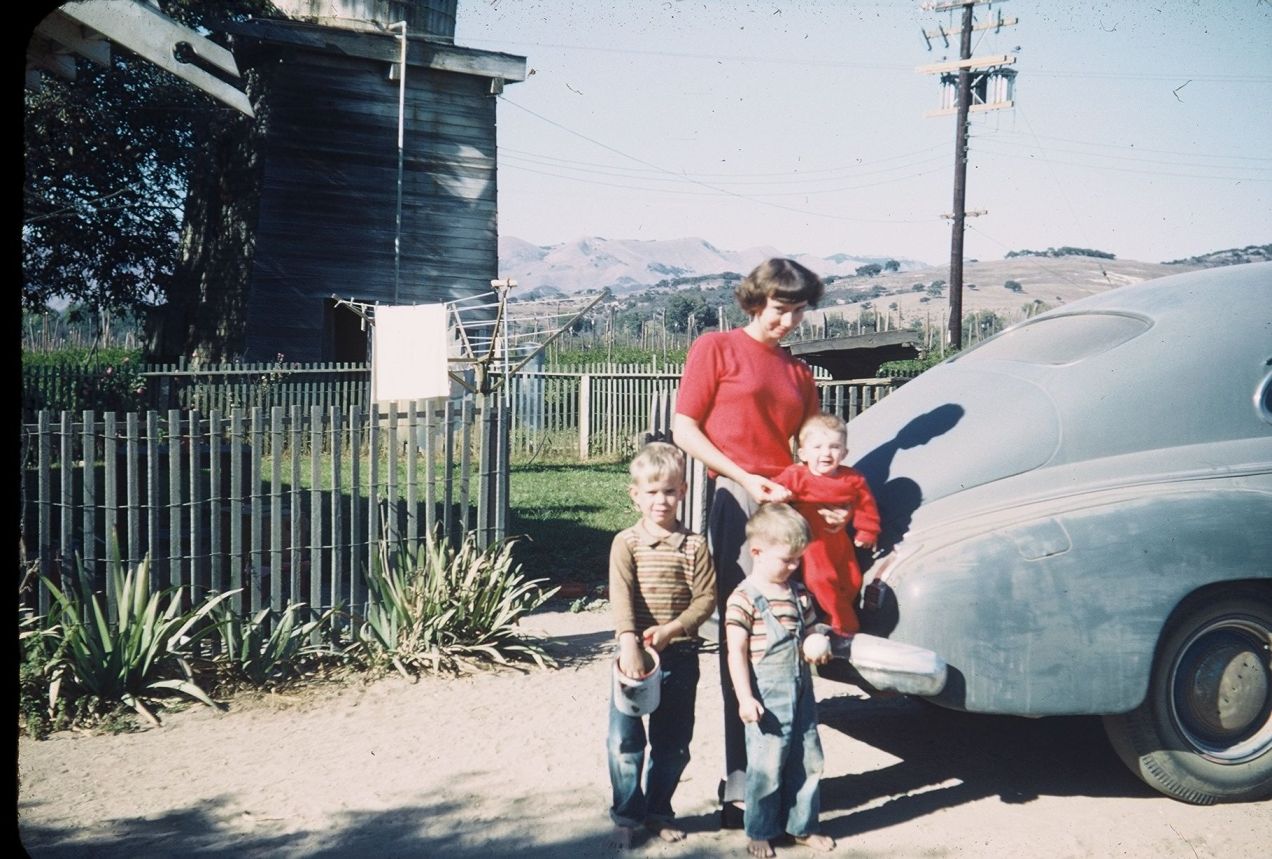
Pride of place rules apply, the youngest sitting next to dad resting his towhead firmly against pop’s Pendelton’s sleeve, the middle brown haired one with the cowlick, squished in the middle and the oldest owning the door. He has arms long enough to reach outside and push down the chromed door handle because the inside has gone missing. My dad never focused on trivial things like hunting up an Allen wrench and digging through the cluttered tool box in the back in the remote possibility that the missing handle might be there. He used the drivers door.
Some days we drove past the tin sided pump house, the very big electric pump humming away inside pulling groundwater up and forcing it through the buried 8” pipe that ran along the uphill side of the fields. At regular intervals stubs of pipe, each one with a threaded caps stood sentinel like so many soldiers waiting for orders.
In the nineteen fifties most irrigation was fed by ditches plowed at one end of the field. Small stand pipes screwed into the risers delivered water under pressure to fill the ditch. From the ditch, siphon pipes drawing from the main ditch delivered the water to the rows along which grew the plants. Tomatoes, Celery, Lettuce, and Broccoli were all irrigated this way.

My dad with his shovel on his shoulder patrolled the dozens of rows to make sure that each one was irrigated evenly. Controlling the water by sliding the little gates on the siphons to slow or hasten the water on its way. Back and forth, back and forth like a soldier on duty. He slogged through the muddy rows building small temporary dams to slow progress, the goal being to make sure the water reached the end of the quarter mile long rows at the same time.
Simple looking to the uneducated observer the practice dates far back into the mists of time. The Hanging Gardens of Babylon were watered this way. The ancient Sumerians funneled water from the Tigris Euphrates river system to grow grain and fruit trees in the Fertile Crescent. Canals were built to bring the water down from the Zagros mountains in present day Iran to supply the cities of Mesopotamia more than twelve thousand years ago. The technology has not changed to this day. It’s simple but elegant in the way that successful technologies are. You can still see row irrigation on farms and ranches all over California. No doubt little Babylonian boys and girls played in the ditches just the way we did.
Simple but complex in the doing. The water had to be channeled in a way the provided maximum saturation of the soil for the plant to thrive. Our farm had at least four types of soil mix and each one dictated how the irrigator worked. Too dry and hot weather could kill the delicate plant before it could be irrigated again, too wet and the roots would drown and kill the plant. Water was applied differently for crops which had just been fertilized. Consider the age of the plant and it’s harvest time which the farmer knew to the day. Tractors are heavy and soft wet soil will compress and crush a plants roots. So, it’s not just a man out standing in the field, it’s a skill.
There are certain mores involved, at least for my dad. Plow a straight furrow, water highlights a crooked line and he was always checking the neighbors to see if theirs were arrow like. A small thing I suppose but it is part of what I learned from him which was how important it was to do a job well no matter its importance.
Running the water across the road onto your neighbors field was a major faux pas and dad took pride in never letting that happen. Our uphill neighbor’s irrigator, Roque ran his water onto us all the time. Dad would privately grind his teeth, muttering under his breath about lazy men but when he talked to Roque about it Roque would laugh out loud and tell my dad, “I never do anymore, Mister George” and laugh again. Next day he would do it again. My father never said much to him because he was so irrepressibly happy that it was impossible to take any serious offense. It’s difficult to fault a man that laughs.
We, on the other hand did our best to get a muddy as possible. Because we were too little to handle a shovel we used natures backhoes, our hands. The main ditch was about two feet wide and a foot or so deep, enough to drown a child I guess, but no one, us kids or my father seemed to be the least bit concerned. On the uphill side we used our hands to dig canals so we could make the water run where we wanted it. The canals went nowhere and the only purpose was to get the water to run freely. This was our first lesson in understanding hydraulics. Each little ditch had to be just off level in order to make the water move in whatever direction we wanted it to go.
Since our fields were a mix of alluvial soil and heavy adobe they made the worlds finest mud. You could add enough water to make it slurry which was really great for throwing at the pickup because it stuck like glue. A little bit dryer and it made great little adobe buildings to go alongside the ditches. Certain combinations were terrific for slicking down a brothers hair.
There were plenty of stems on the ground leftover from last seasons crops that could be woven into rafts and not far away, an old abandoned Diamond Rio flatbed truck draped with blackberry vines. The leaves could float GI Joe on his way across the Rhine River. The occasional Sycamore leaf blown up from the creek served as major people movers. Sadly many a GI Joe lost his little plastic life by being swept away on Tidal waves never to be seen again. Leaves have no handrails and though Joe can float he cannot under any circumstance swim. Pretty sure cultivators are still occasionally turning up their tiny corpses while working those fields. GI Joes may perish but their little bodies never decompose.
When we were just a little older we would hunt through the packing shed and corn crib looking for small pieces of left over wood and with a little ingenuity, a nail or two and a ball peen hammer make them into many kinds of ships and boats. Nails driven into the sides stuck out just like battleship cannon, or so the six year old mind imagined
Dozens of ships in the Japanese fleet were lost to a barrage of dirt clods fired from behind the pickup. No invasion of the Broccoli ever succeeded. As children of the second world war we understood the importance of fleet actions. Clods when lofted as high as we could toss them made very satisfying splashes. We didn’t need a game bought at the dime store we had endless resources in which to make our own games. No one I can remember ever told us the truth of things to crush our imaginations. That would come soon enough.
My little brother would crawl up the running board and lay on the front seat and nap when he got tired. Jerry and I kept it up until it was time to head back to the house. Dad’s boots and Levis would be soaked with mud and water to the knees and we could of passed for Mudmen ourselves. We had accomplished much though, held off an invasion, built hydraulic systems and thoroughly enjoyed ourselves. When you grew big enough you might get the privilege of riding the running boards back to the pump house, going inside through the tin door with its screech owl hinges and using both thumbs push the big off button on the pump.Stay a moment as the big electic pump wound its way down from its jet engine howl to silence. Little things like that mean a great deal to little kids. They understand that you earn responsibility.
Back at the house it was strip, leave the clothes on the back porch floor and run and get in the big oversize porcelain bathtub for a good scrubbing. Scrub brush on the bottom of the feet, rolled up washcloth pushed as far into the ear as mom could make it go and then a big fluffy towel, try not to slip on the wet linoleum floor, “Careful, careful,” mom cautioned over and over again. Trying to hold onto three slippery wet boys at the same time.
Funny thing I remember, Mom and Dad never scolded us for being dirty, they always seemed to be as delighted as we were.
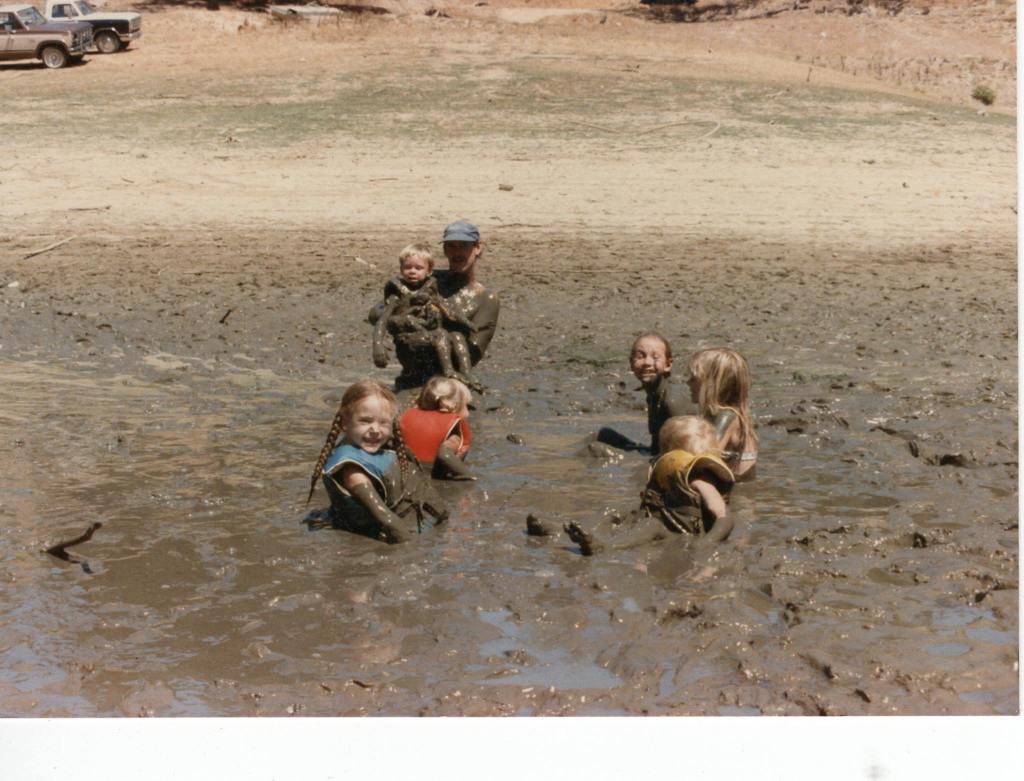
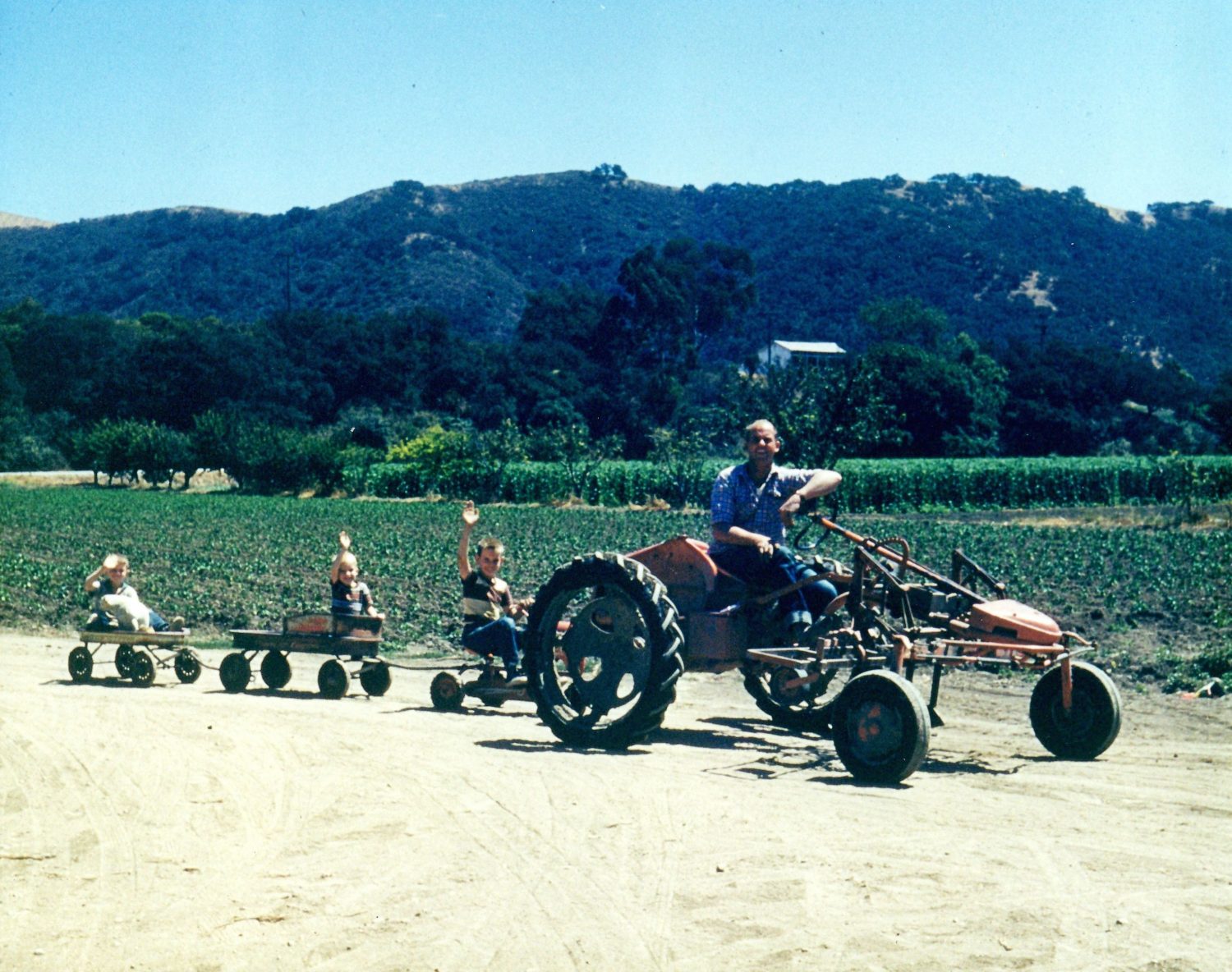
No one ever gets over playing in the mud. Shannon Family Photo, Lake Nacimiento, CA.
“Can we do it again tomorrow, can we Daddy?”
Michael Shannon grew up on a farm in coastal California and has mastered the irrigators art himself. He has masterful shovel skills, can lay pipe and knows the secret to using baling wire to clear Earwigs from overhead Rainbird sprinkler heads.
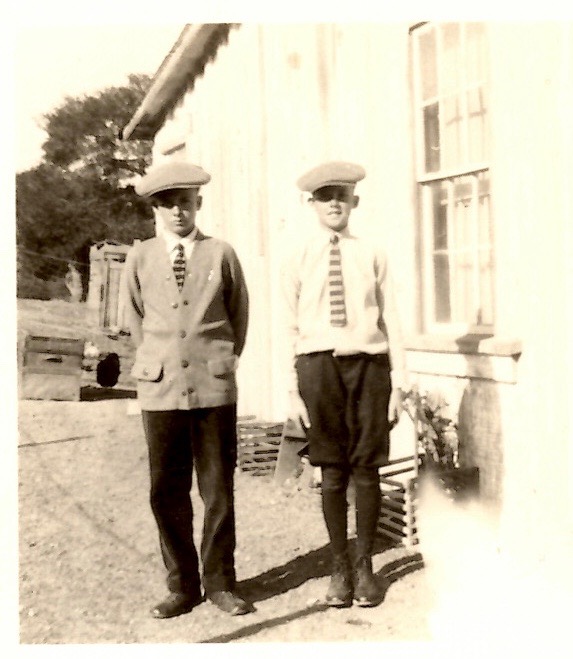
It’s Not Vegetables You’re Buyin’ Lady,
Its a mans life you hold in your hands.
My dad’s family were farmers in Ireland. That’s what they knew. Like all immigrants they came to America for opportunity. They came because laws in Ireland held them captive in a system of government that placed no value on small farmers. Just twenty years before my great-grandfather was born, it was still illegal to educate Irish children. An Irishman could not vote nor own land unless he was of the ruling class. The Potato Famines of the early 1800’s began the drive for immigration in which 1.7 million Irish came to America between 1840 and 1860. This flood from Ireland continued, unabated for 50 years. Today there are about 36 million americans of primarily Irish descent. Only about 6.4 million Irish still reside in Ireland.
An Irish crofter, as farmers were known, held property in trust from the large landholders who actually owned it. The average Irish small farm was roughly one eighth of an acre. Can you imagine living and growing subsistance crops on a piece of ground only 5,400 feet square? Thats about 75 by 75 feet! The United States, stretching for over three thousand miles to the west was an almost unimaginable thing. It was near impossible to imagine how large it was. Even today people of this country cannot imagine it’s size.
My great-grandparents, the Greys, Samuel and Jenny were from Ballyrobert Doagh, a crossroads on the river Doagh in County Antrim, Ireland. They came to America on their honeymoon in 1881. The sailed on the packet ship State of Alabama which ran a circular route from Glasgow, Scotland to Belfast, Dublin and Cork. Once loaded, it made passage across the north Atlantic. Those trips took as much as 12 weeks to make. The ships themselves were combination steam and sail which was somewhat of an improvement over the so called “Coffin Ships” that made the trip some thirty years earlier. During the Irish Diaspora as much as half the steerage passengers might die enroute. All of the major destination cities in the United States and Canada featured mass burial grounds filled with the hopeful.
They boarded the States Line ship “SS State of Alabama” in Belfast and arrived in New York on the 6th of June, 1881 after a quick summertime passage of just 18 days. Sam and Jenny made it to New York harbor where immigrants were held in quarantine on board until cleared for landing. Once cleared they at disembarked Castle Gardens on the lower end of Manhattan Island.
Sam Grey worked all kinds of jobs as he made his way west to California, arriving finally in San Leandro and then down to the the Salinas valley where he grazed sheep. His wife Jenny had relatives living in the Oso Flaco area of California and eventually they came here. They rented some land along Division Road and he grew potatoes of all things. Ironic, but a decent profit. My grandmother was born in that little house, the second of there eventual seven living children.
That child grew up to be my dads mother, one of a family of farmers and dairymen that included McBanes, Mcguires, McKeens, Moores, Greys and Shannons. Today politicians refer to this as chain migration but they are fools. Family following family has always been the rule, always will be. The Irish didn’t ask for any hand out; they wanted a way out and they were willing to work to get it.
Agricultural servitude is term applied to those that work the ground for pay, usually meager. It applies not to just the field laborer but the owners too. My father, the grandson of Samuel Gray was one of these men. He was raised on a dairy farm as they used to be called because not only the milk cows were raised there but the oats to feed them. My grandparents also raised beans, peas, tomatoes, hogs, turkeys and for comic relief, many, many dogs, some who stories are legend in our family. No goats though, Grandma said that only shanty Irish raised Goats, plus the church taught that animals with cloven hooves were unclean and satanic. Thats the way she thought and thats the way it was.
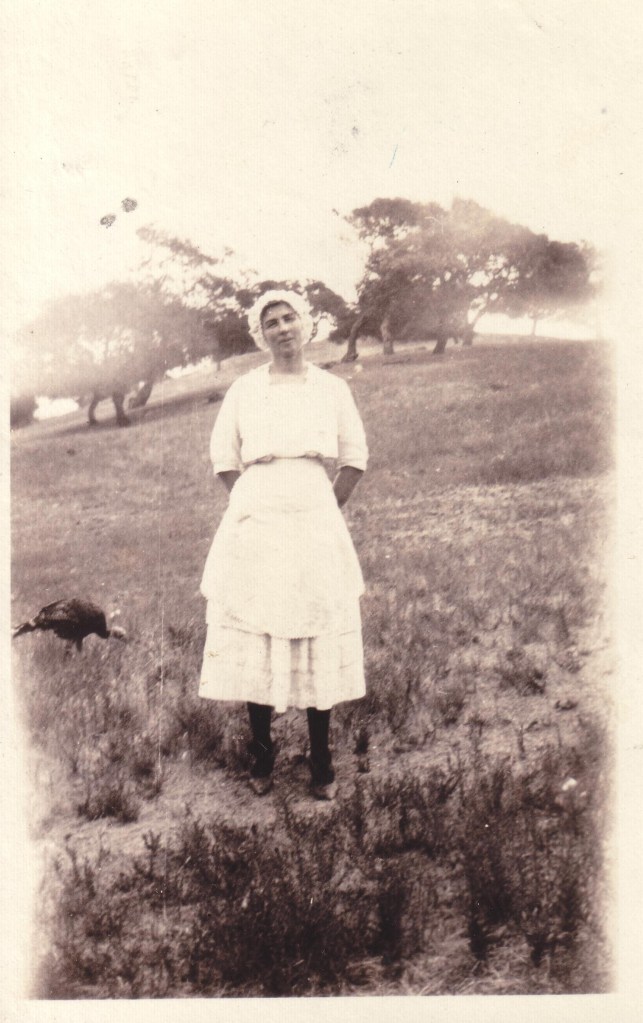
Annie Shannon, my grandmother about 1925. She is 40. Hillcrest Dairy, Arroyo Grande, CA. Family photo ©
Dairies are the chains that bind the farmer to the ground. Cows are milked two or three time a day and the dairyman follows the old rule, “Dark to Dark,” when he works. Little boys like my dad and uncle learned the lesson early for they had to begin pulling their weight as soon as they were big enough. Kid chores like feeding chickens and collecting eggs and as they grew, the load became heavier. As teens they rose before dawn, went up to the barn to help with the milking and then the bottling and cleaning. Off to school for the middle of the day, they returned in the afternoon for the evening milking. Every day seven days a week, twelve months of the year including all holidays. The cows took no time off and neither did the customers.
When I was little my dad was farming in the upper Arroyo Grande Valley. He grew what are known as row crops. Vegetables like celery, broccoli, lettuce, tomatoes and string beans were what he raised.
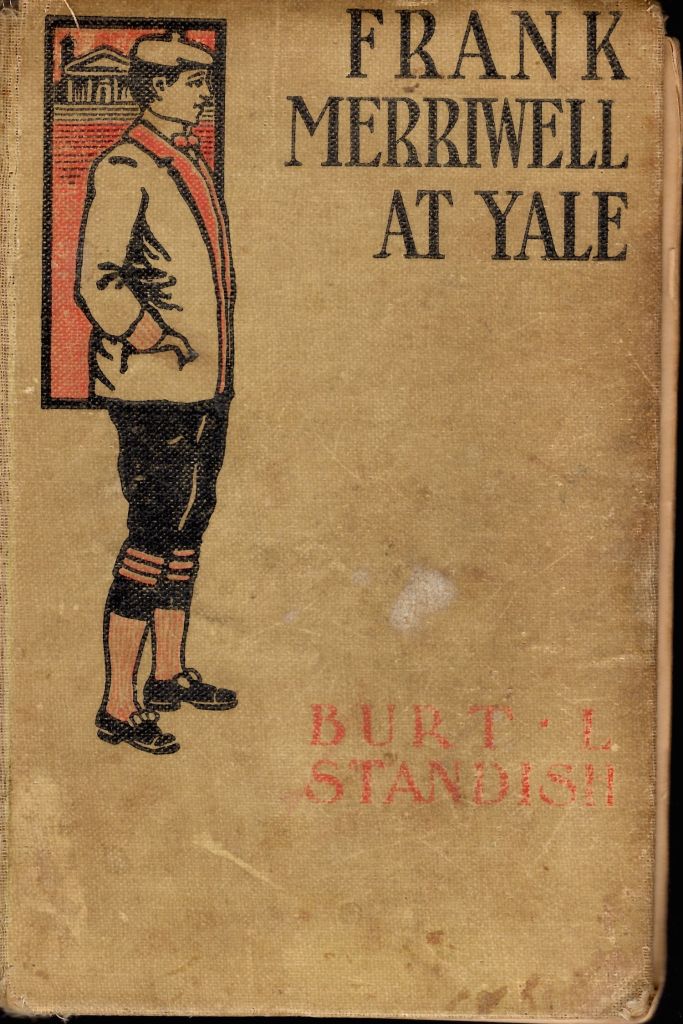
Unusual for a farmer of that time, Dad was a 1934 graduate of California Berkeley. He once told us that the main reason he went to college was, one, my grandmother had graduated Cal in 1908 and she wanted him to go, two, his father wanted him to study the law but most of all he went because he’d read Frank Merriwell at Yale, a pulp fiction book from the early twentieth century about Frank’s grand adventures at Yale. He and my uncle Jackie used to walk up to the old Union hall, fondly known as the “Rat Race”, which was at the corner of Mason and Branch streets. On Saturday afternoon they’d plunk down a nickel and sit down in one of the wooden folding chairs or the eclectic collection of press back chairs salvaged from somebodies kitchen and watch what were still called Flickers because they did,flicker Harold Lloyd, Buster Keaton, Charlie Chaplin, Fatty Arbuckle, Mabel Normand and the madcap cops from the Mack Sennet studios made kids laugh. The “freshman” starring Harold Lloyd or “College” from Buster Keaton told an age old story. They had storylines that led Dad to visualize college as a place where Nerdy grinds were picked on by strapping young athletes, ignored by pretty girls but somehow managed to save the day by winning the big game on the very last play. The pulp novel, “One Minute to Play”, which we still have features a football hero forbidden to play in college by his pastor father. A hundred years have passed since Dad and uncle Jackie sat on the edge of their chairs in that drafty old dance hall but the plot remains the same. Those things, he said were his primary reason. They were a good as any. And he did have a great time to boot.
He came home to Arroyo Grande after graduation. It was the middle of the great depression when work and money were scarce. Businesses were barely hanging on and opportunities were few and far between. Choices had to be made.
Farming and ranching were familiar things to him though he later said that he didn’t want to be a dairyman because the work was so relentless. He chose row crops instead. Which, when you think of it is only slightly better. It’s still six and one half days a week, dawn to dusk though it slows in the winter some. Fewer crops but more adobe mud, there is your trade off.
Slogging your way down the rows dressed in oilskins holding the slippery handle of your 12″ Broccoli knife, slippery with mud, hands with no gloves in the rain, cold at 7am, still nearly dark. Left hand grasping the stalk below the leaves, a blind slice, the cut and throwing the severed head through the air and into the cart being pulled behind a wheel tractor. The driver and the tractor set the pace and it’s relentless. Head down, sucking mud, mind numb, no time to think, just do the job. For minimum wage. They tell themselves that there is no one who will do the work and some pride is taken in that. What else can you do?
It’s like the old saying, a boy tells his father after his first day of bucking hay, “I sure hope I don’t have to do this for the rest of my life.” Before he knows it, sixty years on he’s still doing it. Life is like that.
There is just something about the orderly manner in which crops are grown. All the preparation and finally after walking through the planted but still barren fields looking for that tiny two leaf sprout which ever and ever again promises that life will renew. That is the true farmers delight.
My father never bought a new truck in his life. He though of it as showing off. He didn’t glad hand or seek out the company of other farm men and contractors, no breakfast meetings at Goldies with the three percenters and the reps from NH-3 or the seed salesman. It was wasted time. If he needed them they were just a phone call away. Though all of that is a tried and true way of doing business he considered it a waste of time.
Time was better spent managing his crops for he was extremely proud of produce. As a boy I worked in his packing sheds, wherever they might be. He had more than one ranch. He would take me out to the Berros ranch or up to the one on the Mesa and I would pack vegetables. One of the keys to understanding my father was to know that he would never cheat you; ever. Every vegetable is those boxes was to be perfect. The prize tomato on the top was exactly like the one on the bottom. In a flat of Chinese peas which held hundreds of pods, every one had better be perfect. It’s what he expected of you and its what he produced for the buyers. In that way he taught me to be meticulous about any job I did. As a 13 year old I didn’t get it, it made the job slow and monotonous but somehow the lesson stuck. I’m not sure if he saw it as a lesson but It’s what he expected of himself and it was the same for me. I thank him for that.
I remember riding with him in the pickup and dad pointing out the farmers who couldn’t plow a straight furrow or ran their irrigation water onto their neighbors, those things mattered to him. It’s funny because our tractors lived outside and were dirty and rusty and in the slowness of winter the weeds grew up around them and they looked abandoned. He didn’t care about that, they just had to run. Their only purpose was to serve the crops. Crops, perfect, tractors, not so much.
My dad was thirty three when I was born. When I was a pea packer he was in his middle to late forties, his prime years and had been a farmer for a quarter of a century. By the time I graduated high school he’d been at it for thirty years. He’d seen a lot of changes in farming in that time but was about to face the death knell of the family far, consolidation. After the wars population surge there were many more mouths to feed in America and the pressure on the smaller family farms to remain profitable increased.

Daddy and me, first birthday 1946. Family Photo
The Vegetable packing houses which contracted with the individual growers and the advent of huge grocery chains increased demand for production. For example my dad grew celery on contract for a local packing house which sold celery to grocery chains all over the country. No longer did the little local trucking company haul your produce up to the San Francisco markets or down to Los Angeles. Your celery might be going by train to New York or Chicago and in bulk, orders made up of the crop from a dozen small farms. Some farmers, more businessmen than growers formed co-ops or bought out the individual family farms. This allowed the large grower to make demands of the brokers and introduced economies of scale to lower their production costs. This worked against the small farms like my dad, the Betitas, Kawaguchi’s, Cecchetti’s, the Silva brothers and My great uncle John Grey. Their was no more growing land available and they began to be squeezed out of the markets. It wasn’t as if there produce was inferior but when it came to essential services they needed they were forced to wait in line. What this meant is that vegetable market prices which fluctuate literally hourly are a target everyone is shooting for. A delay in harvesting and shipping can be very costly and when a large grower demands that his celery be cut and shipped on the day or days your crop is scheduled for it can cost you your profit. This in our little valley. Imagine Ralphs demand that a vegetable broker not only meet what they are willing to pay but that the broker must supply every Ralphs in California or even the nation. No family farm can do that and thats why they have gone the way of the Dodo bird.
In the nineteen sixties you could count down from the site of Santa Manuela school to the dunes by family name. Biddle, Grieb, Donovan, Talley, Antonio, Evenson, Fernamburg, Cecchetti, Ikeda, Kawaguchi, Shannon, Sullivan, Coehlo, Berguia, Gularte, Waller, Reyes, Betita, De Leon, Dixon, Fukuhara, Marshalek, Fuchiwaki, Saruwatari, Taylor, Kagawa, Kawaoka, Matsumoto, Nakamura, the Obyashi brothers, Sakamoto, Sato, Kobara, Sonbonmatsu, Hiyashi and Okui. There were Phelans, Donovans and Elmer Runels too.

The Betita Boys, 1960’s running string for pole beans. Used by permission
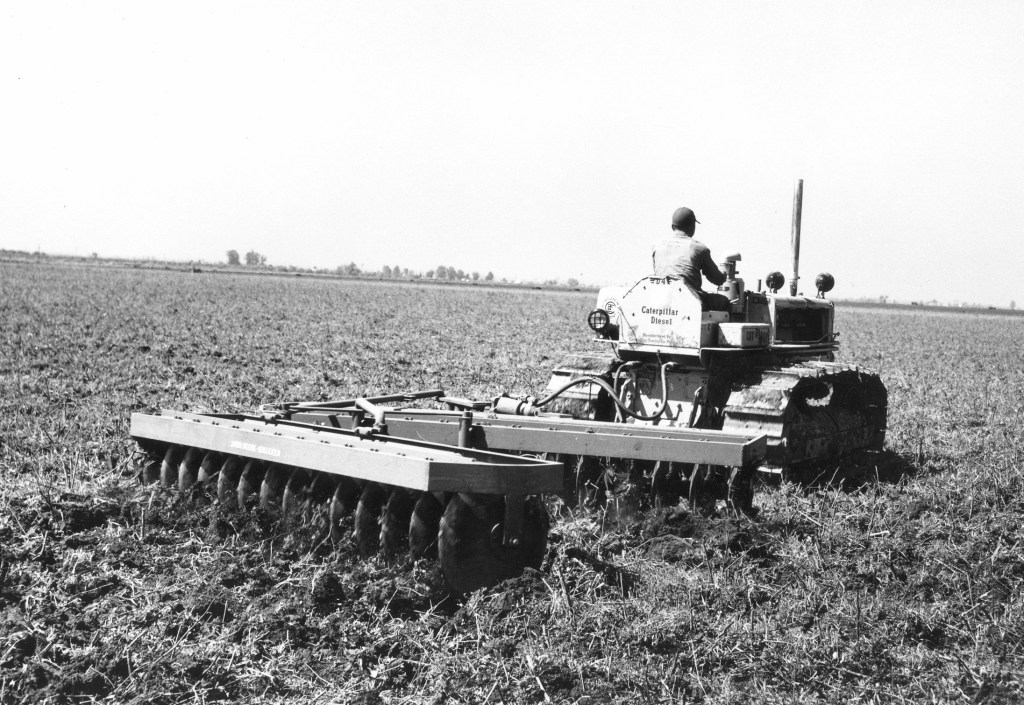
See, the thing is you gotta be in it to win it. Farming takes a gamblers approach. Farmers know that farming is an extreme investment. Finished crops return a very small percentage on the money you put into them. Equipment is expensive if you look at the cost of just an individual item like a Caterpillar. What few think about is the add ons, the Disc, Harrow, plow and the roller. There is gasoline and diesel, oils and grease to be paid for. You have to have a tank to store the fuel. Unless you have kids of an age a driver must be paid. Seed, fertilizer, pesticides and the cost of running the water pump. Who moves the irrigation pipe? How about the crop duster?
Where is the labor to be had. That’s rough and dirty work usually done by folks with few other options which in itself brings problems of attendance and theft. Drinking before, during and after the job. This is the kind of work done by the desperate. People so poor that they will steal lettuce knives, the baskets used to pick vegetables, shovels or even your shirt if you leave it lying about. For us this problem was abated with the introduction of the Bracero program which brought young Mexican men into the country to replace the field workers who were in the military. After the war the soldiers didn’t come back so the immigrant program was continued. Until 1964 this program supplied nearly five million workers to farmers in 24 states.
We, and most of my friends grew up with these guys which, I think gave most of us an appreciation for different cultures. To leave your home and come across the border to work for people who didn’t speak your language and had no interest in your culture was a form of bravery that I understood.
Nonetheless the small farmers struggled and when we had an early, very hard freeze which killed nearly every crop in the valley it spelled the end for many. Bank loans were not forthcoming, there was no crop insurance, no Federal subsidies and in most cases no cash on hand to pay your vendors. Bankruptcy was an option of course but men like my father and especially my father would never admit total defeat. The bills were piling up and some companies, even ones run by close friends were demanding payment. I can’t imagine how he did it but he just put his head down and paid what he could. It took years to crawl out from under the debt. He forbid my mother who worked to pay off one dime, it was his debt. The big freeze was only one disaster. Down in Berros the deer were bold enough to come into the tomato fields and eat the fruit in broad daylight costing thousands of dollars. He got a permit from the county to shoot them but you had to dress them out and deliver them to the county’s general hospital which became a huge job in itself. He had to give it up. I was a senior in high school then. One year storm winds blew down acres and acres of pole peas, the mainstay of his operation. You could look out our kitchen window and see the field with the ripe, producing vine lying flat on the ground. One winter there had been so much rain that the tractors could not get into the fields to harvest the celery. Crop loss, natural disaster and the dominance of the larger operations was like one step forward and two back.
I can’t imagine the courage it took to move ahead but in 1980 he had, had enough. He and my uncle sold my grandmothers cattle ranch and he used the money to retire. In those days it was rare for a farmer to have a pension and most depended on Social Security to survive. So he took some of the money and bought a lot in town and I built them a retirement home. He always said he wanted it there so he could see the old home ranch where he was raised. Just like the home I grew up in where you could look out of the kitchen window and see the crops grow and the neighbors pass by the new house had that big picture window next to the kitchen table where he could sip his coffee and see where his life began.
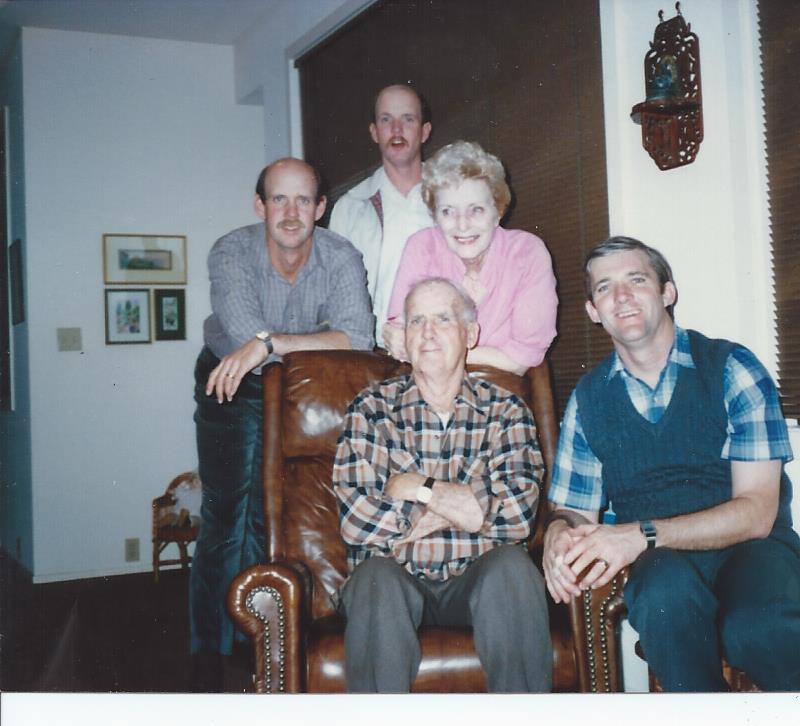
Mom and Dad with their three sons in 1986. New house. Family Photo
So they left the ranch near the four corners and never looked back, his last and favorite dog moved to the junkyard on Sheridan Road up on the mesa and they settled down in the new home at the corner of Pilgrim and Orchard streets. Mom and Dad lived quietly there, she passed away first and he followed a few years later. He missed her because he loved her so and his last years were lonely and like many old folks slightly bitter for what was lost. Weighed on the scale of life I believe there isn’t enough Gold on earth to level his worth as a man; old fashioned in his beliefs but a superb father which is what counts with me. It’s funny but as a little boy I called him Daddy which I outgrew as children do but at the end thats what he was, my Daddy.
- Cover Photo: Jackie and George Shannon on the dairy. 1922. Family Photo
Michael Shannon is a writer and a son. He writes so his own children will know their history and who they are.
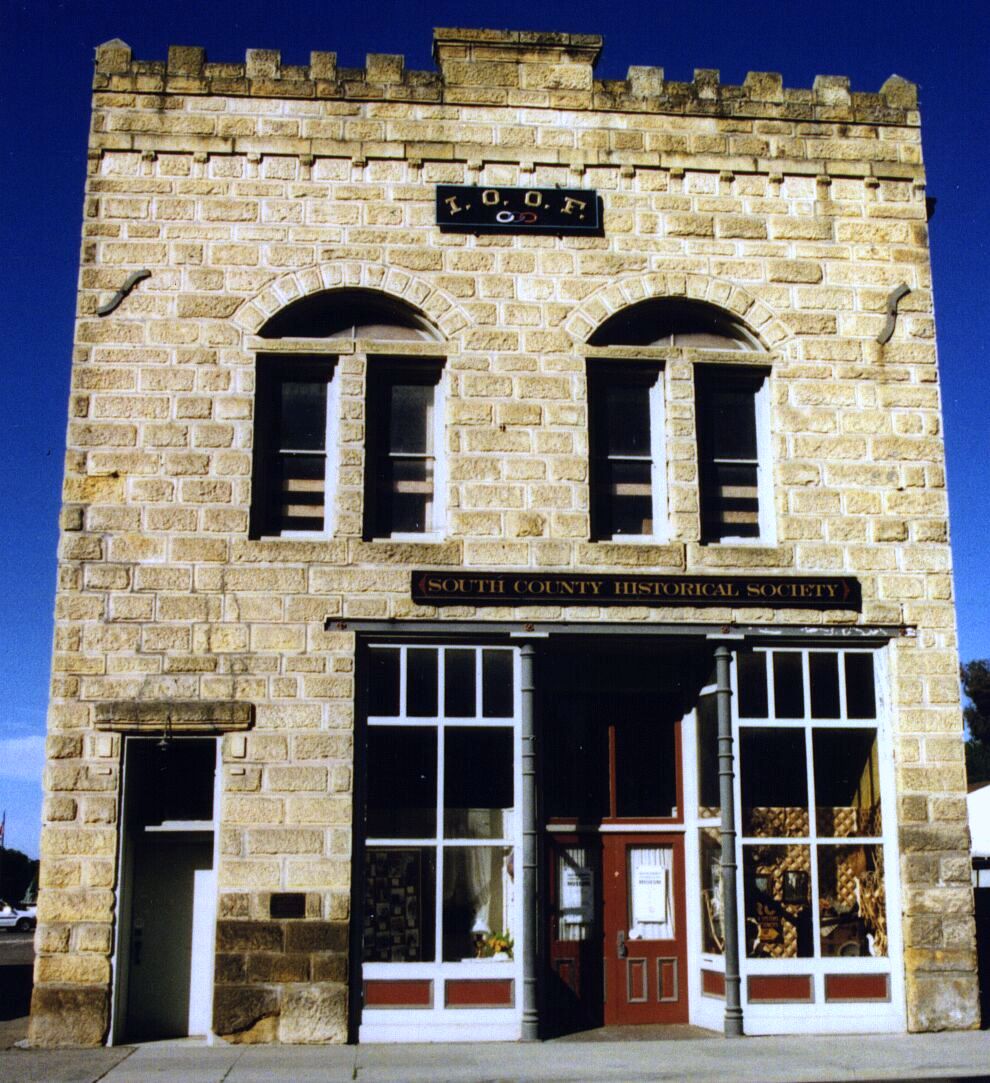
THE GHOSTS
Michael Shannon
I met Billie at the door. She had the Key. She handed it to me and I slid it into the old mortise lock on the side door and pushed it open. The rusted hinges resisted the movement a little but finally allowed us in. The narrow hallway ahead was redolent of dust and the peculiar smell I’ve always identified with old buildings. Ahead, the stairs to the 2nd floor lodge room were nearly covered on the left by stacks and stacks of newspaper galleys collected by the Historical Society from the old Arroyo Grande Herald. Some of the newsprint had come from former owner and publisher Newall Strother’s home on old Musick Road, found there upon his death stacked nearly to the ceiling in every room. A gift unintended, left us by a man who just couldn’t bear to throw them away.
Dim light with legions of dust motes drifted slowly in a tiny breeze from somewhere in the old building. Up the stairs there were windows at the second and third floor landings, lighting the stairs with the particular glow of dirty old glass, aged and coated inside with decades of smoke and outside by the grime blown against them by weather. A filmy yellowish khaki, gently drifting cloud that only exists in old unused buildings. It tinted all vision.
“Let me show you the lodge room, no ones been in it, I think, for many years,” she said. I followed the little woman up the stairs. Dressed in slacks, what looked to be a mans old dress shirt, girls old-fashioned tennis shoes, her grey and white hair taking a glow from the old windows, she led the way up.
Her name was Billie and I had known her literally all my life. She was the granddaughter of Don Francisco Branch, the first of the Rancheros to bring his family up into the northern part of the old Spanish Cow Counties in 1837. He received a land grant from the Mexican government of nearly seventeen thousand acres of un-cleared nearly virgin land which had remained untouched by any but the few Chumash for thousands of years.
Billie’s father, Thomas Records, from another pioneering ranch family, had married Miss Lucy Jones, a granddaughter of Francis Branch. Billie was historical royalty in the little town we lived in. She kept things. My dad said that she and her sisters weren’t called the “Record sisters” without reason. She had a house full of stuff and a mind chocked to the brim with notions about who did what and how. She knew the bloodlines, the natural intermarrying of citizens in small towns. If you needed someones antecedents, she knew them.
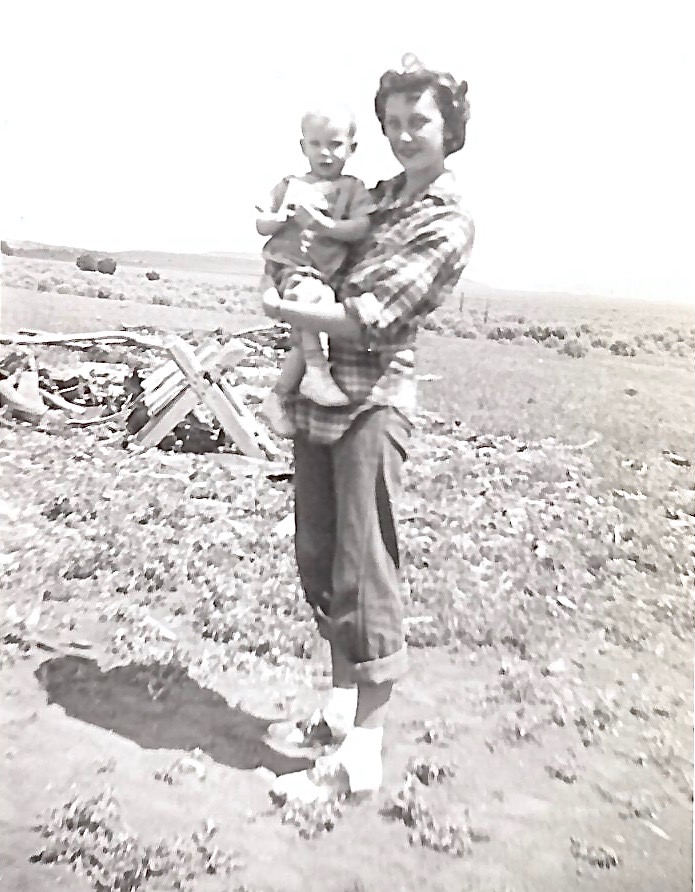
Me and Billie in Madeline, California 1946. She’s 31, I’m 1. Family Photo
She and my father grew up together and had always been great friends. When Dad found my mother, Billie took her right into the Arroyo Grande family. She was the kind of person that, when you saw her on the street there was nothing to do but to pull over and talk to her. After my father died she came to the house with a box of, you guessed it, records. She had squirreled away news clippings, letters and other things about our family. In the box were my fathers high school football and basketball varsity letters. She had put them away and saved them for seventy years. That’s a story I wish I knew. I’m sorry that I never had the chance to ask her or him why she had them. He went to Arroyo Grande High School, she, Santa Maria but somehow she ended up with them. There is a story there, lost forever I think.
We were at the old hall, Odd Fellows 253, because as a new board member she wanted to give me a guided tour of the old building. The local History Society had recently received title to the nearly one hundred year old building for the grand sum of one dollar from the last surviving member, Gordon Bennett. The board and membership were fixed on the idea that we might secure funding to refurbish the old landmark.
Built in 1903 as Lodge 253, the old building had lain vacant for years. The Arroyo Grande Sandstone of which it was made had come from the old Patrick Moore quarry on my grandmothers ranch.
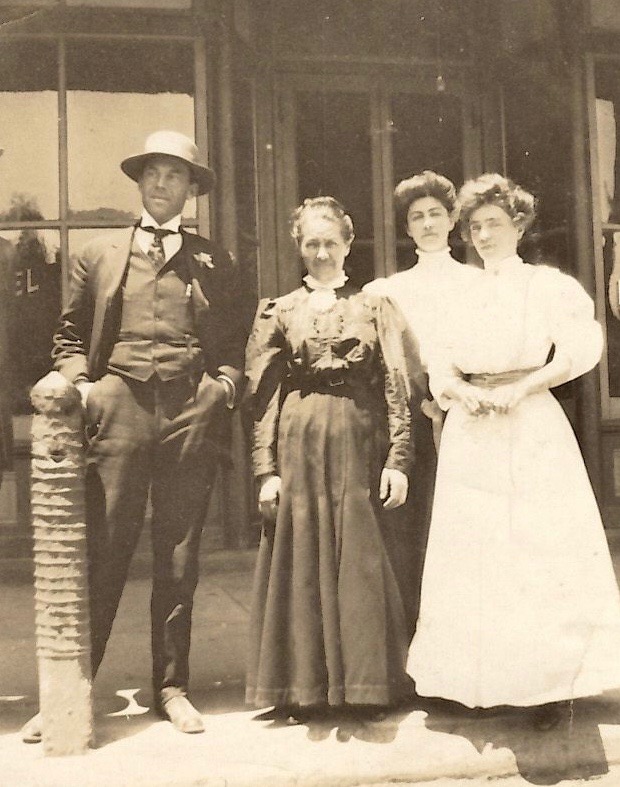
Left, Thomas Shipman brother in law to Jenny Gray, Annie Shannon in back with her mother Jenny and Maggie Phoenix in front of the hall.circa 1905. Family Photo.
We were at the old hall because as a new board member she wanted to give me a guided tour of the old building. The only time I had ever been in it was as a teenager. I had gone with my father to pick up his blue ribbon won for the best Chinese Peas at the Harvest Festival vegetable contest. The local farmers display of all the different vegetables grown in our valley took up the entire first floor. While we were there he pointed to the big windows in the front of the building and told me that my great-grandfather Shannon’s body in his coffin had been displayed there when the ground floor was the towns undertaking parlor. What does a kid say to that, I couldn’t imagine such a thing but I’m sure it was true, they used to do things like that. He said my grandfather who was a member of the Odd Fellows had taken him down when he was just twelve to see Dad Shannon, as he was called, as his body lay in state. In the window, not a church, but in a window.
The local History Society had recently received title to the nearly one hundred year old building for the grand sum of one dollar from the last surviving member, Gordon Bennett. The board and membership were fixed on the idea that we might secure funding to refurbish the old landmark.
At the first landing a quick turn to the right led into the lodge room. This was where the members met. It was obviously well used, the old carpet was faded and threadbare in places. The benches along the walls had seen better days, their varnished seats rubbed bare by generations of shifting bottoms. The curtained windows their muslin drapes transparent and fraying at the bottom filtered the sunlight creating a sense of timelessness as if the members had just left. I suppose they just had in a way.
The tour finished we turned and stepped onto the landing to head back down. I stopped and asked Billie where the next flight up went and she said it’s just an old storage room I think but you can look if you like. She turned and headed down, I turned and headed up the short flight. Just curious.
The door was closed, the old stamped doorknob mounted in its long rectangular faded brass plate turned stiffly. As the door tuned on its hinges the unmistakable odor of age greeted me as I stepped inside the dim interior. It wasn’t a storage room at all. Festooned with cobwebs nearly invisible in the gloom was a full sized six pocket pool table. Covered with the dust of decades it’s woven leather pockets still held the ivory balls fallen there during some last game played long before my birth. Two pool cues embedded in the cobwebby drift of aged dust lay on the felted top as if the players had just left for a meeting downstairs. Scoring beads hung from a long leather string indicating the final score. Overhead was a gas light fixture, its copper tubing rising to the ceiling and from there to a brass valve on the wall. Each burner had a age caked glass chimney under a brass shade, four of them once providing light to the table. Near the door was an ancient porcelain mercury switch that controlled a single light bulb hanging on old, old Ragwire directly over the sink. Electricity must have been installed sometime after the gas fixtures. A back up I suppose.
The sink was simply an enameled iron square basin. It was cradled in a pair of iron, triangular brackets mounted to the wall. The rusted old brackets had the image of a camel suspended in the frame. The drain was straight and likely just ran outside the wall and down the side of the building, simple and practical.
A small table and two cane backed chairs stood guard, one with a frayed seat. One old glass stood solemnly on the table, the bottom holding the dried remnants of whatever it held last.
A shiver ran down my spine. This was the place members retired to have a nip, play some pool and share stories, smoke or chew a five cent cigar. A place where hats didn’t have to be removed for ladies, for there would have been none. Breath slowly, squint a little and you can see Judge Webb Moore lounging in a chair tipped against the wall as Jack Shannon and Hu Thatcher chase the ivories around the table. Warren Routzhan and Ben Conrad confer in the corner, waiting their turn while Fred Jones and Harold Howard laugh over a George Grieb Joke. No Odd Fellows title needed here, no Noble Grand, no Rebekahs just some good hard working men sharing their time.
None of them would have been caught dead in a real pool hall for they were respected members of the little community they lived in. Here, on the third floor hideaway the rules were different. as they should be.
I waited a bit, then quietly closed the door knowing that I had surely caught a ghost.
Michael Shannon and his extended family have lived in Arroyo Grande, California for six generations.
 atthetable2015