Twelve Hour Tour

Chapter Eleven.

Shooters and Torpedos

Michael Shannon.

The Shooter arrived in his Studebaker truck. His Torpedos rolling back and forth as he bounced up the road from Bakersfield. The wooden boxes which held the twenty, ten quart cans of Glycerine, all packed tightly in a wads of excelsior, held securely in place by the sideboards, strapped down. Roped in tight. His was a job that allowed no mistakes. A job for a calm and very careful man. Perhaps a man who liked to blow things up. The boy who blew up coffee cans with firecracker was a natural.

The Shooter and his Torpedos.

Oil isn’t easy to find. Sometimes when you find it its impossible to get to it. When Bruce’s well got down into the oil sands he knew from the debris in the bailer. Sometimes, though the presence of oil in the samples was small and the decision was made to send a torpedo down the hole and try and fracture the formation by setting of a blast and setting the oil in the mineral free. Oil flow could be increased many times over if they were successful.

Contractors that did the “Shooting” were a highly evolved trade. Sending a hollow tube packed with a couple hundreds pounds of jellied Nitroglycerine down a well took some nerve and a great deal of skill. Men who made a career of shooting were few.

In 1867 the chemist Alfred Nobel found that by taking Nitroglycerine, an extremely unstable compound and combining it with diatomaceous earth in order to make it safer and more convenient to handle, and this mixture he patented in 1867 as “dynamite”. Nobel later combined nitroglycerin with various nitrocellulose compounds, similar to, Collodion, but settled on a more efficient recipe combining another nitrate explosive, and obtained a transparent, jelly-like substance, which was a more powerful explosive than dynamite. Gelignite, or blasting Gelignite, as it was named, was patented in 1876. Gelignite was more stable, transportable and conveniently formed to fit into bored holes, like those used in oil drilling.

The Shooter, Bruce and the other rig workers knew that even after all the improvements of the previous 60 years things could still go wrong. Bruce would clear his rig of all personnel, making sure that they moved as far away as they could from the rig to be “Shot.” No one argued.

Bruce was fortunate to work for companies who took this part of rig operations seriously. You had two choices, hire experienced outfits and pay the freight or independents who were cheap but had little experience and could be hazardous to the health of everyone around them, including themselves.

If your rig was down a bad road, they would send the drivers out, tell’ em to be careful, load the soup in the back of those old trucks and send ’em off. The trucks didn’t have any shock absorbers or padding or anything to give them protection, so those guys got more money than the Toolie and earned every cent. They could be driving down an old dirt road, headed to the well and the truck would fall in a chuck hole and that would be the last of them. Every once in a while if your ear was tuned to it you could hear one take off. Nothing to do for it but to hire a new driver.

Up at the north end a Wildcat well, Arnold No 3 hit oil sands but estimated production would not reach profitable levels so the decision was made to call in a Shooter and crack the formation at the bottom of the well in order to increase flow. It was well known that Wildcatters always hung from a shoestring financially and instead of hiring out to a reputable company the looked, instead for a Cheapo outfit. They soon found one, a father and son set-up who guaranteed they could bring Arnold No 3 in. They showed up on a Sunday, hauling their dope in an old cut down Cadillac car. They packed the torpedos with two hundred pounds each of Glycerine. Now, being either too inexperienced or too stupid and lazy to do the job right they hauled all their gear up onto the drilling floor. They used the sand line to hook up the first torpedo and lifted her up ready to send her down the hole. Too lazy to pull the Key from the rotary table, figuring the torpedo would just fit they lowered her down into the Key where she just barely fit. As they lowered away, the torpedo squeaking and scraping the sides of the Key. the drilling crew seeing what was going on backed away until they were a hundred yards away for safety’s sake.

Sure as shootin’ the torpedo stuck in the key with about a foot showing and after some kicking an shoving the father took up a section of small 3/4 inch pipe and commenced to banging away, trying to get it to move. The drill rig boys saw that and turned and began to hotfoot it as fast as they could, putting some distance between themselves and the fools on the rig. The boy took another piece of pipe and started hitting the other side of the torpedo from the father, banging and banging. The slowest, youngest roughneck got behind a small pepper tree and leaned against it hoping for the best. After a minute or two the Nitroglycerin in the torpedo got tired of being abused and lit up with a roar. Father, son, rig and the Caddie vaporized. The roughneck, more than a hundred yard away was killed by the Cadillac’s door slicing right through the tree and the boys neck.
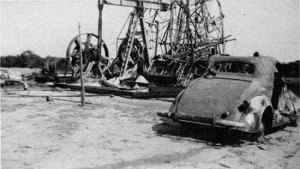

The Blast Site, Oildale, California. 1936 Note the missing passenger door.

When the dust cleared, there was nothing left of the rig or the men on it, just a huge crater nearly thirty feet deep. No part of the father and son was ever found, not a finger or foot, though they looked all around wanting to find something the poor wife and mother could bury.

The next morning, driving to work along the Valley Road, now north Chester Avenue a pusher for Standard Oil found a wheel from the Cadillac lying in the road, more than two mile from the blast site.

With a little common sense and an abundance of caution Bruce had now survived in this dangerous business for nearly a decade. The danger you can see is avoidable but the danger you can’t is not. Looming on the horizon was something that would throw the family into crisis.

The price for barrel topped $ 3.00 in nineteen and twenty and had, because of massive over production, been sliding downward. By the 1920s the automobile became the lifeblood of the petroleum industry, one of the chief customers of the steel industry, and the biggest consumer of many other industrial products. The technologies of these ancillary industries, particularly steel and petroleum, were revolutionized by its demands. With no industry organization or government oversight established corporations led by the ever hopeful wildcatters drilled and drilled and drilled.

Henry Ford’s River Rouge plant had geared up for the new Model A in fall 1927 and by 1928 was rolling them off the assembly line at 9,000 cars a day. Mass produced and marketed you could get a snazzy Ford Roadster for $385.00. Didn’t have to be black either, unlike the venerable old Model T which came, as Henry said, “In any color as long as its black. By comparison. Douglas Fairbanks and Mary Pickford, owners of their own studio and without a doubt the best known film stars in the world really tooled around in a Duesenberg Model J which retailed for $8,700.00 dollars or about the cost of five average homes. It’s not likely they actually owned the Model A they are standing with. If they did, the cook and the maid used it to run errands.

Doug and Mary, 1928, with the Model A Ford.

Bruce and Eileen were doing well enough. By 1928 the two girls, Barbara and Mariel were twelve and eleven about to enter high school and little brother Bob, nine. High school beckoned. They had moved from the fields in the valley where Bruce had worked for Barnsdall Oil Company wells on both the east and west side.

It was a good time to get out of the valley. Oil workers were staging strikes on the Westside in Taft, Maricopa, Coalinga. The oil companies countered by trying to bring in “Scabs” from the bay area. Southern Pacific was happy to help as they had a major stake in production. Since the end of the war when wages rose the big companies decided they would put the squeeze on their labor and had gradually driven pay down. Strikebreakers, “Scabs” were protected by armed men, paid gunsels. county sheriffs and the police who knew where their butter was. The Southern Pacific RR was happy to provide trainloads of strikebreakers to the producers. There was some nasty businewss that took place at the SP depot when these trains arrived. Bruce was always concerned about things like this and after Casmalia never lived in the housing provided by the oil companies. They rented houses away from the central retail and housing districts. Oil towns were rough as they continue to be today. Gunplay, knives, drunkenness, prostitution and the company store with it’s outrageous prices were to be avoided, especially with three young children.

Taft was a “sundowner” town, which meant that if you were black or Mexican you’d better be out of town by sundown. The Ku Klux Klan was well organized and made sure that everyone knew Taft was a White Man’s town. A Kern County Supervisor, a certain Republican named Stanley Abel even had a mountain in the Los Pinos Wilderness area nearby named after him. It still is.
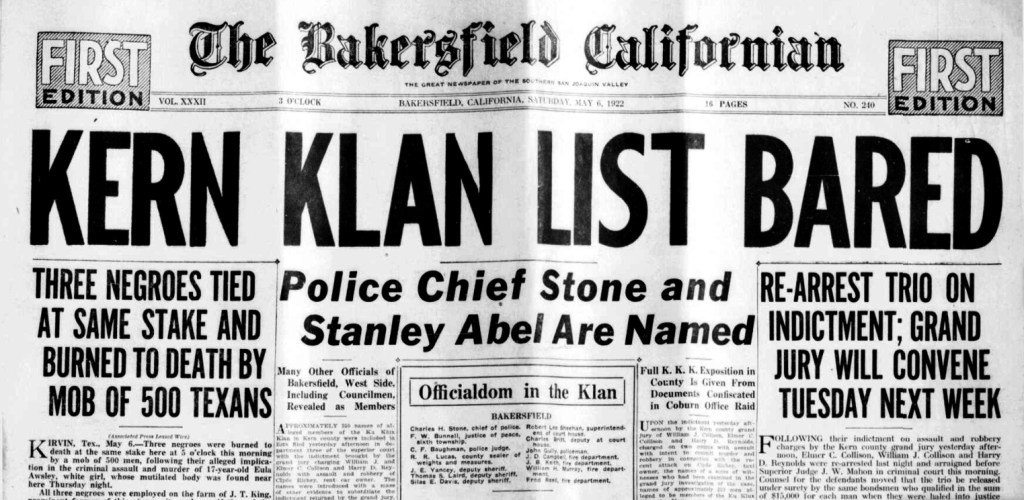
The Bakersfield Californian May 6, 1922

When confronted with this revelation, Stanley Abel was unapologetic to say the least. He said in a statement the day after the Bakersfield Californian published their report: “Yes, I belong to the Knights of the Ku Klux Klan, and I am proud to be associated with many of the best citizens of Taft and vicinity in the good work they are doing….I make no apology for the Klan. It needs none.”

Many in Kern county were not impressed. They started recall campaigns for Abel and others in city and county governments. Local newspaper the Bakersfield Morning Echo was staunch support of the supervisor, stating: “Those liberal Democrats promoting the recall of Stanley Abel are the enemies of good society and of the best interests of Kern County. A vote for the recall of Stanley Abel is a vote for the return of the vicious element and the vicious conditions which existed in years gone by.” Sound familiar? History allows the name to change but the song remains the same no matter the age.

The writer is the grandson of Bruce and Eileen, He and his cousins grew up with stories from the Oil Patch.

Standard

Dear Dona 12

Page 12

Closing the Ring

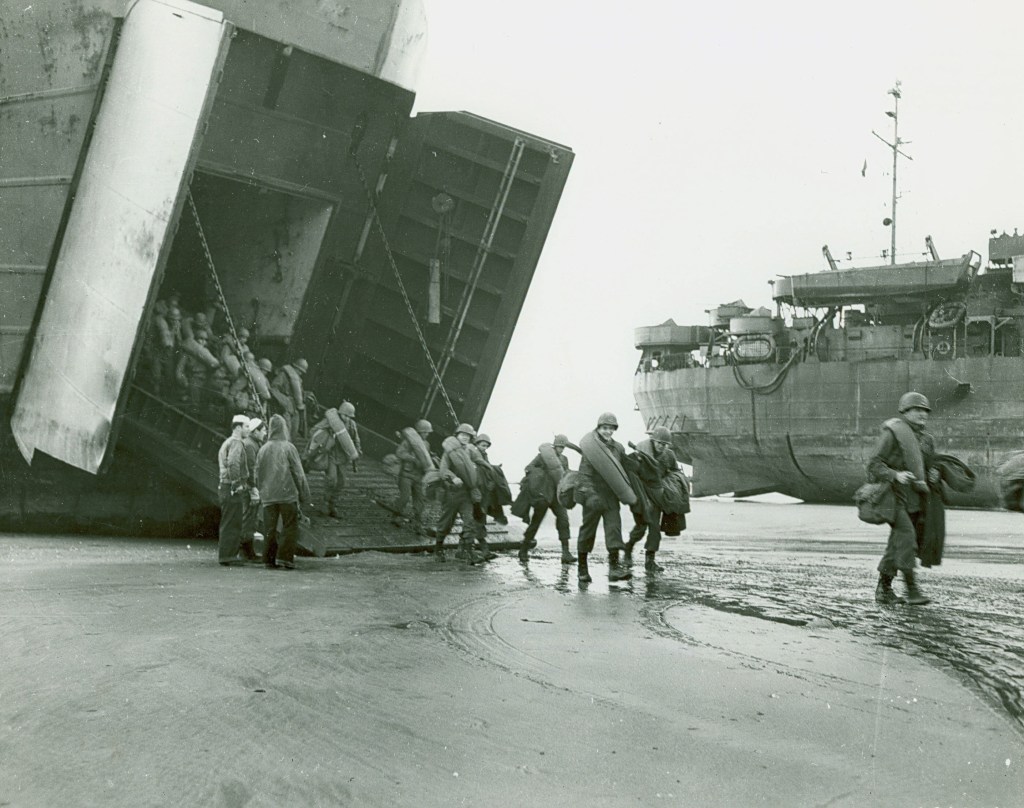
Landing Ship Tank was the official designation for the ship your dad traveled on to Luzon. The Navy thought that the name was adequate, they didn’t believe they deserved an official name such as those given to “Real” fighting ships. Sailors of course, being very young and with a patented sense of irreverence simply called them Large Slow Targets. Nearly forty were lost during the war so the swabs were right on the mark.

Disembarking from a large slow target, Lingayen Gulf Phillipines. US Navy Photo.

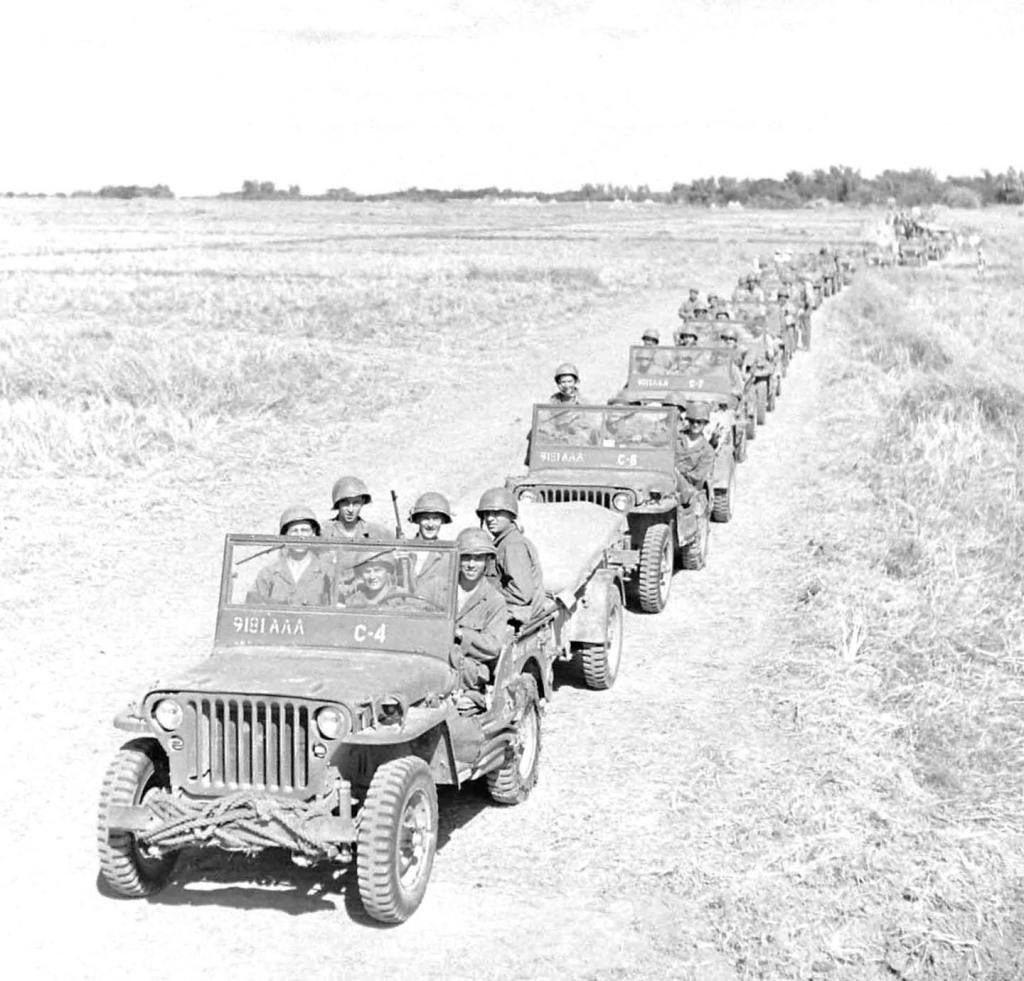
MacArthurs army charged down highway 55 towards the City of Manila. General Sasaki had chosen to leave only a few units along the 224 miles of the fertile Cagayan valley that runs down the center of Luzon. They convoys of American troops sped past Tarlac City, Angeles, San Fernando to Valenzuela on the outskirts of Manila proper. Though the allies had declared Manila an open city and had planned to bypass it. The Japanese were determined to defend it.

In the run down the valley, Some of the major guerrilla groups materialized out of the Corderillas and joined the regular tropps of the Eleventh and sixth corps. Groups led by Ramon Mafsaysay, future president of the Phillipine Republic, Russell Volckmann who was a West Point Graduate and had escaped into the mountains in December 1941 and led a guerrilla force of over 22,000 men*. Robert Lapham was a reserve Lieutenant in the 45th Regiment, Philippine Scouts and escaped into the jungle just before the fall of Bataan in 1942. Considered the most disciplined and successful of the guerrilla groups he moved into the Zimbales mountains where his 13,000 fighters fought with General Walter Kruegers sixth army.**

MacArthur ordered your dad’s team to Zimbales province where they were to be stationed in Olongapo City on Subic Bay. Subic was to be one of the prime the anchorages for the Navy as the Allies prepared for the invasion of Japan. By early 1945 the Navy operated over 6.700 ships of all types and Harbors like Subic and Manila Bay were essential to provisioning and maintenance.

Arriving at a large permanent base the team would have had the opportunity for the first time since landing on Luzon to strip off their filthy uniforms, shave and be relatively safe. For the first time in a long while the chances of being killed or wounded by artillery, Japanese bombers or snipers was behind them. For perhaps the first time your dad could stand up straight without fear of being killed. One MIS soldier said that when he moved into the Quonset hut he was to live in he was reminded that the slamming of the screen doors caused him to stand there and repeatedly open and close it because it reminded him of home so. He said it made him literally weak in the knees.

Hilo must have looked out at the country they were traveling and been reminded of his home in California. The land was gentle and planted in crops tended by families who lived on it. The feral and disturbingly inhospitable jungle, the Green Hell he and his friends had lived in for two years was replaced by a land more familiar to the farm boy from Arroyo Grande.

The island was such that a war of maneuver, where overwhelming numbers of troops and war machinery such as tanks an aircraft gave the allies a great advantage. American industry helped to turn the tide. I read of a German soldier captured in France asking his captors. “Where are your horses?” The Germans moved by horse drawn vehicles and had never dreamed of the American ability to produce. The Japanese Imperial army was equally amazed.

Highway South to Manila. War Department 1945.

The job of the MIS was to put together as much information as they could for the planners of the coming invasion of Japan proper. Captured documents, radio intercepts, military orders, maps and personal letters were to be collated in order to locate as precisely as possible every installation, road, railroad, landing strip In the islands. They even knew the home addresses of individual officers and enlisted men. It was a monumental task.

No longer suspect, Military Intelligence had long proved its worth. The battle of Midway, Guadalcanal, the island hoping campaign, MacArthurs drive up the southwest Pacific, The ambush of Admiral Yamamoto, Merrills Marauders, The mission in China supporting the armies of American General Stillwell and Chiang Kai-Chek, The battleship encounter in the Surigao Straits of the Phillipines along with the organization of the vast amounts of information obtained through all sources gave the allies an impressive view of the Japanes forces everywhere.

Housed in Quonset huts, hundreds of MIS translators worked around the clock preparing the information that would be need for what was planned as the largest invasion in history. The planning assumed multiple invasion beaches scattered around the Japanese homeland. In the coming invasion of Japan, the US navy planners favored the blockade and bombardment of Japan to instigate its collapse. General Douglas MacArthur and the army urged an early assault on Kyushu followed by an invasion of the main island of Honshu. Admiral Chester Nimitz agreed with MacArthur. The ensuing Operation Downfall envisaged two main assaults – Operation Olympic on Kyushu, planned for early November 1945 and Operation Coronet, the invasion of Honshu in March 1946. The casualty rate on Okinawa was to be 35% of all troops and with 767,000 men scheduled to participate in taking Kyushu, it was estimated that there would be 268,000 casualties. The Japanese High Command instigated a massive defensive plan, Ketsu Go (Operation Decisive) beginning with Kyushu that would eventually amount to almost 3 million men with the aim of breaking American morale with ferocious resistance. All men of any age, women and children were to be drilled for the effort. Thousands were issued sharpened stakes for use. The plan was for a resistance that would cause the ultimate collapse of the empire and the end of the Japanese nation. Resistance would be suicidal. Some estimates of American casualties ran as high as a million killed and wounded.

It’s impossible today to imagine what the military leaders and planners struggled with. Ordinary soldiers who were involved in the planning must have simply been sick at the thought. No one knew about the bomb. He wasn’t told about it until after President Roosevelt died on April 12th, 1945. From President Truman on down the inevitability of the holocaust in Japan for all countries must have been horrific. America was already exhausted. Too many dead boys to bear. Casualties in other allied countries were much higher than ours. In Great Britian there were literally nl boys left. Generals waited impatiently for 17 and 18 year old boys to graduate and be eligible for conscription. As in WWI these children were referred to as “The class of 1917” or “The class of 1944.” Back home in Arroyo Grande, class of 44′ boys included Gordon Bennett, John Loomis, Tommy Baxter and Don Gullickson who would all be in the Pacific by wars end. It must have seemed a universe of war with no ending. Most soldiers and sailors never made it home for a visit. From 1941 you father had spent over fourteen hundred days without seeing his family. There must have many nights lying on his cot in the steaming tropics unable to sleep thinking about his family, not knowing precisely where they were, how they were being treated; would he ever see them again. There was no answer to be had.

Exhaustion would have been written on the face of your father by the beginning of 1945. He had been overseas for over three long years. He hadn’t seen his family, surrounded by barbed wire and guard towers with machine guns pointed inward for going on five years. Corralled in the Southwest Arizona desert, winter and summer it must have been agony for Hirokini and Ito. Until 1943 theirs could not visit them. The fact that the boys had volunteered to serve the only country they knew meant little to military administrators.

The agony of mothers is compounded by the fact that though grandparents knew he was somewhere in the Pacific they never knew exactly where or what he was doing. Headlines in the Newspaper blared massive headlines praising the military for the carnage they caused and were exposed to. Casualty figures, though not typically released to the press didn’t stop the reporters on the wartime beat from happily publishing the butchers bill.

There is a scene in Saving Private Ryan where, in the distance a small farmhouse and barn somewhere in the wheat-fields of mid-America you see an automobile being driven along a dirt road. It’s a drab green color with a white star on its door. It’s rolling through a cloud of dust of its own making. A middle aged woman in the kitchen goes about her business, rinsing the lunch dishes, her hair styled in the rolls worn by mothers and grandmothers of the time. As she moves about dressed in a red print housedress and an apron exactly like your grandmother wore, she begins rinsing the dishes in the sink. A little movement in the distance catches her eye and she looks up to see the car as it turns up the road to the house. The woman, who you know immediately is the mother of the four Ryan boys because there is a small banner hung, almost without notice by the camera, on the kitchen wall. Framed in red with four blue stars on a white background indicating four children, boys, just boys in the service. Mrs Ryan looks up, sees the car, goes back to the dishes, with her head still down it registers. Why the car is here. She looks up again and grows absolutely still, She knows. The heart goes still, scarcely breathing, she sleepwalks to the screen door and stands, her slippered feet spread, very still as the car pulls up. She does not move. Everything in the scene is in suspended animation and when the doors open, first an officer in uniform from the front then her pastor from the back door, she loses control of her legs, staggers and then slowly, agonizingly collapses on the floor boards. It goes to the heart of every mother who sent a son off to war. It’s the finest scene Spielberg has ever made.

Mrs Margaret Ryan at the window, sees the car, in that instant she knows. Note the white picket fence reflected on the glass in a way that suggests white crosses. Superb imagery. Spielberg is a master artist. Screen capture. Amblin Entertainment, Mutual Film Company. 1998

The battle for Manila was to be the most destructive operation in the war outside of Stalingrad and the final apocalypse of Berlin. In the movie, “The Pianist”* the final scene is Adrian Brodie standing in the ruins of Warsaw, Poland. Though it’s a movie set, the scale of destruction is enormous, it borders on insanity, hopelessness and utter destruction. Such was Manila.

Your father had a ringside seat working at Subic Bay. MacArthur himself had a personal attachment to the city, he had lived there for many years. His son had been born in a Manila hospital and when he was serving in the Filipino Constabulary he was often quoted that it was his favorite city. An ancient city with wide avenues and scores of beautiful old buildings shaded by tens of thousands of trees, the dignified Narra with its gorgeous yellow flowers underlayed by the fallen blossoms carpeting the walks below, the unfurling Dapdap known as the Coral Tree with it’s diamond shaped, fiery red blossom, and the huge and ominous Balete, trees renowned for their expansive, sprawling roots and branches which are said to be home for sorcerers.

Gracing the ancient streets deep in the city, “Old Manila” refers to the historic walled city of Intramuros. Manila was known for its Spanish colonial architecture and historical landmarks like Fort Santiago and the San Agustin Church. Fort Santiago (Saint James, the patron Saint of Spain) was built between 1590 and 1593 by the first governor of the Spanish Phillipines and anchored the city center.
Your dad never saw it. By the time he left the Phillipines it was a graveyard of buildings, people and culture.

When the Japanese attacked the islands in 1941 MacArthur declared Manila an open city and withdrew his troops to save it from destruction. This was not to be the case in 1945 when your father was there. General Tomoyuki Yamashita, he commander of the army withdrew his forces from the city into the mountains of the northeast portion of the island leaving Yamashita decided not to declare Manila an open city as MacArthur had done but that Gen. Shizuo Yokoyama, destroy all bridges and other vital installations in the area and then evacuate his men from the city as soon as American troops arrived in force.

In spite of these orders, Rear Admiral Sanji Iwabuchi, commander of the Imperial Japanese Navy’s 31st Naval Special Base Force, was determined to fight a last-ditch battle in Manila. Iwabuchi repeatedly ignored orders to withdraw from the city. From the beginning of February 1945 until march, some of the most vicious street fighting of the war took place. Artillery and air strikes reduced the beautiful old city to a vast landscape of roofless shells. The Japanese forces resorted to a suicidal defense, refusing to surrender and murdering tens of thousands of Filipinos, men, women and children. Accounts from US soldiers tell of rape and systematic execution of the civilian populace. For the remainder of March 1945, American forces and Filipino guerrillas mopped up Japanese resistance throughout the city. With Intramuros secured on 4 March, Manila was officially liberated, although the city was almost completely destroyed and large areas had been demolished by American artillery fire. American forces suffered 1,010 dead and 5,565 wounded during the battle. At least 100,000 Filipino civilians had been killed, both deliberately by the Japanese in the various massacres, and from artillery and aerial bombardment by U.S. and Japanese forces. 16,665 Japanese military dead were counted within the Intramuros alone.

Afterwards, City of Manila, April 1945. War Department photo.

From Subic Bay where your father was, the sound of fighting would have heard. Flashes on the horizon coming from fires and exploding bombs would have illuminated the night sky. He heard the rolling thunder of the defenders being crushed. No one really knows the number of Japanese troops and civilian Filipinos died there. At the end the Imperial Army simply executed any Filipino they could find. They burned them with flame throwers, lined them up against walls and move them down like wheat stalks, they locked them in churches and burned them alive. Women were brutally raped and then shot. It was Hell on earth. It simply cannot be imagined except by those who lived through it and those, especially the soldiers, sailors and nurses to save their sanity simply locked it away. PTSD as it is known today is not a recent phenomenon but has been known by all veterans since Thermopylae and the Phalanx’s of Alexander and the Emperor Xerxes.
Dear Dona

Chapter 13

Coming Next

The Final Blow.

Cover Photo: The Fort Santiago Gate after the battle for Manila. War Dept. Photo.

*Brigadier Russell W. Volckmann was one of the founders of the Army’s Special Forces units after the war. His experience as a partisan commander was highly valuable in the formation of that elite force

**In 1947, Lapham returned to the Philippines for five months as a consultant to the U.S. on the subject of compensation to Filipinos who had served as guerrillas during the war. He recognized 79 squadrons of guerrillas under his command with a total of 809 officers and 13,382 men. His command suffered 813 recognized casualties. However, sorting out the deserving from the fraudulent was difficult. Of more than a million claims for compensation in all the Philippines, only 260,000 were approved. Lapham believed that most of his men were treated fairly, but was critical of U.S. policy toward the Philippines after the war. “If ever there was an ally of American whom we ought to have treated with generosity after the war, it was the Philippines.” He said the U.S. Congress was “niggardly” with the Philippines, providing less money for rebuilding than that spent in many other countries, putting conditions on Philippine independence that favored U.S. business and military interests, and backing corrupt Filipino politicians who protected American, rather than Filipino, interests.

***The nurse, LT. Sandy Davys from the film “They Were Expendable” by John Ford surrendered with the other 86 nurses on Bataan and spent the war years in the Los Banos and Santo Tomas internment camp in Manila. They all survived.

“The Angels of Bataan” War Department Photo. 1945

****”The Pianist,” the Oscar-winning film, is based on the real-life story of Władysław Szpilman, a Polish Jewish pianist who survived the Holocaust. Szpilman’s memoir, also titled “The Pianist,” details his extraordinary survival in Warsaw during World WarII.

Standard

Dear Dona,

Page 6

Author: Michael Shannon.

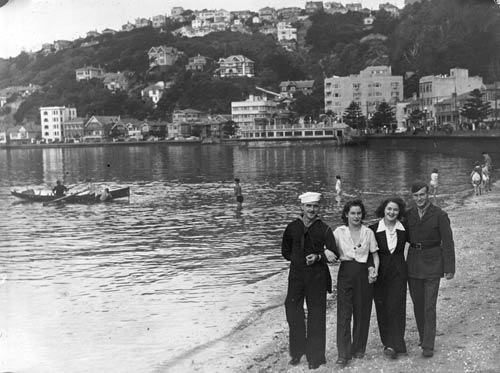
Auckland, New Zealand. 1943 population, 1.642 million people with a revolving population of soldiers and Marines. The New Zealand government was very concerned about the Japanese because without the Americans to defend the island they were in trouble. You see, the Anzacs were in Italy, the Mediterranean and North Africa, as well as Japan in south-east Asia and other parts of the Pacific. They weren’t home and the islands, just like Australia were desperate for the Americans to help defend them. Japanese submarines were patrolling the waters between New Zealand and Australia. In 1942 the United States navy had just barely stopped the planned invasion of Port Moresby in New Guinea. The reason was its close proximity to both Australia and Asia. The Japanese viewed Port Moresby as a key point to launch aerial attacks on the northern part of Australia. They could have closed the sea lanes from the U S to Australia and New Zealand. Troops fighting to defend New Guinea, the Anzacs, Dutch and MacArthur’s undertrained, rag tag 32nd division from Wisconsin and Michigan were slugging it out with Japanese in the fetid, rainy jungle of the southeast of New Guinea trying to push the Japanese back along the Kokoda trail and down the Owen Stanley range toward the coast. Soldiers on both sides had to literally crawl on their hands and knees because the slopes were so steep and slippery from the constant rain. There was no more brutal fighting in WWII. Nisei translators later found Japanese diaries which describe starving soldiers butchering and eating the Australian dead. The Japanese were literally starved out.

Soldiers were granted time away from the ship in Auckland. It was a chance for the Americans to sample a culture quite different than their own. For the Nisei who were well acquainted with ethnic hatred it brought to mind some curious observations. The Kiwis’ didn’t consider the translators outsiders. Neither did they dislike the black support troops from the ship and ones stationed at the army camps ashore. This was a big difference from the way white Americans treated their fellow citizens. On the voyage over, great care was taken to segregate troops of color from their fellow soldiers. Contrary to what is written in history books, violence towards minorities was common in our military.

On June 12, 1942, five transport ships carrying US Army troops arrived in Waitematā Harbour in Auckland. This marked the beginning of the “American invasion” of New Zealand, which lasted until mid-1944. The New Zealanders were quickly disabused of their inherent like of their fellow allies.

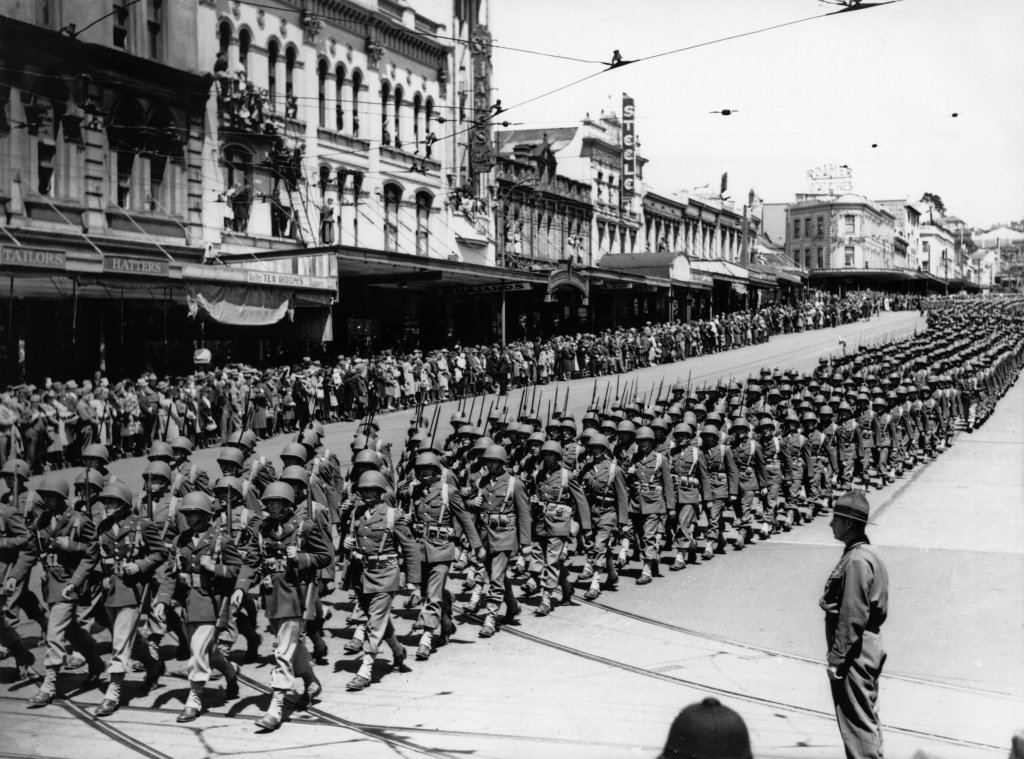
US troops march down Queen Street, Auckland, 1942. New Zealand Herald Archives photo.

Between 15,000 and 45,000 American servicemen were stationed in New Zealand, mostly in camps in or near Auckland and Wellington.There were cultural differences between the Americans and New Zealanders. New Zealand women found the US servicemen to be handsome and polite, and they had more money than New Zealand soldiers. They were better dressed than the local troops and being young and very far from the moral strictures of home had few reasons to show anyone respect. Women of all kinds were “fair” game, the way they saw it. This led to romantic entanglements between American troops and New Zealand women. “Overpaid, oversexed and over here” was the watchword for the New Zealanders. The locals saw it as an “American invasion”. Many New Zealand soldiers resented the idea of relationships between New Zealanders and American soldiers, leading to tense relations between the two parties.

Another source of tension was US servicemen’s attitudes towards the Māori. White soldiers from the 31st “Dixie Division” from the south were not “comfortable” with Māori soldiers. The government published a guide book for US servicemen, titled “Meet New Zealand” which reminded the Americans that “the Maori today occupy a position in society socially and politically equal to that of any pakeha or white New Zealander”. The Prime Minister’s office said that New Zealanders should “be friendly and sympathetic towards the colored American troops, but remember that they are not accustomed in their own country to close and intimate relationships with white people. Anyone finding themselves in the company of both white and black American troops was advised to “avoid unpleasantness”. Quite the understatement.

During this time, hotel bars closed at 6 pm and masses of drunk soldiers were then ejected into the streets. This was known colloquially as the ‘six o’clock swill’. Around 6 pm on the evening of 3 April 1943, fighting broke out between US servicemen and New Zealand soldiers and civilians outside the Allied Services Club. The brawls spread to the ANA (Army, Navy, and Air Force) Club in Willis Street and then to Cuba Street and continued nonstop for hours. Civilian and military police attempted to break up the fights, but only finally subsided as the US soldiers left town on trains back to their camps. 6×6 army trucks returned the passed out drunk and those damaged by the shore patrol and the MPS. Courts Marshalls were ordered then cancelled for lack of any evidence, another understatement.

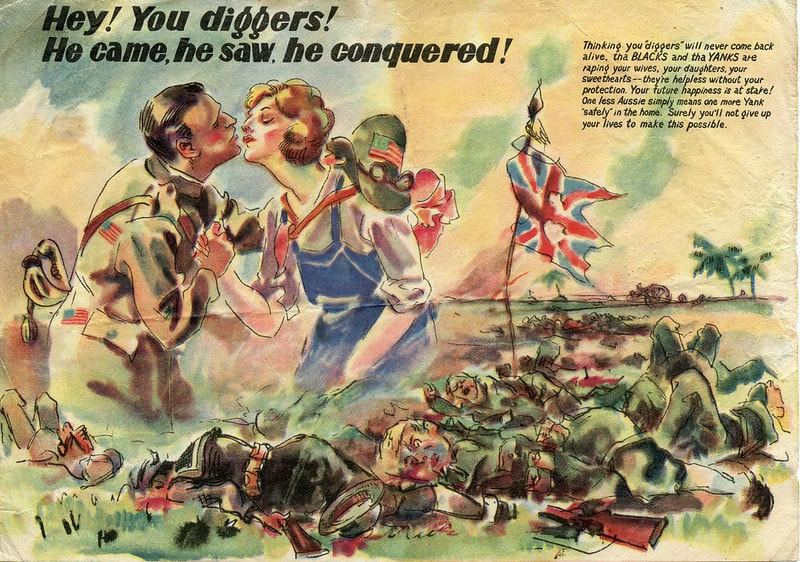
The Japanese also understood the value of propaganda. Japanese leaflet. 1943 US Army Archives

When your dad arrived with the other Nisei, the New Zealanders accepted them as equals but their own countrymen, far less so. Any thought by the translators that their service would reduce the racism of white troops was an unlikely dream. They had to be very careful.

A fight on 12 May 1945 in Cuba Street involved over 150 Māori and US servicemen. This fight was definitely racially motivated: Māori troops were angry at their treatment by the Americans, who tended to treat them the way they treated black Americans. Military reports stated that “Maoris from whom statements were taken allege they have been insulted by the Americans and have been told by Americans not to ride in the same tramcars, drink in the same bars, eat in the same cafes and that they should walk via back streets or step off the sidewalk when American soldiers approached. The Americans call them black curs an N*****s and have consistently insulted the Maori race. Imagine traveling halfway around the world only to find the same intolerance and hate as in your own home town. The only modifying thing was that the New Zealanders accepted both the Blacks and Japanese translators with no reservations. They were welcomed in New Zealand’s establishments and into their homes as well.

Because the MIS translators were considered so valuable, General MacArthur ordered them to be sent to Brisbane, Australia immediately. When they stepped off the ship in Brisbane, and were driven to army headquarters the first thing they were told was to avoid places where American soldiers hung around. Just like Auckland and Wellington, Brisbane had seen vicious riots on more than one occasionAmericans had worn out their welcome.

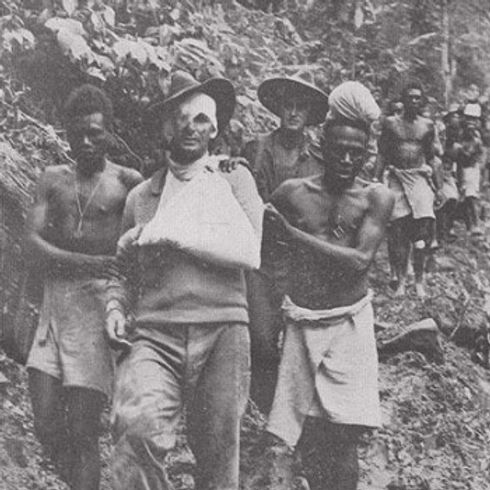
By late summer of 1943 the offending division had been moved to the front in New Guinea where they again failed to distinguish themselves in the vicious fighting on the Kokoda trail where the Imperial Japanese army had been pushed back over the Owen Stanley range of mountains by the Anzacs. At nearly 14,000 feet, the battles in the clouds as the news called it, the Aussies not only fought the Japanese but triple digit heat, little water, almost no food and what they did have had to be hauled up the nearly vertical mountains by the New Guinea natives who supported the Anzacs, the so called Fuzzy Wuzzy Angels. “Fuzzy Wuzzy Angels” was the name given by Australian soldiers to Papua New Guinean water carriers who, during World War II, were recruited or forced into service to bring supplies up to the front and carry injured Australian troops down the Kokoda trail during the Campaign. Over the four arduous months, the Fuzzy Wuzzys helped secure an Australian victory by forming a human supply chain along the Kokoda Track, moving food, ammunition up and wounded soldiers down from the front lines. 625 Australian soldiers were killed during the Kokoda Campaign, and over 1,600 wounded. Additionally, in excess of 4,000 soldiers became casualties due to illness. More than 150 Papuans died as members of the Papuan Infantry Battalion or as carriers of critical supplies and wounded along the Kokoda Trail.

New Guinea auxiliaries helping an Australian soldier down from the Owen Stanley mountains. Australian War Museum photo.

the Australian and New Zealanders finally defeated what was to be Japan’s last attempt to invade Australia and cut the sea lanes from the United States. The battles now moved to the northern end of New Guinea. Port Moresby was secure and planning was underway for the next step up the island chain towards Japan itself.

MacArthur moved his headquarters from Brisbane to Port Moresby in New Guinea. Your dad and his other translators packed up and went with him. They were working seven days a week. Hundreds of thousands of diaries, letters home and military communications were being processed every week by the MIS translators. Rather, as you might imagine just a primarily local project, it had become necessary due to the volume of documents being found in caves, the bodies of dead Imperial troops and radio intercepts to establish a communication network that encompassed the men with MacArthur like your father and the cryptographers at Pearl Harbor, the language school at San Francisco’s Presidio and the school at Fort Snelling in Minnesota. A network was set up to handle the radio traffic between places and to provide air transport to move the thousands of crates of captured documents.

Leaving the comfortable billets in Brisbane, your father and his crew packed up and moved to the decidedly less cushy environs of Port Moresby, New Guinea. They would have to get used to the new arrangements. It would be a long time before they saw a solid roof over their heads or a decent shower. It would be canvas and cold water from here on out.

Tent 29. Camp Chelmer, Indoorooplily, Queensland, Australia. November 1943. Joe Iwataki photo

Dear Dona . Page 7 Coming December 27th.

Standard

Dear Dona,

Page 5

By Michael Shannon.

The group of sixteen translators from your dad’s class arrived by train at the siding in Pittsburg, California. Pittsburg was the major debarkation point on the west coast for those heading for the Pacific War Theater. After a week confined to barracks at camp Stoneman, Hilo and his fellow graduates found they would be leaving by ship in a few days. They could see the skyline of San Francisco shimmering under clear sky’s just across the bay but were not allowed to visit owing to the high commands orders that all Nisei be confined to base for their own safety. The danger from their fellow soldiers was real, particularly the Marines who were across the bay. To prepare Marines for what was coming all Japanese were brutally vilified in speech and print. Such indoctrination is common to all wars no matter the country. Propaganda yes, but no less dangerous especially to those who had not been exposed to combat yet. There had been several serious incidents where Nisei in uniform were assaulted by groups of soldiers and sailors. Feelings ran very high.

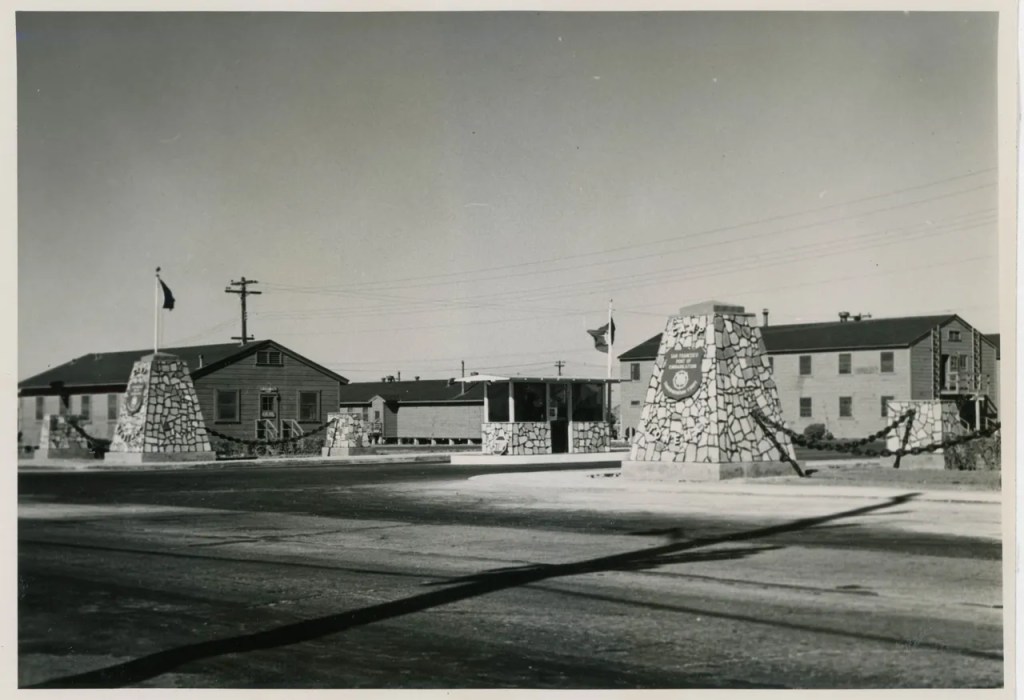
Camp George Stoneman, Pittsburg, California, 1943. National Archives

Stoneman was brand new, completed just two months before your dad arrived. The camp was named after George Stoneman*, a cavalry commander during the Civil War and later Governor of California. In addition to almost 346 barracks (63 man), 86 company administrative and storehouses, 8 infirmaries, and dozens of administrative buildings, the 2,500 acre camp held nine post exchanges, 14 recreation halls, 13 mess halls, a 24 hour shoe repair and tailoring business, one post office, a chapel and one stockade. Overall, the camp was a city unto itself. It had a fire department and observation tower, water reservoir, bakery, Red Cross station, meat cutting plant, library, parking lots and 31 miles of roads. For recreation, Stoneman boasted two gymnasiums, a baseball diamond, eight basketball courts, eight boxing rings and a swimming pool and bowling alley. Officer and enlisted clubs provided everything from reading rooms to spaghetti dinners. The camp also contained the largest telephone center of its day, with 75 phone booths and a bank of operators who could handle 2,000 long distance calls a day. Stoneman even had USO shows featuring stars such as Groucho Marx, Gary Moore, and Red Skelton. Lucille Ball once donned a swimming suit to dedicate an enlisted men’s club.

Camp Stoneman had a maximum capacity of 40,000 troops and at one time ran a payroll of a million dollars per month. Leaving camp to the docks where transport ships waited meant departing the camp at the California Ave. gate and marching down Harbor St. to and catch the ferry at Pittsburg landing. Many “Old Timers” recall the day when they would shine shoes, sell newspapers, round up burgers and and cokes in service to the troops to earn some coin. It is said that when the troops were departing or being “shipped out” they would toss their remaining coins or dollars to the local children as their was no longer any need for American currency where they were headed.

Camp Savage was pretty small by comparison and the Nisei soldiers must have been amazed. Mostly farm boys from California or fisherman’s sons and plantation workers from Hawaii, Stoneman dwarfed old Fort Bliss. The fort covered half the acreage of the entire Arroyo Grande valley and had forty times it’s population.

After a week the men were told to pack and be ready to catch a ferry across the bay to pier 45** where they would board for an unknown destination.

Foreground, pier 45, 1943. U S Naval vessels in background.

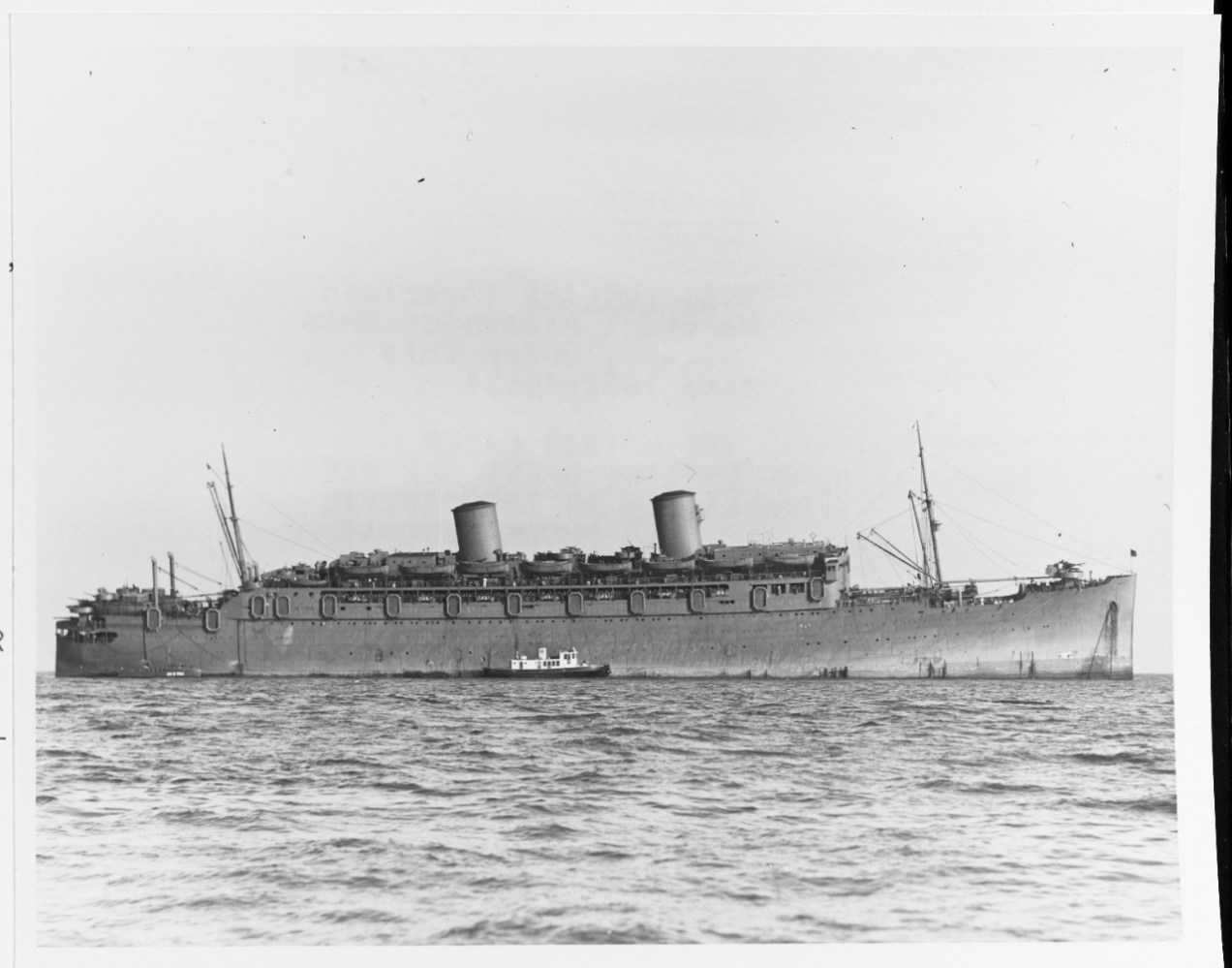
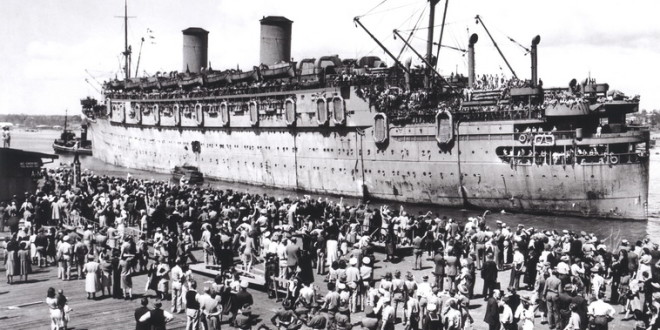
The Army and the Navy had chartered dozens of passenger ships from home fleets and foreign flagged companies. Operating out of San Francisco were several that had flown the company flags of the Dollar Line,*** American President Lines and the Matson Line. Famous luxury liners in the Hawaii trade such as the SS Lurline, Monterey, Matsonia, Maui and the Malolo were now being operated by the US Army Transport Service. These ships in particular, because of their size and speed were referred to as “The Monsters.” Just three of them, They traveled alone, rarely needing warships for protection as most naval vessels couldn’t match their speed. This was considered protection enough from Imperial Japanese submarines. They could also make the 6,725 nautical mile trip to Auckland, New Zealand without refueling. Thats where they were headed though only the Captain knew it. Everyone else was in the dark.

USAT Lurline pulling out of San Francisco, fully loaded with over 6,000 soldiers, sailors and Marines. US Heritage Command Photo. 1943

Steaming under the Golden Gate bridge and out past the Farallone Islands she left the treacherous Potato Patch to port and headed southwest. She picked up her escorts, three Fletcher class destroyers and the Cruiser USS Indianapolis. The officer of the watch rang up full ahead on the telegraph, the engine room lit off all the boilers, smoke poured from the stacks, bow wave arched higher and they headed for the sunset.

The Nisei found their quarters for the trip and were pleasantly surprised. They were to stay in two converted first class cabins on the promenade deck. A pre-war cabin for a trip from San Francisco to Honolulu cost $200.00 in 1940. ( $4,509.49 today ) The boys joked that they were getting a really good deal. They also felt lucky because they knew the berthing decks where the soldiers were stacked as much as six high in their pipe bunks breathing the odorous air, a mix of cigarette smoke, and dirty smelly clothes. The ships laundry was out of operation for the trip. There were too may passengers, so going on deck for some fresh air had to be done in shifts. Likewise chow. You stood in long lines for hours in order to eat. Almost as soon as the ship hit her first Pacific roller, the unbelievably foul smell of vomit began sluicing around the below decks. There were pails but they soon overflowed. Miserable doesn’t describe it. They were young though and adjusted as best they could. There was no where to escape anyhow.

At the beginning of the voyage the Nisei were restricted their cabins for fear that there might be trouble with the soldiers and the crew. Later it was thought that perhaps getting to know them was the better course of action. Everyone was notified of the decision and everyone was allowed to mingle. During the day the decks were completely covered by soldiers, mainly replacements for the 32nd, Red Arrow, Wisconsin National Guard, the 37th, Buckeye Division, Ohio National Guard, the 41st, The Sunshine Division from the states in the Pacific Northwest and the 23rd or Americal Division. All of them involved by this time in heavy fighting in New Guinea.

Each day the soldiers practiced with the bayonet, cleaned their rifles, sharpened knives and convinced themselves how tough they were. They averaged just about twenty years and their hubris came from being young and having almost no exposure to life outside the mostly rural areas they came from. Many had never seen a Japanese in their lives.

For the Nisei the release from their cabins turned out to be a mostly positive thing. As they got to know each other they found out how much alike they really were. A farm boy is a farm boy no matter his ancestry. In the trek north to Japan the soldiers would come to value very highly their new Nisei friends who would share all the hardships of combat with them and whose translation skills would save hundreds of lives.

Still they talked about the problems communicating directly with the enemy, in the language of one’s parents. The idea was incredibly fraught with personal feelings especially for the Kibei who had the greatest exposure with Japan proper. To some it presented difficult questions about identity and heritage. For many Japanese Americans, it was difficult to reconcile using the Japanese language for American victory when their dog tags bore the address of the camp back home in the United States where your parents were incarcerated. In many cases, the translators had had no opportunity to even visit families and the addresses that listed Manzanar or Tule Lake California, Gila River and Poston Arizona, Amache Colorado or Rowher, Arkansas must have caused pain every time they looked at them.

So here they were, a small contingent of specialized troops traveling with thousands of Caucasians whose suspicions and hatred was dangerous to them, whose families were locked behind barbed wire in concentration camps and whose President had written about his decision to intern Japanese Americans was consistent with Roosevelt’s long-time racial views. During the 1920s, for example, he had written articles in the Macon Telegraph opposing white-Japanese intermarriage for fostering “the mingling of Asiatic blood with European or American blood” and praising California’s ban on land ownership by the first-generation Japanese. In 1936, while president, he privately wrote that, regarding contacts between Japanese sailors and the local Japanese American population in the event of war, “every Japanese citizen or non-citizen on the Island of Oahu or in California who meets these Japanese ships or has any connection with their officers or men should be secretly but definitely identified and his or her name placed on a special list of those who would be the first to be placed in a concentration camp.”

Imagine the confusion on the one hand and the desire to fight for a country that didn’t want you on the other. Like my father said when questioned about the issue, “You cannot understand it because you haven’t lived it.” And of course thats true as far as it goes. Today, we have far more documentation of those events than was possible during the war when the public was restricted to almost none.

Steaming day and night the group of ships headed southwest, zig zagging to reduce the chance of torpedo attack and on the seventh morning those on deck sighted Diamond Head. A soldier from Ohio turned to the Nisei next to him who was from Kaimuki, Oahu and asked if that was what Japan looked like to him, the Nisei replied “It looks like home to me.” As Bob Toyoda told the story years later he laughed at the confusion on the face of the Ohio boy who was going to war against a country he knew nothing about, not even where it was.

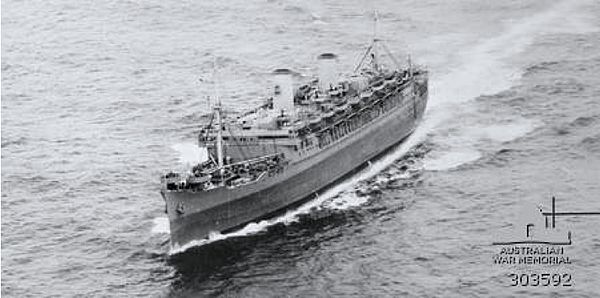
SS Mariposa, USAT enroute to Auckland New Zealand, July, 1943. Australian War Memorial photo****

Much to the dismay of the passengers, especially the translators from Hawai’i, the escorts turned to starboard and headed for Pearl Harbor but the Mariposa turned to port and picked up a compass bearing of 150 degrees south-southeast (SSE). It was going to be another long, long three weeks aboard.

Dona page 6

From the promenade deck, Hilo and the other translators could just make out the smudge on the horizon that they knew by now was Auckland, New Zealand. Six thousand seven hundred miles and a month at sea and no one aboard was any more anxious to get to shore than they were.

*General George Stoneman was a cavalry general in Grant’s army. He is mentioned in the song “The night they drove old Dixie down.” His name would have been well known to southern boys.

**Todays home of The San Francisco Maritime Museum and known as the Hyde Street Pier.

***The old Dollar Line owned by Robert Dollar has through mergers become the American President Line.

****This very likely the ship Hilo traveled on.

Cover Photo: SS Lurline in war paint leaving San Francisco for the southwest Pacific.

Michael Shannon is a writer from Arroyo Grande California.

Standard

Dear Dona

Written by Michael Shannon

Page Four

Unlike the American military where mail was censored and journals and diaries forbidden the Japanese Imperial Army thought the differences in language would make ordinary Japanese as indecipherable as any code to an American reader. The head instructors at the MILS schoolalso knew that Japanese soldiers were brutalized by their superiors and would likely be resistant to the treatment the British were using on captured Afrika Corps German troops where violence and intimidation were routinely used to coerce confession and information. As many of the instructors had lived in Japan for extended periods of time they knew the Japanese were generally very kind and the spirit of co-operation was instilled in them from birth. The culture of Japan was bound to duty to the Emperor and higher authority, but they also believed that force would not be enough to get prisoners to break down. Instead the language program not only include reading a writing and the general makeup of the Japanese soldiers battlefield strategy and tactics but a heavy emphasis was put on Japanese society, geography and religious beliefs. The idea was to draw a picture of the individual soldier in an attempt to establish rapport with him. They planners knew that they would resist brutality because that was a soldiers daily life in the Imperial Army. Instead a cautionary approach was adopted where kindness and not only assurances of kind treatment but whenever possible knowing about the persons home. Differences in prefecture, religion, the social mores of a particular part of Japan helped build trust between the interrogator and the prisoner.

American government sponsored propaganda was designed to present the enemy as a monolithic structure, all Japanese being of the same mind. Depictions of the Japanese were as vile and hateful as the propagandists could make them. It was impressed upon the American public that they needed to be eradicated. This conveniently swept under the rug the fact that, just like the US they were a diverse people with many different beliefs. Led by a military dictatorship whose war aims were no less than domination of the entirety of east and Southeast Asia.

The two largest religions were Shintoism, the official state religion and Bhuddism which originally came from China and was characterized as a forign religion. Various western religions were also represented particularly the Methodists. In 1940, Christians in Japan united in a declaration of church unity after the Religious Organizations Law required all Protestant churches to merge into one.

Japan had religious freedom during World War II and there was separation of church and state. It was not a theocracy. It is correct to say that most religious people were pro-war at the time.

During the pre-1945 period, Japan moved into political totalitarianism, ultranationalism, and fascism culminating in Japan’s invasion of Chinese Manchuria in 1931. This was part of an overall global period of social upheavals and conflicts.

Regardless of the political reality the instructors knew that the average Imperial Japanese soldier would have far less interest in politics and much more allegiance to his family, friends and the local village life. All of these observations dictated a much more friendly and kind approach than the Germans were getting from the British. Establishing a connection between the Nisei interpreter and the prisoner was an important part of the curriculum at Camp Savage.

The very first class which started on June 1, 1942 was made up of 200 enlisted men, 193 Nisei and 7 Caucasians. The entire class, which had been moved from the Presidio was made up of soldiers who had already enlisted before the war and were considered regular army. Their studies had begun in San Francisco and it wasn’t until after order 9066 was signed in February of ’42 that they moved east.

There were three types of student classification. There were Caucasians who had studied abroad or attended universities where they studied Japanese The majority were Nisei, American born citizens who had varying degrees of language experience. Some had attended locally run Japanese schools which they attended after regular public school classes and came from homes where the Japanese was spoken. The third classification were the Kibei, A subset of Nisei who spent a significant part of their youth in Japan, usually for education, and then returned to the U.S. They ranged from students who had gone to elementary school, many from Japanese high schools and some University students. The Kibei were terrific asset to the MIS because of their familiarity with Japanese culture at all levels.

The terms the Japanese used to describe what generation they were from were introduced to Western American cultural language in the late thirties. Hilo’s immigrant parents were referred to as Issei or First Generation. The 2nd generation like Hilo and his brother were Nisei or 2nd generation. Sansei were their children, the ones I went through school with.

Families wealthy enough to send children to Japan were relatively uncommon. Kibei (帰米, literally “go home to America”) was a term often used in the 1930’s and 40s to describe Japanese Americans born in the United States who were studying in or had studied in Japan. Many Kibei got trapped in Japan when war broke out between Japan and the U.S. In a sense, they became stateless because they were Americans living in Japan, labeled as the “enemy” in both.

The Kibei were the foundation blocks of the school at Camp Savage. Because the service would need soldiers to read fluently, translate to careful english, have some background in Japanese cultural, both civilian and military classes were on educating each student in a curriculum that matched both his background, Nisei or Kibei, and the specialty he was being trained for. Graduates would operate in teams where each member had one of the key components they studied at Savage.

Savage was an apt description for both the curriculum and the school. Foremost in their minds must have been the consequences they likely faced if they failed. The military is essentially faceless. You have a serial number because thats how you are identified. Transfers aren’t exactly blind but primarily rely on number that are needed here or there. For the Nisei soldiers at camp Savage, that meant that failure meant transfer back to your original unit. In Summer of 1943, nearly all Nisei in the various units of the army were transferred to the 100th Infantry Regiment, a mostly Hawaiian unit made up from the Hawaii National Guard. Trained in Mississippi and Wisconsin they shipped out to Italy in September of 1943 and were immediately thrown into the battle for Salerno in southern Italy near Naples. They spent the next eight months in nearly constant combat in some of the most vicious fighting of WWII. Every Nisei at Savage knew of this and what the price of failure would be, immediate transfer to the 100th as a replacement. They weren’t cowards, far from it, but they also understood the reality.

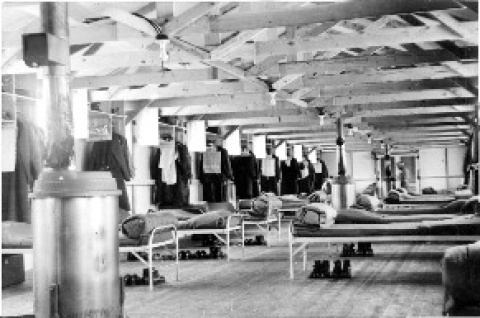
Your father lived in one of those tarpaper shacks for six months. I’m sure he had his turn rolling out of his cot at 4:30 am and priming the stove. He may have been lucky in the placement of his bunk, next to the little coal stove would have been as good as it got. Having a bunk on the end of the row would not be the best place to be in Minnesotas winter. Tarred paper is not among the greatest insulators. In fact it dwells pretty near the bottom. You can poke a pencil through it with no effort. Those shacks were drafty and pretty close to sleeping out of doors. In the morning they must have smelled. A confection of bad breath, farts, nearly dead hunks of coal giving off a noxious vapor and the clinging smell of cigarettes and uniforms they were not able to keep clean. Hanging just below the rafters a white cloud of condensed vapor from the mens breathing which would melt a drip as the room and the day heated. Soldiers had to do their own laundry, in tubs and basins outdoors with rough alkaline soap. Avoiding that chore would have been paramount.

Barracks at Camp Savage with stoves. US Army photo. 1943

Being young and soldiers they would have laughed at their predicament and blamed the army in no uncertain terms. Grousing soldiers have alway found the military to be the villain. SNAFU* was the word in WWII.

The classrooms were a better place to be. Semi-permanent buildings, well heated and clean would have been a relief. Luckily student were relieved of all the most basic duties that a soldier normally carried out. There was no drilling or inspections, no standing post in the middle of the night, all the little annoying things that the regular private has to put up with. The Army was desperate to prepare them for their combat jobs and made sure they had no more distractions than absolutely necessary.

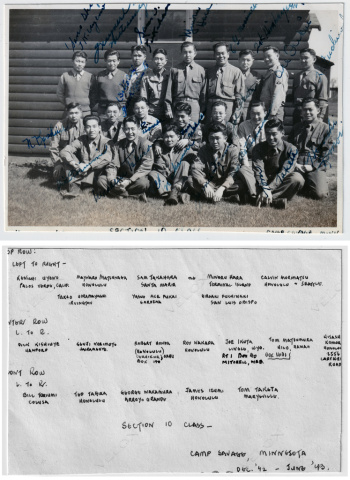
After six months in the classroom, class C-10 at Camp Savage walked out of the classroom for the last time and stood in front of one of the remaining log buildings and stood for a class picture. Everyone smiling and glad to be through the grinding curriculum.

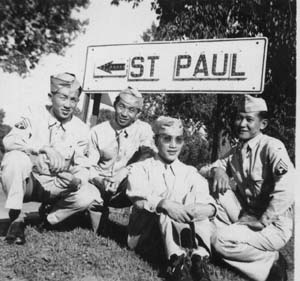
1942 1943 Camp Savage MIS Niseis. Your fathers class.

Hilo received a promotion to Tech five, an enlisted rank slightly below Corporal.** Like the others, he walked back to his hutment to open his official orders. He would have opened the manila envelope with the printed label, Official, Department of the Army and like all soldiers held his breath while he slid the paperwork out. Along with his service record was a single page warning him that he was now a holder of a Top Secret Clearance and was liable under the Uniform Code of Military Justice and the Official Secrets Act not to share or divulge any information as to his assignment or duty station under penalty of law.

Every MIS soldier carried a Secret designation. Information on the school and its graduates, their purpose was to be a closely held secret. This designation was to be enforced for a period of fifty years after WWII. The Military was concerned about the fact that they had interpreters in the Pacific theater whose importance could not be overstated.

Hilo’s parents who were housed at the Gila River, Arizona concentration camp had been visited by the FBI. Every MIS graduate had been thoroughly vetted before they were ordered overseas. This must have been very confusing to Hirokuni and Ito who would have been interrogated by two agents who gave them no information at all about the reason. Hilo wasn’t even mentioned during the questioning. The were and would remain completely ignorant of the reason until the war was over.

The second sheet of paper stated his destination; future duty station and was clipped to a set of official orders and travel vouchers. He was to report to Army headquarters in Oakland where he would travel by available transport to the Southwest Pacific Theater of Operations immediately. There would be no leave as Nisei soldiers were not yet allowed to enter the restricted zone to see family.*** Censorship rules meant that he could not tell them his destination just that he was being ordered overseas.

MIS interpreter PFC Geo Hara leaving for the Pacific, 1943. Densho Archive photo

Hilo himself wouldn’t have known his actual destination. He wouldn’t find out until his ship passed Hawaii so sensitive was military command. Some of the instructors at Savage were returnees and would have shared general information but not too much. He could have likely guessed that it would have been the Western Theater of Operations under General MacArthur but where? He was left to wonder.

Page Five coming Saturday November 23rd.

Destination, Southwest Pacific theater of operations and the real war.

Notes on text:

*SNAFU, Situation Normal, All f****d Up.

**The Army forbid the Nisei commissioned rank until late in the war. All MIS personnel were enlisted or noncommissioned rank.

*** Restrictions on visitation were lifted for servicemen in late 1943.

Links to other chapters in the series.

Page one: https://wordpress.com/post/atthetable2015.com/12268

Page two: https://wordpress.com/post/atthetable2015.com/12861

Page three: https://wordpress.com/post/atthetable2015.com/12872

Michael Shannon is a writer living in the Central Coast of California. He went to school with many children, whose parents were survivors of the camps in his little farming community of Arroyo Grande, California..

Standard

Dear Dona

Written By Michael Shannon

Page One

Saturday, October 19, 2024

Dear Dona,

Something in your note about not knowing what your dad did in WWII struck a cord. I have some research from the Manzanar story so I though I’d look into your dads service in World War two.

Most people have very little or no knowledge of the Japanese Nisei experience. I’ve interviewed people of that generation who had no idea that there were Nisei soldiers at all. In fact, there were none in the Navy, Marines or Air Corps, only the Army and its nurse crops accepted Nisei and only citizens at that.

I’m sending you this to pass along what I found about your dad’s service. One of the complaints of military men is the constant record keeping they must do. The funny thing is that once they are separated from the service the records go who knows where. Perhaps they are stored in cardboard boxes at the back of the warehouse pictured in the first Indiana Jones movie. Who knows? In any case some can be found in order to fill in a family’s story. In a way its a treasure hunt. There can be quite unexpected results. In fact its like assembling a puzzle when some of the pieces are missing.

The difficulty for children is that wartime veterans are extremely hesitant to tell them what their experience was like. There are a few reasons why that is so. One, the kids have no background experience or education to make much sense of it. Two, in the case of combat veterans, the stories are too horrible to contemplate telling your own children. Third, their hope is, that surely the kids will never have to experience their fathers hell for themselves.

Most sons and daughters of veterans never hear much about the parent who actually served. In WWII, somewhere around 12% of all regular army soldiers saw combat in which their was actual shooting. The average combat soldier was involved in combat for a period of around forty days. By comparison soldiers in Viet Nam averaged 240 days and in Afghanistan close to 1,200 days. The difference wouldn’t matter to your father. One day at a time is how it’s done.

Your father saw active combat against the Japanese Imperial Army on the islands of Luzon in the Phillipines and went in on the first wave in the invasion of Okinawa. The battle for Okinawa drug out over nearly three months, from April 1st until June 22nd 1945.* Okinawa was the last major battle of World War II. It was the bloodiest battle in the Pacific War. It involved 1,300 U.S. ships and 50 British ships, four U.S. Army divisions, and two Marine Corps divisions. The U.S. objective was to secure Okinawa, which would remove the last barrier between U.S. forces and Imperial Japan. By the time Okinawa was secured by American forces on June 22, the United States had sustained over 49,000 casualties including more than 12,500 men killed or missing. The fighting was absolutely vicious with the Japanese fighting to the last man in most cases. The battle caused more than twice the number of American casualties than the Guadalcanal Campaign and Battle of Iwo Jima combined, with the Japanese kamikaze effort causing the American Navy to suffer more casualties than any previous engagement in the Atlantic or Pacific. The Navy suffered the greatest loss in its history.

The U.S. Navy lost 32 ships and aircraft, and 368 ships suffered damage during the Battle of Okinawa, . The U.S. Navy also lost 49,151 sailors, with 12,520 killed or missing. The Japanese by comparison lost more than 110,000 military personnel killed, and more than 7,000 were taken prisoner during the fighting.

The number of Japanese surrenders was unusual for the Pacific war. Most of the credit must go to the personnel of the Japanese American members of the Military Intelligence Language Service or MILS as it was known. Both your father and uncle were members and attended the Army’s Japanese language schools.

So how did he get there. The answer is multifaceted and complicated because as always anyone history when its being written is like a juggler trying to keep too many balls in the air..

When I was researching the series on Manzanar I used, as my primary sources two Japanese American archives which were put together after World War two and have grown year by year ever since. Collected were diaries, letters, newspapers and radio news, family photos and most fascinating; oral histories by a very wide cast of characters. Generals, politicians, researchers and thousand of ordinary citizens who lived through the concentration camps.

When I talked to people in that generation, many whom I knew personally, I learned that the community, the community of the same age, those in high school or younger who were coming of age in the late thirties lived quite a different life than many might imagine. What they though about one another was different than the preceding generation.

Looking through the old yearbooks from that time it’s easy to see Nisei kids were completely integrated into teenage life. Sports and clubs, social events all featured mixes of kids from all backgrounds.

My dad was a scoutmaster in the late thirties and kids like Haruo , Ben Dohi, John Loomis, Gorden Bennett and Don Gullickson along with my father told me funny stories about camping together and there wasn’t a hint of any racism. Stone went to HS with my father and was a life long friend. Personally, I don’t think it ever occurred to me that Leroy or Masaki was any different than I was.

Quite obviously there was discrimination by older folks and would be a great deal after Pearl Harbor but amongst those kids who who were in or just graduated in the years before the war there was little. Contemporary accounts in the local papers list Nisei kids names in all the kinds of chatty articles written about the goings on of youth. My fathers Boy Scouts listed the names of many Nisei kids and interviews with them showed me that they were friends no matter their skin. It strikes me that that generation saw little difference amongst themselves. They spoke the same high school language, they dressed alike as kids do, they combed their hair the same. Nisei boys played baseball, football and basketball together and as now, kids for the most part supported each other against the machinations of adults.

My own experience as a high school teacher illustrates my point. Adults, teachers and administration might publicly dislike your style of dress, or how you wear your hair but the kids themselves will put up a united front against any perceived transgression into the territory they reserve for themselves. You yourself will remember girls climbing the trees at school to protest the dress code. I’m sure ethnicity had nothing to do with that because kids unite over things they find unfair. Your dads friends would have felt the same.

A case in point, I never heard a disparaging remark from any adult I knew who went to school with your dad, uncle or any other Nisei because they knew who they were. They weren’t “Japs,” they were friends. That foul term was reserved for the Imperial Japanese, not friends.

When your father graduated from Arroyo Grande High School, the old brick one on Crown Hill in 1936 the Japanese Imperial army had invaded Manchuria and was moving into China, the Rape of Nanking was the next year. Mussolini, 1928 had annexed Libya and in just the year before your dad’s graduation had instigated the war in Ethiopia where he used poison gas, tanks and air power against tribal armies armed with old muskets and spears. Hitler had opened the first concentration camps in 1933, just one year after he was elected to office. In little Arroyo Grande all of this would have been news. Radios and newspapers published world news. Young men were not much concerned I’m sure about all of this conflict, it was worlds away from the lives of rural farmers. was the possibility of war. Arroyo Grande was far, far away from world events.

The next three years would mean a great deal to the lives of the young and as events were to prove, terrible things to the were coming to the 126,948 people of Japanese ancestry in the United States, 74% of whom lived in California.

Crown Hill High School, 1941

Your dad graduated Arroyo Grande HS with the class of 1936 and was working for your grandfather until late 1941 when he decided to follow your uncle Ben into the service. He was inducted on October 31st, 1941 just a little more than a month before the attack on Pearl Harbor. No one knew that was coming of course but by that time the German army along with their allies the Italians had overrun France, Holland, Belgium, and most of western Europe, They had occupied Norway and were advancing on Egypt in north Africa. Greece was under Nazi control and most of eastern Europe as well. German submarines were slaughtering ships transporting material to Britain in the north Atlantic. On the 2nd of October the German army launched operation Tornado which was a continuation of the previous years invasion of Russia.

In the far east the Imperial Japanese army had invaded and conquered Manchuria and was steamrolling across China. The general staff in Tokyo was in the final stages of planning for the surprise attacks that were to come at Pearl Harbor, the Phillipines and the rest of Southeast Asia.

No one in the United States could have possibly missed the threat to the country by these events. On October 17, 1941, the German U-boat U-568 torpedoed and damaged the destroyer USS Kearny off Iceland, killing 11 and injuring 22. The day your father raised his right hand in Los Angeles and swore to defend his country disaster struck in the early morning hours in the north Atlantic. While escorting convoy HX-156, the American destroyer U.S.S. Reuben James DD-245 was torpedoed and sunk with the loss of 115 of its 160 crewmen, including all the officers.

The draft had been instituted by congress in September of 1940. Called the Selective Training and Service Act of 1940, it required all men between the ages of 21 and 45 to register for the draft. This was the first peacetime draft in United States’ history. Those who were selected from the draft lottery were required to serve at least one year in the armed forces. Once the U.S. entered WWII, draft terms extended through the duration of the fighting.

Although the United States was not at war at the time, many people in the government and in the country believed that the United States would eventually be drawn into the wars that were being fought in Europe and East Asia. Isolationism, or the belief that American should do whatever it could to stay out of the war, was still very strong with almost half the Americans polled saying we should stay out. But with the fall of France to the Nazis in June 1940, Americans were growing uneasy about Great Britain’s ability to defeat Germany on its own. Our own military was woefully unprepared to fight a global war should it called upon to do so.

The first number drawn in the 1940 U.S. draft lottery was 158, which was announced by President Franklin D. Roosevelt on October 29, 1940. Your father along with your uncle must have thought that it was better to volunteer than wait. The thinking at the time was that it was better to have some choice in where and when you served than be at the mercy of a blind system of quotas.

Hilo registered in Arroyo Grande on the 16th of October 1940. He may have waited to be called up because of your grandparents. Under the exclusion act they were not allowed to own land or a home and so like most Isei, rented. The land below the Roosevelt highway in the Cienega where they farmed and lived was rented. For tax and census reasons your uncle Ben was listed as the head of the family though he was just 24. I’m sure that was all just on paper though. Your grandfather certainly ran the show since with only your aunts left at home he was able to continue farming for the next five months until they were hauled off to Tulare and then to Poston, Arizona on the Gila River, the concentration camp where they and your aunts remained until 1945

the Poston concentration camp, Gila River, Arizona where most of the Arroyo Grande citizens where held.

Your father reported for active duty in Los Angeles on the 23rd of December 1941. There he took the oath to defend the constitution of the United States from all enemies foreign and domestic. Five months later his family was locked up behind barbed wire and held inside by soldiers armed with rifles and machine guns.

Name Hiroaki
Race Japanese
Marital Status Single, without dependents (Single)
Rank Private
Birth Year 1917
Nativity State or Country California
Citizenship Citizen
Residence California
Education 4 years of high school
Civil Occupation Farm hands, general farms
Enlistment Date 23 Oct 1941
Enlistment Place Los Angeles, California
Service Number 39167146

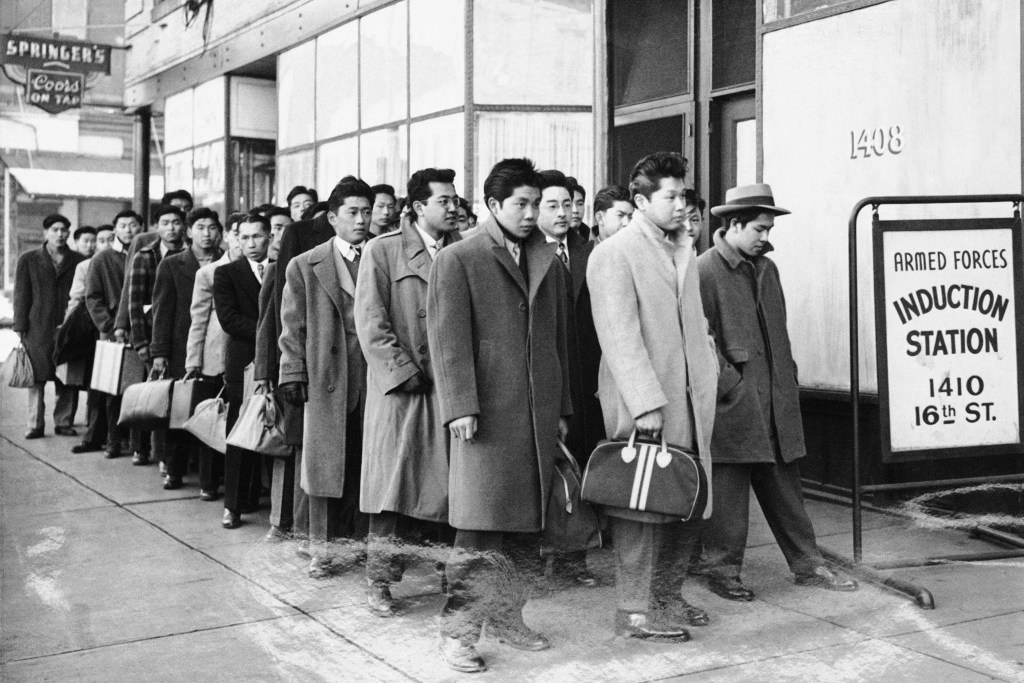
Nisei men reporting for Army induction, 1410 East 16th Street Los Angeles, CA, 1941

Page Two

Coming on October 26th, 2024

It’s pretty easy to form a picture of your great grandparents taking your dad to the old Greyhound bus depot at Mutt Anderson’s cafe, his parents wearing their best clothes as they did for important occasions. In 1941 they would have both been wearing hats, he in his Fedora and she with her go to church best, purse on her arm and those sensible heels women wore then. The family scene is always the same, father looking prideful and the mother just on the edge of tears but holding it all in so as not to embarrass. Hilo would have walked up the steps into the bus and found a seat, maybe at the window so he could look out and see mom and dad. All of them giving a subdued, shy wave as your grandparents hearts broke. Perhaps your mother was there too. My guess is she was………..

  • I was born on the day Okinawa was invaded.
  • The cover photo, The Brothers taken in 1945.

The writer is a lifetime resident of Arroyo Grande California and writes so his children will know the place they grew up in.

Standard

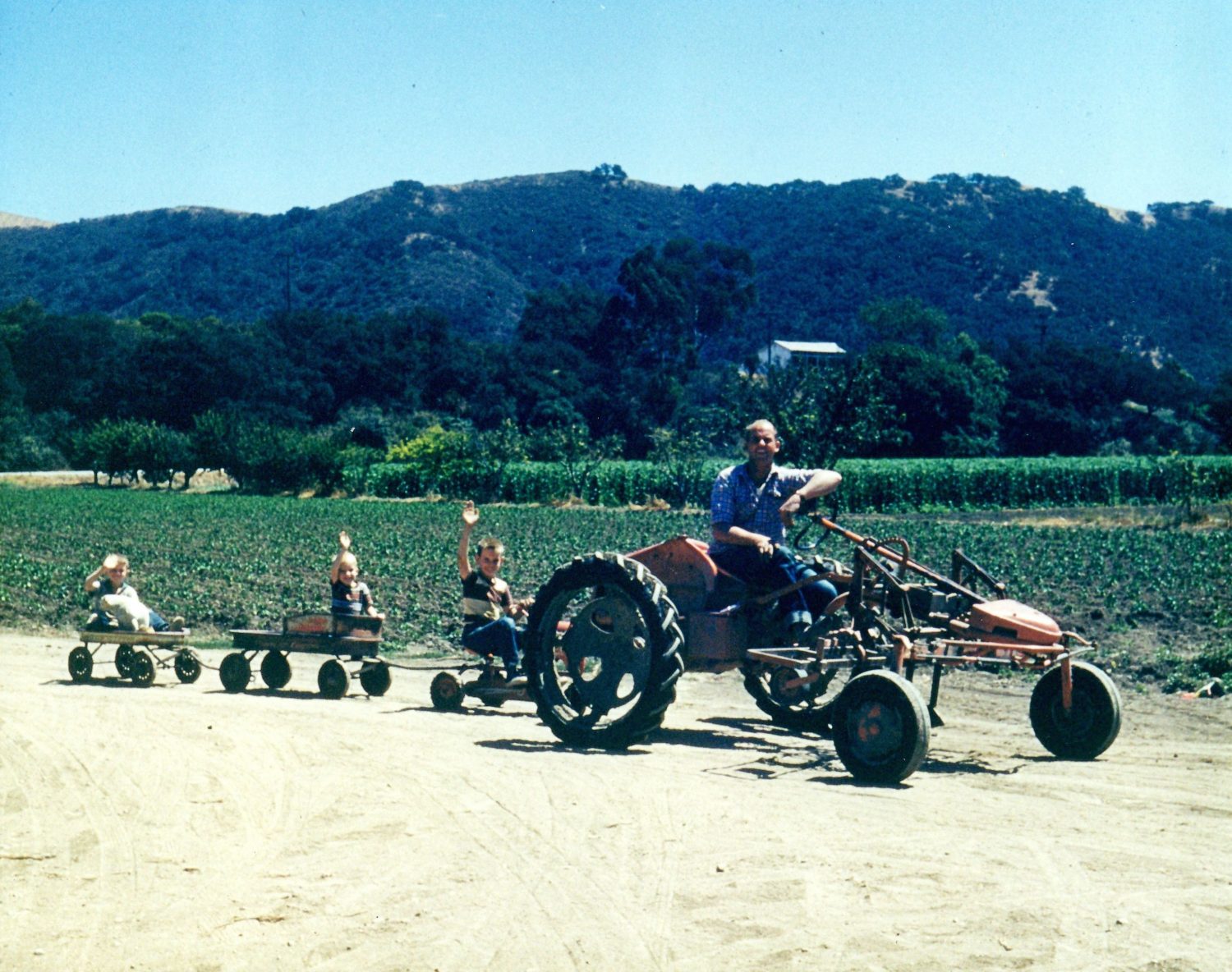
It’s Not Vegetables You’re Buyin’ Lady,

Its a mans life you hold in your hands.

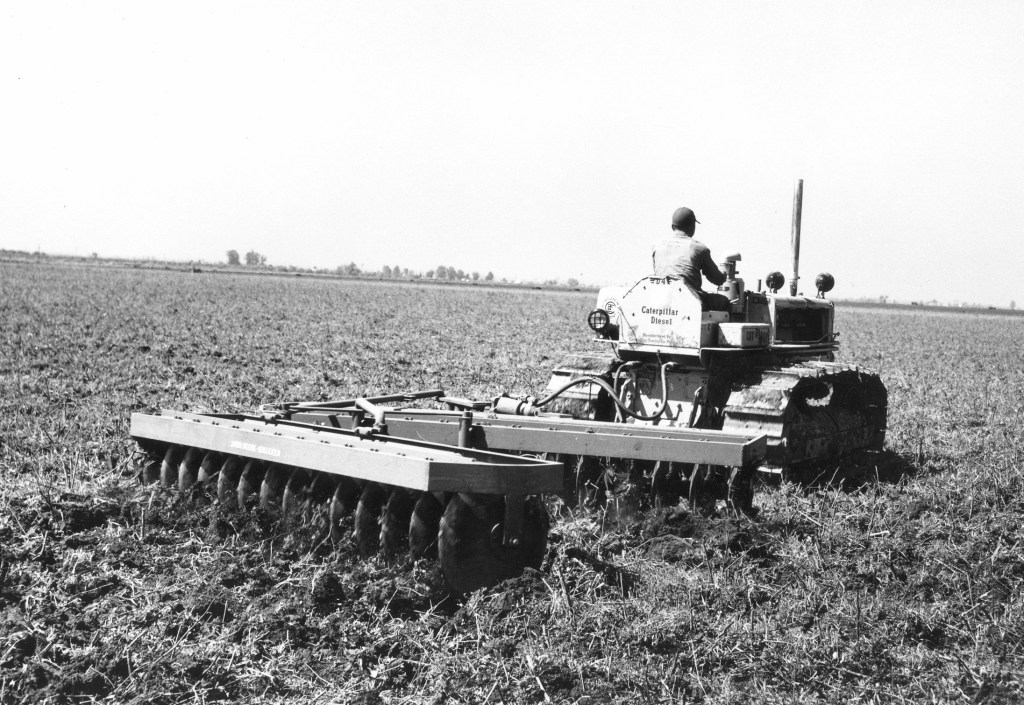
Discing, 1960. Family Photo.

My dad’s family were farmers in Ireland. That’s what they knew. Like all immigrants they came to America for opportunity. They came because laws in Ireland held them captive in a system of government that placed no value on small farmers. Just twenty years before my great-grandfather was born, it was still illegal to educate Irish children. An Irishman could not vote nor own land unless he was of the ruling class. The Potato Famines of the early 1800’s began the drive for immigration in which 1.7 million Irish came to America between 1840 and 1860. This flood from Ireland continued, unabated for 50 years. Today there are about 36 million americans of primarily Irish descent. Only about 6.4 million Irish still reside in Ireland.

An Irish crofter, as farmers were known, held property in trust from the large landholders who actually owned it. The average Irish small farm was roughly one eighth of an acre. Can you imagine living and growing subsistance crops on a piece of ground only 5,400 feet square? Thats about 75 by 75 feet! The United States, stretching for over three thousand miles to the west was an almost unimaginable thing. It was near impossible to imagine how large it was. Even today people of this country cannot imagine it’s size.

My great-grandparents, the Greys, Samuel and Jenny were from Ballyrobert Doagh, a crossroads on the river Doagh in County Antrim, Ireland. They came to America on their honeymoon in 1881. The sailed on the packet ship State of Alabama which ran a circular route from Glasgow, Scotland to Belfast, Dublin and Cork. Once loaded, it made passage across the north Atlantic. Those trips took as much as 12 weeks to make. The ships themselves were combination steam and sail which was somewhat of an improvement over the so called “Coffin Ships” that made the trip some thirty years earlier. During the Irish Diaspora as much as half the steerage passengers might die enroute. All of the major destination cities in the United States and Canada featured mass burial grounds filled with the hopeful.

They boarded the States Line ship “SS State of Alabama” in Belfast and arrived in New York on the 6th of June, 1881 after a quick summertime passage of just 18 days.  Sam and Jenny made it to New York harbor where immigrants were held in quarantine on board until cleared for landing. Once cleared they at disembarked Castle Gardens on the lower end of Manhattan Island.

Sam Grey worked all kinds of jobs as he made his way west to California, arriving finally in San Leandro and then down to the the Salinas valley where he grazed sheep. His wife Jenny had relatives living in the Oso Flaco area of California and eventually they came here. They rented some land along Division Road and he grew potatoes of all things. Ironic, but a decent profit. My grandmother was born in that little house, the second of there eventual seven living children.

That child grew up to be my dads mother, one of a family of farmers and dairymen that included McBanes, Mcguires, McKeens, Moores, Greys and Shannons. Today politicians refer to this as chain migration but they are fools. Family following family has always been the rule, always will be. The Irish didn’t ask for any hand out; they wanted a way out and they were willing to work to get it.

Agricultural servitude is term applied to those that work the ground for pay, usually meager. It applies not to just the field laborer but the owners too. My father, the grandson of Samuel Gray was one of these men. He was raised on a dairy farm as they used to be called because not only the milk cows were raised there but the oats to feed them. My grandparents also raised beans, peas, tomatoes, hogs, turkeys and for comic relief, many, many dogs, some who stories are legend in our family. No goats though, Grandma said that only shanty Irish raised Goats, plus the church taught that animals with cloven hooves were unclean and satanic. Thats the way she thought and thats the way it was.

Annie Shannon, my grandmother about 1925. She is 40. Hillcrest Dairy, Arroyo Grande, CA. Family photo ©

Dairies are the chains that bind the farmer to the ground. Cows are milked two or three time a day and the dairyman follows the old rule, “Dark to Dark,” when he works. Little boys like my dad and uncle learned the lesson early for they had to begin pulling their weight as soon as they were big enough. Kid chores like feeding chickens and collecting eggs and as they grew, the load became heavier. As teens they rose before dawn, went up to the barn to help with the milking and then the bottling and cleaning. Off to school for the middle of the day, they returned in the afternoon for the evening milking. Every day seven days a week, twelve months of the year including all holidays. The cows took no time off and neither did the customers.

When I was little my dad was farming in the upper Arroyo Grande Valley. He grew what are known as row crops. Vegetables like celery, broccoli, lettuce, tomatoes and string beans were what he raised.

Unusual for a farmer of that time, Dad was a 1934 graduate of California Berkeley. He once told us that the main reason he went to college was, one, my grandmother had graduated Cal in 1908 and she wanted him to go, two, his father wanted him to study the law but most of all he went because he’d read Frank Merriwell at Yale, a pulp fiction book from the early twentieth century about Frank’s grand adventures at Yale. He and my uncle Jackie used to walk up to the old Union hall, fondly known as the “Rat Race”, which was at the corner of Mason and Branch streets. On Saturday afternoon they’d plunk down a nickel and sit down in one of the wooden folding chairs or the eclectic collection of press back chairs salvaged from somebodies kitchen and watch what were still called Flickers because they did,flicker Harold Lloyd, Buster Keaton, Charlie Chaplin, Fatty Arbuckle, Mabel Normand and the madcap cops from the Mack Sennet studios made kids laugh. The “freshman” starring Harold Lloyd or “College” from Buster Keaton told an age old story. They had storylines that led Dad to visualize college as a place where Nerdy grinds were picked on by strapping young athletes, ignored by pretty girls but somehow managed to save the day by winning the big game on the very last play. The pulp novel, “One Minute to Play”, which we still have features a football hero forbidden to play in college by his pastor father. A hundred years have passed since Dad and uncle Jackie sat on the edge of their chairs in that drafty old dance hall but the plot remains the same. Those things, he said were his primary reason. They were a good as any. And he did have a great time to boot.

He came home to Arroyo Grande after graduation. It was the middle of the great depression when work and money were scarce. Businesses were barely hanging on and opportunities were few and far between. Choices had to be made.

Farming and ranching were familiar things to him though he later said that he didn’t want to be a dairyman because the work was so relentless. He chose row crops instead. Which, when you think of it is only slightly better. It’s still six and one half days a week, dawn to dusk though it slows in the winter some. Fewer crops but more adobe mud, there is your trade off.

Slogging your way down the rows dressed in oilskins holding the slippery handle of your 12″ Broccoli knife, slippery with mud, hands with no gloves in the rain, cold at 7am, still nearly dark. Left hand grasping the stalk below the leaves, a blind slice, the cut and throwing the severed head through the air and into the cart being pulled behind a wheel tractor. The driver and the tractor set the pace and it’s relentless. Head down, sucking mud, mind numb, no time to think, just do the job. For minimum wage. They tell themselves that there is no one who will do the work and some pride is taken in that. What else can you do?

It’s like the old saying, a boy tells his father after his first day of bucking hay, “I sure hope I don’t have to do this for the rest of my life.” Before he knows it, sixty years on he’s still doing it. Life is like that.

There is just something about the orderly manner in which crops are grown. All the preparation and finally after walking through the planted but still barren fields looking for that tiny two leaf sprout which ever and ever again promises that life will renew. That is the true farmers delight.

My father never bought a new truck in his life. He though of it as showing off. He didn’t glad hand or seek out the company of other farm men and contractors, no breakfast meetings at Goldies with the three percenters and the reps from NH-3 or the seed salesman. It was wasted time. If he needed them they were just a phone call away. Though all of that is a tried and true way of doing business he considered it a waste of time.

Time was better spent managing his crops for he was extremely proud of produce. As a boy I worked in his packing sheds, wherever they might be. He had more than one ranch. He would take me out to the Berros ranch or up to the one on the Mesa and I would pack vegetables. One of the keys to understanding my father was to know that he would never cheat you; ever. Every vegetable is those boxes was to be perfect. The prize tomato on the top was exactly like the one on the bottom. In a flat of Chinese peas which held hundreds of pods, every one had better be perfect. It’s what he expected of you and its what he produced for the buyers. In that way he taught me to be meticulous about any job I did. As a 13 year old I didn’t get it, it made the job slow and monotonous but somehow the lesson stuck. I’m not sure if he saw it as a lesson but It’s what he expected of himself and it was the same for me. I thank him for that.

I remember riding with him in the pickup and dad pointing out the farmers who couldn’t plow a straight furrow or ran their irrigation water onto their neighbors, those things mattered to him. It’s funny because our tractors lived outside and were dirty and rusty and in the slowness of winter the weeds grew up around them and they looked abandoned. He didn’t care about that, they just had to run. Their only purpose was to serve the crops. Crops, perfect, tractors, not so much.

My dad was thirty three when I was born. When I was a pea packer he was in his middle to late forties, his prime years and had been a farmer for a quarter of a century. By the time I graduated high school he’d been at it for thirty years. He’d seen a lot of changes in farming in that time but was about to face the death knell of the family far, consolidation. After the wars population surge there were many more mouths to feed in America and the pressure on the smaller family farms to remain profitable increased.

Daddy and me, first birthday 1946. Family Photo

The Vegetable packing houses which contracted with the individual growers and the advent of huge grocery chains increased demand for production. For example my dad grew celery on contract for a local packing house which sold celery to grocery chains all over the country. No longer did the little local trucking company haul your produce up to the San Francisco markets or down to Los Angeles. Your celery might be going by train to New York or Chicago and in bulk, orders made up of the crop from a dozen small farms. Some farmers, more businessmen than growers formed co-ops or bought out the individual family farms. This allowed the large grower to make demands of the brokers and introduced economies of scale to lower their production costs. This worked against the small farms like my dad, the Betitas, Kawaguchi’s, Cecchetti’s, the Silva brothers and My great uncle John Grey. Their was no more growing land available and they began to be squeezed out of the markets. It wasn’t as if there produce was inferior but when it came to essential services they needed they were forced to wait in line. What this meant is that vegetable market prices which fluctuate literally hourly are a target everyone is shooting for. A delay in harvesting and shipping can be very costly and when a large grower demands that his celery be cut and shipped on the day or days your crop is scheduled for it can cost you your profit. This in our little valley. Imagine Ralphs demand that a vegetable broker not only meet what they are willing to pay but that the broker must supply every Ralphs in California or even the nation. No family farm can do that and thats why they have gone the way of the Dodo bird.

In the nineteen sixties you could count down from the site of Santa Manuela school to the dunes by family name. Biddle, Grieb, Donovan, Talley, Antonio, Evenson, Fernamburg, Cecchetti, Ikeda, Kawaguchi, Shannon, Sullivan, Coehlo, Berguia, Gularte, Waller, Reyes, Betita, De Leon, Dixon, Fukuhara, Marshalek, Fuchiwaki, Saruwatari, Taylor, Kagawa, Kawaoka, Matsumoto, Nakamura, the Obyashi brothers, Sakamoto, Sato, Kobara, Sonbonmatsu, Hiyashi and Okui. There were Phelans, Donovans and Elmer Runels too.

The Betita Boys, 1960’s running string for pole beans. Used by permission

See, the thing is you gotta be in it to win it. Farming takes a gamblers approach. Farmers know that farming is an extreme investment. Finished crops return a very small percentage on the money you put into them. Equipment is expensive if you look at the cost of just an individual item like a Caterpillar. What few think about is the add ons, the Disc, Harrow, plow and the roller. There is gasoline and diesel, oils and grease to be paid for. You have to have a tank to store the fuel. Unless you have kids of an age a driver must be paid. Seed, fertilizer, pesticides and the cost of running the water pump. Who moves the irrigation pipe? How about the crop duster?

Where is the labor to be had. That’s rough and dirty work usually done by folks with few other options which in itself brings problems of attendance and theft. Drinking before, during and after the job. This is the kind of work done by the desperate. People so poor that they will steal lettuce knives, the baskets used to pick vegetables, shovels or even your shirt if you leave it lying about. For us this problem was abated with the introduction of the Bracero program which brought young Mexican men into the country to replace the field workers who were in the military. After the war the soldiers didn’t come back so the immigrant program was continued. Until 1964 this program supplied nearly five million workers to farmers in 24 states.

We, and most of my friends grew up with these guys which, I think gave most of us an appreciation for different cultures. To leave your home and come across the border to work for people who didn’t speak your language and had no interest in your culture was a form of bravery that I understood.

Nonetheless the small farmers struggled and when we had an early, very hard freeze which killed nearly every crop in the valley it spelled the end for many. Bank loans were not forthcoming, there was no crop insurance, no Federal subsidies and in most cases no cash on hand to pay your vendors. Bankruptcy was an option of course but men like my father and especially my father would never admit total defeat. The bills were piling up and some companies, even ones run by close friends were demanding payment. I can’t imagine how he did it but he just put his head down and paid what he could. It took years to crawl out from under the debt. He forbid my mother who worked to pay off one dime, it was his debt. The big freeze was only one disaster. Down in Berros the deer were bold enough to come into the tomato fields and eat the fruit in broad daylight costing thousands of dollars. He got a permit from the county to shoot them but you had to dress them out and deliver them to the county’s general hospital which became a huge job in itself. He had to give it up. I was a senior in high school then. One year storm winds blew down acres and acres of pole peas, the mainstay of his operation. You could look out our kitchen window and see the field with the ripe, producing vine lying flat on the ground. One winter there had been so much rain that the tractors could not get into the fields to harvest the celery. Crop loss, natural disaster and the dominance of the larger operations was like one step forward and two back.

I can’t imagine the courage it took to move ahead but in 1980 he had, had enough. He and my uncle sold my grandmothers cattle ranch and he used the money to retire. In those days it was rare for a farmer to have a pension and most depended on Social Security to survive. So he took some of the money and bought a lot in town and I built them a retirement home. He always said he wanted it there so he could see the old home ranch where he was raised. Just like the home I grew up in where you could look out of the kitchen window and see the crops grow and the neighbors pass by the new house had that big picture window next to the kitchen table where he could sip his coffee and see where his life began.

Mom and Dad with their three sons in 1986. New house. Family Photo

So they left the ranch near the four corners and never looked back, his last and favorite dog moved to the junkyard on Sheridan Road up on the mesa and they settled down in the new home at the corner of Pilgrim and Orchard streets. Mom and Dad lived quietly there, she passed away first and he followed a few years later. He missed her because he loved her so and his last years were lonely and like many old folks slightly bitter for what was lost. Weighed on the scale of life I believe there isn’t enough Gold on earth to level his worth as a man; old fashioned in his beliefs but a superb father which is what counts with me. It’s funny but as a little boy I called him Daddy which I outgrew as children do but at the end thats what he was, my Daddy.

  • Cover Photo: Jackie and George Shannon on the dairy. 1922. Family Photo

Michael Shannon is a writer and a son. He writes so his own children will know their history and who they are.

Standard

THE GHOSTS

Michael Shannon

I met Billie at the door. She had the Key. She handed it to me and I slid it into the old mortise lock on the side door and pushed it open. The rusted hinges resisted the movement a little but finally allowed us in. The narrow hallway ahead was redolent of dust and the peculiar smell I’ve always identified with old buildings. Ahead, the stairs to the 2nd floor lodge room were nearly covered on the left by stacks and stacks of newspaper galleys collected by the Historical Society from the old Arroyo Grande Herald. Some of the newsprint had come from former owner and publisher Newall Strother’s home on old Musick Road, found there upon his death stacked nearly to the ceiling in every room. A gift unintended, left us by a man who just couldn’t bear to throw them away.

Dim light with legions of dust motes drifted slowly in a tiny breeze from somewhere in the old building. Up the stairs there were windows at the second and third floor landings, lighting the stairs with the particular glow of dirty old glass, aged and coated inside with decades of smoke and outside by the grime blown against them by weather. A filmy yellowish khaki, gently drifting cloud that only exists in old unused buildings. It tinted all vision.

“Let me show you the lodge room, no ones been in it, I think, for many years,” she said. I followed the little woman up the stairs. Dressed in slacks, what looked to be a mans old dress shirt, girls old-fashioned tennis shoes, her grey and white hair taking a glow from the old windows, she led the way up.

Her name was Billie and I had known her literally all my life. She was the granddaughter of Don Francisco Branch, the first of the Rancheros to bring his family up into the northern part of the old Spanish Cow Counties in 1837. He received a land grant from the Mexican government of nearly seventeen thousand acres of un-cleared nearly virgin land which had remained untouched by any but the few Chumash for thousands of years.

Billie’s father, Thomas Records, from another pioneering ranch family, had married Miss Lucy Jones, a granddaughter of Francis Branch. Billie was historical royalty in the little town we lived in. She kept things. My dad said that she and her sisters weren’t called the “Record sisters” without reason. She had a house full of stuff and a mind chocked to the brim with notions about who did what and how. She knew the bloodlines, the natural intermarrying of citizens in small towns. If you needed someones antecedents, she knew them.

Me and Billie in Madeline, California 1946. She’s 31, I’m 1. Family Photo

She and my father grew up together and had always been great friends. When Dad found my mother, Billie took her right into the Arroyo Grande family. She was the kind of person that, when you saw her on the street there was nothing to do but to pull over and talk to her. After my father died she came to the house with a box of, you guessed it, records. She had squirreled away news clippings, letters and other things about our family. In the box were my fathers high school football and basketball varsity letters. She had put them away and saved them for seventy years. That’s a story I wish I knew. I’m sorry that I never had the chance to ask her or him why she had them. He went to Arroyo Grande High School, she, Santa Maria but somehow she ended up with them. There is a story there, lost forever I think.

We were at the old hall, Odd Fellows 253, because as a new board member she wanted to give me a guided tour of the old building. The local History Society had recently received title to the nearly one hundred year old building for the grand sum of one dollar from the last surviving member, Gordon Bennett. The board and membership were fixed on the idea that we might secure funding to refurbish the old landmark.

Built in 1903 as Lodge 253, the old building had lain vacant for years. The Arroyo Grande Sandstone of which it was made had come from the old Patrick Moore quarry on my grandmothers ranch.

Left, Thomas Shipman brother in law to Jenny Gray, Annie Shannon in back with her mother Jenny and Maggie Phoenix in front of the hall.circa 1905. Family Photo.

We were at the old hall because as a new board member she wanted to give me a guided tour of the old building. The only time I had ever been in it was as a teenager. I had gone with my father to pick up his blue ribbon won for the best Chinese Peas at the Harvest Festival vegetable contest. The local farmers display of all the different vegetables grown in our valley took up the entire first floor. While we were there he pointed to the big windows in the front of the building and told me that my great-grandfather Shannon’s body in his coffin had been displayed there when the ground floor was the towns undertaking parlor. What does a kid say to that, I couldn’t imagine such a thing but I’m sure it was true, they used to do things like that. He said my grandfather who was a member of the Odd Fellows had taken him down when he was just twelve to see Dad Shannon, as he was called, as his body lay in state. In the window, not a church, but in a window.

The local History Society had recently received title to the nearly one hundred year old building for the grand sum of one dollar from the last surviving member, Gordon Bennett. The board and membership were fixed on the idea that we might secure funding to refurbish the old landmark.

At the first landing a quick turn to the right led into the lodge room. This was where the members met. It was obviously well used, the old carpet was faded and threadbare in places. The benches along the walls had seen better days, their varnished seats rubbed bare by generations of shifting bottoms. The curtained windows their muslin drapes transparent and fraying at the bottom filtered the sunlight creating a sense of timelessness as if the members had just left. I suppose they just had in a way.

The tour finished we turned and stepped onto the landing to head back down. I stopped and asked Billie where the next flight up went and she said it’s just an old storage room I think but you can look if you like. She turned and headed down, I turned and headed up the short flight. Just curious.

The door was closed, the old stamped doorknob mounted in its long rectangular faded brass plate turned stiffly. As the door tuned on its hinges the unmistakable odor of age greeted me as I stepped inside the dim interior. It wasn’t a storage room at all. Festooned with cobwebs nearly invisible in the gloom was a full sized six pocket pool table. Covered with the dust of decades it’s woven leather pockets still held the ivory balls fallen there during some last game played long before my birth. Two pool cues embedded in the cobwebby drift of aged dust lay on the felted top as if the players had just left for a meeting downstairs. Scoring beads hung from a long leather string indicating the final score. Overhead was a gas light fixture, its copper tubing rising to the ceiling and from there to a brass valve on the wall. Each burner had a age caked glass chimney under a brass shade, four of them once providing light to the table. Near the door was an ancient porcelain mercury switch that controlled a single light bulb hanging on old, old Ragwire directly over the sink. Electricity must have been installed sometime after the gas fixtures. A back up I suppose.

The sink was simply an enameled iron square basin. It was cradled in a pair of iron, triangular brackets mounted to the wall. The rusted old brackets had the image of a camel suspended in the frame. The drain was straight and likely just ran outside the wall and down the side of the building, simple and practical.

A small table and two cane backed chairs stood guard, one with a frayed seat. One old glass stood solemnly on the table, the bottom holding the dried remnants of whatever it held last.

A shiver ran down my spine. This was the place members retired to have a nip, play some pool and share stories, smoke or chew a five cent cigar. A place where hats didn’t have to be removed for ladies, for there would have been none. Breath slowly, squint a little and you can see Judge Webb Moore lounging in a chair tipped against the wall as Jack Shannon and Hu Thatcher chase the ivories around the table. Warren Routzhan and Ben Conrad confer in the corner, waiting their turn while Fred Jones and Harold Howard laugh over a George Grieb Joke. No Odd Fellows title needed here, no Noble Grand, no Rebekahs just some good hard working men sharing their time.

None of them would have been caught dead in a real pool hall for they were respected members of the little community they lived in. Here, on the third floor hideaway the rules were different. as they should be.

I waited a bit, then quietly closed the door knowing that I had surely caught a ghost.

Michael Shannon and his extended family have lived in Arroyo Grande, California for six generations.

Standard

THE TWELVE O’CLOCK KID.

By Michael Shannon

A hilarious look at how kids spent their nights in the days before play dates, day camp, and structured activities, “Whacha Wanna Do?” This story captures a world gone by that will be a revelation to younger readers and an affectionate look back for those families who remember the old stories.

He was a twelve o’clock kid in a nine o’clock world. He was a teen aged boy at the last gasp of the nineteenth century. His name was Jack. He ran the dirt streets of Arroyo Grande with his boys, Ace Porter, Matt Swall, and Arch Beckett, whose flaming red hair could be seen from a mile off.

A little farm town, Arroyo Grande was named for the narrow valley that runs from the Santa Lucia mountains to the Pacific ocean. In the 1890’s there weren’t many of the things we consider necessities today. No sidewalks, street lights, or pavement. The horse was king. No automobile had yet to show itself up in the Cow Counties. There was a tiny Railroad, the Pacific Coast but it ended at both ends without really going anywhere. The stagecoach still made regular stops in front of Ryan’s Hotel on Branch Street. It was lights out at nine o’clock.

Whatever you wanted had to come by wagon, coastal steamer or sail ships which regularly docked at the wharf in Port Harford. By road it came from the South, over the San Marcos road at Slippery Rock or very carefully down the old toll road over La Cuesta from the north.

In those old days there was a lot of time to fill. Early to bed, early to rise, neither one particularly appealing to teen boys. As always the best deeds are done at night.

Jack was thirteen in 1895. He was on the cusp of manhood. His country was too. It was about to go from a century of rather slow progress to one moving at almost blinding speed. Eighteen ninety-five was quite a year to be alive in the world. It was a time in history when the era that was passing and the era beginning were locked together like the cogs in two wheels, ready to transfer the energy of one to the other. In England Queen Victoria was entering the final stretch of her 63 year reign. Oscar Wilde was at the start of his two year sentence for “gross indecency” in Reading Gaol. The first professional football game was played in Latrobe, Pennsylvania. In the fall, George B. Selden is granted the first U.S. patent for an automobile. Meanwhile, William Randolph Hearst, the young heir to his fathers silver-mining fortune whose father, a United States Senator had recently given him a small San Francisco newspaper to run, made the seemingly foolish move of buying a failing New York newspaper, the New York Morning Journal. It was the start of multimedia empire that would expand to over thirty papers and change the face of journalism.

This was the year that Guglielmo Marconi, a twenty one year old Italian and scientific hobbyist first succeeded in transmitting radio waves over a considerable distance. It would soon make possible wireless telegraph and eventually, broadcast radio and the internet. In Charlestown Massachusetts the first black man to earn a PhD graduated from Harvard. He was W. E. B. Du Bois. A Neurologist in Vienna woke from a strange dream about a patient and decided to develop a method of analysis of the interpretation of dreams including his own.

In that year, almost every segment of American life was on the brink of a disorienting transformation. Technology, Entertainment, Transportation, Education,Labor practices, Social and sexual behavior, Race relations and Parenting all entering a time of profound change. The way people spent time with one another and interacted with the world around them was about to be overrun by a series of dizzying events.

Few people in America could have been further removed from the social, technological and cultural change than the citizens of little Arroyo Grande, it’s population, less than four hundred people and isolated in a corner of California much as it had been for the six decades since its founding as a Mexican land grant in 1835.

Jack and his parents, John and Catherine had made the slide west from Reno Nevada where they operated the Toronto house restaurant and a boarding house called the Ohio House. Located near the river on Virginia Street is was a busy and popular place and why they sold out and moved west has been lost, although court records may indicate a certain reluctance to pay their bills.

John Edward Shannon, known in the family as Dad Shannon always listed himself on census forms as a Capitalist, a common term at the time for a promoter and investor. His mother Elizabeth, a widow with seven children ran a tavern in Lackawaxen, Pike County Pennsylvania. John himself worked as a brakeman on the New York Central railroad by the time he was twenty and then spent a year in Sing Sing prison for breaking into and stealing from the boxcars he was working atop. Capitalism at it’s finest, illegal, but what capitalist won’t take a risk.

He dealt in real estate and property and the move to Arroyo Grande included a home and property just east of town where they was in the fruit and egg business. The old house on the slopes of Carpenter Canyon still stands. Jack could simply walk down hill cross the usually dry Becketts Lake and be in town which was just a short diatnace away.

The old house on Printz Road.

Young Jack grew up there in comfortable surroundings, his mother Catherine was a women of some drive and means. Originally from Toronto, Canada and New York, She had owned the Craig house on the waterfront in Oakland and later a hotel in Berkeley. She was a widow when she met Dad Shannon in Reno, the site of her latest endeavor the, Toronto House restaurant and boarding house on Virginia Street, the future site of the famous Mapes Hotel. After the 1875 marriage, he bought the Ohio House, another boarding house so they weren’t poor. They ran the three businesses until 1890 when they sold out and moved to Arroyo Grande. She was 52 and they had decided to retire from their businesses. At 52 she should would have been elderly by the standards of the late nineteenth century.

Jack was the product of her second marriage. She had four other children who were grown and scattered arount the country in San Francisco, Berkeley and in New York. She married Jack’s father when she was already 40 years old and was 47 when he was born. A pretty advanced age to be having children in the eighteen eighties. An afterthought, the bonus child or the accident, we don’t know. The family story is that he wasn’t exactly considered a gift from above. With four grown children she had the experience of motherhood but perhaps not the tender desire if you will. She has come down in family lore as the “Meanest women in the world.” My dad could never explain exactly why as he was just a little boy when she passed away. He did say they were both pretty heavy handed with punishment. Jack was very well acquainted with his father’s razor strop.

Strops are unusual today but back in Jack’s day men used a straight razor to shave and after honing the edge on a wet stone a leather strop, usually made of heavy tanned cowhide with a hook or ring on one end and a leather handle on the other. The ring would be placed on a wall mounted hook and the strop pulled taut by the handle. The razor was then dragged back across the two foot long strop which removed any burrs on the edge of the sharpened razor’s blade putting on a very fine edge. The strop was also very useful in tanning a boys hide. Jack and his father were both very familiar with this use, one on each end. Jack never seemed to hold corporal punishment against his father. It’s difficult to complain against that which is richly deserved. Didn’t slow him down, just reinforced his desire to “Get Outta Dodge” as the old saying goes. In his teens Jack put a lot of thought and energy into running away from home though he was never really successful.

Growing up in Arroyo Grande it didn’t take Jack long to display his rambunctious spirit. Boys in the 80’s and 90’s lived a quite different world than we did just two generations later. The idea that children were essentially owned by their parents was still the norm. As a form of legal property, they had no real rights as we know them today. Parents could put them to work at almost any age and they did. Boys delivered newspapers, cleaned spittoons in the many saloons on Branch street. The yworked in the butcher shops, they delivered groceries from Bennett’s store. The mucked out the stalls at the Harloe stables and tended the forge at Miller’s blacksmith shop down on the creek. If you needed windows cleaned there was a boy. Because most boys, rarely if ever were required to go to school there was always one handy.

Kids were allowed to roam freely, a circumstance that still applied when I was young. There were no tresspassing signs as property owners knew which kids belonged to which family so someone almost always had an eye on you. Fishing or swimming in the creek, riding your bicycle to San Luis Obispo, going varmint hunting with your .22 or simply disappearing for hours at a time were common activities. A boys time was his own, at least when he had some.

My grandfather when I knew him was always quick with a joke and loved to tell stories about his young life. It wasn’t hard to see the rambunctious mischief maker in the man. He wasn’t afraid to be the butt of the story either which game him a certain verisimilitude which was charming for for us kids. He could laugh at himself.

If you asked Jack if he was ready he’d say. ” When I get up every morning.”

That “Always Ready” was for a time a bit of a problem. The term “Lets Go” never found a more willing participant. His running mate Ace Porter, he of the cheeky grin were best friends for life.They met as altar boys you know. They were the quintessential example of the scapegrace’s who got into the sacramental wine, switched Holy Water with water from the tap and tied knots in the bell rope.

Saint Patricks Catholic Church 1890. Photo: Marshalek Family

They were well known for their pranks by Father Michael Francis Lynch, the pastor of Saint Patrick’s Church. Father Lynch, bless his heart, must have been a good soul. Both of them had earned their reputations for being mischievous tricksters. It didn’t end in church either.

On All Hallows Eve, Jack climbed over the window sill after his parents had gone to bed and met his cohorts down to Miller’s blacksmith shop right along the creek. Just behind the Meherin store, it was right up against the willows which lined the Arroyo Grande creek. The willows, Sycamore trees and the huge stands of late season Poison Oak provided cover from the town constable Thomas “Tom” Whitely, who was prowling the little town looking for scapegraces up to no good.

Whitely would have know about scapegraces. He had been roundly criticized for doing nothing to stop the lynching of the two Hemmi men from the railroad bridge in 1886. One of the men was actually a fifteen year old boy. Newspapers around California were scathing in their criticism of Whitely and the uncivilized citizens of Arroyo Grande who did the deed. They being the town’s most prominent men. No one was ever named nor arrested for what amounted to pre-meditated murder. In a small town where there were many family ties and everyone knew everyones business, silence on the matter stated the consensus verdict.

Whitely was also called before the Grand Jury to explain why he had continuously failed to remit the entire amount of the fines he leveled and the bail collected to the county treasurer. He fought the case and lost. In 1900 the voting citizens of Arroyo Grande sent him packing in favor of Frank Swigert.

Hunting boys intent on mischief must have been a lark for him as it likely entailed no risk. In fact, people whose gates were lifted and hidden or outhouse pushed back just a few feet exposing the cess pit to the unwary man stumbling through the dark half asleep would be thankful for the constables diligence.

This didn’t deter Jack and his gang for on this night, they had bigger things in mind. A notable prank that would give early risers a start as they came up Branch Street to begin the day.

They quietly took a spring wagon parked behind F E Bennett’s store and pulled it up to the Union Hall. Using wrenches and screwdrivers purloined from their fathers sheds the quickly reduced the wagon to its constituent parts. Boosting Jack up to the roof, they began handing up the pieces, the box, seat, springs, dashboard and the wheels. Climbing up, they just as quickly reassembled the wagon astride the ridge of the roof. When the job was complete they shinnied down and headed for home.

The old Union Hall built by Judge Beder Wood, 1880’s. Historical Society.

The next morning Ma Shannon was surprised to see Jack headed out the door much earlier than usual. When she called out . “Where are you going? he answered over his shoulder, “Goin’ fishing.” Not likely, he was headed down to Branch street to meet his fellow outlaws in front of the Commercial Company building to spy out the reaction of folks to their handiwork. Across the street the Hall sported the Studebaker wagon proudly astride the center of the roof. They watched as the early morning crowd gathered. Boys on the way to school larked about laughing, nearly overcome by the audacity of the deed, Beder Wood, the owner of the building talked to the Constable and some other prominent citizens, growling about delinquent youth and how he’d like to take a wack at them. Maybe put them under, he being the towns undertaker. The little boys cast their eyes surreptitiously across the street at Jack and his friends. Knowing looks were exchanged. Someone fetched a ladder and the men began the task of reversing the nights work. Jack and his friends quietly disappeared and the little boy dashed of to school to report the big news.

As the old saying goes, “Success Breeds Success.” The boys went about their regular business while they plotted their next foray into the world of crime. They laid low over the Christmas holidays and the early spring of 1899 but with the coming of All Fools Day the put their next plan of action into play. That year it fell on a Friday which suited the gang perfectly.

They all snuck out of their houses and met behind the Cumberland Presbyterian Church on Bridge Street. There they spied out the vicinity making sure the Constable wasn’t anywhere around. The figured he was likely tossing back a beer at the Capitol Saloon anyway and wasn’t going to be any trouble. They dashed across Bridge Street to the big and imposing Grammar school directly opposite the church. They scouted the building to see if they could find a way inside. They found a conveniently unlatched window on the first floor and quickly boosted each other up, scooted and over the sill. Miss Young, whose room had the unlatched window, suspicious as that in was itself, fit with the plan to do no damage. Once inside they carried out the mischief they had been plotting for weeks.

Arroyo Grande School, Bridge Street, 1899.

They quickly ran up the stairs to the second floor where the upper grades and the high school held their classes. Mrs. Watson’s book shelves were emptied and all the books mixed up and piled at the head of the stairs. Her desk was moved to the opposite end of the room and the desks reversed. Mr.Huston’s room suffered the same fate. His books were piled on the top of the stove, his desk and the floor. The school organ which Mr. Huston played for school presentations was hefted and then slid out to the hallway and placed at the top of the stairs. The organ and the books made a wall blocking the upper stories.

The midnight vandals disappeared the same way they came leaving nary a clue to their identities. Nothing was discovered until the following Monday when the front door was unlocked by the custodian. Frank Parsons, the principal, galvanized every teacher as they came through the door in the clean-up effort. The sound of cast iron school desk legs scraping the floor, books quickly tossed onto shelves and the swish swish of brooms rang out through the building. Frank’s idea was to reverse the joke by having everything in order before students arrived. He figured the vandals would get no satisfaction if the students never found out what had happened.

He was mistaken. The children’s telegraph was operating at full throttle. After the bell they sat in their desks and sniggered when ever they thought the teachers weren’t looking or listening. The teachers knew of course because every one had elephant ears and eyes in the back of their heads. It might have passed unknown, the school wanted to keep the joke quiet but the kids couldn’t wait to get home and share. Because one of those student’s father just happened to publish the town paper the story was memorialized in print. Though Stephen Clevenger may have used a little tongue in check in writing about the great event, I mean how many notable events go on in a small farm town at the turn of the century?

Clevenger wrote, “It was probably funny for the boys engaged in the performance but trustees, teachers and scholars will require the funny part to be pointed out to them before they can see it.” Oh, I don’t think so.

Clevenger wrote, “The boys incurred the grave risk of entering the school building and tampering with its contents.” As a crime it didn’t amount to much and no one was ever brought to task for it by the law.

My grandfather said that punishment was a liberal laying on of the strop, again. Though there was no proof any of the boys was involved, Dad Shannon evidently though that an ounce of prevention is worth a pound of cure.

It never slowed any of them at all. I mean, whats the use of never taking a chance.

The Meanest Woman in the World, Catherine Brennan Shannon with my uncle Jackie, 1917. Berkeley, Califonia.

He figured he could solve the problem by running away. They caught him pretty quickly. After all the distance between towns in the cow counties is pretty large and what do you do with little or no money, so no stagecoach or railroad, it had to be shanks mare and that was slow going. He tried again though and then again. He finally made it when he turned eighteen because they couldn’t legally stop him. He didn’t fool around either. He headed straight across the country and ended up in New York City. His adventures made for many funny family stories.

The thing was, he never did anything half way. I never heard him say he regretted any of the things he did in life, successful or not. When I was in high school he showed once again who he was. After his eightieth birthday party our family was preparing to leave for home, standing on the front lawn making our goodbyes when someone of the kids had a question for him about his time in New York at the turn of the century. He had worked as an athletic trainer for the MacLevy company in Manhattan. He met many notable people there, Lillian Russell, the scandalous actress and singer who was known to cycle around Central Park on her golden bicycle given to her by her lover “Diamond Jim ” Brady. Grandpa said she was a corker.

He was a friend of Jimmy Swinnerton who practically invented newspaper comic strips and became a successful painter of southwest scenes in later life and best of all, the former heavyweight champion of the world, John L. Sullivan, something he talked about often. When my brothers and I visited with them in their home he would shake hands with you and say, “Shake the hand of the man who shook the hand of John L. Sullivan.” We all got a kick out of that but not as big as he did. Little rituals.

He explained what a gymnast was to my little brother Cayce and then did something that left dad, mother, uncle and grandmother gasping. He stepped out on the lawn and executed a perfect somersault to the delight of us kids. Grandma Annie gave him that look and scolded him for being silly, but she smiled a little smile too. Still that kid at eighty.

-30-

Michael Shannon is a writer and dedicated admirer of his grandfather and gymnasts everywhere.

Standard

NAMES

Where everyone knows your name.

By Michael Shannon

Whatever happened to those names? Names my grandfather gave to his milk cows. My grandmother Annie’s friends from the bridge club she played with for over 50 years was his favorite source.  The names carefully penciled onto the milking charts thumbtacked to the wooden walls of the old milking barn on the hill. Names etched into the living memories of the their descendants of this place. Names familiar to the kids that grew up in our valley in the first half of the century. Names etched into the fabric of the descendants that live here today.cow chart full size

How is it that they have vanished? Generations of names have disappeared as completely as a breath of wind. People we remember from our time as kids. The mothers and grandmothers of people that populated our community whose given names suddenly vanished. Minta, Mazie, Sadie, Birdie, Jessie, Muriel, Maude, Cornelia, Florence, Wilda, Bernice, Mamie and Maybelle, gone from the directory. Belva, Elsie, Blossom, Myrtle and Florita “Cushie”Harloe, who today, gives their children names like that? How about Frederick “Shorty” Fernamburg and the wonderfully rhythmic Morris Pruess who was married to Claudia. They owned the drugstore downtown. And Claude and Wilhelmina “Willy” Devereaux who owned the log cabin market. My grandfather didn’t give the cows those names because he though they were odd, they were perfectly normal at the time. He was a funny guy and he did it to amuse his Annie, my grandmother. Knowing him I’m sure he amused himself too. And the women, they took it as a compliment.

AGUHS 1910 school play

  • Hazel Miller, Stanford ’16, High School Teacher
  • Rebecca Denham married Hubert “Hu” Thatcher who was in the hardware business. Her second marriage was to James Mineau, also in the hardware business, fancy that.
  • Margherita “Nellie” Diffenbacher whose son was Carl “Buzz” Langenbeck, future town Barber who cut my hair when I was a little boy.  They didn’t call him Buzz for nothing.
  • Muriel Loomis married Ralph “Rusty” Bennett, Storekeeper. She always gave me a piece of candy from one of the jars on the counter when I was little.
  • Lenora Clark, Cal ’18 She never married, She was high school teacher in Alameda, CA. Her father, the towns “Baby” Doctor delivered my aunt Mariel
  • Ronnie Swall, graduated from the San Jose Normal School, ’15 and began her teaching career on Maui, Territory of Hawaii in 1915.
  • Cora Bennett married Porter Clevenger whose father started and owned both the Santa Maria Times and the Arroyo Grande Herald newspaper.

Screen Shot 2024-04-04 at 2.44.45 PM

Miss Lenora Clark, Cal Berkeley Yearbook. Class of 1918.

Michael Shannon lives and write from his hometown, Arroyo Grande California.

Standard