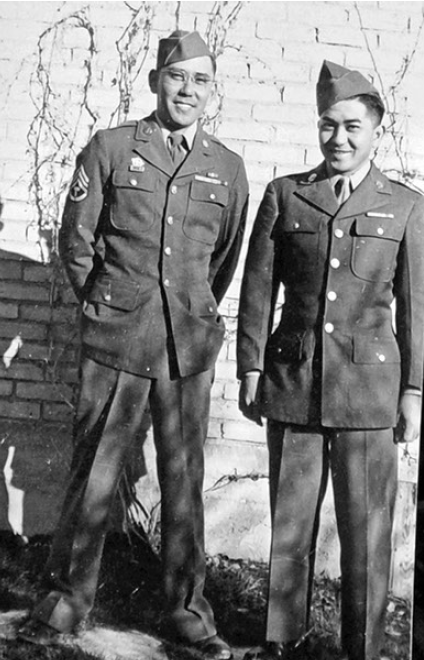
Dear Dona,

Page 6

Author: Michael Shannon.

Auckland, New Zealand. 1943 population, 1.642 million people with a revolving population of soldiers and Marines. The New Zealand government was very concerned about the Japanese because without the Americans to defend the island they were in trouble. You see, the Anzacs were in Italy, the Mediterranean and North Africa, as well as Japan in south-east Asia and other parts of the Pacific. They weren’t home and the islands, just like Australia were desperate for the Americans to help defend them. Japanese submarines were patrolling the waters between New Zealand and Australia. In 1942 the United States navy had just barely stopped the planned invasion of Port Moresby in New Guinea. The reason was its close proximity to both Australia and Asia. The Japanese viewed Port Moresby as a key point to launch aerial attacks on the northern part of Australia. They could have closed the sea lanes from the U S to Australia and New Zealand. Troops fighting to defend New Guinea, the Anzacs, Dutch and MacArthur’s undertrained, rag tag 32nd division from Wisconsin and Michigan were slugging it out with Japanese in the fetid, rainy jungle of the southeast of New Guinea trying to push the Japanese back along the Kokoda trail and down the Owen Stanley range toward the coast. Soldiers on both sides had to literally crawl on their hands and knees because the slopes were so steep and slippery from the constant rain. There was no more brutal fighting in WWII. Nisei translators later found Japanese diaries which describe starving soldiers butchering and eating the Australian dead. The Japanese were literally starved out.

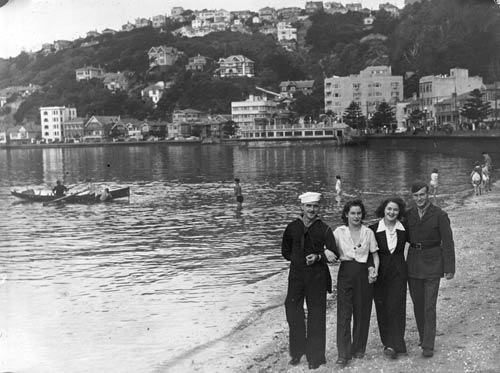
Soldiers were granted time away from the ship in Auckland. It was a chance for the Americans to sample a culture quite different than their own. For the Nisei who were well acquainted with ethnic hatred it brought to mind some curious observations. The Kiwis’ didn’t consider the translators outsiders. Neither did they dislike the black support troops from the ship and ones stationed at the army camps ashore. This was a big difference from the way white Americans treated their fellow citizens. On the voyage over, great care was taken to segregate troops of color from their fellow soldiers. Contrary to what is written in history books, violence towards minorities was common in our military.

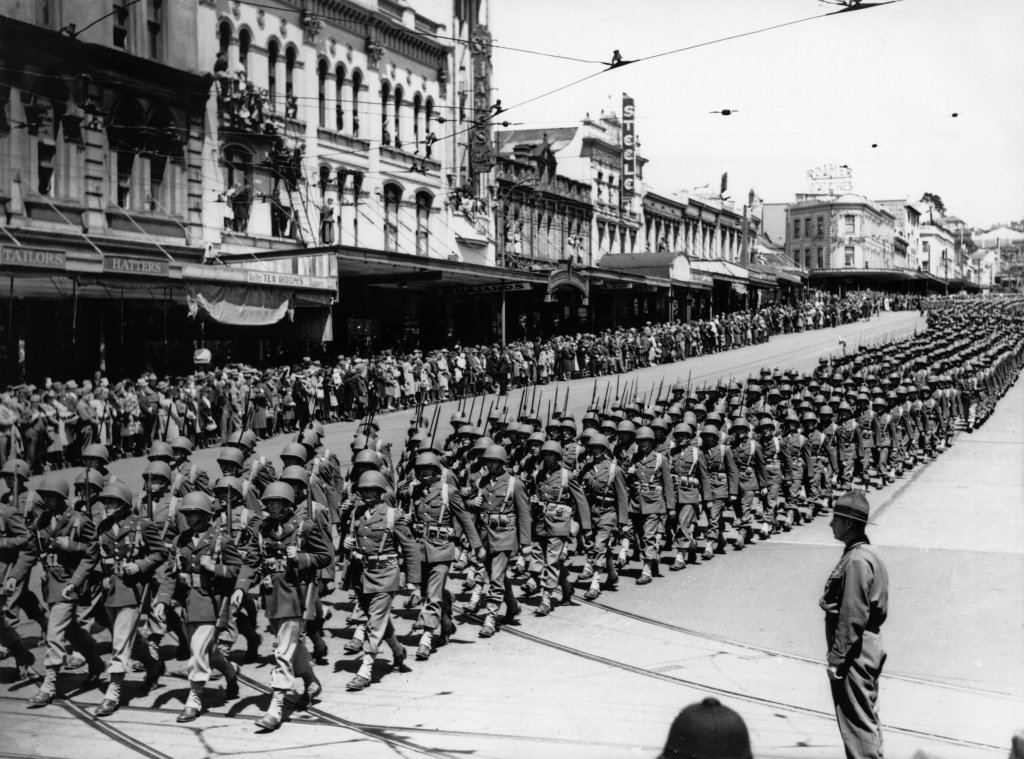
On June 12, 1942, five transport ships carrying US Army troops arrived in Waitematā Harbour in Auckland. This marked the beginning of the “American invasion” of New Zealand, which lasted until mid-1944. The New Zealanders were quickly disabused of their inherent like of their fellow allies.

US troops march down Queen Street, Auckland, 1942. New Zealand Herald Archives photo.

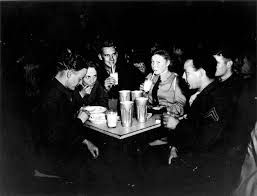
Between 15,000 and 45,000 American servicemen were stationed in New Zealand, mostly in camps in or near Auckland and Wellington.There were cultural differences between the Americans and New Zealanders. New Zealand women found the US servicemen to be handsome and polite, and they had more money than New Zealand soldiers. They were better dressed than the local troops and being young and very far from the moral strictures of home had few reasons to show anyone respect. Women of all kinds were “fair” game, the way they saw it. This led to romantic entanglements between American troops and New Zealand women. “Overpaid, oversexed and over here” was the watchword for the New Zealanders. The locals saw it as an “American invasion”. Many New Zealand soldiers resented the idea of relationships between New Zealanders and American soldiers, leading to tense relations between the two parties.

Another source of tension was US servicemen’s attitudes towards the Māori. White soldiers from the 31st “Dixie Division” from the south were not “comfortable” with Māori soldiers. The government published a guide book for US servicemen, titled “Meet New Zealand” which reminded the Americans that “the Maori today occupy a position in society socially and politically equal to that of any pakeha or white New Zealander”. The Prime Minister’s office said that New Zealanders should “be friendly and sympathetic towards the colored American troops, but remember that they are not accustomed in their own country to close and intimate relationships with white people. Anyone finding themselves in the company of both white and black American troops was advised to “avoid unpleasantness”. Quite the understatement.

During this time, hotel bars closed at 6 pm and masses of drunk soldiers were then ejected into the streets. This was known colloquially as the ‘six o’clock swill’. Around 6 pm on the evening of 3 April 1943, fighting broke out between US servicemen and New Zealand soldiers and civilians outside the Allied Services Club. The brawls spread to the ANA (Army, Navy, and Air Force) Club in Willis Street and then to Cuba Street and continued nonstop for hours. Civilian and military police attempted to break up the fights, but only finally subsided as the US soldiers left town on trains back to their camps. 6×6 army trucks returned the passed out drunk and those damaged by the shore patrol and the MPS. Courts Marshalls were ordered then cancelled for lack of any evidence, another understatement.

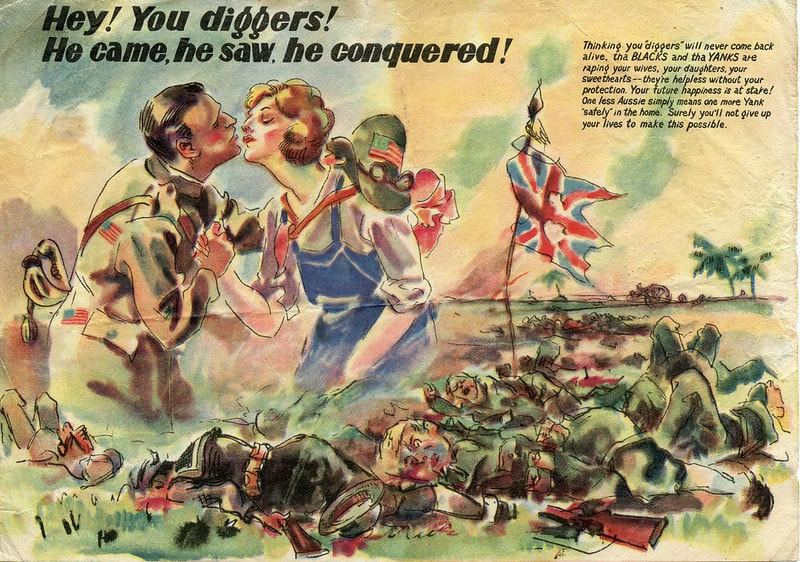
The Japanese also understood the value of propaganda. Japanese leaflet. 1943 US Army Archives

When your dad arrived with the other Nisei, the New Zealanders accepted them as equals but their own countrymen, far less so. Any thought by the translators that their service would reduce the racism of white troops was an unlikely dream. They had to be very careful.

A fight on 12 May 1945 in Cuba Street involved over 150 Māori and US servicemen. This fight was definitely racially motivated: Māori troops were angry at their treatment by the Americans, who tended to treat them the way they treated black Americans. Military reports stated that “Maoris from whom statements were taken allege they have been insulted by the Americans and have been told by Americans not to ride in the same tramcars, drink in the same bars, eat in the same cafes and that they should walk via back streets or step off the sidewalk when American soldiers approached. The Americans call them black curs an N*****s and have consistently insulted the Maori race. Imagine traveling halfway around the world only to find the same intolerance and hate as in your own home town. The only modifying thing was that the New Zealanders accepted both the Blacks and Japanese translators with no reservations. They were welcomed in New Zealand’s establishments and into their homes as well.

Because the MIS translators were considered so valuable, General MacArthur ordered them to be sent to Brisbane, Australia immediately. When they stepped off the ship in Brisbane, and were driven to army headquarters the first thing they were told was to avoid places where American soldiers hung around. Just like Auckland and Wellington, Brisbane had seen vicious riots on more than one occasionAmericans had worn out their welcome.

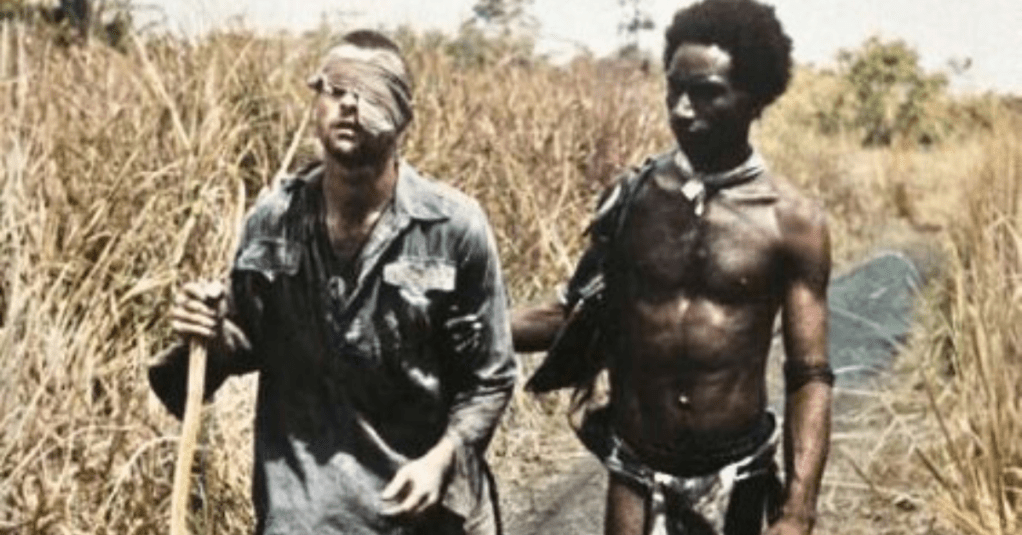
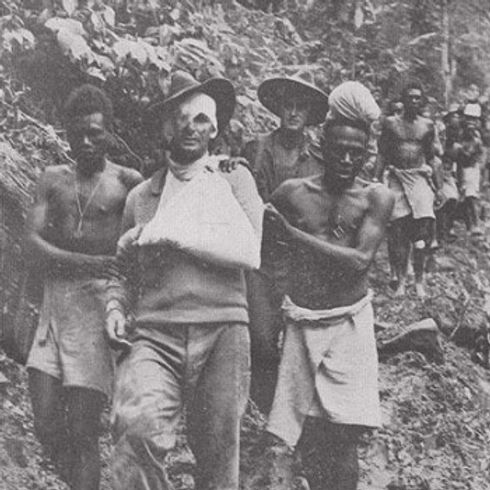
By late summer of 1943 the offending division had been moved to the front in New Guinea where they again failed to distinguish themselves in the vicious fighting on the Kokoda trail where the Imperial Japanese army had been pushed back over the Owen Stanley range of mountains by the Anzacs. At nearly 14,000 feet, the battles in the clouds as the news called it, the Aussies not only fought the Japanese but triple digit heat, little water, almost no food and what they did have had to be hauled up the nearly vertical mountains by the New Guinea natives who supported the Anzacs, the so called Fuzzy Wuzzy Angels. “Fuzzy Wuzzy Angels” was the name given by Australian soldiers to Papua New Guinean water carriers who, during World War II, were recruited or forced into service to bring supplies up to the front and carry injured Australian troops down the Kokoda trail during the Campaign. Over the four arduous months, the Fuzzy Wuzzys helped secure an Australian victory by forming a human supply chain along the Kokoda Track, moving food, ammunition up and wounded soldiers down from the front lines. 625 Australian soldiers were killed during the Kokoda Campaign, and over 1,600 wounded. Additionally, in excess of 4,000 soldiers became casualties due to illness. More than 150 Papuans died as members of the Papuan Infantry Battalion or as carriers of critical supplies and wounded along the Kokoda Trail.

New Guinea auxiliaries helping an Australian soldier down from the Owen Stanley mountains. Australian War Museum photo.

the Australian and New Zealanders finally defeated what was to be Japan’s last attempt to invade Australia and cut the sea lanes from the United States. The battles now moved to the northern end of New Guinea. Port Moresby was secure and planning was underway for the next step up the island chain towards Japan itself.

MacArthur moved his headquarters from Brisbane to Port Moresby in New Guinea. Your dad and his other translators packed up and went with him. They were working seven days a week. Hundreds of thousands of diaries, letters home and military communications were being processed every week by the MIS translators. Rather, as you might imagine just a primarily local project, it had become necessary due to the volume of documents being found in caves, the bodies of dead Imperial troops and radio intercepts to establish a communication network that encompassed the men with MacArthur like your father and the cryptographers at Pearl Harbor, the language school at San Francisco’s Presidio and the school at Fort Snelling in Minnesota. A network was set up to handle the radio traffic between places and to provide air transport to move the thousands of crates of captured documents.

Leaving the comfortable billets in Brisbane, your father and his crew packed up and moved to the decidedly less cushy environs of Port Moresby, New Guinea. They would have to get used to the new arrangements. It would be a long time before they saw a solid roof over their heads or a decent shower. It would be canvas and cold water from here on out.

Tent 29. Camp Chelmer, Indoorooplily, Queensland, Australia. November 1943. Joe Iwataki photo

Dear Dona . Page 7 Coming December 27th.

Standard

Dear Dona,

Page 5

By Michael Shannon.

The group of sixteen translators from your dad’s class arrived by train at the siding in Pittsburg, California. Pittsburg was the major debarkation point on the west coast for those heading for the Pacific War Theater. After a week confined to barracks at camp Stoneman, Hilo and his fellow graduates found they would be leaving by ship in a few days. They could see the skyline of San Francisco shimmering under clear sky’s just across the bay but were not allowed to visit owing to the high commands orders that all Nisei be confined to base for their own safety. The danger from their fellow soldiers was real, particularly the Marines who were across the bay. To prepare Marines for what was coming all Japanese were brutally vilified in speech and print. Such indoctrination is common to all wars no matter the country. Propaganda yes, but no less dangerous especially to those who had not been exposed to combat yet. There had been several serious incidents where Nisei in uniform were assaulted by groups of soldiers and sailors. Feelings ran very high.

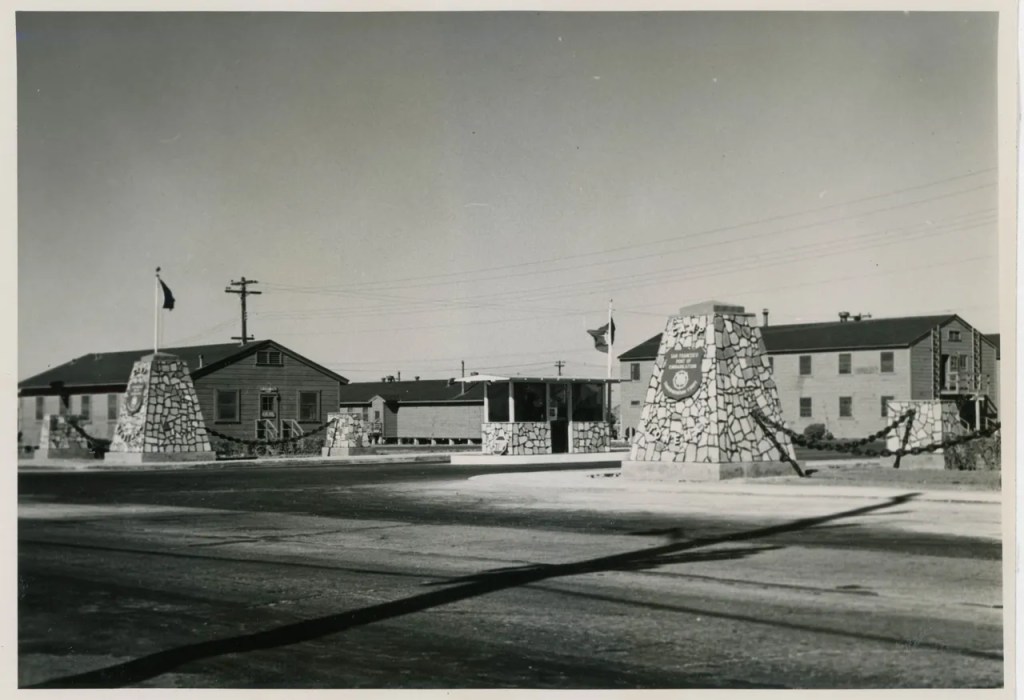
Camp George Stoneman, Pittsburg, California, 1943. National Archives

Stoneman was brand new, completed just two months before your dad arrived. The camp was named after George Stoneman*, a cavalry commander during the Civil War and later Governor of California. In addition to almost 346 barracks (63 man), 86 company administrative and storehouses, 8 infirmaries, and dozens of administrative buildings, the 2,500 acre camp held nine post exchanges, 14 recreation halls, 13 mess halls, a 24 hour shoe repair and tailoring business, one post office, a chapel and one stockade. Overall, the camp was a city unto itself. It had a fire department and observation tower, water reservoir, bakery, Red Cross station, meat cutting plant, library, parking lots and 31 miles of roads. For recreation, Stoneman boasted two gymnasiums, a baseball diamond, eight basketball courts, eight boxing rings and a swimming pool and bowling alley. Officer and enlisted clubs provided everything from reading rooms to spaghetti dinners. The camp also contained the largest telephone center of its day, with 75 phone booths and a bank of operators who could handle 2,000 long distance calls a day. Stoneman even had USO shows featuring stars such as Groucho Marx, Gary Moore, and Red Skelton. Lucille Ball once donned a swimming suit to dedicate an enlisted men’s club.

Camp Stoneman had a maximum capacity of 40,000 troops and at one time ran a payroll of a million dollars per month. Leaving camp to the docks where transport ships waited meant departing the camp at the California Ave. gate and marching down Harbor St. to and catch the ferry at Pittsburg landing. Many “Old Timers” recall the day when they would shine shoes, sell newspapers, round up burgers and and cokes in service to the troops to earn some coin. It is said that when the troops were departing or being “shipped out” they would toss their remaining coins or dollars to the local children as their was no longer any need for American currency where they were headed.

Camp Savage was pretty small by comparison and the Nisei soldiers must have been amazed. Mostly farm boys from California or fisherman’s sons and plantation workers from Hawaii, Stoneman dwarfed old Fort Bliss. The fort covered half the acreage of the entire Arroyo Grande valley and had forty times it’s population.

After a week the men were told to pack and be ready to catch a ferry across the bay to pier 45** where they would board for an unknown destination.

Foreground, pier 45, 1943. U S Naval vessels in background.

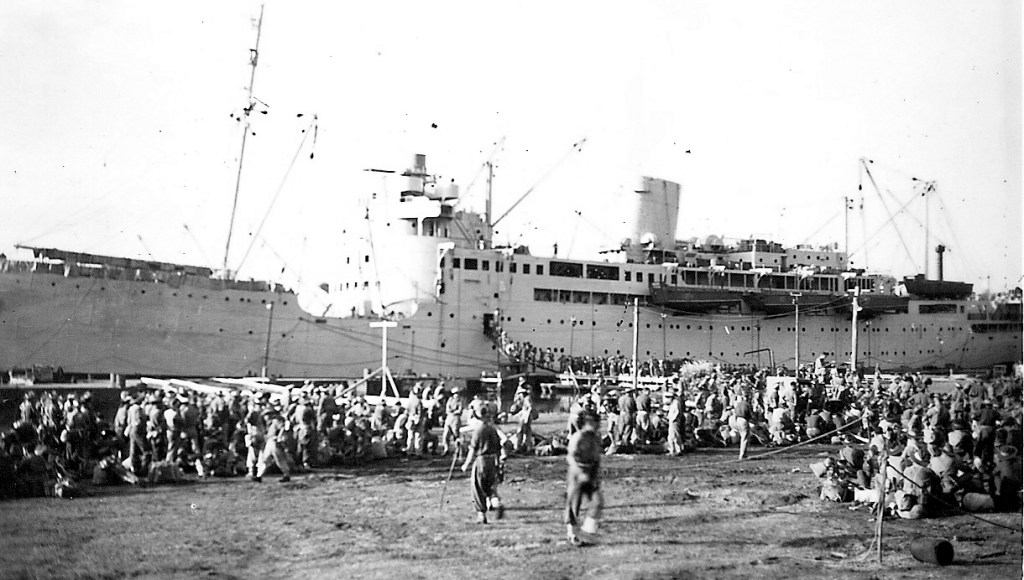
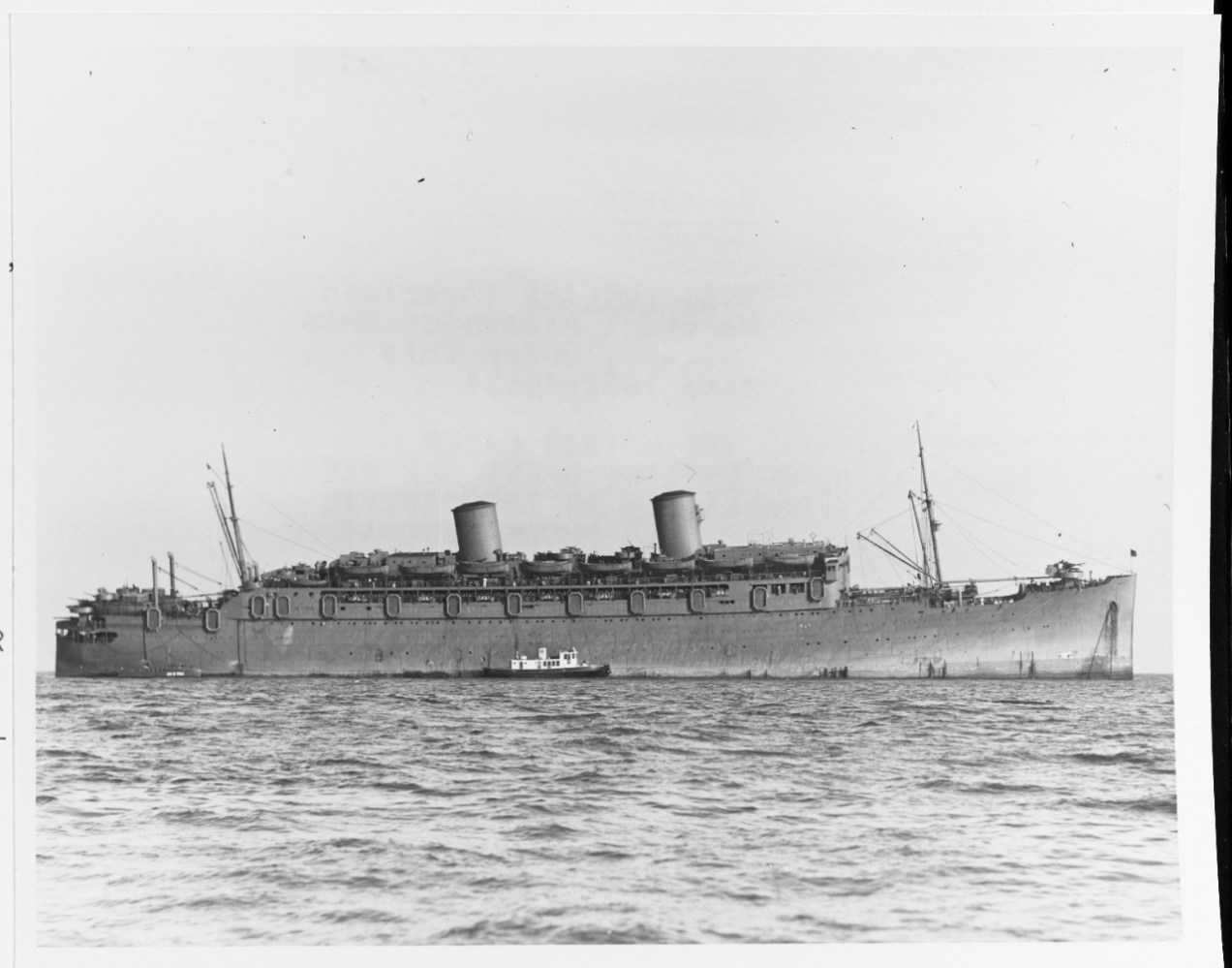
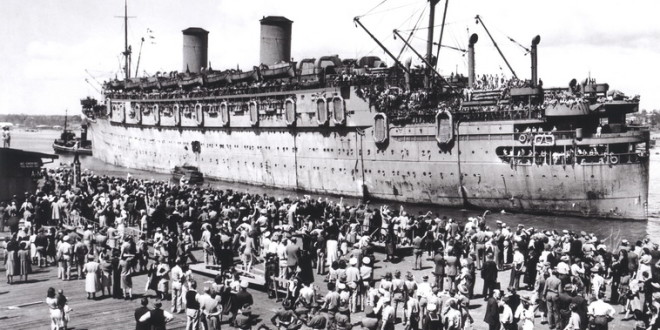
The Army and the Navy had chartered dozens of passenger ships from home fleets and foreign flagged companies. Operating out of San Francisco were several that had flown the company flags of the Dollar Line,*** American President Lines and the Matson Line. Famous luxury liners in the Hawaii trade such as the SS Lurline, Monterey, Matsonia, Maui and the Malolo were now being operated by the US Army Transport Service. These ships in particular, because of their size and speed were referred to as “The Monsters.” Just three of them, They traveled alone, rarely needing warships for protection as most naval vessels couldn’t match their speed. This was considered protection enough from Imperial Japanese submarines. They could also make the 6,725 nautical mile trip to Auckland, New Zealand without refueling. Thats where they were headed though only the Captain knew it. Everyone else was in the dark.

USAT Lurline pulling out of San Francisco, fully loaded with over 6,000 soldiers, sailors and Marines. US Heritage Command Photo. 1943

Steaming under the Golden Gate bridge and out past the Farallone Islands she left the treacherous Potato Patch to port and headed southwest. She picked up her escorts, three Fletcher class destroyers and the Cruiser USS Indianapolis. The officer of the watch rang up full ahead on the telegraph, the engine room lit off all the boilers, smoke poured from the stacks, bow wave arched higher and they headed for the sunset.

The Nisei found their quarters for the trip and were pleasantly surprised. They were to stay in two converted first class cabins on the promenade deck. A pre-war cabin for a trip from San Francisco to Honolulu cost $200.00 in 1940. ( $4,509.49 today ) The boys joked that they were getting a really good deal. They also felt lucky because they knew the berthing decks where the soldiers were stacked as much as six high in their pipe bunks breathing the odorous air, a mix of cigarette smoke, and dirty smelly clothes. The ships laundry was out of operation for the trip. There were too may passengers, so going on deck for some fresh air had to be done in shifts. Likewise chow. You stood in long lines for hours in order to eat. Almost as soon as the ship hit her first Pacific roller, the unbelievably foul smell of vomit began sluicing around the below decks. There were pails but they soon overflowed. Miserable doesn’t describe it. They were young though and adjusted as best they could. There was no where to escape anyhow.

At the beginning of the voyage the Nisei were restricted their cabins for fear that there might be trouble with the soldiers and the crew. Later it was thought that perhaps getting to know them was the better course of action. Everyone was notified of the decision and everyone was allowed to mingle. During the day the decks were completely covered by soldiers, mainly replacements for the 32nd, Red Arrow, Wisconsin National Guard, the 37th, Buckeye Division, Ohio National Guard, the 41st, The Sunshine Division from the states in the Pacific Northwest and the 23rd or Americal Division. All of them involved by this time in heavy fighting in New Guinea.

Each day the soldiers practiced with the bayonet, cleaned their rifles, sharpened knives and convinced themselves how tough they were. They averaged just about twenty years and their hubris came from being young and having almost no exposure to life outside the mostly rural areas they came from. Many had never seen a Japanese in their lives.

For the Nisei the release from their cabins turned out to be a mostly positive thing. As they got to know each other they found out how much alike they really were. A farm boy is a farm boy no matter his ancestry. In the trek north to Japan the soldiers would come to value very highly their new Nisei friends who would share all the hardships of combat with them and whose translation skills would save hundreds of lives.

Still they talked about the problems communicating directly with the enemy, in the language of one’s parents. The idea was incredibly fraught with personal feelings especially for the Kibei who had the greatest exposure with Japan proper. To some it presented difficult questions about identity and heritage. For many Japanese Americans, it was difficult to reconcile using the Japanese language for American victory when their dog tags bore the address of the camp back home in the United States where your parents were incarcerated. In many cases, the translators had had no opportunity to even visit families and the addresses that listed Manzanar or Tule Lake California, Gila River and Poston Arizona, Amache Colorado or Rowher, Arkansas must have caused pain every time they looked at them.

So here they were, a small contingent of specialized troops traveling with thousands of Caucasians whose suspicions and hatred was dangerous to them, whose families were locked behind barbed wire in concentration camps and whose President had written about his decision to intern Japanese Americans was consistent with Roosevelt’s long-time racial views. During the 1920s, for example, he had written articles in the Macon Telegraph opposing white-Japanese intermarriage for fostering “the mingling of Asiatic blood with European or American blood” and praising California’s ban on land ownership by the first-generation Japanese. In 1936, while president, he privately wrote that, regarding contacts between Japanese sailors and the local Japanese American population in the event of war, “every Japanese citizen or non-citizen on the Island of Oahu or in California who meets these Japanese ships or has any connection with their officers or men should be secretly but definitely identified and his or her name placed on a special list of those who would be the first to be placed in a concentration camp.”

Imagine the confusion on the one hand and the desire to fight for a country that didn’t want you on the other. Like my father said when questioned about the issue, “You cannot understand it because you haven’t lived it.” And of course thats true as far as it goes. Today, we have far more documentation of those events than was possible during the war when the public was restricted to almost none.

Steaming day and night the group of ships headed southwest, zig zagging to reduce the chance of torpedo attack and on the seventh morning those on deck sighted Diamond Head. A soldier from Ohio turned to the Nisei next to him who was from Kaimuki, Oahu and asked if that was what Japan looked like to him, the Nisei replied “It looks like home to me.” As Bob Toyoda told the story years later he laughed at the confusion on the face of the Ohio boy who was going to war against a country he knew nothing about, not even where it was.

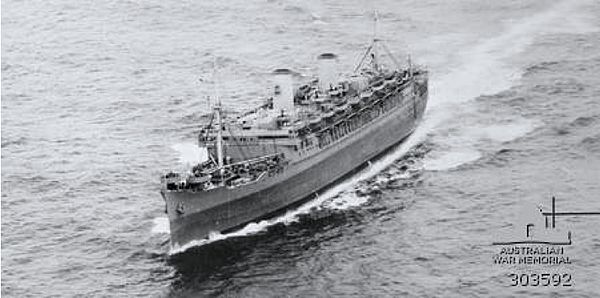
SS Mariposa, USAT enroute to Auckland New Zealand, July, 1943. Australian War Memorial photo****

Much to the dismay of the passengers, especially the translators from Hawai’i, the escorts turned to starboard and headed for Pearl Harbor but the Mariposa turned to port and picked up a compass bearing of 150 degrees south-southeast (SSE). It was going to be another long, long three weeks aboard.

Dona page 6

From the promenade deck, Hilo and the other translators could just make out the smudge on the horizon that they knew by now was Auckland, New Zealand. Six thousand seven hundred miles and a month at sea and no one aboard was any more anxious to get to shore than they were.

*General George Stoneman was a cavalry general in Grant’s army. He is mentioned in the song “The night they drove old Dixie down.” His name would have been well known to southern boys.

**Todays home of The San Francisco Maritime Museum and known as the Hyde Street Pier.

***The old Dollar Line owned by Robert Dollar has through mergers become the American President Line.

****This very likely the ship Hilo traveled on.

Cover Photo: SS Lurline in war paint leaving San Francisco for the southwest Pacific.

Michael Shannon is a writer from Arroyo Grande California.

Standard

Dear Dona

Written by Michael Shannon

Page Four

Unlike the American military where mail was censored and journals and diaries forbidden the Japanese Imperial Army thought the differences in language would make ordinary Japanese as indecipherable as any code to an American reader. The head instructors at the MILS schoolalso knew that Japanese soldiers were brutalized by their superiors and would likely be resistant to the treatment the British were using on captured Afrika Corps German troops where violence and intimidation were routinely used to coerce confession and information. As many of the instructors had lived in Japan for extended periods of time they knew the Japanese were generally very kind and the spirit of co-operation was instilled in them from birth. The culture of Japan was bound to duty to the Emperor and higher authority, but they also believed that force would not be enough to get prisoners to break down. Instead the language program not only include reading a writing and the general makeup of the Japanese soldiers battlefield strategy and tactics but a heavy emphasis was put on Japanese society, geography and religious beliefs. The idea was to draw a picture of the individual soldier in an attempt to establish rapport with him. They planners knew that they would resist brutality because that was a soldiers daily life in the Imperial Army. Instead a cautionary approach was adopted where kindness and not only assurances of kind treatment but whenever possible knowing about the persons home. Differences in prefecture, religion, the social mores of a particular part of Japan helped build trust between the interrogator and the prisoner.

American government sponsored propaganda was designed to present the enemy as a monolithic structure, all Japanese being of the same mind. Depictions of the Japanese were as vile and hateful as the propagandists could make them. It was impressed upon the American public that they needed to be eradicated. This conveniently swept under the rug the fact that, just like the US they were a diverse people with many different beliefs. Led by a military dictatorship whose war aims were no less than domination of the entirety of east and Southeast Asia.

The two largest religions were Shintoism, the official state religion and Bhuddism which originally came from China and was characterized as a forign religion. Various western religions were also represented particularly the Methodists. In 1940, Christians in Japan united in a declaration of church unity after the Religious Organizations Law required all Protestant churches to merge into one.

Japan had religious freedom during World War II and there was separation of church and state. It was not a theocracy. It is correct to say that most religious people were pro-war at the time.

During the pre-1945 period, Japan moved into political totalitarianism, ultranationalism, and fascism culminating in Japan’s invasion of Chinese Manchuria in 1931. This was part of an overall global period of social upheavals and conflicts.

Regardless of the political reality the instructors knew that the average Imperial Japanese soldier would have far less interest in politics and much more allegiance to his family, friends and the local village life. All of these observations dictated a much more friendly and kind approach than the Germans were getting from the British. Establishing a connection between the Nisei interpreter and the prisoner was an important part of the curriculum at Camp Savage.

The very first class which started on June 1, 1942 was made up of 200 enlisted men, 193 Nisei and 7 Caucasians. The entire class, which had been moved from the Presidio was made up of soldiers who had already enlisted before the war and were considered regular army. Their studies had begun in San Francisco and it wasn’t until after order 9066 was signed in February of ’42 that they moved east.

There were three types of student classification. There were Caucasians who had studied abroad or attended universities where they studied Japanese The majority were Nisei, American born citizens who had varying degrees of language experience. Some had attended locally run Japanese schools which they attended after regular public school classes and came from homes where the Japanese was spoken. The third classification were the Kibei, A subset of Nisei who spent a significant part of their youth in Japan, usually for education, and then returned to the U.S. They ranged from students who had gone to elementary school, many from Japanese high schools and some University students. The Kibei were terrific asset to the MIS because of their familiarity with Japanese culture at all levels.

The terms the Japanese used to describe what generation they were from were introduced to Western American cultural language in the late thirties. Hilo’s immigrant parents were referred to as Issei or First Generation. The 2nd generation like Hilo and his brother were Nisei or 2nd generation. Sansei were their children, the ones I went through school with.

Families wealthy enough to send children to Japan were relatively uncommon. Kibei (帰米, literally “go home to America”) was a term often used in the 1930’s and 40s to describe Japanese Americans born in the United States who were studying in or had studied in Japan. Many Kibei got trapped in Japan when war broke out between Japan and the U.S. In a sense, they became stateless because they were Americans living in Japan, labeled as the “enemy” in both.

The Kibei were the foundation blocks of the school at Camp Savage. Because the service would need soldiers to read fluently, translate to careful english, have some background in Japanese cultural, both civilian and military classes were on educating each student in a curriculum that matched both his background, Nisei or Kibei, and the specialty he was being trained for. Graduates would operate in teams where each member had one of the key components they studied at Savage.

Savage was an apt description for both the curriculum and the school. Foremost in their minds must have been the consequences they likely faced if they failed. The military is essentially faceless. You have a serial number because thats how you are identified. Transfers aren’t exactly blind but primarily rely on number that are needed here or there. For the Nisei soldiers at camp Savage, that meant that failure meant transfer back to your original unit. In Summer of 1943, nearly all Nisei in the various units of the army were transferred to the 100th Infantry Regiment, a mostly Hawaiian unit made up from the Hawaii National Guard. Trained in Mississippi and Wisconsin they shipped out to Italy in September of 1943 and were immediately thrown into the battle for Salerno in southern Italy near Naples. They spent the next eight months in nearly constant combat in some of the most vicious fighting of WWII. Every Nisei at Savage knew of this and what the price of failure would be, immediate transfer to the 100th as a replacement. They weren’t cowards, far from it, but they also understood the reality.

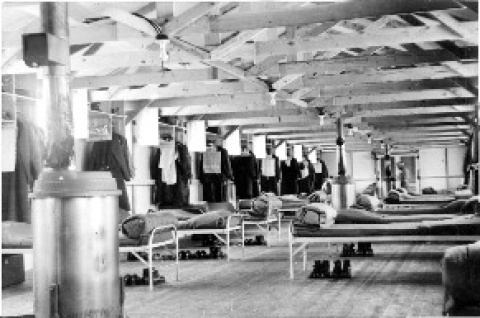
Your father lived in one of those tarpaper shacks for six months. I’m sure he had his turn rolling out of his cot at 4:30 am and priming the stove. He may have been lucky in the placement of his bunk, next to the little coal stove would have been as good as it got. Having a bunk on the end of the row would not be the best place to be in Minnesotas winter. Tarred paper is not among the greatest insulators. In fact it dwells pretty near the bottom. You can poke a pencil through it with no effort. Those shacks were drafty and pretty close to sleeping out of doors. In the morning they must have smelled. A confection of bad breath, farts, nearly dead hunks of coal giving off a noxious vapor and the clinging smell of cigarettes and uniforms they were not able to keep clean. Hanging just below the rafters a white cloud of condensed vapor from the mens breathing which would melt a drip as the room and the day heated. Soldiers had to do their own laundry, in tubs and basins outdoors with rough alkaline soap. Avoiding that chore would have been paramount.

Barracks at Camp Savage with stoves. US Army photo. 1943

Being young and soldiers they would have laughed at their predicament and blamed the army in no uncertain terms. Grousing soldiers have alway found the military to be the villain. SNAFU* was the word in WWII.

The classrooms were a better place to be. Semi-permanent buildings, well heated and clean would have been a relief. Luckily student were relieved of all the most basic duties that a soldier normally carried out. There was no drilling or inspections, no standing post in the middle of the night, all the little annoying things that the regular private has to put up with. The Army was desperate to prepare them for their combat jobs and made sure they had no more distractions than absolutely necessary.

After six months in the classroom, class C-10 at Camp Savage walked out of the classroom for the last time and stood in front of one of the remaining log buildings and stood for a class picture. Everyone smiling and glad to be through the grinding curriculum.

1942 1943 Camp Savage MIS Niseis. Your fathers class.

Hilo received a promotion to Tech five, an enlisted rank slightly below Corporal.** Like the others, he walked back to his hutment to open his official orders. He would have opened the manila envelope with the printed label, Official, Department of the Army and like all soldiers held his breath while he slid the paperwork out. Along with his service record was a single page warning him that he was now a holder of a Top Secret Clearance and was liable under the Uniform Code of Military Justice and the Official Secrets Act not to share or divulge any information as to his assignment or duty station under penalty of law.

Every MIS soldier carried a Secret designation. Information on the school and its graduates, their purpose was to be a closely held secret. This designation was to be enforced for a period of fifty years after WWII. The Military was concerned about the fact that they had interpreters in the Pacific theater whose importance could not be overstated.

Hilo’s parents who were housed at the Gila River, Arizona concentration camp had been visited by the FBI. Every MIS graduate had been thoroughly vetted before they were ordered overseas. This must have been very confusing to Hirokuni and Ito who would have been interrogated by two agents who gave them no information at all about the reason. Hilo wasn’t even mentioned during the questioning. The were and would remain completely ignorant of the reason until the war was over.

The second sheet of paper stated his destination; future duty station and was clipped to a set of official orders and travel vouchers. He was to report to Army headquarters in Oakland where he would travel by available transport to the Southwest Pacific Theater of Operations immediately. There would be no leave as Nisei soldiers were not yet allowed to enter the restricted zone to see family.*** Censorship rules meant that he could not tell them his destination just that he was being ordered overseas.

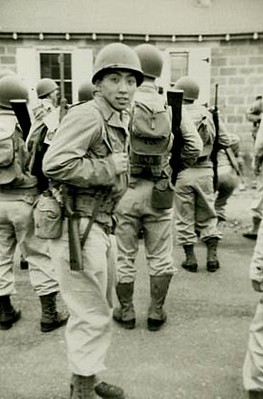
MIS interpreter PFC Geo Hara leaving for the Pacific, 1943. Densho Archive photo

Hilo himself wouldn’t have known his actual destination. He wouldn’t find out until his ship passed Hawaii so sensitive was military command. Some of the instructors at Savage were returnees and would have shared general information but not too much. He could have likely guessed that it would have been the Western Theater of Operations under General MacArthur but where? He was left to wonder.

Page Five coming Saturday November 23rd.

Destination, Southwest Pacific theater of operations and the real war.

Notes on text:

*SNAFU, Situation Normal, All f****d Up.

**The Army forbid the Nisei commissioned rank until late in the war. All MIS personnel were enlisted or noncommissioned rank.

*** Restrictions on visitation were lifted for servicemen in late 1943.

Links to other chapters in the series.

Page one: https://wordpress.com/post/atthetable2015.com/12268

Page two: https://wordpress.com/post/atthetable2015.com/12861

Page three: https://wordpress.com/post/atthetable2015.com/12872

Michael Shannon is a writer living in the Central Coast of California. He went to school with many children, whose parents were survivors of the camps in his little farming community of Arroyo Grande, California..

Standard

Dear Dona

Page Three

Written by Michael Shannon

A Hobson’s choice is a free choice in which only one thing is actually offered. The term is often used to describe an illusion that choices are available. That’s the military to a “T”

December 3rd, 1942.

At morning roll call, the Lieutenant called your father’s name. He was told to report to headquarters right after morning chow. Like any good soldier he asked what was up and like any good officer the Lieutenant wouldn’t tell him. So after breakfast he hustled over to the headquarters building and reported to the Top Kick, the first sergeant. Hilo would have entered the office, stood on the yellow footprints painted on the floor and announced himself. The sergeant merely looked up then rummaged on his desk until he found what he wanted, then said simply, “Your Orders.” “Where to Sarge?” “Camp Savage, you’d better pack your winter uniforms,” and he laughed.

Camp Savage, Minnesota home of the Military Intelligence Service Language School. Camp Savage was a World War II Japanese language school located in Savage, Minnesota, and was the training ground for many Japanese Americans who served in the U.S. military. The buildings were originally built during the Great Depression to house Civilian Conservation Corps (CCC) workers. In the rush to build up American forces the CCC tarpaper huts were put into service for the Nisei students. Part of Fort Snelling near Minneapolis, Savage was the new home of the language school. Originally located at the Presidio in San Francisco it was moved to the center of the country for the “safety” of the Nisei students. Californias attorney general Earl Warren a supporter of Executive Order 9066 signed by President Roosevelt on February 19, 1942: this order authorized the forced removal of all persons deemed a threat to national security from the West Coast to “relocation centers” further inland – resulting in the incarceration of Japanese Americans. You will note that the order only mentions “persons,” and not Japanese Americans, though the only removals just happened to be in the west. Germans and Italians weren’t moved anywhere.

Fort Snelling/Savage had a long history controversial acts by the US Government. Snelling is a former military fortification on the bluffs overlooking the confluence of the Minnesota and Mississippi Rivers. The military site was initially named Fort Saint Anthony, but it was renamed Fort Snelling once its construction was completed in 1825.

Before the American Civil War, the U.S. Army supported slavery at the fort by allowing its soldiers to bring their personal slaves. These included African Americans Dred Scott and Harriet Robinson Scott, who lived at the fort in the 1830s. In the 1840s, the Scotts sued for their freedom, arguing that having lived in “free territory” made them free, leading to the landmark United States Supreme Court case Dred Scott v. Sandford. In this ruling, the U.S. Supreme Court ruled that enslaved people were not citizens of the United States and, therefore, could not expect any protection from the federal government or the courts. The opinion also stated that Congress had no authority to ban slavery from a Federal territory. United States Supreme Court Chief Justice Roger B. Taney ruled that African Americans were not and could not be citizens. Taney wrote that the Founders’ words in the Declaration of Independence, “all men were created equal,” were never intended to apply to enslaved blacks, they not being “Men” under the laws of the United States.The decision of Scott v. Sandford is considered by many legal scholars to be the worst ever rendered by the Supreme Court. The ruling was overturned by the 13th and 14th amendments to the Constitution, which abolished slavery and declared all persons born in the United States to be citizens of the United States.

The fort served as the primary center for U.S. government forces during the Dakota War of 1862. It also was the site of the concentration camp where eastern Dakota and Ojibway tribes awaited riverboat transport in their forced removal from Minnesota to the Missouri River and then to Crow Creek by the Great Sioux Reservation.

Hilo went down to the transportation office to find out how he would get up to Minnesota, it was nearly 1,400 miles away and when he checked the newspaper in the PX he found out that the high temperature that day was 21 degrees and the low was -1. Not the temperate central California weather where he was from nor even Fort Bliss where it was 68. He reckoned the crack about winter uniforms was good advice. Of course, being the army they weren’t going to issue him any either. He figured he would have to wait until Minnesota.

In ’42, getting from Texas to Minnesota wasn’t easy. The Army would waste no effort in flying a lowly private anywhere, going by car was impossible for those who had them and even if they could get rationed gasoline, that was impossible for an enlisted man. The Army sent soldiers by bus here and there but getting a chit to travel that way was forbidden to the Nisei. With the war in the Pacific the military considered it too dangerous for Japanese Americans travel alone or by private transport. He went by passenger train. Switching railroads and constantly being sidetracked by military trains which had priority, the 1,400 mile trip took six days. He had to sleep on the train car’s benches and jump off at the stations where the train stopped to buy something to eat. Even for a 23 year old in the prime of life it was an exhausting trip although considering what was to come, it was a walk in the park.

He and the other boys kept up on the war news by reading newspapers to pass the time. While they were enroute, the US Navy lost the heavy cruiser USS Northhampton in the Battle of Tassafaronga in the Solomon Islands, sunk by Japanese Imperial Naval torpedos. They read that the Afrika Corps was being pushed into a corner in Tunisia by the Allied armies and their surrender was expected, though that wouldn’t be soon. While traveling to Camp Shelby they read that the US Marines had turned over the mission in Guadalcanal to the US Army which immediately was involved in very heavy fighting in the interior of the island. American and Australian troops finally pushed the Japanese out of Buna, New Guinea. New Guinea was a place Hilo would soon enough become familiar with. Unbeknownst to the travelers, below the bleachers of Stagg Field at the University of Chicago, a team led by Enrico Fermi initiates the first nuclear chain reaction. A coded message, “The Italian navigator has landed in the new world” is sent to President Roosevelt. The result would, in the end, save the lives many Mils soldiers, but that would come much later, too late for many.

Following Japan’s attack on Pearl Harbor, anti-Japanese sentiment and political expediency pushed President Franklin D. Roosevelt to order the army to set up Japanese internment camps in seven western states, that included Japanese Americans who volunteered at the U.S. Military Intelligence Service Language School in San Francisco. The school and volunteers had to move from the so-called “exclusion zone.”

All the western states but Colorado and Minnesota refused to host the school except Minnesota Gov. Harold Stassen who offered 132 acres of land in Savage to host the school. In 1942, Camp Savage was established. An old CCC camp and host to the Boy Scouts, it was run down and primitive. What buildings were still standing were augmented with the building of the cheapest of the military’s building, the loathed and ubiquitous tarpaper shack, the miserable hutment.

Hilo stepped down from the camp bus which had picked up the volunteers at the railroad station. He tossed his barracks bag up onto his shoulder and followed a Corporal who had been sent to get the. When they got to the headquarters building he turned, looked them up and down and over a big grin said, “you’ll be sorry,” followed by a laughter. Names Kobayashi,” he said, “Larry.” “Get checked in and I’ll take you to your quarters.”

Most of the men experienced for the first time the bitterly cold winter of Minnesota. Nearly all the students were from the temperate zones of the west. Some of the men suffered frostbites and persistent colds. The only source of warmth was the pot-bellied coal burning stove found in the classrooms and in the barracks. The stoves in the classrooms were kept burning by the school staff but the ones in the barracks were the responsibility of the students. If you had been designated barracks leader you usually had to wake up early at 4:30 am. to stoke up the stoves so that the rest of the men could rise and shine in a warmish barracks.

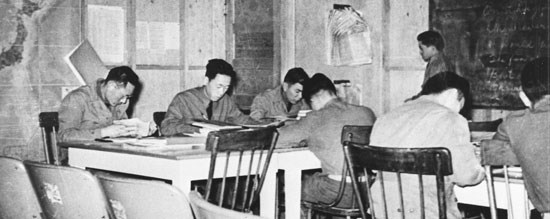
Classmates at Camp Savage. The Military Intelligence Service Language School, 1943. Densho Archive

The purpose of the school was for the volunteers to teach the Japanese language to military personnel. This skill could then be used to interrogate prisoners of war, translate captured documents and aid in the American war effort. A total of 6,000 students graduated from the school before it was moved to Fort Snelling in 1944.

The ancient Chines General Sun Tzu and philospher revered as one of the greatest military strategists, advised in his treatise that intelligence, procured from the enemy is the way to victory. George Washington set up an extensive intelligence system and it really hit it’s stride in the Civil War. Of the two types of intelligence strategic or long term planning and Tactical which concerns the enemy’s strength and location and is used to make immediate decisions on the actual battlefield.

The short but extremely intensive course was designed to meet the demands for linguists from field commanders in the Pacific. The studies included the study or review of the Japanese language, order of battle of the Japanese military forces, prisoner of war interrogation, radio intercept and many other subjects that could be of value in the field. Just to illustrate how intense our course was the kanji (ideographs) instructor would make us memorize seventy five characters a day just to make sure we remembered fifty for the next day’s test. Many of us studied using flashlights under our blankets after lights out at 2200 hours. Saturday mornings were devoted to examinations. Many woke up early, about 0400 hours, went to the latrine, sat on the commodes and studied for the tests under the meager lighting. The competition was so keen in class that the class grade average was in the mid-nineties.

The study week, Mondays through Fridays, consisted of classes from 8 to 12, a brief lunch break, classes from 1 to 5, a break for supper and compulsory supervised study from 7 to 9. Examinations were conducted on Saturday mornings. The soldiers were free from Saturday afternoon until Monday morning. The majority would hurry to the Twin Cities for Chinese food and movies. On Sundays most attended church services in St. Paul, where many students were befriended by a Mrs. Florence Glessner, who graciously invited the Nisei kids to luncheons and parties. Mrs. Glessner was a Red Cross volunteer and after graduation and assignment to the Infantry Divisions on Bougainville, the MIS soldiers made a collection from the members of the language detachments and sent the donation to the Red Cross through Mrs. Glessner. She later sent us a clipping from a Minneapolis newspaper about the donation “from her boys”.

Minnesotans rarely saw any Japanese-Americans and for the most part had little or no racial bias. Unlike the west coast where business and individuals were stripping evacuees of their property, houses, fishing boats and anything they could get their hands on the people of Minneapolis were giving dances and dinners to the kids at school. Showing an appreciation for the Nisei soldiers who were serving their country. Many students at the MISLS were astounded by this. Captain Kai Rasmussen, the camp’s first commanding officer was quoted as saying, “Minnesota was the perfect place because not only did the state have room for the school, but Minnesotans had room in their hearts for the boys.”

Your dad arrived at Savage after your grandparents had already arrived at Poston. It was very hard for them to communicate by mail. Nisei soldiers could not safely write in Japanese and in many cases the parents could not write in English. Letter were very carefully written, in your dads case probably by your aunts, He must have been worried sick about them and they him. They may not have even known where he was. If he got leave at the end of his class he would not even have been able to visit because in 1942, no Nisei soldier would have been allowed in the exclusion zone. When the restriction was lifted in 1944, he had already left for the Pacific war zone.

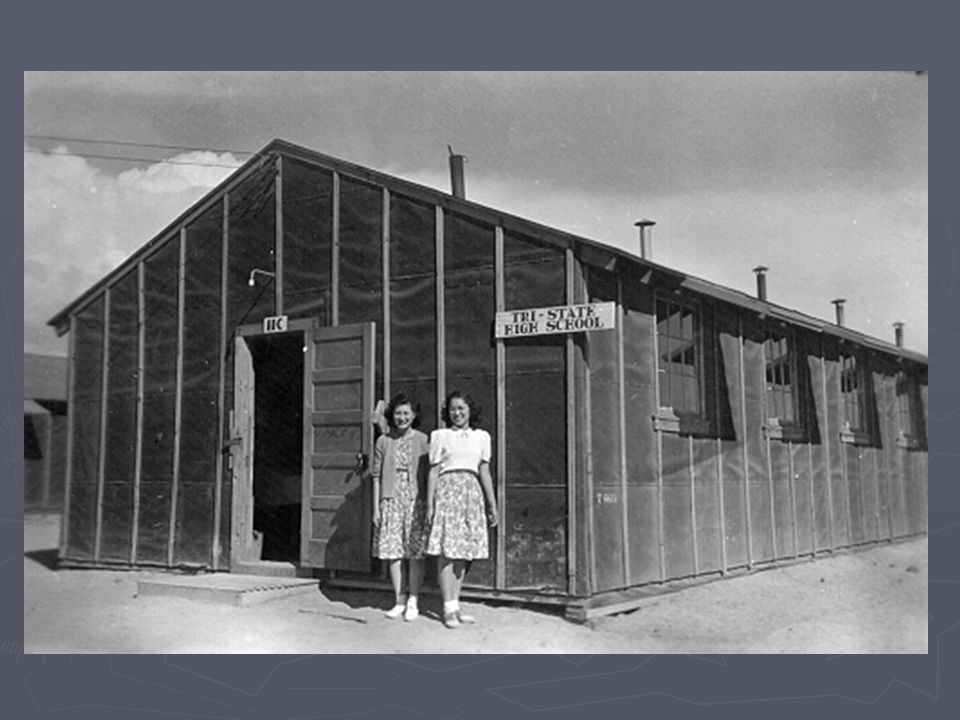
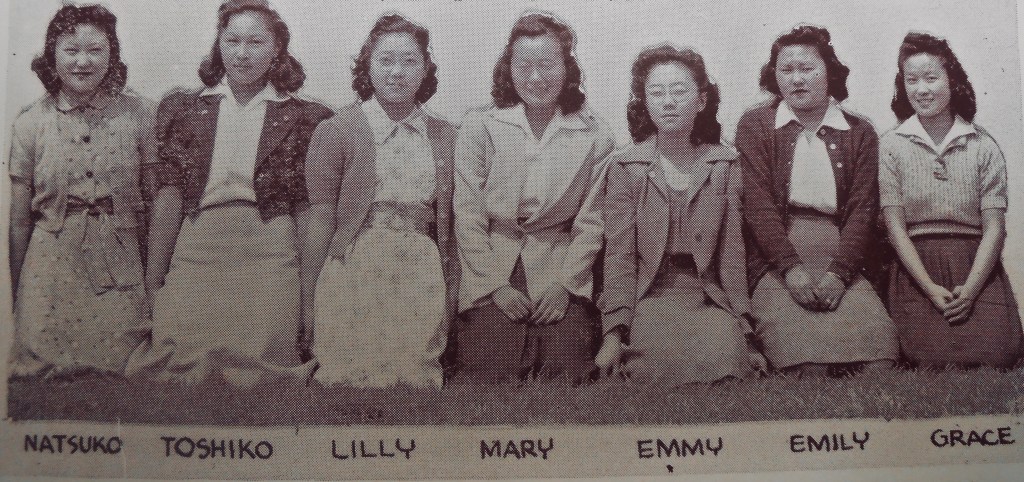
Tri-State High School, Poston Camp. 1943. Densho Archive.

The photo above is a sad commentary, but the two young ladies are a lesson in the girls resilient nature. Though held against their will behind razor wire they still managed to dress in the current fashion of young women. They wear saddle shoes, bobby sox, full knee length skirts, peter pan collars and sweaters, they would not be out of place in any high school in the nation. My mother dressed just like this. She was the same age

It was a rough go for them because almost al the students were from the exclusion zone and many had no idea where their families were. Lieutenant Paul Rusch, one of the senior instructors had spent decades in Japan as a Methodist missionary and knew the culture better than any other instructor. He lent a sympathetic ear. Students said they ween’t angry with the Army but that they were, “Just against everything that was happening with their families. We’re being treated as second class citizens and we hate it.” Imagine what it be like to be forced from your schools and home and cast adrift in a forbidding and alien place where only the most rudimentary life is possible. It was like life on another planet.

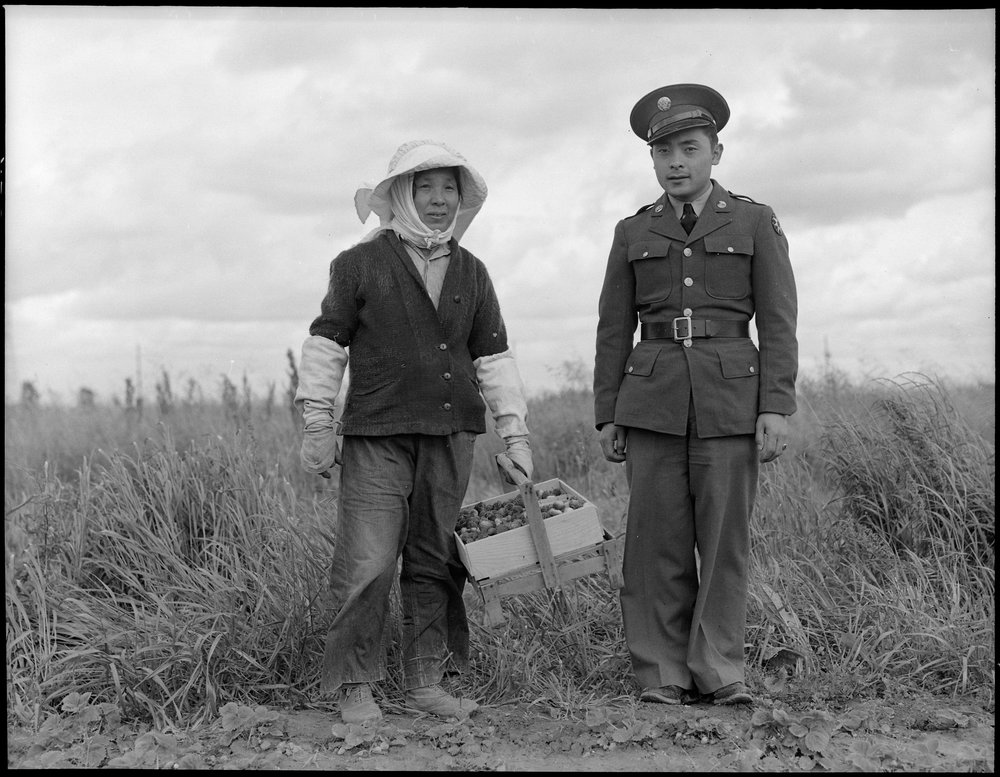
A widowed mother with six children in a strawberry field near Fresno. Two of her sons served in Italy and France with the 442nd Regimental Combat Team. She spent the war with her other four children in the Manzanar concentration camp in the Owens Valley of California.

Dear Dona page four

Coming November 8th, 2024

Unlike the American military where mail was censored and journals and diaries forbidden the Japanese Imperial Army thought the differences in language would make ordinary Japanese as indecipherable as any code to an American reader. The head instructors also knew that Japanese soldiers were brutalized by their superiors and would likely be resistant to the treatment the British were using on captured Afrika Corps German troops where violence and intimidation were routinely used. As many of the instructors had lived in Japan for extended periods of time they knew the Japanese were generally very kind and the spirit of co-operation was instilled in them from birth. The culture of Japan was bound to duty to the Emperor and higher authority. They believed that force would not be enough to get prisoners to break down……

Links to other chapters in the series.

Page one: https://wordpress.com/post/atthetable2015.com/12268

Page two: https://wordpress.com/post/atthetable2015.com/12861

Michael Shannon is a writer living in the Central Coast of California. He went to school with many survivors of the camps in his little farming community.

Standard

Dear Dona, 2

Written By Michael Shannon

Page Two

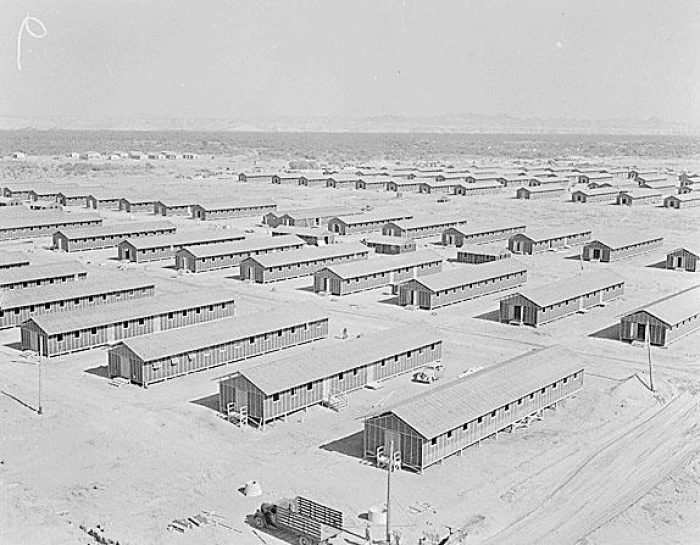
The living quarters of the Poston relocation camp, Poston, Arizona 1943. Pop: 18,000

Poston Camp

Endless rows of tar paper buildings housing six to eight families with no partitions, no toilets, no furniture and no running water. It was 88 degrees in April. They would not see temperatures under 100 degrees until Christmas. The camp was completely surrounded by nothing. No trees, no grass only desert scrub. On top of all that, it was not the worst of the all camps. I have a friend who remembers a little about life there. He was just a small boy from Guadalupe but he does remember the heat. Mothers tried soaking sheets and hanging them inside in the high summer. He said the little kids would run back and forth the length of the barracks purposely running through the wet and slightly cool sheets.

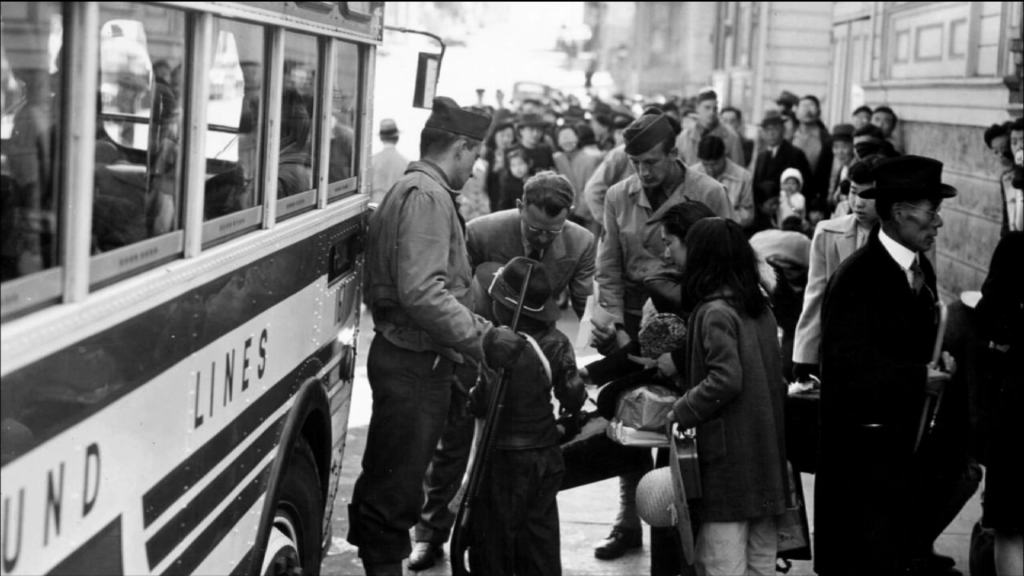
It’s pretty easy to form a picture of your great grandparents taking your dad to the old Greyhound bus depot at Mutt Anderson’s cafe, both wearing their best clothes as they did for important occasions. In 1941 they would have both been wearing hats, he in his Fedora and she with her go to church best, purse on her arm and those sensible heels women wore then. Mom holding a crushed linen hanky in her clenched hand. The family scene is always the same, father looking prideful and the mother just on the edge of tears but holding it all in so as not to embarrass. Hilo would have walked up the steps into the bus and found a seat, maybe at the window so he could look out and see mom and dad. All of them giving a subdued, shy wave as your grandparents hearts broke. Perhaps your mother was there too. My guess is she was.

Boarding the buses April, 1942

I well recall my own parents took me to the Greyhound in San Luis in 1966. My father proud, my mom doing her best to smile but visibly shaking. When the bus pulled out, I looked back to see her fall into my dads arms and bury her head in his shoulder. Just like your grandmother my mother had to go through the leave taking twice.

It is very different than sending a child in peacetime. Then they knew that the devil would take his due and this might be the last time the beloved boy would ever be home again. As always the future was grim and completely unknown.

George, Hisa and Yasbei Hirano with a picture of their son Hirano, Robert; Private; 442nd regimental combat team, 2nd Battalion Headquarters company; killed in action 26 June 1944 at Belvedere, France.

After enlistment your dad was sent basic training at Camp Roberts in San Miguel. He arrived there on the 29th of October and was assigned to Company B of the 82nd Training Battalion for 17 weeks of basic Infantry instruction. He was fortunate. By 1944 boot camp had been reduced to just eight weeks because of the expanding war and the urgent need for new soldiers. Basic is designed to teach you about the Army, it’s history, Its rules and how to operate as a group or groups of many different sizes. Your dad qualified as an expert marksman. He also passed courses in map reading, signals and hand grenade. He learned to fire the 80 mm mortar though he wasn’t assigned to a mortar platoon yet. Guys that weigh 125 pounds are too light to carry them so I’m sure he felt pretty fortunate. He stuck bayonets into canvas bags, fired the fifty caliber machine gun and could disassemble and reassemble his 1903 Springfield rifle with his eyes closed.

Just a week after Pearl Harbor he was headed for Fort Lewis Washington to join Company D, 162nd Infantry. The 162nd was a component of the 41st Division, Oregon National Guard which had been inducted into the regular army in late 1940. The beginning of WWII saw the various state National guards federalized for national defense. Strange as it may seem, the state you were from had little to do with where you were assigned during wartime. It was simply a matter of bodies needed.

While at Fort Washington which is near Tacoma he received further training as a mortar man. The military seems to have a perverse way of surprising you. He qualified as an assistant gunner in February and was re-assigned to the 138th infantry regiment of the Missouri National Guard. The Missourians had probably never met a Nisei since the 126,000 thousand plus Japanese in America were almost exclusively living in the far west, primarily California. One of the great things about the army is the mingling of kids that are from parts of the country where their upbringing and customs are so different. A sort of culture shock takes place at first until they learn that at heart they are not so different. I think you can say that your father like many kids, remember he was just 22, was getting a real education about the country he lived in that didn’t come from any textbook.

The 138th was ordered to Alaska that same month. Going with them would be Private Hiraoki Fuchiwaki, assistant gunner on a mortar crew. Right, a mortar crew for which he was deemed to light too carry. Thats the army for you.

Your dad’s commanding officer was Colonel Archie Roosevelt one of Theodore Roosevelt’s four sons who served in both WWI and WWII. Archie was the only one who survived. Quentin Roosevelt was the youngest son of President Theodore Roosevelt and Edith Roosevelt. Inspired by his father and siblings, he joined the United States Army Air Service where he became a pursuit pilot during World War I. He was killed in aerial combat over France on Bastille Day, 1918. Ted, the oldest died soon after the Normandy invasion. He was a Brigadier General and died of a heart attack while leading his troops. He was awarded the Congressional Medal of Honor for Bravery. Kermit died after serving in North Africa in action against the Afrika Corps and then fighting the Japanese in Alaska.

I mention the above because the sense of duty people felt was different then. Wealthy, educated and privileged kids stepped up. Sons of bankers (Clair Gibson, Army Air Corps), Judges, (Jim Moore, Navy Seabees) and the well-off who could have wangled a deferment but stepped up to the head of the line. (John Loomis, Marines) The list from Arroyo Grande is long and represented are kids from all walks of life. Grown-ups you knew in school who were your teachers, Del Holloway, Army, Cliff Boswell and Al Sperling, Air Corps, your neighbors, Gordon Dixon, Army, Ace Porter, Army, James Mankins, Army, all three Baxter boys, Don, Bill and Tommy, Navy, Maxine Bruce, Chuck Bells mother and Virginia Campodonico, from the Nipomo clan. Both were Army nurses who served overseas. Your father must have felt the same, that he owed it to his country to serve. He and your uncle were amongst hundreds of young men and women who volunteered from our county.

Many Nisei volunteered out of the camps, the ultimate irony, jailed and held under guard by a suspicious government they nevertheless took it upon themselves to serve a country who didn’t want them.

It wasn’t only the boys either. we wasted the girls and young children, five years stolen from young lives. High school girls with an entire life before them were ripped from school, loaded on buses and taken on the long drive to barbed wire compounds guarded with machine guns. Some would be held until 1948. A single drop of Japanese blood was all it took. Adopted kids went, mixed race kids too. Even white kids raised in Japanese homes. A young man whose mother was half Japanese was at Manzanar. He said because he was mostly white he was allowed to go to high school in Lone Pine where the other kids called him “The Jap.”

Arroyo Grande High School Graduates class of 1941. Courtesy AGHS

Sixteen or seventeen year old kids of any generation are ill equipped to understand the why of it. The transfer must have been stunning. The Nisei in Arroyo Grande High Schools class of 1941 represented a full 22 percent or more than one in five pupils. Every former student interviewed made a point of saying that there was no bias with the Japanese American kids and in fact they were fully integrated into school life.

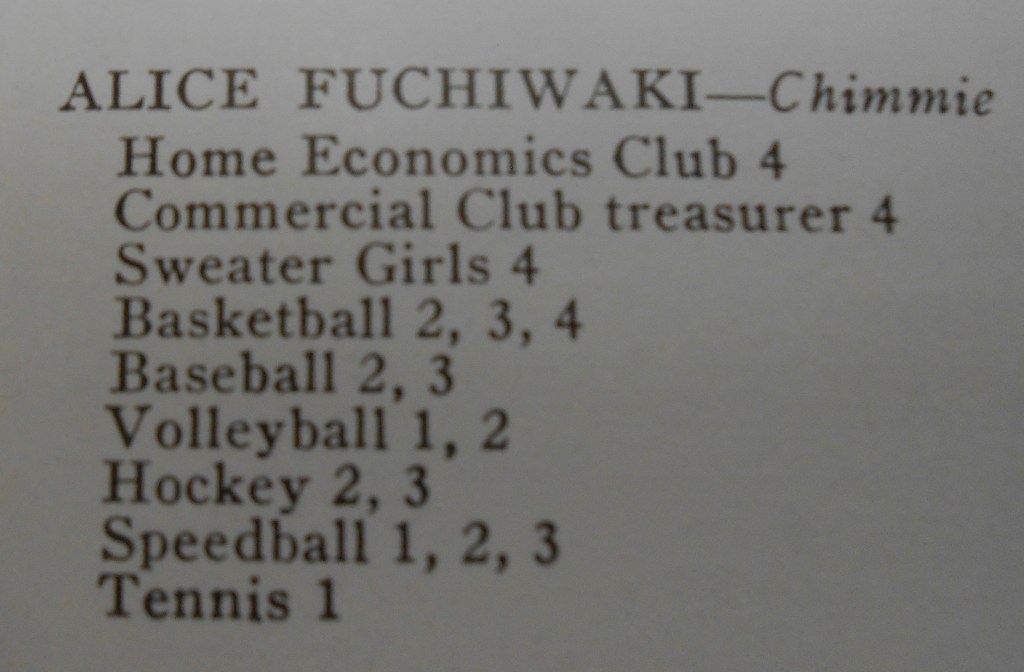
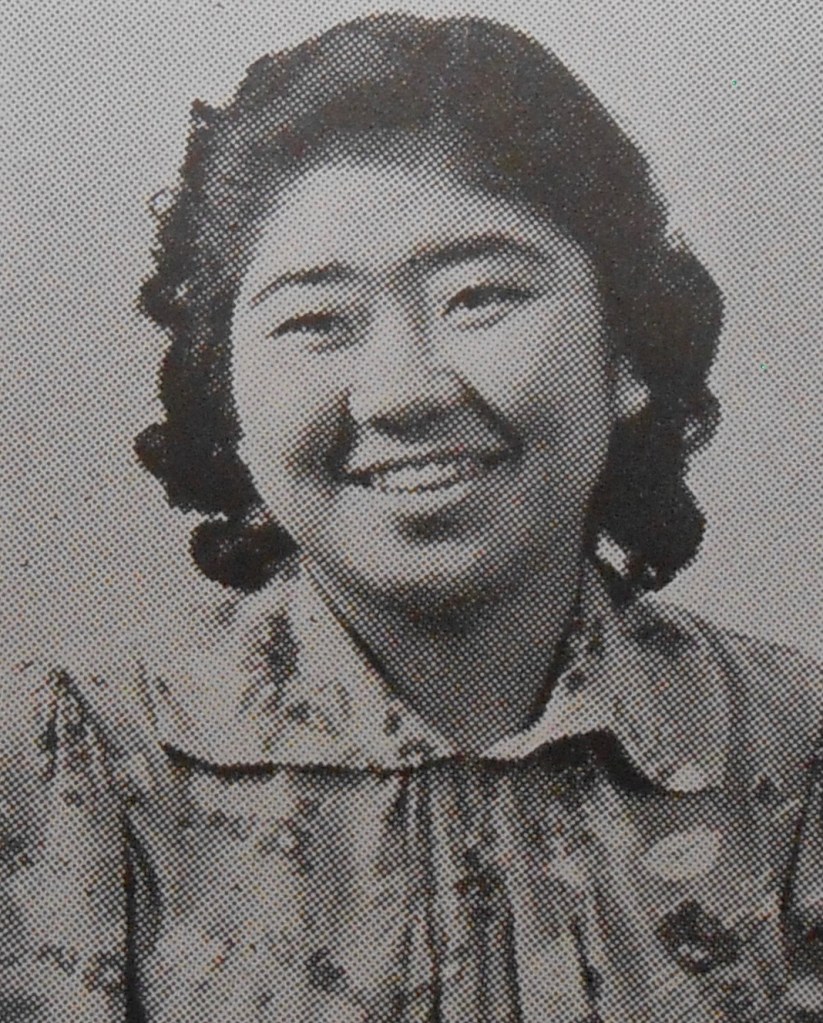
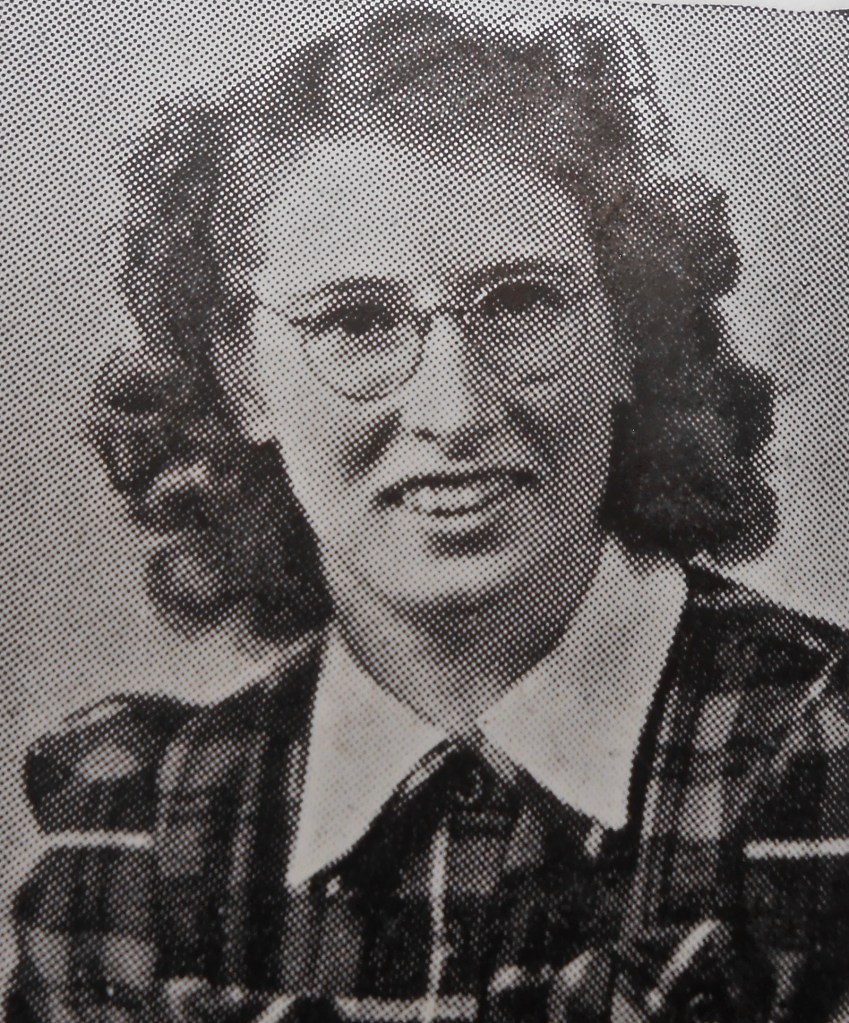
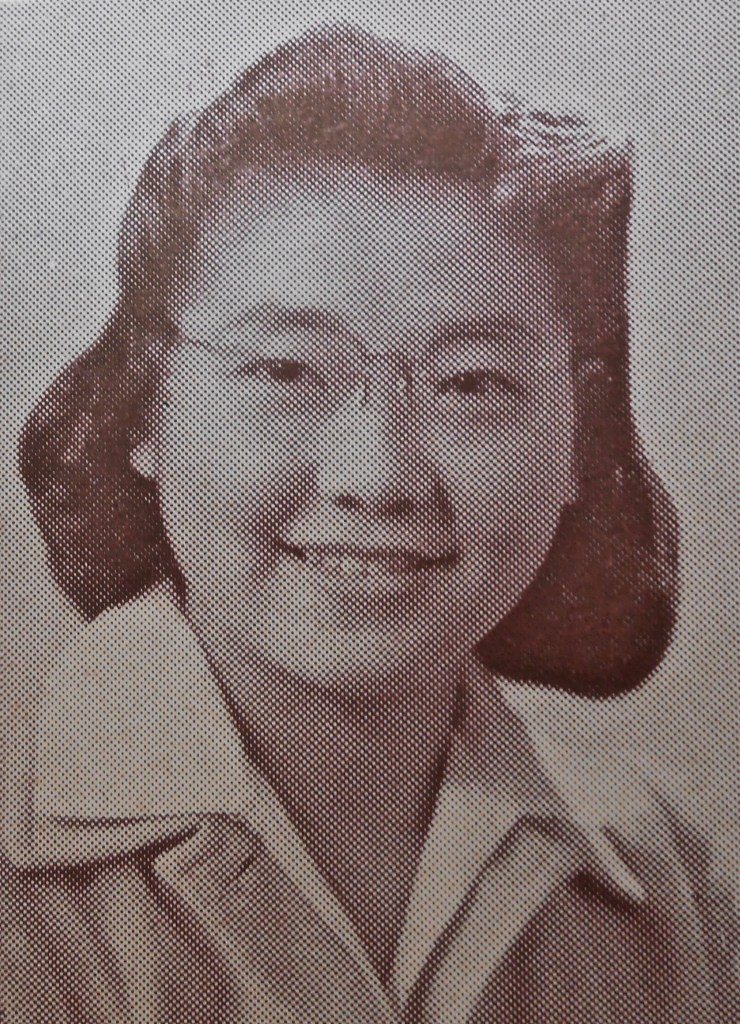
Chimiko Alice Fuchiwaki. Prisoner #882, Pima, Sacaton, Gila River camp. Arrived Sept 1, 1942, Departed May 3,1945. She was given an early release to go to Colorado for work. Chimmie never returned to Arroyo Grande. More than half of all the Nisei from Arroyo Grande never returned. The 1943 yearbook had no Nisei grads and almost no boys of any race. The war was in full swing in America.

Called to headquarters just before departure for Alaska your father was given a new set of orders. It was the cold finger of the federal governments Japanese re-location program. Even though neither your father or brother was in camp, they had both enlisted before the war, they are listed as internees in camp documents. There was no escape. When you were on laeave you could only go home, nowhere else. The reaction to the attack on Pearl Harbor was a disaster for the Japanese on the west coast. The war department had suspended enlistments from the Nisei and was pondering discharging all soldiers of Japanese decent. In the meantime they were withdrawn from their units and essentially parked at army bases in the middle of the country until it was decided what to do with them. Your dad was sent by train to Fort Bliss, Texas. He traveled along with other Nisei soldiers on trains with window shades drawn so as to not draw any attention to them. Fort Bliss was the perfect place. Located in West Texas just north of the Mexican border you can hide anything in its 1.12 million acres of scrub desert in El Paso County.

At the time Fort Bliss, was an old Cavalry base dating to post Civil War, it still had a barracks named for Robert E Lee. Don’t forget that Texas was part of the Confederacy. Run down after two decades of governmental neglect, it held a hodge podge of military from the “Old Ironsides” 1st cavalry division (Armored) to Nisei units waiting to be shipped to Mississippi for infantry training with the 442nd or up to Minnesota to the language schools. Afrika Corps POW’s were also interned there right next to Japanese Americans held in concentration camps. The Japanese were behind barbed wire, the Germans were not. Some irony there.

The 138th’s experience in Alaska was a disaster and your dad was extremely lucky to have missed it. Deployed to the island of Kiska in the brutal cold and perennial fog, the new and untried soldiers saw shadows everywhere. One dismal night of combat saw thirty soldiers killed and fifty wounded all by friendly fire. The Nisei soldiers were justifiably terrified of being shot by their own comrades. It was soon apparent that the Japanese had evacuated the island before the 138th had even arrived. Diaries and un-mailed letters left behind and read by MILS interpreters made it clear the Japanese soldiers hated the war and wanted to go home. So did the Americans. Operation Cottage was a dismal failure. General Simon Bolivar Buckner Jr. who was in charge of the Alaska campaign said, “The invasion of Kiska was a great big, juicy, expensive mistake.” General Buckner would cross paths with the Nisei and the MILS again in the far Pacific in 1945.

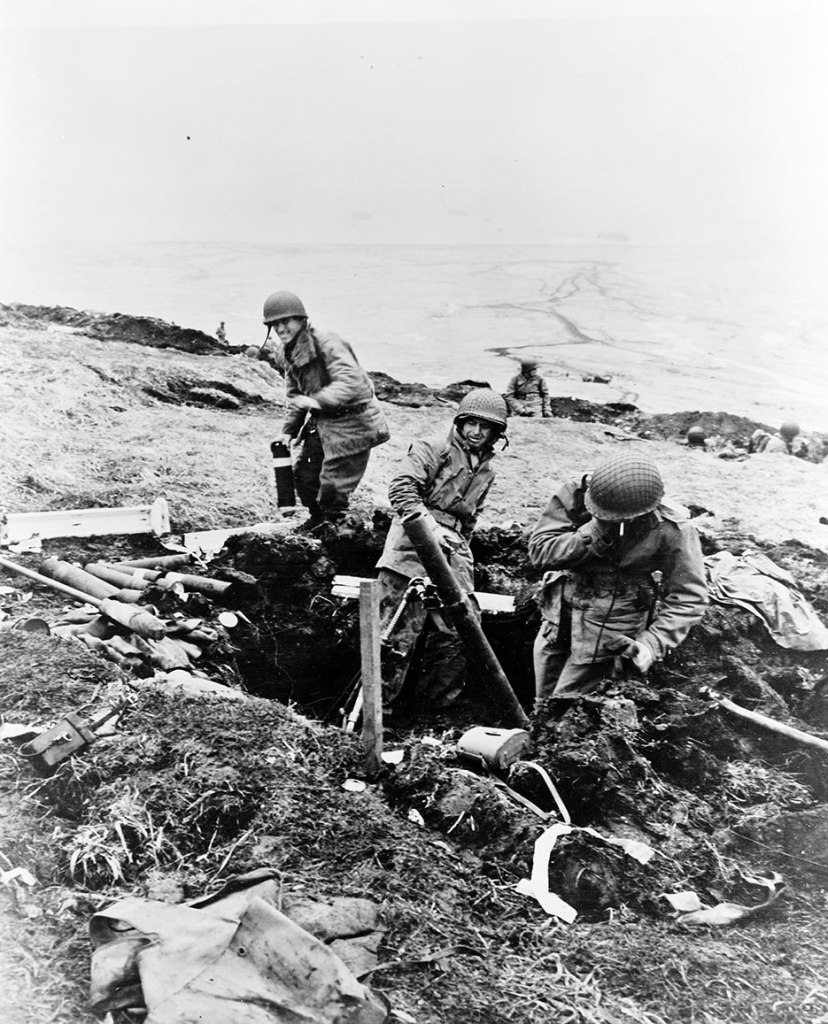
138th regiment, mortar crew, Kiska Island, Alaska. 1942 War Dept. photo

Assigned to random make work duties the Nisei soldiers had no idea what their fate would be. Back home their families were packing their one suitcase of belongings and preparing to be bussed out to holding centers where they would await their assignments to the infamous relocation camps where they were destined to spent the war. Your grandparents and your aunts were taken to Tulare where they were housed at the county fairgrounds, keeping house in dirty old horses stalls. Everything they had other than the one suitcase was left behind to be stolen or destroyed by vandals. Neither of their sons could do anything to help. It must have been agonizing. As soon as the half completed camps were ready, your grandparents and your aunts were taken by train to Poston, Arizona and then trucked to the Gila River concentration camps. They at least were able to see friends from Arroyo Grande, the Saruwataris, Kobaras, Hayashis, Ikedas, Fukuharas and the Nakayamas were all there. They would have to make a new life there. They could no longer dream of a future. They would have to bear what could not be born. ( Shikata Ga Nai )

After eight months in Texas, he and the other Japanese boys were ordered to a barracks building where an officer with the Military Intelligence Service presented an opportunity to leave Fort Bliss. He said the army was looking for soldiers who had knowledge of the Japanese language. Could they speak it, or write it? Had they spent any time in Japan attending Japanese schools? The army had figured out that since they had no one who could speak or write Japanese they were going to be at a great disadvantage when they began their cross Pacific advance where the were sure to have captured Japanese soldiers and workers.

Those who could were encouraged to apply to the school and take a test which would qualify them for jobs as interpreters in the Army’s Intelligence Services.

Both your dad and uncle spoke, read and wrote Japanese. Your grandmother is listed as a Japanese speaker on her census forms so Japanese was spoken in the home. They both qualified as speakers and it’s very likely they attended the old Japanese school off Cherry Lane. They would have gone there after school to study reading and writing and the customs and history of Japan. How seriously its hard to say. In some of my interviews there was a lot of laughter about how serious they were. As one man said, “We hated it, we were American kids after all, not Japanese,” but we had to go.

For the Fuchiwaki boys it was to pay off. Ben was already at Presidio in San Francisco studying at the Military Language Institute while Hilo was in Texas being bored. Volunteering is simply not done in the military, at least not often. Soldiers know better. The thought is, if you volunteer for a duty you want, the army will make sure you never get it. But it was Texas, flat, dusty, desert Texas at that and if volunteering might get them a transfer and out of there, why not? The thinking was that at least it could turn out to be an important job.

All the candidates who volunteered were whisked off to an empty barracks building and spent two grueling days test taking. They were tested on the spoken word; They were tested on reading and writing and finally at the end, a sit down interview by a senior enlisted man from the language institute. White officers were present but not as interviewers because the Army only had a very few who had any fluency in Japanese at all. The interviewers were enlisted, non-officers because it was Army policy that no Japanese Americans could rise above the rank of Sergeant. At the time all Nisei units were commanded by white officers.

Your dad would have had no real idea of how he did on the tests. The military rarely gives a grade to the one taking any test. So, they waited….and waited, and waited some more. Some volunteers waited weeks before they were called in for final interviews. The waiting was just the military way. It was and is something that sailors, Marines and soldiers soon get used to. “Hurry up, and wait” has been the way since long before Alexander the Great. Never changed, never will.

As time passed, the Nisei soldiers began to see what their future might be. It had become common knowledge that because of manpower needs the War Department had decided not to discharge the Nisei but to incorporate them into new, all-Japanese units which would eventually be sent to the European theater and in particular Italy thus solving the issue of Japanese Americans fighting the Imperial Japanese.

The 100th Infantry was the initial unit which was made up of Nisei boys from Hawaii and the west coast who had been enlisted before Pearl Harbor. Later, the 100th would be integrated into the 442 Regimental Combat Team which did see terrible combat in the climb up the boot of Italy. The 442nd was to become the most decorated small unit, ever, in US Army history. Those kids felt they had something to prove and they laid down their lives by the thousands to do it. As happens in wartime, hard fighting units are “used up.” They are sent into combat again and again until they are ground down to nothing. Such it was with 442nd. A difficult objective and they were first in line. Their patriotism and the racist general who was their commander who was looking for promotion from his own superiors guaranteed that.

Your dad, if accepted in the language program might be spared combat for the time being, Nisei troops were already being sent for combat training. For one year, the men trained at Camp McCoy in Wisconsin and Camp Shelby in Mississippi. In May 1943, the 100th participated in training maneuvers in Louisiana. That August, the 100th deployed across the Atlantic to the Mediterranean where they took part in the Italian campaign. The men selected the motto “Remember Pearl Harbor,” to reflect their anger at the attack on their country. In Hawaiian slang they said, “Go For Broke.” They did just that too.

Hardly anyone here remembers that but when I lived in Hawaii just two decades after the war, those soldiers had used the GI Bill to go to college. They ran the unions and the banks. They were college professors and business owners. The Nisei had gone from the cane fields to the corporate office in one generation. “Go for Broke” they said and they did.

Dear Dona

Page Three

Hobson’s choice is a free choice in which only one thing is actually offered. The term is often used to describe an illusion that choices are available. That’s the military to a “T”

December 3rd, 1942.

At morning roll call, the Lieutenant called your father’s name. He was told to report to headquarters right after morning chow. Like any good soldier he asked what was up and like any good officer the Lieutenant wouldn’t tell him. So after breakfast he hustled over to the headquarters building and reported to the Top Kick, the first sergeant. Hilo would have entered the office, stood on the yellow footprints painted on the floor and announced himself. The sergeant merely looked up then rummaged on his desk until he found what he wanted, then said simply, “Your Orders.” “Where to Sarge?” “Camp Savage, you’d better pack your winter uniforms,” and he laughed……

Coming November 2nd

Link to Dear Dona page one: https://wordpress.com/post/atthetable2015.com/12268

The writer is a lifetime resident of Arroyo Grande California and writes so his children will know the place where they grew up.

Standard

Dear Dona

Written By Michael Shannon

Page One

Saturday, October 19, 2024

Dear Dona,

Something in your note about not knowing what your dad did in WWII struck a cord. I have some research from the Manzanar story so I though I’d look into your dads service in World War two.

Most people have very little or no knowledge of the Japanese Nisei experience. I’ve interviewed people of that generation who had no idea that there were Nisei soldiers at all. In fact, there were none in the Navy, Marines or Air Corps, only the Army and its nurse crops accepted Nisei and only citizens at that.

I’m sending you this to pass along what I found about your dad’s service. One of the complaints of military men is the constant record keeping they must do. The funny thing is that once they are separated from the service the records go who knows where. Perhaps they are stored in cardboard boxes at the back of the warehouse pictured in the first Indiana Jones movie. Who knows? In any case some can be found in order to fill in a family’s story. In a way its a treasure hunt. There can be quite unexpected results. In fact its like assembling a puzzle when some of the pieces are missing.

The difficulty for children is that wartime veterans are extremely hesitant to tell them what their experience was like. There are a few reasons why that is so. One, the kids have no background experience or education to make much sense of it. Two, in the case of combat veterans, the stories are too horrible to contemplate telling your own children. Third, their hope is, that surely the kids will never have to experience their fathers hell for themselves.

Most sons and daughters of veterans never hear much about the parent who actually served. In WWII, somewhere around 12% of all regular army soldiers saw combat in which their was actual shooting. The average combat soldier was involved in combat for a period of around forty days. By comparison soldiers in Viet Nam averaged 240 days and in Afghanistan close to 1,200 days. The difference wouldn’t matter to your father. One day at a time is how it’s done.

Your father saw active combat against the Japanese Imperial Army on the islands of Luzon in the Phillipines and went in on the first wave in the invasion of Okinawa. The battle for Okinawa drug out over nearly three months, from April 1st until June 22nd 1945.* Okinawa was the last major battle of World War II. It was the bloodiest battle in the Pacific War. It involved 1,300 U.S. ships and 50 British ships, four U.S. Army divisions, and two Marine Corps divisions. The U.S. objective was to secure Okinawa, which would remove the last barrier between U.S. forces and Imperial Japan. By the time Okinawa was secured by American forces on June 22, the United States had sustained over 49,000 casualties including more than 12,500 men killed or missing. The fighting was absolutely vicious with the Japanese fighting to the last man in most cases. The battle caused more than twice the number of American casualties than the Guadalcanal Campaign and Battle of Iwo Jima combined, with the Japanese kamikaze effort causing the American Navy to suffer more casualties than any previous engagement in the Atlantic or Pacific. The Navy suffered the greatest loss in its history.

The U.S. Navy lost 32 ships and aircraft, and 368 ships suffered damage during the Battle of Okinawa, . The U.S. Navy also lost 49,151 sailors, with 12,520 killed or missing. The Japanese by comparison lost more than 110,000 military personnel killed, and more than 7,000 were taken prisoner during the fighting.

The number of Japanese surrenders was unusual for the Pacific war. Most of the credit must go to the personnel of the Japanese American members of the Military Intelligence Language Service or MILS as it was known. Both your father and uncle were members and attended the Army’s Japanese language schools.

So how did he get there. The answer is multifaceted and complicated because as always anyone history when its being written is like a juggler trying to keep too many balls in the air..

When I was researching the series on Manzanar I used, as my primary sources two Japanese American archives which were put together after World War two and have grown year by year ever since. Collected were diaries, letters, newspapers and radio news, family photos and most fascinating; oral histories by a very wide cast of characters. Generals, politicians, researchers and thousand of ordinary citizens who lived through the concentration camps.

When I talked to people in that generation, many whom I knew personally, I learned that the community, the community of the same age, those in high school or younger who were coming of age in the late thirties lived quite a different life than many might imagine. What they though about one another was different than the preceding generation.

Looking through the old yearbooks from that time it’s easy to see Nisei kids were completely integrated into teenage life. Sports and clubs, social events all featured mixes of kids from all backgrounds.

My dad was a scoutmaster in the late thirties and kids like Haruo , Ben Dohi, John Loomis, Gorden Bennett and Don Gullickson along with my father told me funny stories about camping together and there wasn’t a hint of any racism. Stone went to HS with my father and was a life long friend. Personally, I don’t think it ever occurred to me that Leroy or Masaki was any different than I was.

Quite obviously there was discrimination by older folks and would be a great deal after Pearl Harbor but amongst those kids who who were in or just graduated in the years before the war there was little. Contemporary accounts in the local papers list Nisei kids names in all the kinds of chatty articles written about the goings on of youth. My fathers Boy Scouts listed the names of many Nisei kids and interviews with them showed me that they were friends no matter their skin. It strikes me that that generation saw little difference amongst themselves. They spoke the same high school language, they dressed alike as kids do, they combed their hair the same. Nisei boys played baseball, football and basketball together and as now, kids for the most part supported each other against the machinations of adults.

My own experience as a high school teacher illustrates my point. Adults, teachers and administration might publicly dislike your style of dress, or how you wear your hair but the kids themselves will put up a united front against any perceived transgression into the territory they reserve for themselves. You yourself will remember girls climbing the trees at school to protest the dress code. I’m sure ethnicity had nothing to do with that because kids unite over things they find unfair. Your dads friends would have felt the same.

A case in point, I never heard a disparaging remark from any adult I knew who went to school with your dad, uncle or any other Nisei because they knew who they were. They weren’t “Japs,” they were friends. That foul term was reserved for the Imperial Japanese, not friends.

When your father graduated from Arroyo Grande High School, the old brick one on Crown Hill in 1936 the Japanese Imperial army had invaded Manchuria and was moving into China, the Rape of Nanking was the next year. Mussolini, 1928 had annexed Libya and in just the year before your dad’s graduation had instigated the war in Ethiopia where he used poison gas, tanks and air power against tribal armies armed with old muskets and spears. Hitler had opened the first concentration camps in 1933, just one year after he was elected to office. In little Arroyo Grande all of this would have been news. Radios and newspapers published world news. Young men were not much concerned I’m sure about all of this conflict, it was worlds away from the lives of rural farmers. was the possibility of war. Arroyo Grande was far, far away from world events.

The next three years would mean a great deal to the lives of the young and as events were to prove, terrible things to the were coming to the 126,948 people of Japanese ancestry in the United States, 74% of whom lived in California.

Crown Hill High School, 1941

Your dad graduated Arroyo Grande HS with the class of 1936 and was working for your grandfather until late 1941 when he decided to follow your uncle Ben into the service. He was inducted on October 31st, 1941 just a little more than a month before the attack on Pearl Harbor. No one knew that was coming of course but by that time the German army along with their allies the Italians had overrun France, Holland, Belgium, and most of western Europe, They had occupied Norway and were advancing on Egypt in north Africa. Greece was under Nazi control and most of eastern Europe as well. German submarines were slaughtering ships transporting material to Britain in the north Atlantic. On the 2nd of October the German army launched operation Tornado which was a continuation of the previous years invasion of Russia.

In the far east the Imperial Japanese army had invaded and conquered Manchuria and was steamrolling across China. The general staff in Tokyo was in the final stages of planning for the surprise attacks that were to come at Pearl Harbor, the Phillipines and the rest of Southeast Asia.

No one in the United States could have possibly missed the threat to the country by these events. On October 17, 1941, the German U-boat U-568 torpedoed and damaged the destroyer USS Kearny off Iceland, killing 11 and injuring 22. The day your father raised his right hand in Los Angeles and swore to defend his country disaster struck in the early morning hours in the north Atlantic. While escorting convoy HX-156, the American destroyer U.S.S. Reuben James DD-245 was torpedoed and sunk with the loss of 115 of its 160 crewmen, including all the officers.

The draft had been instituted by congress in September of 1940. Called the Selective Training and Service Act of 1940, it required all men between the ages of 21 and 45 to register for the draft. This was the first peacetime draft in United States’ history. Those who were selected from the draft lottery were required to serve at least one year in the armed forces. Once the U.S. entered WWII, draft terms extended through the duration of the fighting.

Although the United States was not at war at the time, many people in the government and in the country believed that the United States would eventually be drawn into the wars that were being fought in Europe and East Asia. Isolationism, or the belief that American should do whatever it could to stay out of the war, was still very strong with almost half the Americans polled saying we should stay out. But with the fall of France to the Nazis in June 1940, Americans were growing uneasy about Great Britain’s ability to defeat Germany on its own. Our own military was woefully unprepared to fight a global war should it called upon to do so.

The first number drawn in the 1940 U.S. draft lottery was 158, which was announced by President Franklin D. Roosevelt on October 29, 1940. Your father along with your uncle must have thought that it was better to volunteer than wait. The thinking at the time was that it was better to have some choice in where and when you served than be at the mercy of a blind system of quotas.

Hilo registered in Arroyo Grande on the 16th of October 1940. He may have waited to be called up because of your grandparents. Under the exclusion act they were not allowed to own land or a home and so like most Isei, rented. The land below the Roosevelt highway in the Cienega where they farmed and lived was rented. For tax and census reasons your uncle Ben was listed as the head of the family though he was just 24. I’m sure that was all just on paper though. Your grandfather certainly ran the show since with only your aunts left at home he was able to continue farming for the next five months until they were hauled off to Tulare and then to Poston, Arizona on the Gila River, the concentration camp where they and your aunts remained until 1945

the Poston concentration camp, Gila River, Arizona where most of the Arroyo Grande citizens where held.

Your father reported for active duty in Los Angeles on the 23rd of December 1941. There he took the oath to defend the constitution of the United States from all enemies foreign and domestic. Five months later his family was locked up behind barbed wire and held inside by soldiers armed with rifles and machine guns.

Name Hiroaki
Race Japanese
Marital Status Single, without dependents (Single)
Rank Private
Birth Year 1917
Nativity State or Country California
Citizenship Citizen
Residence California
Education 4 years of high school
Civil Occupation Farm hands, general farms
Enlistment Date 23 Oct 1941
Enlistment Place Los Angeles, California
Service Number 39167146

Nisei men reporting for Army induction, 1410 East 16th Street Los Angeles, CA, 1941

Page Two

Coming on October 26th, 2024

It’s pretty easy to form a picture of your great grandparents taking your dad to the old Greyhound bus depot at Mutt Anderson’s cafe, his parents wearing their best clothes as they did for important occasions. In 1941 they would have both been wearing hats, he in his Fedora and she with her go to church best, purse on her arm and those sensible heels women wore then. The family scene is always the same, father looking prideful and the mother just on the edge of tears but holding it all in so as not to embarrass. Hilo would have walked up the steps into the bus and found a seat, maybe at the window so he could look out and see mom and dad. All of them giving a subdued, shy wave as your grandparents hearts broke. Perhaps your mother was there too. My guess is she was………..

  • I was born on the day Okinawa was invaded.
  • The cover photo, The Brothers taken in 1945.

The writer is a lifetime resident of Arroyo Grande California and writes so his children will know the place they grew up in.

Standard

The Hogger

Chapter Two

Michael Shannon

Jack was a clever man so as he packed up the rolling stock and his village, carefully placing each piece in one of the old milk crates stamped with the family’s label, Hillcrest Farms Dairy. As was his nature, being a man who does nothing half way he began to ruminate on how he could continue his railroading.

After running the dairy for thirty years my grandfather was retired. No more 4:30 am cow calls, no more bottling, no more deliveries, he had time on his hands for the first time in his life. At 70, his “ready to go” nature needed an outlet.

The old dairy barn was semi- abandoned, the milk cows were gone and to boot, there was the huge stack of clear heart redwood planking that was left from the collapse of the main silo many years before. An idea was germinated. Why not just move his trains up to the barn? It had electricity, overhead lights and an attached workshop where he could tinker as much as he wanted. What my grandmother thought of this we don’t know but she could hardly have failed to see that it would get him out of the house. After forty six years of marriage, outside was where she was used to him being. She offered no argument.

There is a thing about small towns that many don’t know or remember. Small numbers means that neighbors are, well, neighborly. The glue that holds them together is an unwritten law that precludes people who are acquaintances mind some of their own business. Much depends on that. The grocer and the butcher and their wives and children are people you know. The school teacher, the farmer, the hotelkeeper and the constable are all on a first name basis. You can apply the Mark Twain saying, “A lie travels right round the world while the truth is still getting its shoes on.” People are careful with gossip. It’s someone you know. Everyone needs something from someone else.

It’s not as if normal human behavior is somehow missing in small communities. There is a man who is the love child of two seemingly ordinary people, both married. The state representative is having an affair with the woman down the street. A woman on Nelson St was referred to as a “Sexaholic” by my mother. There is a dairyman who waters his milk and the county treasurer is about to go on trial for embezzling. There is racism, Whites, Japanese, Filipino, Portuguese, Mexican get along in public but there are things said in the privacy of kitchens that prove otherwise.The elders in my family surely knew of these things, yet kept those discussions inside the home and certainly never in front of children.

Going to a small rural school where all these people were represented never seemed to be an issue. Racism is taught. If you are not taught you’ll be happier.

Keeping the lid on the kettle was important to most folks since people not only knew other people but likely knew their antecedents too. When a man like Jack needed help he could get it. Personal relations was the glue that kept communities together.

L-R, George Burt, Jack Shannon, unidentified, George Shannon and Clem Lambert. Family Photo

In the dairy business you needed labor year round from boys and young men who were children of people they knew. When I was a young man I knew many adults who would invariably say, “I worked for your grandparents when I was a boy.” They were full of high praise for the way they were treated. The bus driver who drove me to high school was one. His name was Al Huebner and he had worked haying for my grandfather. There was Clem Lambert, a mechanic, George Burt, builder and Mayor, Deril Waiters, an electrician and builder, Addison Woods, another contractor and many others who had cut their teeth in the hay fields or the milking barn before the war. When you talked to them they would remark that what they got was worth repayment. Pass it forward to a new generation. I worked for some of them because of him. Jack and Annie had banked, if you will, a heap of good relations that they could now call on for his railroad.

A plan was made. The old cow barn would be the place where his trains ran. The girls were all gone so the barn was empty and just needed a little work to be ready. All the stanchions were torn out. A load of sheetrock was ordered from Leo Brisco’s lumber yard and they covered all the windows and walls to give the interior an nice clean, white surface. They then took all the redwood from the old silo and built a table that covered nearly the entire interior, leaving just a walkway around three sides. My mother came in with her paint brushes and painted a backdrop at the one end.

The Hiawatha and the Super Chief under the big sky. Family Photo.

Deril Waiters helped my grandfather lay out all the electrical wire needed for the switches, building lights and interior lights in the little town with it’s church, hardware store and tiny little homes. All of that was connected to a myriad of switches, toggles and the transformers which would run the trains. The men built chicken wire mountains and plastered them. They built hills, gullies and rivers too. My mother painted and painted. Grandfather built a round house. I thought it was funny because he used toilet paper rolls for the many chimneys on the roof, each one designed to collect the exhaust of the locomotive below. He built a turntable and even stuck a little enameled worker at one end to operate it when a locomotive needed to be run in or out.

Pacific Coast Railroad and Southern Pacific Roundhouses San Luis Obispo, California

We knew roundhouses. San Luis Obispo was a division point on the Southern Pacific and had a large one along with the shops needed to maintain all the rolling stock. He knew that things were rapidly changing and the big roundhouse would soon be gone so he took me one a road trip to see it. We also plowed through the weeds to see the ruins of the old Pacific Coast railroad yard down on lower Higuera Street. Long abandoned, the shops and warehouse were just the kind of things to tempt a little boy no matter his age.

Apparently this was a family thing because my dad took us on trips to see things that would soon be gone forever. We rode the last ferries across San Francisco Bay, we stood next to the huge Big Boy locomotives as they watered at the little station at Madeline up in Lassen county. My parents friends lived on a ranch there that belonged to Tommy and Billie Swigert. The RR stop was just up the ranch road. When you’re barely four feet tall those engines are monsters. In those days the engineer let kids walk right up to them and touch.

Southern Pacific’s Alco 4-8-8-4 “Big Boy” at Madeline, Lassen County, California. Barbara Shannon Photo.

We went down to Guadalupe to see the great train wreck. A diesel unit pulling freight passing through the Guadalupe yards clipped the rear of the tender on a cab forward 4-8-8–2 Southern Pacific cab forward locomotive and made a huge mess. My grandfather drove me down in his big green Cadillac Sedan Deville and we simply walked through the site. There was train debris everywhere. Trucks with their great steel wheels, journal boxes bleeding grease, Boxcars split by giant can openers, Barrels and crates strewn about, steel rails twisted, ties tore apart already pushed into piles by bulldozers. the Diesel unit’s cab crushed and on its side, the steam locomotive the same. Huge railroad cranes hooking up to the rolling stock in order to lift them free of the tracks. No one seemed to notice us, a grandfather and his little grandson wandering across a train wreck site. Maybe it was the suit he wore or the Caddie, he looked important so he must have been. Afterwards we went for ice cream.

The Southern Pacific Railroad sponsored train rides for many years. Cub Scouts, 4-H and many local school kids took the short ride up the Cuesta courtesy of the Railroad. My grammar school, Branch Elementary would, a few years later, take the last steam locomotive ride up over the Cuesta grade to Santa Margarita. A picnic at Cuesta Park afterwards and the ride home in our mothers cars. The last steamers were then retired and the Diesel-Electric took center stage. Parents and teachers told us about “The Last Thing.” but it doesn’t register when you are so young which in a way is a sad thing. We should have been able to savor the experience when it was happening. Perhaps my grandfather felt the same way. He was born a horse and buggy man when serious travel was by train. For him, those were all the past.

Work on the trains moved along. They built the table from the old silo’s redwood. Removable plywood skirts were added which could be removed in order to work underneath the table. 4 oz duck was glued to the table top just as it was for the mountains. paint was brushed on, trees and vegetation glued into place and fake water filled all the streams and rivers. Many of the houses, autos and trucks were simply bought at the dime store.

I don’t think my grandfather ever attacked anything as a casual endeavor. The family observation was that when he “Made hay, he made hay.” I grew up hearing this and I believed it then as I do now.

Dad would go out to help on Sundays, the farmers only day off, and give us reports at dinner. Occasionally my grandfather would drive out to our farm, pull his big car into the back yard gate and come into the house with a big box of donuts from Carlock’s bakery. He would be peppered with questions by his grandsons and was happy to give us detailed answers though how much of that sunk in I don’t know. It was exciting though. It was hard to imagine even with my little train set chugging round and round on our living room floor circling my mothers hand made braided rug.

After months of anticipation Dad took us out to see the completed project. He parked by the geraniums planted next to the big silo, painted a pink tone, a mix of barn red and white because as was the custom on our ranches nothing was ever wasted if anyone thought it might have some future use. At the top were the faded letters that spelled Hillcrest Farms which were once bright and clear but now after the wars rationing of paint, slipping away. Those years saw the gradual end of local dairies because the big Knudsen Dairy Company had moved into Santa Maria and started buying up the locals, in effect forcing them out. They would all be gone by the mid fifties, so why waste paint?

The great rolling door to the dairy barn was pulled back and we scampered up the steps, my dad lifting my little brother because his legs were still too short to do it on his own we entered the cool dark space. My grandfather flipped the old porcelain light switch which made a crisp snap and all the hanging lights came to life. And there it was. What a glorious sight for a little boy. I had, for my pleasure, the largest privately owned “O” gauge train set in the state of California.

There are those who still remember coming out to the ranch for the March of Dimes fundraisers in the fifties. Sponsored by the Rotary Club, my grandfather a member, the lines would literally stretch out the door with people and their kids. Over the years it was occasionally open to the public and was viewed by thousands of local kids. Much to their delight for those that remember it. Arroyo Grande was still awfully rural then and kids were pretty limited in possible experience.

Sad to say, my grandfather, by now pushing seventy five found it hard to maintain, old barns are not very clean and dust and chaff from the corrals deposited a layer of dust that had to be continually cleaned. Toy trains still used steel rails then and the cracks in the walls and around the doors allowed in enough moisture to continually coat the yards and yards of rail with a fine coast of rust which had to be ground off by hand using a block of pumice. Without good electrical contact the locomotives simply would not run. The hours I spent crawling around grinding away with my stone weren’t that much fun but there was no one else who could do it. The compensation was, of course, learning to operate several trains at once, switch boxcars in the yards and best of all spending a lot of time with my grandfather.

Dad would take me out in the morning after breakfast and drop me off at the barn where I did my track maintenance until noon. Jack would bundle me into the big Caddie and it would make its stately was along the highway frontage road and up the hill the house, where my grandmother would have a lunch laid out for us, baloney sandwiches with Mayo and the cold, cold milk she kept in the yellow Fiestaware jug she kept in the fridge. I felt very grown up when my grandfather offered me “A Cuppa Jo” which I accepted just as if I was all grown up. Boiled on the stove he and my grandfather would take theirs poured onto a saucer from the cup and mine would be liberally laced with sugar and milk. What a treat. Afterwards a little nap and then the return trip.

I’d earned my engineers license in the morning and we would spend some time at the bank of big black Bakelite transformers driving the New York Central’s Hiawatha and the Southern Pacific Daylight passenger trains around and around. We ran the little Yard Goats, making up freight trains, parking under the coal chute and moving locomotives in and out of the round houses. We could wind the key in the little church and the bells would call to service. In the corner was an old record player and grandpa would put on a record that played the sounds of passing trains and the heavy staccato exhaust of the big locomotive starting a train. He taught me how to synchronize the sound with the little trains on the layout. He said it had to be just right. There was no speeding or crashing of trains. Everything had to be just right. It was not apparent to me at the time but lessons were being learned about hard work, rewards and all things proper.

Years later when I returned to Arroyo Grande from my own adventures, both my grandparents had gone to heaven. I went out to the barn and opened the door and viewed the forlorn table, cleared of all the trains and track. Only the hole where the round house turntable once was, was left. The mural my mother painted on the back wall was a fresh as ever. Nothing, really, was left. It had all been sold years before, my grandfather just gotten too old and let it all go. All a memory now.

You can’t imagine how that felt to the grown man who cherished the little boy and his grandparents.

The Jack Shannon Railroad 1953. Family Photo.

Jack Shannon lived to be 96 years old. A long and busy life. He was born in 1882 in frontier Reno, Nevada, and grew up in Arroyo Grande California. His life spanned from the horse to a man on the moon. Just marvelous don’t you think?

Linked to Chapter one. https://wordpress.com/post/atthetable2015.com/12395

Michael Shannon lives in Arroyo Grande, California.

Standard

RECESS

Michael Shannon

Eight years of Grammar school and any memory of what I studied there is vague at best. What I do remember is Recess. Tiny rural schools in the 1950’s had the best Recess, bar none. Kids played. They played at things you might not believe but it’s all true, I swear by my tattoo.

Kids need to play and make use of their imaginations. Something we have perhaps lost with children carrying I-Phones everywhere. This is how we did it.

First of all, we played in the dirt. Once my dad and the other trustees planted a lawn in front of the school but it was a futile gesture. Hard adobe soil, no sprinkler systems because there was no hose bib in the front of the school and hundreds of acres of wild oats surrounding it guaranteed that by late spring it was just a memory. In the spring, mud, early summer dust, we sprinted out to recess, not wanting to waste a moment. Kids games revolved partly around soil conditions which was something we knew about, being mostly farm kids. When I was seven I could whip up a mud pie like nobodies business. That old adobe mud could be made in Frisbees, weaponized so to speak. Mom made sure our shirts were clean but those old black Levi’s we wore stayed on for days. Laundry was a lot of work for her. The old tub washing machine with its ringer was pretty slow and the dryer was 3/8 inch cotton rope strung between poles. When you were big enough you’d help her hang the wet laundry, sheets on the outside to hid the private stuff such as panties, slips and bras. Those bras of hers were wired for sound or at least highly engineered. They were so well made you could have used them to haul water from the well or use them as hampers to pick beans in. Our farm had a road that ran upwind of the clothesline and she had to take that into account too. We were clean but not too clean. My mother always said that a little dirt was good for you. Science has born that out.

A list of the games we played was long but in a funny way each had a life of its own. Each in it’s own season.

Marbles were played in the spring when the dirt was still slightly damp so a good ring could be scratched out. Not too soft but stiff enough so the marbles would roll. One boy would show up with a pocket full of glassies, cats eyes and steellies in early April and the next day it would be on. Boys and girls showed up ready to go to war. No playing for keeps was the teachers rule but out of sight they changed hands. Just as mysteriously as marble season appeared it was gone. There was no date on the calendar. It was as mysterious as the first flight of swallows showing up under the eaves of the old barn in our back yard.

Since the school never seemed to have more than one baseball, likely used for decades and an old basketball with all the pebbles worn off some ingenouity was required. There was no lack of old timey games, some from centuries lost in the mist that could be played. No one knew where the rules for Red Rover, Kick The Can, Mother May I, or Simon Says but everyone seemed to know how. The only game deemed too dangerous was Crack The Whip which was still played if the teachers were otherwise occupied. Second graders on the end could be spun like 45’s off the end on a good crack. The occasional skinned knee the result. Nobody cried. Parents would say thing like, “Well, don’t play then,” or “Just spit on it and rub it with mud, you’ll be fine.”

Rural baseball. US Archives

Most of our fathers and uncles; in fact almost every man we knew, some women too had served in WWII and the Old Colonel, who you could see driving around town, racing down Branch street in his old Plymouth at the breakneck speed of 10 mph had served in WWI. Naturally the boys, whose male relatives never, ever talked about the war, were a rabid and blood thirsty group. We were the Blue and Gray, Yanks and Huns, Nazi and Dogfaces, Rebels and Hessians, We rode with TR up Kettle Hill. We didn’t know that he actually walked up, but that wouldn’t have mattered anyway. Being farm boys we brought our own shovels to school and dug foxholes in the cut-bank uphill from the school where we staved off multiple attacks from the days chosen enemy, slaughtering them with the sticks found under the schools oak trees or pelting them with acorns. In a last ditch defense, Manny Silva leapt on Charlie Silvas back while he was coming up the hill and bit him. Victory was achieved for the Hillsiders.

When Mrs Fahey wasn’t looking we slid under the barbed wire fence around school and hightailed it up the hill and then down the other side to check out the old Branch Family grave site. Francus Ziba, his wife Manuela were buried there and just to the side, the graves of the Hemmi’s, father and son who were lynched by vigilantes, hung from the Pacific Coast Railroad bridge in 1886. Mrs Branch, in her kindness allowed them to be interred near the Branch Family when no other cemetery would . We knew a little about it because Fred Branch came to school on a history tour to talk about goings on in the old days and said he clearly remembered men coming to the Branch home, asking his father to come outside where they spoke in hushed voices before his father came back into the house to get his rifle before leaving with them. He was sure his father had had something to do with the hanging. An inquest was held afterward and ruled that persons unknown had done the deed though some members of the panel were likely present at the bridge. Secrets are hard to keep in small towns.

The Old Branch Family Cemetery today. Author photo.

The little place was not a spooky place, most kids knew about the original Ranchero and his family. Some of his descendants were my school mates.

When I was in the sixth grade Miss Holland retired. She had taught for decades at Branch and had taught kid who were now the grandparents of my classmates. The next year we had a new teacher, Miss Parker who I remember as young, blond and who smoked cigarettes behind the girls restroom during recess. That seemed daring, we had never seen a teacher smoke though you can be sure than in the fifties almost every adult we knew did. Somehow it was unexpected. It made her a person of some respect, we assumed this was never done. An adult who scoffed at rules had our respect.

Hours were spent carefully crafting snares from wild oat stalks. We stripped the leaves and carefully tied a loop on the thin end, securing it with a slip-knot. Ever so carefully we stalked the wily and elusive western fence lizard as he lay sunning himself on the rocks and old railroad tie fence posts around school. Captured “Blue Bellies” were never killed which might surprise some, kids being a rather bloodthirsty lot, but were left in girls coat pockets or carefully stashed in a teachers desk. Rural school teachers like Miss Parker were, of course, not the least bit frightened and simply took the lizards outside and freed them with a knowing smile, having been down that road many times. Courage was tested by letting the small reptile bite your little finger in a show of outstanding bravery which sent the little boys into to paroxysms of squeaks and admiring glances which we took as our due, being older, wiser and oh, so courageous.

Miss Parker did something else I’ve never forgotten. She read out loud to us. A chapter a day just before school let out. She read from Mark Twain’s Tom Sawyer. It was the greatest thing. I’m sure most kids hadn’t read the book either. She was an accomplished speaker and she took on the character voices too. I remember it was perhaps the greatest treat I had in grammar school. We couldn’t wait to get out on the Mississippi with Huckleberry and Jim to ride down the river on his raft to New Orleans.

Lucky for us the brothers Ikeda farmed the land across Branch Mill Road from the school and, wonder of wonders, they had a reservoir directly opposite. It was full of water and it didn’t take long to figure out that if we brought some loose boards from our dad’s scrap piles we could build a raft and go floating along the Old Mississip’ just like Huck and Jim. Since the gate to the pond was never locked we quickly used our recess time to start building and in just a few sessions we were floating about, spying out the downriver under our hand visors like true river rats. Mrs Brown and Mrs Fahey took no notice, they were used to feral boys on the loose.

Finally after a few days while driving by the school Kaz Ikeda noticed what was going on and our trip was ended. We had to clean up the pond and remove the raft but it was all done in the spirit of good fun. When one adventure ends another begins.

Walt Disney introduced us to Davy* Crockett when I was nine. Crockett, being such a fabulous creature, we naturally took his legend in hand and soon all the boys were sporting Coonskin hats and strutting around school shooting the eyes out of turkeys at a hundred yards. It was such an epidemic of gunplay that kids with their Mattel Fanner 50’s slung low around their hips that Mrs. Brown, the principle, as if you needed one in a school with less than sixty kids, decreed that we could only bring our guns to school one day a week. This would be known as “Gun Day.” On that day, a Wednesday if memory serves, the air was heavy with the smell of spent roll caps and the popping of pistols from behind every tree. The two acres of the school ground was the scene of vast carnage as the bodies lay where they fell, briefly of course. It was perfectly legal to pop up and shoot your adversary in the back. The hooks placed along the sides of the hallway between the two school rooms looked like an armory during class time, with the gun-belts hooked up and waiting for their owners to return.

Three Buckaroos, Family Photo, 1955

By the turn of the decade, the end of the fifties, the new “Modern” school was about to open and the last class to graduate from the old school, which had been in use since the 1880’s was looking forward to high school. The days of free recess where the kids were left to their own devices were coming to an end. The county schools office was growing in power and most of the old one and two room schoolhouses were closed. We had seen the end of Huasna, Santa Manuela, Newsom, Oak Park, Berros, Santa Fe, Freedom and Cienega schools and the rise of a much more rigorous education system. The Arroyo Grande Elementary school, though opened in 1932 was fifty years more modern than old Branch. The brand spanking new Margaret Harloe school with its modern buildings and structured activities didn’t allow for rafts, gun days or digging foxholes. Recess was now organized. Imaginations were stifled under the weight of adult theory about what is good for children. A sad day. Just for once why can’t we just open the gates and let them run free to discover on their own what is out there? No Toys-R-Us, no phones, no proper PE equipment no adults pointing fingers and giving orders. Just give them a shovel. As Pink Floyd so aptly said, “Teachers, leave those kids Alone.”

L-R: Christine Baker, Cheryl Jurniak, Mrs Edith Brown, Jeanette Coehlo, Jerry Shannon, Unidentified, Dickie Gularte, Mrs Fahey. Not pictured, George Cecchetti Junior. The last eighth grade class from the old school, 1961 Family photo
L-R: Michael Shannon, Judy Hubble, Judy Gularte and Michael Murphy, 1959, graduates Family photo

Cover Photo: 1960 Eighth Grade, Alcides Coehlo, Mrs Edith Brown, Johnny Silva, Nancy Wilcox, Steve Luster, Manny Silva and Mrs Fahey. The pond is to the right. Family Photo

*There is no record of Mister Crockett ever being referred to as Davy by either himself or any of his peers. That’s a Disney thing.

Michael Shannon is a proud graduate of the last two room school in our valley.

Standard

Twelve Hour Tour

Chapter Eight.

Off to Oildale, California.

Time was passing in Casmalia, the kids were growing and Bruce and Eileen had finally moved from the Associated camp to a little house between Orcutt and Santa Maria. Mariel, the oldest had started school at tiny Casmalia school, one of a few students from the oil fields. Like many rural schoolhouses it was a first to eighth affair. Kids ranged from six years old to, well, no limits on age. Public education in the 1920’s was open to all. It wasn’t uncommon to have sixteen year olds in the third grade. One teacher taught all subjects to all grades. Curriculum was primarily reading, writing and arithmetic. Books were well used and almost always second hand hand me downs from larger urban schools. Parents did the janitoring, painting, general upkeep and provided most, if any, improvements.

The One Room School.

Education, particularly for boys had exploded after the war. The advent of progressive education and state and federal funding began to be felt in public schools. With close to 25% of the United States population considered illiterate, business and government could see the value of providing at least a basic education for its citizens.

Neither of my grandfathers graduated high school. Bruce attended only to the ninth grade. My other grandfather never finished the eighth grade. There was no high school in Arroyo Grande when he was of age, closed because the large landowners refused to pay taxes to support the school. They believed that elementary school was good enough. “Those boys need to go to work,” they said and the high school was closed down for a number of years. Donovan and Miossi led the fight to close the wasteful school.

Attitudes had changed by 1920, both public and private money became available. Teacher requirements were raised, more education for them became the norm. Graduation from high school for boys had risen from six and one half percent in 1900 to nearly seventeen by 1920.

Little Orcutt school had less than two dozen students when Mariel went there but it had much in common with all rural schools. These characteristics were still evident when I went to grammer school in the fifties. Flip top desks with inkwells, hard wooden seats all facing a black slate board with pieces of chalk lying with dusty felt erasers in the tray. Above the blackboard, paper poster board printed with the alphabet in both upper and lower case letters depicted in cursive. Above that the big black framed clock, wound by hand each morning by the teacher, above that the bracket holding the California state flag and the national flag which we pledged allegiance to first thing each and every morning. The floors were wooden planks, there was a heater in the corner, a teachers desk and some bookshelves holding reading material and textbooks. By todays standards those little schools were pretty spare but if you had good teachers as I did you could get a first class elementary school education.

All students, no matter the age learned together. Older kids helped younger kids. In effect there was not just one teacher but many. Subjects were integrated and holistic with each subject taught in the context of others.
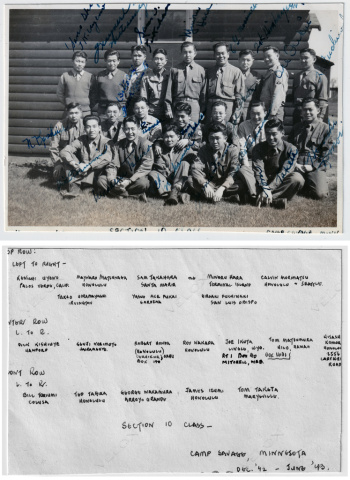
With more liesure time than before the war the grindingly hard work of the woman began to be reduced with the introduction of all kinds of labor saving devices. Eileen, because she now had electricity didn’t have to clean kerosene lanterns or burn coal and wood to cook and heat. She could have an electric mixer, just introduced ten years before. She could buy a pop-up toaster first marketed in 1919 and a Hoover Electric Floor Cleaner could be had for just $39.00.

And, in 1920, for the first time, she could vote in the national election. Women had campaigned for over fifty years for the right to vote in California and had finally narrowly won that right in 1911 though it was not until 1918 that three women were elected to the state assembly.

The business, industrial, politicians and saloons were bitterly opposed to suffrage but perhaps not surprisingly, though the measure was soundly defeated in San Francisco and barely won in Los Angeles, it turned out the deciding factor was the men’s rural vote. Farm wives, oil patch women, school teachers and those who put up with the daily drudgery of life for which there was little future put it over the top. Men listened to their wives and daughters and did what they asked. It’s important to remember that women didn’t vote in California in 1911 but the men did and especially men outside the cities thought it was time things were a bit more equal.

The birth of my Uncle Bob was bookmarked by the opening of the floodgates of social reform. People looked up and said, “I’m not going to take it anymore.” Big changes were in store for the oilfield worker.

Oildale, California,

In 1924, Bruce and Eileen loaded their three kids in car, a pretty new Model T Ford and hit the road, headed for a new job in the San Joaquin . “The Valley” as Californians refer to it is the area of the Central Valley that lies south of the Sacramento–San Joaquin River Delta and is drained by the San Joaquin River. It comprises seven counties of Northern and one of Southern California, including, in the north, all of San Joaquin and Kings counties, most of Stanislaus, Merced, and Fresno counties, and parts of Madera and Tulare counties, along with a majority of Kern County, in Southern California.

Starting 2 million years ago, a series of glaciers periodically caused much of the valley to become a fresh water lake. Lake Corcoran was the last widespread lake to fill the valley about 700,000 years ago. About 12,000 years ago there were three major lakes remaining in the southern part of the Valley, Tulare Lake, Buena Vista Lake and Kern Lake. In the late 19th and early 20th century, agricultural diversion of the Kern River eventually dried out these lakes allowing farmers and ranchers access to the vast southern Joaquin. Oil followed

The San Joaquin Valley has long since eclipsed the Los Angeles Basin as the state’s primary oil production region. Scattered oil wells on small oil fields are found throughout the region, and several enormous fields near the Kern river bluffs, the Lost Hills and Taft, including the enormous Midway-Sunset Oil Field, the third-largest oil field in the United States were operating by the time Bruce and Eileen made their way north.

Headed for Oildale, 1924. L-R, Mariel, uncle Marion Hall , Bob, Barbara, Eileen and Bruce Hall. Family Photo

In 1924 the was valley is predominantly rural, dotted with small farm towns with curious names like Wasco, Fruitvale, Reward, Fellows and Temblor which naturally sits smack dab on the San Andreas Fault Line.

Oildale, now there’s a name to remember. Surrounded by Bakersfield it’s not much remembered today but once it was one of the great discovery fields. In 1920 it was the third largest oil producing area in California. The only town in California other than La Brea to be named for the oil it sat on.

The Halls were moving from Santa Maria where Bruce started his career. He’d worked for Associated Oil as he’d learned his trade. Associated was at the time one of the most integrated companies in California. They had their beginnings in the Kern fields in 1900 when more than thirty smaller companies signed up to form it. Within a few years Standard Oil of California and the Southern Pacific Railroad acquired an interest in Associated Oil for the purposes of transporting their own oil to the San Francisco Bay Area where it would be refined and marketed jointly. The Southern Pacific needed fuel for its railroad steam engines. The Matson’s Pacific Oil and Transportation Company, the Matson Line, was acquired in 1905, which included the Coalinga-Monterey pipeline and a refinery at Gaviota, California. In 1907, the Associated Pipe Line Company was formed as a subsidiary of the Associated Oil Company with the Southern Pacific Company providing property along its railroad tracks which ran from the Bakersfield Kern River oil fields to Port Costa, California, later being shipped to China and other parts of the world. The Southern Pacific Company attained a controlling interest of the Associated Oil Company’s stock. Like most of the larger companies it became an almost impenetrable labyrinth of subsidiaries and holding companies. The Southern Pacific Railroad had rightly earned the name, “The Octopus,” and the brag in its boardrooms was that it owned California which wasn’t very far from the truth.

Kern River fields, 1910. Calisphere photo.

Bruce was moved up to the Kern fields because by this time he was an expert in cable tool drilling. There is a thing that some men have that is a natural feel for things mechanical. Call it a sixth sense though its probably just a combination of the other five. It is an absolute mystery to those that don’t have it. Bruce had it. He could smell, hear and feel a well. The wells talked to him and he listened. The sense of things is what separates the laborer from the boss. By the time they got to their house on Bakersfield’s Chester Avenue he was a Farm Boss, in charge of drilling for more than one well. Things were looking up.

Cable tool rigs work by using a long iron bit attached to a heavy, cable laid manila rope. The cable is attached to a walking beam that lifts and drops the bit, crushing the rock, slowly pounding its way downward. By 1924 it was considered obsolete compared to the faster rotary rigs. Looking down their noses at the rotary rig roughnecks, the cable tool men derisively called them “Swivelnecks.” Typical behavior from those workers who could clearly see the writing on the wall that spelt the end of their particular trade.

Cable tool rigs were widely used from about 1870 and are still being used today, although almost all of today’s oil wells are drilled using a rotary rig. The basic machinery consists of the engine and boiler, the derrick and crown block, the bullwheel and drilling cable, the sandwheel and sanding line for the bailer, the vertical bandwheel with a center crank, and the walking beam supported by the Samson post. Bandwheels were essentially large pulleys (usually 8-10 ft in diameter) driven by a leather belt from the engine, which reduced the engine rpms and increased power. A crank on the bandwheel’s axle imparted up-and-down motion (via a pitman arm) to the walking beam, much like the motion of a teeter-totter. The other end of which was connected to the drilling cable by the temper screw. The walking beam alternately raised and lowered the drilling tools. Walking beams were typically 26ft x 12in x2in in size. Bullwheels and sandwheels were spools for the drilling cable and sanding (or bailing) line, respectively. Additionally, fishing tools, various hand tools, wrenches, and forge tools were required for the drilling process.

The early rigs were powered with steam. Steam was delivered from the boiler to the engine by way of pipe. The engine powered the band wheel by a turning belt. A well-braced upright post, called the sampson post, was mounted further down the platform. On top of it, and mounted with a hinge, laid the horizontal walking beam. The band wheel was connected to one end of the walking beam by a pitman and crank. As the band wheel turned the crank, the pitman was raised and lowered which rocked the walking beam up and down on the sampson post. A temper screw was attached to the other end of the walking beam. At one end of the temper screw there was a clamping device that gripped the drilling line to which the cable tool bits were attached. The drilling line came from the bull wheel and ran over a pulley at the top of the derrick. The bits, which were basically just pointed steel weights, pounded the well into the ground. The action at the bottom of the well was one of crushing, not chipping or cutting of the rock. The walking beam raised and lowered the bits about two feet. If the complete drilling tool string weighed 1200 lbs (and some weighed up to 3000 lbs.) and the velocity was 6 feet per second, the the force of the blow would be over 16 tons. After a while, the bit had to be replaced. In soft formations, progress could average 30 feet per day, sometimes less, sometimes more, depending on the conditions. The equipment was run 24 hours a day. Two tours.

The drilling was controlled by a skilled worker who, by feeling the line from time to time, could tell what was going on in the well. When necessary, he could let out more line or stop the walking beam. When the bottom of the hole became clogged with rock chips, the bit was raised and a bailer (attached to the the sand line on the sandwheel) was lowered into the well to scoop out the debris. This involved a complicated process of raising the drilling cable with bit out of the well and lowering a bailer bit from the sand line. The bailer then had to be lowered and raised multiple times until it collected enough material. Then it had be raised out of the well and emptied. This had to be done until the well was cleared of loose material. After that, the drilling cable was lowered into the well and the whole process started again. This pound and bail process was repeated about every three feet.

Bruce Hall, “Feeling the Well” Associated Oil Company Well, Kerndon no. 5, Kern River Field. 1925, Famiy Photo

The Calf wheel contained the casing line. When casing was necessary for the well, the casing line was used to lower it into the well. The headache post was a safety feature that kept the walking beam from dropping if anything came loose at the other end of the beam.

As greater depths were reached, control became increasingly difficult. The cable became longer, heavier, and had more elasticity. Water often become an issue. Subsurface pressures could not be controlled causing frequent blowouts. An experienced driller was a big asset in the process.

Cable Tool Drill Bits. Kern County Museum photo

In 1914 the usual cost of drilling a 1000-2000 foot hole with cable tools was about $10,000 – $30,000. Prior to 1910, practically all wells in California were drilled with cable tools.

The Kern River and Kern Bluff fields were very shallow. Some of the early wells were less than 100 feet deep. Those wells were drilled in mere days. Lots of work and the successful companies were raking in the dough.

Things looked good in the business at Bruce’s level. There were lots of wells going down all over the fields in the southern San Joaquin. Refined oil usage had grown with the auto industry and conversion of railroad steam locomotives to oil from coal. The merchant fleet was rapidly changing its engines too. The U S Navy’s entire battle fleet had by now had adapted to using bunker fuel rather than coal. In fact the Federal Government and the War Department had set aside three underground fields, two in California and one in Wyoming as a backup for the Navy in case of war. The three fields were the Elk Hills on the valley’s west side, the Buena Vista field near Taft and the soon to be famous, infamous in fact, the Teapot Dome field near Casper, Wyoming.

Things in the oil field were beginning to simmer and that would change Bruce and Eileens life in a hurry. Dark clouds were rising and it was oil. The long odyssey through the oil patch had begun. It would continue for another thirty four years.

The writer is the grandson of Bruce and Eileen Hall. His mother, Barbara went along for the ride. Born in Madera in 1918 she moved to the oil patch in Casmalia when she was just a year old.

Standard

OLD SCHOOL.

Michael Shannon

EPSON MFP image

In the 1950’s when I was in elementary school, a child’s self-esteem was not a matter of concern. Shame was considered a spur to good behavior and accomplishment. If you flunked a test, you might be singled out, and the offending sheet of paper, splattered with red marks, was waved before the whole class as a warning to others, much the way in which ranchers hung the carcass of an offending coyote across a barbed wire fence as a warning to other coyotes.

Fear was also considered a useful tool. In those post WWII days, we were all raised by parents and a society in which was engrained the sort of discipline, not applied with a stick, but rather, the strictures one learned by the seemingly endless depression and the world wide war that followed it. Both events required strict rules that applied to almost all parts of our parent’s lives.

They had been tempered by the depression and had the scars to prove it. Many of them had grown up without enough to eat, with holes in their shoes, ragged shirts and trousers; radios, decent cars and a complete education cut short by the depression or the war. When it came, they were not soured by their experience, but rather still looked on their country as something to love, something special. They came out of this experience self reliant, not afraid of hard work and used to taking orders. They had a sense of worth and self confidence.
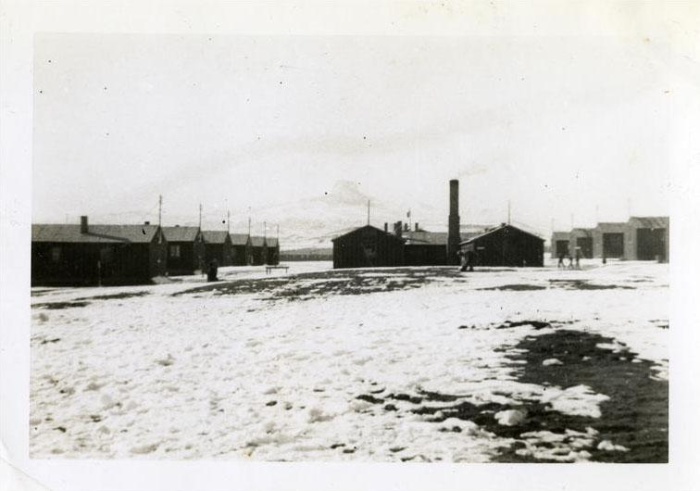
We were fortunate enough to be their children.

Teachers were inviolate. Their word was law, and never in my eight years at Branch, did I ever see a parent be other than polite and solicitous to a teacher. In those days, a teacher was not suspect at all, she took care of a child’s education, both academics and social. My parents considered themselves honored guests at school and under no circumstances would they take my word in a dispute. I wouldn’t have dared.  You see, there was no principle or administrator, just the teacher and she was the be all and end all for all things school.

At my school, a two-room wooden building,  far older than a half century when I went there, hard working parents provided the foundation for teachers in every sense of the word. The teachers taught and the parents supported them. Repair and maintenance of the old building was done by volunteer labor and she was kept in pretty good shape for an old girl. Better, in some cases than the homes kids came from.

Two teachers taught about 50 kids in all grades. Divided smack in the middle by a hallway, the two class rooms were entered by doors tucked in between coat hooks, trash cans and tall cabinets in which were tucked the essential tools of the teaching trade. Grade level books, spare erasers, boxes of chalk; for we still used slate black boards in those days, Rags, cleaning supplies and the detritus accumulated over eighty years of use.   Mrs Edith Brown taught first through fourth and Miss Elizabeth Holland, a spinster lady, taught fifth through eighth. Mrs Brown had just arrived a year or two before me; 1949, to be exact, after a long career teaching at the Arroyo Grande grade school on Orchard St. The home of kids we referred to as “Town Kids,” somehow sensed as inferior to us. They on the other hand referred to us as “Farmers,” Most certainly a perjorative term, usually accompanied by a sneer.

Miss Holland taught her entire career at Branch. Until almost her 35th year she taught alone. Only at the twilight of her career, was a second teacher assigned as enrollment increased school population; the beginning of the “Baby Boom,” and the closing of nearby Santa Manuela school made the classes too large for a single person.

Branch school had been moved from a previous location by the expedient of jacking it up, sliding peeled logs beneath it and hitching the entire contraption to a team of horses, then dragging it wherever you wanted it’s new home to be. In our case, a hollowed out side-hill near the old Branch Family cemetery on the original Santa Manuela Rancho in the upper Arroyo Grande.  Behind and to the right was open, oak studded pastureland, complete with the occasional Hereford. To the left, a scattering of homes, mostly small and fairly recent. Across Branch Mill road was the Ikeda brothers reservoir, a small fenced pond in which the gate was never locked. Tthe creek, was about a half mile down the hill. Across the creek lived the Cecchetti family. Gentle Elsie, big George and the legendary George “Tookie” junior. To the left, an expansive view of the lower valley, all the way to the dunes, fourteen miles away. The view explained, at least in part, why Don Francisco Branch located his home on a little hillock, less than a mile from the school. That building was long gone, having been built of adobe sometime around 1838, it had gently melted back into the earth from which it came. The site guarded by a pair of ancient pepper trees, whose seeds traveled across an ocean in a small bag carried by the Franciscan Fathers who found their way 2690 miles on foot to the site of the Mission, San Luis Obispo de Tolosa.

In the fifties we considered ourselves modern because we had a school bus. When I started school, it was a 1949 Chevrolet half-ton pickup, fitted with a brown canvas top, two wooden benches down the sides and a chain across the back where the tailgate used to be. You simply climbed up and over the bumper and perched where ever there was a seat. It had a roll down flap in the rear to protect kids from the rain. Why I don’t know, most kids had to walk from home to the bus stop no matter what the weather. Our house was about a quarter mile from the back door to the mail box where we were picked up. In the winter that driveway, if I can dignify it as such, was slimy with mud and puddles that reached little boys ankles.  I still recall the ritual of using a kitchen knife to scrape as much mud as you could from your shoes and then putting them in the oven to dry. The next morning, shoes were dry, but as stiff as an old hide and had to worked about in order to make them soft enough to wear. In case you missed the part about the kitchen knife, yes, they were the same ones we ate with. No one seemed the least concerned about that. Just a job that had to be done.

Our bus driver was Mrs Evelyn Fernamburg. She did duty as the bus driver, janitor, school board member and 4-H leader. You see, Branch was its own, independent school district. It was almost entirely a volunteer operation. The county school office  provided the budget and thats all you got. The budget came almost completely from property taxes and after the county skimmed off the lions share, schools received their allotments. School board members used  funds for improvements, teachers salaries, the bus and driver, and then did the rest of the jobs for free. They built the monkey bars, teeter totter and carousel on weekends. There was no lawn and the playing fields were simply scraped out of the hill sides. No child of the fifties will ever forget that, in order to save money on the continual painting of the old redwood siding, which was a big job, the board decided to cover it all with a brand new innovation, asbestos shingles. An off pink color, they solved the problem of repainting but, of course, they were asbestos. Didn’t seem to hurt anyone though and the school was well known for its “wonderful” color.

Behind the school were the restrooms. The term restrooms is applied loosely. Both boys and girls were in a small green shed, divided in the middle with the girls on the school side and the boys on the up hill end. Neither had a door, only a little privacy wall to prevent any immodest peeking. They both had a toilet with a wooden seat. In the fifties they had dispensed with old phone books and stacks of small squares cut from newspapers and used what my dad called window pane toilet paper, you can guess what that meant. Each room had something unique. The boys had a urinal or rather a trough for them to use. It was a galvanized thirty gallon water pressure tank cut in half lengthwise and bolted to the wall. A piece of half inch diameter pipe, drilled with a series of small holes and a gate valve at one end, completed this modern marvel. The girls had something even better; Bats. Boys, of course, knew all about bats and how the would lay their bat eggs in little girl’s hair. Mass screaming during recess would bring whichever teacher was closest, running to the bathroom with a handy broom to chase the bats away temporarily, at least. We boys took an unusual amount of pleasure in this.

One of the things that we didn’t realize until we were much older was, with only a few kids of any age, every activity from classroom study to recess and organized games required all ages, six to fourteen. All grades were together for every thing we did, be it a school play, softball or jump rope. Each game had its season, none marked on a calendar, but mysteriously appearing when the time was right. Suddenly, in the spring, marbles. The jump ropes, dormant in the old closet that served the athletic gear, brought out for the two weeks that jump rope was in vogue. In our school this was not just a sport for girls. There was no PE. Groups of kids just decided what to do on their own. There was almost no adult supervision, kids were expected to use their imaginations.  Older girls might stay in during lunch and listen to records they brought from home on the little portable record player that was kept in the closet. Oh, the wailing and crying in 1959 when the Big Bopper and Ritchie Valens were killed. Lulu, and the Judy’s were fit to be tied. A terrible tragedy when you are just 13.

I never heard a teacher or parent discuss curriculum. We were taught the basics of math, social studies, California history and we read, a lot. With perhaps 30 kids, Miss Holland supervised four grade levels all at the same time. When giving lessons to one grade level she left the others on their own. We helped each other. Books were kept for a long time not traded in for new ones every couple of years. I used a social studies book in 1956 that was used by William “Bill”  Quaresma in the 1930’s. I used a reader with the name Al Coehlo on the flyleaf. His son Al Jr was just a year behind me and used the same book as his father. History doesn’t change much, the teacher could fill in the blanks. Lest you think our teachers weren’t very good, The county schools superintendent told my father that Miss Holland was the finest teacher in the county in reply to a parent complaint. She had polio as a young woman and walked with a pronounced limp and used a crutch when she was tired. She was so very kind to all of us kids and I’ve thought through the years that those hundreds of kids she taught must have been her true family. My mom took me with her when she went to visit her on Pine St in Santa Maria a couple years after she retired and she seemed somehow diminished, as if the school was a part of her that was lost. She died in 1965, just 58 years old. In the picture at the head of this story, she is 47. She lived her whole life in that house on Pine St, she never married. We were her children.
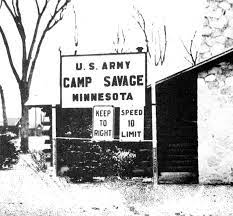
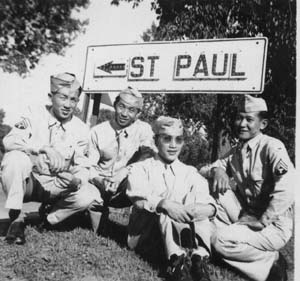
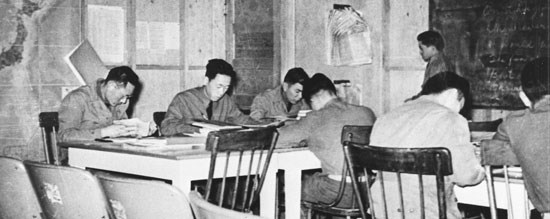
All in all I was treated with kindness, which was often more than I deserved. My public school education has stood the test of time, which includes both the lessons my teachers instilled and the ones they never intended.

EPSON MFP image

On the front steps of Branch School, 1932. I went to school with the children of many of the students pictured above. Most of these children are second generation immigrants whose families were working, renting or buying the rich farmlands of the Arroyo Grande. Mostly Portuguese from the Azores or South America whose families came to this country in the surge of immigration from the islands after the 1880’s. The Japanese families arrived about the same time, post 1880.

My own classes in the 1950’s weren’t unlike this one. We had some of the same surnames. We were Italian, Portuguese, Mexican, Irish, English, Filipino and Japanese. Quite a hodgepodge. My eighth grade class had four, the two Judys, Hubble and Gularte and the two Mikes, Murphy and Shannon.  Our teacher, the same Miss Holland.

credits: Cover photo, 1956, Back Row, l-R Dickie Gularte, Jerry Shannon, Irv “Tubby” Terra, Georgei “Tookie” Cecchetti. Front, Patsy Cavanillas, Doreen Massio and Irene Samaniago. The entire fourth grade class.

Michael Shannon is a former teacher himself and damn proud of it. I hope Miss Holland and Mrs Brown know I turned out OK.

Standard