Dear Dona 12

Page 12

Closing the Ring

Landing Ship Tank was the official designation for the ship your dad traveled on to Luzon. The Navy thought that the name was adequate, they didn’t believe they deserved an official name such as those given to “Real” fighting ships. Sailors of course, being very young and with a patented sense of irreverence simply called them Large Slow Targets. Nearly forty were lost during the war so the swabs were right on the mark.
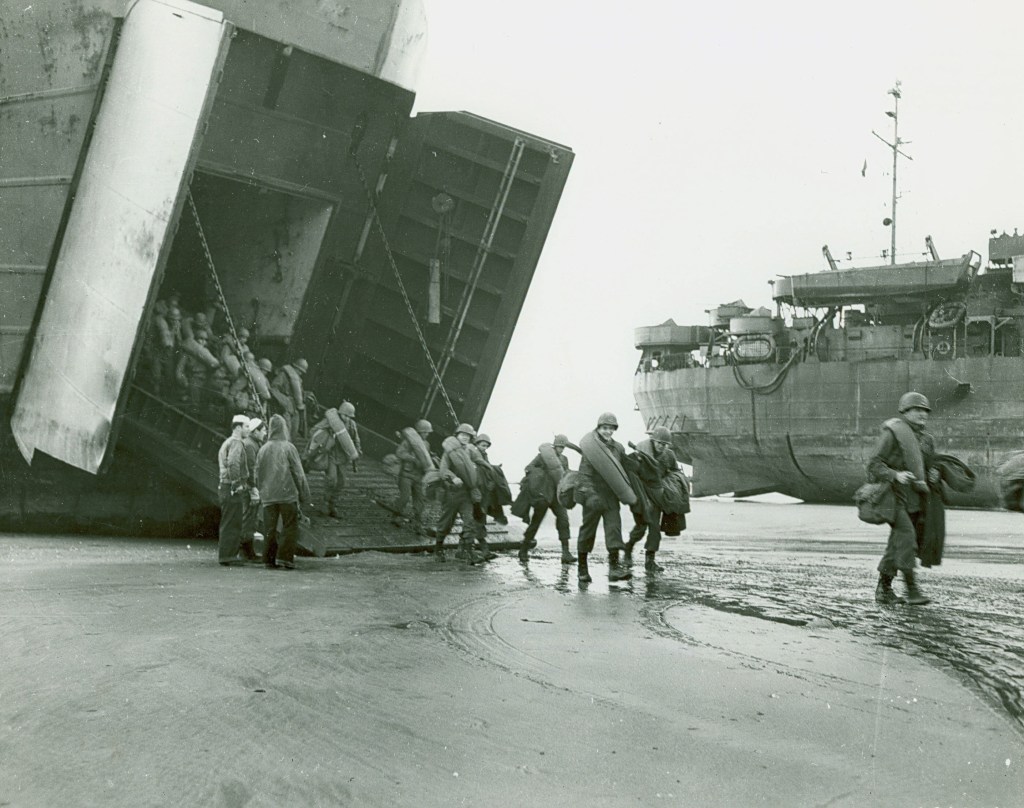
Disembarking from a large slow target, Lingayen Gulf Phillipines. US Navy Photo.

MacArthurs army charged down highway 55 towards the City of Manila. General Sasaki had chosen to leave only a few units along the 224 miles of the fertile Cagayan valley that runs down the center of Luzon. They convoys of American troops sped past Tarlac City, Angeles, San Fernando to Valenzuela on the outskirts of Manila proper. Though the allies had declared Manila an open city and had planned to bypass it. The Japanese were determined to defend it.

In the run down the valley, Some of the major guerrilla groups materialized out of the Corderillas and joined the regular tropps of the Eleventh and sixth corps. Groups led by Ramon Mafsaysay, future president of the Phillipine Republic, Russell Volckmann who was a West Point Graduate and had escaped into the mountains in December 1941 and led a guerrilla force of over 22,000 men*. Robert Lapham was a reserve Lieutenant in the 45th Regiment, Philippine Scouts and escaped into the jungle just before the fall of Bataan in 1942. Considered the most disciplined and successful of the guerrilla groups he moved into the Zimbales mountains where his 13,000 fighters fought with General Walter Kruegers sixth army.**

MacArthur ordered your dad’s team to Zimbales province where they were to be stationed in Olongapo City on Subic Bay. Subic was to be one of the prime the anchorages for the Navy as the Allies prepared for the invasion of Japan. By early 1945 the Navy operated over 6.700 ships of all types and Harbors like Subic and Manila Bay were essential to provisioning and maintenance.

Arriving at a large permanent base the team would have had the opportunity for the first time since landing on Luzon to strip off their filthy uniforms, shave and be relatively safe. For the first time in a long while the chances of being killed or wounded by artillery, Japanese bombers or snipers was behind them. For perhaps the first time your dad could stand up straight without fear of being killed. One MIS soldier said that when he moved into the Quonset hut he was to live in he was reminded that the slamming of the screen doors caused him to stand there and repeatedly open and close it because it reminded him of home so. He said it made him literally weak in the knees.

Hilo must have looked out at the country they were traveling and been reminded of his home in California. The land was gentle and planted in crops tended by families who lived on it. The feral and disturbingly inhospitable jungle, the Green Hell he and his friends had lived in for two years was replaced by a land more familiar to the farm boy from Arroyo Grande.

The island was such that a war of maneuver, where overwhelming numbers of troops and war machinery such as tanks an aircraft gave the allies a great advantage. American industry helped to turn the tide. I read of a German soldier captured in France asking his captors. “Where are your horses?” The Germans moved by horse drawn vehicles and had never dreamed of the American ability to produce. The Japanese Imperial army was equally amazed.
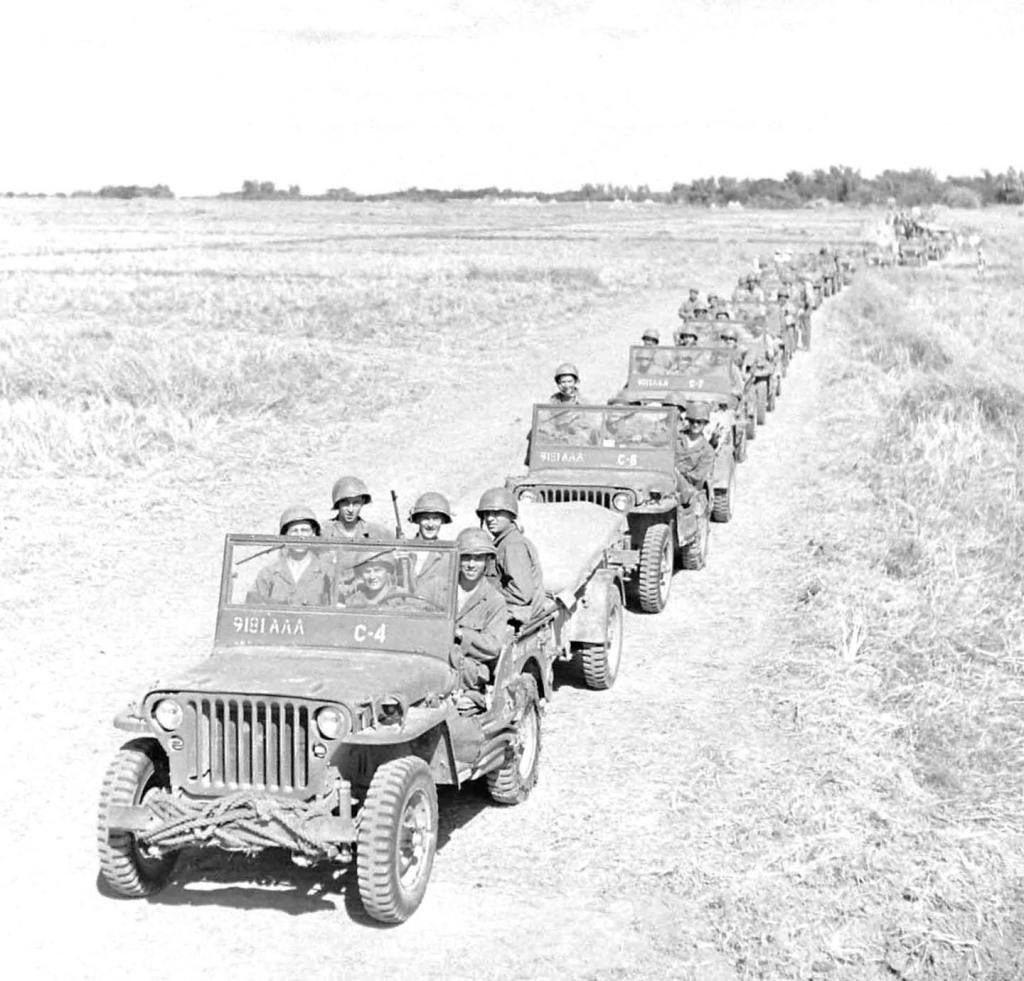
Highway South to Manila. War Department 1945.

The job of the MIS was to put together as much information as they could for the planners of the coming invasion of Japan proper. Captured documents, radio intercepts, military orders, maps and personal letters were to be collated in order to locate as precisely as possible every installation, road, railroad, landing strip In the islands. They even knew the home addresses of individual officers and enlisted men. It was a monumental task.

No longer suspect, Military Intelligence had long proved its worth. The battle of Midway, Guadalcanal, the island hoping campaign, MacArthurs drive up the southwest Pacific, The ambush of Admiral Yamamoto, Merrills Marauders, The mission in China supporting the armies of American General Stillwell and Chiang Kai-Chek, The battleship encounter in the Surigao Straits of the Phillipines along with the organization of the vast amounts of information obtained through all sources gave the allies an impressive view of the Japanes forces everywhere.

Housed in Quonset huts, hundreds of MIS translators worked around the clock preparing the information that would be need for what was planned as the largest invasion in history. The planning assumed multiple invasion beaches scattered around the Japanese homeland. In the coming invasion of Japan, the US navy planners favored the blockade and bombardment of Japan to instigate its collapse. General Douglas MacArthur and the army urged an early assault on Kyushu followed by an invasion of the main island of Honshu. Admiral Chester Nimitz agreed with MacArthur. The ensuing Operation Downfall envisaged two main assaults – Operation Olympic on Kyushu, planned for early November 1945 and Operation Coronet, the invasion of Honshu in March 1946. The casualty rate on Okinawa was to be 35% of all troops and with 767,000 men scheduled to participate in taking Kyushu, it was estimated that there would be 268,000 casualties. The Japanese High Command instigated a massive defensive plan, Ketsu Go (Operation Decisive) beginning with Kyushu that would eventually amount to almost 3 million men with the aim of breaking American morale with ferocious resistance. All men of any age, women and children were to be drilled for the effort. Thousands were issued sharpened stakes for use. The plan was for a resistance that would cause the ultimate collapse of the empire and the end of the Japanese nation. Resistance would be suicidal. Some estimates of American casualties ran as high as a million killed and wounded.

It’s impossible today to imagine what the military leaders and planners struggled with. Ordinary soldiers who were involved in the planning must have simply been sick at the thought. No one knew about the bomb. He wasn’t told about it until after President Roosevelt died on April 12th, 1945. From President Truman on down the inevitability of the holocaust in Japan for all countries must have been horrific. America was already exhausted. Too many dead boys to bear. Casualties in other allied countries were much higher than ours. In Great Britian there were literally nl boys left. Generals waited impatiently for 17 and 18 year old boys to graduate and be eligible for conscription. As in WWI these children were referred to as “The class of 1917” or “The class of 1944.” Back home in Arroyo Grande, class of 44′ boys included Gordon Bennett, John Loomis, Tommy Baxter and Don Gullickson who would all be in the Pacific by wars end. It must have seemed a universe of war with no ending. Most soldiers and sailors never made it home for a visit. From 1941 you father had spent over fourteen hundred days without seeing his family. There must have many nights lying on his cot in the steaming tropics unable to sleep thinking about his family, not knowing precisely where they were, how they were being treated; would he ever see them again. There was no answer to be had.

Exhaustion would have been written on the face of your father by the beginning of 1945. He had been overseas for over three long years. He hadn’t seen his family, surrounded by barbed wire and guard towers with machine guns pointed inward for going on five years. Corralled in the Southwest Arizona desert, winter and summer it must have been agony for Hirokini and Ito. Until 1943 theirs could not visit them. The fact that the boys had volunteered to serve the only country they knew meant little to military administrators.

The agony of mothers is compounded by the fact that though grandparents knew he was somewhere in the Pacific they never knew exactly where or what he was doing. Headlines in the Newspaper blared massive headlines praising the military for the carnage they caused and were exposed to. Casualty figures, though not typically released to the press didn’t stop the reporters on the wartime beat from happily publishing the butchers bill.

There is a scene in Saving Private Ryan where, in the distance a small farmhouse and barn somewhere in the wheat-fields of mid-America you see an automobile being driven along a dirt road. It’s a drab green color with a white star on its door. It’s rolling through a cloud of dust of its own making. A middle aged woman in the kitchen goes about her business, rinsing the lunch dishes, her hair styled in the rolls worn by mothers and grandmothers of the time. As she moves about dressed in a red print housedress and an apron exactly like your grandmother wore, she begins rinsing the dishes in the sink. A little movement in the distance catches her eye and she looks up to see the car as it turns up the road to the house. The woman, who you know immediately is the mother of the four Ryan boys because there is a small banner hung, almost without notice by the camera, on the kitchen wall. Framed in red with four blue stars on a white background indicating four children, boys, just boys in the service. Mrs Ryan looks up, sees the car, goes back to the dishes, with her head still down it registers. Why the car is here. She looks up again and grows absolutely still, She knows. The heart goes still, scarcely breathing, she sleepwalks to the screen door and stands, her slippered feet spread, very still as the car pulls up. She does not move. Everything in the scene is in suspended animation and when the doors open, first an officer in uniform from the front then her pastor from the back door, she loses control of her legs, staggers and then slowly, agonizingly collapses on the floor boards. It goes to the heart of every mother who sent a son off to war. It’s the finest scene Spielberg has ever made.

Mrs Margaret Ryan at the window, sees the car, in that instant she knows. Note the white picket fence reflected on the glass in a way that suggests white crosses. Superb imagery. Spielberg is a master artist. Screen capture. Amblin Entertainment, Mutual Film Company. 1998

The battle for Manila was to be the most destructive operation in the war outside of Stalingrad and the final apocalypse of Berlin. In the movie, “The Pianist”* the final scene is Adrian Brodie standing in the ruins of Warsaw, Poland. Though it’s a movie set, the scale of destruction is enormous, it borders on insanity, hopelessness and utter destruction. Such was Manila.

Your father had a ringside seat working at Subic Bay. MacArthur himself had a personal attachment to the city, he had lived there for many years. His son had been born in a Manila hospital and when he was serving in the Filipino Constabulary he was often quoted that it was his favorite city. An ancient city with wide avenues and scores of beautiful old buildings shaded by tens of thousands of trees, the dignified Narra with its gorgeous yellow flowers underlayed by the fallen blossoms carpeting the walks below, the unfurling Dapdap known as the Coral Tree with it’s diamond shaped, fiery red blossom, and the huge and ominous Balete, trees renowned for their expansive, sprawling roots and branches which are said to be home for sorcerers.

Gracing the ancient streets deep in the city, “Old Manila” refers to the historic walled city of Intramuros. Manila was known for its Spanish colonial architecture and historical landmarks like Fort Santiago and the San Agustin Church. Fort Santiago (Saint James, the patron Saint of Spain) was built between 1590 and 1593 by the first governor of the Spanish Phillipines and anchored the city center.

Your dad never saw it. By the time he left the Phillipines it was a graveyard of buildings, people and culture.

When the Japanese attacked the islands in 1941 MacArthur declared Manila an open city and withdrew his troops to save it from destruction. This was not to be the case in 1945 when your father was there. General Tomoyuki Yamashita, he commander of the army withdrew his forces from the city into the mountains of the northeast portion of the island leaving Yamashita decided not to declare Manila an open city as MacArthur had done but that Gen. Shizuo Yokoyama, destroy all bridges and other vital installations in the area and then evacuate his men from the city as soon as American troops arrived in force.

In spite of these orders, Rear Admiral Sanji Iwabuchi, commander of the Imperial Japanese Navy’s 31st Naval Special Base Force, was determined to fight a last-ditch battle in Manila. Iwabuchi repeatedly ignored orders to withdraw from the city. From the beginning of February 1945 until march, some of the most vicious street fighting of the war took place. Artillery and air strikes reduced the beautiful old city to a vast landscape of roofless shells. The Japanese forces resorted to a suicidal defense, refusing to surrender and murdering tens of thousands of Filipinos, men, women and children. Accounts from US soldiers tell of rape and systematic execution of the civilian populace. For the remainder of March 1945, American forces and Filipino guerrillas mopped up Japanese resistance throughout the city. With Intramuros secured on 4 March, Manila was officially liberated, although the city was almost completely destroyed and large areas had been demolished by American artillery fire. American forces suffered 1,010 dead and 5,565 wounded during the battle. At least 100,000 Filipino civilians had been killed, both deliberately by the Japanese in the various massacres, and from artillery and aerial bombardment by U.S. and Japanese forces. 16,665 Japanese military dead were counted within the Intramuros alone.

Afterwards, City of Manila, April 1945. War Department photo.

From Subic Bay where your father was, the sound of fighting would have heard. Flashes on the horizon coming from fires and exploding bombs would have illuminated the night sky. He heard the rolling thunder of the defenders being crushed. No one really knows the number of Japanese troops and civilian Filipinos died there. At the end the Imperial Army simply executed any Filipino they could find. They burned them with flame throwers, lined them up against walls and move them down like wheat stalks, they locked them in churches and burned them alive. Women were brutally raped and then shot. It was Hell on earth. It simply cannot be imagined except by those who lived through it and those, especially the soldiers, sailors and nurses to save their sanity simply locked it away. PTSD as it is known today is not a recent phenomenon but has been known by all veterans since Thermopylae and the Phalanx’s of Alexander and the Emperor Xerxes.

Dear Dona

Chapter 13

Coming Next

The Final Blow.

Cover Photo: The Fort Santiago Gate after the battle for Manila. War Dept. Photo.

*Brigadier Russell W. Volckmann was one of the founders of the Army’s Special Forces units after the war. His experience as a partisan commander was highly valuable in the formation of that elite force

**In 1947, Lapham returned to the Philippines for five months as a consultant to the U.S. on the subject of compensation to Filipinos who had served as guerrillas during the war. He recognized 79 squadrons of guerrillas under his command with a total of 809 officers and 13,382 men. His command suffered 813 recognized casualties. However, sorting out the deserving from the fraudulent was difficult. Of more than a million claims for compensation in all the Philippines, only 260,000 were approved. Lapham believed that most of his men were treated fairly, but was critical of U.S. policy toward the Philippines after the war. “If ever there was an ally of American whom we ought to have treated with generosity after the war, it was the Philippines.” He said the U.S. Congress was “niggardly” with the Philippines, providing less money for rebuilding than that spent in many other countries, putting conditions on Philippine independence that favored U.S. business and military interests, and backing corrupt Filipino politicians who protected American, rather than Filipino, interests.

***The nurse, LT. Sandy Davys from the film “They Were Expendable” by John Ford surrendered with the other 86 nurses on Bataan and spent the war years in the Los Banos and Santo Tomas internment camp in Manila. They all survived.

“The Angels of Bataan” War Department Photo. 1945

****”The Pianist,” the Oscar-winning film, is based on the real-life story of Władysław Szpilman, a Polish Jewish pianist who survived the Holocaust. Szpilman’s memoir, also titled “The Pianist,” details his extraordinary survival in Warsaw during World WarII.
Standard

That’s So Gay.

Michael Shannon.

*That’s so gay,” in recent years has been used as an insult to mean “stupid”, “boring”, or “lame”.

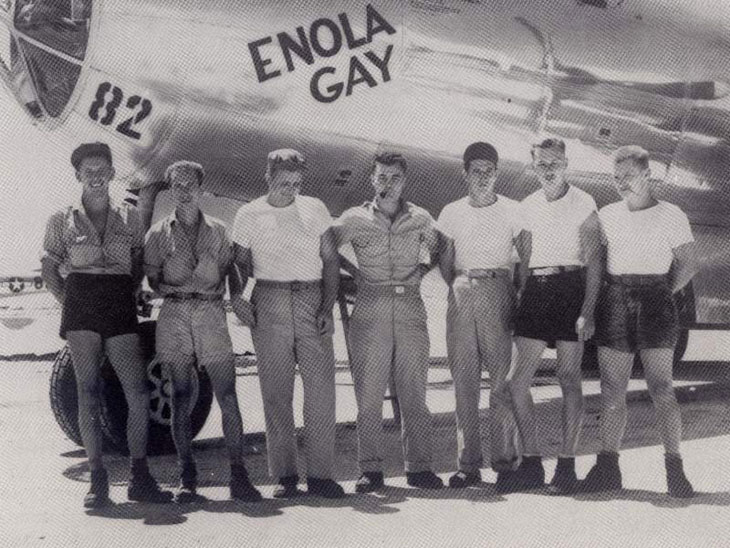
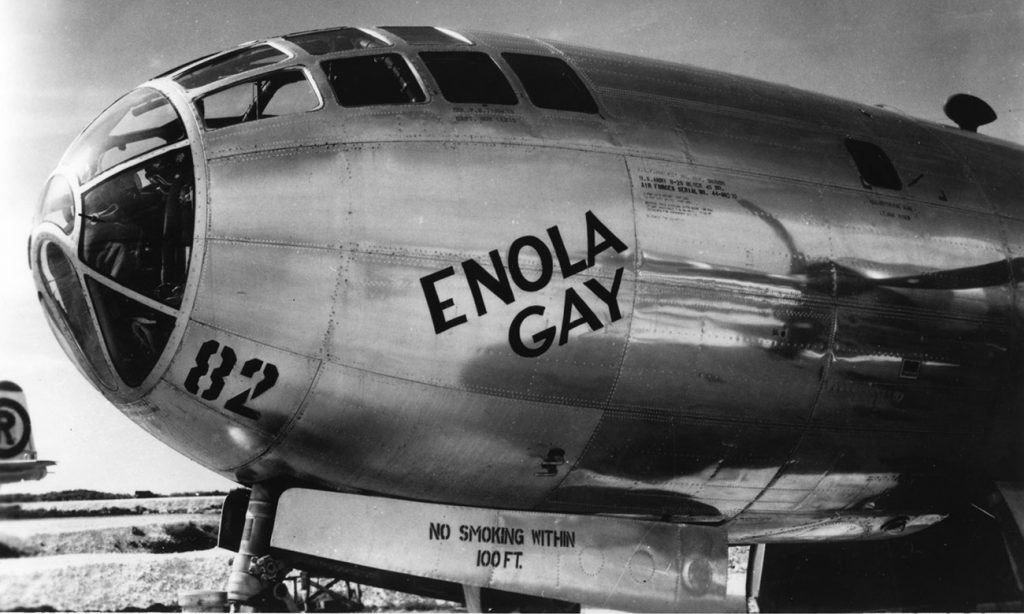
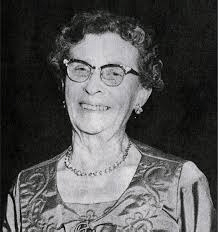
Mrs Tibbets. Her name is on the nose of one of the most famous aircraft in the world. She was the mother of the pilot, the man who sat in the left hand seat. She was an Iowa girl.

She and her husband Paul had two children, a boy and a girl. Paul jr. and Anne. In WWII, Paul flew B-17’s in Europe and Africa and was for a time the personal pilot for General Eisenhower. He worked on the development of the B-29 and as an advisor to the Manhattan Project. Sent to the Pacific theater in 1945, his B-29, named for his mother who had just passed away in July carried the worlds first operational Atomic bomb called “Little Boy.” It went to Hiroshima, Japan.

After the 2nd bomb nicknamed “Fat Boy” was dropped by a plane named “BocksCar” the Japanese surrendered.

The B-29 aircraft was saved from demolition in the 1950’s and is displayed in the Smithsonian Museum’s Air and Space Museum in Fairfax, Virginia.

Whatever you feel about the Atomic bombs, the plane is an important part of the history of the United States and Japan.

Coronal Paul Tibbets and the crew of the Enola Gay in August 1945. UPI photo

This month, the Secretary of Defense former national Guard reserve major Paul Hegseth, who served as a Civil Affairs officer overseas in the middle east. As an officer on the national guards career track he was given the Bronze Star which is what officers get just for breathing.*

Secretary Hegseth, a true MAGA believer is intent on removing portions of the military which he finds distasteful. Mention of Tuskegee airmen, gone, their photos too. Their crime? Being black. The Womens Air Service Pilots, gone. Their crime? Being women and women of color. Women of color who faced a double burden of racism and sexism in joining the WASP. A few were accepted, but their numbers were small. Pilots Hazel Ying Lee and Maggie Gee, who were of Chinese descent; Verneda Rodriguez and Frances Dias, who were Latina; and Ola Mildred Rexroat, who was Oglala Sioux, all joined the WASP. Mildred Hemmons Carter whose husband flew P-51’s for the Tuskegee airman was rejected because she was Black even though she was already a highly experienced pilot. Even a United State Marine who won the Congressional Medal of Honor in the Pacific was erased. His crime? He was Portuguese-American. He gave his life on Okinawa. Harold Gonsalves was his name. Wrong color I guess.

The Enola Gay has been canceled too. A big silver plane, a machine, no brain, no heart, just a machine. Thinking individuals will be unsurprised to learn that the Enola Gay was not actually named after the sexual orientation. The plane was named after the mother of its pilot, Col. Paul Tibbets, Enola Gay Tibbets. The plane was not gay. Everyone knows that all planes are female just like ships. Thousands of photos and image descriptions including someone with the last name “Gay” have been flagged for deletion. The same thing has happened with a photo of members of the Army Corps of Engineers, his last name was Gay. There are still tens of thousands of photos, textbooks and other notices to go through before they are finished.

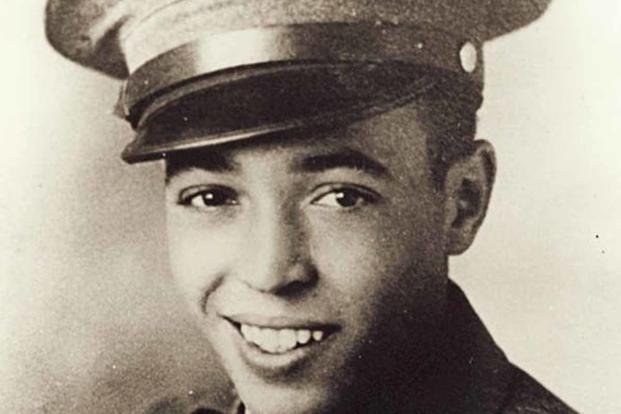
They’ll get Doris Miller too. Not only for the fact that he was black but had a womans name to boot. Doris’s heroic actions stirred the nation in 1941, but he was not formally identified or recognized for his role in saving lives at Pearl Harbor. No need to guess why.

Hegseth ordered the Pentagon to scrub any and all digital content that promotes diversity, including months that celebrate cultural awareness, from department and military branch websites and social media. No MLK day, no black history month and especially no Pride Week. The directive stated that all “information that promotes programs, concepts, or materials about critical race theory, gender ideology, and preferential treatment or quotas based upon sex, race or ethnicity, or other DEI-related matters with respect to promotion and selection reform, advisory boards, councils, and working groups” should be removed, with limited exceptions for content required by law.

Apparently Medals of Honor winners, women who gave their lives in service to their country or airplanes are protected by law.

PFC Harold Gonsalves, who received the Medal of Honor for his heroic actions during the Battle of Okinawa in 1945. A Portuguese American boy from Alameda, California. 4th Battalion,15th Marine Regiment.

Sounds like double speak which the military and Hegseth do well. Hegseth was a Fox host after all.

WTF, to coin a phrase. The United States is the most culturally diverse country on earth. That is our super-power. What is the matter with those people?

*A career officer must be able to wear proof of his service on his breast, hence superfluous awards. Likely it was awarded for a paper cut since the secretary was a publicist and journalist. Enlisted men must be shot or killed to get a Bronze star. Big difference.

Michael Shannon is a writer from California. He is a Vietnam veteran and has an eye for stupidity. which he tries to avoid like the plague.

Standard

Dear Dona 10

The End of a Hard Row.

By Michael Shannon

A hard row, something a farmer knows all too well.

As early as 1943, morale amongst the Japanese soldiers was very poor. The information compiled by the MIS translators wasn’t just about the killing of Admiral Yamamoto or Plan Z or the other logistical and strategic finds. US Army G-2 intelligence reported on the mindset of the ordinary Japanese soldier as seen through his own eyes in captured letters and journals.

One that can be easily manipulated politically. The difference for those being on the ground dealing with face to face combat or interrogation when captured left little to interpretation.

Many in the US believed the Japanese soldier was a fanatic, freely willing to give his life for the Emperor. The banzai charges. The kamikaze attacks. Individual soldiers throwing themselves under tanks with an explosive charge strapped onto their backs in a suicide attacks was the image the wartime press pushed. The truth of the matter is Japanese soldiers were farm boys, city boys, Just like our boys, they were drafted. Instead of dying in “banzai attacks”, these “fanatical” Japanese soldiers wanted to go home just like ours did. They couldn’t for fear of reprisal against their families by their own government. It must have been ironic to read of that treatment by the Nisei whose own families were behind barbed wire in concentration camps.

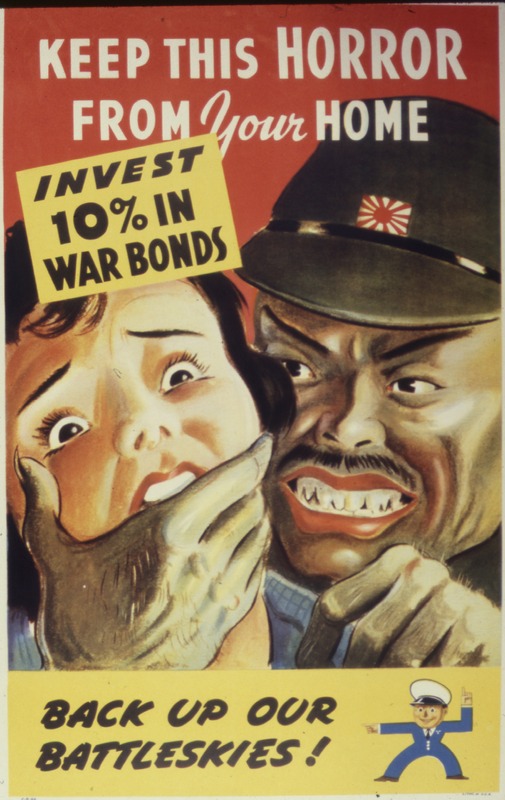
Neither side was immune from publishing the most scurrilous propaganda.

Being a buck private in the Japanese army made you a fanatic. In the American army you got the Congressional Medal of Honor. To a soldier of any army the end was the same. Media makes it seem that heroism is a choice but that is rarely so. Desperation or fatalism is much more likely.

General MacArthur told General Eichelberger, his chief of staff after the initial disastrous American showing by the 32nd division Buna-Gona, New Guinea, “I’m putting you in command at Buna. Relieve Harding. I am sending you in and I want you to remove any officer who won’t fight. Relieve regimental and battalion commanders; if necessary, put sergeants in charge of battalions and corporals in charge of companies, anyone who will fight, put ’em in.

MacArthur then strode down the breezy veranda again and turned back to Eichelberger . He said he had reports that American soldiers were throwing away their weapons and running from the enemy. Then he stopped short and spoke again, with emphasis. He wanted no misunderstandings about the assignment.

“Bob,” he said, “I want you to take Buna, or not come back alive.” Bob Eichelberger put on his three stars and walked into the front lines where the Japanese snipers could see him. Warned that he might be killed, he said, “I want my men to see a general in the line not in the rear. The word spread quickly through the Red Arrows troops and they turned the tide of the battle. That’s courage and the boys he commanded knew it when they saw it.

Eichelberger was recommended for the Congressional Medal of Honor, MacArthur disapproved it and awarded the Distinguished Service Cross to his staff officers at headquarters who saw no service. That was MacArthur at his political and selfish best. Eichelberger said nothing.

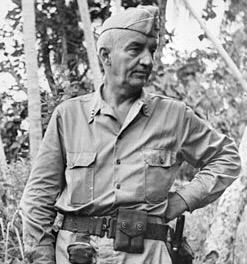
Major General Bob Eichlberger in New Guinea, 1943. US Photo

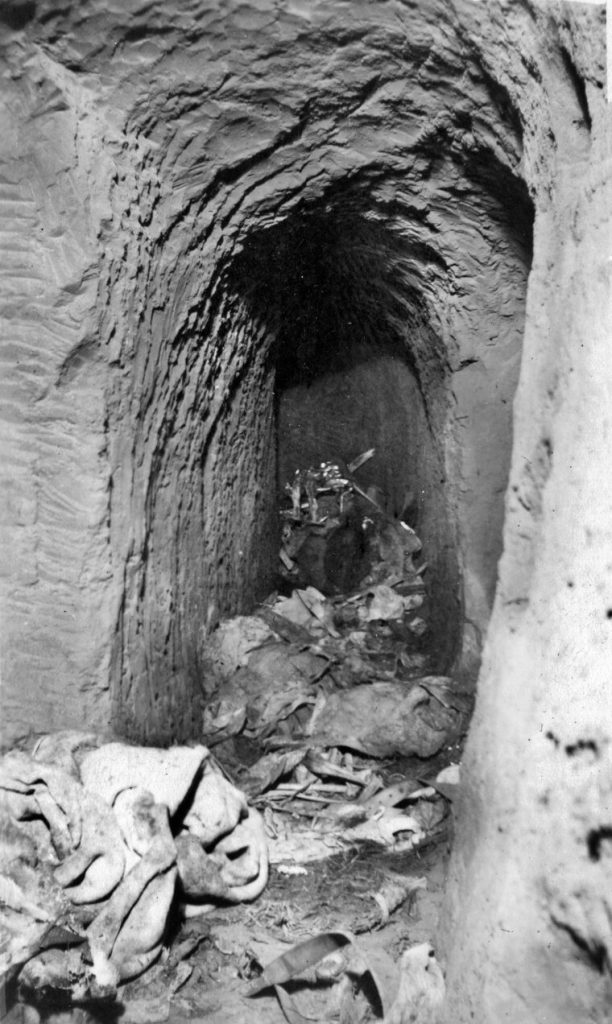
The MIS Nisei, as early as 1943 published a report detailing moral problems within the Imperial army. Culled from captured material, the official document spelled out problems within the Japanese officer corps. There were incidents of desertion, dereliction of duty, black market racketeering and hoarding rations for their own us. Enlisted men were homesick and felt helpless in the face of the war. Poorly led and often wasted in senseless attacks they were certainly as brave as American boys and throughout the Pacific campaign most American soldiers came to recognized this. Those Nisei who worked as cave flushers realized that the sense of hopelessness of soldiers hiding in caves during furious and savage battles were not always willing to die for the Emperor or their officers but could be talked into surrender by calm and kind words in their own language spoken by someone who knew their culture and in many cases who had been educated in their home prefecture.

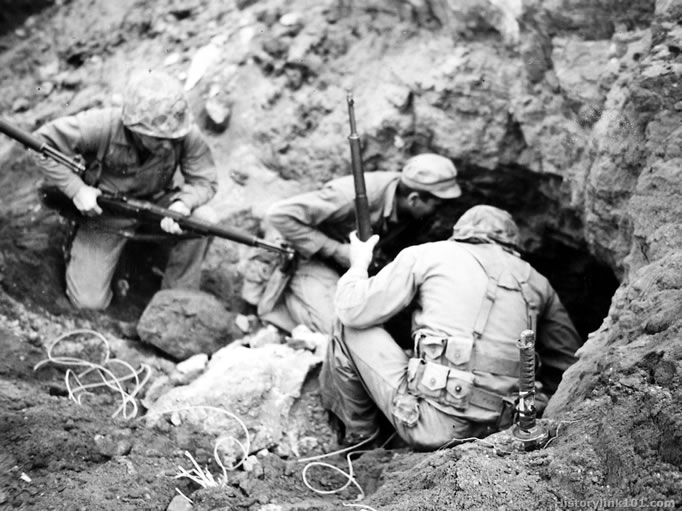
Abandoned cave. USMC photo

Many of the MIS boys were descendants of families who emigrated from the southwest portions of Japan which were primarily rural. They came as contract laborers to work in the pineapple and cane fields of Hawaii and the fishing and agricultural areas of California. Hiroshima, Kumamoto, Okayama and Yamaguchi was where the majority of emigrants came from. By coincidence many of the Japanese troops in the southwest Pacific came from the same areas. The Kibei, American citizens who had been educated in Japan might, by a good chance be familiar with the home areas of the captured. The offer of a cigarette and comforting words from someone who not only spoke your language but in your own dialect quickly overcame any reluctance to speak. In many documented case the MIS translators personally knew schools, relatives, teachers, family members and in more than one case interrogated brothers, cousins and uncles. There is an instance where a cave flusher on Okinawa encountered his older brother inside.

The interlocking cave defense pioneered on Peleliu which brutalized the Army and Marines was quickly adopted by other Japanese units and even though you might not expect to see it used on the large islands in the Phillipines, it was. Your dad was still on staff with the Eleventh Army on October 20th, 1944 when the Philippine island of Leyte was invaded, the first step in the conquest of the Philippines by American, Australian, Mexican* and Filipino guerrilla forces under the command of MacArthur. The U.S. fought Japanese Army forces led by General Tomoyuki Yamashita. The battle took place from 20 October to 31 December 1944 and launched the Philippines campaign of 1944–45, the goal of which was to recapture and liberate the entire Philippine Archipelago and to end almost three years of Japanese occupation.

The invasion was a surprise because the Japanese assumed the Americans would invade Luzon first so many troops had been withdrawn from Leyte and those left had been pulled back from the prepared beach defenses. Fortunately for our troops, the Japanese General had withdrawn his troops from shoreline defensive posts. Even though there had been up to four hours of bombardment by the USN of the shore defenses, many fortifications – including pillboxes – were untouched. General Kenney concluded there would have been a blood bath similar to Tarawa if the Japanese hadn’t withdrawn.

The advance was so rapid that that MacArthur made his walk onto the Leyte beach a “Hollywood-esque” event on the first day. He actually had several takes done of wading ashore being the media seeker he was but. Being on MacArthurs personal MIS staff, you father may have been there though I could find no evidence of that. Soldiers in the know laughed at MacArthurs self promotion remembering him as “Dugout Doug” from Bataan and Corregidor in 1942. A foot soldier has a quite different view of rear echelon soldiers no matter how important he thinks he is. Patton’s well known nickname “Old Blood and Guts,” was easily changed to. “Yeah, his guts, our blood” by the infantry soldiers of his third army in Europe. Like a politician, which he was, the entire landing was a production. He had Manuel Quezon, the president of the Phillipines, several Philippine Scouts of the Filipino army, his staff officers each in his crushed hat echoing their bosses famous hat with the tarnished “Scrambled Eggs” and all wet to the knees. No one though to wear combat boots though and their dress brown shoes indicates they didn’t expect to even get wet. MacArthur was furious at the cox’n of the Higgins boat he landed from and wanted him punished until he saw the photos and decided he looked sufficiently heroic. The Cox’n was spared.

“I Have Returned.” Carefully posed and including representatives of the Filipino Army, the Army Air Corps and various staff officers MacArthur wades in for the third take. Check out the bemused expression on the face of the soldier just to MacArthurs right, above the little Filipino Major.*

“People of the Philippines: I have returned. By the grace of Almighty God our forces stand again on Philippine soil—soil consecrated in the blood of our two peoples. We have come dedicated and committed to the task of destroying every vestige of enemy control over your daily lives, and of restoring upon a foundation of indestructible strength, the liberties of your people.” MacArthur.

The landing on Leyte looked good on newsreel, there were even a few gunshots in the distance but the landing was safe enough for the men from the rear. Distant gunshots were exhilarating and added a little flavor to the event. The rest of the entire Philippine campaign would be bitter, savage and cost the United States military dearly. The Phillipines were not secured until the end of the war in August 1945. The Allies totaled up 220,000+ wounded and dead before it was over. The Japanese Imperial Army lost over 430,000.

Luzon was mostly jungle fighting but Leyte with the nations capital city of Manila turned out to be some of the worst urban warfare of the entire war. The Japanese were in desperate straits. The army and air force could not be reliably reinforced because the surface navy now controlled the air and US submarines controlled the inland sea and had devastated the Japanese surface fleet, particularly supply ships that soldiers on the islands were nearly cut-off from Japan.

Because of the MIS translators the Americans brass knew this. They knew where the ammunition dumps were, food supplies, location of all Japanese headquarters and many troop movements. At sea, the Navy was informed of Japanese Naval plans and was able to prepare for what became “The Great Marianas Turkey Shoot” when Naval aviators decimated the air fleets of the Japanese Navy and Army in the Battle of the Philippine Sea, downing 65 planes and sinking one of Japan’s last carriers. Fighting on the defensive with no air support the isolated Japanese troops on the islands became more desperate and fatalistic.

No one knew of course but the war had less than a year to go but the nature of war in the Pacific saw the fighting get more and more desperate and dangerous. There was literally no hope for the Japanese and they knew it.

Lance Corporal Kiyoshi Koto was starving and wounded, but it is unlikely that he was troubled by his hunger or his pain as he reached the front on the day he had written his letter. Koto was killed in action about midnight on the same day, and his letter was never delivered. Instead, an American soldier pulled the letter from Koto’s uniform pocket and took it to his Nisei MIS intelligence section. The letter was translated into English while a few of Koto’s captured countrymen dug a grave for him somewhere on the site of the battle. The short paragraphs that Koto had hoped would give his family a sense of closure instead became a source of information and a curiosity for his American enemy.

Every Japanese sailor and soldier was familiar with the Song of the Warrior, an ancient ballad that captured the centuries of fighting culture that made surrender unthinkable for Kiyoshi Koto and his comrades.

If I go to sea, I shall return a corpse awash;

If duty calls me to the mountain, a verdant sword will be my pall;

Thus for the sake of the Emperor, I shall not die peacefully at home.

By December Lance Corporal Kiyoshi Koto wrote his last letter home. By that time, his unit’s command structure was decimated and the battle strength of his army and its supporting navy was nearly destroyed. As he wrote, the characters on the page of the letter, they were written with shaking hand because Kiyoshi had been wounded in the right arm by a shell during an attack five days earlier. He struggled to carry his rifle because of his injury, and he had not eaten because critical supplies had not reached the beach, let alone the front. Koto understood very well that he was a dead man.

Koto wrote, “Every day there is bombing by enemy airplanes, naval gunfire and artillery fire. No sign of friendly planes or of our navy appears. The transports haven’t come yet either. I have not eaten properly since the 24th of November; many days I have had nothing to eat at all. From tonight on indefinitely, again without expecting to return alive, I am going out resolutely to the front line. Even though I am holding my rifle with a right arm that doesn’t move easily, now is the time for me to dominate a military contest. I must serve as long as I can move at all.

“The Regimental Commander, Colonel Hiroyasu, 16th Infantry, died in battle. The battalion commanders are all either wounded or dead. My own company commander is dead. Two of the platoon commanders have been wounded; one of them entered the hospital for medical treatment and was with me there. In our company NCOs are acting as platoon commanders and privates as squad leaders. At present my company has come down to a total of only 30 men. Of the soldiers in my squad three were killed, four wounded, and at present four in good health are doing hard fighting. As I too am soon to leave for the front lines I should like to see their cheerful faces. The platoon leader, convalescing and almost up, says ‘Go to it Kiyoshi!’”

Koto includes greetings to members of his family and closes, “I am writing this as a farewell letter.”

Saipan 1944. National WWII Museum. Gift of Akita Nakamura.

The answer, as the balance of the war proved prophetically true, was combat with no quarter. And the actions of soldiers letters offer a glimpse into the mind of Lance Corporal Kiyoshi Koto, who also refused to surrender when he found himself in a losing battle. He wrote his farewell letter home, and on the last day went forward to fight and die. He had no illusions about his future. Instead, his thoughts were with home and with his brothers in arms along with a final hope that he could save his family the pain of not knowing what had happened to him.

Dear Dona Page 11

Your fathers original group of four hundred translators that worked in Brisbane in 1943 had been broken up into smaller units and was now spread all over the Southwest Pacific. Many of them now shared the privations and dangers of combat and had taken to carrying rifles and wearing helmets. They operated just behind the lines and were subject to enemy gunfire, artillery and bombs.

Dear Dona 11 coming on February 1st.

* Mexico’s Escuadrón 201, The Aztec Eagles, equipped with Republic P-47D Thunderbolt fighter aircraft distinguished themselves in providing close air support to American ground units as well as long-range bombing strikes deep into Japanese held territory.

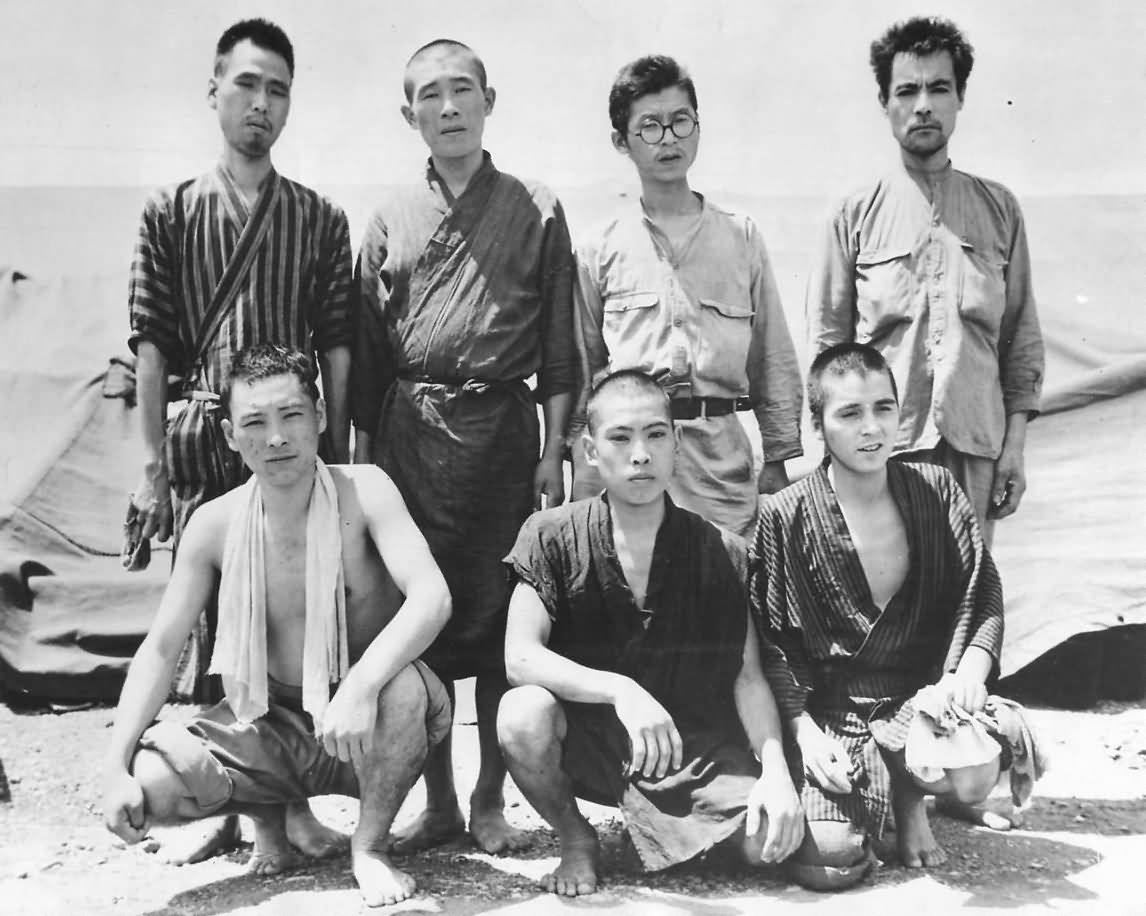
Cover Photo: Captured Japanese soldiers on Okinawa.

Michael Shannon is a writer from California and personally knew the protagonist in this story.

Standard

Dear Dona

Page 9

There is no toilet paper.

Michael Shannon

From the MIS Nisei: “They described how they were searching a Japanese soldier that had surrendered in the jungle of Moroti. They came across one of the American propaganda leaflets promising safe passage for those Japanese soldiers that surrendered. It was neatly folded in the soldier’s pocket.
Akune asked the Japanese soldier if he believed what the leaflet promised since the MIS Nisei wrote it. The Japanese soldier said no but that it made for good toilet paper. “There was no toilet paper in the jungle of Burma,” said the prisoner.” Americans laughed. They were issued 25 sheets a day, maybe, not often or never.

The leaflet written by MIS Nisei translators and air dropped over Japanese posissions, 1944

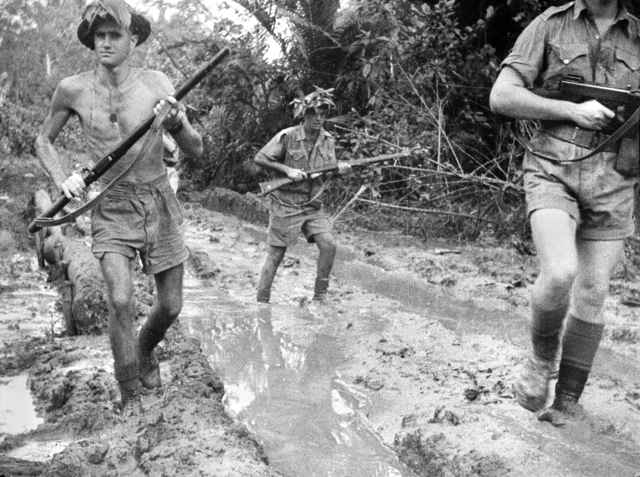
The army and the Marines continued to slowly work themselves toward the northern end of Papua New Guinea. After more than two years the organized large battles were over but the island was still overrun with small units of Japanese. There was more and more jungle fighting where small units of American and Australian troops constantly patrolled the dense jungles looking for stragglers and shattered elements of the Japanese. Sharp and very nasty fire fights occurred often.

Australian Infantry of the 21st regiment, Papua New Guinea. Australia War Museum, 1943

The jungle itself was the enemy. It was as evil as any human enemy. It was dark and secretly evil, an enemy of all mankind. Its drenching, chilling, mud sucking presence came at the soldier with cold roiling mists, green mold and nearly ceaseless downpour. Tangled roots and vines tripped him, it poisoned a man with nasty stinging biting insects and malodorous bugs who flew and flitted about or dropped from dripping trees. The sop of mud into which his boots stepped and were sucked at by the jungle itself. It was a living breathing thing. You could awaken to find a dreaded Bushmaster Pit Viper coiled under your cot. Growing up to 10 feet long, a strike was almost certain to bring death. The Arizona national guard 158th regimental combat team which was requested by MacArthur because they were jungle trained adopted the snake as part of their regimental patch,

158th RCT Arizona National Guard “Bushmasters” on patrol, New Guinea. US Army photo. 1944

Nothing could stand against it. Letters were sodden and unreadable in a few days, Socks disintegrated in just a days, Cigarettes were sodden as soon as the cellophane was removed, your pocketknife blade rusted solid an your watch recorded it’s own death.

Food was garbage, made paste by the moisture which was everywhere in under canvas. A pencil swelled and burst, unable to write on sodden paper. Rifle barrels turned red from rust and had to be carried muzzle down to keep out the rain, a cellophane wrapper from a pack of cigarettes, parts of the waxed carton from K ration boxes or condom wrapped around the muzzle to little avail. Machine gun rounds stuck in their canvas belts. The jungle was an enemy so foul, stinking of mud and decay that the war was nearly forgotten in the search for a dry pair of trousers, socks or the prize wished for the most: a hot cup of coffee.

Brewing up a cup of Joe, Wewak, New Guinea, 1944.

Small units of translators were being sent into the field to do the interrogations of prisoners on the spot instead of relying on just the captured documents. They hoped to retrieve intelligence in real time. MacArthur was in the planning stages for the beginning of the move up the chains of islands between New Guinea and Japan itself.

Generals are as politically motivated as any politician,

they have to fight their way up the ranks and as the number of officers decreas, Major to Colonel, the pressure increase. There were three main components involving the Pacific theater. At the very top of that pyramid, General George Marshall the Army Chief of Staff and Admiral Ernest King of the navy were in a political fight for the means to prosecute a war on two fronts, the Pacific and the European theaters. The President, Churchill and Stalin had agreed that Europe would be the main focus of their efforts and the Japanese war would take a back seat. Admiral King, of course was not happy, as that meant the navy would receive fewer resources than the army whose main focus would be in Africa, the Mediterranean and western Europe. Initially this meant that the Navy and Marines would mount a holding action in the Pacific with the goal to halt Japanese expansion as the primary objective. This proved to be easier said than done.

The battles of the Coral Sea in May and Midway in June of 1942 showed that perhaps there was an opportunity to do more. The Japanese invasion of Port Moresby in Papua New Guinea was stopped. Admiral King began to press for more of everything to be sent west so the Navy and Marines could began the island hopping campaign which they are so famous for.

Politics immediately interfered. General MacArthur’s hasty retreat from the Phillipines left him with no army to command and no money to pay for it if he had one. The Joint Chiefs, FDR and his political advisors had to find something for America’s most famous and experienced military man to do. He wasn’t wanted by King, two colossal egos in charge has never worked. The solution was to park him in the far west Pacific where he couldn’t interfere with Admiral King’s navy and its goals.

MacArthur was not pleased. Stuck in Brisbane, Australia with few troops other than the Anzacs to command, not a situation that made the Australian and New Zealand military very happy, he had to beg FDR and Marshall for American units. The Navy, very grudgingly allotted a small naval command to serve under his command. He also had the use of the Australia’s small navy and on top of that commandeered whatever craft he could find including small sailing vessels once used for inter-island transport.

Politics meant that there would be two parallel efforts to fight the way to Japan. The Navy and Marines were to fight an increasingly brutal series of invasions. Guadalcanal, Tarawa, Peleliu, Saipan and Iwo Jima are all famous in American history and most important in the history of the Marine Corps. There is little difference between those battles than the uphill slaughter of the British at the Battle of Bunker Hill. Assaults directly into the face of an entrenched enemy such as Fredericksburg or Petersburg in the civil war had not changed. The Marines paid a horrible price in the Navy’s Pacific battles.

MacArthur on the other hand had a much, much larger land area to contend with. The island of New Guinea is the second largest on earth, just slightly larger than the state of California. As Californians we have some idea of how large that is. Sending limited numbers of troops and a small air force the length of the state would be dauntingly difficult. Instead MacArthur conceived of a plan to skip and hop across New Guinea. Using what he had, he planned on taking key areas where he could stage for the next leap and leaving the now isolated Japanese garrisons behind to wither and die.

Arriving in Port Moresby your father was ashore while the final battles in New Guinea were wrapping up. The army had trekked over 1,500 hundred miles, roughly the distance from Los Angeles to Dallas Texas. MacArthurs Eleventh Corps was pulled of the line to rest and refit and tp prepare for the initial phase of the return to the Phillipines. The Australians were left to finish the retaking of New Guinea which would take to the end of the war.

The eleventh Corps which included your dad’s unit was made up of the 23rd, 31st, 38th, 41st, 93rd (Colored) and the 503rd parachute infantry regiment was preparing to move on the Phillipines. They needed an airfield close enough to to Leyte island so the Army Air Corps could provide combat support and logistics. A small island named Morotai off the tip of Halmahera island in the Indonesian Archipelago was selected.

Landing on Red Beach, Morotai Island Dutch East Indies, September 15th, 1944

In the meantime the XI army got a little rest where they were resupplied with weapons and uniforms. The 93rd (Colored) built showers, laundries, mess halls and broke out the baseball equipment. The MIS boys were still hard a work but at least they had time to hang a coffee can from a wire, light a fire and brew up some coffee. In their tents at night, a soup can with some gasoline and a length of tent rope made a small stove for cooking up whatever they could scrounge from the mess boys. The natural alliance between the Nisei and the African Americans of the 93rd paid dividends for the MIS.

3rd Division (Colored) patrolling on Morotai. October, 1944

The MIS men had been stationed in Brisbane Australia for nearly two years but with the advances in the Solomons, Marshalls and New Guinea they began to be deployed in smaller groups to individual combat groups. The Navy, Marines, Army Air Corps, British, Dutch and ANZAC forces had seen their value and had asked for and received MIS Nisei support. This changed entirely the organization. Fourteen Japanese Americans were now serving in combat with Merrill’s Marauders in the China Burma theater. MIS boys had worked with the Marines in New Georgia, Saipan, Eniwetok and at the bloodbath at Peleliu where the Ist Mar. Div. and the Army’s 81st division engaged in a new kind of battle for which the were unprepared. For the first time they ran upon defensive caves which were to be the main feature of the amphibious campaign for the rest of the war. General “Chesty” Puller’s first Marine Division took casualties of nearly seventy percent and was put out of the war for nearly six months it was so badly devastated. Out of over twelve thousand Japanese on the island only a little over 300 were taken prisoner, mostly because of wounds.

The “Flusher” was born at Peleliu. These were volunteer MIS linguists who put down there rifles, took off their helmets and put their heads in or crawled inside fortified caves to attempt to talk the Japanese soldiers inside into surrender. Because the Nisei believed they would be killed if armed they tried to show the cave dwellers that were no to be afraid. They themselves must have been terrified. I find it difficult to comprehend the courage it took to do this.

Nisei MIS Linguist coaxing Japanese soldiers out of a fortifies cave, 1944

In researching this letter I have not been a able to find any reference to the Nisei that performed this volunteer duty. I found no citations for bravery and no medals awarded. The MIS men were part of a secret organization within the military but still the lack of recognition is troubling. The only photos available that show MIS flushers at work were taken by other soldiers and not combat journalists who kept their unit’s diaries which chronicled daily action down to company sized units. In every sense the Nisei were combat soldiers. They were rifleman which is the name combat soldiers take for themselves as a point of pride. “Every Marine is a rifleman” in the Marine Corps no matter what his job.

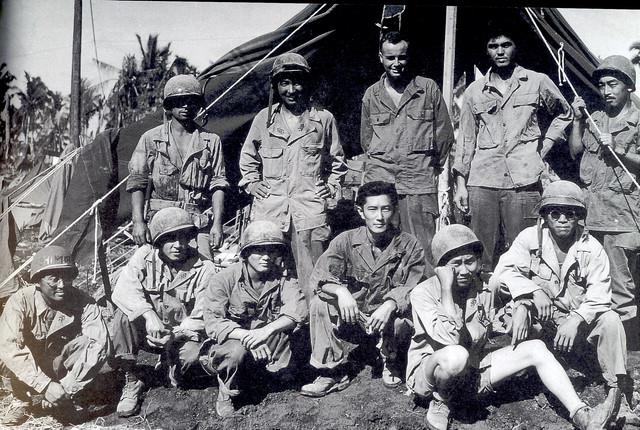
The 1306th MIS team, New Guinea, 1944. Note the white officer, no Nisei was yet in command of any group. US Army photo.

An important point to make here is that though the translators were formally attached to General MacArthurs command they were scattered amongst all combat units and were moved as needed. Rarely can you find a photo of a MIS man wearing a division patch. Your dad served with more than just the eleventh Army, he was with the 168th Infantry Regimental Combat Team, an element of the 32nd Division from Michigan and Wisconsin when they were transported by LST from Lae, New Guinea for the landing on Morotai Island. Morotai is part of the Indonesian archipelago which consists of over 18,000 separate islands. Roughly 2,300 miles from New Guinea it was 300 miles closer to the southern Philippines than Peleliu.

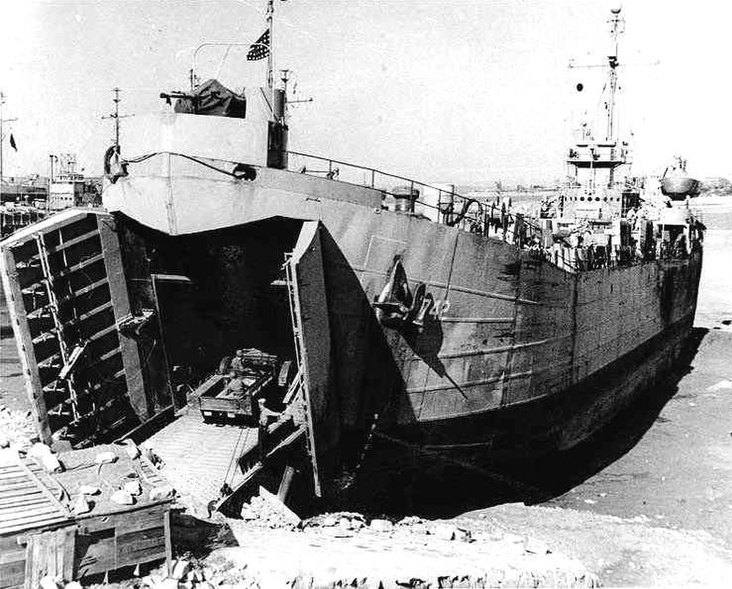
LST- 742 on the beach at Morotai, Dutch East Indies. Battered and bruised like all of her sisters she was one of the workhorses of the Pacific War. Unsung, no-name little ships hauled everything and went everywhere.

Not for the first time, your Dad traveled with his team on one of these ships. There were no accommodations for enlisted passengers so you rolled your blanket out on the steel deck and slept under a truck or up on the galleries that ran down the sides of the cargo hold. By this time Hilo wouldn’t have batted an eye at the lack of luxury.

Two islands were invaded on the same day, September 15th, 1944. Morotai in the Dutch East Indies and Peleliu in the Palau islands. Results could not have been more different. The Army and Marines on Peleliu suffered grievously. It was the deadliest invasion of the Pacific war where the Army’s 81st “Wildcat” Division and the 1st Marine division were ground down by two months of insane combat on an island five miles long and scarcely a mile wide.

Morotai by contrast was secured by troops from the 32nd “Red Arrows” Divison. Morotai was like most of the islands the men of the Southwest Pacific had become familiar with, it was mountainous and covered with rain forest. The first day of the invasion had one casualty, a soldier killed by a falling limb. The MIS processed the few prisoners captured and began studying their documents. As was their experience life would be wet and miserable until they left for the Invasion of the Southern Phillipines on Luzon in January 1945.

Officers Quarters and Enlisted Quarters. Southwest Pacific 1944.

From Thomas Tsubota, a translator with Merrill’s Marauder in Burma, 1944 He said, “They had just stumbled across ten Japanese soldiers in a small jungle clearing, he says. “Boom,” he said, in a split second they killed them all. He described how his commander, Colonel Beach, called him over to inspect a photo album taken off one of the now dead Japanese soldiers

They looked through the album. Tsubota told Col. Beach there was nothing of military importance in it but as they came upon the last page of the album, there was a picture of a mother and a daughter.

Tsubota said Colonel Beach’s eyes got red, filled with tears and he said, “Thank you, Tom.”

While crying, Tsubota ended the interview by saying this is why he isn’t enthusiastic about talking about the war. Too painful. He doesn’t want to think about that sad moment. Tsubota is 96 years old at the time of the interview.

Dear Dona

Page 10.

Luzon, Phillipines to Okinawa in the Ryukyus Island, part of the Japanese Homeland.

Coming on January 25th, 2025

Cover Photo: MIS Boys interrogating a captured Imperial Japanese army officer, Peleliu island, Palau Group, October 1944

Michael Shannon is from Arroyo Grande, California. He grew up with the children from the concentration camps. He knew the fathers.

Standard

Dear Dona.

Page 8

Doing Work, Staying Sane.

From Michael Shannon

Every soldier comes from somewhere. Sometimes to remain sane they need something, an object, a letter, a family photo, or one of his wife, children or sweetheart to remind him of home. In old stories knights, Jannisaries and legionnaires would carry a talisman to ward of evil or to remind the Gods to take care of them. Talismans have changed but the idea remains the same.

Historians have found letters from Roman soldiers to their friends and families that, if translated from the Latin to English sound remarkably like a letter written today. Alexander’s Macedonian Hoplites wrote home, so did the Persian boys who served under Xerxes and Darius of Persia. Letters form the backbone of history.*

Your dad must have done the same. Carried in his backpack or his ditty bag even in a breast pocket was a photo. Perhaps it was your grandparents or one of the family. Many soldiers carried pocket Bibles. Most likely, or so I would like to believe, he carried a photo that girl, Iso Kobara. Hopes and dreams reside there.

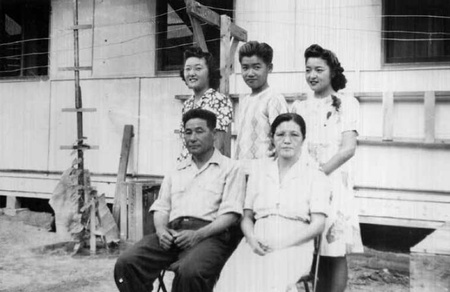
Shigechika and Kimi Kobara at Gila River with their children (left to right): Iso, Towru and Namiko. Photo courtesy of the Cal Poly Re/Collecting Project and the Fuchiwaki and Sanbonmatsu families.

With wartime restrictions, censorship in place no American serviceman could name the place he was nor where he might be going. Journals and diaries were forbidden and letters from home came from the family who knew there were certain things they could not say.

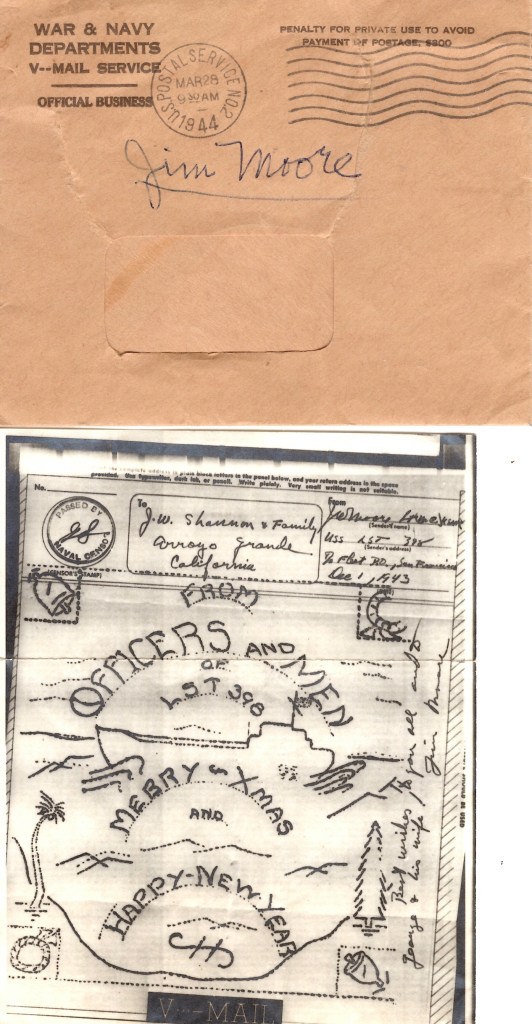
Jim Moore was my fathers friend and the son of Judge Webb Moore and his wife Edith, nee Fesler. They lived at the site of the McDonalds at Grand Ave and todays El Camino Real. The text on the side, “Best wishes to you all and to George and his (New) wife.” My mother was the new wife, the only wife actually. Other than the address Landing Ship Tank or LST there is little to tell you where he was when he wrote it. The only real clue is the palm tree which indicates somewhere in the Pacific. My family saved a number of these because they had friends serving all over the world. Over half the draft age young men from our town were in the service somewhere. My mother and grandmother were relentless in writing to them. Letters from home were a great prize.

Today we know that when this V-mail was written, his ship set sail from Kukum, Guadalcanal to resupply forces in Torokina, Bougainville. The convoy was under constant air attack and raised a barrage balloon to 2,000 ft. While unloading supplies, equipment and mail on a Bougainville beach. Japanese artillery hit the ship on the same day this photo was taken, killing an officer and five crew members.

Lt. Jim Moore’s 398. The workhorse of the fleet, hard used and constantly on the move. Jim served on her for three years without coming home. He took the train to Oakland on December 8th, 1941 with my father to enlist in the navy. After the war Jim became a surgeon in Ventura.

Your mother’s address would have been Gila River, Pima/Sacaton Arizona, Relocation camp, building 19-5 B, a hut they shared with two other families. His family would address mail to the APO, Army Post office San Francisco with just his name rank and serial number. Strict limits were put in place for obvious reasons. Old photos of the captured and dead invariably show them with pockets turned out and scattered papers and other objects lying nearby.

I took a while for the army to get over the suspicion that somehow the Nisei translators couldn’t be trusted, but by the time your dad got to New Guinea enough intelligence gathered by the MIS showed the great value they brought to the battlefield. Not only had battles been won but carful analysis of the information gathered gave the allies an almost complete picture of the Japanese Imperial armies disposition, tactical and strategic goals. They had gotten so good that the names of individual soldiers, not just officers, but the town and prefecture they lived in back home in Japan, their family members and their civilian occupations. Never in military history had planners had such a complete picture of their enemies.**

Captured diary of a Japanese soldier. National Archives. The map shows Malaysia, Burma, (Myanmar) both British controlled colonies. Thailand, Cambodia, and Vietnam were under the control of the French and called French Indochina. The Phillipines were and American Colony and the Dutch controlled Indonesia. All rich in resources such as rubber and oil they were the focus of the allies war effort in the Southwest Pacific area. Little mention of this area in textbooks but the effort to restore these countries to their European masters was very hard fought.

The following are entries from the personal diary of Hideki Oura.

June 29, 1943 : I wonder if they will come today. Last night it drizzled and there was a breeze, making me feel rather uncomfortable. When I awoke at 4 this morning, rain clouds filled the sky but there was still a breeze. The swell of the sea was higher than usual. However, the clouds seem to be breaking.

I have become used to combat, and I have no fear. In yesterday’s raid our air force suffered no losses, while nine enemy planes were confirmed as having been shot down and three others doubtful. Battle gains are positively in favor of our victory, and our belief in our invincibility is at last high.

Some doughnuts were brought to the officers’ room from the Field Defense HQ… They were awfully small ones, but I think each one of us had 20 or so. Whether they were actually tasty or not didn’t make much difference because of our craving for sweets. Each one was a treasure in itself. While eating the doughnuts, I lay down in the sand, and I pulled out the handbook my father had bought for me and which was now all in pieces from a bomb fragment. As I looked at the map of my homeland, which was dear to me, I thought I would like to go to a hot spring with my parents when I get home…

July 23:Where have our air forces and battleships gone? Are we to lose? Why don’t they start operations? We are positively fighting to win, but we have no weapons. We stand with rifles and bayonets to meet the enemy’s aircraft, battleships, and medium artillery. To be told we must win is absolutely beyond reason… In the rear, they think that it is all for the benefit of our country. In short, as present conditions are, it is a defeat. However, a Japanese officer will always believe, until the very last, that there will be movements of our air and naval forces. There are signs that I am contracting malaria again.

This was Oura’s last entry. His fate is unknown, but it is unlikely he survived.

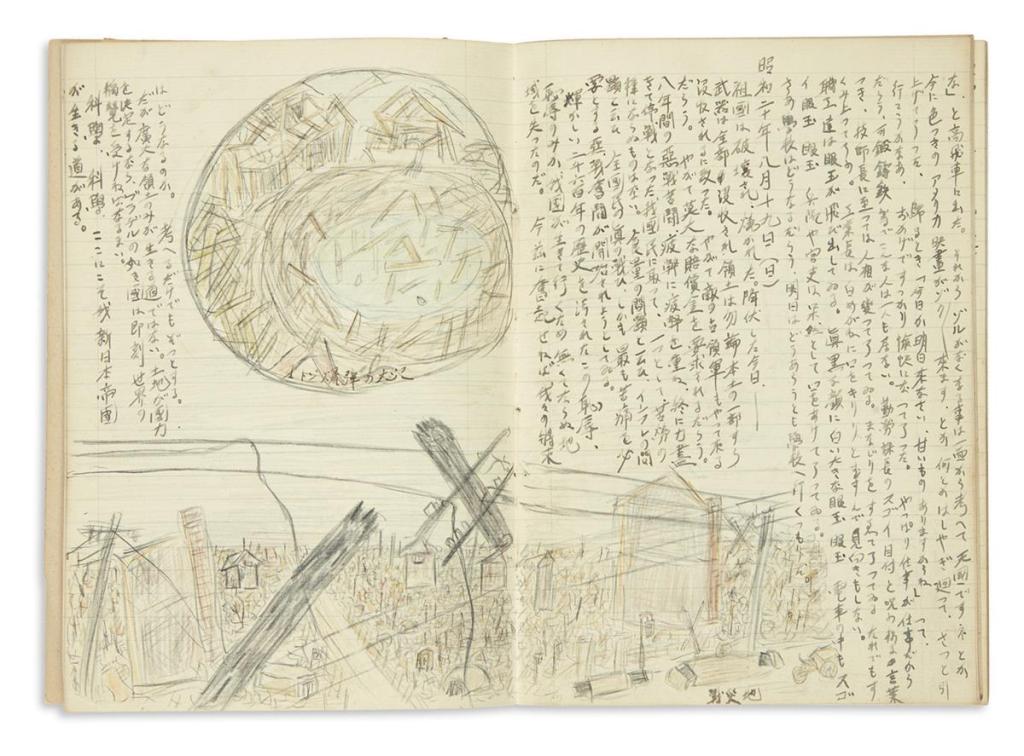
A diary with an illustration of the destruction after the fire bombing of Tokio

The first fire bombing of Tokyo on the 9th and 10th of March 1945 incinerated over 100,000 and made nearly a million people homeless. Every major city in Japan was to suffer the same fate. It didn’t sway the Emperors government at all.

Working in Port Moresby your dad would have handled letters and diaries daily. A vast amount of information had to be read, categorized and organized quickly because battlefield conditions are constantly in flux. Added to information coming down the Solomon and Marshall Islands, the Australian, Dutch, British, and from the US Army, there came intelligence from the coast watchers to which was now added labor needed to handle the documents coming from the Marines on Guadalcanal in the Solomons. The Navy and Marines would not enlist any Japanese. The remained segregated throughout the war but had seen the value the MIS boys brought to the fight and wanted to take full advantage of it. Because of this the MIS boys would soon be on the move.

At the ATIS clearance center in Brisbane, 400 hundred Nisei worked around the clock. Information from there was sifted thoroughly, categorized and quickly forwarded to Pacific headquarters at Pearl Harbor.

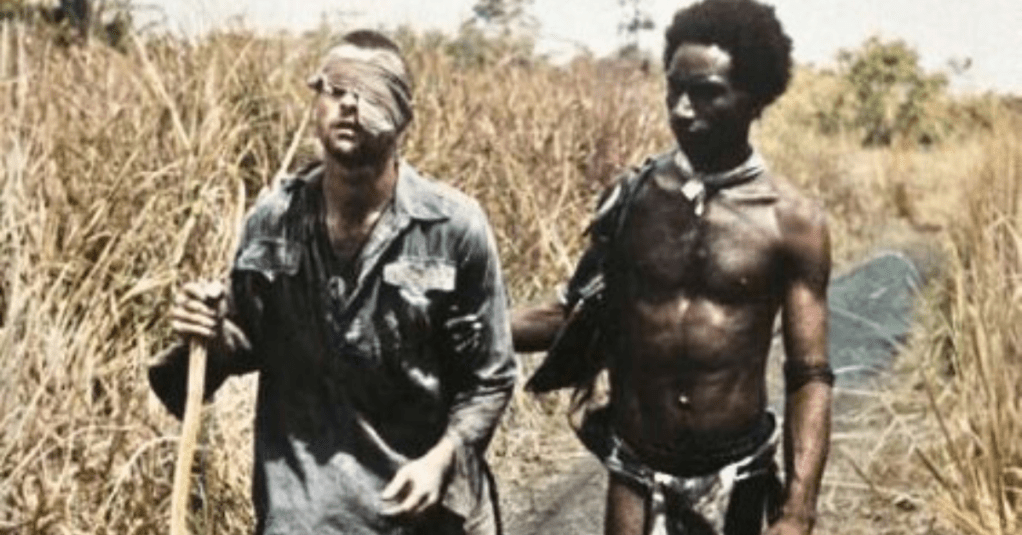
As well as the collected paperwork, your dad would have seen a steady stream of Papua New Guinea islanders, the famous Fuzzy Wuzzys. He would have had to really stretch his language skill because, though English was the language of the administrative population and the larger towns, in the bush it was Pidgin. Tok Pisin was the second language for the indigenous population. Pisin, or Tok Pisin is often referred to by English speakers as New Guinea Pidgin or simply Pidgin. It’s an English creole language spoken throughout Papua New Guinea and today is recognized as the official language of the country.

An Angel escorts a wound Australian of the 26th Regiment to the rear. Australian War Museum photo.

For example; if a Pidgin speaker came into the translators tent with some information on Japanese movements he might greet your dad with the greeting, “Gutpela long bungim yu.” or “Yu stap gut?” Wanam nem bilong yu? If Pisn wasn’t enough how about the Aussies? Australian and New Zealand slang is highly complex and something as simple as asking where the latrine is, “Wheres the Dunny mate?” can be laughingly confusing.

People today are likely to forget that much of the material the MIS handled was intensely personal. Japanese children grew up in those decades keeping journals in which they recorded their personal thoughts and feelings. Letters to Japan were mostly concerned with matters of family. American troops were much the same except that they were censored by their officers to root out any forbidden information which might help and enemy. The Japanese had no such system. A letter home by a Japanese soldier would have a return address, whereas US troops could not ever mention where they were.

Your grandparents hadn’t seen their son since he shipped out to Minnesota to attend school in October, 1942. He had not seen his family for almost two years. Letters were the only form of communication and it must have been agonizing to listen at mail call for his name to be called. Mail was irregular, frequently lost or arrived weeks and months late. The canvas bags of mail came by ship, were transferred to trucks or LST’s to be moved between stations and could come torn, opened by censors if they were from the concentration camps; even in some cases were and moldy after the long sea voyage. For the MIS especially terrible, literally every one your father knew, his entire family, neighbors, kids he went to High School with were locked behind barbed wire. Doing ones duty to his country came with a staggering personal cost.

Japanese soldier’s diary page.

I must mention too that the documents that came in to the MIS where stripped from the dead for the most part. Soldiers were ordered to capture Japanese soldiers when they could but since that meant a risk to your own life, it was rarely done. A journal might be splattered with the blood of the soldier it belonged too. It may have been moldering at the bottom of a wet, fetid backpack for a week and stunk to high heaven. There is little doubt that the Japanese American boys felt something very personal about this. They read names just like their own. The Kibei especially, who had studied in Japan before the war and who knew the country well. Customs mentioned in the letters, places they had lived, schools they had attended and for a few as the war went on, the names of people they knew and in some rare cases Japanese soldiers from before the war and in at least one case a brother who was unable to get out of Japan, drafted and met his MIS brother on Okinawa.

As time has moved on and the old soldiers neared then end of their lives, secrets they never told anyone began to take on a new meaning. Sons and daughters who had asked the age old question, “What did you do in the war daddy?“ just might receive an answer. Many children only learned about their fathers military service when they opened that old green trunk in the attic or a small box at the bottom of the sock drawer with a handful of old unidentified medals and insignia or perhaps at the top your mothers closet, a small white cardboard box tied with a faded blue ribbon full of saved V-Mail letters from the far side of the world.

When my uncle Jackie was in his nineties, I asked that questions just like the others did and his answer? He thought about it a while before he answered, “Oh, you don’t want to know about that.” and that was that.

*Clint Eastwoods twin films “Flags of Our Fathers” and “Letters from Iwo Jima” received critical acclaim but “Letters” by far was the most watched because it opened a door into a shared experience to which the generations who have lived since WWII were unaware of. It had the effect of humanizing those Japanese boys on Iwo through their the personal experience written in letters home. Letters from Iwo Jima is not the most exciting or intense war film but it does something that I’ve never seen before in that it humanizes the Japanese. Yes, there are still quite strong cultural differences that the movie talks about but it also shows them as everyday people with their own worries and hopes.

**In researching for this letter I found numerous official photos taken by combat photographers of captured or surrendered Japanese Imperial soldiers being questioned, most without any mention of the MIS Nisei, such was the secrecy surrounding the program. The photos I’ve used in this story of Nisei are almost without exception non-official and taken by unofficial photographers. The only exception is the one with Colonel Merrill of the Marauders in Burma.

Dear Dona 9

Coming Jan 18th 2025: “Up the line to Morotai Island. Big changes for the MIS.”

Michael Shannon lives in Arroyo Grande, California. He writes so his children will know what kind of people they come from.

Standard

Dear Dona,

Page 5

By Michael Shannon.

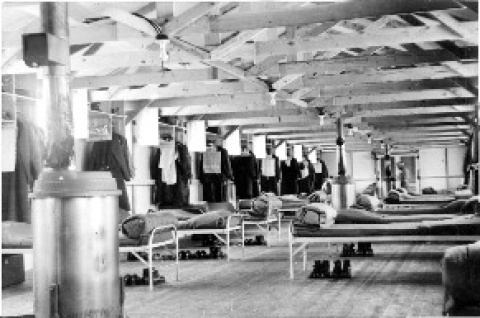
The group of sixteen translators from your dad’s class arrived by train at the siding in Pittsburg, California. Pittsburg was the major debarkation point on the west coast for those heading for the Pacific War Theater. After a week confined to barracks at camp Stoneman, Hilo and his fellow graduates found they would be leaving by ship in a few days. They could see the skyline of San Francisco shimmering under clear sky’s just across the bay but were not allowed to visit owing to the high commands orders that all Nisei be confined to base for their own safety. The danger from their fellow soldiers was real, particularly the Marines who were across the bay. To prepare Marines for what was coming all Japanese were brutally vilified in speech and print. Such indoctrination is common to all wars no matter the country. Propaganda yes, but no less dangerous especially to those who had not been exposed to combat yet. There had been several serious incidents where Nisei in uniform were assaulted by groups of soldiers and sailors. Feelings ran very high.

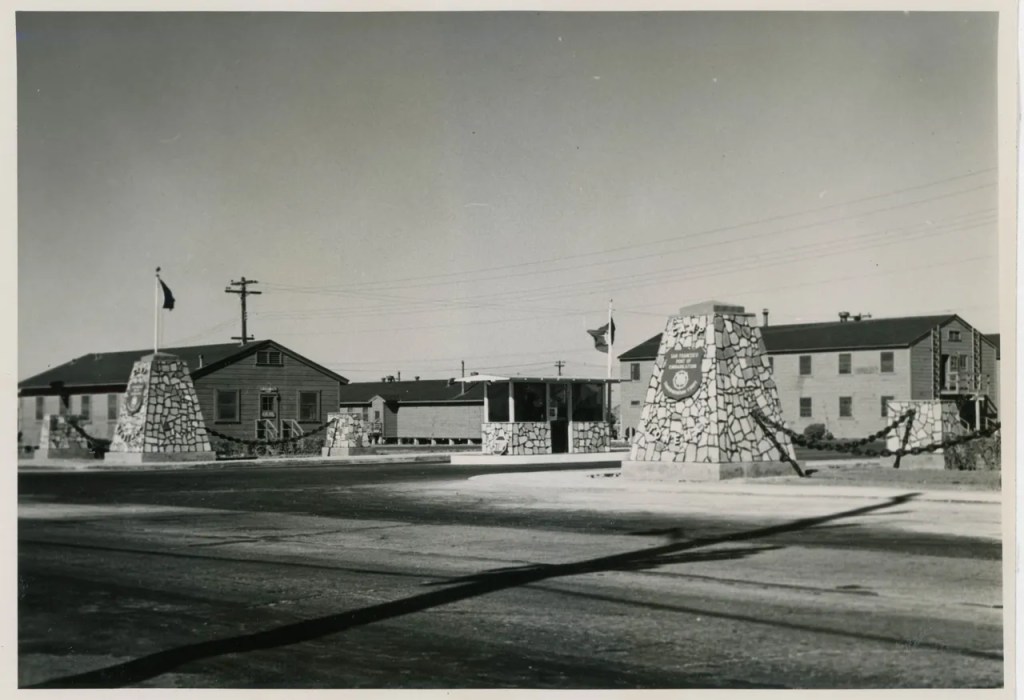
Camp George Stoneman, Pittsburg, California, 1943. National Archives

Stoneman was brand new, completed just two months before your dad arrived. The camp was named after George Stoneman*, a cavalry commander during the Civil War and later Governor of California. In addition to almost 346 barracks (63 man), 86 company administrative and storehouses, 8 infirmaries, and dozens of administrative buildings, the 2,500 acre camp held nine post exchanges, 14 recreation halls, 13 mess halls, a 24 hour shoe repair and tailoring business, one post office, a chapel and one stockade. Overall, the camp was a city unto itself. It had a fire department and observation tower, water reservoir, bakery, Red Cross station, meat cutting plant, library, parking lots and 31 miles of roads. For recreation, Stoneman boasted two gymnasiums, a baseball diamond, eight basketball courts, eight boxing rings and a swimming pool and bowling alley. Officer and enlisted clubs provided everything from reading rooms to spaghetti dinners. The camp also contained the largest telephone center of its day, with 75 phone booths and a bank of operators who could handle 2,000 long distance calls a day. Stoneman even had USO shows featuring stars such as Groucho Marx, Gary Moore, and Red Skelton. Lucille Ball once donned a swimming suit to dedicate an enlisted men’s club.

Camp Stoneman had a maximum capacity of 40,000 troops and at one time ran a payroll of a million dollars per month. Leaving camp to the docks where transport ships waited meant departing the camp at the California Ave. gate and marching down Harbor St. to and catch the ferry at Pittsburg landing. Many “Old Timers” recall the day when they would shine shoes, sell newspapers, round up burgers and and cokes in service to the troops to earn some coin. It is said that when the troops were departing or being “shipped out” they would toss their remaining coins or dollars to the local children as their was no longer any need for American currency where they were headed.

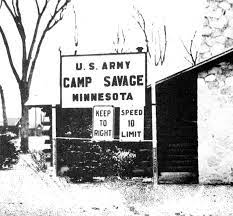
Camp Savage was pretty small by comparison and the Nisei soldiers must have been amazed. Mostly farm boys from California or fisherman’s sons and plantation workers from Hawaii, Stoneman dwarfed old Fort Bliss. The fort covered half the acreage of the entire Arroyo Grande valley and had forty times it’s population.

After a week the men were told to pack and be ready to catch a ferry across the bay to pier 45** where they would board for an unknown destination.

Foreground, pier 45, 1943. U S Naval vessels in background.

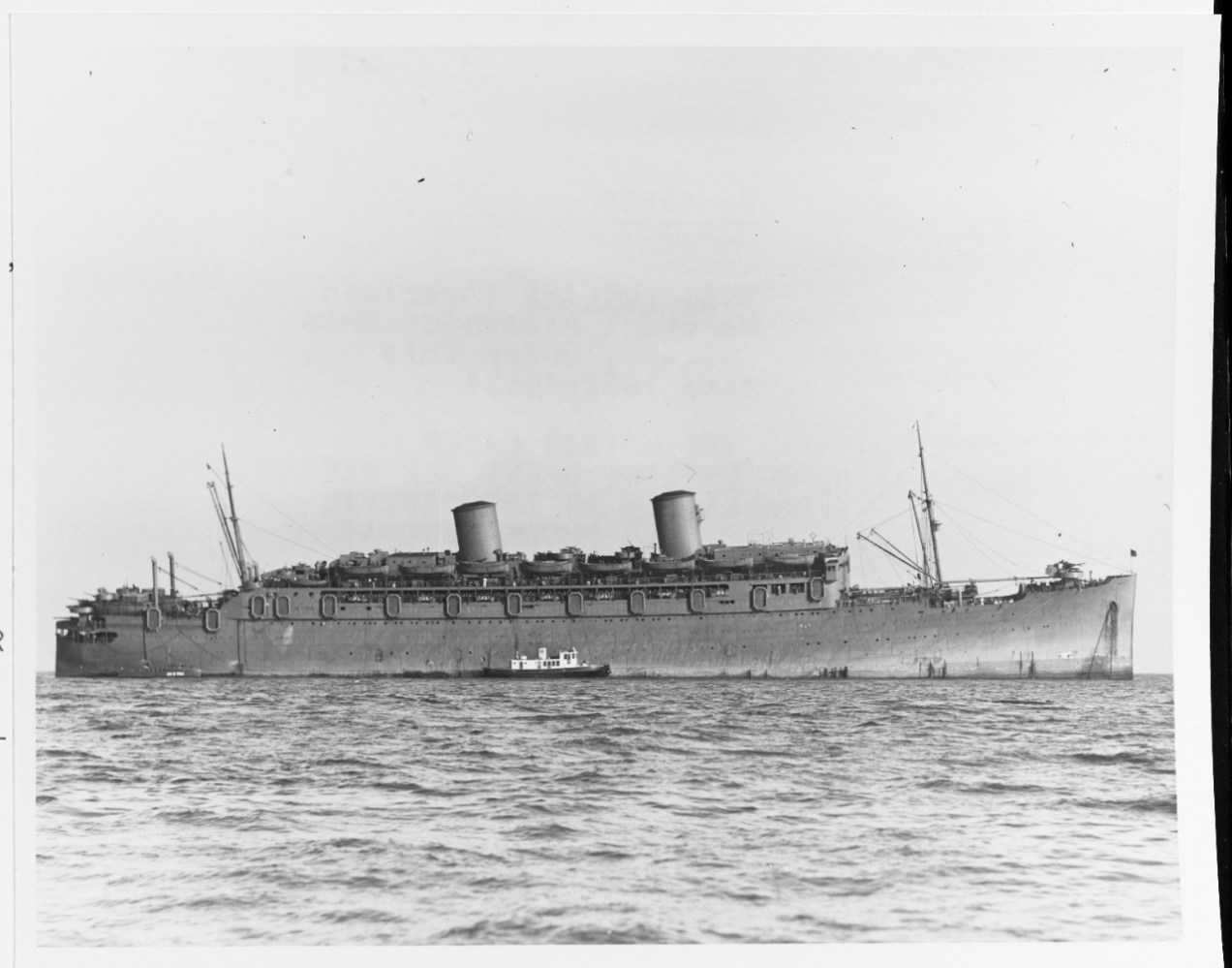
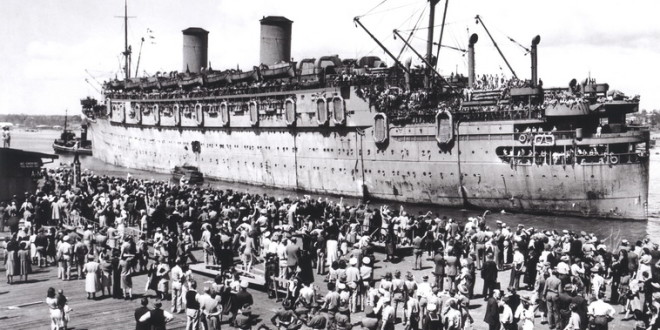
The Army and the Navy had chartered dozens of passenger ships from home fleets and foreign flagged companies. Operating out of San Francisco were several that had flown the company flags of the Dollar Line,*** American President Lines and the Matson Line. Famous luxury liners in the Hawaii trade such as the SS Lurline, Monterey, Matsonia, Maui and the Malolo were now being operated by the US Army Transport Service. These ships in particular, because of their size and speed were referred to as “The Monsters.” Just three of them, They traveled alone, rarely needing warships for protection as most naval vessels couldn’t match their speed. This was considered protection enough from Imperial Japanese submarines. They could also make the 6,725 nautical mile trip to Auckland, New Zealand without refueling. Thats where they were headed though only the Captain knew it. Everyone else was in the dark.

USAT Lurline pulling out of San Francisco, fully loaded with over 6,000 soldiers, sailors and Marines. US Heritage Command Photo. 1943

Steaming under the Golden Gate bridge and out past the Farallone Islands she left the treacherous Potato Patch to port and headed southwest. She picked up her escorts, three Fletcher class destroyers and the Cruiser USS Indianapolis. The officer of the watch rang up full ahead on the telegraph, the engine room lit off all the boilers, smoke poured from the stacks, bow wave arched higher and they headed for the sunset.

The Nisei found their quarters for the trip and were pleasantly surprised. They were to stay in two converted first class cabins on the promenade deck. A pre-war cabin for a trip from San Francisco to Honolulu cost $200.00 in 1940. ( $4,509.49 today ) The boys joked that they were getting a really good deal. They also felt lucky because they knew the berthing decks where the soldiers were stacked as much as six high in their pipe bunks breathing the odorous air, a mix of cigarette smoke, and dirty smelly clothes. The ships laundry was out of operation for the trip. There were too may passengers, so going on deck for some fresh air had to be done in shifts. Likewise chow. You stood in long lines for hours in order to eat. Almost as soon as the ship hit her first Pacific roller, the unbelievably foul smell of vomit began sluicing around the below decks. There were pails but they soon overflowed. Miserable doesn’t describe it. They were young though and adjusted as best they could. There was no where to escape anyhow.

At the beginning of the voyage the Nisei were restricted their cabins for fear that there might be trouble with the soldiers and the crew. Later it was thought that perhaps getting to know them was the better course of action. Everyone was notified of the decision and everyone was allowed to mingle. During the day the decks were completely covered by soldiers, mainly replacements for the 32nd, Red Arrow, Wisconsin National Guard, the 37th, Buckeye Division, Ohio National Guard, the 41st, The Sunshine Division from the states in the Pacific Northwest and the 23rd or Americal Division. All of them involved by this time in heavy fighting in New Guinea.

Each day the soldiers practiced with the bayonet, cleaned their rifles, sharpened knives and convinced themselves how tough they were. They averaged just about twenty years and their hubris came from being young and having almost no exposure to life outside the mostly rural areas they came from. Many had never seen a Japanese in their lives.

For the Nisei the release from their cabins turned out to be a mostly positive thing. As they got to know each other they found out how much alike they really were. A farm boy is a farm boy no matter his ancestry. In the trek north to Japan the soldiers would come to value very highly their new Nisei friends who would share all the hardships of combat with them and whose translation skills would save hundreds of lives.

Still they talked about the problems communicating directly with the enemy, in the language of one’s parents. The idea was incredibly fraught with personal feelings especially for the Kibei who had the greatest exposure with Japan proper. To some it presented difficult questions about identity and heritage. For many Japanese Americans, it was difficult to reconcile using the Japanese language for American victory when their dog tags bore the address of the camp back home in the United States where your parents were incarcerated. In many cases, the translators had had no opportunity to even visit families and the addresses that listed Manzanar or Tule Lake California, Gila River and Poston Arizona, Amache Colorado or Rowher, Arkansas must have caused pain every time they looked at them.

So here they were, a small contingent of specialized troops traveling with thousands of Caucasians whose suspicions and hatred was dangerous to them, whose families were locked behind barbed wire in concentration camps and whose President had written about his decision to intern Japanese Americans was consistent with Roosevelt’s long-time racial views. During the 1920s, for example, he had written articles in the Macon Telegraph opposing white-Japanese intermarriage for fostering “the mingling of Asiatic blood with European or American blood” and praising California’s ban on land ownership by the first-generation Japanese. In 1936, while president, he privately wrote that, regarding contacts between Japanese sailors and the local Japanese American population in the event of war, “every Japanese citizen or non-citizen on the Island of Oahu or in California who meets these Japanese ships or has any connection with their officers or men should be secretly but definitely identified and his or her name placed on a special list of those who would be the first to be placed in a concentration camp.”

Imagine the confusion on the one hand and the desire to fight for a country that didn’t want you on the other. Like my father said when questioned about the issue, “You cannot understand it because you haven’t lived it.” And of course thats true as far as it goes. Today, we have far more documentation of those events than was possible during the war when the public was restricted to almost none.

Steaming day and night the group of ships headed southwest, zig zagging to reduce the chance of torpedo attack and on the seventh morning those on deck sighted Diamond Head. A soldier from Ohio turned to the Nisei next to him who was from Kaimuki, Oahu and asked if that was what Japan looked like to him, the Nisei replied “It looks like home to me.” As Bob Toyoda told the story years later he laughed at the confusion on the face of the Ohio boy who was going to war against a country he knew nothing about, not even where it was.

SS Mariposa, USAT enroute to Auckland New Zealand, July, 1943. Australian War Memorial photo****

Much to the dismay of the passengers, especially the translators from Hawai’i, the escorts turned to starboard and headed for Pearl Harbor but the Mariposa turned to port and picked up a compass bearing of 150 degrees south-southeast (SSE). It was going to be another long, long three weeks aboard.

Dona page 6

From the promenade deck, Hilo and the other translators could just make out the smudge on the horizon that they knew by now was Auckland, New Zealand. Six thousand seven hundred miles and a month at sea and no one aboard was any more anxious to get to shore than they were.

*General George Stoneman was a cavalry general in Grant’s army. He is mentioned in the song “The night they drove old Dixie down.” His name would have been well known to southern boys.

**Todays home of The San Francisco Maritime Museum and known as the Hyde Street Pier.

***The old Dollar Line owned by Robert Dollar has through mergers become the American President Line.

****This very likely the ship Hilo traveled on.

Cover Photo: SS Lurline in war paint leaving San Francisco for the southwest Pacific.

Michael Shannon is a writer from Arroyo Grande California.

Standard

Dear Dona

Written by Michael Shannon

Page Four

Unlike the American military where mail was censored and journals and diaries forbidden the Japanese Imperial Army thought the differences in language would make ordinary Japanese as indecipherable as any code to an American reader. The head instructors at the MILS schoolalso knew that Japanese soldiers were brutalized by their superiors and would likely be resistant to the treatment the British were using on captured Afrika Corps German troops where violence and intimidation were routinely used to coerce confession and information. As many of the instructors had lived in Japan for extended periods of time they knew the Japanese were generally very kind and the spirit of co-operation was instilled in them from birth. The culture of Japan was bound to duty to the Emperor and higher authority, but they also believed that force would not be enough to get prisoners to break down. Instead the language program not only include reading a writing and the general makeup of the Japanese soldiers battlefield strategy and tactics but a heavy emphasis was put on Japanese society, geography and religious beliefs. The idea was to draw a picture of the individual soldier in an attempt to establish rapport with him. They planners knew that they would resist brutality because that was a soldiers daily life in the Imperial Army. Instead a cautionary approach was adopted where kindness and not only assurances of kind treatment but whenever possible knowing about the persons home. Differences in prefecture, religion, the social mores of a particular part of Japan helped build trust between the interrogator and the prisoner.

American government sponsored propaganda was designed to present the enemy as a monolithic structure, all Japanese being of the same mind. Depictions of the Japanese were as vile and hateful as the propagandists could make them. It was impressed upon the American public that they needed to be eradicated. This conveniently swept under the rug the fact that, just like the US they were a diverse people with many different beliefs. Led by a military dictatorship whose war aims were no less than domination of the entirety of east and Southeast Asia.

The two largest religions were Shintoism, the official state religion and Bhuddism which originally came from China and was characterized as a forign religion. Various western religions were also represented particularly the Methodists. In 1940, Christians in Japan united in a declaration of church unity after the Religious Organizations Law required all Protestant churches to merge into one.

Japan had religious freedom during World War II and there was separation of church and state. It was not a theocracy. It is correct to say that most religious people were pro-war at the time.

During the pre-1945 period, Japan moved into political totalitarianism, ultranationalism, and fascism culminating in Japan’s invasion of Chinese Manchuria in 1931. This was part of an overall global period of social upheavals and conflicts.

Regardless of the political reality the instructors knew that the average Imperial Japanese soldier would have far less interest in politics and much more allegiance to his family, friends and the local village life. All of these observations dictated a much more friendly and kind approach than the Germans were getting from the British. Establishing a connection between the Nisei interpreter and the prisoner was an important part of the curriculum at Camp Savage.

The very first class which started on June 1, 1942 was made up of 200 enlisted men, 193 Nisei and 7 Caucasians. The entire class, which had been moved from the Presidio was made up of soldiers who had already enlisted before the war and were considered regular army. Their studies had begun in San Francisco and it wasn’t until after order 9066 was signed in February of ’42 that they moved east.

There were three types of student classification. There were Caucasians who had studied abroad or attended universities where they studied Japanese The majority were Nisei, American born citizens who had varying degrees of language experience. Some had attended locally run Japanese schools which they attended after regular public school classes and came from homes where the Japanese was spoken. The third classification were the Kibei, A subset of Nisei who spent a significant part of their youth in Japan, usually for education, and then returned to the U.S. They ranged from students who had gone to elementary school, many from Japanese high schools and some University students. The Kibei were terrific asset to the MIS because of their familiarity with Japanese culture at all levels.

The terms the Japanese used to describe what generation they were from were introduced to Western American cultural language in the late thirties. Hilo’s immigrant parents were referred to as Issei or First Generation. The 2nd generation like Hilo and his brother were Nisei or 2nd generation. Sansei were their children, the ones I went through school with.

Families wealthy enough to send children to Japan were relatively uncommon. Kibei (帰米, literally “go home to America”) was a term often used in the 1930’s and 40s to describe Japanese Americans born in the United States who were studying in or had studied in Japan. Many Kibei got trapped in Japan when war broke out between Japan and the U.S. In a sense, they became stateless because they were Americans living in Japan, labeled as the “enemy” in both.

The Kibei were the foundation blocks of the school at Camp Savage. Because the service would need soldiers to read fluently, translate to careful english, have some background in Japanese cultural, both civilian and military classes were on educating each student in a curriculum that matched both his background, Nisei or Kibei, and the specialty he was being trained for. Graduates would operate in teams where each member had one of the key components they studied at Savage.

Savage was an apt description for both the curriculum and the school. Foremost in their minds must have been the consequences they likely faced if they failed. The military is essentially faceless. You have a serial number because thats how you are identified. Transfers aren’t exactly blind but primarily rely on number that are needed here or there. For the Nisei soldiers at camp Savage, that meant that failure meant transfer back to your original unit. In Summer of 1943, nearly all Nisei in the various units of the army were transferred to the 100th Infantry Regiment, a mostly Hawaiian unit made up from the Hawaii National Guard. Trained in Mississippi and Wisconsin they shipped out to Italy in September of 1943 and were immediately thrown into the battle for Salerno in southern Italy near Naples. They spent the next eight months in nearly constant combat in some of the most vicious fighting of WWII. Every Nisei at Savage knew of this and what the price of failure would be, immediate transfer to the 100th as a replacement. They weren’t cowards, far from it, but they also understood the reality.
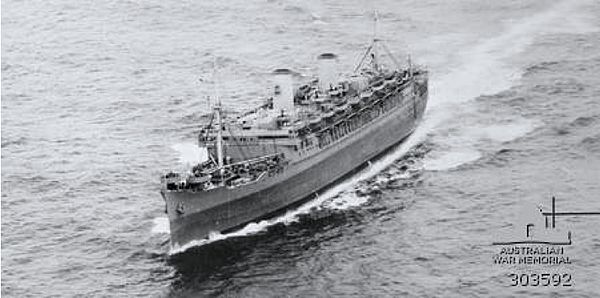
Your father lived in one of those tarpaper shacks for six months. I’m sure he had his turn rolling out of his cot at 4:30 am and priming the stove. He may have been lucky in the placement of his bunk, next to the little coal stove would have been as good as it got. Having a bunk on the end of the row would not be the best place to be in Minnesotas winter. Tarred paper is not among the greatest insulators. In fact it dwells pretty near the bottom. You can poke a pencil through it with no effort. Those shacks were drafty and pretty close to sleeping out of doors. In the morning they must have smelled. A confection of bad breath, farts, nearly dead hunks of coal giving off a noxious vapor and the clinging smell of cigarettes and uniforms they were not able to keep clean. Hanging just below the rafters a white cloud of condensed vapor from the mens breathing which would melt a drip as the room and the day heated. Soldiers had to do their own laundry, in tubs and basins outdoors with rough alkaline soap. Avoiding that chore would have been paramount.

Barracks at Camp Savage with stoves. US Army photo. 1943

Being young and soldiers they would have laughed at their predicament and blamed the army in no uncertain terms. Grousing soldiers have alway found the military to be the villain. SNAFU* was the word in WWII.
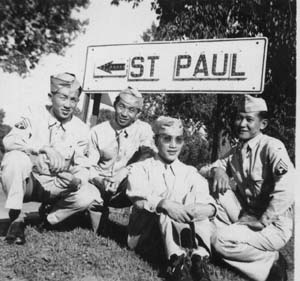
The classrooms were a better place to be. Semi-permanent buildings, well heated and clean would have been a relief. Luckily student were relieved of all the most basic duties that a soldier normally carried out. There was no drilling or inspections, no standing post in the middle of the night, all the little annoying things that the regular private has to put up with. The Army was desperate to prepare them for their combat jobs and made sure they had no more distractions than absolutely necessary.

After six months in the classroom, class C-10 at Camp Savage walked out of the classroom for the last time and stood in front of one of the remaining log buildings and stood for a class picture. Everyone smiling and glad to be through the grinding curriculum.

1942 1943 Camp Savage MIS Niseis. Your fathers class.

Hilo received a promotion to Tech five, an enlisted rank slightly below Corporal.** Like the others, he walked back to his hutment to open his official orders. He would have opened the manila envelope with the printed label, Official, Department of the Army and like all soldiers held his breath while he slid the paperwork out. Along with his service record was a single page warning him that he was now a holder of a Top Secret Clearance and was liable under the Uniform Code of Military Justice and the Official Secrets Act not to share or divulge any information as to his assignment or duty station under penalty of law.

Every MIS soldier carried a Secret designation. Information on the school and its graduates, their purpose was to be a closely held secret. This designation was to be enforced for a period of fifty years after WWII. The Military was concerned about the fact that they had interpreters in the Pacific theater whose importance could not be overstated.

Hilo’s parents who were housed at the Gila River, Arizona concentration camp had been visited by the FBI. Every MIS graduate had been thoroughly vetted before they were ordered overseas. This must have been very confusing to Hirokuni and Ito who would have been interrogated by two agents who gave them no information at all about the reason. Hilo wasn’t even mentioned during the questioning. The were and would remain completely ignorant of the reason until the war was over.

The second sheet of paper stated his destination; future duty station and was clipped to a set of official orders and travel vouchers. He was to report to Army headquarters in Oakland where he would travel by available transport to the Southwest Pacific Theater of Operations immediately. There would be no leave as Nisei soldiers were not yet allowed to enter the restricted zone to see family.*** Censorship rules meant that he could not tell them his destination just that he was being ordered overseas.

MIS interpreter PFC Geo Hara leaving for the Pacific, 1943. Densho Archive photo

Hilo himself wouldn’t have known his actual destination. He wouldn’t find out until his ship passed Hawaii so sensitive was military command. Some of the instructors at Savage were returnees and would have shared general information but not too much. He could have likely guessed that it would have been the Western Theater of Operations under General MacArthur but where? He was left to wonder.

Page Five coming Saturday November 23rd.

Destination, Southwest Pacific theater of operations and the real war.

Notes on text:

*SNAFU, Situation Normal, All f****d Up.

**The Army forbid the Nisei commissioned rank until late in the war. All MIS personnel were enlisted or noncommissioned rank.

*** Restrictions on visitation were lifted for servicemen in late 1943.

Links to other chapters in the series.

Page one: https://wordpress.com/post/atthetable2015.com/12268

Page two: https://wordpress.com/post/atthetable2015.com/12861

Page three: https://wordpress.com/post/atthetable2015.com/12872

Michael Shannon is a writer living in the Central Coast of California. He went to school with many children, whose parents were survivors of the camps in his little farming community of Arroyo Grande, California..

Standard

Dear Dona

Page Three

Written by Michael Shannon

A Hobson’s choice is a free choice in which only one thing is actually offered. The term is often used to describe an illusion that choices are available. That’s the military to a “T”

December 3rd, 1942.

At morning roll call, the Lieutenant called your father’s name. He was told to report to headquarters right after morning chow. Like any good soldier he asked what was up and like any good officer the Lieutenant wouldn’t tell him. So after breakfast he hustled over to the headquarters building and reported to the Top Kick, the first sergeant. Hilo would have entered the office, stood on the yellow footprints painted on the floor and announced himself. The sergeant merely looked up then rummaged on his desk until he found what he wanted, then said simply, “Your Orders.” “Where to Sarge?” “Camp Savage, you’d better pack your winter uniforms,” and he laughed.

Camp Savage, Minnesota home of the Military Intelligence Service Language School. Camp Savage was a World War II Japanese language school located in Savage, Minnesota, and was the training ground for many Japanese Americans who served in the U.S. military. The buildings were originally built during the Great Depression to house Civilian Conservation Corps (CCC) workers. In the rush to build up American forces the CCC tarpaper huts were put into service for the Nisei students. Part of Fort Snelling near Minneapolis, Savage was the new home of the language school. Originally located at the Presidio in San Francisco it was moved to the center of the country for the “safety” of the Nisei students. Californias attorney general Earl Warren a supporter of Executive Order 9066 signed by President Roosevelt on February 19, 1942: this order authorized the forced removal of all persons deemed a threat to national security from the West Coast to “relocation centers” further inland – resulting in the incarceration of Japanese Americans. You will note that the order only mentions “persons,” and not Japanese Americans, though the only removals just happened to be in the west. Germans and Italians weren’t moved anywhere.

Fort Snelling/Savage had a long history controversial acts by the US Government. Snelling is a former military fortification on the bluffs overlooking the confluence of the Minnesota and Mississippi Rivers. The military site was initially named Fort Saint Anthony, but it was renamed Fort Snelling once its construction was completed in 1825.

Before the American Civil War, the U.S. Army supported slavery at the fort by allowing its soldiers to bring their personal slaves. These included African Americans Dred Scott and Harriet Robinson Scott, who lived at the fort in the 1830s. In the 1840s, the Scotts sued for their freedom, arguing that having lived in “free territory” made them free, leading to the landmark United States Supreme Court case Dred Scott v. Sandford. In this ruling, the U.S. Supreme Court ruled that enslaved people were not citizens of the United States and, therefore, could not expect any protection from the federal government or the courts. The opinion also stated that Congress had no authority to ban slavery from a Federal territory. United States Supreme Court Chief Justice Roger B. Taney ruled that African Americans were not and could not be citizens. Taney wrote that the Founders’ words in the Declaration of Independence, “all men were created equal,” were never intended to apply to enslaved blacks, they not being “Men” under the laws of the United States.The decision of Scott v. Sandford is considered by many legal scholars to be the worst ever rendered by the Supreme Court. The ruling was overturned by the 13th and 14th amendments to the Constitution, which abolished slavery and declared all persons born in the United States to be citizens of the United States.

The fort served as the primary center for U.S. government forces during the Dakota War of 1862. It also was the site of the concentration camp where eastern Dakota and Ojibway tribes awaited riverboat transport in their forced removal from Minnesota to the Missouri River and then to Crow Creek by the Great Sioux Reservation.

Hilo went down to the transportation office to find out how he would get up to Minnesota, it was nearly 1,400 miles away and when he checked the newspaper in the PX he found out that the high temperature that day was 21 degrees and the low was -1. Not the temperate central California weather where he was from nor even Fort Bliss where it was 68. He reckoned the crack about winter uniforms was good advice. Of course, being the army they weren’t going to issue him any either. He figured he would have to wait until Minnesota.

In ’42, getting from Texas to Minnesota wasn’t easy. The Army would waste no effort in flying a lowly private anywhere, going by car was impossible for those who had them and even if they could get rationed gasoline, that was impossible for an enlisted man. The Army sent soldiers by bus here and there but getting a chit to travel that way was forbidden to the Nisei. With the war in the Pacific the military considered it too dangerous for Japanese Americans travel alone or by private transport. He went by passenger train. Switching railroads and constantly being sidetracked by military trains which had priority, the 1,400 mile trip took six days. He had to sleep on the train car’s benches and jump off at the stations where the train stopped to buy something to eat. Even for a 23 year old in the prime of life it was an exhausting trip although considering what was to come, it was a walk in the park.

He and the other boys kept up on the war news by reading newspapers to pass the time. While they were enroute, the US Navy lost the heavy cruiser USS Northhampton in the Battle of Tassafaronga in the Solomon Islands, sunk by Japanese Imperial Naval torpedos. They read that the Afrika Corps was being pushed into a corner in Tunisia by the Allied armies and their surrender was expected, though that wouldn’t be soon. While traveling to Camp Shelby they read that the US Marines had turned over the mission in Guadalcanal to the US Army which immediately was involved in very heavy fighting in the interior of the island. American and Australian troops finally pushed the Japanese out of Buna, New Guinea. New Guinea was a place Hilo would soon enough become familiar with. Unbeknownst to the travelers, below the bleachers of Stagg Field at the University of Chicago, a team led by Enrico Fermi initiates the first nuclear chain reaction. A coded message, “The Italian navigator has landed in the new world” is sent to President Roosevelt. The result would, in the end, save the lives many Mils soldiers, but that would come much later, too late for many.

Following Japan’s attack on Pearl Harbor, anti-Japanese sentiment and political expediency pushed President Franklin D. Roosevelt to order the army to set up Japanese internment camps in seven western states, that included Japanese Americans who volunteered at the U.S. Military Intelligence Service Language School in San Francisco. The school and volunteers had to move from the so-called “exclusion zone.”

All the western states but Colorado and Minnesota refused to host the school except Minnesota Gov. Harold Stassen who offered 132 acres of land in Savage to host the school. In 1942, Camp Savage was established. An old CCC camp and host to the Boy Scouts, it was run down and primitive. What buildings were still standing were augmented with the building of the cheapest of the military’s building, the loathed and ubiquitous tarpaper shack, the miserable hutment.

Hilo stepped down from the camp bus which had picked up the volunteers at the railroad station. He tossed his barracks bag up onto his shoulder and followed a Corporal who had been sent to get the. When they got to the headquarters building he turned, looked them up and down and over a big grin said, “you’ll be sorry,” followed by a laughter. Names Kobayashi,” he said, “Larry.” “Get checked in and I’ll take you to your quarters.”

Most of the men experienced for the first time the bitterly cold winter of Minnesota. Nearly all the students were from the temperate zones of the west. Some of the men suffered frostbites and persistent colds. The only source of warmth was the pot-bellied coal burning stove found in the classrooms and in the barracks. The stoves in the classrooms were kept burning by the school staff but the ones in the barracks were the responsibility of the students. If you had been designated barracks leader you usually had to wake up early at 4:30 am. to stoke up the stoves so that the rest of the men could rise and shine in a warmish barracks.

Classmates at Camp Savage. The Military Intelligence Service Language School, 1943. Densho Archive

The purpose of the school was for the volunteers to teach the Japanese language to military personnel. This skill could then be used to interrogate prisoners of war, translate captured documents and aid in the American war effort. A total of 6,000 students graduated from the school before it was moved to Fort Snelling in 1944.

The ancient Chines General Sun Tzu and philospher revered as one of the greatest military strategists, advised in his treatise that intelligence, procured from the enemy is the way to victory. George Washington set up an extensive intelligence system and it really hit it’s stride in the Civil War. Of the two types of intelligence strategic or long term planning and Tactical which concerns the enemy’s strength and location and is used to make immediate decisions on the actual battlefield.

The short but extremely intensive course was designed to meet the demands for linguists from field commanders in the Pacific. The studies included the study or review of the Japanese language, order of battle of the Japanese military forces, prisoner of war interrogation, radio intercept and many other subjects that could be of value in the field. Just to illustrate how intense our course was the kanji (ideographs) instructor would make us memorize seventy five characters a day just to make sure we remembered fifty for the next day’s test. Many of us studied using flashlights under our blankets after lights out at 2200 hours. Saturday mornings were devoted to examinations. Many woke up early, about 0400 hours, went to the latrine, sat on the commodes and studied for the tests under the meager lighting. The competition was so keen in class that the class grade average was in the mid-nineties.

The study week, Mondays through Fridays, consisted of classes from 8 to 12, a brief lunch break, classes from 1 to 5, a break for supper and compulsory supervised study from 7 to 9. Examinations were conducted on Saturday mornings. The soldiers were free from Saturday afternoon until Monday morning. The majority would hurry to the Twin Cities for Chinese food and movies. On Sundays most attended church services in St. Paul, where many students were befriended by a Mrs. Florence Glessner, who graciously invited the Nisei kids to luncheons and parties. Mrs. Glessner was a Red Cross volunteer and after graduation and assignment to the Infantry Divisions on Bougainville, the MIS soldiers made a collection from the members of the language detachments and sent the donation to the Red Cross through Mrs. Glessner. She later sent us a clipping from a Minneapolis newspaper about the donation “from her boys”.

Minnesotans rarely saw any Japanese-Americans and for the most part had little or no racial bias. Unlike the west coast where business and individuals were stripping evacuees of their property, houses, fishing boats and anything they could get their hands on the people of Minneapolis were giving dances and dinners to the kids at school. Showing an appreciation for the Nisei soldiers who were serving their country. Many students at the MISLS were astounded by this. Captain Kai Rasmussen, the camp’s first commanding officer was quoted as saying, “Minnesota was the perfect place because not only did the state have room for the school, but Minnesotans had room in their hearts for the boys.”

Your dad arrived at Savage after your grandparents had already arrived at Poston. It was very hard for them to communicate by mail. Nisei soldiers could not safely write in Japanese and in many cases the parents could not write in English. Letter were very carefully written, in your dads case probably by your aunts, He must have been worried sick about them and they him. They may not have even known where he was. If he got leave at the end of his class he would not even have been able to visit because in 1942, no Nisei soldier would have been allowed in the exclusion zone. When the restriction was lifted in 1944, he had already left for the Pacific war zone.

Tri-State High School, Poston Camp. 1943. Densho Archive.

The photo above is a sad commentary, but the two young ladies are a lesson in the girls resilient nature. Though held against their will behind razor wire they still managed to dress in the current fashion of young women. They wear saddle shoes, bobby sox, full knee length skirts, peter pan collars and sweaters, they would not be out of place in any high school in the nation. My mother dressed just like this. She was the same age

It was a rough go for them because almost al the students were from the exclusion zone and many had no idea where their families were. Lieutenant Paul Rusch, one of the senior instructors had spent decades in Japan as a Methodist missionary and knew the culture better than any other instructor. He lent a sympathetic ear. Students said they ween’t angry with the Army but that they were, “Just against everything that was happening with their families. We’re being treated as second class citizens and we hate it.” Imagine what it be like to be forced from your schools and home and cast adrift in a forbidding and alien place where only the most rudimentary life is possible. It was like life on another planet.

A widowed mother with six children in a strawberry field near Fresno. Two of her sons served in Italy and France with the 442nd Regimental Combat Team. She spent the war with her other four children in the Manzanar concentration camp in the Owens Valley of California.

Dear Dona page four

Coming November 8th, 2024

Unlike the American military where mail was censored and journals and diaries forbidden the Japanese Imperial Army thought the differences in language would make ordinary Japanese as indecipherable as any code to an American reader. The head instructors also knew that Japanese soldiers were brutalized by their superiors and would likely be resistant to the treatment the British were using on captured Afrika Corps German troops where violence and intimidation were routinely used. As many of the instructors had lived in Japan for extended periods of time they knew the Japanese were generally very kind and the spirit of co-operation was instilled in them from birth. The culture of Japan was bound to duty to the Emperor and higher authority. They believed that force would not be enough to get prisoners to break down……

Links to other chapters in the series.

Page one: https://wordpress.com/post/atthetable2015.com/12268

Page two: https://wordpress.com/post/atthetable2015.com/12861

Michael Shannon is a writer living in the Central Coast of California. He went to school with many survivors of the camps in his little farming community.

Standard

Dear Dona, 2

Written By Michael Shannon

Page Two

The living quarters of the Poston relocation camp, Poston, Arizona 1943. Pop: 18,000

Poston Camp

Endless rows of tar paper buildings housing six to eight families with no partitions, no toilets, no furniture and no running water. It was 88 degrees in April. They would not see temperatures under 100 degrees until Christmas. The camp was completely surrounded by nothing. No trees, no grass only desert scrub. On top of all that, it was not the worst of the all camps. I have a friend who remembers a little about life there. He was just a small boy from Guadalupe but he does remember the heat. Mothers tried soaking sheets and hanging them inside in the high summer. He said the little kids would run back and forth the length of the barracks purposely running through the wet and slightly cool sheets.

It’s pretty easy to form a picture of your great grandparents taking your dad to the old Greyhound bus depot at Mutt Anderson’s cafe, both wearing their best clothes as they did for important occasions. In 1941 they would have both been wearing hats, he in his Fedora and she with her go to church best, purse on her arm and those sensible heels women wore then. Mom holding a crushed linen hanky in her clenched hand. The family scene is always the same, father looking prideful and the mother just on the edge of tears but holding it all in so as not to embarrass. Hilo would have walked up the steps into the bus and found a seat, maybe at the window so he could look out and see mom and dad. All of them giving a subdued, shy wave as your grandparents hearts broke. Perhaps your mother was there too. My guess is she was.

Boarding the buses April, 1942

I well recall my own parents took me to the Greyhound in San Luis in 1966. My father proud, my mom doing her best to smile but visibly shaking. When the bus pulled out, I looked back to see her fall into my dads arms and bury her head in his shoulder. Just like your grandmother my mother had to go through the leave taking twice.

It is very different than sending a child in peacetime. Then they knew that the devil would take his due and this might be the last time the beloved boy would ever be home again. As always the future was grim and completely unknown.

George, Hisa and Yasbei Hirano with a picture of their son Hirano, Robert; Private; 442nd regimental combat team, 2nd Battalion Headquarters company; killed in action 26 June 1944 at Belvedere, France.

After enlistment your dad was sent basic training at Camp Roberts in San Miguel. He arrived there on the 29th of October and was assigned to Company B of the 82nd Training Battalion for 17 weeks of basic Infantry instruction. He was fortunate. By 1944 boot camp had been reduced to just eight weeks because of the expanding war and the urgent need for new soldiers. Basic is designed to teach you about the Army, it’s history, Its rules and how to operate as a group or groups of many different sizes. Your dad qualified as an expert marksman. He also passed courses in map reading, signals and hand grenade. He learned to fire the 80 mm mortar though he wasn’t assigned to a mortar platoon yet. Guys that weigh 125 pounds are too light to carry them so I’m sure he felt pretty fortunate. He stuck bayonets into canvas bags, fired the fifty caliber machine gun and could disassemble and reassemble his 1903 Springfield rifle with his eyes closed.

Just a week after Pearl Harbor he was headed for Fort Lewis Washington to join Company D, 162nd Infantry. The 162nd was a component of the 41st Division, Oregon National Guard which had been inducted into the regular army in late 1940. The beginning of WWII saw the various state National guards federalized for national defense. Strange as it may seem, the state you were from had little to do with where you were assigned during wartime. It was simply a matter of bodies needed.

While at Fort Washington which is near Tacoma he received further training as a mortar man. The military seems to have a perverse way of surprising you. He qualified as an assistant gunner in February and was re-assigned to the 138th infantry regiment of the Missouri National Guard. The Missourians had probably never met a Nisei since the 126,000 thousand plus Japanese in America were almost exclusively living in the far west, primarily California. One of the great things about the army is the mingling of kids that are from parts of the country where their upbringing and customs are so different. A sort of culture shock takes place at first until they learn that at heart they are not so different. I think you can say that your father like many kids, remember he was just 22, was getting a real education about the country he lived in that didn’t come from any textbook.

The 138th was ordered to Alaska that same month. Going with them would be Private Hiraoki Fuchiwaki, assistant gunner on a mortar crew. Right, a mortar crew for which he was deemed to light too carry. Thats the army for you.

Your dad’s commanding officer was Colonel Archie Roosevelt one of Theodore Roosevelt’s four sons who served in both WWI and WWII. Archie was the only one who survived. Quentin Roosevelt was the youngest son of President Theodore Roosevelt and Edith Roosevelt. Inspired by his father and siblings, he joined the United States Army Air Service where he became a pursuit pilot during World War I. He was killed in aerial combat over France on Bastille Day, 1918. Ted, the oldest died soon after the Normandy invasion. He was a Brigadier General and died of a heart attack while leading his troops. He was awarded the Congressional Medal of Honor for Bravery. Kermit died after serving in North Africa in action against the Afrika Corps and then fighting the Japanese in Alaska.

I mention the above because the sense of duty people felt was different then. Wealthy, educated and privileged kids stepped up. Sons of bankers (Clair Gibson, Army Air Corps), Judges, (Jim Moore, Navy Seabees) and the well-off who could have wangled a deferment but stepped up to the head of the line. (John Loomis, Marines) The list from Arroyo Grande is long and represented are kids from all walks of life. Grown-ups you knew in school who were your teachers, Del Holloway, Army, Cliff Boswell and Al Sperling, Air Corps, your neighbors, Gordon Dixon, Army, Ace Porter, Army, James Mankins, Army, all three Baxter boys, Don, Bill and Tommy, Navy, Maxine Bruce, Chuck Bells mother and Virginia Campodonico, from the Nipomo clan. Both were Army nurses who served overseas. Your father must have felt the same, that he owed it to his country to serve. He and your uncle were amongst hundreds of young men and women who volunteered from our county.

Many Nisei volunteered out of the camps, the ultimate irony, jailed and held under guard by a suspicious government they nevertheless took it upon themselves to serve a country who didn’t want them.

It wasn’t only the boys either. we wasted the girls and young children, five years stolen from young lives. High school girls with an entire life before them were ripped from school, loaded on buses and taken on the long drive to barbed wire compounds guarded with machine guns. Some would be held until 1948. A single drop of Japanese blood was all it took. Adopted kids went, mixed race kids too. Even white kids raised in Japanese homes. A young man whose mother was half Japanese was at Manzanar. He said because he was mostly white he was allowed to go to high school in Lone Pine where the other kids called him “The Jap.”

Arroyo Grande High School Graduates class of 1941. Courtesy AGHS

Sixteen or seventeen year old kids of any generation are ill equipped to understand the why of it. The transfer must have been stunning. The Nisei in Arroyo Grande High Schools class of 1941 represented a full 22 percent or more than one in five pupils. Every former student interviewed made a point of saying that there was no bias with the Japanese American kids and in fact they were fully integrated into school life.

Chimiko Alice Fuchiwaki. Prisoner #882, Pima, Sacaton, Gila River camp. Arrived Sept 1, 1942, Departed May 3,1945. She was given an early release to go to Colorado for work. Chimmie never returned to Arroyo Grande. More than half of all the Nisei from Arroyo Grande never returned. The 1943 yearbook had no Nisei grads and almost no boys of any race. The war was in full swing in America.

Called to headquarters just before departure for Alaska your father was given a new set of orders. It was the cold finger of the federal governments Japanese re-location program. Even though neither your father or brother was in camp, they had both enlisted before the war, they are listed as internees in camp documents. There was no escape. When you were on laeave you could only go home, nowhere else. The reaction to the attack on Pearl Harbor was a disaster for the Japanese on the west coast. The war department had suspended enlistments from the Nisei and was pondering discharging all soldiers of Japanese decent. In the meantime they were withdrawn from their units and essentially parked at army bases in the middle of the country until it was decided what to do with them. Your dad was sent by train to Fort Bliss, Texas. He traveled along with other Nisei soldiers on trains with window shades drawn so as to not draw any attention to them. Fort Bliss was the perfect place. Located in West Texas just north of the Mexican border you can hide anything in its 1.12 million acres of scrub desert in El Paso County.

At the time Fort Bliss, was an old Cavalry base dating to post Civil War, it still had a barracks named for Robert E Lee. Don’t forget that Texas was part of the Confederacy. Run down after two decades of governmental neglect, it held a hodge podge of military from the “Old Ironsides” 1st cavalry division (Armored) to Nisei units waiting to be shipped to Mississippi for infantry training with the 442nd or up to Minnesota to the language schools. Afrika Corps POW’s were also interned there right next to Japanese Americans held in concentration camps. The Japanese were behind barbed wire, the Germans were not. Some irony there.

The 138th’s experience in Alaska was a disaster and your dad was extremely lucky to have missed it. Deployed to the island of Kiska in the brutal cold and perennial fog, the new and untried soldiers saw shadows everywhere. One dismal night of combat saw thirty soldiers killed and fifty wounded all by friendly fire. The Nisei soldiers were justifiably terrified of being shot by their own comrades. It was soon apparent that the Japanese had evacuated the island before the 138th had even arrived. Diaries and un-mailed letters left behind and read by MILS interpreters made it clear the Japanese soldiers hated the war and wanted to go home. So did the Americans. Operation Cottage was a dismal failure. General Simon Bolivar Buckner Jr. who was in charge of the Alaska campaign said, “The invasion of Kiska was a great big, juicy, expensive mistake.” General Buckner would cross paths with the Nisei and the MILS again in the far Pacific in 1945.

138th regiment, mortar crew, Kiska Island, Alaska. 1942 War Dept. photo

Assigned to random make work duties the Nisei soldiers had no idea what their fate would be. Back home their families were packing their one suitcase of belongings and preparing to be bussed out to holding centers where they would await their assignments to the infamous relocation camps where they were destined to spent the war. Your grandparents and your aunts were taken to Tulare where they were housed at the county fairgrounds, keeping house in dirty old horses stalls. Everything they had other than the one suitcase was left behind to be stolen or destroyed by vandals. Neither of their sons could do anything to help. It must have been agonizing. As soon as the half completed camps were ready, your grandparents and your aunts were taken by train to Poston, Arizona and then trucked to the Gila River concentration camps. They at least were able to see friends from Arroyo Grande, the Saruwataris, Kobaras, Hayashis, Ikedas, Fukuharas and the Nakayamas were all there. They would have to make a new life there. They could no longer dream of a future. They would have to bear what could not be born. ( Shikata Ga Nai )

After eight months in Texas, he and the other Japanese boys were ordered to a barracks building where an officer with the Military Intelligence Service presented an opportunity to leave Fort Bliss. He said the army was looking for soldiers who had knowledge of the Japanese language. Could they speak it, or write it? Had they spent any time in Japan attending Japanese schools? The army had figured out that since they had no one who could speak or write Japanese they were going to be at a great disadvantage when they began their cross Pacific advance where the were sure to have captured Japanese soldiers and workers.

Those who could were encouraged to apply to the school and take a test which would qualify them for jobs as interpreters in the Army’s Intelligence Services.

Both your dad and uncle spoke, read and wrote Japanese. Your grandmother is listed as a Japanese speaker on her census forms so Japanese was spoken in the home. They both qualified as speakers and it’s very likely they attended the old Japanese school off Cherry Lane. They would have gone there after school to study reading and writing and the customs and history of Japan. How seriously its hard to say. In some of my interviews there was a lot of laughter about how serious they were. As one man said, “We hated it, we were American kids after all, not Japanese,” but we had to go.

For the Fuchiwaki boys it was to pay off. Ben was already at Presidio in San Francisco studying at the Military Language Institute while Hilo was in Texas being bored. Volunteering is simply not done in the military, at least not often. Soldiers know better. The thought is, if you volunteer for a duty you want, the army will make sure you never get it. But it was Texas, flat, dusty, desert Texas at that and if volunteering might get them a transfer and out of there, why not? The thinking was that at least it could turn out to be an important job.

All the candidates who volunteered were whisked off to an empty barracks building and spent two grueling days test taking. They were tested on the spoken word; They were tested on reading and writing and finally at the end, a sit down interview by a senior enlisted man from the language institute. White officers were present but not as interviewers because the Army only had a very few who had any fluency in Japanese at all. The interviewers were enlisted, non-officers because it was Army policy that no Japanese Americans could rise above the rank of Sergeant. At the time all Nisei units were commanded by white officers.

Your dad would have had no real idea of how he did on the tests. The military rarely gives a grade to the one taking any test. So, they waited….and waited, and waited some more. Some volunteers waited weeks before they were called in for final interviews. The waiting was just the military way. It was and is something that sailors, Marines and soldiers soon get used to. “Hurry up, and wait” has been the way since long before Alexander the Great. Never changed, never will.

As time passed, the Nisei soldiers began to see what their future might be. It had become common knowledge that because of manpower needs the War Department had decided not to discharge the Nisei but to incorporate them into new, all-Japanese units which would eventually be sent to the European theater and in particular Italy thus solving the issue of Japanese Americans fighting the Imperial Japanese.

The 100th Infantry was the initial unit which was made up of Nisei boys from Hawaii and the west coast who had been enlisted before Pearl Harbor. Later, the 100th would be integrated into the 442 Regimental Combat Team which did see terrible combat in the climb up the boot of Italy. The 442nd was to become the most decorated small unit, ever, in US Army history. Those kids felt they had something to prove and they laid down their lives by the thousands to do it. As happens in wartime, hard fighting units are “used up.” They are sent into combat again and again until they are ground down to nothing. Such it was with 442nd. A difficult objective and they were first in line. Their patriotism and the racist general who was their commander who was looking for promotion from his own superiors guaranteed that.

Your dad, if accepted in the language program might be spared combat for the time being, Nisei troops were already being sent for combat training. For one year, the men trained at Camp McCoy in Wisconsin and Camp Shelby in Mississippi. In May 1943, the 100th participated in training maneuvers in Louisiana. That August, the 100th deployed across the Atlantic to the Mediterranean where they took part in the Italian campaign. The men selected the motto “Remember Pearl Harbor,” to reflect their anger at the attack on their country. In Hawaiian slang they said, “Go For Broke.” They did just that too.

Hardly anyone here remembers that but when I lived in Hawaii just two decades after the war, those soldiers had used the GI Bill to go to college. They ran the unions and the banks. They were college professors and business owners. The Nisei had gone from the cane fields to the corporate office in one generation. “Go for Broke” they said and they did.

Dear Dona

Page Three

Hobson’s choice is a free choice in which only one thing is actually offered. The term is often used to describe an illusion that choices are available. That’s the military to a “T”

December 3rd, 1942.

At morning roll call, the Lieutenant called your father’s name. He was told to report to headquarters right after morning chow. Like any good soldier he asked what was up and like any good officer the Lieutenant wouldn’t tell him. So after breakfast he hustled over to the headquarters building and reported to the Top Kick, the first sergeant. Hilo would have entered the office, stood on the yellow footprints painted on the floor and announced himself. The sergeant merely looked up then rummaged on his desk until he found what he wanted, then said simply, “Your Orders.” “Where to Sarge?” “Camp Savage, you’d better pack your winter uniforms,” and he laughed……

Coming November 2nd

Link to Dear Dona page one: https://wordpress.com/post/atthetable2015.com/12268

The writer is a lifetime resident of Arroyo Grande California and writes so his children will know the place where they grew up.

Standard