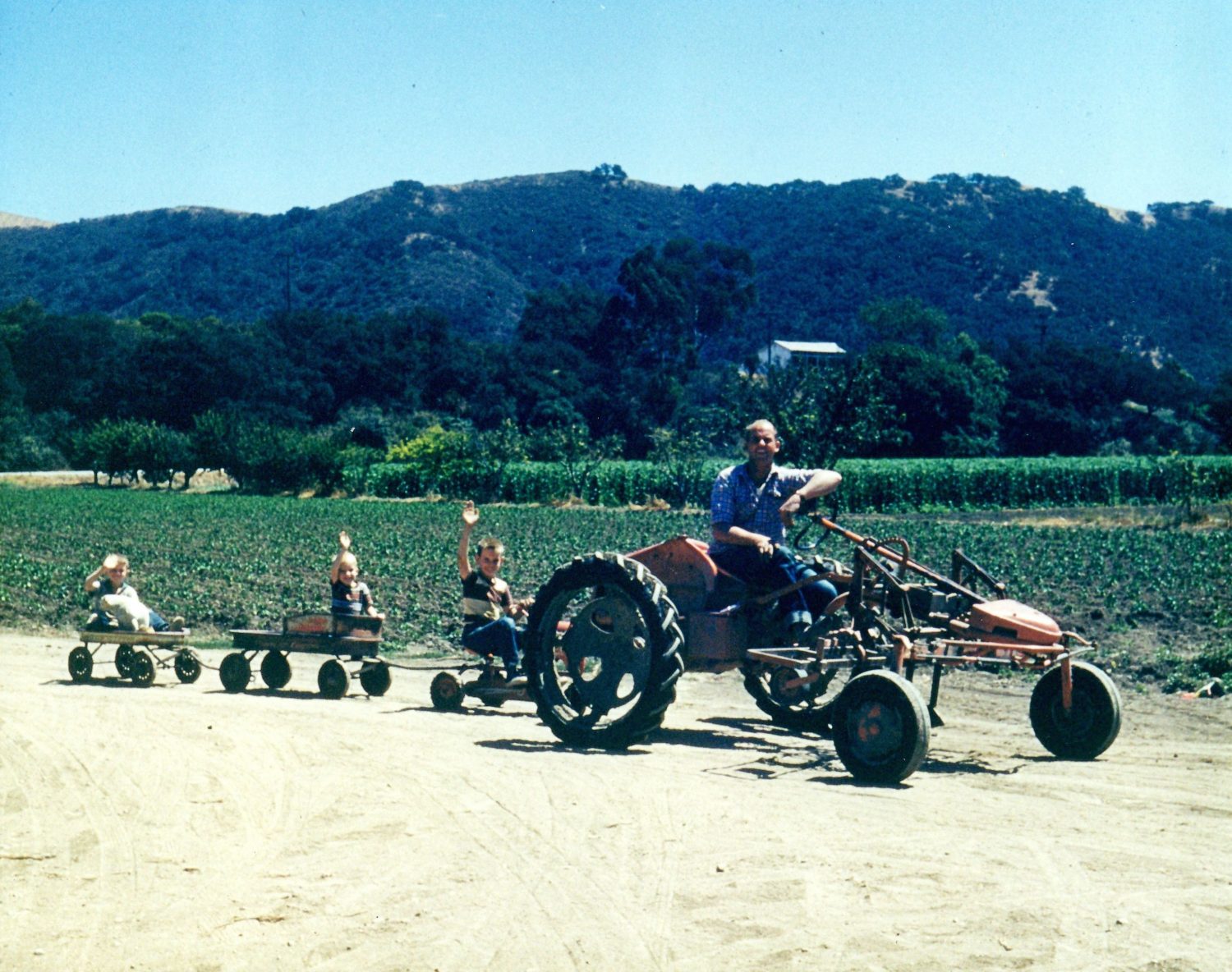
Michael Shannon
I once lived in a place at the end of a long dusty red road surrounded by cane fields that reached twelve feet into the air. Seen from my window towering Mount Ka’ala soared into the painfully blue sky. Often wreathed in towering cumulous clouds that could turn angry at the end of the day, flashing lightning above the rugged canyon that made up the fragment of the once immense Wai’anae volcano. Lightning was sometimes accompanied by the contrapuntal booming of 155mm cannon from the upper reaches of Schofield barracks near Kole Kole pass where the Japanese Imperial Navy’s aircraft flew on their way to Pearl Harbor on that Infamous day. The old stuccoed barracks at Hickam Field still bore the scars of Japanese machine guns.
The little collection of five army surplus Quonset huts standing in a row each one with it’s front porch, all in a line like the dusty boots of the soldiers who once lived in them. They faced a dirt road lined with long thorn Kiawe bush which defined the hidden enclave. It was surfer heaven and had been occupied by itinerant surfers for years. Behind them an orchard of Papaya trees surrounded by ponds where Mister Domingo grew Taro in a large pond which with the right light shimmered like Edouard Manet’s lillies.
Painted a dusty olive green, faded from thirty years of Hawaiian winters and summers they were perfect living for young people who didn’t require much. My house had two bedrooms a bath, kitchen and living room. Windows down each side from which the glass had been removed and replaced with screen. When it was hot in the summer it doubled the ventilation and when it was simply too hot a lawn sprinkler on the metal roof cooled things down.
Except for one thing. The rampart of the Wai’anae rose above us like a looming wave blocking television and AM radio signals beamed from Honolulu. The only radio, the only radio was FM and the only FM was NPR. Hawai’i Public Radio.
Somehow the long waves of the FM signal crested the mountains and the great saddle where the road came down from the Dole pineapple fields and Wahiawa town to Haleiwa.
It might seem like this lack of entertainment was a burden but in fact for me a veteran of long sailing voyages where the main entertainment was reading it provide no great burden. A good turntable and stacks of albums to listen to and a valid library card hours were filled with a sort of self education uninterrupted by images of Thomas Magnum driving his red car the wrong way on local roads. I didn’t know Archie Bunker though if I had I might have considered that a loss, the same for MASH* but I’d grown up in a family where there were several Archies and a couple of Batchelor farmers who could have given Garrison Keillor’s a run for their money so that base was pretty much covered. Chief petty officers and crusty old Bosu’ns mates served as part of the cynics education.
With a mind undisturbed by television it left radio as the only real outside over the air entertainment. Think of what you could do with just a couple hours of the day not occupied with essentially mindless TV shows which were and are nearly identical to one another. Perhaps not exactly carbon copies but they certainly rhyme.
Think about how different your life might be without those kinds of entertainments. I moved away from my hometown when I was 19 and never owned a television until 18 years later. How might your education have be different.
Fiona Ritchie, yes that Fiona Ritchie. Growing up in an American Irish family I rarely ever heard anything about the actual Irish. My grandfather would stand by the old piano that was my grandmothers* and sing of Mother Machree, a song from 1910. The song lyrics contain the words “I kiss the dear fingers so toil worn for me. Oh God bless you and keep you Mother Machree”. “Machree” is an Anglicization of the Irish mo chroí, an exclamation meaning “my heart.”
Fiona Ritchie hosted a program on NPR for 40 years which highlighted Celtic music and history. What other Radio station can say that?
Nights in the “Country” as it was called, that rural stretch of homes and villages along Oahu’s north shore were on Saturday night, was highlighted by Garrison Keillor’s “Prairie Home Companion.” It could only be called a variety radio show patterned in the old style by musical guests, skits, there was Guy Noir, private eye, where Guy dodged bullets, defeated the villain and escaped the clutches of fallen women reminiscent of the fabulous Gloria Grahame at the hight of her evil powers.
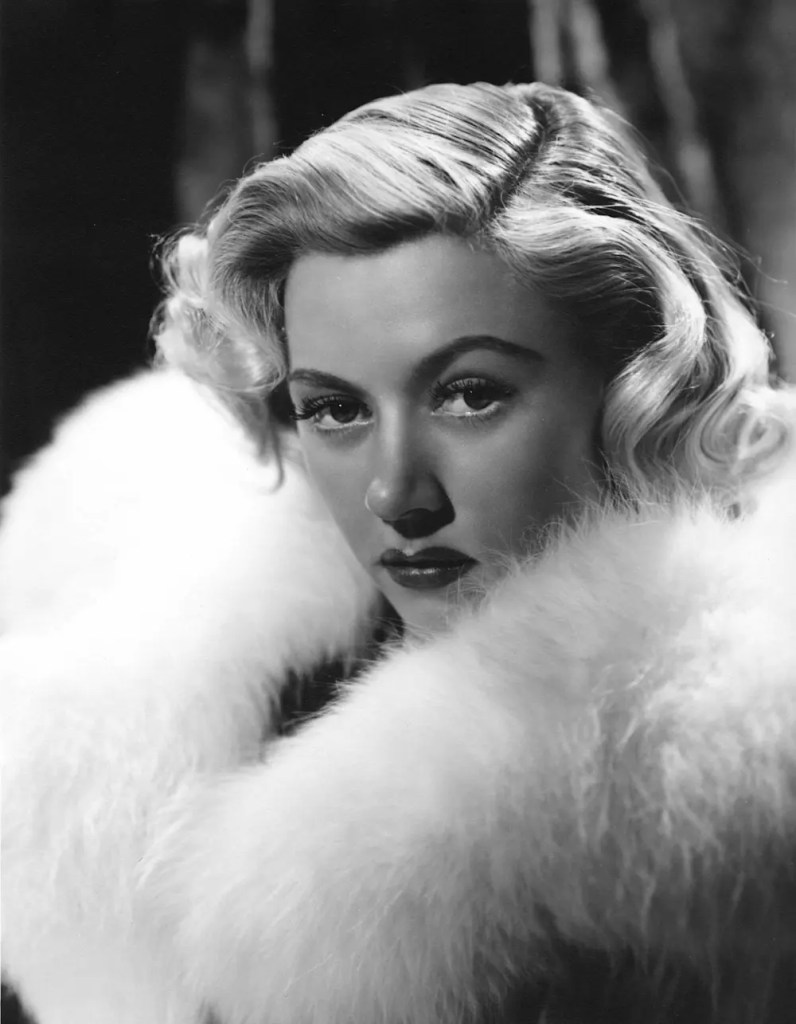
Gloria Grahame, Hard Luck Woman.
Birthdays were celebrated on NP. Such as the birthday of French aviator and writer Antoine de Saint-Exupéry , born in Lyons in 1900. He joined the French army in 1921, and that’s where he flew his first plane. He left the military five yearsR later and began flying airmail routes into the Sahara Desert, eventually becoming the director of a remote airfield in Rio de Oro. Living conditions were Spartan, but he said, “I have never loved my house more than when I lived in the desert.” He wrote his first novel, Southern Mail (1929), in the Sahara and never lost his love for the desert.
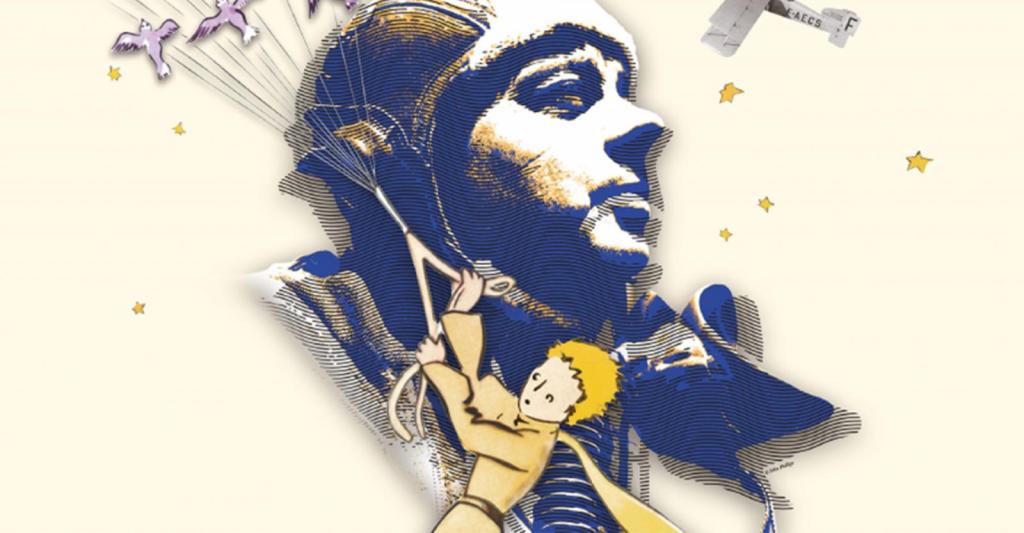
In 1929, he moved to South America to fly the mail through the Andes, and he later returned to carry the post between Casablanca and Port-Étienne. He worked as a test pilot and a journalist throughout the 1930s, and survived several plane crashes. He also got married in 1931, to Consuelo Gómez Carrillo. She wrote of him in her memoir, “He wasn’t like other people, but like a child or an angel who has fallen down from the sky.”
He rejoined the French army upon the outbreak of World War II, but when the Nazis invaded France in 1940, he fled to the United States, hoping to serve the U.S. forces as a fighter pilot. He was turned down because of his age, and, homesick and discouraged, he began his best-known book, The Little Prince (1943). The following year, he returned to North Africa to fly a warplane for France. He took off on a mission on July 31, 1944, and was never heard from again.
Both the event and the dream are the same.
The thing about NPR programs is how esoteric the subjects could be. Who in the world today ever thinks about Maud Gonne, well someone at National Public Radio did.
They celebrated the birthday of the Irish revolutionary Maud Gonne, the lifelong muse of poet W.B. Yeats, born in Surrey, England (1865). She and Yeats first met when they were both 25 years old. He fell in love with her immediately and remained in love for the rest of his life. William Butler Yeats introduced me to the saying “Education is not the filling of a pail, but the lighting of a fire,” something which has stuck with me all my life. I first heard it read over NPR.
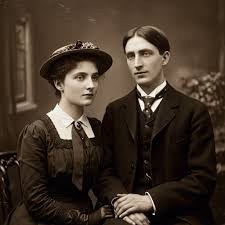
Maud and W B.
Yeats, one of the finest poets who has ever written in the English language said of her, Maud was tall and exquisitely beautiful. He wrote, “I had never thought to see in a living woman such great beauty. A complexion like the blossom of apples. Her movements were worthy of her form.”
NPR was divided into blocks of time. Disc Jockeys, though they never seemed to me to be exactly that because they seemingly invited youu into their homes where you could relax on the couch, close your eyes and feast on music from all across the globe. Mexican Corridos, traditional Mexican narrative ballads, essentially story-songs that chronicle heroic deeds, historical events, outlaws, love, or current affairs, acting as an oral history of Mexican and Mexican-American culture. Radio is where I first heard the Corridos de la Revolución Mexicana.** Victor Jara’s haunting ballad of the life of Francisco Villa.
There I first heard the hauntingly beautiful ballads of Edith Piaf and the Gypsy guitarist Django Reinhardt, both of whom sat at a cafe table outside Les Duex Magots with the likes of Simone de Beauvoir and Jean-Paul Sartre, as well as Ernest Hemingway, Cole Porter and the exquisitely beautiful and brilliant Martha Gellhorn who was the only woman to have sense enough to divorce Ernest.
I drifted in dreams of West African music. Fela Kuti, Niwel Tsumbu, and Habib Koite,*** both from central west Africa. Music from Turkiye, Egypt and the ancient kingdoms of Persia. North African Taureg ballads made your hair stand on end. Japanese recordings of western music played on traditional instruments include the Koto (zither), Shamisen (lute), Shakuhachi (bamboo flute), and the Taiko (drums). Imagine John Lennon’s music and Handel played that way.
Sunday afternoon opera, wow, wow, wow. Bertold Brecht and his modern day, 1931 mind you, “Three Penny opera.” My introduction to lotte Lenya, Lucy Brown and Macheath with his blood slippery blade. Bobby Darin can’t hold a candle to the original. “The Threepenny Opera” was banned by Hitler’s propaganda office because of its socialist themes. This was an attack on Bertolt Brecht’s writing but also an attack on performing actors and the audiences attending musical theatre.
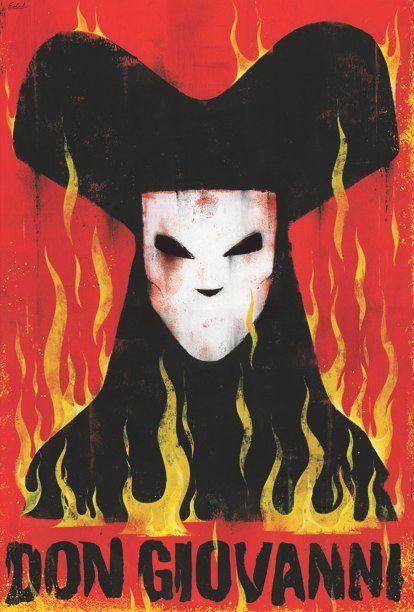
Mozarts Don Giovanni, Its subject is a centuries-old Spanish legend about a the Libertine as told by playwright Tirso de Molina in his 1630 play El burlador de Sevilla y convidado de piedra. The opera lives in popular culture with the pejorative “He’s acting like he thinks he’s a Don Juan.” I was prompted to actually go see it at the HIC, the Honolulu International Concert Hall. I didn’t own a suit, being a surfer and all. I wore my best silky shirt and a pair of long pants, you live in Hawaii, you don’t need much of a wardrobe. They let me in anyway. That concert is on my list of life changing events.
Hawai’i Public Radio also gets some credit for exposing the wonderful blend of musical styles personified by Gabby Pahinui and his extended family and friends who helped kick start a resurgence of Hawai’ian culture amongst the residents of the islands.*****
Talk show, documentaries, history and music from every corner of the globe. No; no commercials or advertisements of any kind.
Signed into law by President Lyndon Johnson in 1967 the Corporation for Public Broadcasting, “A Private Corporation Funded by the American People for the American people” the Corporation for Public Broadcasting helped to turn a public good into public media that informs, educates, and connects all Americans.
It’s not just NPR radio either, Mister Rogers, Sesame Street and the fabulous Miss Frizzle and her magic School Bus on which kids explored the universe. Reading Rainbow, Bill Nye the Science Guy, Arthur, Barney & Friends, Where in the World is Carmen San Diego?, and 3-2-1 Contact, alongside This Old House, and Wall $treet Week, offering a blend of entertainment and learning for all ages. Oh my goodness, Newton’s Apple. This pioneering PBS family science series answered basic science questions from viewers with hands-on experiments and field trips.
All of Ken Burns, Lucy Worsley where you could hear the background story of Henry 8 and his doomed bride Ann. How about Nova and the American Experience, Finding Your Roots and Call the Midwife?
As an individual I have supported local public radio for nearly fifty years and have been amply rewarded. Think about the Live Oak festival. What for profit station would do something like that. Music festivals all over the country are used as fund raisers to keep Public Radio stations alive. In the big western states NPR is quite possibly the only radio station where people can get the local news, disaster information or any radio programming at all.
As you may know public broadcasting is now on its own financially. The Corporation for Public Broadcasting has been killed by a government who has no interest in any communication that isn’t owned by corporate interests and filtered through the White House. Fox can send a very big check to a politician’s re-election fund but you can bet that KCBX in San Luis Obispo cannot, it’s not allowed. Getting rid of CPB is a national disgrace. The idea is to shut them up. Intelligent programming might cause the voting public to stop and think, “What is going on here?” Children’s minds might be set aflame as my old friend Bill Donovan once said. Every thing else is targeted, censured information controlled by special interests. You are going to know what those interests want you to know.
Newton Minow a member of JFK’s FCC became one of the best-known and respected—if sometimes controversial—political figures of the early 1960s because of his criticism of commercial television. In a speech given to the National Association of Broadcasters convention on May 9, 1961, he was extremely critical of television broadcasters for not doing more, in Minow’s view, to serve the public interest. His phrase “vast wasteland” is remembered years after the speech.
Nevertheless he was instrumental in crafting the law that became the Corporation for Public Broadcasting which I believe has served this country will for over half a century. It has certainly brought my family a great deal.
Two last things, the current president didn’t bother with congressional debate he simply took it upon himself to strip away it’s budget. The White House does not care. The idea is to stifle dissent in order to get it’s way. You can bet on that if you study history. It’s not the first or last time something like this has been done.
A group of people in Hawai’i who felt the need for an independant voice decided to launch a station to carry National Public Radio’s programming. In 1976, they incorporated, calling themselves Hawaii Islands Public Radio. “We were an enthusiastic bunch,” “Plenty of enthusiasm … not much accomplished.” Business leaders and cultural groups stepped up and in 1976, flipped a switch in a jury-rigged studio on the University of Hawaii’s Manoa’s wrestling room and Mahler’s “Das Lied von der Erde”*** streamed out on Hawaii Public Radio’s first broadcast. That was our station on the North Shore.
I will certainly be reminded by people I know that any fidelity to NPR makes me Liberal Scum, there are those I know who love to “Own the Libs” and will take any opportunity to do so. To them I say dig a little deeper and don’t just parrot the company line.
And by the way, turn off Downton Abbey. You won’t get it for free anymore. Commercial, commercial commercial.
Send in a pledge at Pledge time, please.
-30-
Dedicated to my friends Andrew Harp and Steve Dorsey, people who made it happen.
*See “The Old Eighty Eight” in the contents. https://atthetable2015.com/2022/01/08/the-old-88/
**https://www.facebook.com/watch/?v=699604152486917 Jara was brutally tortured in the Estadio Nacional and died on September 15, 1973. His lifeless body was found in a pile of corpses, his hands and wrists broken, and his body riddled with 44 bullet wounds. He was 40 years old at the time of his execution.
***https://www.youtube.com/watch?v=h5_HfjcjR_M “Wassiye” Habib Koite.
****https://www.youtube.com/watch?v=4xbcvp0ATAY Mahler’s Das Lied Von Der Erde
*****https://www.tiktok.com/@pbshawaii/video/7173784093128150315 Gabby Pahinui and Peter Moon jr.
Michael Shannon lives and writes in Arroyo Grande, California.
 atthetable2015