
By Michael Shannon
Branch Bee Staff
The Fourth Estate. The place where Randolph Hearst, Joseph Pulitzer, Colonel McCormick and William Cullen Bryant stalked the newspaper world. A big world. Fortunes made and lost. Top of the heap, down in the dumps. Writers have witnessed it all. Stanley wrote of the search for Livingston, Nelly Bly circled the world in 72 days, Jimmy Breslin knew the gang that couldn’t shoot straight, Martha Gelhorn, who famously dumped her husband Ernest Hemingway and covered every major war in her 60 year career and Ernie Pyle, champion of the little guy, reporters all.
In my time growing up we read the famous columnists at our kitchen table. Herb Caen, a California institution in his own right. Mike Royko out of Chicago and Molly Ivins, the greatest writer Texas ever produced. Mom always checked Dear Abby for advice on handling her three young boys. Jimmy Breslin and Pete Hamill out of New York were both exceptional. Jim Murray the LA Times sports writer gave us the news on the Dodgers. Most of our best American writers came from the papers. For the Bon Mot, Dorothy Parker, He of the gimlet eye, James J. Kilpatrick, the unrivaled National Review election-year must-read: He had the knowledge that comes from having done it forever, and the skill in evocation that comes only from genius.
The earliest form of writing is believed to be of Mesopotamian origin. The Bronze age saw the first representation of “True” writing where symbols represented sounds. Previous systems, which we still use in things like math were symbols that are essentially pictographs. Beginning roughly three and a half millennia ago, the written word appeared independently in China, North Africa, Central America and the Middle East.
Johann Carolus (1575-1634) was the publisher of the Relation aller Furnemmen und gedenckwurdigen Historien (Collection of all Distinguished and Commemorable News). The Relation’ is recognized by the World Association of Newspapers, as well as many authors, as the world’s first newspaper. Not a very “Snappy” name if you ask me but it was the first.
For my classmates and I, three hundred fifty five years later a newspaper appeared at our school, Branch Grade School. It was our own.

Branch Grade School. 1957.
Who birthed the idea I don’t know. When you attend a school with less than sixty kids, taught by just two teachers an idea can come from anywhere. Curriculum was flexible in those days. It had to be. Mrs Edith Brown taught grades one through four in one classroom and Miss Elizabeth Holland taught 5-8 in the other. Older kids taught younger ones.
Curriculum was flexible. We still used some textbooks published in the 1920’s with the names of former students written on the flyleaf who were the fathers and grandmothers of my classmates. There are photos taken in front of the school taken generations ago with the same names as there are today. Such is the way small rural schools have always connected with their communities. Every single event at the school was attended by the families. Every parents was involved in some way with their kids. The Dads painted the building and kept the grounds. They installed playground equipment. I remember the excitement when the very first Teeter Totter arrived in the fifties. Moms cranked out costumes for All-Hallows eve, They sewed for school plays and produced bushels of cookies for any event.
Projectors showing movies were operated by eighth grade boys. Kids were expected to help out when needed. The janitor, Mrs Fernamburg was on the school board and drove the bus. Like I said flexible. We learned all kinds of things not in text. We are better off for it.
So whomever thought to create a school newspaper was a genius. The Bee, as it was called published for three years from 1957 through 1959. There was no regular schedule. We printed them out when we had enough to say that we thought was important. Important to kids I mean.
Nearly everything was done at school then. Halloween Carnivals, school plays, Christmas celebrations, and eighth grade graduations. The 4-H club met at school, The school board had their meetings in the old schoolhouse. Most people didn’t have TVs they could plunk the kids in front of, no one played organized baseball or any other team games, that was for town kids. Country kids had to find other things to do. Those are the things we wrote about.
We wrote about the bats in the girls bathroom. Somehow the bats preferred the girls side of the old outdoor toilets. Only the bats knew why. We told of the new teacher policy that allowed us to bring our Fanner Fifties to school. Gun Day it was called. It lasted a while until someone was beaned, which was inevitable, boys being boys. Teacher put on a bandage and Gun Day was quickly forgotten. It was in the paper though. No parent complaints, no punishment. As you might imagine things were different then. No one expected the school to raise their kids.
For practical reasons nearly every kid who could put two letters together was on the staff. We probably had a larger staff in proportion to our readers than the Los Angeles Times.

Just like a real newspaper our little journal chronicled the goings on of our little community.
Alvin Evenson reported on the birth of his little brother Edward and opined that he cried too much. All night, as a matter of fact. Anyone who doesn’t know the Evenson family might wonder why he was bothered but those of us who went to school with the hordes of Evenson kids understood. Big, big family, small , small house.
Jerry Shannon and Raymond Samaniego reported the weather. With every kid in school tied to the land, weather was an important topic. Crops fail because of bad weather, rain, too much fog, high winds and extreme heat. Every student heard talk of weather around the kitchen table. Since almost all homes were still on dirt roads knowing when your chidren were going to have muddy feet helped mothers know when to have oven space in order to have shoes dried out for the next morning. No kid liked taking those first steps in shoes bent like potato chips. Mrs Fernamburg watched the weather because nearly sixty pairs of muddy shoes made her janitor work that much harder.
David and Alcides, Al, Coehlo wrote a cute little story about their new puppies Tippy and Daisy. They were purebred Borderers and would be trained for herding sheep though I don’t recall my friends having enough sheep to herd, but little boys and girls and puppies, well, you know.
Eighth grader Barbara Durham wrote an article about visiting the county courthouse with the student from Oak Park School. They sat in Judge Lyons courtroom and he explained the law to them and how county courts work. She informed us that the county clerk allotted $7,000.00 for Oak Park’s budget and $22,000.00 for Branch. We had three times the number of kids and two teachers, that being the difference. She said the students helped the county jail trustees prepare their lunch and they washed dishes too. Imagine that today if you will.
James Frisk, another eighth grader told of two sophmore HS boys who put a rubber raft into the storm swollen Arroyo Grande creek just below the Harris bridge. If you’ve ever seen the gorge the creek runs through there you can imagine how much water was flowing past. The boys rode down to the gauge by the old high school where they tried to get out with help from some strategically placed friends. That plan went by the wayside and they ended up getting pulled out just above the hwy. 1 bridge. Because the levee had failed and the bridge was under water they narrowly avoided complete disaster. Neither Don and Edna Rowe nor Oliver and Hazel Talley were in the least bit amused with their boys. Punishment was swift.
An extra edition proclaimed the successful launch of Americas first satellite, Explorer One. I recall that being a really big deal at the time, being in the clutches of the cold war with Russia. The article states complete confidence that if there was a nuclear war we would win. No worries.
Also front page news was the playing of the annual baseball game with Oak Park at Oak Park. I threw the pitch that that wonderful girl Melody Patchett crushed for an inside the park, walk off home run. Front page news.
As budding newspaper reporters we had the privilege of visiting our home town newspaper in 1958. The Arroyo Grande Herald had started publishing in 1887. The first owner was Steven Clevenger and his credo followed the Democratic party. In order to counter his perceived bias William Ryan started the Recorder in 1900. Located in the Meherin, later Olohan, Building across from the Bank on Bridge St, it only lasted a few years and ended up being sold to the new owners of the Herald, hence Herald Recorder.
We were met at the door by the publisher Newell Strother and the papers longest employee, Mrs Mae Ketchum. Mae had started work at the Herald in 1901 when she was just fourteen. She didn’t go to high school, she went to work, not an unusual thing at the time. She was a lifelong friend of my grandmother. She immediately picked me out and gave me a hug. She said “You look just like your grandfather.” Kids could not go anywhere in town without some adult knowing who you were. Such is small town life.
The old building which dated back to the 19th century had the look of an old drunk just ejected from Ralph and Porky’s bar. She leaned a little to the left that year, though after every wet winter she shifted a little.

We went into the office. Perhaps it had been many years before spiffy and modern but in ’58 it had seen much better days. The windows were fogged with decades of cigarette smoke and dust. There were coffee cups set on frayed old galleys. There was the ubiquitous calendar from EC Loomis & Son set to the wrong date but since the paper was only published twice a week it didn’t matter much. The desks were chipped and worn, the typewriters were a mix of old Royals and Underwood number 5’s. Old before my father was born. Mr Strother explained how the news was gathered and organized. He said much of it came from people off the street who reported seeing this or that. He printed the names of people who were out of town, who had a baby, bought a house and even on one slow week, the sighting of a little Japanese boy watering the bricks of the Bank of Arroyo Grande.
He took us back to the Linotype room where that weeks paper was being composed. The operator typed the words from the reporters into the machine and it delivered a long row of lead type ready to be set on the press. He said the molten lead in the machine was more than seven hundred degrees. We were impressed by that. The dust from the machine had put a fine patina of lead on the floor and walls. Nobody seemed to pay any attention to that or the ink stained floor in the pressroom. The mom chaperones were like hawks though, making sure we didn’t touch any of it. Mom hands on the fly. On the way home we were pretty sure we would all be famous newsmen.
Yeah, like Clark Gable in the film “It Happened One Night,” chasing the heiress Claudette Colbert who famously flashed her silk clad legs when showing the Ace reporter how to hitchhike. We thought about Ben Hecht’s and Charles MacArthurs “Front Page” where reporter “Hildy” Johnson tries to hide an escaped murderer in a roll top desk in order to get a “Scoop.” We could do that job, I had the big ears like Clark and my uncle Jack had a roll top desk we could hide in.
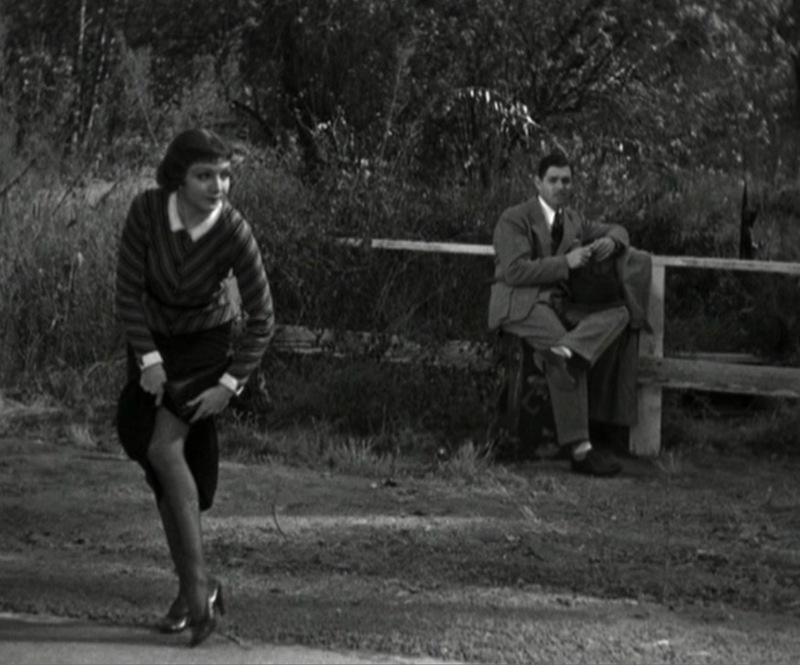
Our operation used an old Ditto machine to do the printing. Our teachers would type up our hand written stories and we’d run them off. We did enough for each family and kid to have one. We sent them home to parents because one of the most important parts of the paper were the announcements about school events.
Oh, that old Ditto machine with its rapturously fragrant, sweetly aromatic pale blue ink, Ditto paper was literally intoxicating. Two deep drafts of a freshly run-off worksheet and we would be the education system’s willing slave for the rest of the day.
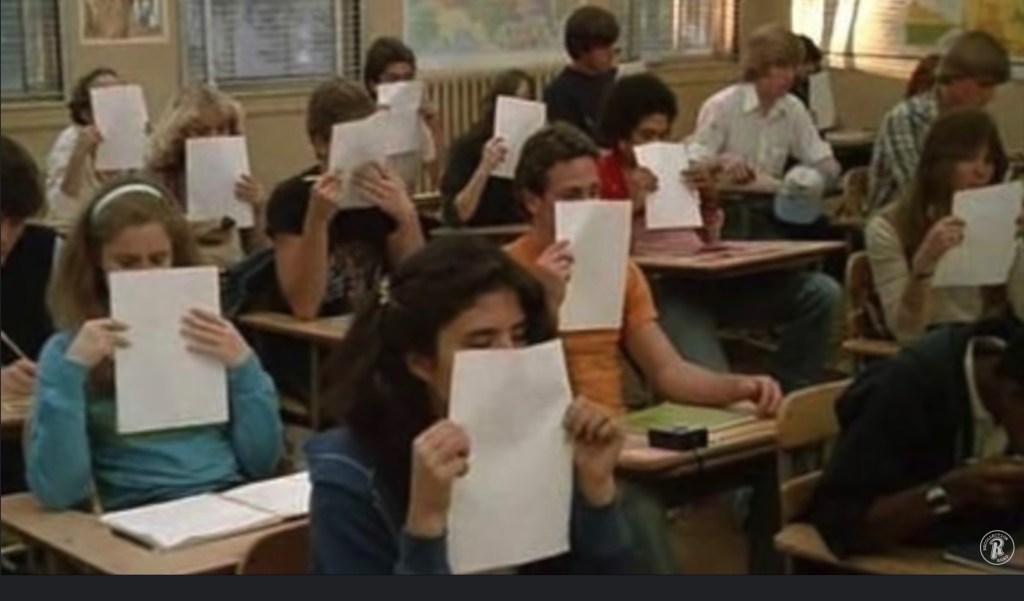
Eighth graders, being the top of the heap got to run the machine and do the stapling. When they passed the paper , the students put the page up to their noses and deeply inhale. This was a popular school ritual of the ’40s, through early ’70s, as photocopying machines were very expensive, so ditto machines were still in use.
When you see the Cameron Crowe written film “Fast Times at Ridgemont High there is a scene where Mr. Vargas passes out a worksheet and his entire class lifts the paper and takes a deep breath. If you were born after 1955 this experience has passed you by. The copies did not get you high but they smelled awfully good.
The Branch Bee has is gone as has the little two room schoolhouse. The kids who made it have all gone on to other careers. None that I know of are reporters. A few of us lucky ones worked for the high school paper, The High-Chatter. A couple of us were stringers for the Times-Press-Recorder while in high school. The Gregory boys all wrote for the high school paper and the Cuestonian. Jim Gregory is now a noted historian and author who is a pleasure to read. I was a part timer on the Dry Dock, the newspaper of the San Diego Naval Hospital while I was stationed there while in the Navy.
In those days long before social media a person had to contemplate the content before writing. A reporter or editor at the Herald-Recorder walked the same streets as the audience. This imposed a certain degree of circumspect or social sensitivity not seen today. The act of putting it down on a piece of paper is far different than a 140 character Tweet which can be banged out in a few seconds. Today, wires connect millions to a single mouth whose only purpose is fill time with content, no matter how suspect. Perhaps the reader will look back to a time when some thought was given to consequences. We were all taught that in our little school.
More valuable to historians who search for a mirror of time is the pile of old Branch Bees and their like tucked away in the old trunk where my mother stored the things that mattered to her.
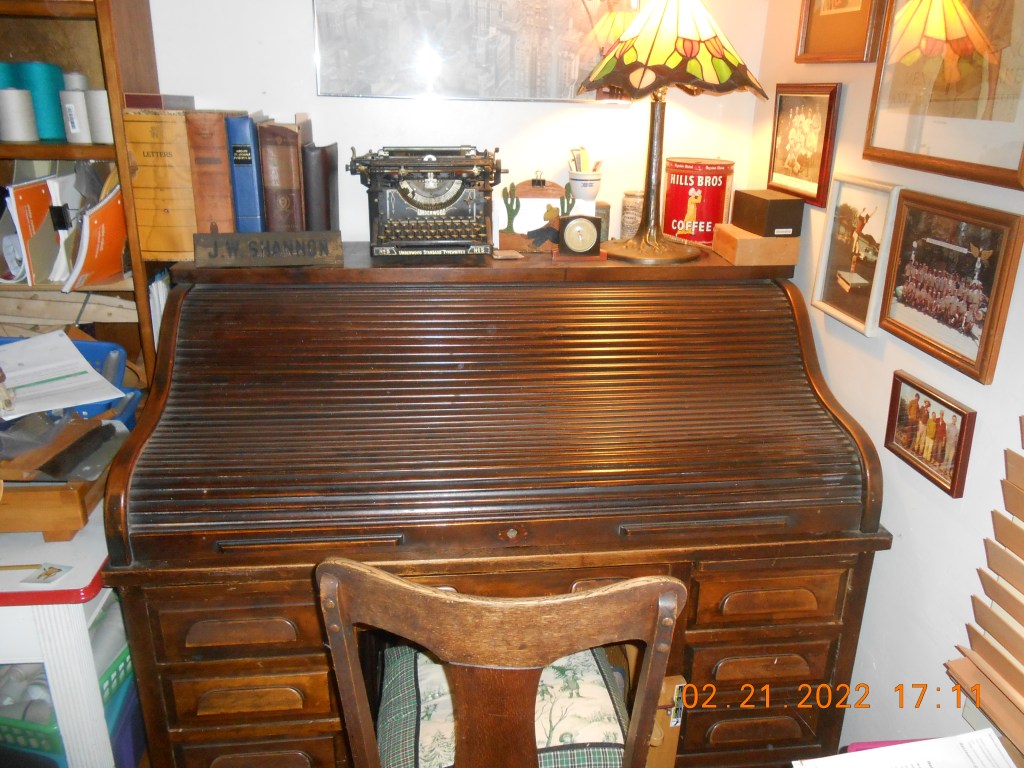
The newspaper has gone the way of the dinosaur. Nearly extinct, we have lost something valuable we aren’t likely ever to recover. I miss them.
-30-
Michael Shannon is the former editor of the Branch Bee. He lives in Arroyo Grande California.
 atthetable2015
This was a delightful read! Thanks for sharing!!
LikeLike