The first part.
By Michael Shannon
She was a woman of sturdy shoes when I knew her. I cannot remember her without her apron, a sensible utilitarian piece of apparel worn by women of the early twentieth century to protect their clothes, a leftover from the days when, if you weren’t wealthy enough to have a laundress, you washed and ironed your own garments.
My grandmother was 60 years old when I was born. By the time I was old enough to know her she was well into her seventies. We never, ever talked about her life. Like many people she must have though it wasn’t very interesting which is how it must have looked from inside her head. The only things she ever shared with me came when she was in her nineties. I would sit on her sofa, the one with the pink roses pattern and from the space where she had retreated at the end of her life she would, with enough prompting, dispense snippets of it.
How the hired girl got “Knocked Up,” how uncle Pat would have to spend the night in the barn when he came home three sheets to the wind after a night at Ryan’s bar with his friends Daniel Rice and Patrick Donovan. The most interesting thing wasn’t that these things happened, both are pretty common in the human experience but for her use of the phrase which she would have consider extremely vulgar in her younger days or the story about Patrick Moore drinking which was something she had also disapproved off. She had reason to.
So I sat there with her, she in her bathrobe, something which would have horrified her when she was younger, she basking in the sun coming through the big picture window overlooking the places she had lived nearly all her life. Being ninety is being cold and the afternoon heat nearly put her to sleep, perhaps her guard was down.
When she was younger, every morning she would get up, start breakfast and then retire to her bedroom to complete her Toilette. Carefully combing her hair with the silver plated boars bristle brushes she had used since she was a girl, dusting herself lightly with White Shoulders and applying just a kiss of rouge to her lips with the tip of her Pinky. Girls who grew up at the end of the nineteenth century used almost no makeup; that would have been seen as vulgar in her circle. She had never changed.
Holding her little hand, the skin velvety soft and nearly translucent, having seldom ever seen the sun during her nine plus decades, for her complexion was her treasure. I cannot recall her ever going anywhere without gloves, long sleeves and a hat. Now she sat wrapped in her old pink terrycloth robe with the little embroidered roses on the collar, me listening carefully and giving her the a little spoken nudge to keep her talking, fascinated by what she told me.
My life was as different from hers as if I’d lived on the moon. Though we weren’t considered poor, the family had come down some financially since my grandmother was a girl. Families grow and money has to go farther. She was born to a moderately wealthy farming and ranching family from the Santa Maria area of California. Midwife delivered in a little house just off Division road and the old coast highway in Oso Flaco. She was the second of seven children of Irish immigrants Samuel and Jeannie Gray. Sam Gray and Jennie McKeen were married on May 12th, 1881 at the Orange Hall in Bailie Riobaird Doagh, county Antrim. They traveled to Belfast and boarded the States Line ship, SS State of Alabama and sailed to America on their honeymoon. Boarding at Belfast, they came ashore at Manhattan’s Castle Gardens. The State of Alabama was no Coffin ship like the vessels that delivered the first wave of famine Irish forty years earlier but she was no cruise ship either. Sam and his bride traveled third class, just a step above steerage. They never returned to Kilbride Parish, Upper Antrim, County Antrim, ever again. Like most Irish immigrants the family left behind was forever lost.
Like many they made the long hop across the country to California very quickly. Immigrant families followed a chain of family migration as they still do. Jeannie Gray’s Aunt Sarah, married to Patrick Moore of Cavan, Ireland, todays Cork, had come to America in 1850 when he was just 18. He moved west to Ohio from New York, became a naturalized citizen in 1868 and by Annies birth was living with his extended family in the Guadalupe and the Arroyo Grande Areas of central California.
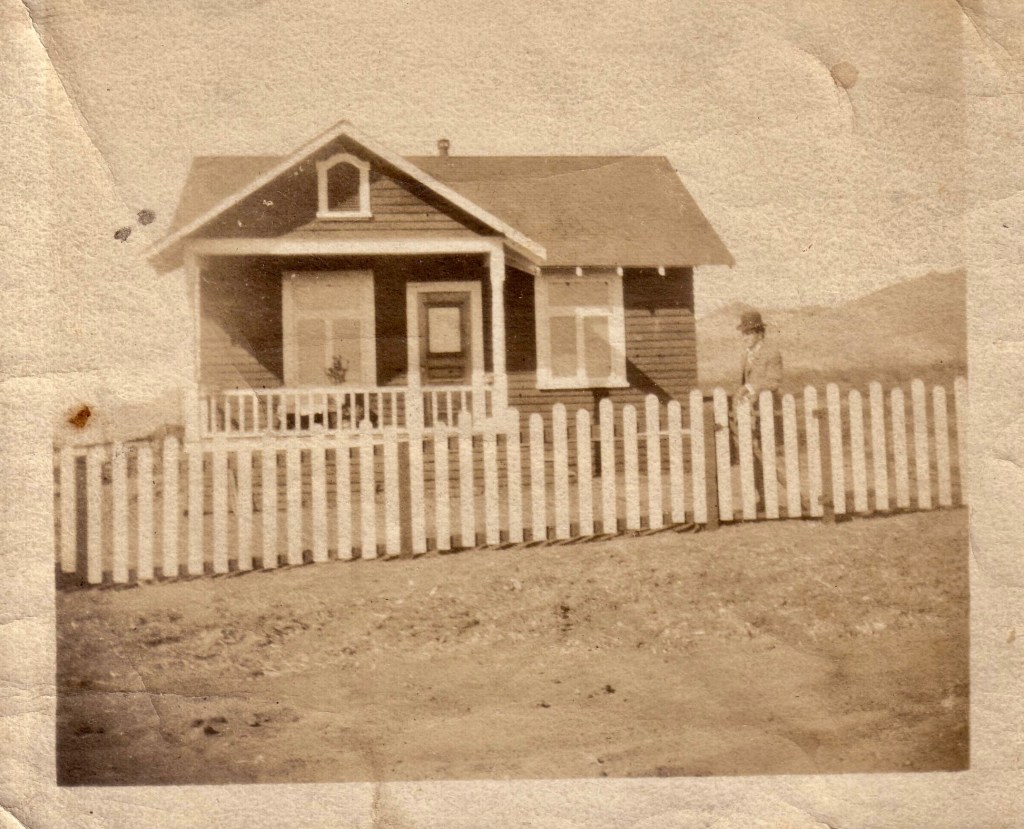
The Moores by the eighties were a wealthy family, Patrick being what he called a capitalist had acquired thousands of acres of the old Mexican Land Grant Rancho’s. He had also invested in the nascent Oil business in Casmalia and the Orcutt area. He was a principle of the Pinal Oil Company and by the turn of the century had become not only a land owner but a private banker. Banks of the sort we are familiar with today didn’t exist then and most loans were made with a handshake. Uncle Pat was good at his work and scrupulously honest.
Pat and Sarah Moore had only one great sadness in their lives, they were childless and they loved children. Because Jennie Gray was Sarah Moore’s niece and by 1895 had seven living children, the Moore’s proposed that little Annie Gray, the second child come to live with them in Arroyo Grande. After some discussion a deal was worked out whereas the Moore’s would feed and cloth her, pay for her education at the California University at Berkeley, and upon passing, deed her a Quarter section of land and gift her a number of shares in the oil company. The custom of “Loaning” children out to relatives isn’t common anymore but was not unusual for the time.
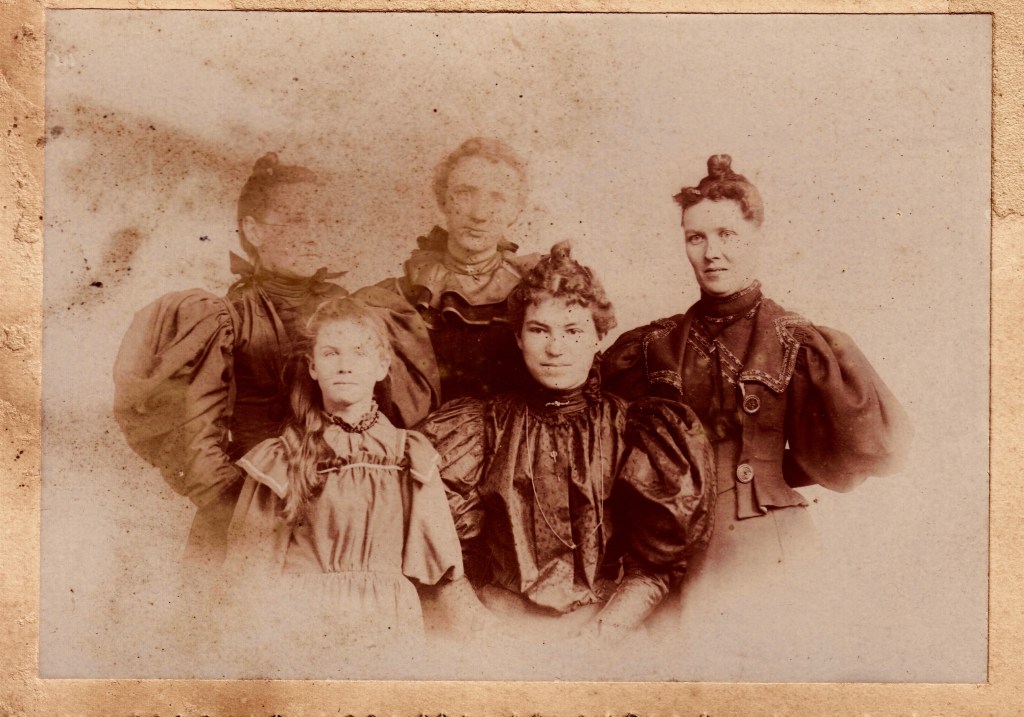
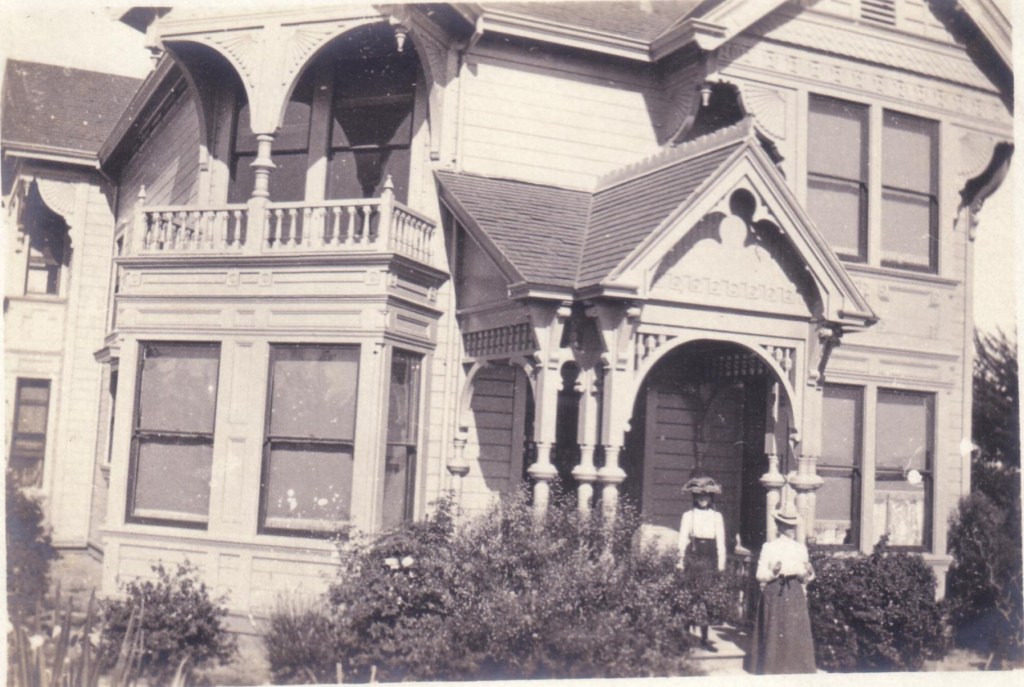
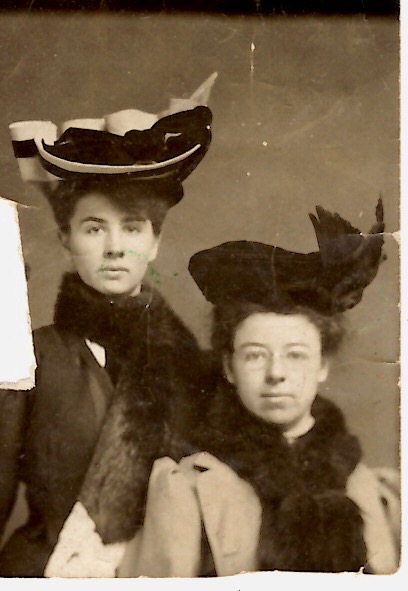
In 1893 Annie came to live with the Moores. In the big house. On the Hill. She had, for the first time her own room on the second floor and servants to take care of her needs, It was quite a change. In the picture above, the two older girls on the left are the Tyler sisters. They lived with the Moore’s also. Their parents had both died within a year of each other and Sarah and Pat took it upon themselves to raise them too. It was always said by those who knew that the big house was always filled with the children of the town.
As Annie grew, these many friends shared their lives together as children and teenagers. The Kodak Box camera was invented just in time to chronicle much of their lives growing up. Annie was fifteen when the camera came on the market and we have albums of photos taken with what must have been, a marvelous new thing. They took pictures the way girls use their I-Phones today.

They chronicled all kinds of events, birthday parties, holidays or even any excuse to get together. Arroyo Grande was such a small town that you could walk across it in just a few minutes and like little places, everyone, they knew each other. One hundred and twenty years later most of the family names in her autograph books still reside here including my future grandfather whose beautiful copperplate signature is scattered throughout the pages of that little book.
As promised, Annie was off to Berkeley in 1904. She graduated from Santa Maria High School in 1904 in the same class with her oldest brother Robert Gray. Though she lived in Arroyo Grande with the Moore’s she would spend the week with her parents on their ranch on Guadalupe road, taking the narrow gauge railroad down on Monday morning and returning for the weekend. The high school in Arroyo Grande was not accredited for the university. It had a somewhat sketchy history and had ceased to exist for a few years as a group of wealthy ranchers refused to pay taxes to support a high school, deeming it an unnecessary level of education. “Boys need to go to work, not school, and girls need to marry and keep house,” said Harold Miossi. one of the ringleaders in the anti-school delegation. Daniel Donovan, big landowner and friend of Pat Moore was leader in defunding the school. The conversations between these and the other town leaders in the bar at the Ryan Hotel on Branch Street must have been interesting. According to family lore, uncle Pat and his crony’s could put it away in vast quantities and the arguments were detailed in the local papers. My grandfather Jack Shannon and his friends including “Ace” Porter, George Clevenger and Frank Bardin all ended their formal education at eighth grade. They all prospered in spite of going to do a grownups work at fourteen.
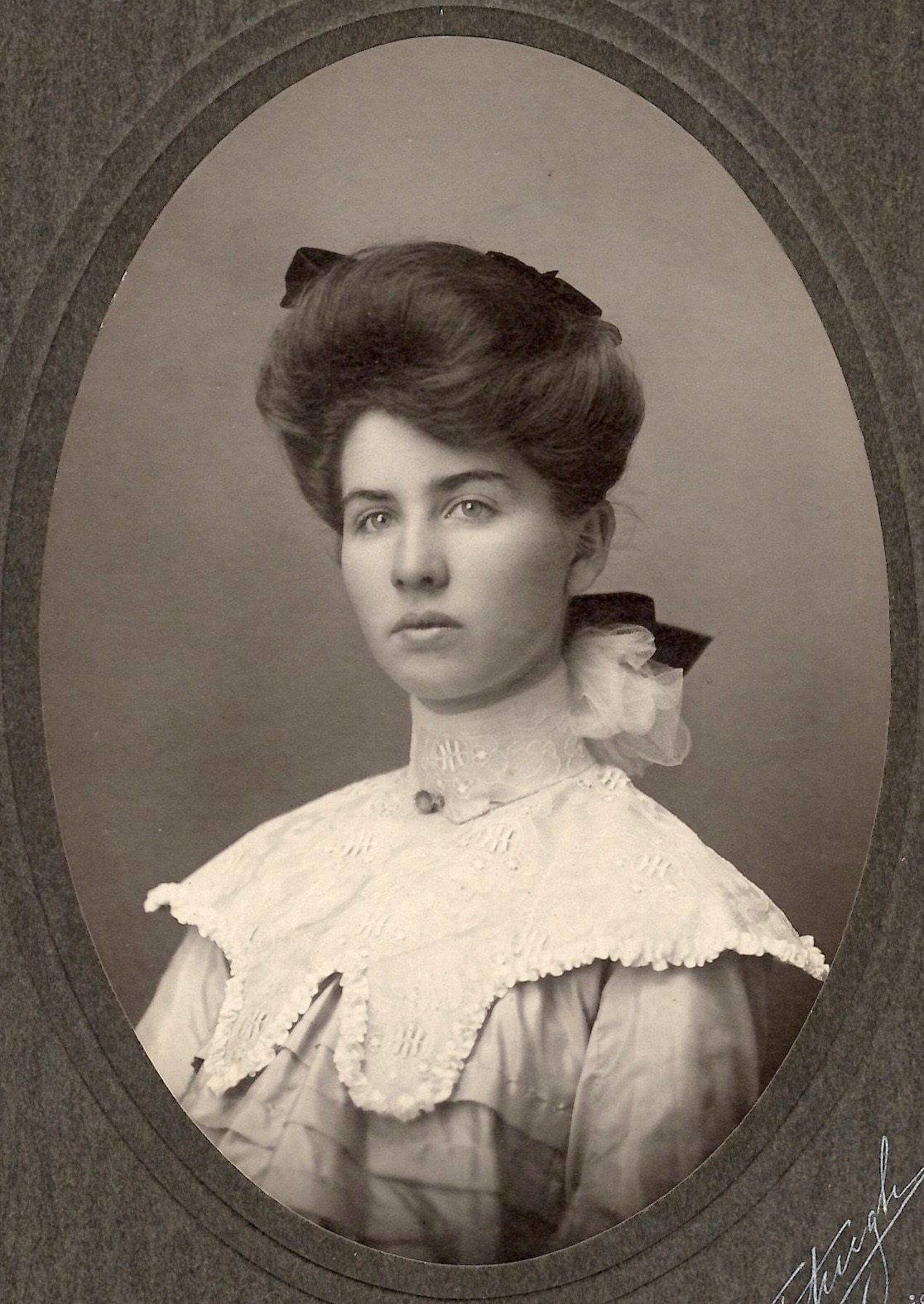
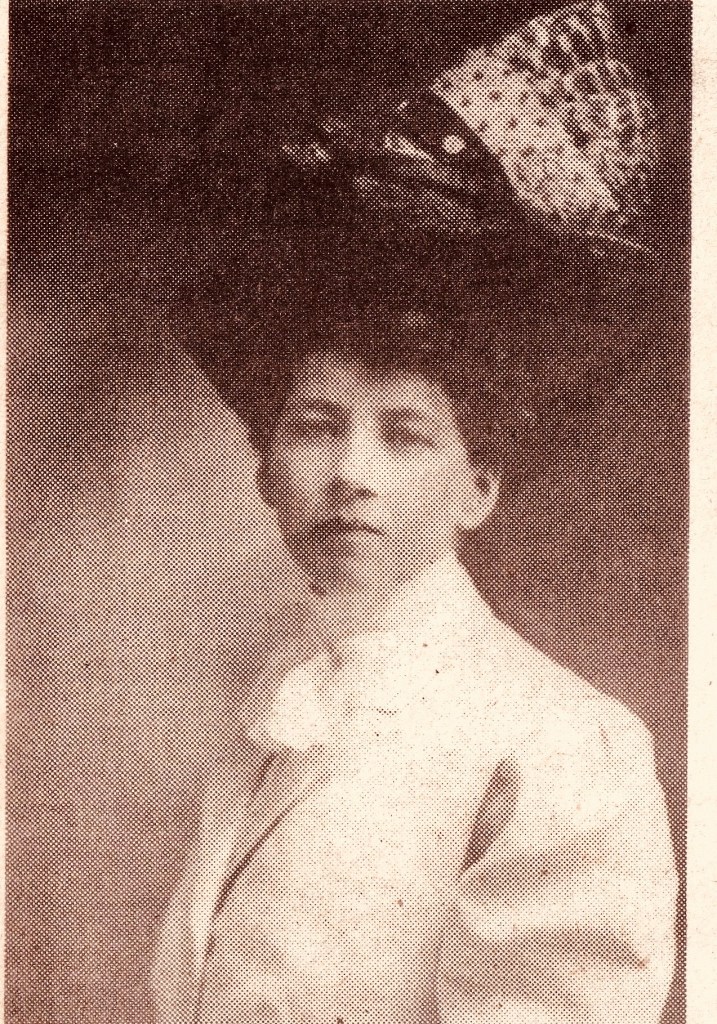
Pat and Sarah Moore were decidedly against the no-school crowd and not only sent Annie of to college but paid for the schooling of several of her friends including the girl below pictured in her high school graduation picture. She returned to Arroyo Grande and taught school. She was so well liked that a grammar school was named for her. She was my grandmother good friend and spent many hours in the big house just up the hill from her own next to Pig Tail Alley on old Bridge Street..
Berkeley was a far different school in 1904 than it is today. Girls had only a limited series of choices in which to study and like my grandmother, most would graduate with a Baccalaureate degree in Liberal Arts. There were few careers open to educated woman. The School of Architecture was founded only in 1903 by an endowment from Phoebe Apperson Hearst who was already championing women’s education, particularly women in Architecture. Mrs Hearst was a supporter of Julia Morgan, famously the architect of Hearst Castle. Morgan, herself was a woman of many firsts. She was one of the very first female graduates of the Engineering School at Berkeley and the very first woman to graduate from the prestigious French Ecole Nacionale Superiuere des Beaux-Artes. She was also the first licensed woman architect in California in 1903. In Annies sophomore year, The world famous Bancroft Library was added to the Universities collection that year and in 1905, Elizabeth Josselyn Boalt endowed the school with funds to build a permanent building for the School of Jurisprudence.
The famous “Big C” was built in march of 1905, Annies 2nd year at Cal. Her classmates of ’07 and ’08 formed a human chain to haul the blocks of sandstone uphill in a heavy rain. The “C” represents the peaceful end of the Charter Hill Rush held between the freshman and sophomores. It is a symbol of peace and unity. The Sophs were in charge of keeping it in good repair and each year, “The Deed to the C” was transferred to the next years sophomore class in a ceremony each spring.
The “Big C” was and is considered legitimate game for opponents of California Athletics, particularly the private school boys of Stanford. Each year before the Cal/Stanford football game it is lit and guarded through the night by members of the Sophomore class.
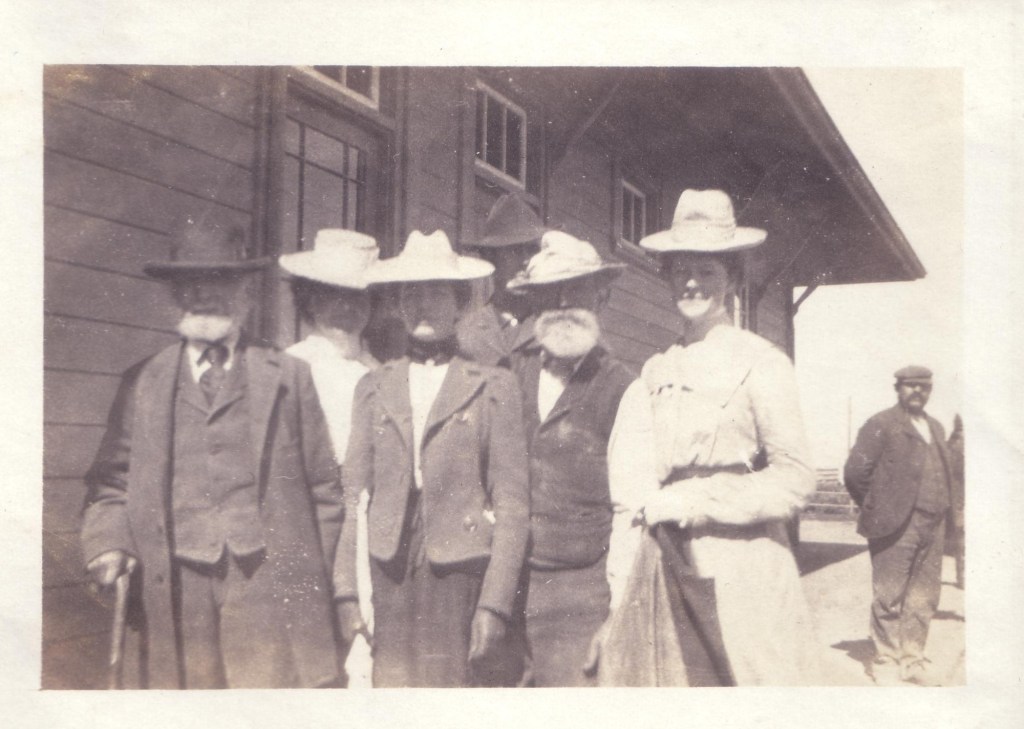
During the time Annie was a Cal there were no dorms or sororities for women. Girls boarded in homes around campus and she was no exception. She had a room in the home of Doctor Arvan Meeks and his wife Minna, a well-to-do dentist practicing in Berkeley. He and his wife took in a number of boarders from the school each year.
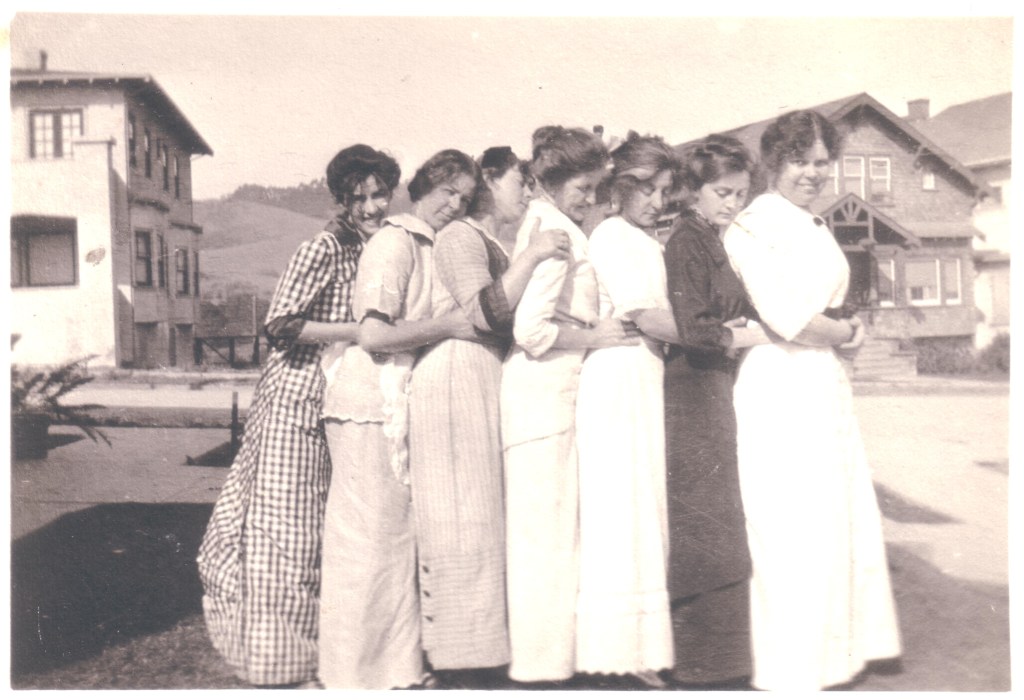
As young girls still do, she chose her nickname or it was chosen for her by friends. Why Nita, no one ever said but she carried it from early girlhood until she finished at the University. A short name or nickname is a sign of intimacy, trust, and friendship. We see Nita in her autograph book which dates back to the 1890’s and even in a letter written to her by her friend Mamie, another nickname, from her old folks home in Washington state when they were both in their early nineties. It had staying power. Likely because they were childhood friends and raised together they never called each other anything else. Nita is a diminutive for Anita or Ana if you speak Spanish. It could have been either one or as is sometimes the case just a way to distance themselves from names they didn’t themselves choose. I never heard anyone call her anything but Annie, not Anne or Anita. Annie was her given name. Perhaps they though Annie was too much like a servants name or something she would say all of her life; “Thats Shanty Irish”, styling herself as the Lace Curtain kind. They were raised in style.
Whatever the reason it set the tone for the early part of her life. Born to a wealthy first generation Irish family, raised by a rich first generation Irish family. A good start.
Michael Shannon is a writer, teacher, surfer, and world traveler. He resides in Arroyo Grande California.
Coming next, Nita the second part.
 atthetable2015
Do you know any history of the Lierly’s? You show a picture with a Tootsie Lierly. When we moved down here in ‘56 or ‘57, my dad knew some Lierly’s. I think one was here in town and some more in the valley that ran a swimming pool and resort. My dad was raised in n around A G for a time. He knew Ms Harloe, Asa Porter and Chester Porter. Also knew Jeanie Hart, all school age friends. Just curious. Thanx
LikeLike