The Calf Shed

Michael Shannon.

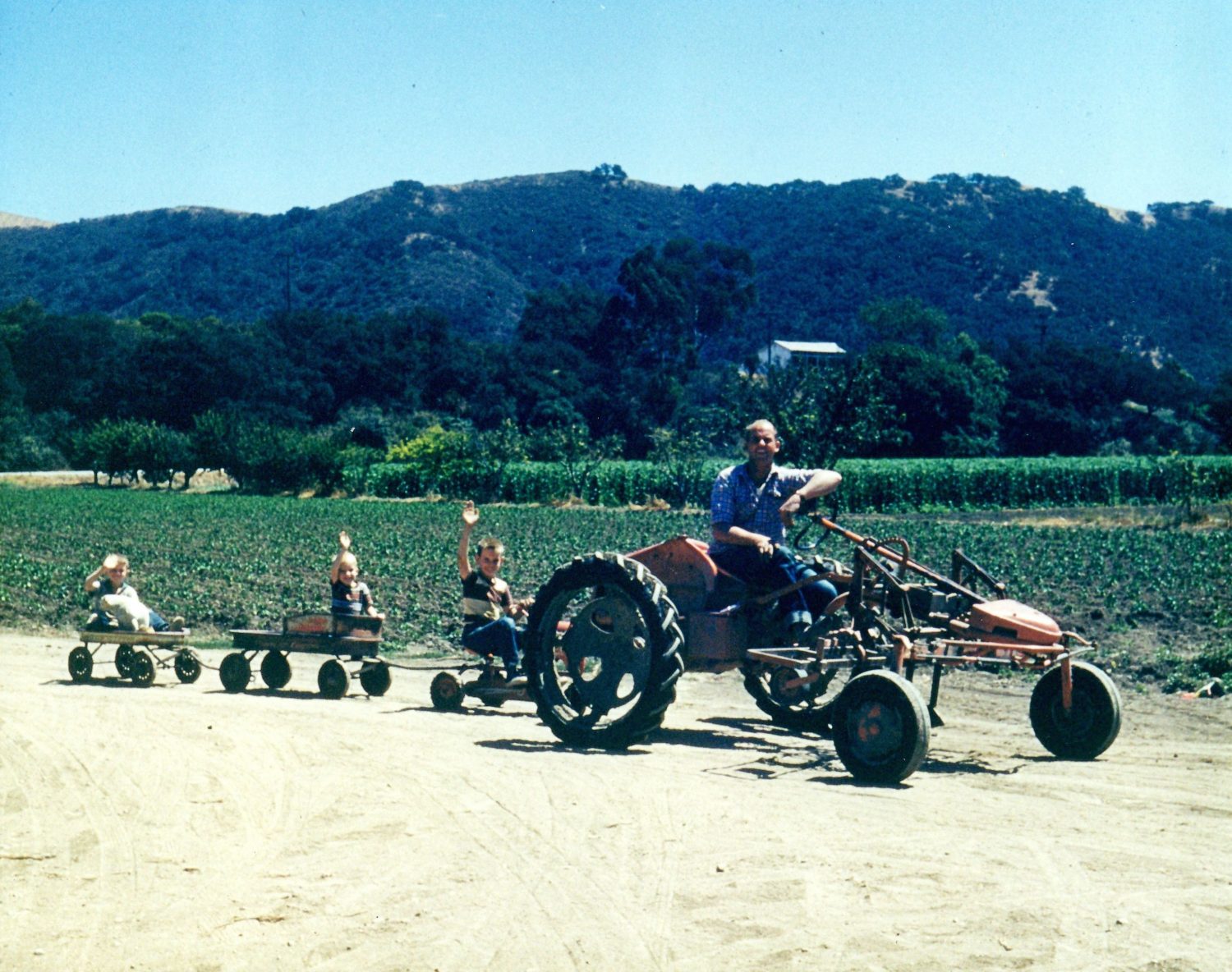
We had a small red shed on the ranch. It was the greatest place explore when I was a kid. It had cobwebs that had been spun a century earlier. There wer enough Black Widows to populate half San Luis County. My uncle Jackie said once that some of the spiders knew Captain Guillermo Dana who owned the old Nipomo Rancho. He was always saying stuff like that and you could never tell if it was true or just funny a uncle’s bushwa.

It had two doors, one at each end. They were Dutch doors which was a true novelty as I had never seen or heard of one before. The only Dutch I knew was the woman on the Old Dutch Cleaner can who looked vaguely sinister with her purposeful stride and big stick, obviously out to punish the unclean. I can’t recall ever seeing the top half closed except during swallow season. In true country style no one wasted any time doing useless things so each door was closed and opened perhaps once a year.

The small building served four purposes. The left side was divided into small stalls which were occasionally used to house calves that needed hand feeding or just a little extra care for a bit. For kids having a small red and white Hereford calf that you cold bottle feed, well there’s not many things that can top that. The little heifer being quite naturally friendly who would cuddle up to you or suck milk from your fingers is hard to beat. Usually one stall would be full of feed sacks, special meal, seed and always a few blocks of salt lick. Red, white and pink depending on their us. Did we lick them, you know the answer. Seeing that saving was considered a virtue, there was one stall with heaps of used and empty gunny sacks just in case. There were cotton feed sacks too, piled in a corner some, no doubt as old as the feed and grain business my grandfather, Al Spooner and David Donovan once owned.*
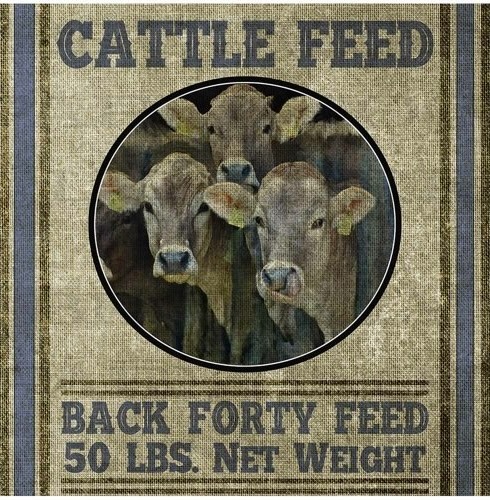
The sacks were home to the Kitties. Kitties is really the wrong thing to say. They were fierce predators an not interested in little boys. Their job was to keep the shed clear of mice. There are few things more attractive to a mouse than a shed packed with grain to eat. They were shy cats and not always visible, hunting was their job and during hunting hours were occupied wherever they could find a victim. No names for them, for decades the cats went by Cat, all of them. They never ate from a can or bag of cat food. They had to pull their own weight. Domesticated animals like dogs and cats were mostly for utility and not human companionship.

The little place was fragrant beyond belief and it changed it’s perfume like an elegant woman dressing for a dinner. The rich heady smell of grain, the pungent manure from the little calves and in the cold of winter it exuded a musty smell of old redwood lumber and always the rich, sweet sweet smell of Hay. Depending on the time of year wisps of dust motes drifted in the light from the doorway’s like a veil on a beautiful Spanish maiden painted by Velasquez.

The best thing though was the little corner where the tools were kept. All those drawers filled with haphazard piles of metal we assumed to be tools of one sort or another. Most carried a patina of rust, some just dusted with and some stuck together by lumps of it, glued together for no one knew how long. Wrenches of indeterminant use perhaps from some long gone piece of farm machinery, like tractors and old milk trucks, some predating the electrical motors used in the milking barn. Ball peen hammers, an old fashioned straight clawed hammer at least a century old and in the bins rusted clumps of fence staples, nails, some porcelain insulators left over from putting in the electric fence and bolts with square heads that hadn’t seen a use for 75 years.

Unique to me, a child born after the big war, many of the tools were curvilinear, embossed with the names of the manufacturer, some with molded decoration that wasn’t just for utility but for beauty. Designed by the last generation that saw pride in the craftsmanship involved in the pure design of a useful object.

The 1950’s spelled the end of the “fix it” age. Men who were our fathers had grown up in the Great Depression and as adults went to war, the most destructive war in history. Historians have said that the US defeated the Germans, not with superior tactics but with the fact that American boys could fix a tank and the Germans couldn’t. Baked into them was a certain self sufficient attitude that they could take care of themselves. They didn’t need help and like my father would rather die than ask for it. If something broke they fixed it. If something was needed they made it. They didn’t go to trade school they learned from others or simply invented what they needed. They didn’t need much, things could be repurposed. Nothing was thrown away, we had a gully with trucks, cars, tractors and farm machinery rusting in the sun where a part might be salvaged and put to a better use. If my uncle Jackie needed a stock trailer, he hauled a rear axle from the ditch, got out his tanks and welded up a frame. He dragged some used lumber from the scrap pile of odds and ends some of it dating back to some time before my great-grandfather’s day, got a handful of nails from the rusty nail bin and when he was done mixed a few shades of green paint together, brushed it on and he had a perfectly useful trailer. Rolling down the 101 on the wheels from an old Buick and a taillight taken from a Model T, With mismatched hub caps one reading Buick and one Chevrolet, It served him well for fifty years. It’s not used anymore, it sits in the old hay barn, it’s tires flat and the green paint faded but if you needed it a little air in the tires and it would be good to go.

It was all wonderfully “Make Do.”

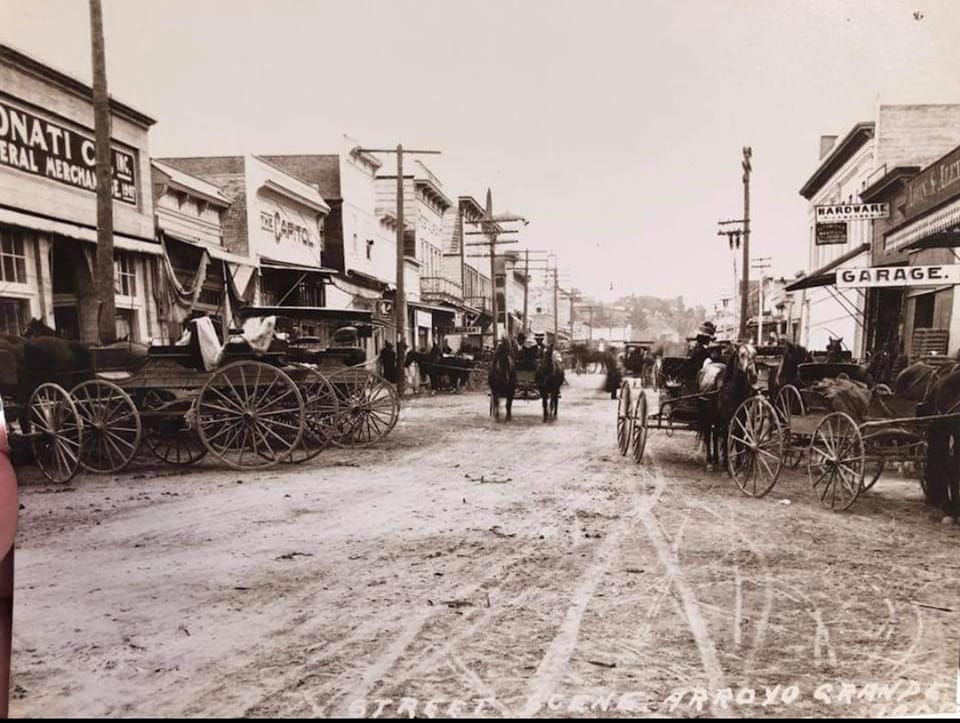
One of the first “Essential” stores in our little town was the first hardware store. If you are a regular at one of the modern hardware stores today you might be surprised by what those old places stocked. Those old places officially died in Arroyo Grande on February 21st, 1958. The Chief wasn’t quite sure what happened but the old building built in the 1889 was a total loss. A nearly 75 year old building where the amount of Case oil. Kerosene, Lamp oil and desiccated cardboard boxes holding assorted glass fuses or leather drive belts, frayed at the edges and emitting a small cloud of dust whenever touched was simply waiting to immolate itself.

For those of us old enough to remember the dark, dusty stacks of shelve and boxes, greasy, oily wooden floors fronted by the long counter at the front, the varnish long turned to caked, flaked shreds of black chips resembling the dried mudflats of the lower valley where the adobe mud is completely tessellated in the dry late summer. The green enameled light shades hanging from the ceiling had a thick coat oily dust as they hung on the twisted copper “Rag Wire” so treasured by the rats who lived in the attics of old buildings. The tasty oil impregnated linen which passed for insulation just begged a rat to nibble on it exposing the wires which would short circuit and catch fire at a moments notice.

The fire, however she started left nothing but a heap of ashes, charcoal and twisted metal, It also ended the era of a type of store that doesn’t exist anymore except in small, isolated communities across the country.

Don Madsen was the last owner of the business which was started By Charles Kinney in ’85, thats 1885 by the way until it was passed on the Carmi Mosher in 1909. Carmi sold it to Harold Howard in 1919. Harold, a local boy having grown up with my grandfather kept the business going as Howard & McCabe until 1950 when he retired and sold it to Don whose son I went to school with. Small towns you know.

Don had worked in the hardware business since he was a high school student had returned from WWII where he served as an MP on occupation duty in Germany. He went right back to what he knew.

Occasionally my dad or uncle would need something in the way of bolts and nuts or hand tools that they couldn’t find in the tool maze of the calf shed and would be forced to actually buy something. Stores were the place for what you didn’t have. Take the broken piece to Don and lay it on the counter. He would pick it up, heft it to determine its weight then give it a serious look and say, “Yeah, we might have something like that. Let me go see.” He would disappear into the stacks of goods between the ceiling height wooden shelves and bins and begin his voyage of discovery. Assorted bangs and bumps would come from the back and finally he would return and lay a new one or close proximity on the counter. He didn’t have to say Eureka but there would be some head nodding and low noises as both customer and seller acknowledged that it was in fact “Just what I need.”

Dad would pull out his billfold, a term I have’t heard in decades and say, “How Much?”

“Six bits will do it George.”

Dad would put the billfold back in his right hand jeans pocket and then fish around in the one in front until had a small handfull of stuff, an old slotted screw with the slot turned out useless, but you never know, maybe hang on to it awhile just in case. In amongst the seeds, a piece of wrinkled Juicy Fruit gum and foxtails were some nickels, dimes and a few quarters, just enough.

Dad would ask about Clara and the boys and Don would return the favor.

Whatever that piece of hardware, it would someday, when it’s immediate usefulness was done, end up in the calf shed where it likely still resides.

After all that old hardware store was not a too distant kin to the calf sheds.

When she burned in ’58 it marked, in a real way the end of frugality nurtured by “Make Do” and the way we live now where everything has a date on which it will magically die.

Epilogue.

The though that planted the seed for this story was a trip to the local hardware store the other day. Big, bright and shiny, all the trim painted fire engine red and the first thing you see when the automatic doors open is a large open space with military straight rows of Barbecues. Stainless steel, black enamel, wood burning, pellet burning or gas or electric. Line up like they just graduated from boot camp they are surrounded by all the accouterments designed to make you a perfect cook. Tens of thousands of dollars worth.

There is a paint department where you can buy hundreds of different colors. Anything to suit your fancy. They have more cleaning supplies, mops, and brooms than you can conceive or could find at the grocery store. Every one is persistently helpful but no one knows much of anything about anything. But they wear a red vest to show that they might. Very official.

Unlike Don, they will look at your problem, scoff, and advise you to buy a new one, or a box of fifty when you need just the one. And believe me, the inferior new one that will never deserve a place in the calf shed.
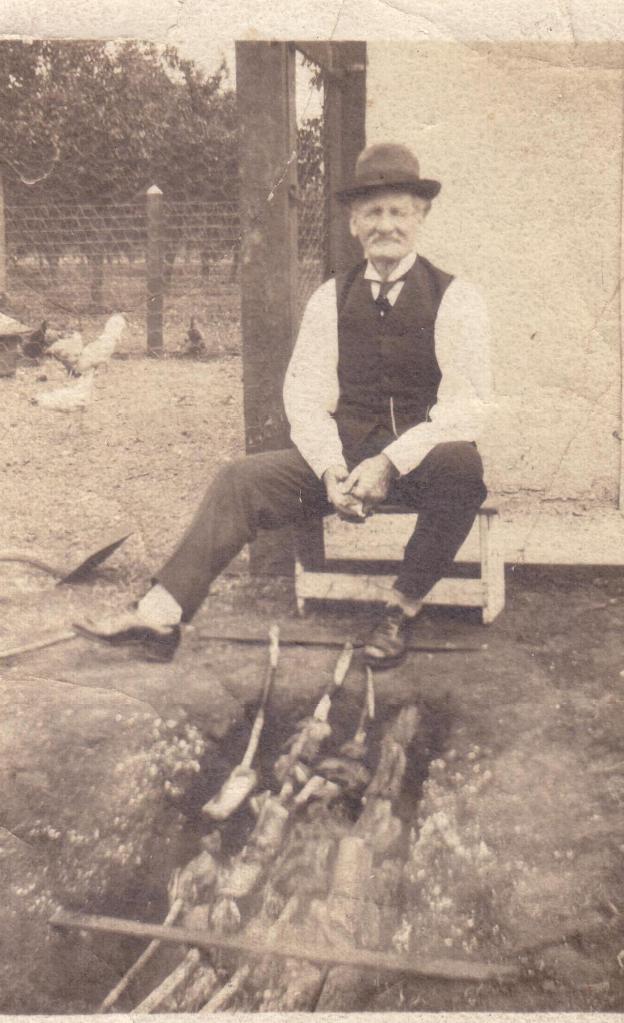
Dad Shannon at the BBQ pit. Family Photo

For a kid that grew up with BBQ cooked over a pit which was just a handy hole behind the house and a grill made of heavy rods left over from some job they did and whose grandparents painted their dairy barn and silo pink because there wasn’t enough of either color available during WWII so they just mixed them up and it was good enough and a great lesson too.

“Make Do.” That was it.

Cover Photo: The old hardware store on the right in 1906.

Note: The Madsen’s moved their store across the street to the old Donati building and prospered for many years but it was never the same.

Michael Shannon has been known to keep random pieces of lumber for fifty years, you know, just in case.

Please Subscribe.
Standard

The Twelve Hour Tour

Chapter 14

Michael Shannon

Bruce listened intently. With his left hand braced against the wall, head down and the receiver jammed aginst his right ear. He softly repeated, “Yes sir” several times. After a few minutes he said “Thank you Sam, I’ll be there as soon as I can.”

He hung up the phone, turned, took off his hat and held it as he put his hands on his hips and arched his back as he exhaled.

He looked at Eileen then Marion and said “That was Sam Mosher, I’m going back to work. I have to be in Long Beach as soon as I can. I’ll leave tonight I gotta go gas up the Ford. Eileen can you pack me a bag and something to eat?”

Bruce rattled down the Cahuenga pass into Los Angeles. He’d been on the road for a day and a half, slept in the back of the Ford last night and woke this morning sliding into the drivers set, setting the Magneto and advancing the spark, he kicked the starter button and turned her over. He figured with a quick stop for breakfast he’d roll down Alameda Street and into Long Beach just after sunup.

Rolling through Huntington Park then South Gate he drove into the fields and scattered houses of Compton and he could smell it. Drifting east on the morning breeze, the unmistakeable heady mixture of crude oil perfume. A strong, pungent, and a little bit sweet, the odor can be reminiscent of a mix of gasoline and tar, with a distinct earthy or petroleum scent. Some people find the smell unpleasant, but to an oilman It smelled like home.

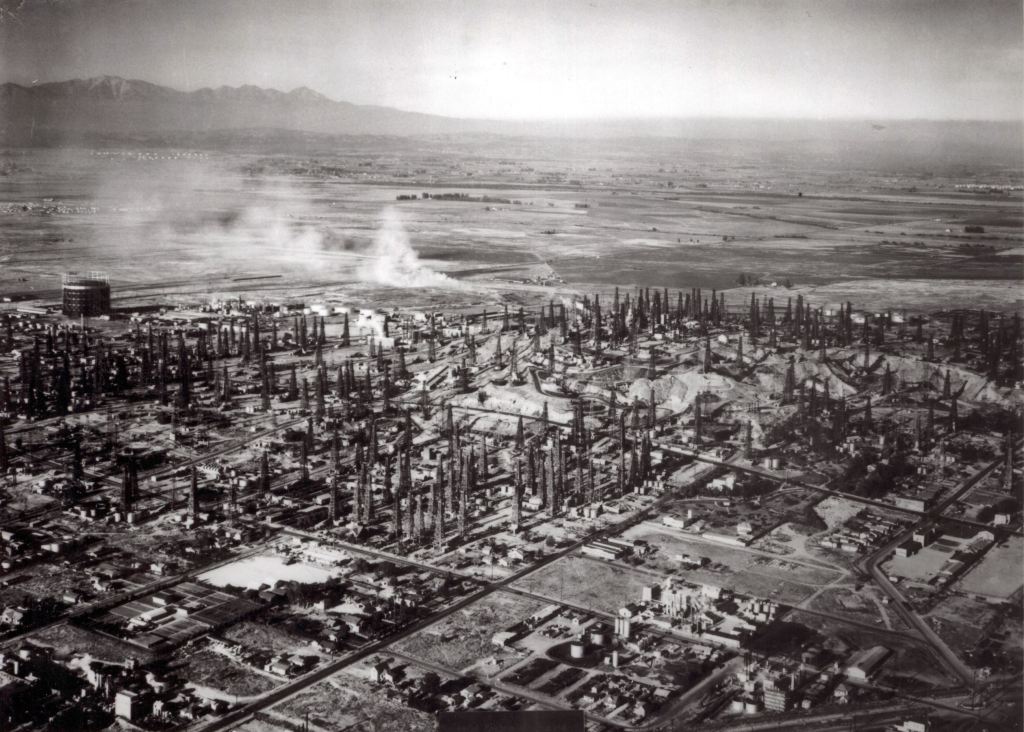
Exhausted by the drive the odor washed over Bruce and caused his energy to start flowing. With his hopes soaring he drove down Alameda until he entered Long Beach. The City of Long Beach had a population pushing 150,000 and had doubled since the census of 1920. Once it was primarily a Beach resort for the retired and wealthy but the discovery of Alameda no.1 up on Signal Hill had changed the city drastically. Midwesterners flocked to the Hill to get rich. Leasemen, Drillers, Salesman, factories that built steam boilers and rolled pipe quickly surrounded Long Beach. Houses went up as fast as they could be built. The Navy was moving part of the fleet to the new Navy Yard on Terminal Island. During the booming twenties Long Beach became the home of sailors, oil field workers, workers in auto assembly plants, soap makers, a vast fishing fleet made up of Japanese immigrants and people coming to the edge of America looking for the main chance.

Signal Hill with The San Gabriel Mountains to the north. 1931 Calisphere photo.

Long Beach city was part of the Mexican land grant Ranchos Los Cerritos, the Little Hills and Rancho Los Alamitos. the Little Cottonwoods. It had been for two centuries dedicated to cattle raising. The small villages of the area were distinctly rural and grew slowly over time. Wildcat drillers began poking around in the 1890’s and when Edward Doheny brought in the first well in 1the Los Angeles field* in 1892 it was “Katie, bar the door.” The Los Angeles Oil Field made Edward Doheny one of the richest men on earth. “Richer than Rockefeller” as the song “Sunny Side of the Street” says from the old Fats Waller tune and it was true. Richer than Rockefeller.

Beginning in the late 15th century, Spanish explorers arrived in the New World and worked their way to the California coast by 1542. The colonization process included “civilizing” the native populations in California by establishing various missions. Soon afterward, a tiny pueblo called El Pueblo de Nuestra Señora la Reina de los Ángeles de Porciúncula would be founded and prosper with the aid of subjects from New Spain and Native American slave labor.

One Mestizo Spanish soldier, José Manuel Nieto, was granted a large plot of land by the Spanish King Carlos III, which he named Rancho Los Nietos. (The Grandchildren) It covered 300,000 acres of what are today the cities of Cerritos, Long Beach, Lakewood, Downey, Norwalk, Santa Fe Springs, part of Whittier, Huntington Beach, Buena Park and Garden Grove. It was the largest Spanish or Mexican land grant issued being nearly ten times the size if Catalina Island.

Soon prospectors started putting down hole everywhere. They found Oil in Santa Fe Springs and in a couple of decades were pumping in Beverly Hills, Torrance, Southgate Dominguez Hills and Seal Beach.

But Alamitos #1 was the biggie. She came in with a roar heard in downtown 24 miles away. Drilled on the at the northeast corner of Temple Avenue and Hill Street in Signal Hill. Spudded in on March 23, 1921, it flowed 590 barrels of oil a day when it was completed June 25, 1921, at a depth of 3,114 feet. The discovery well led to the development of one of the most productive oil fields in the world and helped to establish California as a major oil producing state.

Alamitos no. 1. Discovery Well, June 25th 1921. Signal Hill, Long Beach

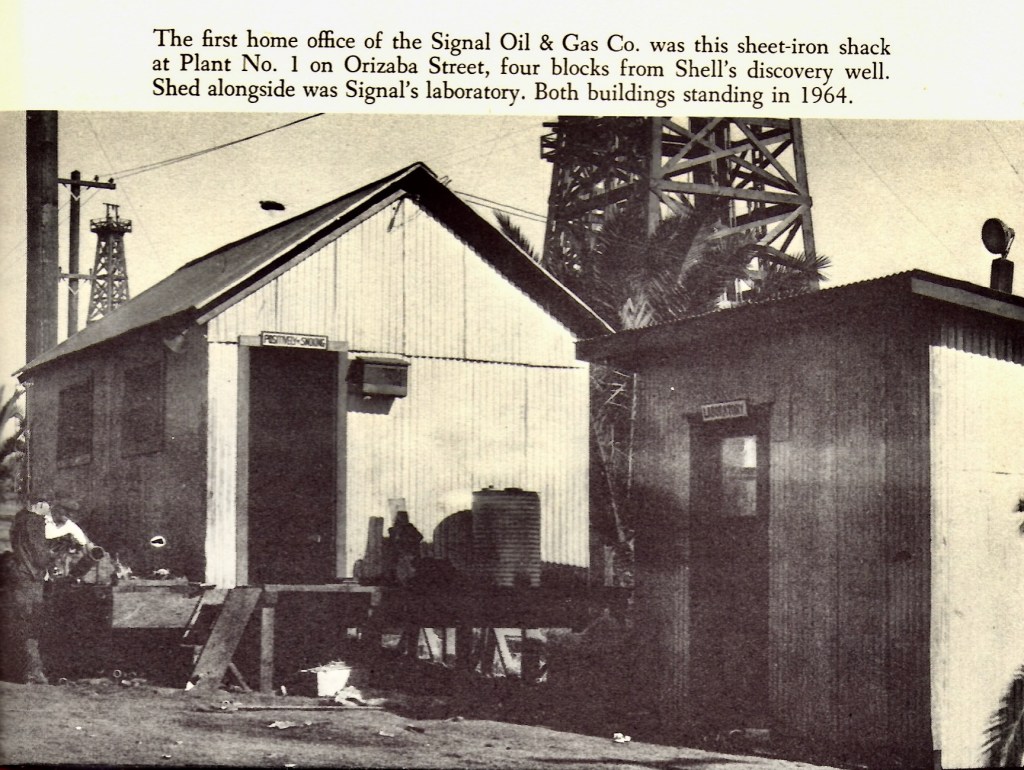
Ten years later Bruce made the turn from Alameda onto Willow, passing the Sunnyyside* Cemetery and headed east towards the Signal Oil and Gas headquarters building. Building isn’t exactly the right word though. Years later Signal would move into a modern building on Beach Boulevard and later still build its’ own headquarters building on Wilshire and 7th in downtown Los Angeles. This headquarters was was no more than a tin shack in the middle of the field itself. It may be a slight exaggeration to call it that but Signal was just eight years old and had begun life as a refiner of natural gas and owned no wells of its own in the beginning.

In the run up to the great depression Sam Mosher’s nascent company was struggling mightily to raise money to stay in business. Consequently they were using bond sales, private money, partnering with large oil companies like Standard Oil of California and banks trying to stay afloat. Independent companies were failing on nearly a daily basis as the price of oil tumbled. The big companies were cancelling contracts to the independents in order to protect their own. Breaking bonafide contracts was illegal but they had the money and lawyers so the attitude was independents be damned. Crocker Bank pulled its loans and a loan agreement with Giannini’s Bank of America kept them afloat.

The company under Mosher’s leadership invested in oil leases in Texas, the Westside of the San Joaquin, Summerland and a few abandoned leases in Elwood near Goleta. The idea was to diversify their holdings into drilling in order to provide product for their little refinery.

As the Ford toiled up Signal Hill the couldn’t help but wonder what the job would be. It didn’t matter that much, whatever it was he needed it.

Bruce and the Ford were both tired, it had been and long lonely drive He wanted to show Mosher that he had extraordinary drive hence the immediate drive down to Long Beach. It was very important to demonstrate that he was always ready to go. He had met the man a few times but had mainly dealt with his drillers and superintendents when he was working the Goleta and Summerland fields.

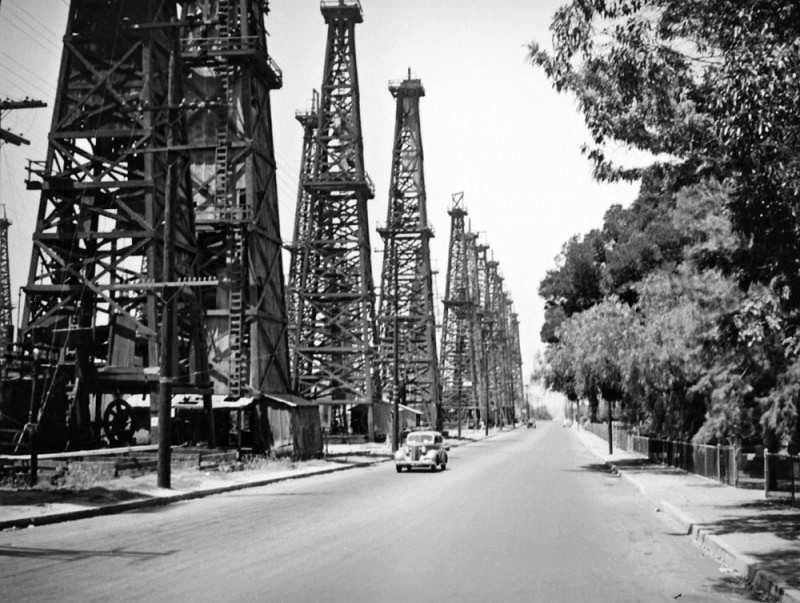
He pulled into the yard which was filled with trucks, automobiles parked any whichaway. Climbing down from the car he stretched than walked quickly toward the headquarters building. He could see, hear and see welders pipefitters, draymen, ditch diggers, bricklayers concrete masons, electricians, carpenters and plumbers at work everywhere. They were coming and going, these skilled laborers moving between rigs, some working for just one company but most were day laborers or were moonlighting, paid cash money they represented the itinerant workers seen all over any oil fields. Bruce stepped over some drill pipe and paused turning to take in the hustle and bustle and chatter of the men around. The sound of boiler valves popping off extra pressure, steam whistles, the chug chug of diesel engines pulling the linked chains that spun the drill string, sucker rods in an endless rise and fall lifting the crude from near a mile underground. When the wind blew the massive wooden derricks bent to it, creaking and groaning with a dismal sound. An ordinary man would be cautious and afraid his ears ringing, eyes stung by the constant blend of exhausts, the sewer gas coming from the drill pipes with its semi-putrid odor all of it wafting about lighting on and tainting every surface. Grandpa once said you didn’t need any hair oil in the patch, it was provided for free. Always buy a black car and never wear a white shirt.

Headed for the steps he hopped over every kind of detritus, crushed cans, butts, random paper blowing about, there were gobs of crude oil everywhere and the wooden surfaces of the buildings and derricks were soaked with it. It was no place for a fastidious man. A very careful man but not one overly finicky.

Bruce climbed the steps stepped to the door and knocked on the door trim, there was no door, someone found a better use for it he guessed.

Inside at an old desk scarred by hard use, its edges burned by cigarette butts left too long, sat a man. Dressed in stained Khakis and hard used work boots. He wore a green long sleeved work shirt, cuffs buttoned against the dirt and grime, no man exposed any more of his body than was necessary on the job. Pants held up by braces, no man working in 1931 wore belts, too restrictive. He rose from behind the desk sliding back the bent wood chair that served as a seat with a rasping screech, he reached up with his right hand and pushed back his typically stained and dirty Fedora. The smile above his jowls flashed as he held out his hand and said “Hello Bruce, damned good to see you.” Grandpa smiled back and took the hand, “Good to see you too Bob.”

It was Robert M. Pyles, Signals drilling superintendant for Huntington Beach. He said, “Sit down Bruce.” Bruce pulled up the only other chair and sat. Bob pushed up his black heavy rimmed glasses, used his forearm to sweep the piles of paper on the desk to the side, reached down opened a drawer and pulled out a binder and laid it on the desk. “These are our reports for Elwood, I want you to take a look at them and tell me what you think.” Bruce slipped his reading glasses out of their case, put them on and slid his chair closer to the desk.

He pulled a crushed pack of Chesterfields from his left front pocket and offered one to Bob who declined. Picking a match from a box on the desk he scratched it with his thumb held it to the smoke. Fired up he leaned back blew the match out and closed his eyes for a moment to let the smoke from the phosphorus match head clear and then bent to the binder and began to read.

After an hour or so and some discussion the two men sat back in their chairs. Bob pulled open a desk drawer and snagged a fifth he kept there, blew the dust from two coffee cups and poured a couple fingers in each one. He took one and slid the other one to Bruce and said “So you’ll take the job?” Bruce grinned, nodded. They reached out and clinked the cups and threw it back. They stood up reached across the desk and shook again. Bob said, “You’d better call Eileen and tell her to pack up and get down to Santa Barbara.”

That is how the employment contract was signed. The old way.

Cover Photo: Willow Street and Sunnyside Cemetery in Long Beach 1930. Long Beach History photo

*The Los Angeles field is is still pumping. It runs from the east near Dodger Stadium into downtown at Alvarado Street.

**The Sunnyside Cemetery would not lease its ground for oil drilling for obvious reasons. It was completely surrounded by forests of wells. More on that later.

Michael Shannon is the spawn of drillers and ranchers. He write so his children know who they are.

Standard

Twelve Hour Tour

Come the Little Giant.

Michael Shannon

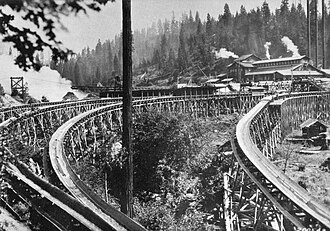
Madera, California. Madera was founded in 1876 as a lumber town at the terminus of a flume built by the California Lumber Company. The town’s name, meaning “wood” in Spanish, reflected the timber industry that spurred its growth. But if you were looking for a job in the mills you could forget that. The Depression ultimately brought an end to the lumber era. A collapsing market for wood forced the Madera Sugar Pine Company to cut its last log in 1931, and the mountain sawmill closed shortly thereafter. The marvelous 63 mill long flume from the mountain mill to the planing mill in Madera went dry. By 1933, the company’s assets were liquidated, marking the end of nearly six decades of logging that had been the foundation of Madera’s economy.

When the timber industry died, agriculture emerged as Madera’s primary business. Farming had already begun in the late 19th century, with irrigation from the San Joaquin River boosting crop production. The 1930s marked a significant shift from sawmills to farms. Unemployed lumbermen and mill workers left for more likely places and were replaced by migrant farmworkers, including many Dust Bowl refugees, who found seasonal work the fields and orchards which now dominated the economy.

The big cattle ranches who grew their own feed were being squeezed out by the terrible drop in meat prices and consumption. There was so little cowboying to be done that they got off their horses and began working the stockyards and packing plants. Most of th the big ranchers failed and the land was sold or just abandoned for unpaid taxes.

Henry Miller a former San Francisco butcher began buying land in the central valley. Miller built up a thriving butcher business in San Francisco, later going into partnership with Charles Lux, a former competitor, in 1858. The Miller and Lux company expanded rapidly, shifting emphasis from meat products to cattle raising, and soon became the largest producer of cattle in California and one of the largest landowners in the United States, owning 1,400,000 acres directly and controlling nearly 22,000 square miles of cattle and farm land in California, Nevada, and Oregon. Madera was smack dab in the middle of the Miller and Lux holdings and Henry Miller was ruthless in controlling not only the land he owned by any adjacent properties. He also used bribery especially keeping tax assessors and town officials in line. Miller and Lux also became owners of the lakebed of the Buena Vista Lake. Miller played a major role in the development of much of the San Joaquin Valley during the late 19th century and early 20th century. His role in maintaining and managing his corporate farming empire illustrates the growing trend of industrial barons during the Gilded Age.

Bruce and Marion were aware of the terrors associated with industrial operations in the oil fields. Keep wages as low as possible provide nothing but temporary and work keep the unions a bay. Company loyalty only went one way, up. After more than ten years in the wells Bruce had thought that he would be protected by his superiors but with Barnsdall closing down it’s wells in Santa Barbara and literally sneaking out of town and back to Texas both men were left adrift. By the middle of 1930 there were a dozen or more men for every job. Having to retreat to Madera took them far away from the areas that were still operating.

Looking for work by telephone was frustrating. How many times did he spin the crank on the old wall phone and try to contact some one from the rumpled list of operators, contractors and owners taped to the wall in the farm house kitchen with pieces of yellowing Scotch Tape.

“Bruce, we might have something coming up in a couple months if the big boss can rustle up some financing so we can afford to drill, but I don’t know. Wyncha give me your number and I’ll call ya if sumpin breaks.”

They tried driving down the 130 miles to Bakersfield and the westside around Taft but that turned out be just a waste of gasoline.

So it was back to farming. They worked the ranch for grandpa Sam Hall and hired out for the various harvest seasons. Spending days climbing ladders to pick Apricots, working the Walnut orchards and the nut processing plants. There was a vast amount of cotton to hand pick too. They got by.

People had to eat no matter how poor they might be so agriculture stumbled ahead. My dad said that during the depressions farmers didn’t starve in California. My family in Arroyo Grande had a dairy, kept pigs, chickens and a goat. They grew their own feed and he said the old fashioned barter system kept them in vegetables which people traded for milk. They traded beef with the butcher Paul Wilkinson instead of cash. Milk was good for bread at the bakery and my grandmother’s little bag of coin which she got from her milk deliveries was enough for the Commercial Market. He said it was rough but everybody got by unlike people in the cities and industrial areas. He said people got used to having less, they didn’t travel as much and simply entertained themselves with local theaters and the goings on at schools and picnics put on by the lodges and clubs. He siad the the community was closer and better of for it.

Bruce, Eileen and the kids muddled on. Madera was a good place to live. There was swimming in the river with their cousin Don Williams though for some odd reason neither my mother or my aunt Mariel ever learned to swim but there were boys there and they were just getting to that age. There are few things better than lazying about a slow moving California River on a frying hot and dusty day. Slathered in baby lotion and olive oil, Mariel and mom would lie in the cool water slipping down from the high Sierra and bake.

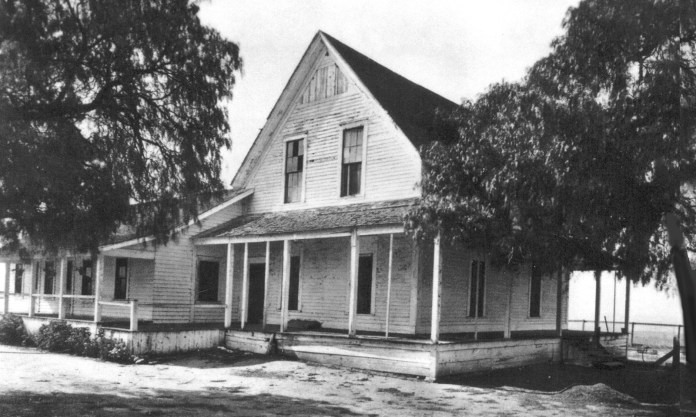
And bake it was. The San Joaquin valley is a hot place in the summer. In old farmhouses built out on the flat ground west of the foothills of the Sierra Nevada where the land acts like a mirror radiating the heat like a flatiron. Kids who ran barefoot had to sprint from shade three to shade tree to keep from burning their feet. The old Hall ranch house was a single wall place, no such thing as insulation unless you counted the folded newspapers stuffed in the spaces between the vertical sugar pine boards that held it up. AC was not even a dream yet. At night they would open the sash windows to hopefully cool the inside a bit and in the morning close all the blinds to try and keep the night’s cooler air from escaping. “Close the door” was the call, trying to get the kids to close the door as they went in and out on their endless imaginary errands. Mom said they hauled the mattresses outside onto the porch to sleep at night if they could. Their sheets were soaked in water when it was unbearably hot. In July and August temperatures at the metal Coca Cola thermometer nailed to the wall out on the covered porch hit over 100 degrees every single day. It was cooler at night, somewhere in the seventies but that wasn’t til long after dark.

Bruce, Marion and grandpa Sam Hall would sit out on the covered porch as the air cooled, smoking drinking and talking about the days affairs and the state of the country and oil in particular. Passing a pint around the talked about the terrible bog the industry was mired in and not only the oil business but the entire western world. They wouldn’t have known it then but it would go down in history as the worst economic depression ever recorded. Breadlines and soup kitchens were already forming in California, there was even one on Yosemite Avenue in downtown Madera. Unemployed men, many from the the professions or fresh out of college were forced to live in “Hoovervilles,” gatherings of shacks, tents and cars while they desperately looked for work of any kind. Migrant workers and their families began swarming into the Milk and honey mirage that was California to escape the dust bowl and failing cities of the east. Highway 99 was seeing a massive caravan of the hopeful and desperate heading north and south looking for work. It was nothing less than a tidal wave of the unfortunate flooding the state and willing to take any kind of employment.

Banks and business firms were closing their doors. Runs on banks by people desperate to withdraw what money they had caused bank runs all over the country. Nine thousand bank failed. With no reserves a bank could not lend money or earn money. Farmers were defaulting on the annual loans, business firm too. Many banks instituted foreclosures against oil businesses, the fear this caused in the highly speculative business sent companies running for cover.

The smaller independent oil companies were the hardest hit. Hundreds in California simply disappeared, walking away and leaving wells half drilled or simply capped. The majors just quit drilling altogether. The price of gasoline hit .09 cents a gallon in 1930, less than the cost to bring in and put a well online. It would get worse.

For Bruce and uncle Marion it was hard to see a way out. Bruce Hall was just thirty five years old with a wife and three children and what seemed the bleakest of prospects. The burden must have been nearly impossible to bear, but bear it he must.

The phone rang. It was two longs and a short, the Hall distinctive ring. Thats the way it was on the old party lines. Aunt Grace got up from the table where she was peeling peaches for pie, wiped her hands on her apron and lifted the receiver and put it to her ear, “Hello,” she said. “Yes this is the Hall residence, Bruce Hall? Yes he lives here, can I ask who’s calling?”

“My name is O. P. Yowell, Bruce knows me as “Happy, Is he around, they gave me this number to call at the office.”

“Why yes he is here, he’s down in the orchard. I can send someone to fetch him if you can wait a few minutes.”

“That would be fine Mrs. Hall, I’ll hold.”

Aunt Grace looked over her shoulder for the nearest available kid and spotting Barbara playing solitaire she said “Barb, can you run down to the orchard and tell your father he has a call. Tell him it’s a man named Happy.” She winked at her niece, “a man named Happy, how about that.”

She turned back to the phone and asked what the call was about then said “O K, I understand. It will be just a minute”

Barbara, she yelled as she heard the screen door slam, “Tell your father it’s a man called Happy from Signal Oil, he says that Sam Mosher wants to talk to you.”

“And hurry honey, It’s important.

Michael Shannon is surfer, teacher and World Citizen. He writes so his children will know where they came from.

Standard