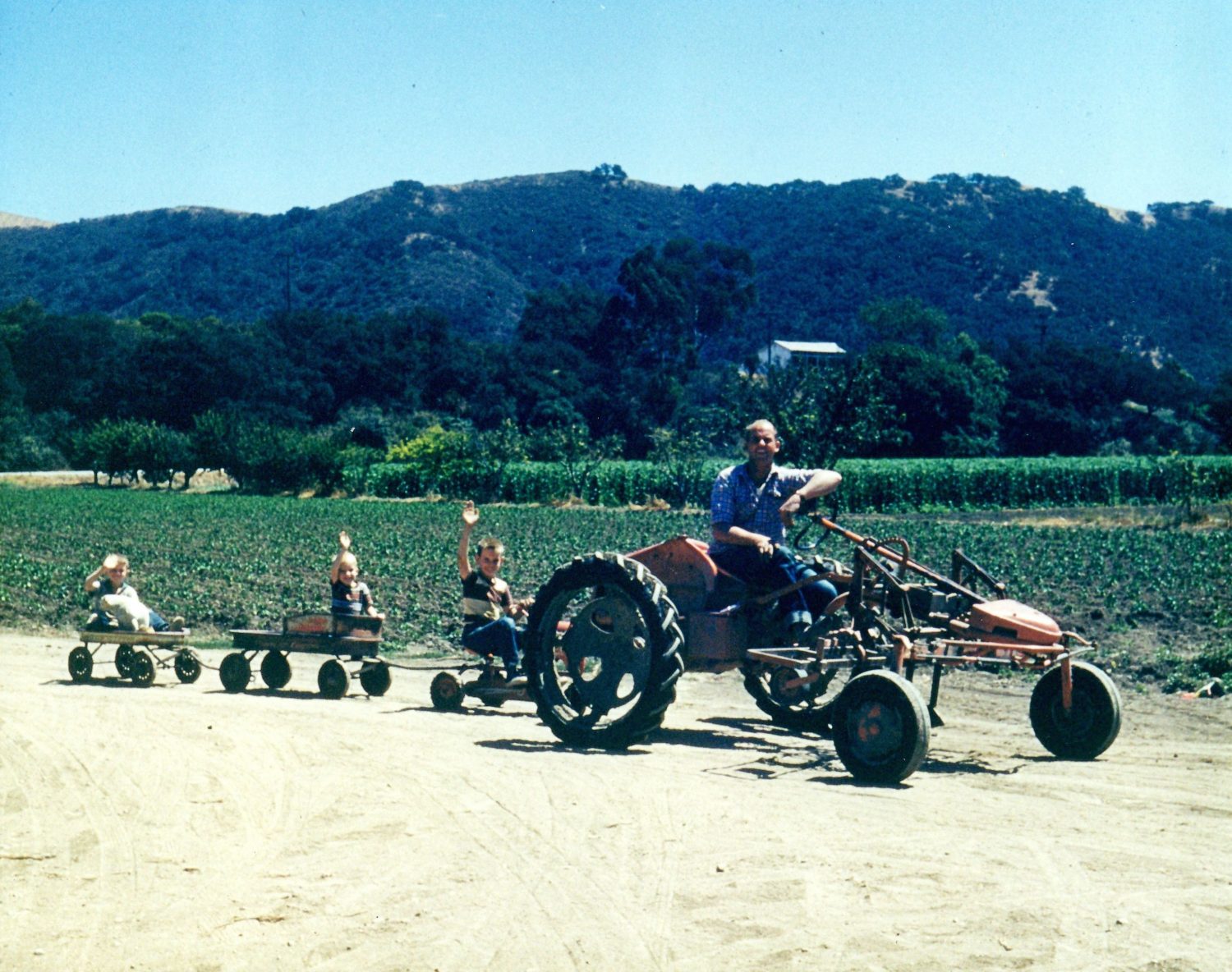

by Michael Shannon.
The River of the Kings was my father’s place of choice. Fast running, deep, frigid and isolated and in a most remote part of the formidable Sierra Nevada. The Snowy Mountains* are part of the American Cordillera, an almost continuous chain of mountain ranges that forms the western “backbone” of the Americas. He and his brother began going there in the late 1920’s. Still in high school, my uncle just 18 and my dad 16, both from a little town in coastal California over 200 miles from the Kings River canyon.
Río de los Santos Reyes headwaters originate along the Sierra Crest in and around Kings Canyon National Park and form Kings Canyon, one of the deepest river gorges in North America. The river was named by Gabriel Moraga, the commander of a Spanish military expedition in 1806, but it was not until California became a U.S. state in 1850 that many Europeans arrived and settled along the Kings River, driving out the original inhabitants the Yokuts. The Middle Fork flows for only 37 miles through some of the Sierras most difficult-to-access backcountry, including Simpson Meadow and Tehipite Valley.
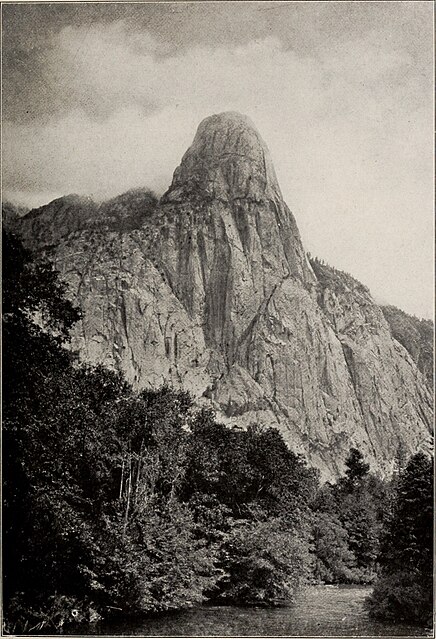
Tehipite Dome
Two hundred miles of mostly dirt roads which they had to navigate into the mountains in my grandfathers old 1918 Model T Ford. Arroyo Grande to Paso de Robles, east on hwy. 41 through the central valley to Lemoore, Hanford and Visalia turning at Woodlake and starting the climb through the foothills and up to Badger and Pinehurst to the road junction east of Dunlap then following the winding one lane dirt track up to Grants Grove, past Hume Station and then down to the turnout at Yucca Point.
The road was so narrow that on sharp turns there would be a hand painted wooden sign tacked to a tree cautioning the driver to “Sound Klaxon” on all the blind corners. If you heard another horn, the downhill driver had to back uphill until there was enough room to pass. Dad said the driver going uphill would have a great view straight downhill to the canyons below.
The Ford had been outfitted with everything a wilderness fisherman might need. Two sleeping bags, a couple canteens though in those days you could still drink from the river, no Giardia. Couple loaves of homemade bread baked by grandmother, jam and a jar of peanut butter, small can of lard for frying fish, salt and pepper, skillet and a knife to serve all the purposes a knife might. Only one problem. In a hurry to get away the sleeping bags were forgotten on the back porch. Neither of them noticed until they got to Grant Grove where they had to dig into the back to get a water bag to hang on the radiator.
This created a little bitty problem for the nights in September in the high sierra can be a wee bit cold or very hot, you never know. You want to count on both. The went in a talked to the man in the little store there but they didn’t sell sleeping bags or blankets. He did suggest they might talk to the owner of the pack station just up the road he might be able to help. Sure as shootin’ he could and did. See, he had a stack of horse blankets which he was willing to part with for say, five bucks each, used of course. Knowing the were in desperate straits the two boys agreed. They riffle through the pile trying to find the least objectionable. They all reeked of horse sweat, some were raggedy and many sported holes where they sat up on the horses’s withers. Picking out two they forked over a double sawbuck and carried the loot back to the care uttering what passed for polite boy’s curses the whole way. The old cowpoke reckoned it was a mighty good day.
The two boys wore long sleeved shirts because of the mosquitos and yellow jackets, one pair of trousers and believe it or not high top canvas sneakers with rubber soles. No hiking boots, too much to carry, but they did have a coil of rope in case they needed to cross in high water coming down from the south fork. In some years the water was still dangerously swift and deep even on Labor Day. The river bed was entirely rocks and scattered boulders. Fording the river was always and adventure. The current was swift and everything slippery and in the twenties there was nothing or no one to help you if you were hurt. The trail back up to yucca point was very steep and unimproved and the only way out was walking. It would have been a walk out for the uninjured and then seek help and the return trip with someone else and again the return by stretcher up a treacherous steep trail crossed by tree roots, half embedded stone, mud and all in the early September heat and don’t forget the deer fly trying to drink from your sweat and tears. You could soak your handkerchief in water from your canteen and tie it over your face above the eyes, it was the only way to keep them out. The view through the wet bandana was minimal so you’d better step carefully. The first rule was to be very careful.
At the bottom of the trail they tried fording the river but it was too swift and deep though it was barely more than knee deep. They figured if they could get the rope across the be able to ford. My dad was an excellent swimmer and body surfer. He’d spent a great deal of his youth swimming in the ocean and had the confidence to give it a try. He said he couldn’t really swim at the ford but determined that he could get across at the deep hole just upstream. The best thing was to swim the center where the current was a little slower so he stripped off all his clothes, tied the rope around his waist and waded in.
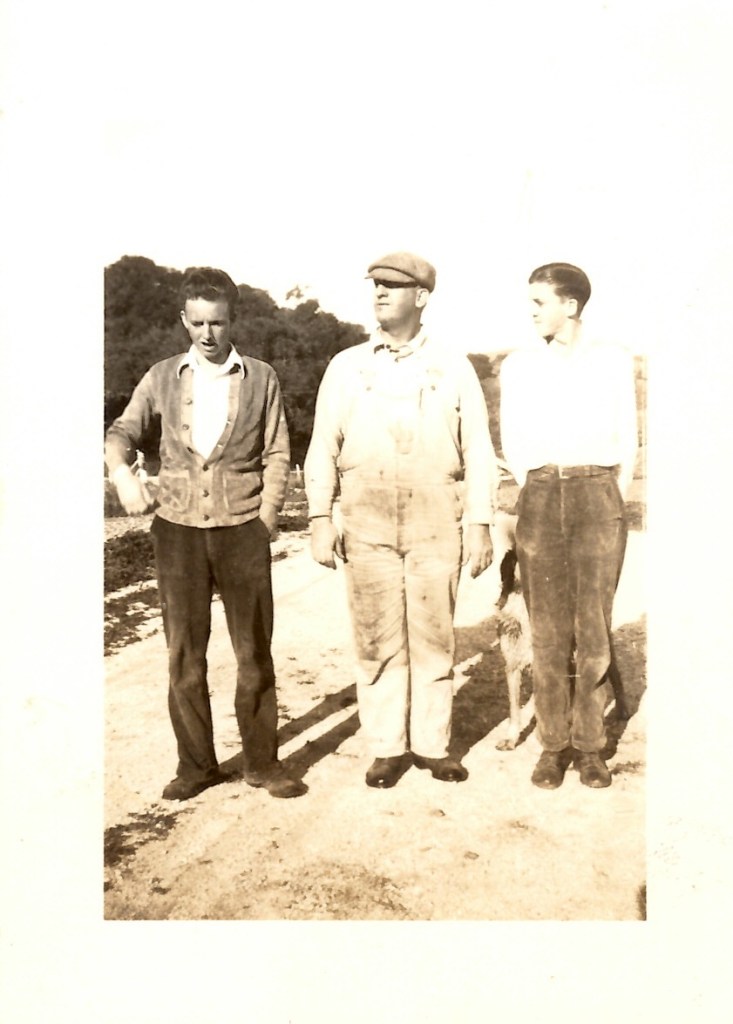
Left to Right, Jackie, Jack Shannon and George in 1928, Family Photo.
The water was cold, cold, cold, so cold that he could hardly breath. He was really glad to crawl out at the other side. The sand bar he came out on had three sycamore trees just a little set back form the shore so he walked to the trees and tied the rope around the closest one. His brother tied off the other on the opposite shore. Now they could use the rope to steady themselves as they crossed and recrossed to move their packs across.
After spending the night on the sand bar where the middle and south fork came together they cooked up a little breakfast then hit the trail. That is if you could call it a trail. Even today it is marked as unmaintained by the forest service and in those days it was nothing more than a narrow single wide path scratched out by miners during the gold rush.
The middle fork drops hundreds of feet per mile bounding and crashing around boulders where it forms eddys and small falls around the great deep pools. To get upstream the original trail blazers had cut a very steep trail up the side of the mountain ridges that formed the canyon. They had to climb this switchback trail for several hundred feet to get to a spot where the trail leveled out. It was just impossible to go upstream along the river below because the canyon walls ended where the river ran. The only way was to climb up to a little bench in the mountainside where they had cut the original trail. Unmaintained no wider than a couple feet you could look down a near vertical slope to the river below and straight up at your shoulder. Boulders clung to the slopes by some mysterious force for there wasn’t any visible means that kept them from flinging themselves headlong into the water below.
About two miles along they found a rusted, crumbling piece of one inch twisted steel cable. Puzzled by the find they at first couldn’t figure out why it should be in a place where it made no sense. Who dragged it up there and why? You couldn’t get much farther from anywhere than this place. Standing together they looked around but they couldn’t find any reason for it until they noticed, way across the river on the opposite cliff side the mouth of a small tunnel that could only be a mine entrance. They could see some rotted old timbers in the entrance and a few rusted tinned cans scattered about. The cable had to be the remnants of a pulley system that head been built to ferry supplies to the men who worked the mine and to haul whatever ore they found back across. How in the world did those old forty-niners get up there while prospecting and once they found some color how did they ever get the cable across? With only a small bench of mine tailings at the mouth of the tunnel they must have actually lived in the mine itself. Just visible down slope of the mine they could see a small rectangular iron bucket with a pulley still attached which explained how they got across.
Dad said they tried to imagine how a couple prospectors in the 1850’s hauled all the gear up there. Did they come by horseback and a packtrain? Did they walk in with a donkey? There is no forage nearby, little vegetation other than stunted trees clinging to the mountainside and where would the animals go when they were working the mine?
Those old prospectors explored every inch of the Sierra, getting into places where you would think no one could. There are abandoned mines all over the mountains. No one knows who found them or worked them and the only clue is a dark tunnel and scattered and broken old shovels, picks and empty cans of tomatoes.*
Finally at the end of a hot and dusty hike the train crossed a monumental rock slide where there was no walking but a semi-stumbling, one hand for yourself crossing to a sandbar along the river. The trail had caught up with the Kings where Lost Canyon creek came tumbling down from the nearly twelve thousand foot height of the Sentinel.
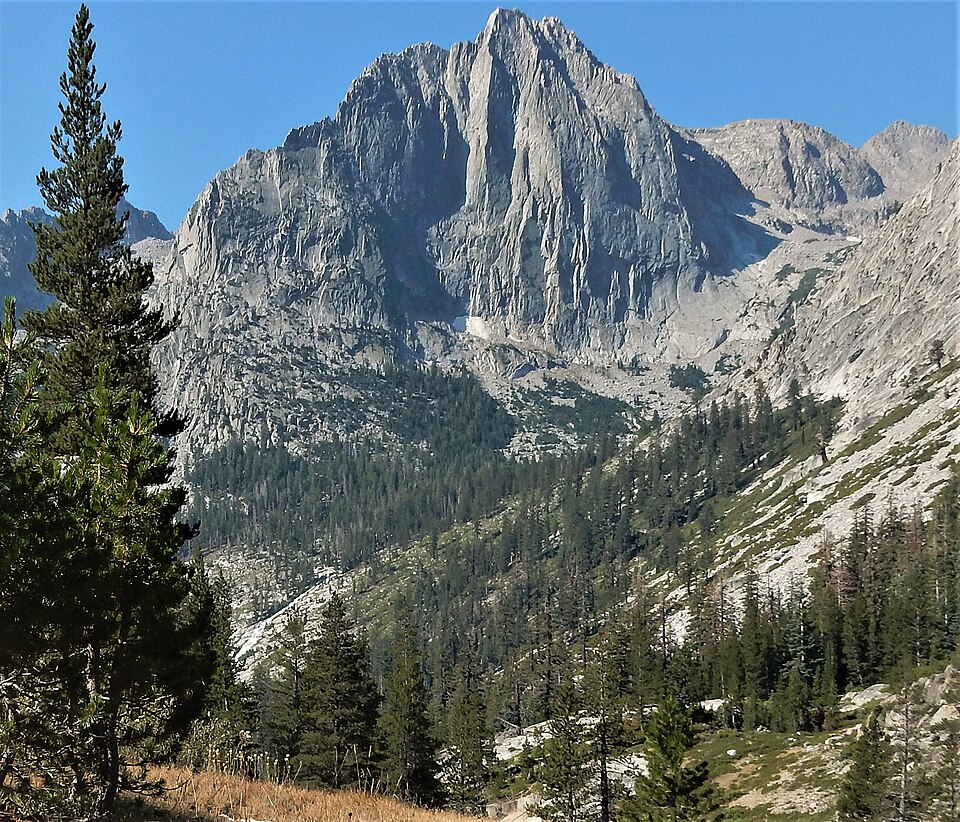
La Cuidadela, the Sentinel peak.
They told fish tails about the trips, how the fishing was fantastic. There were no planted trout up on the Kings, and there are none today. A man had to be full of tricks to land one of the veteran, wily Rainbow and Brown trout. Always fish going upstream, never let your shadow fall on the water, when the sun is high enough retire to the shade and take a nap because the fish cannot see whats on the surface and won’t rise. Don’t fish when it’s windy which it normally is in the afternoon. Find a deep hole which is partially shaded and bordered by an eddy which delivers insects right to the fish and delicately lay a dry fly on its edge. Make your pole dance the fly in an irregular pattern just as if it was real and you might be rewarded.
Dad even had a favorite place. High on a rock where the river was scrunched between a nest of huge boulders that had tumbled down the canyon walls you cold climb on top of the largest and flip your Grey Hackle right under and overhang formed by a split boulder where, he always believed, the King of Brown trout lived. Deep down in the dark cavern of still water he would only rise to feed under the most perfect of conditions.
Since their first trip in 1929, they returned again and again over the decades. They began to take me along when I was thirteen. What we carried was about the same, peanut butter, Webers bread, some butter and a small bag of flour and the cheapest frying pan possible because it didn’t weigh much. My uncle Jackie always took his old sleeping bag. I’m sure it was the first one he ever owned.*** No one in the family though that fancy gear like waders and basket creels were necessary. They considered that kind of stuff an affectation. The were there to fish and they knew the fish didn’t care. A bed of willow leaves in a flour sack worked well enough for the fish who would be dinner and your Levis had pockets anyway.
Lying on top of your bag at night, it was too hot to get inside, my dad and uncle talked quietly about nothing important and I listened. We watched the heavens for our American satellite Explorer I as it passed overhead. When finally it moved quickly across the sky and didn’t twinkle you could wonder at it all. In a time where space was all new to us, I felt safe in the knowledge that our country was the best place. I was thirteen then and all seemed possible. A boy and his father sleeping in the remote wilderness of the King’s River. No sound but the melodious chortling of the river and the owl.
*The Sierra Nevada.
**Tomato processing began in 1847, when Harrison Woodhull Crosby, the chief gardener at Lafayette College developed a crude method of canning tomatoes. Prior to 1890 all tomato canning was done by hand. It was said that you could follow the empty cans from Kansas to California.
***We still have it.
Michael Shannon writes of his family so his children will know from whom they came.
 atthetable2015