Today is the day, Corned Beef and Cabbage is on the table, nested in a tasty berm of boiled potatoes and carrots. It’s the one day of the year when we eat to remember. To remember what was once a serious thing.
In the 1850’s the poor benighted Irish in New York were confined to an area in lower Manhattan known as the Five Points. It was the filthiest, evil, most run down section of the city with open sewers running down the streets and wooden tenement buildings dating back to the revolutionary war. The neighborhood, partly built on land which had filled in the freshwater lake known as the Collect Pond, was generally defined as being bound by Centre Street to the west, the Bowery to the east, Canal Street to the north, and Park Row to the south. The Five Points gained international notoriety as a densely populated, disease-ridden, crime-infested slum that existed for over 70 years. Five Points is alleged to have had the highest murder rate of any slum in the world. According to an old New York urban legend, the Old Brewery, built in the 1790s, was an overcrowded tenement on Cross Street housing 1,000 poor. iIt s said to have had a murder a night for 15 years, until its demolition in 1852. The famine Irish immigrants lived there.
The Five Points, New York 1850.
“Debauched women, and men, and boys slink off to sleep, forcing the dislodged rats to move away in quest of better lodgings. Here too are lanes and alleys, paved with mud knee-deep, underground chambers, where they dance and game… ruined houses, open to the street, the reek of boiled cabbage and corned, ruined beef, hideous tenements which take, their name from robbery and murder: all that is loathsome, drooping, and decayed is here.” –Charles Dickens
Note that Dickens was long removed from tenement life himself and demonstrated his self satisfied views in his book written about his tours of America. He thumbed his nose at the Irish noting that the Five Points was far worse than the slums of London.
“They are a stupid, sodden, vicious lot, most of them being equally deficient in brain and virtue.” The average Irishman is a low, venal, corrupt and unintelligent brute.” Theodore Roosevelt.
Ireland itself was a major producer of salted meat, going back all the way to the Middle Ages and lasting through the 19th century. Under English rule, the vast majority of the products of Ireland were exported by the landowners. As to the the great famine itself, Ireland produced bumper crops of Beef, Pork and Wheat during the time Irish children were dying in ditches from starvation. One of the causes of the great migration is that tenant farmers were turned off the land in order to cash in on the export market.
“This [the Irish] is one race of people for whom psychoanalysis is of no use whatsoever.” – Sigmund Freud
It wasn’t always called corned beef, though. That didn’t come until the 17th century when the English coined the term. The “corned” comes from the use of large chunks of rock salt used in the curing process. These were know in England as corns. Pickled beef is the correct term.
“You can’t trust the Irish, they are all liars.”–Margaret Thatcher, British Prime Minister
While Ireland produced large amounts of corned beef, it was nearly all for trade. Corned beef was considered a luxury, and much too expensive for the poor Irish to consume. Instead, they relied on dairy and pork, especially salt pork, a relative to bacon.
Jiggs, “Bringing Up Father.”
Jiggs was born in Ireland. He came to this country expecting to find gold on the streets of New York, but found that he was expected to pave them with bricks and cobblestones instead. He became a hod-carrier. Romance came into his life when he met Maggie, a waitress at a small café, who put heaping dishes of corned beef and cabbage before him. They were married, and Jiggs became thrifty. Instead of carrying bricks, he bought and sold them on commission. Then he manufactured them. Street brawls in the old days in New York provided a great market for Jiggs’ bricks, which were harder than ordinary bricks. He grew rich. He still loved the corned beef though._____George McManus
The Irish use of corned beef as traditional Irish fare can be traced back to the 19th century and the Irish immigration to the U.S. While the newly immigrated Irish were used to eating salt pork back at home, its nearest counterpart, bacon, was prohibitively expensive in the Americas. Their best option for a lower-cost meat was, you guessed it: corned beef. What was once a luxury became a food that was now inexpensive and readily available. Cabbage was added because it was the cheapest of vegetables. No New York swell would deign to eat such a coarse vegetable, instead preferring the finest lettuce.
So it was the Irish-American consumption of corned beef that initiated its association with Ireland and the holiday of St. Patrick’s Day.
The real truth comes from Ralph Waldo Emerson who wrote, “Not paupers and criminals, but the Republic’s most needed asset, the wealth of stout poor men who will work.” Something that can be said of all immigrants.
My personal favorite though is from a man with a very particular set of skills, someone not to be argued with
“I’m Irish, so I’m used to odd stews. I can take it. Just throw a lot of carrots and onions in there, and I’ll call it dinner.” – Liam Neeson
As the quote at the beginning of this story written by that Dublin man, Sean O’Casey states,
“Thats the Irish all over____They treat a joke as a serious thing and a serious thing as a joke.”
Things to know about being “Irish” for Saint Patrick’s day.
In the deepest darkest time of night when Hobgoblins dance about on Branch Street in Arroyo Grande, beware. The wee people are out and about every March 16th. They cast a magic spell and lo and behold a brilliant shamrock green stripe appears. From Ralph and Porky’s bar out and up the street, making a slightly tipsy band of brilliance until it arrives at the batwing doors of Old Bill Hendrix’s saloon. The wee man say’s, “Micheal ,ye Feckin’ Eejit it’s O’Conners now and fer taday, it’s a pub.”
Slaintѐ
My earliest American ancestor arrived in the Virginia colony in 1682 to serve a seven year indentured servitude. A form of debt bondage, meaning it was an agreed upon term of unpaid labor that usually paid off the costs of the servant’s immigration to America. He arrived on the shores of Colonial America and was auctioned to the man who then paid his passage to the shipmaster who brought him. Indentured servants were not paid wages but they were generally housed, clothed, and fed. Daniel Shannon worked off his debt and married Abigail Vaughan at Portsmouth, Virginia in 1689. The rest, as they say is history. Fast forward a few generations and we find the family in western Pennsylvania and owners of a tavern in Bethel township. The family bought it from the heirs of a man named Reynolds who was hanged by the British for the crime of counterfeiting. The Irish were familiar with being hanged by the English. Tell me, how Irish is owning a tavern.
The Tavern today.
Jump another hundred years or so and having somehow survived the Revolution, The Blackhawk war, The war of the Southern Rebellion and various other disagreements including my great-grandfather’s two years in Sing Sing, we arrived in Arroyo Grande in 1888. John Edward Shannon, he of Sing Sing fame and his wife Catherine Shannon, nee Brennan bought a house and small ranch just off Corbit Canyon near the old stage road and settled in. We’re still here 134 years later. Being near the sea, it’s as far as they could go.
Dad Shannon’s house, Printz Road.
If you are not a Gaelic speaker, which few are, the title of this story is the proper name of the Saint, so called, that the particular day of celebration is named for, Saint Patricks Day. According to the autobiographical Confessio of Patrick, when he was sixteen, he was captured by Irish pirates and taken from his home in Britain and sold as a slave in Ireland. He spent his days a a herder near Slemish Hill, historically Slieve Mish in County Antrim where my grandmothers family is from. My great-grandparents would have seen it from their homes. He was a Shepard, looking after the woolies.
He lived in the north and west of medieval Ireland. He was captive there for six years before escaping and returning across the Irish sea to his family in Wales. After becoming a cleric, he returned to northern and western Ireland where he went about saving souls and dealing with snakes, or so it goes.. In later life, he served as a bishop, but little is known about the places where he worked. By the seventh century, he had already come to be revered as the patron saint of Ireland.
Slieve Mish, 1,434 foot elevation. County Antrim, Ireland.
Saint Patrick’s Day is observed on 17 March, the supposed date of his death. It is celebrated inside and outside Ireland as a religious and cultural holiday. In the dioceses of Ireland, it is both a solemn and holy day of obligation; it is also a celebration of Ireland itself.
He is not actually a canonized Saint as there was no process for making him a Saint during and after his life. He is listed on the calendar of saints but has never been officially recognized by the Pontiff. He is recognized as so by the Irish Catholic, Lutheran and Orthodox churches though. It really doesn’t matter as nearly the entire world does so on a least one day of the year.
About the snakes. There were never any snakes in Ireland; never, ever. The snake story is a metaphor for the banishment of the so-called Pagan religions in Ireland during his lifetime. The Irish tribes of the time likely wouldn’t have known what a snake was if you threw it at them. Snakes and St Patrick first became entwined in the 17th century but it’s hard to kill a good story and if any snakes know different they don’t give a hiss.
Out damn snakes.
The angry old man in the tablet above, wearing his bathrobe is Saint Patrick. A garment never worn in Ireland. The snakes are making their escape, the busty maiden with her hands up in surrender represents the Druids. You can see she is holding a sprig of Oak leaf which are purported to be the symbol of that religion which worshipped trees. The studly guy with the torch is, of course a pagan who Paddy said were fire worshippers. He wanted them all out of Ireland. You can take it or leave it, it’s all likely Blarney anyhow.
The Shamrock was first connected with Patrick centuries after his death. He supposedly used its three petals to illustrate the Holy Trinity, Father, Son and Holy Ghost. The symbolism of three has been used in religion since before time and Patrick would have found it was an easy get. In art, architecture and design the trefoil predates writing.
Now you know a little, and I mean very little about the old guy. There is a field of research that believes he never existed but as we always do in journalism the legend is much more interesting so thats what we print.
The British Parliament passed laws against dissenters and Irish Catholics in 1695. They were forbidden to own land, to school their children, vote, own a horse worth more than £2.50. They could not be a public official, be a lawyer or soldier, or serve on a jury. It was a hanging offense to speak Gaelic. Teachers, called Hedge Masters roamed Ireland teaching, literally in the bushes, another hanging offense if caught. This is the period that saw the end of many Irish traditions, including the wearing of the Irish kilt. It seems unbelievable today that this could have been so, but men, women and children were hanged for wearing a sprig of the Shamrock. These laws were designed to completely stamp out Irish culture. Instead, the Irish sailed away to America. You see, they could own land here, and school their children
And that they did. In the 1880’s our little valley was populated by many, many Irish families. There were Moores, MacGuires, Shannons, Olohans, Rices, Phelans, Donovans, Greys, Corbits, O’conners, McBanes and McKeens, many of them my relatives. My sister in law is a MacConaghy, a strawberry blonde no less.
As to the drink itself. Ireland today doesn’t even make the top ten worldwide. Sort of ruins the image of the two-fisted drinking Irish male doesn’t it. As with the many traits and characteristics of ethnicities the idea that the Irish are drunkards has more to do with politics than fact.
A letter written by then Catholic Cardinal Paul Cullen in March 1870 illustrates the attitude of those who backed the Sunday closing bill of 1905.
“Almost all the crime we have to deplore in Ireland may be traced to drunkenness; and as long as the doors of the public-house stand open during the leisure of the Sunday, it will be very difficult indeed to root out from among our people that degrading vice.” Cullen called for legislation to impose the Sunday ban, for the “spiritual and temporal welfare of our excellent people”.
Mind you though, the bill passed in the British Parliament only targeted the Irish. The Scots, Welsh and British were still allowed to partake of a Sunday. Of course they had slightly better relations with the British government even though they drank just as much. It seems the Brits have had it in for the Irish from, lets see, roughly the year 1169. More on that later.
When the barman asks you what will you have there are some things to know. If you ask for a pint, it’ll be Guiness served at room temperature. Room temperature, not warm, not chilled. Don’t forget, Ireland is not a warm country and room temperature is, well, cold. If you think you’re cool and want to be like the locals and ask for a Black and Tan do it in San Francisco not Dublin. The name “Black and Tan” is not used in Ireland as a term for a mixture of two beers. The drink is instead referred to as a half and half. In Ireland, the term “black and tan” is associated with the Royal Irish Constabulary Reserve Force, nicknamed the “Black and Tans”, which was sent into Ireland in the early 1920s during the Irish War of Independence and resulted in violent outbreaks between the Constabulary forces and the Irish people. The Black and Tans are thoroughly hated. So half and half it is, half Harp and Half Guiness stout.
Half and Half, Good. Black and Tan, Bad.
.
One other thing. Guiness is not the only beer in Ireland and in fact the British and, surprisingly, the Nigerians drink more per capita than the Irish. Guiness breweries are now owned by a British conglomerate called Diageo, which until recently was the worlds largest brewer. There is a sneaking suspicion that the recipe for Guiness has been tampered with. Irish have every reason to be suspicious of the British.
The Diaspora refers to the dispersion of any people from their original homeland. There are far more people of Irish descent living outside Ireland than there are in the home country itself. For fourteen centuries the Irish have been starved out, shipped out as criminals, sold into servitude and simply left as my ancestors did. The Shannons arrived in America not long after Oliver Cromwell finally savagely crushed the Irish at Drogheda in 1649, killing upwards of 20,000, murdering the captured on the spot, burning the city and deporting 50,000 Irish to the New World as indentured servants which you may know is a type of slavery. Canada, Australia, South Africa and New Zealand were also often destinations for Irish fleeing starvation and oppression.
“Oh, Paddy dear and did you hear the news that’s goin’ round? The shamrock is by law forbid to grow on Irish ground Saint Patrick’s Day no more we’ll keep his colours can’t be seen For they’re hangin’ men and women for the wearin’ of the green.”
In America, before it became the United States there was opportunity unlimited and a people raised under oppressive law took full advantage of it. Big George Washington wasn’t Irish but he would not have survived the revolution with out his master spy Hercules Mulligan who was born in Coleraine, County Londonderry. He was denounced as a spy to the British by that dastardly traitor Benedict Arnold. Hercules used his Irish Blarney to talk his way out of hanging. Obviously the “Gift of Gab.”
James Hoban, the architect who designed the White House was from Callan, County Killkenny. He supervised the actual building of the structure with the blessing of President Washington himself.
We take the phrase “Third Times the Charm” from the marksmanship of Timothy Murphy who on his third try drilled the Scot General Simon Fraser at the battle of Saratoga in 1777. Murphy, from Pennsylvania was a master with the Kentucky Rifle. Serving with Daniel Morgan’s hand picked rifleman, Murphy scaled a tree, took careful aim at the extreme distance of 300 yards, and fired three times. The first shot was a close miss, the second grazed the General’s horse, and with the third, Fraser tumbled from his horse, dead. The deed is credited with breaking the British and ending the battle. “The third Time’s the Charm.”
James Marshall, not Irish, discovered gold at Colma in California in 1848. The “Luck of the Irish” phrase has long been associated with this discovery. Down in San Francisco, Samuel “Sam” Brannon, son of James who emigrated from County Waterford, yes, the crystal comes from there, was the first to hear of the gold strike and spent a few days buying up every thing a miner might need for his store and then walking down Marker street shouting, “Gold, gold found on the American River. It made his fortune and he became, shortly, California first millionaire in the day when a million meant something. The majority of the first miners were of Irish descent and the phrase is said to have originated with the. James Marshall an Englishman had no luck, he died penniless near Kelsey California in 1885. No luck for James.
It doesn’t matter which political party you belong to, there are politicians and presidents of Irish descent in all of them. Eleven Irishmen signed the declaration of Independence, most born in Ireland. John Dunlap who printed the document was born in Strabane, County Tyrone.
There were four Irish born signers of the U S Constitution, two from County Antrim, one from County Carlow and one from Sligo.
On my mothers side, John Ó hAirt (Hart) signed the Declaration of Independence. The colonies were a plague of Irish as far as the British were concerned.
Twenty-tthree of our 46 presidents have claimed Irish ancestors including ten of the last twelve. Nixon who was descended from Irish on both his father and mothers side but did not want the voters to think he was embracing Democrat JFK’s Irish Catholocism kept it quiet. Pat Nixon’s father, Patrick Ryan was from Ballinrobe, County Mayo, so he figured why not use that instead. Very Nixonest. Barack O’Bama is Irish through his fathers family the Kearney’s who hailed from Moneygall, Tipperary. His great-grandfather Fulmore was a wealthy farmer and an Uncle, John Kearney who became the Bishop of Ossory and a Provost of Trinity College in Dublin, Irelands most prestigious university. Joe Biden’s mother was a Finnegan of County Mayo. Bill Clinton claimed to be Irish on his mothers side but there is no evidence of that. Sounds like him. I will say that he has the “Gift of Gab,” so I guess there is that.
Al Smith mayor of New York and Governor of the state ,lost to Herbert Hoover in the presidential election of 1928. As a son of Ireland he ran as a “Wet” meaning he was against prohibition, naturally. He was also the first Catholic to run for the highest office in the land and the opposition made the claim that if elected he would let the Pope run America. Interestingly, the same claim was made in 1960 about JFK. Didn’t work the second time. Al Smith got a better job though. He ran the Empire State buildings construction. Built in just 13 months he ordered construction to begin on March 17th, 1932. By the by, the Empire State is bathed in Green every Saint Pat’s day. Thanks Al.
That brings us to the Blarney Stone. For over 200 years, world statesmen, literary giants, and legends of the silver screen have joined the millions of pilgrims climbing the steps to kiss the Blarney Stone and gain the gift of eloquence. Its powers are unquestioned but its story still creates debate. My Grandmother Hall gave it a smack herself. She did it for fun ’cause she really didn’t need more eloquence than she already had.
Eileen Cayce Hall.
The stone is set into the wall of Blarney castle which was built by Dermot MacCarthy in 1446. It is inside a stone shaft affixed to the outer wall of the castle keep. The original use of the shaft was the castelleyne’s private garderobe. The Irish know what it’s original use was an don’t typically kiss the stone, being naturally gifted with eloquence by birth.
Some say the stone was Jacob’s Pillow, brought to Ireland by the prophet Jeremiah. Here it became the Lia Fail or ‘Fatal Stone’, used as an oracular throne of Irish kings – a kind of Harry Potter-like ‘sorting hat’ for kings. It was also said to be the deathbed pillow of St Columba on the island of Iona. Legend says it was then removed to mainland Scotland, where it served as the prophetic power of royal succession, the Stone of Destiny.
The Stone of Destiny is also known as the Stone of Scone and resided under the throne of Scotland before being taken by the British crown as spoils of war in 1296. There is a delightful little film titled “The Stone of Destiny” about four college kids who steal it and return it to Scotland in 2008. One of the leads is actress Kate Mara of the Rooney/Mara family an Irish girl. For the sports fan, her great-grandfathers founded the Pittsburg Steelers and the New York Giants football teams.
Kate Rooney Mara, no doubt is there?
When Cormac MacCarthy, King of Munster, sent five thousand men to support Robert the Bruce in his defeat of the English at Bannockburn in 1314, a portion of the historic Stone of Destiny was given by the Scots in gratitude – and returned to Ireland.
Others say it may be a stone brought back to Ireland from the Crusades – the ‘Stone of Ezel’ behind which David hid on Jonathan’s advice when he fled from his enemy, Saul. A few claim it was the stone that gushed water when struck by Moses.Whatever the truth of its origin, we believe a witch saved from drowning revealed its power to the MacCarthys who placed in the wall.
The rise of Saint Patricks day has taken fourteen centuries. This greening of the world began with the first recorded mention of a Saint Patricks Day parade outside of Ireland took place in the then colony of Spanish Florida in 1601. It was organized by Richard Artur the Irish born Vicar of Saint Augustine.
About 1 percent of the worlds population claim to be a little bit Irish. That percentage rises to as much as forty percent in Australia, twenty percent in New Zealand, fifteen in Canada, ten in the UK and about twelve in the United States. Ancestory.com revealed that of the fifteen milion people who have taken a DNA test were at least 5 percent Irish. 170,000 Irish born citizens live in the United States and another 50,000 are here illegally. Oh, oh. There are an estimated 80 million people of Irish ancestry living around the world including 31.5 million in the United States. California has the largest number and New Hampshire boasts it has 21 percent of its total population of Irish descent. Every one of our 3,006 counties has at least one Irish person in residence.
Two million Irish march down Broadway on Saint Patricks day. A million do the same in Boston. Savannah Georgia sports a half million marchers. The Chicago River turn green and has since 1962.
The Chicago River.
The Sydney opera house, the great pyramids of Egypt, the Eiffel Tower are all green on Saint Patricks. So is the statue of Christ the Redeemer in Brazil, the leaning Tower of Pisa, The Taj Mahal, Nelson Mandela’s statue in Johannesburg, The West Bank Palestinian Museum in Ramallah Palestine and that symbol of green, the Welome to Las Vegas sign in Lost Wages, Nevada.
When I lived in Hawaii I belonged to “The Friendly Sons of Saint Patrick,” a fraternal organization primarily organized to throw a ball on the great day. Men wore tuxedo’s and the women ball gowns. A beautiful redheaded Aer Lingus stewardess was flown in each year to be the princess and believe you me, all had a wonderful time. Senator O’Fong, Senator O’Inouye, Mayor McFosse, Don O’Ho and even Hilo O’Hattie became Irish for the day.
George Custer, he of the glossy blonde ringlets went to his death on the Greasy Grass, galloping down Medicine Tail Coulee to the tune “Garryowen” an old Irish drinking song. Captain Myles Keogh was the only Irish officer to take part in the Battle of the Little Bighorn. He was one of 34 Irish born soldiers who died that day.
At least 150,000 Irishmen served in the Union army, most not yet citizens, many just off the boat from Ireland. 20,000 served the south and wore Butternut including all three of my Hooper kin who died at Bull Run and Malvern Hill. There are no figures as to how many Irishmen died in the Civil War, but it is likely that it ran perilously close to 40,000.
Literature and entertainment are rife with the sons and daughters of the “Auld Sod.” On the list: Walter Disney, Kurt Cobain, Pierce Brosnan, Mary Pickford, the first great movie star and the inestimable Bill Murray. The reigning king of macho, Clint Eastwood is on the list along with Alicia Keyes, Mariah Carey and Judy Garland. Eugene O’Neill, F. Scott Fitzgerald, Cormac McCarthy, Larry McMurtry and J P Donleavy represent some of our Irish American greatest writers.
If you watch British film it’s obvious they have stolen the best Irish talent to stock their films and plays. Saoirse Ronan, Fionnula Flanagan, Stephen Rhea, Liam Neeson, Gabriel Byrne, Kenneth Branagh, Daniel Day-Lewis, Peter O’Toole and the brilliant Maureen O’Hara. Yes even that quintessential Englishwomen Judi Dench had an Irish mother, Eleanora from County Dublin.
It is impossible to leave out the great Irish poets, Oscar Wilde, W B Yeats, James Joyce. Olivia Wilde, one of Irelands great poets was the mother of Oscar. Talent ran in the family . Jonathan Swift, author of Gulliver’s Travels and Seamus Heaney a poet who wrote with such a sublime beauty that his readings caused people in the audience to weep.
W.B. Yeats “When You are Old”
When you are old and gray and full of sleep And nodding by the fire, take down this book, And slowly read, and dream of the soft look Your eyes had once, and of their shadows deep;
When you make the walk from Ralph and Porky’s to O’Conner’s tomorrow, remember the stories, legends and Irish folk that have made this holiday what it is. Raise a glass for the Auld Sod and its people wherever they may be. Slainté
My fathers family came so long ago that from where they came has been long forgotten.
My paternal great-grandmothers family the Brennans rode the Coffin Ships from Carlow to Canada in 1838.
My paternal grandmothers parents Samuel and Jenny Gray came on their honeymoon in 1881 from County Antrim by way of Belfast on the ship State of Alabama to Castle Gardens, New York..
My great uncle Patrick’s family was from Ballanagh, County Cavan and he left from Cobh on the ship Empire State in 1850 with his father Michael and three sisters Mary, Catherine and Bessie, landing in Philadelphia PA.
Somehow the whole Feckin’ bunch washed up on the shores of California which was good for me.
Michael Shannon is a World Citizen, Surfer, Sailor, Teacher, Builder and Story Teller. He lives in Arroyo Grande, California, USA. He writes so his children will know where they came from..
My family lived through the depression, the big one. For farm and ranch people that means from the federal governments cancellation of the WWI farm contracts until Adolf Hitler went into Poland. 1918 until 1939, just enough time to grow a new generation of boys. It was hard times, very hard times.
My dads side of the family, ranchers and dirt farmers who lived and worked in the central western part of California, the old Cow Counties, and my mothers side in the state’s oilfields. They grew up and lived right through it. Both required hard work, misery and close attention to just getting by. There are numerous family stories about their toughness.
My grandmother made the trip from Bee Canyon east of Arroyo Grande to Madera on the seat of a buckboard in 1917 . She was eight months pregnant with my mother and had my aunt Mariel who was just a toddler along for the ride. They did it in the middle of the San Joaquin Valley summer. Half way there it got so hot that the family dog Brownie, went and sat under a shade tree in the lost Hills and refused to move. They left him and never looked back. The trip took 40 hours nonstop. To this day I don’t know how my grandmother did it. Dirt roads, ruts, pot holes, no shade, shaking and banging all the way. She walked with my grandfather Bruce up the Cuesta Grade because the horse couldn’t pull the loaded wagon with two people in it. Bruce carried Mariel. Eileen carried mom. There are all kinds of toughness.
Eileen, 1926. Shannon Family photo
Toughness. Money was tight. Frugality was the watchword. Nothing was wasted. Everyone in the family worked as soon as they could. Work they did for there was no safety net. No unemployment insurance, no Social Security, no medicare. Most every thing was cash and carry or barter. The Bank of Arroyo Grande was as tight fisted as Scrooge McDuck.
People took a great deal of pride in making their own way. It was the way of their lives and until the day they died they asked for nothing.
Growing up I don’t think I ever heard the name Franklin Roosevelt without some kind of expletive preceding it. The president who held office before Roosevelt, Herbert Hoover was unable to blunt the force of depression in any significant way but in the family this was not held against him, after all he was a good Republican which went a long ways in our house. But Roosevelt, oh my, he was considered evil incarnate though in fact what he really represented was the intrusion of the Federal Government into the lives of people who considered themselves self sufficient. There is that toughness again.
Rural folks simply believed that the government could not properly run anything. Farmers were by this time pretty tight with their money and hated to give it up to an entity they were sure was simply going to waste it on some fool project.
Works Progress Administration.
My dad used to grind his teeth whenever he saw a bridge or any other construction project that had WPA or CCC stamped on it. It wasn’t that he thought any of the young men in those organizations were bad but that the Federal Government was pouring his money down the drain.
Every time I cross one of those bridges, many of which still exist after ninety years I’m reminded criticisms are no always well founded.
Many were though. When the big hay barn burned on our dairy in 1923, the fire department from the nearby town of Arroyo Grande stopped at the city limits. From where they sat on the road side the got a splendid view of my grandfathers new barn going up in flames. They wouldn’t left a finger to help. The chief said they only worked fires within the city limits and there was “Nothing we can do about it.” My grandfather knew personally, every fireman in town. He played poker or Canasta with them, met with them at the IOOF and the Rotary Club and bent an elbow at Ryan’s saloon and by God, he never forgave them for the loss of the barn. Ever. He must have told that story dozens of times when I was a kid. He wanted to make sure my thoughts about Guv’mint were not pure. They are not.
When I was a kid we were used to state and national governments in our lives. Because of the times we lived in we had a different take. I’m not sending my Social Security check back and I’m glad to have Medicare and Veterans benefits but there is always the thought that they were right.
Here is an example of what they meant. My uncle Jackie was a cattleman. A charter member of the California Polled Herefords Association. Like most cattlemen he was pretty conservative. Remember that the root of conservative is conserve. Our ranch had, like most ranches, a shed where tools, feed and assorted junk was kept “In case I need it someday.” This of course was taken to ridiculous extremes. Ours was in what was called the calf shed. It was a little building with three small stalls where newborn calves who needed care could be kept and looked after. In one corner was a small room where tools, nuts and bolts, tractor parts and other assorted machinery was kept. If you needed a square headed bolt for a John Deere side delivery rake built in 1917, why we had it. We had wrenches for tractors long abandoned in the gully where old cars and trucks went to die. There were boxes of square headed nails not manufactured for over a hundred years. But if you needed one, we had it. A farmer or rancher could make the rounds of his friends and sooner or later someone would have what you needed for that old planter. You could age date the boxes they were kept in by the numbers of Black Widows living in them. Conserve, take care of yourself. No one else is going to do it.
Jackie Shannon
I used to believe and I think is still true that every rancher and farmer in the county knew each other or were somehow related either by birth or marriage. Still pretty true. As I was the oldest boy, I used to ride around the county with my uncle while he was involved in buying or selling cattle. We would cruise out to Creston or up to the Cambria area to visit ranches and I listened while he and some cowman leaned on a fence and “chewed the fat.” We’d sit in the stands at the Templeton Stockyard Auction and I’d try and figure out who the bidders were. There was a sort of mystery to how they did that. I mean, the red and white cattle all looked the same and the ranchers did their actual bidding with what looked like telepathy. An eyebrow raised her and slight shift of a folded program or perhaps a hat brim touched with the index finger.
Templeton was where I first met Dick Nock. He was a friend of uncle Jack. This is the part where relationships come in. Though they were over twenty years apart in age, they both knew cattle. Dick was born and raised on the Phelan Ranch in Cambria, where his great-grandfather, Jeffrey Phelan, settled in 1858 after immigrating from Ireland. Our ranch was next door to another Phelan ranch in Arroyo Grande and my great uncle Patrick Moore, also an Irish immigrant was a friend to all the early Irish. I went to school with Phelan kids who are friends today. It’s was so, so small town.
Growing up, Dick worked on the Fiscalini Ranch, went to Santa Clara College and spent the rest of his life here. By the time he was a grown man he knew everyone in the county who mattered in the cattle business. For many years he wrote a column on the ranching business for the San Luis Telegram Tribune. Like most columns with a pretty restricted audience, I mean does the average person really care about salt blocks, feed supplements or the proper application of “Whiz” fly spray. Not likely but Dick had a sly sense of humor and would offer deadpan, tongue in cheek observations that would do Jerry Seinfeld proud.
In the 1970’s he wrote a column that was perhaps a perfect example of how the Guvmint works. Or doesn’t.
It seems Dick was traveling up the 395 highway on the way to Olancha, a tiny town up in the Owens Valley. It’s the kind of place where Gus’s Fresh Jerky is the premier attraction. It’s the back of lonesome is how it is. When Dick took this particular trip he was checking the fences along the highway where the Bureau of Land Management was putting chicken wire along the bottom of the cattle fences to keep the desert tortoise, pretty slow moving even at top speed, from being squashed crossing the highway. The idea was to keep the tortoise off the endangered species list, they being completely inoffensive and harming no one. A noble idea.
In the way of governments, thinking the issue through, trying to see all sides and what disaster might occur when messing with nature for what seemed a good idea…. Well, lets put it this way. The Australians in their wisdom imported rabbits for hunting. A case of incomplete thinking to say the least. Rabbits now infest the country, no natural predators you see. In Hawai’i, rats jumped ship in the early days and became a real problem, destroying vegetation, eating lizards and harboring diseases. The importation of the mongoose in order to eat the rats was the answer. Only one problem, rats are nocturnal and the mongoose is diurnal and never the twain shall meet, hence the almost complete destruction of every bird species in the Hawai’ian islands.*
The good thing, saving the Desert Tortoise immediately triggered the Law of Unintended Consequences. The Ravens who live in the desert were denied the tortoise roadkill they took for granted and being very smart Ravens sought out a new source of sustenance, turtle eggs. You can see the dichotomy here. Tortoises are saved from cars on 395 but there are no tortoises because the Ravens have eaten all the eggs. In a perverse way it is the perfect solution, tortoises are squashed, eggs are eaten and all the Ravens starve to death. Problem solved. Except it wasn’t.
What to do? Schedule a conference of course. Bring in the experts put them around a table and let them have at it. After careful study and a great deal of field work it was determined that there were simply too many Ravens. 1500 Ravens were sentenced to death by the BLM. Environmentalists were of course enraged. The Ravens had simply been Ravens, doing what Ravens do. Threats of lawsuits, stakeholders meetings lasting months finally determined that only 56 of the most offensive Ravens would be executed. Furthermore these evil Ravens would be chosen based on observation of a minimum three Raven kills. Hmmm. As my uncle would say, “You’re a Daisy if you can and a Dumb Cluck if you can’t.” Yes, he actually said things like that, being a child of the 1920’s. Some things never left him.
Bad Raven
Have you ever been to the lower reaches of the Owens Valley? It’s a vast area, nearly 700,000 acres in size. Only about 18,00 people live there, primarily along the north, south 395. Go east on highway 6 towards Duckwater, out behind the Humboldt-Toiyabe and the Pancake ranges of mountains and you enter ranch lands stuck in time like flies in the back door screen. There are vast ranching operations where cattleman and their families plan a trip to town as if it’s a vacation to a foreign country. The RO ranch herds cattle over more than 6 million acres of Nevada. The great Smoky Valley is so far out the word remote hardly describes it. It’s a place where the horse is still the king. For the most part the cowboy and the wildlife get along just fine.
From Winemucca in the north, eastern Califonia in the west and the Mojave desert and Death Valley as its southern neighbor the people can be counted with just a tally stick. There are more Ravens than souls. See the problem? There is no one out there to count tortoises. No one knows how many there are. Millions of dollars in state and federal funds have been spent in studying this issue since Dick Nock wrote the original in the late 70’s. As far as anyone knows there are still 56 Ravens on death row. It’s an interesting turn of events and unfortunately there is certainly much more to come, because in the end the Tortoises are still getting squashed, eggs eaten and the Ravens are fat and prospering. The Guvmint men all shook hands, satisfied the problem had been solved. Environmentalists broke out the champagne, another victory notched and if Ravens could smile, they certainly did. The ranchers just paid it no never mind.
Thanks to Dick Nock and my uncle Jack Shannon who was so delighted by the column that he cut it out of the paper and saved it in his top dresser drawer for forty years.
And that, my dear friends is why ranchers and farmers hate the Guvmint.
PS: Nothing has changed in the valley. Ravens still rule.
Richard Leo Nock September 3, 1931 – December 28, 2020 Dick Nock had a devoted family and a loyal community of friends, he remains the consummate cattleman (a fighting Irishman) with a never-ending enthusiasm for life.
*Four of the last species of tropical birds in Hawai’i were declared extinct in 2023.
Michael Shannon is from a family that lived on the land. He spent a lot of time picking hayseed from his hair.
The Fourth Estate. The place where Randolph Hearst, Joseph Pulitzer, Colonel McCormick and William Cullen Bryant stalked the newspaper world. A big world. Fortunes made and lost. Top of the heap, down in the dumps. Writers have witnessed it all. Stanley wrote of the search for Livingston, Nelly Bly circled the world in 72 days, Jimmy Breslin knew the gang that couldn’t shoot straight, Martha Gelhorn, who famously dumped her husband Ernest Hemingway and covered every major war in her 60 year career and Ernie Pyle, champion of the little guy, reporters all.
Newsboy. The Toledo Blade.
In my time growing up we read the famous columnists at our kitchen table. Herb Caen, a California institution in his own right. Mike Royko out of Chicago and Molly Ivins, the greatest writer Texas ever produced. Mom always checked Dear Abby for advice on handling her three young boys. Jimmy Breslin and Pete Hamill out of New York were both exceptional. Jim Murray the LA Times sports writer gave us the news on the Dodgers. Most of our best American writers came from the papers. For the Bon Mot, Dorothy Parker, He of the gimlet eye, James J. Kilpatrick, the unrivaled National Review election-year must-read: He had the knowledge that comes from having done it forever, and the skill in evocation that comes only from genius.
The earliest form of writing is believed to be of Mesopotamian origin. The Bronze age saw the first representation of “True” writing where symbols represented sounds. Previous systems, which we still use in things like math were symbols that are essentially pictographs. Beginning roughly three and a half millennia ago, the written word appeared independently in China, North Africa, Central America and the Middle East.
Johann Carolus (1575-1634) was the publisher of the Relation aller Furnemmen und gedenckwurdigen Historien (Collection of all Distinguished and Commemorable News). The Relation’ is recognized by the World Association of Newspapers, as well as many authors, as the world’s first newspaper. Not a very “Snappy” name if you ask me but it was the first.
For my classmates and I, three hundred fifty five years later a newspaper appeared at our school, Branch Grade School. It was our own.
Branch Grade School. 1957.
Who birthed the idea I don’t know. When you attend a school with less than sixty kids, taught by just two teachers an idea can come from anywhere. Curriculum was flexible in those days. It had to be. Mrs Edith Brown taught grades one through four in one classroom and Miss Elizabeth Holland taught 5-8 in the other. Older kids taught younger ones.
Curriculum was flexible. We still used some textbooks published in the 1920’s with the names of former students written on the flyleaf who were the fathers and grandmothers of my classmates. There are photos taken in front of the school taken generations ago with the same names as there are today. Such is the way small rural schools have always connected with their communities. Every single event at the school was attended by the families. Every parents was involved in some way with their kids. The Dads painted the building and kept the grounds. They installed playground equipment. I remember the excitement when the very first Teeter Totter arrived in the fifties. Moms cranked out costumes for All-Hallows eve, They sewed for school plays and produced bushels of cookies for any event.
Projectors showing movies were operated by eighth grade boys. Kids were expected to help out when needed. The janitor, Mrs Fernamburg was on the school board and drove the bus. Like I said flexible. We learned all kinds of things not in text. We are better off for it.
So whomever thought to create a school newspaper was a genius. The Bee, as it was called published for three years from 1957 through 1959. There was no regular schedule. We printed them out when we had enough to say that we thought was important. Important to kids I mean.
Nearly everything was done at school then. Halloween Carnivals, school plays, Christmas celebrations, and eighth grade graduations. The 4-H club met at school, The school board had their meetings in the old schoolhouse. Most people didn’t have TVs they could plunk the kids in front of, no one played organized baseball or any other team games, that was for town kids. Country kids had to find other things to do. Those are the things we wrote about.
We wrote about the bats in the girls bathroom. Somehow the bats preferred the girls side of the old outdoor toilets. Only the bats knew why. We told of the new teacher policy that allowed us to bring our Fanner Fifties to school. Gun Day it was called. It lasted a while until someone was beaned, which was inevitable, boys being boys. Teacher put on a bandage and Gun Day was quickly forgotten. It was in the paper though. No parent complaints, no punishment. As you might imagine things were different then. No one expected the school to raise their kids.
For practical reasons nearly every kid who could put two letters together was on the staff. We probably had a larger staff in proportion to our readers than the Los Angeles Times.
Branch Bee Staff, 1958
Just like a real newspaper our little journal chronicled the goings on of our little community.
Alvin Evenson reported on the birth of his little brother Edward and opined that he cried too much. All night, as a matter of fact. Anyone who doesn’t know the Evenson family might wonder why he was bothered but those of us who went to school with the hordes of Evenson kids understood. Big, big family, small , small house.
Jerry Shannon and Raymond Samaniego reported the weather. With every kid in school tied to the land, weather was an important topic. Crops fail because of bad weather, rain, too much fog, high winds and extreme heat. Every student heard talk of weather around the kitchen table. Since almost all homes were still on dirt roads knowing when your chidren were going to have muddy feet helped mothers know when to have oven space in order to have shoes dried out for the next morning. No kid liked taking those first steps in shoes bent like potato chips. Mrs Fernamburg watched the weather because nearly sixty pairs of muddy shoes made her janitor work that much harder.
David and Alcides, Al, Coehlo wrote a cute little story about their new puppies Tippy and Daisy. They were purebred Borderers and would be trained for herding sheep though I don’t recall my friends having enough sheep to herd, but little boys and girls and puppies, well, you know.
Eighth grader Barbara Durham wrote an article about visiting the county courthouse with the student from Oak Park School. They sat in Judge Lyons courtroom and he explained the law to them and how county courts work. She informed us that the county clerk allotted $7,000.00 for Oak Park’s budget and $22,000.00 for Branch. We had three times the number of kids and two teachers, that being the difference. She said the students helped the county jail trustees prepare their lunch and they washed dishes too. Imagine that today if you will.
James Frisk, another eighth grader told of two sophmore HS boys who put a rubber raft into the storm swollen Arroyo Grande creek just below the Harris bridge. If you’ve ever seen the gorge the creek runs through there you can imagine how much water was flowing past. The boys rode down to the gauge by the old high school where they tried to get out with help from some strategically placed friends. That plan went by the wayside and they ended up getting pulled out just above the hwy. 1 bridge. Because the levee had failed and the bridge was under water they narrowly avoided complete disaster. Neither Don and Edna Rowe nor Oliver and Hazel Talley were in the least bit amused with their boys. Punishment was swift.
An extra edition proclaimed the successful launch of Americas first satellite, Explorer One. I recall that being a really big deal at the time, being in the clutches of the cold war with Russia. The article states complete confidence that if there was a nuclear war we would win. No worries.
Also front page news was the playing of the annual baseball game with Oak Park at Oak Park. I threw the pitch that that wonderful girl Melody Patchett crushed for an inside the park, walk off home run. Front page news.
Branch Bee, November 1957. Shannon Family photo
As budding newspaper reporters we had the privilege of visiting our home town newspaper in 1958. The Arroyo Grande Herald had started publishing in 1887. The first owner was Steven Clevenger and his credo followed the Democratic party. In order to counter his perceived bias William Ryan started the Recorder in 1900. Located in the Meherin, later Olohan, Building across from the Bank on Bridge St, it only lasted a few years and ended up being sold to the new owners of the Herald, hence Herald Recorder.
We were met at the door by the publisher Newell Strother and the papers longest employee, Mrs Mae Ketchum. Mae had started work at the Herald in 1901 when she was just fourteen. She didn’t go to high school, she went to work, not an unusual thing at the time. She was a lifelong friend of my grandmother. She immediately picked me out and gave me a hug. She said “You look just like your grandfather.” Kids could not go anywhere in town without some adult knowing who you were. Such is small town life.
The old building which dated back to the 19th century had the look of an old drunk just ejected from Ralph and Porky’s bar. She leaned a little to the left that year, though after every wet winter she shifted a little.
Herald Recorder Newspaper building.
We went into the office. Perhaps it had been many years before spiffy and modern but in ’58 it had seen much better days. The windows were fogged with decades of cigarette smoke and dust. There were coffee cups set on frayed old galleys. There was the ubiquitous calendar from EC Loomis & Son set to the wrong date but since the paper was only published twice a week it didn’t matter much. The desks were chipped and worn, the typewriters were a mix of old Royals and Underwood number 5’s. Old before my father was born. Mr Strother explained how the news was gathered and organized. He said much of it came from people off the street who reported seeing this or that. He printed the names of people who were out of town, who had a baby, bought a house and even on one slow week, the sighting of a little Japanese boy watering the bricks of the Bank of Arroyo Grande.
He took us back to the Linotype room where that weeks paper was being composed. The operator typed the words from the reporters into the machine and it delivered a long row of lead type ready to be set on the press. He said the molten lead in the machine was more than seven hundred degrees. We were impressed by that. The dust from the machine had put a fine patina of lead on the floor and walls. Nobody seemed to pay any attention to that or the ink stained floor in the pressroom. The mom chaperones were like hawks though, making sure we didn’t touch any of it. Mom hands on the fly. On the way home we were pretty sure we would all be famous newsmen.
Yeah, like Clark Gable in the film “It Happened One Night,” chasing the heiress Claudette Colbert who famously flashed her silk clad legs when showing the Ace reporter how to hitchhike. We thought about Ben Hecht’s and Charles MacArthurs “Front Page” where reporter “Hildy” Johnson tries to hide an escaped murderer in a roll top desk in order to get a “Scoop.” We could do that job, I had the big ears like Clark and my uncle Jack had a roll top desk we could hide in.
Claudette Colbert, Clark Gable, “It Happened One Night.”
Our operation used an old Ditto machine to do the printing. Our teachers would type up our hand written stories and we’d run them off. We did enough for each family and kid to have one. We sent them home to parents because one of the most important parts of the paper were the announcements about school events.
Oh, that old Ditto machine with its rapturously fragrant, sweetly aromatic pale blue ink, Ditto paper was literally intoxicating. Two deep drafts of a freshly run-off worksheet and we would be the education system’s willing slave for the rest of the day.
Eighth graders, being the top of the heap got to run the machine and do the stapling. When they passed the paper , the students put the page up to their noses and deeply inhale. This was a popular school ritual of the ’40s, through early ’70s, as photocopying machines were very expensive, so ditto machines were still in use.
When you see the Cameron Crowe written film “Fast Times at Ridgemont High there is a scene where Mr. Vargas passes out a worksheet and his entire class lifts the paper and takes a deep breath. If you were born after 1955 this experience has passed you by. The copies did not get you high but they smelled awfully good.
Fast Times, Mister Vargas class. MCA/Universal films.
The Branch Bee has is gone as has the little two room schoolhouse. The kids who made it have all gone on to other careers. None that I know of are reporters. A few of us lucky ones worked for the high school paper, The High-Chatter. A couple of us were stringers for the Times-Press-Recorder while in high school. The Gregory boys all wrote for the high school paper and the Cuestonian. Jim Gregory is now a noted historian and author who is a pleasure to read. I was a part timer on the Dry Dock, the newspaper of the San Diego Naval Hospital while I was stationed there while in the Navy.
In those days long before social media a person had to contemplate the content before writing. A reporter or editor at the Herald-Recorder walked the same streets as the audience. This imposed a certain degree of circumspect or social sensitivity not seen today. The act of putting it down on a piece of paper is far different than a 140 character Tweet which can be banged out in a few seconds. Today, wires connect millions to a single mouth whose only purpose is fill time with content, no matter how suspect. Perhaps the reader will look back to a time when some thought was given to consequences. We were all taught that in our little school.
More valuable to historians who search for a mirror of time is the pile of old Branch Bees and their like tucked away in the old trunk where my mother stored the things that mattered to her.
Uncle Jackie’s desk.
The newspaper has gone the way of the dinosaur. Nearly extinct, we have lost something valuable we aren’t likely ever to recover. I miss them.
-30-
Michael Shannon is the former editor of the Branch Bee. He lives in Arroyo Grande California.
It’s been said that every journey begins with a single step. I believe that’s true. An idea; a thought that is nothing unless it’s put to use.
When my children were little I came across books written and illustrated by a man named Chris Van Allsburg. Mister Allsburg is world famous for his exquisite illustration techniques and clever story telling. Like many people who wrote, he never intended to be a writer, he studied sculpture in fact. Because of a little serendipity he became first an illustrator of books, one actually and then wrote and illustrated a book himself in 1981. It didn’t do badly though, it became a best seller and won the Caldecott Medal. The Randolph Caldecott Medal, shortened to just the Caldecott, annually recognizes the preceding year’s “most distinguished American picture book for children”. If you’re not familiar with his work I can explain to you in one word who he is. That word is Jumanji.
Allsburg is a terrific illustrator and children love his books though I believe since kids don’t actually buy books themselves that parents are transfixed by the beautifully crafted covers. His stories include the aforementioned “Jumanji” and “The Polar Express.” My personal favorites is the tale of the “Two Bad Ants.”
In any case this is just background. One of his lesser known books is The Mysteries of Harris Burdick. It’s a 1984 picture book and it consists of a series of images, supposedly created by Harris Burdick, a man who has mysteriously disappeared. Each image is accompanied by a title and some line of text, which encourage readers to create their own stories.
I’ve been captivated by that idea for some time so I’m going to give you a chance to exercise your own imagination by providing you with the first line of stories not yet written.. Have at it.
Martha Belle
Ben lowered his voice some and said to us, “You’ll see precisely what the Mattie Belle wishes you to see, and you’ll know just what she wants you to know.”
The Little Dog
Hopeful she is. She watches for the telltale signs, the putting on of shoes, the jingle of keys, any kind of stroll towards a door that leads outside. This is what my dog believes. This is her God.
Gone fer a Sojer
Ambrose Bierce was both a rifleman and officer in the 9th Indiana during the war between the states. He became one of the most respected writers in America, Stephen Crane and Hemingway considered him a great influence. He knew soldiering. At the age of 71, he died facedown in the dusty, dirty streets of Sierra Mojado, Coahuila Mexico. A shot to the back of the head. None knows his executioner save the Gods of the Mexican Revolution and Doroteo Arango, God rest his soul.
Surf Dog
January 27th, 1947: Tales of the South Pacific goes on sale
October, 1957: Gidget, the Little Girl with Big Ideas book is published.
April 10th 1959: The movie Gidget premieres.
August 21st, 1959: Hawai’i becomes the fiftieth state.
April 1st, 1960: First issue of Surfer magazine goes on sale.
March 25th, 1963: Beach Boys Surfing’ USA released.
My father sat back in his chair at our kitchen table and looked at me as I was about to go outside, jump in my little VW with the two surfboards tied to the roof racks and said, “You know Mike, you can’t just surf all your life.”
He wasn’t wrong about much when I was growing up but he was sure wrong about that.
Shirley Shannon
I climbed the stairs to the office. There were two mugs outside my door. One was sitting on his heels, head down, arms between his legs holding a hand rolled cigarette, the other standing, watching me come up. He was whip thin. He had a crushed and stained fedora pushed back on his head and a dirty lock of dark hair curled above one eyebrow. A half smoked Camel clung to one corner of his mouth the smoke lazily curling up, causing him to squint. Both were dressed in workman’s clothes, stained and with the particular odor of crude oil. As I topped the landing, the one standing looked me over and said, “You Shannon?”
Doin’ Dixie
Marvelous Marv was my foreign friend. He came from another country; Virginia.
Iron Jive and the Hemorrhoid
So heres the plan, pay a bribe to the boss so he will lay you off, move to Hawaii to surf and while you’re there have your hemorrhoids removed. Simple. Solve a problem, enjoy a vacation in the surf and get paid. What could be more perfect? Whay could possibly go wrong.
Pub Sign
No great story ever started with someone eating a salad. Ever.
Edgar
What is a life? Is it a story that no one remembers? When enough time passes does one cease to be even a memory, to anyone? To whom? Is it some or just one, somewhere. Are you the caretaker of that life? I am that. Let me introduce Corporal Edgar Green lately of Townsville, Queensland Australia, 2nd Australian Infantry just stepped ashore on the Gallipoli peninsula. It is July 1915.
Hommes Et Colere
The dreadful price that a man pays for his belief in the American Myth.
The Whale Shark
In our house we have a chair. It’s cushy. It is covered with the hide of a Whale Shark. Dark, dark grey and sporting white spots over its entire surface. The back is broad enough for the prince of cats, Wendell to bide of a cool day.
Heart of Saturday Night
All the great mysteries, wrapped in a satin cloak decorated with the constellations , infinitely distant, yet close enough to touch. The Wolfman, distant, yet speaking to you from the radio in the dashboard. XERB 1090, 50,000 watts of pure Soul Power, beamed north from Rosarito, Mexico
The Plug Hat
My grandfather had a plug hat. It was a silly looking thing, especially when he put it on his noggin. He didn’t mind though, he wasn’t the type of guy who fussed about his appearance or who cared much about what people thought of him. Something I learned about those particularities when I was a kid, was that because he didn’t care, no one else did either, in fact, people admired him for his lack of pretense.
Minor Swing
Ernie slid onto the little bentwood cafe chair, sitting under the dark green awning of the Deux Magots, he turned to the hovering waiter and asked for espresso, it being too early for a man who took great pride in the ability to put away drink. Maybe a little later, a gin and tonic with Angostura Bitters. As the day warmed, other dwellers of the Paris Demimonde began to stroll the Boulevard Saint-Germain, Studiously ignoring the big man at the wrought iron table in the way that the French so perfectly do, a little lift of the chin, a turn of the shoulder an inward look. A brilliantly dressed man, still in a tailored tuxedo, boiled shirt with an Arrow color, a perfectly tied bow tie, the white carnation still fresh after a long night, gave the slightest of nods to the man at the table and slid sinuously onto a chair and resting his chin on his manicured right hand, with a sly look and a twinkle in his large, liquid brown eyes, said, “Hemingway,
Laura Beth
He sat awhile. He had a blank look in the eye. He scarcely moved. After a bit he licked the end of his pencil and he carefully wrote, “To the only girl who ever mattered” He looked at the writing. Then he nodded.
The Southern Cross
The sun popped up. It did, ..in fact, POP up. It was flattened like a sideways yellow wafer in the dawning, drawing its bottom free of the horizon with an almost audible jerk. In less than a minute dark became day, night had utterly vanished, the deck was alive with the light glancing from the gently riffling sea; a single ray, reflected from the binnacle, darted through the scuttle to light the face of the off-watch. The sun rose within his mind, his face broadened to a smile and he rolled out of his bunk.
The Golden Girl
She smiled. It was direct, clear, hopeful. I died on the spot.
The Princess Pat’s
They marched to the murmuring guns.. Dreaming of valor, flowers in their buttonholes; caps aslant, singing Tipperary, they moved up. On the way back, eyes blank, exhausted, bloody; now they knew the truth of it.
The Farmer
It was like chewing on wasps.
Drifting
The brush drifted across the canvas like a sigh, not touching really, it’s colors lying like a veil over the surface. He stepped back. A cock of the head, a squint of the eye, a nod so slight it couldn’t be seen. “Sublime” he breathed.
The Writer
The old fountain pen slithered across the paper leaving a convoluted trail of translucent green ink, the only color he would use. He wrote; “To the red country and part of the gray country of Oklahoma, the last rains came gently, and they did not cut the scarred earth.”
The Californio
Don Francisco Branch had sent for his sister, asking her to come out to California to take in hand the teaching of his children and those of his employees sometime before 48′. She made the trip from Scipio, New York to California by sail from New York to Panama, crossed the isthmus by mule and sailed north to California arriving in San Francisco in late 1848. Escorted by a party of Rancheros returning to their homes in the Cow Counties, she arrived safely after a trip of around 7,000 miles. She spent three months on the trip. She survived Bandidos, yellow fever, malaria, bad food, sea sickness and a great deal of discomfort. The trip cost between three and four hundred dollars. Getting to the west coast cost roughly $ 11,000.00 in todays dollars. Francis Branch could afford it. Most travelers to California were wealthy enough to pay their own way. This meant that most immigrants had some education and a skill in order to pay their own way. The poor stayed home.
Incident on Branch Street
On Wednesday last a Japanese man and a white woman were seen driving on Branch Street. Chief Fred Norton stopped the car and issued a warning to the occupants. The woman was advised to exit the car and not to ride in any auto with a Japanese man again. The driver was allowed to continue with a caution.
Martha from Texas
Arms akimbo, legs crossed, one slipper on the walk the other toe down, she shimmered in the light from the ocean, the beams drawing designs on her wide legged satin trousers as she leaned next to the door of her beer bar. With a wink and a saucy smirk, she said “Let me treat ya’ to a beer, pardner.”
Michael Shannon is a writer, reader and world citizen. He writes for his children so they will know where they came from.
Friday, November 13, 1942 Herald Recorder Vol. 37 No. 30
On Wednesday last a Japanese man and a white woman were seen driving on Branch Street. Chief Fred Norton stopped the car and issued a warning to the occupants. The woman was advised to exit the car and not to ride in any auto with a Japanese man again. The driver was allowed to continue with a caution.
Just a little notice tucked into page three, upper right hand corner of the Bi-Weekly Newspaper. Stright reporting but with a pointed and unfriendly message.
At the time this happened the Japanese empire had attacked the United States just four months before. Feeling ran high amongst local folk. In those days before the 24 hour news cycle, information that had any credibility was very hard to come by. The big city dailies were in full hue and cry with their anti-Japanese campaigns. National columnists spewed hate, particularly Westbrook Pegler. He wrote an opinion column for the Chicago Tribune. His column was distributed nationally through the United Press.
In an article about him in 1938, the New York Times opined; “At theage of 44, Mr. Mister Pegler’s place as the great dissenter for the common man is unchallenged. Six days a week, for an estimated $65,000 a year, in 116 papers reaching nearly 6,000,000 readers, Mister Pegler is invariably irritated, inexhaustibly scornful. Unhampered by coordinated convictions of his own, Pegler applies himself to presidents and peanut vendors with equal zeal and skill. Dissension is his philosophy.Hate is his product.“
There was no one he wouldn’t attack. He reached his zenith in 1942 with his scurrilous attacks on the Japanese Americans living on the west cost. Without a shred of evidence he vilified them all.
The local paper had to survive by taking a middle road in its coverage of the war especially in the early days. Throughout WWII the Herald Recorder walked a fine line with the news it published about local businesses and personalities. Before the removal of the Japanese to concentration camps it took a rather even handed approach to the issue, after all, Japanese American businesses advertised, Japanese kids delivered papers and half the high school enrollees were of Japanese ancestry. In a small town, they made up an important part of the buying public.
Loading the busses, 1942. National Archives photo
There were discussions over pancakes at the Greyhound cafe and in the aisles of the Commercial Company. As always there were those who were haters, just looking for ways in which to rub someones face in it. Lets not forget that there were also those of good conscience who did what they could to help their neighbors in distress. Several local boys had already been killed in the Pacific and that drove their families hard. They had no forgiveness and as General John Dewitt, the army general commanding the west coast area had so publicly said, “A Jap is a Jap.” The Chandler family which owned the Los Angeles Times and the Hearst paper, the San Francisco Examiner ran bold headlines demanding the removal of all Japanese from the west Coast. Taking sides in the debate was fraught with peril. Abuse by the anti-Japanese crowd was heaped on those suspected of mollycoddling. Business owners that catered to their Japanese clientele were verbally assaulted; sometimes more than that, including rifle shots through walls and physical assault.
There were many on the other side who supported the Japanese families. As is usually the case, those who personally knew their Japanese neighbors tended to be supportive or at least neutral in their feelings. The bullies, who are not interested in changing their tunes were ascendant by virtue of their aggression. It was a complex issue which found little desire for understanding but rolled on a tide of hate. Under the right circumstance there could be frightening consequences.
By November of that year all but one of the local Japanese-Americans were gone, bussed off to the Tulare fairgrounds where they were housed in horse stables and drafty, cold, temporary barracks until they could be sent by train to the Poston, Arizona concentration camp.
The only Japanese left was Kazuo Ikeda a 23 year old farmers son and graduate of both Arroyo Grande High School and the Polytechnic Cal Poly College. He had received permission from the War Relocation Board to stay and care for his father Junzuo who had broken his back in an accident while driving a team and wagon. Kaz and his father would stay until hospital facilities were complete at Poston.
Kazuo “Kaz” Ikeda, 1942
He was staying with Vard and Gladys Loomis in the Fukuhara home on Halcyon Road. The Loomis family was occupying the home to protect it from vandals and thieves.
A young woman friend of Gladys had been visiting there and when it was time for her to leave for home, Gladys asked Kaz to take her home in the Loomis family car. A kindness that was to have an unexpected result. They knew each other, the woman worked at the Pruess Rexall, the only pharmacy in town and liked to know people. Though Kaz was a man of few words she could more than carry her end of the conversation. It wouldn’t be a long trip anyway a she lived right in the middle of town. On Short Street.
Both the young people were aware of tensions in the community of course. The county sheriff had searched the Loomis home for contraband when Kaz was staying there. Japanese-Americans were not allowed radios, cameras, rifles or knives. As in the receipt below, confiscated items were received and held by the local police chief for return at a later date. After Norton left office in late 1942, the new Chief, Clyde McKenzie handed all the items over to the US Marshalls office in southern California where they disappeared forever. Their bank accounts were frozen and later confiscated by the state never to be returned.
The Sheriff and the Police Chief had their eye on the voter and were consequently vigorous in hunting down the Japanese “Menace.” Trite slogans were as likely to get you elected then as they are now. The chief owed his job to those who supported him. Serving them was his primary job if he wished to keep that job.
When the car rolled to a stop, Kaz rolled down his window. He knew by now that nothing good was going to come from the Chief. Fred Norton was none too polite in inquiring what in the hell did he think he was doing driving a white woman. Kaz was very quiet and very still.
The girl leaned over and smiled. “Hi Fred, it’s Barbara Hall from the drugstore, you know me. Kaz is giving me a ride home so I don’t have to walk. It’s along ways to Short street from Halcyon in these shoes and he’s doing Gladys Loomis a favor.”
The Loomis family were the largest business in town and that carried weight. The drugstore owners, the meat market and several other downtown businesses were also sympathetic to the plight of their neighbors. The sitting Municipal Court judge was also sympathetic to the Japanese-American people who lived in his town. A wrong move here would have its consequences. Any abuse handed out by Chief Norton could come right back at him if he wasn’t careful.
She beamed at him. He blushed with embarrassment. He knew my mother well. He knew there was no hanky panky going on here. He walked around to the passenger door and pulled it open and told mom to get out. She would just have to walk the rest of the way, he huffed, trying to pretend he was in control.
“Fred,” she said, “You are going to owe me a new pair of shoes. She smiled, leaned into the car and thanked Kaz and walked off down Branch towards her parent’s home on Short Street.
Chief Norton told Kaz he needed to be careful, thats feeling in town were not good and not to do that ever again.
Just a week later Kaz and his father were gone. Junzuo would die there, in the camp.. Kaz would be released in the spring of 1945 and return to the farming business. He married Mitzi and they raised their kids in our valley, prospering and becoming valuable members of the community.
Chief Norton lost his re-election bid in November and was out of a job. My mother voted against him. Imagine that.
My mother married my father the next spring and they raised a family of three boys. They lived here the rest of their lives too.
The Ikeda’s lived just up the hill from us and farmed right next door. Their kids went to school with us and we have been friends for decades. Still are.
Kaz and my mother remained friends. In later years when I was grown and first heard the story I couldn’t understand why something like that could have ever happened in this quiet little place. After all those years they both thought it was pretty funny but I suspect at the time it was anything but.
“We were very frightened….the whole Arroyo Grande Valley was. We didn’t have any idea of what was going on. The military was very secretive about the war, we just didn’t know anything.” Eighty years later some people who still live here still insist that the terror they felt justified interning all the Japanese-Americans. People felt they were fighting for their very existence.
As my father said, “It’s impossible to completely understand unless you lived it,” and I suppose he was right. He usually was about things like that.
When I was a kid, I tried to imagine my life and how it would be. I saw it as a line, beginning with my birth then moving in a straight line until I started high school where it took a right turn and flowed along for a while before slowly meandering to the left for a while and when I was about 35, going arrow straight. These are push pins placed at intervals along that line.
When I was growing up in this little valley, My family knew everyone and everyone knew them. There wasn’t much television, the world outside our town was largely a mystery, most people didn’t travel much or go far. We lived a pretty parochial life.
We were three boys, separated by 5 years, which was against all odds. According to my mother, we were her miracle because Doctor Casey told her soon after she was married that she would never be able to have children. My mom and dad’s heartbreak at that must have been staggering because they both loved children and in my mother’s case, especially teenagers.
Father and Son, Easter Sunday. Shannon Family Photo.
When I was born I was the fourth generation of my family to live here. Considering how small the population was, my parents and grandparents knew practically everyone who lived Arroyo Grande. My grandparents owned a dairy which meant they had a business relationship with merchants and families from Shell Beach to Nipomo, wherever the milk trucks went. They were also of the generation born in the late 18th century which became what I like to think of as joiners. The belonged to the Odd Fellows and Rebekahs, My grandfather was a Rotarian and grandmother a charter member of the Arroyo Grande Women’s Club. My future mother moved here in 1940 and went to work downtown Arroyo Grande. Downtown consisted of just three blocks whose stores and businesses provided all the things you needed to live. She started at Morris Pruess’s Rexall Drug, Hilda Harkness’ store, Louise Ralph’s dress shop and nearly forty years later retired from Merilee Baxter’s Men and Boys store. Those little stores. There was E C Loomis, the feed store, housed in an old wooden warehouse at one end and by the Arden Dairy and two little churches, One Catholic and one Methodist at the other. In the country my family came from they were at each others throats but not here. Here they co-existed peacefully.
On the other side of Branch Street there was a gasoline station, a few little and very old houses then Don Madsen’s hardware store, a marvelous old wooden building crammed with everything a man could want, stored in dusty wooden bins and in the days before computerized inventory some of it must have been a century old, still waiting for my grandfather to come in looking for some obscure part for the steam boiler that fed the sterilizer where his milk bottles were cleaned for reuse. Like most boys of a certain age, dusty, dirty and dingy was a big attraction. The old building was nearly a century old, built before electric lights and was only dimly lit. Things weren’t easy to find in there and you had to rely on Mr Madsen to lead you to the spot. Like most of those old businesses in the days before credit cards, people ran accounts. Your purchase would be carefully entered in a little receipt book, I can still remember Don especially, pulling the stub of a pencil out of a pocket, giving it a lick with the tip of the tongue and writing down your item on the little page, pressing hard enough so the duplicate underneath was marked through the carbon paper. No one sent you a bill, they just ran the account until you dropped by once a month or so and paid it. It was mostly a cash economy then.
Continue walking up Branch and you passed Art Mesquites furniture store, then the former Bank of Italy, Carlock’s bakery, Kirk’s liquor, where you bought your fishing license, the barber shops, Buzz Langengenbeck’s first, the lawnmower man of barbers, then George Karn’s palace of sartorial excellence. Next was the old, and last of the many Saloons that used to dot the town, Bills place, a real old saloon was likely the oldest building in town. The last half block had a Recall Drug, meat market an old fashioned grocery store and a dress store. Slotted in were two doctors offices, one a GP and the other an Optometrist. Just opposite these were the five and dime, the Hub mens store, Western Auto, another grocery and a men and boys store. Back down to the south was the jewelry store and a dry cleaner. You can fill in the town with the Greyhound Cafe and bus stop and the old Mission theater, closed but still in use for special occasions like the Black outs and Hi-Jinks during Harvest Festival. We still had a blacksmith shop, a real one even in the fifties and a little fire station that held one Chevrolet pumper. In those days it was still all volunteer and when the bell rang the firemen would come running, leaving their shop aprons on the counters of their grocery stores. They were ready.
My dad, George, went to local schools and though he wasn’t the kind of man who joined, farmers are pretty busy all the time and the life doesn’t leave a lot of time to fill. First and foremost he took as his life’s work, raising us. What I remember most is that he was steady, a resolute man who considered things and acted accordingly. He didn’t give his kids much advice on living, instead he and my mother set the example and they expected you to follow them. Dad never gossiped. If he wanted you to know something he might use someone you knew as an example but that didn’t happen very often. He might say, “A man who lies would steal.” Pretty succinct but the message was clear. He never, and I mean never lied or cheated. When his vegetables were packed in boxes for shipping to the wholesale market his employees knew beyond doubt that the bottom layer should be just a good as the top. A buyer knew that when they opened a George Shannon box of Chinese Peas every single pea was of the best quality. Thats what he taught me. Believe me, I packed a lot of them myself and I never wanted to disappoint him. I learned to be meticulous, a skill that has been very useful my entire life.
As soon as your legs could reach the pedals. Calisphere Photo
We were driving somewhere when I was a teenager and as we passed the old Brisco building he slowed to a stop to let an older man cross the street. Dad said, “Know where he’s going?” I said I didn’t. “He’s going from Bill’s saloon down to Ralph and Porky’s. He goes into Bill’s when they open and when he is still able to walk he will shamble down to the other bar and drink until he passes out.” I looked again, his clothes were dirty his hair greasy under his battered old Fedora and as he walked his eyes were focused on the sidewalk, head down dimly concentrating on not falling, just making it the one block to his next destination. I looked over at dad leaning on the wheel with both arms as was his habit. He looked straight ahead and said, “Went to high school with him.” I looked at my dad then at the man walking and then back to my father again. My dad was 47. The man looked twice that. Thats how he delivered a message. Subtle because he wanted you to think about it.
Perhaps the worst thing I ever heard him say about someone was., “He’s a chiseler.” Not exactly a full throated roar of a denunciation but you understood he meant in the most serious way. It helps to explain the Peas in the box. I don’t remember him ever fighting back against the petty larcenies he encountered in business. He would just put a mental checkmark against the mans name and that was that.
He didn’t suffer fools either, he just wouldn’t have anything to do with them. If you messed with his kids you’d be sorry. When I was just sixteen my brother Jerry who was just fourteen and I took the flatbed truck loaded with Bell Peppers to the dock at Oceano Packing Company. On the way home I signaled a left turn from highway 1 onto Halcyon road and when I began my turn a pickup tried to shoot around me and the steel edge of the truck bed opened him up like a can opener. We stopped and got out and the guy started yelling and threatening to sue, “You damned kids shouldn’t be allowed to drive,” He shouted. Still swearing he took our phone number and said he was going to call my parents and we were in trouble for sure. When we got home, worrying all the way, both about my dad would say or do we went into the kitchen and sat down and told the story. While we were doing that the phone rang. Dad answered it and we could hear the man shouting through the receiver. Dad didn’t say anything until he finished and then very calmly he said, “My sons say you had liquor on your breath so the best thing you can do is to shut up. Don’t call again,” and he didn’t.
When I started high school dad took me aside and cautioned me about the boys he thought I should avoid as they were from rough families. For the most part he was right, though how he knew that I couldn’t say. I went to a two room schoolhouse which was still rooted in the late 19th and early 20th century. The books were hand me downs. Some had been printed 40 or more years before I started grade school. They had names written in them whose children I went to school with. Bill Quaresma’s name was in one. George Cechetti and Al Coehlo had sons my age. They had studied in the same classroom as we did with the same teacher, Miss Holland. High school was like being struck by lightning. We went from a school with perhaps sixty kids to one with almost a thousand. We were completely socially inept. We didn’t smoke, swear or neck and were so far behind that most of us never really caught up. That was a good thing too, for we were cautious which kept us out of any serious trouble. I never cut class or school, did what I was asked to and showed respect for my teachers, all lessons that helped when I went to work. Dad always said that a job was a contract. The employer promised to pay you and you promised to do the work, as simple as that.
L-R: Dickie Gularte, Jerry Shannon,”Tubby” Terra, George “Tukie” Cechetti. Patsy Cavanillas, Doreen Massio and “Renie” Samanaigo. Branch Grade School, 1956. Shannon Family Photo
In those days kids went to work early. You could legally work for wages at fifteen and a half and the majority did. Farm kids started earlier than that. We filled jobs at gas stations, packing sheds, worked in the fields bucking hay or picking string beans and tomato. Lots of kids worked the apricot orchards, picking, cutting and drying for Fred Greib and Coot Sevier down in the Halcyon. The introduction to the work world came early. Not a bad thing at all.
Bucking three wire bales of hay on the Sheehy Ranch which weighed almost as much as I did taught me something. The older guys were happy to let the kid do the heavy work because most of it was side hill and we loaded the flatbed truck by hand. You were being taught something about the world of men. If you proved out, you earned respect. With Dinny in the drivers seat of the old Chevrolet and Ralph on the bed stacking, it was left to me to roll the bales up and heft them onto the truck. Unloading in the barn I got the top job, stacking up in the rafters where is was over one hundred degrees in the summer. At the end of the day Dinny went down to Jocko’s and I went home covered in chaff, sliced by the straw bales but with a feeling that perhaps I had entered the world of grownups.
In the sixties my father suffered a catastrophic crop failure. An early and very hard frost killed literally every plant in his fields. The next day he hooked the disc to the Caterpillar and went to work plowing it all under. Months and months of investment, seeding, cultivating, weeding, irrigating and thousands of hours of hard labor was gone in an hour. Farmers bet on the “Come,” to use a gambling term, for that is what farming is; gambling. The crops were gone and the bills for growing them came due. With nothing to sell he couldn’t pay. What does a man like him do, men he had known his entire life, gone to school with, played poker with needed their money. There were letters sent, not exactly threatening, but stiff because they were equally frightened. Dad could have declared bankruptcy but he did not. A mans word was his bond and though it took years of hard work he paid them off, every one to the penny. He never gave up. He couldn’t.
I’m not saying that times were simpler then, they most certainly were not. I was born right at the end of the war and graduated high school just weeks before the first troops were sent to Vietnam. I was young when they killed the Kennedys and Reverend King. I got caught by the draft and didn’t see any reason why I shouldn’t do what I was asked, though in the end I saw the Devil at work in his playground. He made sure that we knew we were part of his business. A lesson never forgotten.
George Gray Shannon, Farmer. Shannon Family Photo
In the end, this small town life where every one knew your family was a comfort to me. It is clear that you can never give up the place where every kindness and all the love was given you.
Michael Shannon is proud to be a small town kid. He writes for his children so they will know who they are.
We live in a part of town know as Fair Oaks. The little subdivision was platted in the late fifties as GI’s with their little families began to move into our little town. They needed a place to live and local builders provided.
Built on sandy ground a couple miles from the Pacific, the area had been home to Jack Rabbits and Horny Toads for millennia. The indigenous people had buried their dead here and left evidence of their habitation in the many midden’s scattered about. Kids could find heaps of broken Pismo Clams shells scattered through the native trees, sage and wild oats.
Arroyo Grande had scant room to grow, being nearly surrounded by the rich farmland that was it’s original reason for being. Needs provided on the old Beckett ranch and soon the bulldozers were at work pushing over the trees and then naming the new streets after them, Beech, Walnut, Aspen, Poplar, Juniper and Cedar.
Our house was built by Leo Mallory in 1959. As was common in those days a builder would buy a lot then build almost the entire house himself. He dug trenches, poured concrete, framed her and did the plasterwork. Subfloors were built using the form lumber and cabinets were knocked together from the cheapest materials. It took far fewer men than it does today but the little houses were “State of the art for their day.”
In 1989 we got a call from Judy Tappan who worked for Jack Berryhill ‘s real estate office. Judy knew we might be looking for a house to buy, suggesting that we take a ride to Sage St to view a former rental that was about to go on the market.
“The front door is open and I’ll meet you there in a few minutes.” She said.
We hopped in the car, a nice Volvo which we drove at the time, a nice middle class car, buckled our two little boys in the back and off we went. I had no trouble finding it as I had friends who lived in the neighborhood. We cruised down the street until the middle of the block, seeing the right address we whipped into the driveway, got out and went right in. We thought we’d just take the tour on our own while we waited for Judy to arrive.
We hadn’t been inside for more than a few minutes when we spotted two looming shadows at the front door, it wasn’t Judy, it was the coppers.
They did there policeman thing, with one standing to the side of the entry door and the other farther away at the edge of the drive taking down the license plate number and keeping the fish eye on me. I had just come from work and was in work clothes, dusty and dirty, not the best outfit to impress the minions of the law. I was trying to explain why we “Broke” into the house when Judy arrived to save the day. She knew both of the men, luckily her office was right next to the police station and she explained what was up. The three of them laughed it off for it was one of those absurd little things that can happen in a town where almost everyone knows each other.
Move in day with Joe Rheitopher and Bruce Gourley, Shannon Family Photo
After the police were on their way a stout women, in her early sixties I think, came across the street, dusting her hands on her apron and came right in the house like it was her own. Turns out it was.
She was Phyllis Anderson and she was selling one of her rentals and this little house was it. She was very nice. She was, I expected, the one who called the cops though it took a year or so before she laughingly told us that.
So, a house is a house you know and there are all kinds of reasons to buy. Size, color that suits your fancy, price range, amenities and what have you are all part of the deal. The neighborhood counts for a lot, school district if you have kids, the kinds of people that live around you and perhaps a subtle sense of the place.
Is it safe? No doubt about that in our case was there? If the cops arrive before the key tuns in the lock, well that’s it. We bought, paid the full asking price and have never looked back.
Our little street is just one block long and when we moved in almost every house was occupied by the original owners, people who had raised their kids on the block. People who looked out for each other in the old fashioned way. They looked out for us too.
If my teenage son was home from school when he shouldn’t have been, Phyllis, Wanda Blakemore, Bea Collier or Eva Agueda would be at the front door or crooking a finger for me to come across the street so they could let me know. My son Will called them busybodies and Nosy Parkers. He was correct, but his view wasn’t mine.
The front windows of those houses were better than any ADT or Ring systems and better yet the there was no cost other than being a friendly neighbor.
Most of the oldtimers are gone now, after all that was thirty years ago and I miss shootin’ the breeze with Chet Collier and Jim Blakemore. Both were workingmen and we had a lot to share. Phyllis’ grew the worlds best Lemons and the Blakemore’s had Fig and Avocado trees and one old Royal Apricot that produced the best cots you ever ate. Miss Agueda was always a fine sight to see, driving that old pink T-Bird with her scarf trailing in the breeze and that great big smile plastered with bright red lipstick. My kids called her the Pink Lady which was entirely accurate.
Today it’s all changed and I suppose we’re the oldtimers. Our neighbors have come from Russia, Syria and Hawaii. There are Japanese-Americans a gay couple and three generations of a Mexican family. On a good day we can put thirteen kids on the street. They range from three to thirteen and they all play together watched over by those same front windows. Different folks for the most part but the neighborhood is the same and we’re glad of it.
You can still go out your door and walk to the middle of the street, stand there, and before long neighbors will just magically appear. The next thing you know there will be a confab going on, mostly all about nothing but that’s what neighbors do.
What better recommendation can you get than a neighbor that calls the police on you. If it happens to you, buy that house. We did.
Note: I don’t wish to patronize the reader but here is one of the possible explanations for the term Nosy Parker. The most often-heard suggestion is that the term is a reference to Matthew Parker, a 16th-century Archbishop of Canterbury who was known for poking his nose into the business and activities of his parishioners.
My aunt Mickey married a cowboy. Not a poser, not the drugstore type; no, a real one. He didn’t make no movies, he wasn’t pretty and my dad always said he was part Indian. Don’t know about that myself though. She lived with him up in the Watts Valley near Tollhouse in eastern California, they had a ranch right up against the rugged Sierra. They had two sons, Knothead and Jughead, you can conjure the why of the names yourself.
Uncle Ray and aunt Mickey Long, Shannon Family photo.
Now living on a ranch puts some strain on your olfactory receptors. There’s all kind of smells to get used to. There is the obvious cow flop and the horse apple, though it don’t stink much at all. There is the chicken poop which has a ripe sort of ammonia smell and the slurry stirred up by the hogs in their pens. The hundred year old house they lived in had the old house musty, dusty smell wafting through it with a sharp nip of cigarette smoke and the odor of half burnt wood from the stove. There was also the sweet odor of the pines around the house and the not too obnoxious smell of the dust drifting up from the road in. Hay smells good too though it’s pretty powdery and will make you sneeze. My uncle Ray smelled of hand rolled tabacca, sweat and horses. He could pluck the sack of Bull Durham out of his left front shirt pocket, pull out a paper, shake the tobacco out and then roll her up with one hand, wet the whole thing with his lips, spark a match with his thumbnall and do it all while forking a horse headed down the road. I can hardly remember him without one dangling from his lip, grinnin’ at one of us kids and throwin’ the tease.
All in all my aunt Mickey could take it and after thirty or so years of marriage it all smelled of home. She figured she was a pro at the sniffin’ game..
Now of course we weren’t any slouches either. We lived in the same kind of old house. We had dogs, the occasional cat, some mices under the stove and TV and adobe mud in the winter and dust a-blowin’ in the summer. You might pick up a sniff of hot oil from one of the tractors and in the growing season there was always sacks of fertilizer in the sheds and the sulphur we used to keep the pea vines safe from too much foggy dew. Warners old Stearman biplane would swoop down and lay clouds of DDT on the crops while we stood what we thought was just out of range.
Barefoot farm boys with aunt Patsy. Shannon Family photo
Daddy grew all kinds of vegetables. There was Celery, Lettuce, Cauliflower, Brocolli, Tomatos, Bell and Yellow Peppers, Squash and Chinese Peas. Each one of the plants had an odor. When they were growing they smelled like optimism and when they were dead and plowed under the could smell of heartbreak. When you walked our field, freshly plowed the pungent odor of decaying Cauliflower or sweet smelling Lettuce was all around. When Oliver next door brought in Meir Brothers trucks hauling chicken shit from Rosemary Farms in Santa Maria and the wind was right it could make your eyes water. The smell was to say the least, ripe.
When aunt Mickey was done visiting grandma Hall down in Los Alamitos she would drive up and stop with us for a while. It was a long trip from grandma’s to Watts Valley in those old days. There wasn’t much in the way of freeways on the trip and she was grateful for the rest. She was a big girl then and wrestling that old four door Buick could be a chore especially at the end of her trip home going up the old Tollhouse Road.
So, she was staying at our house for a day or two and one night after dinner the folks were sitting around the kitchen table drinking perked coffee and smoking as they used to do and somehow the subject came up about smells. Maybe we had fields around the house where vegetable crops were rotting away or Oliver had just spread manure on his fields, I don’t remember what exactly but aunt Mickey and my dad got to going on the relative pungency of the places we lived. Mickey saying that the smell up Watts Valley was much superior for its obnoxiousness than ours. Well, my dad was raised on a dairy farm and my mom in the oil patch so they were bonafide connoisseurs of odor too. There was some gentle push and shove between the grown ups, accompanied by laughter especially my aunt Mickeys classic deep throated cackle which once you heard it you‘d never forget. After a little while my dad said he’d show her what a real stink was. She laughed at him and said. “Oh George, it wouldn’t bother me none.”
The next morning we loaded up our gray ’55 Buick, mom and dad in the front with my little brother Cayce in the middle and usother two boys in the back with aunt mickey dead center, She was a big gal and sorta squished us against the doors where you would constantly check the door lok post to make sure it stayed down. Dad started her up and off we went.
It had been raining off and on that month and it was a cool day so the windows was rolled up and with the adults smoking away we headed south for Betteravia.
Betteravia was once the sight of a large sugar mill, built in the days when sugar beets were king in the Santa Maria valley and though the days of growing them were gone, the mill still brought train loads in from Idaho to be processed. Beets are processed for the sugar. The byproducts of sugar beet processing include the leftover pulp and molasses. Most of the molasses produced is processed further to remove the remaining sucrose. The pulp and most of the remaining molasses are mixed together, dried, and sold as livestock feed.
Sinton and Brown Feedlot Betteravia, 1950. WWW photo
Now, in Betteravia they had a nice setup. They had the railroad to bring in the beets and to take out the sugar and best of all, right across Betteravia road to the northwest they had a feed lot where they fed legions of cattle to fatten them up for slaughter. So think about that a little. You have the smell of molasses and pulp mixed with cow manure and clouds of methane cow farts, mixed up with slippery, slimy mud into a viscous slurry, and sprinkled with a nice bouquet of “Eu de Ammonia et Urine.” A “plat de resistance” stench that has all the delicacy of Custer’s Michigan cavalry meeting Jeb Stuart’s confederate boys at Brandy Station Virginia, both at the full gallop and head-on too. Might otta step aside so you don’t git kilt. Give just a little touch of green mist to the atmosphere.
After the drive down we pulled up to the corrals and my dad sprung the trap. First they sat for a moment and he asked aunt Mickey how she liked that smell. The car was full on cigarette smoke and the sisters perfume which provided a little camouflage for the outside air. Aunt Mickey took a little sniff.
She said, “Thats not so bad, George. Thats not as bad a Ray’s cow barn in the winter.”
He had her now, she had not a suspicion. He left her sittin’ there a minute, then, he opened the windows. I swear aunt Mariel’s eyes rolled back in her head and she gasped, then gasped again, tears rolling down her cheeks, shaking her head, she howled,
“Darn you George, that’s the worst thing I’ve ever smelled, get me the hell out of here.“
And he did. He grinned too. Back home she did a little grinning too. Lord how I loved my aunt Mickey.
Aunt Mariel Long, Watsonville 1934. She’s seventeen. Shannon Family Photo
Note: Cover photo, My aunt Mariel “Mickey” Long and my cousin Jimmy at the ranch in Watts Valley about 1952. Shannon Family photo.
So easy to say, but so hard to live with. The Ying and the Yang and the consequence of action and inaction. The heaviest burden is not that which you lift with your hands, its what is carried by the heart.
When Samuel Harrison Hall was born on September 30, 1869, in Bluefield, Virginia, his father, William, was 48 and his mother, Charlotte, was 40. He married Sarah Lavance “Vancey” Hooper and they had three children together. He died on March 2, 1948, in Arroyo Grande, California, at the age of 78. He is buried there.
Grandpa Sam was my mothers paternal grandfather. He was a steady, kindly man and in a family with its share of rogues was highly regarded, particularly by his grandchildren.
Samuel Harrison Hall with aunt Patsy, Arroyo Grande, 1937. Shannon Family photo
Sam married the daughter of a civil war widow woman whose husband had been killed at the battle of Malvern Hill in 1862 Virginia. Private Hooper of the 23rd North Carolina Infantry, left a pregnant wife whose daughter Sarah LaVance Hooper, Sam took as a wife in 1893 in Carter Tennessee. He had been a farmer and rancher for almost all of his life. He and his wife “Vancey” spent most of their lives moving around following the work.
My mom loved him especially. Off and on throughout her life Barbara lived with him or he lived with she and her parents. She said that growing up in the oilfields meant constant moving and it was nice to have someone in the family who mostly stayed put.
Grandpa Sam built the little house on Short street just down from Ben Shorts. Ben’s pioneer father Newt originally owned the farm there. He built the swinging bridge so he could go back and forth from town to his farm fields. Grandpa Sam also lived in Deer Canyon in the Verde district of Arroyo Grande where my aunt Mariel was born. The house is still there.
In 1948 my mother lived on our farm with my dad, me and my brother Jerry. Grandpa Sam was very sick with the cancer that would take his life and on the 1st of March mom stopped to visit with him. When she was ready to leave he asked her if she would bring him some apples. She promised to do that and stopped at the Commercial Company on the way out to the ranch and picked some up, but instead of turning back she went home figuring she would take them by next day. Grandpa Sam died that night. She never forgot that, she once said, “I broke my own heart.” When she told us kids about the dangers of procrastination she spoke with some authority.
When Barbara Ernestine Hall was born on September 3, 1917, in Madera, California, her father, Bruce, was 21, and her mother, Lilla, was 22. She had three sons with George Gray Shannon. She died on November 17, 1993, in Arroyo Grande, California, at the age of 76. She is buried there.
Barbara Shannon, Baxter’s Men and Boys store. 1965. Shannon Family photo
My mother was a beauty. Though we were never rich she always took the time to look as if she was. Regular perms and precisely cut clothes were some of the things she tended to. They made her feel good. She sat at our kitchen table surrounded by the farm and all that meant, muddy boots, wet clothes to be washed, mice under the couch and stove and water that turned everything yellow. Her kids were always well dressed and groomed, regular trips to the barber and because she worked in a men’s clothing store, she was always up on boys fashion. She had no particular pretensions, she was just well kept. She liked it that way. She would sit in her chair in the kitchen and carefully do her nails. A little clipping, some emery board and then the color applied smoothly. She would hold her hand up with her fingers curled inward, make a little moue and blow on them to dry the polish just a little faster.
It’s easy to forget your own mother was a girl once. I think looking good made her feel better all around. She dressed up to go to the grocery store. She remembered to us the days when women didn’t wear trousers in public, it was considered “Cheap,” a word she did not consider lightly. She remembered when Garbo began wearing them in public in open defiance of the rules, or her own grandmother wearing jodhpurs in order to ride astride for the Santa Barbara Fiesta Days parade. She had a little of that in her too. Just a little edge, but not too much.
I once overheard a conversation with her friend Hazel Talley where they reminisced about Leona Walton’s first time at a Women’s Club meeting. They weren’t being catty but were remembering the wonderful outfit she wore, her two-toned shoes and the fabulous little hat with a veil perched on the side of her head. It was like that.
In the early nineties she was diagnosed with liver cancer and had to undergo chemo. Chemotherapy attempts to kill the disease by poisoning it with chemicals. The chemicals used then were not particularly targeted but tended to destroy more than just the cancer. It was a brutal experience. Devastating.
She was tough as girls who grew up in the depression were but she knew from the beginning it was going to kill her. She was very quiet about that part though and she endured.
Finally she simply became too weak to function and ended up at the Sierra Vista hospital in San Luis Obispo. The doctor who was treating her looked me straight in the eye and said, “She will die here.” That was a very hard thing. He delivered bad news and did not do it well. He was wrong.
Her only surviving sister came down and stayed for a few days waiting for the end. We sat vigil at her bedside for three days and nights. While holding her hand one day I felt the tiniest imaginable pressure. A butterfly would be heavier but it was there. Slowly she resurfaced and came back to life.
We took her home and those wonderful Hospice people came daily to care for her needs.
Four days, thats what she got. A steady stream of friends and family came in to stand vigil at the bedside. Hazel, Nancy Depue, June Waller, Nami, Nancy Loomis, Florence Rust, Janie and Georgie, Billie Swigert and Beth Woods, people who knew her. I’ve often wondered at the kindness of people for those in extremis. They know that you don’t need some kind of friendly payback for your concern. It’s one of the absolutely pure things.
There was sadness all around. Perhaps the most devastated was my aunt who was now the sole surviving member of the Hall family. I will let aunt Patsy tell the story. It’s hers to tell….
“I was the baby, with 4 sets of parents. 2 sisters , brother and their spouses all raised me. I’m the last of our little family. My parents are all gone. I remember when Barbara was in the hospital with cancer. It was time for me to leave, I lived in Northern California then. Barbara held my hand and asked me if I could polish her nails? She always had beautiful long nails. I explained that I had a long drive home and couldn’t do her nails this time. I think of that moment often. Why did I not take a few minutes and do her nails? How shallow I was! I could have stayed and painted her nails, it would have only added a few minutes yet I was in my own world being practical..I loved her so much and I will never forgive myself for being a non thinking little sister. She was so gracious to me, saying OK. I’m sorry “Buddy”. I hope I can make it up to you when I get to see you again. Love you, Patsy.“
John William Shannon was born on November 3, 1882, in Reno, Nevada, his father, John, was 32 and his mother, Catherine, was 44. He had two sons with Annie Gray between 1910 and 1912. He died on November 28, 1976, in Arroyo Grande, California, at the age of 94, and was buried there.
John William “Jack” Shannon. Shannon Family photo
My father was daddy’s boy. He was very much like his father. When there was work to be done he did it. Whatever each of them did in their lives they treated it as if it were serious business. They were both the kind of men who did what had to be done. Dad loved his family and went out each day went to war with insects, birds and diseases that ruined plants. Blackheart in the celery, Rust on the Romaine leaves and Black Spot on the Chinese peas and too much, or not enough rain and the high winds that blew the poled plants down. Workers who drank or were late to work was part of his burden though he was too kind for his own good. and left much unsaid. Dad understood people who labor have terrible problems of their own. He wouldn’t borrow from anyone but he was a lender to a fault. He hassled with shippers who were slow to pay but who dictated the pace of harvest with an iron hand. He live by the sun, when it came up, when it went down. The rain gauge, the barometer, the Farm Bureau weather report, the Los Angeles and San Francisco crop reports were all harbingers of disaster or beacons of hope. Sometimes both. The three percenters who promised much if you consigned your produce to their wholesale house but often didn’t deliver. A farmer is always waiting for the next disaster. He is always absolutely optimistic too. How else would he survive.
Dad was practical. It’s how he grew up. He often said that being a dirt farmer was terrible hard work but it was easier than growing up on a dairy. Crops have days off, milk cows don’t. He never, and I mean never complained. He did what he had to do.
His father Jack Shannon lived to be 94 years old. The last year of his life was a succession of bumps and bruises. The ills that come with age were slowly wearing him out. He was nearly used up. In November of 1976 he was taken to the hospital with Renal failure for which my dad knew there was no return. He sat with his father on that final day, talking about things, not much really. What is there to be said after a long life together. My grandfather wasn’t coming back; he knew it and my dad knew it too.
My grandfather had been born in the nineteenth century. That was in Reno, Nevada, still a dusty little town barely six years after the transcontinental railroad was finished. There was no electricity or telephone, travel was still mostly by horse and no one imagined an automobile, a flying machine or things like radios and television. Here he was now in the bicentennial year, 1976. He had seen a man walk on the moon. He saw the development of vaccines that saved millions of lives, advances in medicine that staggered the imagination but nothing that could save him for one more day. He knew he was at the end. He knew he would die in that hospital bed.
As dad was to leave that night he kissed his father, took his hand and my grandfather said to his favorite little boy, “Please don’t leave me alone, I don’t want to die here, please take me home. Please son, don’t go.”
But leave he must, there was work to do and early.
His father died late that night and my dad carried that burden for the rest of his own life. He never said a word. Did it hurt? How could it not. Did he have to leave, could he have stayed? Only my father knew and he never spoke of it.
All of them were raised in and lived hard times. They persevered. They could do the difficult thing without complaint. They carried the burden of the thing not done and they did it quietly.
Dedicated to my aunt Pat without whom I would probably never have written. Thank you.
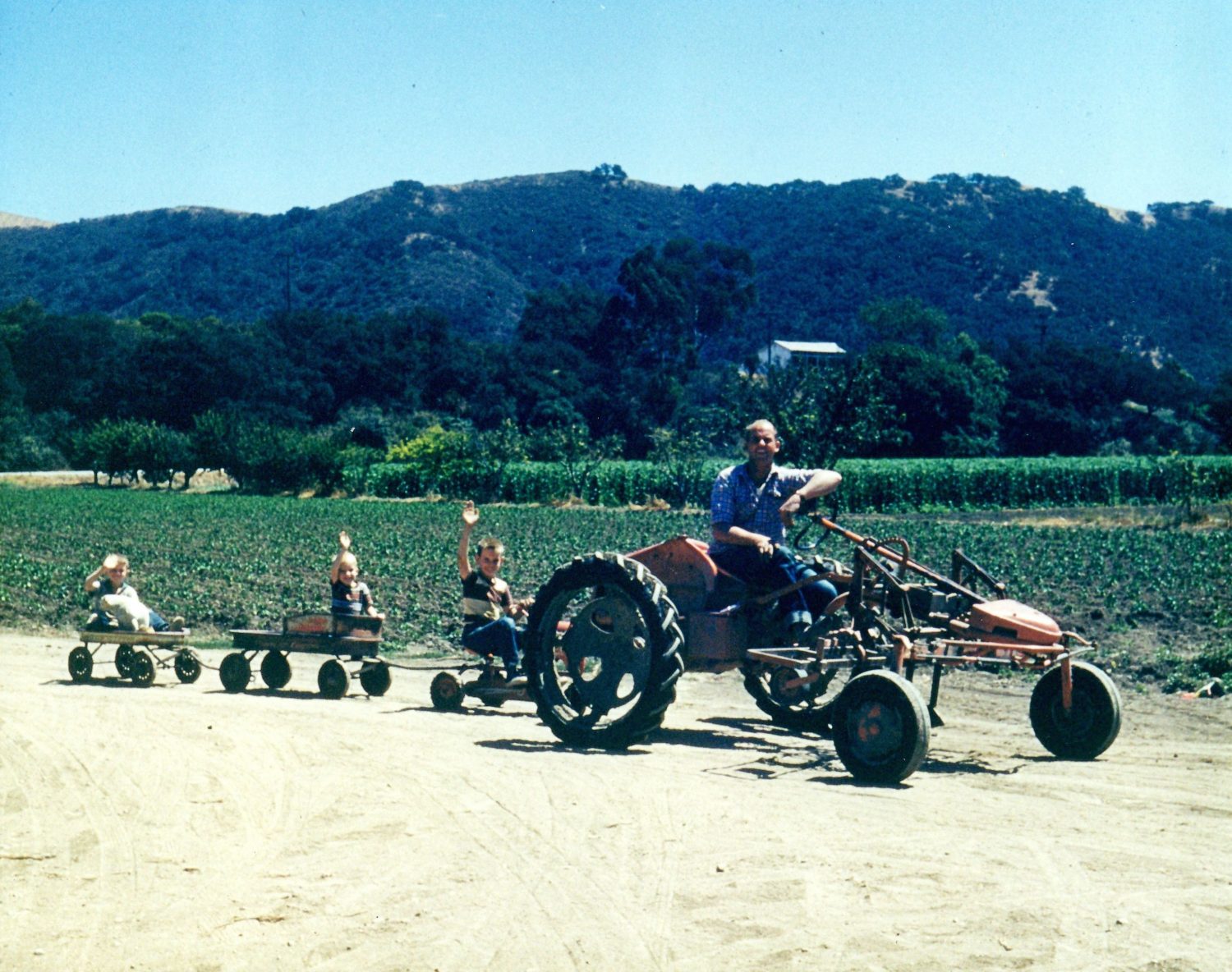


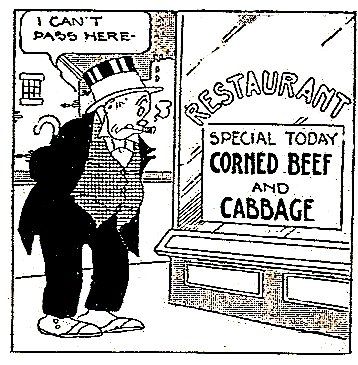

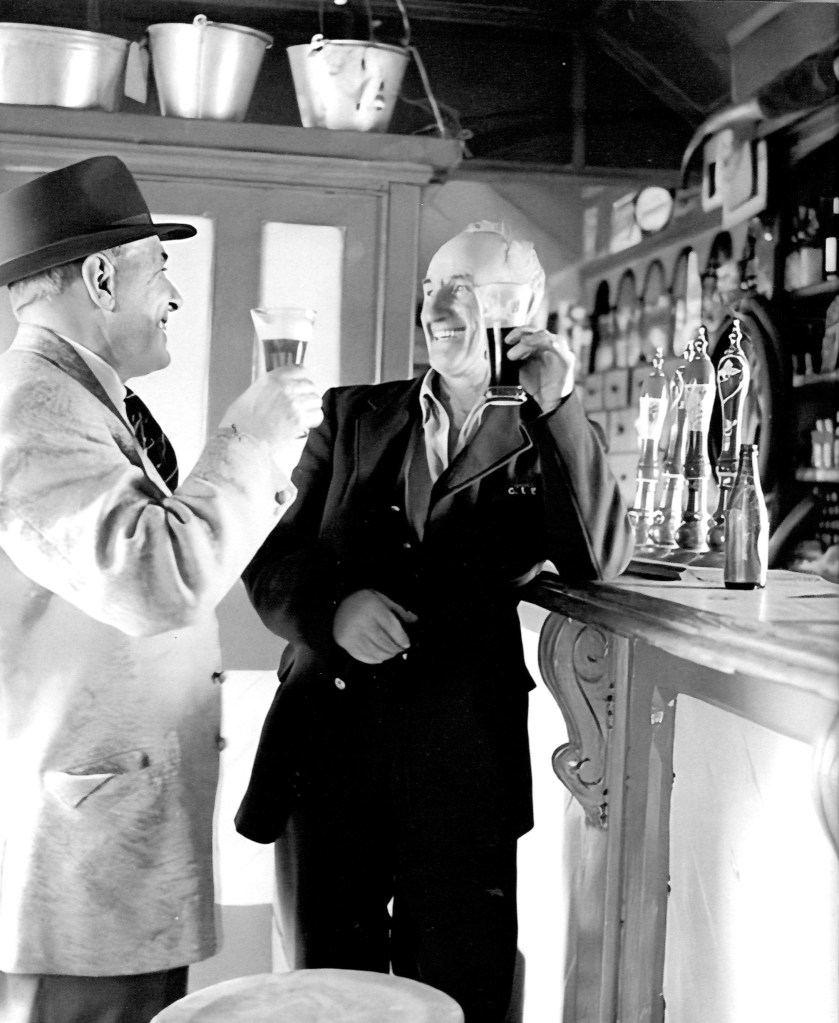
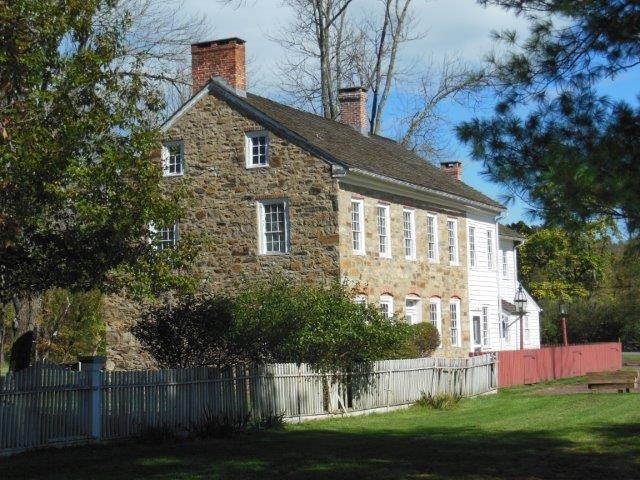

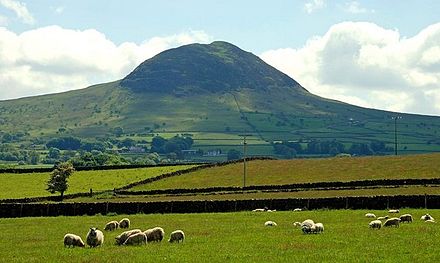


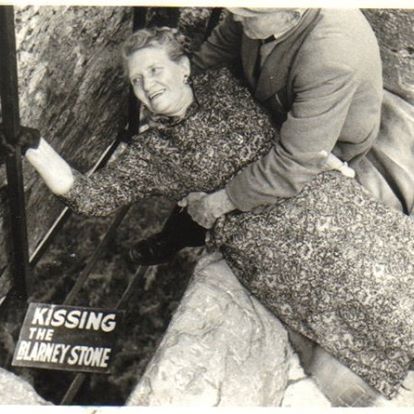


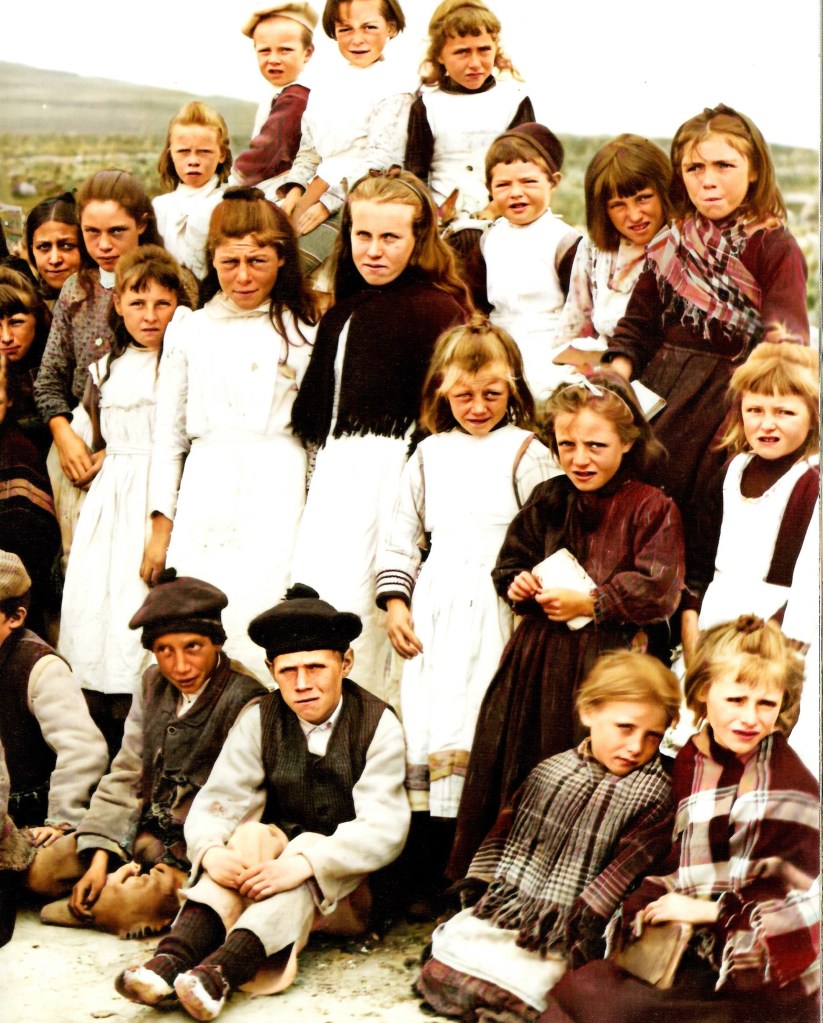

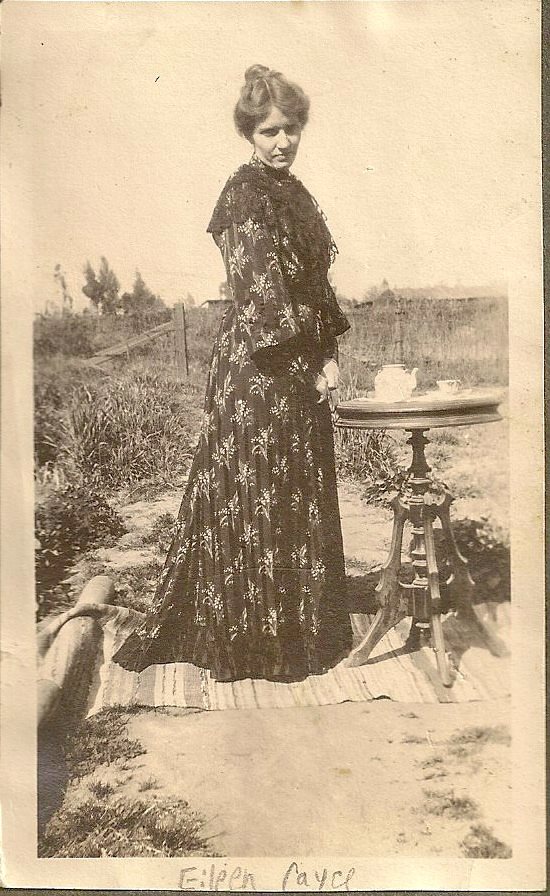



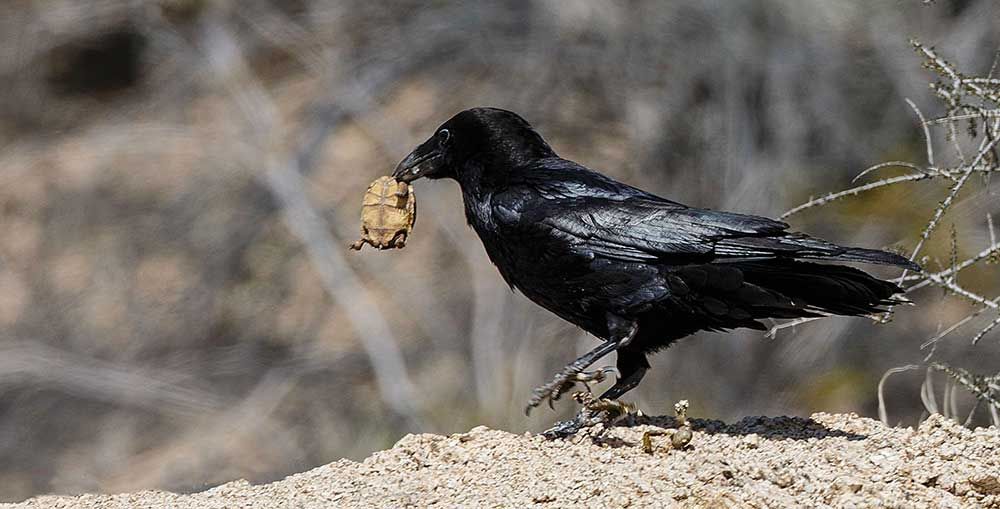

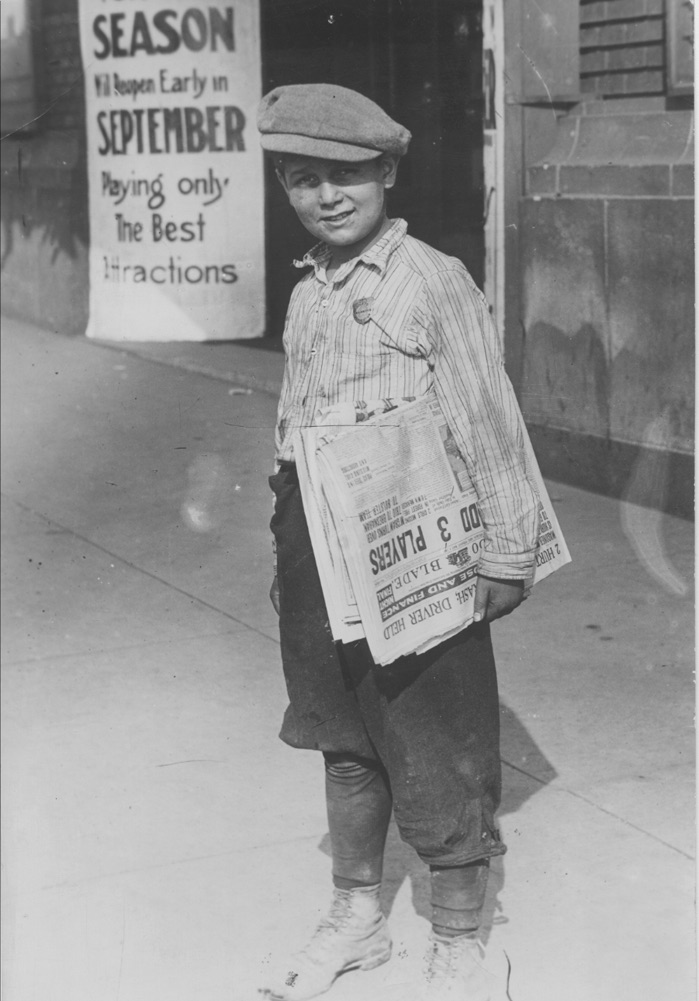


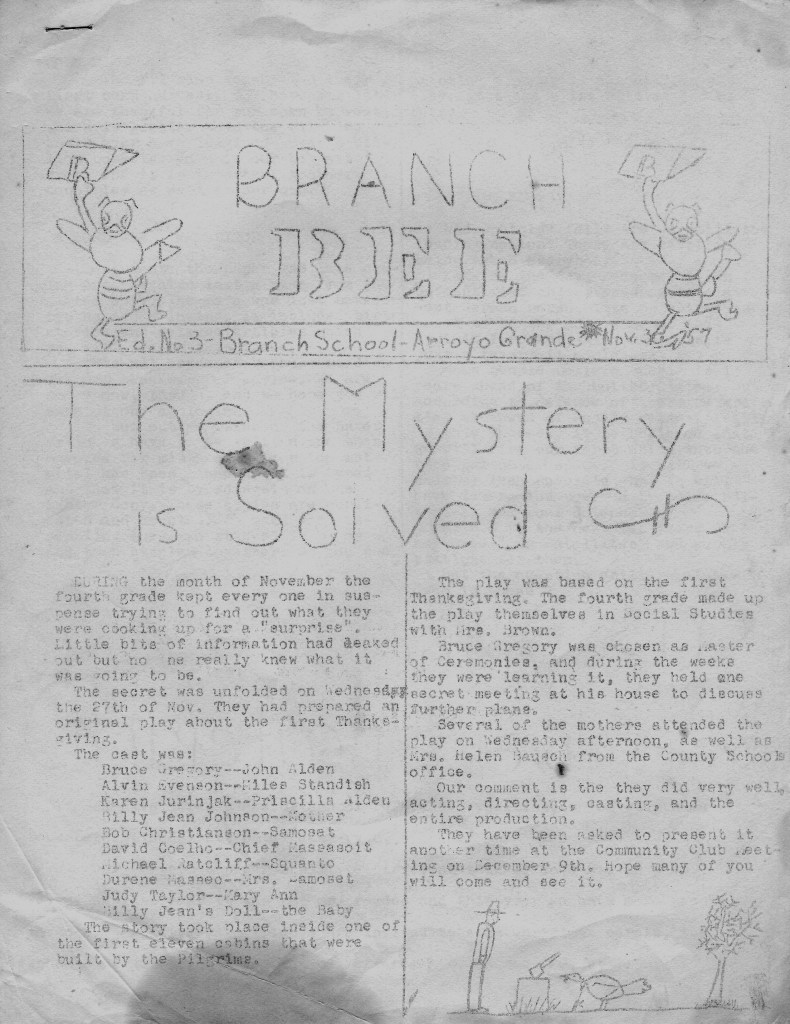

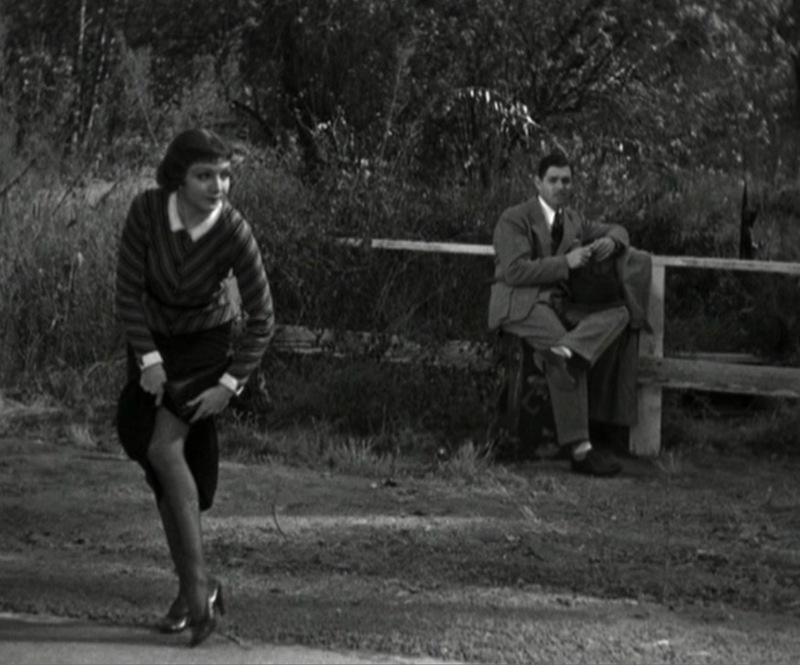
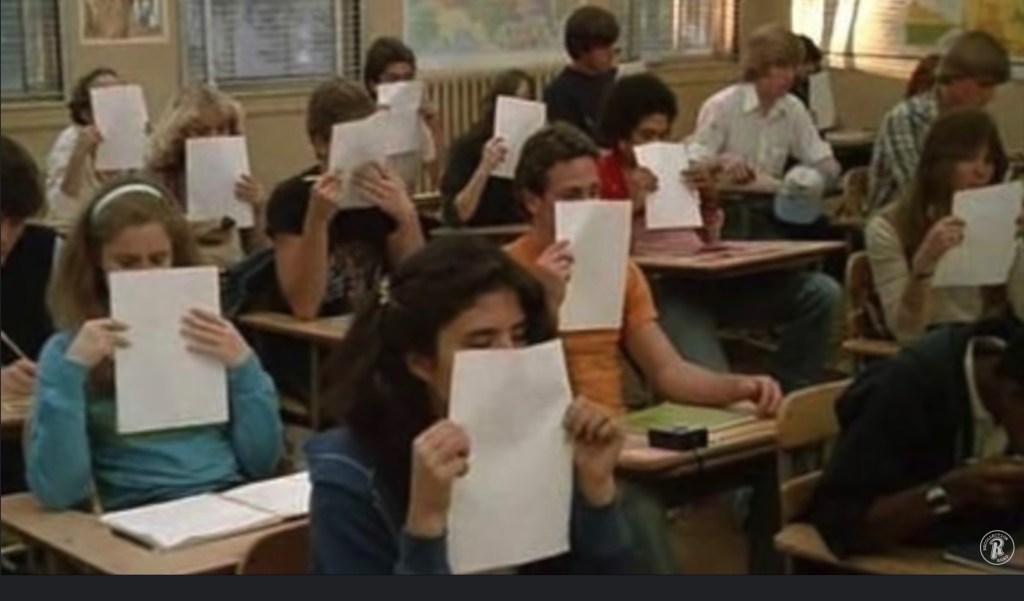
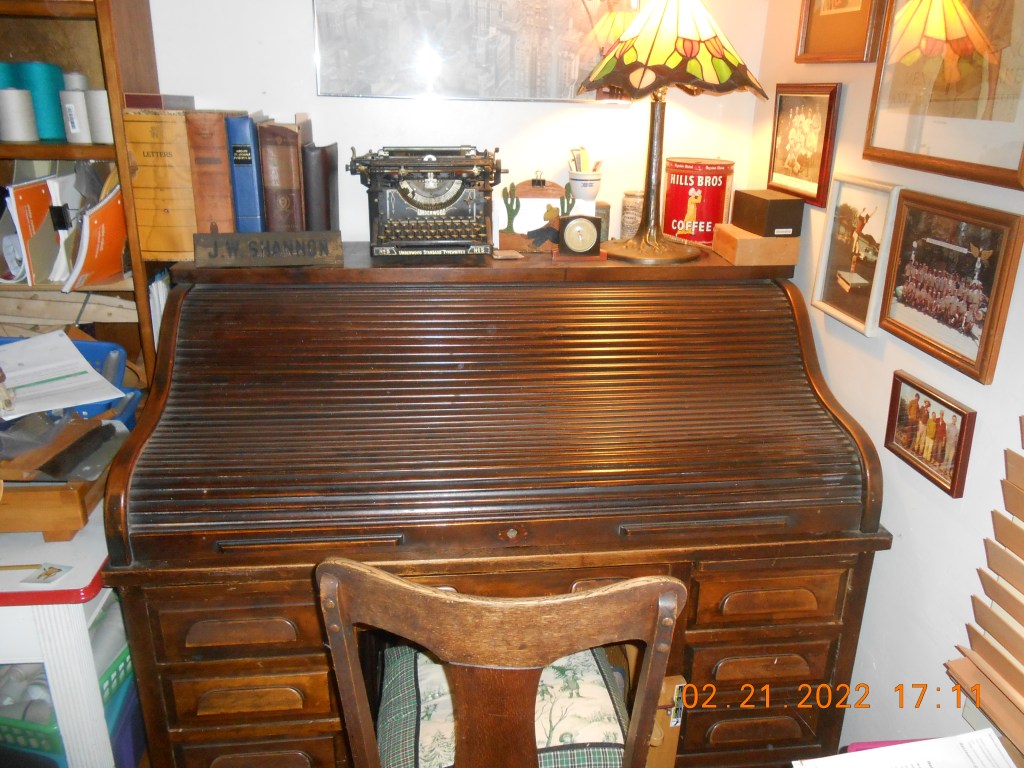
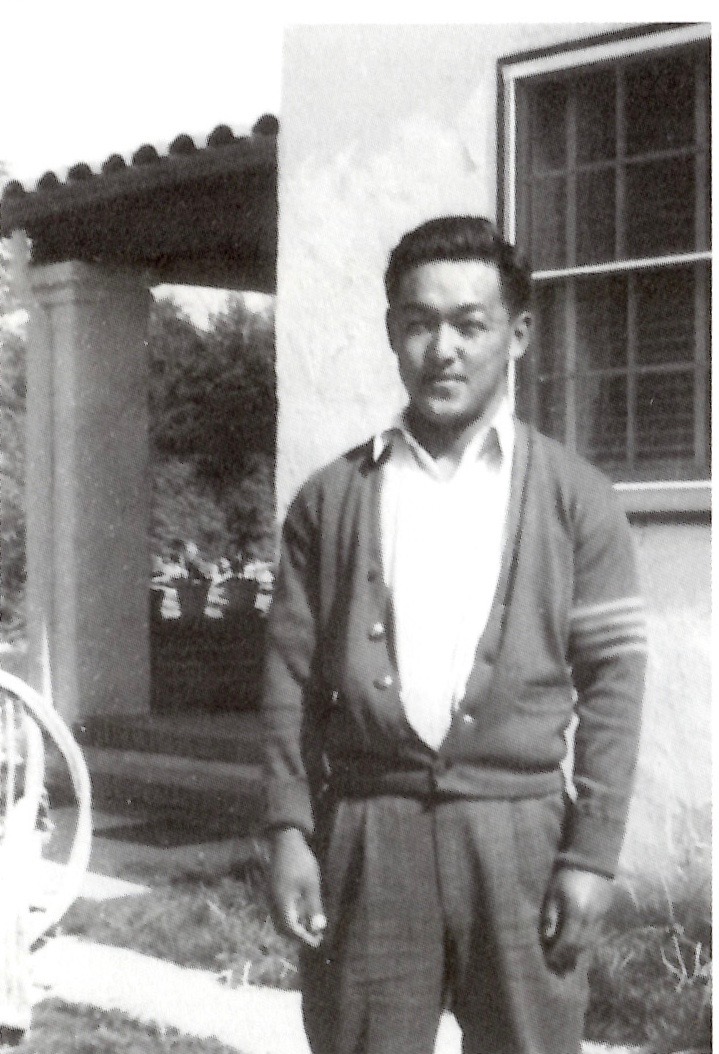
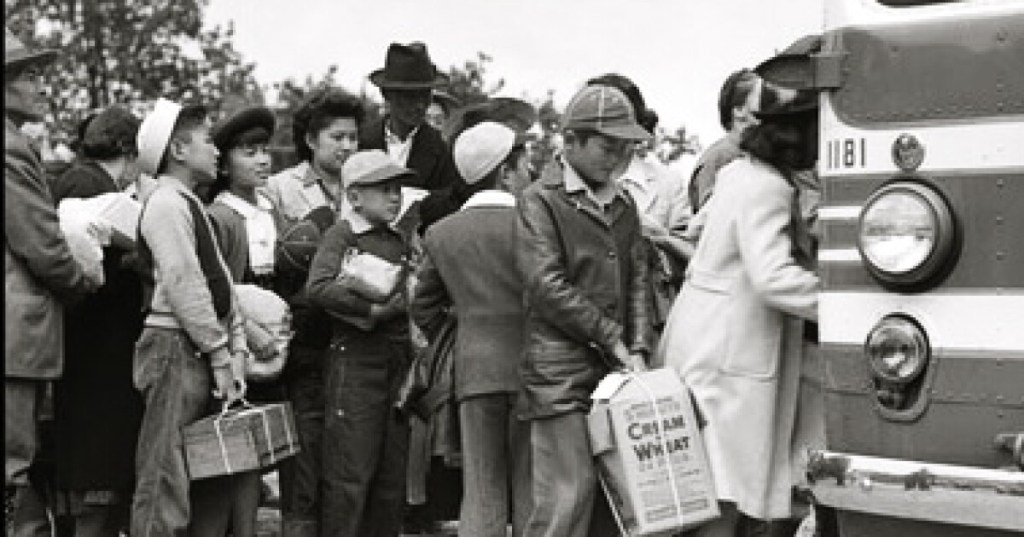
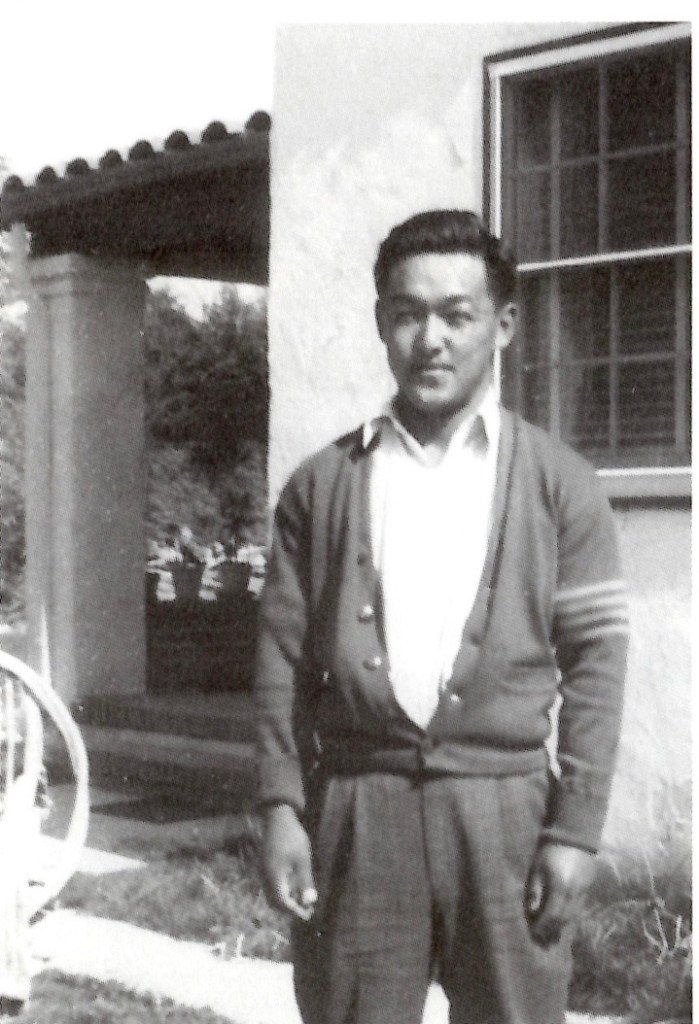

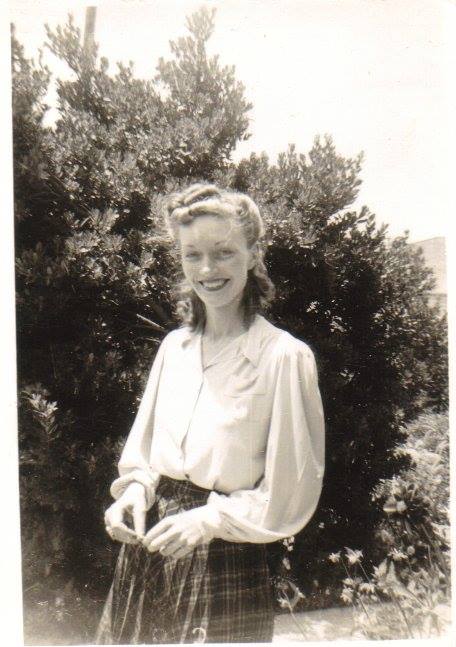
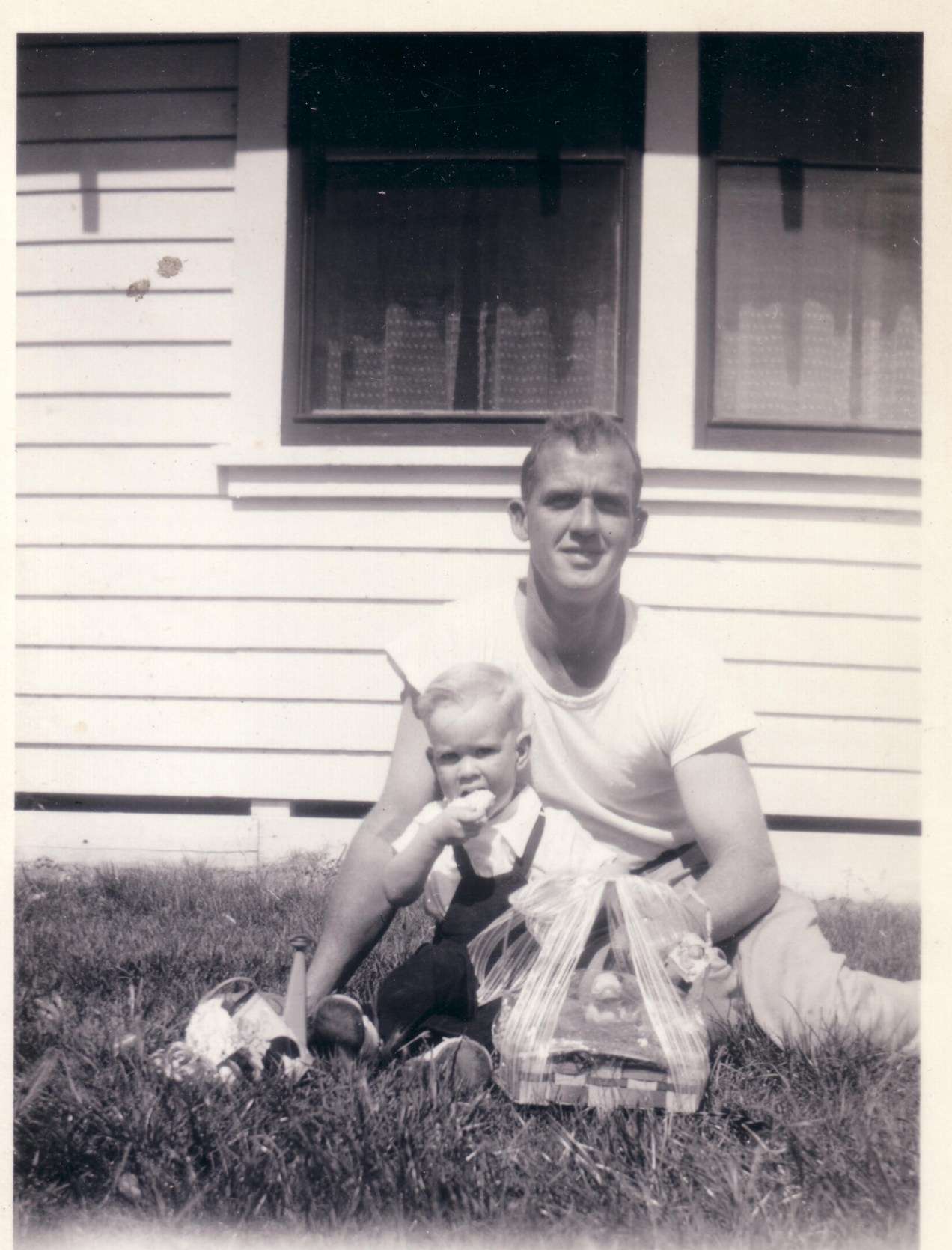



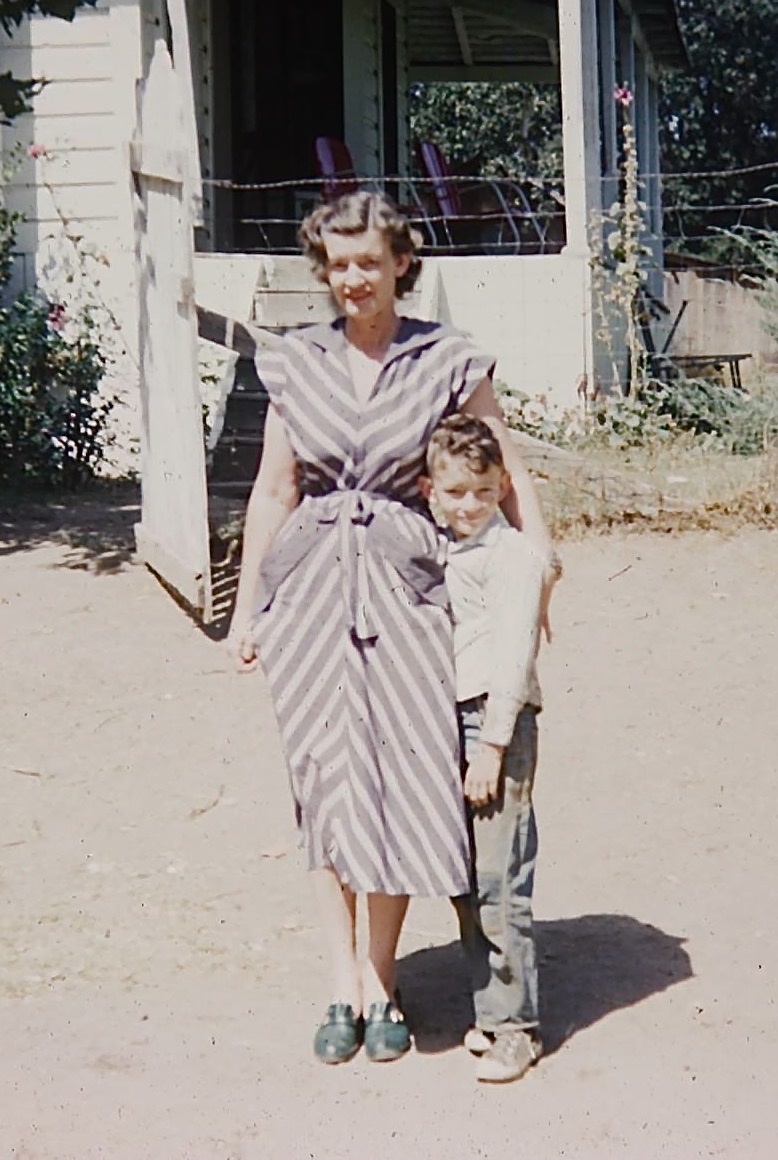
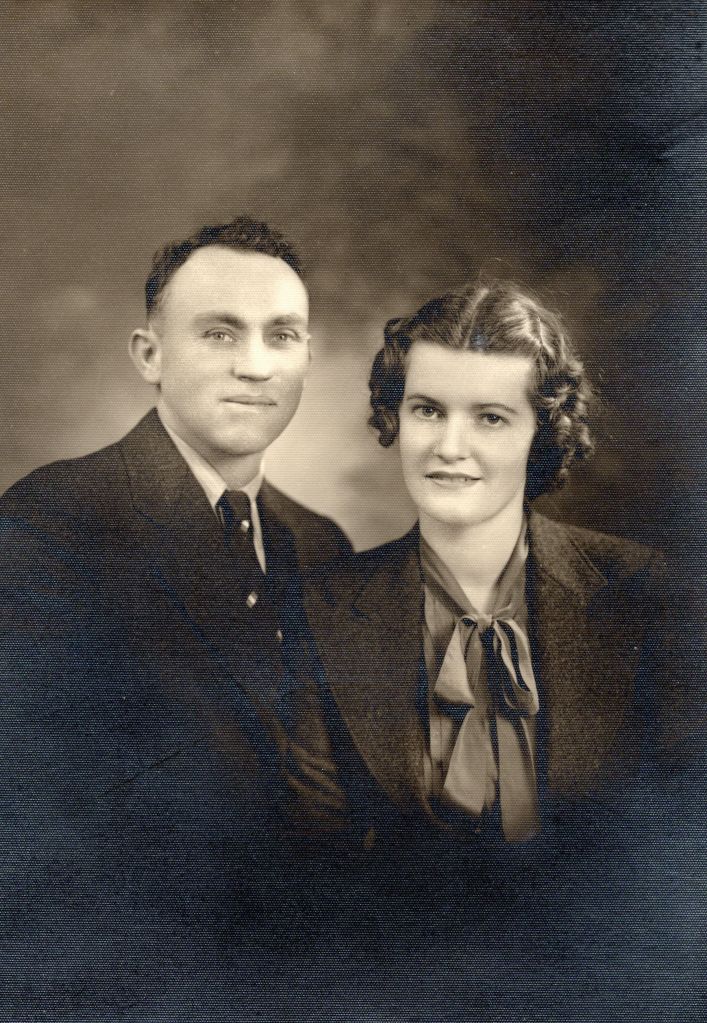
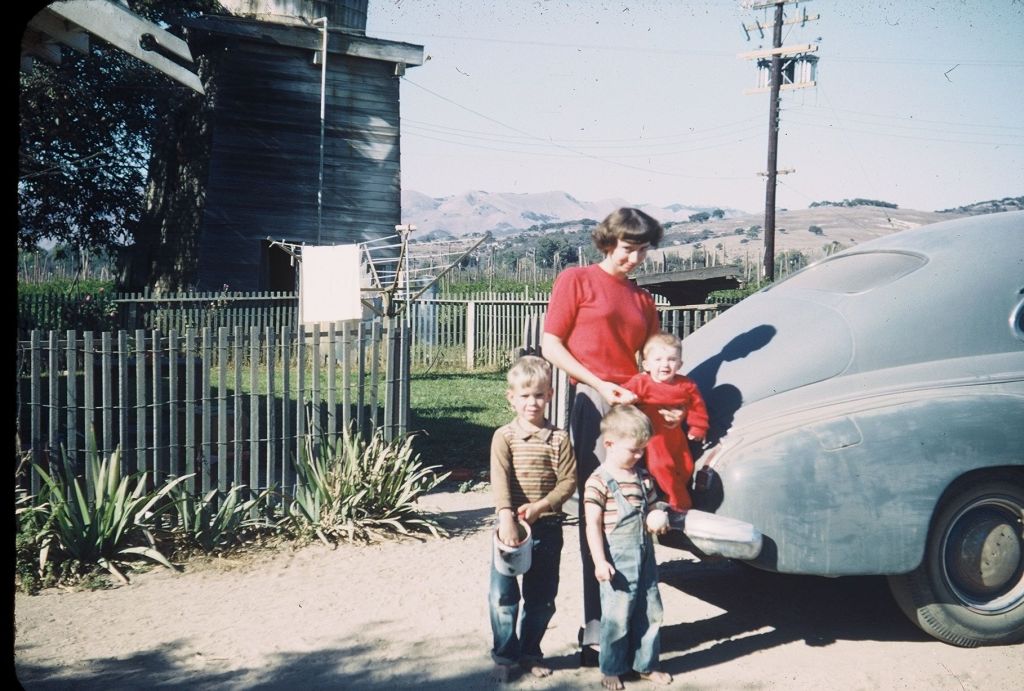

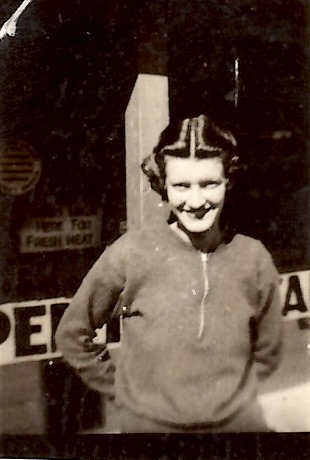
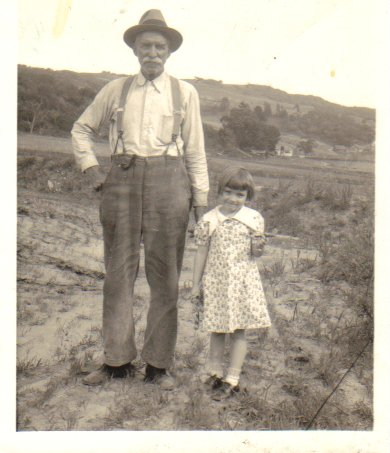
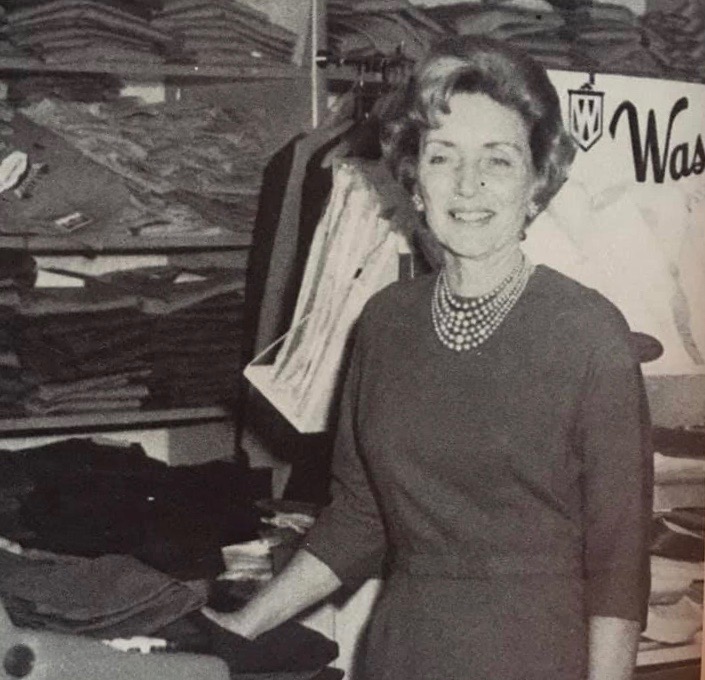

 atthetable2015