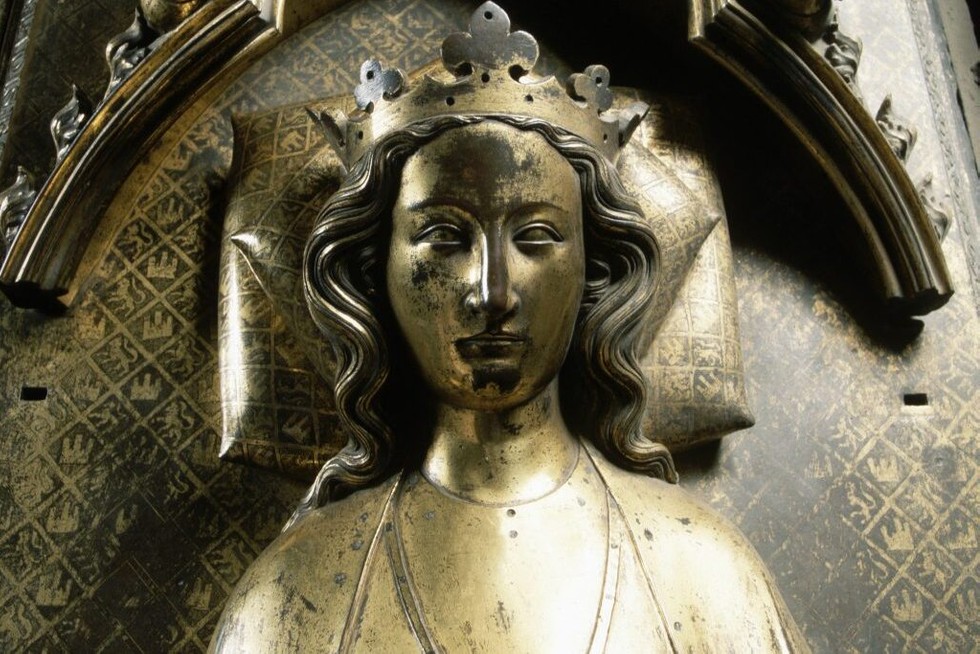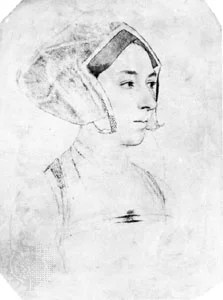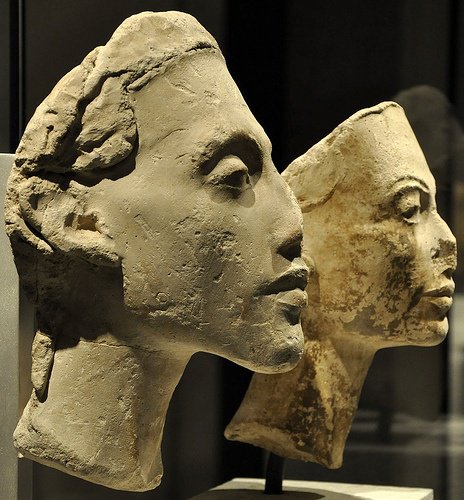
THE MAN BUN

A short history of the man bun and the men who wore them.

Dedicated to K J Gonzales, Judy Sweaney Hall and John A Silva.

VERCINGENTORIX: BORN: 82 BCE-DIED: 46 BCE

The procession came in sight down the Via Flaminia. The Tribunes marched in the van holding aloft the standards of the Roman Legions who had fought the Gaul in the year 52 BCE. Each standard topped by a golden Eagle with the initials of the Romans, SPQR engraved just below. Paced by trumpeters playing fanfares, followed by the kettle drummers setting the standard military cadence, 120 steps per minute. The mighty Tenth legion, its Imperial Standard glistening in the sunlight, the banner hung below embroidered with a rampaging wild boar and its motto Fretensis. The Legionnaires staring straight ahead, armor polished, skirts swaying in time to the drums led the military. The three other legions, the first, Germanicus, the fifth, Galicia and the fourteenth, with its rampant Sea Goat symbol. All had fought the Gauls across northern Europe and Germany, there were nearly 25,000 men of Romes Finest. Their heavy sandals beating the cobbles in time they marched ahead of the rude cart drawn by captured Alemani chieftains. On the cart, The King Vercingetorix stood, hands and ankles shackled to iron rings in the floor of the cart, his head held erect by cords binding his neck to a post. Centurions flanked the cart carrying his swords and armor. The man who had surrendered to save his people from slaughter had been held in the bowels of the Mamertine prison for six years. Though he was gaunt and pale he held himself erect and looked every bit the warrior King.

Prisoners were held in Mamertine to await execution or were simply allowed to starve to death out of sight. Rome’s vanquished enemies were imprisoned and often died here. Among the famous figures in history who spent their last days here include Vercingetorix, leader of the Gauls, who tried to rally the Gallic tribes into union against Caesar in 52 BC; Simon Bar Jioras, the defender of Jerusalem, who was defeated by Titus in 70 AD, and supposedly, the Apostles Peter and Paul.

Following King Vercingetorix was Julius Caesar himself. Standing in a Golden chariot drawn by four pure white matched horses with harnesses picked out in gold and silver. Behind him, holding aloft a laurel leaf crown was the leader of the Roman senate.

Following Caesar were wagons overflowing with the spoils of war. Swords, spears, armor signified his complete mastery of war. Lastly came the captives, Celts, Gauls, , the Arverni, Atrebates and the Belgii. They were the flower of kingdoms that we now know as France, Germany and parts of Belgium. The defeated Celts fled to Ireland where they live today, very few of the true Gauls survived and those mostly slaves to the Romans or sold around the Mediterranean..

When the procession reached the Temple of Jupiter Optimus Maximus, Vercingetorix was cast loose from the post and led inside the temple and before the priests of Jupiter and Julius Caeser was forced to kneel before the altar. At Caesars order his arms were held by Centurions, a third held his bun and a cord was dropped over his head and he was strangled to death. Such was the triumph of Caesar.

An honorable man, the king had surrendered to Caesar in order to spare his people from massacre. Caesar massacred the people anyway. Vercingetorix is considered a hero in France and a bronze statue stands at Alise-Sainte-Reine, Burgundy, France.

QUIN SHI HUANGDI: BORN: 259-DIED: 210 BCE

In 1974 peasants digging a well in the drought stricken western Shaanxi province of China unearthed fragments of a clay figure—the first evidence of what would turn out to be one of the greatest archaeological discoveries of modern times. Near the tomb of Qin Shi Huangdi—who had proclaimed himself first emperor of China in 221 B.C.—lay an extraordinary underground treasure: an entire army of life-size terra cotta soldiers and horses, interred for more than 2,000 years. Each one wore a Man Bun. Except for the horse’s of course.

The stupendous find at first seemed to reinforce conventional thinking—that the first emperor had been a relentless warmonger who cared only for military might. As archaeologists have learned during the past decade, however, that assessment was incomplete. Qin Shi Huangdi may have conquered China with his army, but he held it together with a civil administration system that endured for centuries. Among other accomplishments, the emperor standardized weights and measures and introduced a uniform writing script.

The pits are a colossal exercise in government expansion. Like today, they may have been designed to glorify Qui Shin, the emperor and power of his reign. The idea that government builds in order to glorify itself and its beliefs was just as common in the third century as it is today.

With an estimated 7,00 t0 9,000 soldiers excavated so far it is telling that as far as science has been able to determine, each and every figure is unique and was likely copied from a living man. Think of it. Nine thousand unique individuals who lived 2,2040 years ago, each wearing a Man Bun.

ATILLA: BORN: 395 AD-DIED: 453 AD

Storming out of the vast plain of Hungary the Hunnic armies pushed the Germanic tribes west into the plains of France in the fifth century. Led by their hereditary ruler Attila, seen above with his Man Bun they rampaged and slaughtered their way across Europe and down into the middle east. Exploiting a new development in warfare, the deployment of armies disposed of nearly all cavalry. the Hun horsemen carrying the very powerful recurve bow that allowed them to strike from horseback creating a mobile force difficult for foot soldiers to attack. Attila and his brother Bleda campaigned down from Bulgaria, chasing the eastern Roman armies through western Turkiye, Thrace and decisively defeating them at Gallipoli. Rome effectively became a vassal state paying tribute to the Huns. In succeeding years, in order to protect themselves, both the eastern and western Roman empires employed the Huns as Mercenary armies to protect what was left of the empire from other aggressive cultures. This, of course, let the fox into the henhouse. Descendants of Attila figured that, why work for the Romans when you have the power to rule them, which is what they did. Perhaps the Romans ultimately wore their hair wrong. Roman leaders wore their hair short and combed from back to front. Who’s to say.

CHINGGIS KHAGAN: BORN:1162 AD-DIED:1227 AD

The Great Khagan’s military successes made him the greatest conqueror in history. By the time of his death, the Mongol Empire occupied modern day Russia including Kiev and Moscow, all of China, Korea, Southeast Asia, India, the Middle East, Turkey, and as far west as the Danube River. His sons and Grandson expanded the empire ultimately reaching the city walls of Vienna.

As simple as it may seem a simple invention led to the primacy of the Mongol warriors success. Being a plains culture, entirely dependent on the horse or more accurately ponies, they roamed the Mongolian Steppes as nomads. The horse were small, the better to survive in the harsh conditions of the high wind swept plains of central Asia. The horses ate no grain and were entirely feed on grasses and surprisingly, goats milk. Goats milk was the foundation of the Mongol diet and ponies were no exception. Soldiers put meat under their saddles to tenderize it and when they had no water they would carefully puncture a vein in their horses neck and drink the blood. Some of the Khagans armies numbered over one hundred thousand warriors and riding day and night they covered great distances to the surprise of their enemies. The horsemen themselves used the invention of the stirrup and the wooden saddle tree to great advantage. They could turn their small horses on a dime and use their feet in the stirrups to gain thrust when using spears and Javelins. Their prime weapon, the composite bow could be fired in any direction while the fighter stood in the stirrups.

Chinggis practiced war on a brutal scale. Surrendered armies saw their soldiers executed by beheading, All citizens were forced to pass by a large wagon wheel on a cart used to transport the armies Yurts. All those whose heads were higher than the linchpin that held the wheel on the axle were also beheaded. It is said that this removed most of the elders, men and women thus disposing of any potential revolt leaders. The remaining people were sold into slavery, raising vast amount of money for the Mongol empire.

The infamous piling of a “pyramid of severed heads” happened at Nishapur, where Genghis Khan’s son-in-law Toquchar was killed by an arrow shot from the city walls after the residents revolted. The Khan then allowed his widowed daughter, who was pregnant at the time, to decide the fate of the city, and she decreed that the entire population be killed. She also ordered that every dog, cat and any other animals in the city be slaughtered, “so that no living thing would survive the murder of her husband”. The sentence was duly carried out by the Khan’s youngest son Tolui. According to widely circulated stories, the severed heads were then set in separate piles for the men, women and children.

Lest we think the Khagan was simply a destroyer, he also developed the first empire wide postal service known, secured the route of the “Silk Road,” which became the route connecting east and west, building the connection that began sharing vast amount of knowledge throughout the known world.

And the Man Bun? Chinggis had sent a group of Mongol Officials to treat with the Shah of the ancient city of Otar. Angered by the demands of the Mongols, he had the entire delegations heads shaved, a mortal insult in the Mongolian culture. The men were beheaded and their shaved heads returned to Chinggis. Outraged the Khagan quickly attacked and took the city executing everyone in it and having molten silver poured into the ears of the ministers of Otar for refusing to listen. The city was then razed. Today it is a windswept ghost town in Khazakstan and has been for nine hundred years.

SALAH AD-DIN YUSSUF IBN AYYUB: BORN: 1137 AD-DIED: 1193 AD

Known as Saladin in the western world, Salah Al-Din was born a Kurd and was of the Sunni Muslim faith. At the height of his power he ruled Egypt, Syria, the Hejaz, (western Arabia), Yemen, Iraq, upper Africa and Nubia.

Each day he would arise from his bed, bathe and his wife Ismat Al Din Khatun would brush his hair, rub it with scented oils and roll and tie it into a topknot, known as a Tuft. Under Islamic law of the time, a man may wear hair past his shoulders or shave his head. Salah Al Din wore his Tuft under his turban.

He is most famous in the western world as the man who ended the European ruled state of Outremer formed after the 2nd crusade. The third invasion of the middle east, the 3rd crusade, he defeated Richard the I, Philip the II of France and Fredrick I of Germany’s combined armies. None ever never saw Jerusalem but did in the end establish a truce guaranteeing safe travel to holy sights if Europeans traveled unarmed. The coast from Tyre to Jaffa was left to Christian control. For the Europeans the primary outcome was the theft of books which the Muslim civilizations had saved after the fall of Greece and Rome which when transported back to their respective countries and translated, laid the foundation for advanced learning and the beginning of the Renaissance.

Salah Al Din was a generous man. He bought Christians out of slavery, established dozens of schools and libraries and when he died of fever in 1293, he had only one gold coin and forty of silver, not enough to pay for his own funeral. He had given it all away. He is buried in Damascus, Syria.

TAKEZAKI SUENAGA: BORN:1246 AD-DIED:1314 AD

Suenga was a Samurai. During the Mongol invasion of 1274, Suenaga fought at Hakata under Muto Kagesuke. Suenaga went to great lengths to achieve what he viewed as the honor of the warrior. Although under orders from Kagesuke to pull back at the beginning of the engagement, Suenaga disobeyed, saying “Waiting for the general will cause us to be late to battle. Of all the warriors of the clan, I, Suenaga will be the first to fight.”

The Mongol’s attempted invasion of Japan came after Kublai, who was Chinggis grandson and heir, showed his irritation with the Japanese refusal to pay tribute to the Mongol Chinese. In a letter to the Shogunate of Japan he stated….But now, under our sage emperor, all under the light of the sun and the moon are his subjects. You, stupid little barbarians. Do you dare to defy us by not submitting?

— Letter from Kublai Khan’s ministers to Japan, 1267

This kicked off what I like to call the war of the buns. After two failures, the second primarily because the Chinese battle fleet was ravaged by a typhoon which would forever after be called by the Japanese, Kamikaze, which translates roughly to divine or spirit winds. Chinese, Mongol, and Korean invaders who weren’t drowned were killed by the Samurai, their heads with the characteristic Man Bun scattered on the western Japanese coast by the tens of thousands.

Suenaga’s scrolls tell a much different story. The Japanese Samurai needed no help in defeating the Mongols. They were equally adept at savage warfare and after two tries the Chinese gave up. The “Divine Wind” is just a good story.

The Venetian merchant Marco Polo was present in China during this period was a first hand witness to the Mongol wars as he traveled through China and southeast Asia.

The frivolous term “Man Bun” is called the Chonmage in Japan. The sides of Suenaga’s head would have been shaved and the remaining hair tied at the top to assist in keeping his helmet in place.

Suenaga has left a record of his deeds during the wars on a scroll he commissioned in 1293. The scrolls are kept in the collection of the Museum of Imperial Collections in Tokyo, Japan.

KANGI YATAPI/KA GE TOU CHA: B: MONTH OF THE CRACKING TREES-DIED 1884 AD

Best known to historians as Crow King, he was a member of the Hunkpapa band of Sioux. One of the primary war chiefs, he led 80 Sioux warriors up Calhoun hill, allowing Crazy Horse and Gall to surround the remnants of the 7th cavalry and send the foolish Colonel into the pages of history.

Crow King rose from his blankets early on that morning in the moon of the Red Blooming Lilies. Stepping outside his tepee he sniffed the air of dawning, smelling the dry grass and the scent of dried horse dung coming from the vast herd of ponies beginning to graze on the plain west of the Greasy Grass. Rolling and stretching his shoulders he looked forward to a good day. Walking east to the slow running stream he drank his fill, washed his teeth and returned to the tepee where his wife Ptesan Luta Win and his two daughters, Hintukasan who was five and Tingle Ska Luta, one year old were. Crow King relaxed on his seat after breakfast and asked for his pipe. Suddenly a young boy, stumbled into the tent, out of breath stammering that the pony soldiers were coming down the river.

Crow king stepped outside and up the river he could see the bluecoat horsemen coming at a dead run. He quickly grabbed the boy by the arm and told him to go to the pony herd and fetch his horse. As he stepped back into the tepee he looked over his shoulder and noticed the cavalry had pulled up and formed a skirmish line. He didn’t understand this because his end of the village was completely unprepared for battle. He turned back and entered the tepee asking his wife to bring his weapons while he attended to his warpaint. Quickly twisting his hair into the bun called by Indians the scalp lock, he took the wrappings off the small pots of paint and began daubing his signature color across his chest and face. His forehead colored ochre and three vertical white stripes down each of his cheeks, he place three eagle feathers in his scalp lock and stepped back outside. The boy held his war pony by a grass rope tied around his lower jaw, barely holding on as the beast jumped and circled. The pony, knowing and responding to the excitement, while the boy spun, his feet off the ground at the end of the rope, Crow King threw his saddle and blankets over the beasts back and vaulted aboard, taking the the war bridle from the boy, the horse curvetting and circling, it took him a moment to gain control. Red White Buffalo Calf Woman handed up his rifle, tomahawk and shield, as he looked down to thank the boy a Short Hair soldiers bullet killed him, and his small body fell in the dust and lay like a little girls discarded rag doll. Someones son. Crow King said a silent prayer for the boys spirit. Controlling the pony with his knees he kicked it into motion and set off in a head long gallop toward the soldiers. Young men were bursting from between the teepees at a dead run, their ponies stretched out a full gallop, screaming their war cries determined to lay down their lives to protect the women and children. They knew what would happen if they failed. Hokahey

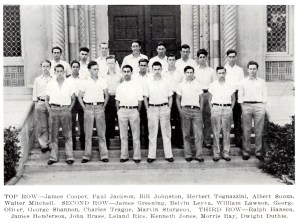
MANTA SINGH REAR, CENTER. JANUARY 1915

MANTA SINGH BORN 1890-DIED 15 MARCH, 1915

1.2 million Indians volunteered to fight for the British Indian Army in WWI, making them the largest volunteer army in the Great War. While Sikhs only make up 2% of India’s population, 22% of the British Indian Army were Sikhs. In World War I and II, 83,005 Sikhs were killed and 109,045 wounded fighting for the allied forces.

Manat Singh was one of those men. Manta Singh was born in 1870 into the family of Khem Singh of Salempur, Masandan, in District Jalandhar, Punjab. As soon as he left school, Manta Singh joined the 15th Ludhiana Sikhs in 1906. British officers prized Sikh soldiers, along with Nepalese Gurkhas, as coming from the so-called ‘martial races’. For Manta Singh and his comrades, the army was a good career option and one they took up willingly. As he was militarily educated , he rose up to the rank of Subedar (captain), above the ranks of most and just below that of the European officers in the army. Subedar was the highest rank that could be attained by a non-white in the British army at the time.

Sikism is the newest of the modern religions, the most recently founded major organized faith and stands at fifth-largest worldwide. Guru Nanak taught that living an “active, creative, and practical life” of “truthfulness, fidelity, self-control and purity” is above metaphysical truth, and that the ideal man “establishes union with God, knows His Will, and carries out that Will”.

Sikh’s are not allowed any hair removal – Hair cutting, trimming, removing, shaving, plucking, threading, dyeing, or any other alteration from any body part is strictly forbidden. Sikh men wear their long hair up and tied in a bun. This known as a Joora or Rishi knot. The turban is worn to protect the hair and as a symbol of Sikh pride. Manta and all of the Sikhs who served in the Great War never wore steel helmets.

At the start of the First World War, Manta Singh’s regiment became part of the 3rd (Lahore) Division sent to reinforce the British Expeditionary Force (BEF) fighting in France.

In a letter home, Harnam Singh described their welcome as the came ashore at Marseilles.

The people of Europe are very fair-skinned because in their previous lives they prayed and meditated so much. The cold atmospheres and climates of those countries mean that their skin color will never darken. They had never seen dark-skinned people before. They thought everyone in the world was white like them.

When we disembarked and mounted our horses, we headed off through the markets to our billets. Thousands of men, women and children were in the streets and on the roofs of the houses waving white handkerchiefs. They were saying something that we didn’t understand at the time. We later learnt that they were saying ‘bonju’ [bonjour], which is like our ‘sat sri akal’.

At the battle of Neuve Chapelle in 1915, 40,000 British troops, half of whom were Indians, Sikhs and Gurkhas assaulted the Germans on Aubers Ridge. The slaughterhouse which was the western front claimed 13,000 casualties in the two day battle. Four thousand of the dead and wounded were Sikh.

It was on this chaotic, deadly battlefield that Manta Singh saw his friend, British Leftenant George Harrison lying near death in a shell hole filled with water. Stumbling across an abandoned wheelbarrow he managed to drag and then lift Henderson into it and slowly wheel it back to the British trenches. Manta Singh was severely wounded while doing this selfless deed.

The result of the battle was recorded in the regimental diary as…

The ground in front of the British lines were Indian and German corpses and the whole place showed signs of heavy fighting that had been going on there.

The stretcher bearers were at work all night picking up the wounded. We had Subedar Gattajan killed and Subedar Manta Singh wounded.

About 60 other ranks were killed and wounded.

Regimental War Diary, 15th Ludhiana Sikhs

Sikh Cavalry, Nueve Chapelle, 1915. Fortunino Mantans 1915© Note the German Pickelhaub helmets on the lances.

Manta Singh was evacuated to England because the front line hospitals were overflowing with the wounded.

A certificate signed by the Chief Resident Officer at the Kitchener Indian Hospital in Brighton lists Manta Singh’s wounds as ‘one, gunshot wound, left leg, two, gangrene of leg and toxemia.’ Manta Singh had one leg amputated, but unfortunately succumbed to his injuries and died a few weeks later on 15 March 1915. There were no antibiotics in 1915 and gangrene was almost always fatal.

His body was taken to the South Downs and cremated in the open air and his ashes were scattered in the sea.

Manta Singh’s friend George Henderson survived the war and ensured that Manta Singh’s son, Assa Singh (1909-2003), was taken care of and he encouraged him to join the Sikh Regiment like his father before him. Assa Singh developed a friendship with Captain Henderson’s son, Robert Henderson, and both actually served together in the Second World War.

Assa Singh fought in the Eight Army against the Nazis in North Africa, then in Italy. After the war he became a Lieutenant Colonel before retiring from the Indian Army in 1957.

The Sikh roars like a lion on the field of battle,
And yields up his life as a sacrifice:
Whoever is fortunate enough to be born a Rajput
Never fears the foe in battle:
He gives up all thought of worldly pleasure,
And dreams only of the battle field:
He who dies on the field of battle,
His name never dies, but lives in history:
He who fronts the foe boldly in battle,
Has God for his protection:
Once a Sikh takes the sword in Hand,
He has only one aim: victory!

These are the men, who, down the centuries wore the “Man Bun.” If a person is to make a joke about a mans hair, know of what you speak.

I want to thank my cousin K J and her best friend Judy for the subject idea and just for fun I added the photos below of modern men who wear it.

Standard

RECESS

Michael Shannon

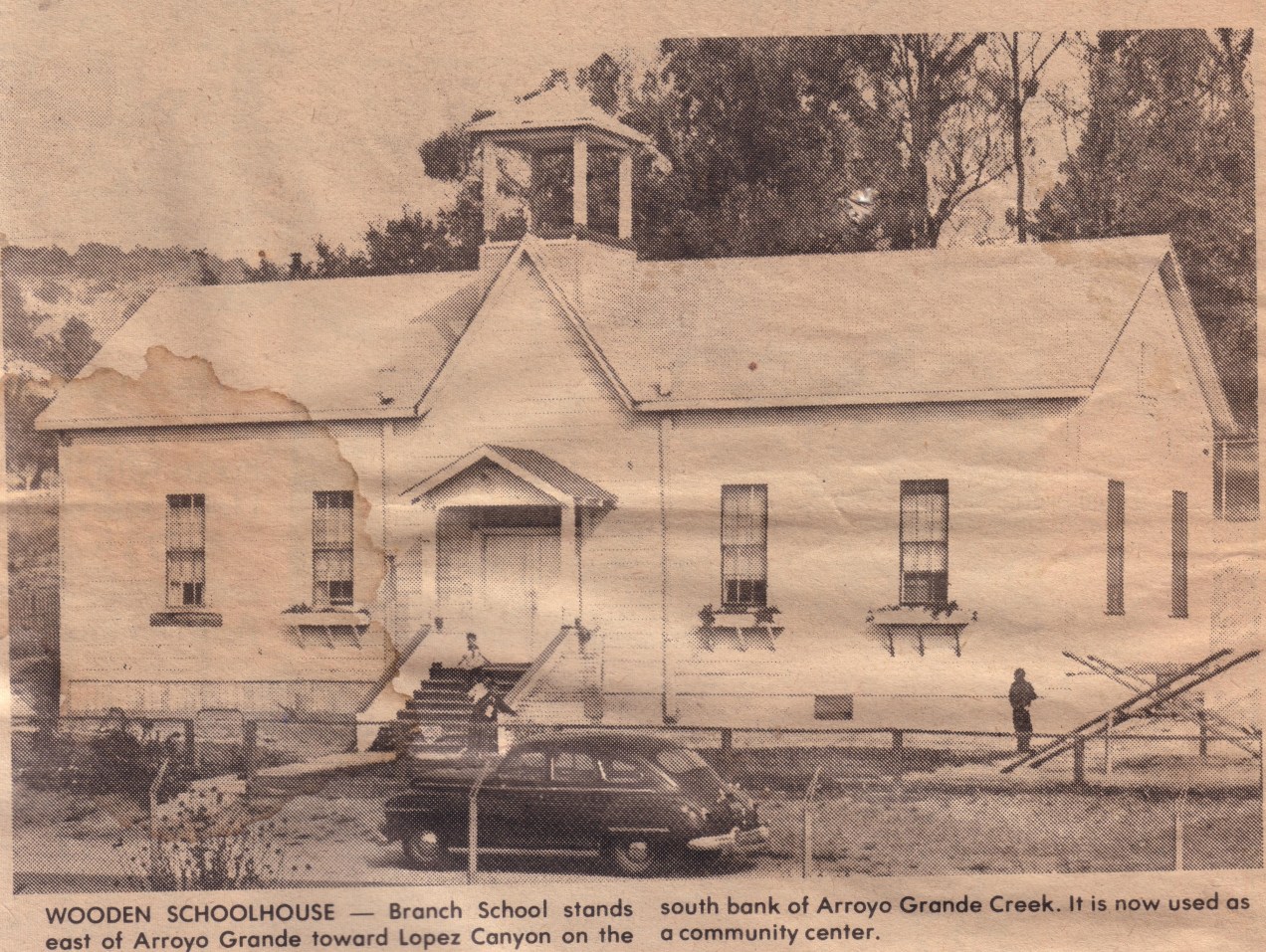
Eight years of Grammar school and any memory of what I studied there is vague at best. What I do remember is Recess. Tiny rural schools in the 1950’s had the best Recess, bar none. Kids played. They played at things you might not believe but it’s all true, I swear by my tattoo.

Kids need to play and make use of their imaginations. Something we have perhaps lost with children carrying I-Phones everywhere. This is how we did it.

First of all, we played in the dirt. Once my dad and the other trustees planted a lawn in front of the school but it was a futile gesture. Hard adobe soil, no sprinkler systems because there was no hose bib in the front of the school and hundreds of acres of wild oats surrounding it guaranteed that by late spring it was just a memory. In the spring, mud, early summer dust, we sprinted out to recess, not wanting to waste a moment. Kids games revolved partly around soil conditions which was something we knew about, being mostly farm kids. When I was seven I could whip up a mud pie like nobodies business. That old adobe mud could be made in Frisbees, weaponized so to speak. Mom made sure our shirts were clean but those old black Levi’s we wore stayed on for days. Laundry was a lot of work for her. The old tub washing machine with its ringer was pretty slow and the dryer was 3/8 inch cotton rope strung between poles. When you were big enough you’d help her hang the wet laundry, sheets on the outside to hid the private stuff such as panties, slips and bras. Those bras of hers were wired for sound or at least highly engineered. They were so well made you could have used them to haul water from the well or use them as hampers to pick beans in. Our farm had a road that ran upwind of the clothesline and she had to take that into account too. We were clean but not too clean. My mother always said that a little dirt was good for you. Science has born that out.

A list of the games we played was long but in a funny way each had a life of its own. Each in it’s own season.

Marbles were played in the spring when the dirt was still slightly damp so a good ring could be scratched out. Not too soft but stiff enough so the marbles would roll. One boy would show up with a pocket full of glassies, cats eyes and steellies in early April and the next day it would be on. Boys and girls showed up ready to go to war. No playing for keeps was the teachers rule but out of sight they changed hands. Just as mysteriously as marble season appeared it was gone. There was no date on the calendar. It was as mysterious as the first flight of swallows showing up under the eaves of the old barn in our back yard.

Since the school never seemed to have more than one baseball, likely used for decades and an old basketball with all the pebbles worn off some ingenouity was required. There was no lack of old timey games, some from centuries lost in the mist that could be played. No one knew where the rules for Red Rover, Kick The Can, Mother May I, or Simon Says but everyone seemed to know how. The only game deemed too dangerous was Crack The Whip which was still played if the teachers were otherwise occupied. Second graders on the end could be spun like 45’s off the end on a good crack. The occasional skinned knee the result. Nobody cried. Parents would say thing like, “Well, don’t play then,” or “Just spit on it and rub it with mud, you’ll be fine.”

Rural baseball. US Archives

Most of our fathers and uncles; in fact almost every man we knew, some women too had served in WWII and the Old Colonel, who you could see driving around town, racing down Branch street in his old Plymouth at the breakneck speed of 10 mph had served in WWI. Naturally the boys, whose male relatives never, ever talked about the war, were a rabid and blood thirsty group. We were the Blue and Gray, Yanks and Huns, Nazi and Dogfaces, Rebels and Hessians, We rode with TR up Kettle Hill. We didn’t know that he actually walked up, but that wouldn’t have mattered anyway. Being farm boys we brought our own shovels to school and dug foxholes in the cut-bank uphill from the school where we staved off multiple attacks from the days chosen enemy, slaughtering them with the sticks found under the schools oak trees or pelting them with acorns. In a last ditch defense, Manny Silva leapt on Charlie Silvas back while he was coming up the hill and bit him. Victory was achieved for the Hillsiders.

When Mrs Fahey wasn’t looking we slid under the barbed wire fence around school and hightailed it up the hill and then down the other side to check out the old Branch Family grave site. Francus Ziba, his wife Manuela were buried there and just to the side, the graves of the Hemmi’s, father and son who were lynched by vigilantes, hung from the Pacific Coast Railroad bridge in 1886. Mrs Branch, in her kindness allowed them to be interred near the Branch Family when no other cemetery would . We knew a little about it because Fred Branch came to school on a history tour to talk about goings on in the old days and said he clearly remembered men coming to the Branch home, asking his father to come outside where they spoke in hushed voices before his father came back into the house to get his rifle before leaving with them. He was sure his father had had something to do with the hanging. An inquest was held afterward and ruled that persons unknown had done the deed though some members of the panel were likely present at the bridge. Secrets are hard to keep in small towns.

The Old Branch Family Cemetery today. Author photo.

The little place was not a spooky place, most kids knew about the original Ranchero and his family. Some of his descendants were my school mates.

When I was in the sixth grade Miss Holland retired. She had taught for decades at Branch and had taught kid who were now the grandparents of my classmates. The next year we had a new teacher, Miss Parker who I remember as young, blond and who smoked cigarettes behind the girls restroom during recess. That seemed daring, we had never seen a teacher smoke though you can be sure than in the fifties almost every adult we knew did. Somehow it was unexpected. It made her a person of some respect, we assumed this was never done. An adult who scoffed at rules had our respect.

Hours were spent carefully crafting snares from wild oat stalks. We stripped the leaves and carefully tied a loop on the thin end, securing it with a slip-knot. Ever so carefully we stalked the wily and elusive western fence lizard as he lay sunning himself on the rocks and old railroad tie fence posts around school. Captured “Blue Bellies” were never killed which might surprise some, kids being a rather bloodthirsty lot, but were left in girls coat pockets or carefully stashed in a teachers desk. Rural school teachers like Miss Parker were, of course, not the least bit frightened and simply took the lizards outside and freed them with a knowing smile, having been down that road many times. Courage was tested by letting the small reptile bite your little finger in a show of outstanding bravery which sent the little boys into to paroxysms of squeaks and admiring glances which we took as our due, being older, wiser and oh, so courageous.

Miss Parker did something else I’ve never forgotten. She read out loud to us. A chapter a day just before school let out. She read from Mark Twain’s Tom Sawyer. It was the greatest thing. I’m sure most kids hadn’t read the book either. She was an accomplished speaker and she took on the character voices too. I remember it was perhaps the greatest treat I had in grammar school. We couldn’t wait to get out on the Mississippi with Huckleberry and Jim to ride down the river on his raft to New Orleans.

Lucky for us the brothers Ikeda farmed the land across Branch Mill Road from the school and, wonder of wonders, they had a reservoir directly opposite. It was full of water and it didn’t take long to figure out that if we brought some loose boards from our dad’s scrap piles we could build a raft and go floating along the Old Mississip’ just like Huck and Jim. Since the gate to the pond was never locked we quickly used our recess time to start building and in just a few sessions we were floating about, spying out the downriver under our hand visors like true river rats. Mrs Brown and Mrs Fahey took no notice, they were used to feral boys on the loose.

Finally after a few days while driving by the school Kaz Ikeda noticed what was going on and our trip was ended. We had to clean up the pond and remove the raft but it was all done in the spirit of good fun. When one adventure ends another begins.

Walt Disney introduced us to Davy* Crockett when I was nine. Crockett, being such a fabulous creature, we naturally took his legend in hand and soon all the boys were sporting Coonskin hats and strutting around school shooting the eyes out of turkeys at a hundred yards. It was such an epidemic of gunplay that kids with their Mattel Fanner 50’s slung low around their hips that Mrs. Brown, the principle, as if you needed one in a school with less than sixty kids, decreed that we could only bring our guns to school one day a week. This would be known as “Gun Day.” On that day, a Wednesday if memory serves, the air was heavy with the smell of spent roll caps and the popping of pistols from behind every tree. The two acres of the school ground was the scene of vast carnage as the bodies lay where they fell, briefly of course. It was perfectly legal to pop up and shoot your adversary in the back. The hooks placed along the sides of the hallway between the two school rooms looked like an armory during class time, with the gun-belts hooked up and waiting for their owners to return.

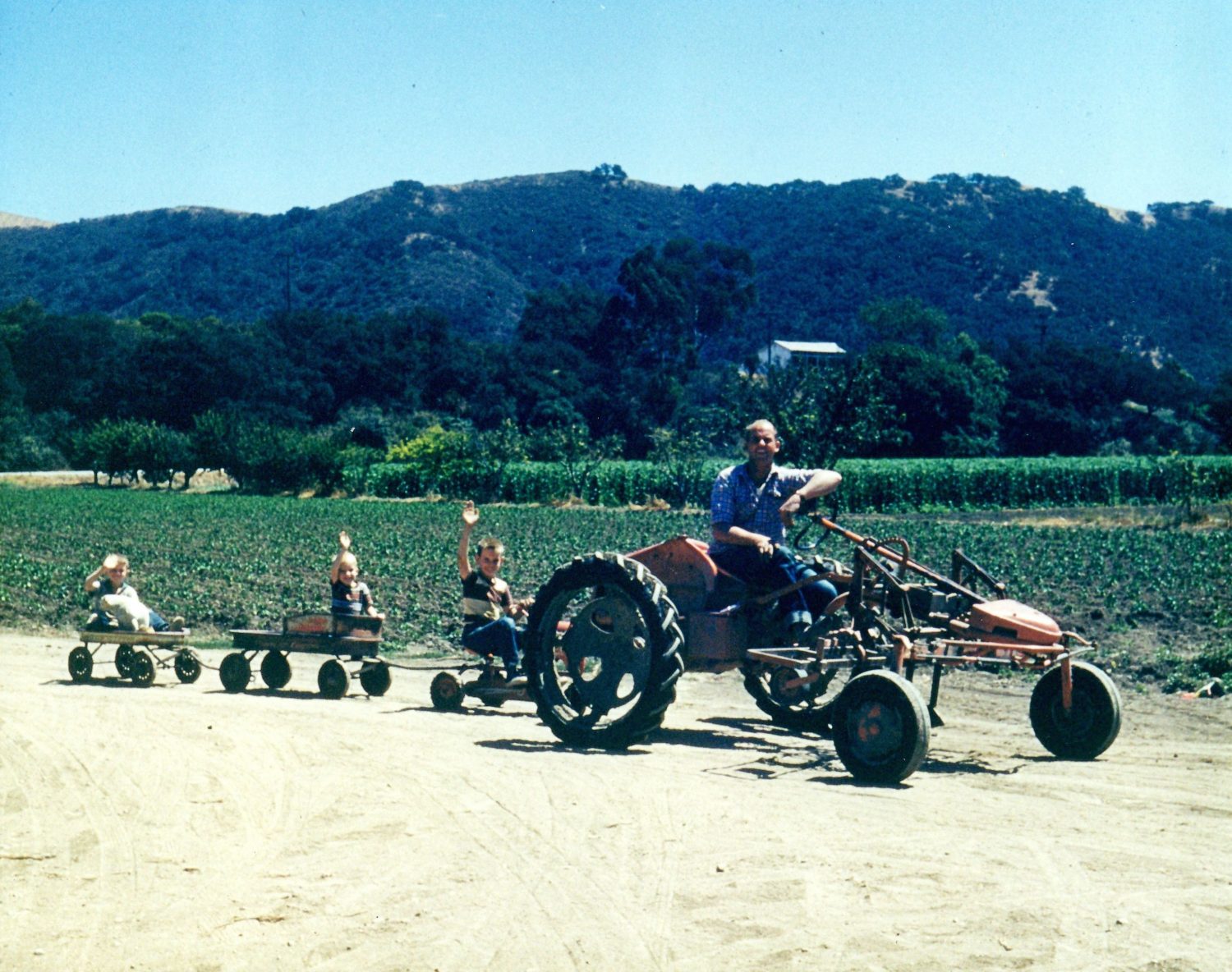
Three Buckaroos, Family Photo, 1955

By the turn of the decade, the end of the fifties, the new “Modern” school was about to open and the last class to graduate from the old school, which had been in use since the 1880’s was looking forward to high school. The days of free recess where the kids were left to their own devices were coming to an end. The county schools office was growing in power and most of the old one and two room schoolhouses were closed. We had seen the end of Huasna, Santa Manuela, Newsom, Oak Park, Berros, Santa Fe, Freedom and Cienega schools and the rise of a much more rigorous education system. The Arroyo Grande Elementary school, though opened in 1932 was fifty years more modern than old Branch. The brand spanking new Margaret Harloe school with its modern buildings and structured activities didn’t allow for rafts, gun days or digging foxholes. Recess was now organized. Imaginations were stifled under the weight of adult theory about what is good for children. A sad day. Just for once why can’t we just open the gates and let them run free to discover on their own what is out there? No Toys-R-Us, no phones, no proper PE equipment no adults pointing fingers and giving orders. Just give them a shovel. As Pink Floyd so aptly said, “Teachers, leave those kids Alone.”

L-R: Christine Baker, Cheryl Jurniak, Mrs Edith Brown, Jeanette Coehlo, Jerry Shannon, Unidentified, Dickie Gularte, Mrs Fahey. Not pictured, George Cecchetti Junior. The last eighth grade class from the old school, 1961 Family photo
L-R: Michael Shannon, Judy Hubble, Judy Gularte and Michael Murphy, 1959, graduates Family photo

Cover Photo: 1960 Eighth Grade, Alcides Coehlo, Mrs Edith Brown, Johnny Silva, Nancy Wilcox, Steve Luster, Manny Silva and Mrs Fahey. The pond is to the right. Family Photo

*There is no record of Mister Crockett ever being referred to as Davy by either himself or any of his peers. That’s a Disney thing.

Michael Shannon is a proud graduate of the last two room school in our valley.

Standard

What To Do With A Dead Horse.

Family history as recalled by the author.

My dad was not what I would call a scintillating conversationalist. He tended to speak in analogy and metaphor. When I was a kid this was likely the correct thing to do as I remember those kind of things today. Conversations, when there was one always ended with the phrase: Well, lets put it like this,” which meant that his opinion was right. When you’re young there isn’t much reason to disagree because you don’t know too much.

The only time I knew that I had him dead to rights was when he insisted that the old saw, “Red sky at morning, sailor take warning,; red sky at night, sailors delight,” was wrong and red sky at morning was the sailors delight. After a long discussion with my brother and I, who both insisted he was wrong, even showing him in the encyclopedia, he nevertheless ended the talk with his tried and true phrase. And, that was that.

When I grew up I spent many years at sea and I can testify today that he was wrong. Pretty sure he would still argue his point though. Opinions, stubbornly held can become personal law and be handed down from father to son like crown jewels.

Other things he said, stuck. His little stories about things have stayed with me and in fact, have become more true, if you will excuse the grammar as nothing can be “more” true, being that truth is an absolute. There is no such thing as alternative truth, it either is or it isn’t.

If you understand that my father was a man who came of age in the depression and with the exception of his two years at the University of California, lived his entire 88 years in our small town. We lived in a farmhouse less than three miles from where he grew up. He was raised on a dairy and as an adult grew, table vegetables all the rest of his working life. To say he was a conservative thinker would be an understatement. I spent many Thanksgivings and Christmases seated at the poker table after dinner listening to my father, his brother and my uncles expound on farming. I learned a great deal about potato farming off Division Road in Oso Flaco or running cattle up on the Shandon Ranch. They all believed that the weather was out to get them; it was, and they were on constant lookout for the State and Federal “College Boys” who wanted to tell them how to farm. They didn’t force conservatism on us boys but it was there for the taking. Some advice I took. Some I didn’t. I understood as I grew up that none of that was meant box me in, but was simply to offer me a way to look behind the curtain, see what was there and make up my own mind.

If I may I’d like to present you with one of his classic analogies. This one is undateable and it’s been making the rounds, likely for centuries. You can take it or leave, another of my dads go-to phrases.

With anything you do or anywhere you go you may find yourself riding a Dead Horse. My father said this was true of government, especially ours. He said,”Democracy is very messy and most of the time stumbles over it’s own two feet and like a blind hog will, or might, find a Truffle once in a while. You can imagine the rider standing over the quite obviously Dead Horse, hands on hips trying to figure out what to do. Buttonholing three or four passersby he asks what they think he should do. The group tries to come up with a strategy for getting the Dead Horse to move.

“Should we give it a swift kick in the ribs,” says one.

“How about a bigger whip,” says another.

“How about a better rider.” says a third.

“We could change his diet or better yet, buy a better Dead Horse,” that’s an idea, they all agree.

The rider is irritated by the comment that he should have been a more accomplished horsemen.

“Perhaps,” says one, “we should appoint a committee to study the issue, or better yet, put together a team to revive the Dead Horse, yes that’s it.”

“Don’t you think we ought to buy a few more Dead Horses, and harness them together? Wouldn’t that be twice as good?”

“They’d be much faster and could really pull their weight.”

“We could get professional jockeys to ride them too. I bet they would spring to life then.” Lots of head nodding.

“What if we hired a trainer to increase the Dead Horses performance.”

We could increase funding, we could study Alfalfa production to make sure the Dead Horse was properly fed.” Yes, that’s it.

We could save money too, because the Dead Horse doesn’t have to be fed. That’s right, it’s less costly, decreases overhead, and therefore contributes more to the mission than a Live Horse.”

“Best of all, we can promote the rider of the Dead Horse to a cabinet position, create a new department called the Dead Horse Committee and they can issue a critical report on the efficiency of Dead Horses.”

“We’re sure Democrats and Republicans can agree on that, right?”

“Not so simple,” replies the man from the north, “We don’t grow Alfalfa in our state and taxpayers won’t want to spend their money on a Dead Horses from somewhere else.”

The Dead Horse lies there.

“You know,” they all agree, “The Dead Horse is beginning to smell.”

They all walk away.

No actual horses were harmed in the writing of this story.

Michael Shannon is a farmers son. He lives in Arroyo Grande, California

Standard

Twelve Hour Tour

Chapter Ten

Bruce and Eileen on a tour of California’s Oil Patch.

The boys on the rig. Leather hard, raw boned just as likely to fight as breath. The men who spudded in, made hole and spent their money hell-raisin’, drinking and fist fighting just for fun.

L-R: Fargo Adelman, Harry Weaver, Charles Fylling, Luton Bellio, Bruce Hall, Dolly Adams Lease, Signal Oil, Arroyo Grande Field. Family Photo.

Bruce Hall learned to Boss. To be a Boss, get men to work, move the job along, not an easy thing to do. Turnover was high, roughnecking wasn’t a job for many. Bruce Hall earned a reputation for handling men and because he was fair, he had hands waiting to work for him. He ran a safe rig, he organized to reduce waste and worked hard to bring wells in on time.

A man who laborers for a living is always looking for someone who can make him money. You can classify bosses by their many different styles. Each one can be more or less effective and many times will attract men who see things as they do. Mostly farm boys worked the rigs in those days who were used to hard work and seeing an opportunity to do a job that has a ladder you can climb to a better life. They brought with them attitudes inherited from their families, some times good, some times not so good. Bruce had to, each and every day stir a diverse group of young men to do what was needed. None of those skill could be found in a book. Close observation and an innate ability to see a path that motivates the man is required.

Bruce thought constantly about how to improve his crews. He taught what he had learned form others and his own observation. He knew by now that companies had one interest only; profits. Profits came from speed making hole, safety; no lost time accidents and most of all forethought. A man that uses his experience to anticipate problems on the rig and puts the fix in first is worth a great deal.

He had another advantage, his wife. Eileen stayed home, raised their children, kept their home and most important of all understood that his job had to come first and foremost. When the phone rang he had to go. She never knew when he would be back. If something happened on a rig he stayed out until it was fixed and back on line. He might be gone days. In the twenties it might not be possible to call her. Individual rigs had shacks, the so-called Doghouse, where the trip log was kept and clothes were dried. It was a place to get out of the weather but had no phone. Typically the best he could do was send a note by someone going into town. Eileen didn’t fret, it served no purpose. Perhaps her early life living with her self-absorbed and itinerant mother prepared her for this one. What ever you think her life was, it was most definitely hers and she embraced it. In all of her life she never lost her sense of adventure. They both did whatever had to be done and the children never heard either of them complain. Ever. My mother told me they never fought or argued. Eileen went where Bruce went. They were yoked together.

Something they learned early on was to stay away from the camps. Though interviews with oil patch families speak of the camaraderie and neighborliness of people, they helped each other when they could. No one had much so it was impossible to put on airs. Most of the problems revolved around the men. Spending their pay at the saloons, gambling on payday, chasing the floozies didn’t make for a happy home.

Some companies set up tables for crap games on payday and had a tent where a man could have a woman. Even though it was the depression, liquor was readily available and the company would set ’em up. They were guaranteed to get some of that pay envelope back.

Curb Service. 1934.

Bruce knew that if he needed or wanted to know something about drilling operations he had to get it himself. There were no books to read, no instructions. You asked questions, you watched everybody on the crew. You had to figure out what worked and what didn’t. In the twenties, full time geologists were just beginning to put together the science of drilling. Oil bearing rock and sand could be convoluted, twisting and turning through the rock strata, sometimes more than a mile down. A good well could be ten feet from a dry hole. Some fields were huge like those along the Kern River. The Kern Front Field where Bruce worked was ten miles long and 2.5 miles wide and at it’s peak was home to over 9,000 producing wells. It’s best year, 1929, it pumped 4,535,039 barrels. The two fields along the Kern just to the north were even larger.

The amount of oil being pumped was vast. So vast, in fact, that for the last fifty years there had been little though of conservation. Excess oil was stored in pits and in some places simply allowed to run out onto the ground. Creeks and gullies ran black withe oil and mud waste. Production was everything. Hundreds of companies for the past twenty years had been in a race to find and exploit new fields and bank the money made that little thought was given to what might happen next.

The cost per barrel had slowly declined from its peak of more than $3.00 in 1920. Companies countered this loss of revenue by cutting wages. After the war oil workers had begun unionizing in California with the usual back and forth of walkouts, shut downs and the consequent attacks by law enforcement in the pay of the corporations, bringing in scabs to man production sites. This back and forth had led to the 8 hour day and a rise in pay during WWI. Companies had put up a fight but during and right after the war prices were high enough that they found they could maintain profits and the bosses could still take a ship to England and shoot grouse with the lords and ladies. Just for a bit, all was good on both sides.

Standard and Union Oil were among the first to raise wages and also amongst the first to go after the oil-workers when price began to decline. Big companies began to lay off the men on company payroll and began using independent contractors to do the drilling. This allowed them to put much of the financial risk of drilling on the independents. This increased the pressure on the drill crews to make hole in a hurry because thats how they were paid. A price per foot was negotiated with the drilling contractor, with the added attraction for the owners of a specific depth of hole, and beyond which you won’t be paid. As always the low bidder won the right and the opportunity to role the dice on profit. Make well, get paid, dry hole not. Payday for the crew came when the well came, if.

For Bruce the upshot was that if he was able attract good men, highly trained and motivated he could drill in a hurry and finish with money still in the contract which was the company profit. If he couldn’t, he’d be looking for another job.

Good crews that work together were a necessity. A winning team tends to attract good players which makes it better. The problem is there are not enough really good players to go around. Perhaps his baseball career helped him understand this. Men that get along and work as a team need a good coach. Bruce was that man.

There is an old saying that a man who works with his hands “Needs only a strong back and a weak mind.” No one who takes his lunch in the “Doghouse” on a drill rig and reads Shakespeare is going to escape ridicule. If you have a book with anything but pictures of naked women you are probably in for some grief. Stories abound. You might have to be good with your fists.

Over on a Standard well, a fight that quickly included an entire crew, roughnecks, pumper, motorman and mudman, something like you might see in a John Wayne movie got out of hand and a young worm, a Dutchman took a shot to the head with a “dumb” wrench. His skull was fractured and he died the next day, nailed into a plain pine box and buried. No one knew who to notify or apparently his real name. No charges were filed or the sheriff even notified, life in the oil patch could be cheap. The next day they same crew was back to making hole.

Two brothers who worked in the fields around Taft were known to jump down from the drilling floor and go at it at frequent intervals. Each one had wins in which his brother lay in the oil and mud around the rig while he other crowed over his success. By all rights they were both good hands and had no trouble finding work plus they offered some entertainment to break up a dull day. The brother with the false teeth always took ’em out before ceremonies commenced, that was his advantage.

Over in Oil City, a man’s wife, he was a first class Toolie, came home and caught him in bed with his floozie and run both him and her off. The next day she come out to the rig in an old Ford, walked right up to him on the floor, commenced to hitting him and after a bit of that pulled a little .32 out of her purse and shot him in the butt, twice. Satisfied, she took him to the hospital to be sewed up. Next day he showed up for his tour, wife drove him to work. All was settled.

The fields were full of uneducated, men who worked hard and made their fun where they could. In the twenties men still carried pistols in their pockets, spent their money like water and would still show up for work. Something in his character made Bruce different. They were careful to stay away from the trouble that plagued the oil camps. Three little children and their bond kept them at a distance form the wilder side of things.

Bruce Cameron Hall early 1920’s family photo.

Bruce and Eileen both had little formal education but they were smart. Bruce understood where the money was. Pipeliners, truck drivers, and roughnecks didn’t make the money, Tool Pushers and Drillers did. The way up from the bottom was to learn everything to know about putting in a well.

Next: Chapter Eleven, Shooters, Torpedo’s, Whipstocks and the Christmas Tree.

Michael Shannon. the writer is the grandson of Bruce and Eileen.

Standard

Twelve Hour Tour

Chapter Nine

Michael Shannon

Bruce and Eileen Move up. Central Californias Black Gold, or movin’ to the Kern.

Bruce Cameron Hall, Family Photo.

The Teapot Dome Scandal of the 1920,s shocked Americans by revealing an unprecedented level of greed and corruption within the federal government. The scandal involved ornery oil tycoons, poker-playing politicians, illegal liquor sales, a murder-suicide, a womanizing president and a bagful of bribery cash delivered on the sly. In the end, the scandal would empower the Senate to conduct rigorous investigations into government corruption. It also marked the first time a U.S. cabinet official served jail time for a felony committed while in office.

A couple of the big boys, Edward Doheny, “Richer than Rockefeller” as the song goes and Harry Ford Sinclair concocted a scheme to get their hands on all three of the Federal oil reserves. The two high rollers worked with Albert Fall, former Senator from New Mexico, and the Secretary of the Interior to lease the reserves from the Federal Government. This would give them access to hundreds of millions of barrels of high grade crude for next to nothing.

Edward Doheny sold his oil holding in the United States in 1902. Doheny then went down to Mexico looking for more oil. He leased a million acres around Tampico on the Gulf of Mexico, and his Mexican Petroleum Company became the largest oil company in Mexico . Mexican Petroleum built roads, cities, railroads, and pipelines. During the Mexican Revolution Doheny hired his own private army to protect his Mexican oil fields, which by 1922 had brought him $31 million. By 1925, Doheny’s net worth passed $100 million and he was richer than John D. Rockefeller. He would have liked to be even richer though and it would take just a pittance to pay off the massive personal debt of Albert Fall in return for just a small favor.

Doheny Fields, Beverly Hills, California. LA Times photo 1908

So, in 1921, Doheny persuaded his friend Fall, in exchange for a suitcase with $100,000 in cash, an interest free loan, no need to pay it back, he said, delivered to a Washington Hotel by Doheny’s son Ned. The money was to secure a lease for Doheny’s oil company of large holdings to oil-rich lands owned by the U.S. Navy at Elk Hills and the Buena Vista field in Kern County, California . Part of this deal included construction of storage facilities at Pearl Harbor, Hawaii , and an exclusive no-bid government contract for Doheny to ship the oil from Elk Hills to Pearl Harbor. It would be carried in his own tankers for which he would be paid by the Navy. A similar deal was struck at the same time between Secretary Fall and oilman Harry F. Sinclair for a less valuable Navy oil property at Teapot Dome, Wyoming, for which Sinclair gave Fall $300,000.00, all cash. No receipt necessary. No paper trail needed. Friends with an understanding of course.

Bothe vice-president Calvin “Silent Cal,” Coolidge and president Warren G Harding were implicated in the deal but as Harding said, “No man with a $100,000,000.00 dollars will ever be convicted in this country.” He was right. Both Doheny and Sinclair were acquitted on the bribery scheme, that is, giving Fall and others cash for services, Fall himself went to prison for accepting the money. No one should have been surprised then or now. Jury tampering, the Denver Post on the payroll and legions of sharp lawyers tipped the scales. Once the scapegoat was chosen, the end was inevitable. None of that should be surprising, think of Oliver North, Lt. Calley, the Watergate burglars and “Scooter” Libby all men who stepped in to take a bullet for their bosses.

2nd October 1929: Left: The former Secretary of the Interior, Albert B Fall (1861 – 1944) with (from left) Edward Doheny (1856 – 1935), Frank Hogan and Mark Thompson outside a Washington DC court. Fall was convicted of taking bribes in the Teapot Dome scandal when government oil rights were illegally leased out. (Photo by MPI/Getty Images)

Newspapers at the time were the only mass market source for news. Reporters, as always, were digging like mad gophers and oil business tycoons were shoveling in the holes a fast as they could. Reporters dogged the oil barons and their lackeys at every step and along with the Senate Committee who did the formal investigation, it all came out. A few inconsequential heads rolled. The big money boys, and there were a lot of them, took a stroll and Fall, now the former Secretary of the Interior went away for two years of free accommodation in a federal prison. Though our history is rife with Senators, Congressmen and Judges, he was the first U.S. cabinet member to ever be convicted and jailed. Pretty exclusive company.

Bruce would read about it in the Bakersfield Californian. A national scandal affecting his business was big news. Every change in the business side of oil might change the prospects for the Hall family and close attention was paid to moves in the industry.

After a decade in the oil fields he had gone from roustabout to driller. He knew the drilling business inside out. From bits and bailers to fishing and torpedos he had done it all. He felt pretty good about the future. Like a lot of Americans the decade after WWI was one of immense progress, both social and industrial.

Drilling in the US was going like a runaway train. Huge fields had opened in California. Not the least was the Kern River fields which he worked in. Signal Hill had come on line in 1921, Inglewood in 1924, Torrance, 1921, the Westside of San Joaquin valley from Maricopa to Avenal and Coalinga in 1928. Goleta, Summerland and Ventura, Huntington Beach,1920, Santa Fe Springs, 1921 were all producing. On top of that the immense field in Kilgore Texas was pumping so much oil that much of it simply ran onto the ground. There were not enough tanks or pipelines nor refineries to process it. It was estimated that only about 40% was recovered.

The first well in Mesopotamia (Todays Iraq) came in on October, 14th, 1927. This opened the giant field in Kirkuk, northern Iraq. Lake Maracaibo, in Venezuela opened its first well in 1922. The Baku, Azerbaijan wells were flowing again after destruction and rebuilding by the Russian Bolsheviks in WWI. Sumatra and the Dutch East Indies, today Indonesia and Borneo were also major producers.

Known from 1918 to 1939 as the “War to end All Wars,” WWI was the first war to run on oil and gasoline. Tanks, trucks, automobiles, ships and the warplane all used oil products . Advances in tank ship design made it possible to ship huge quantities across the globe which began weaving together the skein of the international oil business which we know today.

Producers were involved in a mad scramble to wring as much profit out of oil as they could. Big firms bought small firms and bankrolled wildcatters to make hole. The oil flowed like a seemingly endless river.

The 1920’s saw one of the most transformative times in our history and the world. Skirts went up, morals went down. The Volstead act which was passed in 1919 prohibited the sale of alcohol with a content over 0.05%. One of the deciding factors was the inability of many soldiers overseas to vote. Many states worked hard to repress the soldier vote and it is believed the 2.8 million Doughboys overseas may have tipped the balance against it. As it turned out, alcohol consumption went up and so did crime. Watch out for what you wish for.

“Oh you kid,” Roaring Twenties, API.

Bobbed hair, flat chests, rolled stockings, scanties, lipstick, smoking cigarettes and drinking in public, riding in cars with boys; necking, the world turned upside down. Oh my. The differences in my grandmothers worlds was vast. Eileen, born in 1895 and Annie born in 1885 were just a decade apart in years but much different in the worlds they lived in. Grandma Annie wasn’t a prude but she never caught up. Eileen took it all in stride of course.

Oil workers had money to spend too. Standard Oil had instituted the 8 hour work day in 1917. Unions were at work organizing labor and trying to raise the standard of living for its members. Wages had gone up during the war but in the twenties some corporations were trying to put the squeeze on labor and Bruce was to see many strikes and labor stoppages in the decade. By this time he had risen far enough so he was betwixt and between neither pure labor nor pure management.

Bakersfield didn’t skip a beat. A classic boom-town, saloons, dance halls and sporting houses advertising the finest high society girls imported from Chicago and Kansas City, ran wide open, 24 hours a day. Land along the river bluffs was leased, re-leased and sold to the highest bidder. There was a wildcatter behind every tree and two to take him. Men resorted to fists and sometimes pistols carried in the front pocket to settle their differences. Nothing was prohibited and the sheriff was getting rich on that. Claims were staked and jumped by the dozens and if one promoter went broke another moved right in. Kern river had become a major producing field.

The twenties began with oil at $3.07 a barrel. Today that would be over $45 a barrel or roughly a dollar a gallon for each of the 42 gallons in a barrel. Inflation makes it hard to see the contemporary value of things in the middle twenties. Take the food you put on the table, A dollar in 1920 could buy around three dozen eggs, or, just under three pounds of butter. Butter back then was 36 cents — $8.72 in today’s dollars, or nearly double what it costs in most places in the US today. Milk would set you back about .35 cents a gallon, delivered, That’s a little over $5.19 a gallon, about a dollar more than today. Gasoline for your car ran from .21 to .30 cents a gallon. You could buy a Ford model T for $300 dollars and go wizzing down the roads at 45 miles per hour, it was enough to take your breath away.

So how does a company make any profit if the 1925 cost of a gallon of raw petroleum is more than gas at the pump? The answer is in refining as it was in 1925. Yes, gasoline was refined but so was Bunker or Fuel oil for ship and locomotives, Diesel and Heating oil, Naptha, Kerosene, and Butane. Propane and Paraffin were also by-products of crude. Today there are over 6,000 products made with or partly made with Oil. It is and was a lucrative business. Nearly everything in your house has some component of oil except the wood and it takes diesel fueled trucks to bring it to your lot.

My grandparents moved up from Casmalia and found a house on North Chester avenue, then and now the main drag in town. The two girls, Mariel and Barbara were enrolled in school, always the first order of business. Eileen set to arranging the house and putting things in order.

In those days they were still Boomers, traveling to each new field and job by car. When they left, nothing went that didn’t fit in the car. Everything else was sold or given away. Bruce would call from the rig or come home and say I have to be in Bakersfield, Taft, Santa Barbara, Arroyo Grande, whichever it might be and they’d be off.

For the first time in their marriage they had enough income to begin looking ahead. Eileens mother was now living near Clovis on the Miramonte ranch but Bruce’s were back in Arroyo Grande. They liked the area around Southern San Luis County and decided to buy a house lot in Arroyo Grande. It cost them the princely sum of $40 cash. You can buy that little house for $1,202,000 million today.

North Chester Ave, 1927,

Compared to little Casmalia and Orcutt, Bakersfield was a metropolis. Almost everything in town was the result of the oil boom. Oil had transformed a dusty little farm town practically overnight. The Southern Pacific railroad had built a major shipping point to haul oil north to the refineries in the bay area. A major development in 1924 was the building of the first steel derrick up on the Kern field. It was a sign that wooden derricks and the cable tool rig were looking at the end. Steel was stronger and could carry the weight of of the much heavier rotary tools and most of the California fields, at least the shallow ones had been drilled. Wells were putting in strings to the tune of thousands of feet.

The Oildale fields were still drilling some shallow wells and thats were Bruce went to work. He headed up the road to Associated Oils well, the Kerndon No. 5. Nearly ten years on the job was taking its toll on Bruce. He was showing the effects of the heavy work. At 30, he was losing the edge that younger men have in doing the kind of heavy work required on the drilling floor. The imperative to move up, learn more, produce more was obvious. Pulling and hauling heavy tools that weighed half a ton had taken its toll. The beginnings of the back pain that would plague him all the rest of his life had appeared.

Road out to Oildale. Oil families living in rag tents, foreground. 1924. Family photo.

Cable bits could be taller than a man, cast iron or steel, and were moved by lines strung on the derrick which helped, but they still had to be horsed around by muscle power alone. There was little relief either, the pipe string had to be hauled about every three feet and then the bailer lowered into the hole in order to remove the crushed rock and other debris. The work was nearly constant. The drill string weighed more each cycle as the hole got deeper.

The bit was raised and dropped which crushed the rock at the bottom of the hole. Water would be poured in the hole to create a slurry of debris which was picked up by the bailer The bailer was a simple hollow pipe with a gate at the bottom. The gate was similar to the flapper in a toilet except it worked in reverse. As the bailer entered the debris at the bottom, the flapper was pushed up, allowing the mud and sand to flow up into the bailer. When the bailer was pulled up the flapper closed trapping the slurry. Lifted out of the hole and swung outside the drilling floor a roughneck tripped the flapper and the waste flowed out. When the hole was empty, the drill string was lowered back in the hole. In the old days they called this a trip and trips were nearly constant during the tour. If you ate lunch, it was on the fly.

Each time the bailer was pulled, Bruce would take a hand full of mud from the open gate, roll it between his fingers, smell it and even taste it. This told him what type of formation he was in and the various combinations of rock and sand present. Geologic formations each had a particular odor and taste. Oil of different consistencies smelled differently and tasted differently. Combinations of water, oil and gas were recipes telling Bruce what was going on at the bottom. Kneeling down a taking a little sniff at the hole itself was like reading a book for the best drillers. With a cable tool rig, taking cores of the hole, much like coring an apple isn’t possible so a more intuitive approach was required.

Coring sends down a smaller bit connected to a hollow pipe, boring a hole, trapping the geologic formation inside the tube, hauling it out and inspecting the contents for information about the down hole progress. The old logbooks are full of the guess work and intuition of those old cable tool guys. It might seem silly, sniffing, touching and tasting, but it was deadly serious.

Dry holes cost jobs, blowouts were disasters, gushers were spectacular and made great news, especially the photos in newsreels and papers. Grandpa always said a driller who lost control of his well would be showed the door. On top of all that all those things were deadly and cost a fortune to correct. A gusher, an out of control well in southern Texas blew for over nine months until it was exhausted. Men died jumping from the monkey boards, crushed by falling casing, incinerated by fire and killed by the immense power of oil blasting through twelve inch casing, rising hundreds of feet over the rigs. Grandma knew this too. When Bruce went to work she worried all tour until he returned home. Occasionally should could hear the roar of a wild well from her home.

Chapter Ten

Burning Out of control in Reward, westside, Kern county’s McKittrick oil field.

Next Week Chapter Ten. Making the rounds in California.

Shannon is a grandson of Bruce and Eileen. Their history comes from family stories told by aunts, uncles and his mother who was an oilfield brat.

Standard

Twelve Hour Tour

Chapter Eight.

Off to Oildale, California.

Time was passing in Casmalia, the kids were growing and Bruce and Eileen had finally moved from the Associated camp to a little house between Orcutt and Santa Maria. Mariel, the oldest had started school at tiny Casmalia school, one of a few students from the oil fields. Like many rural schoolhouses it was a first to eighth affair. Kids ranged from six years old to, well, no limits on age. Public education in the 1920’s was open to all. It wasn’t uncommon to have sixteen year olds in the third grade. One teacher taught all subjects to all grades. Curriculum was primarily reading, writing and arithmetic. Books were well used and almost always second hand hand me downs from larger urban schools. Parents did the janitoring, painting, general upkeep and provided most, if any, improvements.

The One Room School.

Education, particularly for boys had exploded after the war. The advent of progressive education and state and federal funding began to be felt in public schools. With close to 25% of the United States population considered illiterate, business and government could see the value of providing at least a basic education for its citizens.

Neither of my grandfathers graduated high school. Bruce attended only to the ninth grade. My other grandfather never finished the eighth grade. There was no high school in Arroyo Grande when he was of age, closed because the large landowners refused to pay taxes to support the school. They believed that elementary school was good enough. “Those boys need to go to work,” they said and the high school was closed down for a number of years. Donovan and Miossi led the fight to close the wasteful school.

Attitudes had changed by 1920, both public and private money became available. Teacher requirements were raised, more education for them became the norm. Graduation from high school for boys had risen from six and one half percent in 1900 to nearly seventeen by 1920.

Little Orcutt school had less than two dozen students when Mariel went there but it had much in common with all rural schools. These characteristics were still evident when I went to grammer school in the fifties. Flip top desks with inkwells, hard wooden seats all facing a black slate board with pieces of chalk lying with dusty felt erasers in the tray. Above the blackboard, paper poster board printed with the alphabet in both upper and lower case letters depicted in cursive. Above that the big black framed clock, wound by hand each morning by the teacher, above that the bracket holding the California state flag and the national flag which we pledged allegiance to first thing each and every morning. The floors were wooden planks, there was a heater in the corner, a teachers desk and some bookshelves holding reading material and textbooks. By todays standards those little schools were pretty spare but if you had good teachers as I did you could get a first class elementary school education.

All students, no matter the age learned together. Older kids helped younger kids. In effect there was not just one teacher but many. Subjects were integrated and holistic with each subject taught in the context of others.

With more liesure time than before the war the grindingly hard work of the woman began to be reduced with the introduction of all kinds of labor saving devices. Eileen, because she now had electricity didn’t have to clean kerosene lanterns or burn coal and wood to cook and heat. She could have an electric mixer, just introduced ten years before. She could buy a pop-up toaster first marketed in 1919 and a Hoover Electric Floor Cleaner could be had for just $39.00.

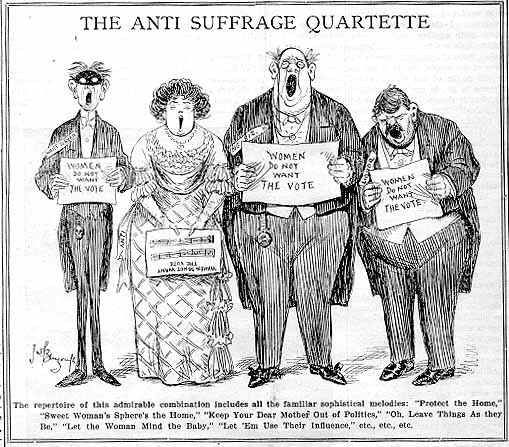
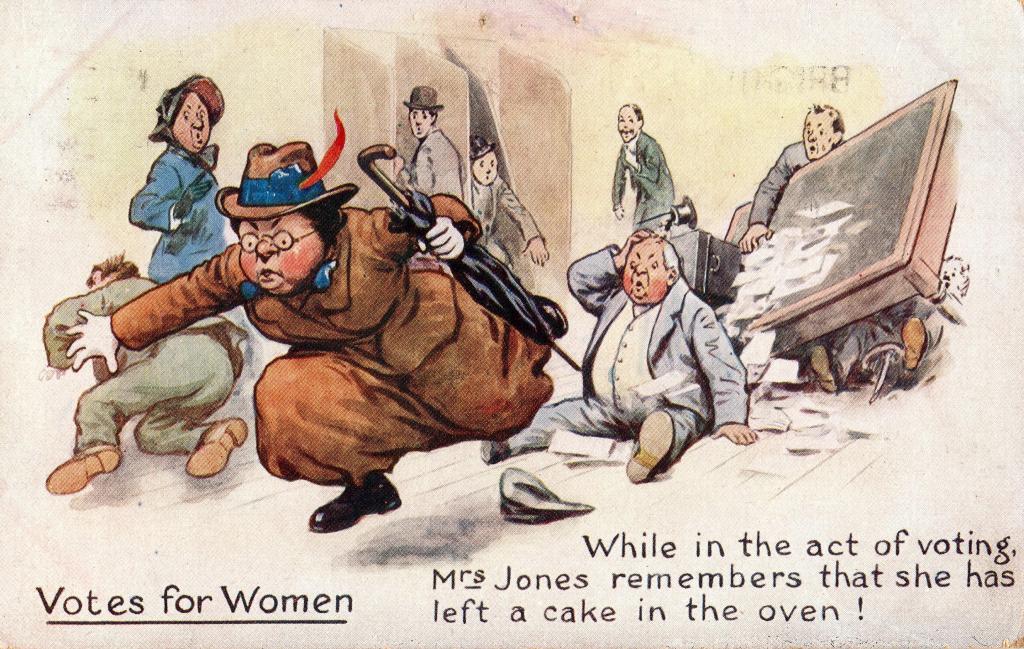
And, in 1920, for the first time, she could vote in the national election. Women had campaigned for over fifty years for the right to vote in California and had finally narrowly won that right in 1911 though it was not until 1918 that three women were elected to the state assembly.

The business, industrial, politicians and saloons were bitterly opposed to suffrage but perhaps not surprisingly, though the measure was soundly defeated in San Francisco and barely won in Los Angeles, it turned out the deciding factor was the men’s rural vote. Farm wives, oil patch women, school teachers and those who put up with the daily drudgery of life for which there was little future put it over the top. Men listened to their wives and daughters and did what they asked. It’s important to remember that women didn’t vote in California in 1911 but the men did and especially men outside the cities thought it was time things were a bit more equal.

The birth of my Uncle Bob was bookmarked by the opening of the floodgates of social reform. People looked up and said, “I’m not going to take it anymore.” Big changes were in store for the oilfield worker.

Oildale, California,

In 1924, Bruce and Eileen loaded their three kids in car, a pretty new Model T Ford and hit the road, headed for a new job in the San Joaquin . “The Valley” as Californians refer to it is the area of the Central Valley that lies south of the Sacramento–San Joaquin River Delta and is drained by the San Joaquin River. It comprises seven counties of Northern and one of Southern California, including, in the north, all of San Joaquin and Kings counties, most of Stanislaus, Merced, and Fresno counties, and parts of Madera and Tulare counties, along with a majority of Kern County, in Southern California.

Starting 2 million years ago, a series of glaciers periodically caused much of the valley to become a fresh water lake. Lake Corcoran was the last widespread lake to fill the valley about 700,000 years ago. About 12,000 years ago there were three major lakes remaining in the southern part of the Valley, Tulare Lake, Buena Vista Lake and Kern Lake. In the late 19th and early 20th century, agricultural diversion of the Kern River eventually dried out these lakes allowing farmers and ranchers access to the vast southern Joaquin. Oil followed

The San Joaquin Valley has long since eclipsed the Los Angeles Basin as the state’s primary oil production region. Scattered oil wells on small oil fields are found throughout the region, and several enormous fields near the Kern river bluffs, the Lost Hills and Taft, including the enormous Midway-Sunset Oil Field, the third-largest oil field in the United States were operating by the time Bruce and Eileen made their way north.

Headed for Oildale, 1924. L-R, Mariel, uncle Marion Hall , Bob, Barbara, Eileen and Bruce Hall. Family Photo

In 1924 the was valley is predominantly rural, dotted with small farm towns with curious names like Wasco, Fruitvale, Reward, Fellows and Temblor which naturally sits smack dab on the San Andreas Fault Line.

Oildale, now there’s a name to remember. Surrounded by Bakersfield it’s not much remembered today but once it was one of the great discovery fields. In 1920 it was the third largest oil producing area in California. The only town in California other than La Brea to be named for the oil it sat on.

The Halls were moving from Santa Maria where Bruce started his career. He’d worked for Associated Oil as he’d learned his trade. Associated was at the time one of the most integrated companies in California. They had their beginnings in the Kern fields in 1900 when more than thirty smaller companies signed up to form it. Within a few years Standard Oil of California and the Southern Pacific Railroad acquired an interest in Associated Oil for the purposes of transporting their own oil to the San Francisco Bay Area where it would be refined and marketed jointly. The Southern Pacific needed fuel for its railroad steam engines. The Matson’s Pacific Oil and Transportation Company, the Matson Line, was acquired in 1905, which included the Coalinga-Monterey pipeline and a refinery at Gaviota, California. In 1907, the Associated Pipe Line Company was formed as a subsidiary of the Associated Oil Company with the Southern Pacific Company providing property along its railroad tracks which ran from the Bakersfield Kern River oil fields to Port Costa, California, later being shipped to China and other parts of the world. The Southern Pacific Company attained a controlling interest of the Associated Oil Company’s stock. Like most of the larger companies it became an almost impenetrable labyrinth of subsidiaries and holding companies. The Southern Pacific Railroad had rightly earned the name, “The Octopus,” and the brag in its boardrooms was that it owned California which wasn’t very far from the truth.

Kern River fields, 1910. Calisphere photo.

Bruce was moved up to the Kern fields because by this time he was an expert in cable tool drilling. There is a thing that some men have that is a natural feel for things mechanical. Call it a sixth sense though its probably just a combination of the other five. It is an absolute mystery to those that don’t have it. Bruce had it. He could smell, hear and feel a well. The wells talked to him and he listened. The sense of things is what separates the laborer from the boss. By the time they got to their house on Bakersfield’s Chester Avenue he was a Farm Boss, in charge of drilling for more than one well. Things were looking up.

Cable tool rigs work by using a long iron bit attached to a heavy, cable laid manila rope. The cable is attached to a walking beam that lifts and drops the bit, crushing the rock, slowly pounding its way downward. By 1924 it was considered obsolete compared to the faster rotary rigs. Looking down their noses at the rotary rig roughnecks, the cable tool men derisively called them “Swivelnecks.” Typical behavior from those workers who could clearly see the writing on the wall that spelt the end of their particular trade.

Cable tool rigs were widely used from about 1870 and are still being used today, although almost all of today’s oil wells are drilled using a rotary rig. The basic machinery consists of the engine and boiler, the derrick and crown block, the bullwheel and drilling cable, the sandwheel and sanding line for the bailer, the vertical bandwheel with a center crank, and the walking beam supported by the Samson post. Bandwheels were essentially large pulleys (usually 8-10 ft in diameter) driven by a leather belt from the engine, which reduced the engine rpms and increased power. A crank on the bandwheel’s axle imparted up-and-down motion (via a pitman arm) to the walking beam, much like the motion of a teeter-totter. The other end of which was connected to the drilling cable by the temper screw. The walking beam alternately raised and lowered the drilling tools. Walking beams were typically 26ft x 12in x2in in size. Bullwheels and sandwheels were spools for the drilling cable and sanding (or bailing) line, respectively. Additionally, fishing tools, various hand tools, wrenches, and forge tools were required for the drilling process.

The early rigs were powered with steam. Steam was delivered from the boiler to the engine by way of pipe. The engine powered the band wheel by a turning belt. A well-braced upright post, called the sampson post, was mounted further down the platform. On top of it, and mounted with a hinge, laid the horizontal walking beam. The band wheel was connected to one end of the walking beam by a pitman and crank. As the band wheel turned the crank, the pitman was raised and lowered which rocked the walking beam up and down on the sampson post. A temper screw was attached to the other end of the walking beam. At one end of the temper screw there was a clamping device that gripped the drilling line to which the cable tool bits were attached. The drilling line came from the bull wheel and ran over a pulley at the top of the derrick. The bits, which were basically just pointed steel weights, pounded the well into the ground. The action at the bottom of the well was one of crushing, not chipping or cutting of the rock. The walking beam raised and lowered the bits about two feet. If the complete drilling tool string weighed 1200 lbs (and some weighed up to 3000 lbs.) and the velocity was 6 feet per second, the the force of the blow would be over 16 tons. After a while, the bit had to be replaced. In soft formations, progress could average 30 feet per day, sometimes less, sometimes more, depending on the conditions. The equipment was run 24 hours a day. Two tours.

The drilling was controlled by a skilled worker who, by feeling the line from time to time, could tell what was going on in the well. When necessary, he could let out more line or stop the walking beam. When the bottom of the hole became clogged with rock chips, the bit was raised and a bailer (attached to the the sand line on the sandwheel) was lowered into the well to scoop out the debris. This involved a complicated process of raising the drilling cable with bit out of the well and lowering a bailer bit from the sand line. The bailer then had to be lowered and raised multiple times until it collected enough material. Then it had be raised out of the well and emptied. This had to be done until the well was cleared of loose material. After that, the drilling cable was lowered into the well and the whole process started again. This pound and bail process was repeated about every three feet.

Bruce Hall, “Feeling the Well” Associated Oil Company Well, Kerndon no. 5, Kern River Field. 1925, Famiy Photo

The Calf wheel contained the casing line. When casing was necessary for the well, the casing line was used to lower it into the well. The headache post was a safety feature that kept the walking beam from dropping if anything came loose at the other end of the beam.

As greater depths were reached, control became increasingly difficult. The cable became longer, heavier, and had more elasticity. Water often become an issue. Subsurface pressures could not be controlled causing frequent blowouts. An experienced driller was a big asset in the process.

Cable Tool Drill Bits. Kern County Museum photo

In 1914 the usual cost of drilling a 1000-2000 foot hole with cable tools was about $10,000 – $30,000. Prior to 1910, practically all wells in California were drilled with cable tools.

The Kern River and Kern Bluff fields were very shallow. Some of the early wells were less than 100 feet deep. Those wells were drilled in mere days. Lots of work and the successful companies were raking in the dough.

Things looked good in the business at Bruce’s level. There were lots of wells going down all over the fields in the southern San Joaquin. Refined oil usage had grown with the auto industry and conversion of railroad steam locomotives to oil from coal. The merchant fleet was rapidly changing its engines too. The U S Navy’s entire battle fleet had by now had adapted to using bunker fuel rather than coal. In fact the Federal Government and the War Department had set aside three underground fields, two in California and one in Wyoming as a backup for the Navy in case of war. The three fields were the Elk Hills on the valley’s west side, the Buena Vista field near Taft and the soon to be famous, infamous in fact, the Teapot Dome field near Casper, Wyoming.

Things in the oil field were beginning to simmer and that would change Bruce and Eileens life in a hurry. Dark clouds were rising and it was oil. The long odyssey through the oil patch had begun. It would continue for another thirty four years.

The writer is the grandson of Bruce and Eileen Hall. His mother, Barbara went along for the ride. Born in Madera in 1918 she moved to the oil patch in Casmalia when she was just a year old.

Standard

The Way of the Jay.

The California Scrub Jay is first of all not a Blue Jay. The Blue Jay is a completely different species and lives in the eastern part of the states. You can recognize one by its crest which is similar to the haircut of a Mafia killer of the 1930’s. It is greased straight back with a little tail. Like that. Peaky Blinders, though not for the same reason.

Here where we live we have the real deal, the official California Scrub Jay. Like a bunch of really smart birds he is a Corvid or Corvidae if you speak Latin. You all remember Kingdom, Phylum, Class, Order and all that other stuff you just pretended to learn in Natural History class unless you had Professor Ron Ruprecht. He’s the one that opens the semester by saying, “Since I was a small boy I always wanted to be a Herpetologist.” Thats fair warning that you are going to have a bumpy ride in a class you figured would be an easy “A.”

I have a pair that live in my big Oak. Each morning, early it take eight peanuts out to the back porch and place them on a small, red circular table for the birds to enjoy. I use my wedding ring to bang on the bronze handrail, three taps, two times and within a minute or two the the birds arrive.

According to the book male and female are indistinguishable from one another but being a completely untrained ornithologist I’m sure I can tell them apart.

You see, one of the Jays lights on the rail as soon as I step back two steps, give me a couple head bob’s by way of greeting, or so I think and then hops down to the table top, grabs a peanut, hops back up on the rail and flies off with his prize.

The other, who I’m sure is the female waits until I step back into the doorway, jumps onto the rail, head bobs and then scolds me. A lot more suspicious of any ulterior motive I might have such as Scrub Jay fricassee for example. After a bit she hops on the table then picks up two or three different peanuts, drops them, picks them up again spins around a time or two then almost always picks up the peanut she hasn’t touched and flies away, in a different direction than the male. That made no sense to me at first but I’ve learned they are likely piling the peanuts in stashes for later. They are paranoid that other Jays or Crows might spy them out so they hide them, even from each other. There is no limit to their caution.

Oh, and by the way she has a more pronounced set of feathers on her back that looks like a shawl. That’s what clinched it for me. She must be perpetually cold or waiting for it to be cold or even, no longer cold but why take a chance? Her feathers are touch more bouffant too which might resonate with those that went to high school in the sixties.

You see, it reminds me of going to Von’s. Men are hustling around grabbing two things and then heading for the express line to get out in a hurry. They are on the run from domesticity. They move as if someone has just thrown a grenade at their feet.

The women on the other hand pick up every single Zucchini for the full inspection, carefully turning it over and end to end for whatever reason I can’t imagine. As a farm bred boy who has packed more Zucchini than a dog has fleas, I would be willing to testify before a congressional committee and under oath too, that they are all the same. No Zucchini gets to the store without being inspected by the farmer, the picker, the packer, the shipper and the grocer.

The can in the back of the shelf is better than the can in front, the milk in back is fresher than the one in front though they were likely loaded at the same time. It’s a mystery to me.

This is meant to be funny of course though the observations are, I think valid, but it brings to mind the absolute complexity of life in all its forms and yet shows how individual traits are really not so individual. Observed behavior in something so simple as a pair of blue colored birds eating peanuts is reflected in the way Homo Sapiens act goes to show us just how interrelated we all are.

As we have styled ourselves Homo Sapiens Sapiens, we’ve done a disservice to all species for certainly all are Sapiens as the word means wise or astute in Latin. Just a tad arrogant on our part.

By the way, Jays are not really blue. The color you see is visible light reflected off their grayish brown feathers. When light touches tiny pockets of air on blue jay feathers, the full color spectrum of light is absorbed except for blue, which is reflected in the light. Thats what the eye sees and the brain records.

I had thought to name them but then it occurred to me that they must have names already. Bird names, family names passed down generations, so I’m going to leave that alone. I do know though, that my dogs real name is Zordax the Tan, barker of great volume.

Isn’t it all marvelous?

Standard

Twelve Hour Tour

Chapter Seven

Uncle Bob Comes Along.

Newly pregnant in March 1919, Eileen faced some real terrors. Living in a Shebang in the Casmalia, California Oil Field was akin to living outside. Dust and dirt blowing in through the floorboards made them impossible to keep clean, Her little girls played outside in the dirt and Bruce himself was filthy to the point of distraction. Eileen and Grace strove constantly to protect their families from all that they could.

Pregnant all through the summer of 1919, Eileen faced not only the lack of prenatal care we take for granted today she faced the extreme threat of the “Spanish Flu” which ahd begun wreaking havoc world wide in 1918. The flu would eventually kill between 50 and 100 hundred million people worldwide. In the states, returning military would bring it home during and after the war. The exceptionally contagious, unknown strain of influenza virus spread rapidly and attacked all ages. Whereas previous epidemics had affected those under five years of age or the elderly, the new virus especially targeted young adults, ages twenty to forty-four—the age range of sailors, marines, soldiers, pilots, physicians, nurses, and oil workers. Influenza spread from person to person by close contact, especially through sneezing, coughing, or sharing items such as drinking cups. All the men working oil rigs were young and in an age where tobacco chewing was rampant the constant spitting on floors spread the flu like wildfire. Add to that Tuberculosis, which was the leading cause of death in 1919. spread in the same way.

For women in the early twentieth century, pregnancy and childbirth were natural facts of life. But because of economic, cultural, and demographic circumstances, pregnancy and childbirth could also present great risks. Women, especially rural women, often lacked access to reliable care and information. Remoteness, harsh weather, poverty, and cultural taboos against openly discussing pregnancy made childbirth unusually hazardous.

Several factors contributed to the high risk of pregnancy. Economic realities meant that rural women had limited access to prenatal care and education and had to continue to work no matter their condition. Women in remote areas also had trouble finding qualified physicians or midwives. The vast majority women had no prenatal care, and while many tried to arrange for professional care at the time of delivery, plans could, and did, fall through. One young woman and her husband who worked on the lease “had planned to have a physician, but she went into labor so quickly it was impossible to send for him.” The nineteen-year-old mother gave birth alone while her husband was away on his tour at the well. She delivered the baby, cut and tied the cord, cared for her infant, and “did all of her own cooking and housework until her husband arrived with help a day later.” She and the baby survived but she was too weak to work for the next six months.

Sometimes lacking reliable medical care, women frequently called on neighbors for help. Almost 40 percent of the women in 1919 had a neighbor or a family member help them deliver. Those who helped often did so “with fear and misgivings,” and only because a woman “can’t be left alone in such a time.” Some communities had women who, though they lacked formal training, had extensive practical experience. A midwife “whose only training was having ten children herself.” Said she acquired most of her skills as she went. “You learn as you go along,” She said. “You feel the pulse in the cord and when it quits pulsating you tie it. You tried to make it so there wouldn’t be any infection.”

Pregnancy Support 1920.

Starting in the 1920s, women more often began to opt for hospital births. Hospitals were seen to offer the “newest technological and scientific methods to aid women giving birth while affording patients comfort and freedom from domestic duties.” As obstetric practices became regulated in the 1930s, and antibiotics and transfusions were used to treat the problems of infection and hemorrhaging, maternal death rates dropped dramatically.

However, as the process of birth was professionalized and doctors replaced midwives, women lost a great degree of control over the birthing process. An increasing emphasis on “scientific motherhood” took away women’s agency as mothers: “Mothers were pictured as passive learners, taking their direction from experts, usually a male physician who insists that female patients must heed his every instruction.”

Eileen had had her two little girls at home. Mariel in the little house the family shared with Sam and Vancey Hall and grandmother Pritchard, she of the generation born before the civil war. Both women were likely veterans of home birth and may have had the help of Doc Clark who lived just a few miles away in Arroyo Grande. Barbara was born just eighteen months later in Madera. The Halls were working a ranch with the family that September. WWI had just begun a scant five months earlier and Barbara and Mariel were the prime reason he wasn’t training to go overseas with the army. He was ruled exempt from conscription in May of 1917 because he was married with a family.

Bruce and Eileen had moved up to Madera to live with his half-brother Marion and wife Grace because Samuel and Vancey, along with Grandma Pritchard had pulled stakes for Arizona. They traveled by buckboard from Creston to Madera in the heat of early fall when Eileen was 8 months pregnant. 130 miles across the Temblor Range, country they would someday know very well, to Madera where just a month later she gave birth to my mother. At home, no doctor just a neighbor woman, Grace and Bruce attending the delivery. The resourcefulness, courage and sheer practicality of those women is astounding by todays standards. Don’t discount the men either. As a farm boy Bruce would have seen and assisted in many births and though they would have been animals, There isn’t much difference in the processes of nature.

Two years later Eileen was about to birth another child in Casmalia, in a tent this time. It had been a tough year all together. Earlier Mariel had seen her little sister Barbara holding a knife in her hand, something she wasn’t supposed to do. She promptly said, “No,” and pulled the blade from Barbaras little hand, slicing the palm to the bone. With blood squirting everywhere and Barbara screaming, Mariel screaming too, scared to death about what had happened. Eileen grabbed Barbara who was just two and leaving Mariel with her sister-in-law Grace careened out the door. They had no car so she turned towards the hills and ran across the plowed fields as fast as she could carrying the shrieking child more than a mile up to the drill rig where Bruce was. Bruce tied a handkerchief around the little girls hand and calling to the Tool Pusher that he needed to take the car down to the doctor at Los Olivos, he quickly they jumped in the Ford and bounced down the dirt road, racing the 34 miles into town where they found the doctor at home. The knife had cut nearly through my mothers tendons and there was fear that she would be permanently damaged but that old town doctor, used to patching up all kinds of wounds from hands crushed on the rigs to farmers slashed with knives during harvest quietly sat down with my mother and carefully pulled the tendons together, suturing them together and then closing the wound and applying a bandage. With her arm in a sling, Barbara rode home with her parents. The wound took months to heal and had to be massaged every day to keep the muscles supple but hard work, time and the luck of a child prevented any permanent damage. Consider that this was long before antibiotics and specialized therapies and the operation was done without anesthesia other than a little chloroform. The unknown Doc really knew his business. He was soon to have another occasion to be of service to the little family.

Casmalia Field overlooking the Santa Maria Valley. 1917

On the 16th of November Eileen’s water broke and she went into labor. In the early twentieth century labor and birth could well be a death sentence and in fact about one in every six babies died. Even though Eileen had been through two births she must have been anxious for she knew well the risks. Bruce did too. The delivery was to be a bad one.

My uncle Bob was born in his parents bed. Aunt Grace and uncle Marion kept the other children away as Eileen lay sweating and groaning as she did her best to bring Bob into the world. A phone call from the Associated Oil library brought the doctor up from Los Olivos in a hurry. He doctor stood on one side of the bed and Bruce on the other as Eileen strained and pushed to deliver. Aunt Grace came over to the Halls side of the tent with the ubiquitous pans of hot water and stacks of clean towels and rags. The doctor asked Bruce to take cotton placed in a small cup and pour a few drops of chloroform into it and as Eileen began to push in earnest, hold the cup over her nose and mouth, counting to three and then removing it to allow her some relief from the pain and overwhelming fatigue. As a mother’s conscious participation is regarded as highly important for a safe and efficient birth, the chloroform served to keep Eileen calm but not to hinder her labor. The doctor had Bruce put the mask on and then take it of in a carefully thought out rhythm. Just enough chloroform to keep her relaxed and lessen the pain but not enough to cause unconsciousness.

In 1919 researchers already knew that chloroform could decay and release Phosgene gas. Phosgene in its gaseous form was a type of mustard gas used in WWI to disable and kill soldiers. It causes a build up of fluid in the lungs and in severe cases the soldier dies choking a day or two later. Bruces’ brother Bill was lightly gassed in the trenches of France and it affected his lungs for the rest of his life. The great pitcher Christy Mathewson died at the age of 45 from the lingering effects of Phosgene he inhaled during the war.

The doctors instructions were explicit, Bruce was to hold the cup over Eileens nose and mouth for the count of three and then lift it off until the doctor nodded to him to put it back on for a further count of three. One, two, three and lift.

With the baby coming very slowly, Eileen began to hemorrhage, her blood soaking the towels Grace held, one after the other. Bruce saw this and in a panic forgot to take the mask away after the count of three. The doctor saw this and said, “Take it off now man, you’ll kill her if you don’t.”

Bruce calmed down and pretty quickly little Bob was born. As the doctor took him up and placed him on Eileens stomach in order to cut the cord, a great gout of blood flooded out of her the result of a postpartum hemorrhage. It frightened Bruce even more.

Associated Oil Camp, Casmalia California. 1919.

Eileen was greatly weakened by the loss of blood and was initially nearly unconscious. Grace, Bruce and the doctor moved Eileen to the little girls bed and began cleaning up the bloody towels, disposing of their own mattress until Bruce could get down to Los Olivos to buy a hew one. Eileens blood loss made her very weak and aunt Grace and Bruce had to take up her duties. Aunt Grace had her own husband and little boy Don to take care of and helped when she could. Bruce took his tours on the rigs but came home every day, put his head down and became the de-facto mother. He cooked, cleaned, did laundry, took care of the girls and baby Bob for a long time as Eileen gradually regained enough strength to began normal life.

The daily routine slowly returned to normal or as normal as it could be for a small family living in the Oil Patch. Like most families, they did it because they had too and like many, it brought them together. For all the trials they endured simply taught them to rely on one another.

Cover Photo: Associated Oil Ball Team, Casmalia California 1920. Bruce Hall, back row, fourth from left.

Chapter Eight, Here We Go, Off to Oildale.

Standard

Twelve Hour Tour

Chapter Six

Life in the Oil Camp, Orcutt, Casmalia, California 1919

With two women, sisters-in-laws and three little kids, two, and three years old and husbands working twelve hour days seven days a week what is the worst that could happen. The icing on the cake? Eileen was pregnant. Again. Just a bit of added stress in a life full of it. As they always did they would make the best of it.

Life continued though. Bruce went to work each day. He closely studied his chosen craft. Though there were many opportunities to try different jobs he focused on being a driller. Casmalia had opportunities to learn both Cable Tool drilling and the emerging Rotary style of making hole.

Rig building which was essentially a carpenters job paid well but didn’t last long enough. A good crew could put up a derrick in two to three days which required a field that had a high percentage of wells being drilled. An older field such as the fields around Orcutt/Casmalia and Santa Maria, established twenty years earlier didn’t need large numbers of men to put up wooden derricks. Steel derricks were beginning to appear in the fields and unlike wood they could be easily relocated to another drill site. Not much future there.

Lucky Jim Rig Builders. WWW photo

There were tank building crews too. In the middle of the second decade of the twentieth century crude began to be held in tanks instead of pits and lakes. Steel, wood and concrete were used to build not just the storage around the rigs but the immense tanks like the Union Oil tank farm near San Luis Obispo.

There were few lakes of oil as there had been with Pinal No 1 or Old Maude. As demand for gasoline and oil increased more efficient ways of storing and moving oil were appearing.

Casmalia oil was hauled in the tank cars of the Pacific Coast narrow gauge railroad to the storage depot along the eponymously named Tank Farm Road. The 332-acre facility held the oil until piped to Port Harford at Avila Beach where it was held until it could be loaded on tankers for shipment to the refineries in San Franciscos east bay at Martinez, Benicia and Davis Point.

Tank builders who proudly called themselves “Tankies,” took great pride in their work and boasted that they “were the meanest, hard drinkinest, toughest, fightinest men in the oil fields and were known to prove it on payday. They earned the boast. Erecting steel tanks made of heavy sections of curved steel left few men unscarred. It was said you could tell a “Tankie” by the scars on the top of his head from falling debris. Rawboned, muscled, almost always single they were the bane of Lawmen in the little towns they worked in.

The man who built this immense concrete tank below, which when complete in 1912 held 1.25 million barrels of oil was a local San Luis Obispo contractor, Joseph Maino. His is a company that still exists. Using all mule drawn equipment, the basin was two hundred yards in diameter, the length of two football fields and was one of a complex of 19 tanks that were the terminus for oil piped from the west side wells of McKittrick, Maricopa, the Elk Hills and Buena Vista oil fields. Tank cars and pipelines delivered oil from the Santa Maria/Orcutt fields too. At the time it was the largest complex for oil storage in the world.

The tank farm kept the tank crews busy for two years. Boarding houses in the Railroad district and attractions like “The Row,” which was located near downtown and included saloons like the California, the Klondike and the Palace. Established on property owned by Nancy Emeline Call, the widow of Silas Call, who had originally purchased the property. After she took ownership in 1880, she established a number of “female boarding houses” — a polite term for what were in fact notorious houses of prostitution. She did a very good business for a long time. Frequent campaigns to shut down the houses were mounted but closing one just caused another to pop up somewhere else.

Mrs Emeline Call and her children. San Luis Obispo Public Library collection

Pipelines were being built everywhere in California. It wasn’t a job for married men with families for the crews were rarely home. Perhaps the most grueling job in the oil fields was laying pipe. In the days before much of the work was taken over by machines, men had to clear the right of way, dig the ditches, wrap or coat the pipe with coal tar and asphalt or asbestos fabric, applied with rags or brushes, bolt the joints together, lay the pipe in the ditch and cover it. It was backbreaking physical work by men who called themselves “Pipeline Cats.” Like the “Tankies,” they lived as hard as they worked.

Pipe connection crew, 1921. Union Oil photo

Typically less educated than other oil field workers, Pipeline Cats rarely advanced beyond foreman for a pipe gang. Because the only qualification for a worker were a strong back and weak mind, anyone could hire on with the gangs. Despite the hard, rigorous work, pipeliners were still among the lowest paid workers on the job. Men with families could not afford decent accommodation and often lived in ragtowns or shacks set apart from the more skilled. Because of this they developed a society generally closed to outsiders and practiced a different set of morals and values.

Steam ditcher, 1915. Citi Petroleum photo

When a field is really rolling in oil, pipe is laid to anywhere oil can be sold. Harbors like Port Harford and Morro Bay in San Luis Obispo county and Ventura all had ships terminals. San Pedro and Wilmington to the south and Martinez/Benicia to the north were also terminals. Pipe runs from Oildale/Bakersfield and Westside Kern county to San Pedro and the refineries in Carson were dug and buried, many, many of them. Before machinery was introduced, every foot of the 140 miles from Bakersfield to San Pedro was dug by hand. Bruising pick and shovel work seven days a week. Often the crews were far from home and simply camped alongside the route. Today you can see pipe runs above ground where it was simply too difficult to dig through the rock or Monterey sandstone in the Coast Range. Hundreds of men were employed swinging pickaxes and pushing shovels, strung out over miles of ground. In the early to mid-century, California put in nearly 6,00 miles of underground pipe to carry the oil from well to terminal and refiner. Much of it is still there. A large percentage still in use nearly a hundred years later

The knock out. Tankies lunch time entertainment. Midland Oil Museum.

Bruce and Eileen understood all of this pretty quickly. It was obvious that working the drilling floor offered the best advancement and gave Bruce an opportunity to use his intelligence to move up in the business. It offered the best pay too.

Houses on the lease were on the rough side, quickly built and not meant to last. In some ways Eileen had it better in Casmalia than women in the cities. She had the convenience of gas from the wells piped into her house years before it was commonly available in Los Angeles. Plus, it was free. A byproduct of the wells and in plentiful supply, gas was furnished free of charge to residents in the little company town. While women in Los Angeles were still cooking with coal and wood, grandma could bake a cake in her small gas oven which had controlled temperatures resulting in much better baking than on a wood stove. Those cakes were greatly appreciated particularly when the cakes made their way out to the cable tool drilling rig for an evening of family socializing mixed with work. Eileen occasionally brought dinner to the hands that worked with Bruce, they being mostly of the single variety. The gas not only furnished a source of fuel for cooking but provided heat in the winter and light at night. Gas lights, consisting of a globe and mantle attached to the wall or ceiling provided constant bright light, a vast improvement over kerosene lanterns. Another thing gas provided was hot water. Steam boilers powered the wells and Associated Oil, in 1919 ran steam lines to it’s houses which was captured in wooden barrels mounted on a platform outside the house. The steam condensed and dripped into the barrels which provided hot water for bathing, laundry and cooking. A vast and labor saving system that took some of the workload off grandma. A bonus not often available even today is that water from steam is soft water. In order to provide some boiler safety, the companies installed blow off lines for excess steam, thus controlling pressure in the boiler and lessening the chances of explosions. Lines were run some distance from the wells and then terminated in a standpipe with a perforated, lidded box at the end. Women discovered that oil soaked clothes could be soaked in distillates and then placed in the boxes and the live steam would clean them better than any hand washing. At times, people had to wait in line. They were very popular.

Orcutt town was small and offered limited services for families. The general merchandise store offered a fair variety of dry goods and canned food but was limited by space to a small variety of brands or sizes. Perishables were limited too for lack of refrigeration. Serious shopping often required a trip on the little narrow gauge Pacific Coast railway from Graciosa station into the much larger town of Santa Maria. Located in the large valley from which it drew its name, it was prime vegetable and beef growing country. A little farther away, Guadalupe located on the Southern Pacific RR was a prosperous and in 1919, larger than Santa Maria.

Santa Maria, CA, SMVHS photo.

In those early days Eileen could also depend on peddlers. There were the Japanese farmers from Guadalupe who drove their double deck wagons with the canvas roll down sides to protect the merchandise up the hill to sell fresh vegetables, fruit and candies. Their was the dry goods man who carried trunks of needles and thread, yardage, trimmings, linens and tablecloths to the lease. He might also have samples of chinaware which could be ordered and shipped to the home. The samples were the size of doll dishes and the peddler might give some to the little girls like my mother for her dolls. She still talked of this wonderful thing 60 years later. The Watkins man who appeared several times a year carried such things as spices, extracts, baking soda and powder and liniment. He carried enough merchandise so that if Eileen bought some he could provide it immediately. The company cookhouses and kitchens offered free meals to these men to encourage them to come around because it eased the discomfort , especially for the families who worked in these places.

Eileen could walk her two little girls down to Orcutt, most people didn’t own cars, and buy them ice cream. A real treat when homes didn’t have refrigeration. The girls played around the camp with other children their age, getting muddy and dusty as the seasons advanced. They learn about stickle burrs and how to get them out of their hair, which plants would sting and which ones smelled good. Fennel and Anise grew near the gullies where there was some shade and a child could rub it on their skin like perfume. Licorice smelling kids did abound. Every old time kid remembers the smell. Horsetails grew down in the hollows where there might be a trickle of water and later when I was a child, mom showed me how to take them apart and put them back together. My mother said when she was little that if you didn’t know you had so little, you were fine with what you had.

Picnic, Old Careaga Ranch, Casmalia, 1919.

On Sundays Eileen would dress her two little girls in their Sunday best, patent leather shoes, white dresses, Mariel with a pinafore to keep hers clean which possibly says something about my aunt Mariel as a girl. Bruce sporting his Associated Oil baseball uniform, ready to head down to the ball field for a game. Eileen and the girls with a picnic lunch and blankets to sit on while they watched him play. Bruce was a serious ballplayer in the days when every little town and most companies had teams. His brother Bill was good enough to have played professional baseball even listing “Professional Ball player” on his Selective Service form in 1917. He played for the Boulder Colorado “Black Diamond Coal Company.” He didn’t dig any coal though, he got paid to play as was the custom for really good ballplayers in those days. Bragging rights for good teams were important as they still are today.

Bruce and his little girls, Casmalia 1919. Hall family

Camps were small communities where people relied on each other. They had little but they had little together. They were making friends who they would see all over California as the family fortunes rose and fell over the years as Bruce chased the work.

Cover photo credit: Hall Family, Bruce Hall Tool Pusher, Kerndon No. 5, 1916, Oildale, Ca. This is how the driller gauged the tension in the line as the bit moved up and down.

Next: Chapter Seven, Uncle Bob comes along.

Michael Shannon is the son of that little oilfield brat who along with her siblings loved to talk about their livers growing up.

Standard

Twelve Hour Tour

Chapter Five

Grandma stayed home. She had to. Her job was as hard as Bruce’s. For a girl that grew up with an absent father and inattentive mother she had had to learn on the fly once she married. Bruce’s mother and grandmother taught her most of the things she needed to know while they lived with the family but once she was out on her own she had to do it all.

Marianna Polhemus Cayce gave birth to Eileen on the 16th of April, 1895 in Anaheim, California. As the story goes, Eileen was the result of a walk on the beach with her mother and her father, Robert Ernest Stone Cayce. The couple married on October 31st and their first born, Eileen was born five months later, that’s the family math. Eileen was joined by a brother, Dean and a sister Marianna, each one born about two years apart. That was about all for Robert Ernest, he hit the road and by 1909 was living at a boarding house in Louisiana.

Marianna Polhemus and Ernest Stone Cayce.

He was, by all rights a boom and bust kind of guy. There was a time when he rode around the country in his own private railroad car and lived at the Waldorf Astoria hotel in New York. He played high stakes poker for a living and referred to himself, when asked, as a Capitalist. He counted John D Rockefeller Jr as a friend. You can look at the photo above and easily imagine all of that is so. He was an absentee father to my grandmother Eileen and she grew up with little use for him. When he died in 1935 the coroner in Tarrant County Texas, old Fort Worth, sent a telegram to Eileen asking what she wanted to do with the remains. She replied, “I don’t care.” They buried him in potters field where there is no marker or record of his placement in the cemetery. He made almost no mark on the family and is remembered by practically no one.

Robert Ernest Stone Cayce. The name Stone was given him by his father, a veteran of Company E, Calhouns Rifles of the 2nd Mississippi infantry Regiment of the regular Confederate States army. His father had served in the east with his regiment attached to the Army of Northern Virginia and had seen combat in nearly all the battles in the east from 1st Manassas to Hatchers Run in April 1865 and was among the last 18 serving members who laid down their arms at Appomattox. Colonel John Marshall Stone, later governor of Mississippi had been his commanding officer and obviously much admired, hence the name.

The Cayces had been a prominent family in Itawamba County Mississippi before the war. With the loss of their 23 slaves their farms were ruined and sold off. Colonel Stone arranged a postmastership for Jim Cayce soon after the war. By all rights, Colonel Stone had been a good commanding officer, leading his regiment from the front as they did in the war between the states.

There is one little story though, told around the family. You see, he always wore a bright red carnation in his lapel and once upon a time when Eileen was little he reached up, took it off and gave it to her and said, “If you plant this it will grow.” She toddles outside, planted it and it did. This made quite an impression on the little girl and she began to think about all the things she could grow. I occurred to her that she’d like to do something special for her mother so she went to her mothers room and took a most beautiful opal ring from her jewelry box and carried it outside. She found a good spot for it, nice and sunny, dug a small hole and planted it with the brilliant stone facing up, filled the hole and gently patted the dirt down over it. To her surprise, because she waited patiently for a few days, It did not grow. Saddened and in tears she told her mother what she had done and wanted to know why? Taking Eileen by the hand Mai pulled her outside and asked her to show her the spot where it was buried. Predictably when Mai opened the hole there was no ring. Frantic, because the ring was of great value, she dug and dug. Still no ring. She enlisted her neighbors. They all brought their flour sifters and dug up the entire garden, sifting like mad, making the dust fly. No ring, ever. The ring still resides at 318 Valerio St. Santa Barbara, at the same old victorian house the Cayce’s lived in. One hundred twenty five years and still no sprout.

Valerio Street

Eileen did not grow up a daughter of privilege not withstanding her fathers private car and his rich friends. Her little family moved around living with various family members. They lived often with her grandparents in Anaheim where her grandfather, Henry Dean Polhemus had an orange orchard. He was born in Valparaiso Chile in 1843, emigrated to the United States in 1851, served in the 23rd New Jersey volunteers during the Civil war and afterwards ended up in the old Anaheim Colony by 1868. Eileen’s mother was born in Miraflores (Behold the Flowers) a quite beautiful name for a town. That was in 1873.

An Oil field wife had a long, hard row to hoe in the early part of the twentieth century. Californias population had grown rapidly since statehood but was still only 3.5 million people. Los Angeles county boasted 577 people which made it the largest in the state. By comparison todays Fresno has nearly as many people as Los Angeles did in 1920. When Bruce said they lived in very Hellhole in the state he meant it. Oil was rarely found in populated areas. The westside of LA, La Brea, Los Alamitos, West Wilshire Boulevard and the Long Beach area were still farms and ranches then not the megalopolis they are today. There were vast areas of Central and southern California with little or no significant population but they did have oil underground. This is where Bruce and Eileen made their life.

Even a tent house, if its all yours is different than the farm. Bruce and Eileen had been tied to those old dirt farm ranches all of their lives. Those farms were so poor in those days, they ate well and everything but they never had any money. When they went into the oil fields they had real money. Didn’t have much of anything else, but they had money.

Eileen and Grace both thought, “My, how rich we’re going to be.” Bruce was making eight or ten dollars a day. For the first time in their married lives they could buy things they needed, even things they wanted.

The shebang had no running water but the company brought it up to the camp on trucks and she could fill her buckets every day. Wellhead gas was piped in to workers housing so they were able to have heat, light and were able to cook. Except, of course, when the gas was contaminated with crude oil and gummed up all the burners which had to be disassembled and cleaned.

One of Eileens almost daily jobs was laundry. Mariel and Barbara played outside in the dirt, there was no such thing as landscaping and any attempt to keep them or their clothes clean was an exercise in futility.Bruce’s cloths were so filthy with oil and grease that they had to be soaked over night in kerosene and then rinsed, soaped and ground back and forth on the washboard, soak, wash and rinse and never completely clean. The caustic soap, kerosene and Naphtha used for cleaning were very hard on her hands. Mom said when she was little they were like sandpaper.

On bath day she filled a washtub with warm water heated bucket by bucket on her little gas stove. Behind the blanket dividing the tent house she could then take her bath. When she was finished it was Bruce’s turn then the two little girls. The soapy water, now cooled was in turn used to do laundry and finally at the very end, Bruce’s oil stained work clothes. The now dirty water was then dumped on the Geraniums alongside the cabin, an attempt to liven up what was otherwise a bleak environment with little color.

Patsy Hall, bath day. Shannon Family photo

In the winter months when coastal fog hung on the hills, the laundry hung inside to dry. The fog held a fine film of oil which sprinkled itself on every thing left outside.

An oil field smells, but it smells like money, they say. Part of the price of living in a boomtown like Orcutt is learning to tolerate the strange odors that accompany oil and gas production, like the rotten-egg smell of hydrogen sulfide. Crude oils can smell different depending on their composition. Sweet crude oils have a more gasoline-like smell, whereas sour crude oils contaminated with high levels of sulfur smell of rotting eggs. The term sweet originates from the fact that a low level of sulfur provides the oil with a relatively sweet taste and pleasant smell, compared to sulfurous oil. Nineteenth-century prospectors, before the study of geology refined the art to a science, would actually taste and smell small quantities of oil to determine its quality.

Everything in Eileen’s home had that faint smell. It clung to their clothes, bedding and when walking down a street in Orcutt she could identify another oil field wife or child by their smell.

Orcutt, Gray Family photo

Oil field people quickly get used to it. They can smell the difference between different kinds of oil distillates. Crude, either high or low sulphur, gasoline, white gas, kerosene or diesel each has a particular odor. My grandparents could do this just like my father could identify row crops by the smell. Celery, cabbage, broccoli, all have distinct odors to the trained nose. The faint smell of Hydrogen Sulfide brings back memories for those that grew up around oil. The memories are good but it came with a price.

Hydrogen Sulfide kills. It kills by inhibiting the ability of the lungs to process oxygen. Death can be nearly instantaneous. There are stories of workers dying while still standing. Best described as drowning the gas is present in the atmosphere around wells, pipelines and storage tanks. On cold, damp days such as are common in the coastal areas of California it can collect in hollows, ditches and low spots around the leases. It is invisible. Fog will hold it down on the ground. A oilfield truck driving into a hollow where gas is present can kill the driver in seconds. A blast of pressurized gas from an oil storage tank will kill the tank worker just as quickly and pipeline workers, exposed have little chance of survival.

None of this was any secret in 1920. My grandparents knew it and were careful, or as careful as they could be while they lived on the lease.

Orcutt town was barely a dozen years old but was a thriving little place. The oil companies that did not offer housing for “Boomers” as they were called, mostly single men, had to rent cots in boarding houses or jerry-built shacks in the hills around the leases. Hacked together out of wide vertical boards with some tin for the roof they rented for much more money than they were worth. The siding, known as Board and Batt was the simplest kind of finish and in the oil patch was home to the roughest element population. Grandma told me when she was old that only Trash lived in those kinds of old houses. I paraphrased that, what she said is best left unsaid. But believe me her expressed opinion was very strong.

Orcutt was home to the hundreds of men that worked the fields. Rig builders, tank men, pipeline crews, teamsters, the worm, farmer, roustabout, toolie, engine men, tool pusher, driller, derrick man and farm boss made up the labor that made drilling possible. The little town was home to the grocer, druggist, cafe owners and haberdasher. Toughs, gun thugs, bartenders, gamblers, thimblerigs, dime a dance girls and the inevitable working girls who lived upstairs and focused on drilling the drillers, they hit paydirt.

Lady of Pleasure. Carl Mydans photo
Standard