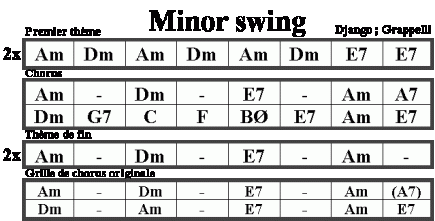
MINOR SWING

Minor_swing

The heart of Saturday night; the entire town in attendance in the days before the future happened. As the varsity football team trotted off the field at halftime they were passed by the marching band, the high stepping big redhead pumping his baton, leading the group at double time, the sax players hacking with that unmistakable honk, backed up by the sweet sugary notes of cornets and trumpets, soaring over it all like syrup. Big Jim Maggini holding the bottom steady with his baritone Saxophone, Doyle Douglas matching him beat for beat on the bass drum. Twittering and fluttering over the top like a flock of giddy birds, the flutes. Oh Madeline, Madeline, Bruce Heir and Masaki working those ‘bones, wonderful, wonderful, pounding out James Brown’s “Night Train.” The entire crowd on it’s feet whistling and applauding in time to the insistent tempo of the drum section. The booming heavy base drum and the pick-up sticks of the snare drums rattling their dry bones in the cool night air.  Coda

Richie packed his Blacktop Fender Strat, slid the case into the baggage compartment and flew off to immortality. The eighth grade girls at Branch Elementary stood quietly in their poodle skirts; devastated, they cried for the boys they didn’t know. The music died.  Coda

Hillary wore a yellow dress. She put her wild auburn hair up; I wore my one dollar Silky shirt. I picked her up in my old blue Dodge Dart surf car and we drove to the valley where the Hawaiian Kings once lived. We sat on the grassy slope of the Honolulu bowl an waited for the show to start. The band who opened the show looked like nothing we had ever seen before, long, thick hanks of hair flying off in all the directions of the compass just like Medusa, they wore bright vibrant clothes on a stage hung with Jamaican flags. Potted palms littered the floor. They shuffled around on stage picking up their instruments, adjusting mics, plugging in. Finally they gathered, stood with their backs to the audience and turning, the lead suddenly counted out, one, two, three…and “Dread, Natty Dread now. (Natty Dread)” Instantly the entire audience was on their feet dancing and swaying. Bob Marley and the Wailers. What a night. It was perfect, Hillary was perfect. I’ve long forgotten who the headliners were but the Wailers I will never forget. Today, I was grocery shopping and I heard the same song, put to a thirty piece orchestra and played as Muzak over the PA system at Von’s Market. “Pick up on aisle 6.” Oh man, too sad.  Coda

Ernie slid onto the little bentwood cafe chair, sitting under the dark green awning of the Deux Magots, he turned to the hovering waiter and asked for espresso, it being too early for a man who took great pride in the ability to put away drink. Maybe a little later a gin and tonic with Angostura Bitters. As the day warmed, other dwellers of the Paris Demimond began to stroll the Boulevard Saint-Germain, Studiously ignoring the big man at the wrought iron table in the way that the French so perfectly do, a little lift of the chin, a turn of the shoulder an inward look. A brilliantly dressed man, still in a tailored tuxedo, boiled shirt with an Arrow color, a perfectly tied bow tie, the white carnation still fresh after a long night gave the slightest of nods to the man at the table and slid sinuously onto a chair and resting his chin on his manicured right hand, with a sly look and a twinkle in his large, liquid brown eyes, said, “Hemingway,

Birds do it, bees do it
Even educated fleas do it
Let’s do it, let’s fall in love”

Ernie smiled his wicked smile under the caterpillar mustache.  “Cole, he said.”  Coda

“And in the end, the love you take is equal to the love you make.”  Coda


Thank you: Stephan Grapelli, Jean “Django” Reinhardt, The 1962 Arroyo Grande Marching Band with drum major Robert Morefield, Ricardo Valenzuela, Robert Nesta Marley and the Wailers, Hillary Weireter, Ernest Miller Hemingway, Cole Albert Porter, and James Paul McCartney.


Standard

Doggie Stories

Michael Shannon

The Farmers Dogs.

EPSON MFP image

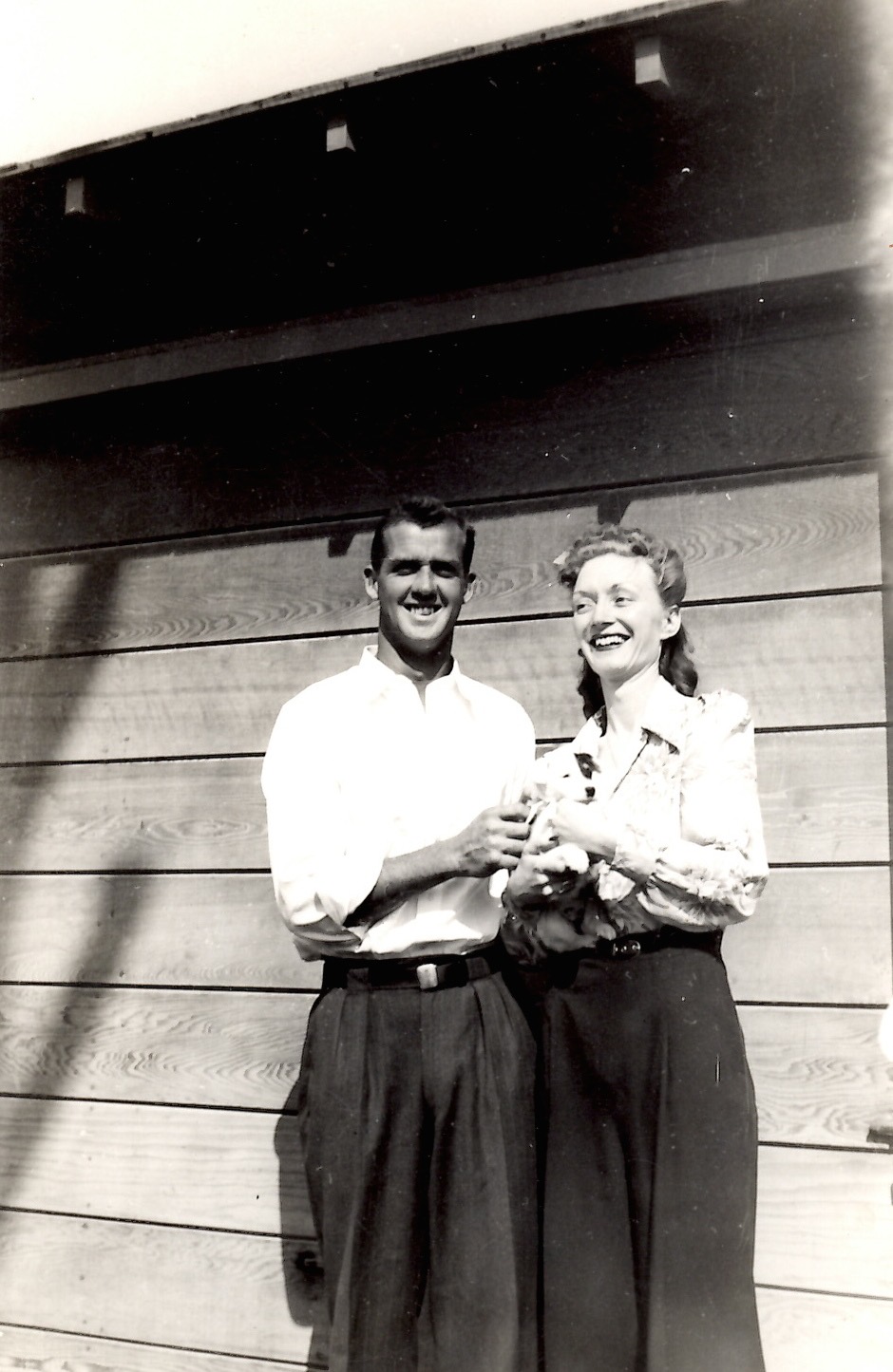
My mom and dad got a new pup when they moved from  Short Street, Arroyo Grande out to the ranch. They were living on acreage for the first time since they had married two year before. To celebrate they got themselves a little black and white pup. They named her Bitty because she was just a little bit of a thing. Dr. Case had told my mom she would never have children and the young couple needed a puppy to lavish all that care on. It was my mom mostly.

You see my dad had grown up and spent his whole life farming and ranching where dogs were treated like livestock. He and my uncle Jack had many pets I suppose, but not in the sense you know now. The cows had names and personalities just like the goat and “FLU” the pig. That didn’t mean there was any sentiment when ” Flu ” was cooked and served for Christmas dinner. The vet might be called out for livestock, they, after all, were the source of income but dogs and cats were simply left to get by on there own. Bit by a rabid skunk, the dog would die. A cat hurt in the hay bailer, same thing. There were always more, especially when you lived right next to the road. Someone would surely come along and dump their unwanted animals at the gate.

When I was a boy this still applied and we thought nothing of it. As kids we loved our dogs but they had to get by on there own. They had their jobs. Ground squirrels were their prey. At the ranch the cats worked too. If they were good mousers they got to live in the calf shed where the feed was stored or in the hay barn to keep the mouse population down. Fed just enough, they killed field mice by the thousands. Lest you think any of this is cruel, the cute little mousies nested in the hay and left their urine and waste all over it and the cattle refused to eat the contaminated food. The ground squirrels built towns in the pastures with hundreds of holes and created wastelands where the stock could not graze nor walk. Gophers in the row crops ate plant roots destroying the plants meant to feed families. Every square yard of a farmers land is meant to produce crops. It takes from 1.5 to 3 acres of pasture to support a cow depending on conditions, rainfall, cost of feed and other factors. You can see why acreage is closely guarded by the grower and his dogs.

Today, dogs are more likely to be taken to the Vet than a family member to the doctor but in those days they lived in a sort of benign neglect. When we went away for a few days, a precious thing for farm families for which vacations are essentially a mirage on the far horizon, Dad would go down to Loomis’ feed store, buy a fifty pound bag of dog food and just leave it open on the back porch and the dogs had smorgasbord just like Perry Boys All You Can Eat.” They did just fine.

In our family there is hardly a family photo without a dog somewhere in it. Over time some of them have become legends from the telling and retelling of things they did.

pat and bobby dog, 1935

Aunt Patsy and Bobby Dog. 1935, Family Photo.

Little Bitty grew up, of course and to a certain extant lost my mothers affection because the woman who would never be able to conceive, did. In fact she did it three times. In the forties nobody “fixed” a dog, male or female and Bitty was no exception. If you live on a ranch your neighbors live some distance away and the chances of interacting or even seeing other dogs is unlikely. Unless you have a female in heat and then male dogs come out of the woodwork. There are various ways to thwart these insane Lotharios, most of which consist of locking the bitch up. If you put here in the cab of a truck, the males will scratch the paint off the doors, If you try to sleep at night, the howling will keep you awake. Male dogs will kill each other over the chance to breed. They don’t get many opportunities in a life time. One time my dads solution was to lock Bitty in the second floor room of our tank house. At night the pack of neighbor dogs would circle the building like Sioux warriors attacking a wagon train, howling and barking while Bitty whined and cried in her prison tower. One night the pack killed Old Man Parrish’s Collie dog in their frenzy. Bitty, for her part, scratched and chewed at the wooden walls of her jail until one morning she made a hole big enough to crawl through and jumped, my dad said flew, through the air into a walnut tree and then to the ground and proceeded to run those male dogs on a wild goose chase. Three days later she came home, dirty, bedraggled but with a stupid grin on her face and  two months later produced one tiny little pup.

Paco was a volunteer dog. One of our field workers though Mister George’s kids needed a dog so the half grown pup joined the family. Paco was a funny looking guy of no particular breed, so much so that you could never figure out what combination of different types he might be. He was a kind of a leatherish brown color with medium length brown hair that stuck out in all directions. He was no house dog, I don’t recall him every being in the back porch, which is where dogs were allowed for feeding. Like our other dogs he slept wherever he liked. There was the seat on the Caterpillar tractor or perhaps the greatest luxury, a pickup with an open door. There were burlap sacks from the walnut orchard in the packing shed and in the warm months, plenty of weed patches to curl up on. Paco was no dilettante, he seemed never to be bothered by anything, he even slept out in the rain on occasion. I was always struck by his nobility. He was friendly enough but he never stooped to things like jumping on people or, God forbid, licking your hand or face. He didn’t bark much and barely took notice of strange people in cars. He had no sense of being a watchdog. Sometimes he would follow us out to the school bus or greet us with a wag when we came home from school but mostly he was content to just be by himself and observe his world. I was just a little kid when he arrived and was well into my teens when he lay down and died, quietly of course. He lived a long life and is remembered in the family with fondness.

Then there was Max. Max and Paco were contemporaries but couldn’t have been less alike. Max was a Fox Terrier, a smooth one, white with big tan spots. He was affectionate, intelligent, a playful dog and boy was he speedy. He could run a jackrabbit down if he could flush one into the open. The Jacks lived in our celery crops. Celery was perfect, it had tender leaves and grew in tightly packed rows where they could hide in the daytime. Remember what I said about our livelihood. Every stalk was precious and Jack rabbits could be a pest. Not only could Max outrun a Jack, he could do the thing most dogs can’t, he could turn with them. A Jack rabbit can usually escape a dog by turning on a dime which most dogs can’t do. Think of the big black SUV in the movies chasing down the guy in the little sports coupe. The coupe can turn on a dime and leave change but the SUV is a big lumbering machine thats only good on a straight road. Well, Maxie was a dirt bike to the Jack rabbits coupe.

His other job was gophers. Dad would put irrigation water down the gopher holes and when the gopher popped out, it was whack-a-mole for Max, a bite and a shake; job done. He was also our premier watchdog. Where Paco observed, Max acted. Though he weighed only about fifteen pounds and stood just an inch or two over a foot he had absolutely no fear. Turn into our driveway, really a ranch road about a quarter mile long, he’d be on you before you’d gone twenty yards. The whole distance to the house you’d be attacked by this little dog. The closer you come the more ferocious he became, attacking your front tires, snapping and biting at them with a frenzy that had to be seen to be believed. The piece de resistance, though, was as you drew near the house, he would begin jumping up and down as he ran, finally levitating even with the drivers window and barking and growling into the drivers face. People were flabbergasted. Windows were rolled up as fast as possible. This little dog was insane; people would or could not get out of their cars until somebody came out of the house to rescue them. If the whole family was in the house we’d run to the windows and watch Max put on his act and many a good laugh was had at the reactions of the people who came to visit.

Fred was my brothers dog, some sort of Beagleish type. Longer of leg than your typical beagle, he was black and white with a smattering of tan freckles on his white snout. He was a congenial dog and one of the family favorites. A good boy, he liked to follow dad wherever he went. He followed the trucks and tractors around the fields and made fast friends among the Mexicans and Filipino field workers. He was a taco lover of the first degree. He possessed a strange intelligence though, which he demonstrated occasionally.

One of our neighbors Lena Sevier raised chickens. The chickens, once known as Italians, were  originally imported from the central Italian city of Livorno in Tuscany. Livorno, in the American way was bastardized to leghorn, the name by which they are known today. You recognize them by their all white feathers. Lena’s birds were semi-wild as they lived and roosted outside and around the ranch building on her property. The chickens foraged under the Eucalyptus trees, the poison oak along the bluff and even crossed Branch Mill Road to look for grubs under Gladys Sullivan’s enormous old walnut tree. They had become wily creatures because they had to defend themselves against all kinds of predators, not the least of which were dogs. He evidently decided that a chicken dinner would be just the thing and made his way to the walnut tree. Having absolutely no experience in chicken snatching, he actually ran one down. Beginners luck I reckon. Thats not the end of the story though. He didn’t kill it but carried it home, a distance of about a half mile with the hen flapping and trying to peck him the whole way. By the time he got to the yard he was exhausted trying to hold to hen and dinner seemed to be a whole lot of hard work so he decided to bury it instead. Maybe he knew what happened to the last chicken stealing dog we had.

He went out to the back of the house near where dad parked the John Deere and set the bird down and began furiously digging a hole. The chicken immediately made a break for it and Fred had to leave the hole and run it down again. After this had played out several times, the hole was ready and he threw the chicken into it. He started nosing dirt into the hole but the uncooperative hen bolted, again making a break for freedom just like Steve McQueen on his motorcycle. Fred tried one more time but the result was the same. The writing on the wall was there for anyone to see, even a not very bright dog. He gave up and just laid down in the dirt with his head on his paws. Forget the chicken. It disappeared across the fields headed for home and Fred never bothered with Lena’s chickens again.

Clancy was a Chihuahua and he was my brother Cayce’s. He came from a line of dogs my uncle Jack had for keeping the hay barn mouse free. The little dogs were perfect for that job because of their size. When you hooked a bale and moved it just a little they would dart underneath and grab any mice that might be so unfortunate as to be there. The dogs were natural born killers. Clancy was named after the pugnacious symbol of Irishness, the fists up, bandy legged, always ready to fight Fenian devil so often portrayed in popular culture.

The Irish have taken that symbol to heart instead of moaning about an insult to their culture.  The Irish people fought everyone and when there were no invasions by the hated English they fought amongst themselves, “Every Irishman a King,” is the old saying and they meant it. Clancy was the pure embodiment of this even if he was a Mexican. He was ready to go at the drop of a hat, a mean little bugger if push came to shove. He loved only my brother, and women. Not human women but dog women. He tried to leave his legacy behind at every opportunity and when there was a dog in heat anywhere within the territory he would be there, duking it out with other much bigger dogs for the prize.

Finally my dad had had enough of him coming home beaten up, dirty, bedraggled and bloody. He vowed to start locking him up when there was any suspicion that sexual activities were on the horizon. Late one night he started acting up and clawing the back porch door to get out, moaning in his high pitched doggy voice, a sure sign that we were about to suffer another episode of sexual hi-jinks. Dad got up from his chair and said he was going to fix this so we could have some peace and grabbed the little dog and went out the back door to the grey, one ton flatbed truck he used for hauling vegetables, opened the drivers side door and threw him in and slammed the door behind him.

For a few hours peace prevailed. Quiet in the house, everyone eventually drifted off to bed. Now, every military mind knows that the best time for attack is in the very early morning when sleep is the deepest. As far away from awake as the mind can get, reaction time is slow in coming. Clancy must have somehow, in his little pea brain known this for at 3:30 AM he stood up on his hind legs, placed his front paws on the horn button  and let ‘er rip. Like an air raid siren the horn howled and howled and howled, waking everyone in the farmhouse and the labor camp barracks. More than a dozen people were startled from deep sleep by the bellow of the horn. Or maybe, the yowl from my dad as he crashed through the back door, slamming the screen so hard the handle broke, making for the truck, still in his pajamas and bare feet. He yanked the drivers side door open and Clancy shot out of the truck and disappeared into the night.

Two days later the little dog returned. He was in his usual state. Dad gave him the fish eye which Clancy returned.  Eventually they settled into a state of equilibrium, though Clancy was the obvious winner in the battle of wills. The best part of the story was the reaction of the Mexican Braceros who worked and lived with us, for each time they saw the little dog and my dad together they pointed at him laughed, saying “Mr George, el perro quiere conducir la camioneta,” while pantomiming turning a steering wheel and blowing the horn. Dad would laugh as hard as they did.

Gus or Gussie is pictured at the beginning of this story. He was a big rangy black and white indeterminate mix of flavors but my brother loved him just the same. He had the run of the neighborhood near their home up in Auburn and would run his route each day, visiting neighbors and enjoying the odd scratch and the treats offered. He collapsed last week and Jerry found out his big heart was surrounded by a cancerous tumor and he had to be put to sleep as there was nothing to be done. They were devastated and not just Jerry and Chris but the entire neighborhood. He was that kind of dog. 

My son Will and his girl Dina’s first order of business was to pick out a puppy when they decided to be together. His name was River. He was my granddog of course and got along famously with our girl Grace whenever he visited from Arizona. He like to dig holes for no reason whatsoever and was just the sort of runaround dog you can enjoy watching while sitting on the patio in Mesa. A busy beaver, a cuddly beaver who enjoyed a proper couch. My oldest boy Will, had to make the sad decision to put him to sleep today. He had some kind of immune deficiency that transfusions could not fix. 

Will and little River in better days.

A tough week in the Shannon family. There are people I cannot love, but Dogs ask nothing, don’t complain, don’t judge, don’t proselytize, and will give you their all. How can you not care for them?

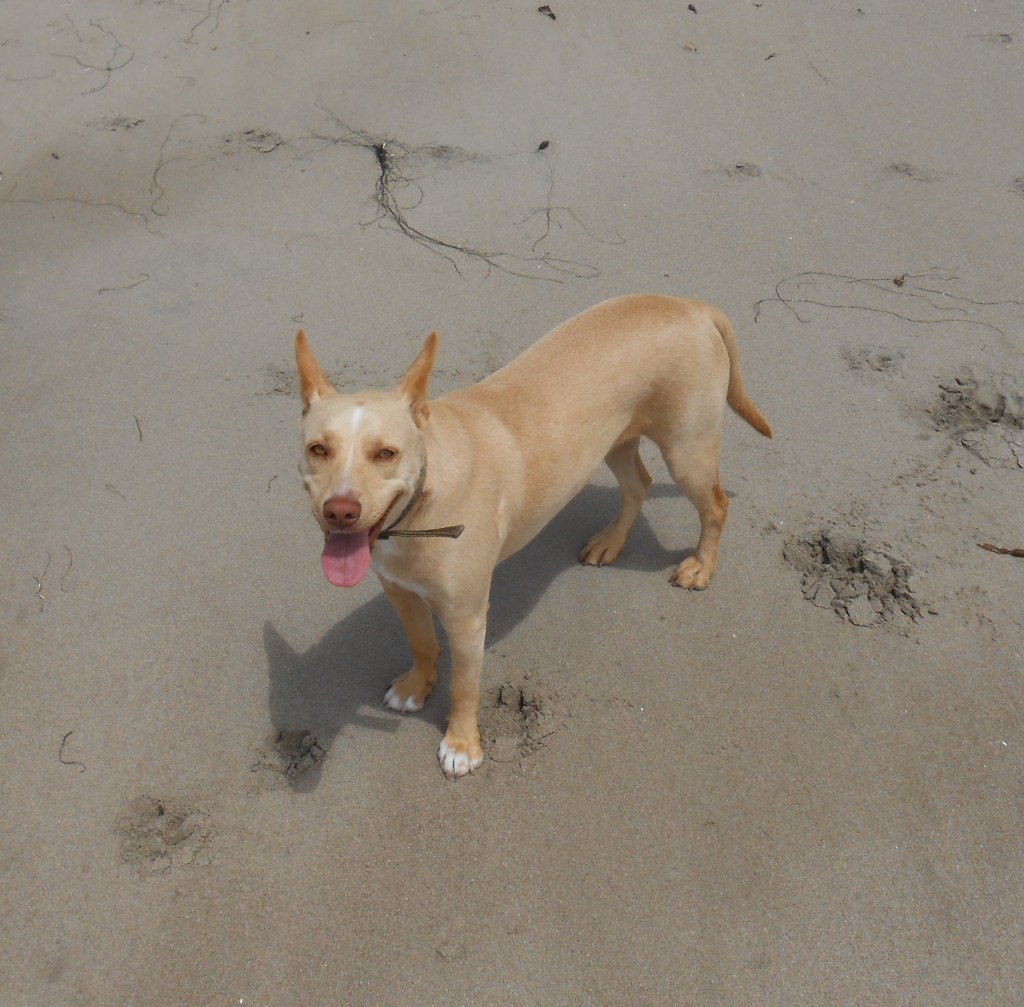
Gracie at the beach.

Dogs are especially good for little children. They teach patience, loyalty and pure unadulterated love. When they die a little bit of us dies too. But, as this story , I hope illustrates, is there will be another come into your life. Don’t forget the one gone but cherish the one here and the one to be.

Michael Shannon is a writer who lives in Arroyo Grande California.

Standard

Forging Iron

There is an island in Pacific Ocean. It is the Mecca for surfers from around the world. In the days before professional surfing transformed this place, it was peopled by young surfers from all over the world.  Many lived on a shoestring, putting up with the privations this caused in order to surf the most incredible waves on the face of the earth.

We will not say there aren’t good waves elsewhere, because there are. The difference is that there are so many high quality surf breaks in such a small place. In an eight mile stretch; a drive of just 20 minutes, are the most famous surf spots on earth. Even non-surfers know the names of the Banzai Pipeline, Sunset Beach and Wiamea Bay, just three of the many.

2nd reef pipe

In the 1960’s and ’70’s the houses that dotted this coastline were occupied by a disparate band of surfer pirate types. Boys, men and girls from California, Texas and Florida; Peru and Brazil, South Africa, Australia, New Zealand and Japan, all lived together in rental houses along Ke-Nui Road, just off the Kamehameha Highway that circles the island. Ke Nui isn’t really a street, its a little dirt road paralleling the highway, providing entrance to the properties fronting it so they don’t have to enter directly onto the main road. Hawaiian names and phrases are difficult to the translate directly to english but the two words can be explained as Ke, the, and Nui, large or big, Ke-Nui. It is an appropriate name as the little lane fronts some of the biggest rideable surf on earth.

If you drive up the highway from Haleiwa town, (house of the Frigate bird) towards Sunset Beach, passing Wiamea Bay and Pupukea road, look for the turnoff by John Steele and “Fat Pauls” house, take that onto Ke-Nui and go past Ehukai Beach Park and just beyond it, just on your left, is the setting for this little story.

It was a simple two bedroom, one bath home built in the late fifties. Like many Hawaiian homes of the era it was built for comfort not speed. The climate is mild on the north shore of Oahu and much of the living is outdoors. A big deck facing the ocean, a large grassy area on the street side. No garage and no fences, just a hedge of Oleander that defined property boundaries but allowed easy passage in the spirit of Aloha.

You could literally walk down the street, knocking on doors, asking if there was any room to rent and you could find them. During the peak surf season, houses might have more than a dozen people living in them with only the leaseholder actually having a job. People slept on couches, on the floor and in bunk beds on the sleeping porches. A little girl I knew lived in a closet. Most contributed in some way. You might own a car for transportation, or, supply food for all to eat. Some houses had banks of refrigerators owned by different people or groups. One house I knew had padlocks on their refrigerators, for the spirit of RF prevailed. Stolen food, eaten, left no evidenciary trail.

Most of the itinerant surfers had limited budgets. Money saved from a job on the mainland or perhaps unemployment insurance. Carefully parceled out you could live for months without working. Occasionally someone might have no money and grifted around, eating for free. Those that have the least are the most generous to others that have less. Some work the hotels as gardeners or maids, girls waited table, some kids worked construction and the most successful at this might make a permanent life there.

Our hero lived on unemployment, arranged with a co-operative mainland boss who would lay him off for a few months in the winter so he could journey to Hawaii. He moved into this particular house in the fall, anxious to help himself to the amazing winter waves.

The Wide World of Sports would lead you to believe that the huge waves are an almost daily occurrence. They are not. Weeks may pass between swells that produce big, rideable surf. Winters have passed in which almost no surf of that size has appeared. Conditions can change in just minutes. Wind changes velocity and direction, a new swell pushes onshore and waves can grow dramatically in size. Big wave surfers must be prepared. Depending on your experience you might not want to try big surf right out of the gate. Perhaps spend a few weeks, months or even a season or two before you try the really dangerous stuff. Up to you.

Mike arrived in midwinter. For those that don’t know him, we can say that he is not lacking in bravado. Looking like a fire plug, broad shoulders, strong legs and a forward leaning personality, he can fill a room or house with bluster and testosterone. In all the years I’ve known him I’ve never seen him show fear or trepidation. Confidence just oozes from him.

From the front deck of the house the view is from Sunset Beach on your right to the Banzai Pipeline on your left. There are many surf spots in between, Pupukea, Sandbar, Gas chambers and Rocky Point. Names that are descriptive of their nature, rocky coral and shallow bottoms, two feet of water over hard sand or in the case of gas chambers, a wave ending at a the apply named, protruding “Death Rock” which, if you surf there you must take in the possibility you may not come out at the end. These though, are essentially smaller wave spots, easily ridden with a little experience and practice. It’s the bookends of your view that really count. Sunset Beach, a world renowned very big wave and “The Pipe”, arguably the most famous surf spot on earth. Numbers of surfers have died there and many dozens more seriously injured. I suffered a serious concussion there on a relatively small day that required hospitalization. The veteran surfer carries the scars from coral head slices, the marks made are akin to being dragged across a giant cheese grater. Riding there on a perfect, big day can be the adrenaline injection of a lifetime. Of course, that’s exactly the point, isn’t it?

Never to be taken lightly, Pipe consists of both an inner and an outer reef. If you’ve seen it on TV you’ve most likely seen the inner reef, a perfect, left breaking tube that gets big enough to fit a good sized car in.  The surfers who have dominated the place are world famous. They can make it look easy as all great athletes do. They have all taken their lumps though and photos of broken bleeding surfers being helped out of the water are legion.

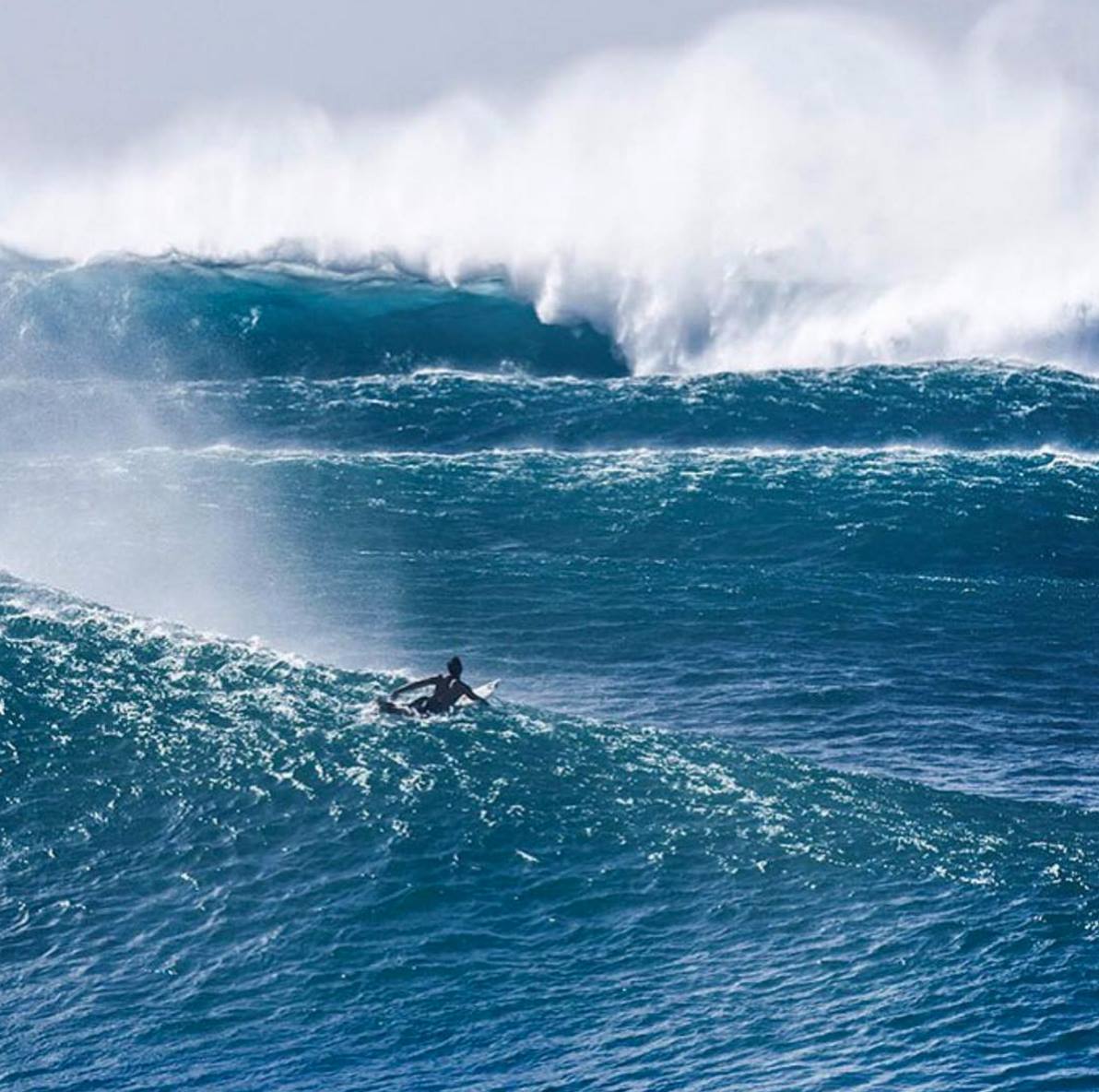
Outside, or second reef is another story. Basically the same hollow wave shape as the inner reef except its immeasurably larger. A moving behemoth of dark blue ocean that moves in a grand and stately manner toward its ultimate demise.  No one who does not surf big waves can have any conception of the fear engendered by the approach of this beautiful blue mountain with the pure white feathered crown of spume blown off the top by the trade winds sliding down the slopes of the Ko’olau Range to the east. Not many surfers brave this.

In the house, the resident surfers had watched the surf building for an entire day. Sitting on the chairs and handrail, insulting each other as young men do to show affection. Frank and Clown Boy, Steven and his wife, Spider Wills, a neighbor and filmmaker; Jim “Cat Daddy” Craig, who was studying marine geology at the University of Hawaii, Stefan Schweitzer, architect and big Norman Ratzlaff, an impossibly tall, red haired teaser. Norman’s stock phrase was “Don’t be afraid,” delivered in a sepulchral voice and applied to anyone showing the least bit of caution about anything that might be going on. Our boy had arrived in this menagerie just two days before and hadn’t yet ridden a single big wave. He had opinions though and was eager to go after the biggest and baddest waves when he got the chance.

In the very early morning, before the dawn, he awoke to an ominous rumbling and a rolling, shaking of the house. He crawled out of his sleeping bag, stumbling over the other forms lying about, carefully going up the stairs from the back porch to the kitchen. Through the kitchen to the living room, carefully avoiding the sleepers, trying to avoid scattered clothes and discarded sandals until he found the screen door. A matter of just a moment led him out onto the night damp deck where the rumbling sound became the distinct crashing of line after line of perfect waves breaking on the coral reef. Black and dimly seen in the dim light of the predawn, maximum, first reef pipeline was attacking the shore. With no morning trade winds blowing, the glass smooth waves marched one after another to their doom, cracking and spitting as tons of water pounded down upon itself in an orgy of destruction. The waves broke and the earth moved.

At first light, sleepy eyed surfers stumbled from their houses, breakfast bowls in hand, surveying the waves. How big was it, would it get bigger, could a good paddler even get out through the rip. The tidal rip was a river of water flowing east inside the breaking waves, seeking a way back out to the ocean. You had to think, am I strong enough, can I hold my breath long enough, do I want to go? At first all thoughts are kept quiet, no one talks while minds are made up, courage is screwed up, or not. Thoughtful courage in which risks are weighted against thrills or testosterone courage where no risk is considered too much to attain the end result; both carefully considered. Decisions can be made on factors other than skill level or experience. Does a dark and ominous lowering sky nuance your decision? A bright and sunny day might make a difference too, a little less trepidation on a warm and bright sunny day.

Norman; “Don’t be afraid, don’t be afraid,” begins his chant. He’s not going himself so he’s willing to test others. Boys, in particular know this device, most have listened to it since their earliest days. “C’mon man, you go first, I’ll be right behind you,” or “Whatsa matter, you scared?” The only one who spoke against the rising, vocal tide was our man. In truth he didn’t need to be shamed, he was going, it’s what he had come for. The teasing drove him forward even harder.

Every part of surfing is timing. I don’t mean just the riding either, Paddling to the correct spot, timing the take-off, staying in the right spot, which in Hawaii generally means constant paddling because contrary to what the tourist from Idaho sees from shore, massive amounts of water are in constant motion. In fact, the sea is alive, it moves in all dimensions. Just as the atmosphere moves in the form of wind, does the sea move by current.

Paddling like mad, you thrust your arms shoulder deep in the roiling water of the rip current,  sliding sideways faster than you can propel yourself outward, aiming for the small area where it was just possible to get out past the heavy breaking waves of the inside section. By a miracle of effort and shear luck our hero punched through the top of a breaking wave and made it to the outside. Clearing  the inside breaking waves,  it was an easy paddle to the second reef wave that only broke on very big days. The water that far from shore being much deeper, The initial wave tended to be a little less critical on the take-off. Bigger but slower than the inside wave, the outside is easier to catch but once caught, it becomes ever more critical, faster; in effect, cranking up the volume pass the ten mark in very short order. Imagine coming to the top of the roller coaster where the drop begins slowly and accelerates so fast that it takes your breath away and you’ve got it.

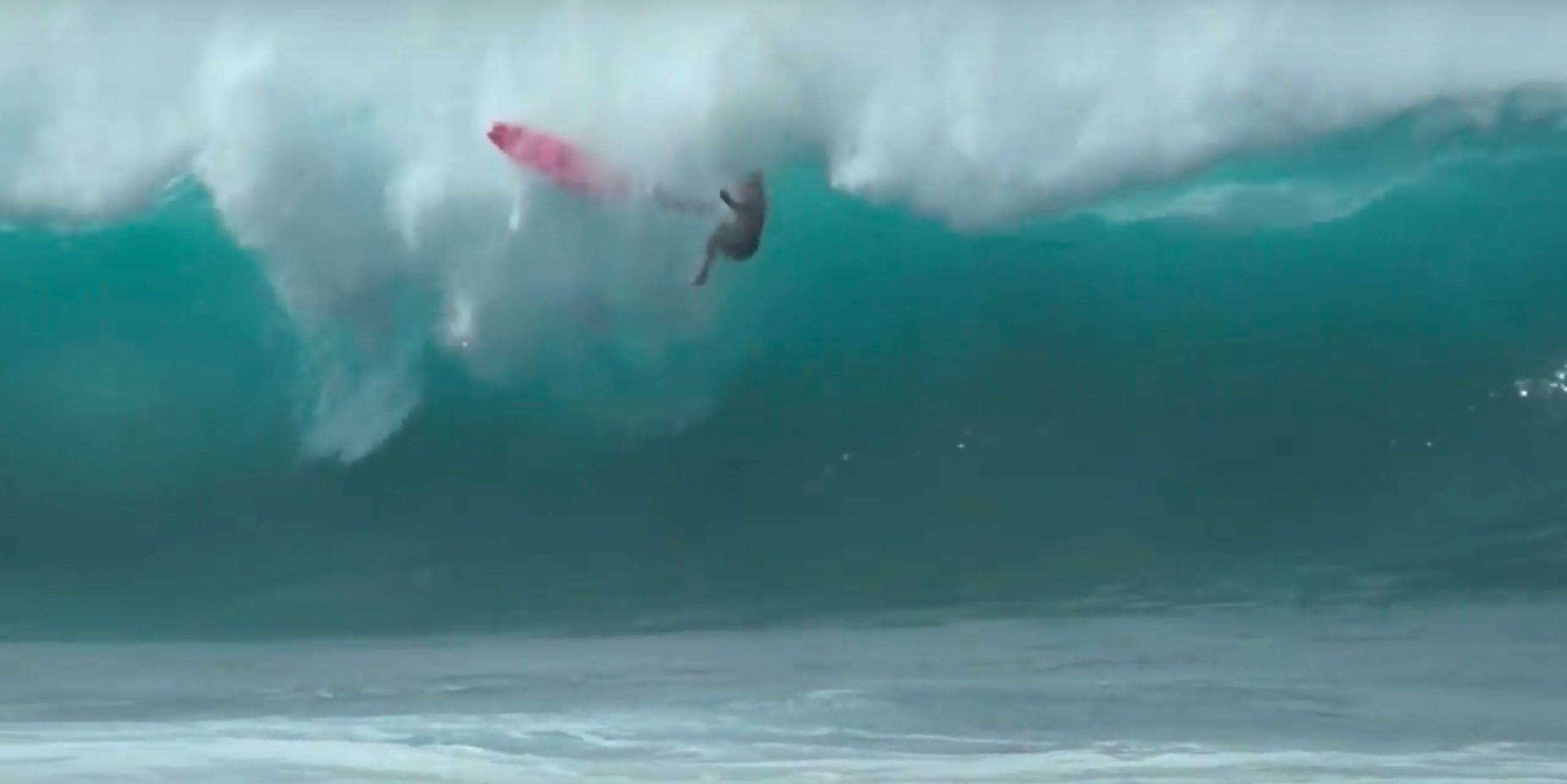
The surfers problem though, was that as the massive energy surge that created the waves moved closer to shore where the water is much shallower both the velocity of, and the power increased exponentially which meant that you must be far enough down the face with your surfboard flying at maximum velocity or the wave would simply rise up faster than you could go. The result is to be pulled to the very top of the breaking wave and then be pitched outward and downward with the crest. You are, for about two seconds that seems, like an eternity, as weightless as an astronaut. The space man is fortunate in the sense that he isn’t about to have hundreds of tons of angry ocean fall on his head and try and drive your soft little body headlong onto the absolutely unforgiving coral reef just a few short feet under water. Pipeline can, and will kill. Every surfer that tries his luck  there knows this.

banzai

As you fall, the mind is hyperactive, Thoughts moving at the speed of light flash through the brain which knows that any outcome other than the inevitable is hopeless. Relax and enjoy, the old saying goes.

All of this takes place in silence. All of the whirling spinning motion takes place without the ear being conscious of sound. It’s one of the quirks of surfing, its nearly always quiet out there, the booming and crashing the bystander hears barely registers to the man of the moment. We’ve all had that dream of falling silently through infinite space, not able to take a breath, the dream seeming never to end.

The crowd on the front deck watched all this with, at first amusement and then not a little horror as he free fell, was crushed and disappeared for long moments, that to the surfer held down by all that immense weight seems to last forever. Finally a small dot appeared in the churning spinning white foam that was all that was left of the spent wave. Time seemed to drag as Mike slowly swam himself to the shore and crawled on all fours onto the steep sand shingle of the beach. He paused for a long time, head down, still on his hands and knees, sagging slightly and gasping for a clean breath of air, then he slowly rose, stumbled to his surfboard and slowly walked up the beach towards home.

Then a strange metamorphosis occurred. As the butterfly slowly emerges from its chrysalis so did Mike emerge from his beating. By the time he got to use he was talking a mile a minute, his right eye in the twitch we all knew to be a sign of hyperactive excitement. “Did you guys see that?” “Oh man, what a wave” In just a moment he went from being dead Mike to “Iron Mike,” someone who could survive giant waves and laugh about it.

“Iron Mike.” As the days passed the experience went from black and white to technicolor. From near death to pure life, the biggest wave, the best ride, and the longest hold down. “Why, those coral head were covered with razor blades boys, cut me like glass, pounded me like hammers, held me down for 5 minutes at least.”

In a world of young single men where the art of BS, the  “Jive ” is sublime, this story was over the top. Funny at first, then the inevitable “Not again,” Reality become fantasy become yesterdays news. We’ve all surfed in those conditions, we knew the risk and the experience. Embellished and polished, the story got better but at the same time more fantastic until it entered the realm of “Jiveness.”

“Iron Mike, Iron Mike, Iron Jive,” Perfect. It was done. Forty some years later whenever the story is told, he is still the “Iron Jive.” And you know what, we love him for it.


Standard

The Written Word

atthetable2015's avataratthetable2015

I cannot remember the time when I didn’t have a library card. My mother started taking  us to the little library behind the American Legion hall on Orchard street when I was just a little guy. It was the domain of Mrs Bernice Kitchell. She was the first librarian ever I knew. She was not too tall, slight in stature, almost too thin, wore spectacles and always had her hair up. She was very nice to little boys and guided us around the tiny rooms, for the library was, at that time, just a temporary building. Being a temporary building, it is, of course still there sixty five years later. At the time it was just a simple city library, not the kind you see today, but financed by the town. Mrs Kitchell was of course paid a pittance and in return she did every job required or not. She scrounged…

View original post 673 more words

Standard

Drive In The Ruts

Farm families live in the mud. It’s a constant. The roads are dirt, the fields are dirt, there is always dirt. It’s in the house, particularly with three rambunctious boys flying in and out the door at all hours of the day. The farmer and his friends have it on their boots, it’s on the floorboards of the car and trucks, the tractors too. When the wind blows there are clouds of it. Even the dogs trail little dust clouds after themselves.

grandma eileen

Grandma Hall, not a mudder.

Our farm was located in a small fertile valley in Coastal California. It spanned the narrow valley from side to side. From the cutbank on the east side to the creek on the west. The ground we lived on had been laid down by thousands of years of rain and drifting soil, deposited in the winter floods in a random fashion dictated by the amount and time of the annual rainfall. Before cultivation the little valley stream meandered from side to side in a vast Monte that stretched from the Santa Lucia mountains to the Pacific Ocean 21 miles away. Thousands of years of undisturbed growth had created a tangle of oak and sycamore trees, bound by willows, poison oak and wild blackberry vines that were nearly impenetrable. Only the Grizzly bear passed from side to side on narrow trails they had bulldozed over the centuries. When the first Spanish explorers passed through the area in September 1769 they had to pass along the beach, being unable to penetrate the swampy valley with their 100 mule pack train. The Arroyo Grande remained the same until, in the late 1830’s, the first ranchero, Don Francisco Branch arrived and began the laborious task of hacking a life out of what was still a wilderness. Cattle were grazed on the hills and the monte was attacked to create enough space in which to grow crops. Over the decades the Grizzly was eliminated, marauding Tulare indians were discouraged from stealing cattle and fields of grain and corn were planted. A noble adobe house was built on the Santa Manuela Rancho. A small school was established for the children of the ranchero and his employees. Branch’s school was eventually formalized and officially named after the ranchero. A grist mill was constructed on the upper reaches of the creek and the road leading to it was named Branch Mill because, simply enough, thats where it went.

When the old pioneer died, his properties were divided among his children and their spouses. Slowly the valley began to grow in population. The old Arroyo Grande, Santa Manuela, Corral De Piedra and Bolsa de Chamisal land grants were divided in smaller plots and sold to farmers and ranchers. The sections were subdivided over the years until most of the farm land was broken up into roughly forty acre plots. When I was a boy, nearly every farm supported a farm family, most of whom lived on the land.  Our farm was located on branch Mill road just about three quarters of a mile from the old adobe ranch house. Just across the road, about two hundred yards away was the old bear pit where Grizzly bears were captured in the early days.

Because, over time, the creek had meandered all over the valley, the type of soil on the  farm was varied. Near the road ours was a mix of adobe, sand and gravel. Near the center of the property it was adobe mixed with lighter soils to give it an almost perfect composition for row crops. Near the rear of the property, along the creek it had a very sandy texture.  In the rainy season each type of dirt became mud except for the sand. The sand just grew firm when wet. In summertime though it was just the opposite of the muddy winter, it grew soft and you could easily get stuck in it.

In winter we lived in a sea of mud. Slippery mud, sticky, slimy mud. Mud everywhere. When it was really wet the furrows of the fields were filled to the brim with water, looking, for all the world like enormous piano keys. Parts of our roads were lakes and our driveway was a trap for the unwary driver.

Mom could not keep the house clean. Mud was tracked in on muddy shoes and boots no matter how many rules about ” Take your shoes off! ” she had. We cleaned the soles of our shoes with kitchen knives and then baked them in the oven to dry them out for the next day. Slipping on a pair of high top shoes, curled and dried by oven heat was not a job for the faint of heart. Feet are not curled upward naturally and it took hours for the shoe to soften enough to be comfortable and by that time you had to do it all over again. Hopping from place to place, trying to stay out of the ruts in the driveway on the way out to the school bus was terrific exercise. We three boys must have looked like the Russian ballet, leaping about like farts in a skillet. There were rubber boots for the fields but they were all man size. Boys risked having them sucked right off their feet if they tried to take shortcuts across cultivated ground. Once I got myself in so deep doing that, that I lost both boots and had to crawl on my stomach across the mud to keep from being entombed, I’d have merely been a fossil when the ground dried in the spring. The rubber boots were never found.

Almost all the driving in the fields was by tractor. Two wheel drive pickups could get stuck and they tore the muddy roads up which, when they dried made for a bone rattling rough ride. One winter it rained so much and continually that the fields were too soaked to get even tractors in. The celery and brocolli crops around the valley had abandoned tractors and trailers in them that had gotten so stuck they couldn’t be driven out. No other tractor could possibly get in to do the towing either. The crops rotted in the fields. At the end of every winter, there would be the occasional truck or tractor so deep in the mud that they would have to be dug out.

Farmers knew where they could go. Some types of ground dried rapidly, some didn’t. There were places that looked dry but weren’t and were traps for the unwary. Sometimes wet pasture combined with a steep hill isn’t drivable. You get stuck in a swale and you simply cannot get out. Rubber tires just spin and smoke on wet grass, and try as you might, your pickup won’t go uphill.  A walk to the house to ask for help from your dad or uncle is embarrassing because you are supposed to know about those things.

We were third generation drivers. My grandfather began driving in his mid-twenties and never really got the hang of it. He grew up with horses and was a grown man before he learned to drive. When my grandparents married in 1908, they had their wedding picture taken in a photo studio, proudly sitting in an old high wheel car that still looked like a  buggy. Autos were still a novelty then. Dad said you could spit on the ground and my grandfather would get stuck in it. Believe me, you can’t make things like that up. My dad, of course began to drive as soon as his legs were long enough to reach the pedals of a Model T Ford. He and his brother ran the milk wagons for my grandparents dairy. They did this before school starting when my uncle Jackie was 14 and my dad was 12. It wasn’t unusual in those days to see boys driving at very young ages. If your kid could work that was one more employee you didn’t have to hire. I don’t know how old I was when I first got behind the wheel. I do remember just barely being able to touch the pedals of the old ’38 Chevrolet my dad used for a field car. I do recall how it lurched because I couldn’t keep my foot steady on the gas. I could steer just fine though, I had lots of experience with that from driving wheel tractors, but if you had been in that old Chevy with me you might have broken your neck.

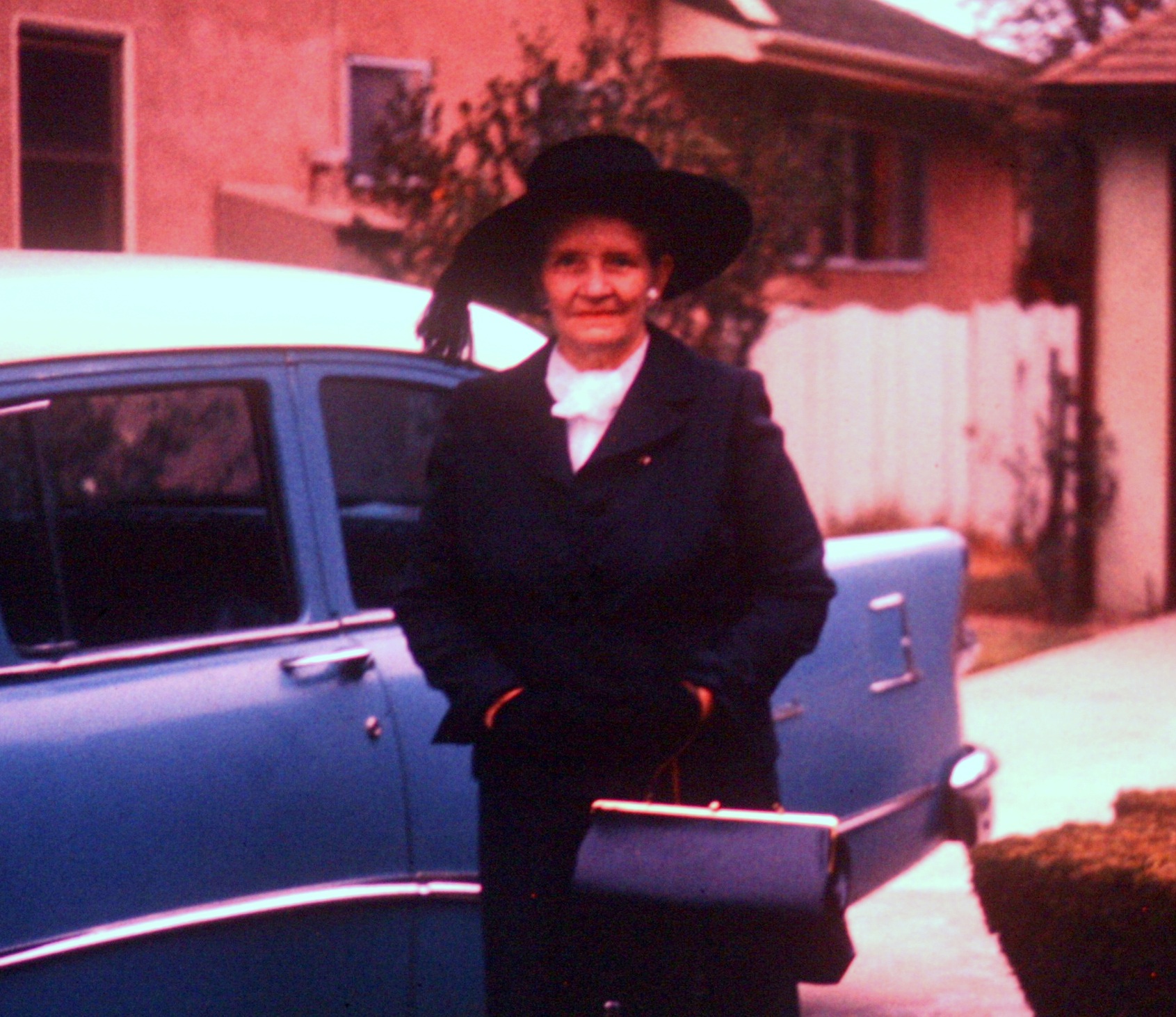
I’ve heard people say, ” Why did people build those old farmhouses so close to the road? ” Mud was the answer. Our house though, wasn’t right on the road. We had to navigate a quarter mile of muddy sloppy road to get in or out and that was no mean feat. My father had one strict rule, “stay in the ruts” he would tell people. The reason for this was simple, the ruts were packed down even though they were often underwater. The mud that looked dry had the consistency of toothpaste and was treacherous for the unwary. Get off in it and you were lost, your car sliding inexorably off the road and into the fields where you sank and stuck fast. If you got out of the car, you’d sink over the tops of your shoes and you’d be stuck too. I don’t know how many times dad cautioned my grandma Hall or my aunt Mariel to do just that, but they would get stuck “just a sure as shootin’.” Now my dad was not given to swearing much, he wouldn’t say shit if he stepped in it, but he would stand at the kitchen sink, glaring out the window, watching them trying to navigate the mud just knowing they’d slide off the road before they got to the house. He’d be grinding his teeth and mumbling under his breath the words he wouldn’t say out loud, knowing he’d soon be out in the cold with the tractor, crawling under a car, his clothes covered in frigid, slippery mud, dragging the chain to hook them up and pull them out. To add insult to injury, people would simply sit in the car and blow the horn to get his attention. He was a man who was born to help others but these events really stretched his patience to the breaking point. Putting one of his boys behind the wheel of grandma’s big, old blue tank of a Buick, he’d skid the car into the yard then help her into the house just as nice and polite as you please and then he’d say, he always called his mother-in-law Missus, ” Missus, you gotta stay in the ruts.”


Standard

BENNY THE DOG

benny

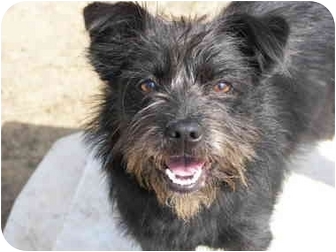
There was once a little terrier named Benny. You might say he was mine but it was just for a moment. I was visiting at a friends house in Santa Maria and the back yard neighbor, Jeffrey Fitzgerald was trying to pawn off a litter of pups. He browbeat me until I took one. I named him Ben, but he soon became Benny because of his size, I think. He seemed to be the kind of dog who would have a less than serious name. He was all black; a sleek fuzzy mutt about the size of a ten pound sack of flour. He was a good little boy, quickly housebroken and spent most of his time eating and sleeping in my house on Muir street in Ocean Beach. He was friendly and a popular little guy.

Not too long after I got him, I had to catch a ship and  was forced to leave the dog behind with my parents at their farm. They always had dogs but for the most part they were outside dogs. They didn’t come in the house. The back porch was about the best they could do. They mostly slept in the packing sheds or the cabs of the trucks,  or wherever  looked comfy to them. We even had a dog named Paco a medium sized brown mutt who never had much to say who just slept wherever he pleased. He was known to sleep in the mud when it rained. My dad was against another dog but mom turned the trick as usual. I had promised to come and get him when I returned but, as it turned out, he wormed his way into her heart and that was that. He had found a soulmate in my mother and he wasn’t going to leave her.

Benny won my dad over too, he was out the door with him in the morning and at his heels wherever he went. The farm was like heaven for a dog. There were pickups to ride in, fields of celery and lettuce where he could run up and down the rows, sniffing and looking for something to chase, tractors he could bark at and acres and acres of ground, perfect for digging, with all kinds of good smelly stuff to roll in. Irrigation ditches always had an ample supply of sticky mud. Even the hired hands got into the act and would give him parts of the their lunches and perhaps a little pat to boot. He had a yen for tamales. He was happy to get a bit of a white bread and baloney sandwich too. Remember, this was in the days when dogs never saw a vet or ate Pedigree dog food. It was cheap dog food from the Loomis Mill, table scraps and the occasional gopher. Benny didn’t have the speed to catch a Jack Rabbit, though it didn’t stop him from trying.

My mother adored him. She would hold him in her lap like a baby and feed him from a spoon. He liked to curl up with her on the couch at night while she knitted and watched TV, as contented as a little dog could be.

His mostest favorite thing though, was to hop in the pickup truck with my dad and go for a ride. If dad only went ten feet he was there.He went to the loading dock at the Arroyo Grande Trucking company every day to supervise the unloading of my dads vegetables being shipped to market. If Tim Spears or Dick dock got too close to the truck they would get a bark and a growl. He sometimes ran into the office to give Juandel a quick doggie kiss too. He went to the box company in Oceano to inspect the new pine boxes as they were loaded and he rode shotgun every morning as my dad drove into town to get the morning paper and a candy bar at Kirk’s liquor store on Branch street. The best part of the trip though, was sticking his head out the passenger side window and barking at the willow branches along Tar Springs Crick where Branch Mill Road makes the right turn after crossing the bridge between Hiyashi’s and DeLeons farms. You know the place, it’s where people used to dump their old mattresses and washing machines because they were too cheap to go to the dump. It is an old county road with no shoulders and the willows reach out with their branches just to torment a little black dog. No one trims the trees and the brush there. Just the passage of farm trucks and tractors keeps it back, so if you drive close enough they slap against the side of the pickup as you go by. This tormented little Benny and he would bark furiously, enraged by the willows trying to get in the windows. Jumping and lunging, making a terrible racket, he tried every day to drive those pesky trees away. Now, my dad, being a man of great fun, aided and abetted this activity by driving as close as he could get without going off into the creek. He enjoyed the hilarious little dog and his incandescent fuming: little dog loved it too.

Of course, one fine day the inevitable happened, one second Benny was putting on his act, growling and snapping at the branches like a miniature chainsaw and just like that, in a snap of the fingers he was gone, snatched out the window by a willow branch he managed to sink his teeth into. It took a few feet to bring the truck to a screeching, sliding stop, dad leaping out the door into the dust cloud made by the locked up tires. Thinking to see the broken pieces of the his dog, he saw instead, Benny standing, dazed and dusty dirty on the roadside, fur full of dirt and foxtails. He had some willow leaves sticking out of his mouth, not quite sure what he should do now that he had fulfilled his quest of killing a willow branch. Dad bundled him up, drove him home where mom  brushed out his fur, fed him some warm milk and cuddled him while he calmed down. The Holy Grail quest was  fulfilled. A pretty good day for a little dog, don’t you think?

When the neighbor farmers came in for coffee the next morning and heard my dad tell the story they laughed so hard that coffee came out of Manuel Silvas nose. I kid you not.

Benny soon recovered his aplomb. He still hated the willows but dad was careful to drive just a little farther away from them. Gotta be careful with a good dog. He was a tough little bugger, but why take a chance.

Standard

Rainy Day

Written by Michael Shannon

Farmers are outdoor people. They live by the rhythms of season. So we learned from our father the importance of weather. My dad lived more outdoors than in. No matter the weather, he was up and out of the house at dawn. Be it the promise of a hot August day, an April morning dripping fog or a dark winter day of pouring rain.

On the wall of our kitchen my dad always had a barometer. The thermometer was outside the back door.  We had no meter for the dew point but the humidity you could feel on your skin. In the early morning, observing the moisture on a plants leaves and even the smell of the air could be interpreted to predict the weather. The wind from the south meant rain, from the northwest meant it was clearing. The daily crop report on the radio could help a farmer see a little bit into the future. Calling the  brokers at the  San Francisco  wholesale vegetable market and asking about the bay area conditions was a help. At Mow Fung produce on Grant Avenue in Chinatown, they could just look out the window and give you a forecast. I know a farm family who called their cousins in Salinas for the same reason.

Farmers are all gamblers. They are the greatest of optimists. For my dad bet the farm on the weather and the markets every day of his working life. An entire summers investment and work could be wiped in an early morning hour by frost or rising waters from the same creek that fed his crops.

When you are a kid every day holds the promise of some adventure. Rainy winter days were the most exciting, frought with the possibility of perhaps, some disaster.

As little children we were eager listeners when family told stories of creeks flooding. The Arroyo Grande going over its banks, drowning crops under layers of mud carried down the creek from the High Mountain area above the Ranchita, Huff’s Hole and upper Lopez canyon. Joined by Tar Springs creek just below Gulartes, the careening water would swirl, twisting in upon itself while parts of broken trees submerged and resurfaced like wooden submarines. Through the narrows at the Harris bridge, close by the Machado’s and the Gregorys, the sound carried to our home almost a mile away. A rumbling, low bass,  with a curious rhythmic pace, things being torn apart and slammed together with terrific violence.

geo flood

Ed Taylor, George Shannon and just behind, John Loomis and George Oliver. Shannon Family photo ©

My father sitting in the semi-darkness, smoking and drinking coffee, worried over the rise   of the waters, a scene mirrored in other kitchens as farmers throughout our valley waited for  dawn to see the how high the creeks were. Bundled up in our coats and riding the front seat of the pickup, warm and snug against my dad, we rode the dawn patrol as he made the rounds of all the turnouts where the water could be seen. Cecchetti’s bridge crossing, The Harris bridge, under the spans at Mason and Bridge Streets and the crossing at the site of the Cienega school, hard by the old Oliver Taylor house. The photo above, taken in 1954, clearly shows the concern on my fathers face as he watches the flood waters just above the old highway 1 bridge. The water is just below the top of the dike and Ed Taylor’s ground is just on the opposite side of the creek. Ed is listening to John Loomis who is pointing just upstream where the flood is about go over the bank.

1914-ag-floodA

The Arroyo Grande, The morning after, 1914. Crown Hill in the background. SLO Tribune photo

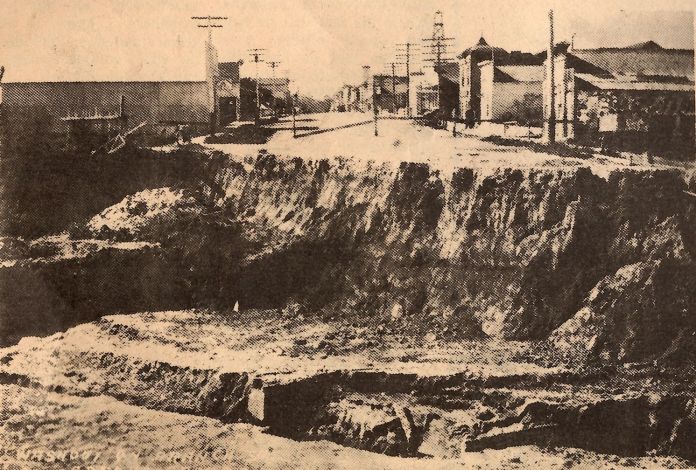
Groups of worried farmers gathered at each turnout to assess the damage and speculate whether the water was rising or falling. This was no academic exercise. If the creek rose enough to top the banks, farm fields would flood. Crops could not recover, either drowned or covered with a slurry of mud, choking them to death. Any part of the valley which had heavy soil, such as the Dune Lakes area, could take months to dry making it impossible to farm at all.  To the farmers on the ground which made up the old La Cienega Rancho, flooding was a disaster of the first order. The ranch that was Spencer Record’s, the Taylor acreage, could be destroyed in a few minutes for once she was over her banks there was no stopping her. Witness the washout at Branch Street in 1914 created by the little creek out of Corbit Canyon. Imagine the effort it took to replace the ground in the days before powered machines. Every bit of the dirt was brought in by horse and wagon, one shovel full at a time.

EPSON MFP image

1914, looking down Branch Street, the old Herald building first on the right. Herald photo. 


In those days, the flooding creek literally plowed it’s way downstream, rooting out the willows and sometimes entire Sycamore trees which scoured the undergrowth along the banks, cleaning the channel for its entire length. In the days before the dam was built this was an annual cycle that allowed a free flowing stream in the summer and fall where swimming and fishing  in the farmers dams was an annual sport for boys and girls who ran free like semi-tamed animals, migrating up and down stream as they would. At our place it was the dam behind our farm, or George Cecchetti Senior’s just above the bridge where we would go after school. It is still today, a short downhill coast from the old Branch school to the creek. Town kids swam at the gauge below the old high school, just above the old railroad bridge. Most of us learned to swim this way.  And of course we weren’t by any means the first. Generations of Arroyo Grande kids once swam there. My grandfather Jack Shannon told stories of swimming in the slough at the foot of Printz Road. Arch Beckett’s lake it was called. My dad and uncle had a small hole on Shannon Creek near where they lived.

two huckies

Jack and George Shannon 1920. Shannon Family photo ©

My uncle Jackie on the left and my dad on the right, taken in the front yard of my great-grandfather’s house on the old Nipomo  road now known as El Campo, about to set out for a dip in 1920. You can just see the gravel drive at the left and the bushes along the little creek. Today this flows behind Arroyo Grande High School where it was re-routed when the Poole tract was built in the 1930’s. It could be just as well be my brother and I, 35 years later.

I can still remember Hazel Talley, in our kitchen talking to my mom about how frantic she was when her oldest son Donald, went down the creek with Bob Rowe, leaving from the Rowe’s house, putting in at the creek on the Waller’s farm and racing downstream to the ocean in an inner tube during a big flood year in 1959. The flooding creek was a meat grinder of logs, whole trees, old car bodies and whatever kind of junk had been thrown in it. Poor Hazel could just imagine what could have happened to her son, who of course, being a boy, thought only of the adventure.

flood 3

High water above the highway 1 bridge 1954. Shannon Family photo ©

We have lost this annual cycle to the dam. Water no longer flows in the summer or winter. The creek is choked with willows and wild blackberry woven together in an impenetrable matt by poison oak vines. Children no longer play in their fathers little ponds and todays farmers needn’t agonize through the night wondering if their fields will be there in the morning. Safer, yes, but what has been lost to us is irreplaceable. Fish no longer swim upstream for little boys to catch and even though our fathers disasters can no longer be, there is a certain sadness here.

Michael Shannon is a World Citizen, Surfer, Sailor, Teacher, Builder and Story Teller. He lives in Arroyo Grande, California, USA. He writes for his children.

E-Mail: Michaelshannonstable@Gmail.com

Standard

Aretha

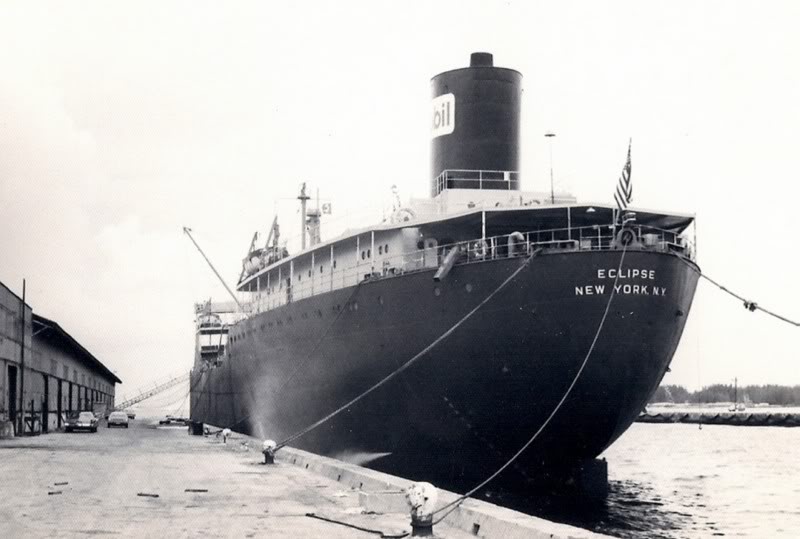
EclipsePhototakenin1973whileinMobil

By Michael Shannon. For my friend Joe Hubbell whose only vice is music.

After my hitch in the Navy where I assiduously avoided sea duty with every ounce of cunning I had, I joined the U S Merchant Marine. I’m not sure why, but I needed a job.

You can’t really compare the two services. The Navy crams hundreds of sailors into tiny spaces, spends months at sea with, many times, no apparent destination and nobody tells you anything. The pay is peanuts and you don’t do anything without some kind of permission.

The Merchant service is the opposite. The ships are just as big but with very small crews. There is no uniform, not even for the officers. You always know where you are going and when you will get there. What you do ashore is your own business and is only limited by how long it take to turn the ship around, by which I mean unload and reload cargo. Duty is fairly easy most of the time. It’s a little cold in the gulf of Alaska in the winter and the decks get warmish in the tropics but most of the time it’s pretty pleasant.

I shipped with a typically motley crew. The deck division, the Able Bodied and Ordinary Seamen were responsible for the upkeep of the ship, cargo handling and standing both underway and port watches. The ship owners are only concerned about the movement of cargo so maintenance is a pretty low consideration. Chip a little rust, slap on some paint and find something better to do. If the deck plates are so badly corroded that someone might step through the deck and fall into the hold, just weld a few stanchions around it, attach some chain and tell every one to walk around it.

The Bos’n was named “Pinky,” he had very fair skin and as a young sailor he sunburned easily, hence the name. Big Ray had earned the distinction of being torpedoed twice by the Japanese in WWII. Maybe that why he and his wife had 10 kids. Spread the risk around so to speak. Don was just about my age and was also a Navy Veteran. He grew up on the hard streets around Hill Top Park, Long Beach. He was raised by an Aunt, a nurse, served his four in the Nav’ and joined the MMS, same as me. We cruised together quite a lot when we were ashore.

Shore leave in the merchant service is plentiful but its seldom in places where there is any cultural opportunity unless its of the low kind. Consider where tank ships tie up; National City, El Segundo, Terminal Island, Port of Oakland, Longview on the Colombia River, Anacortes or Bellingham Washington. We put into in places like Rosarito Beach in  Baja Norte, Barber’s Point, Hawaii, Ventura and Estero Bay where the ship pumped from an undersea line and no one got off. Where do you go in Avila Beach, Barbara’s by the Sea? Most places we docked featured dirty old bars that smelled of spilled beer, cigarette smoke, worn out people on the stools, girls on the stroll, dead ends. You can have a beer, play some pool and try and not get in a fist fight with a local. How about Drift River Alaska where we tied up to an offshore platform and the ship was surrounded by ice flows in the winter and a gazillion bird sized mosquitos in the summer. Two days there and you might wish for that smelly old bar.

Opportunities to do something different were few and far between, but they did happen. In March of 1971 we slid under the Golden Gate bridge, passed Alcatraz on our starboard side and tied up at the Rodeo oil terminal at Davis Point up in San Pablo bay. We were off loading and would run in ballast for Drift River, Alaska. Donnie and I both had the night off and so we went down the gangplank, walked up the pier where we called a cab from a pay phone and got a ride into Oakland. We were dropped off in whats now Jack London Square.  Even then no one went into south Oakland unless they had a death wish so we just tooled around a little looking in the windows. As we waited for the light at 2nd and Broadway we noticed, tacked to a pole, a poster advertising a show at the Fillmore West in San Francisco that night. We decided to go. Easy enough, we just took a bus across the bay bridge to the downtown San Francisco bus terminal at Mission and Howard streets. Then still known as “South of the Slot,” San Francisco was divided midway by the Slot. The Slot was an iron crack that ran along the center of Market street, and from the Slot from which once arose the hiss of the ceaseless, endless steel cable that was hitched at will to the cable cars it dragged up and down Market. The cars were no more, replaced by electrified buses but the name remained.  North of the Slot were the theaters, hotels, and shopping district; the banks and the staid, respectable business houses. South of the Slot were the factories, slums, laundries, machine-shops, boiler works, and the homes of the working class. The Slot was completely burnt out in 1906 but in true San Francisco style, sprung up like an overnight mushroom. No time to worry about permits and building codes, commerce will out every time. It’s very seediness was it’s charm I guess, though the Navy liberty buses passing through the Mission District from Hunters Point Naval Shipyard had heavy wire screens over the windows to protect the sailors from bricks thrown by the local residents.

We walked from transit center up to the corner of Market and 2nd, then turned up uphill and dawdled along for the 11 or so blocks to Van Ness. We passed streets whose names date back to the earliest days of the old wood and canvas town, Turk, Powell, Ellis and O’Farrell. “The City,” Queen of California, the most beautiful city in the West. The old City of Paris, Gump’s department store, the Palace Hotel, The old Call newspaper building, and the great Fairmont hotel, built by the “Silver King’s” James Fair’s daughters in his memory and reinforced by Julia Morgan after the ’06 quake. Our destination, on that triangular corner where Van Ness crosses Market, the nexus of rock and roll, jazz, bluegrass and gospel, was the old Carousel Ballroom. We were there for a show.

Looking for a larger hall for his shows, Bill Graham had moved from the old Fillmore on Geary to the Carousel at 10 Van Ness, calling it the Fillmore West. Locals affectionately still referred to it as the Carousel though. Graham filled San Francisco with sound. Any touring band worth their salt were booked into one of his halls there. Home town groups like the Jefferson Airplane, Sons of Champlin, Quicksilver Messenger Service and the group that became a symbol for the city, The Grateful Dead played  the Fillmore. Otis Redding,  The Staples Sisters, and blues groups out of Chicago and Detroit City, like Paul Butterfield and John Lee Hooker. And Miles Davis. I had been to a concert the year before when his group opened for Laura Nyro. That band featured drummer Jack DeJohnette, Airto Moreira, Keith Jarrett and Chick Correira and did they cook. One of the best jazz groups ever put together and each famous in his own right. You had to follow that with Laura Nyro’s sweet voice the same way you had to take an Alka Seltzer after a night of serious drinking.
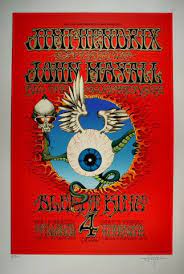
griffin poster

Liberated from a telephone pole in San Francisco. Authors collection.

Our night. We bought our tickets and strolled inside. In those days, the floor had few seats, you could move around during concerts as the mood seized you. The earlier you got in the closer you got to the stage. It was a happy crowd. All the Hippies had their freak on, the girls dressed in prized clothing from thrift stores, The boys in Top hats and tails. Everyone was expecting a good show. The last night of a tour is always the best. The bands are really tight from long practice and they know the next day is for home. They are happy too.

The opening act was from Oakland, just across the bay, what we called a horn band in those days, not well known, but they moved the crowd. They were one of Bill Graham’s contract groups and still a couple years away from famous. Tower of Power.

After Tower of Power the main acts began to appear on stage, the roadies moving equipment, pushing the big Hammond B-3 Organ to the back corner of the stage, The Fender Rhodes keyboard upstage. They quickly assembled Bernard Purdie’s drum kit, the instrument stands and the mikes in a choreographed ballet polished with long familiarity.

Band members began to drift on stage and take their places, a few drum rattles, keys turned, guitars tuning as sounds were matched and finally when everything was in place the Kingpins marched on stage, accompanied by the Memphis Horns, took their places and without a pause, in response to some subtle signal, launched into “Memphis Soul Stew,” followed by Procol Harems’s “Whiter Shade of Pale.” Baby, the crowd was getting’ really wound up, this was some kind of music they weren’t used to.

And finally she’s there. She struts onstage wearing a white pants suit with a wide gold belt and a rasta man beanie, grabs the mike on the stand, swings it left then right, and shouts, “Allright?” flips her hand a little to cue the band and its,

What you want, baby, I got it
What you need, do you know I got it?
All I’m askin’ is for a little respect when you get home…

…and everyone is on their feet. The “Sweethearts of Soul”, grooving, Billy Preston’s hands flying over the organ keys, King Curtis’ Saxophone, it’s distinctive honk a counterpoint to Aretha belting it out.

The delivery of Paul Simon’s “Bridge Over Troubled Waters” hymn was a gem. Her covers instantly make the originals obsolete, “Make it With You,” “Eleanor Rigby” and “Love the One You’re With.” One way of looking at those song choices is that Aretha was reminding everyone that there was no song she couldn’t improve. She takes you inside the church where Eleanor Rigby is sweeping up after someone else’s wedding, she makes you feel her aching back, her despair.  She shows Stephen Stills what sexual agency really means. She even makes Bread’s “Make It With You,” that forgettable soft-rock schlock sound deep.

Being in the audience was exhausting. No one ever stopped moving. Finally, near the end, Aretha came down into the audience and pulled an “impeccably dressed” man from the audience and up onto the stage. He was dressed in black from head to toe. His eyes were hidden by wrap-around dark glasses. She led him to the stage, sat him down at the Fender Rhodes and within seconds we recognized Ray Charles. The huge crowd went crazy. Ray joined with Aretha in the closing and, to become legendary, 10-minute rendition of “Spirit in the Dark.”

Never, ever have I experienced anything like Aretha at the Fillmore. It wasn’t that the hippies just liked her. They were out of their minds. They were completely lost in her.

It was March 7th, 1971, a Sunday night in San Francisco. The new American Dream is falling apart; Tin soldiers and Nixon coming, the Vietnam war is spreading to Cambodia and Laos, the boys are coming home in boxes, the utopian ideal of the sixties is breathing its last. The Haight is drowning in drugs. The venue whose rafters Aretha is currently rattling, Bill Graham’s Fillmore West, will close its doors forever a few months after this show. Disco lurks. These are some terribly troubled waters, and it takes a singer with Aretha’s forceful kind of grace to calm them, at least for one night.

Goodbye sweet and God Bless. We will miss you.

Michael Shannon is a writer, former teacher and a tattered survivor of the sixties.
Standard

BIG RED

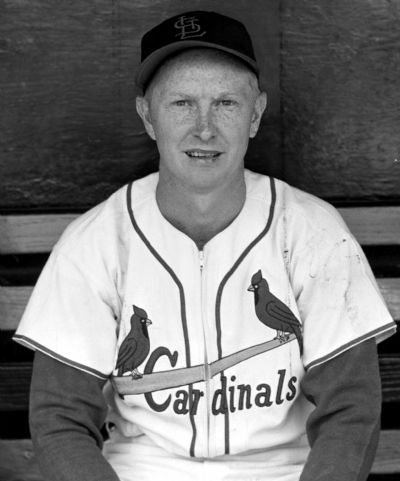
Red Shoendienst died today. He was 95 years old. A professional ballplayer, 19 years with the old Saint Louis Cardinals. Though I never knew him personally he was one of the threads that connected me to my dad.

red

When you are a kid there is always teaching going on in the home. Mom and Dad are at it constantly. Now, when you are little you don’t really notice it but it’s always there. They are sculpting the clay while it’s still soft, building the adult you will be.

We had a kitchen table then that was shiny chrome in it’s legs and trim with a grey laminate top printed in a marble pattern. Nearly every family I knew had a similar one. They were modern and I believe mothers were tired of wood. You didn’t have to polish these, they didn’t dent or stain and in the 1950’s, if it didn’t have chrome it wasn’t “it.”

That shiny stuff was everywhere. Our Buick carried about a ton of it. The Sunbeam toaster, the mixer, saucepans, even the the salt and pepper sellars. The Art Deco shakers were put away in the back of a cupboard, not to see the light of day for fifty years.

Holding pride of place on the table was my dad’s radio. There were different kinds over the years, the last being a little transistor you could hold in your hand. The one most remembered was a small Philco. It was the size of a shoebox and was kind of a maple-ly color, lighter than a maple donut and darker than chamois. The dial was round and placed in the middle with little speakers, one on each side. The speakers were covered with a sparkling fabric and the circular dial had three, yes, three concentric rings. Each ring was a different radio band but the AM band was the one we used. AM radio, or Amplitude Modulated, travels much farther than FM and UHF. It is possible to actually bounce radio waves of the ionosphere and send signals around the world. It seemed magical to me as a child because I didn’t understand it. Neither did my father but, as an adult, he was content to listen and not worry about how it worked, it just did.

The great feature of this modulation was that radio stations, known in those days before cable as clear channel, could broadcast great distances if they were powerful enough. Few of these big boys are left now but at one time their signals could be heard in every corner of America. KNX and KFI in Los Angeles, KGO San Francisco, KSL Salt Lake City, KMOX in Saint Louis and XERB which operated out of Tijuana, Baja Norte, Mexico DF. when I was in high school it broadcast Wolf Man Jack into homes all over the west. Well, maybe not all homes, but millions of teenager’s old cars.

In a way little remembered today, radio connected peoples around the world. Not always positively either, The Imperial Japanese Navy used the radio signal from Honolulu’s KGU to home in on the island for the attack on pearl Harbor. If you lived in Arroyo Grande then and been tuned to KGU you may have heard the original broadcast. Three thousand three hundred twenty five miles as the crow flies, a long distance.

I don’t recall dad listening to music though he did love it, the radio was more of a tool than a source of entertainment. In the fifties a farmer needed radio for many reasons. Dad would stay up very late on winter nights to listen to the weather reports, hoping to hear good news, not bad. Farmers lived by frost reports, dew point, clouds, wind, worried about calamity that they had no way prevent. Adverse combinations of these can produce killing frosts which wipe out entire crops, in effect flushing your entire investment down the drain. The daily market reports out of San Francisco and Los Angeles kept him informed on vegetable prices and quantities. We didn’t use it for news much, life for the family was outside and time at the table was limited. News came from newspapers, local and big city.

Television didn’t arrive in our county until 1954 and it was awhile before we had one. Radio was how we connected with the world outside.

Dad played several sports in high school and college and followed his favorites. Basketball and baseball were his sports and the only way to follow it was by radio. The basketball team, the Lakers didn’t move to Los Angeles until 1960, two years after the baseball Dodgers. He followed the Boston Celtics, Shannon is our name you know. For baseball it was the Cards, the Redbirds, the Saint Louis Cardinals.

I sat at that table for years listening to baseball on the radio. The Cardinals came via KMOX in Saint Louis, Missouri and sometimes KSL in Salt Lake City. Dad loved the Cardinals, not because he was a rabid baseball fan but because when he was a young man they fielded a team fondly known as the Gashouse Gang, which seemed to be the epitome of the baseball teams that were primarily working class men. Not the “Boys of Summer,” as Roger Kahn wrote but the sort of men that came from hardscrabble farms and down and out southern towns where opportunity was scarce and a boy that could throw, hit and field might find a way out. No more picking cotton, no more steel mills or lead mines, no more endless drudge in a job you had to hate or even die for.

Take the “Ol Diz,” Dizzy Dean who hailed from Arkansas, a hillbilly by geography if not by choice, he won 30 games in 1934, a feat only equaled once in the past 84 years. The Cards won the world series that year, the same year my dad graduated from college. It was a national event when baseball was still the only real national pastime. The Tigers were an classy club from Detroit and they were beaten in seven games by a team of scruffy, tobacco chewing, fist fighting characters with dirty uniforms and a very, very bad attitude. Thats how the old boys played, spikes up, bean balls and real, on the field fights. Dizzy and Daffy Dean, Dazzy Vance, Pepper Martin, Leo “The Lip” Durocher, Ripper Collins, Pop Haines, and Frankie “The Fordham Flash, They scuffled, fought each other in the dugout and won a world series. How could you not love “em. Maybe, just from my dads point of view, their chief attraction was they didn’t really play for money ’cause they didn’t make much in those days and the fact that a baseball career in almost all cases were very short, perhaps just three or four years, they eventually went back to working lead mines, painting houses and tilling the soil. This resonated with people in the depression, ballplayers might be famous, there were seven hall of famers on that team, but nevertheless, they likely were just like you. Might even be your neighbor too.

As we listened to the games, and I did my homework and dad spoke to the character of ballplayers the way he spoke of all men. He admired the work ethic of “Stan the Man” who worked in the steel mills of U S Steel as a youth and saw his own father die from the poisonous smog of 1948 that killed almost a hundred people in his hometown. The sulfuric acid, nitrogen dioxide, fluorine, and other poisonous gases that usually dispersed into the atmosphere were caught in a temperature  inversion sending hundreds to the hospital including his father. Enos “Country” Slaughter typified the determined spirit and hustle of the game. “Baseball was the mirror of America,” dad said and in this sense Enos Slaughter was more than a consistent hitter with an accurate arm. He was also a reflection of the times in which he lived and played the game. He was raised on a hardscrabble farm in North Carolina and often said he developed his throwing arm by killing rabbits with rocks, for dinner. Red Schoendienst was the son of a coal miner and grew up in a house without electricity or running water. A high school dropout, he joined the CCC in 1939, played sandlot ball and was signed by the Cards in 1942 for $75.00 dollars. For the next 72 years he played and worked in baseball.

What was passed down here were lessons on hard work, perseverance, honesty and, most of all the transitory nature of things. Ballplayers are one swing of the bat away from the end of their careers each and every day. “It’s why those other values count,” he said.

So, we would sit there at the table with the little radio talking to use while he doodled figures on the back of an old envelope and drank coffee. I did my homework. We spoke of baseball and he picked up hints from the game to illustrate what he wanted me to know. A quiet word here and there was all you might hear.

When I was older and wiser I came to understand that the characters he used for illustration were as flawed as any other men. Somehow knowing that made the qualities my dad pointed out stronger than ever. You could be both good and not so good, weak but still strong. Knowing that helped me sort out problems and relationships that I was going to encounter for the rest of my life.

To use a baseball term, “Dad snuck one in over the outside corner for a called strike.”


Standard

The Street Cat

He was big, orange and had lived on the street for a long time, a survivor. A tomcat’s life is short and brutal you see, and you won’t live long by being friendly with strangers. You would see him ankling down the middle of our street any day, rolling like a drunken sailor on shore leave. I’d find him sleeping on our old Adirondack chair’s cushion in the early mornings. Some days he would still be wet from the morning dew which sparkled on his fur like tiny chips of amber.

cheetos

He was wary. I’d take my coffee out in the morning and stand by him and talk of the days plan, ask him questions while he just watched me. I never knew if he understood a word I said but gradually the morning ritual took some of the edge off and once in a while he would let me touch him as long as I didn’t move too fast. He had fur like the bristles of a hairbrush, slightly stiff and of different lengths as if he’d been shaven by a drunken barber and the hair had never grown back quite the way it was supposed to. He carried the scars of every battle he had ever been in, his ears as tattered as any Civil War battle flag.

Slowly we developed a tolerance for one another. He would greet me with a low meow that came rumbling up from his chest like a rattling, rusty chain. It was the kind of voice that was worth a fortune in Hollywood. It was Long John Silver’s voice, raw, dreaded and with a subdued power that frightened other cats. My dog Lucy gave him plenty of space too. She knew an emperor when she saw one.

Over time he became a staple on Poole Street. He went to different homes at times, accepting, as was his due, food, if it was offered. He didn’t beg. You could give him a little something and he might eat it, or not, as the mood struck him. Somehow he acquired a name, Cheeto’s, I suppose for the color of his fur. But, you understand, it wasn’t his real name, his cat name. Nobody knew that, though I imagined it to be Vercingetorix, destroyer of rats or Grimalkin, the great stainer of carpets, or some such noble nom de guerre. Surely a sobriquet of distinction. He was a true thing.

In the year I knew him, he never came in our house. He would be on his chair or in the garage waiting patiently for me to serve him. He never, ever used the cat door. It would require him to show some deference to those that lived here and that would never do. He would park himself in the middle of the street on cold winter days because the pavement was warmed by the sun and he thought it was the best place to be. He barely acknowledged cars, they must go around, and they did. Monarchial, he was too. Not the foppish, beribboned Louis Bourbon with his oiled ringlets and silk stockings but hard and resolute like Henry V and his band of brothers or the warrior king, Brian Boru of Ireland the founder of the O’Brian Dynasty. No other Tom came into his little fiefdom of Poplar, Sage and Cedar streets.

Birds were beneath him, he let them be. Mice were for lesser cats. All dogs kept their distance, even my son’s friend Joey, and his gigantic Blue Great Dane. None of the neighborhood dogs ever made a move. Not Marley, Bobby, Gibson, or Bella. They stayed within the dog world and pretended they just didn’t see him. The fish in our pond were safe. No raccoons were allowed. Opossums too kept their distance. Occasionally, in the early morning I would find one pretending to be dead in our back yard. Such was his power.

Niccolo Machiavelli wrote that there is nothing more difficult to take in hand, more perilous to conduct, or more uncertain in its success, than to take the lead. You are the first in line for trouble.

We are in a terrible drought here in California. You may be surprised by the things drought brings. There is little feed for the wild things that live in our hills after nearly a decade of no rain. The springs and seasonal creeks have long been dry which forces animals to come down to feed and drink in the suburbs and town. There are small critters and even deer foraging in back yards and the high school ball fields. Following the deer and rabbit are the cougars. Seldom seen but nevertheless stalking through the late night seeking the unwary. Most opportune is the coyote. Bigger than the red fox and smaller than the grey wolf, this wild dog was known to the Nahuatl people as “Coyotl.” The name was first transcribed to english in 1824 as “Cayjotte” and standardized by 1880 as Coyote. Famed by native cultures as The Trickster and featured in many creation myths, coyotes are social and usually hunt together. It’s not particularly unusual to see them on city sidewalks in broad daylight and even in the state parks along Pismo Beach.

Crossing our street at dusk, going from our yard towards the Russian brides house, the old man ran into a pair of them. They stalked him, moving, as they do in a head and tail down posture, mincing almost sideway with both the head and tail facing the intended. It might seem to the victim as if they are being friendly, showing subjugation, much as a dog does when approaching a more dominant animal. Its a trick. Cheeto’s was in very big trouble, caught in the open by predators who intended to make a meal.

He broke for the Volvo parked on the street, hoping to escape underneath it but one of the coyotes cut him off. He backed himself against a front tire and shrunk down to make himself a smaller, more difficult target. He could not run. With his back to the tire he prepared to sell his life dearly. Like Roland at Roncevaux, he declined to scream as it would be an act of cowardice. The coyotes lunged.

I found him in the morning, his back broken; eaten. I gathered the scattered fur, and all that was left of him. His massive paws, soaked in blood, said he didn’t go down without a fight. His clenched jaws held bits of Coyote fur. He didn’t make it easy.

I buried him in a wooden box in the back yard, under the Angels Trumpet where he can smell the beautiful yellow flowers, especially in the springtime when they are strong; where he used to lay in the adirondack chair, content.

A pearl among cats. He was a bravo.


Standard