Chapter 22, Out of State
Michael Shannon
Grandpa called her the “Oil Hog.”*
This story is not really about a trip to Montana in 1938 to drill an oil well as much as it is about certain women in my family who always had their sights set on the far distance. Dreamers and carriers of hope in baskets. They saw something off in the far distance that drew them outward and forward.
In the mid-thirties Signal Oil Company was developing along sevral lines of business in an attempt to survive. Like many companies in the boom and bust business, whichever it might have been, growth was the only bastion of continuance.
By 1938 Signal’s primary business was refining. In order to refine they needed crude oil which they cracked and distilled and supplied to the filling stations that Sam Mosher had acquired up and down the west coast. The key to it all was oil and that meant control of enough wells to adequately supply the refineries. Drilling the first company well at Hydrocarben Gulch in Goleta had been a success, a near thing but still a series of good producing wells. Carefully buying up likely leases or abandoned wells in Long Beach, Santa Fe Springs and in the Elk Hills around Maricopa he had developed a sort of insurance that allowed the company to assure a steady supply of crude.
Mosher and his team were one of the first west coast outfits to pursue serious vertical integration. This is a strategic business model where a company gains control over multiple stages of its supply chain such as production, distribution, and retail, rather than relying on external suppliers. By acquiring or developing these stages, firms improve efficiency, reduce costs, enhance quality control, and insure supply chain stability.
To that end Signal was casting a net of geologists far and wide across the US looking for possibilities. For a primarily west coast operation they saw that expanding their map could be a positive move. Mosher acquired a number of wells in west Texas. In May of 1923, diggers struck oil in Big Lake, and it became the first commercial oil site in the Permian Basin. The discovery of oil in the region propelled Big Lake into a thriving oil production center, and the area still has a rich history connected to the industry to this day.
The first big Wildcat in Big Lake was the so-called Santa Ria No. 1, which was named for the Patron Saint of the Impossible, was the first commercial oil site in Big Lake. Wildcatters who live by boom and bust have a perfectly tuned sense of Irony as can be seen by tales of life along the cutting edge of discovery. Lucky Seven, Devils Hole and Six Shooter being examples of Oil Patch whimsey.
In September of 1938 Bruce and Eileen were living on Short Street in Arroyo Grande while Bruce tended wells from Maricopa to Casmalia where he first started in 1919. He was on the road all the time flying back and forth on a moments notice when word came down from headquarters in Long Beach that he was being sent to Montana. He was to take over drilling operations on a new well outside of Billings Montana. Just like all the other moves they packed up, rented out the house and hit the road. Bruce Eileen, Bob who had just moved home from his sister Mariel and her husband Ray Long’s ranch where he had gone to live and attend Sierra high school, the idea being that he would not be moved around as much as the girls had. Patsy who had just turned six was along for the ride too and don’t forget, Mister Beans the Boston Terrier who sat on grandma’s lap for the trip.
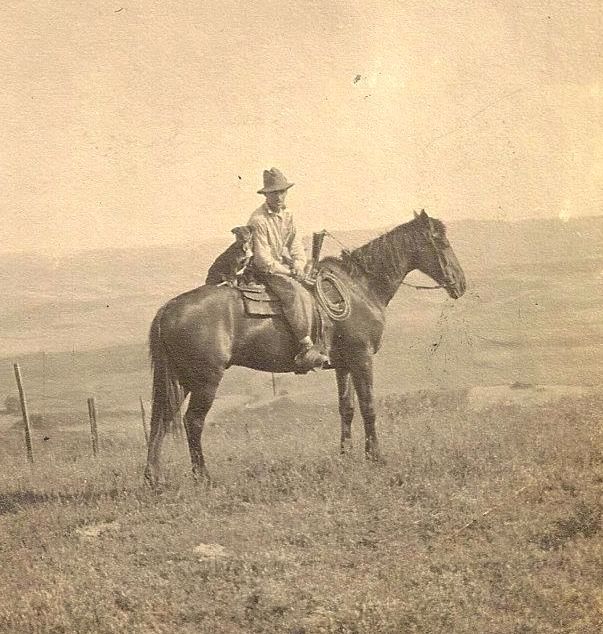
Robert (B0b) Hall up on Brownie with Bobby dog, Miramonte, California 1937
It was a long lonely trip by car. What was once referred to as the wild west was stil lightly populated and the road to Montana was long, lonely and mostly unpaved. In fact there was no direct route between central California and Billings.
Flying was also out of the question. There was no direct air service from California. Only Northwest Airlines flew to Billings and that was from Seattle to Chicago with a stop in Billings. The plane itself was a Lockheed Electra model 10 which had famously carried the aviatrix Amelia Earhart to her doom the year before, not an uncommon thing at the dawn of commercial air before radar and GPS.
In any case paying for a flight to the middle of nowhere wouldn’t have been the company way so drive it was. There were only two ways to go, north to Portland along highway 5 then east up the Columbia River. Turn at Umatilla, go north again to Holmes Washington and then head east again towards Spokane.
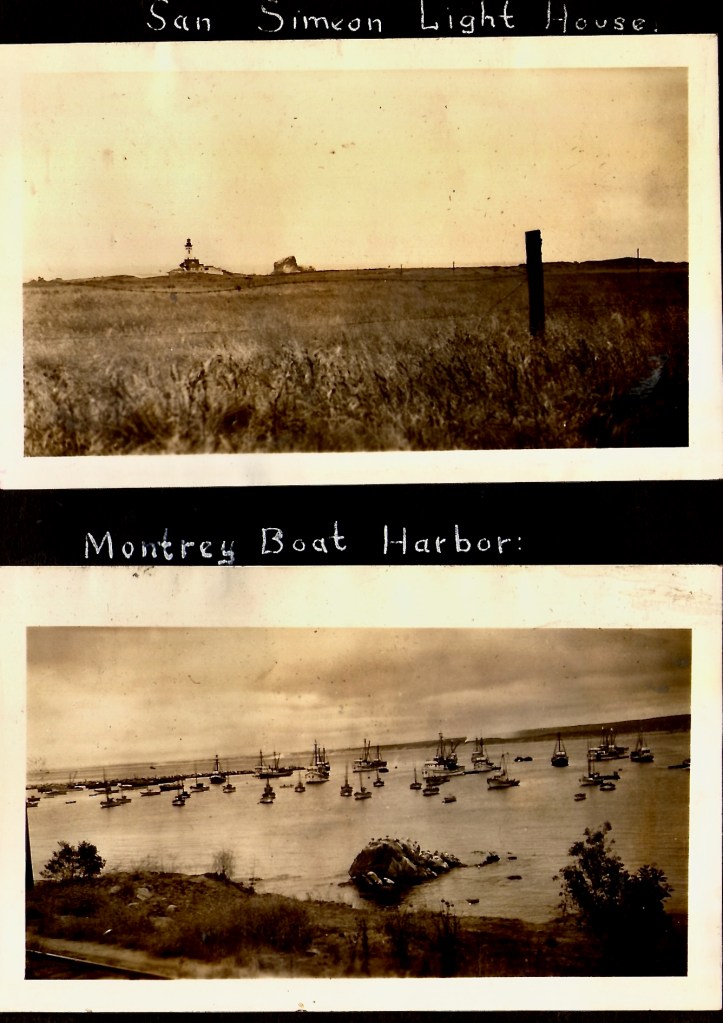
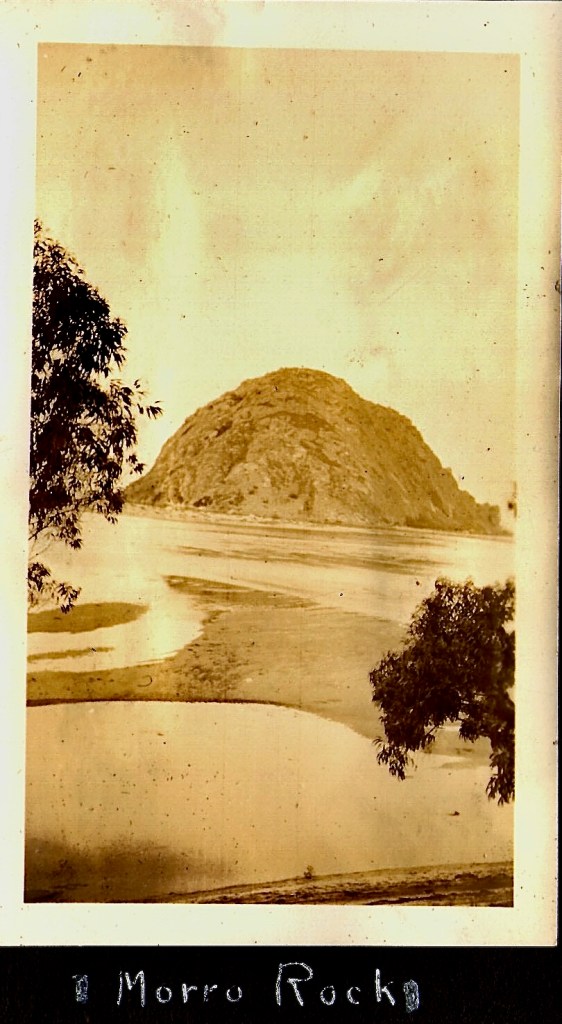
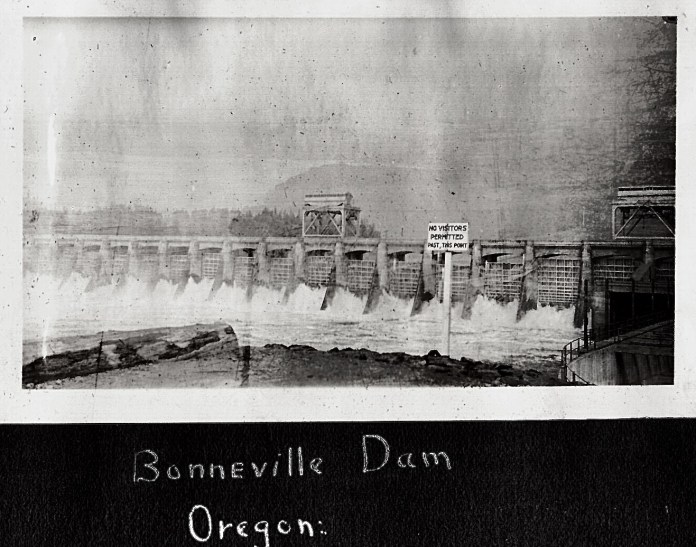
On the trip up the Columbia they stopped and wondered at the brand new Bonneville dam. At a cost of 88.4 million dollars it was, at the time the most expensive federal project ever built. Boulder dam on the Colorado completed just two years before came in at 50 million and in 1940 the Missouri River’s Fort Peck topped out at nearly a hundred million dollars. All three were paid for by the Public Works Administration and built under the auspices of the Army Corps of Engineers. Designed for flood control and generation of electricity they served some of the more remote parts of the country, they were also designed to put Americans back to work during the depression. An added bonus that these huge projects provided was a skilled engineering workforce leading up to the second world war.
Crossing the panhandle of Idaho they hit Butte Montana once known as the Richest Hill on Earth. In 1938 it was just a ghost of what it once was. Much of it abandoned and boarded up but its fame and decadence was well known western history.
Butte was first settled in 1864 as a mining camp. Right along on the Continental Divide, Butte exploded the late 19th century with the discovery of Gold, Silver and Copper. I was Montana’s first major industrial city. In its heyday between the late 19th and early 20th centuries, it was one of the largest copper boom towns in the American West. Employment opportunities in the mines attracted surges of European and Asian immigrants, particularly the Irish. Today Butte still has the largest population of Irish Americans per capita of any U.S. city.
Butte is in the wonderfully named Silver Bow county. Famous for as being the site of various historical events involving the mining industry and active labor unions and socialist politics, the most famous of which was the labor riot of 1914. Despite the dominance of the Anaconda Copper Mining Company, Butte was never a company town. Other major events in the city’s history include the 1917 Speculator Mine disaster, the largest hard rock mining disaster in world history.
Every miner’s family knew what the sound of the screeching steam whistle meant when it was yanked hard and tied down. The high pitched scream pierced the Butte valley for those to know that men had died under the rock.
The Granite Mountain/Speculator Mine disaster of June 8, 1917, occurred as a result of a fire in a copper mine, and was the most deadly event in underground hard rock mining in United States history. Most men died of suffocation underground as the fire consumed their oxygen. A total of 168 miners were killed. Some left notes written while they waited in hopes of rescue. A few managed to barricade themselves behind bulkheads in the mine and were found after as long as 55 hours. Some of the notes written by the miners while they waited to be rescued can be viewed at the site of the memorial to those that died.
“It takes my heart to be taken from you so suddenly and unexpectedly, but think not of me, for if death comes, it will be in a sleep without suffering …” – Manus Dugan to his wife and mother in a note written as he waited behind a bulkhead to die.
Disaster was always on the menu in those old mining towns but the wages were good and a man new to the country with little education was willing to roll the dice to feed his family.
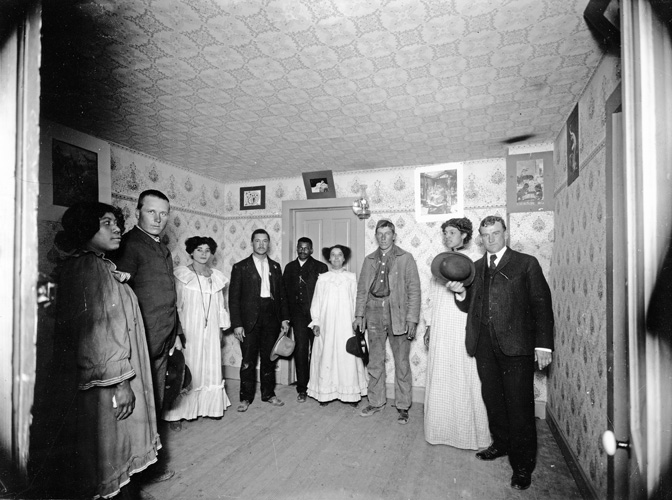
The Dumas House circa 1905. Montana historical photo
In a walk around the old town in September of 1938 took them down to the rows of whiskey bars and saloons known as the Line or “The Copper Block”, centered on Mercury Street, where the elegant bordellos included the famous Dumas House. Behind the brothel was the equally famous Venus Alley where women plied their trade in small cubicles called “cribs.” The red-light district brought miners and other men from all over the region and remained open in 1938. Pretty scandalous but Bruce and Eileen hardly turned a hair as nearly twenty years in and around the oil patch left few surprises when it came to what people had and did do to survive
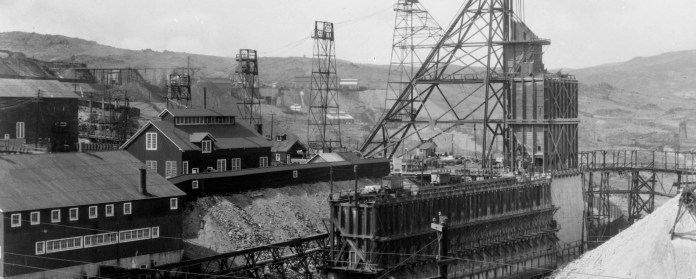
The Spectator Mine. Montana Historical photo.
They stayed the night then saddled up and drove on down to Bozeman. Bozeman in 1938 was an entirely different town that the rolicking, rowdy ex-boomtown of Butte. In July 1806, William Clark, of the Lewis and Clark Expedition, took a side trip, visiting the Gallatin Valley as he traveled east from Three Forks, Montana, following the Gallatin River. Journal entries from Clark’s party briefly describe the future Bozeman as the “Valley of the Flowers,” which came from the southwest Montana native tribe’s apt description of the pristine Gallatin Valley land. It was known as “The Garden Spot of Montana.”
When the Halls passed through the valley it was still a major wheat producer and one of the largest pea producers canning and shipping peas all over the country. For Bruce and Eileen and their kids the attraction was certainly not the peas. Hating peas, boiled, baked or steamed is major point of pride in our family. ***
Bozeman had been the gateway to Butte for the Boomers heading up to the richest hill to strike it rich. It was a much more hospitable place and in the late 30’s and was already home to the States University. The Northern Pacific railroad had a division point there and the fertile lands in the Gallatin Valley were host to large cattle and wheat ranching operations. 120 miles east, Billings was going to be a different experience altogether.
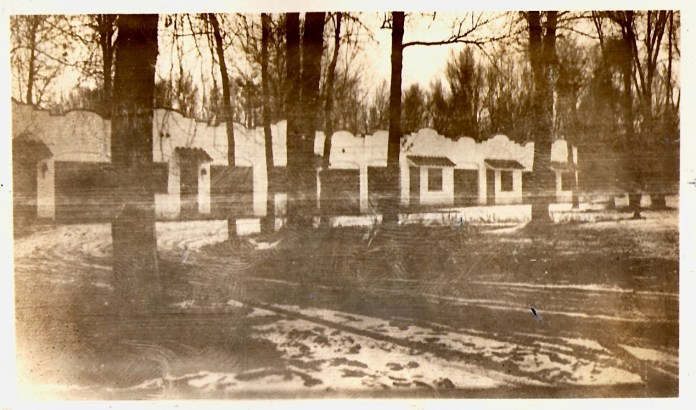
Before motels there were auto courts One or two room cabins for rent by the night. Bozeman Montana 1938
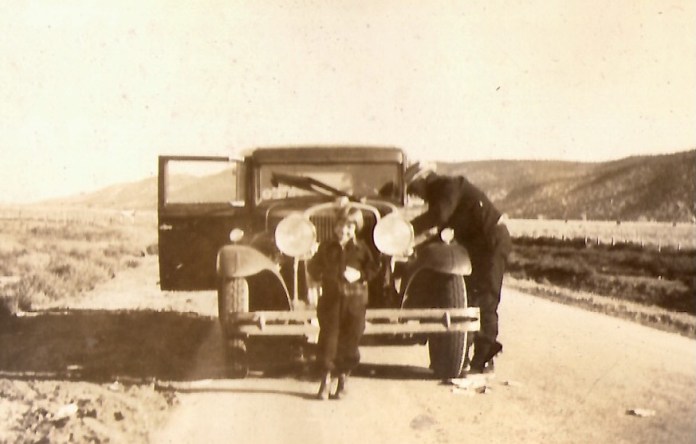
The next morning they headed east towards Billings. The Nash’s hood was thrown open and she got a couple quarts of oil for breakfast and leaving behind her calling card on the motor courts parking lot they motored out leaving a plume of fragrant oil drifting on the cool mornings air. Broadview Dome #1 waited, so did a vastly different life than the one they had lived in California.
1700 miles of every kind of road imaginable from dirt and mud holes, gravel much of it unpaved and now it was just 120 miles to Billings and the new well.
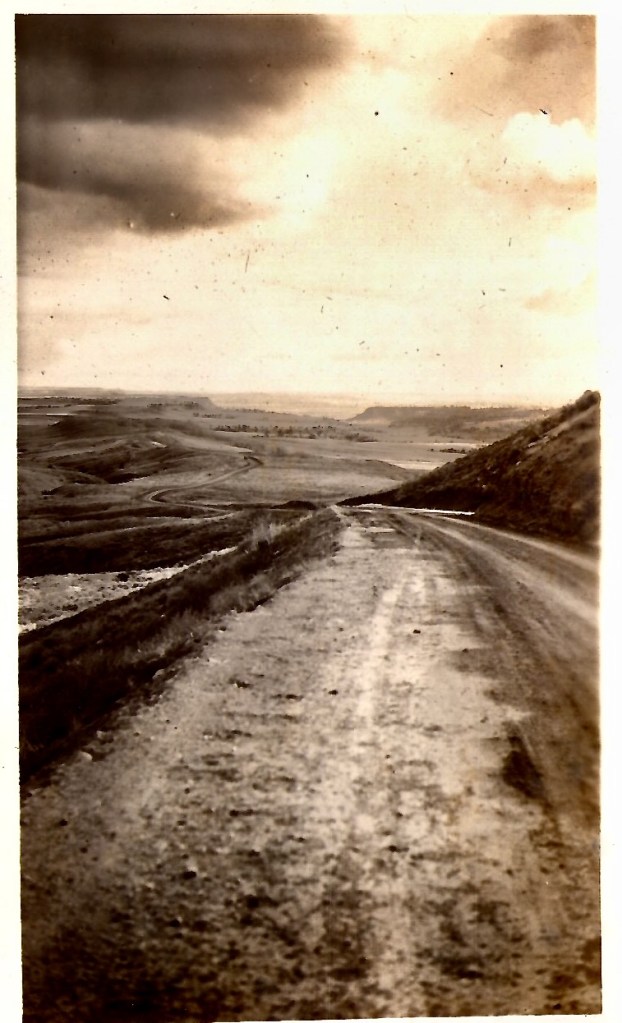
Traveling Eest towards Billings, Montana 1938. Robert Hall Photo
Next it’s on to Billings and Back to Work,
Chapter 23 of the Twelve Hour Tour.
*In 1932, when the Oil Hog was new, Nash prices varied by series, with the Series 980 4-Door Town Sedan having a base price around $895. Six years old, ancient for a 1930’s car she leaked motor oil like a sieve and needed pretty careful attention. It was quite a trip to take through lonesome and wild country but that was Bruce and Eileens way. It seems like adventure always called to them.
*Most of the photos in this chapter are from two albums of photos taken by Bruce and his son Bob and compiled by my grandmother. The beautifully annotated photos are described in by mother’s fine hand with white India ink on black felted album paper. It is a cherished family keepsake as you might well imagine.
**Many Many of the snapshots in the albums are the exact same ones that a traveler may well take today.
***The family Pea History. https://atthetable2015.com/2025/10/16/the-great-pea-war-2/
Michael Shannon lives in California and is a grandson of Bruce and Eileen Hall.
 atthetable2015