Twelve Hour Tour

Chapter Eight.

Off to Oildale, California.

Time was passing in Casmalia, the kids were growing and Bruce and Eileen had finally moved from the Associated camp to a little house between Orcutt and Santa Maria. Mariel, the oldest had started school at tiny Casmalia school, one of a few students from the oil fields. Like many rural schoolhouses it was a first to eighth affair. Kids ranged from six years old to, well, no limits on age. Public education in the 1920’s was open to all. It wasn’t uncommon to have sixteen year olds in the third grade. One teacher taught all subjects to all grades. Curriculum was primarily reading, writing and arithmetic. Books were well used and almost always second hand hand me downs from larger urban schools. Parents did the janitoring, painting, general upkeep and provided most, if any, improvements.

The One Room School.

Education, particularly for boys had exploded after the war. The advent of progressive education and state and federal funding began to be felt in public schools. With close to 25% of the United States population considered illiterate, business and government could see the value of providing at least a basic education for its citizens.

Neither of my grandfathers graduated high school. Bruce attended only to the ninth grade. My other grandfather never finished the eighth grade. There was no high school in Arroyo Grande when he was of age, closed because the large landowners refused to pay taxes to support the school. They believed that elementary school was good enough. “Those boys need to go to work,” they said and the high school was closed down for a number of years. Donovan and Miossi led the fight to close the wasteful school.

Attitudes had changed by 1920, both public and private money became available. Teacher requirements were raised, more education for them became the norm. Graduation from high school for boys had risen from six and one half percent in 1900 to nearly seventeen by 1920.

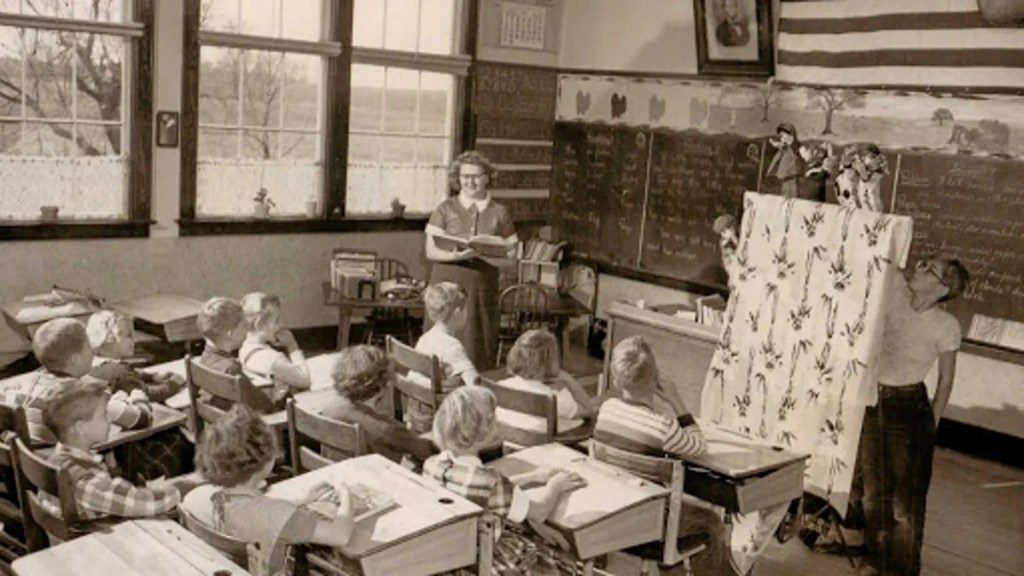
Little Orcutt school had less than two dozen students when Mariel went there but it had much in common with all rural schools. These characteristics were still evident when I went to grammer school in the fifties. Flip top desks with inkwells, hard wooden seats all facing a black slate board with pieces of chalk lying with dusty felt erasers in the tray. Above the blackboard, paper poster board printed with the alphabet in both upper and lower case letters depicted in cursive. Above that the big black framed clock, wound by hand each morning by the teacher, above that the bracket holding the California state flag and the national flag which we pledged allegiance to first thing each and every morning. The floors were wooden planks, there was a heater in the corner, a teachers desk and some bookshelves holding reading material and textbooks. By todays standards those little schools were pretty spare but if you had good teachers as I did you could get a first class elementary school education.

All students, no matter the age learned together. Older kids helped younger kids. In effect there was not just one teacher but many. Subjects were integrated and holistic with each subject taught in the context of others.

With more liesure time than before the war the grindingly hard work of the woman began to be reduced with the introduction of all kinds of labor saving devices. Eileen, because she now had electricity didn’t have to clean kerosene lanterns or burn coal and wood to cook and heat. She could have an electric mixer, just introduced ten years before. She could buy a pop-up toaster first marketed in 1919 and a Hoover Electric Floor Cleaner could be had for just $39.00.

And, in 1920, for the first time, she could vote in the national election. Women had campaigned for over fifty years for the right to vote in California and had finally narrowly won that right in 1911 though it was not until 1918 that three women were elected to the state assembly.

The business, industrial, politicians and saloons were bitterly opposed to suffrage but perhaps not surprisingly, though the measure was soundly defeated in San Francisco and barely won in Los Angeles, it turned out the deciding factor was the men’s rural vote. Farm wives, oil patch women, school teachers and those who put up with the daily drudgery of life for which there was little future put it over the top. Men listened to their wives and daughters and did what they asked. It’s important to remember that women didn’t vote in California in 1911 but the men did and especially men outside the cities thought it was time things were a bit more equal.

The birth of my Uncle Bob was bookmarked by the opening of the floodgates of social reform. People looked up and said, “I’m not going to take it anymore.” Big changes were in store for the oilfield worker.

Oildale, California,

In 1924, Bruce and Eileen loaded their three kids in car, a pretty new Model T Ford and hit the road, headed for a new job in the San Joaquin . “The Valley” as Californians refer to it is the area of the Central Valley that lies south of the Sacramento–San Joaquin River Delta and is drained by the San Joaquin River. It comprises seven counties of Northern and one of Southern California, including, in the north, all of San Joaquin and Kings counties, most of Stanislaus, Merced, and Fresno counties, and parts of Madera and Tulare counties, along with a majority of Kern County, in Southern California.

Starting 2 million years ago, a series of glaciers periodically caused much of the valley to become a fresh water lake. Lake Corcoran was the last widespread lake to fill the valley about 700,000 years ago. About 12,000 years ago there were three major lakes remaining in the southern part of the Valley, Tulare Lake, Buena Vista Lake and Kern Lake. In the late 19th and early 20th century, agricultural diversion of the Kern River eventually dried out these lakes allowing farmers and ranchers access to the vast southern Joaquin. Oil followed

The San Joaquin Valley has long since eclipsed the Los Angeles Basin as the state’s primary oil production region. Scattered oil wells on small oil fields are found throughout the region, and several enormous fields near the Kern river bluffs, the Lost Hills and Taft, including the enormous Midway-Sunset Oil Field, the third-largest oil field in the United States were operating by the time Bruce and Eileen made their way north.

Headed for Oildale, 1924. L-R, Mariel, uncle Marion Hall , Bob, Barbara, Eileen and Bruce Hall. Family Photo

In 1924 the was valley is predominantly rural, dotted with small farm towns with curious names like Wasco, Fruitvale, Reward, Fellows and Temblor which naturally sits smack dab on the San Andreas Fault Line.

Oildale, now there’s a name to remember. Surrounded by Bakersfield it’s not much remembered today but once it was one of the great discovery fields. In 1920 it was the third largest oil producing area in California. The only town in California other than La Brea to be named for the oil it sat on.

The Halls were moving from Santa Maria where Bruce started his career. He’d worked for Associated Oil as he’d learned his trade. Associated was at the time one of the most integrated companies in California. They had their beginnings in the Kern fields in 1900 when more than thirty smaller companies signed up to form it. Within a few years Standard Oil of California and the Southern Pacific Railroad acquired an interest in Associated Oil for the purposes of transporting their own oil to the San Francisco Bay Area where it would be refined and marketed jointly. The Southern Pacific needed fuel for its railroad steam engines. The Matson’s Pacific Oil and Transportation Company, the Matson Line, was acquired in 1905, which included the Coalinga-Monterey pipeline and a refinery at Gaviota, California. In 1907, the Associated Pipe Line Company was formed as a subsidiary of the Associated Oil Company with the Southern Pacific Company providing property along its railroad tracks which ran from the Bakersfield Kern River oil fields to Port Costa, California, later being shipped to China and other parts of the world. The Southern Pacific Company attained a controlling interest of the Associated Oil Company’s stock. Like most of the larger companies it became an almost impenetrable labyrinth of subsidiaries and holding companies. The Southern Pacific Railroad had rightly earned the name, “The Octopus,” and the brag in its boardrooms was that it owned California which wasn’t very far from the truth.

Kern River fields, 1910. Calisphere photo.

Bruce was moved up to the Kern fields because by this time he was an expert in cable tool drilling. There is a thing that some men have that is a natural feel for things mechanical. Call it a sixth sense though its probably just a combination of the other five. It is an absolute mystery to those that don’t have it. Bruce had it. He could smell, hear and feel a well. The wells talked to him and he listened. The sense of things is what separates the laborer from the boss. By the time they got to their house on Bakersfield’s Chester Avenue he was a Farm Boss, in charge of drilling for more than one well. Things were looking up.

Cable tool rigs work by using a long iron bit attached to a heavy, cable laid manila rope. The cable is attached to a walking beam that lifts and drops the bit, crushing the rock, slowly pounding its way downward. By 1924 it was considered obsolete compared to the faster rotary rigs. Looking down their noses at the rotary rig roughnecks, the cable tool men derisively called them “Swivelnecks.” Typical behavior from those workers who could clearly see the writing on the wall that spelt the end of their particular trade.

Cable tool rigs were widely used from about 1870 and are still being used today, although almost all of today’s oil wells are drilled using a rotary rig. The basic machinery consists of the engine and boiler, the derrick and crown block, the bullwheel and drilling cable, the sandwheel and sanding line for the bailer, the vertical bandwheel with a center crank, and the walking beam supported by the Samson post. Bandwheels were essentially large pulleys (usually 8-10 ft in diameter) driven by a leather belt from the engine, which reduced the engine rpms and increased power. A crank on the bandwheel’s axle imparted up-and-down motion (via a pitman arm) to the walking beam, much like the motion of a teeter-totter. The other end of which was connected to the drilling cable by the temper screw. The walking beam alternately raised and lowered the drilling tools. Walking beams were typically 26ft x 12in x2in in size. Bullwheels and sandwheels were spools for the drilling cable and sanding (or bailing) line, respectively. Additionally, fishing tools, various hand tools, wrenches, and forge tools were required for the drilling process.

The early rigs were powered with steam. Steam was delivered from the boiler to the engine by way of pipe. The engine powered the band wheel by a turning belt. A well-braced upright post, called the sampson post, was mounted further down the platform. On top of it, and mounted with a hinge, laid the horizontal walking beam. The band wheel was connected to one end of the walking beam by a pitman and crank. As the band wheel turned the crank, the pitman was raised and lowered which rocked the walking beam up and down on the sampson post. A temper screw was attached to the other end of the walking beam. At one end of the temper screw there was a clamping device that gripped the drilling line to which the cable tool bits were attached. The drilling line came from the bull wheel and ran over a pulley at the top of the derrick. The bits, which were basically just pointed steel weights, pounded the well into the ground. The action at the bottom of the well was one of crushing, not chipping or cutting of the rock. The walking beam raised and lowered the bits about two feet. If the complete drilling tool string weighed 1200 lbs (and some weighed up to 3000 lbs.) and the velocity was 6 feet per second, the the force of the blow would be over 16 tons. After a while, the bit had to be replaced. In soft formations, progress could average 30 feet per day, sometimes less, sometimes more, depending on the conditions. The equipment was run 24 hours a day. Two tours.

The drilling was controlled by a skilled worker who, by feeling the line from time to time, could tell what was going on in the well. When necessary, he could let out more line or stop the walking beam. When the bottom of the hole became clogged with rock chips, the bit was raised and a bailer (attached to the the sand line on the sandwheel) was lowered into the well to scoop out the debris. This involved a complicated process of raising the drilling cable with bit out of the well and lowering a bailer bit from the sand line. The bailer then had to be lowered and raised multiple times until it collected enough material. Then it had be raised out of the well and emptied. This had to be done until the well was cleared of loose material. After that, the drilling cable was lowered into the well and the whole process started again. This pound and bail process was repeated about every three feet.

Bruce Hall, “Feeling the Well” Associated Oil Company Well, Kerndon no. 5, Kern River Field. 1925, Famiy Photo

The Calf wheel contained the casing line. When casing was necessary for the well, the casing line was used to lower it into the well. The headache post was a safety feature that kept the walking beam from dropping if anything came loose at the other end of the beam.

As greater depths were reached, control became increasingly difficult. The cable became longer, heavier, and had more elasticity. Water often become an issue. Subsurface pressures could not be controlled causing frequent blowouts. An experienced driller was a big asset in the process.

Cable Tool Drill Bits. Kern County Museum photo

In 1914 the usual cost of drilling a 1000-2000 foot hole with cable tools was about $10,000 – $30,000. Prior to 1910, practically all wells in California were drilled with cable tools.

The Kern River and Kern Bluff fields were very shallow. Some of the early wells were less than 100 feet deep. Those wells were drilled in mere days. Lots of work and the successful companies were raking in the dough.

Things looked good in the business at Bruce’s level. There were lots of wells going down all over the fields in the southern San Joaquin. Refined oil usage had grown with the auto industry and conversion of railroad steam locomotives to oil from coal. The merchant fleet was rapidly changing its engines too. The U S Navy’s entire battle fleet had by now had adapted to using bunker fuel rather than coal. In fact the Federal Government and the War Department had set aside three underground fields, two in California and one in Wyoming as a backup for the Navy in case of war. The three fields were the Elk Hills on the valley’s west side, the Buena Vista field near Taft and the soon to be famous, infamous in fact, the Teapot Dome field near Casper, Wyoming.

Things in the oil field were beginning to simmer and that would change Bruce and Eileens life in a hurry. Dark clouds were rising and it was oil. The long odyssey through the oil patch had begun. It would continue for another thirty four years.

The writer is the grandson of Bruce and Eileen Hall. His mother, Barbara went along for the ride. Born in Madera in 1918 she moved to the oil patch in Casmalia when she was just a year old.

Standard

Traveling by Train

Michael Shannon

When I was a boy I used to ride with my dad whenever he went somewhere. It was part of my education. My favorite place to go was the box company in Oceano. Oceano is a little town built along the Southern Pacific tracks at the west end of the little valley I grew up in. In the fifties it was the center of the farming industry. The vegetable packing sheds were there, the big ice plant, very important in the days when freight cars were stilled cooled by ice and best of all the box company. It was in a large warehouse located right next the main railroad line and the sidetracks where the little yard goat steam engine shuttled boxcars around as they were filled.

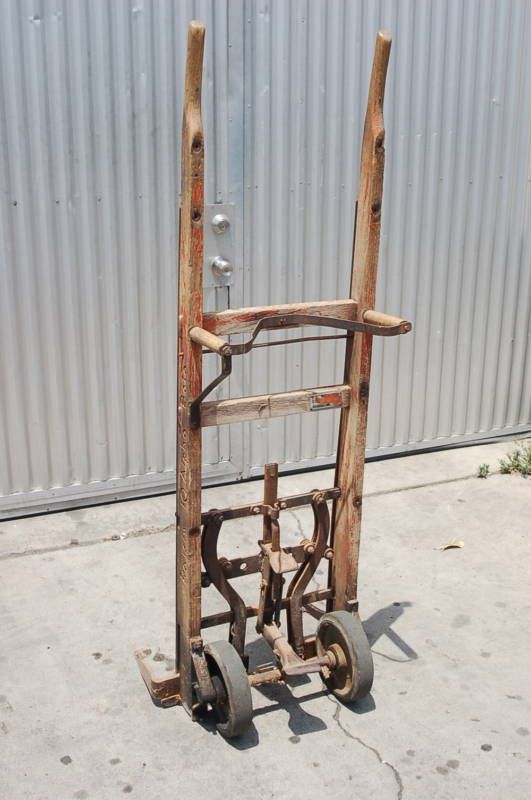
My dad would head into the office of the box company to talk about ordering any of the different types of boxes produce was packed and shipped in. In the early fifties most vegetables were packed right in the fields or in sheds we had on our farm. He needed different kinds of containers for different crops. Crates for Lettuce or Celery, Lug boxes for Tomatoes or Flats for Chinese Peas. Inside the warehouse there were two main areas, one where finished boxes were stored, nested together and stacked clear to the rafters, leaving only narrow passage ways between the different kinds just wide enough for a man to walk through. Down the center there was a wide alleyway for the forklifts that did the moving. Parked here and there were big clamping handcart dollies with jaws to grip the boxes loaded on them. A man would load the dolly and then step on a pedal at the back and the jaws would clamp the bottom box so the load could be moved without sliding the whole load off. We would go over and jump on the foot pedal but even with the two of us we couldn’t make them work. A great disappointment.

At the opposite end of the warehouse was the place where the boxes were assembled. Great stacks of pine. all precut were placed on tables and nailed together. When the man finished his box he placed it on the roller conveyor, gave it a big shove and it spun away on the rollers until someone working at the other end end picked it up, placed it with other boxes in it’s nest where it was then moved into the stacks.

Best of all was the smell of the place. Nearly every box was made of fresh cut pine and the smell of the place was sweet almost beyond imagining. You could, and we did, stand there and inhale the air and it seemed almost good enough to eat. The old heavy plank floors, worn smooth by decades of use were buttered with pitch and polished by the wheels of the forklifts which motored about moving tall stacks of boxes from the warehouse to waiting trucks ready to haul them out to farmers fields.

When dad came out of the office, order in hand he would holler for us and then have to chase us down in the labyrinth of crates. We always gave up in short order because we knew he had things to do and we wanted to be with him anyway.

Outside the box company there were steel rails to put pennies on, stray railroad spikes lying abandoned in the cinders along the rails and divers and unidentified things that stimulated the imagination of kids.

Sometimes the little yard goat steam engine would be scuttling about like a crab, moving loaded freight cars from one place to another, busy making up consists which would be shuffled into place on the big freights that stopped every day. Dad gave us pennies to place on the tracks to be squashed by the little engine as it passed by. You were sure to get a wave from the engineer because he had been a kid too. His dreams of becoming a railroad man had come true so he knew what it was like for little boys.

When the Southern Pacific first came it was the main transportation hub along the central coast of California where we lived. Typical in type, it had a line of warehouses on one side of the tracks and the sheds where produce was delivered from the fields to be washed, sorted and packed for shipment.The big packing sheds were all the same with an office at one end where the salesmen and secretaries worked and the boss sat at his desk with his feet up and thought great thoughts, or so it seemed to us. The processing floor had conveyors and bins everywhere. The men and women who worked there wore rubber boots and aprons, some carried knives for trimming vegetables, that seemed faintly dangerous but, of course we all wanted to carry them too. A goal for nearly all little boys is to go heavily armed.

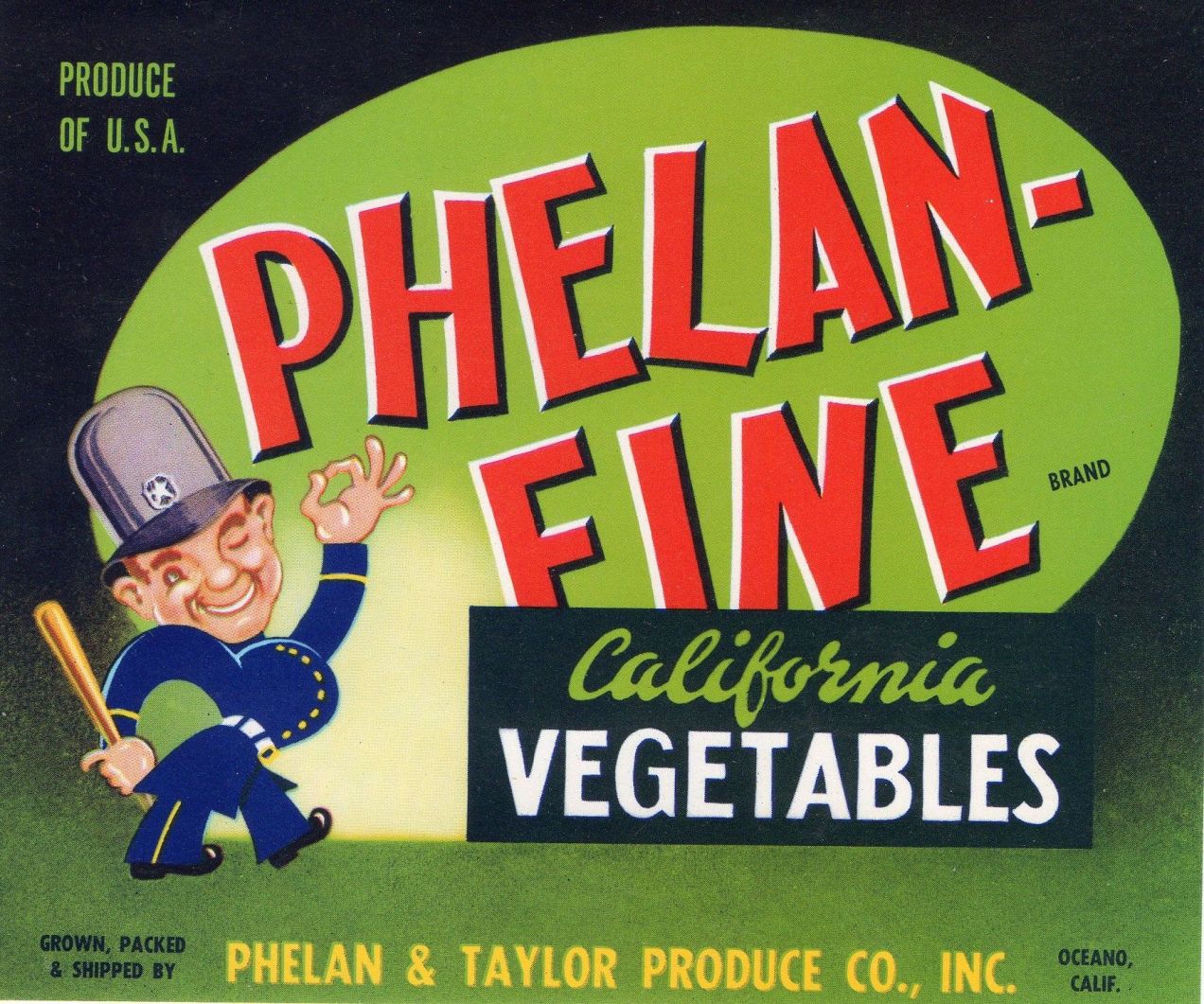
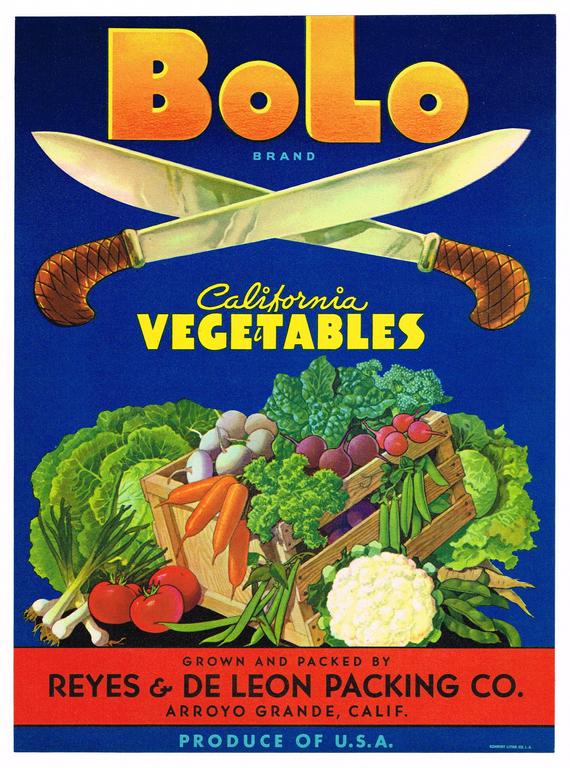
The boxes all carried labels, colorful advertisements for the growers and shippers. Ed Taylor and Gus Phelan’s “Taylor Made” and “Phelan Fine,” Oceano Packing Companies “Oceano” label, Sal Reyes and Gabe DeLeon with its crossed Bolos reflective of their shared Philippine heritage and the Japanese growers POVE brand, Pismo Oceano Vegetable Exchange. The labels were stuck on the ends of the crates as they were loaded onto boxcars or semi-trucks headed for the Los Angeles or San Francisco markets. Some crops were shipped in used boxes with multiple labels plastered one over the other forming a virtual road map of the boxes travels.

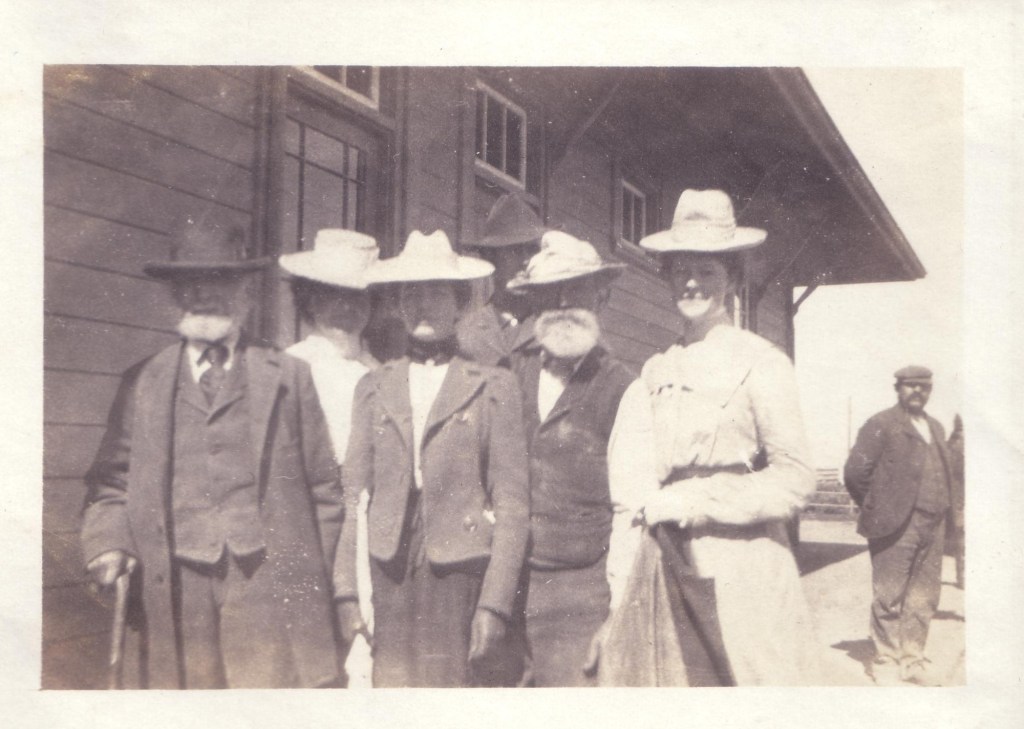
Anchored at one end was the old depot building painted in the ubiquitous SP yellow and brown. In my grandparents day it was also a passenger depot. My grandmother and her family traveled to the bay area where her sister Sadie lived in Oakland and when she was matriculating at the University of California, the train was how she traveled back and forth to school. Someone the family knew always traveled with her, no lady traveled alone in those days.

My grandmother Annie Gray Shannon, center, leaving for Cal Berkeley in 1904. Her parents Samuel and Jenny Gray on the left and her uncle Patrick Moore and his wife Molly “O” Moore on the right. Family Photo.

Once in a while we would be down there when a fast freight rattler would pass through. We always tried to count cars but rarely ever did we make it before the cabooses passed us by with a wave from the brakeman perched up in the window of his cupola. One of the best things to do was to read the names on the boxcars. Each one represented a far off place in the imagination. “The Pine Tree Route” all the way from Maine, The Saint Louis-San Francisco, “The Frisco,” outlined in big white letters on a red shield. Not a popular name with hoity-toity San Franciscans but OK with us. The big Railroad states were all there, the Pennsy, Texas Southern, New York Central, Baltimore and Ohio, the Milwaukee Road, The Dixie Flyer, the Cotton Belt and The Katy. You might get glimpse of less well known roads, their boxcars still in use long after they folded like the Delta-Yazoo RR, nicknamed the old “Yellow Dog” and memorialized in songs from the Delta Blues to Bob Dylan. The proud white mountain goat emblazoned on cars from the Great Northern, the SP and the UP, and AT & SF, immortalized by songwriter Johnny Mercer in 1946 and first sung by Judy Garland in the movie “Harvey Girls.”* We once saw a blue freight car emblazoned with Susquehanna Railroad on one end and a female figure holding a railroad lantern who said, “Ship with Susie Q,” get it?

Very so often you could spot someone standing in the doorway of a “Side Door Pullman,” going from somewhere to someplace, a Bo, a Knight of the Road, seeing the country, didn’t cost a dime neither. Perhaps one of the last of the throngs of men, women and children who drifted around the country looking for work during the depression.

It was altogether a marvelous place for little boys to hang around. The depot has closed permanently , passenger trains dodn’t stop anymore but you could climb on the old freight wagon and peek inside through the dirty dirty windows and imagine the days when it was busy with people preparing to go somewhere much more exciting than the place we lived. You could almost see the conductor wave his red lantern to signal the engineer to open the throttle and hear the full throated cry “All Aboard for Salinas, San Jose and San Francisco, and all points East.” The sound of the locomotive beginning to move, the deep, throaty cough from the stack, the hiss of high pressure steam, the metallic grinding of the drive wheels slipping slightly as she gathered way and the crash and clank of the couplers as the slack was taken out. By standers would invariably stand and watch until the caboose faded completely into the distance and sigh, they were staying home. People my age are the last generation who witnessed train travel when it still carried the mail, nearly all the freight and most passengers. The rise of the trucks and the airplane would nearly doom railroads by the 1970’s. Today the depot is a museum, the sheds are closed and the freight trains pass us by without even slowing down.

*In case you feel like singing, just imagine Judy Garland singing this song as she waited tables in a Harvey House somewhere.

Judy Garland, The Harvey Girls MGM 1946.

Do ya hear that whistle down the line?
I figure that it’s engine number forty nine
She’s the only one that’ll sound that way
On the Atchison, Topeka And The Santa Fe
See the old smoke risin’ ’round the bend
I reckon that she knows she’s gonna meet a friend
Folks around these parts get the time of day
From The Atchison, Topeka And The Santa Fe, Here she comes
Whoo hoo hoo hoo hoo
Hey, Jim you’d better get the rig
Whoo hoo hoo hoo hoo
She’s got a list o’ passengers that’s pretty big And they’ll all want lifts to Brown’s Hotel
‘Cause lots o’ them been travelin’ for quite a spell
All the way from Philadelph-i-ay
On The Atchison, Topeka and the Santa FeAll aboard, all aboardHere she comes
Whoo hoo hoo hoo hoo
Hey, Jim you’d better get the rig
Whoo hoo hoo hoo hoo
She’s got a list o’ passengers that’s pretty big And they’ll all want lifts to Brown’s Hotel
‘Cause lots o’ them been travelin’ for quite a spell
All the way from Philadelph-i-ay.”

The Real Harvey Girls. National Archives photo.

If you didn’t live it, well, you should be sorry now. It’s all gone. The packing sheds, the Box Company, the Harvey House restaurants and their girls. Produce goes by truck now and somehow that doesn’t carry the same cachet.

You can still buy those old box labels, collectors items now, but without the scent of a fresh pine box, it’s just a piece of paper.

PS: You can still visit the old depot, now a museum. Ask for Linda Guiton and tell her I sent you.

Michael Shannon is a writer and world traveler. He lives in Coastal California.

Standard

OLD SCHOOL.

Michael Shannon

EPSON MFP image

In the 1950’s when I was in elementary school, a child’s self-esteem was not a matter of concern. Shame was considered a spur to good behavior and accomplishment. If you flunked a test, you might be singled out, and the offending sheet of paper, splattered with red marks, was waved before the whole class as a warning to others, much the way in which ranchers hung the carcass of an offending coyote across a barbed wire fence as a warning to other coyotes.

Fear was also considered a useful tool. In those post WWII days, we were all raised by parents and a society in which was engrained the sort of discipline, not applied with a stick, but rather, the strictures one learned by the seemingly endless depression and the world wide war that followed it. Both events required strict rules that applied to almost all parts of our parent’s lives.

They had been tempered by the depression and had the scars to prove it. Many of them had grown up without enough to eat, with holes in their shoes, ragged shirts and trousers; radios, decent cars and a complete education cut short by the depression or the war. When it came, they were not soured by their experience, but rather still looked on their country as something to love, something special. They came out of this experience self reliant, not afraid of hard work and used to taking orders. They had a sense of worth and self confidence.

We were fortunate enough to be their children.

Teachers were inviolate. Their word was law, and never in my eight years at Branch, did I ever see a parent be other than polite and solicitous to a teacher. In those days, a teacher was not suspect at all, she took care of a child’s education, both academics and social. My parents considered themselves honored guests at school and under no circumstances would they take my word in a dispute. I wouldn’t have dared.  You see, there was no principle or administrator, just the teacher and she was the be all and end all for all things school.

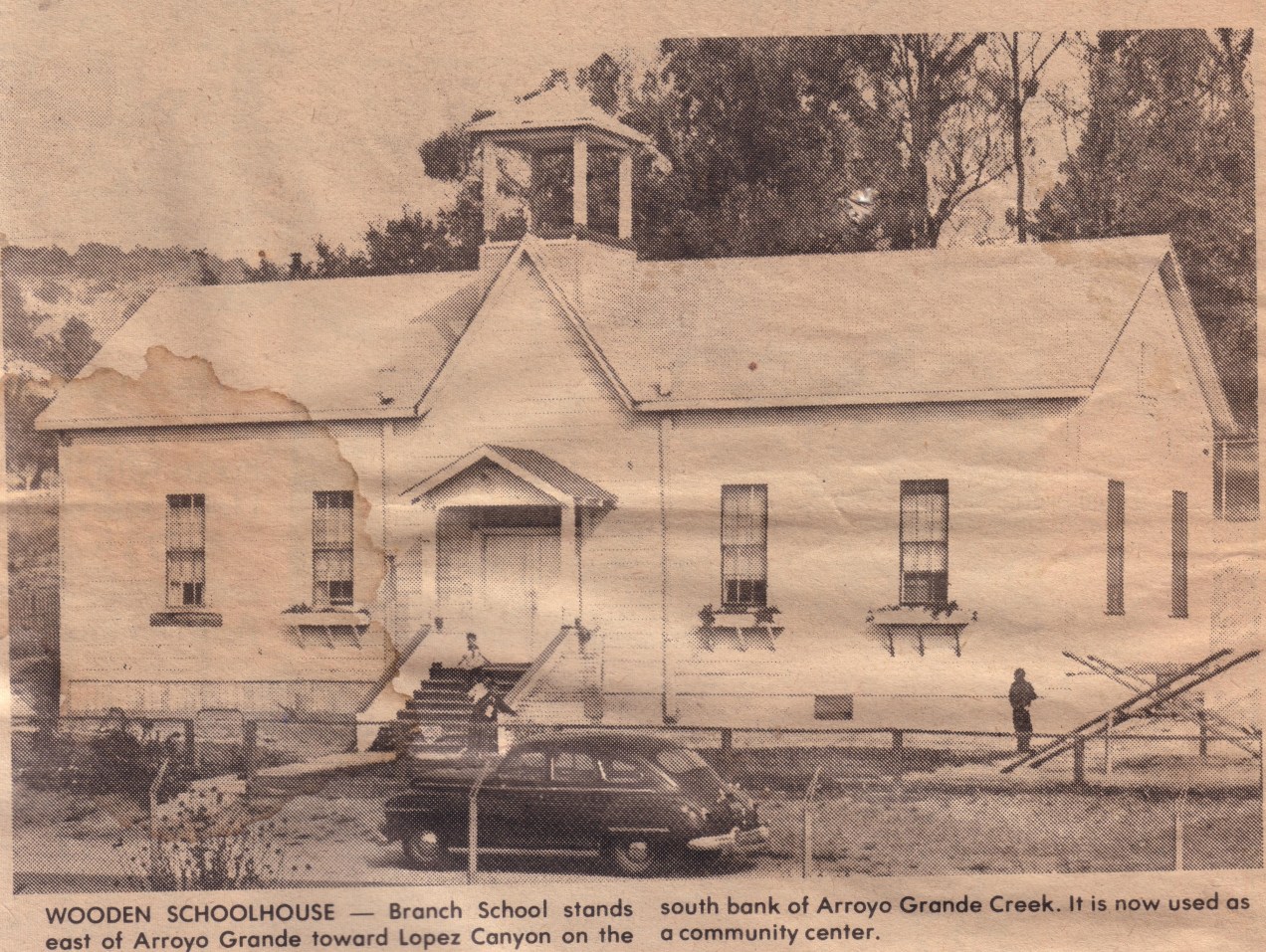
At my school, a two-room wooden building,  far older than a half century when I went there, hard working parents provided the foundation for teachers in every sense of the word. The teachers taught and the parents supported them. Repair and maintenance of the old building was done by volunteer labor and she was kept in pretty good shape for an old girl. Better, in some cases than the homes kids came from.

Two teachers taught about 50 kids in all grades. Divided smack in the middle by a hallway, the two class rooms were entered by doors tucked in between coat hooks, trash cans and tall cabinets in which were tucked the essential tools of the teaching trade. Grade level books, spare erasers, boxes of chalk; for we still used slate black boards in those days, Rags, cleaning supplies and the detritus accumulated over eighty years of use.   Mrs Edith Brown taught first through fourth and Miss Elizabeth Holland, a spinster lady, taught fifth through eighth. Mrs Brown had just arrived a year or two before me; 1949, to be exact, after a long career teaching at the Arroyo Grande grade school on Orchard St. The home of kids we referred to as “Town Kids,” somehow sensed as inferior to us. They on the other hand referred to us as “Farmers,” Most certainly a perjorative term, usually accompanied by a sneer.

Miss Holland taught her entire career at Branch. Until almost her 35th year she taught alone. Only at the twilight of her career, was a second teacher assigned as enrollment increased school population; the beginning of the “Baby Boom,” and the closing of nearby Santa Manuela school made the classes too large for a single person.

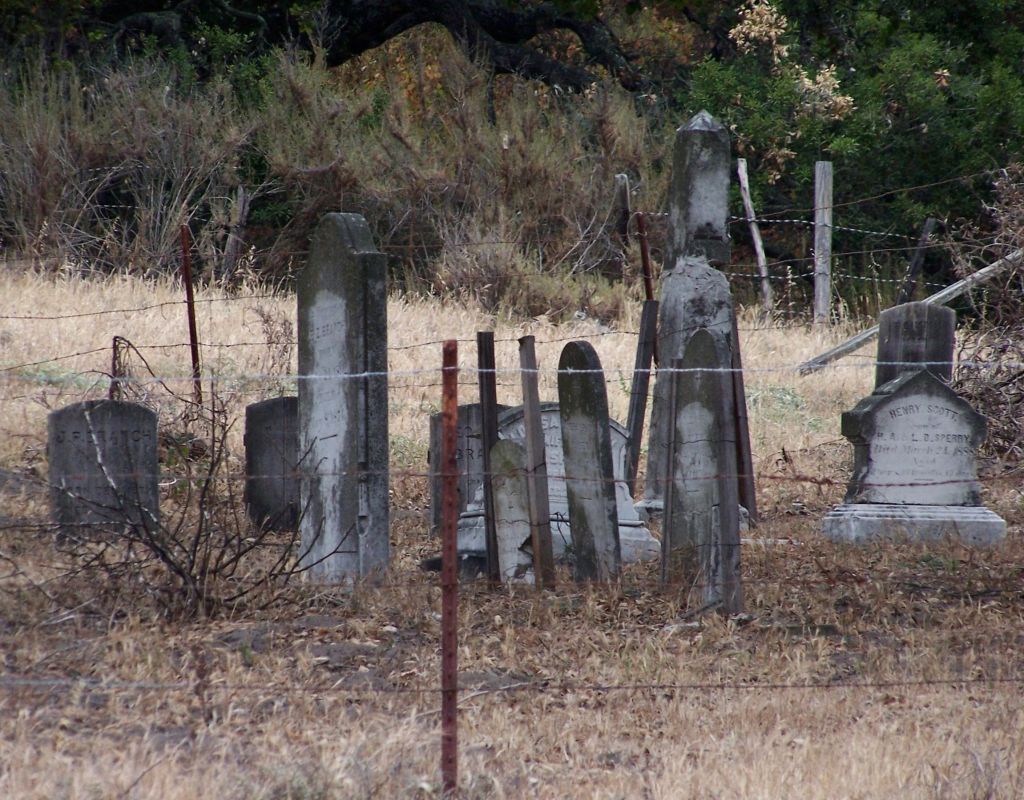
Branch school had been moved from a previous location by the expedient of jacking it up, sliding peeled logs beneath it and hitching the entire contraption to a team of horses, then dragging it wherever you wanted it’s new home to be. In our case, a hollowed out side-hill near the old Branch Family cemetery on the original Santa Manuela Rancho in the upper Arroyo Grande.  Behind and to the right was open, oak studded pastureland, complete with the occasional Hereford. To the left, a scattering of homes, mostly small and fairly recent. Across Branch Mill road was the Ikeda brothers reservoir, a small fenced pond in which the gate was never locked. Tthe creek, was about a half mile down the hill. Across the creek lived the Cecchetti family. Gentle Elsie, big George and the legendary George “Tookie” junior. To the left, an expansive view of the lower valley, all the way to the dunes, fourteen miles away. The view explained, at least in part, why Don Francisco Branch located his home on a little hillock, less than a mile from the school. That building was long gone, having been built of adobe sometime around 1838, it had gently melted back into the earth from which it came. The site guarded by a pair of ancient pepper trees, whose seeds traveled across an ocean in a small bag carried by the Franciscan Fathers who found their way 2690 miles on foot to the site of the Mission, San Luis Obispo de Tolosa.

In the fifties we considered ourselves modern because we had a school bus. When I started school, it was a 1949 Chevrolet half-ton pickup, fitted with a brown canvas top, two wooden benches down the sides and a chain across the back where the tailgate used to be. You simply climbed up and over the bumper and perched where ever there was a seat. It had a roll down flap in the rear to protect kids from the rain. Why I don’t know, most kids had to walk from home to the bus stop no matter what the weather. Our house was about a quarter mile from the back door to the mail box where we were picked up. In the winter that driveway, if I can dignify it as such, was slimy with mud and puddles that reached little boys ankles.  I still recall the ritual of using a kitchen knife to scrape as much mud as you could from your shoes and then putting them in the oven to dry. The next morning, shoes were dry, but as stiff as an old hide and had to worked about in order to make them soft enough to wear. In case you missed the part about the kitchen knife, yes, they were the same ones we ate with. No one seemed the least concerned about that. Just a job that had to be done.

Our bus driver was Mrs Evelyn Fernamburg. She did duty as the bus driver, janitor, school board member and 4-H leader. You see, Branch was its own, independent school district. It was almost entirely a volunteer operation. The county school office  provided the budget and thats all you got. The budget came almost completely from property taxes and after the county skimmed off the lions share, schools received their allotments. School board members used  funds for improvements, teachers salaries, the bus and driver, and then did the rest of the jobs for free. They built the monkey bars, teeter totter and carousel on weekends. There was no lawn and the playing fields were simply scraped out of the hill sides. No child of the fifties will ever forget that, in order to save money on the continual painting of the old redwood siding, which was a big job, the board decided to cover it all with a brand new innovation, asbestos shingles. An off pink color, they solved the problem of repainting but, of course, they were asbestos. Didn’t seem to hurt anyone though and the school was well known for its “wonderful” color.

Behind the school were the restrooms. The term restrooms is applied loosely. Both boys and girls were in a small green shed, divided in the middle with the girls on the school side and the boys on the up hill end. Neither had a door, only a little privacy wall to prevent any immodest peeking. They both had a toilet with a wooden seat. In the fifties they had dispensed with old phone books and stacks of small squares cut from newspapers and used what my dad called window pane toilet paper, you can guess what that meant. Each room had something unique. The boys had a urinal or rather a trough for them to use. It was a galvanized thirty gallon water pressure tank cut in half lengthwise and bolted to the wall. A piece of half inch diameter pipe, drilled with a series of small holes and a gate valve at one end, completed this modern marvel. The girls had something even better; Bats. Boys, of course, knew all about bats and how the would lay their bat eggs in little girl’s hair. Mass screaming during recess would bring whichever teacher was closest, running to the bathroom with a handy broom to chase the bats away temporarily, at least. We boys took an unusual amount of pleasure in this.

One of the things that we didn’t realize until we were much older was, with only a few kids of any age, every activity from classroom study to recess and organized games required all ages, six to fourteen. All grades were together for every thing we did, be it a school play, softball or jump rope. Each game had its season, none marked on a calendar, but mysteriously appearing when the time was right. Suddenly, in the spring, marbles. The jump ropes, dormant in the old closet that served the athletic gear, brought out for the two weeks that jump rope was in vogue. In our school this was not just a sport for girls. There was no PE. Groups of kids just decided what to do on their own. There was almost no adult supervision, kids were expected to use their imaginations.  Older girls might stay in during lunch and listen to records they brought from home on the little portable record player that was kept in the closet. Oh, the wailing and crying in 1959 when the Big Bopper and Ritchie Valens were killed. Lulu, and the Judy’s were fit to be tied. A terrible tragedy when you are just 13.

I never heard a teacher or parent discuss curriculum. We were taught the basics of math, social studies, California history and we read, a lot. With perhaps 30 kids, Miss Holland supervised four grade levels all at the same time. When giving lessons to one grade level she left the others on their own. We helped each other. Books were kept for a long time not traded in for new ones every couple of years. I used a social studies book in 1956 that was used by William “Bill”  Quaresma in the 1930’s. I used a reader with the name Al Coehlo on the flyleaf. His son Al Jr was just a year behind me and used the same book as his father. History doesn’t change much, the teacher could fill in the blanks. Lest you think our teachers weren’t very good, The county schools superintendent told my father that Miss Holland was the finest teacher in the county in reply to a parent complaint. She had polio as a young woman and walked with a pronounced limp and used a crutch when she was tired. She was so very kind to all of us kids and I’ve thought through the years that those hundreds of kids she taught must have been her true family. My mom took me with her when she went to visit her on Pine St in Santa Maria a couple years after she retired and she seemed somehow diminished, as if the school was a part of her that was lost. She died in 1965, just 58 years old. In the picture at the head of this story, she is 47. She lived her whole life in that house on Pine St, she never married. We were her children.

All in all I was treated with kindness, which was often more than I deserved. My public school education has stood the test of time, which includes both the lessons my teachers instilled and the ones they never intended.

EPSON MFP image

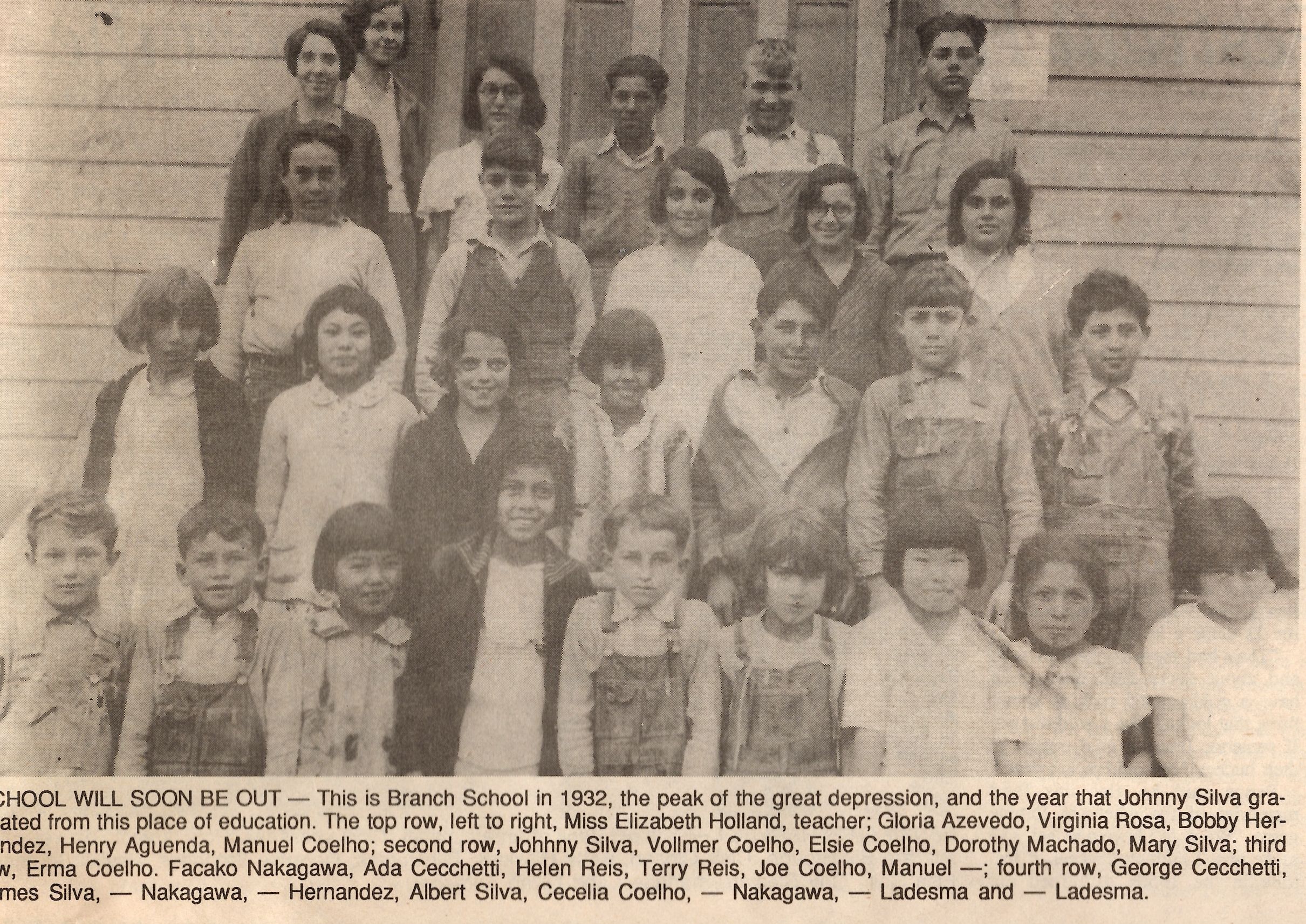
On the front steps of Branch School, 1932. I went to school with the children of many of the students pictured above. Most of these children are second generation immigrants whose families were working, renting or buying the rich farmlands of the Arroyo Grande. Mostly Portuguese from the Azores or South America whose families came to this country in the surge of immigration from the islands after the 1880’s. The Japanese families arrived about the same time, post 1880.

My own classes in the 1950’s weren’t unlike this one. We had some of the same surnames. We were Italian, Portuguese, Mexican, Irish, English, Filipino and Japanese. Quite a hodgepodge. My eighth grade class had four, the two Judys, Hubble and Gularte and the two Mikes, Murphy and Shannon.  Our teacher, the same Miss Holland.

credits: Cover photo, 1956, Back Row, l-R Dickie Gularte, Jerry Shannon, Irv “Tubby” Terra, Georgei “Tookie” Cecchetti. Front, Patsy Cavanillas, Doreen Massio and Irene Samaniago. The entire fourth grade class.

Michael Shannon is a former teacher himself and damn proud of it. I hope Miss Holland and Mrs Brown know I turned out OK.

Standard

The Library

By Michael Shannon.

There is a misconception about reading and education in early California. It is easy to think that our Rancheros were illiterate in Spanish andor English. The men and women who pioneered the Cow Counties were fixed on the idea that their children should be educated. Francis Branch, William Dana, Mariano Vallejo and Isaac Sparks set up schools in their homes for the children who lived on their vast Ranchos. Each of the many Mexican land grants had libraries of books imported from Mexico, Spain, The United States, England and other countries around the world. The impression that California was a backwards, howling wilderness could not be farther from the truth. Trade with China, the Phillipines and Russia was common. Francis Branch and his family ate off plates imported from China and drank from goblets that came from Mexico and Spain. Their boots and shoes came around the horn from New England. Contrary to Richard Henry Dana’s characterization of the Californios as a backward and a foolish people they were in fact wealthy, well read and sophisticated in the ways of the country they lived in. A cousin of Captain William Dana, Richard, a wealthy Harvard student taking a gap year for his health was, he felt, a superior being and felt no compunction about mocking and denigrating the people of California. His book, Two Years Before the Mast is an instructive look into California culture in the early 19th century but it must be viewed through the lens of the writer and his prejudices.

Other than the priests who managed the Missions and had libraries of religious tomes which no one other than the fathers would have been allowed to read, the first books introduced to San Luis and Santa Barbara counties would have come from the first pioneering families. For three quarters of a century all the libraries in the counties were either private or small collections of books maintained by the little towns themselves.

Until Andrew Carnegie. Andrew Carnegie, was, one of Americas most ruthless, loathed and hated tycoons of the late 19th century. Connecting him to the libraries that bear his name, my father explained that he built them because he was trying to beat the Devil. Spending part of his massive fortune on free public libraries, a novel and very liberal idea at the time might buy his way into heaven. Regardless, those libraries set the tone for a major change in public education.

Carnegie libraries were built along the coast of California in Lompoc, Santa Maria, San Luis Obispo, Paso Robles and Santa Barbara from 1905 until 1917. Our town, Arroyo Grande had a very small library tucked into a small and old wooden building on Branch Street. It was the towns first and was located right next to the space that would later house Dr. Pence’s office. It later moved, sometime in the Twenties to another small space on Mason Street roughly where Andy David’s law office was. It migrated to a utility building behind the Veterans of Foreign Wars Hall before WWII which is where it was when I was a kid.

Santa Maria Carnegie Free Library, 1909

I cannot remember the time when I didn’t have a library card. My mother started taking  us to the little library behind the American Legion hall on Orchard street when I was just a little guy. It was the domain of Mrs Bernice Kitchell. She was the first librarian ever I knew. She was not too tall, slight in stature, almost too thin, wore spectacles and always had her hair up. She was very nice to little boys and guided us around the tiny rooms, for the library was, at that time, just a temporary building. Being a temporary building, it is, of course still there sixty five years later. At the time it was just a simple city library, not the kind you see today, but financed by the town. Mrs Kitchell was of course paid a pittance and in return she did every job required or not. She scrounged books from everywhere she could and it wasn’t unusual to find in a checked out book someones name written on the flyleaf. Most likely someone you or your parents knew. There was a muted mysteriousness to the place brought on by the smell of books, both the sharp fresh smell of a new book  and the musty timeless smell of the old. The air was redolent of the mixture and combined with the pale, dusty air, a perfect setting for the child exploring for just the book to take him to a new place and the adventure there.

Thanks to Mrs Kitchell I’ve been everywhere, both on this world and all the others. I ran through the jungle with the Lost Boys, I’ve drifted down the mighty Mississippi with Huck and Nigger Jim,  Followed Tarzan through the great, lost elephant graveyard on his quest for the jewels of Opar. I waited until I saw the whites of their eyes on Breed’s Hill, Studied with Frank Merriwell at Yale and crossed swords with Pedro De Vargas, the Captain from Castile.

Before I was out of grammar school I had read hundreds of books. I used to take books to school and read after my lessons in the little two room schoolhouse that my brothers and I went to. Both of my teachers, Mrs Brown and the sainted Miss Elizabeth Holland knew I was reading when I should have been doing something else because I would open my desk top and read a few lines while I pretended to be looking for something.

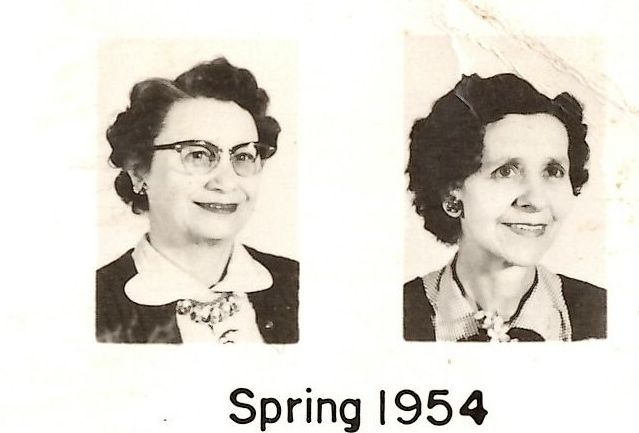
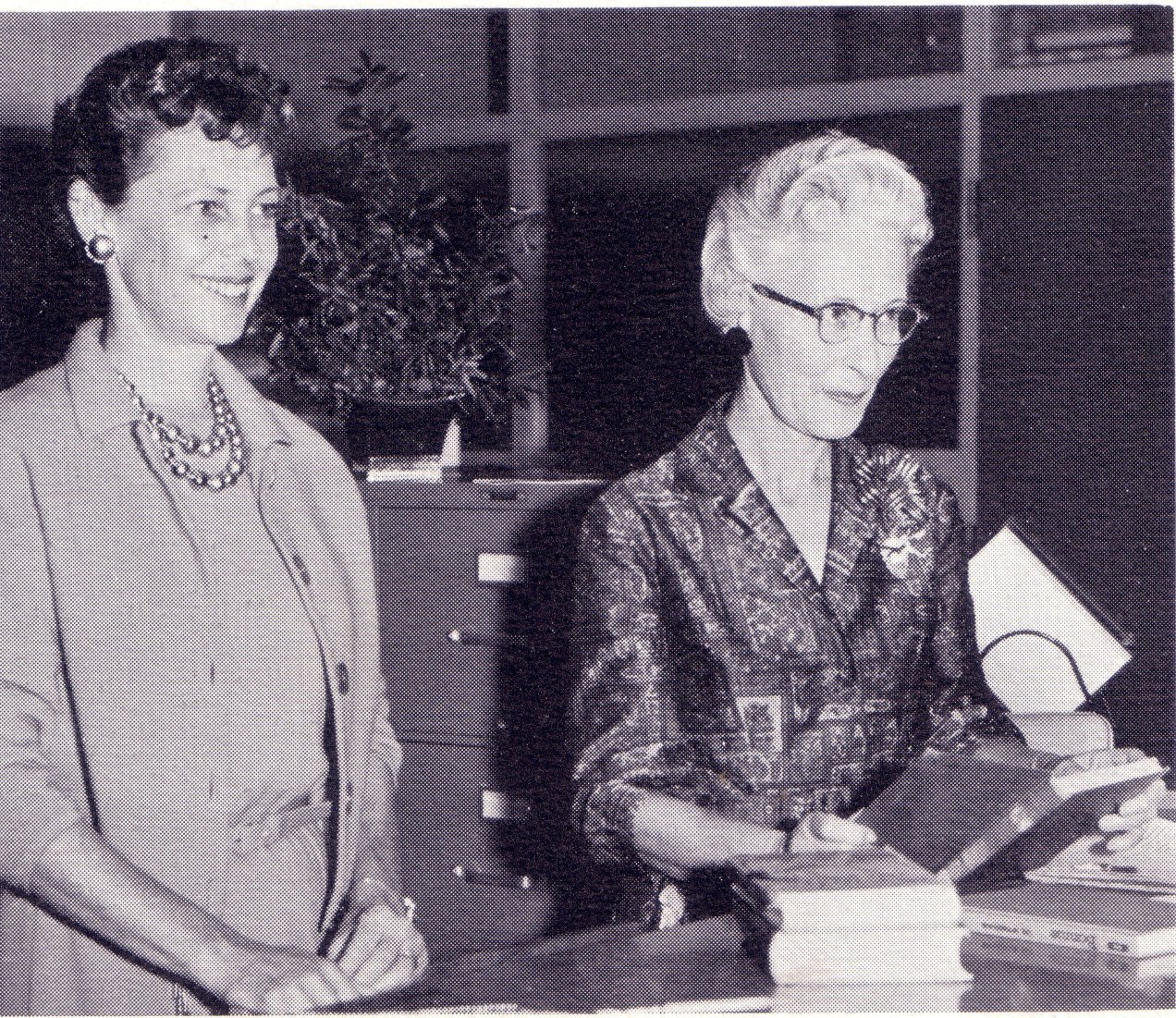
Mrs Edith Brown and Miss Elizabeth Holland at Branch Grade School

EPSON MFP image

One of the things that worked to my advantage was that each of the teachers taught four complete grades mixed in each of the two classrooms. They taught each grade level for part of the day while the other students did assigned work or read from the school library. A student had time to explore their education without having each classroom minute orchestrated. This worked to my advantage because I could complete my school work and then go adventuring in a book. What has turned out to be the greatest reading lesson of all has been the ability to read in context. I was simply too lazy to go to the big Webster’s which weighed a full fifteen pounds and look up words I didn’t know, so I figured them out by the way they worked in sentences. I can say that this is the best thing I learned in school.

Not many of these little schools exist anymore. They were places where the teachers set the curriculum with a little help from the school board. Many of the school board members at Branch had gone to the school themselves. Other than a small stipend from the county schools office they were on their own as to school improvements, curriculum, books, playground equipment and anything else that was required. We had no band, and no organized sports program. Everything we did was dependent on the parents and teachers. Believe it or not, some of our text books were the same books used by students more than a generations before us. It seems strange today but those books covered social studies or history up to the 1930’s and the rest everybody knew because they had lived it. It was first hand knowledge.

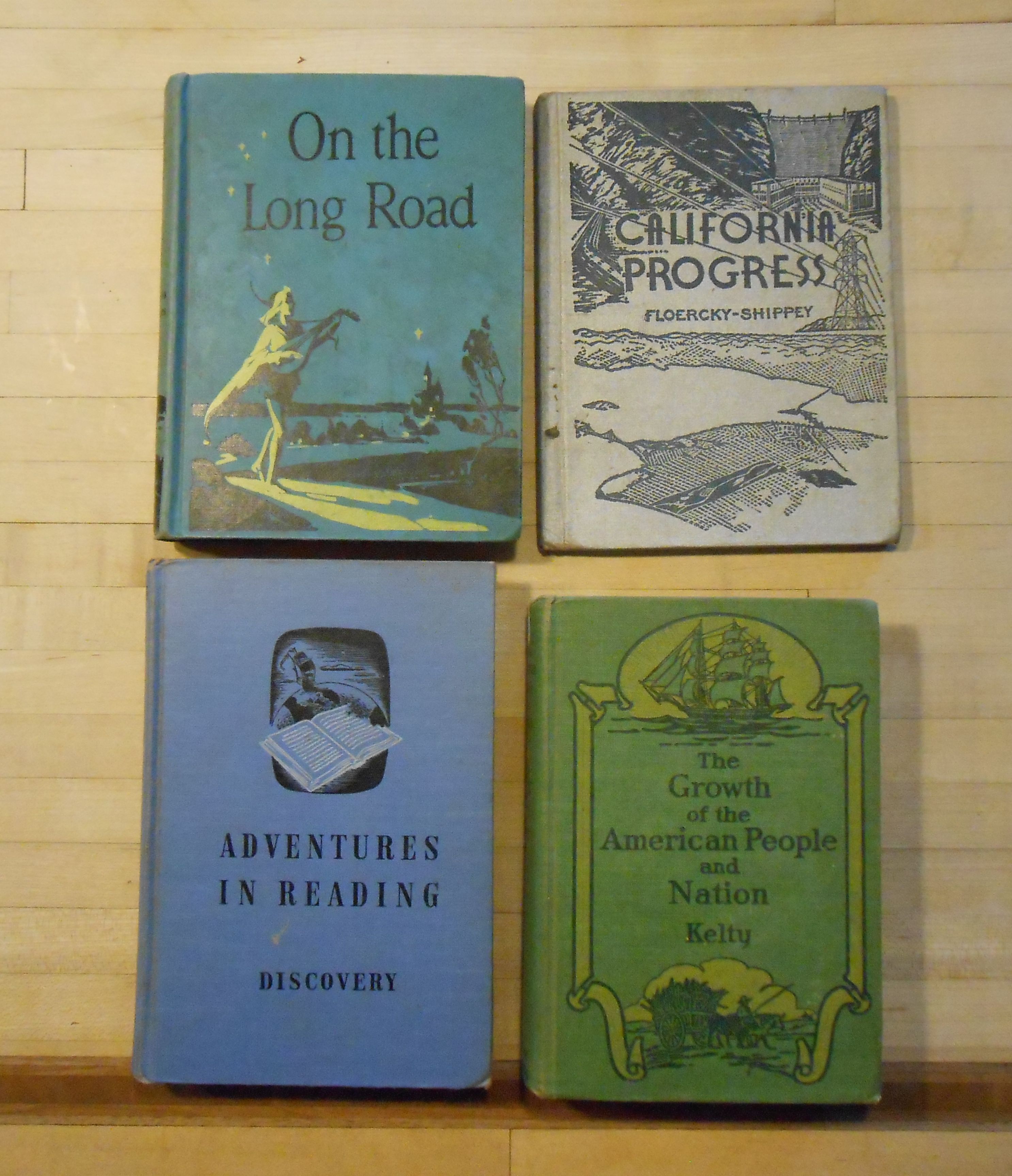
school books

The photo above shows some texts from Branch. None is newer than 1936. The Growth of the American People has two names written on the flyleaf, Joe P. Roza and William Quaresma.  Al Coehlo’s name is in the California Progress textbook. I knew these men as friends of my father and went to grammar school and high schol with Al’s children. These books were still in use in the fifties when I studied there.

I figured not long ago that I’ve read somewhere north of ten thousand books in my lifetime. Incubated in the Library and School, I have Mrs Kitchell, Katie Sullivan McNeil, Edith Brown and Elizabeth Holland to thank for starting me On the Long Road.

When I was in High School, it was Margaret Sullivan and Florence McNeil, members of some of the oldest Arroyo Grande families. Mrs. Don Rowe too, they were always there when you needed them. Decades later when I was a teaching High School the fabulous Kathy Womble prowled behind her desk at Nipomo High School always on the lookout for kids she could nurture. We  also had the fabulous Feryl Furlin who was so helpful and organized she was scary. 

Librarians care for books and they want you to care also. Nearly a million books are published in the United States each year. They are all written for you to read so you’d better hurry up.

Internet Memes are useless in building knowledge on any subject. Their only redeeming factor is that they may spark some little curiosity to know more. Go see your librarian and do it now.

Cover Photo: Margaret Sheldon and Florence McNeil, Arroyo Grande High School Library 1962.

Michael Shannon lives in Arroyo Grande California. Reading has taken him around the world and into space both literally and figuratively. The number of library cards he has held from different places looks like a deck of cards.

Cards: Arroyo Grande Community Library, NTC San Diego, Balboa Naval Hospital San Diego, Naval Base Pearl Harbor, NSA RVN, Long Beach, San Diego, La Mesa, Hilo Hawaii, Honolulu, Haleiwa, Waikiki branch, San Luis Obispo Black Gold and San Luis County library system libraries and Shell Beach Community Library. Member of the Friends of the Library San Luis County.

Standard