The Heroic painting, purposefully designed to flatter a moment in time, a place invented by the artist for two reasons. Glorify that place and the participants in it. Second to engage the public in a fantasy that will sell. Characters are dressed in ridiculous ways parading across the canvas, leaving an impression that combined with a momentous event become legend and make their way into the public’s eye, into education such as it never was and, ends up hung in a saloon as an advertisement for beer.
But sometimes a moment of truth slips into view. Not the heroic conqueror on his trusty steed waving his pistol in one hand, holding the regimental guidon in the other, his steely grey eyes daring the feathered foe to do his worst. The valiant hero stands alone. A most iconic print is Custer’s Last Fight, commissioned in 1892 from a painting by Cassilly Adams and adapted by F. Otto Becker. It’s became one of the most widely hung mass-market prints in America. Well over a million prints were made in the late 19th century. Those millions of copies hung in bars, barbershops, and homes for decades. They were all bunk.
F. Otto Becker, lithograph, from Cassilly Adams original painting. 1896
Lakota and Cheyenne attack using shields apparently imported from the Zulu in South Africa, their headdresses borrowed from the Creeks of Florida and the Boy General himself seems to be fighting all by his lonesome. Horses are everywhere though the actual warriors stated that most of the fighting on that hill was done on foot using cover when possible. They were brave but not stupid.
Red Horse (Minneconjou Lakota Sioux, 1822-1907), Untitled from the Red Horse Pictographic Account of the Battle of the Little Bighorn, 1881. Graphite, colored pencil, and ink. NAA MS 2367A_08570700. National Anthropological Archives, Smithsonian Institution. A warrior who was actually there.
Through your mind’s eye you can still see it can’t you. For once, through a combination of hubris, narcissism and driven by a desire to stand for the presidency the Boy General finally bit off more than he could chew. It cost the lives of over three hundred who blindly followed him over the grassy bluffs of the Greasy Grass that late June day. This we know.
George “Autie” Custer turns out to have had feet of clay as many of our anointed so often do. It cost him his life and most of his family but it cost the great horse cultures of the west everything. Everything.
The Lakota Sioux, Northern Cheyenne, and Arapaho tribes on June 25, 1876 slaughtered the horse soldiers. This conflict, known as the Battle of the Little Bighorn (or the Battle of the Greasy Grass) was in Montana Territory, it ended in the defeat and death of Custer and all 210 men and ten civilians in his immediate battalion. It was also the end for the tribes. For although they won it, the tribes set the entire nation against them and that was the crusher.
This is the moment on which that history pivots.
Early afternoon, June 25th, 1876.*
The people of the horse were a diverse and inter-related group. Not always harmonious in their dealings with one another they nevertheless had one thing in common, The horse. In the sixteenth century the wild horse spread onto the great plains west of the Mississippi and for three and a half centuries the people who lived there built a culture around them. The horse became the most valuable currency on the plains. They were stolen, traded and displayed as a symbol of courage, wealth and status. In time the life of man and horse became inseparable.
At each midday the younger boys would lead the horses down to the stream to drink and be washed. It was an especially pleasant chore this day. By the time the sun was at its highest point the temperature was nearing 100 degrees and even the turgid stream, warmed by the summer was refreshing for both the boys and the horses. Skylarking while tending to their duties, this seemed a good day. Perfect.
Over the snuffling of the ponies and the splashing and shouting of the boys a sharp sound drew one boys attention. Off to the south end of the camp where Sitting Bulls Hunkpapa were camped, a rifle shot. It couldn’t be the Lakota police, no shooting was allowed in camp without permission.
Another, another, then a rippling patter of gunshots echoed off the bluffs to the east. Not one Cheyenne boy in the water could see what was happening. But they knew, they knew the sound of the cavalry Spencer carbine. The heavy, rolling boom marked them.
Wasichiu soldiers were falling into camp just as Sitting Bull had said they would.
One boy shouted, “only Earth and the Heavens last long.”
“If we can stop the soldiers from capturing our camp, our lives will be well spent.”…
Perhaps they were.
The mystery matters because the Battle of the Little Bighorn was not simply a chapter in the Indian Wars history or a dramatic episode from the Old West.
It represents a turning point in U.S. History, a moment when military ambition, Indigenous resistance, politics, and American expansion collided with devastating consequences.
A century and a half gone, the jury is still out.
*”The boys watering ponies” is by American Western artist Howard Terpning. He has caught something and has frozen it in amber. You can see the boy in the Kepi, the one behind the white horse, the rider in the yellow shirt has raised his head and the boy crouching behind the Roan is straining to see where the sound is coming from. The two in the center draws the eye in the instant it is begun. Terpning is well worth a search.
Michael Shannon is a writer. He lives in Arroyo Grande, California.
When I was a little kid it never occured to me that I would know anyone in prison. The closest I had ever been was watching little Jim Gregory sitting in the special corner chair in Mrs Edith Browns classroom at Branch Elementary school. There was another kid there who would go to prison for murder but that was in the far off future and couldn’t have been imagined.
In small towns where everyone knows the other’s business kids grow up knowing a veritable who’s who of unique characters and their foibles. It’s why it’s a real opportunity to learn this spiderweb of people that make up your universe by simply keeping your trap shut and ears open.
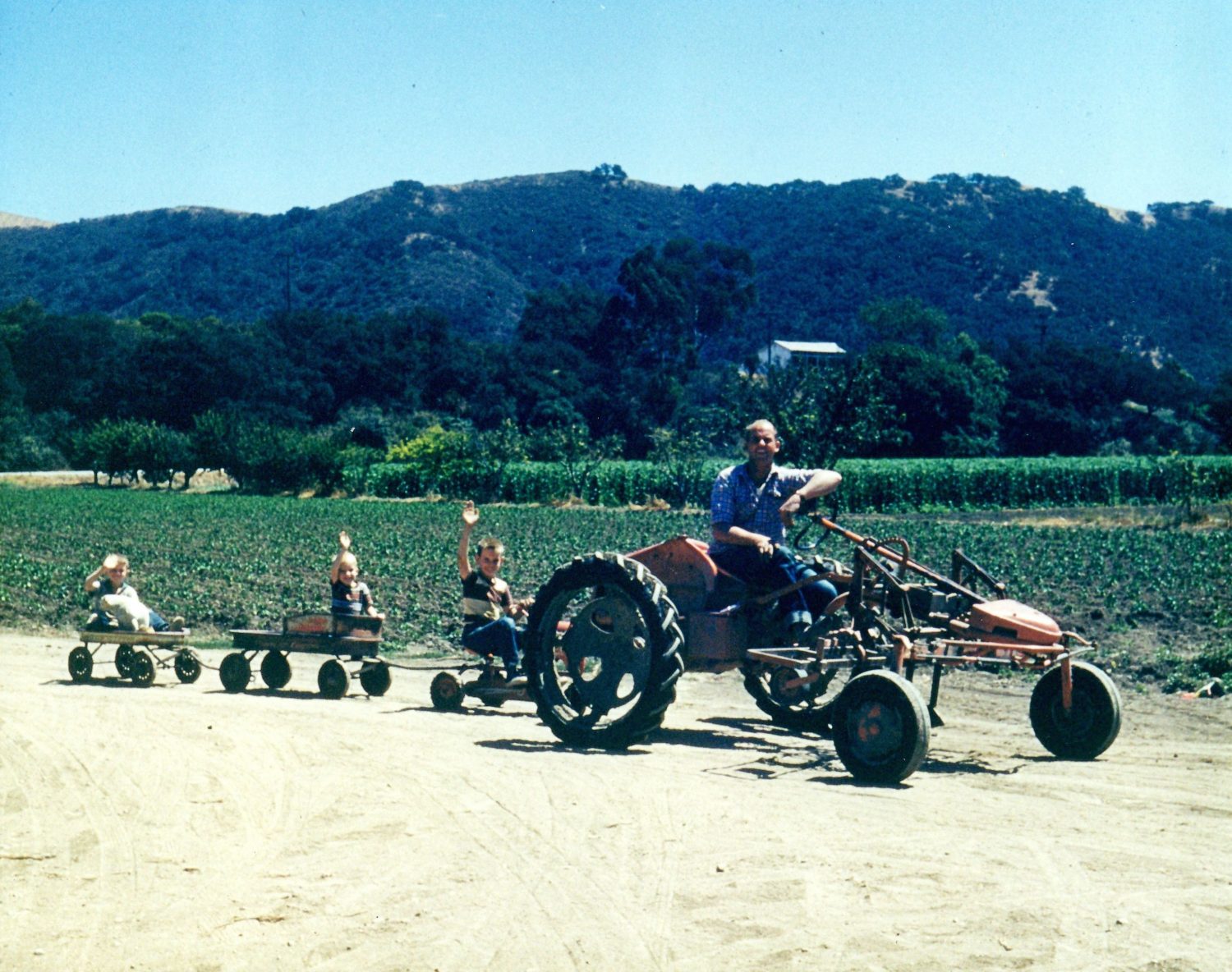
I knew about the family with five kids who lived in their car, a gigantic Buick. They did this during bean picking season. They parked the beast down by the creek threw up an old army tent cooked dinner in a pit and they all picked string beans for Mr Talley and my dad. We have an old movie taken by my mother, for whatever reason I don’t know, of the the picking crews leaving the ranch at the end of the day ,and there they are, grinnin’ and waving as the old Buick rolls by.
One of my Boy Scout friends father came back from the war with a silver plate in his head which was a topic of much discussion around the campfires up on Arroyo Grande creek.
I heard about the “Sex Addict” woman down on Mason Street long before I ever knew what that was. I was curious to see her in the open, you know, what she looked like. Did she have three eyes or something? I’ve never found out though and possibly I’m better off for it.
The cast of characters was vast and in every case unique My extended family has lived here for generations, the result of the Irish famine years and somehow drifting across an entire continent to end up in this lovely place. Sure I know its chain migration but that is how most families did it. Still do it by the way no matter what the howling politicians squealing like cats who’ve had their tails rocked on by grandma’s chair. We’ve had one of those politicians here too, a person who my dad always referred to as that “Philandering’ SOB.”
In a family of story tellers particulary my grandfather whose father was Dad Shannon, it never came up that his father was a former jailbird. A man who spent the better part of two years cooling his heels in a six by three cell, 23 hours a day in total silence. Did anyone in the family know? I think not. It was an experience best kept secret though it may partially explain the liberal use of the razor strop on my grandfather’s caboose. Go not where I’ve gone.
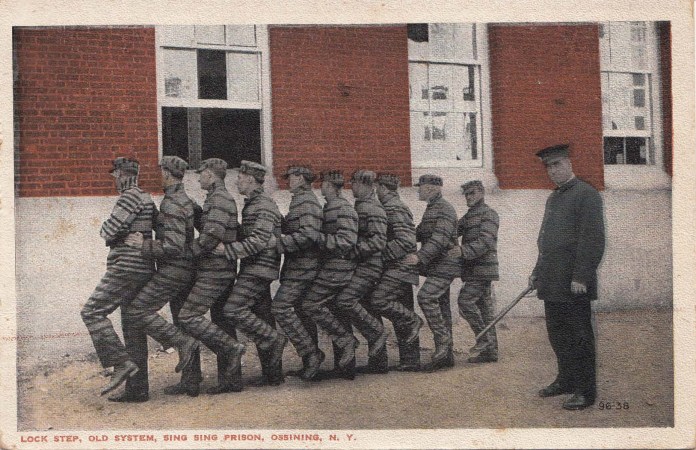
With a fold down rack for a bed, a straw tick mattress, and no window it must have been agony for the men caged in the countries most famous prison. The idea that a prison could be a place of reformation was something that was barely on the horizon in 1872. Speaking by the Birds was forbidden, they were fed in their tiny cells and when marched out for their one hour of excesize, they walked in step separated by only the thickness of their shirts.
A prisoner could write letters keep a notebook which was censored on release or read from the prison library though only cheap potboilers were allowed. Nothing which might be called literature such as Dickens or Benjamin Disreali, both considered either subversive or inflammatory. Writers on politics were also forbidden particularly foreigners such as George Sand or Fyodor Dostoevsky. Even Jules Vernes “20000 Leagues Under the Sea” was verboten because it was too anti-war and considered borderline treasonous.
Tradecraft, the teaching of skills that might afford a better future on the outside was only considered if it helped in the management of the institution itself. There was, as yet no formal training process at the prison as was to come in the late 19th century when rehabilitation was to become policy. Inmates were considered to be societies garbage and incarceration wa only to “Teach them a lesson.” Any reform was up to the jailbird when he was released.
In 1872, Sing Sing prison operated under the harsh “contract system,” where private companies rented inmate labor. Inmates worked grueling 10-hour days in on-site industries like the massive stone quarry, manufacturing shoes, furniture, clothing, and iron goods under extremely strict, and very punitive physical discipline.*
Like the song says “He turned twenty one in prison” breaking rocks in the hot sun and surely momma did try but to no avail. Time has no meaning in a prison cell and time passes almost without notice, there is no other way to endure.
On April 1st Edward was handed a paper bundle wrapped in string and told to get dressed, leave his prison clothes on his bunk and then walked to the jail entrance and signed his discharge papers. In 1872, convicts generally received no direct wages for their labor. Instead, prison labor was widely used to offset the costs of incarceration or leased directly to private planters and industrialists for state profit, leaving the workers uncompensated while generating immense revenue for state governments and private contractors. When next you walk down Broadway in New York city you might consider that some of the older granite buildings are built of stone from the Sing Sing quarry. Perhaps chiseled by Eddie Shannon.
So, on April 1st 1872 the Bull assigned to Eddie’s tier pounded on his door and grumbled, “Yer out, Shannon, git up and follow me. Don’t take nuthin wit chu, got it?”
Eddie rolled out of his bunk slipped on his shoes and followed the guard down the hall to the main office. He stood quietly on the shoe soles painted on the floor in front of the clerks desk. Told to sign his release papers, he did so. The screw led him to a table and grabbed a bundle which lay amongst others and picked up the one marked E Shannon and tossed it over sayining, get dressed and leave your uniform on the chair. Eddied did so and then followed towards the big green steel door that led outside the wall. “Gimme yer papers the guard at the door said. He checked them for the proper signatures then handed over an oblong manila envelope and said,
“Here’s a coupla Fins* Eddie, don’t spend ’em all in one place” He laughed at his stupid joke, something he said to every con on the way out.
US five dollar bill, a Fin, Half-Sawbuck, Fiver, perhaps an Abe. 1873
The problem now was what to do. Go home where he wasn’t likely welcome. He was the seventh of eight children of Will and Betsy Shannon who had likely considered a scapegrace at best. His mother Betsy was 62 years old and a widow, his oldest sister Diantha was married and was out of the home as were his sisters Adelaide, Mary, Jennie and Hattie the youngest who also married. Brothers David and James had their own families. He decided there wasn’t much to hope for in Lackawaxen so he decided to follow Horace Greeley’s advice and “Go west young man” A Sawbuck wouldn’t take him far but he could work, he had done some time in the prison mess and going west would take him far away from the parole officer.
In the 1870’s when a man needed no drivers license, passport or identification of any kind you were who you said you were. Few if any photographs were available and scofflaws knew that they could identify you if there were. So, like sweet Betsy and her lover Ike who were also originally from Pike county Pennsylvania or maybe one of the nine others scattered across ten states no one really knows since she is just a fable. Of course if you went to Branch school in the 1950’s you might think otherwise thanks to Miss Holland and Mrs Brown.
They had made sure we knew Betsy and Ike. I was sure there was a sailing ship named the “Walloping Window Blind” and there couldn’t really be a “Doggie in the window” because who would ever buy a dog? Ours always just magically appeared at the gate.
Did you ever hear tell of Sweet Betsy from Pike, Who crossed the wide mountains with her lover Ike, Two yoke of cattle, a large yeller dog, A tall Shanghai rooster, and a one-spotted hog
With Eddie you can forget lovers, dogs, hogs and Shanghai roosters but the wide mountains he did cross twice until he fetched up in Oakland.
He made it in two years. Somehow with just ten bucks in his pocket he crossed the entire country.
Let’s step aside for a moment and put this nto an understandable perspective. It is, in our age to view history as if it is our own time, but in the past they had an entirely different view of the age they lived in. Much of Eddie Shannon’s life was lived on terms that no longer exist for us. Watching birds fly might have been your pastime but the idea that it was even possible for him to do so would have been ludicrous. Ludicrous is John Ford’s stagecoach racing across the desert of Victorville’s dry lake being pursued by Apache Indians on horseback. The movie has become legend though there were no Apache living near Victorville nor did the Apache maintain large horse herds, they fought almost exclusively on foot and used horses for traveling distances when they didnt’ want to run which they were masters of, going long distance on foot which they preferred. Racing horses pulling a coach would have exhausted the teams or even likely killed them. Stage horse almost always cantered when they needed speed or simply walked. The big question has always been, couldn’t they just shoot a horse to make them stop. That’s movie fantasy not historic fact.
In 1872 stagecoaches were slow dusty and bone rattling. Trains were dirty, smoky and covered with ashes. Windows were kept closed because of that so they were hot inside in the summer and in the winter the little coal burning stove in the corner only warmed the seats nearest. You could go by steamboat but those were confined by the availability of a river deep and wide enough and headed in the direction you needed to go. Horseback was a common mode of transport but believe it or not not everyone owned a horse. Most who did not rented them from a stable which had the problem that he horse had to be returned so a round trip got you nowhere. Perhaps “Shanks Mare” was the ultimate, you could simply walk.
Transportation was very expensive in the day when a tradesman like a carpenter made.80 cents to a dollar a day and a cook might make as much as $ 20.00 a month. Train fare from the midwest was somewhere between $ 65.00 to as much as a $ 100.00. The week long trip sleeping on a hard wooden bench likely wasn’t in the cards for Eddie Shannon. Now that the transcontinental railroad was complete the cross county coach lines had ceased operation so it would have been local only, lots of them and each one required a fare. Taking the boat from Sioux City to Fort Benton Montana might only cost $ 8.00 if you wanted to sleep on deck and bring your own food but it was trip from nowhere to nowhere
Fort Benton, Montana Territory 1872. Montana Historical Society
Perhaps he picked up a job as a swamper on a freight line and worked his way west, not an uncommon thing for itinerant men.
Dad Shannon’s journey to California was done as the times in which he lived dictated. What seems primitive to us was perfectly normal to the 1870’s. He wouldn’t have given it much thought and certainly not concerned himself with things as they were, not like the reader, who may tend to think in terms of today. At the ripe old age of 22 he was tough, smart and would have taken all of those things for granted. He made it to Reno, Nevada and it only took him nine months. He could have taken the train and made it in seven days.
He had somewhere to go and he went.
*Not entirely unfamiliar to us today. Mississippi’s Parchman Farm or Lousiana’s which spans 18,000 acres in a remote bend of the Mississippi River, it is globally recognized for its brutal history, plantation-style forced labor,. Both have been the focus of Delta Blues songs for a century. Both are very profitable for the state.
Americas missing Senator was spotted last night leaving Lan Kawai Fang in the legendary heart of the party scene in Central district Hong Kpng. It features steep, packed streets filled with loud music, pulsing clubs (like dragon-i), open-bar crowding, and the pretty people spilling out onto the pavement.
Favorite of Ka$h and Party’n Petey H, the Senator and his wife posed briefly before stepping into a Limo with the Fox crew, Sean the “Divine” Hamity and Maria “Partyromo.” Bartiromo stunned in her sheer silk slit sequin mini cuddling with Hamity in his Sunny Crockett silk tee and white unreconstructed sports coat, sockless loafers and all.
The security man at the door whispered that McConnell and wife were there on business checking up on the tenements they owned in the Sham Shui Po. A densely populated neighborhood featuring preserved pre-war and post-war tenement blocks alongside bustling street markets.
Sham Shui district is known for its street gangs and Tongs. Beverly crowded, it is famous for the extortion rackets and Kung Fu type street fights. It’s home to foreign Devils on the Kung Fu Hustle.
Mr. McConnell known in China as “The Landlord” says he will be returning to the US Senate in two weeks.
This reporter thinks the party group was having too much fun.
Small towns like Arroyo Grande California are everywhere. People moan and groan about the loss of this particular institution but the truth is they are in plain sight and they are all about. Even Los Angeles the much maligned city which graces the southern part of our state is simply a collection of small towns grown together. The largest is the City of Los Angeles, the smallest, the City of Industry with just 295 souls. The two encompass 86 other municipalities, many of them much smaller in population than our own.
I’m sure that even today most of them have their little quirks. Old fashioned storefronts, little men and boys stores, a store for young women’s clothes and right across the street one for older matrons, not a Target in sight. Do some have a municipal court where the judge leans out the window and hollers at his friends walking by? Probably do. You go to the butcher shop for meat and next door, Bennet’s grocery store. If Muriel doesn’t slip you something from the candy jar right there on the counter, a hop skip and jump away was confectionary. An ambitious kid could double-dip if he was clever.
In the days before todays media blitzkrieg you could not watch, and by that I mean the television screen which in my youth was slowly eroding the preeminence of the printed word, a battle which has largely been won by screens, people still walked down our streets then and likely knew each other. In some cases their families had known one another for generations. It was difficult to pass the store fronts without at least a wave to those inside. The owners might come out to shake your hand and shoot the breeze a bit. In the 1950’s Saturday was still go to town day and most people were in no big hurry. Farm and ranch families could be pretty isolated for the rest of the week.
Us kids would beg to go down to the variety store. It was in a newer building attached to the big old Tufa stone building where the judge sat upstairs looking out the window. Judges were not too busy then. Local people were sort of judged by bloodline and only those who were from out of town were in any sort of jeopardy. Jerry Dana was his name and he was the great-grandson of Captain William Dana one of the original Rancheros. Dana was a prominent man, not just because he was an heir to huge cattle ranch but because in the olden days couples had very large families and generations later the little dusty town of Nipomo, the site of the original rancho was almost completely populated with Captain Dana’s extended family and their decedents. “More than you could shake a stick at” my dad said. You didn’t have enough fingers to count all the family names who had lived here for generations.
Variety stores were once everywhere. There was almost nothing you needed that you couldn’t find in one. Ours wasn’t a fancy one like Woolworths or JC Penny’s, no just a room full of open display cases filled with what were once called notions. You could buy a wash cloth or ten if you were a mind to. There were dishes, knives and forks, both china and plastic, plastic being the latest thing for the frugal. If you were a girl there were dollies and pocket knives for boys who were growing up in the shadow of the war, the greatest generation as it’s called today. It was then just a war that nobody’s parents talked about or had any fondness for. They had all lost something. But boys are boys and the greatest attraction were those little rubbery green army men, no sailors or marines or aviators of any kind, just soldiers with their rifles and bayonets a little curved or crumpled but still deadly in the minds of little boys. If you could talk your mother into opening her coin purse Mary Margaret would trade a few silver coins for a glassine bag of little green killers.
The other big attraction was the baby in the window. Not the doggy like the song says but a real baby boy. They had a little picket fence to keep him from falling off the counter and a blankie if he wanted a nap. You could see him through the big window in front and he could see you. The glass was perpetually smudged from mothers and their children tapping on the glass, getting his attention and trying to make him smile. A small one person zoo of sorts I guess.
All of this in a little town of fifteen hundred that covered about four blocks. Every thing you needed on God’s green earth was to be found, everything from life to death. One end of town was where you could find the home of “The Baby Doctor’ Charles Clark and the other the home of Beder Wood, a carpenter who built coffins and served as the first undertaker who in a bit of unique advertisement displayed tombstones in his front yard.
Now we’ve set the scene or more precisely the end of my great-grandfather John Edward Shannon.
I never met the man, my great-grandfather. He died twenty one years before I was born. I know about him though. His full name was John Edward Shannon and he was evidently quite the character.
Like most people of the time he arrived in Arroyo Grande by a circuitous route. He was born in Lackawaxen township in northeastern Pennsylvania near where the Lackawaxen and Delaware rivers collide. It’s just spittin’ distance from the New York Pennsylvania line.
In 1850 it was a place of no particular note. Hasn’t changed much since. It’s still rural as it was then just one hundred miles from Manhattan and having just 1,572 th the population. You could populate a single apartment building, 650 west 42nd street in New York’s Hell’s Kitchen with all the residents of Lackawaxen.
Born in a tiny town in the middle of nowhere to a housewife and a stonemason whose family owned an inn and tavern in town. They had purchased it at auction in 1779 when the original owner was hanged by the British for counterfeiting. In the long history of Lackawaxan, other than my great-grandfather they’ve only managed to produce two notables, Ed Porray a former baseball pitcher who is the only MLB player to have been born at sea and Pearl Zane Grey. Pearl Zane Grey was an American author and dentist. He almost single handedly created the western cowboy genre publishing over 90 themed books. Between Grey and the movie studios they established the myth of the American cowboy. Grey knew better but it did make him rich. He and his wife Dolly are buried in Lackawaxen overlooking the Deleware River a place they both loved.
The Tavern.
Grey lived in California and was friends with Charles Lummis the publisher of Sunset magazine which was then and now a booster for the Golden state. He knew Wyatt Earp, the big liar from Tombstone who captivated authors and screenwriters with gunslinger tales which he mostly made up. He also tossed some back with Gilbert M. “Bronco Billy” Anderson and William S. Hart recognized as the first American cowboy star of the silver screen. Aronson found fame starring in, writing, and directing hundreds of silent Westerns for Essanay Studios starting with the 1903 landmark film The Great Train Robbery. Of all the westerns ever made Bronco Billy and W S Hart had the distinction of never having been real cowboys. All of them plowed a fertile field because they were right on the tag end of the cowboy myth. They were writing about train robberies while Butch and Sundance were still doing them.
That was all still to come though when Dad Shannon left Pennsylvania. I asked my father once why he left Pennsylvania and he said,
“Too many trees.” True enough. That part of the state is filthy with trees, “He felt it was too depressing.”
Like some of the men in the family he needed adventure, the same impulse that drove my grandfather to run away from home here in Arroyo Grande for in his day it was a remote place with a tiny population. Nothing to see here he said, His parents both had heavy hands as the old saying goes. The leather strop was used for more than sharpening straight razors.They tended lay it on heavy and like many teenage boys he couldn’t wait to “Dust his broom.”
So great-grandpa Shannon did just that. He hit the road, the railroad that is. At fifteen he signed on to one of the great railroads of the day, The New York Central, famous for its route up the great Hudson River and the nefarious business dealings of its owner Cornelius Vanderbilt one of great and aptly named Robber Barons of the era.
He worked the unglamorous jobs. A warehouse man, he was just low paid labor expected to hump crates and boxes into and out of boxcars working the old twelve hour day. Men were cheap and pretty disposable and there were never labor unions on a Vanderbilt road. Eventually he graduated to brakeman, walking the tops of the cars and spinning the brake wheels according to the steam whistle, hand signals and colored lanterns displayed by the the train crew. Winter, summer day and night, walking the running boards on the cars or hanging on in the blinds* An incredibly dangerous job.
In the 1870s, railroad brakeman was statistically the most dangerous job in America. Approximately one in every twenty brakemen was injured each year, and the fatality rate often exceeded that of coal mining. The vast majority of these deaths and injuries were caused by falls from moving trains and being crushed while coupling cars.
To connect cars, a brakeman had to stand directly between moving cars to guide an iron link into a slot and drop a pin at the exact, split-second moment the cars met. This frequently resulted in crushed or severed hands and fingers. Missing digits were so common that railroad superintendents used them as an indicator of a man’s experience. Back up and read that again. Your bona fide’s were not about your intelligence or how nimble you were or even if you just wanted work your way up in the ladder, but a visual demonstration of your worst experience. Brakemen were also required to run across the tops of swaying freight cars in all weather conditions, turning manual brake wheels to stop the train. Slips, falls, and being struck by low-hanging bridges or trees accounted for countless fatalities, a rate of roughly one in every 300 employees and an injury rate nearing 70% within five years of employment. The primary culprit was the manual link-and-pin coupling system.
George Westinghouse had just developed the air brake in 1869 but other than George Pullman who built luxury passenger cars no one was eager to foot the bill to fit air brakes to freights. Men were cheaper anyway and had familys to feed and had to work no matter the danger. Thats how the accounting department looked at it. It finally took the federal government to step in and make it law before they began spending to do it.
Seven years on the road, starting at as a swamper at fifteen with the last four as a “Brakie.” The brutal winters on the Central’s east Hudson river line got him to think seriously about getting into some other line of work. Something easier, less dangerous and more profitable. Become a capitalist, a uniquely American career. Then as today serious education not necessary just the ability to buy cheaply and sell dearly. Vary simple if you liked risk, few scruples and a belief in yourself.
The answer, such as it was , was to break into the freight cars and sell what goods they could find inside. I’m sure it seemed easy, big railroad, thousands of employees, so, so easy. Open the door, throw the goods off and pick them up later. Theft was pretty common, Jesse James robbed his first train just four years before our great-grandfather took it up. He predated Butch Cassidy by ten years. Dad Shannon was a budding capitalist sure to be a success although that was going to take some readjustment.
A Capatilist, until he wasn’t. The yard “Bulls” the security men who roamed the yards and the Railroad “Dick’s. detectives knew all about that particular pastime. They were on to him pretty quickly and caught “Red handed”, nabbed, cuffed and hustled off to court where he stood before Judge George. Found guilty in a brief judges trial he found himself the recipient of two years, all expenses paid stay by the State of New York.
Cellblock Sing Sing
He found himself standing outside an Iron gate. Chained up ankles and wrists. He had his first sight of the State Prison at Ossining, New York, the maximum-security prison for men operated by the New York State Department of Corrections, popularly know by it’s official name, Sing Sing. He didn’t hear anyone singing. It was Monday, March 20th, 1871.
It was seven months before the Great Chicago Fire, Lt. Colonel George Custer had a little over five years to live, The transcontinental railroad had just opened for business the previous year and the Germans had just formed the first German Empire after defeating the French in the Franco-Prussian War. Ulysses S. Grant was president. The president sent Federal troops to South Carolina to put down the Ku Klux Klan and Henry Morton Stanley finds Dr. Livingston. Canadian giantess Anna Haining Swan (7ft 11in tall) marries the ‘Kentucky Giant’ Martin Van Buren Bates (7ft 9in tall) at St. Martin-in-the-Fields, London and Giuseppe Verdi’s opera “Aida” premieres in Cairo, Egypt.
Such was the state of the world as John Edward Shannon shuffled through the gates of the prison that would be his home for the next two years.
NEXT CHAPTER
He lights out for the coast.
The “Blinds ” refers to the space between coupled boxcars, a favorite place for Hobo’s and brakemen trying to stay out of the freezing wind.
Cover: Dad Shannon at home in Pismo Beach. California
Michael Shannon is a writer from Arroyo Grande, California.
To be remembered is a universal human desire. In whatever fashion you leave your mark the secret desire, probably unconscious is to a memory.
The incredibly ancient dwellings that have survived millennia are marked by grafiti. So are rail cars. Mankind seeks to leave some kind of mark that reminds us that they lived.
“Floronius, privileged soldier of the 7th legion, was here.” A note scratched into the plaster of the gladiator barracks in Pompei or a lines scratched on the interior wall of tombs in ancient Egypt’s Valley of the Kings by a visitor from India four thousand years ago.
Remembrance is like ripe fruit pulled, plucked from the limb, held in the palm. Who was that person? How did they get here, what did they do. What circumstances led to this particular point in their time. Every thing that man has wrought signifies the simple act of being.
Some, a simple act of love and kindness hold memories of the lost. The Oregon trail where as many as 20.000 emigrants died has just a handful of verified grave sites. You can count them on the fingers of one hand.
Typhoid and Cholera were the great killers. Lack of sanitation and bad water killed quickly in the days before any kind of medical help was yet available. Diarrhea killed in hours. Accidental gunshots, kicking mules and horses. falling under the moving wagons and contrary to celluloid history perhaps only forty or fifty deaths from Native tribes. Arguments over trivial matters led to shootings which in the days before any kind of medical help was slightly useful were nearly all fatal. Rare was the train that carried a doctor. You were lucky to have a midwife. In it’s peak years the trail killed about one in ten.
Because graves had to be made quickly to keep the wagon trains moving, most were hastily buried and left deliberately unmarked to prevent scavenging animals or vandals from disturbing the remains. When possible, folks were buried in shallow graves wrapped in a blanket in the center of the trail so the passing livestock and wagons would tamp the soil and erase all traces of the grave to prevent Coyotes, Badgers and Wolves from digging up the remains.The trains rarely stopped, miles had to be made before the snow flew and blocked the passes in the Rockies and the Sierra.*
One of the pioneers who never made it past Scotts Bluff was Rebecca Burdick Winters. She was born in Cayuga New York state in 1801. Her father was Gideon Burdick a veteran of George Washingtons’ Continental Army. He had served as a drummer boy enlisting when he was just fourteen. The Winters family had moved west to Illinois where both had converted to the Church of Jesus Christ of the Latter Day Saints and had been on the receiving end of a great deal of persecution by their Christian neighbors. In 1851 they had decided to join a Mormon wagon train bound for Salt Lake City in the self proclaimed State of Deseret.**
Preparations were made to sell their property and chattels and join a train to cross the Great American Desert to what was to become Utah. The Winters party of ten wagons pulled out of the Mormon city of Nauvoo in Illinois headed west. They trailed along southern Iowa, crossed the Missouri at Council Bluffs entering what was the unorganized territory,*** and headed northwest up the Platte River.
Rebecca bagan showing simptoms of Cholera as they traveled along the banks of the river. Little was known about the cause in 1852 it didn’t yet have a formal name. Sometimes called Gastric Fever or Slow Fever because it started with a low but ever increasing fever and could last weeks. It was also called Pythogenic fever a term meaning “generated by filth or putrid matter.” The emigrant trails were well traveled and their was little to no sanitation. Contrary to general belief the trails weren’t necessarily two wagon ruts because in the search for grass for the livestock the pioneers had created parts of the trail that were as much as a mile wide. In the ground ahead was offal from dead animals and even humans. There was urine and excrement from the travelers who didn’t bury it and when traveling by a river the river itself was polluted by the trains ahead. People knew the dangers but could simply not avoid infection. Dysentery, Cholera and Typhoid fever cause somewhere around 30,000 deaths out of the 350,000 travelers in the peak years along the trail. Rebecca was one.
According to several journals kept by people in her train she fell ill and lingered for a few days, a slow-developing misery lasting less than a week, characterized by a rising high fever, severe fatigue, delirium, and explosive Diarrhea. The loss of fluids which could not be replaced killed her. There were no IV fluids available in 1852 and they knew the water was contaminated. They could do nothing to save her. Rebecca lay in the wagon bottom on a bed of quilts and slowly slipped away. Other ladies on the train did their best to keep her comfortable but she slowly slipped into a confused state and died soon after the train passed Chimney Rock. Rebecca was the fifth person on the Winters train to die after leaving Council Bluffs. One every 90 miles or a death about every three days. These were not strangers but someone you knew well, a neighbor, a family member. Sister Rebecca was one of the vast numbers that died right along the beginnings of the trail as it ran along the North Platte river.
Great number of pioneers that died were buried in the center of the road, perhaps ten to twenty per mile over the life of the trail. A shallow grave would be scraped out, the body wrapped in a blanket and a few shovel fulls of dirt would cover the hole. The hitches of mules or oxen would be led over the grave to tamp the earth down and fianlly the stock hitched up to the Studebaker or Murphy built wagon and the entire train would roll over the dead, tamping it down in an attempt tp keep the wildlife from digging it sup. No headboard or any other marker would grace the spot that marked someones resting place.
To prevent the disease from spreading, and perhaps for the comfort of his wife, Hiram pulled his company off the trail. Three days later, from his camp thirty-three miles east of Fort Laramie, Captain Snow sent a note to Hiram, imploring him to “not delay on account of sickness” as he believed it would exacerbate the situation. The messengers met Winters’s division on the way and learned that Sister Winters had died at one o’clock the previous afternoon. Rebecca Burdick Winters, a wife to Hiram and mother to his children, never reached the valley of the Great Salt Lake.
On the fifteenth of August, 1852 she slipped away to the place whence none returns. She was 53. She no longer felt pain, the fatigue of the trail or loneliness of the prairie stretched before her in seemingly table flat emptiness that made no day seem different than the one before, but Hiram, her husband of 24 years and Alonzo, Hiram, Rebecca, Hellen, Elizabeth, and Hetta, her children did.
He could not bear to leave her alone, one of the nameless disappeared who paved the trails west. She would have a proper resting place. The train stopped. Rebecca was the first and not the last but because of the love of a husband she would be remembered.
Hiram walked to the center of trail between the ruts and started to dig. His shovel moved in the age old rhythm, push, lift, throw as he went deeper and deeper. The wives washed and cleaned Rebecca, dressed her in her finest clothes, rolled her in her quilt then took turns at sewing her shroud closed. As the hole grew deeper William Fletcher Reynolds, a family friend, salvaged a broken wagon wheel from the brush removed the spokes and pounded the iron rim into an oval then carved her name and age into an iron wagon tire. She was laid gently in her grave surrounded by her family and her friends. Uncomfortable with the idea that she would be covered by dirt, planks were laid beneath her, the body lowered and more boards placed over her and the grave shoveled full. Once the livestock and wagons completed their work the iron tire was partially buried over the grave to mark her final resting place. This marked the gravesite.
The rest of the Winters family arrived in the Salt Lake Valley five months later in October, 1852, and they eventually settled in present-day Pleasant Grove, Utah.
Following wagon trains saw the tire and simply went around it. In 1869 the completion of the transcontinental railroad put an end to wagons on the Oregon/Mormon trail and after nineteen years Rebecca’s grave sat in lonely isolation in the valley between Chimney Rock and Scotts bluff. Only an occasional cowboy looking for a lost steer came across the tire and wondered who.
Hiram and the children never forgot Rebecca and went back to visit her in the years following. The family carefully watched her resting place to make sure it was not disturbed. The farmers and ranchers kept a respectful distance and made sure no one bothered her..
Almost fifty years would pass before an advance survey crew laying out a new line for the Wyoming and Western Railroad building up the Platte Valley came across the isolated grave. No one on the crew knew who Rebecca Winters was but out of respect they rerouted the tracks from the original plan to avoid disturbing her. When the railroad was finished the tracks ran right next to the old wagon wheel tire for almost 100 years, A crewman or passenger might see it in passing and wonder how it came to be.
Nearly a century later, in 1995, the railroad which by that time the Burlington Northern approached the descendants of Rebecca Winters and worked out a plan to move the gravesite to a safe and accessible location. In the presence of more than sixty of her descendants, a team of archeologists worked to exhume Rebecca’s remains that autumn. Rebecca Burdick Winters’s body, now in a mahogany casket, is buried a mere one hundred yards from its original location.
Rebecca Winters’s reputation as warm, caring, and selfless makes it unsurprising that her gravesite was marked with permanence. Asa S. Hawley, who traveled with the company, wrote that many in their camp had died from cholera, but that “the most sorrowful to him was the death of Sister Winters, one of God’s noble and courageous women.
Rebeca Burdick Winters has lingered purely through luck and the kindness of others who never knew her but understood that she had lived and deserved those kindnesses by simply having been.
So when you are traveling stop and take a moment. Turn down highway 24 from Scott’s Bluff, toward Rebecca Winters Memorial Park, stop and walk over to her grave and say a prayer for the good woman.
*Dithering, a late start and simple human hardheadedness killed the Donner party by arriving too late to the mountains passes.
**Utah territory was incorporated by the Federal Government in 1850 but did not become a state until 1896.
***THe future states of North and South Dakota, Nebbraska, Kansas, Montana, Wyoming, Colorado and Oklahoma.
****In June 1996, hundreds of Winters’s descendants gathered for the dedication of the Rebecca Winters Memorial Park. The grave remains the only known marked graves among the approximately 6,000 Mormons who perished crossing the plains.