HI-JINKS

....Or what happens at Women’s club stays at Women’s Club.
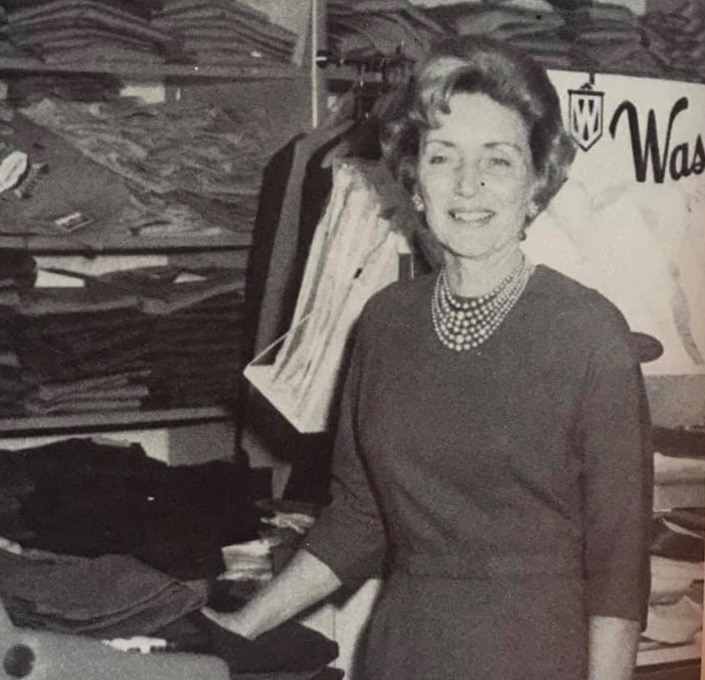
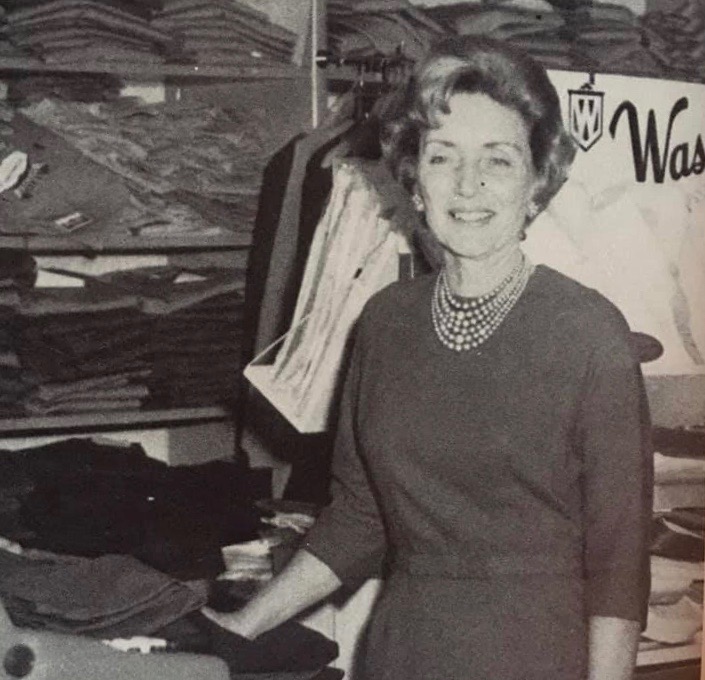
mom 1965 (1)

Written by Michael Shannon.

When I was a boy we saw our mother in her kitchen when we got up in the morning. She made our breakfast every single day that I lived in that home. Cream of Wheat, Oatmeal or; in the summer, dry cereal. You could have “roundies,” or “poppers” in your bowl, none of which ever had enough sugar. Names supplied by my little brother Cayce when he was in the first stages of talking. Every family has quirky names for objects and people that are supplied, usually by the young. My father’s parents were called Mamoo and Poopoo and of course, as the oldest child, these had been the first names I was to call them. My first lesson in unconditional love came with those names. My grandfather Jack was proud to be called “Poops” all the rest of his life and he didn’t care in the least who knew it. Even his friends and acquaintances learned to call him “Poops.” He was never in the least embarrassed. He was a proud of his children and grandchildren and they could do no wrong.

When we left for school, my mom was there. When we came home, running up the driveway and into the kitchen, she was there. When I was in Grammar school she didn’t work out of the home, she worked in the home as did most of the mothers I knew. That was who she was. She could make wonderful pies, great cakes and had meals on the table on time, every time. Lord knows how many peanut butter and jelly sandwiches she must have made. Her three boys always took a lunch to school. Seventeen years of school lunches five days a week. She taught me to knit, crochet and sew. In the fifties she made most of her boys clothes. Mom skills, they were, and even though it wasn’t strictly necessary after WWII, she still did them. My goodness, my grandmother Annie Shannon still darned socks into the sixties though there was absolutely no need for that anymore. They were comfort jobs I think, things that were done because you had always done them.

Moms played bridge or canasta, perhaps hearts, usually with the same women year after year. Florence Rust, Hazel Talley, Gladys Loomis, Edna Rowe, June Waller, Marge Nelson, Nancy Loomis, Nami Sonbanmatsu and many others came to our house to play bridge. The boys were put to bed early and my dad disappeared as the hens cackled the night away. I believe my grandmother’s bridge club lasted over fifty years with most of the same women and only the deaths of the members finally forced a halt when there were not enough left to make up a table of four. Minta Brisco, Hilda Harkness and Doris Hinshaw, they slowly faded away.

So that is the picture I had of my mother as a boy. Steady, dependable dispenser of kisses, bandages for boo boos and as many hugs as you could use. A spoonful of heart medicine if you said a bad word, protector and drill sergeant all wrapped up in one person.

My mom belonged to the Arroyo Grande Women’s Club. Many of the mothers in town did. They had bake sales, sponsored the Gay Nineties and later the Harvest Festival. They were always saving to build their own building too. Some of the money was given to support our little towns library which was located just behind the American Legion Hall on Orchard Street where they met. They were good people who worked hard for their community.

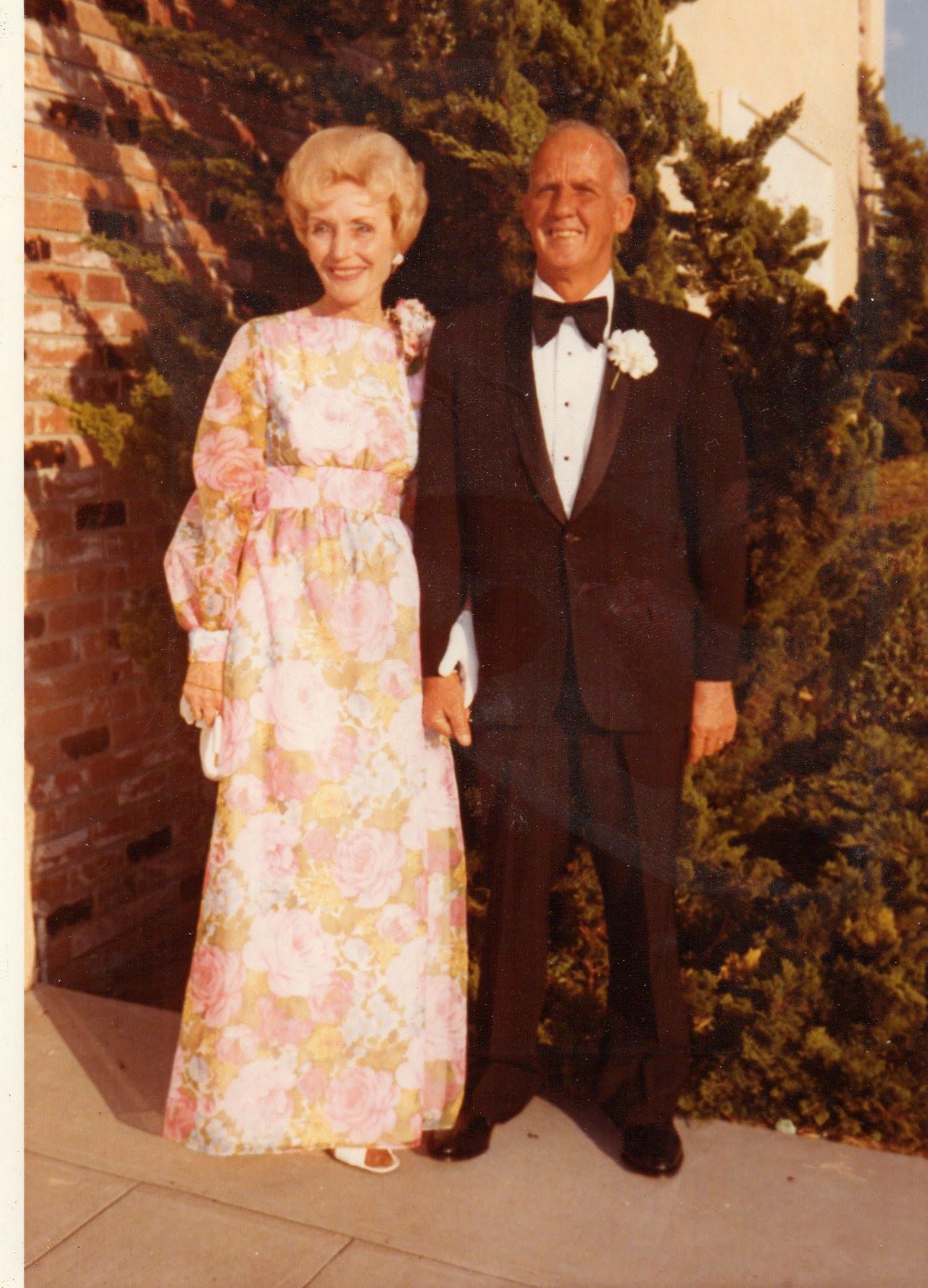
Club meetings were  quite the thing in the fifties. Mom would dress up to go. Stockings, nice dress, she never wore slacks to those things, a cute little hat and gloves and off she would go. Dressing up was important then. My grandmother never left the house without her hat and gloves. My mom and Hazel Talley were at lunch with Gladys Loomis and myself in the Village Cafe in the late 80’s and they started talking about Women’s Club. I was just a fly on the wall, of course and did my best to blend into the background so they would forget I was there. Moms didn’t talk out of school in front of their kids, even ones who are grown. Anyway, somewhere in the middle of their conversation the name of Leona Walton came up. Now the Walton’s weren’t from here and had just moved to Arroyo Grande in the fifties.  Hazel in reminiscing said, “Do you remember the wonderful pink dress Leona wore to her first club meeting?” They all remembered exactly, down to the buttons. They spent all the rest of the lunch talking about outfits they recalled  people wearing over the years. I’ve always been amazed that they would remember things like that for so long. How clothes punctuated their time. Formalities, like what you wore to club meetings were important in a time when ritual anchored life.

The women though, had a dark, dark secret. Or so it seemed to me when I was young and a stranger to the world of adults, particularly my own. Once a year the club would put on a show they called “Hi-Jinks.” Now, the definition of Hi-Jinks, Boisterous celebration, unrestrained fun and merrymaking surely seems at odds with the way my mom and her friends acted around us. I mean a joke was ok, you know, a play on words or some such harmless humor, but certainly NOT unrestrained or boisterous. We weren’t prudish kids, we were raised on farms, you’ll remember, but our parents lived in a different universe when it came to that kind of stuff.

Once a year the Women’s Club put on a private show they called HI-JINKS. It was for the membership only. Mom would get out her sewing machine, a Kenmore cabinet model with the machine that swung up out of the box, while the top pivoted to the side to make the run-off table. Without using any pattern she would begin cutting fabric, using the “never touch special scissors and the pinking shears” that could, and would, see you in major trouble if you even touched them; and in a mist of tiny pieces of chopped thread like dust motes floating in the air of our living room, magically come up with her costume. She would choose a son to be the model, and while you stood on the kitchen stool for what seemed an eternity, she made minor adjustments to her garment. Any wiggling might get you a swat or a poke with an errant pin. At the end she, this modest woman, modeled for the entire family what she was to wear. It was hardly to be believed.

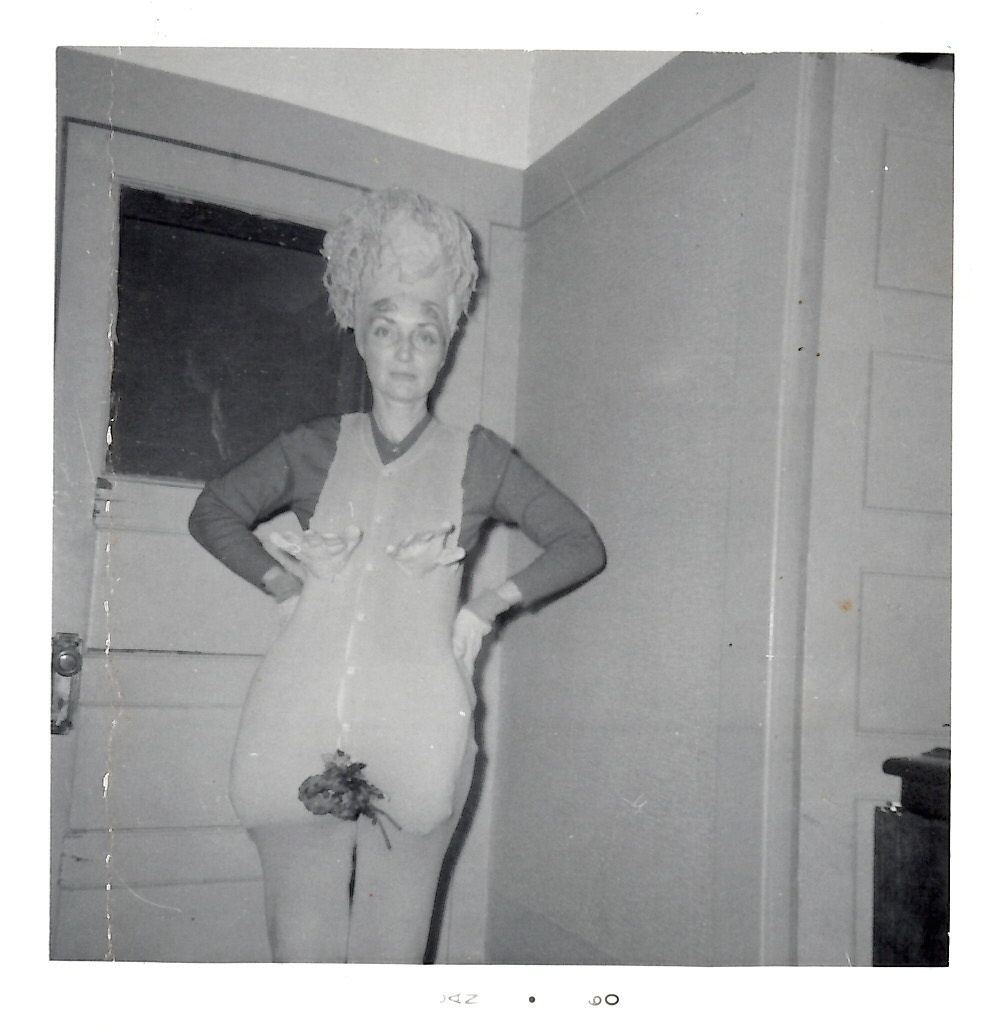
EPSON MFP imageBarbara Shannon, The Harem Dancer

Now I have no idea what went on at these events, remember “Women Only” was the rule but I suspect they kept things quiet only because a delicious secret is a fine thing to cherish. Husbands were allowed for one night only and I remember my dad and Oliver Talley in their best suits having a hi-ball in our kitchen and then laughing as they left early in order to get the best seats to see what mischief their wives were up to. Bawdy, mischievous, a little off color it certainly was but watching my parents at the kitchen table  in the days after catching each other eyes and laughing for no apparent reason was our delight.

Of course, if any of these fine women were still alive, I suspect they would be embarrassed by this story and I might catch a little grief.  I will never forget the last time I saw Hazel Talley. She had outlived almost all of her friends; including my mother, but we spoke of the old times when her son and I were just boys. As we talked, for what turned out to be the last time, this wonderful and gracious women started to cry and said “Mike, I miss your mother so much and all the fun we had when we were all so young.” Such a sad thing, but also a memory that goes in the keeper box, on the very top too.
EPSON MFP image

Barbara Shannon, God only knows what, 1959. Might be a Turnip.

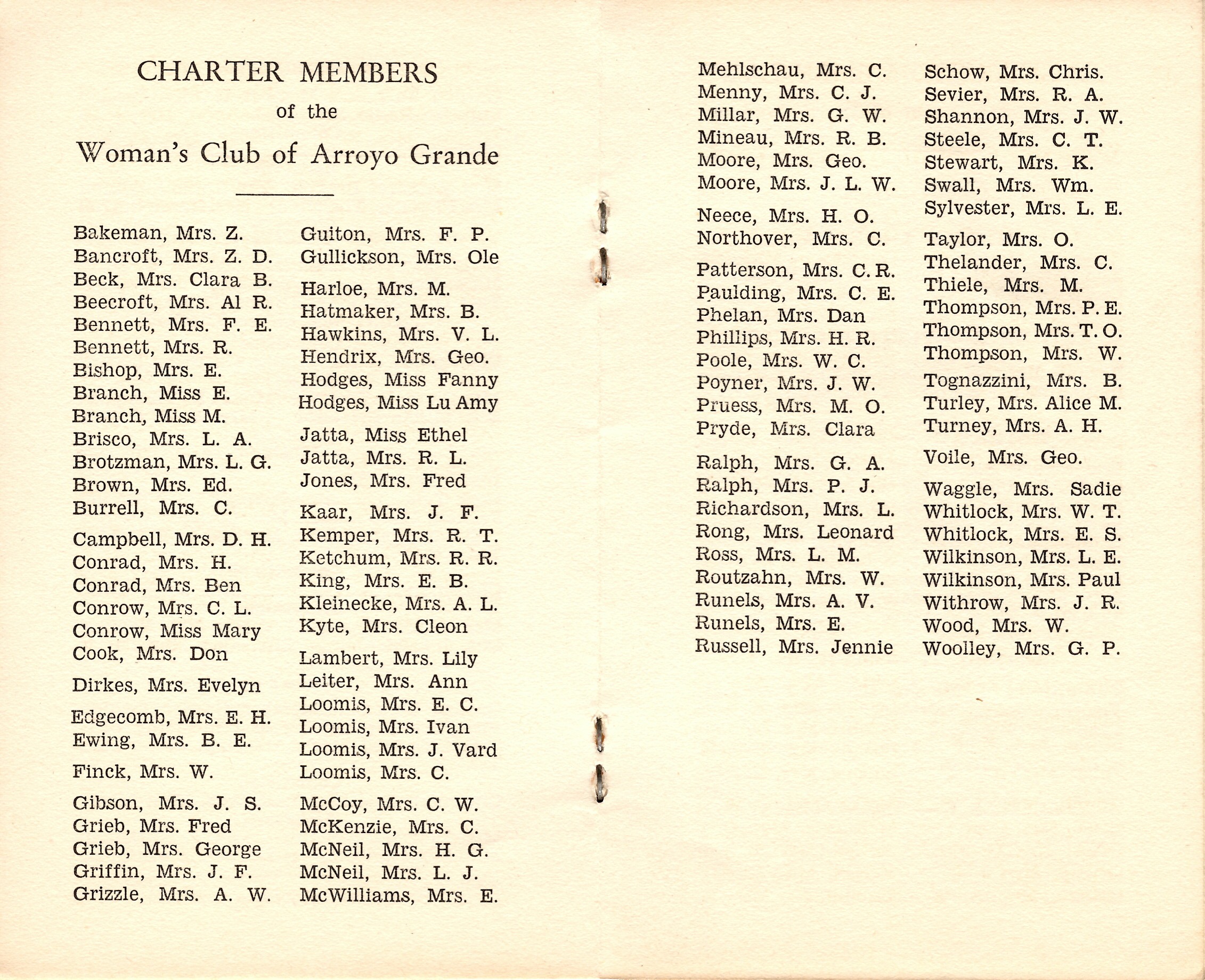
In May, 1937, Arroyo Grande’s first Woman’s Club, “dedicated to self culture and advancement and civic betterment,” was organized at a preliminary meeting held on a Friday afternoon in the grammar school auditorium that stood where the Ford Agency now exists on the corner of Traffic Way and Fair Oaks. Sybil Poyner presided, and was later elected as our first president. They presented a fashion show, speakers from the SLO Monday Club, and gave a tea. 150 ladies attended and 70 signed up as charter members. Meetings were to be held on the second Friday of each month.
EPSON MFP image

womens club

Note that all the women are identified by their husbands names. I know their real given names but it seems somehow a sacrilege to use them.


Michael Shannon lives and writes in his hometown of Arroyo Grande California.
Standard

Rainy Day

By Michael Shannon

Farmers are outdoor people. They live by the rhythms of season. So we learned from our father the importance of weather. My dad lived more outdoors than in. No matter the weather, he was up and out of the house at dawn. Be it the promise of a hot August day, an April morning dripping fog or a dark winter day of pouring rain.

On the wall of our kitchen dad always had a barometer. The thermometer was outside the back door.  We had no meter for the dew point but the humidity you could feel on your skin. In the early morning, observing the moisture on a plants leaves and even the smell of the air could be interpreted to predict the weather. The wind from the south meant rain, from the northwest meant it was clearing. The daily crop report on the radio could help a farmer see a little bit into the future. Calling the  brokers at the  San Francisco  wholesale vegetable market and asking about the bay area conditions was a help. At Mow Fung produce on Grant Avenue in Chinatown, they could just look out the window and give you a forecast. I know a farm family who called their cousins in Salinas for the same reason.

Farmers are all gamblers. They are the greatest of optimists. My dad bet the farm on the weather and the markets every day of his working life. An entire summers investment and work could be wiped in an early morning hour by frost or rising waters from the same creek that fed his crops.

When you are a kid every day holds the promise of some adventure. Rainy winter days were the most exciting, fraught with the possibility of perhaps, some disaster.

As little children we were eager listeners when family told stories of creeks flooding. The Arroyo Grande going over its banks, drowning crops under layers of mud carried down the creek from the High Mountain area above the Ranchita, Huff’s Hole and upper Lopez canyon. Joined by Tar Springs creek just below Gulartes, the careening water would swirl, twisting in upon itself while parts of broken trees submerged and resurfaced like wooden submarines. Through the narrows at the Harris bridge, close by the Machado’s and the Gregory’s, the sound carried to our home almost a mile away. A rumbling, low bass,  with a curious rhythmic pace, things being torn apart and slammed together with terrific violence.

geo flood

Ed Taylor, George Shannon and just behind, John Loomis and George Oliver

My father sitting in the semi-darkness, smoking and drinking coffee, worried over the rise  of the waters, a scene mirrored in other kitchens as farmers throughout our valley waited for  dawn to see the how high the creeks were. Bundled up in our coats and riding the front seat of the pickup, warm and snug against my dad, we rode the dawn patrol as he made the rounds of all the turnouts where the water could be seen. Cecchetti’s bridge crossing, The Harris bridge, under the spans at Mason and Bridge Streets and the crossing at the site of the Cienega school, hard by the old Oliver Taylor house. The photo above, taken in 1954, clearly shows the concern on my fathers face as he watches the flood waters just above the old highway 1 bridge. The water is just below the top of the dike and Ed Taylor’s ground is just on the opposite side of the creek. Ed is listening to John Loomis who is pointing just upstream where the flood is about go over the bank.

1914-ag-floodA

The Arroyo Grande, The morning after, 1914. Crown Hill in the background

Groups of worried farmers gathered at each turnout to assess the damage and speculate whether the water was rising or falling. This was no academic exercise. If the creek rose enough to top the banks, farm fields would flood. Crops could not recover, either drowned or covered with a slurry of mud, choking them to death. Any part of the valley which had heavy soil, such as the Dune Lakes area, could take months to dry making it impossible to farm at all.  To the farmers on the ground which made up the old La Cienega Rancho, flooding was a disaster of the first order. The ranch that was Spencer Record’s, the Taylor acreage, could be destroyed in a few minutes for once she was over her banks there was no stopping her. Witness the washout at Branch Street in 1914 created by the little creek out of Corbit Canyon. Imagine the effort it took to replace the ground in the days before powered machines. Every bit of the dirt was brought in by horse and wagon, one shovel full at a time.

EPSON MFP image

1914, looking down Branch Street, the old Herald building first on the right.

In those days, the flooding creek literally plowed it’s way downstream, rooting out the willows and sometimes entire Sycamore trees which scoured the undergrowth along the banks, cleaning the channel for its entire length. In the days before the dam was built this was an annual cycle that allowed a free flowing stream in the summer and fall where swimming and fishing in the farmers dams was an annual sport for boys and girls who ran free like semi-tamed animals, migrating up and down stream as they would. At our place it was the dam behind our farm, or George Cecchetti Senior’s just above the bridge where we would go after school. It is still today, a short downhill coast from the old Branch school to the creek. Town kids swam at the gauge below the old high school, just above the old railroad bridge. Most of us learned to swim this way.  And of course we weren’t by any means the first. Generations of Arroyo Grande kids once swam there. My grandfather Jack Shannon told stories of swimming in the slough at the foot of Printz Road. Arch Beckett’s lake it was called. My dad and uncle had a small hole on Shannon Creek near where they lived.

two huckies

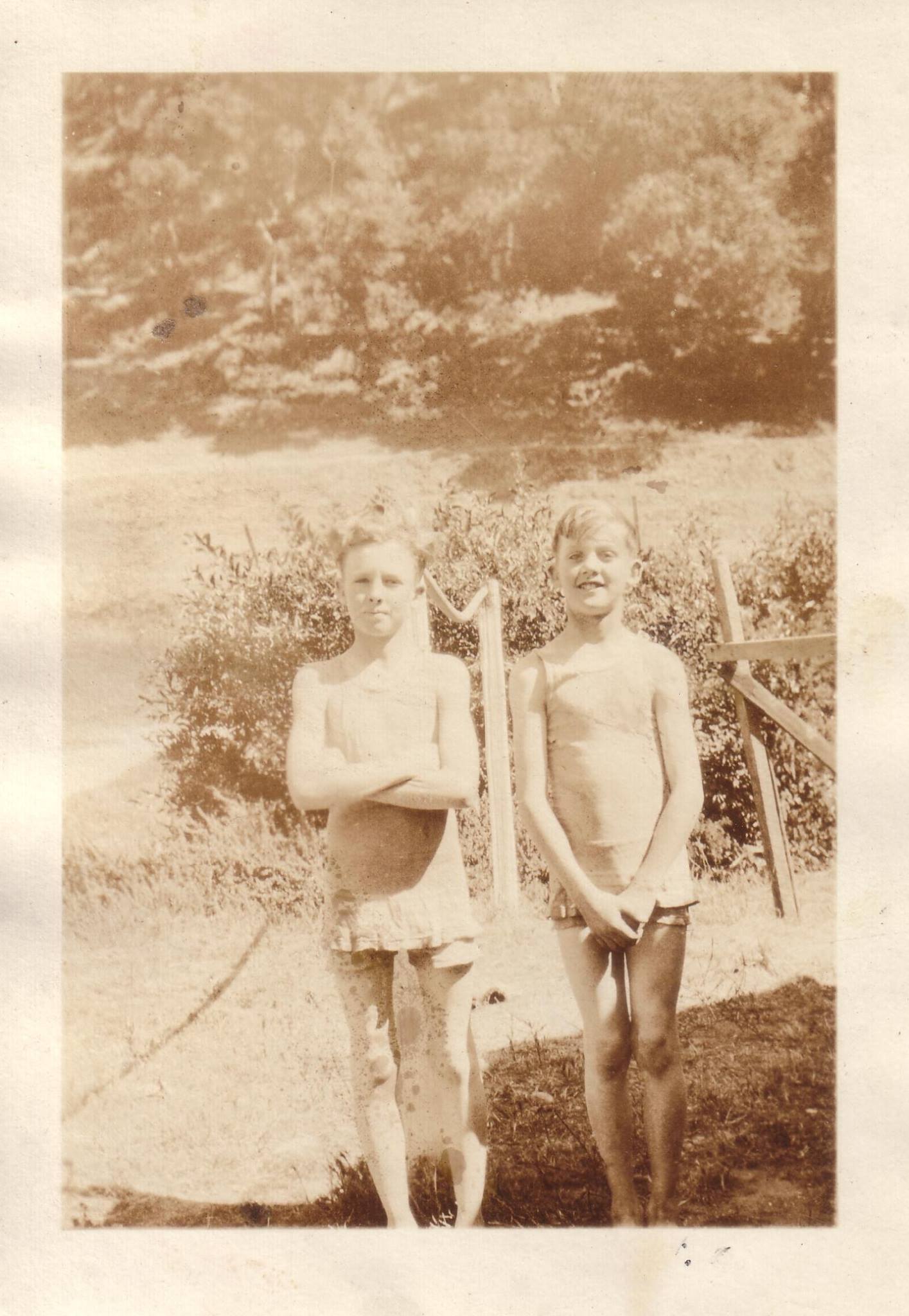
Jack and George Shannon 1920, taking a dip in Shannon Creek.

My uncle Jackie on the left and my dad on the right, taken in the front yard of my great-grandfather’s house on the old Nipomo  road now known as El Campo, about to set out for a dip in 1920. You can just see the gravel drive at the left and the bushes along the little creek. Today this flows behind Arroyo Grande High School where it was re-routed when the Poole tract was built in the 1930’s. It could be just as well be my brother and I, 35 years later.

I can still remember Hazel Talley, in our kitchen talking to my mom about how frantic she was when her oldest son Donald, went down the creek with Bob Rowe, leaving from the Rowe’s house, putting in at the creek on the Waller’s farm and racing downstream to the ocean in an inner tube during a big flood year in 1959. The flooding creek was a meat grinder of logs, whole trees, old car bodies and whatever kind of junk had been thrown in it. Poor Hazel could just imagine what could have happened to her son, who of course, being a boy, thought only of the adventure.

flood 3

High water above the highway 1 bridge 1954

We have lost this annual cycle to the dam. Water no longer flows in the summer or winter. The creek is choked with willows and wild blackberry woven together in an impenetrable mat by poison oak vines. Children no longer play in their fathers little ponds and todays farmers needn’t agonize through the night wondering if their fields will be there in the morning. Safer, yes, but what has been lost to us is irreplaceable. Fish no longer swim upstream for little boys to catch and our fathers disasters can no longer be, there is a certain sadness here.

Few kids today can know the pleasure of cuddling with their mothers on the couch of a rainy day, before television and reading the Hardy Boys while she leafed through the pages of the Ladies Home Journal. Dad in the kitchen staring out the big picture window at the weather, something he did nearly every day of his life.

Michael Shannon lives in Arroyo Grande, California. He writes so his children will know who they came from.

Standard

He was a man in his time.

Near the end of the film “A river runs through it,” Norman Maclean tells his friend Jessie Burns that he has been offered a job as an english professor at the University of Chicago. Jessie’s whole face lights up and she says “Oh Norman, that’s the berries!” For the first time you know she is in love with him. The delightful rendering of this simple phrase is one of my favorite movies scenes because, to me, it not just a scene in a film, but a fully rendered and perfect example of a phrase no longer used by anybody but my Uncle Jackie.

John Patrick Shannon was born of John William “Big Jack” Shannon and Annie Gray, nee Shannon in 1909. Little Jackie was their first child and remained for the rest of her life, Annie’s favorite. Not to say she didn’t love her son George, for she surely did,  but the love of a mothers heart goes to the needy one and George was never that. Raised on the ranch the boys never lacked for something to do, for a ranchers life is one of constant work. Cattle and crops do not respect the days. Milking and feeding is done relentlessly, twice a day seven days a week. Church and school demand time but the work swirls around them and draws you in. The land and its needs create a universe of its own.

EPSON MFP image
Annie Shannon and little Jackie in 1910

Jackie was 9 when my grandparents moved to their ranch south of Arroyo Grande and he was introduced to a life he would never leave. He and George grew up in a world that is hardly remembered today. They lived, until High school in a four room house that had no electricity, and for the first part of their time there, no inside plumbing. Cooking was on a wood stove in the kitchen. Bathing was done Saturday night, once a week in a washtub filled with water heated in the reservoir of that old stove. My grandmother bathed first, then my grandfather and the two boys in order of age. Same water for all.

EPSON MFP image

The Old House in 1919

I suppose today you might call that old house just a shack and if you judge by todays standards it was, but my family never saw it as such. There were nicer houses in town but the size of a house has nothing to do with with whether its a home or not. In the early part of the 20th century boys were pretty much on their own to find things to do and I still remember the old cages the boys built to house their collection of animals they trapped and raised. They had squirrels, raccoons, mice and almost any other varmint they could trap or catch. They roamed the ranches of their neighbors looking for adventure as little boys will do, digging in the caves of Mt  Picacho for pirate treasure, visiting the Fernamburg boys who lived where the Leticia Winery is now or seeing the Buss kids who lived on another ranch up behind the mountain.

Jackie and George went to the old Arroyo Grande Grammar School on Bridge Street.  Every day they caught a ride with the Buss kids and rode in the back of the buckboard. Its not as if there were no cars, for of course, there were, but a horse on pasture and an old spring wagon did just as well and was far cheaper. The old school had horses tied up until well into the 1920’s.  Other times they walked the 2 miles to school. When the highway was paved with asphalt they had roller skates to get to school. They would wait for Fritz and Shorty to race down Shannon Hill, meeting them where the old ranch road met the highway and then skate to school.

As it is today, much of the persona is shaped by the experience of youth. Jackie started high school in in 1923. Though Arroyo Grande was a very small town, far from anywhere, newspapers and movies brought the culture of the Roaring Twenties home. My grandfather paid to have electricity extended from town to the ranch in 1922. He needed to be able to operate the new machines that enabled him to operate his dairy more efficiently. Interestingly, he didn’t pay to have the wire strung to the house which was several hundred yards away. I once asked my dad what my grandmother must have thought of this, seeing that her household chores would have been lightened and my dad said, “She was used to doing things the way they were.” The most influential thing that electricity brought was the radio. Of all the changes radio brought to the Shannon’s, live music, drama, instant news and a much more expanded world view, the one thing that ultimately was passed down to me was the language of the time.

The twenties was one of the most socially revolutionary in our history. Skirts were going up for women, morals, down.  Popular music began to reflect the beginnings of Jazz, and F Scott FitzGerald and Ernest Hemingway were giving voice to a new age. The art world, couture, and nearly all aspects of popular culture were reacting to the events of the World War. A generation  was inventing its own language and customs.

EPSON MFP image
Uncle Jackie Shannon’s HS graduation picture 1928

I graduated Arroyo Grande in 1963. My dad in 1930 and although I thought at the time that my dad was hopelessly old fashioned he told me stories that taught me that the more we seemed different the more we were the same. There might, and I stress the might, have been one pregnant girl in my high school class. There were several in my dads class. Thank goodness they are all gone now or I couldn’t say that without getting myself in trouble. Those girls seemed hopelessly staid in the old pictures but my dad told me that girls wouldn’t wear “shimmies” under their dresses and when they stood in the sunlight you could see right through them. He claimed that imagination was the sexier thing and short skirts left too little to the imagination. Theirs was the first generation to have automobiles and all that meant. It was prohibition and it was in full swing here. Remember both my uncle Jack and my dad “ran the milk wagon” delivering to homes and all, and I mean all the businesses from Shell Beach and throughout what is now know as the five cities. They delivered to the speaks and the “houses” where the working girls lived. My dad told me  how the girls used to tease my uncle Jackie. No one thought too much about a 14 year old boy driving the milk truck with his 12 year old brother standing on the running board. Except the state of California.

EPSON MFP image


When I was born my uncle Jack was 36. When I was old enough to know him well he sprinkled his conversation with words and phrases that I was unfamiliar with and it wasn’t until I was more educated did I begin to realize that what I was hearing was the sound of a time gone by. Both he and my dad would describe something unusually good as the “berries.” I was pleased to hear the phrase spoken in the film because it was delivered with such enthusiasm and delight, exactly the way it was meant to be. “If you knew your onions, it didn’t take cheaters to spot a four flusher. You could ankle down to the bakery and put up the mazuma to buy your tomata a sinker and a cuppa joe. If a sheik tried to fork over a wooden nickel you’d know it was bushwa.”

He peppered his speech with words like those all of his life and we learned them because as a lifelong bachelor, my brothers and I were in a way his children. He loved us and took us exploring all over the county. We climbed Eagle Rock together, explored the Nacimiento and the creeks all around. We explored the pirates cave on Mt Picacho, swam in the pool at big falls and had divers other adventures. We learned about his life.

My uncle Jack never married. Perhaps time stopped for him. He lived at home with my grandparents until my grandmother Annie died in 1977. The ranch was sold in 1980 . When he retired and I went to visit him I noticed an old photograph on his bedside table. It was a girl dressed in 20’s style. I asked him who it was and he said, “Oh, you don’t want to know about that.” I should have insisted. I wish I had.


Standard

The Library

By Michael Shannon.

There is a misconception about reading and education in early California. It is easy to think that our Rancheros were illiterate in Spanish andor English. The men and women who pioneered the Cow Counties were fixed on the idea that their children should be educated. Francis Branch, William Dana, Mariano Vallejo and Isaac Sparks set up schools in their homes for the children who lived on their vast Ranchos. Each of the many Mexican land grants had libraries of books imported from Mexico, Spain, The United States, England and other countries around the world. The impression that California was a backwards, howling wilderness could not be farther from the truth. Trade with China, the Phillipines and Russia was common. Francis Branch and his family ate off plates imported from China and drank from goblets that came from Mexico and Spain. Their boots and shoes came around the horn from New England. Contrary to Richard Henry Dana’s characterization of the Californios as a backward and a foolish people they were in fact wealthy, well read and sophisticated in the ways of the country they lived in. A cousin of Captain William Dana, Richard, a wealthy Harvard student taking a gap year for his health was, he felt, a superior being and felt no compunction about mocking and denigrating the people of California. His book, Two Years Before the Mast is an instructive look into California culture in the early 19th century but it must be viewed through the lens of the writer and his prejudices.

Other than the priests who managed the Missions and had libraries of religious tomes which no one other than the fathers would have been allowed to read, the first books introduced to San Luis and Santa Barbara counties would have come from the first pioneering families. For three quarters of a century all the libraries in the counties were either private or small collections of books maintained by the little towns themselves.

Until Andrew Carnegie. Andrew Carnegie, was, one of Americas most ruthless, loathed and hated tycoons of the late 19th century. Connecting him to the libraries that bear his name, my father explained that he built them because he was trying to beat the Devil. Spending part of his massive fortune on free public libraries, a novel and very liberal idea at the time might buy his way into heaven. Regardless, those libraries set the tone for a major change in public education.

Carnegie libraries were built along the coast of California in Lompoc, Santa Maria, San Luis Obispo, Paso Robles and Santa Barbara from 1905 until 1917. Our town, Arroyo Grande had a very small library tucked into a small and old wooden building on Branch Street. It was the towns first and was located right next to the space that would later house Dr. Pence’s office. It later moved, sometime in the Twenties to another small space on Mason Street roughly where Andy David’s law office was. It migrated to a utility building behind the Veterans of Foreign Wars Hall before WWII which is where it was when I was a kid.

Santa Maria Carnegie Free Library, 1909

I cannot remember the time when I didn’t have a library card. My mother started taking  us to the little library behind the American Legion hall on Orchard street when I was just a little guy. It was the domain of Mrs Bernice Kitchell. She was the first librarian ever I knew. She was not too tall, slight in stature, almost too thin, wore spectacles and always had her hair up. She was very nice to little boys and guided us around the tiny rooms, for the library was, at that time, just a temporary building. Being a temporary building, it is, of course still there sixty five years later. At the time it was just a simple city library, not the kind you see today, but financed by the town. Mrs Kitchell was of course paid a pittance and in return she did every job required or not. She scrounged books from everywhere she could and it wasn’t unusual to find in a checked out book someones name written on the flyleaf. Most likely someone you or your parents knew. There was a muted mysteriousness to the place brought on by the smell of books, both the sharp fresh smell of a new book  and the musty timeless smell of the old. The air was redolent of the mixture and combined with the pale, dusty air, a perfect setting for the child exploring for just the book to take him to a new place and the adventure there.

Thanks to Mrs Kitchell I’ve been everywhere, both on this world and all the others. I ran through the jungle with the Lost Boys, I’ve drifted down the mighty Mississippi with Huck and Nigger Jim,  Followed Tarzan through the great, lost elephant graveyard on his quest for the jewels of Opar. I waited until I saw the whites of their eyes on Breed’s Hill, Studied with Frank Merriwell at Yale and crossed swords with Pedro De Vargas, the Captain from Castile.

Before I was out of grammar school I had read hundreds of books. I used to take books to school and read after my lessons in the little two room schoolhouse that my brothers and I went to. Both of my teachers, Mrs Brown and the sainted Miss Elizabeth Holland knew I was reading when I should have been doing something else because I would open my desk top and read a few lines while I pretended to be looking for something.

Mrs Edith Brown and Miss Elizabeth Holland at Branch Grade School

EPSON MFP image

One of the things that worked to my advantage was that each of the teachers taught four complete grades mixed in each of the two classrooms. They taught each grade level for part of the day while the other students did assigned work or read from the school library. A student had time to explore their education without having each classroom minute orchestrated. This worked to my advantage because I could complete my school work and then go adventuring in a book. What has turned out to be the greatest reading lesson of all has been the ability to read in context. I was simply too lazy to go to the big Webster’s which weighed a full fifteen pounds and look up words I didn’t know, so I figured them out by the way they worked in sentences. I can say that this is the best thing I learned in school.

Not many of these little schools exist anymore. They were places where the teachers set the curriculum with a little help from the school board. Many of the school board members at Branch had gone to the school themselves. Other than a small stipend from the county schools office they were on their own as to school improvements, curriculum, books, playground equipment and anything else that was required. We had no band, and no organized sports program. Everything we did was dependent on the parents and teachers. Believe it or not, some of our text books were the same books used by students more than a generations before us. It seems strange today but those books covered social studies or history up to the 1930’s and the rest everybody knew because they had lived it. It was first hand knowledge.

school books

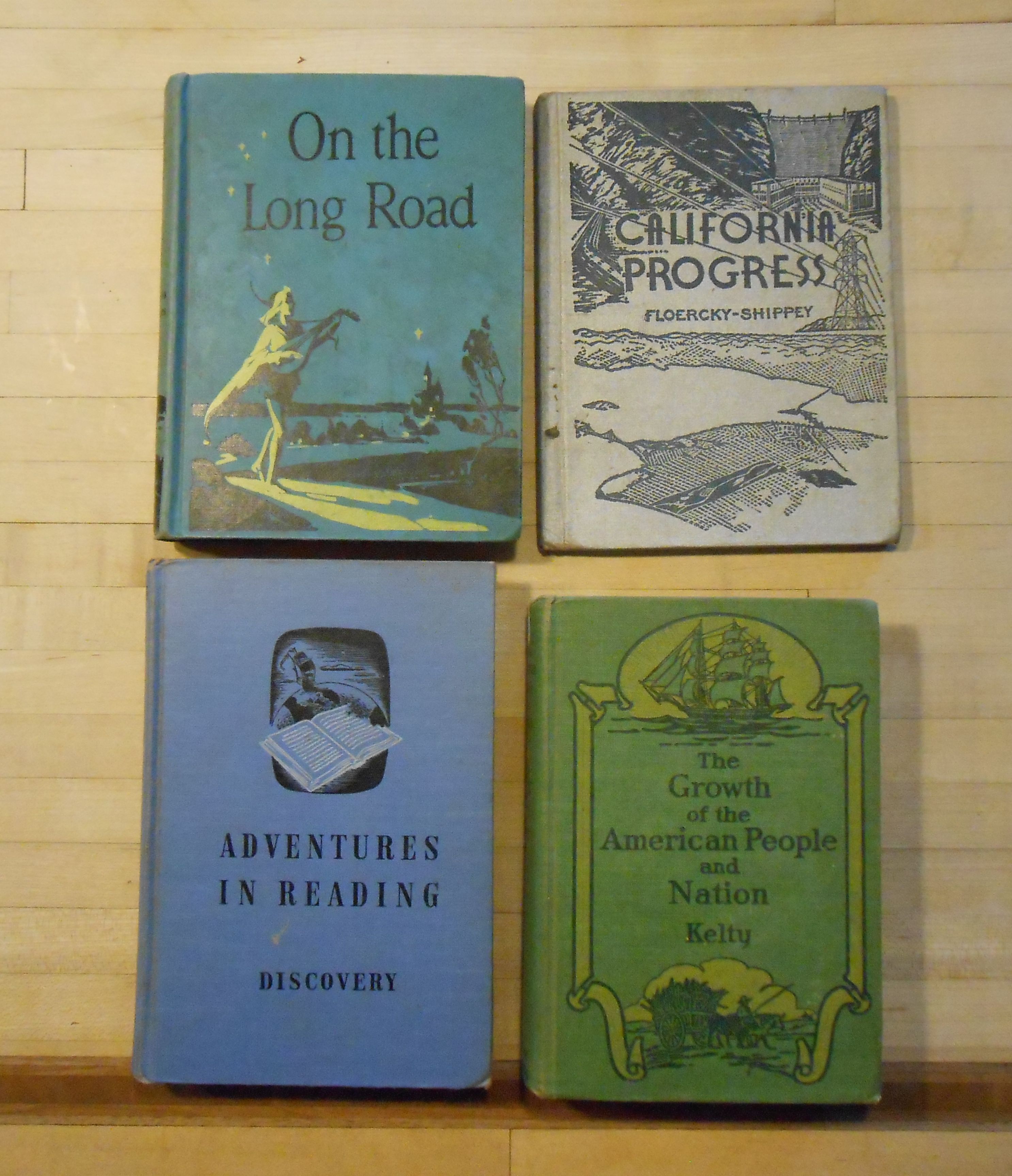
The photo above shows some texts from Branch. None is newer than 1936. The Growth of the American People has two names written on the flyleaf, Joe P. Roza and William Quaresma.  Al Coehlo’s name is in the California Progress textbook. I knew these men as friends of my father and went to grammar school and high schol with Al’s children. These books were still in use in the fifties when I studied there.

I figured not long ago that I’ve read somewhere north of ten thousand books in my lifetime. Incubated in the Library and School, I have Mrs Kitchell, Katie Sullivan McNeil, Edith Brown and Elizabeth Holland to thank for starting me On the Long Road.

When I was in High School, it was Margaret Sullivan and Florence McNeil, members of some of the oldest Arroyo Grande families. Mrs. Don Rowe too, they were always there when you needed them. Decades later when I was a teaching High School the fabulous Kathy Womble prowled behind her desk at Nipomo High School always on the lookout for kids she could nurture. We  also had the fabulous Feryl Furlin who was so helpful and organized she was scary. 

Librarians care for books and they want you to care also. Nearly a million books are published in the United States each year. They are all written for you to read so you’d better hurry up.

Internet Memes are useless in building knowledge on any subject. Their only redeeming factor is that they may spark some little curiosity to know more. Go see your librarian and do it now.

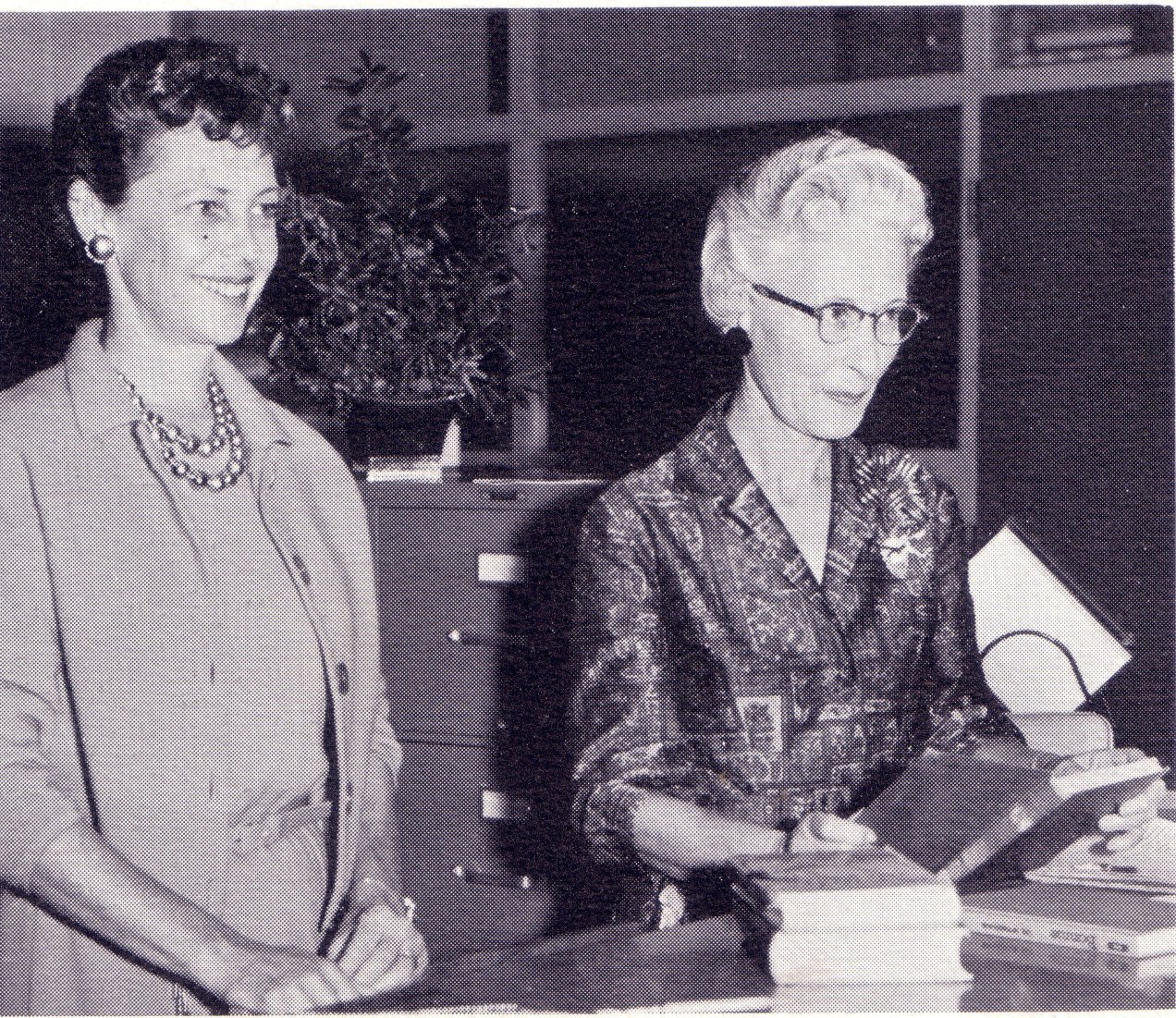
Cover Photo: Margaret Sheldon and Florence McNeil, Arroyo Grande High School Library 1962.

Michael Shannon lives in Arroyo Grande California. Reading has taken him around the world and into space both literally and figuratively. The number of library cards he has held from different places looks like a deck of cards.
Cards: Arroyo Grande Community Library, NTC San Diego, Balboa Naval Hospital San Diego, Naval Base Pearl Harbor, NSA RVN, Long Beach, San Diego, La Mesa, Hilo Hawaii, Honolulu, Haleiwa, Waikiki branch, San Luis Obispo Black Gold and San Luis County library system libraries and Shell Beach Community Library. Member of the Friends of the Library San Luis County.

Standard

Corporal Edgar Green

The phone rang. Nancy was still at work, I told the caller. She explained that she was calling from the rest home where Nancy’s aunt Edie had lived her final years and she needed to know where to send her personal possessions. With no one at home , I told her it would be fine to send them here and we would take care of them. She thanked me and rung off.

Not thinking too much about it I let it slip my mind until two weeks later a small box about the size of your kitchen toaster arrived on our doorstep. Seeing by the address it was the promised package, I set it aside for Nancy to open.

Aunt Edith Green, or aunt Edie as she was called was the sister of Nancy’s grandmother, Hilda. She was one of those semi-obscure maiden aunt’s that used to populate families, particularly in the decades after WWII. I had my own aunt Iva Jean Fee, my aunt Anna and my Uncle Jack Shannon, all of whom never married. I’ve always thought that in small towns, if you don’t marry young, the pickings are slim to none as you grow older. Spinsterhood becomes a habit, not by choice, but by lack of opportunity.

After our little boys were snug in their beds we sat down at the kitchen table and slit the tape holding the box closed and looked inside to see what might be the accumulation of a long life. Sorting through the box we found some old costume jewelry, a hand tatted lace handkerchief and at the bottom a pack of old and yellowed letters and post cards bound up carefully with a narrow maroon ribbon tied in a neat bow.

Today, no one writes personal letters and written communications has devolved to emoticons, tweets, less than 140 characters if you please, and the occasional e-mail. Phone calls are quick but are lost to history upon “hanging up,” a phrase itself soon to disappear from our lexicon. So why would a person  who was 97 years old, keep letters in a small box and carry them from London, where she was born, to Vancouver Canada in 1919 and finally to Santa Monica where she spent the rest of her life.

“Luck that takes the form of finding valuable or precious things that are not looked for.” That definition of serendipity perhaps explains how aunt Edie’s precious letters ended up with me. Of course, they had to be given to Nancy’s mother as the closest living relative. Anne  was momentarily  interested  in them but soon confined them to a remote and seldom opened drawer where they were to reside for another 25 years.

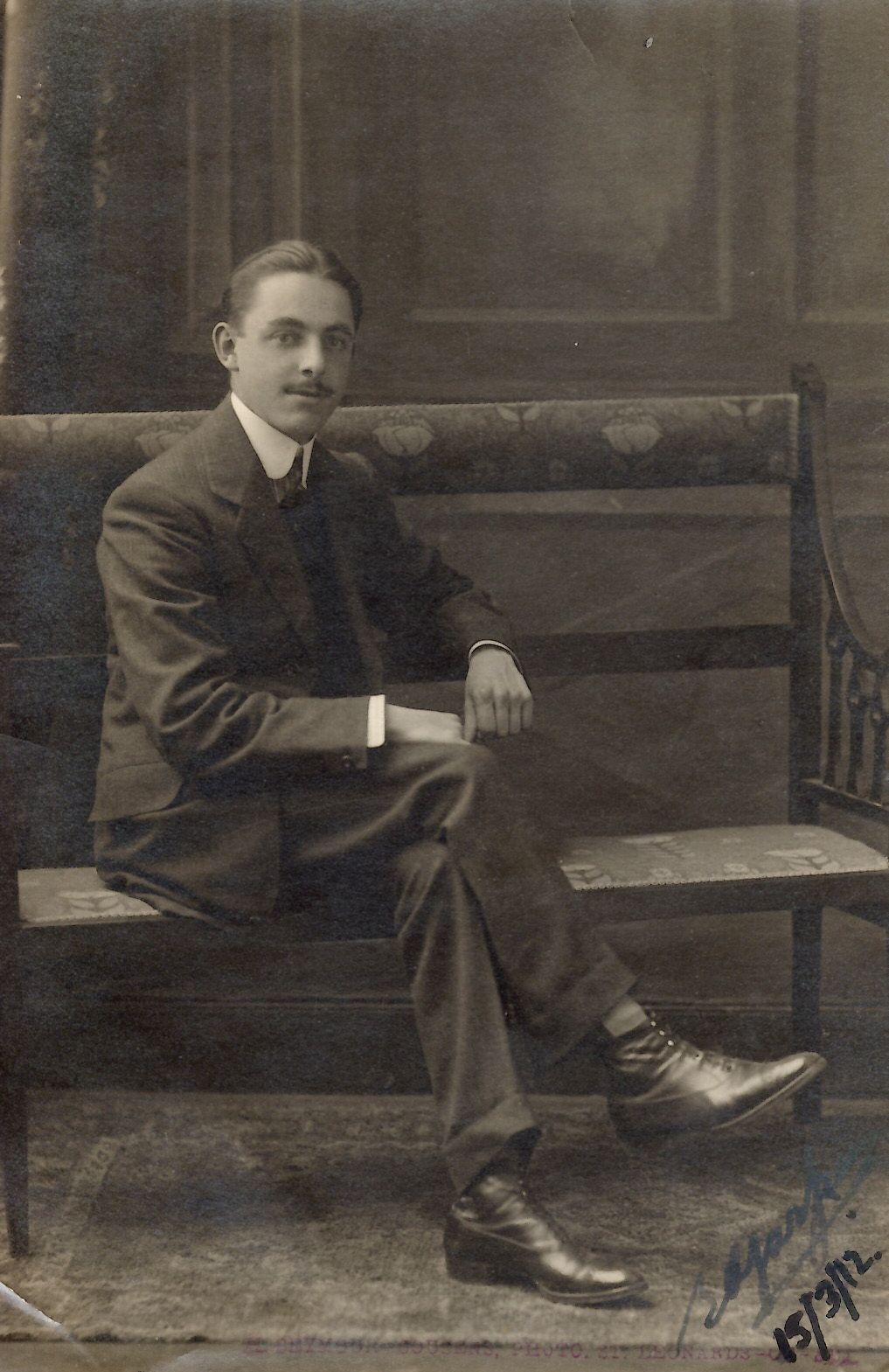
    EPSON MFP imageEdgar Green, March 15th, 1912 Townsville, Queensland, Australia
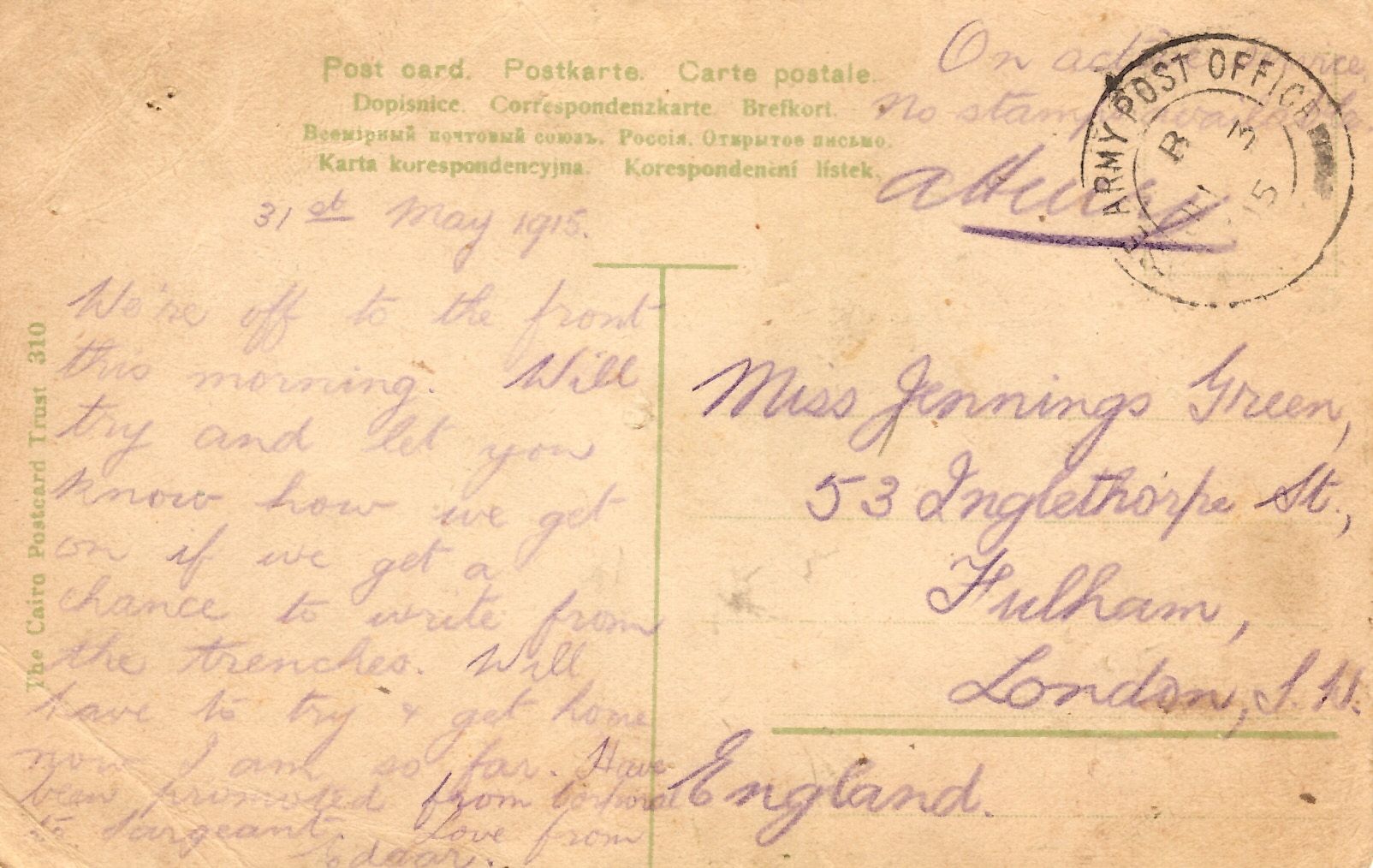
Those letters are a treasure which has been  the key to unlocking one of the many threads that make up the generational stories that bind a family’s history together. What about this and how about that; and why?  For the letters, so carefully preserved were written by Edith’s younger brother Edgar who served with the Australian Imperial Forces or AIF in WWI. His Battalion, the 4th of the 15th Regiment fought throughout the Dardanelles campaign, or Gallipoli as it is more commonly know in the United States.

In the penultimate scene,  the movie Gallipoli portrays the horrific battle of the Nek fought against the Turks on the Gallipoli peninsula. The Australian and New Zealand troops, in attempting to close on the turkish trenches are sent forward into  withering machine-gun fire and are slaughtered. The letters from Edgar connect us with this singular event as he was there and wrote of it to his sister.

The letters and post cards connect us to Edgar and that family. They chronicle events. from his enlistment in 1915 until the end of the war. This little event, the opening of a postal parcel has opened a window on the life of our entire family. Things unthought of, things unseen and an opportunity to look back on events in our family lost for a more than a century.

EPSON MFP image

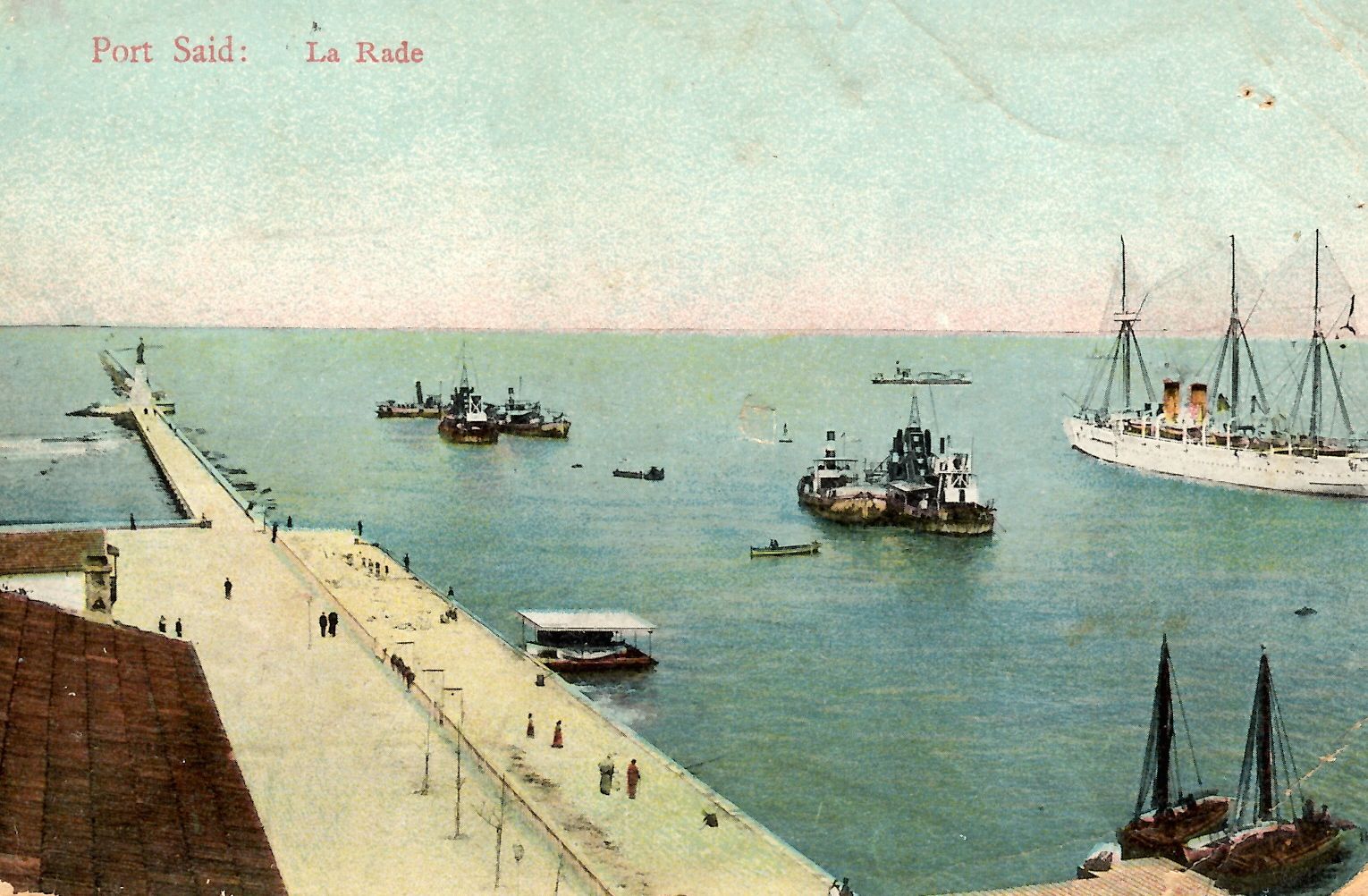
Port Said, May 31st, 1915 Edgar’s port of embarkation

EPSON MFP image

Off to Gallipoli.

Standard

The Invasion

Written by Michael Shannon

April 1st, 2024

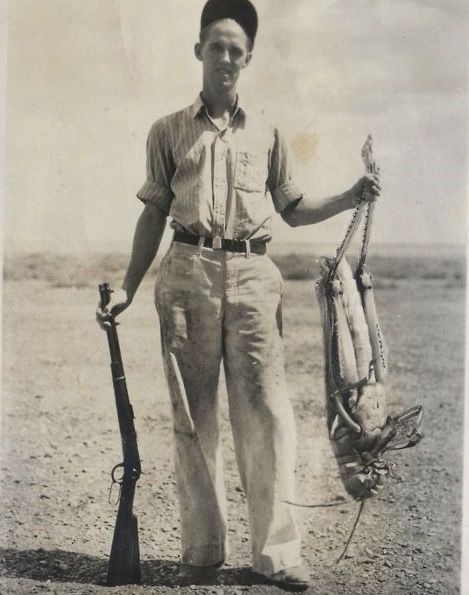
James, you asked about the great grasshopper invasion of San Luis County. My mom took this photograph on the ranch. It’s Lester Falk holding a prize hopper, the one that didn’t get away. It was very difficult to hit them because they were jumped all over the place and you had to be very good at making a moving shot. You can see he used a 30-30, as a twenty-two slug wouldn’t do the job; the small slug couldn’t penetrate the exoskeleton of the grasshopper.

grasshopper

Exoskeleton, Lester would have laughed himself silly over that word. You see, he never went to school, at least not enough to read and write and words were like a foreign country to him. A very distant foreign country to boot.

His family was “Tractored Out” of Oklahoma in the thirties. They came out to California in ’37, everything they had on the back of a Model T flatbed truck, Grandma, husband, wife and three boys, Frank and the twins, Lester and Chester mixed in with the chairs, mattresses, and the detritus of a failed life. They were considered “no account” in Oklahoma and maybe worse in California. One of thousands of defeated families who would be the models for the Joads.

They were proud though, pride was all they had and they new the meaning of work. It was the only currency they had. That’s all my dad cared about; the work. People have forgotten that everyone was part of the depression. They were all in it up to their necks, particularly the farmers. My dad was no exception. He saw Lester, Lek as he was called, hanging around the Greyhound bus depot on Branch St in the summer of 1939. He was standing there, didn’t have a crown in his hat, broken down old shoes, pasteboard in the soles, his old shirt was torn. Dad needed hands that day and he asked him, “Done any farm work?” He said “Yeah, I have.” Dad asked, “could he drive a truck?” Lester said, “Well, I drove a truck over thar in Maricopa, in them oil fields.” “Well, you want to try and go out and help me?” He said he would. “Had any breakfast? “No” he said, “ain’t had no supper neither.” Dad took him over to Mutt’s cafe and told them to fix him up with breakfast and a lunch. He said that he had some overalls and maybe some old shoes he could wear and put him in the truck and took him out to the ranch. In a week he were showing the others a new way to go.

Skinny he was, couldn’t of weighed more than 150 pounds but he could work like a son-of-a-gun. Smart too, he could fix any kind of machinery, “make ’em go” as dad said. My dad had a university degree; an intelligent, educated man, he could do figures too, he used to figure out things like how many gallons of water it would take to cover all of California a foot deep. Really; he did, just pencil it out on the back of some old envelope he had on the kitchen table. He wasn’t a mechanical man though. How physical things like machinery worked was beyond him. He could turn a nut ok, but the inner workings of a transmission were as mysterious as the mountains of the moon. A boy like Lester, he said, “just goes to show you that an education can’t teach you everything thats important.” “That boy couldn’t read or write but he could take a tractor apart and put it back together blindfolded.” he said, “he could invent ways to do things, just give him an acetylene tank and a couple bucks to spend at the junk yard and you would get a piece of machinery that would cut your work in half.”

I can understand that. I’m smart enough but I was always pretty indifferent in school, noodled my way through with the help of my mothers teacher friends Frankie Campbell, Gladys Loomis and Ruth Teague. Not to forget Mrs. Otsugi. But I can turn a wrench, and I can see every part of a house and how they go together without even closing my eyes. The stories about Lester always made sense to me. Even as a boy, I was always making something, a fort, a boat to put in Arroyo creek and dozens of projects that only farm boys can do.

So Lester worked for my dad for five years until ’42. He was just 21 when they called him up and sent him off. Remember, he was smart and when he told them he couldn’t read or write, he figured they’d just let him go. They didn’t though, they put him in school. He still figured they’d let him go if he wouldn’t learn; but they didn’t. They said, “riflemen don’t need to read and we know you can shoot.” Lester still thought he could figure a way out. He survived the battles for Sicily. He fought with the Texans up the spine of Italy. They told my dad that he tried eating soap on the way to the landings at Anzio hoping he wouldn’t have to go ashore in that awful place. He  just knew he could find a way home.

But he didn’t. They killed him in Normandy. He’s still there.

Lester was just eighteen when the picture was taken.  My dad had the grasshopper stuffed then, and for many years it would turn up as a gag gift at house warming parties around Arroyo Grande. Kenny Talley and I used to play with it when his folks lived on McKinley Street. I think Oliver and Hazel gave it to John and Nancy Loomis when they moved out to the  house on the Tar Springs ranch. I last saw it on a shelf in Chris’s Saloon. Don’t know where it is now.

As the song said, “Every picture tells a story, don’t it?”

Have a great April First.

Michael Shannon works and lives in Arroyo Grande California and was fortunate enough to be born on April Fools Day. On Easter Sunday to boot and in a Catholic Hospital attended by the Poor Claires from Ireland. What a great start to life.

Standard

Alice Blue Gown and the man who shook the hand of John L. Sullivan

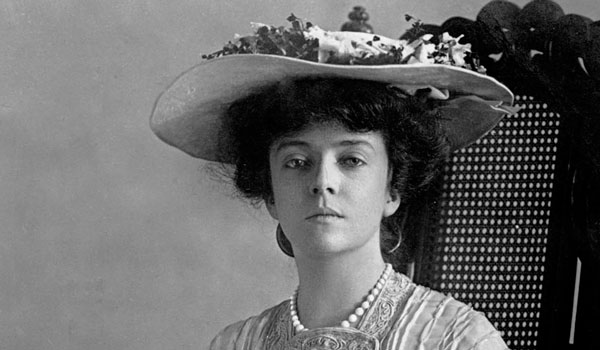
I heard a story told, perhaps apocryphal, that at a dinner party Alice Roosevelt, the daughter of Teddy Roosevelt, asked each person at the table to recount an encounter with some historical event or character within two generations of the present. She said “She wished to show how people are connected to well known events in history.”

alice-roosevelt-600x350 Alice Roosevelt about 1900
Her story illustrated the basic truth of the proposition. She said that an old gardener employed on her family’s estate “Oyster Bay” had been a rifleman in the Continental army and had rowed George Washington across the Delaware river to attack the Hessians in Trenton New Jersey on December 26, 1776. Her father knew the man when he was a youth and the old man recounted the tale of that cold and stormy night. So here you have a quite ordinary man participating in a historic event which Alice said went to prove her point.

In a personal example, one of my closest friends father was the roommate of Lt. Gerald R. Ford,  the future president. They served together on the carrier Monterey in the Pacific during WWII.

My grandfather Jack Shannon was raised in Arroyo Grande. As a teenager he ran away from home several times, finally making good his escape when he was 17. The stories he told of his journey across the country, riding the rails, working a cattle boat from New Orleans to Key West and his adventures as a roustabout in the circus delighted us kids when we were little. He could tell a great story too. Never having gone to high school, which was common for boys in the 1890’s and footloose as could be, he finally made it out of Arroyo Grande, taking the train across the country to New York city.

EPSON MFP image

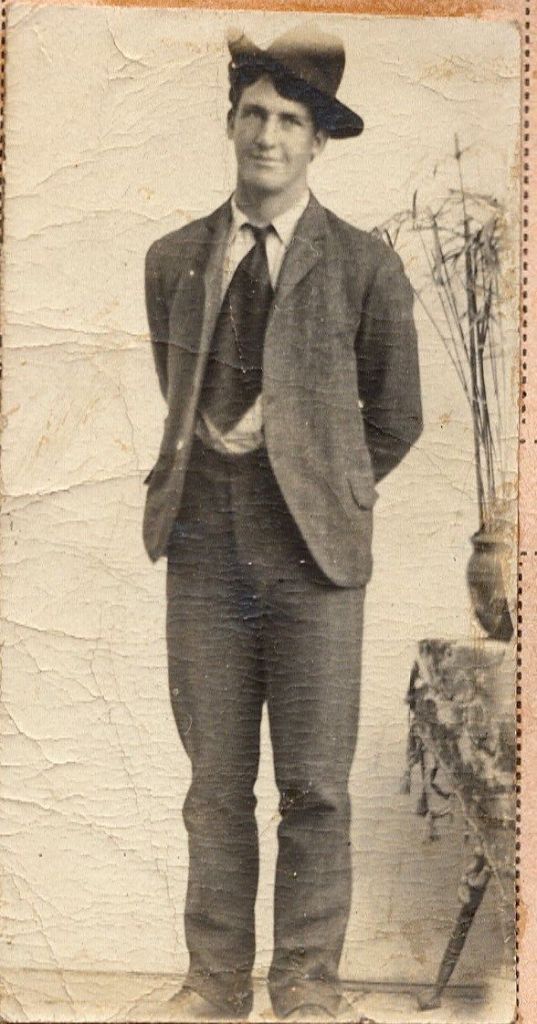
Jack Shannon at 18.

Both his mother and father’s family had relatives to introduce him to city life. This was in 1900 and New York was a rip roaring place, particularly to a boy from rural Arroyo Grande. At home, the streets weren’t paved, there were no street lights as electricity had not yet made its way here. Imagine how dark it was at night. The big city held wonders for a country boy that perhaps he couldn’t have imagined. That year the largest city in america had a population of over 3.4 million. Arroyo Grande township which included Nipomo to the Santa Maria river and Pismo, Halcyon and Oceano was just 3,319, why in New York entire tenements held more people than that.

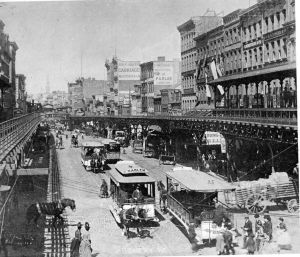
ag 1900  bowery 1900

Arroyo Grande and The Bowery, New York, 1900

“The Gilded Age” it was called after a book by Mark Twain which satirized the period as a time of abject poverty gilded with a thin veneer of gold. New York. The majority of laborers families lived in tenements. Sections of the city were noted by the dominance of immigrant groups. Hells Kitchen on the lower west side and the old five points area of Manhattan where gangs such as the Bowery Boys, Whyo’s, and Five Points gang still ruled. Both heavily immigrant Irish. Upon arriving in New York City, most immigrants found themselves moving into the Lower East Side of the city. Most notably the East Village, Astor Place, Kleindeutschland (Little Germany), Alphabet City, the Five Points, Chinatown, Little Italy, and the Bowery. These neighborhoods were crammed together in the area bordered by Fourteenth Street on the north, Broadway and Pearl Street to the west, Fulton Street to the south, and the East River to the east. How different than Arroyo Grande could you get. Part of lower Manhattan was called the “Tenderloin” after a comment  by New York Police Department Captain Alexander S. “Clubber” Williams, who  gave the area its nickname in 1876, when he was transferred to a police precinct in the heart of “Hells hundred acres.”  Referring to the increased amount of bribes he would receive for police protection of both legitimate and illegitimate businesses there – especially the many brothels – Williams said, “Boys, I’ve been having the chuck steak ever since I’ve been on the force, and now I’m going to have a wee bit of the tenderloin.”

The name became a generic term for a red-light district in an American city; San Francisco, California is among the other cities having a well-known “Tenderloin District”.

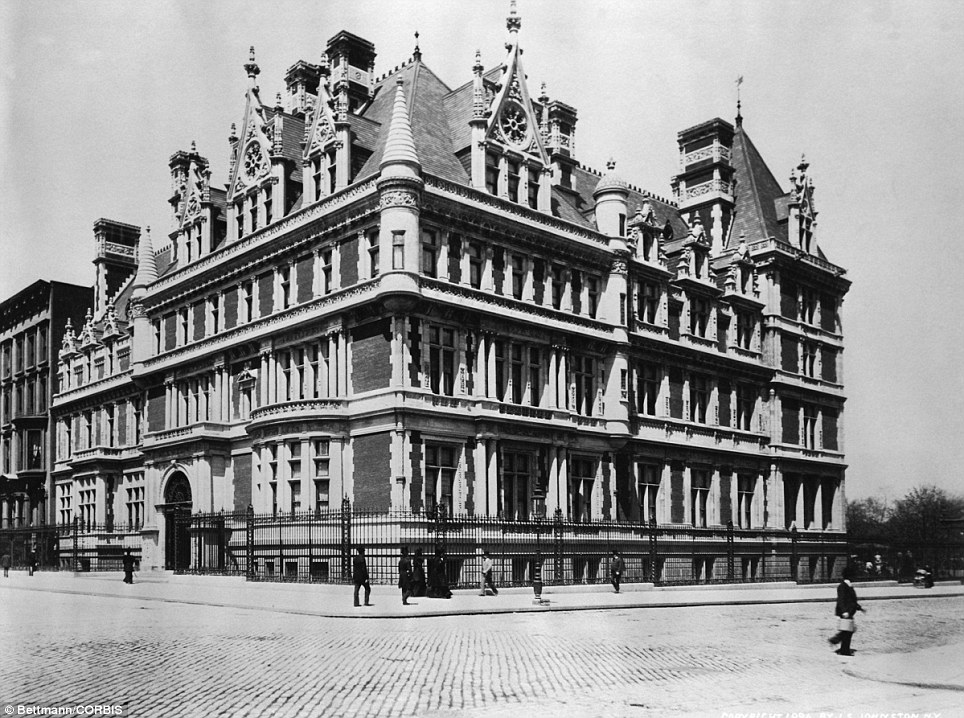
In mid-town the mansions of the rich were built cheek by jowl along fifth avenue. The John D Rockefeller’s, J P Morgan, Henry Clay Frick, Jay Gould and the Cornelius Vanderbilts had enormous piles of stone along the exclusive area known then as “millionaires row.”

vanderbilt mansion

The Cornelius Vanderbilt home 5th Avenue and 72nd St, New York

My grandfather first took classes and then worked as a trainer at the MacLevy gymnasium on Henry St,  Brooklyn Heights in New York. The gymnasium was located in the old Saint George hotel, at the time advertised as the largest hotel in the world. Professor Levy as he called himself almost single-handedly invented the physical fitness culture as we know it today. He invented the first exercise machines and marketed them to the public. His rowing machines are still sold and the MacLevy company survives today as a manufacturer of gymnasium equipment. At the time my grandfather worked there he had three locations, one in Manhattan, one on Long Islands north shore and the Saint George.

The hotel had a huge heated salt water pool in the basement. Mac Levy invented a machine to aid in teaching swimming which, at the time, was not a common skill for city people. Several ferry and ship disasters in the New York area were exacerbated because hundreds of people drowned who couldn’t swim or otherwise they might have been saved. Classes were always full.

Hotel St. George - Clark Street - Brooklyn New York

Hotel St. George – Clark Street – Brooklyn New York

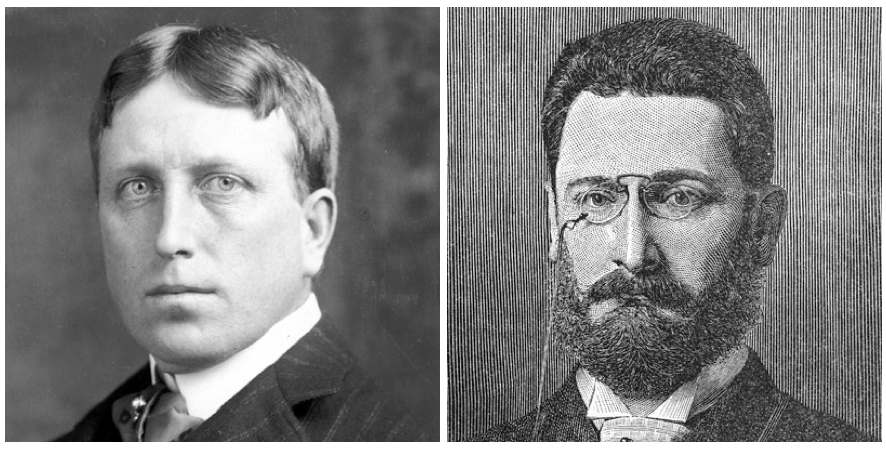
Numbers of the wealthy and influential flocked to the gymnasium to learn the latest techniques in good physical and dietary health. Some of the most famous thespians, athletes and business owners of the day were customers. Consider that Charles Delmonico owner of Delmonico’s restaurant, at the time considered the best in New York and the place to be seen was a customer. He credited Mac Levy with saving his life. William Randolph Hearst and Joseph Pulitzer who owned the most influential newspapers in the world were habitués.

1890s-newspaper-tycoons

Hearst and Pulitzer

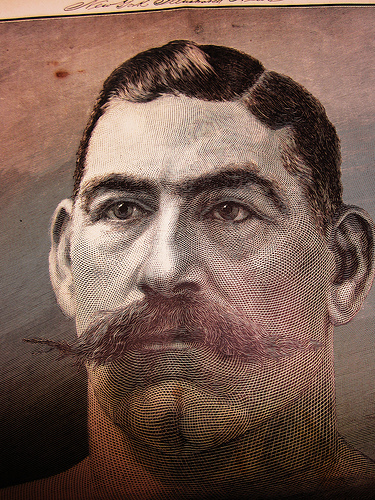
Former holder of both the world boxing championship and the last bare knuckle champion John L. Sullivan, “The Boston Strong Boy,” who had famously said “I can lick any son-of a-bitch in the house,” and proved it too, was often in the gym. Lillian Russell, the most famous actress of her day and her ” friend” Diamond Jim Brady were customers.

              Sullivan Somerville Library                 russell

                          John L Sullivan  and   Lillian Russell

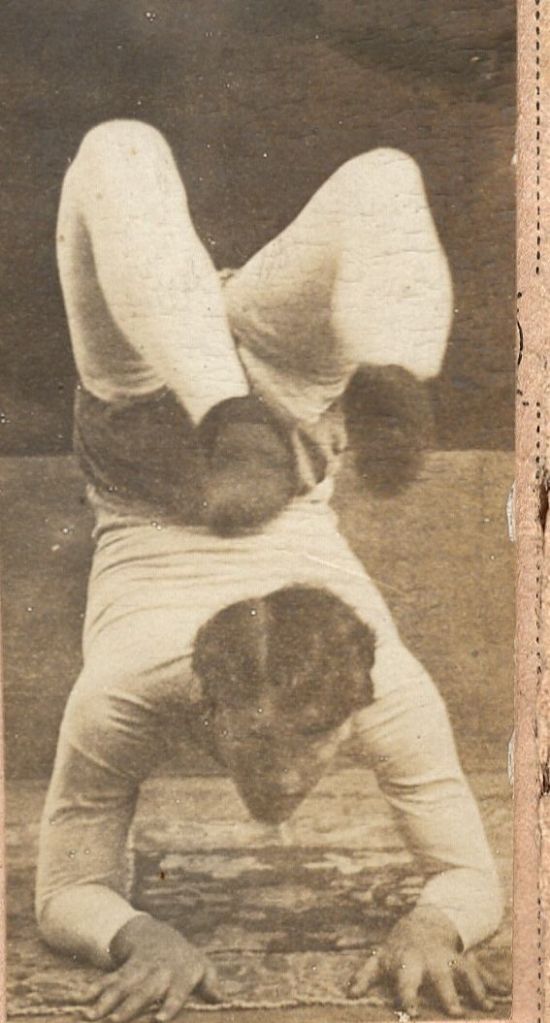
By 1903, Jack was working at the gymnasium in Manhattan. He was an instructor in gymnastics and even as an old man could still do one handed pull and push ups. Jack sent these two pictures below to my future grandmother Annie Gray in Arroyo Grande who was still in high school and she pasted them in her memories book.

EPSON MFP image EPSON MFP image

Jack was held in high esteem by MacLevy and was featured in a book published by the entrepreneur in 1904.

EPSON MFP image

By 1905 he was back on the west coast in San Francisco, living across the bay from my grandmother who was attending the University of California at Berkeley. They married in 1908, had two boys and later on three grand children who were always greeted by my grandfather with the phrase “there are my blessed boys” and you were invited to “shake the hand of the man who shook the hand of John L Sullivan.” No small thing when you consider that at the end of the 19th century John L was easily the most famous sportsman in America.  My grandfather loved to tell stories and this was one of his favorites and we loved it.  A family’s history is passed down the generations in oral form as it has always been. It’s the thread that connects John L Sullivan to me and mine.

john l

    John L Sullivan the last bare knuckle champion of the world.

Michael Shannon writes about his family which is full of characters. The stories are to inform his children of where they come from.

Standard

Letters

By: Michael Shannon

My grandmother Hall insisted that her children write her once a week and I remember my mom sitting at the kitchen table with a freshly opened letter before her and penning a reply for the return post. There was nothing out of the ordinary in these letters, the cast of characters nearly always the same, the day to day things that people communicate to one another. The said nothing profound, just passed along the news of the family and friends they had in common.

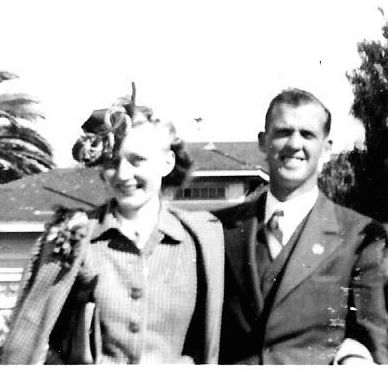
My mom and dad were married in 1943. During the war people didn’t make much of a fuss about a wedding. For a young farmer and his bride there would’nt  be a fancy trip to an exotic location, ration cards and jam-packed troop trains would see to that. Being modest people that kind of difficulty didn’t bother them, they just took a little trip to visit relatives and friends.

mom and dad wed

Barbara and George Shannon on their wedding day

The following letter is from mom to her new mother-in-law Annie Shannon in Arroyo Grande. Writing from the Olympic Hotel on Eddy St, she described some of the sights and sounds of wartime San Francisco. San Francisco would have been familiar to my dad and his parents. My grandparents had both lived in the bay area from 1904 to 1918 and my dad had studied at Cal Berkeley in the early 30’s.

The subtext of the letter revolves around the events unfolding in the city and in the family in 1943. Mom mentions leaving the car in the garage. Rationing of gasoline had taken effect  in December of 1940 and though my grandparents dairy and my dad’s military deferment  as a farmer gave them access to more rationed items than usual, gasoline and rubber for the cars and milk trucks were in short supply. You could only own 5 tires per car or truck, having extras was not allowed. Dad said they would drive the tires until there was no rubber left, just the fabric cord or the inner liner was left. You had to take in the old tire in order to buy a new one. The first nonfood item rationed was rubber. The Japanese had seized plantations in the Dutch East Indies that produced 90% of America’s raw rubber. President Roosevelt called on citizens to help by contributing scrap rubber to be recycled, old tires, old rubber raincoats, garden hose, rubber shoes and bathing caps. A person or business was issued a ration card and sticker for the car which allowed a specific amount of a given item to be purchased. The green ‘B’ sticker was for driving deemed essential to the war effort; farmers, for example, could purchase eight gallons a week.

             gas_milage_ration_windshield_B_stamp_front_type_1_and_20_chevy_001

In movies taken at their wedding, the car, a 1936 Chevy coupe has the sticker plainly visible on the windshield. They drove from Arroyo Grande to San Francisco,  across the  Bay Bridge to Berkeley and my great aunt Sadies home, then up to Watt’s Valley to see Mariel and Ray, and finally,  home, a distance of over 600 miles today and longer then, before our modern roads. They must have used about four weeks of gasoline, a great indulgence, but of course, such is the course of true love.

EPSON MFP image

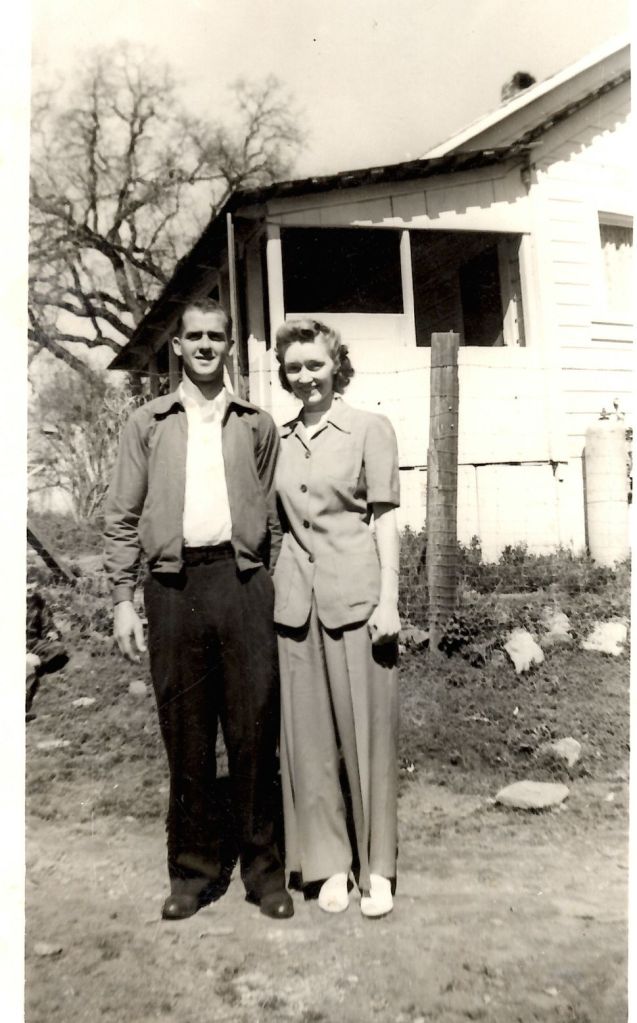
The newlyweds at Mariel and Rays’ in Watts Valley, March 1943

This was the first time that dad met both of them. Dad immediately recognized a kindred spirit in Ray and began a friendship that lasted all their lives. Mariel, though, was enormously pregnant with their first child, Bruce, and had what we might say was the proclivity to pass enormous amounts of gas at any time. What an introduction to new family that must have been. I wish she was around so I could ask her about it. I can just hear her laugh, haw haw haw.

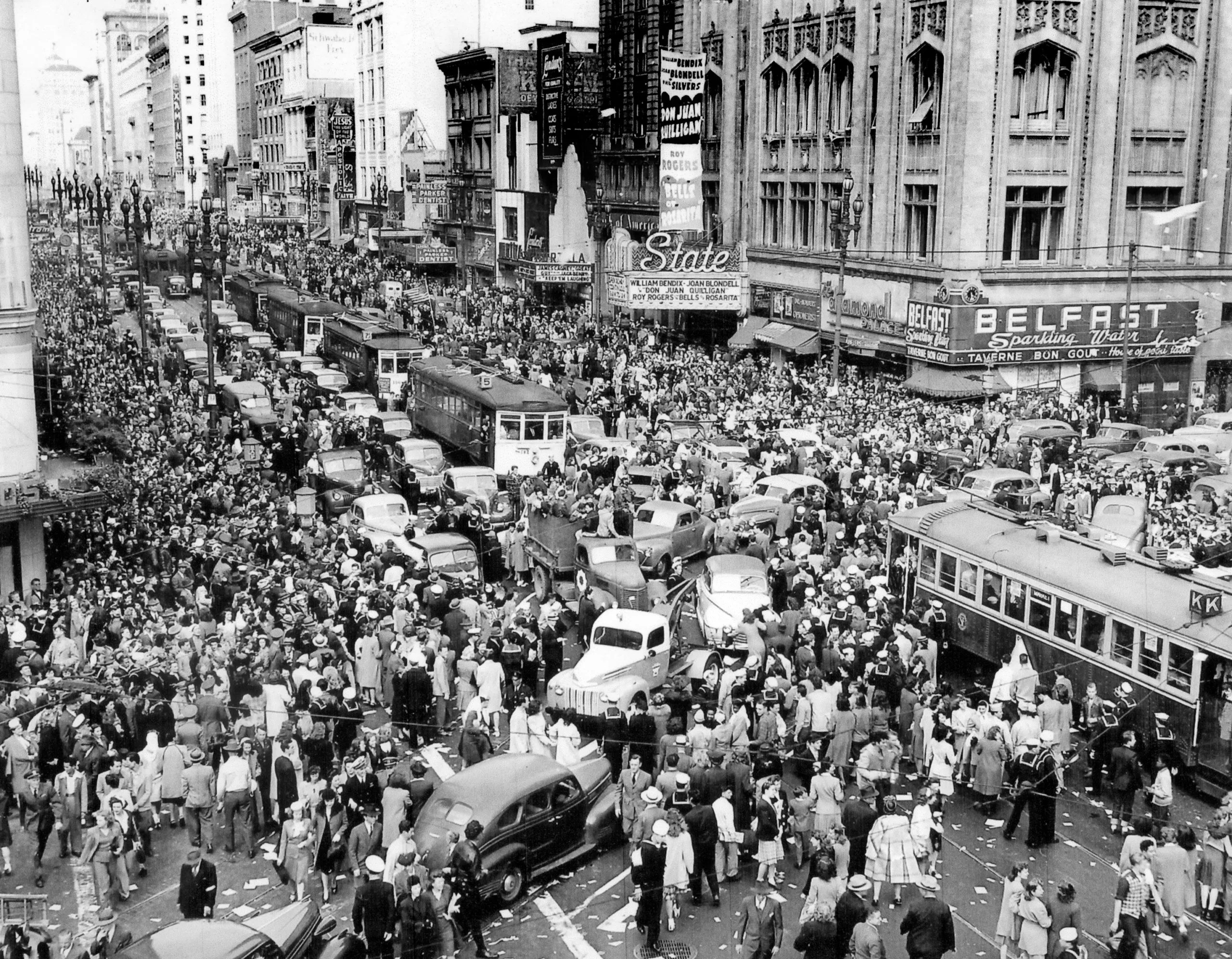
Both my folks mention the crowding. Photos of the city at the time show the sidewalks jammed with sailors and Marines. There is a March photo of the Palace hotel dance floor so crowded that it is a wonder anyone can move. Mom and dad went there to dance and he said it was so expensive they could only afford two cups of coffee. 

uni at war

Saturday afternoon, San Francisco, 1943. SF Muni photo.

In March 1943, the battle for Guadalcanal had just been declared won, and the buildup for the Marine invasion of Tarawa was underway and San Francisco, indeed, the entire bay area was fantastically crowded with men and ships. Add to the population the workers at the wartime shipyards of the East Bay, the naval bases packed around various cities in San Francisco bay and it is easy to understand why the sidewalks were so crowded. It’s a wonder they could get a hotel room at all.

Intro1_AAD-2290[1]

Ships at anchor San Francisco Bay in early 1943

Though unstated, worry about family members and friends serving overseas was certainly a concern. Two of my dad’s cousins were serving in the Pacific as well as his closest friend, Sgt. Harry Chapek who die in France. My mom’s uncle Marion, cousin Donald and her brother Robert were also in the military. Her cousin Donald Polhemus was to be lost at sea in December of 1944. Arroyo Grande was a very small town in 1943 and most young men of draft age were already in the service or soon would be.   My grandmother Shannon saved an old Arroyo Grande Herald Recorder newspaper from 1943 and in it there is a list of local service men and women that runs four full pages. It would have been impossible not to know someone in the service. In fact, a local boy, Jack Scruggs died on the Arizona. I went to school with a boy whose father was trapped on the capsized Utah.

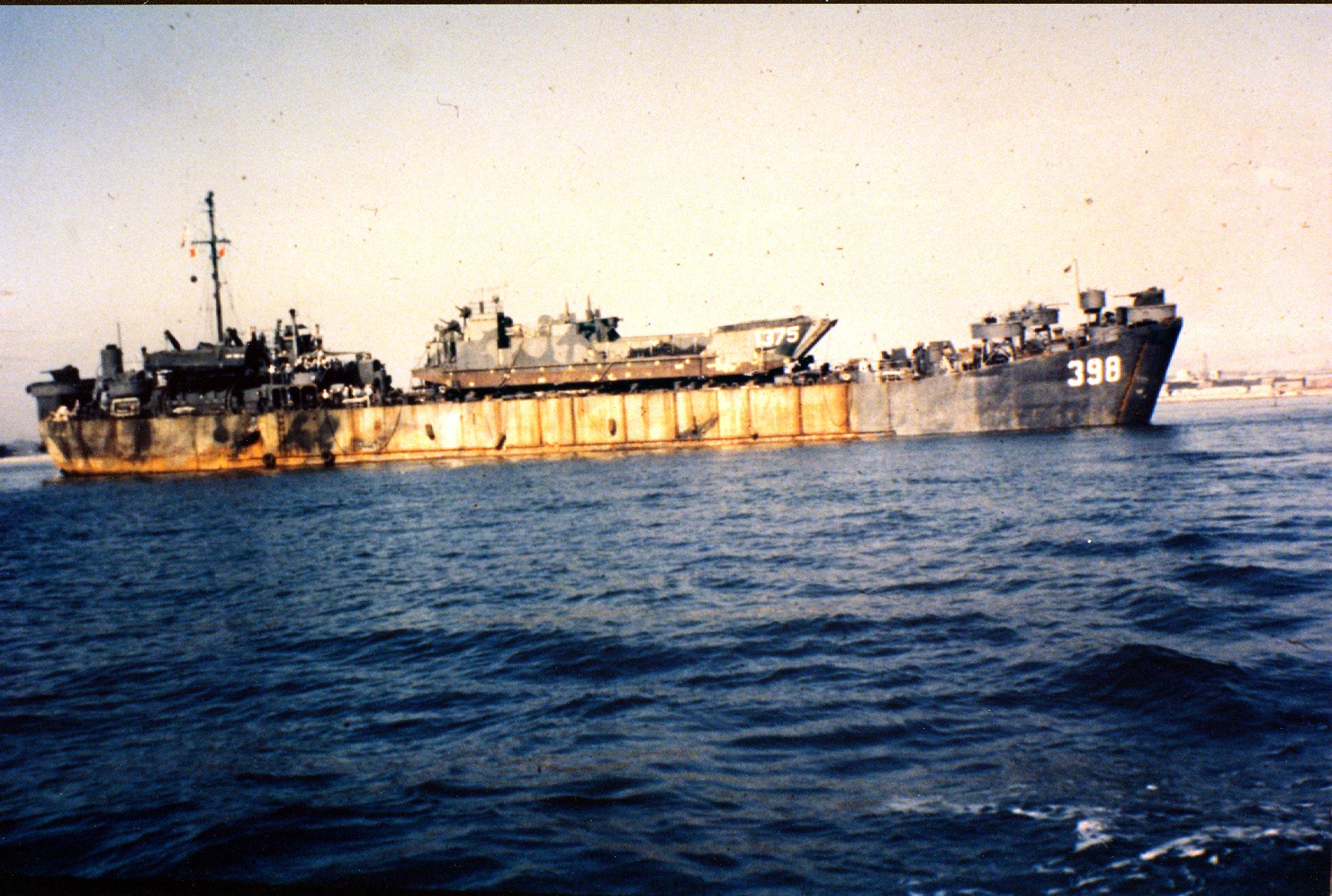
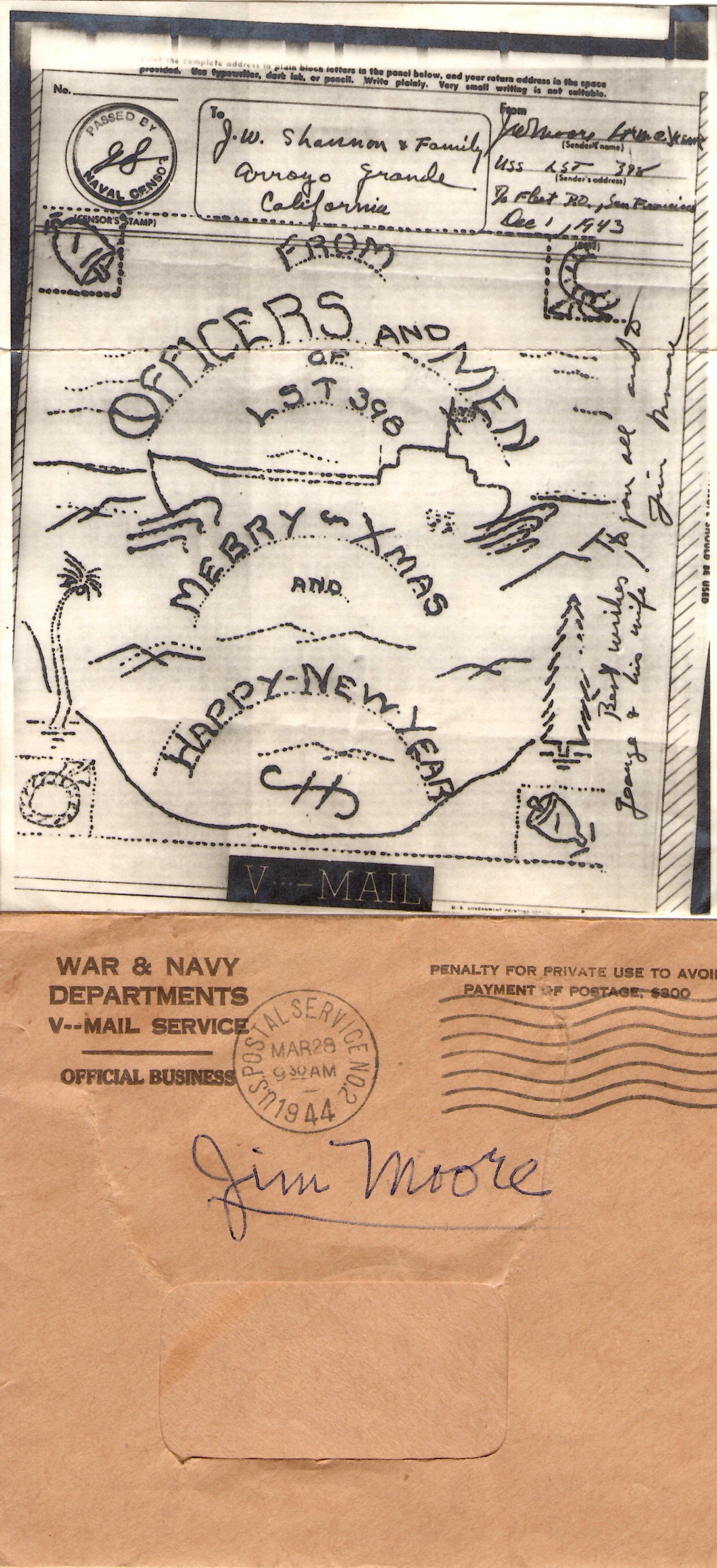
The image that opens this story is V-Mail from my dad’s friend Jim Moore who he grew up with. It’s just the kind of folksy newsy letter the family received from the many young men they knew serving overseas. Jim was a Navy Lieutenant serving on LST-398 in the western Pacific and though the ship had and would continue to serve in extremely hostile waters, the mail itself was just as casual as it would be if he was writing home from college. The truth of his life at war was something best kept secret, not only because it was but because Jim’s thoughts were at home, a place he could not be. Every V-Mail we have is like that. Home life, a place they couldn’t be.

lst398

Jim Moore’s ship. LST-398, Nov. 1944. US Navy photo. Guadalcanal, New Britain, New Guinea, Leyte and Guam campaigns.

 The passing of the art of letter writing, I think is a kind of tragedy. Instant communication is just that, instant, but its gone just as quickly. Much is lost. Here then is the text of mom’s honeymoon letter.


March 21, 1943

Hello Everybody,                                                                                                     

George says “You write,” so here goes. We’re having a wonderful time. We’ve left the car in the hotel garage so haven’t used any gasoline.

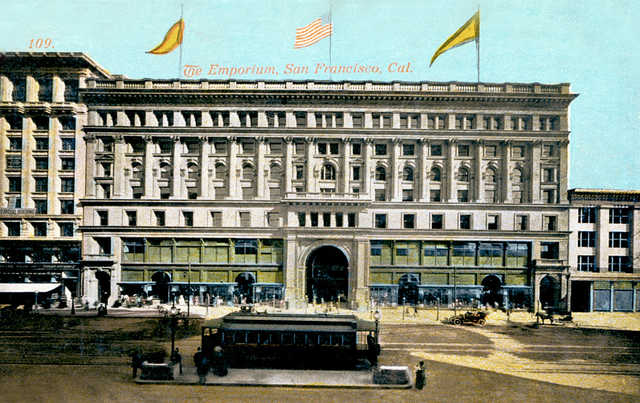
emporium-sf

The Emporium Department Store. Now Bloomingdales.

Yesterday we walked one end of Market Street to the other. We went through The Emporium, looked at everything and didn’t spend a cent. Then we were so tired we went back to the hotel and took a nap. It wasn’t a Sunday afternoon but we took one anyway.

olympic-hotel-2

The Olympic Hotel still stands today. Its near the  the city center, three blocks from Union Square.

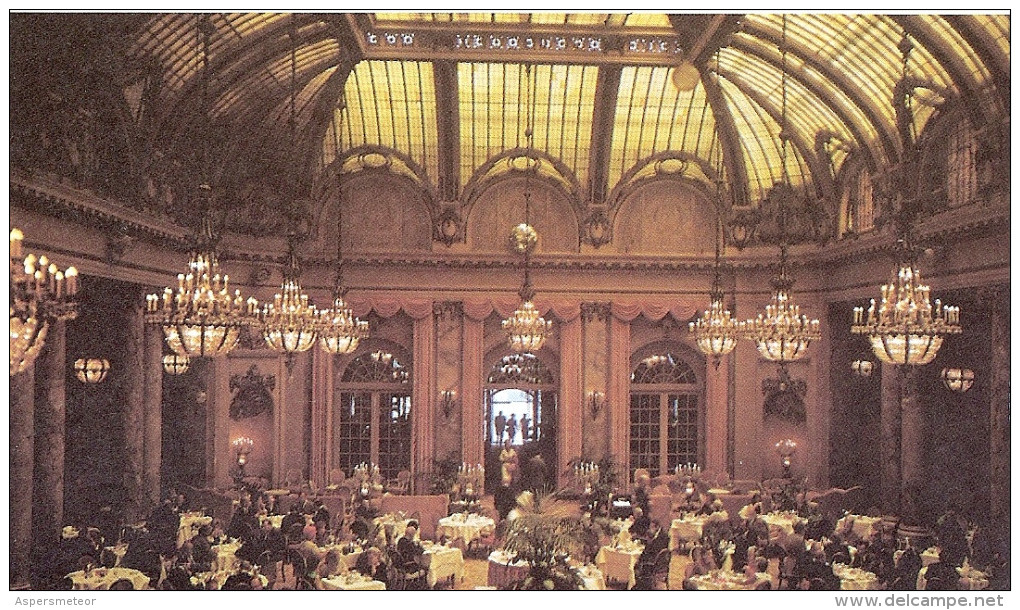
Last night we made reservations at The Palace for dinner and dined with the best of the, maybe I should  say, the rest of the upper crust. We had a lovely dinner. Steak. We watched the floor show and danced and everything. The show was on ice. You know, skaters. They were pretty good too.

palace dine

The dining room in the Palace Hotel.

What I liked best, tho, besides the food, was just watching the people. 

There are more people here on the streets at night than I’ve ever seen before, even in Los Angeles.

George called Sadie yesterday, and we’re going there for dinner at one. It’s 11:30 now, so we’d better get going.

We’re leaving the big city tomorrow, and going to Fresno. Home on Wednesday. It’s nice here, but Arroyo Grande is so much better. 

We haven’t had time to write to anyone else, so say hello.

We’ll see you Wednesday or Thursday. Thank you for being so nice to me.

Lots of love,

Barbara and George

                       (Mr and Mrs George Shannon)

                                             Looks nice, huh? 

PS  (This is in dad’s hand)  

Tell little Jug (Dad’s Brother Jackie) to run our farm the way I told him or I will demote him when we return. This is the busiest place I have ever seen. You can hardly walk down Market St either day or night. We are getting ready to leave for Sadie’s for dinner so must go.

Love, George  

The phrase “Thank you for being so nice to me,” resonates. Mom grew up as an oilfield brat, never settled for long in one place and to be folded into a family and community that had deep roots must have seemed a miracle to her. She now had, as small towns do, friends by the score and a family that would cherish her all of her life. My grandparents adored her for who she was and she would be the only daughter-in-law they would ever have.

Michael Shannon is a writer, sailor, surfer, world traveler and grew up in the little town he writes about.

Please Subscribe.


Standard

BARBARA

Written by Michael Shannon

Below is my mothers eulogy. It was read from the pulpit of our little church at her memorial. In some ways it was the end for us. We’ve scattered and today there are more Shannons in the Odd Fellows Cemetery than live here in the Arroyo Grande valley of California. I can hardly stand to read it myself but I hope it brings something to the table on this Mothers Day.

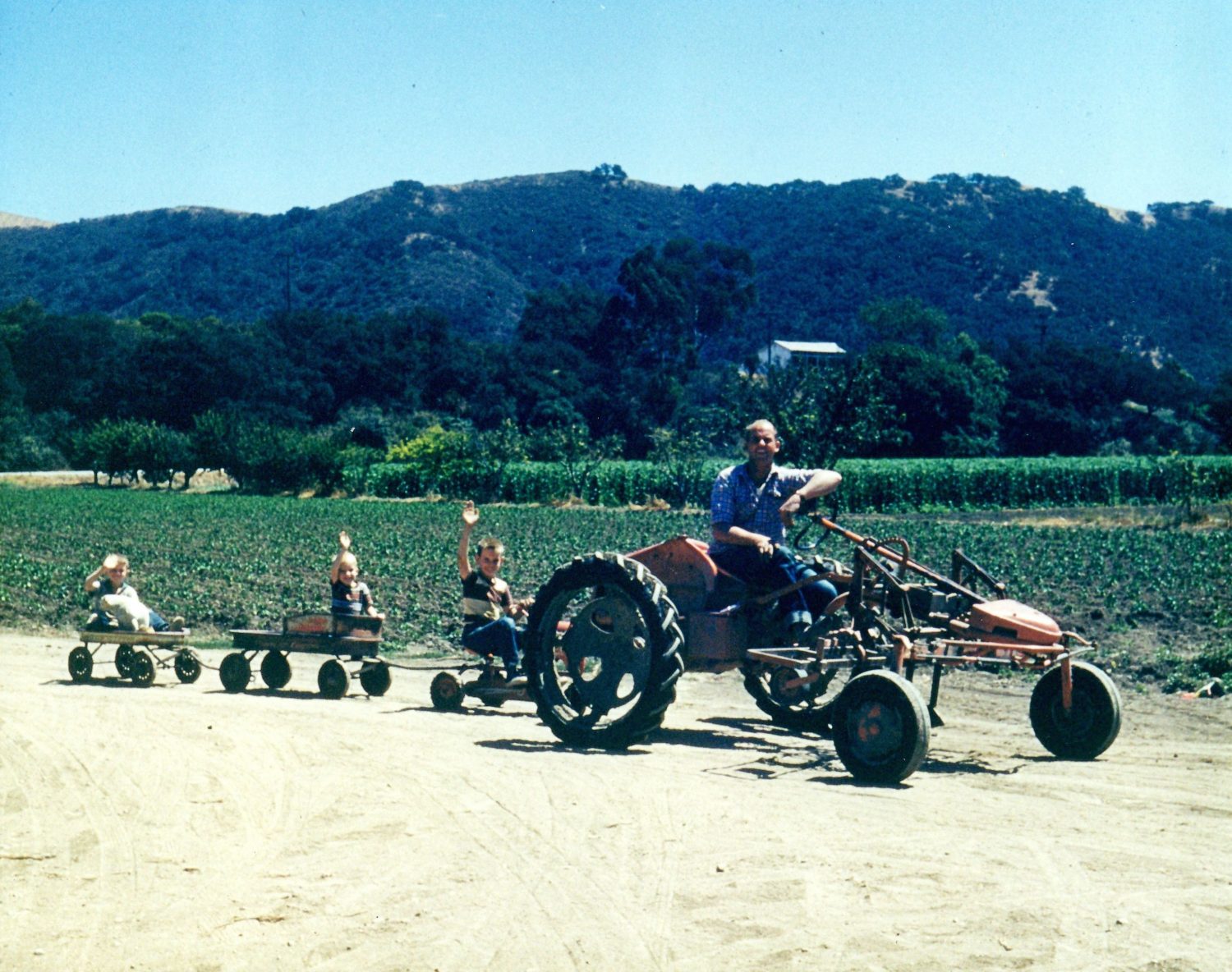
My father had a farm in this fertile and lovely valley for over forty years. There was no better place for boys to grow up, for we had a family heritage that few other children enjoy. Our grandparents and great-grandparents spent their lives in this part of California and we were firmly rooted in the ground we farmed and the society that surrounded us. Kids wandered the hills and valleys unattended by adults other than the occasional wave from a passing pickup window. We lived a life that no city kid ever could.

We had a thousand things to do, a thousand places to explore, forts to be built, forts of bean poles, forts made of the  wooden boxes used to ship vegetables, forts dug into the ground, a fort on top of the old tank house behind our home. Vast engineering projects to design and build in the mud of an irrigation ditch. And always our dogs at our heels, helping us to dig and sniff out the elusive gopher, keeping an eye out for us. Beyond the admonition from our mother Barbara “To be careful,” we received no other instruction or advice. Little boys were not considered  to be particularly breakable. We played with the knives used to cut cauliflower and lettuce. We learned about Poison Oak in the creek by getting into it, Horse Nettles by touching the leaves in the wrong place, lessons learned the hard way but not likely forgotten. Our parents were mostly content to let us find our own way in life. Best of all, we had a mom and dad who loved us, and each other, deeply.

EPSON MFP image

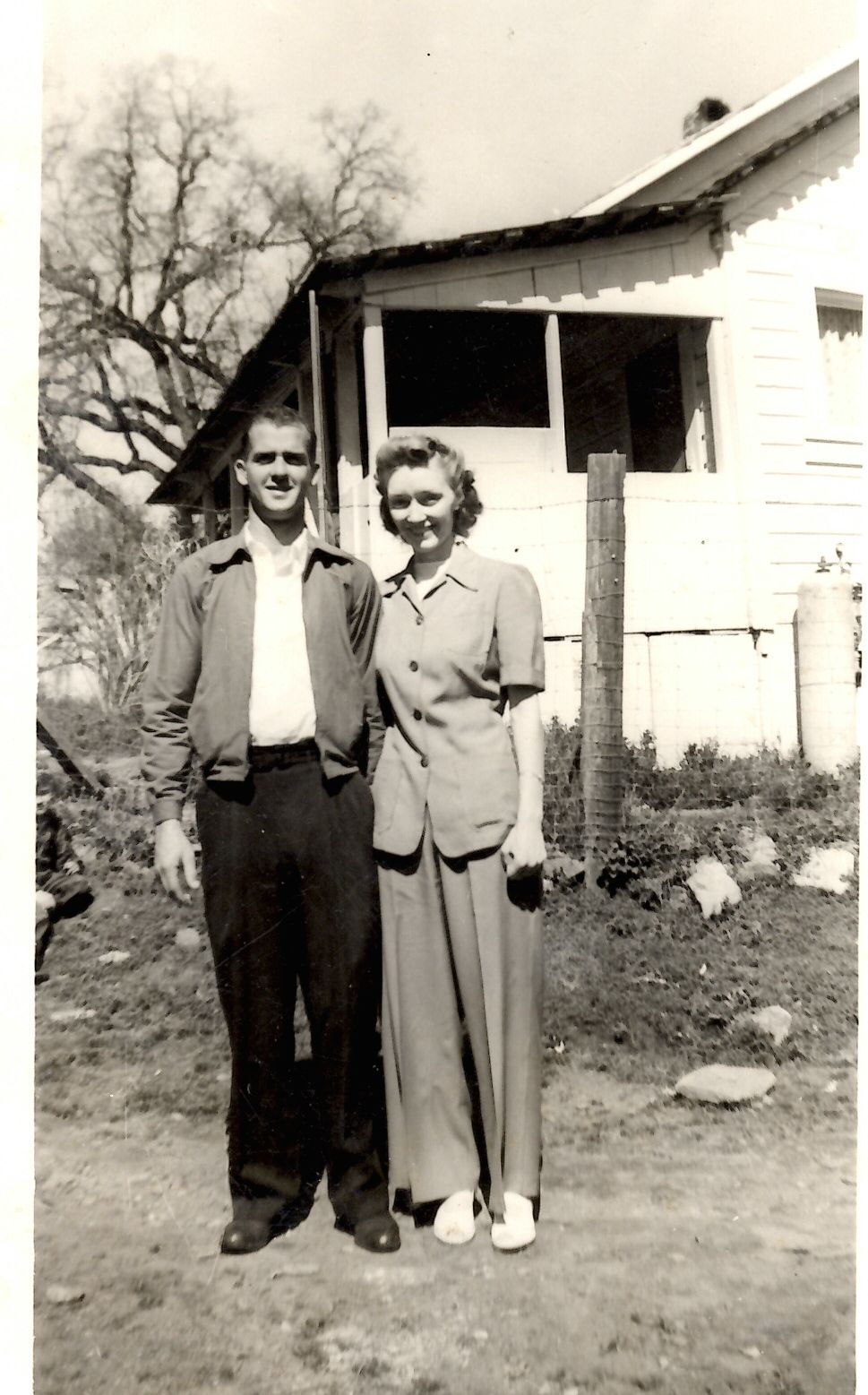
George and Barbara Shannon 1943

After each school day we would ride home in  the back of the Branch School bus, a 1949 Chevrolet pickup with a brown canvas top driven by Evelyn Fernamburg, unhooking the chain at the back and jumping to the ground by our mailbox, crossing Branch Mill Rd to be greeted by our dogs galloping from the house, wiggling all over and jumping up and down as dogs do to show their delight. If dad was in the front fields he got a wave and a hello, if he was close enough to the road he got a hug and a kiss too. We took the long walk to the house and went in the screen door to the kitchen where our mom was, for in our family the kitchen was the heart and soul of the home.

There were two things always present in that room, a pot of endlessly perking coffee; and my mother. For if our father was the head of the family, and indeed he was, it was in the kitchen that my mother reigned. It was in that little room that our family’s life was lived. She talked with us about our dreams and what our lives might be. We learned of the dreams she knew she would never realize herself and how desperately she wanted us to have our own. She loved to read and she did everything she could to see that we did too. A book could take her to places she knew she would never go.

When I think of her, it always there that I see her, not in the new house built for retirement, but the old house on the ranch, built before electricity or indoor plumbing, a hodgepodge of mismatched cabinets, the International Harvester ‘fridge we we had for thirty years and the big “picture” window that looked out on our fields. She would have pots and pans boiling and bubbling on the stove, dishes being washed, clothes on the ironing board, shoes being tied, homework on the table and thousands of peanut butter and jelly sandwiches being made for three hungry little boys to eat. In that place, questions were answered, family stories told, broken little hearts mended, bandaids applied and kisses and hugs distributed from an endless supply. Mom always told us that there was enough love in a mothers heart for all of her children and I have found this to be true.

mom and dad wed

                     Wedding day, 1943

It may seem strange to consider these seemingly small things as a tribute to her, but it is the countless small acts of loving kindness that made life sweet for those little boys. For us, on that farm, in that small red farmhouse, life was sweet indeed.

My parents wanted more than anything for their boys to grow up to be honorable men. They taught us manners, we had, as all Irish families did, the crocheted formal table cloth, designed to punish the elbows of any child who put his elbows on the table. We learned respect for our elders, integrity and honesty. They taught us, by example, the value of hard work, of thrift, to be gentle, kind, helpful and above all, honorable. Mom told us countless times, “Remember who you are and who you belong to for you have a good family name, a name to be proud of.”

Mom worked for twenty years at Baxter’s Clothing store. In a day when you could conduct all your business in a three block stretch of Branch St, she could keep her fingers on the pulse of the community. If there was anything going on in town, she knew about it. Now, you might call it gossip, but if it was, it was the good kind, for she had a sincere concern for her friends and anyone she met was soon her friend. People understood that she cared about them.

Mom at Baxter’s Men and Boys, 1965. Family Photo.

She dressed a generation of boys and men. There were few that came into that shop she didn’t care about. It didn’t matter if you were high or low born. She didn’t care about the color of your skin or what church you went to. If you needed Levis, a pair of socks, a shirt and tie that matched, you got them. She sewed the AG on your letterman’s sweater, the number on your Boy Scout uniform, fitted you for your prom suit, she could even find a pair of “bachelor buttons” if you needed them. And if you needed a compliment or sympathy, some attention, a hug, you got that too, always served with a smile.

My dad had his own particular style, but knew nothing about women’s clothes and he would take us to Louise Ralph’s dress shop to buy mom her birthday or Christmas present. Louise would fuss over my dad like he was a little boy because of course she remembered him that way. She took him around the store and suggested what to buy for mom and she was always right in her choice. Of course it didn’t really matter to mom what the gift was, it only mattered that dad had given it to her. A scarf carried the same cache as the Hope diamond.

mom and dad cayces wedding

Barbara and George at my wedding.

“Life is but a breath,” the Good Book says, and that is surely true. In the end if you count money, houses and land, then she was poor. But if you count wealth as the love and affection of your family and friends then she was rich beyond counting.

She loved her husband, she loved her sons, she loved her sons wives as the daughters she never had, and her grandchildren were the crown she wore in her old age.

Suddenly one day, she was used up and worn out and just as suddenly gone from our lives. Mom was not born in this valley, but for over fifty years this is where she lived and moved and had her being and here is where she died.

It is not such a sad thing really, to contemplate her laid to rest in our green and peaceful cemetery in the midst of her friends, neighbors and family whom she loved and who loved her. It is not such a sad thing, perhaps, to think of her lying in the shadows of the everlasting hills of this green and golden valley that we love so well.

The first time dad went to see her in the hospital, she was in a coma and was terribly ravaged by that awful disease. When he walked in the room and saw her he said, “No, thats not my wife. Barbara is beautiful. I don’t want to remember her like this. Please take me home son.”

Now dad lies beside her, as one day, her sons will too.

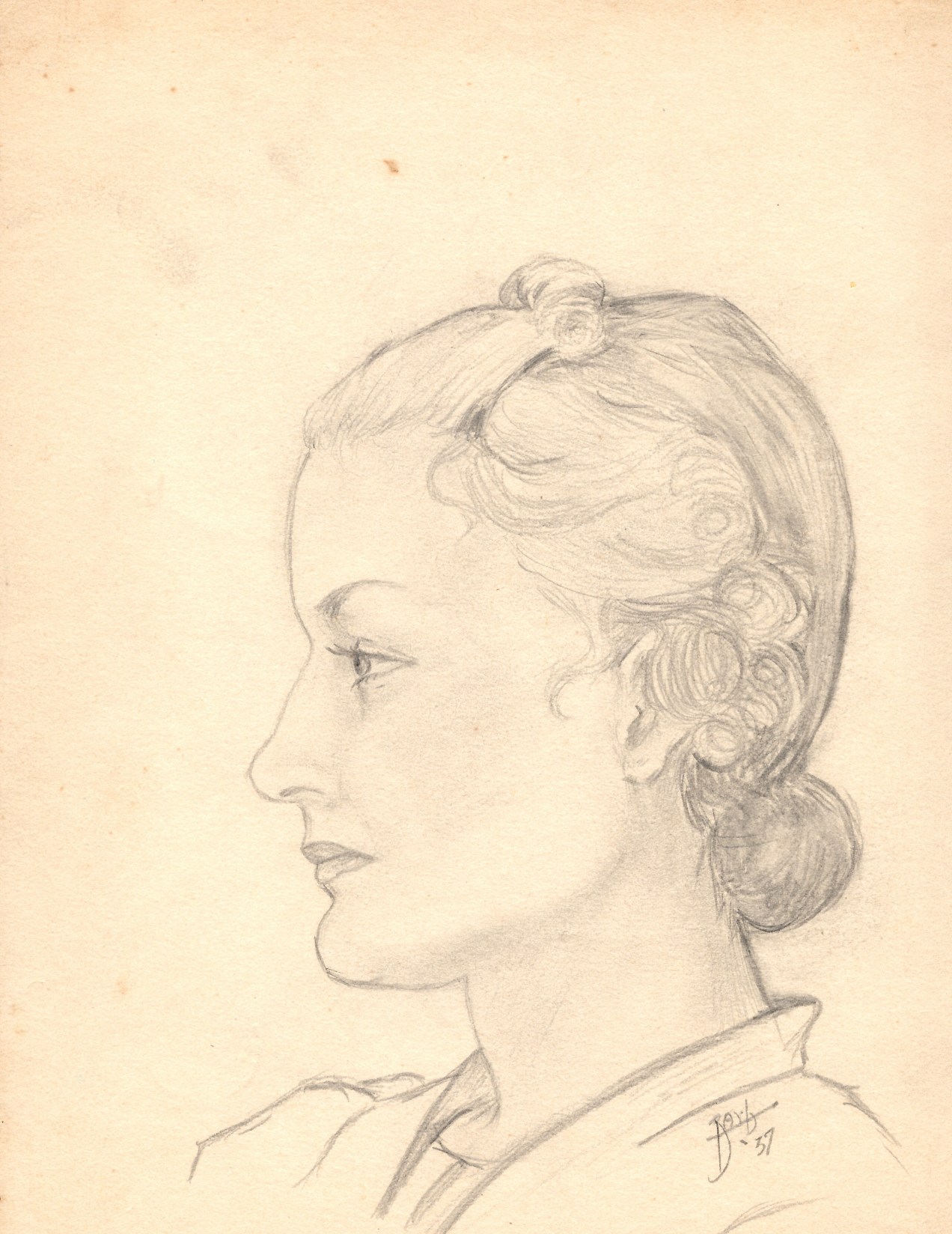
Note: The cover photo is a self portrait she drew when she was 19 years old.

Michael Shannon is a World Citizen, Surfer, Sailor, Teacher, Builder and Story Teller. He lives in Arroyo Grande, California, USA. He writes for his children.

E-Mail: Michaelshannonstable@Gmail.com

Standard

… And a River Runs Through It.

Michael Shannon.

On Norman MacLean’s beautiful written canvas, life is viewed through a lens focused on contemplation and life related to fly fishing on the rivers that flow down from the eastern Rocky mountains. MacLean’s father was a minister. He spoke of all Christ’s disciples being fisherman on the Sea of Galilee and left his boy’s to assume that the disciples were all fly fisherman and the favorite, John, a dry-fly fisherman.

EPSON MFP image

Uncle Jackie Shannon, 1924. Family Photo.

And so it was in our house. My father George and his older brother Jack were raised in a time when boys had the free run of the country and fishing the creeks of the Arroyo Grande, Stoney Creek, The Lopez and such elegantly named spots as Huff’s hole was their delight. We grew up on tales of the Rainbow,  Golden, Cutthroat and Brown trout, coaxed from their cold lair beneath the riffles of the San Joaquin, Kaweah, and Kern rivers. We heard stories about how it was camping and fishing around the meadows of Dinkey Creek, named for a dog  who bit and held on to the hind leg of a charging  Grizzly, giving time for the ranchers to grab their rifles and kill the rampaging beast. The creek and the area around what is now McKinley Grove were named in honor of the bravery of this little dog, “No bigger than a rabbit.

The Holy Grail, though, was the mighty Kings River and particularly the deep, dark gorge of the middle fork. The middle fork rushes down a 37 mile long, very deep and narrow  canyon to its confluence with the South fork to form the main stem of the Kings.

Kings_Canyon_National_Park_-_Kings_River_-_confluence_of_middle_and_south_forks

Confluence of the South Fork and the Middle Fork, Kings River. Family Photo

My dad and uncle started going there in the early 30’s and were still doing so when I was a boy. The tales they told of fording the river, bone chilling cold even in the early fall when the water was sometimes low enough to ford seemed to me to be akin to the adventures of the bravos who roamed the west before it was tamed. My dad told of tying a rope around his waist and swimming across, being swept downstream for a hundred yards before making the far bank. Up the canyon, beneath the 1800 foot cliff known as Valhalla, which my dad always called the Waldorf after the hotel in New York, they would make camp under the willows on a nice sandbank shaded by huge granite boulders. In the darkness before dawn, coffee brewed in a can on a small fire woke you enough to get on the river before the sun was on the water. As the fly hatch began in the warming sun, providing breakfast for the trout, they  fished up the river toward the Gorge of Despair below Tehipite Dome.

kings canyon

The Canyon of the Middle Fork.

This was before the time of fancy camping rigs. They each took a simple rucksack stuffed with some loaves of bread and jars of peanut butter and jelly, one frying pan, a jar of butter for frying fish and salt and pepper. Tie on a sleeping bag, battered old tin canteen from WWI and what else did you need?  Rubberized waders, nope, too heavy. Hiking boots, not likely, Old high top tennis shoes gripped the wet rocks better. Creels, maybe, but it was cloth, not wicker. You just needed a small round tin to put your flies in, some extra leader and a pocket knife. The only expensive and cherished item was the pole. Incredibly slim and tapered to a fine point, the silk wound bamboo fly pole was and is one of mans most beautiful creations and in the hands of a master fisherman, a thing to behold. My father was such. Even after a lifetime of farming, working with hands scarred and thickened by heavy work in all kinds of conditions he could make his fly rod sing in a ballet seldom equalled.

I made my first trip at thirteen. The Model T was long gone of course, but not much else had changed. The gear and the provisions remained the same and I have to say that peanut butter and jelly are hard to beat after a long day in the sun hiking, first down to the river from the road at Cherry Gap, crossing the South fork of the King’s to get to the trail head where you begin the long trek up the middle fork, walking old miners trails along cliffs 500 feet above the river below. In the late fifties none of the trails were maintained by the forest service and could be really rough and treacherous after a long winter covered in snow and ice.

EPSON MFP image

On the King’s

I made my bones on this river, learning to roll cast under the willows that lined the river, never letting my shadow show on the water, always working upstream so as to leave no scent for the fish waiting patiently in the deep water under the massive boulders where the river eddied, sweeping a fishes dinner right to his doorstep. You had to make the dry fly dance, skip and hop along the surface to fool these fish, they were the ultimate quarry, native, raised on the river, never having been fished before. Some years there was absolutely no evidence of any other human being having been up this canyon.  In all the years I fished with my dad and uncle Jack, we never saw another human being.

up tp the lakes 2

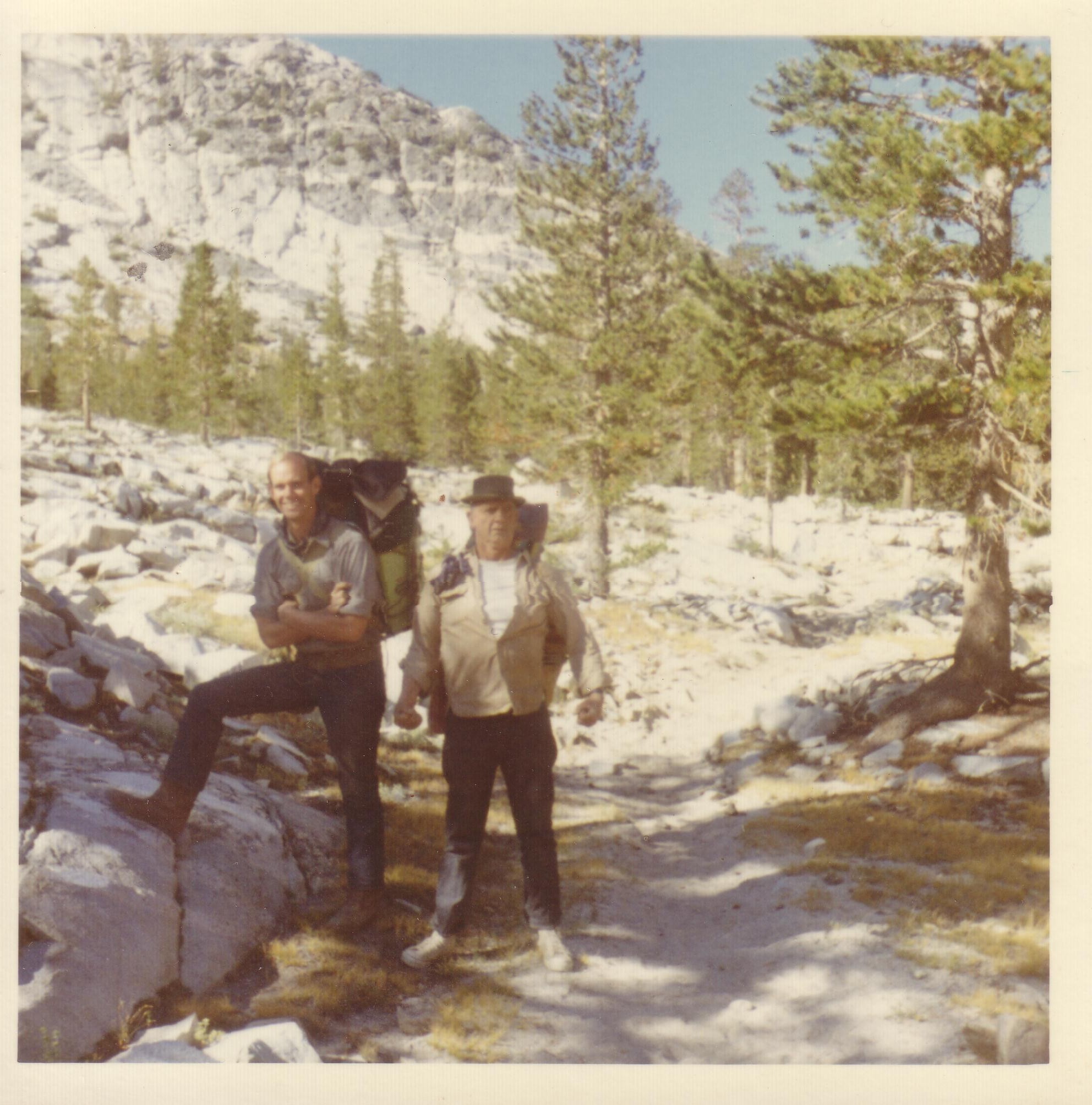
Mike  and George Shannon, September, 1967. Barbara Shannon Photo.

We made our last trip together in 1967. My father and my uncle grew too old and I, I went off to new adventures in other places. Looking back on those times I can’t help but think of what I have lost. It seems to me that all of the best memories of family deal with some kind of loss, don’t they?

We lay half under the willows a night sheltered and warmed by the gigantic granite boulders radiating the heat of the day, looking up at a sky with no hint of light other than the billions of stars visible between the soaring granite peaks above. There, there in the center, the Milky Way, the great crossing over bridge to journeys end where my father has gone.

Sometimes it’s as if life has been made and not happened.

Michael Shannon is a dry fly fisherman of course.

Standard