Letters

By: Michael Shannon

My grandmother Hall insisted that her children write her once a week and I remember my mom sitting at the kitchen table with a freshly opened letter before her and penning a reply for the return post. There was nothing out of the ordinary in these letters, the cast of characters nearly always the same, the day to day things that people communicate to one another. The said nothing profound, just passed along the news of the family and friends they had in common.

My mom and dad were married in 1943. During the war people didn’t make much of a fuss about a wedding. For a young farmer and his bride there would’nt  be a fancy trip to an exotic location, ration cards and jam-packed troop trains would see to that. Being modest people that kind of difficulty didn’t bother them, they just took a little trip to visit relatives and friends.

mom and dad wed

Barbara and George Shannon on their wedding day

The following letter is from mom to her new mother-in-law Annie Shannon in Arroyo Grande. Writing from the Olympic Hotel on Eddy St, she described some of the sights and sounds of wartime San Francisco. San Francisco would have been familiar to my dad and his parents. My grandparents had both lived in the bay area from 1904 to 1918 and my dad had studied at Cal Berkeley in the early 30’s.

The subtext of the letter revolves around the events unfolding in the city and in the family in 1943. Mom mentions leaving the car in the garage. Rationing of gasoline had taken effect  in December of 1940 and though my grandparents dairy and my dad’s military deferment  as a farmer gave them access to more rationed items than usual, gasoline and rubber for the cars and milk trucks were in short supply. You could only own 5 tires per car or truck, having extras was not allowed. Dad said they would drive the tires until there was no rubber left, just the fabric cord or the inner liner was left. You had to take in the old tire in order to buy a new one. The first nonfood item rationed was rubber. The Japanese had seized plantations in the Dutch East Indies that produced 90% of America’s raw rubber. President Roosevelt called on citizens to help by contributing scrap rubber to be recycled, old tires, old rubber raincoats, garden hose, rubber shoes and bathing caps. A person or business was issued a ration card and sticker for the car which allowed a specific amount of a given item to be purchased. The green ‘B’ sticker was for driving deemed essential to the war effort; farmers, for example, could purchase eight gallons a week.

             gas_milage_ration_windshield_B_stamp_front_type_1_and_20_chevy_001

In movies taken at their wedding, the car, a 1936 Chevy coupe has the sticker plainly visible on the windshield. They drove from Arroyo Grande to San Francisco,  across the  Bay Bridge to Berkeley and my great aunt Sadies home, then up to Watt’s Valley to see Mariel and Ray, and finally,  home, a distance of over 600 miles today and longer then, before our modern roads. They must have used about four weeks of gasoline, a great indulgence, but of course, such is the course of true love.

EPSON MFP image

The newlyweds at Mariel and Rays’ in Watts Valley, March 1943

This was the first time that dad met both of them. Dad immediately recognized a kindred spirit in Ray and began a friendship that lasted all their lives. Mariel, though, was enormously pregnant with their first child, Bruce, and had what we might say was the proclivity to pass enormous amounts of gas at any time. What an introduction to new family that must have been. I wish she was around so I could ask her about it. I can just hear her laugh, haw haw haw.

Both my folks mention the crowding. Photos of the city at the time show the sidewalks jammed with sailors and Marines. There is a March photo of the Palace hotel dance floor so crowded that it is a wonder anyone can move. Mom and dad went there to dance and he said it was so expensive they could only afford two cups of coffee. 

uni at war

Saturday afternoon, San Francisco, 1943. SF Muni photo.

In March 1943, the battle for Guadalcanal had just been declared won, and the buildup for the Marine invasion of Tarawa was underway and San Francisco, indeed, the entire bay area was fantastically crowded with men and ships. Add to the population the workers at the wartime shipyards of the East Bay, the naval bases packed around various cities in San Francisco bay and it is easy to understand why the sidewalks were so crowded. It’s a wonder they could get a hotel room at all.

Intro1_AAD-2290[1]

Ships at anchor San Francisco Bay in early 1943

Though unstated, worry about family members and friends serving overseas was certainly a concern. Two of my dad’s cousins were serving in the Pacific as well as his closest friend, Sgt. Harry Chapek who die in France. My mom’s uncle Marion, cousin Donald and her brother Robert were also in the military. Her cousin Donald Polhemus was to be lost at sea in December of 1944. Arroyo Grande was a very small town in 1943 and most young men of draft age were already in the service or soon would be.   My grandmother Shannon saved an old Arroyo Grande Herald Recorder newspaper from 1943 and in it there is a list of local service men and women that runs four full pages. It would have been impossible not to know someone in the service. In fact, a local boy, Jack Scruggs died on the Arizona. I went to school with a boy whose father was trapped on the capsized Utah.

The image that opens this story is V-Mail from my dad’s friend Jim Moore who he grew up with. It’s just the kind of folksy newsy letter the family received from the many young men they knew serving overseas. Jim was a Navy Lieutenant serving on LST-398 in the western Pacific and though the ship had and would continue to serve in extremely hostile waters, the mail itself was just as casual as it would be if he was writing home from college. The truth of his life at war was something best kept secret, not only because it was but because Jim’s thoughts were at home, a place he could not be. Every V-Mail we have is like that. Home life, a place they couldn’t be.

lst398

Jim Moore’s ship. LST-398, Nov. 1944. US Navy photo. Guadalcanal, New Britain, New Guinea, Leyte and Guam campaigns.

 The passing of the art of letter writing, I think is a kind of tragedy. Instant communication is just that, instant, but its gone just as quickly. Much is lost. Here then is the text of mom’s honeymoon letter.


March 21, 1943

Hello Everybody,                                                                                                     

George says “You write,” so here goes. We’re having a wonderful time. We’ve left the car in the hotel garage so haven’t used any gasoline.

emporium-sf

The Emporium Department Store. Now Bloomingdales.

Yesterday we walked one end of Market Street to the other. We went through The Emporium, looked at everything and didn’t spend a cent. Then we were so tired we went back to the hotel and took a nap. It wasn’t a Sunday afternoon but we took one anyway.

olympic-hotel-2

The Olympic Hotel still stands today. Its near the  the city center, three blocks from Union Square.

Last night we made reservations at The Palace for dinner and dined with the best of the, maybe I should  say, the rest of the upper crust. We had a lovely dinner. Steak. We watched the floor show and danced and everything. The show was on ice. You know, skaters. They were pretty good too.

palace dine

The dining room in the Palace Hotel.

What I liked best, tho, besides the food, was just watching the people. 

There are more people here on the streets at night than I’ve ever seen before, even in Los Angeles.

George called Sadie yesterday, and we’re going there for dinner at one. It’s 11:30 now, so we’d better get going.

We’re leaving the big city tomorrow, and going to Fresno. Home on Wednesday. It’s nice here, but Arroyo Grande is so much better. 

We haven’t had time to write to anyone else, so say hello.

We’ll see you Wednesday or Thursday. Thank you for being so nice to me.

Lots of love,

Barbara and George

                       (Mr and Mrs George Shannon)

                                             Looks nice, huh? 

PS  (This is in dad’s hand)  

Tell little Jug (Dad’s Brother Jackie) to run our farm the way I told him or I will demote him when we return. This is the busiest place I have ever seen. You can hardly walk down Market St either day or night. We are getting ready to leave for Sadie’s for dinner so must go.

Love, George  

The phrase “Thank you for being so nice to me,” resonates. Mom grew up as an oilfield brat, never settled for long in one place and to be folded into a family and community that had deep roots must have seemed a miracle to her. She now had, as small towns do, friends by the score and a family that would cherish her all of her life. My grandparents adored her for who she was and she would be the only daughter-in-law they would ever have.

Michael Shannon is a writer, sailor, surfer, world traveler and grew up in the little town he writes about.

Please Subscribe.


Standard

BARBARA

Written by Michael Shannon

Below is my mothers eulogy. It was read from the pulpit of our little church at her memorial. In some ways it was the end for us. We’ve scattered and today there are more Shannons in the Odd Fellows Cemetery than live here in the Arroyo Grande valley of California. I can hardly stand to read it myself but I hope it brings something to the table on this Mothers Day.

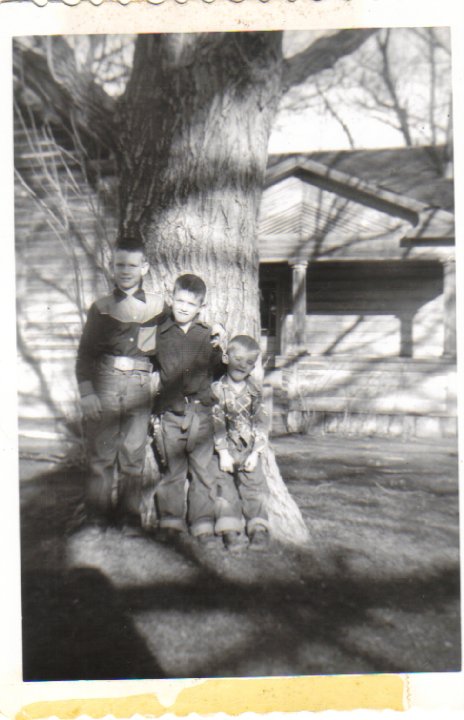
My father had a farm in this fertile and lovely valley for over forty years. There was no better place for boys to grow up, for we had a family heritage that few other children enjoy. Our grandparents and great-grandparents spent their lives in this part of California and we were firmly rooted in the ground we farmed and the society that surrounded us. Kids wandered the hills and valleys unattended by adults other than the occasional wave from a passing pickup window. We lived a life that no city kid ever could.

We had a thousand things to do, a thousand places to explore, forts to be built, forts of bean poles, forts made of the  wooden boxes used to ship vegetables, forts dug into the ground, a fort on top of the old tank house behind our home. Vast engineering projects to design and build in the mud of an irrigation ditch. And always our dogs at our heels, helping us to dig and sniff out the elusive gopher, keeping an eye out for us. Beyond the admonition from our mother Barbara “To be careful,” we received no other instruction or advice. Little boys were not considered  to be particularly breakable. We played with the knives used to cut cauliflower and lettuce. We learned about Poison Oak in the creek by getting into it, Horse Nettles by touching the leaves in the wrong place, lessons learned the hard way but not likely forgotten. Our parents were mostly content to let us find our own way in life. Best of all, we had a mom and dad who loved us, and each other, deeply.

EPSON MFP image

George and Barbara Shannon 1943

After each school day we would ride home in  the back of the Branch School bus, a 1949 Chevrolet pickup with a brown canvas top driven by Evelyn Fernamburg, unhooking the chain at the back and jumping to the ground by our mailbox, crossing Branch Mill Rd to be greeted by our dogs galloping from the house, wiggling all over and jumping up and down as dogs do to show their delight. If dad was in the front fields he got a wave and a hello, if he was close enough to the road he got a hug and a kiss too. We took the long walk to the house and went in the screen door to the kitchen where our mom was, for in our family the kitchen was the heart and soul of the home.

There were two things always present in that room, a pot of endlessly perking coffee; and my mother. For if our father was the head of the family, and indeed he was, it was in the kitchen that my mother reigned. It was in that little room that our family’s life was lived. She talked with us about our dreams and what our lives might be. We learned of the dreams she knew she would never realize herself and how desperately she wanted us to have our own. She loved to read and she did everything she could to see that we did too. A book could take her to places she knew she would never go.

When I think of her, it always there that I see her, not in the new house built for retirement, but the old house on the ranch, built before electricity or indoor plumbing, a hodgepodge of mismatched cabinets, the International Harvester ‘fridge we we had for thirty years and the big “picture” window that looked out on our fields. She would have pots and pans boiling and bubbling on the stove, dishes being washed, clothes on the ironing board, shoes being tied, homework on the table and thousands of peanut butter and jelly sandwiches being made for three hungry little boys to eat. In that place, questions were answered, family stories told, broken little hearts mended, bandaids applied and kisses and hugs distributed from an endless supply. Mom always told us that there was enough love in a mothers heart for all of her children and I have found this to be true.

mom and dad wed

                     Wedding day, 1943

It may seem strange to consider these seemingly small things as a tribute to her, but it is the countless small acts of loving kindness that made life sweet for those little boys. For us, on that farm, in that small red farmhouse, life was sweet indeed.

My parents wanted more than anything for their boys to grow up to be honorable men. They taught us manners, we had, as all Irish families did, the crocheted formal table cloth, designed to punish the elbows of any child who put his elbows on the table. We learned respect for our elders, integrity and honesty. They taught us, by example, the value of hard work, of thrift, to be gentle, kind, helpful and above all, honorable. Mom told us countless times, “Remember who you are and who you belong to for you have a good family name, a name to be proud of.”

Mom worked for twenty years at Baxter’s Clothing store. In a day when you could conduct all your business in a three block stretch of Branch St, she could keep her fingers on the pulse of the community. If there was anything going on in town, she knew about it. Now, you might call it gossip, but if it was, it was the good kind, for she had a sincere concern for her friends and anyone she met was soon her friend. People understood that she cared about them.

Mom at Baxter’s Men and Boys, 1965. Family Photo.

She dressed a generation of boys and men. There were few that came into that shop she didn’t care about. It didn’t matter if you were high or low born. She didn’t care about the color of your skin or what church you went to. If you needed Levis, a pair of socks, a shirt and tie that matched, you got them. She sewed the AG on your letterman’s sweater, the number on your Boy Scout uniform, fitted you for your prom suit, she could even find a pair of “bachelor buttons” if you needed them. And if you needed a compliment or sympathy, some attention, a hug, you got that too, always served with a smile.

My dad had his own particular style, but knew nothing about women’s clothes and he would take us to Louise Ralph’s dress shop to buy mom her birthday or Christmas present. Louise would fuss over my dad like he was a little boy because of course she remembered him that way. She took him around the store and suggested what to buy for mom and she was always right in her choice. Of course it didn’t really matter to mom what the gift was, it only mattered that dad had given it to her. A scarf carried the same cache as the Hope diamond.

mom and dad cayces wedding

Barbara and George at my wedding.

“Life is but a breath,” the Good Book says, and that is surely true. In the end if you count money, houses and land, then she was poor. But if you count wealth as the love and affection of your family and friends then she was rich beyond counting.

She loved her husband, she loved her sons, she loved her sons wives as the daughters she never had, and her grandchildren were the crown she wore in her old age.

Suddenly one day, she was used up and worn out and just as suddenly gone from our lives. Mom was not born in this valley, but for over fifty years this is where she lived and moved and had her being and here is where she died.

It is not such a sad thing really, to contemplate her laid to rest in our green and peaceful cemetery in the midst of her friends, neighbors and family whom she loved and who loved her. It is not such a sad thing, perhaps, to think of her lying in the shadows of the everlasting hills of this green and golden valley that we love so well.

The first time dad went to see her in the hospital, she was in a coma and was terribly ravaged by that awful disease. When he walked in the room and saw her he said, “No, thats not my wife. Barbara is beautiful. I don’t want to remember her like this. Please take me home son.”

Now dad lies beside her, as one day, her sons will too.

Note: The cover photo is a self portrait she drew when she was 19 years old.

Michael Shannon is a World Citizen, Surfer, Sailor, Teacher, Builder and Story Teller. He lives in Arroyo Grande, California, USA. He writes for his children.

E-Mail: Michaelshannonstable@Gmail.com

Standard

… And a River Runs Through It.

Michael Shannon.

On Norman MacLean’s beautiful written canvas, life is viewed through a lens focused on contemplation and life related to fly fishing on the rivers that flow down from the eastern Rocky mountains. MacLean’s father was a minister. He spoke of all Christ’s disciples being fisherman on the Sea of Galilee and left his boy’s to assume that the disciples were all fly fisherman and the favorite, John, a dry-fly fisherman.

EPSON MFP image

Uncle Jackie Shannon, 1924. Family Photo.

And so it was in our house. My father George and his older brother Jack were raised in a time when boys had the free run of the country and fishing the creeks of the Arroyo Grande, Stoney Creek, The Lopez and such elegantly named spots as Huff’s hole was their delight. We grew up on tales of the Rainbow,  Golden, Cutthroat and Brown trout, coaxed from their cold lair beneath the riffles of the San Joaquin, Kaweah, and Kern rivers. We heard stories about how it was camping and fishing around the meadows of Dinkey Creek, named for a dog  who bit and held on to the hind leg of a charging  Grizzly, giving time for the ranchers to grab their rifles and kill the rampaging beast. The creek and the area around what is now McKinley Grove were named in honor of the bravery of this little dog, “No bigger than a rabbit.

The Holy Grail, though, was the mighty Kings River and particularly the deep, dark gorge of the middle fork. The middle fork rushes down a 37 mile long, very deep and narrow  canyon to its confluence with the South fork to form the main stem of the Kings.

Kings_Canyon_National_Park_-_Kings_River_-_confluence_of_middle_and_south_forks

Confluence of the South Fork and the Middle Fork, Kings River. Family Photo

My dad and uncle started going there in the early 30’s and were still doing so when I was a boy. The tales they told of fording the river, bone chilling cold even in the early fall when the water was sometimes low enough to ford seemed to me to be akin to the adventures of the bravos who roamed the west before it was tamed. My dad told of tying a rope around his waist and swimming across, being swept downstream for a hundred yards before making the far bank. Up the canyon, beneath the 1800 foot cliff known as Valhalla, which my dad always called the Waldorf after the hotel in New York, they would make camp under the willows on a nice sandbank shaded by huge granite boulders. In the darkness before dawn, coffee brewed in a can on a small fire woke you enough to get on the river before the sun was on the water. As the fly hatch began in the warming sun, providing breakfast for the trout, they  fished up the river toward the Gorge of Despair below Tehipite Dome.

kings canyon

The Canyon of the Middle Fork.

This was before the time of fancy camping rigs. They each took a simple rucksack stuffed with some loaves of bread and jars of peanut butter and jelly, one frying pan, a jar of butter for frying fish and salt and pepper. Tie on a sleeping bag, battered old tin canteen from WWI and what else did you need?  Rubberized waders, nope, too heavy. Hiking boots, not likely, Old high top tennis shoes gripped the wet rocks better. Creels, maybe, but it was cloth, not wicker. You just needed a small round tin to put your flies in, some extra leader and a pocket knife. The only expensive and cherished item was the pole. Incredibly slim and tapered to a fine point, the silk wound bamboo fly pole was and is one of mans most beautiful creations and in the hands of a master fisherman, a thing to behold. My father was such. Even after a lifetime of farming, working with hands scarred and thickened by heavy work in all kinds of conditions he could make his fly rod sing in a ballet seldom equalled.

I made my first trip at thirteen. The Model T was long gone of course, but not much else had changed. The gear and the provisions remained the same and I have to say that peanut butter and jelly are hard to beat after a long day in the sun hiking, first down to the river from the road at Cherry Gap, crossing the South fork of the King’s to get to the trail head where you begin the long trek up the middle fork, walking old miners trails along cliffs 500 feet above the river below. In the late fifties none of the trails were maintained by the forest service and could be really rough and treacherous after a long winter covered in snow and ice.

EPSON MFP image

On the King’s

I made my bones on this river, learning to roll cast under the willows that lined the river, never letting my shadow show on the water, always working upstream so as to leave no scent for the fish waiting patiently in the deep water under the massive boulders where the river eddied, sweeping a fishes dinner right to his doorstep. You had to make the dry fly dance, skip and hop along the surface to fool these fish, they were the ultimate quarry, native, raised on the river, never having been fished before. Some years there was absolutely no evidence of any other human being having been up this canyon.  In all the years I fished with my dad and uncle Jack, we never saw another human being.

up tp the lakes 2

Mike  and George Shannon, September, 1967. Barbara Shannon Photo.

We made our last trip together in 1967. My father and my uncle grew too old and I, I went off to new adventures in other places. Looking back on those times I can’t help but think of what I have lost. It seems to me that all of the best memories of family deal with some kind of loss, don’t they?

We lay half under the willows a night sheltered and warmed by the gigantic granite boulders radiating the heat of the day, looking up at a sky with no hint of light other than the billions of stars visible between the soaring granite peaks above. There, there in the center, the Milky Way, the great crossing over bridge to journeys end where my father has gone.

Sometimes it’s as if life has been made and not happened.

Michael Shannon is a dry fly fisherman of course.

Standard

Aunt Mickeys

The lives of descendants of Californias Cow Counties.

By Michael Shannon.

My aunt Mickey, God what a woman. She was my grandparents oldest, born in a little yellow house in Arroyo Grande’s Bee Canyon. In 1917 babies were still born at home and for many years that bed was passed around by family members who produced even more babies. But, that’s another story. This story is about my aunt Mariel, bless her heart. She was absolutely one of a kind.
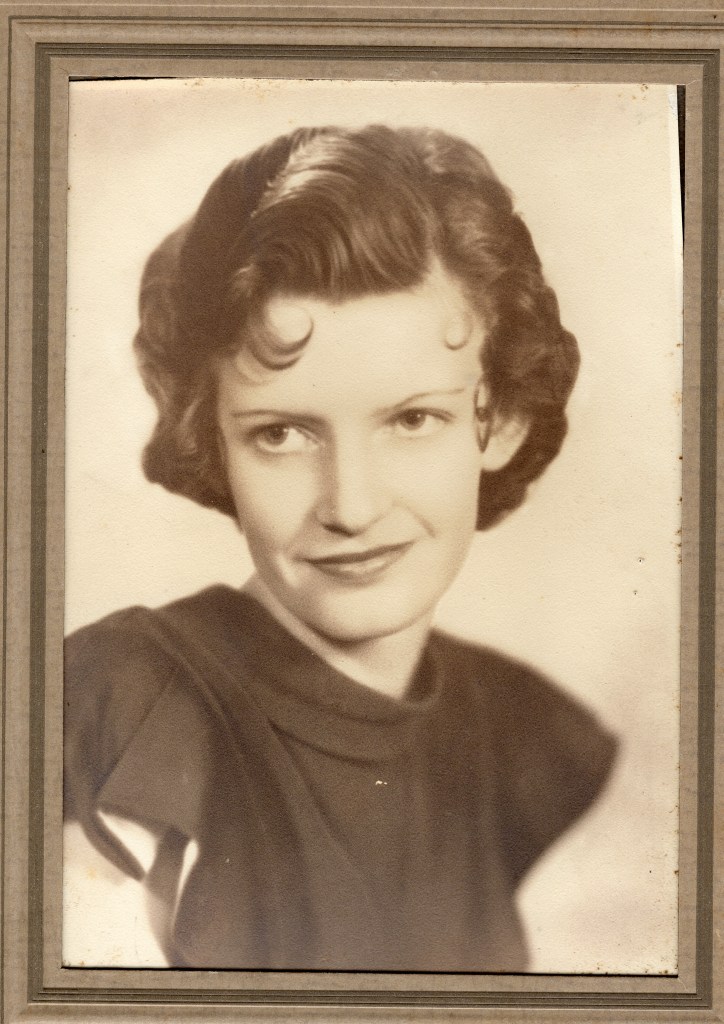
Mariel Hall, Santa Barbara HS class of 1934.

On mom’s side of the family there were several places we would go to visit. She had many uncles and aunts and cousins but our favorite by far was my Uncle Ray and Aunt Mickey’s. They lived in the Fresno county foothills in a little valley called Watt’s.They were mountain people, not necessarily by birth but certainly by inclination. According to my dad my uncle Ray knew the name of every stream in the Sierra and how to get there. He owned a small cattle ranch in the valley on which he and aunt Mickey and their two boys lived. To get there from our house we had to cross the San Joaquin valley on which we as kids measured our progress by the sight of the endless cotton fields of Westlake farms, waiting to see the Pacific Southwest Building in Fresno, the tallest building we had ever seen. We passed by the tomato processing plant where my mom said everything that came out of the fields was mixed to make catsup, even mice. She told that story every time we passed that factory for years. I haven’t cared for catsup since.

Once out of Fresno we continued up into the foothills on winding roads, each more crooked than the last, finally turning off onto a dirt road where we had to open and close three different cattle gates, drive through The creek, splashing water all the way and finally arriving at the gate below the old house. The house was pretty old , built at the turn of the century, but it was big, surrounded by a covered porch as was the custom in the days before air conditioning. If you wanted that, Uncle Ray had to drive to Sanger and buy a 50 lb block of ice, haul it home put in a washtub covered by a burlap sack on put the fan behind it to cool the air. The heat didn’t bother us kids much, we spent much of the time in the creek anyway.

My uncle Ray was a short man, skinny when he was young and had curly black hair. He was 13 years older than my aunt, about 4 inches shorter and 60 pounds lighter. He went to riding horseback when he was four, rode until the day  he died, and was so thin and bowlegged that he looked for all the world like a wishbone. He was a horseman, something all us kids knew by instinct, much different than the TV type we regularly saw. He was known amongst his peers as “Powerhouse” for a feat of riding without parallel in the history of the mountain folk. In the morning, after he made breakfast he would walk down the little draw in front of the house to the barn on the other side, saddle his horse, ride back to the house and tie it to the gatepost, ready if he needed it.
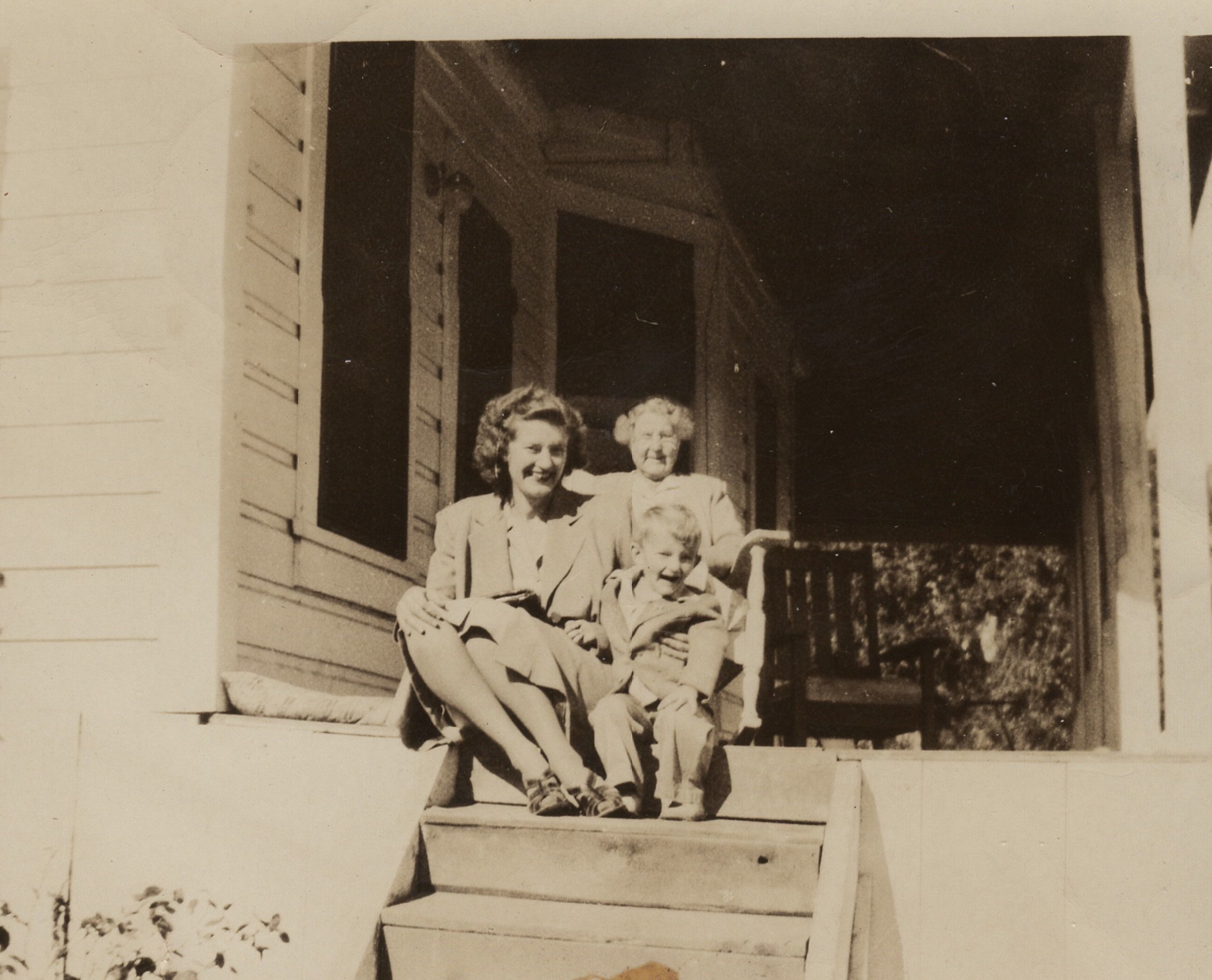
EPSON MFP image

Aunt Mickey, Aunt Meta and cousin Jimmy, Watts Valley 1947

Uncle Ray was a cowboy when young, and a rancher till he died. He knew no other life, wanted no other life and as far as I know he was perfectly content. He loved to tease. He had a nickname for everyone. He called my mom “Sis” even though she wasn’t. He called me “Shebang,” my brother Jerry “Jeb,” and my little brother Cayce, “Festus.” His own boys “jughead and “knot head.”  You can figure out which was which.


My aunt Mickey was the funniest woman I ever knew. When I was a boy she was my dream of the perfect aunt. How she loved us. She always wore Ruby red lipstick and when we arrived for a visit she would say, “Come and give your aunt mickey a kiss” and scoop us up for a hug and a kiss. She was a full figured woman so it was a little like being smothered in a big feather pillow. She gave us a big old smack which left red lipstick on your mouth and she would threaten you if you tried to wipe it of. We weren’t allowed to wipe off HER kisses.
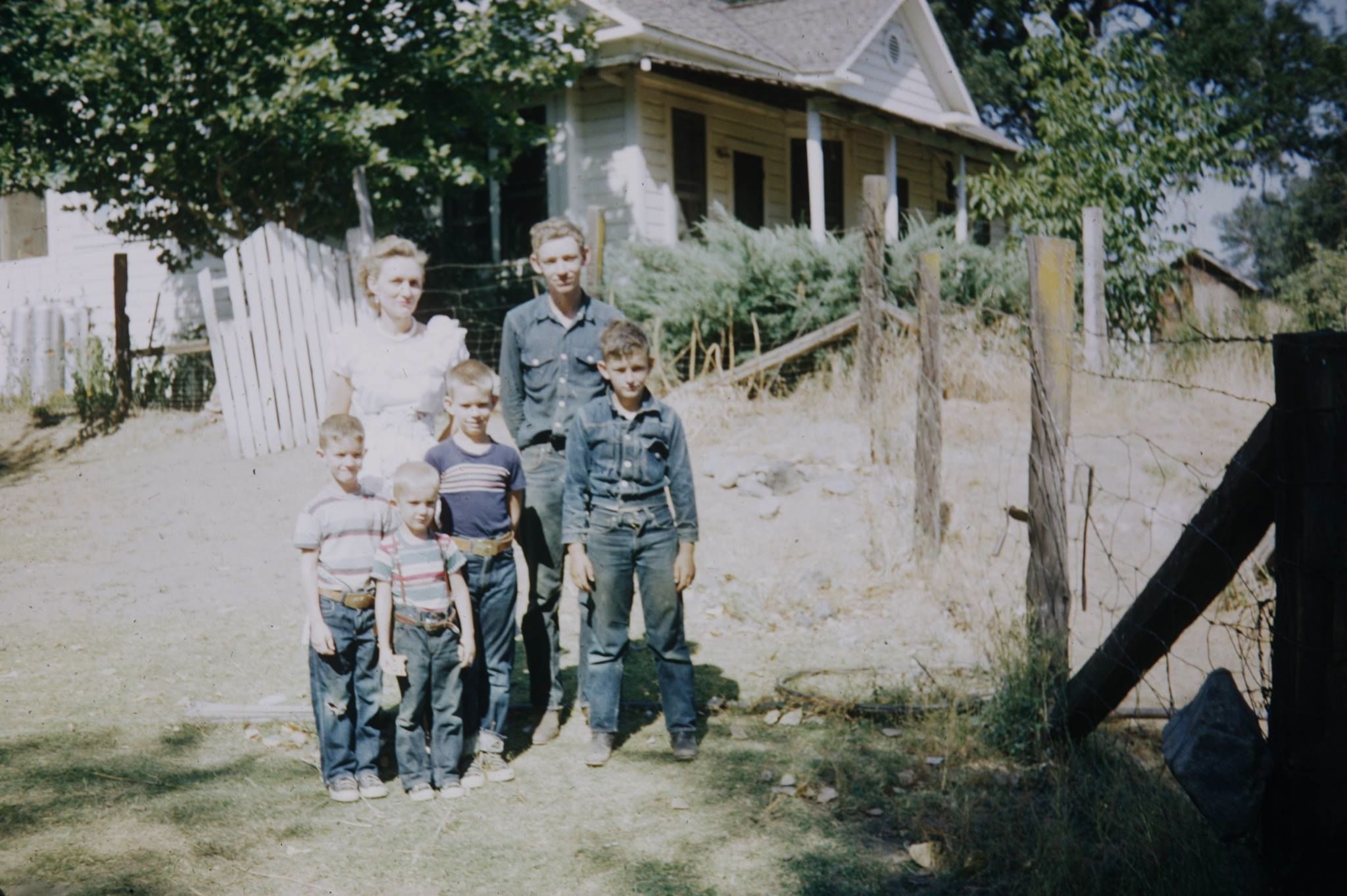
at aunt mickeys

L-R Jeb, Sis, Festus, Shebang, Jughead and Knothead. 1953

My folks, my dad’s family were quiet people. Sober, hard-working, Presbyterian. Handshaking was the preferred greeting, you could give my grandmother Annie a kiss on the cheek, but that was it. The were all farmers and were a sober lot, and of course they talked about farming; a lot. And I mean, A LOT. You have no idea how much there is to know about raising potatoes.

The Long’s though, were yellers. They yelled when they were laughing, they yelled at each other, the dogs, the cows, the pickup, the car, and they yelled about the neighbors, anything really that needed yelling at.

Their life was a continuous series of catastrophes. The damned pickup had a flat tire, the neighbors bull had jumped the fence, the roof still leaked, the electricity shut off just before company was expected. The pump lost prime, no water, oh God, the heifer was in the garden again; there was always something.

One year we arrived just in time to see my aunt racing across yard chased by the soon to be Christmas turkey. She barely made it to the back porch screen door. She made very good time for a hefty woman.

And that’s the way things were. Life at aunt Mickey’s and uncle Rays was simply chaotic. If dinner was to be at one, we ate at four. If the turkey, the late, great speedster, was ready the potatoes weren’t. Someone had forgotten to buy cranberries and Ray and my dad would head for Hunphrey’s Station, a 15 mile round trip on narrow winding roads, probably as much to escape the chaos as anything. They might even take the whiskey bottle in order to calm down.

After dinner, the dishes washed and put away, the dishes had cattle, lariats and brands on them of course,  the kids were put to bed in various places around the house, stacked on beds, laid in the hall, the lucky ones though,  wrapped in blankets and laid on the living room floor. Now came the exciting part, because we knew the adults would soon be through in the kitchen and would be coming to the front room to visit. This side of the family never wasted time on talk of farming, oh no, they talked about things we never learned in school and were certainly never discussed at our kitchen table. The whiskey bottle went around and though we struggled to stay awake we finally drifted off with tales of whose son had gotten drunk and put the car in a ditch, who was having an operation and why, the brutal details, heard from Frances McMurtrey, who heard it from Ruby Glass about so and so’s daughter.
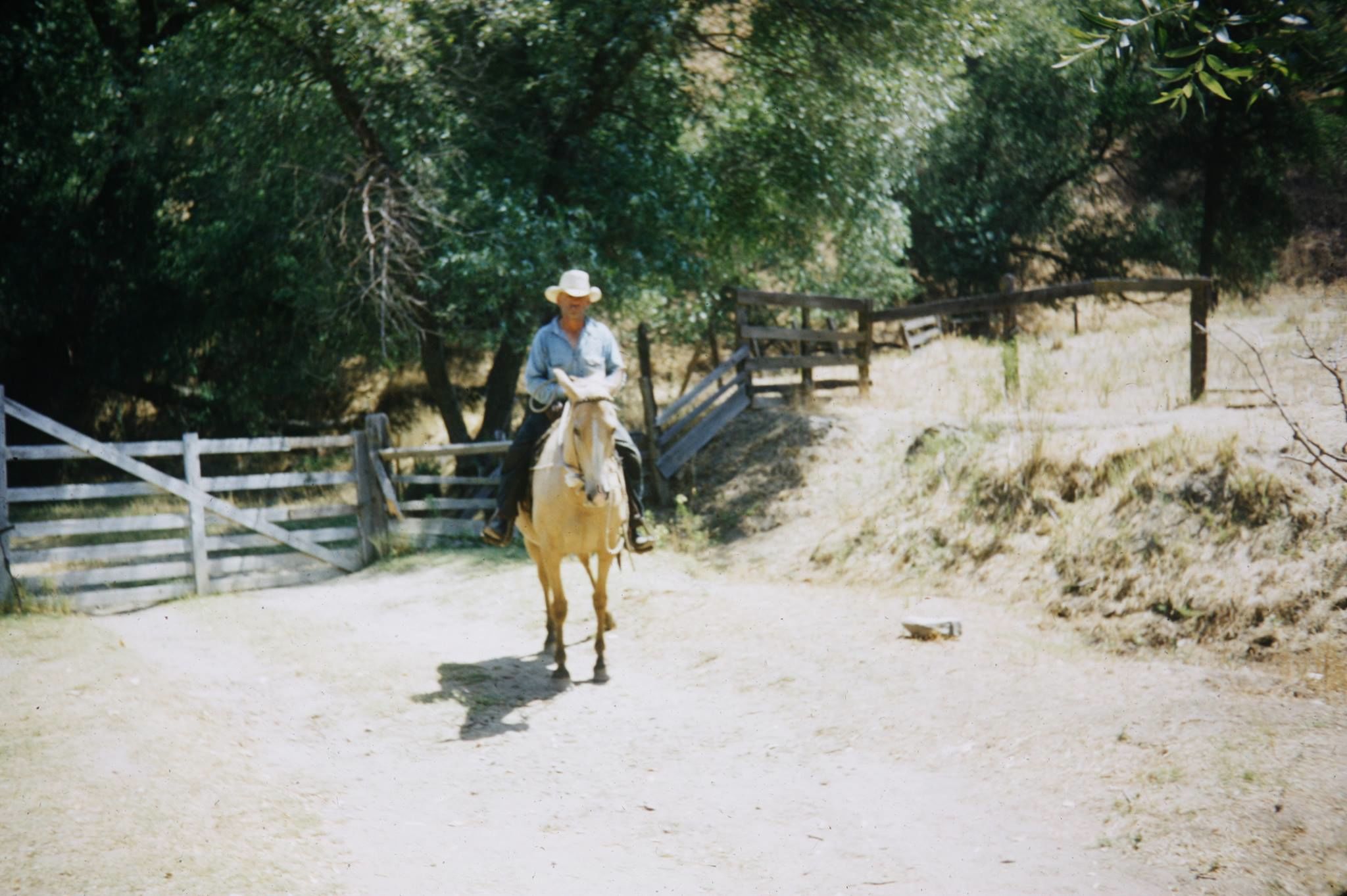
ray on charm

Uncle Ray on Charm, the horse who bit, at the front gate. 

What fun for boys, and we never wanted those visits to end. But they did end and those happy days are but a memory now. Most of the folks have long since gone to their reward and I miss them more than you can know.

When we were little, when we said a naughty word, my mother gave us “heart medicine.” One time when we were leaving “Watts Valley,” on the long road home my brother Jerry said, “Mom, I bet Uncle Ray sure has to take a lot of heart medicine,” she didn’t say anything for a long while, then she simply said, “Honey, your uncle Ray is the salt of the earth.”


I didn’t know what she meant then, but I do now. The Salt of the Earth, and they all were. They might have been a little rough, but they were honest, faithful, hard workers, honorable to a fault. They were the backbone of America. Their yes was yes, there no was no, they settled a deal with a handshake, they were loyal to their families beyond measure. They had a lot to teach us growing up and we had a lot to learn, some time I wish I had paid more attention.

Ray Clarence Long, 1902-1976. Authors photo

Michael Shannon, “Shebang” along with the rest of his family loved Aunt Mickey and Uncle Ray beyond measure. He’s not likely to ever see their kind again. That is a sad thing.

Standard

My Uncle Bob

Uncles. I had three. The photo above is my uncle Robert Hall, uncle Bob. He was my mothers brother, only boy in a family of girls. Two older, one younger. Of the children in the family he held the distinction of being born in a lease tent in Casmalia. You see, my grandfather was a driller in the heyday of the California oil boom. My mother Barbara was only a year old when he got his first job as a roughneck in the Casmalia oil fields. Grandpa Bruce was just 24 with a wife of four years and two little girls. The late teens and twenties marked a shift in how wells were drilled, the newer rotary rigs pushing a Hughes Tool bit, yes thats Howard Hughes, could drill deeper and faster than the older Cable tool rigs which had been state of the art for 100 years and were still more economical in medium and soft grounds, shallow wells to be exact.

casmalia 1920

left: My grandfather Bruce C Hall, Oil Rig Roustabout on a cable tool drill rig, Casmalia California, 1920

For my grandparents, this created a lifestyle that would move them all over California for the next 25 years. Both of them came from farming families and in fact my aunt Mariel was born in Deer Canyon in the Verde District just off of Corbett Canyon Road in southern San Luis Obispo county. That was 1917 and that little house is still standing. My mom followed in 1918 and uncle Bob in 1919 the year grandpa Hall started in the oil fields. Uncle Bob was born on the oil lease in Casmalia and for the next sixteen years moved with his parents from one drilling job to another as they struggled to survive in a notoriously fickle business. Casmalia to Orcutt, Taft and Maricopa to Bakersfield. Santa Barbara, Ellwood, Price Canyon in the Arroyo Grande field, Coalinga and all through the Elk Hills.

When Bob was sixteen they decided to send him to live with his sister, my aunt Mariel and her husband Ray Long who lived in the foothills of the Sierra in a little place called Watts Valley. Uncle Ray was a cattleman in the old style. He owned a little ranch on which he and my aunt lived, running cattle for himself and hiring out to the larger ranches and the stockyards as work was available.

moving cattle Miramonte 1932

Moving cattle Miramonte Ranch, 1932

Sending him to live with his aunt and uncle meant that he could go to the same high school, Sierra in Tollhouse, for two years instead of checking him in and out of schools as they moved to new leases as the job required. Wells could be drilled in as little as six weeks and this meant you followed the work. It was rough on kids of school age. They moved their few things in  small boxes as there was little room in the car for extra possessions, just what was necessary to set up a household in a hurry. Bruce would come in from a tour (Pronounced Tower)at the wellhead a say, “Eileen, I’ve got to be in Bakersfield day after tomorrow to spud in a new well.” Grandma would get the house packed up, check the kids out of school and be ready to go. I once asked my father how they managed that and he told me, “Mike, your grandma liked to move, it was easier than cleaning house, in fact, in Santa Barbara, when Bruce was drilling in Summerland and up at Elwood, they moved at least five times.”

Oil_wells_just_offshore_at_Summerland,_California,_c.1915

The old Summerland fields south of Santa Barbara 1920’s

So think about this. A sixteen year old boy living on a cattle ranch, a ranch hand in every sense of the word. That’s Bob in the photograph that heads this story. If you look closely you can see that he is doing a real job of work. No fancy buckles, 5x Stetson or creased Wranglers, rather an old crushed Fedora, trousers too big tucked into his socks to keep the burrs out, plain lace up shoes, a rifle for coyotes, a lariat and Bobby Dog hitching a ride. The hammer headed bay horse is Doc, the three of them, a team suited for working cattle from one place to another. He wanted to go to college at Davis and be a Veterinarian. The lesson that cowboys were just laborers on horseback was not lost on him.


Standard

Lessons At The Table

Michael Shannon

The earliest memories are of sights, sounds and smells. The constant heady smell of perked coffee, the sound of the old radio tuned to the crop reports and the seasonal odor of the crops my father grew. The sweet smell of the celery ripening in its orderly rows, an otherworldly emerald green, its leaves riffling in the wind as the breeze followed the retreating fog of a morning.

cutting celery

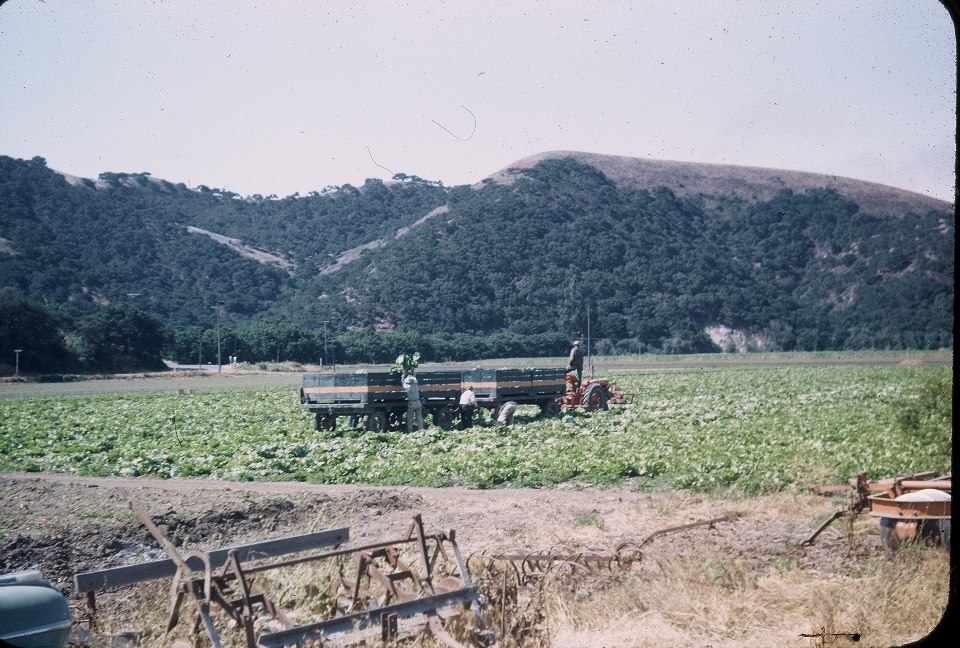
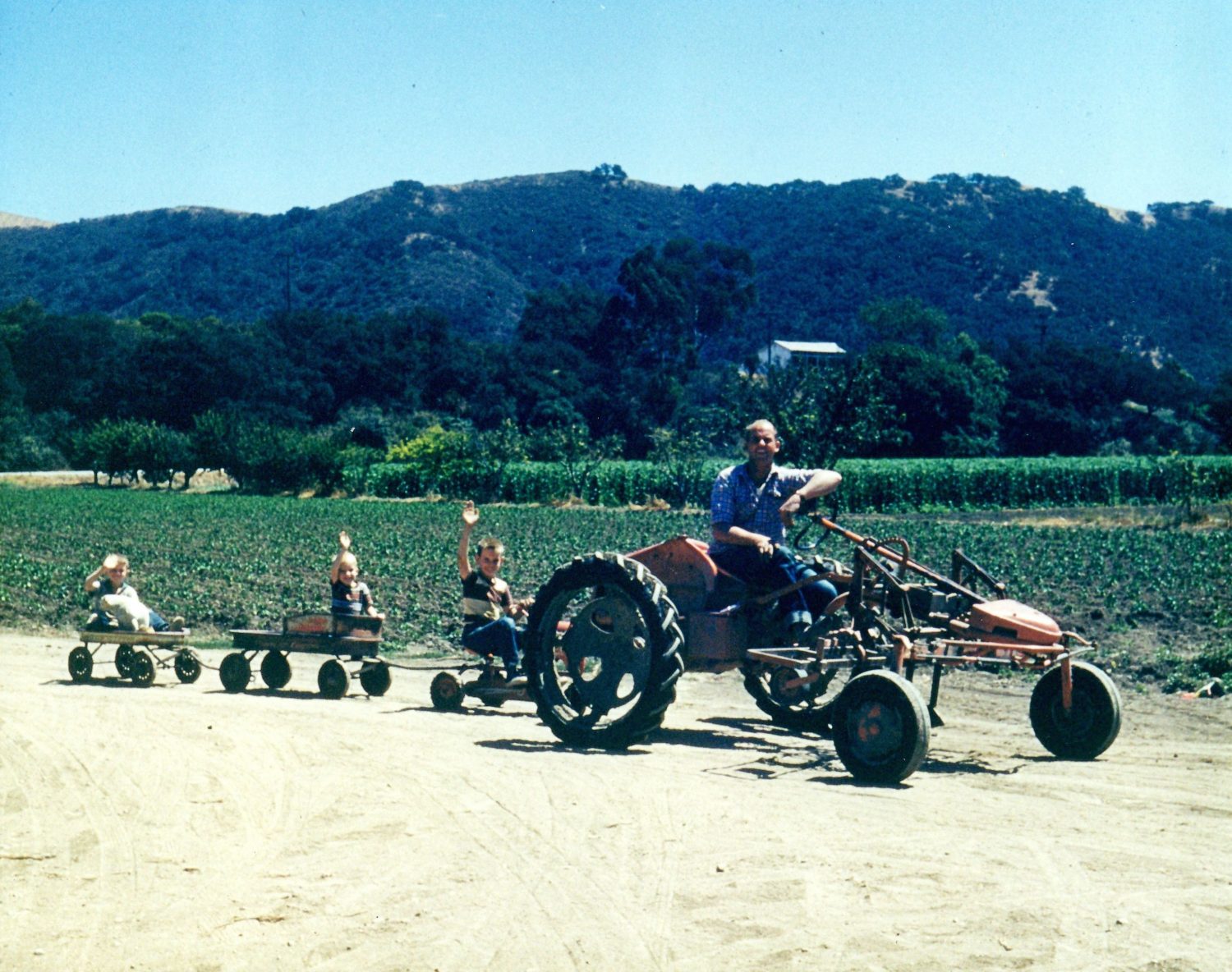
               Cutting Romaine with the four corners in the background. My dad on the Farmall.

Our little home was just a half mile from the four corners, the crossing of Branch Mill road and Huasna road.  No one knew when it was built but certainly in the day when foundation were simply posts dug into the soil and a floor built upon them. This gave it the curious quality of adapting, each year, to the weather. If it was a particularly wet year the house might lean in any and all directions, causing the doors to stick in their frames. My father had an old hand plane which he would laboriously use to plane them enough to work again. After decades of trimming they took on the appearance of lozenges, not quire matching the parallelograms they were hung in. As wood ages it grows harder and a dull old plane thrown in the tool shed for a year at a time can’t remember when it was last sharpened.

My father, bless his soul was not a mechanically minded man which may seem strange for a farmer but such was the case. Dad had two things to adjust those doors, he used the only quasi swearword I ever heard him use, SB and that old plane.

There was a time when I was still young enough to ask what SB meant and my dad pointed to the mud flaps on our neighbors red flatbed truck which were branded with those letters and said, quite simply, “Silva Brothers.”

I can’t recall a single farming family we knew who ever used the front door. It was our back door that was the real entry. Always the screen door, held shut by a spring whose slamming announced coming and goings. Anyone who used the front door was held to be slightly suspicious, obviously not knowing the proper protocol for entry. You might simply be ignored until you went away. Another thing not allowed was blowing the car horn to get my dad to come out. If you wanted a job, you were already scuppered, you couldn’t ask if no one came. He would make you wait until, as he said, “Hell froze over.” This was how some lessons were learned, when you are asking a favor, be polite.

We also learned how important body language was. My dad could see you from the kitchen when you drove up and parked. A man who hustled from the car to the screen door, the correct one remember,  gave a firm knock would surely be hired if there was a job available. “A man walks the way he works” he said. Something I have found to be true.

My dad was born in 1912 and began working as a small boy of seven. My grandparents had a dairy and the kids were expected to pull their weight every day. Milk cows don’t take Sundays or holidays. He grew up in the twenties and thirties, graduated college in 1934 at the deepest part of the depression and went right back to ranching and farming. At the kitchen table we learned that you judged a man by how hard he worked. My dad took a great deal of pride in this ability to produce. This was a common thread running through those kids that lived through the depression and WWII. Don’t shirk, don’t show off, don’t put on airs, say what you mean and mean what you say. His word was his bond. Dad never preached, you learned by observing and asking questions which is how he wanted it to be.  This was what we learned in our kitchen.

Michael Shannon is a writer, World Citizen, Surfer and write so his children will know who they are.

Standard

At The Table

Michael Shannon

In 1918 my grandparents, Jack and Annie Shannon came home. Home for both of them was southern San Luis County. This family event is the linchpin of our story.

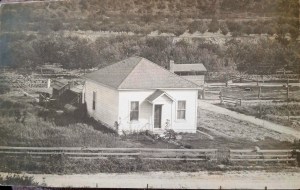
When I was a boy we lived in the kitchen. Our little house, built at the turn of the century was the heart of the home. As were most homes built at the time it featured none of the devices we take for granted today. No insulation, no central heat, and no weatherstripping. Small houses were the norm before the war and ours, originally just three rooms had slowly been added to over time. To get to the back bedroom you had to pass through each of the other rooms. Porch, kitchen, living room, my parents bedroom, bathroom and finally, my room, a sunny room with large windows in which I imagined my future life as boys will do.

What my brothers and I learned at the kitchen table has shaped our lives. The Japanese philosopher Masonabu Fukuoka has said,”The simple hearth of the small farm is the true center of our universe.” This quote describes the experience of family all over the world, something we all have in common. I don’t know of any kids that I grew up with don’t share this experience and to this day I can see them as they were.

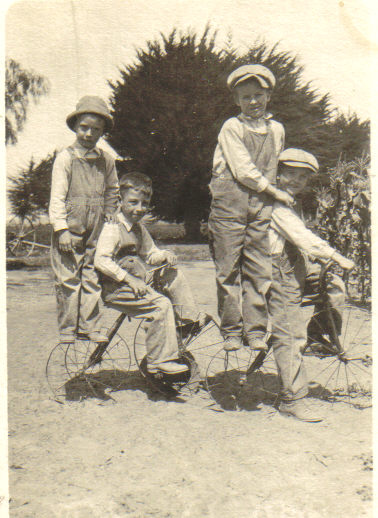
The photo above, taken in 1920 at my great-grandparents house on west Main St in Santa Maria shows my father and my uncle Jack with two friends. My father, George steers the trike on the right and my uncle Jack, his older brother by two years stands behind him. My grandparents lived with Annie’s parents for a time until they could move onto Annie’s ranch just south of Arroyo Grande.

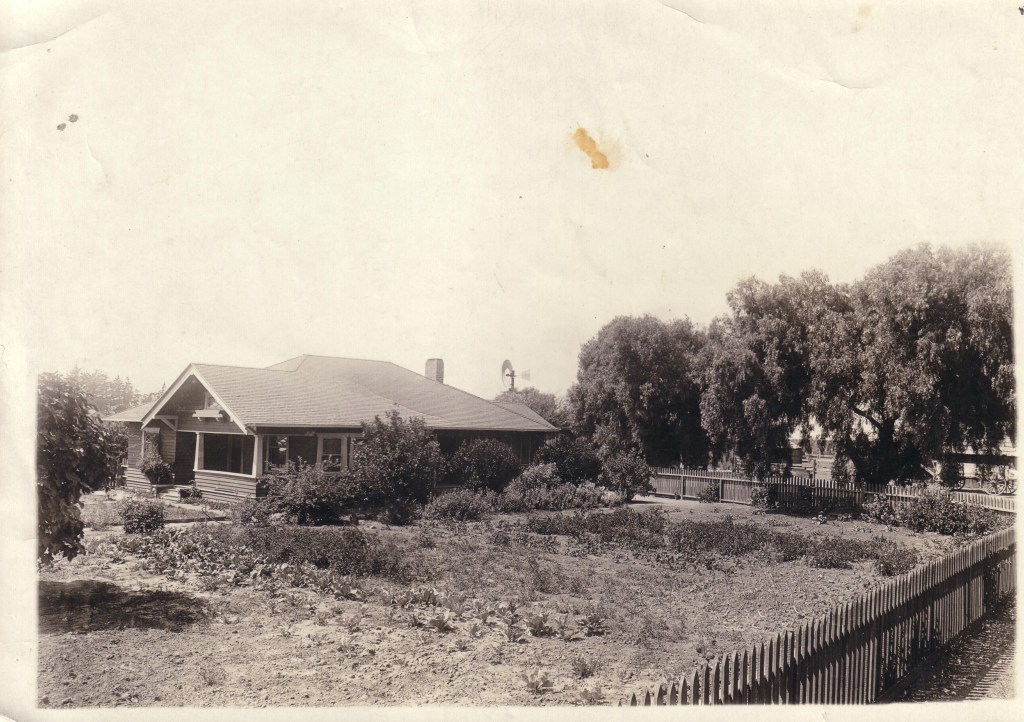
The Samuel Gray home on Guadalupe Road in Santa Maria. Built by oil wells and many sheep. photo 1938.

We didn’t have a televison until I was eight. The most exciting thing was watching the test pattern because we somehow knew that hidden behind it were many earthly delights. We were partly right about that. There was only one available channel anyway and my parents didn’t see any need for one, the TV was for us mostly. They had the radio. They had been radio people all of their lives and it was the familiar thing. It had all the basic elements of TV anyway as television was really nothing more than radio with pictures. They read. We had Life, Look and the Readers Digest magazines scattered about. Part of my education were those old Reader’s Digests with their puzzles, riddles and a vast variety of stories. I found Bennett Cerf there and many of the great writets of the day. My grandmother belonged to the book of the month club as did many of my mothers friends so there was always a book around. We still have old Book of the Month editions with the names of friends on the flyleaf. Gladys Loomis’s heirs are probably still looking for them.

Most of my abiity to read comes from comic books. For a time we had a neighbor who rented Joaquin Machado’s house which was back by the creek near the old Evans place. The renter was a comic book distributor and each month one of his jobs was to collect all the back issues of comics not sold. Once a month my dad would come into the kitchen with a big bundle of comic books tied up with cotton string. It was a tiny Christmas. We devoured them and couldn’t wait for the next 30 days to pass. It seemed a tragedy when the man moved away.

Farm and ranch life in the forties and fifties was pretty isolated. Farm kids, for the most part spent their time either in small one or two room schoolhouses learning from books, in some case decades old taught by teachers who balanced the needs of up to four grades at one time. Kids were not separated by grade as they are today. All eight grades studied and played together. If you imagine schools today there are self-contained boxes for each grade level. We had all the kids in one box. Teachers ran curriculum and the parents were the school board members, janitors and school bus drivers. It was a family affair. A six year old had to handle a ground ball from a thirteen year old. It made little kids deal with older ages and those older ages learn to accept the little guys. Not a bad system.

4-H was the only club activity which was OK as nearly every kid’s father was a farmer or worked for a farmer and it was assumed by kids that they would do what dad did. It was not an unusual thing to see see Mrs Fernamburg working in their walnut orchard or Elsie Cecchetti out feeding her calves. I can still see Helen Kawaguchi sitting up on the seat of the old red Farmall wheel tractor slowly trekking back and forth across their fields. She always wore a big straw hat favored by the Japanese ladies when they were in the fields.

Fields were a descriptive word much like a compass and used to indicate direction. There was “Down the fields” and “Up the field.” Mom might say daddy is down the field which told you he was far away from the house. He would tell you that the irrigation pipe to be moved was up the field meaning it was away from the house too. Everyone understood this. Other directions told you he was with the celery crew or the broccoli cutters. Markers were all around. There were the Walnut trees, Lester Sullivans barn or “Old Man Parrish’s” orchard. I crossed Branch Mill Road at the old Branch bear pit behind Ramon Branches adobe house when I went to visit Kenny Talley, my closest friend. The four corners was where we caught the school bus, which wasn’t a real bus but served the purpose of getting kids to school. It had retired “Shanks Mare” in 1949. Kids didn’t have to walk anymore. The school bell which had once rung to tell moms it was time to send the kids still rang but really just for tradition I suppose.

The old Kawaguchi home. in the 1890’s

Schools were the center of social life. They were the meeting halls, the place where Halloween was celebrated, Christmas plays performed and potlucks held for no particular reason other than to get together. Mom’s made the costumes, painted the decorations and formed the audience cheering us on as we walked in our circle in Mrs. Edith Browns lower grade classroom. We might get a prize, or should I saw mom might get a prize. My own mother was a master at costumes. I was a robot, my brother Jerry and I were a horse once. as the older brother I started of as the head but was reduced in rank when I passed a smidge of gas during a rehearsal in our living room. It was worth it though, winning a round in war between brothers always was. Still is.

The world was small. A schoolroom, the little town of Arroyo Grande, which, for kids meant The Western Auto and The Variety Store, thats were the toys were. Bennett’s Grocery where Muriel and Rusty were free with the candy jar, the clothing stores where my mother worked. Louise Ralphs where all the ladies wore perfume, still the best and most fragrant place I can remember, Zeyen’s clothing store where the Levis were stacked to the ceiling and permeated the building with their peculiar new clothes odor. Mom worked there and served two generations of kids.

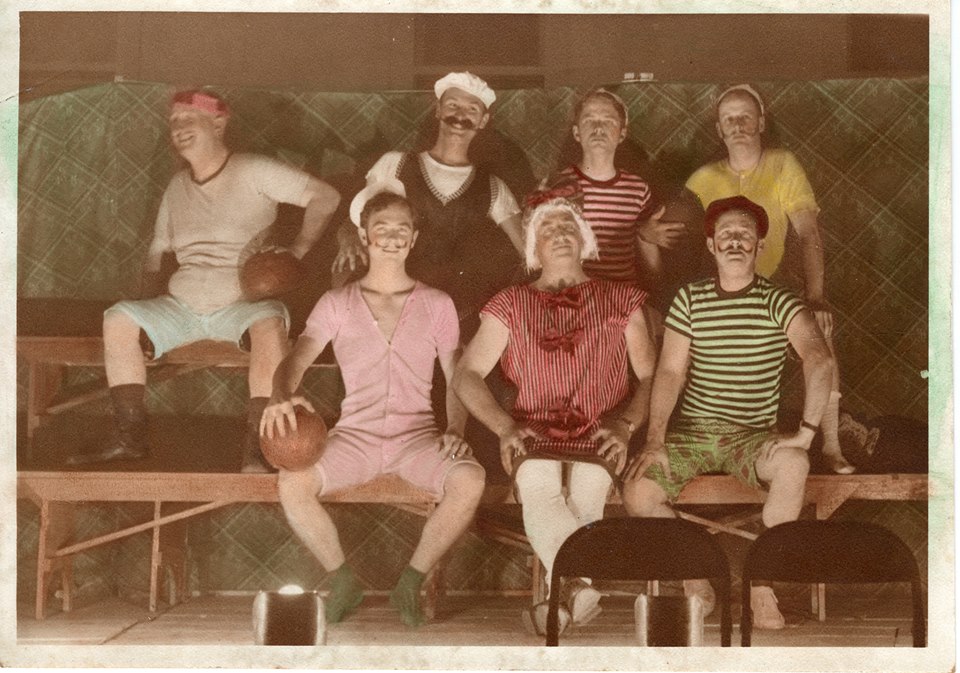
During the Gay Nineties festival celebration my grandfather sang in a barbershop quartet with Gordon Bennet, and Bill O’Conner from the stage of the old Mission theater. The Rotarians entertained with jokes and skits. Thats them below in all their sartorial finery doing the Lord knows what.

Vaudeville Blackouts in the Mission Theater. Harvest Festival/Gay Nineties, 1950’s. Family photo

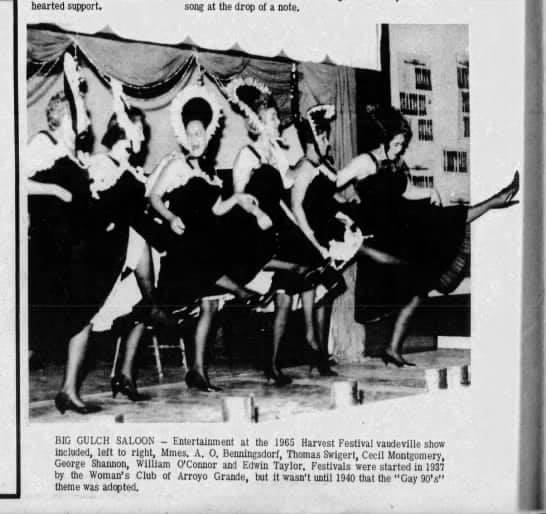
The moms entertained too. Being shy was not too bad when you knew everyone in the audience.

1965, Women were still know by their husbands name.

The world was small and lined with soft things that didn’t sting or hurt too much. A kiss, some spit or a daub of mud cured most things. Kids felt safe there. It would be gone soon enough, mores the pity.

The kitchens in our homes weave through the narrative of our lives and form the foundation of the stories of our lives.

Michael Shannon writes and would still prefer to live in the kitchen if he could.

Standard