Elwood, his name was Elwood Cooper and he owned the large Elwood Ranch in what is now Goleta and the adjacent hills. His first name lingers in several local place names including the oil fields. There are Elwood Canyon, Elwood School, Elwood Station Road, and a Goleta neighborhood. He ran cattle. He was a horticulturist and was best known for importing millions of Ladybugs from China to California which wiped out the black fungus that was killing walnut trees and saving that industry. He also imported the first Blue Gum tree which he though might be a good source of lumber. There are still thousands of Eucalyptus planted in wind breaks all over Southern California. This turned out not to be a wise choice.
After the death of his wife in 1909 he sold out and lived the rest of his life at Santa Barbara’s Arlington hotel. The ranch was sold to the Doty family who kept the business until 1921 when it was foreclosed, auctioned off and was essentially dormant until 1927 when an exploratory oil well was drilled there by a company from Texas.
The first oil discovery in the area was in July 1928, by Barnsdall Oil and the Rio Grande Company, who drilled their Luton-Bell Well No. 1 to a depth of 3,208 feet into the Vaqueros Sandstone. After almost giving up they not only struck oil, but had a significant gusher, initially producing 1,316 barrels per day. This discovery touched off a period of oil leasing and wildcat well drilling on the Santa Barbara south coast, from Carpinteria to Gaviota. During this period, the Mesa Oil Field was discovered within the Santa Barbara city limits, about 12 miles east of the Elwood field. The Elwood Field contained approximately 106 million barrels of oil, almost all of which has now been removed. The field has been abandoned.
Elwood piers and wells. Elwood Field, Goleta, CA
Barnsdall moved Bruce up to Elwood in early 1929. Almost all the wells were being whipstocked trying to reach the oil sands covered by hundreds of feet of seawater in the Santa Barbara channel. His expertise was in high demand. The drill strings were boring diagonally down in to the field like the tentacles of a squid. The whipstocks themselves never saw the light of day, snuck in at night because no one wanted the competing oil company on the neighbor’s lease to know just what was going on.
The business was still the wild wild west. There was no government control on production. Small producers took no prisoners they just drilled and drilled. Since wells typically produced the greatest amount of oil when they were still new, the impetus was to never stop drilling. The big companies were no better. Over production was taking its toll at the gas pump but no one in the business cared. Neither did the Hoover government. The public liked the idea of .22 cent gasoline.
Times were still pretty flush during the postwar boom. Car companies were turning out automobiles as fast as they could and Ford, especially Ford with its emphasis on utility and low price was driving car production at a breakneck pace. In 1929 Henry Ford raised wages to $7.00 a day. The other auto makers promptly sued him citing unfair labor practices.
Wages in the oil fields were also high, seven to eight dollars a day. The length of a tour was now just 8 hours down from twelve. Things were better for Bruce and Eileen because he was able to spend a little more time at home though it also meant that the rigs now required two crews a day to make hole. As a tool pusher he was now required to supervise both crews not one.
It was rough work. Bruce wasn’t out of danger yet. In 1930, 67 oil workers were killed on the job. Blowouts, falling rigging, toppling derricks, explosions and fire were always a danger. There was rarely at time when there wasn’t something burning in the fields. Barnsdall, operating all over California sent them back to Oildale. a place where they lived for nearly a year. Bruce came home one day with the skin ripped from his fingertips to nearly his elbow peeled back. At the rig they had smeared some grease on the open wound, laid the skin back down and wrapped it in a dirty undershirt and sent him home. My grandmother opened it up, cleaned the dirt and stickers off, slathered it with Vaseline and wrapped in in a clean bandage which she cut from a sheet. He went back to work the same day. They were both tough people.
In 1929/30 they lived in Bakersfield in a house for the first time that was big enough for the whole family, Bruce Eileen and the three kids. It had enough bedrooms for each kid which was the first time that had happened. It was considered a luxury by the children because no one had to sleep on the couch or the screened porch. Wonder of wonder it had indoor plumbing. A faucet in the kitchen and a bathtub. No toilet though, you still had to use the “Backhouse” to do your business.
Robert Mariel and Barbara Hall, 1930. Hall Family photo
Bruce was getting a reputation for knowing what a well was doing. He could tell by smell and taste what was happening a thousand feet down. He could hear in the creaks and groans, what she was thinking. He had the drillers sense of where she was going. Kneeling on the platform you would have seen him sniffing at the casing head, taking a finger and tasting the liquid mud used to lubricate the drill string. How hot was the mud flooding up out of the well? What did it smell like, was that hint of rotten eggs? When traces of crude came up getting a little on the fingertips and touching it with the tongue to help predict its gravity, was in light and sweet or thicker, could it be chewed. There was even a difference when you wiped your hand on a rag, did it soak right in or stick to the surface. Was there gas coming up, how much pressure was pushing it? There were a thousand indicators, the well was telling you its story. It had to be read on the spot for there was little scientific measurement in the oil patch just yet.
He always said that the kind of things you see in a movie, wells blowing up or a gusher blowing vast amounts of oil skyward could and would get your fired. Crude was money and the big men in the office wouldn’t be happy if a well got out of control. If you’re senses told you what was coming next you were a valued worker and grandpa was that. He had eleven years on the job and the experience was paying off. There were just a few thousand men working the rigs and people as good as Bruce were worth their weight in gold, or oil as the case may be. Word gets around.
Everything was looking pretty rosy. All three kids doing well in school, Mariel would be in high school in a year, Barbara in seventh grade and Bobbie in fourth. The kids were old enough now that their constant moving about had taught them how to quickly make friends. How to spot the popular kids who were school leaders and elbow there way into the group. Their parents sat them down and counseled them on the best way to survive as the constant new kid. Moving two or three times a year from school to school strengthened their social skills. I remember my mother, Barbara, the second child could make a friend in about two seconds.
Something bad was lurking in the United States and the world though. On the surface was the gloss of good times shown brightly but they masked something sinister. By the end of the decade cracks would begin to show though no one seemed to understand the why or what of it just yet. Let the good times roll.
Life magazine cover. Art, John Held JR. November 1926
All during the twenties in the aftermath of the war the times were good, very good. Society had rapidly changed. The old song which opined that soldier boys who had seen gay Paree wouldn’t want to go back to the farm was true. Young people saw skirts go up, way up. Flappers wore silk stockings. They rolled them over a rubber band just below the knee slipped a flask of bootleg whiskey under their garters and shimmied like their sister Kate. Hair was bobbed. Silk undies, just a chemise and a pair of step-ins, let’s party like 1929.
Miss Bee Jackson 1925, The Charleston Girl. British Pathe photo. Youtube.
Henry Ford was turning out the Flivver by the millions, they cost just over two hundred dollars and the kids soon discovered that petting on the back seat was a delight. They wanted to go and party with Jay Gatsby on long Island. F Scott Fitzgerald helped open the door.
It Wouldn’t last.
Chapter 14, coming soon. Disaster.
Michael Shannon is a writer. These stories come from his mothers side of the family many of who spent more than sixty years in the oil patch.
“The Californians are an idle, thriftless people, and can make nothing for themselves. The country abounds in grapes, yet they buy, at a great price, bad wine made in Boston…” Richard Henry Dana, “Two Years Before the Mast.” 1830
Richard Henry Dana Jr. 1815-1882
Old Juan, the Mayordomo opened the door at the knock. Sitting their horses outside were Capitan Guillermo Dana and his wife Maria Josefa Petra Carrillo y Dana. Her children, 11 year old Maria Josefa and 4 year old William Charles rode the saddles of the Vaqueros carefully folded into the riders arms. Without dismounting, the Vaqueros bent down from the saddle and gently placed the ninos on their feet.
The patter of little feet was heard and then from between Old Juans legs squirted two little boys, Ramon Branch and his two year old little brother Leandro, called Roman. Barefoot in the dusty patio, they came to a sudden halt, delighted to greet the Dana children. Someone new to play with. La Dona Irelanda, Mrs Branch’s duena came bustling through the doorway, shooshing and fussing as she herded the children inside like a flock of little chickens, squawking and laughing all the way.
Behind them by the corrals were four of Don Guillermos Vaqueros led by Juan Medina. Dressed in their finest for the occasion in silk lined short jackets adorned with silver Conchos inlaid with jade or ivory buttons fastened with braided frogs. Each man sat his horse as if they were one with the animal. Their decorated and stamped California saddles were adorned with a large horn as large as a soup bowl. Each horse was reined with a beautifully braided Bosal noseband and jáquima. A well trained horse was ridden with almost no guidance from the Vaquero other than a little pressure on the noseband or his knees. Only women rode mares, no Vaquero would ever be seen astride anything other than a Stallion. Each Vaquero believed that they were the greatest horsemen that ever lived. Their spines were stiff with pride and the old saying that they wouldn’t walk across the courtyard on foot is true. A man astride believes his is as noble as any king.
They wore flat brimmed leather hats over silk bandanas, their long hair caught back in ponytails pomaded and shining. As they swung from their saddles their large roweled spurs rung with the sound of jingle bobs tinkling. Shaking out their best clothes, dusting them and arranging everything just so they turned and strode in their soft calf skin boots toward the Cocina never deigning to look back at the hosteler who was leading their horses into the corral. Immense pride in their own stature dripped from them like the morning dewdrops from an Oak.
Juan welcomed the Danas inside waving his arm in a generous sweep towards the host and hostess, Francisco Branch and his wife Manuela who stood in the great room of the newly completed grand hacienda. Manuela stepped forward to greet Josefa, still a stunning dark eyed beauty at 27. They shared an embrace and a brief soft kiss on each cheek as was the custom. Both women had been born and raised in Santa Barbara and were nearly the same age. A quarter century had passed since then and now they were Patronas and managed the households of their husbands vast rancho’s.
Manuela’s maid came forward and to take Josefas “Manton de Manila” but with a small wave of the hand Manuela bade her stay. She bent to look at her friends silk shawl with its elaborate embroidery and the long fringe on its edges, running her fingers along the fine silk from China. “Hermosa, preciosa,” she murmured, speaking in the language of Alta California. Arm in arm the two lovely young women turned to begin a tour of the newly completed home.
The rancheros shared an abrazo as was the custom in the land and walked outside to enjoy the view of the old Arroyo Grande from la Sala. The took their ease in chairs made by the Indians who worked on the rancho. Little Pedro the son of the cook presently arrived with a tray and two glasses which he promptly filled with wine made from the grapes originally grown by the Padres of mission San Luis Obispo de Tolosa and transplanted at Capitan Dana’s rancho Nipomo. Taking cigars from those offered by the servant they went through the process of lighting them. Dana leaned back and sent a stream of fragrant smoke skyward. commenting on the flavor. Branch said, “These Cigaros are hand rolled in the Phillipines and came by one of the trading ships just a few weeks ago. The long trip across the Pacifico doesn’t seem to have effected the quality, no?”
The two Don’s sat back and enjoyed their leisure time They were neither indolent or lazy as stated by the first white writers who came to California have stated. Each ran a vast Rancho of tens of thousands of acres. The Spanish word Don was not just an honorific but the description of a man whose literal fiefdom equalled the possession’s of European royalty. Each one was building a community of people dedicated to the advancement of not only their personal interests but the interest’s of their family and retainers.
The Hacienda was large and designed to shelter the family and the people who worked for them. The grist mill processed corn and oats to feed the many who depended on Francisco Branch. The clearing of the valley floor, which was ongoing provided growing ground for the many crops and the orchards which provided fruits and nuts to the establishment. Captain Dana did the same.
The conversation turned to spring. The spring roundup was approaching and the two men began discussing the organization needed to gather the wild cattle for counting and slaughter. The two men would work with the surrounding Hacendados to put together the Vaqueros, the skinners and the women who would scrape and process the cow hides for shipment. Camp sites, food, cooks, wood choppers and drivers for the carretas that would bring the hides out of the foothills and down to the ranch houses for storage until the ships such as the Alert, Pilgrim, Gypsy or the California of Tomas Robbins called at the cave landing to trade and load hides for shipment to the east coast. Thomas, “Don Tomas” Robbins who owned the Calera de Las Positas Rancho in Santa Barbara and the entirety of Santa Catalina island was Dana’s brother-in-law.
Capitan Guillermo Dana and Don Francisco Branch, both transplanted Yankees, one a sea captain and supercargo on ships trading between the California coast and New England, the other an American trapper and hunter who had come west with the William Wolfskill party of hunters in 1831. They both settled en La Puebla de Santa Barbara where they operated small stores and in Branch’s case, expeditions along the northern coast hunting otters and seals. Otter pelts were traded to the Russians stationed at Fort Ross. The Russian American fur company then sold the peltrie to the Chinese for up to one hundred dollars in the early 1800’s. Branch came in right at the end of the fur trade as most of the sea creatures had been hunted to near extinction by 1840. Although few actual coins were ever traded he built large savings of credits which he used to buy goods for his various enterprises. Though Branch had little education, he was a canny businessman and had come far since his arrival in Alta California.
Both men had converted to Catholicism and became Mexican citizens, married young girls from prominent Californio families and lobbied for grants from the governor of California. This was land confiscated from the Mission establishment when the Mexican government secularized the missions in 1833. The Mexican government confiscated the missions’ properties and exiled the Franciscan friars. The missions establishments were then broken up and their property was sold or given to private citizens. The land was intended to be returned to the Indians who had served the missions but politics reared it’s ugly head and the land was granted to prominent citizens. The Indians, neophytes as they were known lived in the old church buildings, the asistencias, or wherever they could find a place to stay. These Vista or Asistenecias were small mission settlements designed to extend the reach of the Missions at a much smaller cost. Don Francisco Branch was a neighbor of Jose Maria Teodoro Villavicencios who owned the Rancho Corral de Piedra which had two former mission properties, the Corral de Piedra and the smaller Canon Corralitos where the padres had once grazed their horses. from where the two Don’s sat they could look up the Corralitos which still held a portion of the Villavicencios horse herd.
The Arroyo Grande’s Santa Manuela, was in the center of a ring of ranchos. the Nipomo to the east, Francisco Quijado’s Bolsa de Chamisal to the south, and Jose Ortega’s Rancho Pizmo to the west. Neighbors nearby were Don Miguel Avila, Teodoro Avellanes on the Guadalupe and the Punta de Laguna of Luis Arellanes and Emigdio Miguel Ortega. Each one an easy ride by horseback. Visitors were frequent and hospitality demanded thats what is mine is yours. Visits could last for days and even weeks, especially amongst the women and children of the various ranchos.
Women and children learned to ride almost before they could walk. Californio women were nothing like the bonnet wearing side saddle riding women bedecked with ostrich plumes walking their horses through the parks of Manhattan, no, California women rode astride like men and from their earliest age they rode everywhere. Some could throw a reata as well as any Vaquero. Raised to be independent they were nobodies cupcakes. A braided quirt could quell the insolence of any man. Josefa Dana would have seen no need for a sidesaddle if there was ever such a thing in California. And if there was she would have ridden with the same elan as the men.*
At the Branch’s the crackling fireplaces warmed the rooms with old oak wood cut from the abundant coastal oak forests on the Santa Manuela Rancho. The smell of food being prepared in la cocina drifted on the afternoon breeze and added a fillip to the air where the Rancheros sat enjoying the days end.
Old Juan who wasn’t yet old but has been remembered in local lore as “Old Juan” and was Don Francisco Branch’s longest serving employee hustled out to supervise proper care of all the horses. The distances and the lack of roads of almost any kind meant the horses were the only form of transportation and were highly prized. The First horse in California escaped from the Portola expedition in 1770 and with the establishment of the mission system horses were brought up from Mexico and crossed with local wild stock. Padres and their Vaqueros were no less interested in horse breeding than anyone else . By the time of the Rancho era, crossbred Andalusians and arab Barbs numbered well over 25,000. Greater than the human population. Herds lived in semi-feral conditions in the foothills along the coastal areas where most of the ranchos were. Horse racing was a serious business in old California. Visitors remarked on the remarkable quality of California horses. They were so valuable that Captain Fremonts hare-brained attempt to annex California to the United States in 1846 that as his motley group of volunteers simply stole Captain Dana’s best horses in the dark of night, leaving his own worn out remuda and a note confiscating all the horses with a promissory note that could be redeemed for government cash. The only horse left was an old broodmare, to old and fat to ride.
Though there was no telegraph or any way of communicating with ranchos further south, Captain Dana sent a Vaquero to Guadalupe to warn Teodoro Avellanes that Fremont was coming and looking for mounts for his “Army.” Calling out his vaqueros, Don Teodoro made sure that there were no horses in sight when Fremont arrived. Forced to move on Fremonts group camped in the pouring rain at the north entrance of Foxen Canyon. Benjamin Foxen, another Yankee Ranchero was warned by another rider that the so-called army was headed his way. Meanwhile, Captain Dana and his Vaqueros were creeping up on the camp where the miserable, soaking wet Fremont “Army” was camped near todays town of Garey.
It was the practice in those days before fences that whenever a ranchero purchased a horse, he would tie an old broodmare to the new horse with a short rope. The two would run over the fields for a few days until they became fast friends. As a result, to the end of its life, no California horse would ever willingly desert his Caballada, something that neither Fremont nor his men were aware of.
Dana and the Vaqueros moved the broodmare around to where the evening breezes would blow her familiar scent to the grazing horses from Rancho Nipomo. With no warning a stampede began and before Fremont knew what was happening, Dana’s horses were racing across the fields, following their elderly broodmare back home to the ranch. Fremont’s men were once again reduced to marching by Shank’s Mare on their way southward toward the city of Santa Barbara.
The cook and her helpers worked in semi-outdoor kitchen (Cocina). Build with adobe walls about six feet high and a lean-to roof of Vigas closely spaced with smaller willow (El Mimbre) and a covering of reeds from the lower valley woven into thatch. It was almost completely waterproof. The three sided enclosure contained a Horno oven, a circle of stone for a pit fire and hanging above an iron try pot salvaged from a wrecked whaler. There was a small iron stove from a sailing ship with its stove pipe lifting the smoke and heat through the roof of the Cocina. The cooks worked in the building separated from the main house for good reason since fires were common in buildings that had wooden or thatched roofs. It would be a number of years before tile was made in enough quantity to roof the hacienda.
Hand made tables held clay bowls and utensils traded from the small coastal ships that unloaded imported goods and loaded hides at Cave Landing on Miguel Avilas ranch near the outlet of San Luis creek. Though isolated, Alta California benefited by long established trade with the far east.
The men moved inside and stood behind the elaborately carved chairs where their wives would sit. Furniture in the houses was made by the former neophytes who had been trained by the Padres at the mission since the late 18th century. The Chumash had been taught stock raising, agriculture. woodworking, masonry and all the chores required to run a household and since 1833 had been unemployed. For many who remained the ranchos offered near permanent employment. They had worked on every part of the Branch home.
The Chumash and the other Mission retainers who had stayed in the area built corrals, cleared the Monte’s and felled trees for building. Thousands of adobe brick were made by adding water and straw to the sticky adobe soil and then putting the black pudding into wooden molds and laid in rows in the sun to dry. All the old Haciendas were built this way with walls two and three feet thick.
Heated by small and narrow fireplaces where the wood cut from abundant trees was turned on end where it burned slowly. The small fireplaces were efficient and kept the Hacienda warm in winter. The heat generated soaked into the thick adobe walls and radiated back into the buiildings. It was a very efficient form of heating. In the summer the inside of the homes were cool because the thick walls which were shaded by trees stayed cool.
The Hacienda when it was owned by Francis Branch’s son Jose Frederico “Frank” Branch. 1860s
Seamstresses made clothes from imported fabric as well as the wool spun and woven from the sheep raised on the rancho. They made their own soap from the Lye obtained by pouring clean water through the abundance of wood ashes from the fireplaces. Lye was also used to flavor food and to keep insects off the corn crop. Tanning a cowhide requires lye. Mixing lye with animal fats makes soap. Lye will bleach cloth and is used in making paper. Curing meat, fish, fruits and vegetables requires lye. It’s also used to make dyes for fabric.
Both the Hacendados had orchards with apples, lemons, limes, pears, plums and oranges. All grown from cutting that came by pack horse from William Wolfskill’s horticultural nursery near Los Angeles, the first in California. Owned by the same man that Francis Branch came to California with. Both men demonstrated a variety of talent throughout their lifetimes.
Prepared in the cocina were plucked chickens hanging from hooks. Along one wall where irons skillets brought across the old Spanish trail by mountain men like Jed Smith for barter with merchants in Santa Fe or Taos found a ready market in California. Long pack trains of trade goods which would be traded for peltry and fresh horses for the return trip. Along the wall a shelf or two laden with fired clay pots of various sizes mixed with spoons, spatulas and the real treasure, a coffee grinder which had made the long trip from Mexico City to San Blas’s anchorage at Matanchen Bay and then north along the coast by ship.
Coffee had been introduced to the Sandwich islands in the 1820’s and was regularly traded with ships that called at the Hawaiian kingdom. Coffee trees had been introduced to America by Captain James Smith at Jamestown in 1723 and had spread quickly across the continent. Trading vessels could make the run from the islands to California in about three weeks weather permitting. In a single year, in the late thirties and early forties about 25 ships from the United states made the trip around Cape Horn to California. Averaging about 200 days, the small sailing vessels could pay for the cost of their building in single trip.
Economics of trade played a very important part of Hacienda life. With no manufacturing or commercial cities, anything that they needed had to be imported from Mexico or from abroad. The Spanish and Mexican governments tried to restrict trade to keep foreigners from settling in California and had enacted a 100% tariff in the 1790’s. All that achieved was to slow trade with Mexico proper and force the Californios to become active smugglers. The coastline was so long that there was literally no law enforcement and if there had been, the soldiers were easily bribed. They had families to feed too. The two thousand miles between Mexico City and Alta California was a formidable barrier.
To the uninformed 18 year old Yankee, Richard Henry Dana, Alta California seemed backward, the population ignorant and he clearly looked down on the Californios. What he missed is that California was part of one of the oldest worldwide trade routes that ever existed.
The Brig Pilgrim, 86′ foot at waterline and a 21 foot beam Leaving Monterey Bay. 1834
The famous silver fleet or plate fleet; from the Spanish: plata meaning “silver”, was a convoy system of sea routes organized by the Spanish Empire from 1566 to 1790, which linked Spain with its territories in the Americas across the Atlantic. The convoys were general purpose cargo fleets used for transporting a wide variety of items, including agricultural goods, lumber, various metal resources such as silver and gold, gems, pearls, spices, sugar, tobacco, silk, and other exotic goods from Spains overseas territories of the Spanish Empire to the Spanish mainland. Spanish goods such as oil, wine, textiles, books and tools were transported in the opposite direction.
The West Indies fleet was the first permanent transatlantic trade route in history. Similarly, the related Manila galleon trade was the first permanent trade route across the Pacific. The Spanish West and East Indies fleets are considered among the most successful naval operations in history and, from a commercial point of view, they made possible the key components of today’s global economy.
The Manila galleons mostly carried cargoes of Chinese and other Asian luxury goods in exchange for New World silver. Silver prices in Asia were substantially higher than in America, leading to an arbitrage opportunity for the Manila galleon. Every space of the galleons were packed tightly with cargo, even spaces outside the holds like the decks, cabins, and magazines. In extreme cases, they towed barges filled with more goods. While this resulted in slow passage that sometimes resulted in shipwrecks or turning back, the profit margins were so high that it was commonly practiced. These goods included Indian ivory and precious stones, Chinese silk and porcelain, cloves from the Moluccas islands, cinnamon, ginger, lacquers, tapestries and perfumes from all over Asia. In addition, slaves, collectively known as “chinos” from various parts of Asia, mainly slaves bought from the Portuguese slave markets and Muslim captives from the Spanish–Moro conflict were also transported from the Manila slave markets to Mexico. Free indigenous Filipinos also migrated to Mexico via the galleons where the crews would jump ship. These men comprised the majority of free Asian settlers the “chinos libres” in Mexico, particularly in regions near the terminal ports of the Manila galleons, San Blas and Acapulco. The route also fostered cultural exchanges that shaped the identities and the culture of all the countries involved.
In an age where time was measured differently, the long voyages or transportation times to get goods from Spain or the Phillipines to the Branch’s rancho was simply a factor that the Hacendado’s calculated.
The cooks in the kitchen didn’t care. They served Francis Branch and the where and the when of goods came from was of no matter. Their job was the feeding of the family and its retainers.
Red peppers, green peppers, dried tomatoes, garlic flowers, bay leaves, all strung together in multicolored bunches hung from a wrought iron rack hung in the corner of the room over a heavy table where the two cooks stood working. The older Mexican ladies from Sonora showed that the speed at which they worked belied had little to do with their ample size. They chattered with a sinuous melodious stream of Spanish mixed with Chumash and an occasional English word as they worked, laughing and teasing, especially the two little part Chumash girls that were the scullery maids. Laughter always made the food taste better they said. The little brown boy who swept the hard packed floor scuttled about trying to avoid the gentle kicks aimed at him when he got underfoot.
Chubby fingers flashed and the home ground and mixed flour from the Branch mill hung in the air as they rolled the batter into little balls, twirling and patting tortillas into shape with a staccato rhythm that mimicked the tattoo of little drums.
Bubbling over the fire, a pot of frijoles de olla and another of carne con chile steeped. Stores of wheat, beans, lentils and dried vegetables and fruit were stored in finely woven Chumash made baskets some so tightly made they would hold water. Some baskets had woven covers some were covered by a piece of wood with a small stone to keep out the mice who were everywhere in this little rodents paradise.
Dried salmon from the creek, fish from the reef and open sea along with dressed rabbit hung from the vigas overhead. Clay jars of salt, peppercorn, dried onions and lentils plucked from the creek banks sat on shelves with native California beans like Lima beans, butter and black-eyed beans along with both dark and light kidney beans, cranberry beans and heaps of wild blackberries gathered in the valley floor where armed Vaqueros protected the pickers from the numerous grizzly bears who also laid claim to the bounty.
From the Hacienda on its hill it was less than a mile to the bear pit where Branch and his vaqueros regularly caught and killed the monsters. The bears could and did carry off entire steers and other livestock. There were yet parts of the valley floor where no man went. Down the valley on the El Pizmo the swampy monte was so dense as to be impassable by man or horse, but not the Grizzly. Choked with wild berries it was exactly to the taste of the bears.
The valley was a paradise, the soil so rich that it was said if you threw a rock on it, it would grow pebbles.
As the sun fell towards dusk, the dinner bell began to clang from the Cocina, where the cook and her helpers were preparing to serve. The boy came out onto La Sala and murmured that La Cena Familiar was being brought in by the young women who served the cook for she was responsible for feeding nearly everyone on the Rancho. As the women were seated, servants brought out the meal.
The men had seated the women and then pulled out their own chairs and sat. The other guests took their places, before the door opened, the savory smell of food drifted into the room. Backing through the door the cooks laid on the table the big pot of Frijoles de Olla, red beans cooked with red chiles, wild onions from the creek, next a platter of chicken, breaded with crumbs from baked tortillas. This was followed by Squash blossom fritters garnished with salt, and wild sage gathered from the hillsides around the Hacienda then sprinkled with goat cheese made from the Rancho’s goat herd. A Chinese tureen filled with vegetable soup made from potatoes, carrots, wild leeks, onion, chopped cabbage from the kitchen garden and then sprinkled with ground red pepper. A pot of pumpkin soup arrived, an old Chumash recipe made from sliced and cubed pumpkin, sliced leeks, chicken broth, cows butter and pepper. The butter was something the Chumash didn’t have but served as examples of the blending of different cultures. The main dish which came in last was on a large figured platter brought from China. White porcelain with indigo blue figures it was heaped with braised short ribs smothered in onions, carrots, celery potatoes, parsley and sage. Each rib swimming in a sauce made from the Mission grapes and Brandy from the Calvados region of France. Crossing the Atlantic Ocean to Vera Cruz, Mexico and carried by pack train and wagon, the bottle had made the journey to California.
A heaping dish of fresh made tortillas, rolled and eaten as a compliment to the meal was laid out. Each of the adults ate from imported china which came east across the Pacific from the Philippines and glass goblets made in the city of Puebla, Mexico. Napkins of the finest embroidered linen were at each place setting. Sugar horns from the Sandwich Islands and bowls of pepper and salt were scattered about.
When the meal was complete the brandy was served for the men and Sherry for the women. At each place setting the servants laid a tortilla rolled with chocolate inside as a savory.
The guests at the table represented the variety of Californio peoples. The host was an American from Scipoio, New York. His principal guest, Captain William Dana a Bostonion. Their wives, both from Santa Barbara, the center of Californias largest pueblo, both from prominent families who had lived in Alta California since its founding. Mrs Branch’s sister Maria was married to Michael Price who owned El Rancho Pizmo. Price was from Bristol, England. The Priest who gave the blessing was a Spaniard educated in a Franciscan university in Europe, the Vaqueros were mostly Chumash or descendants of mixed marriages. The current term mestizo was rarely used in mission records: more common terms were indio, europeo, mulato, coyote, castizo, and other caste terms for someone of mixed breed. Some of them were of Indian and Spanish blood or from the Chumash or other native tribes. The chief cook was Chinese, lured from a transpacific trader and at least one vaquero, a Kanaka from the Sandwich Islands.
The Californios were neither indolent nor backward. Francis Branch had a school in his home for his own and the children of the men and women who worked for him. His account books, along with William Danas are part of the historical record. The descendants of those families live in and about San Luis Obispo county to this day. Their legacy exists in the names of streets, schools and their extended families. They were pioneers in every sense of the word and they made the world we live in today.
Richard Henry Dana was wrong.
“Were the devil himself to call for a night’s lodging, the Californian would hardly find it in his heart to bolt the door…”
Diary of Walter Colton Monterey, 1850
The old Branch Adobe Hacienda about 1860. Branch Mill Road in foreground.
The old Branch home in 1887, slowly melting away. It is completely gone now.
*With the flood of Easteners during the gold rush, mores changed and sidesaddles became de riguer for women. Still, on the ranches women and girls persisted in the old practice of riding astride. My own great-grandmother shocked the staid gentry of Santa Barbara by doing just that in the first La Fiesta parade in 1924. Born and raised on the old San Juan Canon de Santa Ana Rancho she was not one to care what anyone thought. She was admired in the family for her independence.
Michael Shannon grew up on the old Rancho Santa Manuela about a mile from the original Hacienda. He went to Branch Elementary school and knows many of the Branch descendants. Many of the Branch grandchildren were still alive when he was a boy. Stories abound.
He slept in the old rattling, wheezy school bus as it found it’s arthritic way. Most did. They hoped for just five more minutes, one more minute, please. The bus turned off the two lane road, bumped through the borrow ditch and rattled down the dirt road to the fields. The road baked as hard as steel, rutted, criss-crossed with the stampings of tractor wheels shook the old yellow bus with the fading tracery of San Luis County Schoolson its side. With a lurch the bus pulled up, the doors wheezed open and the driver said, “Get off.”
Down the aisle he shuffled with the others. The stale smell of yesterdays sweat hung about with evil odor of whiskey farts, bad breath and musty, not washed enough work clothes. He stepped down, he stretched cramped muscles, a thankless gift from the day before. Holding his pail with the tortillas, beans and rice rolled in tinfoil. he walked heavily to the wire bound basket in the pickup bed holding the hoes and flat files which were the tools of his trade.
Taking a deep breath of the sparkling air flavored with the last vestiges of the nights foggy dew, he headed down the row which seemed to stretch to infinity the ends still shrouded in the ground fog of early morning. He arrived at the spot where he’d quit the day before. Taking his water bottle off, a glass gallon jug with a length of binder twine tied around the neck in order to make it easier to carry, he stood tall, arching his back as he made a last futile attempt to disappear yesterdays pain. With an audible sigh he bent to the work.
Simon Yanez, Bracero August 1959. Photo by my mother on our farm.
Scattered like the seeds they tend, across the fields as if flung there, their backs humped up, faces the color of the dirt. they are bent close to the ground as if part of it.
Hoeing, weeding and thinning the delicate tomato seedlings already exuding the distinctive faint odor of their kind. The width of the short hoe with its 16 inch handle determined the spacing of the plants which would be allowed grow to maturity. All others sacrificed, Tomatoes, Malva, thistle, purslane and mustard, tiny as a fingernail, chopped by the rhythmic rise and fall of the hoe. Mass murder.
Held halfway down the handle for balance the hoe slipped between the plants removing all unwanted growth. The Tomato seedling with its two jagged leaves was left alone. Again. Again. Again. Tens of thousands sacrificed to the scuffling blade.
Photo ; Leonard Nagel, National Museum of Natural History 1956
Bent double at the waist, feet crossing again and again in the narrow furrow, he moved on. Already his back hurting. The pain began at the waist, spread down the backs of his thighs, the tendons behind the knees and up his spine to the shoulders and the back of the neck. Stay stooped, don’t straighten up it hurts less and the boss will see you if you do stand. There is a family to feed.
The heat rising, the sun seemingly stationary, the row endless and if you ever get to the end you must turn and face it again. Ten hours. All around the rhythmic pace of men, no talking, waste no energy. Can’t stop to smoke. When no one’s looking, a quick sip of tepid water. Sweat dripping from brow into the eyes. He straightened slowly, careful to ease the muscles lest he be crippled. He bent back over the row, trying to ease the pain of the hoe in his palm, turned red from the constant movement of the wood against skin. Back to it and all the while the ache, the ache; never ending.
Almuerzo en el Campo. Photo Shannon 1950’s
Noon, an unbelievable half hour crouched in the shade of the bus. Almost asleep while eating. Eyes closed until wakened by the shuffle of other men, cursing, groaning, headed back. Bloated with lunch, gut heavy, aching, he bent over the row. Shuffling sideways, his legs crossing and uncrossing, the Cortito rising and falling, he labored on like a condemned man, he administered his own torture; held it in his own hand.
Usando el “Cortito,” ( El Azada) San Luis County, California. Family Photo
His vision narrowed until the only thing visible was the hoe and the tiny green plants. The mind going down a dark hole, focused only on the intolerable ache and the rhythm. Slide step, drop and pull, crossover step, drop and pull. He followed the bent men.
The sun slid achingly down the sky, the men moved on across the brown earth. He hardly thought, focused only on the pain and the chopping. Quitting time did not exist now, only an endless wilderness of sameness. Up and back, up and back.
At first he was hardly aware of a new movement, men jumping across rows and trotting to the bus. IHe realized with a start that it was quitting time. Slowly straighten, stretch the bunched up muscles in his back, finally standing upright he followed the others into the bus. Stepping over men prone, unable to take another moment of back bending, he found a seat.
He walked to the barracks leaning oddly backwards still trying to stretch the twisted, corded muscles in his back. Propped on his cot, feeling the new lumps of muscle in his aching spine he said to himself, “I will never go back.” But the pay was one dollar an hour and his family, in Chihuahua needed the money. An hour of work bought a meal, two, a day of food.
He was a long way from home, unable to see a return, he had no choice.
Epilogue
The Chumash, The Mestizos, the Chinese come to Gold Mountain, the Irish Navies cast loose by the southern rebellion, the Japanese, Filipinos, Azoreans, Germans, Italians, Norwegians and Swedes. The Russian Jews and the those fleeing Eastern Europes despots. Vietnamese fleeing Ho Chi Minh. Now, Haiti, South and Central America, Mexicans, Hondurans, the disposed of Oaxaca, Chiapas and the raging Cartel wars. Day laborers from Mississippi, Motel maids from Chicago, tractored out sharecroppers from Missouri, Arkansas and Oklahoma, they all come for the same reason.
America and California are built on expectations. You can start all over here. That’s why people come–to start all over and become somethng new. They put up with tenements, sweatshops and grinding stoop labor, not in resignation to tragedy but in the name of a future. Something better for my kids.
Don’t mistake the illegal Mexican immigrant who is, today, working the lettuce fields around Santa Maria, Salinas, Arroyo Grande and Oxnard with an intensity that you might mistake as resignation. It’s the reverse.
In one way or another every immigrant since the Ice Bridge has lived this same story. We are a country of Immigrants and should be proud of it. There is no other country on earth that has the same collective experience. Immigrants are truly the Glory of our Country. We need to be reminded of that often, especially now.
Maria y Jennifer San Salvador, 15 y 17 anos. Students at Oxnard HS. 2020. Oxnard California. Photo: Elizabeth Aguilera for CalMatters, 2020
Si Se Puede.
The hoe, ”El Cortito,” The Short one. One bracero called the hoe an “instrument of horror . . . designed by the devil.” Many growers believed short-handled hoes made workers more careful and kept crops from being damaged. The bosses also liked the short-handled hoe because they could tell at a glance whether the farm laborers were working or resting. After numerous and very contentious lawsuits the hoe was outlawed in California in 1972. The crops, workers and farmers are just fine without it.
Michael Shannon is a writer and died in he wool farm boy. He has an intimate acquaintance with the short hoe. He lives in California.
Eight years of Grammar school and any memory of what I studied there is vague at best. What I do remember is Recess. Tiny rural schools in the 1950’s had the best Recess, bar none. Kids played. They played at things you might not believe but it’s all true, I swear by my tattoo.
Kids need to play and make use of their imaginations. Something we have perhaps lost with children carrying I-Phones everywhere. This is how we did it.
First of all, we played in the dirt. Once my dad and the other trustees planted a lawn in front of the school but it was a futile gesture. Hard adobe soil, no sprinkler systems because there was no hose bib in the front of the school and hundreds of acres of wild oats surrounding it guaranteed that by late spring it was just a memory. In the spring, mud, early summer dust, we sprinted out to recess, not wanting to waste a moment. Kids games revolved partly around soil conditions which was something we knew about, being mostly farm kids. When I was seven I could whip up a mud pie like nobodies business. That old adobe mud could be made in Frisbees, weaponized so to speak. Mom made sure our shirts were clean but those old black Levi’s we wore stayed on for days. Laundry was a lot of work for her. The old tub washing machine with its ringer was pretty slow and the dryer was 3/8 inch cotton rope strung between poles. When you were big enough you’d help her hang the wet laundry, sheets on the outside to hid the private stuff such as panties, slips and bras. Those bras of hers were wired for sound or at least highly engineered. They were so well made you could have used them to haul water from the well or use them as hampers to pick beans in. Our farm had a road that ran upwind of the clothesline and she had to take that into account too. We were clean but not too clean. My mother always said that a little dirt was good for you. Science has born that out.
A list of the games we played was long but in a funny way each had a life of its own. Each in it’s own season.
Marbles were played in the spring when the dirt was still slightly damp so a good ring could be scratched out. Not too soft but stiff enough so the marbles would roll. One boy would show up with a pocket full of glassies, cats eyes and steellies in early April and the next day it would be on. Boys and girls showed up ready to go to war. No playing for keeps was the teachers rule but out of sight they changed hands. Just as mysteriously as marble season appeared it was gone. There was no date on the calendar. It was as mysterious as the first flight of swallows showing up under the eaves of the old barn in our back yard.
Since the school never seemed to have more than one baseball, likely used for decades and an old basketball with all the pebbles worn off some ingenouity was required. There was no lack of old timey games, some from centuries lost in the mist that could be played. No one knew where the rules for Red Rover, Kick The Can, Mother May I, or Simon Says but everyone seemed to know how. The only game deemed too dangerous was Crack The Whip which was still played if the teachers were otherwise occupied. Second graders on the end could be spun like 45’s off the end on a good crack. The occasional skinned knee the result. Nobody cried. Parents would say thing like, “Well, don’t play then,” or “Just spit on it and rub it with mud, you’ll be fine.”
Rural baseball. US Archives
Most of our fathers and uncles; in fact almost every man we knew, some women too had served in WWII and the Old Colonel, who you could see driving around town, racing down Branch street in his old Plymouth at the breakneck speed of 10 mph had served in WWI. Naturally the boys, whose male relatives never, ever talked about the war, were a rabid and blood thirsty group. We were the Blue and Gray, Yanks and Huns, Nazi and Dogfaces, Rebels and Hessians, We rode with TR up Kettle Hill. We didn’t know that he actually walked up, but that wouldn’t have mattered anyway. Being farm boys we brought our own shovels to school and dug foxholes in the cut-bank uphill from the school where we staved off multiple attacks from the days chosen enemy, slaughtering them with the sticks found under the schools oak trees or pelting them with acorns. In a last ditch defense, Manny Silva leapt on Charlie Silvas back while he was coming up the hill and bit him. Victory was achieved for the Hillsiders.
When Mrs Fahey wasn’t looking we slid under the barbed wire fence around school and hightailed it up the hill and then down the other side to check out the old Branch Family grave site. Francus Ziba, his wife Manuela were buried there and just to the side, the graves of the Hemmi’s, father and son who were lynched by vigilantes, hung from the Pacific Coast Railroad bridge in 1886. Mrs Branch, in her kindness allowed them to be interred near the Branch Family when no other cemetery would . We knew a little about it because Fred Branch came to school on a history tour to talk about goings on in the old days and said he clearly remembered men coming to the Branch home, asking his father to come outside where they spoke in hushed voices before his father came back into the house to get his rifle before leaving with them. He was sure his father had had something to do with the hanging. An inquest was held afterward and ruled that persons unknown had done the deed though some members of the panel were likely present at the bridge. Secrets are hard to keep in small towns.
The Old Branch Family Cemetery today. Author photo.
The little place was not a spooky place, most kids knew about the original Ranchero and his family. Some of his descendants were my school mates.
When I was in the sixth grade Miss Holland retired. She had taught for decades at Branch and had taught kid who were now the grandparents of my classmates. The next year we had a new teacher, Miss Parker who I remember as young, blond and who smoked cigarettes behind the girls restroom during recess. That seemed daring, we had never seen a teacher smoke though you can be sure than in the fifties almost every adult we knew did. Somehow it was unexpected. It made her a person of some respect, we assumed this was never done. An adult who scoffed at rules had our respect.
Hours were spent carefully crafting snares from wild oat stalks. We stripped the leaves and carefully tied a loop on the thin end, securing it with a slip-knot. Ever so carefully we stalked the wily and elusive western fence lizard as he lay sunning himself on the rocks and old railroad tie fence posts around school. Captured “Blue Bellies” were never killed which might surprise some, kids being a rather bloodthirsty lot, but were left in girls coat pockets or carefully stashed in a teachers desk. Rural school teachers like Miss Parker were, of course, not the least bit frightened and simply took the lizards outside and freed them with a knowing smile, having been down that road many times. Courage was tested by letting the small reptile bite your little finger in a show of outstanding bravery which sent the little boys into to paroxysms of squeaks and admiring glances which we took as our due, being older, wiser and oh, so courageous.
Miss Parker did something else I’ve never forgotten. She read out loud to us. A chapter a day just before school let out. She read from Mark Twain’s Tom Sawyer. It was the greatest thing. I’m sure most kids hadn’t read the book either. She was an accomplished speaker and she took on the character voices too. I remember it was perhaps the greatest treat I had in grammar school. We couldn’t wait to get out on the Mississippi with Huckleberry and Jim to ride down the river on his raft to New Orleans.
Lucky for us the brothers Ikeda farmed the land across Branch Mill Road from the school and, wonder of wonders, they had a reservoir directly opposite. It was full of water and it didn’t take long to figure out that if we brought some loose boards from our dad’s scrap piles we could build a raft and go floating along the Old Mississip’ just like Huck and Jim. Since the gate to the pond was never locked we quickly used our recess time to start building and in just a few sessions we were floating about, spying out the downriver under our hand visors like true river rats. Mrs Brown and Mrs Fahey took no notice, they were used to feral boys on the loose.
Finally after a few days while driving by the school Kaz Ikeda noticed what was going on and our trip was ended. We had to clean up the pond and remove the raft but it was all done in the spirit of good fun. When one adventure ends another begins.
Walt Disney introduced us to Davy* Crockett when I was nine. Crockett, being such a fabulous creature, we naturally took his legend in hand and soon all the boys were sporting Coonskin hats and strutting around school shooting the eyes out of turkeys at a hundred yards. It was such an epidemic of gunplay that kids with their Mattel Fanner 50’s slung low around their hips that Mrs. Brown, the principle, as if you needed one in a school with less than sixty kids, decreed that we could only bring our guns to school one day a week. This would be known as “Gun Day.” On that day, a Wednesday if memory serves, the air was heavy with the smell of spent roll caps and the popping of pistols from behind every tree. The two acres of the school ground was the scene of vast carnage as the bodies lay where they fell, briefly of course. It was perfectly legal to pop up and shoot your adversary in the back. The hooks placed along the sides of the hallway between the two school rooms looked like an armory during class time, with the gun-belts hooked up and waiting for their owners to return.
Three Buckaroos, Family Photo, 1955
By the turn of the decade, the end of the fifties, the new “Modern” school was about to open and the last class to graduate from the old school, which had been in use since the 1880’s was looking forward to high school. The days of free recess where the kids were left to their own devices were coming to an end. The county schools office was growing in power and most of the old one and two room schoolhouses were closed. We had seen the end of Huasna, Santa Manuela, Newsom, Oak Park, Berros, Santa Fe, Freedom and Cienega schools and the rise of a much more rigorous education system. The Arroyo Grande Elementary school, though opened in 1932 was fifty years more modern than old Branch. The brand spanking new Margaret Harloe school with its modern buildings and structured activities didn’t allow for rafts, gun days or digging foxholes. Recess was now organized. Imaginations were stifled under the weight of adult theory about what is good for children. A sad day. Just for once why can’t we just open the gates and let them run free to discover on their own what is out there? No Toys-R-Us, no phones, no proper PE equipment no adults pointing fingers and giving orders. Just give them a shovel. As Pink Floyd so aptly said, “Teachers, leave those kids Alone.”
L-R: Christine Baker, Cheryl Jurniak, Mrs Edith Brown, Jeanette Coehlo, Jerry Shannon, Unidentified, Dickie Gularte, Mrs Fahey. Not pictured, George Cecchetti Junior. The last eighth grade class from the old school, 1961 Family photo
L-R: Michael Shannon, Judy Hubble, Judy Gularte and Michael Murphy, 1959, graduates Family photo
Cover Photo: 1960 Eighth Grade, Alcides Coehlo, Mrs Edith Brown, Johnny Silva, Nancy Wilcox, Steve Luster, Manny Silva and Mrs Fahey. The pond is to the right. Family Photo
*There is no record of Mister Crockett ever being referred to as Davy by either himself or any of his peers. That’s a Disney thing.
Michael Shannon is a proud graduate of the last two room school in our valley.
In the 1950’s when I was in elementary school, a child’s self-esteem was not a matter of concern. Shame was considered a spur to good behavior and accomplishment. If you flunked a test, you might be singled out, and the offending sheet of paper, splattered with red marks, was waved before the whole class as a warning to others, much the way in which ranchers hung the carcass of an offending coyote across a barbed wire fence as a warning to other coyotes.
Fear was also considered a useful tool. In those post WWII days, we were all raised by parents and a society in which was engrained the sort of discipline, not applied with a stick, but rather, the strictures one learned by the seemingly endless depression and the world wide war that followed it. Both events required strict rules that applied to almost all parts of our parent’s lives.
They had been tempered by the depression and had the scars to prove it. Many of them had grown up without enough to eat, with holes in their shoes, ragged shirts and trousers; radios, decent cars and a complete education cut short by the depression or the war. When it came, they were not soured by their experience, but rather still looked on their country as something to love, something special. They came out of this experience self reliant, not afraid of hard work and used to taking orders. They had a sense of worth and self confidence.
We were fortunate enough to be their children.
Teachers were inviolate. Their word was law, and never in my eight years at Branch, did I ever see a parent be other than polite and solicitous to a teacher. In those days, a teacher was not suspect at all, she took care of a child’s education, both academics and social. My parents considered themselves honored guests at school and under no circumstances would they take my word in a dispute. I wouldn’t have dared. You see, there was no principle or administrator, just the teacher and she was the be all and end all for all things school.
At my school, a two-room wooden building, far older than a half century when I went there, hard working parents provided the foundation for teachers in every sense of the word. The teachers taught and the parents supported them. Repair and maintenance of the old building was done by volunteer labor and she was kept in pretty good shape for an old girl. Better, in some cases than the homes kids came from.
Two teachers taught about 50 kids in all grades. Divided smack in the middle by a hallway, the two class rooms were entered by doors tucked in between coat hooks, trash cans and tall cabinets in which were tucked the essential tools of the teaching trade. Grade level books, spare erasers, boxes of chalk; for we still used slate black boards in those days, Rags, cleaning supplies and the detritus accumulated over eighty years of use. Mrs Edith Brown taught first through fourth and Miss Elizabeth Holland, a spinster lady, taught fifth through eighth. Mrs Brown had just arrived a year or two before me; 1949, to be exact, after a long career teaching at the Arroyo Grande grade school on Orchard St. The home of kids we referred to as “Town Kids,” somehow sensed as inferior to us. They on the other hand referred to us as “Farmers,” Most certainly a perjorative term, usually accompanied by a sneer.
Miss Holland taught her entire career at Branch. Until almost her 35th year she taught alone. Only at the twilight of her career, was a second teacher assigned as enrollment increased school population; the beginning of the “Baby Boom,” and the closing of nearby Santa Manuela school made the classes too large for a single person.
Branch school had been moved from a previous location by the expedient of jacking it up, sliding peeled logs beneath it and hitching the entire contraption to a team of horses, then dragging it wherever you wanted it’s new home to be. In our case, a hollowed out side-hill near the old Branch Family cemetery on the original Santa Manuela Rancho in the upper Arroyo Grande. Behind and to the right was open, oak studded pastureland, complete with the occasional Hereford. To the left, a scattering of homes, mostly small and fairly recent. Across Branch Mill road was the Ikeda brothers reservoir, a small fenced pond in which the gate was never locked. Tthe creek, was about a half mile down the hill. Across the creek lived the Cecchetti family. Gentle Elsie, big George and the legendary George “Tookie” junior. To the left, an expansive view of the lower valley, all the way to the dunes, fourteen miles away. The view explained, at least in part, why Don Francisco Branch located his home on a little hillock, less than a mile from the school. That building was long gone, having been built of adobe sometime around 1838, it had gently melted back into the earth from which it came. The site guarded by a pair of ancient pepper trees, whose seeds traveled across an ocean in a small bag carried by the Franciscan Fathers who found their way 2690 miles on foot to the site of the Mission, San Luis Obispo de Tolosa.
In the fifties we considered ourselves modern because we had a school bus. When I started school, it was a 1949 Chevrolet half-ton pickup, fitted with a brown canvas top, two wooden benches down the sides and a chain across the back where the tailgate used to be. You simply climbed up and over the bumper and perched where ever there was a seat. It had a roll down flap in the rear to protect kids from the rain. Why I don’t know, most kids had to walk from home to the bus stop no matter what the weather. Our house was about a quarter mile from the back door to the mail box where we were picked up. In the winter that driveway, if I can dignify it as such, was slimy with mud and puddles that reached little boys ankles. I still recall the ritual of using a kitchen knife to scrape as much mud as you could from your shoes and then putting them in the oven to dry. The next morning, shoes were dry, but as stiff as an old hide and had to worked about in order to make them soft enough to wear. In case you missed the part about the kitchen knife, yes, they were the same ones we ate with. No one seemed the least concerned about that. Just a job that had to be done.
Our bus driver was Mrs Evelyn Fernamburg. She did duty as the bus driver, janitor, school board member and 4-H leader. You see, Branch was its own, independent school district. It was almost entirely a volunteer operation. The county school office provided the budget and thats all you got. The budget came almost completely from property taxes and after the county skimmed off the lions share, schools received their allotments. School board members used funds for improvements, teachers salaries, the bus and driver, and then did the rest of the jobs for free. They built the monkey bars, teeter totter and carousel on weekends. There was no lawn and the playing fields were simply scraped out of the hill sides. No child of the fifties will ever forget that, in order to save money on the continual painting of the old redwood siding, which was a big job, the board decided to cover it all with a brand new innovation, asbestos shingles. An off pink color, they solved the problem of repainting but, of course, they were asbestos. Didn’t seem to hurt anyone though and the school was well known for its “wonderful” color.
Behind the school were the restrooms. The term restrooms is applied loosely. Both boys and girls were in a small green shed, divided in the middle with the girls on the school side and the boys on the up hill end. Neither had a door, only a little privacy wall to prevent any immodest peeking. They both had a toilet with a wooden seat. In the fifties they had dispensed with old phone books and stacks of small squares cut from newspapers and used what my dad called window pane toilet paper, you can guess what that meant. Each room had something unique. The boys had a urinal or rather a trough for them to use. It was a galvanized thirty gallon water pressure tank cut in half lengthwise and bolted to the wall. A piece of half inch diameter pipe, drilled with a series of small holes and a gate valve at one end, completed this modern marvel. The girls had something even better; Bats. Boys, of course, knew all about bats and how the would lay their bat eggs in little girl’s hair. Mass screaming during recess would bring whichever teacher was closest, running to the bathroom with a handy broom to chase the bats away temporarily, at least. We boys took an unusual amount of pleasure in this.
One of the things that we didn’t realize until we were much older was, with only a few kids of any age, every activity from classroom study to recess and organized games required all ages, six to fourteen. All grades were together for every thing we did, be it a school play, softball or jump rope. Each game had its season, none marked on a calendar, but mysteriously appearing when the time was right. Suddenly, in the spring, marbles. The jump ropes, dormant in the old closet that served the athletic gear, brought out for the two weeks that jump rope was in vogue. In our school this was not just a sport for girls. There was no PE. Groups of kids just decided what to do on their own. There was almost no adult supervision, kids were expected to use their imaginations. Older girls might stay in during lunch and listen to records they brought from home on the little portable record player that was kept in the closet. Oh, the wailing and crying in 1959 when the Big Bopper and Ritchie Valens were killed. Lulu, and the Judy’s were fit to be tied. A terrible tragedy when you are just 13.
I never heard a teacher or parent discuss curriculum. We were taught the basics of math, social studies, California history and we read, a lot. With perhaps 30 kids, Miss Holland supervised four grade levels all at the same time. When giving lessons to one grade level she left the others on their own. We helped each other. Books were kept for a long time not traded in for new ones every couple of years. I used a social studies book in 1956 that was used by William “Bill” Quaresma in the 1930’s. I used a reader with the name Al Coehlo on the flyleaf. His son Al Jr was just a year behind me and used the same book as his father. History doesn’t change much, the teacher could fill in the blanks. Lest you think our teachers weren’t very good, The county schools superintendent told my father that Miss Holland was the finest teacher in the county in reply to a parent complaint. She had polio as a young woman and walked with a pronounced limp and used a crutch when she was tired. She was so very kind to all of us kids and I’ve thought through the years that those hundreds of kids she taught must have been her true family. My mom took me with her when she went to visit her on Pine St in Santa Maria a couple years after she retired and she seemed somehow diminished, as if the school was a part of her that was lost. She died in 1965, just 58 years old. In the picture at the head of this story, she is 47. She lived her whole life in that house on Pine St, she never married. We were her children.
All in all I was treated with kindness, which was often more than I deserved. My public school education has stood the test of time, which includes both the lessons my teachers instilled and the ones they never intended.
On the front steps of Branch School, 1932. I went to school with the children of many of the students pictured above. Most of these children are second generation immigrants whose families were working, renting or buying the rich farmlands of the Arroyo Grande. Mostly Portuguese from the Azores or South America whose families came to this country in the surge of immigration from the islands after the 1880’s. The Japanese families arrived about the same time, post 1880.
My own classes in the 1950’s weren’t unlike this one. We had some of the same surnames. We were Italian, Portuguese, Mexican, Irish, English, Filipino and Japanese. Quite a hodgepodge. My eighth grade class had four, the two Judys, Hubble and Gularte and the two Mikes, Murphy and Shannon. Our teacher, the same Miss Holland.
credits: Cover photo, 1956, Back Row, l-R Dickie Gularte, Jerry Shannon, Irv “Tubby” Terra, Georgei “Tookie” Cecchetti. Front, Patsy Cavanillas, Doreen Massio and Irene Samaniago. The entire fourth grade class.
Michael Shannon is a former teacher himself and damn proud of it. I hope Miss Holland and Mrs Brown know I turned out OK.
You would think the war over peas was about the Chinese peas my dad grew out on our farm. Not so. My mother heard Clarence Birdseye proclaim, “You must eat peas to be healthy” and she believed it with all her heart.
As in all wars, the beginnings are shrouded in mystery. what we kids always referred to as the “Olden Days” and which meant anything that had to do with our parents lives or maybe even what happened just an hour ago.
Medieval Manuscript Illustration with Peas
She fed her boys strained peas when we were babies, that vile looking and tasteless, slimy concoction spooned directly from a jar into our mouths like a mother bird feeding its chicks. Tiny babies are weak and helpless as we all know and we could have offered little resistance. Eat ’em or starve, it must have seemed easy to mom, her little boys growing healthy and strong before her eyes. Growing stronger yes; but smarter too, and in that fact lay the seeds of her ultimate defeat.
I don’t remember how old I was when I first began to realize what was happening. I do recall the aftertaste being something like green latex paint with chalk dust added for flavor. Vile and disgusting doesn’t begin to describe it.
The origin of the pea is a mystery. The pea is a food plant so ancient that no one is sure, botanically or geographically, just where it came from. People have been eating peas for at least 10,000 years. Archaeologists have turned up the carbonized remains of pea feasts from Swiss lake dwellings and Neolithic farming villages in western Europe. According to Chinese legend, the pea was a find of the Emperor Shen Nung (the “Divine Farmer”), a helpful agricultural deity who also introduced the people to the hoe, the plow, the calendar, acupuncture, and tea. According to Norse legend, peas arrived as a punishment from the god Thor, who sent dragons toting peas to fill up the wells of recalcitrant worshippers. Later, once peas had caught on, Thor, when displeased, dispatched dwarves to plunder the pea fields. I think I’d have liked him.
In the medieval times, one of the staples of diet was dried pea soup, sometimes with resin added for flavor. Isn’t that a wonderful thought. Why just add some tree sap to make it sweeter. Perhaps that explains the fact the average Anglo Saxon of the time stood a scant five feet and weighed about 135 pounds. Forty was old, very old. Poor people could be so hungry they would waylay and murder travelers in order to have fresh meat. Imagine eating your neighbor because you couldn’t stand peas. When I was six, they might have had an ally. Fill a sock with dried peas and bonk ’em on the noggin.
Cooking the Pease porridge, 1156 Not happy
My mother was an oil field brat. She grew up during what was a constant state of financial depression. In 1915, my grandfather Bruce Hall went to work in the oilfields down in Casmalia. The pay was good for the time, about five dollars a day for an eight hour day. In the oil patch hours could be much longer and at about .67 cents an hour the pay was among the highest in the country but the work was itinerant, you might have to move at any time and oil companies in the heyday of discovery were going out of business almost as fast as they were created. Mom was born in 1918 and her life until 1943 when she married my dad, was spent on or near oil leases. The names of the places they lived are a litany of California’s oil history. Casmalia, Bakersfield, Taft, Coalinga, Maricopa, Summerland, Elwood, Signal Hill, Huntington Shores, Santa Barbara and Arroyo Grande. The family staggered through the depression when mom was growing up and I’ll just bet you thats where she got her taste for peas. You could buy them by the 50 lb. bag. In the depression a sure indicator that the cost of living was increasing was the sudden demand for peas by the economically pinched who typically took refuge in that kind of food. In 1933, a hundredweight of dried peas cost $2.50 and baby, thats a lot of peas.
In 1928, the Gerber company held a contest to find a face to represent a baby food advertising campaign. Artist Dorothy Hope Smith entered her simple charcoal sketch of a tousle-haired, bright-eyed cherub of a baby. In her entry, Smith noted that she would finish the sketch if she won. Her drawing competed with elaborate oil paintings, but the judges fell in love with the baby face Smith drew, and when they chose it as the winner, they insisted that the simple illustration remain a sketch. The image of this happy, healthy baby was soon to become the face that launched a brand. My mother always said that I was a dead-ringer for that Gerber kid. She loved that.
Add to this the fact that San Luis Obispo county during and after WWI grew peas, and I mean everywhere. A dry land crop that needed no more than winter rain for irrigation became the go to crop for the war in Europe where half-starved doughboys crouched in muddy dugouts choking down peas in lieu of real food.
County farmers grew wealthy. Semi-desert land that once was home to vast herds of Californio rancheros cattle now had pea vines criss crossing every available piece of ground. My family had been growing peas for two generations by the end of the war. The canceling of government contracts in 1918 slowed production but for some reason, non-discerning Americans continued to eat them by the ton.
Me and mom out standing in the pea fields. 1947. Shannon Family Photo.
The photographs taken by Dorothea Lange of itinerant pickers in Nipomo during the depression show the depression at its worst. Did I mention they were there to pick the Dana’s family’s peas? They picked my grandfathers too. The crop was valuable enough that part of the foreman’s job was to make sure that the pickers didn’t steal them. I know thats true but I just cannot imagine even a starving, homeless Okie family wanting to eat them.
So my mom had a real affection for that drawing on the Gerbers jar but love might not been the word I would choose. When I was old enough to refuse food, peas had the honor of being the first and the worst. Mom was very clever though and so really determined, she marshaled her forces . She had cans of peas in the cupboard, dried peas in the cabinets and frozen peas in the refrigerator freezer. First she tried just boiling them and putting them on your plate, even adding a pat of butter to perhaps entice you to eat them. She and dad used the old strategy of telling you “You can’t leave the table until you’ve eaten everything on your plate.” The counter play’s for this are numerous. Self starvation means going to bed hungry, the old squish trick, mushing the food around in a vain attempt to make it look like you had eaten most of them which always works if your parents are blind, the drop, which is dropping a few peas at a time into your lap until dinner is over and the ever popular, hiding them in your napkin and asking to be excused to go to the bathroom and then dumping them down the toilet. My brother Jerry sat next to my little brother Cayce who would eat anything. He would slide his onto Cayce’s plate when no one was looking. No such luck for me, I sat next to my dad who loved my mother so much that he would have eaten anything my mother made. Anything, and I mean it too. She treasured him above diamonds for that. He deserved it.
Mom’s head on assault met with fierce resistance, her forces thrown back time and time again. So, as with any good general she tried a flanking attack. Understand, we were a farm family in which the menu was essentially an endless round of simple and comforting dishes. My mother was a good cook as most were in those times but she didn’t try gourmet foods or fancy dishes. I mean, come on, the French ate snails. My dad liked what he liked and that was it and we kids grew up thinking it was just fine with us.
One of our favorite dishes was creamed hamburger on home made biscuits of which my mother was the doyenne; par excellence as they say. My brother Jerry still eats, sixty years on, a homemade biscuit for breakfast almost every day. After months and years of frontal assaults she thought she would fool us by infiltrating a few peas into the the creamed hamburger in the hope we wouldn’t be able to detect this so subtle attack. The peas would be completely covered with her creamy milk and flour gravy which, she thought, even the most discerning boy would be unable to detect. No dice, there they were, winking her defiance beneath the sea of white camouflage. After that first less than successful subterfuge she became a dog with a bone in its teeth. Casserole with peas, creamed peas, carrots and peas, mushy peas, peas and cauliflower, green beans vegetable casserole with peas, creamed peas with bacon and; and wait for it, wait, horror of horrors scrambled eggs with peas, surely the poison gas attack of meals. But like the stubborn Irish boys we were, descendants of a people who have been fighting the hated english almost continuously since May, 1159, we still wouldn’t eat ’em.
How did she ever expect to win? Eight centuries of mostly futile resistance breeds a certain stubbornness, or as my British friend Claire Mason said,”Whats wrong with you Irish anyway, why won’t you quit?” A well known Irishman, George Bush, famously banned broccoli from Air Force One, explaining, “I do not like broccoli… And I haven’t liked it since I was a little kid and my mother made me eat it. And I’m President of the United States, and I’m not going to eat any more broccoli!” We felt the same way about peas.
Peace was never achieved, nor I suppose was it possible. A boys delight in putting one over on his parents is sublime. Actually, we were taught to think for ourselves at that table. It was a constant refrain, my dad would always tell us not to believe half of what we saw and believe little we read in the newspaper and certainly nothing we saw on television. It’s turned out to be good advice.
Still don’t like peas and you can’t make me eat them; ever.
PS: Drawn by Dorothy Hope Smith, the Gerber baby was introduced in 1928 and has become the internationally recognized face of the company. The model for the original sketch, is Ann Turner Cook, a mystery novelist and english teacher. The symbol has one of the highest levels of loyalty in branding history. Mrs. Cook lives in Florida.
Michael Shannon is a writer from Arroyo Grande,California.
Farmers are outdoor people. They live by the rhythms of season. So we learned from our father the importance of weather. My dad lived more outdoors than in. No matter the weather, he was up and out of the house at dawn. Be it the promise of a hot August day, an April morning dripping fog or a dark winter day of pouring rain.
On the wall of our kitchen dad always had a barometer. The thermometer was outside the back door. We had no meter for the dew point but the humidity you could feel on your skin. In the early morning, observing the moisture on a plants leaves and even the smell of the air could be interpreted to predict the weather. The wind from the south meant rain, from the northwest meant it was clearing. The daily crop report on the radio could help a farmer see a little bit into the future. Calling the brokers at the San Francisco wholesale vegetable market and asking about the bay area conditions was a help. At Mow Fung produce on Grant Avenue in Chinatown, they could just look out the window and give you a forecast. I know a farm family who called their cousins in Salinas for the same reason.
Farmers are all gamblers. They are the greatest of optimists. My dad bet the farm on the weather and the markets every day of his working life. An entire summers investment and work could be wiped in an early morning hour by frost or rising waters from the same creek that fed his crops.
When you are a kid every day holds the promise of some adventure. Rainy winter days were the most exciting, fraught with the possibility of perhaps, some disaster.
As little children we were eager listeners when family told stories of creeks flooding. The Arroyo Grande going over its banks, drowning crops under layers of mud carried down the creek from the High Mountain area above the Ranchita, Huff’s Hole and upper Lopez canyon. Joined by Tar Springs creek just below Gulartes, the careening water would swirl, twisting in upon itself while parts of broken trees submerged and resurfaced like wooden submarines. Through the narrows at the Harris bridge, close by the Machado’s and the Gregory’s, the sound carried to our home almost a mile away. A rumbling, low bass, with a curious rhythmic pace, things being torn apart and slammed together with terrific violence.
Ed Taylor, George Shannon and just behind, John Loomis and George Oliver
My father sitting in the semi-darkness, smoking and drinking coffee, worried over the rise of the waters, a scene mirrored in other kitchens as farmers throughout our valley waited for dawn to see the how high the creeks were. Bundled up in our coats and riding the front seat of the pickup, warm and snug against my dad, we rode the dawn patrol as he made the rounds of all the turnouts where the water could be seen. Cecchetti’s bridge crossing, The Harris bridge, under the spans at Mason and Bridge Streets and the crossing at the site of the Cienega school, hard by the old Oliver Taylor house. The photo above, taken in 1954, clearly shows the concern on my fathers face as he watches the flood waters just above the old highway 1 bridge. The water is just below the top of the dike and Ed Taylor’s ground is just on the opposite side of the creek. Ed is listening to John Loomis who is pointing just upstream where the flood is about go over the bank.
The Arroyo Grande, The morning after, 1914. Crown Hill in the background
Groups of worried farmers gathered at each turnout to assess the damage and speculate whether the water was rising or falling. This was no academic exercise. If the creek rose enough to top the banks, farm fields would flood. Crops could not recover, either drowned or covered with a slurry of mud, choking them to death. Any part of the valley which had heavy soil, such as the Dune Lakes area, could take months to dry making it impossible to farm at all. To the farmers on the ground which made up the old La Cienega Rancho, flooding was a disaster of the first order. The ranch that was Spencer Record’s, the Taylor acreage, could be destroyed in a few minutes for once she was over her banks there was no stopping her. Witness the washout at Branch Street in 1914 created by the little creek out of Corbit Canyon. Imagine the effort it took to replace the ground in the days before powered machines. Every bit of the dirt was brought in by horse and wagon, one shovel full at a time.
1914, looking down Branch Street, the old Herald building first on the right.
In those days, the flooding creek literally plowed it’s way downstream, rooting out the willows and sometimes entire Sycamore trees which scoured the undergrowth along the banks, cleaning the channel for its entire length. In the days before the dam was built this was an annual cycle that allowed a free flowing stream in the summer and fall where swimming and fishing in the farmers dams was an annual sport for boys and girls who ran free like semi-tamed animals, migrating up and down stream as they would. At our place it was the dam behind our farm, or George Cecchetti Senior’s just above the bridge where we would go after school. It is still today, a short downhill coast from the old Branch school to the creek. Town kids swam at the gauge below the old high school, just above the old railroad bridge. Most of us learned to swim this way. And of course we weren’t by any means the first. Generations of Arroyo Grande kids once swam there. My grandfather Jack Shannon told stories of swimming in the slough at the foot of Printz Road. Arch Beckett’s lake it was called. My dad and uncle had a small hole on Shannon Creek near where they lived.
Jack and George Shannon 1920, taking a dip in Shannon Creek.
My uncle Jackie on the left and my dad on the right, taken in the front yard of my great-grandfather’s house on the old Nipomo road now known as El Campo, about to set out for a dip in 1920. You can just see the gravel drive at the left and the bushes along the little creek. Today this flows behind Arroyo Grande High School where it was re-routed when the Poole tract was built in the 1930’s. It could be just as well be my brother and I, 35 years later.
I can still remember Hazel Talley, in our kitchen talking to my mom about how frantic she was when her oldest son Donald, went down the creek with Bob Rowe, leaving from the Rowe’s house, putting in at the creek on the Waller’s farm and racing downstream to the ocean in an inner tube during a big flood year in 1959. The flooding creek was a meat grinder of logs, whole trees, old car bodies and whatever kind of junk had been thrown in it. Poor Hazel could just imagine what could have happened to her son, who of course, being a boy, thought only of the adventure.
High water above the highway 1 bridge 1954
We have lost this annual cycle to the dam. Water no longer flows in the summer or winter. The creek is choked with willows and wild blackberry woven together in an impenetrable mat by poison oak vines. Children no longer play in their fathers little ponds and todays farmers needn’t agonize through the night wondering if their fields will be there in the morning. Safer, yes, but what has been lost to us is irreplaceable. Fish no longer swim upstream for little boys to catch and our fathers disasters can no longer be, there is a certain sadness here.
Few kids today can know the pleasure of cuddling with their mothers on the couch of a rainy day, before television and reading the Hardy Boys while she leafed through the pages of the Ladies Home Journal. Dad in the kitchen staring out the big picture window at the weather, something he did nearly every day of his life.
Michael Shannon lives in Arroyo Grande, California. He writes so his children will know who they came from.
There is a misconception about reading and education in early California. It is easy to think that our Rancheros were illiterate in Spanish andor English. The men and women who pioneered the Cow Counties were fixed on the idea that their children should be educated. Francis Branch, William Dana, Mariano Vallejo and Isaac Sparks set up schools in their homes for the children who lived on their vast Ranchos. Each of the many Mexican land grants had libraries of books imported from Mexico, Spain, The United States, England and other countries around the world. The impression that California was a backwards, howling wilderness could not be farther from the truth. Trade with China, the Phillipines and Russia was common. Francis Branch and his family ate off plates imported from China and drank from goblets that came from Mexico and Spain. Their boots and shoes came around the horn from New England. Contrary to Richard Henry Dana’s characterization of the Californios as a backward and a foolish people they were in fact wealthy, well read and sophisticated in the ways of the country they lived in. A cousin of Captain William Dana, Richard, a wealthy Harvard student taking a gap year for his health was, he felt, a superior being and felt no compunction about mocking and denigrating the people of California. His book, Two Years Before the Mast is an instructive look into California culture in the early 19th century but it must be viewed through the lens of the writer and his prejudices.
Other than the priests who managed the Missions and had libraries of religious tomes which no one other than the fathers would have been allowed to read, the first books introduced to San Luis and Santa Barbara counties would have come from the first pioneering families. For three quarters of a century all the libraries in the counties were either private or small collections of books maintained by the little towns themselves.
Until Andrew Carnegie. Andrew Carnegie, was, one of Americas most ruthless, loathed and hated tycoons of the late 19th century. Connecting him to the libraries that bear his name, my father explained that he built them because he was trying to beat the Devil. Spending part of his massive fortune on free public libraries, a novel and very liberal idea at the time might buy his way into heaven. Regardless, those libraries set the tone for a major change in public education.
Carnegie libraries were built along the coast of California in Lompoc, Santa Maria, San Luis Obispo, Paso Robles and Santa Barbara from 1905 until 1917. Our town, Arroyo Grande had a very small library tucked into a small and old wooden building on Branch Street. It was the towns first and was located right next to the space that would later house Dr. Pence’s office. It later moved, sometime in the Twenties to another small space on Mason Street roughly where Andy David’s law office was. It migrated to a utility building behind the Veterans of Foreign Wars Hall before WWII which is where it was when I was a kid.
Santa Maria Carnegie Free Library, 1909
I cannot remember the time when I didn’t have a library card. My mother started taking us to the little library behind the American Legion hall on Orchard street when I was just a little guy. It was the domain of Mrs Bernice Kitchell. She was the first librarian ever I knew. She was not too tall, slight in stature, almost too thin, wore spectacles and always had her hair up. She was very nice to little boys and guided us around the tiny rooms, for the library was, at that time, just a temporary building. Being a temporary building, it is, of course still there sixty five years later. At the time it was just a simple city library, not the kind you see today, but financed by the town. Mrs Kitchell was of course paid a pittance and in return she did every job required or not. She scrounged books from everywhere she could and it wasn’t unusual to find in a checked out book someones name written on the flyleaf. Most likely someone you or your parents knew. There was a muted mysteriousness to the place brought on by the smell of books, both the sharp fresh smell of a new book and the musty timeless smell of the old. The air was redolent of the mixture and combined with the pale, dusty air, a perfect setting for the child exploring for just the book to take him to a new place and the adventure there.
Thanks to Mrs Kitchell I’ve been everywhere, both on this world and all the others. I ran through the jungle with the Lost Boys, I’ve drifted down the mighty Mississippi with Huck and Nigger Jim, Followed Tarzan through the great, lost elephant graveyard on his quest for the jewels of Opar. I waited until I saw the whites of their eyes on Breed’s Hill, Studied with Frank Merriwell at Yale and crossed swords with Pedro De Vargas, the Captain from Castile.
Before I was out of grammar school I had read hundreds of books. I used to take books to school and read after my lessons in the little two room schoolhouse that my brothers and I went to. Both of my teachers, Mrs Brown and the sainted Miss Elizabeth Holland knew I was reading when I should have been doing something else because I would open my desk top and read a few lines while I pretended to be looking for something.
Mrs Edith Brown and Miss Elizabeth Holland at Branch Grade School
One of the things that worked to my advantage was that each of the teachers taught four complete grades mixed in each of the two classrooms. They taught each grade level for part of the day while the other students did assigned work or read from the school library. A student had time to explore their education without having each classroom minute orchestrated. This worked to my advantage because I could complete my school work and then go adventuring in a book. What has turned out to be the greatest reading lesson of all has been the ability to read in context. I was simply too lazy to go to the big Webster’s which weighed a full fifteen pounds and look up words I didn’t know, so I figured them out by the way they worked in sentences. I can say that this is the best thing I learned in school.
Not many of these little schools exist anymore. They were places where the teachers set the curriculum with a little help from the school board. Many of the school board members at Branch had gone to the school themselves. Other than a small stipend from the county schools office they were on their own as to school improvements, curriculum, books, playground equipment and anything else that was required. We had no band, and no organized sports program. Everything we did was dependent on the parents and teachers. Believe it or not, some of our text books were the same books used by students more than a generations before us. It seems strange today but those books covered social studies or history up to the 1930’s and the rest everybody knew because they had lived it. It was first hand knowledge.
The photo above shows some texts from Branch. None is newer than 1936. The Growth of the American People has two names written on the flyleaf, Joe P. Roza and William Quaresma. Al Coehlo’s name is in the California Progress textbook. I knew these men as friends of my father and went to grammar school and high schol with Al’s children. These books were still in use in the fifties when I studied there.
I figured not long ago that I’ve read somewhere north of ten thousand books in my lifetime. Incubated in the Library and School, I have Mrs Kitchell, Katie Sullivan McNeil, Edith Brown and Elizabeth Holland to thank for starting me On the Long Road.
When I was in High School, it was Margaret Sullivan and Florence McNeil, members of some of the oldest Arroyo Grande families. Mrs. Don Rowe too, they were always there when you needed them. Decades later when I was a teaching High School the fabulous Kathy Womble prowled behind her desk at Nipomo High School always on the lookout for kids she could nurture. We also had the fabulous Feryl Furlin who was so helpful and organized she was scary.
Librarians care for books and they want you to care also. Nearly a million books are published in the United States each year. They are all written for you to read so you’d better hurry up.
Internet Memes are useless in building knowledge on any subject. Their only redeeming factor is that they may spark some little curiosity to know more. Go see your librarian and do it now.
Cover Photo: Margaret Sheldon and Florence McNeil, Arroyo Grande High School Library 1962.
Michael Shannon lives in Arroyo Grande California. Reading has taken him around the world and into space both literally and figuratively. The number of library cards he has held from different places looks like a deck of cards.
Cards: Arroyo Grande Community Library, NTC San Diego, Balboa Naval Hospital San Diego, Naval Base Pearl Harbor, NSA RVN, Long Beach, San Diego, La Mesa, Hilo Hawaii, Honolulu, Haleiwa, Waikiki branch, San Luis Obispo Black Gold and San Luis County library system libraries and Shell Beach Community Library. Member of the Friends of the Library San Luis County.
On Norman MacLean’s beautiful written canvas, life is viewed through a lens focused on contemplation and life related to fly fishing on the rivers that flow down from the eastern Rocky mountains. MacLean’s father was a minister. He spoke of all Christ’s disciples being fisherman on the Sea of Galilee and left his boy’s to assume that the disciples were all fly fisherman and the favorite, John, a dry-fly fisherman.
Uncle Jackie Shannon, 1924. Family Photo.
And so it was in our house. My father George and his older brother Jack were raised in a time when boys had the free run of the country and fishing the creeks of the Arroyo Grande, Stoney Creek, The Lopez and such elegantly named spots as Huff’s hole was their delight. We grew up on tales of the Rainbow, Golden, Cutthroat and Brown trout, coaxed from their cold lair beneath the riffles of the San Joaquin, Kaweah, and Kern rivers. We heard stories about how it was camping and fishing around the meadows of Dinkey Creek, named for a dog who bit and held on to the hind leg of a charging Grizzly, giving time for the ranchers to grab their rifles and kill the rampaging beast. The creek and the area around what is now McKinley Grove were named in honor of the bravery of this little dog, “No bigger than a rabbit.
The Holy Grail, though, was the mighty Kings River and particularly the deep, dark gorge of the middle fork. The middle fork rushes down a 37 mile long, very deep and narrow canyon to its confluence with the South fork to form the main stem of the Kings.
Confluence of the South Fork and the Middle Fork, Kings River. Family Photo
My dad and uncle started going there in the early 30’s and were still doing so when I was a boy. The tales they told of fording the river, bone chilling cold even in the early fall when the water was sometimes low enough to ford seemed to me to be akin to the adventures of the bravos who roamed the west before it was tamed. My dad told of tying a rope around his waist and swimming across, being swept downstream for a hundred yards before making the far bank. Up the canyon, beneath the 1800 foot cliff known as Valhalla, which my dad always called the Waldorf after the hotel in New York, they would make camp under the willows on a nice sandbank shaded by huge granite boulders. In the darkness before dawn, coffee brewed in a can on a small fire woke you enough to get on the river before the sun was on the water. As the fly hatch began in the warming sun, providing breakfast for the trout, they fished up the river toward the Gorge of Despair below Tehipite Dome.
The Canyon of the Middle Fork.
This was before the time of fancy camping rigs. They each took a simple rucksack stuffed with some loaves of bread and jars of peanut butter and jelly, one frying pan, a jar of butter for frying fish and salt and pepper. Tie on a sleeping bag, battered old tin canteen from WWI and what else did you need? Rubberized waders, nope, too heavy. Hiking boots, not likely, Old high top tennis shoes gripped the wet rocks better. Creels, maybe, but it was cloth, not wicker. You just needed a small round tin to put your flies in, some extra leader and a pocket knife. The only expensive and cherished item was the pole. Incredibly slim and tapered to a fine point, the silk wound bamboo fly pole was and is one of mans most beautiful creations and in the hands of a master fisherman, a thing to behold. My father was such. Even after a lifetime of farming, working with hands scarred and thickened by heavy work in all kinds of conditions he could make his fly rod sing in a ballet seldom equalled.
I made my first trip at thirteen. The Model T was long gone of course, but not much else had changed. The gear and the provisions remained the same and I have to say that peanut butter and jelly are hard to beat after a long day in the sun hiking, first down to the river from the road at Cherry Gap, crossing the South fork of the King’s to get to the trail head where you begin the long trek up the middle fork, walking old miners trails along cliffs 500 feet above the river below. In the late fifties none of the trails were maintained by the forest service and could be really rough and treacherous after a long winter covered in snow and ice.
On the King’s
I made my bones on this river, learning to roll cast under the willows that lined the river, never letting my shadow show on the water, always working upstream so as to leave no scent for the fish waiting patiently in the deep water under the massive boulders where the river eddied, sweeping a fishes dinner right to his doorstep. You had to make the dry fly dance, skip and hop along the surface to fool these fish, they were the ultimate quarry, native, raised on the river, never having been fished before. Some years there was absolutely no evidence of any other human being having been up this canyon. In all the years I fished with my dad and uncle Jack, we never saw another human being.
Mike and George Shannon, September, 1967. Barbara Shannon Photo.
We made our last trip together in 1967. My father and my uncle grew too old and I, I went off to new adventures in other places. Looking back on those times I can’t help but think of what I have lost. It seems to me that all of the best memories of family deal with some kind of loss, don’t they?
We lay half under the willows a night sheltered and warmed by the gigantic granite boulders radiating the heat of the day, looking up at a sky with no hint of light other than the billions of stars visible between the soaring granite peaks above. There, there in the center, the Milky Way, the great crossing over bridge to journeys end where my father has gone.
Sometimes it’s as if life has been made and not happened.
The lives of descendants of Californias Cow Counties.
By Michael Shannon.
My aunt Mickey, God what a woman. She was my grandparents oldest, born in a little yellow house in Arroyo Grande’s Bee Canyon. In 1917 babies were still born at home and for many years that bed was passed around by family members who produced even more babies. But, that’s another story. This story is about my aunt Mariel, bless her heart. She was absolutely one of a kind.
Mariel Hall, Santa Barbara HS class of 1934.
On mom’s side of the family there were several places we would go to visit. She had many uncles and aunts and cousins but our favorite by far was my Uncle Ray and Aunt Mickey’s. They lived in the Fresno county foothills in a little valley called Watt’s.They were mountain people, not necessarily by birth but certainly by inclination. According to my dad my uncle Ray knew the name of every stream in the Sierra and how to get there. He owned a small cattle ranch in the valley on which he and aunt Mickey and their two boys lived. To get there from our house we had to cross the San Joaquin valley on which we as kids measured our progress by the sight of the endless cotton fields of Westlake farms, waiting to see the Pacific Southwest Building in Fresno, the tallest building we had ever seen. We passed by the tomato processing plant where my mom said everything that came out of the fields was mixed to make catsup, even mice. She told that story every time we passed that factory for years. I haven’t cared for catsup since.
Once out of Fresno we continued up into the foothills on winding roads, each more crooked than the last, finally turning off onto a dirt road where we had to open and close three different cattle gates, drive through The creek, splashing water all the way and finally arriving at the gate below the old house. The house was pretty old , built at the turn of the century, but it was big, surrounded by a covered porch as was the custom in the days before air conditioning. If you wanted that, Uncle Ray had to drive to Sanger and buy a 50 lb block of ice, haul it home put in a washtub covered by a burlap sack on put the fan behind it to cool the air. The heat didn’t bother us kids much, we spent much of the time in the creek anyway.
My uncle Ray was a short man, skinny when he was young and had curly black hair. He was 13 years older than my aunt, about 4 inches shorter and 60 pounds lighter. He went to riding horseback when he was four, rode until the day he died, and was so thin and bowlegged that he looked for all the world like a wishbone. He was a horseman, something all us kids knew by instinct, much different than the TV type we regularly saw. He was known amongst his peers as “Powerhouse” for a feat of riding without parallel in the history of the mountain folk. In the morning, after he made breakfast he would walk down the little draw in front of the house to the barn on the other side, saddle his horse, ride back to the house and tie it to the gatepost, ready if he needed it.
Aunt Mickey, Aunt Meta and cousin Jimmy, Watts Valley 1947
Uncle Ray was a cowboy when young, and a rancher till he died. He knew no other life, wanted no other life and as far as I know he was perfectly content. He loved to tease. He had a nickname for everyone. He called my mom “Sis” even though she wasn’t. He called me “Shebang,” my brother Jerry “Jeb,” and my little brother Cayce, “Festus.” His own boys “jughead and “knot head.” You can figure out which was which.
My aunt Mickey was the funniest woman I ever knew. When I was a boy she was my dream of the perfect aunt. How she loved us. She always wore Ruby red lipstick and when we arrived for a visit she would say, “Come and give your aunt mickey a kiss” and scoop us up for a hug and a kiss. She was a full figured woman so it was a little like being smothered in a big feather pillow. She gave us a big old smack which left red lipstick on your mouth and she would threaten you if you tried to wipe it of. We weren’t allowed to wipe off HER kisses.
L-R Jeb, Sis, Festus, Shebang, Jughead and Knothead. 1953
My folks, my dad’s family were quiet people. Sober, hard-working, Presbyterian. Handshaking was the preferred greeting, you could give my grandmother Annie a kiss on the cheek, but that was it. The were all farmers and were a sober lot, and of course they talked about farming; a lot. And I mean, A LOT. You have no idea how much there is to know about raising potatoes.
The Long’s though, were yellers. They yelled when they were laughing, they yelled at each other, the dogs, the cows, the pickup, the car, and they yelled about the neighbors, anything really that needed yelling at.
Their life was a continuous series of catastrophes. The damned pickup had a flat tire, the neighbors bull had jumped the fence, the roof still leaked, the electricity shut off just before company was expected. The pump lost prime, no water, oh God, the heifer was in the garden again; there was always something.
One year we arrived just in time to see my aunt racing across yard chased by the soon to be Christmas turkey. She barely made it to the back porch screen door. She made very good time for a hefty woman.
And that’s the way things were. Life at aunt Mickey’s and uncle Rays was simply chaotic. If dinner was to be at one, we ate at four. If the turkey, the late, great speedster, was ready the potatoes weren’t. Someone had forgotten to buy cranberries and Ray and my dad would head for Hunphrey’s Station, a 15 mile round trip on narrow winding roads, probably as much to escape the chaos as anything. They might even take the whiskey bottle in order to calm down.
After dinner, the dishes washed and put away, the dishes had cattle, lariats and brands on them of course, the kids were put to bed in various places around the house, stacked on beds, laid in the hall, the lucky ones though, wrapped in blankets and laid on the living room floor. Now came the exciting part, because we knew the adults would soon be through in the kitchen and would be coming to the front room to visit. This side of the family never wasted time on talk of farming, oh no, they talked about things we never learned in school and were certainly never discussed at our kitchen table. The whiskey bottle went around and though we struggled to stay awake we finally drifted off with tales of whose son had gotten drunk and put the car in a ditch, who was having an operation and why, the brutal details, heard from Frances McMurtrey, who heard it from Ruby Glass about so and so’s daughter.
Uncle Ray on Charm, the horse who bit, at the front gate.
What fun for boys, and we never wanted those visits to end. But they did end and those happy days are but a memory now. Most of the folks have long since gone to their reward and I miss them more than you can know.
When we were little, when we said a naughty word, my mother gave us “heart medicine.” One time when we were leaving “Watts Valley,” on the long road home my brother Jerry said, “Mom, I bet Uncle Ray sure has to take a lot of heart medicine,” she didn’t say anything for a long while, then she simply said, “Honey, your uncle Ray is the salt of the earth.”
I didn’t know what she meant then, but I do now. The Salt of the Earth, and they all were. They might have been a little rough, but they were honest, faithful, hard workers, honorable to a fault. They were the backbone of America. Their yes was yes, there no was no, they settled a deal with a handshake, they were loyal to their families beyond measure. They had a lot to teach us growing up and we had a lot to learn, some time I wish I had paid more attention.
Ray Clarence Long, 1902-1976. Authors photo
Michael Shannon, “Shebang” along with the rest of his family loved Aunt Mickey and Uncle Ray beyond measure. He’s not likely to ever see their kind again. That is a sad thing.
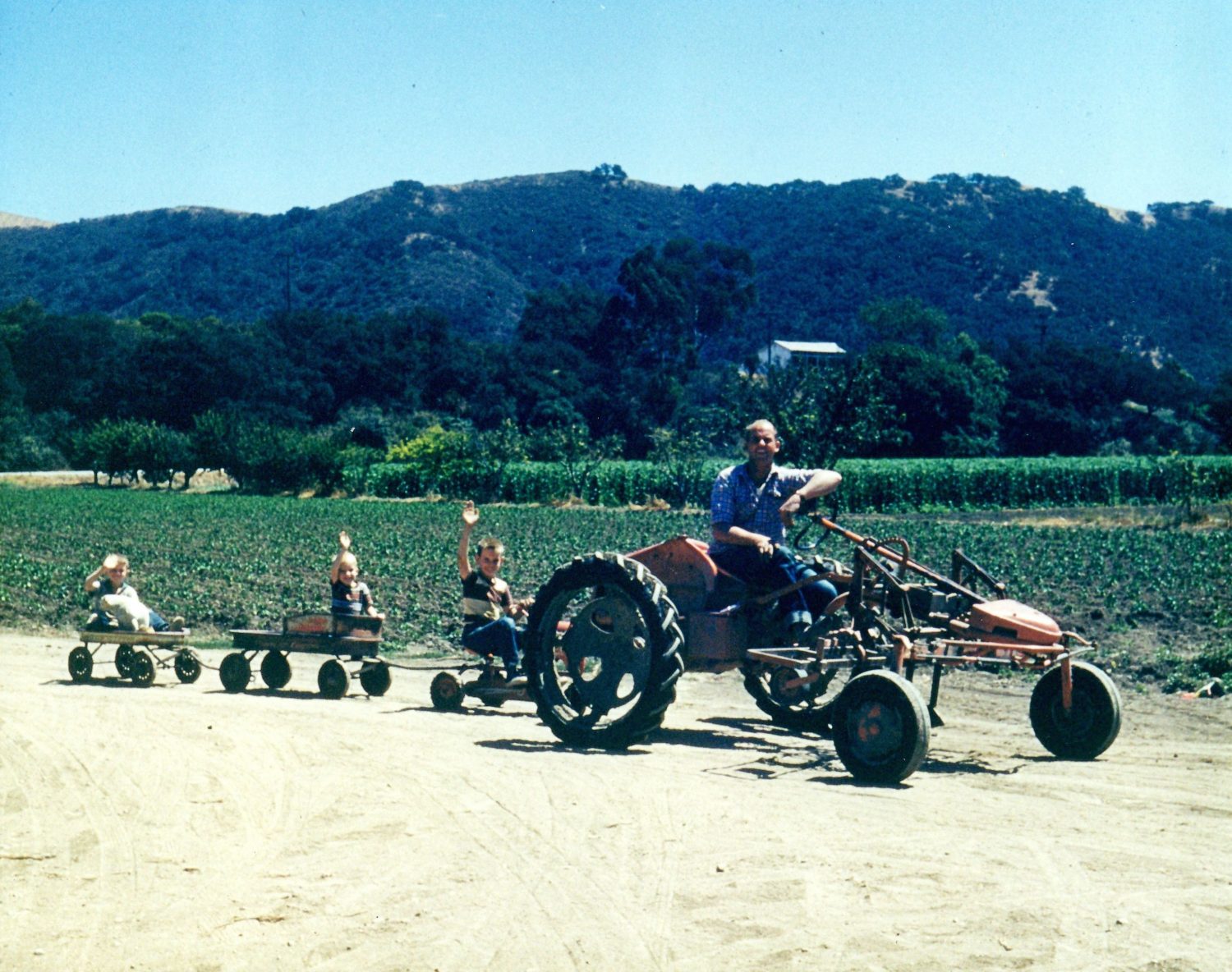
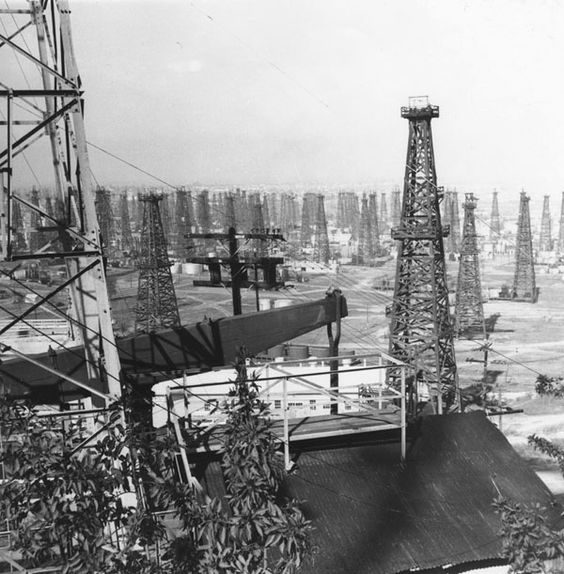
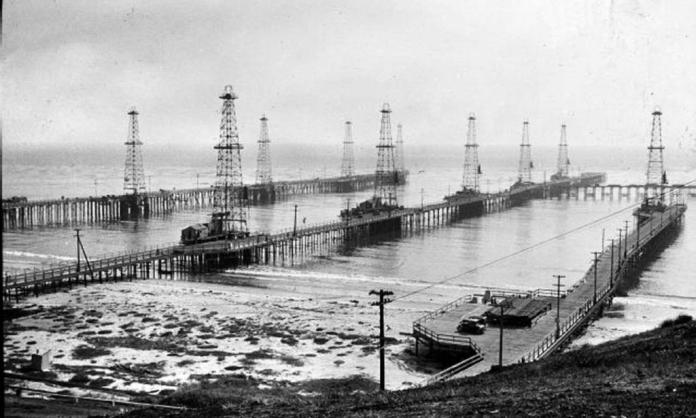
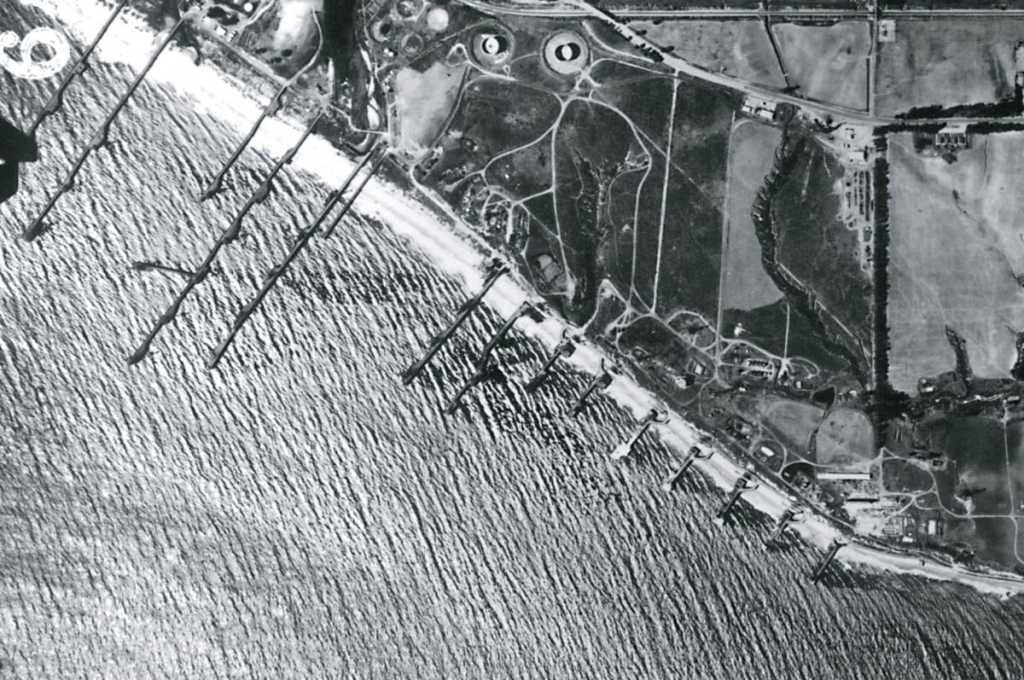
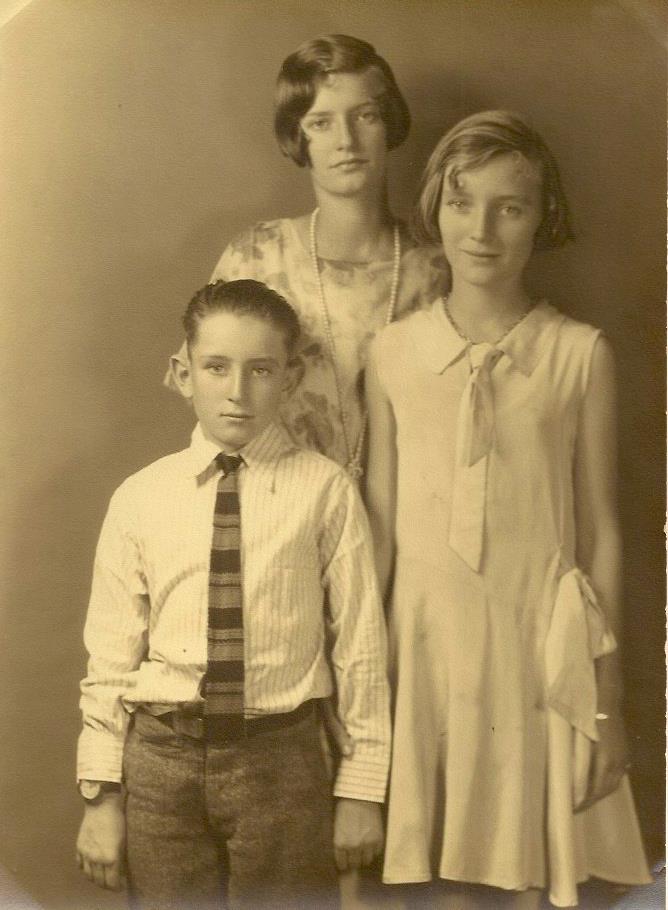
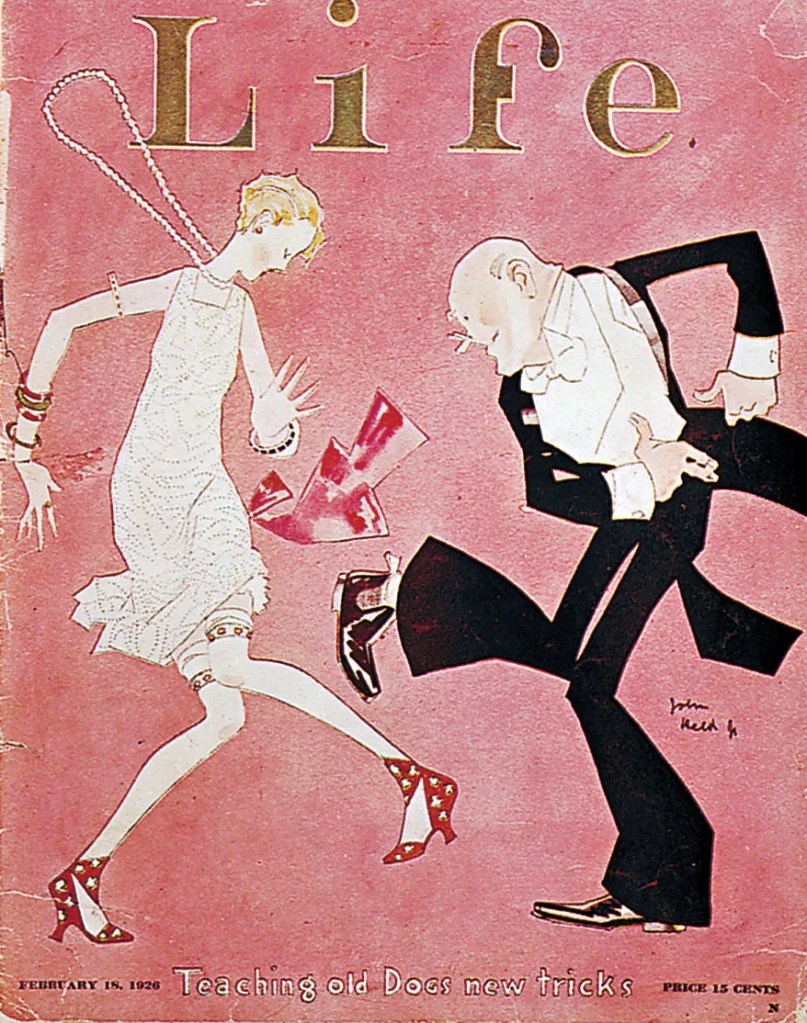
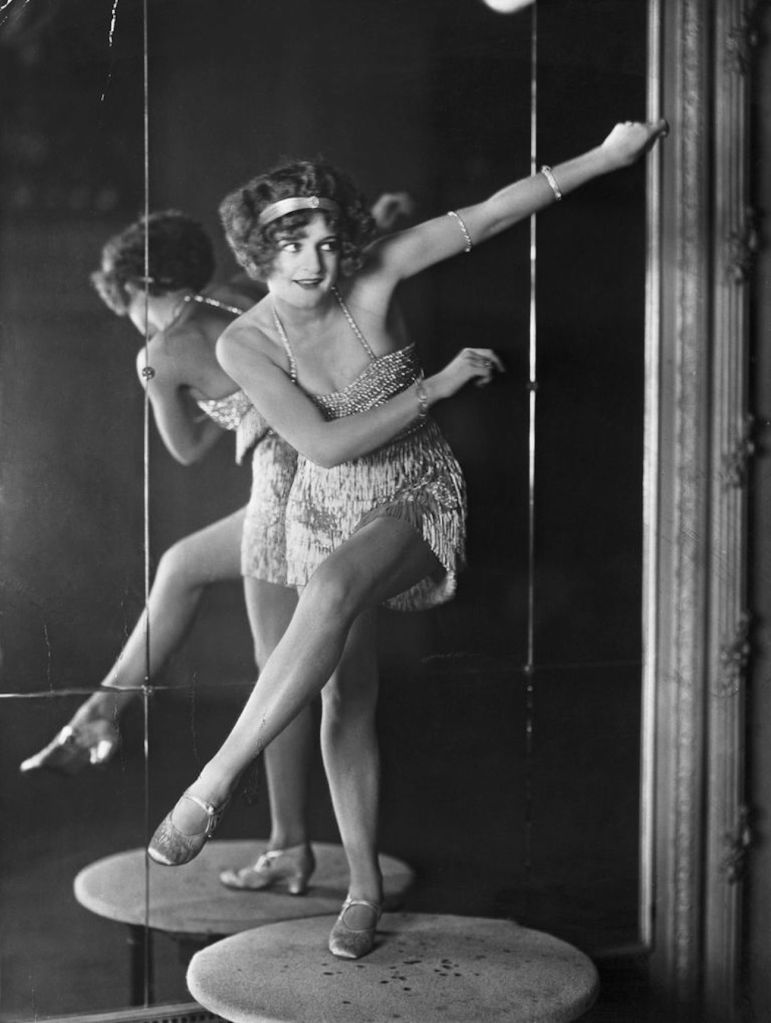
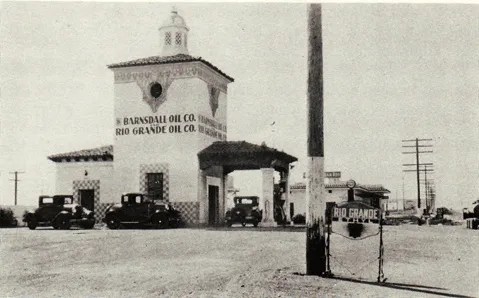
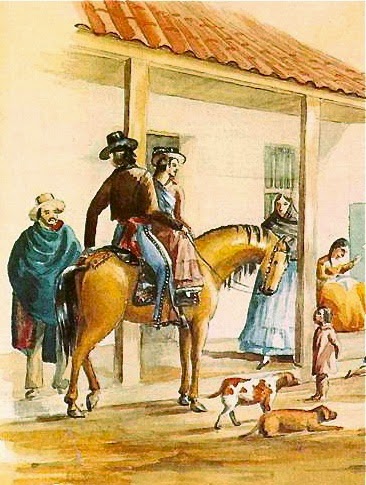
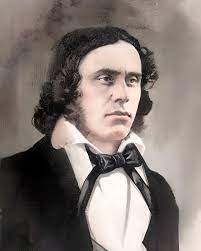

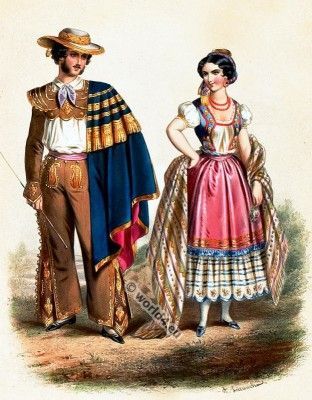

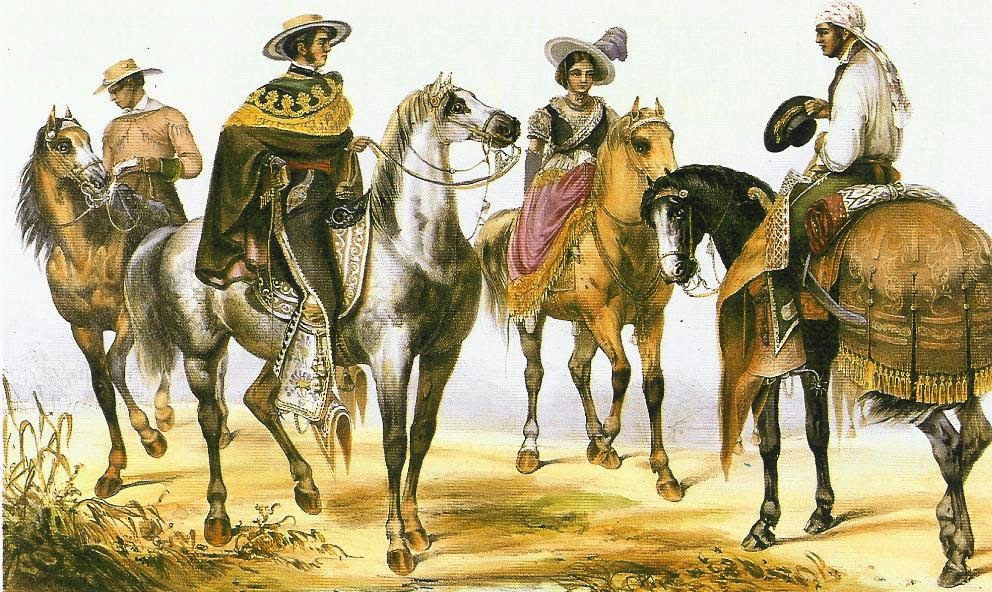

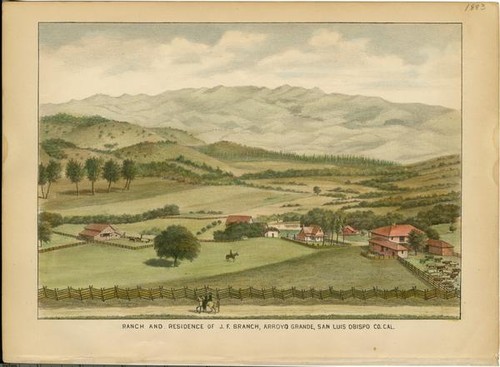
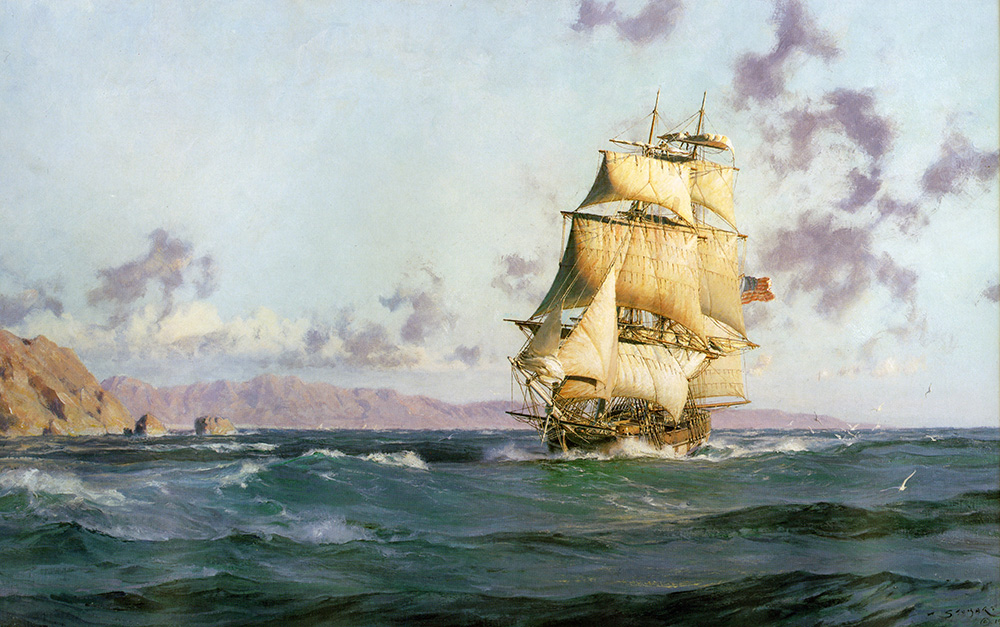

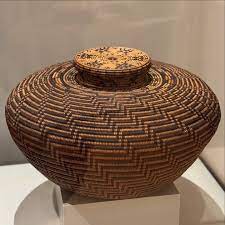

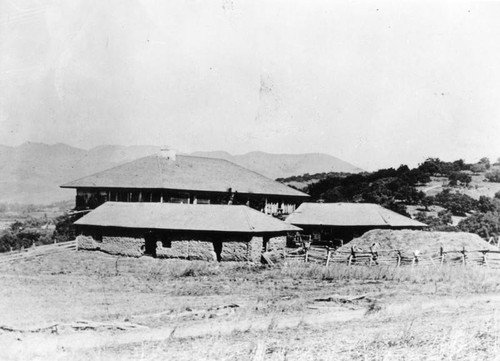
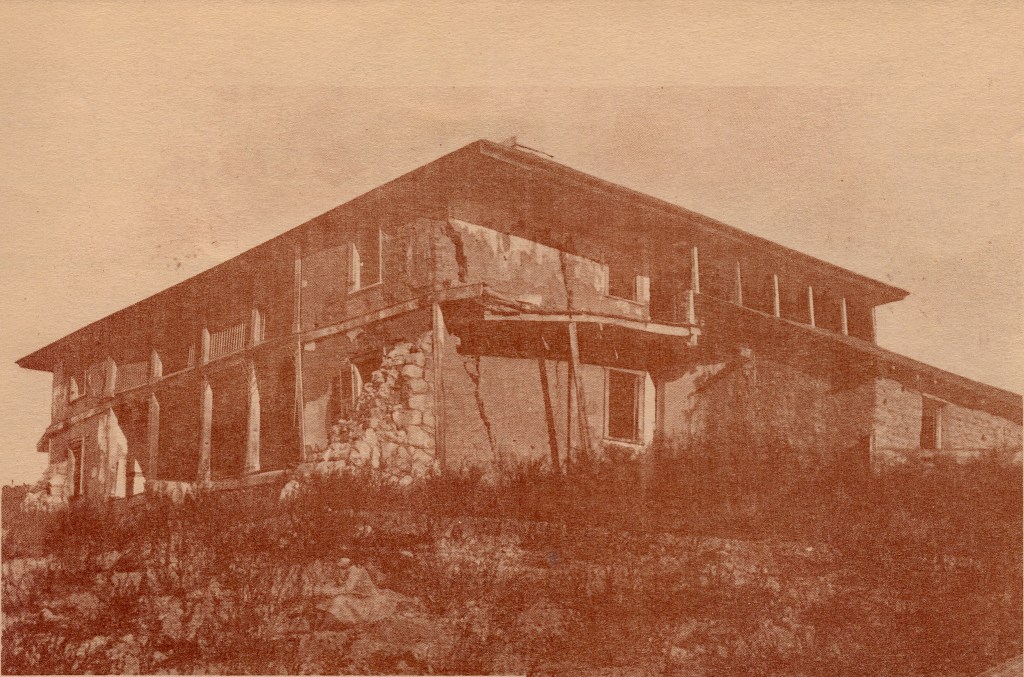
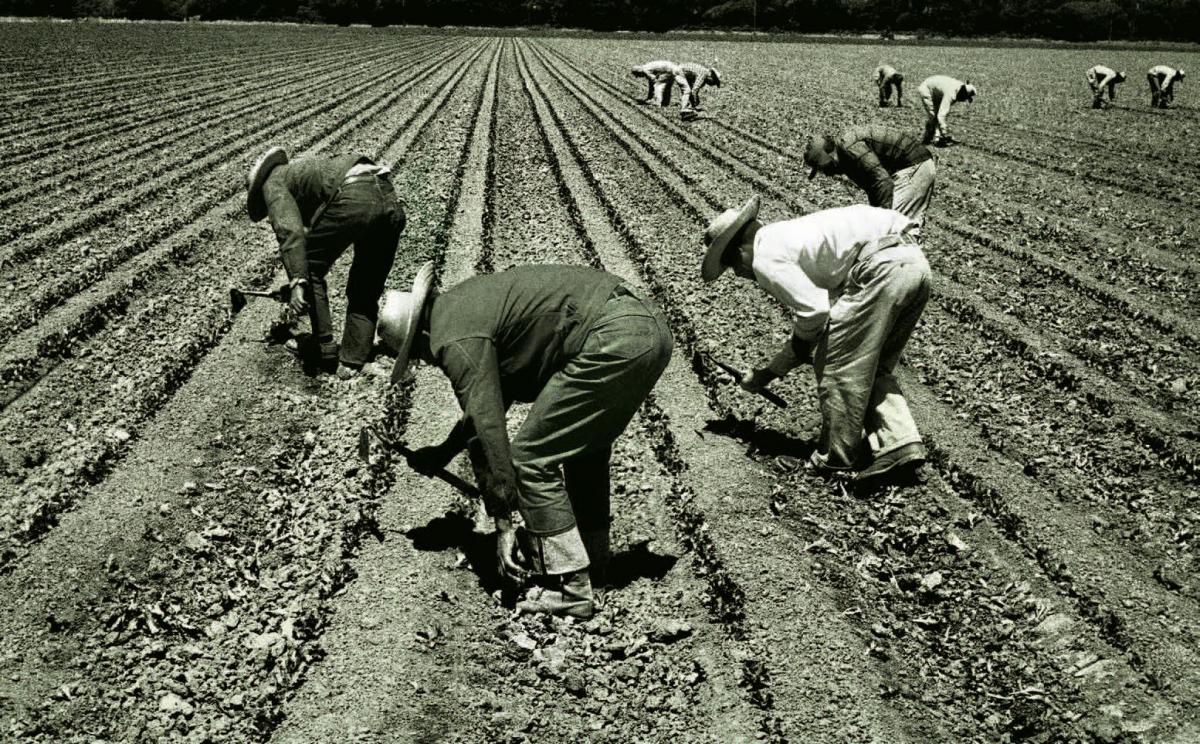
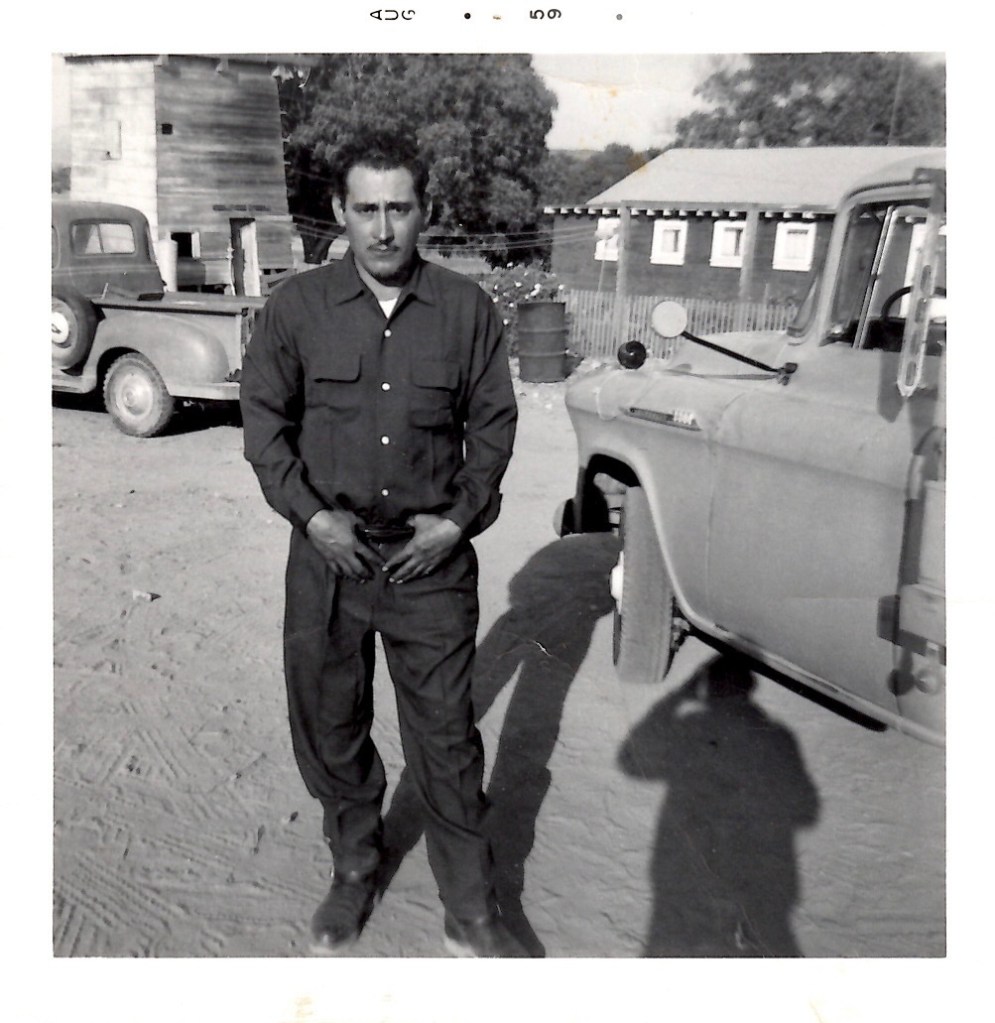
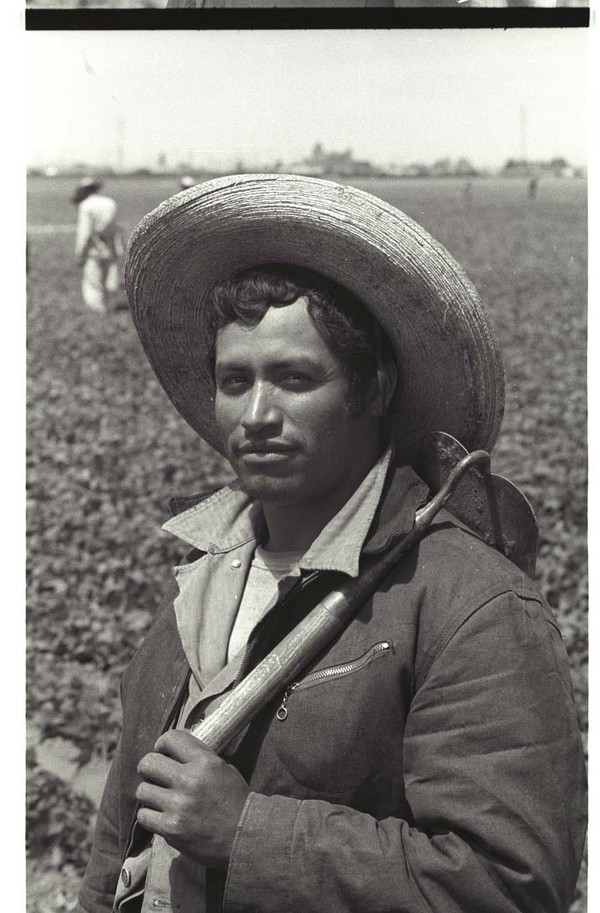

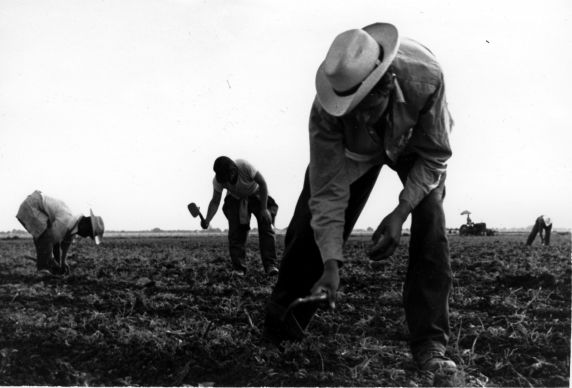
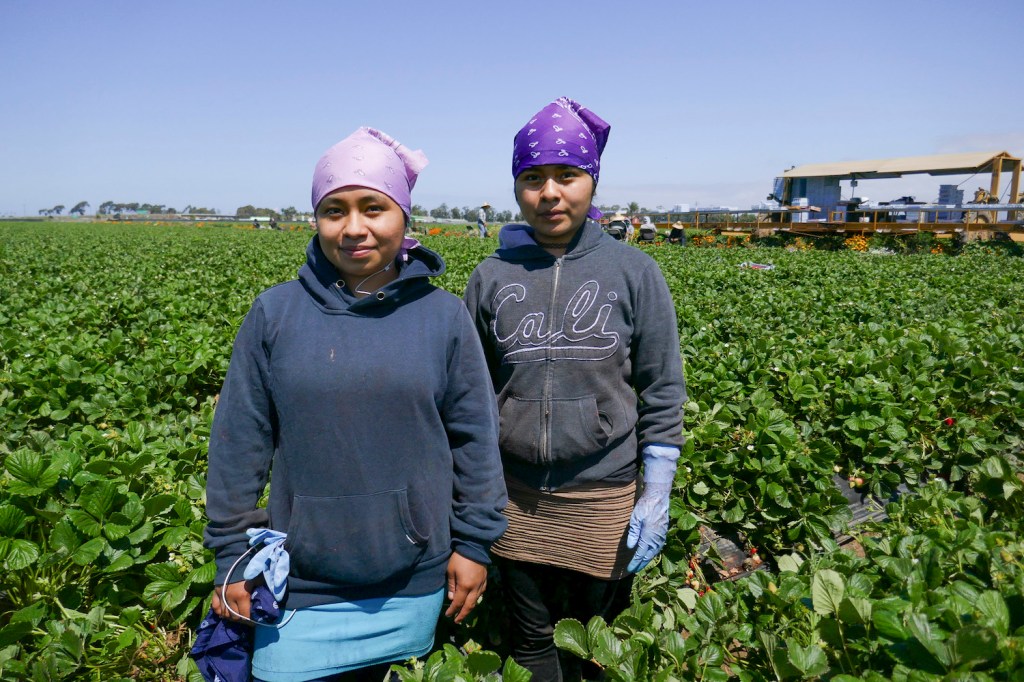
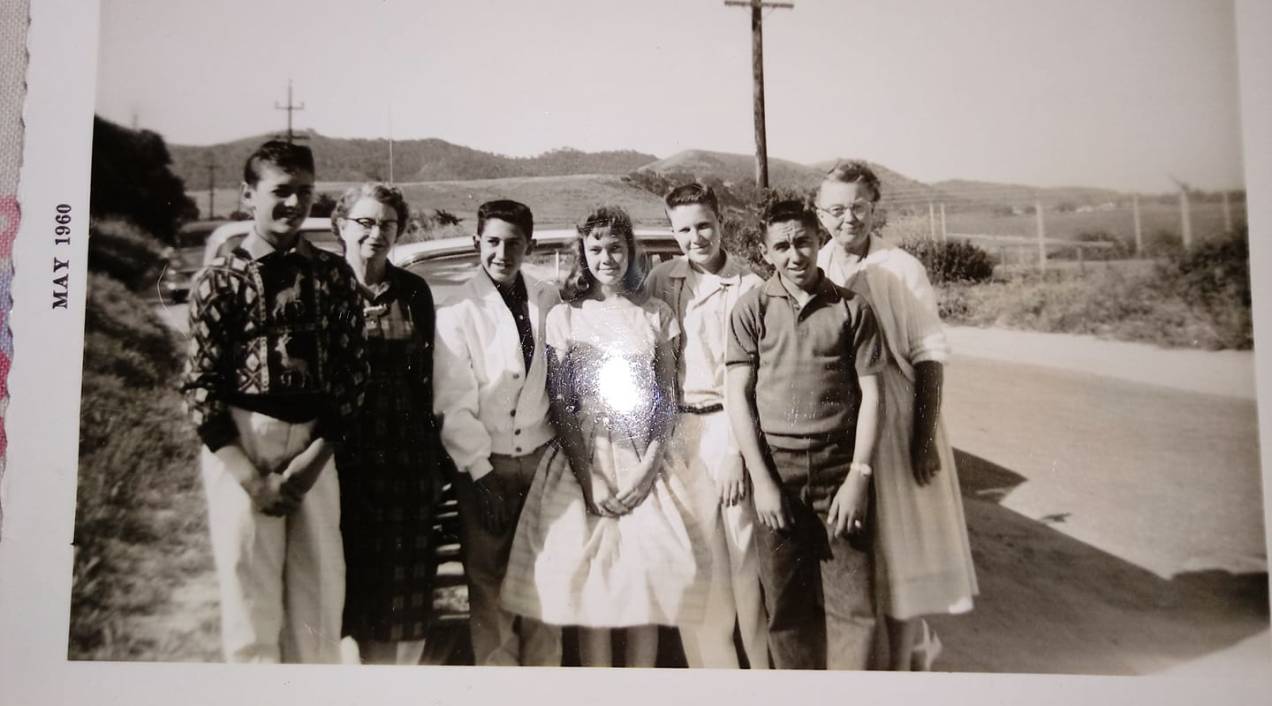
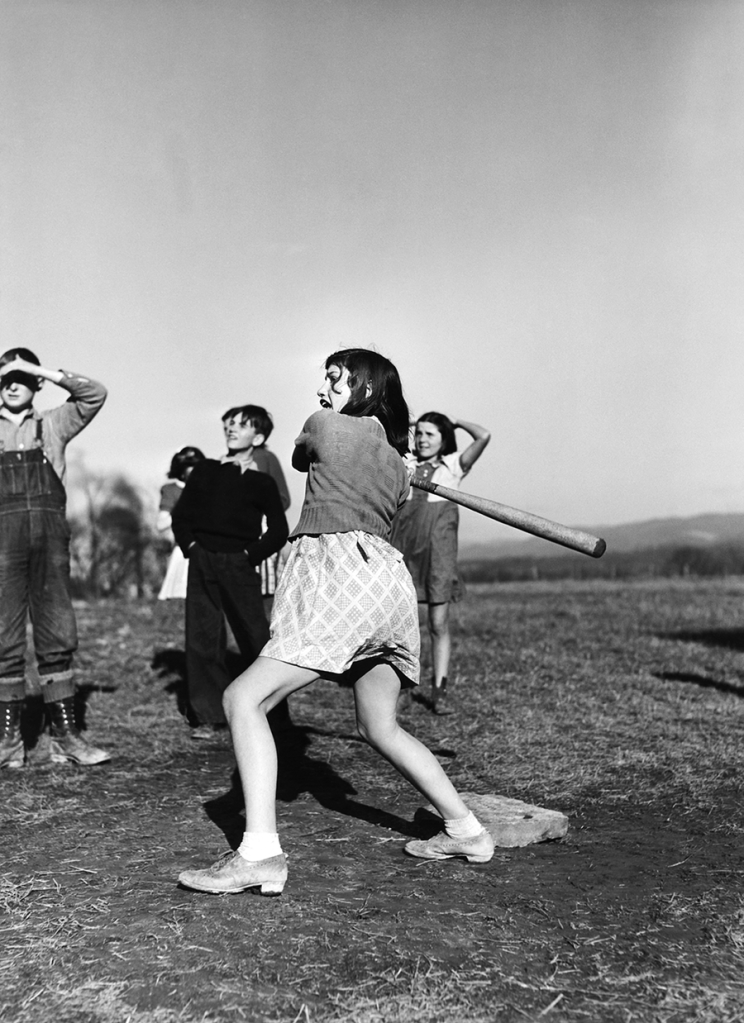
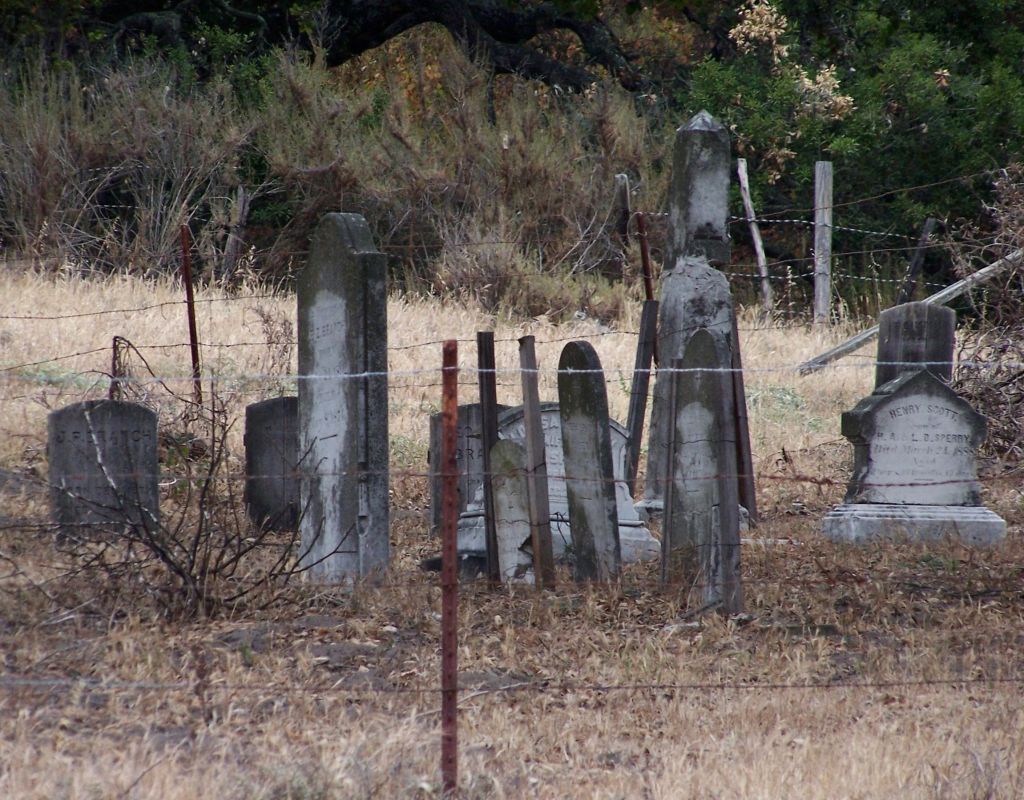
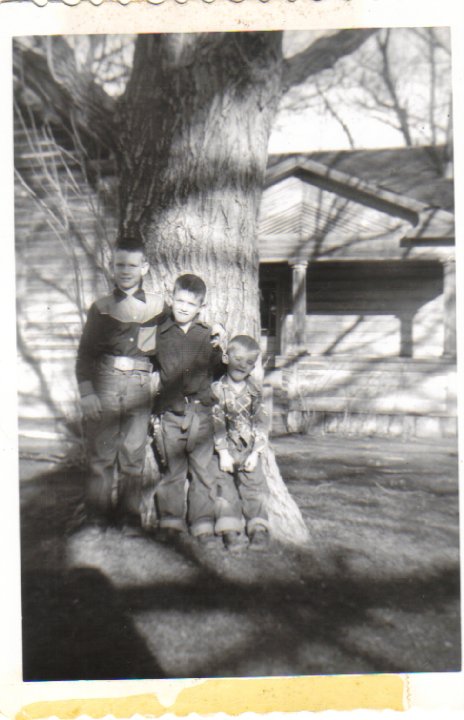
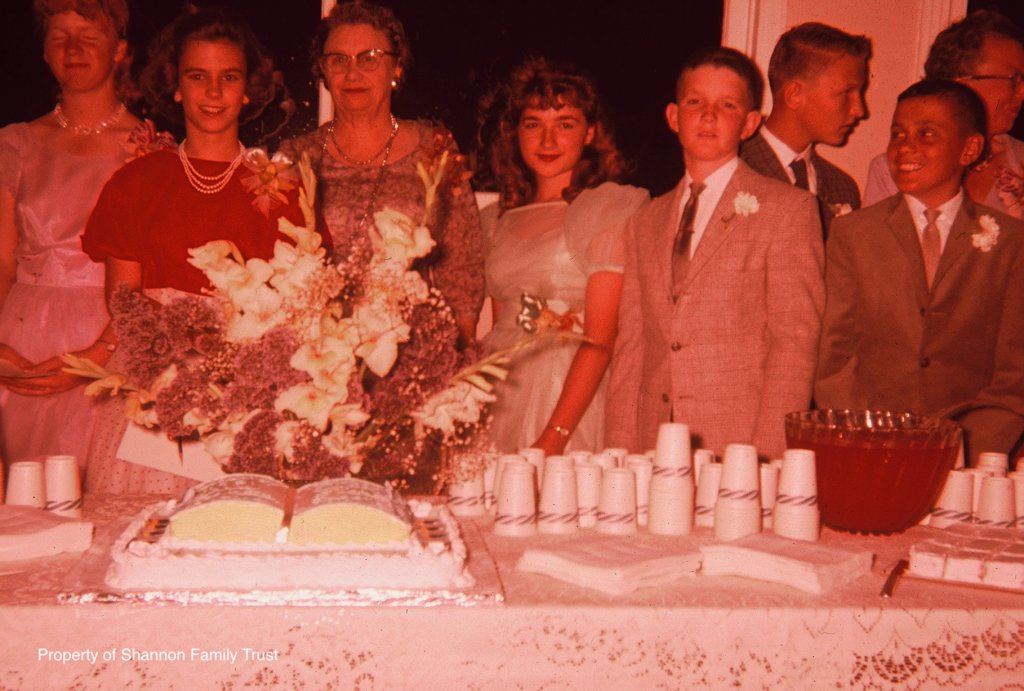
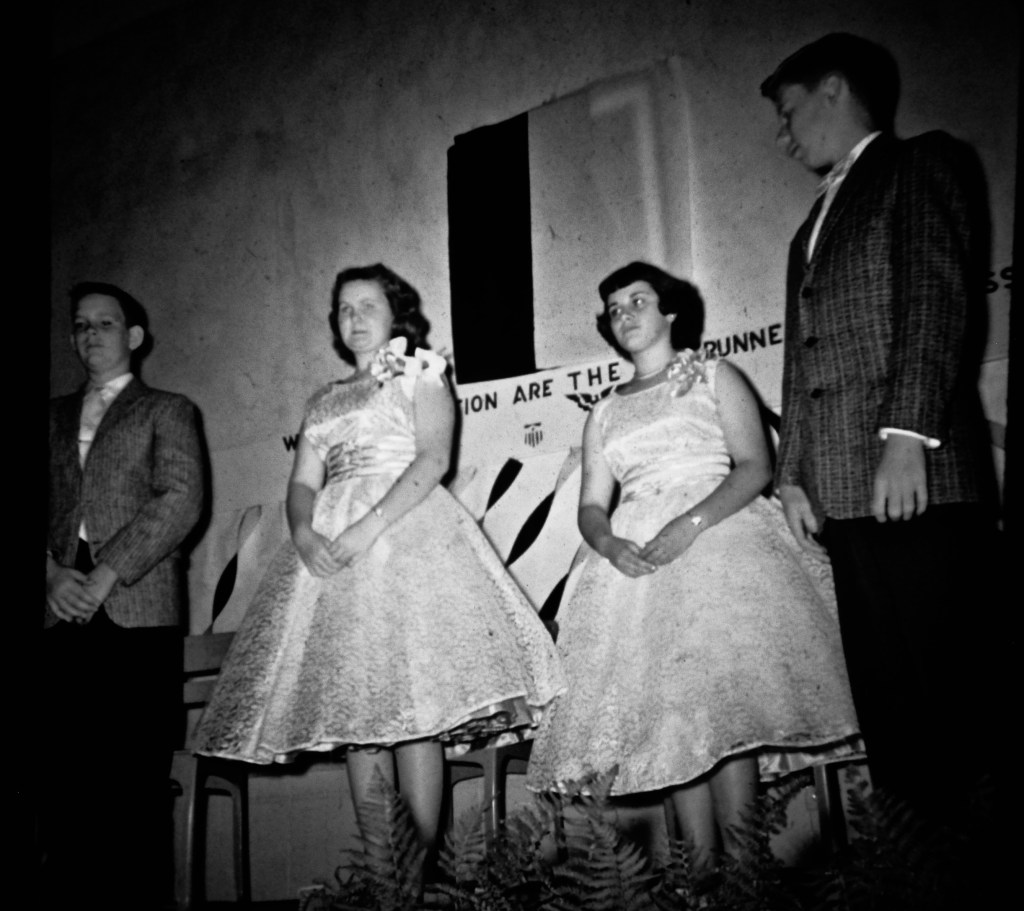

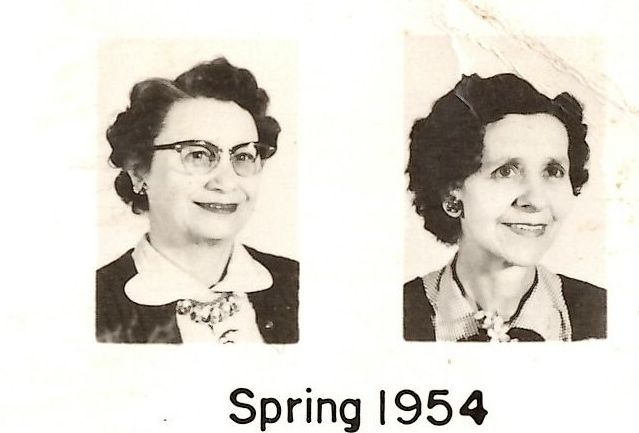
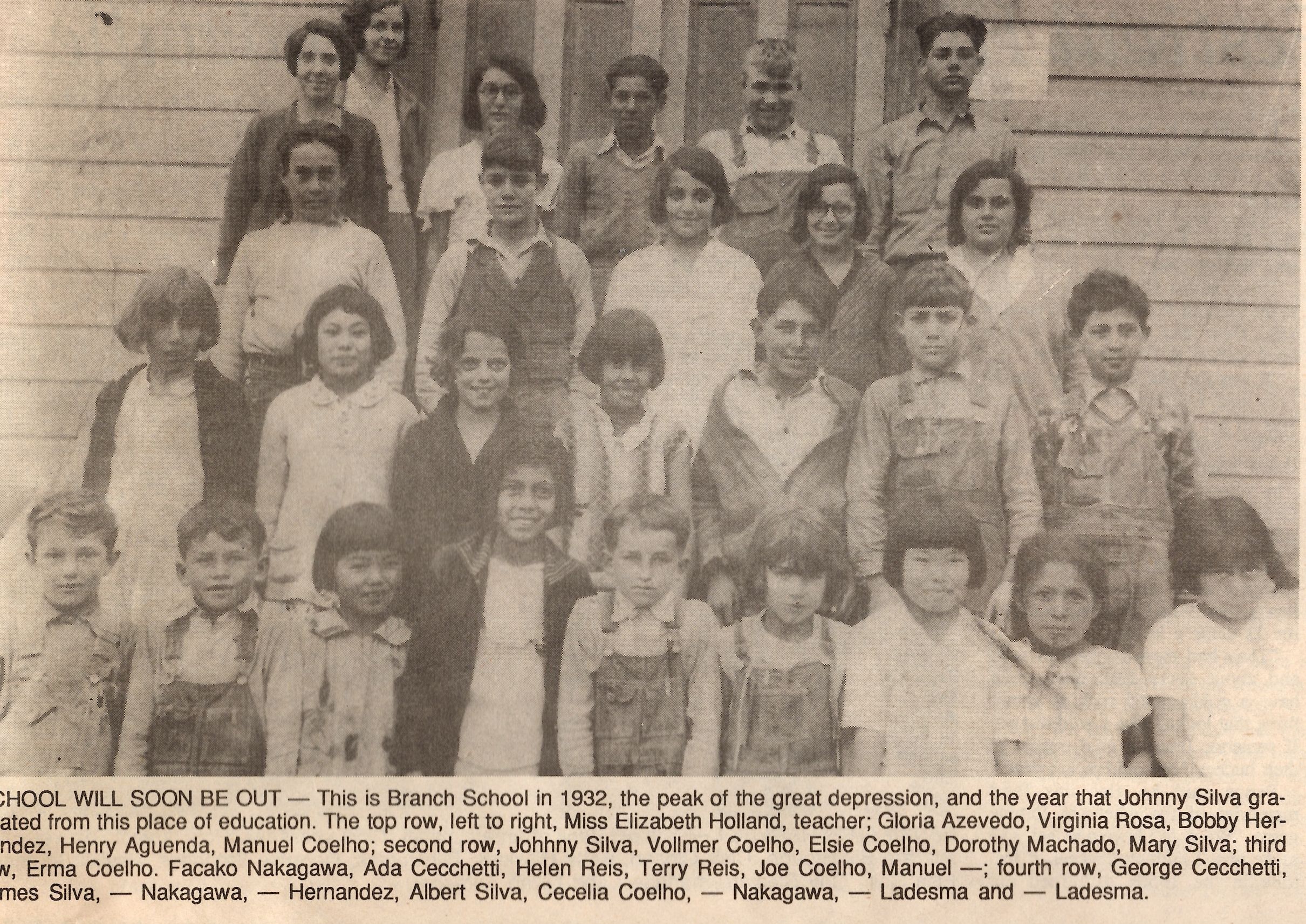

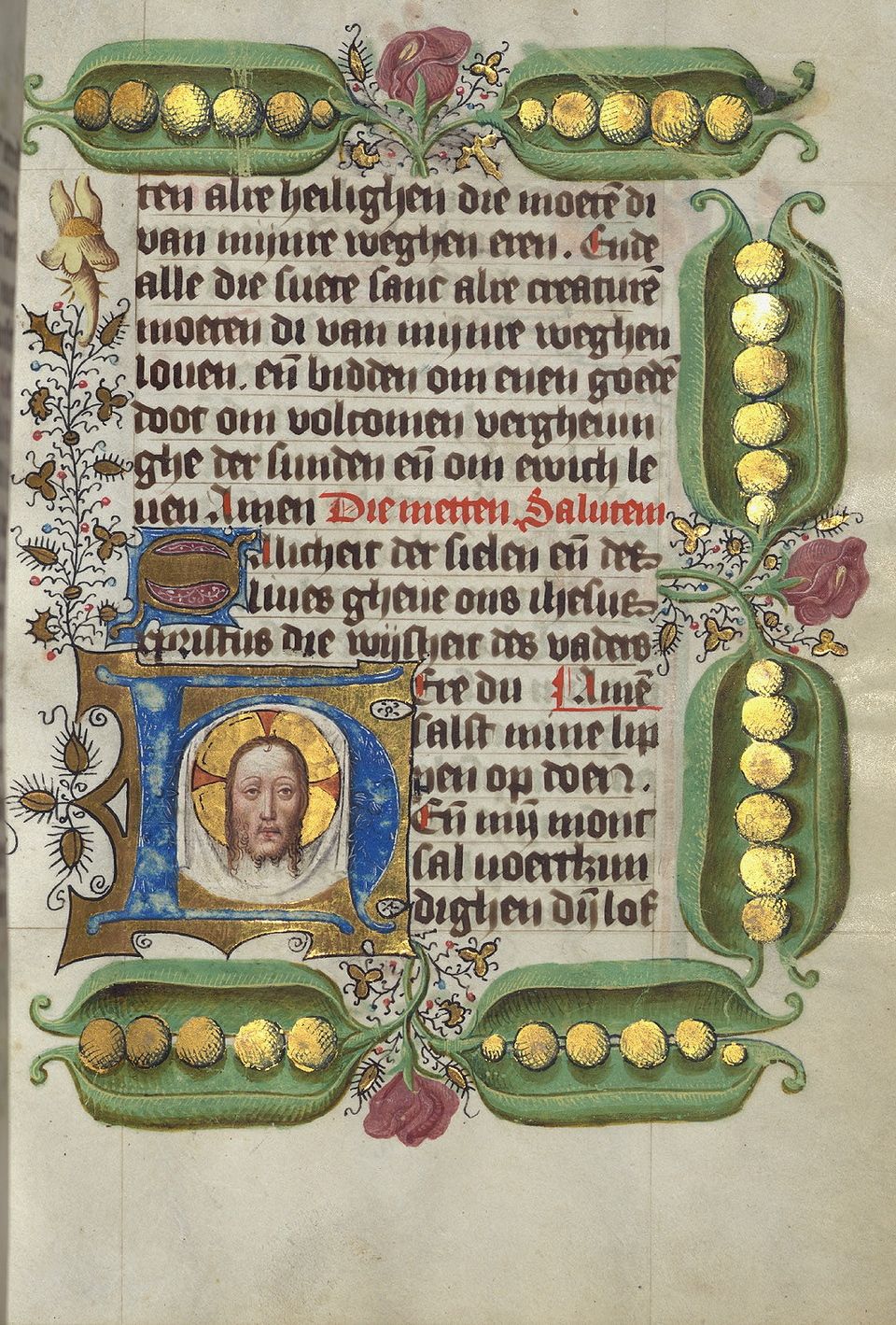
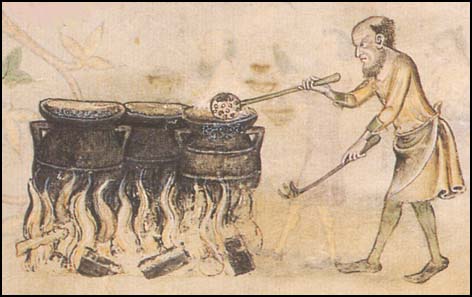

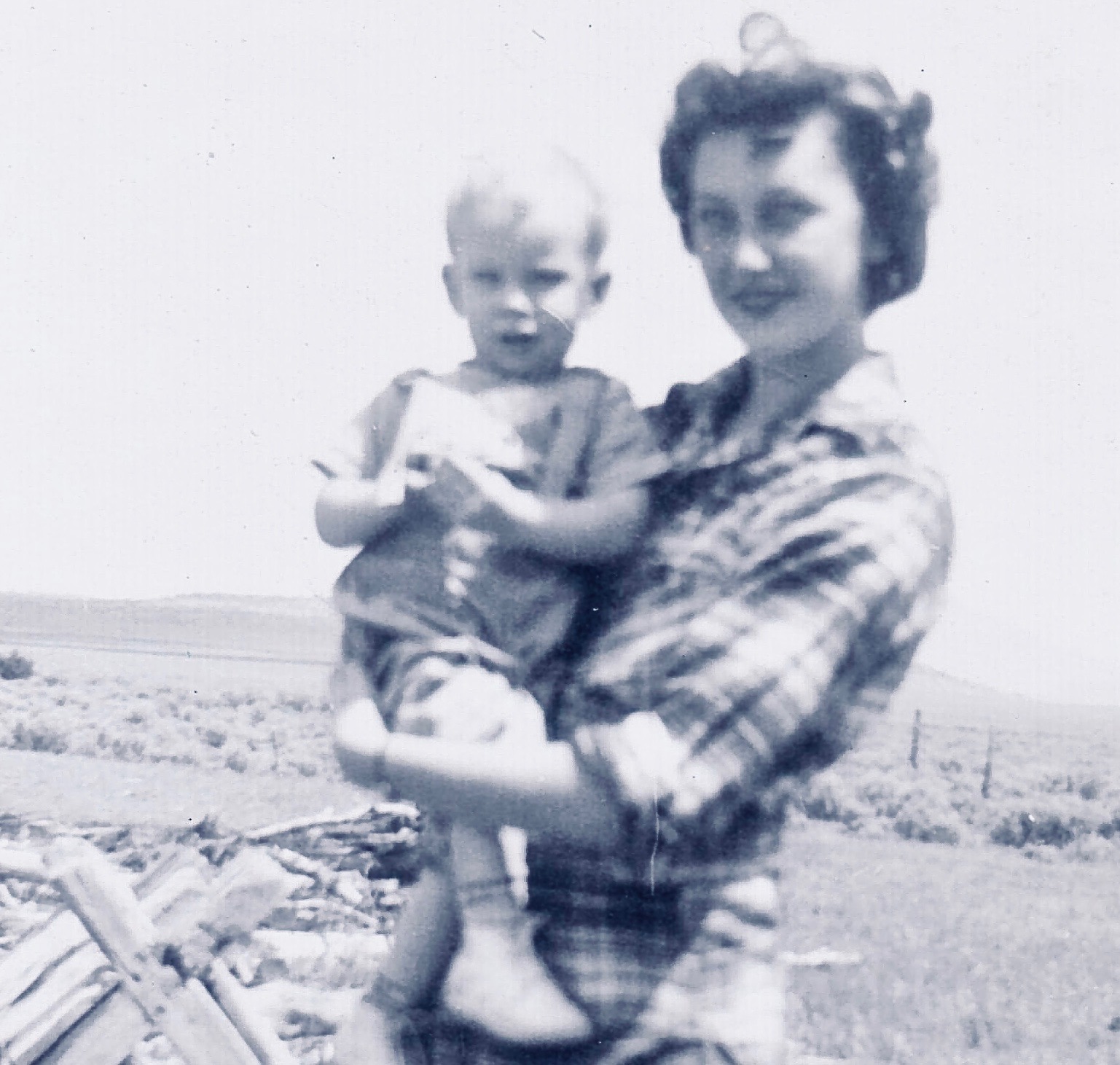


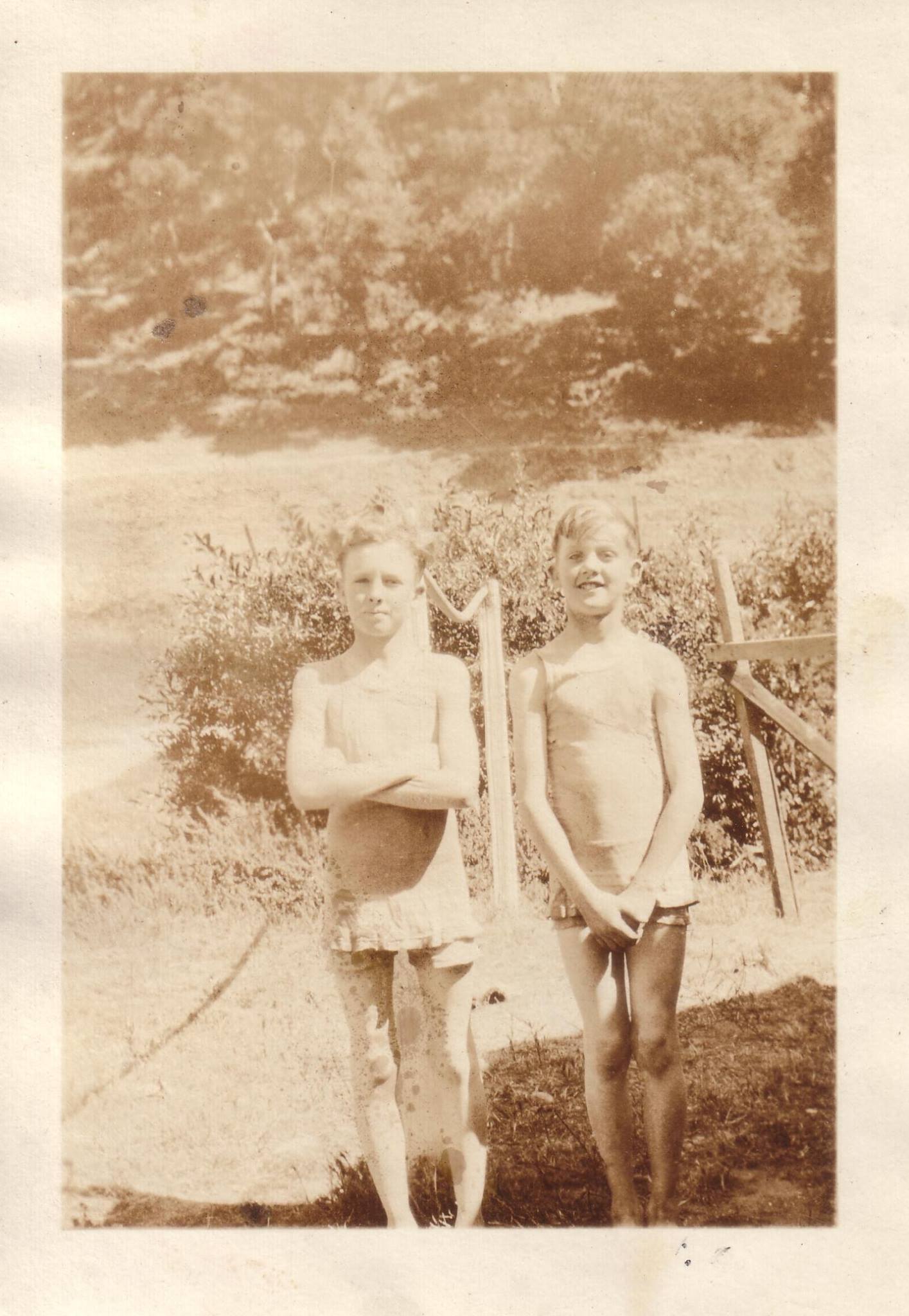

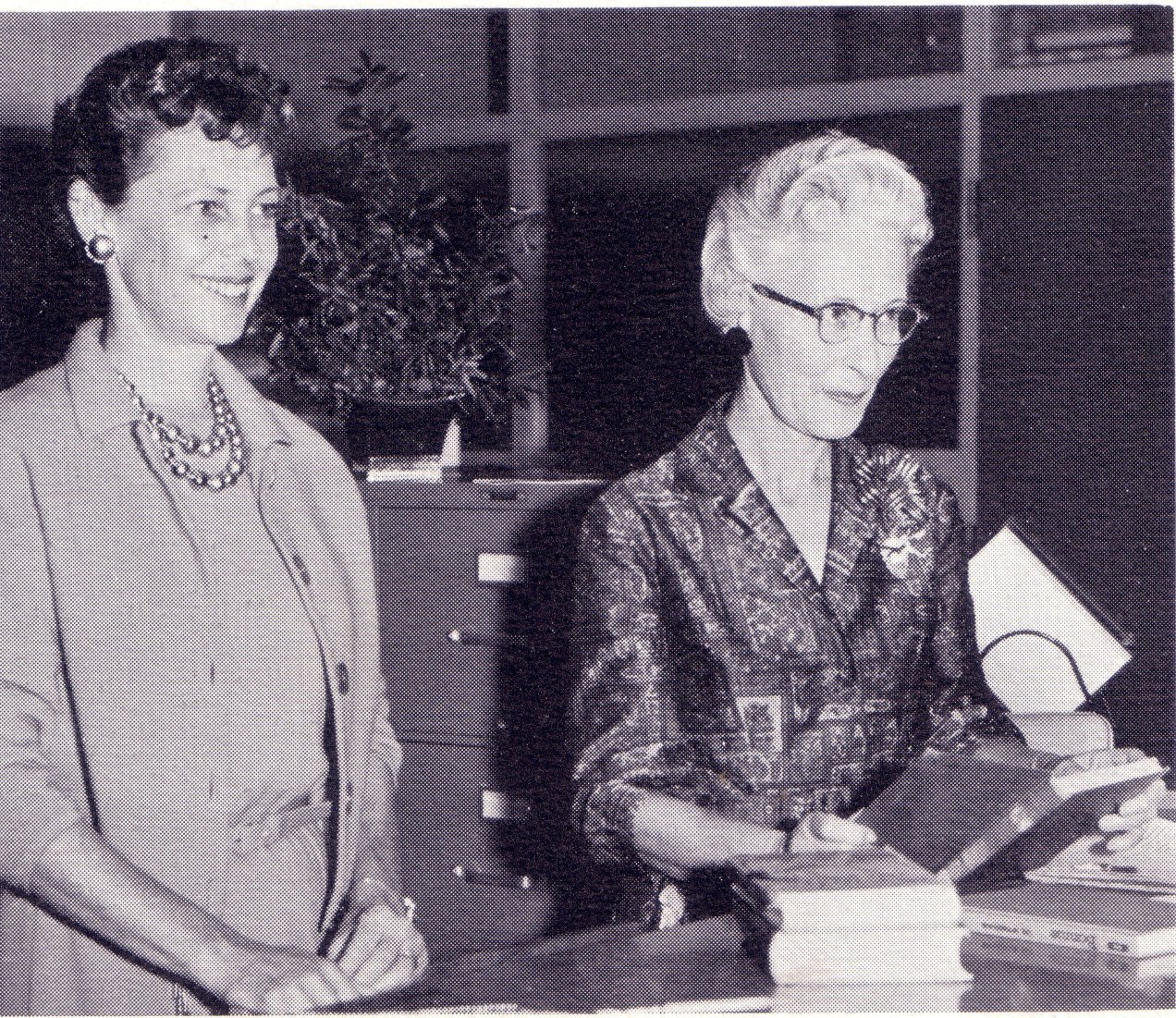


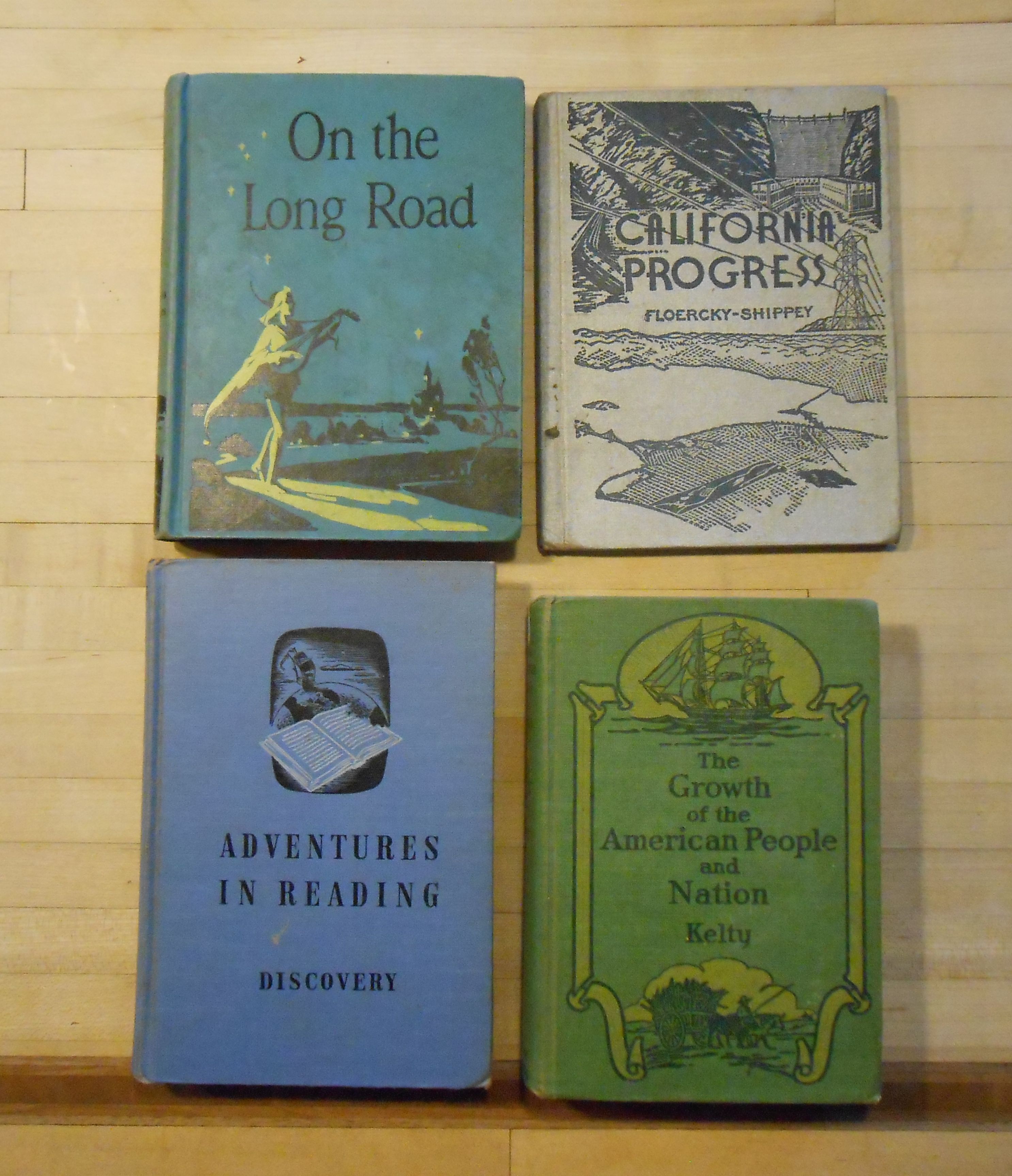


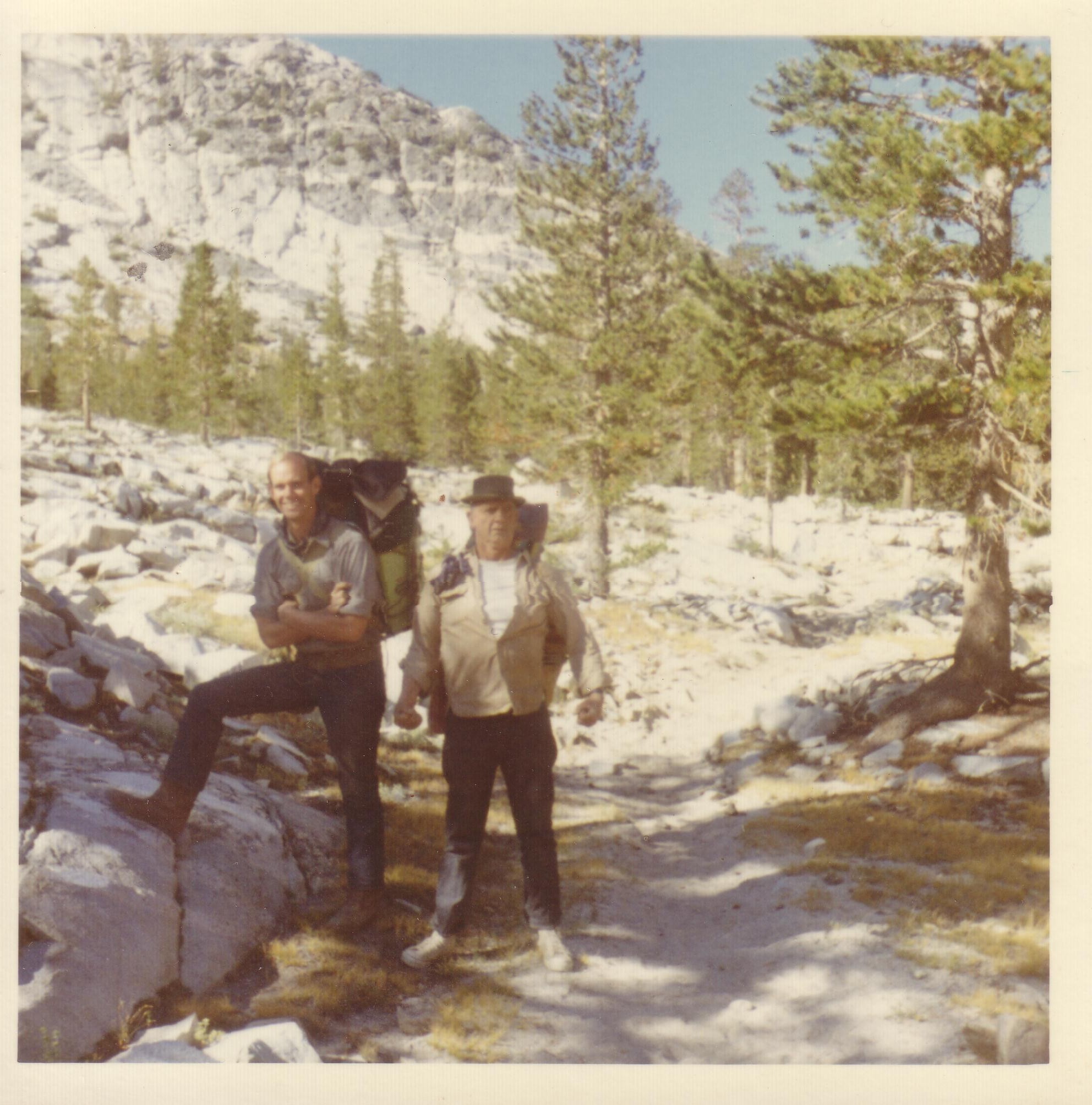

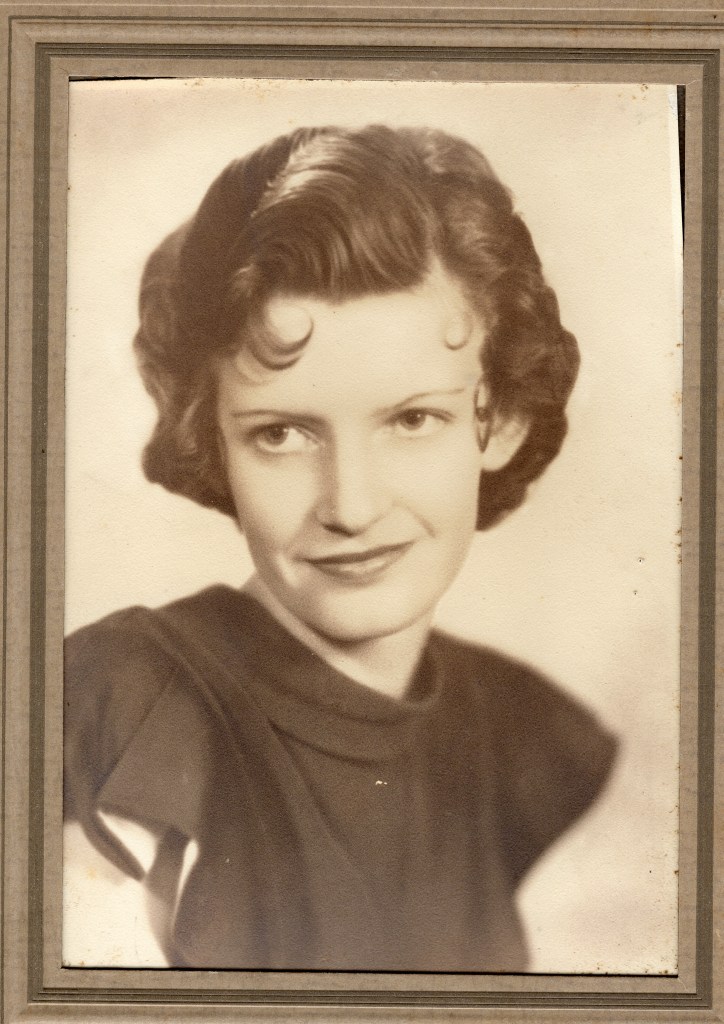
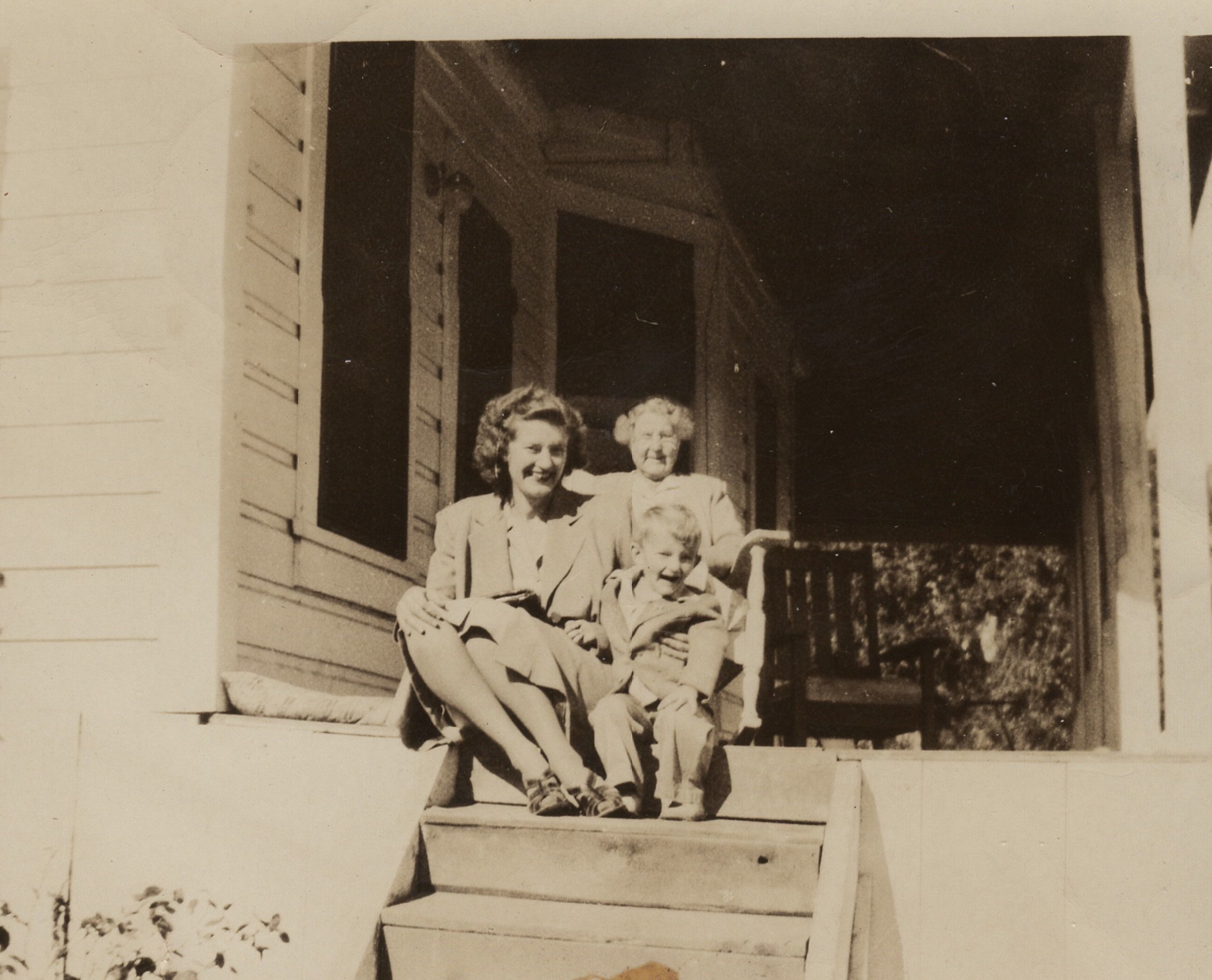
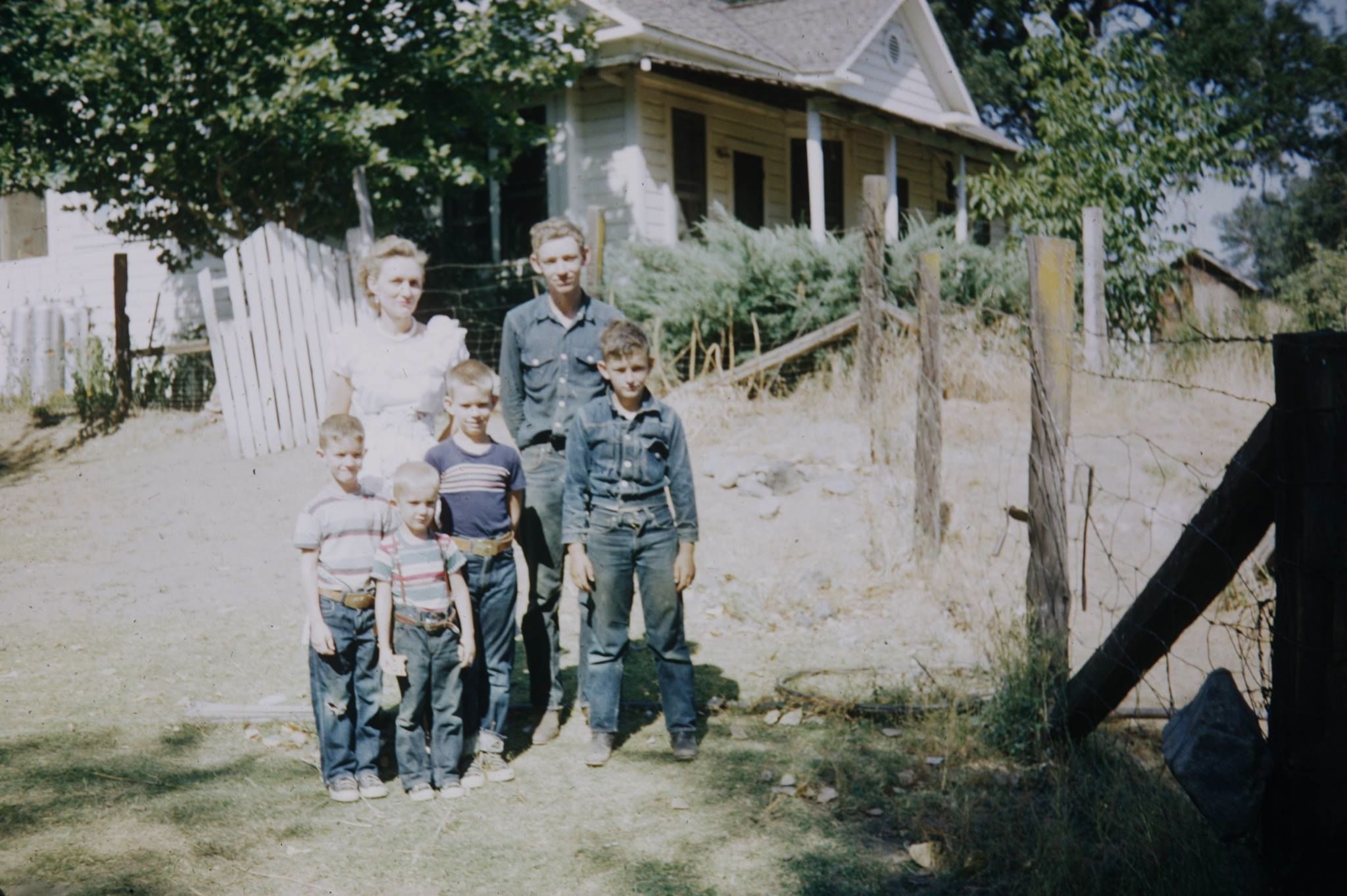
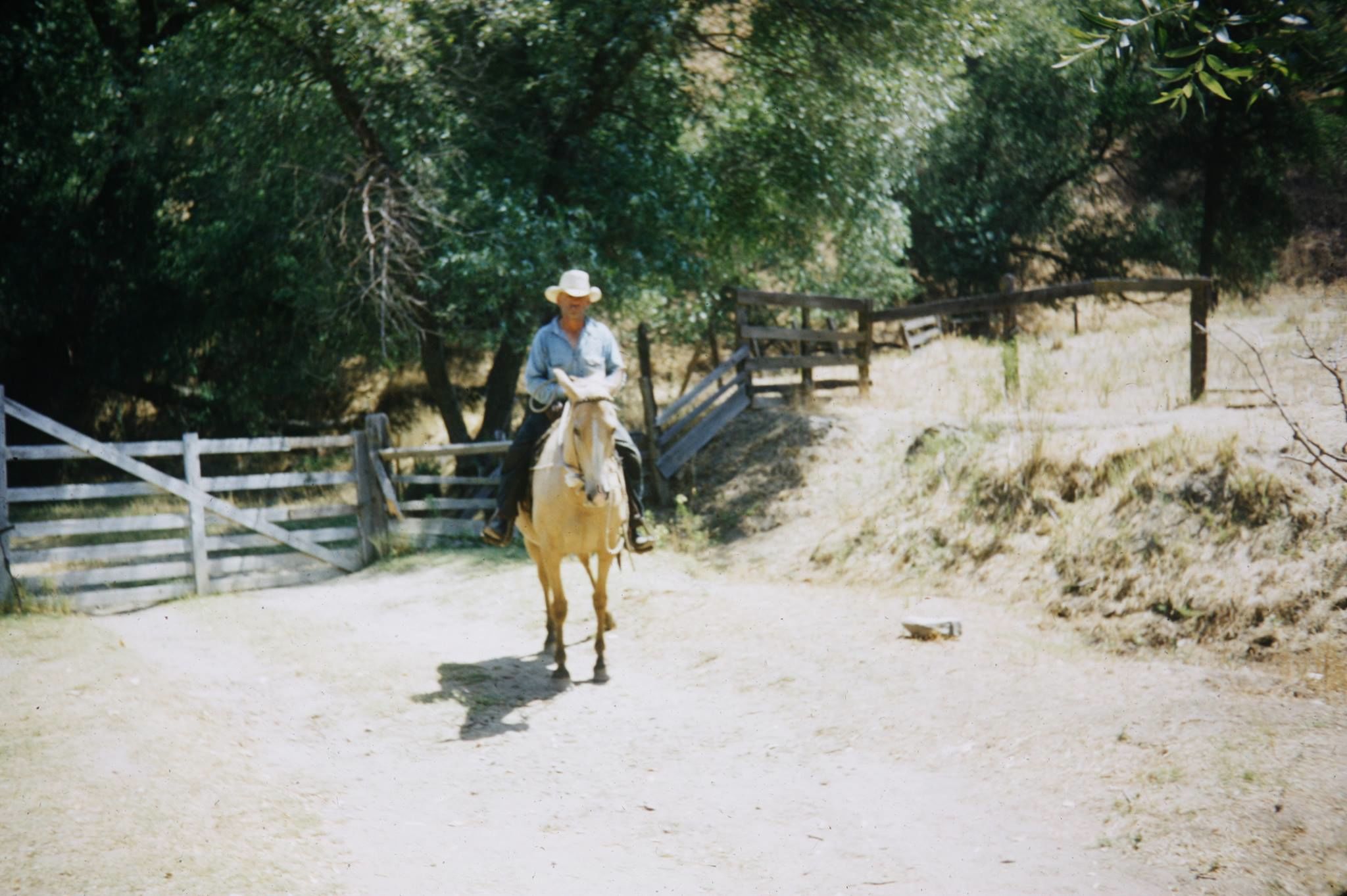

 atthetable2015