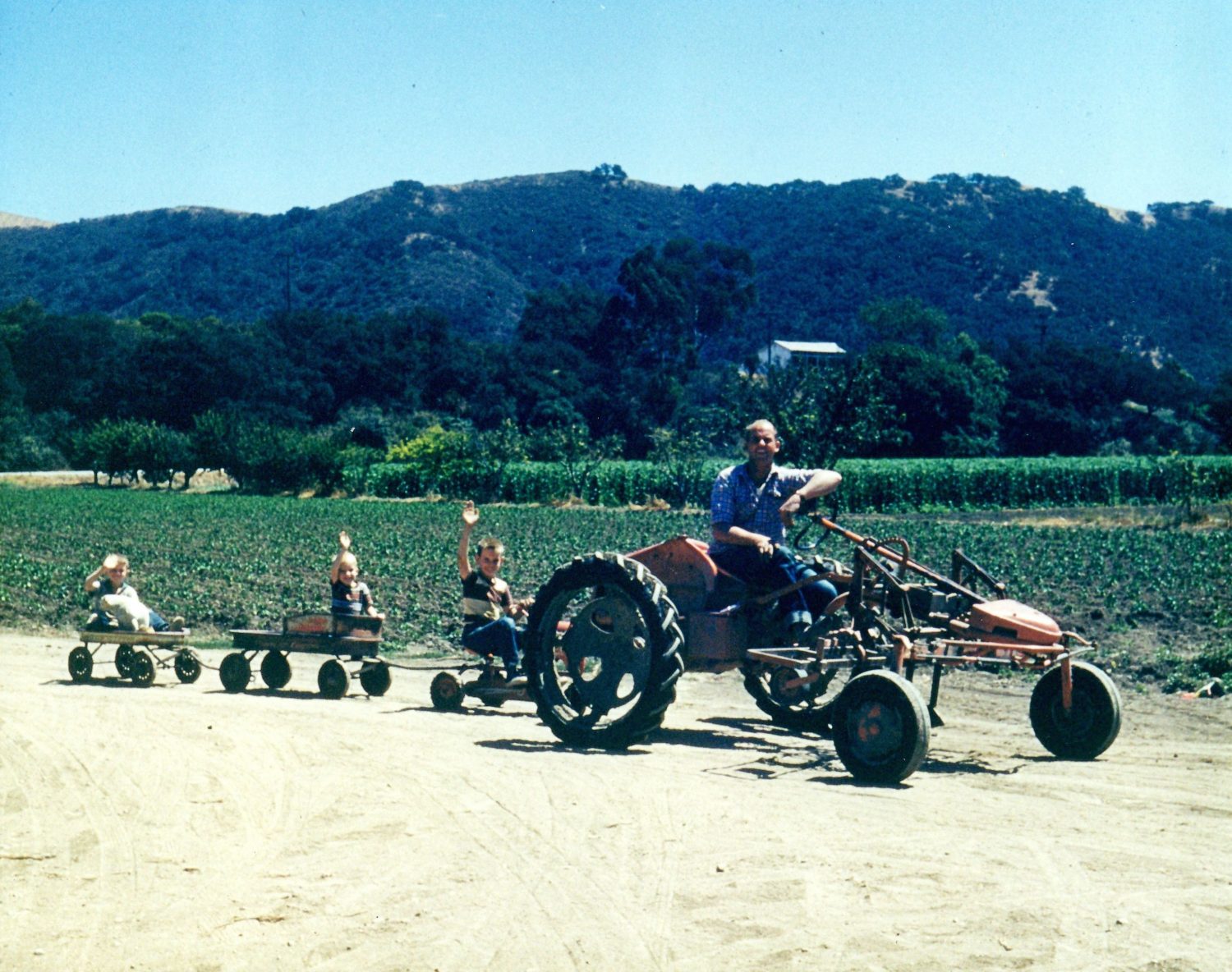
Dear Dona

Written By Michael Shannon

Page One

Saturday, October 19, 2024

Dear Dona,

Something in your note about not knowing what your dad did in WWII struck a cord. I have some research from the Manzanar story so I though I’d look into your dads service in World War two.

Most people have very little or no knowledge of the Japanese Nisei experience. I’ve interviewed people of that generation who had no idea that there were Nisei soldiers at all. In fact, there were none in the Navy, Marines or Air Corps, only the Army and its nurse crops accepted Nisei and only citizens at that.

I’m sending you this to pass along what I found about your dad’s service. One of the complaints of military men is the constant record keeping they must do. The funny thing is that once they are separated from the service the records go who knows where. Perhaps they are stored in cardboard boxes at the back of the warehouse pictured in the first Indiana Jones movie. Who knows? In any case some can be found in order to fill in a family’s story. In a way its a treasure hunt. There can be quite unexpected results. In fact its like assembling a puzzle when some of the pieces are missing.

The difficulty for children is that wartime veterans are extremely hesitant to tell them what their experience was like. There are a few reasons why that is so. One, the kids have no background experience or education to make much sense of it. Two, in the case of combat veterans, the stories are too horrible to contemplate telling your own children. Third, their hope is, that surely the kids will never have to experience their fathers hell for themselves.

Most sons and daughters of veterans never hear much about the parent who actually served. In WWII, somewhere around 12% of all regular army soldiers saw combat in which their was actual shooting. The average combat soldier was involved in combat for a period of around forty days. By comparison soldiers in Viet Nam averaged 240 days and in Afghanistan close to 1,200 days. The difference wouldn’t matter to your father. One day at a time is how it’s done.

Your father saw active combat against the Japanese Imperial Army on the islands of Luzon in the Phillipines and went in on the first wave in the invasion of Okinawa. The battle for Okinawa drug out over nearly three months, from April 1st until June 22nd 1945.* Okinawa was the last major battle of World War II. It was the bloodiest battle in the Pacific War. It involved 1,300 U.S. ships and 50 British ships, four U.S. Army divisions, and two Marine Corps divisions. The U.S. objective was to secure Okinawa, which would remove the last barrier between U.S. forces and Imperial Japan. By the time Okinawa was secured by American forces on June 22, the United States had sustained over 49,000 casualties including more than 12,500 men killed or missing. The fighting was absolutely vicious with the Japanese fighting to the last man in most cases. The battle caused more than twice the number of American casualties than the Guadalcanal Campaign and Battle of Iwo Jima combined, with the Japanese kamikaze effort causing the American Navy to suffer more casualties than any previous engagement in the Atlantic or Pacific. The Navy suffered the greatest loss in its history.

The U.S. Navy lost 32 ships and aircraft, and 368 ships suffered damage during the Battle of Okinawa, . The U.S. Navy also lost 49,151 sailors, with 12,520 killed or missing. The Japanese by comparison lost more than 110,000 military personnel killed, and more than 7,000 were taken prisoner during the fighting.

The number of Japanese surrenders was unusual for the Pacific war. Most of the credit must go to the personnel of the Japanese American members of the Military Intelligence Language Service or MILS as it was known. Both your father and uncle were members and attended the Army’s Japanese language schools.

So how did he get there. The answer is multifaceted and complicated because as always anyone history when its being written is like a juggler trying to keep too many balls in the air..

When I was researching the series on Manzanar I used, as my primary sources two Japanese American archives which were put together after World War two and have grown year by year ever since. Collected were diaries, letters, newspapers and radio news, family photos and most fascinating; oral histories by a very wide cast of characters. Generals, politicians, researchers and thousand of ordinary citizens who lived through the concentration camps.

When I talked to people in that generation, many whom I knew personally, I learned that the community, the community of the same age, those in high school or younger who were coming of age in the late thirties lived quite a different life than many might imagine. What they though about one another was different than the preceding generation.

Looking through the old yearbooks from that time it’s easy to see Nisei kids were completely integrated into teenage life. Sports and clubs, social events all featured mixes of kids from all backgrounds.

My dad was a scoutmaster in the late thirties and kids like Haruo , Ben Dohi, John Loomis, Gorden Bennett and Don Gullickson along with my father told me funny stories about camping together and there wasn’t a hint of any racism. Stone went to HS with my father and was a life long friend. Personally, I don’t think it ever occurred to me that Leroy or Masaki was any different than I was.

Quite obviously there was discrimination by older folks and would be a great deal after Pearl Harbor but amongst those kids who who were in or just graduated in the years before the war there was little. Contemporary accounts in the local papers list Nisei kids names in all the kinds of chatty articles written about the goings on of youth. My fathers Boy Scouts listed the names of many Nisei kids and interviews with them showed me that they were friends no matter their skin. It strikes me that that generation saw little difference amongst themselves. They spoke the same high school language, they dressed alike as kids do, they combed their hair the same. Nisei boys played baseball, football and basketball together and as now, kids for the most part supported each other against the machinations of adults.

My own experience as a high school teacher illustrates my point. Adults, teachers and administration might publicly dislike your style of dress, or how you wear your hair but the kids themselves will put up a united front against any perceived transgression into the territory they reserve for themselves. You yourself will remember girls climbing the trees at school to protest the dress code. I’m sure ethnicity had nothing to do with that because kids unite over things they find unfair. Your dads friends would have felt the same.

A case in point, I never heard a disparaging remark from any adult I knew who went to school with your dad, uncle or any other Nisei because they knew who they were. They weren’t “Japs,” they were friends. That foul term was reserved for the Imperial Japanese, not friends.

When your father graduated from Arroyo Grande High School, the old brick one on Crown Hill in 1936 the Japanese Imperial army had invaded Manchuria and was moving into China, the Rape of Nanking was the next year. Mussolini, 1928 had annexed Libya and in just the year before your dad’s graduation had instigated the war in Ethiopia where he used poison gas, tanks and air power against tribal armies armed with old muskets and spears. Hitler had opened the first concentration camps in 1933, just one year after he was elected to office. In little Arroyo Grande all of this would have been news. Radios and newspapers published world news. Young men were not much concerned I’m sure about all of this conflict, it was worlds away from the lives of rural farmers. was the possibility of war. Arroyo Grande was far, far away from world events.

The next three years would mean a great deal to the lives of the young and as events were to prove, terrible things to the were coming to the 126,948 people of Japanese ancestry in the United States, 74% of whom lived in California.

Crown Hill High School, 1941

Your dad graduated Arroyo Grande HS with the class of 1936 and was working for your grandfather until late 1941 when he decided to follow your uncle Ben into the service. He was inducted on October 31st, 1941 just a little more than a month before the attack on Pearl Harbor. No one knew that was coming of course but by that time the German army along with their allies the Italians had overrun France, Holland, Belgium, and most of western Europe, They had occupied Norway and were advancing on Egypt in north Africa. Greece was under Nazi control and most of eastern Europe as well. German submarines were slaughtering ships transporting material to Britain in the north Atlantic. On the 2nd of October the German army launched operation Tornado which was a continuation of the previous years invasion of Russia.

In the far east the Imperial Japanese army had invaded and conquered Manchuria and was steamrolling across China. The general staff in Tokyo was in the final stages of planning for the surprise attacks that were to come at Pearl Harbor, the Phillipines and the rest of Southeast Asia.

No one in the United States could have possibly missed the threat to the country by these events. On October 17, 1941, the German U-boat U-568 torpedoed and damaged the destroyer USS Kearny off Iceland, killing 11 and injuring 22. The day your father raised his right hand in Los Angeles and swore to defend his country disaster struck in the early morning hours in the north Atlantic. While escorting convoy HX-156, the American destroyer U.S.S. Reuben James DD-245 was torpedoed and sunk with the loss of 115 of its 160 crewmen, including all the officers.

The draft had been instituted by congress in September of 1940. Called the Selective Training and Service Act of 1940, it required all men between the ages of 21 and 45 to register for the draft. This was the first peacetime draft in United States’ history. Those who were selected from the draft lottery were required to serve at least one year in the armed forces. Once the U.S. entered WWII, draft terms extended through the duration of the fighting.

Although the United States was not at war at the time, many people in the government and in the country believed that the United States would eventually be drawn into the wars that were being fought in Europe and East Asia. Isolationism, or the belief that American should do whatever it could to stay out of the war, was still very strong with almost half the Americans polled saying we should stay out. But with the fall of France to the Nazis in June 1940, Americans were growing uneasy about Great Britain’s ability to defeat Germany on its own. Our own military was woefully unprepared to fight a global war should it called upon to do so.

The first number drawn in the 1940 U.S. draft lottery was 158, which was announced by President Franklin D. Roosevelt on October 29, 1940. Your father along with your uncle must have thought that it was better to volunteer than wait. The thinking at the time was that it was better to have some choice in where and when you served than be at the mercy of a blind system of quotas.

Hilo registered in Arroyo Grande on the 16th of October 1940. He may have waited to be called up because of your grandparents. Under the exclusion act they were not allowed to own land or a home and so like most Isei, rented. The land below the Roosevelt highway in the Cienega where they farmed and lived was rented. For tax and census reasons your uncle Ben was listed as the head of the family though he was just 24. I’m sure that was all just on paper though. Your grandfather certainly ran the show since with only your aunts left at home he was able to continue farming for the next five months until they were hauled off to Tulare and then to Poston, Arizona on the Gila River, the concentration camp where they and your aunts remained until 1945

the Poston concentration camp, Gila River, Arizona where most of the Arroyo Grande citizens where held.

Your father reported for active duty in Los Angeles on the 23rd of December 1941. There he took the oath to defend the constitution of the United States from all enemies foreign and domestic. Five months later his family was locked up behind barbed wire and held inside by soldiers armed with rifles and machine guns.

Name Hiroaki
Race Japanese
Marital Status Single, without dependents (Single)
Rank Private
Birth Year 1917
Nativity State or Country California
Citizenship Citizen
Residence California
Education 4 years of high school
Civil Occupation Farm hands, general farms
Enlistment Date 23 Oct 1941
Enlistment Place Los Angeles, California
Service Number 39167146

Nisei men reporting for Army induction, 1410 East 16th Street Los Angeles, CA, 1941

Page Two

Coming on October 26th, 2024

It’s pretty easy to form a picture of your great grandparents taking your dad to the old Greyhound bus depot at Mutt Anderson’s cafe, his parents wearing their best clothes as they did for important occasions. In 1941 they would have both been wearing hats, he in his Fedora and she with her go to church best, purse on her arm and those sensible heels women wore then. The family scene is always the same, father looking prideful and the mother just on the edge of tears but holding it all in so as not to embarrass. Hilo would have walked up the steps into the bus and found a seat, maybe at the window so he could look out and see mom and dad. All of them giving a subdued, shy wave as your grandparents hearts broke. Perhaps your mother was there too. My guess is she was………..

  • I was born on the day Okinawa was invaded.
  • The cover photo, The Brothers taken in 1945.

The writer is a lifetime resident of Arroyo Grande California and writes so his children will know the place they grew up in.

Standard

The Irrigation Ditch

By Michael Shannon

Kids that grow up on farms and ranches are like the pups. They are always on the lookout for Dad coming out of the house and headed for the pickup truck. They know that he will lead them towards adventure. It doesn’t matter what that is, it’s just the opportunity to go somewhere with him. The dogs think the same way. The front seat of the old truck with it’s torn upholstery, and sagging springs, even the broken one which lies in wait like a rattlesnake has room for all. Over on dad’s side the viper, it’s one fang hiding just below the tattered hole where his butt slides when he’s getting out, he misses it most of the time but once he’s worn those Levis long enough they will bear the mark of the just missed.

Bumping down the farm roads, still rutted from last winter kids hold on swaying left or right depending on how many holes and ridges dad can miss.

Pride of place rules apply, the youngest sitting next to dad resting his towhead firmly against pop’s Pendelton’s sleeve, the middle brown haired one with the cowlick, squished in the middle and the oldest owning the door. He has arms long enough to reach outside and push down the chromed door handle because the inside has gone missing. My dad never focused on trivial things like hunting up an Allen wrench and digging through the cluttered tool box in the back in the remote possibility that the missing handle might be there. He used the drivers door.

Some days we drove past the tin sided pump house, the very big electric pump humming away inside pulling groundwater up and forcing it through the buried 8” pipe that ran along the uphill side of the fields. At regular intervals stubs of pipe, each one with a threaded caps stood sentinel like so many soldiers waiting for orders.

In the nineteen fifties most irrigation was fed by ditches plowed at one end of the field. Small stand pipes screwed into the risers delivered water under pressure to fill the ditch. From the ditch, siphon pipes drawing from the main ditch delivered the water to the rows along which grew the plants. Tomatoes, Celery, Lettuce, and Broccoli were all irrigated this way.

My dad with his shovel on his shoulder patrolled the dozens of rows to make sure that each one was irrigated evenly. Controlling the water by sliding the little gates on the siphons to slow or hasten the water on its way. Back and forth, back and forth like a soldier on duty. He slogged through the muddy rows building small temporary dams to slow progress, the goal being to make sure the water reached the end of the quarter mile long rows at the same time.

Simple looking to the uneducated observer the practice dates far back into the mists of time. The Hanging Gardens of Babylon were watered this way. The ancient Sumerians funneled water from the Tigris Euphrates river system to grow grain and fruit trees in the Fertile Crescent. Canals were built to bring the water down from the Zagros mountains in present day Iran to supply the cities of Mesopotamia more than twelve thousand years ago. The technology has not changed to this day. It’s simple but elegant in the way that successful technologies are. You can still see row irrigation on farms and ranches all over California. No doubt little Babylonian boys and girls played in the ditches just the way we did.

Simple but complex in the doing. The water had to be channeled in a way the provided maximum saturation of the soil for the plant to thrive. Our farm had at least four types of soil mix and each one dictated how the irrigator worked. Too dry and hot weather could kill the delicate plant before it could be irrigated again, too wet and the roots would drown and kill the plant. Water was applied differently for crops which had just been fertilized. Consider the age of the plant and it’s harvest time which the farmer knew to the day. Tractors are heavy and soft wet soil will compress and crush a plants roots. So, it’s not just a man out standing in the field, it’s a skill.

There are certain mores involved, at least for my dad. Plow a straight furrow, water highlights a crooked line and he was always checking the neighbors to see if theirs were arrow like. A small thing I suppose but it is part of what I learned from him which was how important it was to do a job well no matter its importance.

Running the water across the road onto your neighbors field was a major faux pas and dad took pride in never letting that happen. Our uphill neighbor’s irrigator, Roque ran his water onto us all the time. Dad would privately grind his teeth, muttering under his breath about lazy men but when he talked to Roque about it Roque would laugh out loud and tell my dad, “I never do anymore, Mister George” and laugh again. Next day he would do it again. My father never said much to him because he was so irrepressibly happy that it was impossible to take any serious offense. It’s difficult to fault a man that laughs.

We, on the other hand did our best to get a muddy as possible. Because we were too little to handle a shovel we used natures backhoes, our hands. The main ditch was about two feet wide and a foot or so deep, enough to drown a child I guess, but no one, us kids or my father seemed to be the least bit concerned. On the uphill side we used our hands to dig canals so we could make the water run where we wanted it. The canals went nowhere and the only purpose was to get the water to run freely. This was our first lesson in understanding hydraulics. Each little ditch had to be just off level in order to make the water move in whatever direction we wanted it to go.

Since our fields were a mix of alluvial soil and heavy adobe they made the worlds finest mud. You could add enough water to make it slurry which was really great for throwing at the pickup because it stuck like glue. A little bit dryer and it made great little adobe buildings to go alongside the ditches. Certain combinations were terrific for slicking down a brothers hair.

There were plenty of stems on the ground leftover from last seasons crops that could be woven into rafts and not far away, an old abandoned Diamond Rio flatbed truck draped with blackberry vines. The leaves could float GI Joe on his way across the Rhine River. The occasional Sycamore leaf blown up from the creek served as major people movers. Sadly many a GI Joe lost his little plastic life by being swept away on Tidal waves never to be seen again. Leaves have no handrails and though Joe can float he cannot under any circumstance swim. Pretty sure cultivators are still occasionally turning up their tiny corpses while working those fields. GI Joes may perish but their little bodies never decompose.

When we were just a little older we would hunt through the packing shed and corn crib looking for small pieces of left over wood and with a little ingenuity, a nail or two and a ball peen hammer make them into many kinds of ships and boats. Nails driven into the sides stuck out just like battleship cannon, or so the six year old mind imagined

Dozens of ships in the Japanese fleet were lost to a barrage of dirt clods fired from behind the pickup. No invasion of the Broccoli ever succeeded. As children of the second world war we understood the importance of fleet actions. Clods when lofted as high as we could toss them made very satisfying splashes. We didn’t need a game bought at the dime store we had endless resources in which to make our own games. No one I can remember ever told us the truth of things to crush our imaginations. That would come soon enough.

My little brother would crawl up the running board and lay on the front seat and nap when he got tired. Jerry and I kept it up until it was time to head back to the house. Dad’s boots and Levis would be soaked with mud and water to the knees and we could of passed for Mudmen ourselves. We had accomplished much though, held off an invasion, built hydraulic systems and thoroughly enjoyed ourselves. When you grew big enough you might get the privilege of riding the running boards back to the pump house, going inside through the tin door with its screech owl hinges and using both thumbs push the big off button on the pump.Stay a moment as the big electic pump wound its way down from its jet engine howl to silence. Little things like that mean a great deal to little kids. They understand that you earn responsibility.

Back at the house it was strip, leave the clothes on the back porch floor and run and get in the big oversize porcelain bathtub for a good scrubbing. Scrub brush on the bottom of the feet, rolled up washcloth pushed as far into the ear as mom could make it go and then a big fluffy towel, try not to slip on the wet linoleum floor, “Careful, careful,” mom cautioned over and over again. Trying to hold onto three slippery wet boys at the same time.

Funny thing I remember, Mom and Dad never scolded us for being dirty, they always seemed to be as delighted as we were.

No one ever gets over playing in the mud. Shannon Family Photo, Lake Nacimiento, CA.

“Can we do it again tomorrow, can we Daddy?”

Michael Shannon grew up on a farm in coastal California and has mastered the irrigators art himself. He has masterful shovel skills, can lay pipe and knows the secret to using baling wire to clear Earwigs from overhead Rainbird sprinkler heads.

Standard

It’s Not Vegetables You’re Buyin’ Lady,

Its a mans life you hold in your hands.

Discing, 1960. Family Photo.

My dad’s family were farmers in Ireland. That’s what they knew. Like all immigrants they came to America for opportunity. They came because laws in Ireland held them captive in a system of government that placed no value on small farmers. Just twenty years before my great-grandfather was born, it was still illegal to educate Irish children. An Irishman could not vote nor own land unless he was of the ruling class. The Potato Famines of the early 1800’s began the drive for immigration in which 1.7 million Irish came to America between 1840 and 1860. This flood from Ireland continued, unabated for 50 years. Today there are about 36 million americans of primarily Irish descent. Only about 6.4 million Irish still reside in Ireland.

An Irish crofter, as farmers were known, held property in trust from the large landholders who actually owned it. The average Irish small farm was roughly one eighth of an acre. Can you imagine living and growing subsistance crops on a piece of ground only 5,400 feet square? Thats about 75 by 75 feet! The United States, stretching for over three thousand miles to the west was an almost unimaginable thing. It was near impossible to imagine how large it was. Even today people of this country cannot imagine it’s size.

My great-grandparents, the Greys, Samuel and Jenny were from Ballyrobert Doagh, a crossroads on the river Doagh in County Antrim, Ireland. They came to America on their honeymoon in 1881. The sailed on the packet ship State of Alabama which ran a circular route from Glasgow, Scotland to Belfast, Dublin and Cork. Once loaded, it made passage across the north Atlantic. Those trips took as much as 12 weeks to make. The ships themselves were combination steam and sail which was somewhat of an improvement over the so called “Coffin Ships” that made the trip some thirty years earlier. During the Irish Diaspora as much as half the steerage passengers might die enroute. All of the major destination cities in the United States and Canada featured mass burial grounds filled with the hopeful.

They boarded the States Line ship “SS State of Alabama” in Belfast and arrived in New York on the 6th of June, 1881 after a quick summertime passage of just 18 days.  Sam and Jenny made it to New York harbor where immigrants were held in quarantine on board until cleared for landing. Once cleared they at disembarked Castle Gardens on the lower end of Manhattan Island.

Sam Grey worked all kinds of jobs as he made his way west to California, arriving finally in San Leandro and then down to the the Salinas valley where he grazed sheep. His wife Jenny had relatives living in the Oso Flaco area of California and eventually they came here. They rented some land along Division Road and he grew potatoes of all things. Ironic, but a decent profit. My grandmother was born in that little house, the second of there eventual seven living children.

That child grew up to be my dads mother, one of a family of farmers and dairymen that included McBanes, Mcguires, McKeens, Moores, Greys and Shannons. Today politicians refer to this as chain migration but they are fools. Family following family has always been the rule, always will be. The Irish didn’t ask for any hand out; they wanted a way out and they were willing to work to get it.

Agricultural servitude is term applied to those that work the ground for pay, usually meager. It applies not to just the field laborer but the owners too. My father, the grandson of Samuel Gray was one of these men. He was raised on a dairy farm as they used to be called because not only the milk cows were raised there but the oats to feed them. My grandparents also raised beans, peas, tomatoes, hogs, turkeys and for comic relief, many, many dogs, some who stories are legend in our family. No goats though, Grandma said that only shanty Irish raised Goats, plus the church taught that animals with cloven hooves were unclean and satanic. Thats the way she thought and thats the way it was.

Annie Shannon, my grandmother about 1925. She is 40. Hillcrest Dairy, Arroyo Grande, CA. Family photo ©

Dairies are the chains that bind the farmer to the ground. Cows are milked two or three time a day and the dairyman follows the old rule, “Dark to Dark,” when he works. Little boys like my dad and uncle learned the lesson early for they had to begin pulling their weight as soon as they were big enough. Kid chores like feeding chickens and collecting eggs and as they grew, the load became heavier. As teens they rose before dawn, went up to the barn to help with the milking and then the bottling and cleaning. Off to school for the middle of the day, they returned in the afternoon for the evening milking. Every day seven days a week, twelve months of the year including all holidays. The cows took no time off and neither did the customers.

When I was little my dad was farming in the upper Arroyo Grande Valley. He grew what are known as row crops. Vegetables like celery, broccoli, lettuce, tomatoes and string beans were what he raised.

Unusual for a farmer of that time, Dad was a 1934 graduate of California Berkeley. He once told us that the main reason he went to college was, one, my grandmother had graduated Cal in 1908 and she wanted him to go, two, his father wanted him to study the law but most of all he went because he’d read Frank Merriwell at Yale, a pulp fiction book from the early twentieth century about Frank’s grand adventures at Yale. He and my uncle Jackie used to walk up to the old Union hall, fondly known as the “Rat Race”, which was at the corner of Mason and Branch streets. On Saturday afternoon they’d plunk down a nickel and sit down in one of the wooden folding chairs or the eclectic collection of press back chairs salvaged from somebodies kitchen and watch what were still called Flickers because they did,flicker Harold Lloyd, Buster Keaton, Charlie Chaplin, Fatty Arbuckle, Mabel Normand and the madcap cops from the Mack Sennet studios made kids laugh. The “freshman” starring Harold Lloyd or “College” from Buster Keaton told an age old story. They had storylines that led Dad to visualize college as a place where Nerdy grinds were picked on by strapping young athletes, ignored by pretty girls but somehow managed to save the day by winning the big game on the very last play. The pulp novel, “One Minute to Play”, which we still have features a football hero forbidden to play in college by his pastor father. A hundred years have passed since Dad and uncle Jackie sat on the edge of their chairs in that drafty old dance hall but the plot remains the same. Those things, he said were his primary reason. They were a good as any. And he did have a great time to boot.

He came home to Arroyo Grande after graduation. It was the middle of the great depression when work and money were scarce. Businesses were barely hanging on and opportunities were few and far between. Choices had to be made.

Farming and ranching were familiar things to him though he later said that he didn’t want to be a dairyman because the work was so relentless. He chose row crops instead. Which, when you think of it is only slightly better. It’s still six and one half days a week, dawn to dusk though it slows in the winter some. Fewer crops but more adobe mud, there is your trade off.

Slogging your way down the rows dressed in oilskins holding the slippery handle of your 12″ Broccoli knife, slippery with mud, hands with no gloves in the rain, cold at 7am, still nearly dark. Left hand grasping the stalk below the leaves, a blind slice, the cut and throwing the severed head through the air and into the cart being pulled behind a wheel tractor. The driver and the tractor set the pace and it’s relentless. Head down, sucking mud, mind numb, no time to think, just do the job. For minimum wage. They tell themselves that there is no one who will do the work and some pride is taken in that. What else can you do?

It’s like the old saying, a boy tells his father after his first day of bucking hay, “I sure hope I don’t have to do this for the rest of my life.” Before he knows it, sixty years on he’s still doing it. Life is like that.

There is just something about the orderly manner in which crops are grown. All the preparation and finally after walking through the planted but still barren fields looking for that tiny two leaf sprout which ever and ever again promises that life will renew. That is the true farmers delight.

My father never bought a new truck in his life. He though of it as showing off. He didn’t glad hand or seek out the company of other farm men and contractors, no breakfast meetings at Goldies with the three percenters and the reps from NH-3 or the seed salesman. It was wasted time. If he needed them they were just a phone call away. Though all of that is a tried and true way of doing business he considered it a waste of time.

Time was better spent managing his crops for he was extremely proud of produce. As a boy I worked in his packing sheds, wherever they might be. He had more than one ranch. He would take me out to the Berros ranch or up to the one on the Mesa and I would pack vegetables. One of the keys to understanding my father was to know that he would never cheat you; ever. Every vegetable is those boxes was to be perfect. The prize tomato on the top was exactly like the one on the bottom. In a flat of Chinese peas which held hundreds of pods, every one had better be perfect. It’s what he expected of you and its what he produced for the buyers. In that way he taught me to be meticulous about any job I did. As a 13 year old I didn’t get it, it made the job slow and monotonous but somehow the lesson stuck. I’m not sure if he saw it as a lesson but It’s what he expected of himself and it was the same for me. I thank him for that.

I remember riding with him in the pickup and dad pointing out the farmers who couldn’t plow a straight furrow or ran their irrigation water onto their neighbors, those things mattered to him. It’s funny because our tractors lived outside and were dirty and rusty and in the slowness of winter the weeds grew up around them and they looked abandoned. He didn’t care about that, they just had to run. Their only purpose was to serve the crops. Crops, perfect, tractors, not so much.

My dad was thirty three when I was born. When I was a pea packer he was in his middle to late forties, his prime years and had been a farmer for a quarter of a century. By the time I graduated high school he’d been at it for thirty years. He’d seen a lot of changes in farming in that time but was about to face the death knell of the family far, consolidation. After the wars population surge there were many more mouths to feed in America and the pressure on the smaller family farms to remain profitable increased.

Daddy and me, first birthday 1946. Family Photo

The Vegetable packing houses which contracted with the individual growers and the advent of huge grocery chains increased demand for production. For example my dad grew celery on contract for a local packing house which sold celery to grocery chains all over the country. No longer did the little local trucking company haul your produce up to the San Francisco markets or down to Los Angeles. Your celery might be going by train to New York or Chicago and in bulk, orders made up of the crop from a dozen small farms. Some farmers, more businessmen than growers formed co-ops or bought out the individual family farms. This allowed the large grower to make demands of the brokers and introduced economies of scale to lower their production costs. This worked against the small farms like my dad, the Betitas, Kawaguchi’s, Cecchetti’s, the Silva brothers and My great uncle John Grey. Their was no more growing land available and they began to be squeezed out of the markets. It wasn’t as if there produce was inferior but when it came to essential services they needed they were forced to wait in line. What this meant is that vegetable market prices which fluctuate literally hourly are a target everyone is shooting for. A delay in harvesting and shipping can be very costly and when a large grower demands that his celery be cut and shipped on the day or days your crop is scheduled for it can cost you your profit. This in our little valley. Imagine Ralphs demand that a vegetable broker not only meet what they are willing to pay but that the broker must supply every Ralphs in California or even the nation. No family farm can do that and thats why they have gone the way of the Dodo bird.

In the nineteen sixties you could count down from the site of Santa Manuela school to the dunes by family name. Biddle, Grieb, Donovan, Talley, Antonio, Evenson, Fernamburg, Cecchetti, Ikeda, Kawaguchi, Shannon, Sullivan, Coehlo, Berguia, Gularte, Waller, Reyes, Betita, De Leon, Dixon, Fukuhara, Marshalek, Fuchiwaki, Saruwatari, Taylor, Kagawa, Kawaoka, Matsumoto, Nakamura, the Obyashi brothers, Sakamoto, Sato, Kobara, Sonbonmatsu, Hiyashi and Okui. There were Phelans, Donovans and Elmer Runels too.

The Betita Boys, 1960’s running string for pole beans. Used by permission

See, the thing is you gotta be in it to win it. Farming takes a gamblers approach. Farmers know that farming is an extreme investment. Finished crops return a very small percentage on the money you put into them. Equipment is expensive if you look at the cost of just an individual item like a Caterpillar. What few think about is the add ons, the Disc, Harrow, plow and the roller. There is gasoline and diesel, oils and grease to be paid for. You have to have a tank to store the fuel. Unless you have kids of an age a driver must be paid. Seed, fertilizer, pesticides and the cost of running the water pump. Who moves the irrigation pipe? How about the crop duster?

Where is the labor to be had. That’s rough and dirty work usually done by folks with few other options which in itself brings problems of attendance and theft. Drinking before, during and after the job. This is the kind of work done by the desperate. People so poor that they will steal lettuce knives, the baskets used to pick vegetables, shovels or even your shirt if you leave it lying about. For us this problem was abated with the introduction of the Bracero program which brought young Mexican men into the country to replace the field workers who were in the military. After the war the soldiers didn’t come back so the immigrant program was continued. Until 1964 this program supplied nearly five million workers to farmers in 24 states.

We, and most of my friends grew up with these guys which, I think gave most of us an appreciation for different cultures. To leave your home and come across the border to work for people who didn’t speak your language and had no interest in your culture was a form of bravery that I understood.

Nonetheless the small farmers struggled and when we had an early, very hard freeze which killed nearly every crop in the valley it spelled the end for many. Bank loans were not forthcoming, there was no crop insurance, no Federal subsidies and in most cases no cash on hand to pay your vendors. Bankruptcy was an option of course but men like my father and especially my father would never admit total defeat. The bills were piling up and some companies, even ones run by close friends were demanding payment. I can’t imagine how he did it but he just put his head down and paid what he could. It took years to crawl out from under the debt. He forbid my mother who worked to pay off one dime, it was his debt. The big freeze was only one disaster. Down in Berros the deer were bold enough to come into the tomato fields and eat the fruit in broad daylight costing thousands of dollars. He got a permit from the county to shoot them but you had to dress them out and deliver them to the county’s general hospital which became a huge job in itself. He had to give it up. I was a senior in high school then. One year storm winds blew down acres and acres of pole peas, the mainstay of his operation. You could look out our kitchen window and see the field with the ripe, producing vine lying flat on the ground. One winter there had been so much rain that the tractors could not get into the fields to harvest the celery. Crop loss, natural disaster and the dominance of the larger operations was like one step forward and two back.

I can’t imagine the courage it took to move ahead but in 1980 he had, had enough. He and my uncle sold my grandmothers cattle ranch and he used the money to retire. In those days it was rare for a farmer to have a pension and most depended on Social Security to survive. So he took some of the money and bought a lot in town and I built them a retirement home. He always said he wanted it there so he could see the old home ranch where he was raised. Just like the home I grew up in where you could look out of the kitchen window and see the crops grow and the neighbors pass by the new house had that big picture window next to the kitchen table where he could sip his coffee and see where his life began.

Mom and Dad with their three sons in 1986. New house. Family Photo

So they left the ranch near the four corners and never looked back, his last and favorite dog moved to the junkyard on Sheridan Road up on the mesa and they settled down in the new home at the corner of Pilgrim and Orchard streets. Mom and Dad lived quietly there, she passed away first and he followed a few years later. He missed her because he loved her so and his last years were lonely and like many old folks slightly bitter for what was lost. Weighed on the scale of life I believe there isn’t enough Gold on earth to level his worth as a man; old fashioned in his beliefs but a superb father which is what counts with me. It’s funny but as a little boy I called him Daddy which I outgrew as children do but at the end thats what he was, my Daddy.

  • Cover Photo: Jackie and George Shannon on the dairy. 1922. Family Photo

Michael Shannon is a writer and a son. He writes so his own children will know their history and who they are.

Standard

THE GHOSTS

Michael Shannon

I met Billie at the door. She had the Key. She handed it to me and I slid it into the old mortise lock on the side door and pushed it open. The rusted hinges resisted the movement a little but finally allowed us in. The narrow hallway ahead was redolent of dust and the peculiar smell I’ve always identified with old buildings. Ahead, the stairs to the 2nd floor lodge room were nearly covered on the left by stacks and stacks of newspaper galleys collected by the Historical Society from the old Arroyo Grande Herald. Some of the newsprint had come from former owner and publisher Newall Strother’s home on old Musick Road, found there upon his death stacked nearly to the ceiling in every room. A gift unintended, left us by a man who just couldn’t bear to throw them away.

Dim light with legions of dust motes drifted slowly in a tiny breeze from somewhere in the old building. Up the stairs there were windows at the second and third floor landings, lighting the stairs with the particular glow of dirty old glass, aged and coated inside with decades of smoke and outside by the grime blown against them by weather. A filmy yellowish khaki, gently drifting cloud that only exists in old unused buildings. It tinted all vision.

“Let me show you the lodge room, no ones been in it, I think, for many years,” she said. I followed the little woman up the stairs. Dressed in slacks, what looked to be a mans old dress shirt, girls old-fashioned tennis shoes, her grey and white hair taking a glow from the old windows, she led the way up.

Her name was Billie and I had known her literally all my life. She was the granddaughter of Don Francisco Branch, the first of the Rancheros to bring his family up into the northern part of the old Spanish Cow Counties in 1837. He received a land grant from the Mexican government of nearly seventeen thousand acres of un-cleared nearly virgin land which had remained untouched by any but the few Chumash for thousands of years.

Billie’s father, Thomas Records, from another pioneering ranch family, had married Miss Lucy Jones, a granddaughter of Francis Branch. Billie was historical royalty in the little town we lived in. She kept things. My dad said that she and her sisters weren’t called the “Record sisters” without reason. She had a house full of stuff and a mind chocked to the brim with notions about who did what and how. She knew the bloodlines, the natural intermarrying of citizens in small towns. If you needed someones antecedents, she knew them.

Me and Billie in Madeline, California 1946. She’s 31, I’m 1. Family Photo

She and my father grew up together and had always been great friends. When Dad found my mother, Billie took her right into the Arroyo Grande family. She was the kind of person that, when you saw her on the street there was nothing to do but to pull over and talk to her. After my father died she came to the house with a box of, you guessed it, records. She had squirreled away news clippings, letters and other things about our family. In the box were my fathers high school football and basketball varsity letters. She had put them away and saved them for seventy years. That’s a story I wish I knew. I’m sorry that I never had the chance to ask her or him why she had them. He went to Arroyo Grande High School, she, Santa Maria but somehow she ended up with them. There is a story there, lost forever I think.

We were at the old hall, Odd Fellows 253, because as a new board member she wanted to give me a guided tour of the old building. The local History Society had recently received title to the nearly one hundred year old building for the grand sum of one dollar from the last surviving member, Gordon Bennett. The board and membership were fixed on the idea that we might secure funding to refurbish the old landmark.

Built in 1903 as Lodge 253, the old building had lain vacant for years. The Arroyo Grande Sandstone of which it was made had come from the old Patrick Moore quarry on my grandmothers ranch.

Left, Thomas Shipman brother in law to Jenny Gray, Annie Shannon in back with her mother Jenny and Maggie Phoenix in front of the hall.circa 1905. Family Photo.

We were at the old hall because as a new board member she wanted to give me a guided tour of the old building. The only time I had ever been in it was as a teenager. I had gone with my father to pick up his blue ribbon won for the best Chinese Peas at the Harvest Festival vegetable contest. The local farmers display of all the different vegetables grown in our valley took up the entire first floor. While we were there he pointed to the big windows in the front of the building and told me that my great-grandfather Shannon’s body in his coffin had been displayed there when the ground floor was the towns undertaking parlor. What does a kid say to that, I couldn’t imagine such a thing but I’m sure it was true, they used to do things like that. He said my grandfather who was a member of the Odd Fellows had taken him down when he was just twelve to see Dad Shannon, as he was called, as his body lay in state. In the window, not a church, but in a window.

The local History Society had recently received title to the nearly one hundred year old building for the grand sum of one dollar from the last surviving member, Gordon Bennett. The board and membership were fixed on the idea that we might secure funding to refurbish the old landmark.

At the first landing a quick turn to the right led into the lodge room. This was where the members met. It was obviously well used, the old carpet was faded and threadbare in places. The benches along the walls had seen better days, their varnished seats rubbed bare by generations of shifting bottoms. The curtained windows their muslin drapes transparent and fraying at the bottom filtered the sunlight creating a sense of timelessness as if the members had just left. I suppose they just had in a way.

The tour finished we turned and stepped onto the landing to head back down. I stopped and asked Billie where the next flight up went and she said it’s just an old storage room I think but you can look if you like. She turned and headed down, I turned and headed up the short flight. Just curious.

The door was closed, the old stamped doorknob mounted in its long rectangular faded brass plate turned stiffly. As the door tuned on its hinges the unmistakable odor of age greeted me as I stepped inside the dim interior. It wasn’t a storage room at all. Festooned with cobwebs nearly invisible in the gloom was a full sized six pocket pool table. Covered with the dust of decades it’s woven leather pockets still held the ivory balls fallen there during some last game played long before my birth. Two pool cues embedded in the cobwebby drift of aged dust lay on the felted top as if the players had just left for a meeting downstairs. Scoring beads hung from a long leather string indicating the final score. Overhead was a gas light fixture, its copper tubing rising to the ceiling and from there to a brass valve on the wall. Each burner had a age caked glass chimney under a brass shade, four of them once providing light to the table. Near the door was an ancient porcelain mercury switch that controlled a single light bulb hanging on old, old Ragwire directly over the sink. Electricity must have been installed sometime after the gas fixtures. A back up I suppose.

The sink was simply an enameled iron square basin. It was cradled in a pair of iron, triangular brackets mounted to the wall. The rusted old brackets had the image of a camel suspended in the frame. The drain was straight and likely just ran outside the wall and down the side of the building, simple and practical.

A small table and two cane backed chairs stood guard, one with a frayed seat. One old glass stood solemnly on the table, the bottom holding the dried remnants of whatever it held last.

A shiver ran down my spine. This was the place members retired to have a nip, play some pool and share stories, smoke or chew a five cent cigar. A place where hats didn’t have to be removed for ladies, for there would have been none. Breath slowly, squint a little and you can see Judge Webb Moore lounging in a chair tipped against the wall as Jack Shannon and Hu Thatcher chase the ivories around the table. Warren Routzhan and Ben Conrad confer in the corner, waiting their turn while Fred Jones and Harold Howard laugh over a George Grieb Joke. No Odd Fellows title needed here, no Noble Grand, no Rebekahs just some good hard working men sharing their time.

None of them would have been caught dead in a real pool hall for they were respected members of the little community they lived in. Here, on the third floor hideaway the rules were different. as they should be.

I waited a bit, then quietly closed the door knowing that I had surely caught a ghost.

Michael Shannon and his extended family have lived in Arroyo Grande, California for six generations.

Standard

The Hogger

Chapter Two

Michael Shannon

Jack was a clever man so as he packed up the rolling stock and his village, carefully placing each piece in one of the old milk crates stamped with the family’s label, Hillcrest Farms Dairy. As was his nature, being a man who does nothing half way he began to ruminate on how he could continue his railroading.

After running the dairy for thirty years my grandfather was retired. No more 4:30 am cow calls, no more bottling, no more deliveries, he had time on his hands for the first time in his life. At 70, his “ready to go” nature needed an outlet.

The old dairy barn was semi- abandoned, the milk cows were gone and to boot, there was the huge stack of clear heart redwood planking that was left from the collapse of the main silo many years before. An idea was germinated. Why not just move his trains up to the barn? It had electricity, overhead lights and an attached workshop where he could tinker as much as he wanted. What my grandmother thought of this we don’t know but she could hardly have failed to see that it would get him out of the house. After forty six years of marriage, outside was where she was used to him being. She offered no argument.

There is a thing about small towns that many don’t know or remember. Small numbers means that neighbors are, well, neighborly. The glue that holds them together is an unwritten law that precludes people who are acquaintances mind some of their own business. Much depends on that. The grocer and the butcher and their wives and children are people you know. The school teacher, the farmer, the hotelkeeper and the constable are all on a first name basis. You can apply the Mark Twain saying, “A lie travels right round the world while the truth is still getting its shoes on.” People are careful with gossip. It’s someone you know. Everyone needs something from someone else.

It’s not as if normal human behavior is somehow missing in small communities. There is a man who is the love child of two seemingly ordinary people, both married. The state representative is having an affair with the woman down the street. A woman on Nelson St was referred to as a “Sexaholic” by my mother. There is a dairyman who waters his milk and the county treasurer is about to go on trial for embezzling. There is racism, Whites, Japanese, Filipino, Portuguese, Mexican get along in public but there are things said in the privacy of kitchens that prove otherwise.The elders in my family surely knew of these things, yet kept those discussions inside the home and certainly never in front of children.

Going to a small rural school where all these people were represented never seemed to be an issue. Racism is taught. If you are not taught you’ll be happier.

Keeping the lid on the kettle was important to most folks since people not only knew other people but likely knew their antecedents too. When a man like Jack needed help he could get it. Personal relations was the glue that kept communities together.

L-R, George Burt, Jack Shannon, unidentified, George Shannon and Clem Lambert. Family Photo

In the dairy business you needed labor year round from boys and young men who were children of people they knew. When I was a young man I knew many adults who would invariably say, “I worked for your grandparents when I was a boy.” They were full of high praise for the way they were treated. The bus driver who drove me to high school was one. His name was Al Huebner and he had worked haying for my grandfather. There was Clem Lambert, a mechanic, George Burt, builder and Mayor, Deril Waiters, an electrician and builder, Addison Woods, another contractor and many others who had cut their teeth in the hay fields or the milking barn before the war. When you talked to them they would remark that what they got was worth repayment. Pass it forward to a new generation. I worked for some of them because of him. Jack and Annie had banked, if you will, a heap of good relations that they could now call on for his railroad.

A plan was made. The old cow barn would be the place where his trains ran. The girls were all gone so the barn was empty and just needed a little work to be ready. All the stanchions were torn out. A load of sheetrock was ordered from Leo Brisco’s lumber yard and they covered all the windows and walls to give the interior an nice clean, white surface. They then took all the redwood from the old silo and built a table that covered nearly the entire interior, leaving just a walkway around three sides. My mother came in with her paint brushes and painted a backdrop at the one end.

The Hiawatha and the Super Chief under the big sky. Family Photo.

Deril Waiters helped my grandfather lay out all the electrical wire needed for the switches, building lights and interior lights in the little town with it’s church, hardware store and tiny little homes. All of that was connected to a myriad of switches, toggles and the transformers which would run the trains. The men built chicken wire mountains and plastered them. They built hills, gullies and rivers too. My mother painted and painted. Grandfather built a round house. I thought it was funny because he used toilet paper rolls for the many chimneys on the roof, each one designed to collect the exhaust of the locomotive below. He built a turntable and even stuck a little enameled worker at one end to operate it when a locomotive needed to be run in or out.

Pacific Coast Railroad and Southern Pacific Roundhouses San Luis Obispo, California

We knew roundhouses. San Luis Obispo was a division point on the Southern Pacific and had a large one along with the shops needed to maintain all the rolling stock. He knew that things were rapidly changing and the big roundhouse would soon be gone so he took me one a road trip to see it. We also plowed through the weeds to see the ruins of the old Pacific Coast railroad yard down on lower Higuera Street. Long abandoned, the shops and warehouse were just the kind of things to tempt a little boy no matter his age.

Apparently this was a family thing because my dad took us on trips to see things that would soon be gone forever. We rode the last ferries across San Francisco Bay, we stood next to the huge Big Boy locomotives as they watered at the little station at Madeline up in Lassen county. My parents friends lived on a ranch there that belonged to Tommy and Billie Swigert. The RR stop was just up the ranch road. When you’re barely four feet tall those engines are monsters. In those days the engineer let kids walk right up to them and touch.

Southern Pacific’s Alco 4-8-8-4 “Big Boy” at Madeline, Lassen County, California. Barbara Shannon Photo.

We went down to Guadalupe to see the great train wreck. A diesel unit pulling freight passing through the Guadalupe yards clipped the rear of the tender on a cab forward 4-8-8–2 Southern Pacific cab forward locomotive and made a huge mess. My grandfather drove me down in his big green Cadillac Sedan Deville and we simply walked through the site. There was train debris everywhere. Trucks with their great steel wheels, journal boxes bleeding grease, Boxcars split by giant can openers, Barrels and crates strewn about, steel rails twisted, ties tore apart already pushed into piles by bulldozers. the Diesel unit’s cab crushed and on its side, the steam locomotive the same. Huge railroad cranes hooking up to the rolling stock in order to lift them free of the tracks. No one seemed to notice us, a grandfather and his little grandson wandering across a train wreck site. Maybe it was the suit he wore or the Caddie, he looked important so he must have been. Afterwards we went for ice cream.

The Southern Pacific Railroad sponsored train rides for many years. Cub Scouts, 4-H and many local school kids took the short ride up the Cuesta courtesy of the Railroad. My grammar school, Branch Elementary would, a few years later, take the last steam locomotive ride up over the Cuesta grade to Santa Margarita. A picnic at Cuesta Park afterwards and the ride home in our mothers cars. The last steamers were then retired and the Diesel-Electric took center stage. Parents and teachers told us about “The Last Thing.” but it doesn’t register when you are so young which in a way is a sad thing. We should have been able to savor the experience when it was happening. Perhaps my grandfather felt the same way. He was born a horse and buggy man when serious travel was by train. For him, those were all the past.

Work on the trains moved along. They built the table from the old silo’s redwood. Removable plywood skirts were added which could be removed in order to work underneath the table. 4 oz duck was glued to the table top just as it was for the mountains. paint was brushed on, trees and vegetation glued into place and fake water filled all the streams and rivers. Many of the houses, autos and trucks were simply bought at the dime store.

I don’t think my grandfather ever attacked anything as a casual endeavor. The family observation was that when he “Made hay, he made hay.” I grew up hearing this and I believed it then as I do now.

Dad would go out to help on Sundays, the farmers only day off, and give us reports at dinner. Occasionally my grandfather would drive out to our farm, pull his big car into the back yard gate and come into the house with a big box of donuts from Carlock’s bakery. He would be peppered with questions by his grandsons and was happy to give us detailed answers though how much of that sunk in I don’t know. It was exciting though. It was hard to imagine even with my little train set chugging round and round on our living room floor circling my mothers hand made braided rug.

After months of anticipation Dad took us out to see the completed project. He parked by the geraniums planted next to the big silo, painted a pink tone, a mix of barn red and white because as was the custom on our ranches nothing was ever wasted if anyone thought it might have some future use. At the top were the faded letters that spelled Hillcrest Farms which were once bright and clear but now after the wars rationing of paint, slipping away. Those years saw the gradual end of local dairies because the big Knudsen Dairy Company had moved into Santa Maria and started buying up the locals, in effect forcing them out. They would all be gone by the mid fifties, so why waste paint?

The great rolling door to the dairy barn was pulled back and we scampered up the steps, my dad lifting my little brother because his legs were still too short to do it on his own we entered the cool dark space. My grandfather flipped the old porcelain light switch which made a crisp snap and all the hanging lights came to life. And there it was. What a glorious sight for a little boy. I had, for my pleasure, the largest privately owned “O” gauge train set in the state of California.

There are those who still remember coming out to the ranch for the March of Dimes fundraisers in the fifties. Sponsored by the Rotary Club, my grandfather a member, the lines would literally stretch out the door with people and their kids. Over the years it was occasionally open to the public and was viewed by thousands of local kids. Much to their delight for those that remember it. Arroyo Grande was still awfully rural then and kids were pretty limited in possible experience.

Sad to say, my grandfather, by now pushing seventy five found it hard to maintain, old barns are not very clean and dust and chaff from the corrals deposited a layer of dust that had to be continually cleaned. Toy trains still used steel rails then and the cracks in the walls and around the doors allowed in enough moisture to continually coat the yards and yards of rail with a fine coast of rust which had to be ground off by hand using a block of pumice. Without good electrical contact the locomotives simply would not run. The hours I spent crawling around grinding away with my stone weren’t that much fun but there was no one else who could do it. The compensation was, of course, learning to operate several trains at once, switch boxcars in the yards and best of all spending a lot of time with my grandfather.

Dad would take me out in the morning after breakfast and drop me off at the barn where I did my track maintenance until noon. Jack would bundle me into the big Caddie and it would make its stately was along the highway frontage road and up the hill the house, where my grandmother would have a lunch laid out for us, baloney sandwiches with Mayo and the cold, cold milk she kept in the yellow Fiestaware jug she kept in the fridge. I felt very grown up when my grandfather offered me “A Cuppa Jo” which I accepted just as if I was all grown up. Boiled on the stove he and my grandfather would take theirs poured onto a saucer from the cup and mine would be liberally laced with sugar and milk. What a treat. Afterwards a little nap and then the return trip.

I’d earned my engineers license in the morning and we would spend some time at the bank of big black Bakelite transformers driving the New York Central’s Hiawatha and the Southern Pacific Daylight passenger trains around and around. We ran the little Yard Goats, making up freight trains, parking under the coal chute and moving locomotives in and out of the round houses. We could wind the key in the little church and the bells would call to service. In the corner was an old record player and grandpa would put on a record that played the sounds of passing trains and the heavy staccato exhaust of the big locomotive starting a train. He taught me how to synchronize the sound with the little trains on the layout. He said it had to be just right. There was no speeding or crashing of trains. Everything had to be just right. It was not apparent to me at the time but lessons were being learned about hard work, rewards and all things proper.

Years later when I returned to Arroyo Grande from my own adventures, both my grandparents had gone to heaven. I went out to the barn and opened the door and viewed the forlorn table, cleared of all the trains and track. Only the hole where the round house turntable once was, was left. The mural my mother painted on the back wall was a fresh as ever. Nothing, really, was left. It had all been sold years before, my grandfather just gotten too old and let it all go. All a memory now.

You can’t imagine how that felt to the grown man who cherished the little boy and his grandparents.

The Jack Shannon Railroad 1953. Family Photo.

Jack Shannon lived to be 96 years old. A long and busy life. He was born in 1882 in frontier Reno, Nevada, and grew up in Arroyo Grande California. His life spanned from the horse to a man on the moon. Just marvelous don’t you think?

Linked to Chapter one. https://wordpress.com/post/atthetable2015.com/12395

Michael Shannon lives in Arroyo Grande, California.

Standard

The Hogger

CHAPTER ONE

By Michael Shannon

Hogger is a slang term for a locomotive engineer. Steam locomotives were referred to as “Hogs” in the early days of railroading.

My grandparents grew up when trains were the most modern form of transportation. When they were children growing up in Arroyo Grande, the steam train dominated the movement of people and goods throughout California’s Cow Counties. The big Railroad, the Southern Pacific hadn’t arrived yet, there was a promise it would but it took years for the local movers and shakers to pony up the bribes and free land that the Big Four demanded. No, the railroad here was the little narrow gauge Pacific Coast. Quite a bit smaller than the big train, it had served the area since 1868. It ran essentially from nowhere to nowhere. It huffed and puffed its little self-confident way to and fro making no apologies to anyone.

Arroyo Grande station and warehouse 1898. Historic Society.

My grandmother Annie rode it down to Santa Maria to go to High School. The high school in Arroyo Grande wasn’t accredited for those that were planning on going to Cal Berkeley. She and her friends hopped aboard, the train would actually pick you up in front of your house, to take trips up to San Luis Obispo to shop for the latest spring frocks and hats.

Nearly all the goods in the stores that marched along Branch street had to have their merchandise brought down from San Francisco by steam or sail and then shipped by rail to their destinations. The largest building in town was the PC warehouse on upper Branch Street.

Pacific Coast Railway Bridge Arroyo Grande, Ca, 1914. County Historical Society.

When my grandparent were kids the only bridges across Arroyo Grande creek were the railroad bridge and Newt Short’s swinging bridge which was only good for pedestrians. The RR bridge handled most of the walking public and all the wagons crossing the creek. It also served as an impromptu gallows at least once.

If you lived in town to train whistle and the rumble of the cars was a daily fact. My grandfather lived with the sound of that little train for almost fifty years. It’s no wonder it was planted in his thoughts.

Dad Shannon’s little house on the dairy. Family Photo

Christmas eve 1953 the family jumped in the green Buick sedan for the trip to my grandparents house where we always spent Christmas eve. It’s impossible to recall the excitment little kids feel when you are grown. Anticipation can cause you to almost wet your pants, your hair to stand on end and your head spin. The cars in those days had fabric upholstery which had a singular odor mixed with cigarette smoke and the ever present dirt and dust that farm families live with. Once in a while the car got washed but it was a fruitless exercise for my mother. Its pea soup color was always dusty in summer and muddy in winter. No matter how it looked it might as well been a golden chariot on Christmas eve with three little boys bouncing around on the seats in a collective fit of anticipation. Kids didn’t get many presents in those days. One special thing and the rest was basically utility. Shirts made by my mother probably, always socks from bachelor uncle Jack who didn’t have a clue. I got socks from him every Christmas for nearly fifty years. We really weren’t concerned about quantity. We had heard stories about Christmas past when my father got a pair of socks knitted by my aunt Sadie and a fresh Orange. He told me he was glad to get them too, especially the Orange, a pretty rare thing for those days. That was in 1920 when he was eight and he still operated on that principle in the fifties. Things were not particularly important to him. He felt that you should be grateful for what you got and say thank you because no matter what it was it was important to the one who gave it to you. The thing had no particular value, it was the love that counted.

When you know you will only receive one gift, why, it takes on a much greater importance. It was a good lesson.

We drove into town and then south on the old highway and turned off on El Campo Road where my grandparents lived on their ranch. The little red house with the white trim was down in a place I always thought of as the hole. The big bank of the highway and the old Nipomo road on the other side boxed it in and you entered downhill on the gravel driveway. Built n 1924 by my great-grandfather it was a simple board and batt sided, two bedroom with a door at each end. The backdoor led into a screen porch where grandmas pie safe stood, green with screen in the doors that looked like lace. Full of jelly jars with room for a cooling pie. There was a bench for changing shoes and some hooks screwed to the wall to hang jackets and hats on. In 1953 every man still wore one. Open the inside door and you were in the kitchen. Very simple it was. Next the dining kitchen table area and then through to the living room. Behind that was the front door enclosed in a little add on porch. This door was nearly useless because no one was ever likely to use it. Only itinerant drummers like the Fuller Brush man or his like. The custom in the country is to always use the back door. There is a familiarity and friendship involved in that like you might almost be a member of the family. Even the Knights of the Road knew this, they would come down the hill from the highway, tap on the door and stand with bowed head and hat in hand. They were not turned away. It was a vastly different time.

I only went in that front door a few times in my life, always on Christmas eve. My grandparents built a new home in 1954 up on the hill. A modern style home, yes, but we still used the back door except at Christmas .

Christmas 1949. Annie Shannon, my father and two of his boys just arrived at the old house. Family Photo.

1954, in what was our last Christmas in the old house in which the event that is the subject of this story occurred. We heaved the doors to the Buick open and ran to the door hoping to catch Santa in the act but as seemed to happen every year he had just left by the back door while we tumbled in the front. Mom and dad followed, arms full of presents, Cayce, my little brother, just three dragging mom by the hand squeaking in delight.

Grandma and grandpa met us at the door she in her print dress, sturdy shoes, old fashioned wire rim glasses and her apron, always with a hanky peeking from the pocket. She smelled sweetly of white shoulders and when you hugged her she would give you her very soft cheek to kiss. The formal and manly handshake from Big Jack as he uttered his, “The Blessed Boys,” with that big grin, his chest pushed out and his green suspenders like two vertical stripes holding his belly in. Uncle Jackie bringing up the rear, short, bald and bandy legged he sported a big grin, delighted to see his nephews. This ritual of greeting never changed as long as they lived, it didn’t matter if they had just seen you an hour earlier it was always the same.

In that last Christmas in the old house, the biggest most important thing for me was a brand new Lionel electric train. The little black engine pulling the cars and caboose in a stately manner around the Christmas tree. My grandfather got right down on the floor with me and we played with it until dinner was called. I could hardly step away. Eventually, full of turkey and homemade pie my brother Jerry and I fell asleep on the floor. Mom cuddled with little Cayce on the sofa until it was time to go home. The little train set stayed until dad could go back with the pickup to get it.

My dad visited his parents often. Sunday, which was a no work day would see him sitting at the green painted table with the checkered oilcloth cover, tacks along the edge to hold it in place. This was the kitchen of the old house where he had grown up. They would drink scalding hot coffee from the old enamel pot that sat in its habitual place on the stove. They’d be shooting the breeze, his parents and brother Jackie. They had nearly fifty years together so there was always something talk about.

After one of these visits, sometime after new years he came home and over lunch laughingly told us that after Christmas my grandfather had gone to Bello’s store in San Luis Obispo and bought himself a train set. My grandmother thought it was pretty silly for a grown man to do that. It was a silly little topic at her bridge club. Mrs. Brisco, Mrs Conrow and Mrs Jatta agreed and commented that it was just like Jack to do something like that. They said he was still just a boy at heart. They spoke the truth.

The little train lived in their living room for a bit but slowly began to grow. He added track, some trees and two small buildings. One was a church that looked similar to the one my grandmother attended. Perhaps this was an attempt to head of the inevitable grandmother “Stink eye” that was sure to come when the railroad would need to be moved for company.

By mid-January he made a trip north to buy more track, though he was already encroaching on the dining area. The next day grandma went to town to do her shopping and run some errands and when she came home he came out to help her unload the food she bought at Bennett’s grocery while she went in the house to take off her hat and gloves and put on her apron to ready supper. From outside Jack heard her raise her voice to the high heavens and quickly the sound of her voice saying, “Jack, you get in the house right this minute.”

He had finally reached her limit for what he had done with his new track was cut three holes in the walls so the train could pass through into the bedroom, make a left turn through another tunnel into the office and then turn again through the wall back from where it came. Enough was enough. She evicted him and his railroad.

Jack and Annie Shannon circa 1950. Shannon Family Photo.

Jach was a clever man so as he packed up the rolling stock and his village, carefully placing each piece in some of his old milk crates stamped with the family’s label, Hillcrest Farms Dairy. As was his nature, being a man who does nothing half way, he began to ruminate on how he could continue his railroading…….

Part two is coming on Saturday the 8th of June.

Michael Shannon is a born and raised Californian and still lives in God’s country.

Standard

The Big Vomit.

Written by Michael Shannon

It was Elsie’s bus. Not the old pickup she and Evelyn Fernamburg drove to little Branch school. No, it was the second one, the yellow one the County Office of Education fobbed off on us after it was no longer needed by Atascadero. You don’t need a very big one when there are less than 60 kids in school and many walk or are delivered by their moms and dads.

Elsie parked the bus in her front yard which was just across the valley from the little school house. I guess she washed it now and then but mostly it looked like the farmers pickups, dusty in the spring and fall, muddy in the winter time. She drove the route which was just a circle around the upper valley, picking up the kids who walked down from Corralitos Canyon to the intersection with the road up to the Routzhans, Thompsons and the other old ranches in the foothills of the Santa Lucia. She’d head down to the Gulartes to pick up Judy and Dickie, back to Squeaky’s house then cross the old Harris bridge to grab the Gregory boys, Bruce and Jim, next; Billy Perry then the four corners, hang a right and head out to Newsom Springs to get Jimmy Genovini, the Hubbles and the Hunts. On the way back it was out Huasna road for Dennis Mineau, the Domingo’s, past Frank Branches old victorian house to the Coehlo’s, and Berguias. She turned her around in Al and Emma’s driveway, a pretty upscale word to describe a muddy dirty road filled with petrified ruts. The Coehlo boys, Al, David and Richard were the last to board on Huasna Road. A common thing for most of us, no asphalt anywhere. Maybe gravel if your dad had had a good year. On the way back a right turn up Alisos Canyon road, it had no name then, it was just the road to Jinks Machado’s ranch. We’d pick up the Silva kids then roll back to school.

Only the Gregorys and the Mineaus lived in houses you might consider modern. Nearly every other family lived in older wooden houses built around the turn of the twentieth century or earlier. The Branch houses, there were five existing at the time, were either Victorian or earlier adobes built before California was a state. Standards of wealth were different then, no family would have been considered rich and some were pretty poor. Descendants of the original Ranchero families owned vast tracts of land but had little money, the land poor as they were described. These were  some boys who wore the same clothes to school for days at a time and were lucky to have a single pair of shoes. Many came to school hungry and Mrs. Brown had to keep a close eye on the paste jars. I guess we were somewhere in the middle but those things are something we didn’t really notice as kids. Our shared experience was the school itself where we were all equal. No one was picked on because they didn’t have. It’s been a good life lesson for all of us.

Our bus driver, Elsie Cecchetti was a woman of many talents. She wheeled that little bus around twice a day and being a pragmatic farm wife did things like roll the bus to a stop in the middle of the road, hop out and pick up the odd head of Celery or Romain lettuce that had fallen off a farm truck on the way to market. She didn’t get paid much. The census listed her as a farm helper which meant in census speak, a wife. In 1950 her income was listed as zero. Supplemental vegetables were fine, just dust “em off and throw them in the pot.

elsie

Elsie in retirement mode.

The kids all liked her because she was so nice. No troubles on her bus because no student wanted to cause her any grief, besides she knew your parents well enough to call them by their first names.

In the second half of the twentieth century the state of California was just a hundred years old and different from eastern cities and towns where ethnic peoples tended to cluster. Out here immigrants came from everywhere. Our bus carried the children of families who had come from Ilocanos province, Phillipines, Argentina. Switzerland, The Azores Islands, Ireland, Wales, the Netherlands, Germany, Japan and even descendants of those soldados who had walked here with the padres who built the missions. We had one family who were of the first nations that predated everyone. Funny thing is, as kids we weren’t concerned with any of that. Our fathers were mostly farmers, our mother kept house and raised children and we accepted each other without complaint.

Elsie herself was the daughter of an immigrant, Jao Azevedo who was born in the Azores Islands in 1894 and came to America in 1910 as a sixteen year old who spoke no English and could neither read nor write. When she was born in 1922, he was living and farming on what has come to be called Cecchetti Road on the old Corral de Piedra Rancho.

Perhaps her most impressive and greatest moment came by way of Jeanette Coehlo. Kids passed around chicken pox, the mumps or the flu every winter. The bus could be a petri dish of bugs. One bright sunny morning we were passing the Perry’s house headed for Gregorys just opposite the old Harris place for which the bridge was named. The Harrises were grandparents to the three Hart kids who lived in town but were well known to us. Small town life there. Everyone knows everyone personally or by reputation. Anyway, since its less than a hundred yards from Perrys to Gregory we were moving slowly when Jeanette, sitting up front suddenly made a sound like “Urp,” did it again then heaved her entire, half digested breakfast all over the rubber floor and the opposite seat.

branch school 1961Jeanette (Shannon Family Collection)

Because it was a cool day all the windows were up, no draft you see and the other dozen or so kids seated around the bus were almost instantly confronted with a wave of nauseous, richly scented, miasmatic and, I swear, greenish cloud of a vapor guaranteed to trigger a sympathetic response from one and all. Like an wave it surged toward the back of the bus with a vengeance. The older boys, as is the custom, sitting in the “Cool” seats in the rear leaped for the windows, slammed them down and stuck their heads out as far as they could. We must have looked like an old circus wagon with all the animals sticking their heads out the side.

Ever the mother, Elsie just opened the door and drove on down to her friend Mary Gulartes house, turned onto the dirt road to the house and pulled to a stop.

“Every body Off, ” She ordered.

All the kids quickly walked down the aisle, shoes slipping in the slush,  some still dribbling vomit down their chins, some holding their noses as tight as they could, mouths tightly closed, they jumped down and quickly got away from the reeking little truck. Elsie calmly opened the back door and found the Gularte’s garden hose alongside the house and began sluicing sheets of water across the floor and spraying any seat that was dirty. Mary helped her with some old burlap sacks and they wiped her down. Mrs Gularte  then went to the back porch and into the kitchen where she loaded up a plate with homemade cookies. When she came back out the hose was being passed around as kids washed off their shoes and took a swallow or two of water to rinse away the bad taste.

Cookies were gobbled right down, Elsie shooed the kids back on the bus, said goodbye and thanks to Mary, whipped the little bus around, out the driveway and we continued back to pick up the Gregory’s and finished the route.

It was luck all around. The kids who missed the excitement considered themselves fortunate. The veterans felt superior. Just another day in a little rural school where things like this were taken pretty much in stride by all. Farm kids in the fifties had animals; horses, cattle, chickens, scads of dogs and cats so they tended to be not so finicky. We knew we were superior to the town kids. Always.

The writer, Michael Shannon is a veteran of that bus ride. Elsie was a fixture of his life growing up and like many folks misses her terribly. She was absolutely one of a kind.

Reprinted below is her Obituary.

Elsie M. Cecchetti
March 16, 1922 – March 11, 2021
Arroyo Grande, California – Elsie M. Cecchetti, 98 was a native of Arroyo Grande, CA and passed away on March 11, 2021; just 5 days shy of her 99th birthday. She was born on March 16, 1922, on the Carroll Ranch in Edna, to the late John (Jao) and Mary Azevedo. She was the oldest of four children and started out milking cows at the age of 5 until she was 15. She would deliver the milk in a wagon to the creamery in town.
Elsie worked at numerous dairies to buy her school clothes. When attending Arroyo Grande Schools, she only spoke Portuguese, but taught herself English. She graduated from Arroyo Grande High School when it was at the top of Crown Hill in 1943. In her early career she worked various jobs harvesting crops, was a plane spotter and switchboard operator during World War II.
Elsie worked on the Cecchetti Ranch picking beans, where she met the love of her life, George Cecchetti. George and Elsie were married in Arroyo Grande on September 15, 1945. They enjoyed dancing on Saturday nights at the Portuguese Hall, along with their love of Square Dancing together, and were members of the Hill Toppers, Dave’s Pairs ‘N’ Harmony and Mesa Twirlers clubs for many years. Their favorite vacation was camping at Bass Lake with their children, grandchildren, family and friends, especially during the 4th of July. They enjoyed fishing the creeks throughout the Sierra National Forest, Bass Lake loop with their kids and grandkids. They spent 47 wonderful years together.
In 1957, Elsie became a school bus driver although not driving a bus, but a 1957 yellow Ford pickup which included a canvas-covered camper shell and bench seats in the bed. She drove the pickup for 2 ½ years until the CHP said it couldn’t be used for a bus. So, Branch School bought a 22-seat bus, which she taught herself to drive.
In 1960 Branch School became part of Lucia Mar Unified School district and she began driving larger buses. She continued “driving a Crown” until retiring in 1993.
Elsie was honored to be the Grand Marshall for the Arroyo Grande Valley Harvest Festival in 2016. She was a longtime member of Luso-American Fraternal Federation (since 1946), I.D.E.S., Director of Arroyo Grande Hall Association, Cabrillo Civic Club, S.E.S., Historical Society, C.S.E.A., C.G.C., Farm Bureau Association, and a member of the St. Patrick’s Catholic Church. She was recognized as an Honorary member of both the Arroyo Grande FFA and Arroyo Grande Sportsman Club.
Elsie was a long-time coordinator for the Portuguese Celebrations. Not only did she organize, but you would also see her carrying the flags plus marching right alongside the queens and their courts.
You could say she WAS the Portuguese celebration!
Elsie loved tending to her garden, canning the fruits of her labor and raising her cows and chickens. She adored her dog Shiloh, who she called her companion. She loved her children, grandchildren, and great-grandchildren, along with numerous close friends whom she treated like family.
Elsie is survived by her four children: George (Tukie) and Linda, Marleen (Cecchetti) Freire, Melvin and Gayle, Judy Cecchetti; grandchildren, JR Cecchetti, Erica (Freire) and Chad Correia, Alisa Cecchetti; great-grandchildren, Bryce Hatfield, CJ Correia, and Jackson Correia.
She is also survived by sister Lena Hugger, sister-in-law Gerrie Quaresma and numerous nieces and nephews. She was preceded in death by her husband George Cecchetti, her parents John and Mary Azevedo and son-in-law Eddie Freire.
The family would like to extend their gratitude for her many caregivers who loved and cared for her these past few years.

Standard

RECESS

Michael Shannon

Eight years of Grammar school and any memory of what I studied there is vague at best. What I do remember is Recess. Tiny rural schools in the 1950’s had the best Recess, bar none. Kids played. They played at things you might not believe but it’s all true, I swear by my tattoo.

Kids need to play and make use of their imaginations. Something we have perhaps lost with children carrying I-Phones everywhere. This is how we did it.

First of all, we played in the dirt. Once my dad and the other trustees planted a lawn in front of the school but it was a futile gesture. Hard adobe soil, no sprinkler systems because there was no hose bib in the front of the school and hundreds of acres of wild oats surrounding it guaranteed that by late spring it was just a memory. In the spring, mud, early summer dust, we sprinted out to recess, not wanting to waste a moment. Kids games revolved partly around soil conditions which was something we knew about, being mostly farm kids. When I was seven I could whip up a mud pie like nobodies business. That old adobe mud could be made in Frisbees, weaponized so to speak. Mom made sure our shirts were clean but those old black Levi’s we wore stayed on for days. Laundry was a lot of work for her. The old tub washing machine with its ringer was pretty slow and the dryer was 3/8 inch cotton rope strung between poles. When you were big enough you’d help her hang the wet laundry, sheets on the outside to hid the private stuff such as panties, slips and bras. Those bras of hers were wired for sound or at least highly engineered. They were so well made you could have used them to haul water from the well or use them as hampers to pick beans in. Our farm had a road that ran upwind of the clothesline and she had to take that into account too. We were clean but not too clean. My mother always said that a little dirt was good for you. Science has born that out.

A list of the games we played was long but in a funny way each had a life of its own. Each in it’s own season.

Marbles were played in the spring when the dirt was still slightly damp so a good ring could be scratched out. Not too soft but stiff enough so the marbles would roll. One boy would show up with a pocket full of glassies, cats eyes and steellies in early April and the next day it would be on. Boys and girls showed up ready to go to war. No playing for keeps was the teachers rule but out of sight they changed hands. Just as mysteriously as marble season appeared it was gone. There was no date on the calendar. It was as mysterious as the first flight of swallows showing up under the eaves of the old barn in our back yard.

Since the school never seemed to have more than one baseball, likely used for decades and an old basketball with all the pebbles worn off some ingenouity was required. There was no lack of old timey games, some from centuries lost in the mist that could be played. No one knew where the rules for Red Rover, Kick The Can, Mother May I, or Simon Says but everyone seemed to know how. The only game deemed too dangerous was Crack The Whip which was still played if the teachers were otherwise occupied. Second graders on the end could be spun like 45’s off the end on a good crack. The occasional skinned knee the result. Nobody cried. Parents would say thing like, “Well, don’t play then,” or “Just spit on it and rub it with mud, you’ll be fine.”

Rural baseball. US Archives

Most of our fathers and uncles; in fact almost every man we knew, some women too had served in WWII and the Old Colonel, who you could see driving around town, racing down Branch street in his old Plymouth at the breakneck speed of 10 mph had served in WWI. Naturally the boys, whose male relatives never, ever talked about the war, were a rabid and blood thirsty group. We were the Blue and Gray, Yanks and Huns, Nazi and Dogfaces, Rebels and Hessians, We rode with TR up Kettle Hill. We didn’t know that he actually walked up, but that wouldn’t have mattered anyway. Being farm boys we brought our own shovels to school and dug foxholes in the cut-bank uphill from the school where we staved off multiple attacks from the days chosen enemy, slaughtering them with the sticks found under the schools oak trees or pelting them with acorns. In a last ditch defense, Manny Silva leapt on Charlie Silvas back while he was coming up the hill and bit him. Victory was achieved for the Hillsiders.

When Mrs Fahey wasn’t looking we slid under the barbed wire fence around school and hightailed it up the hill and then down the other side to check out the old Branch Family grave site. Francus Ziba, his wife Manuela were buried there and just to the side, the graves of the Hemmi’s, father and son who were lynched by vigilantes, hung from the Pacific Coast Railroad bridge in 1886. Mrs Branch, in her kindness allowed them to be interred near the Branch Family when no other cemetery would . We knew a little about it because Fred Branch came to school on a history tour to talk about goings on in the old days and said he clearly remembered men coming to the Branch home, asking his father to come outside where they spoke in hushed voices before his father came back into the house to get his rifle before leaving with them. He was sure his father had had something to do with the hanging. An inquest was held afterward and ruled that persons unknown had done the deed though some members of the panel were likely present at the bridge. Secrets are hard to keep in small towns.

The Old Branch Family Cemetery today. Author photo.

The little place was not a spooky place, most kids knew about the original Ranchero and his family. Some of his descendants were my school mates.

When I was in the sixth grade Miss Holland retired. She had taught for decades at Branch and had taught kid who were now the grandparents of my classmates. The next year we had a new teacher, Miss Parker who I remember as young, blond and who smoked cigarettes behind the girls restroom during recess. That seemed daring, we had never seen a teacher smoke though you can be sure than in the fifties almost every adult we knew did. Somehow it was unexpected. It made her a person of some respect, we assumed this was never done. An adult who scoffed at rules had our respect.

Hours were spent carefully crafting snares from wild oat stalks. We stripped the leaves and carefully tied a loop on the thin end, securing it with a slip-knot. Ever so carefully we stalked the wily and elusive western fence lizard as he lay sunning himself on the rocks and old railroad tie fence posts around school. Captured “Blue Bellies” were never killed which might surprise some, kids being a rather bloodthirsty lot, but were left in girls coat pockets or carefully stashed in a teachers desk. Rural school teachers like Miss Parker were, of course, not the least bit frightened and simply took the lizards outside and freed them with a knowing smile, having been down that road many times. Courage was tested by letting the small reptile bite your little finger in a show of outstanding bravery which sent the little boys into to paroxysms of squeaks and admiring glances which we took as our due, being older, wiser and oh, so courageous.

Miss Parker did something else I’ve never forgotten. She read out loud to us. A chapter a day just before school let out. She read from Mark Twain’s Tom Sawyer. It was the greatest thing. I’m sure most kids hadn’t read the book either. She was an accomplished speaker and she took on the character voices too. I remember it was perhaps the greatest treat I had in grammar school. We couldn’t wait to get out on the Mississippi with Huckleberry and Jim to ride down the river on his raft to New Orleans.

Lucky for us the brothers Ikeda farmed the land across Branch Mill Road from the school and, wonder of wonders, they had a reservoir directly opposite. It was full of water and it didn’t take long to figure out that if we brought some loose boards from our dad’s scrap piles we could build a raft and go floating along the Old Mississip’ just like Huck and Jim. Since the gate to the pond was never locked we quickly used our recess time to start building and in just a few sessions we were floating about, spying out the downriver under our hand visors like true river rats. Mrs Brown and Mrs Fahey took no notice, they were used to feral boys on the loose.

Finally after a few days while driving by the school Kaz Ikeda noticed what was going on and our trip was ended. We had to clean up the pond and remove the raft but it was all done in the spirit of good fun. When one adventure ends another begins.

Walt Disney introduced us to Davy* Crockett when I was nine. Crockett, being such a fabulous creature, we naturally took his legend in hand and soon all the boys were sporting Coonskin hats and strutting around school shooting the eyes out of turkeys at a hundred yards. It was such an epidemic of gunplay that kids with their Mattel Fanner 50’s slung low around their hips that Mrs. Brown, the principle, as if you needed one in a school with less than sixty kids, decreed that we could only bring our guns to school one day a week. This would be known as “Gun Day.” On that day, a Wednesday if memory serves, the air was heavy with the smell of spent roll caps and the popping of pistols from behind every tree. The two acres of the school ground was the scene of vast carnage as the bodies lay where they fell, briefly of course. It was perfectly legal to pop up and shoot your adversary in the back. The hooks placed along the sides of the hallway between the two school rooms looked like an armory during class time, with the gun-belts hooked up and waiting for their owners to return.

Three Buckaroos, Family Photo, 1955

By the turn of the decade, the end of the fifties, the new “Modern” school was about to open and the last class to graduate from the old school, which had been in use since the 1880’s was looking forward to high school. The days of free recess where the kids were left to their own devices were coming to an end. The county schools office was growing in power and most of the old one and two room schoolhouses were closed. We had seen the end of Huasna, Santa Manuela, Newsom, Oak Park, Berros, Santa Fe, Freedom and Cienega schools and the rise of a much more rigorous education system. The Arroyo Grande Elementary school, though opened in 1932 was fifty years more modern than old Branch. The brand spanking new Margaret Harloe school with its modern buildings and structured activities didn’t allow for rafts, gun days or digging foxholes. Recess was now organized. Imaginations were stifled under the weight of adult theory about what is good for children. A sad day. Just for once why can’t we just open the gates and let them run free to discover on their own what is out there? No Toys-R-Us, no phones, no proper PE equipment no adults pointing fingers and giving orders. Just give them a shovel. As Pink Floyd so aptly said, “Teachers, leave those kids Alone.”

L-R: Christine Baker, Cheryl Jurniak, Mrs Edith Brown, Jeanette Coehlo, Jerry Shannon, Unidentified, Dickie Gularte, Mrs Fahey. Not pictured, George Cecchetti Junior. The last eighth grade class from the old school, 1961 Family photo
L-R: Michael Shannon, Judy Hubble, Judy Gularte and Michael Murphy, 1959, graduates Family photo

Cover Photo: 1960 Eighth Grade, Alcides Coehlo, Mrs Edith Brown, Johnny Silva, Nancy Wilcox, Steve Luster, Manny Silva and Mrs Fahey. The pond is to the right. Family Photo

*There is no record of Mister Crockett ever being referred to as Davy by either himself or any of his peers. That’s a Disney thing.

Michael Shannon is a proud graduate of the last two room school in our valley.

Standard

Twelve Hour Tour

Chapter Eight.

Off to Oildale, California.

Time was passing in Casmalia, the kids were growing and Bruce and Eileen had finally moved from the Associated camp to a little house between Orcutt and Santa Maria. Mariel, the oldest had started school at tiny Casmalia school, one of a few students from the oil fields. Like many rural schoolhouses it was a first to eighth affair. Kids ranged from six years old to, well, no limits on age. Public education in the 1920’s was open to all. It wasn’t uncommon to have sixteen year olds in the third grade. One teacher taught all subjects to all grades. Curriculum was primarily reading, writing and arithmetic. Books were well used and almost always second hand hand me downs from larger urban schools. Parents did the janitoring, painting, general upkeep and provided most, if any, improvements.

The One Room School.

Education, particularly for boys had exploded after the war. The advent of progressive education and state and federal funding began to be felt in public schools. With close to 25% of the United States population considered illiterate, business and government could see the value of providing at least a basic education for its citizens.

Neither of my grandfathers graduated high school. Bruce attended only to the ninth grade. My other grandfather never finished the eighth grade. There was no high school in Arroyo Grande when he was of age, closed because the large landowners refused to pay taxes to support the school. They believed that elementary school was good enough. “Those boys need to go to work,” they said and the high school was closed down for a number of years. Donovan and Miossi led the fight to close the wasteful school.

Attitudes had changed by 1920, both public and private money became available. Teacher requirements were raised, more education for them became the norm. Graduation from high school for boys had risen from six and one half percent in 1900 to nearly seventeen by 1920.

Little Orcutt school had less than two dozen students when Mariel went there but it had much in common with all rural schools. These characteristics were still evident when I went to grammer school in the fifties. Flip top desks with inkwells, hard wooden seats all facing a black slate board with pieces of chalk lying with dusty felt erasers in the tray. Above the blackboard, paper poster board printed with the alphabet in both upper and lower case letters depicted in cursive. Above that the big black framed clock, wound by hand each morning by the teacher, above that the bracket holding the California state flag and the national flag which we pledged allegiance to first thing each and every morning. The floors were wooden planks, there was a heater in the corner, a teachers desk and some bookshelves holding reading material and textbooks. By todays standards those little schools were pretty spare but if you had good teachers as I did you could get a first class elementary school education.

All students, no matter the age learned together. Older kids helped younger kids. In effect there was not just one teacher but many. Subjects were integrated and holistic with each subject taught in the context of others.

With more liesure time than before the war the grindingly hard work of the woman began to be reduced with the introduction of all kinds of labor saving devices. Eileen, because she now had electricity didn’t have to clean kerosene lanterns or burn coal and wood to cook and heat. She could have an electric mixer, just introduced ten years before. She could buy a pop-up toaster first marketed in 1919 and a Hoover Electric Floor Cleaner could be had for just $39.00.

And, in 1920, for the first time, she could vote in the national election. Women had campaigned for over fifty years for the right to vote in California and had finally narrowly won that right in 1911 though it was not until 1918 that three women were elected to the state assembly.

The business, industrial, politicians and saloons were bitterly opposed to suffrage but perhaps not surprisingly, though the measure was soundly defeated in San Francisco and barely won in Los Angeles, it turned out the deciding factor was the men’s rural vote. Farm wives, oil patch women, school teachers and those who put up with the daily drudgery of life for which there was little future put it over the top. Men listened to their wives and daughters and did what they asked. It’s important to remember that women didn’t vote in California in 1911 but the men did and especially men outside the cities thought it was time things were a bit more equal.

The birth of my Uncle Bob was bookmarked by the opening of the floodgates of social reform. People looked up and said, “I’m not going to take it anymore.” Big changes were in store for the oilfield worker.

Oildale, California,

In 1924, Bruce and Eileen loaded their three kids in car, a pretty new Model T Ford and hit the road, headed for a new job in the San Joaquin . “The Valley” as Californians refer to it is the area of the Central Valley that lies south of the Sacramento–San Joaquin River Delta and is drained by the San Joaquin River. It comprises seven counties of Northern and one of Southern California, including, in the north, all of San Joaquin and Kings counties, most of Stanislaus, Merced, and Fresno counties, and parts of Madera and Tulare counties, along with a majority of Kern County, in Southern California.

Starting 2 million years ago, a series of glaciers periodically caused much of the valley to become a fresh water lake. Lake Corcoran was the last widespread lake to fill the valley about 700,000 years ago. About 12,000 years ago there were three major lakes remaining in the southern part of the Valley, Tulare Lake, Buena Vista Lake and Kern Lake. In the late 19th and early 20th century, agricultural diversion of the Kern River eventually dried out these lakes allowing farmers and ranchers access to the vast southern Joaquin. Oil followed

The San Joaquin Valley has long since eclipsed the Los Angeles Basin as the state’s primary oil production region. Scattered oil wells on small oil fields are found throughout the region, and several enormous fields near the Kern river bluffs, the Lost Hills and Taft, including the enormous Midway-Sunset Oil Field, the third-largest oil field in the United States were operating by the time Bruce and Eileen made their way north.

Headed for Oildale, 1924. L-R, Mariel, uncle Marion Hall , Bob, Barbara, Eileen and Bruce Hall. Family Photo

In 1924 the was valley is predominantly rural, dotted with small farm towns with curious names like Wasco, Fruitvale, Reward, Fellows and Temblor which naturally sits smack dab on the San Andreas Fault Line.

Oildale, now there’s a name to remember. Surrounded by Bakersfield it’s not much remembered today but once it was one of the great discovery fields. In 1920 it was the third largest oil producing area in California. The only town in California other than La Brea to be named for the oil it sat on.

The Halls were moving from Santa Maria where Bruce started his career. He’d worked for Associated Oil as he’d learned his trade. Associated was at the time one of the most integrated companies in California. They had their beginnings in the Kern fields in 1900 when more than thirty smaller companies signed up to form it. Within a few years Standard Oil of California and the Southern Pacific Railroad acquired an interest in Associated Oil for the purposes of transporting their own oil to the San Francisco Bay Area where it would be refined and marketed jointly. The Southern Pacific needed fuel for its railroad steam engines. The Matson’s Pacific Oil and Transportation Company, the Matson Line, was acquired in 1905, which included the Coalinga-Monterey pipeline and a refinery at Gaviota, California. In 1907, the Associated Pipe Line Company was formed as a subsidiary of the Associated Oil Company with the Southern Pacific Company providing property along its railroad tracks which ran from the Bakersfield Kern River oil fields to Port Costa, California, later being shipped to China and other parts of the world. The Southern Pacific Company attained a controlling interest of the Associated Oil Company’s stock. Like most of the larger companies it became an almost impenetrable labyrinth of subsidiaries and holding companies. The Southern Pacific Railroad had rightly earned the name, “The Octopus,” and the brag in its boardrooms was that it owned California which wasn’t very far from the truth.

Kern River fields, 1910. Calisphere photo.

Bruce was moved up to the Kern fields because by this time he was an expert in cable tool drilling. There is a thing that some men have that is a natural feel for things mechanical. Call it a sixth sense though its probably just a combination of the other five. It is an absolute mystery to those that don’t have it. Bruce had it. He could smell, hear and feel a well. The wells talked to him and he listened. The sense of things is what separates the laborer from the boss. By the time they got to their house on Bakersfield’s Chester Avenue he was a Farm Boss, in charge of drilling for more than one well. Things were looking up.

Cable tool rigs work by using a long iron bit attached to a heavy, cable laid manila rope. The cable is attached to a walking beam that lifts and drops the bit, crushing the rock, slowly pounding its way downward. By 1924 it was considered obsolete compared to the faster rotary rigs. Looking down their noses at the rotary rig roughnecks, the cable tool men derisively called them “Swivelnecks.” Typical behavior from those workers who could clearly see the writing on the wall that spelt the end of their particular trade.

Cable tool rigs were widely used from about 1870 and are still being used today, although almost all of today’s oil wells are drilled using a rotary rig. The basic machinery consists of the engine and boiler, the derrick and crown block, the bullwheel and drilling cable, the sandwheel and sanding line for the bailer, the vertical bandwheel with a center crank, and the walking beam supported by the Samson post. Bandwheels were essentially large pulleys (usually 8-10 ft in diameter) driven by a leather belt from the engine, which reduced the engine rpms and increased power. A crank on the bandwheel’s axle imparted up-and-down motion (via a pitman arm) to the walking beam, much like the motion of a teeter-totter. The other end of which was connected to the drilling cable by the temper screw. The walking beam alternately raised and lowered the drilling tools. Walking beams were typically 26ft x 12in x2in in size. Bullwheels and sandwheels were spools for the drilling cable and sanding (or bailing) line, respectively. Additionally, fishing tools, various hand tools, wrenches, and forge tools were required for the drilling process.

The early rigs were powered with steam. Steam was delivered from the boiler to the engine by way of pipe. The engine powered the band wheel by a turning belt. A well-braced upright post, called the sampson post, was mounted further down the platform. On top of it, and mounted with a hinge, laid the horizontal walking beam. The band wheel was connected to one end of the walking beam by a pitman and crank. As the band wheel turned the crank, the pitman was raised and lowered which rocked the walking beam up and down on the sampson post. A temper screw was attached to the other end of the walking beam. At one end of the temper screw there was a clamping device that gripped the drilling line to which the cable tool bits were attached. The drilling line came from the bull wheel and ran over a pulley at the top of the derrick. The bits, which were basically just pointed steel weights, pounded the well into the ground. The action at the bottom of the well was one of crushing, not chipping or cutting of the rock. The walking beam raised and lowered the bits about two feet. If the complete drilling tool string weighed 1200 lbs (and some weighed up to 3000 lbs.) and the velocity was 6 feet per second, the the force of the blow would be over 16 tons. After a while, the bit had to be replaced. In soft formations, progress could average 30 feet per day, sometimes less, sometimes more, depending on the conditions. The equipment was run 24 hours a day. Two tours.

The drilling was controlled by a skilled worker who, by feeling the line from time to time, could tell what was going on in the well. When necessary, he could let out more line or stop the walking beam. When the bottom of the hole became clogged with rock chips, the bit was raised and a bailer (attached to the the sand line on the sandwheel) was lowered into the well to scoop out the debris. This involved a complicated process of raising the drilling cable with bit out of the well and lowering a bailer bit from the sand line. The bailer then had to be lowered and raised multiple times until it collected enough material. Then it had be raised out of the well and emptied. This had to be done until the well was cleared of loose material. After that, the drilling cable was lowered into the well and the whole process started again. This pound and bail process was repeated about every three feet.

Bruce Hall, “Feeling the Well” Associated Oil Company Well, Kerndon no. 5, Kern River Field. 1925, Famiy Photo

The Calf wheel contained the casing line. When casing was necessary for the well, the casing line was used to lower it into the well. The headache post was a safety feature that kept the walking beam from dropping if anything came loose at the other end of the beam.

As greater depths were reached, control became increasingly difficult. The cable became longer, heavier, and had more elasticity. Water often become an issue. Subsurface pressures could not be controlled causing frequent blowouts. An experienced driller was a big asset in the process.

Cable Tool Drill Bits. Kern County Museum photo

In 1914 the usual cost of drilling a 1000-2000 foot hole with cable tools was about $10,000 – $30,000. Prior to 1910, practically all wells in California were drilled with cable tools.

The Kern River and Kern Bluff fields were very shallow. Some of the early wells were less than 100 feet deep. Those wells were drilled in mere days. Lots of work and the successful companies were raking in the dough.

Things looked good in the business at Bruce’s level. There were lots of wells going down all over the fields in the southern San Joaquin. Refined oil usage had grown with the auto industry and conversion of railroad steam locomotives to oil from coal. The merchant fleet was rapidly changing its engines too. The U S Navy’s entire battle fleet had by now had adapted to using bunker fuel rather than coal. In fact the Federal Government and the War Department had set aside three underground fields, two in California and one in Wyoming as a backup for the Navy in case of war. The three fields were the Elk Hills on the valley’s west side, the Buena Vista field near Taft and the soon to be famous, infamous in fact, the Teapot Dome field near Casper, Wyoming.

Things in the oil field were beginning to simmer and that would change Bruce and Eileens life in a hurry. Dark clouds were rising and it was oil. The long odyssey through the oil patch had begun. It would continue for another thirty four years.

The writer is the grandson of Bruce and Eileen Hall. His mother, Barbara went along for the ride. Born in Madera in 1918 she moved to the oil patch in Casmalia when she was just a year old.

Standard

THE FIRST STEP

Written By: Michael Shannon

It’s been said that every journey begins with a single step. I believe that’s true. An idea; a thought that is nothing unless it’s put to use.

When my children were little I came across books written and illustrated by a man named Chris Van Allsburg. Mister Allsburg is world famous for his exquisite illustration techniques and clever story telling. Like many people who wrote, he never intended to be a writer, he studied sculpture in fact. Because of a little serendipity he became first an illustrator of books, one actually and then wrote and illustrated a book himself in 1981. It didn’t do badly though, it became a best seller and won the Caldecott Medal. The Randolph Caldecott Medal, shortened to just the Caldecott, annually recognizes the preceding year’s “most distinguished American picture book for children”. If you’re not familiar with his work I can explain to you in one word who he is. That word is Jumanji.

Allsburg is a terrific illustrator and children love his books though I believe since kids don’t actually buy books themselves that parents are transfixed by the beautifully crafted covers. His stories include the aforementioned “Jumanji” and “The Polar Express.” My personal favorites is the tale of the “Two Bad Ants.”

In any case this is just background. One of his lesser known books is The Mysteries of Harris Burdick. It’s a 1984 picture book and it consists of a series of images, supposedly created by Harris Burdick, a man who has mysteriously disappeared. Each image is accompanied by a title and some line of text, which encourage readers to create their own stories.

I’ve been captivated by that idea for some time so I’m going to give you a chance to exercise your own imagination by providing you with the first line of stories not yet written.. Have at it.

Martha Belle

Ben lowered his voice some and said to us, “You’ll see precisely what the Mattie Belle wishes you to see, and you’ll know just what she wants you to know.”

The Little Dog

Hopeful she is. She watches for the telltale signs, the putting on of shoes, the jingle of keys, any kind of stroll towards a door that leads outside. This is what my dog believes. This is her God.

Gone fer a Sojer

Ambrose Bierce was both a rifleman and officer in the 9th Indiana during the war between the states. He became one of the most respected writers in America, Stephen Crane and Hemingway considered him a great influence. He knew soldiering. At the age of 71, he died facedown in the dusty, dirty streets of Sierra Mojado, Coahuila Mexico. A shot to the back of the head. None knows his executioner save the Gods of the Mexican Revolution and Doroteo Arango, God rest his soul.

Surf Dog

January 27th, 1947: Tales of the South Pacific goes on sale

October, 1957: Gidget, the Little Girl with Big Ideas book is published.

April 10th 1959: The movie Gidget premieres.

August 21st, 1959: Hawai’i becomes the fiftieth state.

April 1st, 1960: First issue of Surfer magazine goes on sale.

March 25th, 1963: Beach Boys Surfing’ USA released.

My father sat back in his chair at our kitchen table and looked at me as I was about to go outside, jump in my little VW with the two surfboards tied to the roof racks and said, “You know Mike, you can’t just surf all your life.”

He wasn’t wrong about much when I was growing up but he was sure wrong about that.

Shirley Shannon

I climbed the stairs to the office. There were two mugs  outside my door. One was sitting on his heels, head down, arms between his legs holding a hand rolled cigarette, the other standing, watching me come up. He was whip thin. He had a crushed and stained fedora pushed back on his head and a dirty lock of dark hair curled above one eyebrow. A half smoked Camel clung to one corner of his mouth the smoke lazily curling up, causing him to squint. Both were dressed in workman’s clothes, stained and with the particular odor of crude oil. As I topped the landing, the one standing looked me over and said, “You Shannon?”

Doin’ Dixie

Marvelous Marv was my foreign friend. He came from another country; Virginia.

Iron Jive and the Hemorrhoid

So heres the plan, pay a bribe to the boss so he will lay you off, move to Hawaii to surf and while you’re there have your hemorrhoids removed. Simple. Solve a problem, enjoy a vacation in the surf and get paid. What could be more perfect? Whay could possibly go wrong.

Pub Sign

No great story ever started with someone eating a salad. Ever.

Edgar

What is a life? Is it a story that no one remembers? When enough time passes does one cease to be even a memory, to anyone? To whom? Is it some or just one, somewhere. Are you the caretaker of that life? I am that. Let me introduce Corporal Edgar Green lately of Townsville, Queensland Australia, 2nd Australian Infantry just stepped ashore on the Gallipoli peninsula. It is July 1915.

Hommes Et Colere

The dreadful price that a man pays for his belief in the American Myth.

The Whale Shark

In our house we have a chair. It’s cushy. It is covered with the hide of a Whale Shark. Dark, dark grey and sporting white spots over its entire surface. The back is broad enough for the prince of cats, Wendell to bide of a cool day.

Heart of Saturday Night

All the great mysteries, wrapped in a satin cloak decorated with the constellations , infinitely distant, yet close enough to touch. The Wolfman, distant, yet speaking to you from the radio in the dashboard. XERB 1090, 50,000 watts of pure Soul Power, beamed north from Rosarito, Mexico

The Plug Hat

My grandfather had a plug hat. It was a silly looking thing, especially when he put it on his noggin. He didn’t mind though, he wasn’t the type of guy who fussed about his appearance or who cared much about what people thought of him. Something I learned about those particularities when I was a kid, was that because he didn’t care, no one else did either, in fact, people admired him for his lack of pretense.

Minor Swing

Ernie slid onto the little bentwood cafe chair, sitting under the dark green awning of the Deux Magots, he turned to the hovering waiter and asked for espresso, it being too early for a man who took great pride in the ability to put away drink. Maybe a little later, a gin and tonic with Angostura Bitters. As the day warmed, other dwellers of the Paris Demimonde began to stroll the Boulevard Saint-Germain, Studiously ignoring the big man at the wrought iron table in the way that the French so perfectly do, a little lift of the chin, a turn of the shoulder an inward look. A brilliantly dressed man, still in a tailored tuxedo, boiled shirt with an Arrow color, a perfectly tied bow tie, the white carnation still fresh after a long night, gave the slightest of nods to the man at the table and slid sinuously onto a chair and resting his chin on his manicured right hand, with a sly look and a twinkle in his large, liquid brown eyes, said, “Hemingway,

Laura Beth

He sat awhile. He had a blank look in the eye. He scarcely moved. After a bit he licked the end of his pencil and he carefully wrote, “To the only girl who ever mattered” He looked at the writing. Then he nodded.

The Southern Cross

The sun popped up. It did, ..in fact,  POP up.   It was flattened like a sideways yellow wafer in the dawning, drawing its bottom free of the horizon with an almost audible jerk. In less than a minute dark became day, night had utterly vanished, the deck was alive with the light glancing from the gently riffling sea; a single ray, reflected from the binnacle, darted through the scuttle to light the face of the off-watch. The sun rose within his mind, his face broadened to a smile and he rolled out of his bunk.

The Golden Girl

She smiled. It was direct, clear, hopeful. I died on the spot.

The Princess Pat’s

They marched to the murmuring guns.. Dreaming of valor, flowers in their buttonholes; caps aslant, singing Tipperary, they moved up. On the way back, eyes blank, exhausted, bloody; now they knew the truth of it.

The Farmer

It was like chewing on wasps.

Drifting

The brush drifted across the canvas like a sigh, not touching really, it’s colors lying like a veil over the surface. He stepped back. A cock of the head, a squint of the eye, a nod so slight it couldn’t be seen. “Sublime” he breathed.

The Writer

The old fountain pen slithered across the paper leaving a convoluted trail of translucent green ink, the only color he would use. He wrote; “To the red country and part of the gray country of Oklahoma, the last rains came gently, and they did not cut the scarred earth.”

The Californio

Don Francisco Branch had sent for his sister, asking her to come out to California to take in hand the teaching of his children and those of his employees sometime before 48′. She made the trip from Scipio, New York to California by sail from New York to Panama, crossed the isthmus by mule and sailed north to California arriving in San Francisco in late 1848. Escorted by a party of Rancheros returning to their homes in the Cow Counties, she arrived safely after a trip of around 7,000 miles. She spent three months on the trip. She survived Bandidos, yellow fever, malaria, bad food, sea sickness and a great deal of discomfort. The trip cost between three and four hundred dollars. Getting to the west coast cost roughly $ 11,000.00 in todays dollars. Francis Branch could afford it. Most travelers to California were wealthy enough to pay their own way. This meant that most immigrants had some education and a skill in order to pay their own way. The poor stayed home.

Incident on Branch Street

On Wednesday last a Japanese man and a white woman were seen driving on Branch Street. Chief Fred Norton stopped the car and issued a warning to the occupants. The woman was advised to exit the car and not to ride in any auto with a Japanese man again. The driver was allowed to continue with a caution.

Martha from Texas

Arms akimbo, legs crossed, one slipper on the walk the other toe down, she shimmered in the light from the ocean, the beams drawing designs on her wide legged satin trousers as she leaned next to the door of her beer bar. With a wink and a saucy smirk, she said “Let me treat ya’ to a beer, pardner.”

Michael Shannon is a writer, reader and world citizen. He writes for his children so they will know where they came from.

Standard